💥Mains Ready By December. Smash Mains & Smash PYQ Admissions Open

Subject: International Stories of Key Importance

  • Renewed Conflict Between Syrian Government and Kurds

    Why in the News?

    Renewed fighting has erupted in Syria between government forces led by interim leader Ahmed al-Sharaa and the Kurdish-led Syrian Democratic Forces (SDF), threatening to roll back Kurdish autonomy that has existed since the 2011 civil war.

    Background Context

    • The regime of Bashar al-Assad collapsed in December 2024
    • Ahmed al-Sharaa promised an inclusive administration but pushed for a centralised Syrian state
    • Ethnic and religious minorities, including Kurds, resisted centralisation
    • Sectarian violence resurfaced against Alawites and Druze, followed by clashes with Kurds

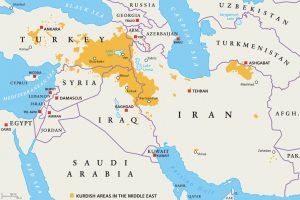
    Who Are the Syrian Kurds?

    • Kurds form about 10 percent of Syria’s population
    • Concentrated in north and northeast Syria
    • Long standing demand for autonomy, not secession
    • In 2012, Assad withdrew troops from the northeast
    • Kurds filled the vacuum and declared autonomous regions called cantons
    • These areas together formed the Democratic Autonomous Administration of North and East Syria (DAANES), also called Rojava
    [2016] Consider the following pairs: Community sometimes mentioned in the news : In the affairs of 

    1. Kurd : Bangladesh 

    2. Madhesi : Nepal 

    3. Rohingya : Myanmar 

    Which of the pairs given above is/are correctly matched? 

    (a) 1 and 2 (b) 2 only (c) 2 and 3 (d) 3 only

  • Cybercrime and a global governance crisis

    Why in the news?

    The UN adopted the Convention against Cybercrime (December 2024), the first global cybercrime treaty in over two decades. However, India, the U.S., Japan, and Canada have not signed it, exposing deep divisions in global cyber governance. The Convention highlights a growing principles-practice gap, geopolitical mistrust, and a shift towards polycentric global governance.

    Why is the UN Cybercrime Convention considered a milestone?

    1. Institutional First: Establishes the first UN-led multilateral criminal justice instrument on cybercrime in two decades.
    2. Negotiation Scale: Reflects extensive multilateral engagement involving UN member states, civil society, and private sector actors.
    3. Global Scope: Seeks universal applicability beyond regional instruments like the Budapest Convention.
    4. Symbolic Consensus: Secured General Assembly adoption in December 2024 with support from 72 states.

    How does the Convention expose fractures in global cyber governance?

    1. Non-Participation by Major Democracies: India, the U.S., Japan, and Canada declined to sign, signalling legitimacy concerns.
    2. Governance Divide: Highlights divergence between European cyber norms and alternative governance visions advanced by Russia and China.
    3. Legal Uncertainty: Reveals gaps between international legal principles and domestic implementation capacity.
    4. Polycentrism Risk: Signals movement away from universal frameworks towards fragmented governance centres.

    What are the concerns regarding criminal definitions and civil liberties?

    1. Broad Crime Definitions: Expands criminalisation in ways that allow discretionary interpretation.
    2. Rights Implications: Raises risk of misuse against journalists, activists, and political opponents.
    3. Procedural Safeguards: Anchors protections like judicial review to domestic frameworks rather than uniform standards.
    4. Principles-Practice Rift: Consensus on principles masks divergence in enforcement practices.

    Why does India’s reluctance carry strategic significance?

    1. Institutional Autonomy: India resists surrendering control over data governance and lawmaking.
    2. Negotiation Disengagement: Unlike the Budapest Convention, India did not actively shape the UN Convention’s final contours.
    3. Regulatory Trade-offs: Proposals retained greater state control over citizen data, limiting flexibility.
    4. Eroded Influence: Reflects diminished agenda-setting power in global lawmaking over two decades.

    How does AI governance illustrate implementation challenges?

    1. Watermarking Example: India’s push to watermark AI-generated content highlights regulatory innovation.
    2. Platform Mandates: Draft rules require social media platforms to label AI content beyond body-corporate thresholds.
    3. Prescriptive Risk: Over-specification may constrain innovation and compliance feasibility.
    4. Governance Gap: Demonstrates difficulty in operationalising agreed principles.

    What does the Convention reveal about the global order?

    1. Weakened Multilateralism: Declining U.S. financial support to the UN undermines institutional effectiveness.
    2. Security Council Paralysis: Inability to act decisively in Ukraine and Gaza reflects governance fatigue.
    3. WTO Breakdown: Dispute settlement mechanism non-functional since 2019.
    4. Shift to Minilaterals: Reliance on smaller groupings such as Quad and Five Eyes for functional coordination.

    Why is cybercrime governance central to future global cooperation?

    1. Cross-Border Data Flows: Cybercrime enforcement depends on interoperable data-sharing mechanisms.
    2. Trust Deficit: Near-universal recognition of trusted data corridors without operational consensus.
    3. Capacity Constraints: States lack technical and regulatory infrastructure for implementation.
    4. Autonomy Trade-off: Global cooperation increasingly challenges domestic sovereignty.

    Conclusion

    The UN Convention against Cybercrime underscores the limits of consensus-based global governance in a fragmented geopolitical environment. While it symbolises multilateral intent, its effectiveness will depend on bridging institutional capacity gaps, reconciling sovereignty concerns, and aligning legal principles with enforceable safeguards. The future of cyber governance will be shaped less by universal treaties and more by adaptive, trust-based cooperation frameworks.

    Convention against Cybercrime

    1. The UN General Assembly adopted the Convention against Cybercrime in December 2024, marking the first legally binding UN instrument to combat cybercrime through international cooperation. 
    2. Designed to address issues like ransomware, child sexual abuse material, and online scams, it allows for cross-border evidence sharing and capacity building.
    3. The treaty, which opened for signature in 2025, requires 40 ratifications to enter into force. The treaty is scheduled to remain open for signature until December 31, 2026, and will come into effect 90 days after the 40th nation ratifies it.
    4. Adoption & Scope: The treaty was finalized in 2024 to create a global framework for investigating and prosecuting digital crimes, offering a universal approach rather than just regional (like the Budapest Convention).
    5. Controversies: The treaty has faced criticism regarding:
      1. potential misuse of surveillance powers 
      2. insufficient human rights safeguards
      3. could be used by governments to suppress online freedom.

    PYQ Relevance

    [UPSC 2024] Terrorism has become a significant threat to global peace and security. Evaluate the effectiveness of the United Nations Security Council’s Counter-Terrorism Committee (CTC).

    Linkage: It is highly important for GS-II (UN, global governance) and GS-III (cyber security, internal security) due to rising non-traditional security challenges. Just as UPSC asked about the UN Security Council’s Counter-Terrorism Committee (CTC), it can similarly ask about the UN Convention against Cybercrime, since both deal with transnational security threats and weak UN enforcement mechanisms.
  • US Exit from World Health Organization

    Why in the News?

    On 23 January 2026, the United States formally withdrew from the World Health Organization after Donald Trump restarted the exit process at the beginning of his second term.

    Background

    • US announced withdrawal on Day 1 of Trump’s second term in 2025 through an executive order
    • Decision based on allegations that WHO failed in handling COVID 19
    • US confirmed it will not rejoin or participate even as an observer

    Financial Dimension

    • US was WHO’s largest single contributor
    • Outstanding unpaid dues around 260 million dollars
    • All US funding to WHO has been stopped
    • Under US law, one year notice is required, but payment obligation is legally disputed

    WHO’s Response

    • WHO Director General Tedros Adhanom Ghebreyesus urged the US to reconsider
    • Warned of global public health fallout
    • WHO may cut up to 25 percent of its workforce due to funding gap
    [2022] In the context of WHO Air Quality Guidelines, Consider the following statements: 

    1. The 24-hour mean of PM 2.5 should not exceed 15 μg/m³ and annual mean of PM 2.5 should not exceed 5 μg/m³

    2. In a year, the highest levels of ozone pollution occur during the periods of inclement weather

    3. PM 10 can penetrate the long barrier and enter the bloodstream

    4. Excessive ozone in the air can trigger asthma

    Which of the statements given above are correct? 

    (a) 1, 3 and 4 (b) 1 and 4 only (c) 2, 3 and 4 (d) 1 and 2 only

  • Building bridges: On Central Bank Digital Currency and BRICS

    Why in the News

    The RBI has suggested that India propose linking BRICS countries’ Central Bank Digital Currency (CBDC) at the 2026 BRICS Summit in India. This signals a shift from limited domestic use of CBDC towards cross-border payments, especially after India’s G20 presidency in 2023 emphasised digital finance cooperation. The move contrasts with India’s successful UPI system and reflects a strategic choice rather than a technological need.

    Central Bank Digital Currency:

    1. It is a digital form of a country’s fiat currency.
    2. It is issued and backed by the central bank
    3. Example: India’s RBI with the Digital Rupee/e₹ that offers the trust of physical cash with digital convenience

    Key Characteristics

    1. Digital Legal Tender: It’s official money in digital form, exchangeable 1:1 with physical cash.
    2. Issued by Central Bank: Directly backed by the central bank, ensuring safety and finality of settlement, unlike private cryptocurrencies.
    3. Digital Wallet: Stored and transacted through a digital wallet on your phone or device.
    4. Retail (CBDC-R) & Wholesale (CBDC-W): Retail is for the public (P2P/P2M), while Wholesale is for specific financial institutions.

    Why Is India Exploring Cross-Border CBDC Linkages?

    1. Limited domestic utility: Reduces relevance of CBDC within India due to UPI’s scale and efficiency.
    2. International payments focus: Repositions CBDC as a tool for cross-border settlements rather than retail payments.
    3. Institutional continuity: Builds upon India’s G20 2023 agenda on crypto and digital payment standardisation.

    How Does RBI’s CBDC Approach Differ from Private Cryptocurrencies?

    1. Sovereign guarantee: Ensures safety and trust absent in private cryptocurrencies.
    2. Non-interest bearing nature: Prevents speculative investment behaviour.
    3. Blockchain utility: Retains advantages of distributed ledger technology without exposure to volatility and fraud.
    4. Regulatory clarity: Enables oversight absent in decentralised crypto systems.

    What Problems in Cross-Border Payments Does CBDC Address?

    1. Transparency deficit: Addresses opacity in international money flows.
    2. Black and laundered money: Creates immutable transaction records.
    3. Traceability: Enables coding of origin and destination points.
    4. Institutional linkage: Allows integration with national identity systems or tax authorities.

    Why Is BRICS a Strategic Platform for CBDC Payments?

    1. Shared constraints: Includes countries facing restricted access to SWIFT.
    2. Payments to sanctioned states: Facilitates transactions with Russia and Iran.
    3. Infrastructure autonomy: Reduces dependence on dollar-centric payment systems.
    4. Mandated compliance: Enables collective rules on identification and reporting.

    What Are the Geopolitical Risks?

    1. Dollar displacement: Triggers strategic concern from the United States.
    2. Tariff retaliation: Faces threat of additional tariffs from the U.S.
    3. Political signalling: Risks being perceived as a challenge to dollar dominance.
    4. Cost-benefit dilemma: Requires evaluation of marginal tariff impact given existing high tariffs.

    What Makes Blockchain Suitable for Cross-Border CBDCs?

    1. Immutable records: Prevents tampering with transaction history.
    2. Programmability: Enables conditional compliance requirements
    3. Auditability: Facilitates regulatory monitoring across jurisdictions.
    4. Efficiency: Reduces friction in settlement mechanisms.

    Challenges Associated with CBDCs

    1. Interoperability: Requires harmonisation of legal and technical standards.
    2. Cybersecurity: Increases exposure to systemic digital risks.
    3. Data governance: Raises concerns over cross-border data sharing.
    4. Geopolitical pushback: Triggers resistance from dollar-centric systems.

    Conclusion:

    India’s push for cross-border CBDC linkages reflects a pragmatic recalibration of its digital finance strategy. With domestic payments efficiently handled by UPI, CBDCs are being repositioned to address gaps in cross-border settlements, transparency, and geopolitical resilience. The success of this approach will depend on interoperability, data governance, and careful management of geopolitical risks while preserving monetary sovereignty.

    PYQ Relevance

    [UPSC 2023] What is the status of digitalization in the Indian economy? Examine the problems faced in this regard and suggest improvements.

    Linkage: The question tests India’s progress in building a digital economy, with emphasis on digital payments. The article shows how UPI’s success limits domestic CBDC use, pushing India to focus on cross-border digital payments instead.

  • BRICS Plus Naval Drills and South Africa Probe

    Why in the News?

    South Africa has initiated a probe into Iran’s participation in BRICS Plus naval exercises held near Cape Town, amid reports that President Cyril Ramaphosa wanted Iran to withdraw to avoid straining ties with the United States.

    Key Facts

    • Naval drills conducted in False Bay, close to Simon’s Town Naval Base.
    • Participating countries included China, Russia and Iran under the BRICS Plus framework.
    • Iranian naval vessels were observed operating alongside other participants throughout the exercise.
    • South Africa’s Defence Ministry ordered an inquiry to check whether presidential instructions were ignored or misinterpreted.

    Diplomatic Context

    • The drills coincided with US discussions on extending the African Growth and Opportunity Act (AGOA).
    • South Africa fears possible trade repercussions or exclusion from AGOA.
    • The US Embassy in South Africa expressed concern over Iran’s involvement.

    About BRICS Plus

    • The BRICS is a forum for cooperation among a group of leading emerging economies. The BRICS includes 10 countries – Brazil, China, Egypt, Ethiopia, India, Indonesia, Iran, Russian Federation, South Africa, United Arab Emirates.

    Prelims Pointers

    • BRICS Plus has both economic and security dimensions.
    • Naval exercises can have trade and diplomatic implications.
    • AGOA is a preferential trade programme of the United States for African countries.
    • South Africa follows a policy of strategic autonomy in foreign relations.
    [2025] Consider the following statements with regard to BRICS: 

    I. The 16th BRICS Summit was held under the Chairship of Russia in Kazan

    II. Indonesia has become a full member of BRICS

    III. The theme of the 16th BRICS Summit was Strengthening Multiculturalism for Just Global Development and Security

    Which of the statements given above is/are correct? 

    (a) I and II (b) II and III (c) I and III (d) I only

  • Mount Elbrus

    Why in the News?

    A controlled avalanche was artificially triggered on Mount Elbrus in Russia to safely release accumulated snow following heavy snowfall, reducing the risk of natural avalanches.

    About

    • Highest mountain in Europe
    • An ancient, extinct volcano with two distinct peaks
    • Part of the Caucasus mountain system
    • Major hub for mountaineering and alpine tourism

    Location

    • Situated in southwestern Russia
    • Lies in the Caucasus Mountains, just north of the Georgia border
    • Located between the Black Sea and Caspian Sea mountain corridor

    Key geological features

    • Twin coned stratovolcano formed over 2.5 million years ago
    • Highest peak at 5,642 metres
    • Second peak at 5,595 metres
    • Covered by 22 glaciers
    • Feeds major rivers such as Kuban and Terek
    • Though dormant for nearly 2,000 years, still shows sulphurous gas emissions and mineral springs

    Significance

    • Officially recognised as Europe’s highest peak
    • Included among the Seven Summits for global climbers
    • Important site for glaciological research and climate change studies
    • Observed by scientific missions including the International Space Station
    • Economically vital for tourism and adventure sports in the Caucasus region

    UPSC Prelims Pointers

    • Mount Elbrus is higher than Mont Blanc
    • It is an extinct stratovolcano, not a fold mountain
    • Located in the Caucasus, between the Black Sea and Caspian Sea
    • Hosts extensive glaciation despite being dormant
    • Controlled avalanches are used for disaster risk reduction in high mountain regions
    [2014] Turkey is located between: 

    (a) Black Sea and Caspian Sea 

    (b) Black Sea and Mediterranean Sea 

    (c) Gulf of Suez and Mediterranean Sea 

    (d) Gulf of Aqaba and Dead Sea

  • [17th January 2026] The Hindu OpED: On mute: On the U.S., geopolitical turmoil, India’s response

    PYQ Relevance

    [UPSC 2019] What introduces friction into the ties between India and the United States is that Washington is still unable to find for India a position in its global strategy, which would satisfy India’s National self- esteem and ambitions. Explain with suitable examples.

    Linkage: The question directly links to GS-II themes of India-US relations, strategic autonomy, and impact of great-power policies on India’s national interests. It reflects recurring UPSC focus on India’s discomfort with subordinate roles in U.S. strategy, evident in issues like sanctions, trade coercion, and technology access.

    Mentor’s Comment

    This article examines India’s muted diplomatic response to escalating unilateral actions by the United States across Venezuela, Iran, and South America, and evaluates the strategic, economic, and reputational costs of restraint. It raises a fundamental question for Indian foreign policy: whether silence safeguards national interest or erodes strategic autonomy at a critical geopolitical moment.

    Why in the News

    India’s foreign policy is being questioned as the U.S. takes increasingly unilateral actions, including regime-change threats in Venezuela and Iran and harsh tariff measures against countries trading with Russia and Iran. Despite being directly affected, India has avoided openly naming the U.S. or asserting its legal and strategic position. This silence is notable given India’s economic exposure, its investments in projects like Chabahar port, and its ambition to host the BRICS+ Summit, making the costs of restraint more visible.

    Why is U.S. conduct described as unilateral and destabilising?

    1. Regime Interventionism: Signals disregard for sovereignty through actions in Venezuela, including the kidnapping of the President and his wife, violating core principles of international law.
    2. Coercive Trade Instruments: Mandates up to 500% tariffs on countries purchasing oil or uranium from Russia, weaponising trade policy for geopolitical compliance.
    3. Expansion of Threat Theatre: Extends regime-change rhetoric beyond Venezuela to Cuba and Colombia, indicating regional destabilisation.
    4. Economic Coercion on Iran: Threatens 25% additional tariffs on any country trading with Iran, escalating sanctions into secondary punishment mechanisms.

    How has India officially responded to these developments?

    1. Diplomatic Language: Restricts response to expressions of “deep concern” without identifying U.S. violations or naming the perpetrator.
    2. Selective Silence: Avoids comment on Venezuela’s leadership abduction and threats to Cuba and Colombia due to perceived geographic distance.
    3. Operational Focus: Issues travel advisories for Iran and Israel and prepares evacuation plans for Indian students, prioritising contingency over diplomacy.
    4. Economic Retrenchment: Signals intent to further reduce already low levels of trade with Iran under U.S. pressure.

    Why is India’s silence on Iran particularly puzzling?

    1. Strategic Neighbourhood: Iran is a close regional neighbour with deep historical ties to India.
    2. Economic Investment: India has invested billions of dollars in the Chabahar port, which faces direct U.S. pressure for shutdown.
    3. Policy Inconsistency: Avoids comment on Iranian protests while also remaining silent on U.S. threats of strikes and tariffs.
    4. Asymmetric Signalling: Demonstrates risk-aversion despite direct national interest exposure.

    What explains New Delhi’s restrained posture towards Washington?

    1. Diplomatic Calculus: Anticipates improvement in ties following a tense year and failure to conclude the India-U.S. Bilateral Trade Agreement.
    2. Optimistic Signalling: Relies on assurances from U.S. Ambassador Sergio Gor regarding future cooperation.
    3. Technology Expectations: Seeks inclusion in the U.S.-led high-technology partnership Pax Silica, despite late-stage entry.
    4. Risk Avoidance: Assumes silence prevents further downturn in bilateral relations.

    What are the costs of this approach for India?

    1. Economic Loss: Tariff threats and trade disruption directly harm Indian economic interests.
    2. Reputational Damage: Weakens India’s image as an autonomous and principled global actor.
    3. Strategic Erosion: Undermines India’s long-standing doctrine of strategic autonomy.
    4. Multilateral Credibility: Weakens leadership standing ahead of hosting the BRICS+ Summit.

    What lesson does India’s past experience offer?

    1. 2019 Precedent: India ceased purchasing Iranian and Venezuelan oil under U.S. pressure.
    2. Policy Outcome: Concessions failed to secure long-term protection of Indian interests.
    3. Strategic Insight: Demonstrates that appeasement of a global power does not ensure national interest protection.

    Conclusion

    India’s restrained diplomacy reflects a short-term tactical calculation but risks long-term strategic dilution. National interest cannot be secured through silence or accommodation, but only through a clear assertion of strategic autonomy rooted in international law, economic self-interest, and diplomatic consistency.

  • Talks on Chabahar will continue with U.S. and Iran: India

    Why in the News

    India’s investments at Chabahar have come under renewed scrutiny after the U.S. President Donald Trump announced fresh tariff measures penalising countries trading with Iran. Media reports suggested India may exit Chabahar, but the Ministry of External Affairs clarified that a U.S. sanctions waiver remains valid till April 26, 2026, and negotiations with Washington are ongoing. The development is significant as it tests India’s ability to sustain strategic projects amid great-power economic coercion while preserving regional connectivity interests.

    Why has Chabahar become a focal point of India-U.S.-Iran tensions?

    1. U.S. Tariff Announcement: Imposes an additional 25% tariff on countries trading with Iran while engaging with the U.S., directly affecting India’s Iran-linked projects.
    2. Sanctions Context: Re-imposition of U.S. sanctions on Chabahar on September 29, 2025, revived uncertainty over India’s operational continuity.
    3. Strategic Sensitivity: Chabahar represents a rare U.S.-exempted India-Iran project, making it a litmus test for sanctions diplomacy.

    What is the status of the U.S. sanctions waiver on Chabahar?

    1. Treasury Guidance: A conditional sanctions waiver issued on October 28, 2025, remains valid until April 26, 2026.
    2. Negotiation Window: Provides India time to negotiate continued engagement without immediate punitive action.
    3. Diplomatic Engagement: India remains in active discussions with Washington to extend or recalibrate the arrangement.

    How has India officially responded to reports of winding up operations?

    1. MEA Clarification: Officially denied claims that India is exiting Chabahar.
    2. Continuity of Dialogue: India and Iran maintain engagement across difficult phases, including periods of intense Western sanctions.
    3. Operational Flexibility: Officials did not rule out renewal or continuation of work at the port.

    Why is Chabahar strategically critical for India?

    1. Regional Connectivity: Provides India direct access to Afghanistan and Central Asia, bypassing Pakistan.
    2. Geopolitical Balancing: Acts as a counter to Pakistan’s Gwadar port developed with Chinese support.
    3. Security and Trade: Enables humanitarian supplies and trade with Taliban-ruled Afghanistan.

    How do current diplomatic engagements shape the outcome?

    1. High-Level Talks: External Affairs Minister S. Jaishankar is expected to meet U.S. Secretary of State Marco Rubio next month.
    2. Iran Engagement: Mr. Jaishankar recently spoke with Iranian Foreign Minister Seyed Abbas Araghchi amid internal unrest in Iran.
    3. Institutional Mechanism: The 20th India-Iran Joint Commission Meeting (May 2025) continues to anchor long-term cooperation.

    Conclusion

    India’s Chabahar engagement underscores a calibrated foreign policy approach that balances strategic autonomy, regional connectivity, and economic exposure to sanctions. The continuation of the U.S. waiver and sustained diplomatic engagement signal India’s intent to preserve long-term strategic interests without precipitate withdrawal.

    Value Addition: Chabahar Port

    Strategic Significance

    1. Alternative Connectivity Corridor: Enables India’s access to Afghanistan and Central Asia bypassing Pakistan, overcoming geographic and political constraints.
    2. Counter-Gwadar Strategy: Offsets China-Pakistan Economic Corridor (CPEC) leverage centred on Gwadar port.
    3. Indian Ocean Outreach: Extends India’s strategic footprint into the western Indian Ocean littoral.

    Economic and Trade Relevance

    1. Transit Trade Hub: Facilitates movement of Indian goods to Afghanistan and Central Asia, reducing transport time and costs.
    2. Humanitarian Corridor: Serves as a key route for food grains and relief supplies to Afghanistan during sanctions and instability.
    3. Logistics Integration: Links with International North-South Transport Corridor (INSTC), enhancing Eurasian trade connectivity.

    Geopolitical and Diplomatic Dimensions

    1. Sanctions Diplomacy Case Study: Demonstrates India’s ability to negotiate issue-based exemptions within U.S. sanctions regimes.
    2. Strategic Autonomy Indicator: Reflects India’s balanced engagement with competing power blocs without formal alignment.
    3. Regional Stability Lever: Maintains diplomatic channels with Iran amid West Asia turbulence.

    Security and Regional Stability

    1. Afghanistan Access: Provides India strategic presence near Taliban-ruled Afghanistan without on-ground military involvement.
    2. Maritime Security: Enhances monitoring capability near key Sea Lines of Communication (SLOCs).
    3. Counter-Extremism Support: Enables non-military engagement in fragile regions through trade and development.

    Institutional and Policy Framework

    1. Bilateral Mechanism: Anchored under India-Iran Joint Commission framework for long-term cooperation.
    2. Operational Model: Managed by Indian entities under conditional sanctions waivers, reflecting adaptive diplomacy.
    3. Time-Bound Waivers: Illustrates uncertainty in infrastructure diplomacy under unilateral sanctions.

    PYQ Relevance

    [UPSC 2018] In what ways would the ongoing US-Iran Nuclear Pact Controversy affect the national interest of India? How should India respond to its situation?

    Linkage: The question examines the impact of great-power sanctions politics on India’s foreign policy choices, strategic autonomy, and energy-connectivity interests. U.S. sanctions pressure on Iran impacts India’s Chabahar engagement, underscoring India’s calibrated diplomacy to protect strategic interests.

  • Global Risks Report 2026 

    Why in the News?

    The World Economic Forum released the Global Risks Report 2026, based on the Global Risks Perception Survey of over 1300 global experts, highlighting geoeconomic confrontation as the most severe near term global risk.

    About the Report

    • 21st edition of the Global Risks Report
    • Analyses risks across three time horizons
      • Immediate term: 2026
      • Short to medium term: up to 2028
      • Long term: up to 2036
    • Survey respondents from academia, business, government, international organisations and civil society
    • Released ahead of the annual WEF meeting in Davos

    Top Risks in 2026

    • Geoeconomic confrontation ranked number one
      • Use of tariffs, sanctions, investment restrictions and control over critical minerals
    • Followed by State based armed conflict
    • Reflects retreat from multilateral cooperation and rise of economic weaponisation

    Economic Risks Trend

    • Economic risks show the sharpest rise in rankings
    • Economic downturn up to rank 11
    • Inflation rose to rank 21
    • Asset bubble burst moved to rank 18
    • Driven by debt stress, financial fragility and geopolitical rivalry

    Technological Risks

    • Misinformation and disinformation ranked 2nd in short term
    • Cyber insecurity ranked 6th in short term
    • Adverse outcomes of AI technologies
      • Rank 30 in 2 year outlook
      • Rank 5 in 10 year outlook
    • Concerns include job disruption, social harm, mental health impacts and military use of AI

    Societal Risks

    • Rising political and social polarisation
    • Weakening trust in institutions
    • Inequality identified as the most interconnected global risk for second consecutive year
    • Growth of street versus elite narratives challenging democratic resilience

    Environmental Risks

    • Short term deprioritisation
      • Extreme weather fell from rank 2 to 4
      • Pollution dropped from rank 6 to 9
      • Biodiversity loss and earth system change declined sharply
    • Long term dominance
      • Environmental risks occupy half of top 10 risks
      • Extreme weather ranked as the top long term risk
    • Environmental category viewed with highest pessimism over 10 year horizon

    Global Order Transition

    • Movement toward a multipolar and fragmented world
    • 68 percent respondents expect a contested multipolar order over next decade
    • Only 6 percent expect revival of a unipolar rules based system
    • Institutions rooted in Bretton Woods Conference under strain
    [2019] The Global Competitiveness Report is published by the: 

    (a) International Monetary Fund 

    (b) United Nations Conference on Trade and Development 

    (c) World Economic Forum 

    (d) World Bank

  • China reiterates claim over Shaksgam Valley

    Why in the news?

    China has reasserted its cartographical claim over the Shaksgam Valley and defended its infrastructure activities there as legitimate. India has strongly rejected these claims, reiterating that Shaksgam Valley is Indian territory and that the 1963 China Pakistan agreement ceding the area is illegal and invalid.

    About Shaksgam Valley (Trans Karakoram Tract)

    • Location: High altitude valley north of the Karakoram range, bordering China’s Xinjiang region
    • Political status: Part of Pakistan occupied Kashmir, specifically the Hunza Gilgit region
    • Strategic proximity: Close to Siachen Glacier and Aksai Chin
    • Area involved: About 5,180 sq km illegally ceded by Pakistan to China in 1963

    Background of the dispute

    • 1963 Sino Pakistan Border Agreement: Pakistan illegally transferred Shaksgam Valley to China. India never recognised this agreement
    • Article 6 of the agreement: Clearly states the boundary settlement is temporary and subject to renegotiation after the final resolution of the Kashmir dispute
    • India’s position: Pakistan had no sovereign right to cede Indian territory
      Hence the agreement is null and void

    Prelims pointers

    • Shaksgam Valley = Trans Karakoram Tract
    • Illegally ceded by Pakistan to China in 1963
    • India has never recognised the agreement
    • CPEC passes through Indian territory under illegal occupation
    • Article 6 of 1963 agreement weakens China Pakistan legal claim
    [2020] Siachen Glacier is situated to the: 

    (a) East of Aksai Chin 

    (b) East of Leh 

    (c) North of Gilgit 

    (d) North of Nubra Valley