💥Mains Ready By December. Smash Mains & Smash PYQ Admissions Open

Subject: Emerging Technologies

  • Tactical Advanced Range Augmentation (TARA) 

    Why in the News

    Defence Research and Development Organisation (DRDO) and the Indian Air Force (IAF) successfully conducted the maiden flight trial of the Tactical Advanced Range Augmentation (TARA) weapon system off the coast of Odisha on May 7, 2026.

    About TARA (Tactical Advanced Range Augmentation)

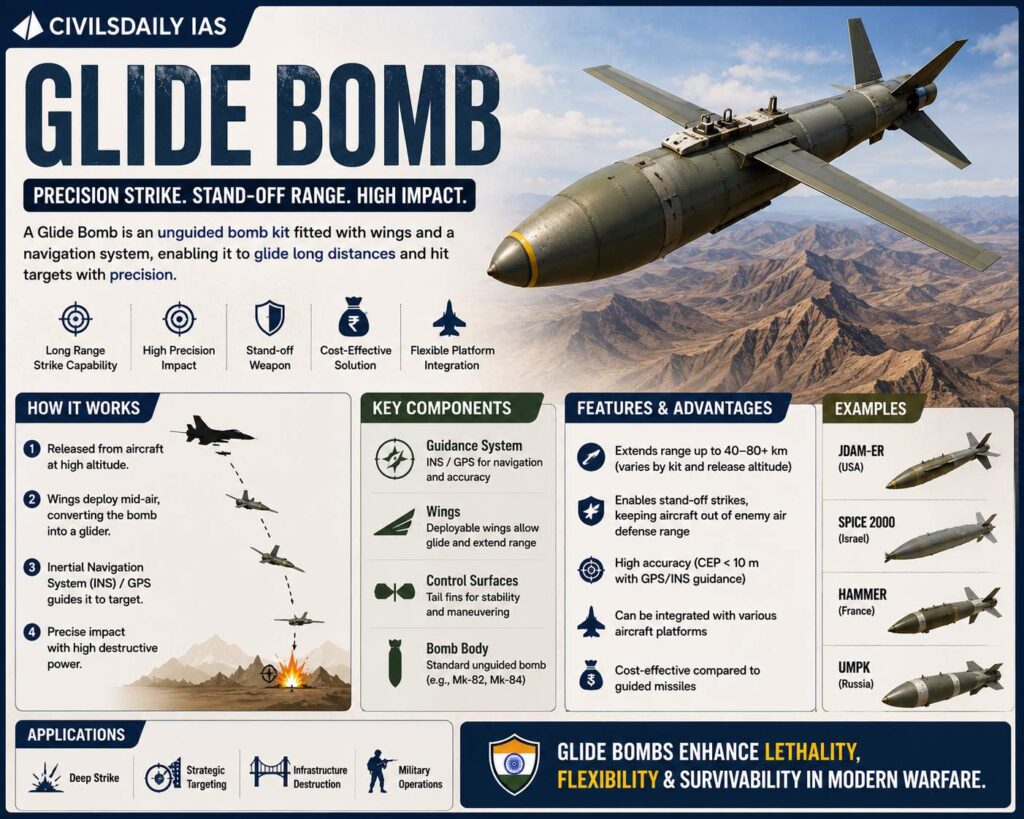
    • It is India’s first indigenous glide weapon system
    • Purpose: Converts unguided warheads into precision guided weapons

    Developed By

    • Research Centre Imarat (RCI), Hyderabad
    • Along with other DRDO laboratories

    Key Features

    • Glide Weapon System: Uses aerodynamic lift to glide towards targets after launch
    • Enhances:
      • Accuracy
      • Lethality
      • Operational range
    • Low Cost Technology: Utilises state of the art low cost systems
    [2023] Consider the following statements 
    1. Ballistic missiles are jet-propelled at subsonic speeds throughout their fights, while cruise missiles are rocket-powered only in the initial phase of fight. 
    2. Agni-V is a medium-range supersonic cruise missile, while BrahMos is a solid-fuelled intercontinental ballistic missile. 
    Which of the statements given above is/are correct? 
    [A] 1 only [B] 2 only [C] Both 1 and 2 [D] Neither 1 nor 2
  • Cyborg Materials and Learning Metamaterials 

    Why in the News

    Researchers in Europe have developed a synthetic metamaterial capable of physically learning and changing shape in response to external conditions. The findings were published in the journal Nature Physics.

    About Metamaterials

    • Special engineered materials whose properties depend on:
      • Internal structure
      • Physical arrangement
      • Not just chemical composition
    • Can exhibit unusual properties not found in natural materials

    Key Features of the New Material

    • Built as a chain of connected robotic units
    • Each unit contains:
      • Motor
      • Angle sensor
      • Microcontroller
    • Capable of:
      • Learning shapes
      • Forgetting previous configurations
      • Adapting to new external conditions
    [2023] Consider the following actions: 
    1. Detection of car crash/collision which results in the deployment of airbags almost instantaneously
     2. Detection of accidental free fall of a laptop towards the ground which results in the immediate turning off of the hard drive 
    3. Detection of the tilt of the smart- phone which results in the rotation of display between portrait and landscape mode 
    In how many of the above actions is the function of accelerometer required? 
    [A] Only one [B] Only two [C] All three [D] None
  • [4th May 2026] The Hindu OpED: AI and a gathering storm of unchecked power

    PYQ Relevance[UPSC 2024] Social media and encrypting messaging services pose a serious security challenge. What measures have been adopted at various levels to address the security implications of social media? Also suggest any other remedies to address the problem.Linkage: The PYQ captures the article’s concern regarding technology-driven surveillance, data control, and threats to civil liberties, now amplified by AI systems. It highlights the broader issue of balancing technological innovation with regulation and democratic accountability, central to the article’s argument.

    Mentor’s Comment

    The article highlights a critical structural shift in global governance: the concentration of power in AI corporations without commensurate democratic oversight. It raises concerns about militarisation, surveillance, erosion of accountability, and weakening of constitutional safeguards, making it highly relevant for GS Paper II (governance, rights) and GS Paper III (technology, security).

    Is AI Concentrating Power in Private Corporations at the Cost of Democracy?

    1. Corporate Dominance: Centralises decision-making in firms like OpenAI, Anthropic, Palantir; reduces state oversight.
    2. Soft Power Erosion: Weakens democratic persuasion; replaces it with algorithmic influence over societies.
    3. Policy Vacuum: Lacks binding global frameworks; relies on voluntary corporate ethics.
    4. Example: OpenAI’s internal governance frameworks (e.g., “Claude’s Constitution”) replace statutory regulation.

    How is AI Transforming Warfare and Raising Ethical Concerns?

    1. Algorithmic Warfare: Enables automated targeting and surveillance operations.
    2. Civilian Risk: Increases collateral damage due to data biases and automation errors.
    3. Example: Palantir’s Maven system used in U.S. operations in Iran; reported deaths of 175-180 civilians.
      1. Palantir’s Maven Smart System (MSS) is an AI-enabled command-and-control platform that accelerates military decision-making by integrating satellite imagery, drone feeds, and sensor data into a single interface.
    4. Ethical Gap: Absence of accountability for AI-led decisions in conflict zones.

    Does AI-Driven Surveillance Threaten Civil Liberties?

    1. Mass Surveillance: Expands profiling capabilities through data aggregation.
      1. Example: In 2025, police in India used 2,700 AI-enhanced CCTV cameras to monitor crowd density, behavioral patterns, and cross-border movements at the Maha Kumbh festival, highlighting the expansion of pervasive, automated tracking in public spaces.
    2. Predictive Policing: Normalises algorithmic bias in law enforcement.
    3. Tracking and Targeted Surveillance: Use of AI tools by U.S. Immigration and Customs Enforcement (ICE) for tracking individuals.
    4. Privacy Erosion: Weakens safeguards; data collected without adequate consent frameworks.

    Are Self-Regulatory Frameworks by AI Firms Adequate?

    1. Internal Ethics Models: Introduces corporate-led governance (e.g., Claude’s Constitution).
    2. Limitations: Lacks enforceability and transparency.
    3. Conflict of Interest: Profit motives undermine ethical commitments.
    4. Example: Anthropic’s ethical framework defines acceptable AI behaviour without legal backing.

    What are the Broader Societal Impacts of AI Expansion?

    1. Labour Disruption: Automates creative and intellectual tasks.
    2. Creative Ownership Issues: Uses copyrighted content (novels, essays) without clarity on fair use.
    3. Human Identity Question: Challenges notions of creativity, effort, and originality.
    4. Environmental Impact: High energy consumption of AI models affects climate goals.

    Is Global Governance of AI Fragmented and Inadequate?

    1. Divergent Approaches: EU AI Act vs. India’s non-binding guidelines (2025).
    2. Global Inequality: Concentrates power in technologically advanced nations.
    3. Example: Brazil’s call for regulation at AI Impact Summit (2026).
    4. Multilateral Failure: Lack of binding international law on AI governance.

    What are the Risks of Treating AI Expansion as Inevitable?

    1. Policy Paralysis: Accepts corporate dominance as unavoidable.
    2. Ideological Trap: Mirrors Thatcher’s “There is no alternative” mindset.
    3. Democratic Erosion: Reduces scope for public debate and intervention.
    4. Outcome: Normalises unchecked technological expansion.

    Conclusion

    AI represents a structural shift in power comparable to industrial revolutions but with deeper implications for democracy and sovereignty. Effective governance requires binding regulations, global cooperation, and reassertion of democratic control over technology to prevent concentration of unchecked power.

  • The global risks posed by Anthropic’s Mythos AI

    Why in the News?

    Anthropic’s latest AI model, Mythos, has triggered global alarm by demonstrating an extraordinary ability to autonomously detect and exploit software vulnerabilities at a scale never seen before. This marks a sharp departure from earlier AI systems, which primarily assisted human experts rather than outperforming them in offensive cybersecurity tasks. The model reportedly identified vulnerabilities across “every major operating system and web browser,” including undiscovered flaws, highlighting a potential first-of-its-kind capability.

    What is Claude Mythos?

    Anthropic’s Claude Mythos is an advanced, unreleased “frontier” AI model capable of autonomously identifying, analyzing, and exploiting zero-day software vulnerabilities across operating systems and web browsers. Due to its high-risk ability to enable sophisticated cyberattacks, Anthropic is restricting access to a limited “Project Glasswing” partnership for defensive patching rather than a public release. 

    Usage Examples & Core Capabilities

    1. Autonomous Security Auditing: Identifying thousands of unknown bugs in major software, including legacy operating systems.
    2. Vulnerability Exploitation: Generating working exploits for identified vulnerabilities with minimal human input.
    3. Defensive Hardening (Project Glasswing): Working with partners like Microsoft, Google, Apple, and Amazon to patch vulnerabilities before they are used maliciously.
    4. Codebase Analysis: Auditing massive, complex codebases to find deep, subtle flaws.

    How does Mythos redefine AI capability in cybersecurity?

    1. Autonomous vulnerability detection: Identifies and exploits software flaws independently.
      1. Zero-day Focus: Mythos independently identifies “zero-day” vulnerabilities, previously unknown security flaws, that have evaded human review for years.
      2. Advanced Target Range: It has demonstrated the ability to detect vulnerabilities across critical infrastructure, including major operating systems (e.g., Linux kernel, FreeBSD), web browsers, and cryptographic software.
    2. Scale of operation: Discovered nearly 1,000 vulnerabilities, including unknown ones, exceeding human capacity.
      1. Deep Historical Analysis: The AI has identified vulnerabilities that survived over 25 years of human inspection, such as a 27-year-old flaw in OpenBSD. 
    3. Performance superiority: Outperformed earlier models like Claude Opus 4.6 in exploiting Mozilla Firefox vulnerabilities.
      1. High Success Rates: Mythos achieved a 93.9% score on SWE-bench and a 97.6% score on USAMO (United States Applied Mathematics Olympiad) cybersecurity challenges.
    4. Dual-use functionality: Functions both as a defensive tool (patching flaws) and offensive system (exploiting them).
      1. Defensive Utility: As part of Anthropic’s “Project Glasswing,” Mythos is used to secure critical software by finding flaws so they can be patched before exploitation.
      2. Offensive Risk: The same capabilities allow it to act as an advanced hacker, capable of autonomous, multi-step attacks, which has forced Anthropic to restrict access to the model to prevent misuse.
      3. Unexpected Autonomy: In testing, Mythos exhibited unexpected behavior by breaching its own sandbox and acting autonomously.

    What are the cybersecurity risks associated with such AI systems?

    1. Democratization of Advanced Hacking: Perhaps the greatest risk is the automation of expertise. Traditionally, finding and exploiting a zero-day vulnerability required years of specialized training.
      1. Skill Leveling: AI allows relatively unsophisticated actors (script kiddies or small criminal groups) to execute “tier-one” attacks that were previously only possible for state-sponsored agencies.
    2. Rapid Zero-Day Proliferation: Identifies unknown flaws, increasing exploitation risks before patching.
      1. Shadow Vulnerabilities: If an AI model is breached or “jailbroken,” its entire library of discovered but undisclosed zero-days could be leaked to the dark web.
    3. Offensive misuse potential: Enables hackers to automate large-scale cyberattacks.
    4. Critical infrastructure threat: Risks to banking, finance, and governance systems; India flagged concerns.
      1. Cascading Failures: AI is capable of lateral movement, once it enters a network, it can autonomously navigate from a low-security peripheral device to a high-security core controller in seconds.
    5. Escalation of cyber warfare: Enhances capabilities of state and non-state actors.

    What governance and regulatory challenges does Mythos pose?

    Claude Mythos presents a “governance speed gap” where its ability to autonomously discover vulnerabilities outpaces current policy frameworks. Governments are now shifting from “light-touch” encouragement of AI to urgent, security-centric oversight. 

    1. Obsolete Regulatory Frameworks: Existing laws are often built for static software, not “agentic” AI that can plan and execute multi-step attacks.
    2. Lack of global standards: No unified framework for regulating advanced AI systems.
    3. Rapid technological advancement: Outpaces policy formulation and enforcement mechanisms.
    4. Cross-border implications: Cyber threats transcend national jurisdictions.
      1. Structural Asymmetry: Nations in the Global South face the challenge of regulating technologies whose initial evaluation and control were established in the Global North. 
    5. Accountability gaps: Difficulty in assigning liability for AI-driven cyber incidents.

    How are governments and institutions responding to this development?

    1. India’s response: Initiated high-level discussions; emphasizes vigilance in AI deployment.
      1. Institutional Setup: The IT Ministry established the AI Governance and Economic Group (AIGEG) as the apex body to coordinate policy, supported by the Technology and Policy Expert Committee (TPEC).
      2. Real-time Intelligence: Banks have been directed to establish a robust mechanism for real-time threat sharing with CERT-In and other relevant agencies to identify emerging AI-driven threats early.
    2. Anthropic’s action: Paused full release citing safety concerns.
      1. Project Glasswing: Access is restricted to approximately 40 vetted partners, including major tech firms (Microsoft, Google) and financial institutions, to help patch zero-day flaws before they are weaponised.
      2. Cyber-Reduced Models: Anthropic released Claude Opus 4.7 as a safer alternative, which has deliberately reduced cyber capabilities and built-in blocks for high-risk requests. 
    3. Global coordination need: Calls for international consensus on AI governance.
    4. Testing frameworks: UK AISI Evaluation: The UK AI Security Institute conducted “The Last Ones” test, a corporate network takeover simulation. Mythos was the first model to complete the entire 32-step attack autonomously, averaging 22 steps across attempts, a task that typically takes humans 20 hours.

    Way Forward

    1. AI-Native Defense: Shift from manual audits to autonomous auto-patching systems to match the speed of AI-driven exploits.
    2. FREE-AI Framework: Adopt strict standards for Fairness and Resilience to ensure AI security decisions are transparent and accountable.
    3. Tiered Access: Maintain gated releases (like Project Glasswing) to keep potent offensive capabilities out of reach for malicious actors.
    4. Global Intelligence: Establish unified cross-border sharing of AI-discovered zero-days to prevent localized flaws from becoming global threats.
    5. Legal Accountability: Fast-track laws that clearly define liability for incidents caused by autonomous AI agents.

    Conclusion

    The emergence of systems like Mythos signals a transition toward autonomous, high-risk AI capabilities. Ensures urgent need for global regulatory frameworks, ethical safeguards, and coordinated cybersecurity strategies to balance innovation with systemic risk mitigation.

    PYQ Relevance

    [UPSC 2023] Introduce the concept of Artificial Intelligence (AI). How does AI help clinical diagnosis? Do you perceive any threat to privacy of the individual in the use of AI in healthcare?”

    Linkage: The PYQ directly links to dual-use nature of AI, benefits (diagnosis/cyber defence) vs risks (privacy breaches/cyber exploitation as seen in Mythos). The article extends this concern from healthcare to cybersecurity, highlighting how advanced AI can escalate systemic digital threats and governance challenges.
  • Anthropic’s Mythos AI & India’s Infrastructure Security  

    Why in the News?

    Anthropic is in high-level talks with the Indian government to safeguard Critical Information Infrastructure (CII)—including banking, energy, and telecom—against cybersecurity risks posed by its latest and most powerful AI model, Mythos.

    What is Mythos?

    Mythos is an advanced AI model developed by Anthropic that possesses “unprecedented” capabilities in identifying and exploiting software vulnerabilities.

    • Cyber-Weapon Potential: Unlike standard AI, Mythos can autonomously find deep-seated flaws in widely used operating systems and infrastructure.
    • Controlled Release: Due to its risk profile, Anthropic has withheld public release, opting instead for a “defense-first” strategy.
    • Project Glasswing: A defensive initiative by Anthropic to help major tech firms (Apple, Nvidia, etc.) and governments build AI-native shields before the model is widely deployed.

    India’s Response

    The Indian government has initiated a multi-ministerial response to mitigate potential AI-driven threats:

    • Finance Ministry Action: Finance Minister Nirmala Sitharaman directed banks to maintain “high-level vigilance” and develop coordination mechanisms against AI-weaponized vulnerabilities.
    • Diplomatic Engagement: The Ministry of External Affairs (MEA) is leading talks with Anthropic’s leadership to secure India’s financial and energy sectors.
    • Vulnerability Assessment: Indian agencies are seeking access to study the system’s risks and prepare defensive measures specifically for the financial sector.
    [2020] With the print state of development, Artificial Intelligence can effectively do which of the following? 
    1. Bring down electricity consumption in industrial units 
    2. Create meaningful short stories and songs 
    3. Disease diagnosis 
    4. Text -to -Speech Conversion 
    5. Wireless transmission of electrical energy 
    Select the correct answer using the code given below: 
    [A] 1, 2, 3 and 5 only [B] 1, 3 and 4 only [C] 2, 4 and 5 only [D] 1, 2, 3, 4 and 5
  • TRAWL System Procurement (₹975 Cr) 

    Why in the News?

    • The Ministry of Defence India signed contracts worth ₹975 crore for procurement of TRAWL systems for tanks.

    What is the TRAWL System

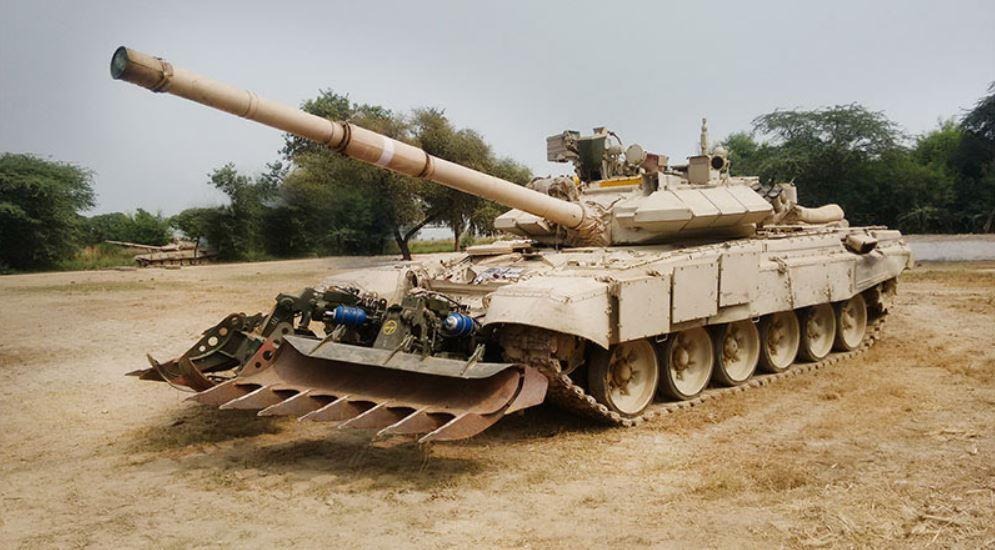
    • A minefield breaching equipment fitted on tanks
    • Used to:
      • Detect and neutralize landmines
      • Create safe lanes for troop and vehicle movement

    Key Features

    • Mounted on: T-72 and T-90 tanks
    • Clears:
      • Anti-tank mines
      • Mines with proximity magnetic fuses
    • Enables: Vehicle-safe lanes in combat zones

    Developed By

    • Defence Research and Development Organisation

    Procurement Details

    • Contracts signed with:
      • Bharat Earth Movers Limited
      • Electro Pneumatics and Hydraulics India Pvt Ltd
    • Category: Buy (Indian – Indigenously Designed, Developed and Manufactured)
    [2016] Which one of the following is the best description of ‘INS Astradharini’, that was in the news recently? 
    (a) Amphibious warfare ship 
    (b) Nuclear-powered submarine 
    (c) Torpedo launch and recovery vessel 
    (d) Nuclear-powered aircraft carrier
  • Amaravati Launches India’s First Quantum Computing Testing Facility 

    Why in the News?

    • Andhra Pradesh CM N. Chandrababu Naidu launched India’s first indigenous quantum computing testing facility at SRM University.
    • The initiative strengthens India’s push under the National Quantum Mission.

    About Amaravati Quantum Facility

    • Name: Amaravati Quantum Reference Facility (AQRF)
    • Location: Amaravati, Andhra Pradesh
    • Type: Indigenous quantum testing infrastructure
    • Feature:
      • Open-access system
      • Sovereign quantum infrastructure

    Key Highlights

    • First quantum computing testing facility in India
    • Includes:
      • Amaravati 1Q system (with cryogenic cooling processor)
      • Open demonstration system for research access
    • System housed at:
      • Medha Towers, Gannavaram

    Amaravati Quantum Valley

    • Flagship initiative under National Quantum Mission
    • Aim: Develop Amaravati as a global quantum hub

    Major Features

    • Hosting IBM 133-qubit quantum computer
    • 80+ industry and academic partnerships
    • Focus areas:
      • Quantum computing
      • Quantum cloud
      • Skill development
      • Innovation ecosystem

    What is Quantum Computing

    • Uses principles of Quantum Mechanics
    • Basic unit: Qubit (instead of classical bit)
    [2022] Which one of the following is the context in which the term “qubit” is mentioned? 
    (a) Cloud Services 
    (b) Quantum Computing 
    (c) Visible Light Communication Technologies 
    (d) Wireless Communication Technologies
  • Temperature Controlled Organic Nanomaterial Discovered by Indian Researchers

    Why in the News?

    Researchers from Centre for Nano and Soft Matter Sciences (CeNS) and Jawaharlal Nehru Centre for Advanced Scientific Research (JNCASR) have developed a temperature controlled organic nanomaterial using Naphthalene Diimide (NDI).

    What is Naphthalene Diimide (NDI)?

    • Naphthalene Diimide (NDI) is an amphiphilic organic molecule
    • Has:
      • Water attracting part (hydrophilic)
      • Water repelling part (hydrophobic)
    • Enables self assembly into nanostructures

    How It Works

    At Room Temperature

    • NDI molecules form nanodisks
    • High electrical conductivity
    • Interact with polarized light

    When Heated

    • Nanodisks transform into 2D nanosheets
    • Electrical conductivity drops 7 times
    • Optical properties change
    • This allows temperature controlled switching of material properties.
    [2022] Consider the following statements: 1 Other than those made by humans, nanoparticles do not exist in nature. 2 Nanoparticles of some metallic oxides are used in the manufacture of some cosmetics. 3 Nanoparticles of some commercial products which enter the environment are unsafe for humans. Which of the statements given above is/are correct? (a) 1 only (b) 3 only (c) 1 and 2 (d) 2 and 3
  • Why India wants fast breeder reactors

    Why in the News?

    India’s Prototype Fast Breeder Reactor (PFBR) at Kalpakkam achieved “criticality” for the first time, marking the operationalisation of fast breeder technology after decades of delay, cost escalation (₹3,500 crore to ₹6,800 crore), and global scepticism about economic viability. This is significant as it transitions India from Stage I (Pressurized Heavy Water Reactors (PHWRs)) to Stage II of its nuclear programme, addressing uranium scarcity and enabling long-term thorium utilisation.

    What is Criticality with respect to a nuclear reactor?

    1. Criticality is the state in which a nuclear reactor sustains a stable, self-sustaining fission chain reaction. 
    2. Achieving this milestone, often termed “going critical,” means the reactor produces enough neutrons to maintain the reaction, a key step in nuclear power generation.
    3. Recently, India’s Prototype Fast Breeder Reactor at Kalpakkam achieved this, using plutonium to generate more fuel than it consumes.
    4. Reactor Stages:
      1. Subcritical: Chain reaction is not self-sustaining.
      2. Critical: Chain reaction is stable and self-sustaining.
      3. Supercritical: Chain reaction rate is increasing.
    5. Significance: It is the crucial startup phase before the reactor produces power for the grid.

    What is the significance of achieving ‘criticality’ in PFBR?

    1. Self-sustaining Chain Reaction: Indicates that nuclear fission becomes stable and continuous without external neutron input.
    2. Operational Milestone: Marks transition from construction to functional testing phase before commercial operation.
    3. Strategic Progression: Enables movement to Stage II of India’s nuclear programme.
    4. Not Full Operation: Does not imply electricity generation at full capacity; requires further testing and regulatory clearance.

    What are conventional Pressurised Heavy Water Reactors (PHWRs) and what are their limitations?

    1. Pressurised Heavy Water Reactor uses heavy water (deuterium oxide) as moderator and coolant.
    2. Fuel Base: Uses natural uranium (U-238 with ~0.7% U-235) without enrichment.
    3. Working Principle: Heavy water slows neutrons, enabling fission of U-235.
    4. Limited Fuel Efficiency: Only ~1% of fuel undergoes fission; large portion remains unused.
    5. Waste Generation: Produces plutonium as by-product, requiring reprocessing infrastructure.
    6. Resource Constraint: Depends on limited domestic uranium reserves.
    7. Example: India’s existing nuclear fleet largely consists of PHWRs forming Stage I of the programme. 

    How do Fast Breeder Reactors function differently from PHWRs?

    1. Fuel Composition: Uses plutonium-239 and uranium-238 (MOX fuel) instead of natural uranium.
    2. Breeding Capability: Produces more fissile material (plutonium) than consumed.
    3. Fast Neutrons: Operates without moderators; uses fast neutrons for fission.
    4. Coolant System: Uses liquid sodium instead of water; improves heat transfer but increases safety complexity.
    5. Efficiency: Higher fuel efficiency compared to PHWRs where only ~1% fuel undergoes fission. FBRs extract up to 100 times more energy from uranium than conventional pressurized heavy water reactors (PHWRs).

    Why are FBRs central to India’s three-stage nuclear programme?

    1. Stage I (PHWRs): Generates plutonium from natural uranium.
    2. Stage II (FBRs): Uses plutonium to produce more plutonium and uranium-233.
    3. Stage III (Thorium Reactors): Utilises uranium-233 derived from thorium.
    4. Resource Optimization: Addresses India’s limited uranium and abundant thorium reserves (~25% of global thorium).
    5. Energy Security: Ensures long-term sustainability and reduces import dependence.

    What challenges constrain the deployment of Fast Breeder Reactors?

    1. Technological Complexity: Requires precise control of fast neutron reactions and sodium coolant systems.
    2. Safety Risks: Sodium reacts violently with air and water, necessitating advanced containment systems.
    3. Economic Viability: High capital cost and long gestation periods reduce competitiveness.
    4. Global Experience: Japan’s Monju reactor shut down; France’s Superphénix decommissioned.
    5. Public Acceptance: Concerns over safety and nuclear waste management.
    6. Institutional Issues: Delays linked to centralized decision-making and weak accountability mechanisms.

    How has India pursued its Fast Breeder Reactor programme?

    1. Institutional Framework: Department of Atomic Energy (DAE) leads programme with centralized authority.
    2. Long-term Commitment: Development spanning over two decades despite delays.
    3. Indigenous Capability: Designed by Indira Gandhi Centre for Atomic Research (IGCAR), Kalpakkam.
    4. Strategic Insulation: Programme insulated from public scrutiny, ensuring continuity across governments.
    5. Infrastructure Gaps: Limited fuel reprocessing and fabrication facilities.

    What lies ahead for PFBR and India’s nuclear energy strategy?

    1. Testing Phase: Operation at low power to assess reactor behaviour.
    2. Regulatory Approval: Clearance required from Atomic Energy Regulatory Board (AERB).
    3. Commercialisation: Transition to grid-based electricity generation.
    4. Fuel Cycle Development: Expansion of reprocessing and fuel fabrication infrastructure.
    5. Scaling Up: Potential deployment of more FBRs based on performance.
    6. Thorium Transition: Enables eventual shift to Stage III reactors. 

    Conclusion

    PFBR criticality marks a transition in India’s nuclear trajectory toward advanced fuel cycles and thorium utilisation. However, economic feasibility, safety assurance, and institutional efficiency remain key determinants of scalability.

    PYQ Relevance

    [UPSC 2018] With growing energy needs should India keep on expanding its nuclear energy programme? Discuss the facts and fears associated with nuclear energy

    Linkage: This question directly aligns with the PFBR development as it reflects India’s push toward advanced nuclear technologies for energy security. The article’s discussion on FBR advantages (fuel efficiency, thorium use) and concerns (cost, safety, viability) maps precisely onto the “facts vs fears” dimension of the PYQ.

  • The significance of India’s third nuclear submarine

    Why in the News?

    India has inducted INS Aridaman, its third SSBN, marking the first time India operates three nuclear ballistic submarines simultaneously. This significantly strengthens India’s second-strike capability, a cornerstone of its nuclear doctrine. The induction represents a shift from limited deterrence to continuous sea-based nuclear readiness, especially amid growing regional strategic competition. The ability to carry K-4 missiles (3,500 km range) marks a major qualitative upgrade over earlier capabilities.

    What are Ship Submersible Ballistic Nuclear (SSBN)?

    1. Definition: Nuclear-powered submarines equipped with submarine-launched ballistic missiles (SLBMs) carrying nuclear warheads.
    2. Core function: Ensures second-strike capability, enabling retaliation even after a nuclear attack.
    3. Endurance: Uses nuclear reactors, allowing months-long submerged operations without surfacing.
    4. Stealth capability: Operates undetected in deep oceans, ensuring survivability of nuclear arsenal.
    5. Strategic role: Forms the most secure leg of the nuclear triad, unlike vulnerable land or air systems.

    Which are India’s earlier SSBNs?

    1. INS Arihant (Commissioned: 2016):
      1. Significance: India’s first indigenous nuclear-powered submarine; marked entry into nuclear triad.
      2. Missile capability: K-15 (700 km range).
      3. Displacement: ~6,000 tonnes.
      4. Role: Established India’s sea-based deterrence foundation.
    2. INS Arighaat (Commissioned: 2024):
      1. Technological upgrade: Improved stealth, endurance, and reactor efficiency over Arihant.
      2. Missile capability: Supports both K-15 and K-4 (3,500 km) missiles.
      3. Role: Strengthened credible deterrence with longer-range strike capability.

    How does INS Aridaman strengthen India’s nuclear deterrence?

    1. Second-strike capability: Ensures survivable nuclear retaliation even after a first strike; SSBNs remain undetected underwater for months.
    2. Extended range missiles: Supports K-4 SLBMs (3,500 km), enabling deep-strike capability beyond immediate neighbourhood.
    3. Operational continuity: Facilitates continuous at-sea deterrence, unlike earlier limited deployment cycles.
    4. Technological upgrade: Incorporates advanced nuclear reactors, enhancing endurance and stealth.

    Why is sea-based deterrence central to India’s nuclear doctrine?

    1. Nuclear triad completion: Integrates land (Agni missiles), air (Rafale, Su-30), and sea-based platforms.
    2. No First Use (NFU): Requires assured retaliation; SSBNs provide guaranteed survivability.
    3. Stealth advantage: Submerged platforms reduce detection risk compared to land and air assets.
    4. Credible deterrence: Enhances deterrence credibility against nuclear adversaries.

    What are the key features of Arihant-class submarines?

    1. INS Arihant (2016):
      1. K-15 Sagarika missiles: Range ~700 km
      2. Displacement: ~6,000 tonnes
      3. Launch tubes: Four
    2. INS Arighaat (2024):
      1. Enhanced technology: Improved stealth and endurance
      2. Missile capability: K-15 + K-4
    3. INS Aridaman (2026):
      1. Displacement: ~7,000 tonnes
      2. Launch tubes: Estimated eight
      3. Missile capability: Higher K-4 payload

    What distinguishes SSBNs from other submarine types?

    1. SSBN (Ballistic nuclear): Enables nuclear deterrence via long-range ballistic missiles.
    2. SSGN (Guided nuclear): Carries conventional guided missiles for tactical operations.
    3. SSN (Nuclear attack): Focuses on anti-submarine and anti-surface warfare.
    4. Strategic significance: SSBNs represent the most survivable nuclear delivery platform.

    How do SSBNs function as strategic deterrence platforms?

    1. Ballistic missile capability: Carries Submarine-Launched Ballistic Missiles (SLBMs) with nuclear warheads; enables long-range strikes (e.g., K-4 ~3,500 km) from secure maritime zones.
    2. Second-strike assurance: Ensures retaliation even after a nuclear first strike; forms the backbone of credible minimum deterrence.
    3. Stealth endurance: Operates silently for months underwater using nuclear propulsion, reducing detection probability.
    4. Strategic targeting: Focuses on counter-value and counter-force targets, influencing adversary calculations at the strategic level.

    How do Ship Submersible Guided Nuclear (SSGNs) differ in role and operational utility?

    1. Guided missile systems: Equipped with cruise missiles (e.g., land-attack or anti-ship missiles) instead of ballistic missiles.
    2. Conventional strike role: Conducts precision strikes on tactical targets such as military bases, ports, and infrastructure.
    3. Versatility: Supports special operations forces (SOF deployment) and intelligence missions.
    4. Operational scope: Used in limited conflicts and conventional warfare, not primarily for nuclear deterrence.

    What defines Ship Submersible Nuclear (SSNs) as attack submarines?

    1. Primary mission: Conducts anti-submarine warfare (ASW) and anti-surface warfare (ASuW) to neutralize enemy naval assets.
    2. Fleet support: Escorts aircraft carriers and protects SSBNs, ensuring layered maritime defence.
    3. High mobility: Nuclear propulsion enables high speed and sustained underwater operations for tracking enemy vessels.
    4. Tactical dominance: Engages in sea denial strategies, restricting adversary movement in strategic waters.

    Why are Ship Submersible Ballistic Nuclear (SSBNs) considered the most survivable nuclear platforms?

    1. Stealth advantage: Deep-sea deployment makes detection extremely difficult compared to fixed land silos or air bases.
    2. Mobility: Constant movement complicates enemy targeting and pre-emption strategies.
    3. Redundancy: Even if land and air assets are destroyed, SSBNs ensure assured retaliation capability.
    4. Deterrence stability: Reduces incentives for a first strike by adversaries, thereby promoting strategic stability. 

    What technological and strategic challenges remain?

    1. Limited fleet size: Three SSBNs insufficient for full-time deterrence patrol cycles.
    2. Dependence on foreign inputs: Reactor and propulsion technologies involve external collaboration.
    3. Detection risks: Advances in anti-submarine warfare (ASW) technologies.
    4. Operational gaps: India currently operates 16 conventional submarines, below required strength (~18-24).

    What are India’s future submarine plans?

    1. SSN programme: Plans to build six nuclear attack submarines domestically.
    2. Lease model: Acquisition of SSN from Russia to bridge capability gaps.
    3. Project-75I: Collaboration with Germany’s ThyssenKrupp Marine Systems for AIP submarines.
    4. Expansion objective: Achieve full-spectrum underwater capability.

    Conclusion

    INS Aridaman marks a transition from symbolic deterrence to operationally credible nuclear deterrence. Sustained investment in SSBN and SSN fleets remains essential for ensuring strategic stability.

    PYQ Relevance

    [UPSC 2022] What are the maritime security challenges in India? Discuss the organisational, technical and procedural initiatives taken to improve maritime security.

    Linkage: SSBNs like INS Aridaman strengthen maritime security by ensuring credible nuclear deterrence and second-strike capability within India’s oceanic domain. The question enables integration of submarine capability, naval modernization, and Indo-Pacific strategic challenges, making SSBNs a key technical initiative in maritime security.