💥Join UPSC 2027,2028 Mentorship (July Batch) + XFactor Notes & Microthemes PDF

Subject: Science and Technology

  • First Human Case of Avian H5N2 Infection

    Why in the News?

    • The World Health Organization (WHO) has confirmed the death of a Mexican resident due to bird flu, marking the first confirmed case of human infection with the H5N2 variant.
      • This H5N2 strain is different from another bird flu variety-H5N1 which infected people in America recently.

    What is Avian Influenza A (H5N2)?

    • Avian Influenza A (H5N2) is a subtype of the influenza A virus that primarily circulates among birds but can infect humans under certain circumstances.
    • Human infections typically result from direct contact with infected birds or contaminated environments, showcasing the zoonotic nature of the virus.

    Symptoms of H5N2

    • Infection of H5N2 may cause mild to severe upper respiratory tract infections and can be fatal.
    • Conjunctivitis, gastrointestinal symptoms, encephalitis and encephalopathy have also been reported.

    Diagnostic and Treatment Protocols

    • Laboratory Diagnosis: The identification of avian influenza in humans necessitates laboratory testing to confirm the presence of the virus.
    • WHO Guidance: The World Health Organization periodically updates technical protocols, such as RT-PCR methods, to enhance the detection of zoonotic influenza.
    • Treatment Strategies: Antiviral medications, notably neuraminidase inhibitors like oseltamivir and zanamivir, demonstrate efficacy in reducing viral replication duration and improving survival prospects for afflicted individuals.

    Influenza A Viruses

    • The alphanumeric codes of H and N are used to subdivide the viruses according to what kinds of proteins are on the surface of the virus based on 2 types:
    1. Hemagglutinin (HA) 
    2. Neuraminidase (NA)
    • There are 18 known HA subtypes and 11 known NA subtypes.
    • In birds, 16 HA and 9 NA subtypes have been identified. (Two additional subtypes, H17N10 and H18N11, have been identified in bats.)
    • Many different combinations of HA and NA proteins are possible.
    • For example, an “A(H7N2) virus” designates an influenza A virus subtype that has an HA 7 protein and an NA 2 protein.
    • Similarly, an “A(H5N1)” virus has an HA 5 protein and an NA 1 protein.


    PYQ:

    [2015] H1N1 virus is sometimes mentioned in the news concerning which one of the following diseases?

    (a) AIDS

    (b) Bird flu

    (c) Dengue

    (d) Swine flu

  • Blaze Star: A Celestial Phenomenon in the Making

    Why in the News?

    • NASA predicts the dim star T Coronae Borealis will become visible to the naked eye by September 2024, reaching brightness comparable to Polaris.
      • A dim star known as the “Blaze Star,” officially designated as T Coronae Borealis (T CrB), located 3,000 light-years from our solar system, is set to become visible to the naked eye for the first time since 1946.

    About the Blaze Star

    • The Blaze Star located in the constellation Corona Borealis, also known as the “Northern Crown,” is situated between the constellations of Bootes and Hercules.
    • To locate Corona Borealis, begin by identifying prominent stars in the summer night sky, such as those of the Big Dipper.

    Understanding the Blaze Star Phenomenon

    • The Blaze Star is a rare recurrent nova, a binary star system comprising a cool, red giant star and a smaller, hotter white dwarf star in orbit around each other.
    • Every 80 years, the red giant transfers matter onto the white dwarf, triggering explosive phenomena.
    • Historical observations suggest the Blaze Star is on the brink of another explosion, following similar brightness patterns observed before previous eruptions in 1866 and 1946.
      • Precursor Signs: The star has been steadily brightening since 2015, followed by a visible dimming in March 2023, mirroring past eruption precursors.

    Implications for Observation

    • Peak Visibility: During its brightness peak, the Blaze Star is expected to be visible to the naked eye for several days, extending to just over a week with stargazing binoculars or a small telescope.
    • Astronomical Insights: The impending eruption offers a unique opportunity for astronomers to observe and study this celestial event, providing valuable insights into stellar evolution and dynamics.

    PYQ:

    [2013]  Consider the following phenomena

    1. Size of the sun at dusk

    2. Colure of the sun at dawn

    3. Moon being visible at dawn

    4. Twinkle of stars in the sky

    5. Polestar being visible in the sky

    Which of the above are optical illusions?

    (a) 1, 2 and 3

    (b) 3, 4 and 5

    (c) 1, 2 and 4

    (d) 2, 3 and 5

  • Neo: A Novel Protein in Bacterial Defense

    Why in the News?

    “Klebsiella pneumoniae” bacteria might employ a newly discovered protein called “Neo” to halt bacteriophage infections.

    About Neo Protein

    • Discovery Details: Researchers, led by Stephen Tang and Samuel Sternberg, reported the discovery of Neo in a 2023 preprint paper on bioRxiv, while investigating Klebsiella pneumoniae.
    • Neo’s Defense Strategy: Bacteria employ diverse immune systems to fend off viral infections, including defense-associated reverse transcriptase (DRT) systems, which Neo is a part of.
      • DRT-2 System: This system involves de novo gene synthesis via rolling-circle reverse transcription (RT) of a non-coding RNA (ncRNA).
      • Operational Process: In uninfected cells, the ncRNA and RT enzyme catalyze the synthesis of a repetitive single-stranded cDNA.
      • Activation by Phage: Phage presence triggers the synthesis of the second-strand cDNA, resulting in long double-stranded DNA.
      • Role of Neo Protein: The translation of this double-strand cDNA produces the Neo protein, which induces potent growth arrest (cell dormancy), thereby protecting the bacterial population from phage proliferation.

    Biotechnological and Medical Implications

    • Potential Applications: Neo represents a promising tool for controlling viral infections, holding significance in both biotechnology and medicine.
    • Evolutionary Connections: Neo’s discovery sheds light on the shared evolutionary history and functional mechanisms of retroelements in the human genome and bacterial reverse transcriptases.
    • Technological Influence: Bacterial reverse transcriptases, predecessors of their eukaryotic counterparts, share analogous mechanisms and have revolutionized molecular biology research methods.

    What is Reverse Transcriptase?

    • Reverse transcription, the conversion of RNA into DNA, is facilitated by the enzyme reverse transcriptase.
    • Discovered by Howard Temin and David Baltimore in 1970, reverse transcriptase has transformed molecular biology research, particularly in studying RNA viruses like HIV.
      • Practical Applications: Reverse transcriptase is instrumental in gene cloning, PCR techniques, genome analysis, and viral load detection in diagnostics, such as the case of SARS-2, aiding in virus surveillance, healthcare management, and vaccine development efforts.


    PYQ:

    [2019] What is Cas9 protein that is often mentioned in the news?

    (a) A molecular scissors used in targeted gene editing.

    (b) A biosensor used in the accurate detection of pathogens in patients.

    (c) A gene that makes plants pest-resistant.

    (d) A herbicidal substance synthesized in genetically modified crops.

  • [pib] CSIR’s PI-CHeCK Project

    Why in the News?

    • The Council of Scientific and Industrial Research (CSIR) celebrated the completion of the initial phase of its groundbreaking health monitoring project, Phenome India-CSIR Health Cohort Knowledgebase’ (PI-CHeCK).

    What is Phenome?

    • The human phenome refers to the comprehensive set of observable physical and biochemical traits, behaviours, and characteristics exhibited by an individual as influenced by genetics, environment, and lifestyle.
    • It encompasses a wide range of attributes, including but not limited to:
    1. Physical characteristics such as height, weight, eye colour, hair colour, facial features, and body shape.
    2. Biological functions and processes like metabolism, hormone levels, blood pressure, and immune response.
    3. Behavioral traits include personality traits, cognitive abilities, temperament, and mental health conditions.
    4. Disease susceptibility and health outcomes, such as the presence or absence of genetic disorders, chronic illnesses, and response to medical treatments.
    5. Environmental factors such as diet, exercise habits, exposure to toxins, socioeconomic status, and cultural influences.

    What is the PI-CHeCK Project?

    • PI-CHeCK launched on Dec 7, 2023, assesses risk factors for cardio-metabolic disorders in the Indian population.
    • ‘Phenome India’ health check-up camp targets CSIR employees, pensioners, and spouses across 17 states, and 24 cities.
    • Nearly 10,000 volunteers provide comprehensive health data.

    Objectives:

    • Developing India-Specific Algorithms: The project highlights the necessity of developing risk prediction algorithms tailored to India’s diverse genetic and lifestyle landscape, as existing algorithms may not accurately represent the Indian population.
    • Advancing Precision Medicine: CSIR’s commitment to advancing precision medicine is evident through the project’s focus on Predictive, Personalized, Participatory, and Preventive healthcare.
    • Catalyzing Nationwide Initiatives: By generating a comprehensive phenome database, PI-CHeCK aims to catalyze similar initiatives nationwide, ensuring more accurate risk prediction algorithms for India’s diverse population.

    PYQ:

    [2021] “Besides being a moral imperative of a Welfare State, primary health structure is a necessary precondition for sustainable development.” Analyse.

    [2018] Appropriate local community-level healthcare intervention is a prerequisite to achieve ‘Health for All’ in India. Explain.

    [2011] Aspartame is an artificial sweetener sold in the market. It consists of amino acids and provides calories like other amino acids. Yet, it is used as a low-calorie sweetening agent in food items. What is the basis of this use?

    (a) Aspartame is as sweet as table sugar, but unlike table sugar, it is not readily oxidized in human body due to the lack of requisite enzymes.

    (b) When aspartame is used in food processing, the sweet taste remains, but it becomes resistant to oxidation.

    (c) Aspartame is as sweet as sugar, but after ingestion into the body, it is converted into metabolites that yield no calories.

    (d) Aspartame is several times sweeter than table sugar, hence food items made with small quantities of aspartame yield fewer calories on oxidation.

  • PraVaHa tool for Aerodynamic Design and Analysis

    Why in the News?

    The Indian Space Research Organisation (ISRO) has launched the Computational Fluid Dynamics (CFD) software named Parallel RANS Solver for Aerospace Vehicle Aero-thermo-dynamic Analysis (PraVaHa).

    About PraVaHa

    • PraVaHa was developed at ISRO’s Vikram Sarabhai Space Centre (VSSC), showcasing India’s prowess in aerospace technology.
    • It can simulate both external and internal flows on various aerospace vehicles, including launch vehicles, and winged, and non-winged re-entry vehicles.
    • It facilitates initial aerodynamic design studies by evaluating numerous configurations, crucial for optimizing vehicle performance and safety.

    Role of Computational Fluid Dynamics (CFD)

    • CFD predicts aerodynamic and aerothermal loads by solving governing equations. It has matured to offer high accuracy and fast simulations, addressing aerospace challenges like high pressure and intense heat flux.

    Integration in Gaganyaan Program

    • Key Applications: PraVaHa plays a pivotal role in the Gaganyaan program, facilitating aerodynamic analysis of human-rated launch vehicles such as HLVM3, Crew Escape System (CES), and Crew Module (CM).
    • Scalability and Collaboration: Designed to leverage both CPU and GPU architectures, PraVaHa ensures compatibility with existing and future supercomputing facilities, fostering collaboration with academic and government institutions.

    PYQ:

    [2010] In the context of space technology, what is “Bhuvan”, recently in the news?

    (a) A mini satellite launched by ISRO for promoting the distance education in India.

    (b) The name given to the next Moon Impact Probe, for Chandrayaan-II.

    (c) A geoportal of ISRO with 3D imaging capabilities of India.

    (d) A space telescope developed by India.

  • Galaxy JADES-GS-z14-0: Insights from NASA’s James Webb Space Telescope

    Why in the News? 

    The James Webb Space Telescope (JWST), launched by NASA, has unveiled a groundbreaking find It has captured imagery of the universe’s earliest-known galaxy, revealing unexpected brightness and size given its formation during the universe’s infancy.

    James Webb Space Telescope (JWST)

    • JWST is a joint venture between NASA, the European Space Agency (ESA) and the Canadian Space Agency (CSA) launched in December 2021.
    • It is an orbiting infrared observatory that will complement and extend the discoveries of the Hubble Space Telescope, with longer wavelength coverage and greatly improved sensitivity.
    • Webb was formerly known as the “Next Generation Space Telescope” (NGST) and it was renamed in 2002 after a former NASA administrator, James Webb.
    • It will be a large infrared telescope with an approximately 6.5-meter primary mirror.
    • JWST is positioned at the Earth-Sun L2 Lagrange point, 5 million km away.
    • It consists of a mirror, spanning 6.5 meters in diameter compared to Hubble’s 2.4 meters, as well as its specialized instruments optimized for infrared observations.

    Key Objectives:

    • JWST observes deeper into the universe than Hubble.
    • Observes celestial objects from earlier epochs.
    • Enables the detection of light from the universe’s earliest stars, dating back over 13.5 billion years.

    About JADES-GS-z14-0 Galaxy 

    • Named JADES-GS-z14-0, this galaxy was formed approximately 290 million years after the Big Bang.
    • Spanning about 1,700 light-years across, it consists of a mass equivalent to 500 million stars akin to our Sun.
    • Despite its ancient age, the galaxy is actively generating stars at a rapid pace, producing around 20 new stars annually.

    Scientific Insights:

    • Historical Context: Previously, the earliest-known galaxy was dated to approximately 320 million years post-Big Bang, indicating the significance of this new discovery.
    • Luminosity Theories: While hypotheses suggest various explanations for the galaxy’s luminosity, including supermassive black holes or unusually bright stars, further research is required to validate these theories.

    PYQ:

    [2012] Which of the following is/are cited by the scientists as evidence/evidence for the continued expansion of the universe?

    1. Detection of microwaves in space
    2. Observation of redshift phenomenon in space
    3. Movement of asteroids in space
    4. Occurrence of supernova explosions in space

    Select the correct answer using the codes given below:

    (a) 1 and 2

    (b) 2 only

    (c) 1, 3 and 4

    (d) None of the above can be cited as evidence

  • Agnibaan Sub Orbital Technology Demonstrator (SOrTeD)

    Why in the News?

    Agnikul Cosmos Private Limited, a space start-up from Chennai, made history by launching the world’s first rocket with a single-piece 3D-printed engine, named Agnibaan Sub Orbital Technology Demonstrator (SOrTeD), from Sriharikota.

    About 3D Printed PS4 Engine

    • The PS4 engine, which forms the uppermost stage of the Polar Satellite Launch Vehicle (PSLV), comprises two Earth-storable liquid engines.
    • It uses a bipropellant combination of nitrogen tetroxide as the oxidizer and monomethyl hydrazine as the fuel, both developed by ISRO’s Liquid Propulsion Systems Centre.
    • This same engine is employed in the Reaction Control System (RCS) of the first stage (PS1) of PSLV.
    • ISRO redesigned the PS4 engine for production using 3D printing technology.
    • The technology helped ISRO bring down the number of parts in the engine from 14 to a single piece.
    • ISRO was able to eliminate 19 weld joints and saved 97% of raw material.
    • It also reduced the overall production time by 60%.

    What is Agnibaan SOrTeD (Suborbital Tech Demonstrator)?

    • Agnibaan SOrTeD is a single-stage launch vehicle powered by Agnikul’s patented Agnilet semi-cryogenic engine.
    • In contrast to traditional sounding rockets, Agnibaan SOrTeD’s vertical take-off and precise trajectory enable orchestrated manoeuvres during flight.

    PYQ:

    [2018] With reference to India’s satellite launch vehicles, consider the following statements:

    1. PSLVs launch the satellites useful for Earth resources monitoring whereas GSLVs are designed mainly to launch communication satellites.
    2. Satellites launched by PSLV appear to remain permanently fixed in the same position in the sky, as viewed from a particular location on Earth.
    3. GSLV Mk III is a four-staged launch vehicle with the first and third stages using solid rocket motors; and the second and fourth stages using liquid rocket engines.

    Which of the statements given above is/are correct?

    (a) 1 only
    (b) 2 and 3
    (c) 1 and 2
    (d) 3 only

  • Open access is crucial for self-reliance in science

    Why in the News?

    As per Nature Index” India’s scientific prowess is rising but lacks essential research infrastructure. Initiatives like I-STEM aim to bridge this gap by democratizing access to advanced facilities.

    The Indian Science Ecosystem:

    • Growth in Research: India ranks third globally in research output and eleventh in research quality according to the “Nature Index”.
    • Infrastructure Shortfalls: Despite an increase in the number of universities from 760 in 2014 to 1,113 in 2021, many lack essential resources such as advanced labs, instrumental access, and research literature.

    Why is the Open Access Crucial for Self-Reliance in Science?

    • Open Access (OA) ensures that scientific knowledge is freely available to all, regardless of geographical or financial barriers.
    • It promotes inclusivity and allows researchers from diverse backgrounds to access the latest research findings, fostering collaboration and innovation.

    Initiatives to Address Gaps:

    • I-STEM: Catalogues all publicly funded research facilities nationwide and makes them available to researchers based on need.
    • One Nation, One Subscription (ONOS): Proposes a centralized model of subscription to scientific journals to make them universally available to all publicly funded institutions, addressing the high cost of accessing commercial journals.

    What is the Optimal Solution?

    • The optimal solution lies in prioritizing Open Access (OA) initiatives. With a global shift towards OA and increasing mandates from major funding bodies, India should leverage this trend to reduce dependency on costly subscriptions and ensure widespread access to scientific literature.
      • Major funding bodies and countries are pushing for OA, with the U.S. mandating immediate open accessibility of publicly funded research by 2025.
    • Challenges with ONOS: The high cost and oligopolistic academic publishing market make negotiation difficult. OA reduces the necessity of a costly unified subscription. ONOS does not ensure long-term access or global accessibility of Indian research.
    • The Green Open Access: Green Open Access allows authors to deposit a version of their work in a university repository, making it freely accessible globally. Ensures long-term preservation and accessibility of research funded by taxpayer money.

    Limitations:

    • Indian funding agencies have mandated green OA, but it has not been enforced effectively.
    • Recent issues should catalyze a stronger push for green OA.

    Conclusion: India should enhance its journal system, avoiding payment burdens on authors or readers. Utilise digital technology capabilities to create and share low-cost, high-quality scientific publishing infrastructure for the global south.

    Mains PYQ:

    India’s Traditional Knowledge Digital Library (TKDL) which has a database containing formatted information on more than 2 million medicinal formulations is proving a powerful weapon in the country’s fight against erroneous patents. Discuss the pro and cons of making the database available publicly available under open-source licensing. (UPSC IAS/2015)

  • Genetic Mysteries of Microcephaly: The Role of SASS6 Gene

    Why in the News?

    A gene called SASS6 (Spindle Assembly Abnormal Protein 6) and its variants have been found to play a key role in a developmental process that causes “Microcephaly”.

    What is Microcephaly?

    • Microcephaly is a condition where a baby’s head is much smaller than normal.
    • It is associated with a smaller brain, poor motor skills, poor speech, abnormal facial features, and intellectual disabilities.
    • Developmental Roots:
      • The condition is believed to start during the peak phase of brain development in the embryo. Cells that are supposed to become neurons fail to divide normally.
    • Diagnosis:
      • Microcephaly can be diagnosed before birth using foetal ultrasound and MRI.

    Role of SASS6 gene 

    • Since 2014, the SASS6 gene and its variants have been linked to microcephaly.

    A recent study in China:(On March 19, 2024)

    • The study of a consanguine couple revealed microcephaly and fetal growth issues. Confirming the SASS6 gene’s role in microcephaly, findings suggest embryo survival requires at least one functional gene copy.

    The University of Cologne Study (February 2024):

    • Researchers removed all functional SASS6 genes from mouse embryo-derived cells.
    • Even without the genes, cells could make abnormal but passable centrioles (structures needed for cell division).
    • When these cells were prompted to become neurons, the centrioles disappeared, preventing the cells from becoming neurons.

    Consanguinity and Genetic Risk of Microcephaly

    • Expert Insight:
      • Researchers explained that over 70% of congenital microcephaly cases come from consanguineous marriages.
      • Such marriages increase the risk of inheriting mutated genes from both parents.
    • Genetic Causes:
      • Mutations in 30 genes cause microcephaly.
      • 10 of these genes create proteins needed for centrioles, which are crucial for cell division.

    Ile62Thr Mutation

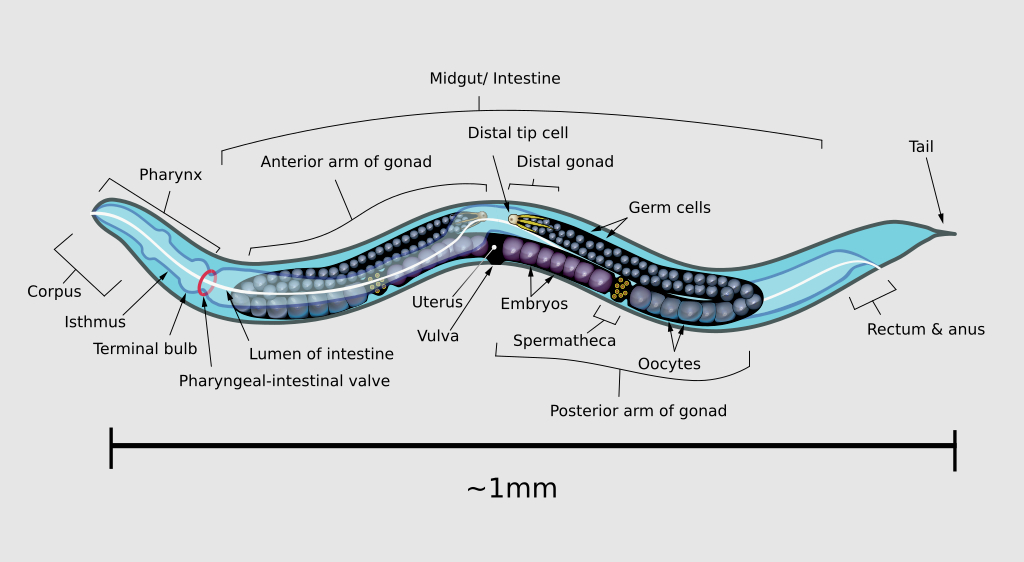
    • 2004 Discovery: The SASS6 gene was discovered in the roundworm C. elegans, showing its conserved function across animals.
    • Gene Suppression in C. elegans:
      • Suppressing the SASS6 gene halted new centriole assembly, stopping development.
    • 2014 Study on a Pakistani Family: Researchers found four family members with microcephaly due to the Ile62Thr mutation in the SASS6 gene.
    • The Ile62Thr mutation was introduced into the C. elegans SASS6 gene.
    • The mutation alone did not significantly impair centriole function but became deadly when combined with another mutation.
    • In humans, this mutation causes microcephaly due to its impact on centriole function.


    PYQ:

    [2016]  In the context of the developments in Bioinformatics, the term ‘transcriptome’, sometimes seen in the news, refers to-

    (a) a range of enzymes used in genome editing

    (b) the full range of mRNA molecules expressed by an organism

    (c) the description of the mechanism of gene expression

    (d) a mechanism of genetic mutations taking place in cells

  • NASA’s PREFIRE Mission to study Earth’s Polar Regions

    Why in the News?

    NASA launched the PREFIRE mission”, deploying twin CubeSats to study heat emissions in the Arctic and Antarctic regions, aiming to enhance climate research.

    What are CubeSats?

    • CubeSats are essentially miniature satellites whose basic design is a 10 cm x 10 cm x 10 cm (which makes up for “one unit” or “1U”) cube — just a little bigger than a Rubik’s cube.
    • weight not more than 1.33 kg.

    • These satellites were first developed in 1999 by California Polytechnic State University at San Luis Obispo (Cal Poly) and Stanford University as educational tools
    • However, owing to their low cost and less mass in comparison to traditional satellites, they began to be put in orbit for technology demonstrations, scientific research, and commercial purposes.

    About PREFIRE Mission

    • Jointly developed by NASA and the University of Wisconsin-Madison. 
    • It aims to investigate and comprehend the intricate dynamics of heat emissions from Earth’s Polar Regions, specifically focusing on the Arctic and Antarctica.

    Components:

    • CubeSats: PREFIRE employs shoebox-sized CubeSats, each measuring around 6U (6 units), equipped with advanced instrumentation to facilitate data collection.
      • They measure around 90 cm in height and nearly 120 cm in width when the solar panels, which will power the satellite, are deployed.
      • The two satellites will be placed in a near-polar orbit (a type of low Earth orbit) at an altitude of about 525 kilometres.
    • Thermal Infrared Spectrometers (TIRS): Each CubeSat is outfitted with a Thermal Infrared Spectrometer, meticulously engineered to measure far-infrared radiation emitted by the Polar Regions.

    Mission Objectives:

    1. Investigate heat radiated from Earth’s Polar Regions into space and its impact on climate.
    2. Employ thermal infrared spectrometers to measure far-infrared energy emitted by Earth’s surface and atmosphere.
    3. Improve understanding of the greenhouse effect at the poles and its implications for climate change.
    4. Enhance climate and ice models to predict changes in sea level, weather, snow, and ice cover in a warming world.

    Why study heat budget of the Poles?

    • A large amount of the heat radiated from the Arctic and Antarctica is emitted as far-infrared radiation wavelengths of 3 μm to 1,000 μm within the infrared range of electromagnetic radiation.
    • However, there is currently no way to measure this type of energy.
    • As a result, there is a gap in knowledge about the planet’s energy budget.

    Significance of PREFIRE

    • PREFIRE’s observations will enhance predictions of climate and environmental changes, aiding in mitigating the effects of global warming.
    • Data collected will contribute to updating climate models and improving understanding of Earth’s atmospheric dynamics.

    PYQ:

    [2017] What is the purpose of ‘evolved Laser Interferometer Space Antenna (eLISA)’ project?

    (a) To detect neutrinos

    (b) To detect gravitational waves

    (c) To detect the effectiveness of missile defence system

    (d) To study the effect of solar flares on our communication systems