💥Join UPSC 2027,2028 Mentorship (July Batch) + XFactor Notes & Microthemes PDF

Subject: Internal Security

  • PIB’s Fact Check Unit: Combating Misinformation in India

    Why in the news?

    • Weeks ahead of the election, the Ministry of Electronics and Information Technology on Wednesday notified the Press Information Bureau’s Fact Check Unit (FCU) as the designated body to flag misinformation about Central government departments to social media platforms.

    Why PIB?

    • Under the GoI (Allocation of Business) Rules, 1961, the Ministry of Information and Broadcasting (MIB) is entrusted with the responsibility of disseminating information about government policies, schemes, and programs through various mediums of communication.
    • In fulfilling its role, the Ministry publicizes the policies, initiatives, schemes, and programs of the Government of India through press releases, press conferences, webinars, publication of books, etc.
    • To carry out this crucial function, the Ministry has several attached and subordinate offices, including the Press Information Bureau (PIB).

    What is Fact Check Unit (FCU)?

    • The Fact Check Unit’s mandate arises from the IT Rules, 2021, which stipulate that social media platforms risk losing legal liability protections if they fail to address notified misinformation promptly.
    • The unit verifies claims about government policies, regulations, announcements and measures.
    • Through an established rigorous fact-checking procedure, the PIB Fact Check Unit helps in dispelling myths, rumours and false claims, and provides accurate and reliable information to the public.

    Operational Framework

    • The FCU, led by senior DG/ADG level officer of the Indian Information Service (IIS), operates under the supervision of the Principal Director General of PIB.
    • Its mandate includes verifying claims related to government policies, regulations, and announcements through a rigorous fact-checking process.
    • The Unit reports to the Principal Director General, PIB who functions as the Principal Spokesperson of the Government of India.

    Fact-Check Mechanism

    • Query Handling: Users submit requests via WhatsApp, email, or a web portal, which are processed as ‘Queries’ by the Unit.
    • Verification Process: Actionable Queries relevant to the Government of India undergo thorough verification using official sources and technological tools.
    • Publication of Fact Checks: Verified information is categorized as Fake, Misleading, or True, and published on the Unit’s social media platforms for public awareness.

    Categories of Fact-Checked Content

    1. Fake: Factually incorrect information intentionally or unintentionally disseminated to deceive or manipulate the audience.
    2. Misleading: Information presented with partial truths, selective facts, or distortion to mislead recipients.
    3. True: Information verified to be factually accurate after rigorous investigation.

    PYQ:

    2017: Democracy’s superior virtue lies in the fact that it calls into activity-

    1. The intelligence and character of ordinary men and women.
    2. The methods for strengthening executive leadership.
    3. A superior individual with dynamism and vision.
    4. A band of dedicated party workers.


    Practice MCQ:

    The centre has recently established the Fact Check Unit (FCU) as a designated body to flag misinformation in India. In this regard, consider the following statements:

    1. Establishment of FCU is mandated under the Right to Information (RTI) Act, 2005.
    2. The FCU is led by an officer of the Indian Audit and Accounts Service (IAAS).

    Which of the given statements is/are correct?

    1. Only 1
    2. Only 2
    3. Both 1 and 2
    4. Neither 1 nor 2


  •  The MIRV leap that fires up India’s nuclear deterrence

    Why in the news? 

    • The Agni-5 ballistic missile test dubbed the “Divyastra”, that was conducted by the Defence Research and Development Organisation (DRDO), is strategically consequential

    Context:

    • With a range of over 5,000 kilometers, the Agni-5 is the longest-range missile India has tested so far. But it is not simply its range but, equally, its potency that represents a watershed moment for India’s nuclear deterrent.
    • The potency of India’s nuclear deterrent is enhanced because this variant is integrated with Multiple Independently Targetable Re-entry Vehicles (MIRVs).

    What are MIRVs?

    MIRVs- A MIRV is a ‘missile bus’ whose passengers are nuclear bombs and which facilitates a single booster to deliver them to different targets. It means  MIRV can target multiple targets that can be hundreds of kilometers apart with a single missile.

    Background:

    • In 1970, the U.S. started to deploy the Minuteman III, the first MIRV-ed intercontinental ballistic missile (ICBM) with three warheads on each missile. In 1971, it deployed the Poseidon, the first MIRV-ed submarine-launched ballistic missile (SLBM) which had the capability of carrying up to 10 warheads on each missile
    • The Soviet Union followed the U.S. and by the 1970s developed its own MIRV-ed ICBM and SLBM technology.
    • China has developed and deployed MIRV technology with multiple warheads placed on its DF-5B ICBMs
    • France and the United Kingdom are known to have MIRV-equipped missiles.

    Why MIRV technology is so lethal? 

    Unlike conventional missiles that deploy a single warhead, MIRV-equipped missiles can release multiple warheads from the missile at varying speeds and trajectories.

    A comparison with China-

    • India’s Late Entry: While MIRV technology is not new globally, India’s development of MIRV-capable ballistic missiles marks its entry into a select group of nations possessing such capabilities, including the established nuclear powers like the United States, Russia, China, France, and the United Kingdom.
    • Potential for Damage Limitation: MIRV-tipped missiles are crucial for striking multiple targets simultaneously and evading ballistic missile defenses. China’s advancements in ballistic missile defenses, such as the HQ-19 interceptors, pose a challenge, although their efficacy against India’s Agni series missiles, especially the Agni-5, still needs to be improved.
    • Need for Further Testing: While integrating MIRV technology into the Agni-5 is a significant step, continued testing and refinement will be necessary to enhance the credibility and effectiveness of India’s nuclear ballistic missile arsenal. The Indian armed services are likely to seek multiple tests to ensure reliability and readiness.

    The complications against the development of MIRV-capable ballistic missiles include:

    • Nuclear Warhead Miniaturization: Achieving miniaturization of nuclear warheads is a demanding technical requirement for MIRV-capable missiles. Inadequate nuclear testing by India has compromised the extent to which warheads could be miniaturized for MIRV applications.
    • Receptacle Weight Reduction: The receptacle that carries the warhead or re-entry vehicle must be of low weight or mass before release from the Post Boost Vehicle (PBV). This requirement adds complexity to the design and engineering of the missile system.
    • Precision Configuration: Re-entry vehicles must be precisely configured to fit into the missile and separate from the PBV, which needs to be manoeuvrable. This necessitates meticulous design and testing to ensure proper functionality.
    • Guidance and Accuracy: Guidance and accuracy are essential for MIRV-capable missiles, as re-entry vehicles must be spin-stabilized during atmospheric re-entry. Achieving the required level of precision adds another layer of complexity to the development process.
    • Geographic Limitation: MIRV-based missiles can only strike multiple targets within their geographic footprint. This limitation requires careful consideration in strategic planning and deployment.
    • Limited Nuclear Testing: India’s limited nuclear testing history has restricted the extent to which warheads could be miniaturized and MIRV technology could be developed. This lack of testing has posed challenges to Indian missile and nuclear engineers.
    • Integration Challenges: Integrating warheads with missiles involves complex processes and requires coordination among various agencies, such as the Terminal Ballistics Research Laboratory (TBRL) and Advanced Systems Limited (ASL). Overcoming integration challenges adds to the difficulty of MIRV development.
    • Decoys and Countermeasures: Uncertainty remains regarding whether the Agni-5 missile can carry decoys and chaff, especially during the boost and intermediate phases of flight. Integrating countermeasures adds additional technical challenges.
    • Launch Platform: Agni-5 is expected to be launched from a road-mobile platform, which introduces logistical and operational considerations for deployment.

    Future Scope for Indian Projects:

    • Submarine Launched Ballistic Missile (SLBM) Testing: India is set to test a long-range SLBM, which will be launched from its nuclear ballistic missile submarines. This project aims to further enhance India’s nuclear deterrence capabilities by adding a sea-based component to its arsenal.
    • Continued Development by DRDO and AEC: The Defence Research and Development Organisation (DRDO) and the Atomic Energy Commission (AEC) of India are expected to continue their collaboration in developing advanced missile and nuclear technologies. This collaboration underscores India’s commitment to strengthening its defense capabilities.
    • Strategic Focus on China: The development of the Agni-5 with MIRV capability specifically addresses potential threats from China’s missile and missile defense programs. India’s strategic focus remains on maintaining a credible deterrent vis-à-vis China.
    • Enhanced Nuclear Capabilities: The successful test of the Agni-5 MIRV missile marks a significant milestone in India’s quest to become a highly credible nuclear and missile power. It signifies India’s determination to bolster its nuclear capabilities to counter emerging threats effectively.

    Conclusion:

    India’s MIRV advancements, though challenging, augment nuclear deterrence against China. Continued testing and SLBM development signify India’s commitment to bolstering defense capabilities and ensuring regional stability.

  • [pib] Exercise Tiger Triumph-24

    Why in the news

    • The third edition of the bilateral tri-service ‘Exercise Tiger Triumph– 24’ between India and the US will be held on the Eastern Seaboard in the US from March 18 to 31.

    Exercise Tiger Triumph-24

    • The primary aim of this exercise is to enhance interoperability between the Indian Navy and the US military for conducting Humanitarian Assistance and Disaster Relief (HADR) operations.
    • It is being held since 2019. The second edition was conducted in 2022.
    • The exercise focuses on refining Standard Operating Procedures (SOPs) to enable rapid and smooth coordination between the forces of both countries during HADR operations.
    • Participants include:
    1. Indian Navy: Ships with integral helicopters and landing crafts, navy aircraft, Indian Army personnel and vehicles, Indian Air Force aircraft and helicopters, and the Rapid Action Medical Team (RAMT).
    2. US Military: US Navy ships with embarked troops from the US Marine Corps and US Army.
    • Indian and US naval assets, along with troops and equipment, are deployed for the Sea Phase after the harbor phase.

    All Major Defence Exercises between India and the US

    • Yudh Abhyas: Yudh Abhyas is an annual bilateral exercise between the Indian Army and the US Army. It focuses on enhancing interoperability and cooperation in counterterrorism and counterinsurgency operations.
    • Malabar Exercise: Malabar is a trilateral naval exercise involving the United States, India, and Japan. It aims to improve interoperability in maritime security, anti-submarine warfare, and disaster response.
    • Cope India: Cope India is an air force exercise between the Indian Air Force and the United States Air Force. It focuses on enhancing interoperability and cooperation in aerial combat tactics, techniques, and procedures.
    • Vajra Prahar: Vajra Prahar is a bilateral Special Forces exercise between the Indian Army and the US Army. It focuses on counterterrorism operations, hostage rescue, and other special operations.
    • Red Flag Exercise: While not exclusively a bilateral exercise between India and the US, the Red Flag Exercise hosted by the United States Air Force at Nellis Air Force Base in Nevada often includes participation from the Indian Air Force. This exercise focuses on advanced aerial combat training and tactics.

    Significance of the Exercise

    • Strengthening Bilateral Ties: The exercise serves to strengthen the strategic partnership and cooperation between India and the United States.
    • Preparedness: Both countries aim to enhance their readiness and capabilities to respond to humanitarian crises and natural disasters effectively.
    • Cooperation: The exercise underscores the commitment of India and the US to international peace and security by collaborating on humanitarian missions.

    Practice MCQ:

    How many of the given are joint defence exercises between India and the US?

    1. Yudh Abhyas
    2. Malabar
    3. Cope India
    4. Vajra Prahar
    5. Mitra Shakti
    6. Garuda Shakti

    Select the correct option:

    1. Two
    2. Three
    3. Four
    4. Five
  • AH-64E Apache Attack Helicopters Fleet inducted to the Army

    Why in the news-

    • The Indian Army Aviation Corps inaugurated its first unit of AH-64E Apache Attack Helicopters into its fleet at Jodhpur Air Base.

    AH-64E Apache Attack Helicopters

    • The AH-64E Apache also known as ‘Apache Guardian’ is widely recognized as the world’s most advanced multi-role combat helicopter.
    • It originates from the United States and is manufactured by Boeing.
    • In February 2020, India sealed a deal with Boeing for the acquisition of six AH-64E for the Army, with an additional six helicopters contracted subsequently.
    • Several countries have acquired the AH-64E, including India, Egypt, Greece, Indonesia, Israel, Japan, South Korea, Kuwait, Netherlands, Qatar, Saudi Arabia, Singapore, UAE, and the UK.
    Indigenous Push

    • Tata Boeing Aerospace Limited (TBAL), a joint venture between Boeing and Tata Advanced Systems Ltd. (TASL), was established in 2016 to manufacture fuselages for the AH-64 Apache.
    • TBAL’s Hyderabad facility has been delivering AH-64 Apache fuselages since 2018.
    • The advanced manufacturing facility will eventually become the sole producer of AH-64 fuselages in the world, with 90% of parts sourced from Indian suppliers.

    Combat Features

    • Engineered with an open systems architecture to integrate cutting-edge communications, navigation, sensor, and weapon systems.
    • Boasts enhanced thrust and lift capabilities, joint digital interoperability, improved survivability, and cognitive decision aiding.
    • Incorporates a new integrated infrared laser for simplified target designation and upgraded infrared imagery blending infrared with night vision capabilities.

    Strategic Significance of the Induction

    • Enhancing Combat Capability: The induction of Apache helicopters marks a significant advancement for the Army Aviation Corps, providing formidable firepower and maneuverability in combat scenarios.
    • Complementing Indigenous Capabilities: The Apaches will complement the indigenous Light Combat helicopter (LCH), strengthening the Army’s aerial combat capabilities.
    • Replacing the ageing arsenal: The Apache fleet is set to will replace the Russian Mi-35 attack helicopters in service.

    Try this PYQ from CSE Prelims 2018:

    Q.What is “Terminal High Altitude Area Defense (THAAD)”, sometimes seen in the news?

    (a) An Israeli radar system

    (b) India’s indigenous anti-missile programme

    (c) An American anti-missile system

    (d) A defence collaboration between Japan and South Korea

    Practice MCQ:

    What is “AH-64E Apache Guardian “, sometimes seen in the news?

    (a) Multi-role Helicopter

    (b) Radar

    (c) Anti-Tank Missile

    (d) Air-Defence System


  • India world’s top arms importer between 2019-23: SIPRI

    Why in the news? 

    • In recent years, India has decreased its reliance on the top arms supplier of Russia from 76% (2009-13) to 36% (2019-23), as per SIPRI, indicating diversification in arms imports.

    Context:

    • India’s arms imports have marked an eventual shift from Russia to France and the U.S. impacting India’s defensive modernization, regional security dynamics in the Indo-Pacific, and global arms trade trends, reshaping geopolitical relationships.

    Major shift observed in the volume of exporters to India:

    • Increase in France’s Share: France’s share of India’s arms imports surged from 0.9% in 2009-13 to 33% in 2019-23, positioning it as the second-largest supplier.
    • Increase in U.S. share: The U.S.’s share of India’s arms imports also rose from 8% to 13% during the same period.

    • Focus on Military Modernization: The rise in arms imports reflects India’s ongoing efforts towards military modernization and enhancement of defense capabilities.

    How India has climbed to become the world’s biggest arms importer, displacing Saudi Arabia?


    • India’s Rise as Largest Arms Importer: India surpassed Saudi Arabia to become the world’s biggest arms importer between 2019 and 2023, with its share in global arms imports increasing from 9.1% to 9.8%. Saudi Arabia’s share of global arms imports decreased from 11% to 8.4% during the same period.
    • Emergence of Ukraine: Ukraine, previously a negligible importer, increased its share of global arms imports to 4.9% following the Russian invasion in February 2022.
    • Trends in Neighboring Countries: Pakistan’s share in global arms imports rose from 2.9% to 4.3%, while China’s share declined from 4.9% to 2.9%.

    How Russia is affected in this scenario?

    • Decline in Russia’s Arms Exports: Russia’s share of global arms exports decreased from 21% in 2014-18 to 11% in 2019-23, accompanied by a 52% reduction in volume terms. Russian arms exports remained stable until 2019 but rapidly declined in 2020-2023, with a 74% decrease in volume by 2023 compared to 2019.
      • Impact on Russia’s Arms Industry: The decline in Russia’s arms exports suggests potential challenges for its arms industry, including decreased revenue and market share.
      • Decrease in Number of Recipient Nations: Russia supplied arms to 31 nations in 2019, which decreased to 12 by 2023, indicating a reduction in its arms export footprint.
    • U.S. Consolidation as Top Exporter: The U.S. increased its share in global arms exports from 34% to 42% during the same period, consolidating its position as the leading arms exporter. The U.S.’s increased share in global arms exports underscores its dominance in the arms market and its ability to expand its influence worldwide.

    How India is affected in this scenario?

    • Diversification of Arms Suppliers: India’s reduced dependence on Russia indicates a diversification strategy, reducing vulnerability to supply disruptions and geopolitical tensions.
    • Strengthened Defense Partnerships: Increased arms imports from France and the U.S. suggest enhanced defense partnerships, potentially leading to technology transfers, joint ventures, and co-development projects.
    • Modernization of Armed Forces: Importing a diverse range of weapons and equipment from multiple suppliers enhances the modernization efforts of India’s armed forces, improving operational capabilities and readiness.
    • Technological Advancements: Collaboration with advanced arms exporters like France and the U.S. may facilitate access to cutting-edge technologies, fostering indigenous defense production capabilities and innovation.

    What are the implications on Indo-Pacific region?

    • Impact on Regional Dynamics: The shift in India’s arms imports could alter the balance of power in the Indo-Pacific region, potentially prompting other countries to reassess their defense strategies and alliances.
      • Increased arms imports from France and the United States may signal India’s intention to diversify its defense partnerships and capabilities, potentially contributing to regional stability by reducing dependence on a single supplier.
    • Western Tilt: Diversifying arms imports could reach it with Western defense systems, potentially bolstering its role as a key player in the Indo-Pacific region’s security architecture.
    • China Factor: This may aim at countering China’s growing military assertiveness in the region. This could lead to increased competition and tensions between the two countries.
    • Russia’s Influence: The reduction in India’s arms imports from Russia may diminish Russia’s influence in the Indo-Pacific region.

    Conclusion

    • India’s decreasing reliance on Russian arms, increased imports from France and the U.S., and diversification of suppliers reshape regional security dynamics have more evolving dynamics in Global geopolitics considering recent moves of Russia in its defence and military policies.

    Mains PYQs:

    What is the significance of Indo-US defence deals over Indo-Russian defence deals? Discuss with reference to stability in the Indo-Pacific region. (2020)

    Practice Questions for Mains:

    Q- How has India’s decreasing reliance on Russian arms and increasing imports from France and the U.S. reshaped regional security dynamics and global arms trade trends?

  • Mission Divyastra: Agni-5 Missile with MIRV Technology

    In the news

    • India’s recent successful testing of an Agni-5 Missile equipped with Multiple Independently Targetable Re-entry Vehicle (MIRV) technology with multiple warhead capabilities, termed Mission Divyastra, marks a significant milestone in the nation’s defense capabilities.

    What are Agni Missiles?

    • Agni missiles are long range, nuclear weapons capable surface to surface ballistic missile.
    • The first missile of the series, Agni-I was developed under the Integrated Guided Missile Development Program (IGMDP) and tested in 1989.
    • After its success, Agni missile program was separated from the IGMDP upon realizing its strategic importance.
    • It was designated as a special program in India’s defence budget and provided adequate funds for subsequent development.

    Variants of Agni missiles

    1. Agni I: It is a Medium Range Ballistic Missile with a Range of 700-800 km.
    2. Agni II: It is also a Medium Range Ballistic Missile with a Range more than 2000 km.
    3. Agni III: It is also an Inter-Medium Range Ballistic Missile with Range of more than 2,500 Km
    4. Agni IV: It is also an Inter-Medium Range Ballistic Missile with Range is more than 3,500 km and can fire from a road mobile launcher.
    5. Agni-V: Currently it is the longest of Agni series, an Inter-Continental Ballistic Missile (ICBM) with a range of over 5,000 km.
    6. Agni- VI: The longest of the Agni series, an ICBM with a range of ICBM 11,000–12,000 km.

    About Agni-5 Missiles

    • Indigenous Development: Agni missiles, developed by the Defence Research and Development Organisation (DRDO), have been integral to India’s defense arsenal since the early 1990s.
    • MIRV Technology: The latest variant of Agni incorporates Multiple Independently Targetable Re-entry Vehicle (MIRV) technology, a sophisticated capability possessed by only a handful of countries globally.

    Developments in MIRV Technology

    • Targeting Versatility: MIRV technology enables a single missile to target multiple locations, potentially hundreds of kilometers apart, significantly enhancing its operational effectiveness.
    • Range and Strategic Focus: Agni, equipped with nuclear warheads, boasts a range exceeding 5,000 km, primarily aimed at countering threats from China.
    • Limited MIRV-Equipped Nations: Currently, major nations possessing MIRV-equipped missiles include the United States, Russia, China, France, and the United Kingdom, with emerging capabilities in Pakistan and Israel.
    • Complex Technology: Developing MIRV technology requires miniaturization of warheads, independent guidance systems, and sequential release mechanisms, making it a challenging endeavor.

    Strategic Significance of the Mission Divyastra

    • Versatile Strike Capabilities: MIRV-equipped missiles enable simultaneous strikes on multiple targets, overwhelming enemy defenses and maximizing damage potential.
    • Deterrence and Defense Penetration: These missiles pose a significant challenge to missile defense systems, as multiple warheads with independent trajectories can thwart interception efforts.
    • Strategic Balance and Deterrence: For nations like India with a no-first-use policy, MIRV technology enhances the credibility of response strikes, serving as a potent deterrent against aggression.

    Try this PYQ from CS Prelims 2014:

    Which reference to Agni-IV Missile, which of the following statements is/are correct?

    1. It is a surface-to-surface missile.
    2. It is fuelled by liquid propellant only.
    3. It can deliver one-tonne nuclear warheads about 7500 km away.

    Select the correct answer using the code given below.

    (a) 1 only

    (b) 2 and 3 only

    (c) 1 and 3 only

    (d) 1, 2 and 3


    [wpdiscuz-feedback id=”xa0gtk7839″ question=”Please leave a feedback on this” opened=”1″]Post your answers here.[/wpdiscuz-feedback][wpdiscuz-feedback id=”yhqrx9g6fd” question=”Please leave a feedback on this” opened=”1″][/wpdiscuz-feedback]

  • MH 60R Seahawk: 1st squadron commissioned into Indian Navy

    In the news

    • The Indian Navy describes the commissioning of the MH-60R Seahawk squadron as a pivotal moment in India’s defense modernization journey.

    About MH 60R Seahawk

    • Maritime Variant: The MH-60R Seahawk is the maritime variant of the Black Hawk helicopter, procured through a 24-aircraft foreign military sales contract with the US government in February 2020.
    • Operational Capabilities: It is designed for various operations including anti-submarine warfare, anti-surface warfare, search and rescue, and medical evacuation.
    • Arsenal: These helicopters offer advanced weapons, sensors, and avionics suite tailored to India’s maritime security needs.
    • Armament: Armed with AGM-114 Hellfire missiles, MK 54 torpedoes, and advanced precision weapons, the helicopters provide formidable firepower.

    Significance

    • Enhanced Blue-Water Capabilities: The commissioning enhances India’s blue-water capabilities, extending operational reach across vast maritime domains.
    • Maritime Security: It aligns with the PM’s vision of ensuring security and growth for all in the region (SAGAR), reinforcing the Indian Navy’s dedication to fortifying maritime security.
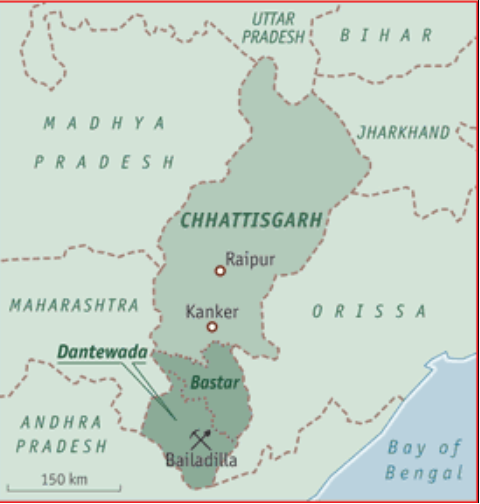
  • Maoism and Related Issues

    mao

    In the news

    • The Nagpur Bench of the Bombay High Court recently acquitted a former Delhi University professor and five others in a case under the Unlawful Activities (Prevention) Act (UAPA) for alleged Maoist links.
    • The Maharashtra government swiftly approached the Supreme Court seeking an urgent hearing after failing to secure a stay on the High Court’s judgment.

    CSE Mains Questions based on Left Wing Extremism (LWE):


    Note: Almost every alternate year, a question on LWE has been asked in the Mains.


    1. 2015: The persisting drives of the government for development of large industries in backward areas have resulted in isolating the tribal population and the farmers who face multiple displacements. With Malkangiri and Naxalbari foci, discuss the corrective strategies needed to win the Left Wing Extremism (LWE) doctrine affected citizens back into mainstream of social and economic growth.
    2. 2018: Left Wing Extremism (LWE) is showing a downward trend, but still affects many parts of the country. Briefly explain the Government of India’s approach to counter the challenges posed by LWE.
    3. 2020: What are the determinants of left-wing extremism in Eastern part of India? What strategy should the Government of India, civil administration and security forces adopt to counter the threat in the affected areas?
    4. 2022: Naxalism is a social, economic and developmental issue manifesting as a violent internal security threat. In this context, discuss the emerging issues and suggest a multi-layered strategy to tackle the menace of Naxalism.

    Who are the Maoists?

    • Origins: Maoism, derived from the teachings of Chinese leader Mao Zedong, emerged as a form of communist theory.
    • Ideology: Maoists believe in the philosophy that “Power flows from the barrel of the gun” and advocate for armed struggle to achieve their goals.
    • Evolution in India: Maoism gained prominence in India through movements like the Naxalbari uprising, leading to the formation of groups like the Maoist Communist Centre (MCC) in West Bengal.

    Historical Context and Evolution

    • Influence of Russian Revolution: Naxalism draws ideological inspiration from the Russian Revolution and the overthrow of the Tsarist regime.
    • Marxian Ideals: Rooted in Marxism, Maoism emphasizes class struggle and the redistribution of power to marginalized communities.
    • Neo-Marxism: After the success of revolutions led by Lenin and Mao, intellectuals worldwide, including Fidel Castro, embraced Marxist ideologies.

    Root Causes of Maoism in India

    • Corporate Exploitation: Exploitation of natural resources in Eastern India has led to marginalization and harassment of tribal communities.
    • Tribal Alienation: Post-independence, tribal communities lost traditional rights over resources, leading to alienation.
    • Livelihood Losses: Depletion of natural resources threatened tribal livelihoods.
    • Forceful Displacement: Displacement from ancestral lands disrupted traditional governance systems.
    • Absence of Governance: In areas of exploitation, governance structures collapsed due to killings and intimidation.
    • Foreign Provocations: External support for LWE outfits exacerbated the conflict.

    Impact on Youth

    • Romanticism and Misunderstanding: Some view Maoists romantically, overlooking the violence inherent in their ideology.
    • Violence and Destruction: Maoist doctrine glorifies violence, leading to destruction of governance mechanisms.
    • Radicalization and Coercion: Maoists radicalize youth and coerce locals to join their movement.
    • Urban Presence: Maoists extend their influence to semi-urban and urban areas, facilitated by educated intellectuals.

    Strategies used by LWEs and Maoists

    • Utilization of State Structures: Maoists exploit state structures to further their agenda and weaken enforcement.
    • Recruitment and Fundraising: They recruit and raise funds for insurgency, often through legal means.
    • Urban Shelters: Maoists establish urban shelters for underground cadres.
    • Legal Assistance: Legal aid is provided to arrested cadres.
    • Mass Mobilization: They mobilize masses on issues relevant to their cause.

    Government Initiatives for LWE-Affected Areas

    • Aspirational Districts Programme: Monitoring of development initiatives in affected districts.
    • Education and Infrastructure: Building schools and improving road connectivity in affected areas.
    • Naxal Surrender Policy: Aimed at reintegrating misguided youth and hardcore extremists.
    • National Policy Action Plan: Development-focused policy to address LWE challenges.

    SAMADHAN Doctrine: A Comprehensive Strategy

    • Smart Leadership: Effective leadership at all levels.
    • Aggressive Strategy: Proactive measures to counter extremism.
    • Motivation and Training: Training of security personnel and motivation for operations.
    • Actionable Intelligence: Intelligence-driven operations.
    • Harnessing Technology: Use of technology for surveillance and monitoring.
    • Strategic Action Plans: Tailored action plans for each theater of conflict.
    • Financial Isolation: Cutting off financial support to extremist groups.

    Way Forward

    • Dual Objective: Military defeat of insurgents and ideological resolution of grievances.
    • Institutional Overhauls: Reforms in governance and security institutions.
    • Coordinated Efforts: States must coordinate operations to deny space to Maoists.
    • Population Segregation: Separating civilians from insurgents, both operationally and ideologically.
    • Economic Development: Addressing resource conflicts through inclusive economic development.

    Conclusion

    • Understanding the complex dynamics of Maoism and Left-Wing Extremism is crucial for formulating effective counterinsurgency strategies.
    • By addressing root causes, implementing targeted initiatives, and adopting a comprehensive approach, India can mitigate the impact of LWE and pave the way for sustainable peace and development in affected regions.
  • INS Jatayu: India’s new Naval Base in Lakshadweep

    In the news

    • The Naval Detachment Minicoy will transition into INS Jatayu, an upgraded naval base, symbolizing India’s commitment to bolstering security infrastructure in the strategic Lakshadweep Islands.
    • This development underscores the Indian Navy’s strategic imperative to fortify its presence in the region.

    About INS Jatayu

    • Upgrade to Naval Base: INS Jatayu will be elevated to a fully-fledged naval base, equipped with essential infrastructure such as an airfield and housing facilities.
    • Strategic Location: Situated amidst vital Sea Lines of Communications (SLOCs), the Lakshadweep Islands hold immense strategic importance, serving as a gateway to the Indian Ocean.
    • Enhanced Operational Capability: The transformation of Naval Detachment Minicoy into INS Jatayu signifies a significant augmentation of the Navy’s operational capabilities in the region.
    • Geopolitical Dynamics: Against the backdrop of evolving geopolitical dynamics, particularly China’s increasing influence in the Indian Ocean Region, the establishment of INS Jatayu assumes greater significance.

    minicoy jatayu

    A Strategic Asset: Lakshadweep Archipelago

    • Geographical Context: Lakshadweep, comprising 36 islands, lies strategically between the Indian mainland and the Maldives, serving as a vital link in India’s maritime security architecture.
    • Maritime Highways: Minicoy, in particular, is strategically positioned along key maritime highways, including the Eight Degree Channel and the Nine Degree Channel.

    Future Prospects and Challenges

    • Operational Implications: The establishment of INS Jatayu will bolster the Navy’s operational reach and responsiveness, enabling effective anti-piracy and anti-narcotics operations in the western Arabian Sea.
    • Ecological Considerations: The fragile ecology of the island poses challenges for infrastructure development, necessitating meticulous planning and environmental clearances.
    • Operational Expansion: The proposed airfield at INS Jatayu will facilitate operations for various aircraft, bolstering the Navy’s surveillance capabilities and extending its operational reach.
  • Plans for Non-Lapsable Defence Modernization Fund put on hold

    In the news

    • The Ministry of Defence (MoD) had informed Parliament recently a separate mechanism by the Ministry of Finance in consultation with the MoD to explore a special dispensation to operationalize a “Non-lapsable Defence Modernisation Fund” because the non-lapsable pool has drawbacks as it affects parliamentary scrutiny and accountability.

    About Non-Lapsable Defence Modernisation Fund (DMF): 

    • The DMF aims to create a dedicated pool of funds that carry over from year to year, ensuring that unutilized funds are retained for future defence modernisation initiatives. Currently, defence funding in India operates on a yearly basis, with unspent funds being returned at the end of each fiscal year.
    • The dedicated Modernisation Fund is intended to supplement regular budgetary allocations and provide certainty in funding for various defence capability development and infrastructure projects.

    Recommendation by XV Finance Commission

    • The 15th Finance Commission proposed a dedicated Modernisation Fund for Defence and Internal Security.
    • It said the Union may constitute in the Public Account of India, a dedicated non-lapsable fund, Modernisation Fund for Defence and Internal Security (MFDIS).

    About the Public Account of India

    • The Public Account of India was constituted by Article 266(2) of the Indian Constitution which states that “All other public moneys received by or on behalf of the Government of India or the Government of a State shall be credited to the public account of India or the public account of the State, as the case may be.”
    • These funds are used to manage transactions where the government serves as a banker, such as provident funds, small savings, and other deposits. 
    • The Comptroller and Auditor General (CAG) is responsible for auditing all expenditures from the Public Account of India.
    • Withdrawal or utilization of money can only occur for specific purposes authorized by law or parliamentary approval, ensuring proper allocation and utilization of funds.

     Need for Non-Lapsable Funds:

    • Addressing Budgetary Limitations: Yearly budget allocations lead to the surrender of unutilized funds, hindering defense modernization efforts.
    • Creating Certainty: Non-lapsable funds offer certainty in funding availability, promoting stability and continuity in modernization initiatives.
    • Enhancing Flexibility: These funds provide flexibility for addressing unforeseen contingencies and promoting long-term planning.

    Significance of Non-Lapsable Funds:

    • Certainty and Continuity: Non-lapsable funds offer assurance of funding for defence modernisation, eliminating the need for frequent requests for additional funds and ensuring continuity in project execution.
    • Flexibility: These funds provide flexibility in utilization, allowing for the allocation of resources to unforeseen requirements or contingencies that may arise during the year.
    • Long-term Planning: By allowing funds to carry over across fiscal years, non-lapsable funds facilitate long-term planning for defence modernization projects, promoting systematic and strategic development.

    Challenges and Considerations

    • Parliamentary Scrutiny: Establishing a non-lapsable fund may raise concerns about reduced parliamentary scrutiny and accountability over defense spending.
    • Operational Modalities: Determining the sources of funding and operational modalities for the DMF require careful consideration to ensure effectiveness and transparency.
    • Interagency Coordination: Coordination between the Ministry of Defence and the Ministry of Finance is essential for the successful implementation of the fund.

    Conclusion

    • The proposal for a Non-Lapsable Defence Modernisation Fund represents a proactive approach to addressing the challenges associated with defence funding in India.
    • While the concept offers several potential benefits, its implementation requires careful deliberation and collaboration between key stakeholders to ensure accountability, transparency, and optimal utilization of resources in support of national security objectives.

    Try this PYQ from CSP 2014:

    Q.With reference to Union Budget, which of the following, is/are covered under Non-Plan Expenditure?

    1. Defence-expenditure
    2. Interest payments
    3. Salaries and pensions
    4. Subsidies

    Select the correct answer using the code given below:

    (a) 1 only

    (b) 2 and 3 only

    (c) 1, 2, 3 and 4

    (d) None

    [wpdiscuz-feedback id=”299adksz0k” question=”Please leave a feedback on this” opened=”1″]Post your answers here.[/wpdiscuz-feedback]