đŸ’„Join UPSC 2027,2028 Mentorship (July Batch) + XFactor Notes & Microthemes PDF

Subject: Internal Security

  • Operation Sarvashakti launched

    Introduction

    • The Indian Army has initiated Operation Sarvashakti in the Rajouri-Poonch sector of Jammu and Kashmir to combat rising terrorist threats targeting security forces.
    • This article explores Operation Sarpvinash, a similar military operation conducted in the same region over two decades ago, shedding light on its objectives, significance, and historical context.

    Operation Sarvashakti: The Need for Action

    • Escalating Threats: Recent years have witnessed three major terrorist attacks in the area, resulting in the loss of 20 soldiers.
    • Foreign Terrorist Presence: The region is known for hosting foreign terrorists, making it a significant security concern.
    • Enhancing Troop Presence: Operation Sarvashakti involves deploying additional troops to increase the density, thereby improving the chances of encounters with terrorists.

    Reflecting on Operation Sarpvinash

    • Counter-Insurgency in 2003: Operation Sarpvinash was conducted by Indian forces in response to the growing insurgency in Jammu and Kashmir.
    • Extensive Troop Deployment: Over about three months, around 10,000 troops from the 15 Corps and 16 Corps participated in the operation.
    • Aerial Support: Mi-17 helicopters facilitated troop transport to Hilkaka, a village seized by terrorists, while Lancer attack helicopters neutralized concrete bunkers built by infiltrators.
    • Decisive Outcomes: The operation led to the elimination of nearly 100 terrorists, significant arms and ammunition seizures, including explosives, and the dismantling of 40-50 terrorist hideouts.

    Origins of Operation Sarpvinash

    • Post-Kargil War Scenario: With the Kargil war of 1999 fresh in memory and the aftermath of the December 2001 Parliament attack, Operation Parakram involved a substantial military mobilization along the Pakistan border.
    • Preparation in 2003: Operation Sarpvinash preparations began after intelligence reports indicated the presence of over 300 foreign terrorists who had infiltrated the Line of Control (LoC) and established secure camps in Surankote and Hilkaka.
    • Terrorist Control: These terrorists, affiliated with various Pakistan-based outfits, had created a demilitarized zone and asserted dominance, including the establishment of multiple hideouts and bunkers.

    Strategic Significance

    • Crucial Location: The areas south of Mendhar leading to the Pir Panjal range through Hilkaka offer the shortest infiltration route from across the LoC into the Kashmir valley.
    • Infiltration Potential: Controlling this region provides a potential conduit for personnel during a Pakistani military operation and facilitates terrorist infiltration.
    • Natural Cover: Dense forests and steep mountain slopes offer natural concealment, allowing terrorists to evade Indian forces during searches and engage them strategically.

    Post-Sarpvinash Scenario

    • Period of Peace: Following Operation Sarpvinash, the region experienced relative peace until 2017-18, despite ongoing terrorist incidents in the Kashmir valley.
    • Recent Escalations: However, since 2021, this area has witnessed a resurgence of high-intensity attacks on security forces.
  • BSF’s Jurisdiction Expansion: Punjab’s Challenge and Implications

    bsf

    Introduction

    • In October 2021, the Ministry of Home Affairs made a significant move by extending the jurisdiction of the Border Security Force (BSF) in certain states, leading to a legal dispute between the central government and the affected states.
    • This article examines the recent developments and the key issues surrounding the expansion of BSF’s jurisdiction.

    Expansion of BSF Jurisdiction

    • Border Security Force (BSF): The BSF is India’s border guarding organization, tasked with securing the borders with Pakistan and Bangladesh. It operates under the Ministry of Home Affairs.
    • Notification: The Ministry of Home Affairs issued a notification in October 2021, expanding the BSF’s jurisdiction in specific states.
    • Changes in Jurisdiction:
      1. In Punjab, West Bengal, and Assam, the BSF’s jurisdiction was extended from 15 km to 50 km inland from the border.
      2. In Gujarat, the jurisdiction was reduced from 80 km to 50 km.
      3. Rajasthan’s jurisdiction remained unchanged at 50 km.

    Legal Frameworks

    • Border Security Force Act: The Ministry of Home Affairs invoked the Border Security Force Act of 1968 to delineate the BSF’s jurisdiction.
    • Powers Exercised: The BSF’s jurisdiction extension applies only to specific powers granted under the Criminal Procedure Code (CrPC), Passport (Entry into India) Act, 1920, and Passport Act, 1967.

    Rationale behind BSF’s Jurisdiction Expansion

    • Historical Context: The BSF was established in 1965 to secure India’s borders. At that time, border regions were sparsely populated, and police stations were scarce.
    • Trans-Border Crimes: To combat trans-border crimes effectively, the BSF was empowered to arrest and search individuals within its jurisdiction.
    • Manpower Constraints: Despite the establishment of police stations near the border, staffing remained inadequate.

    Issues Surrounding Border Regions

    • Challenges at Borders:
      1. Encroachment
      2. Illegal incursion
      3. Drug and cattle smuggling
    • Complementary Role: Expanding BSF’s jurisdiction was intended to complement the efforts of local police, enhancing cooperative measures rather than displacing state police authority.

    Criticisms and Legal Challenges

    • Federalism Concerns: States argued that the extension of BSF’s jurisdiction encroached upon their powers related to police and public order, asserting their rights under the Constitution.
    • Lack of Consultation: The states also contended that the central government issued the notification without consulting the affected states.
    • Original Suit: The state of Punjab filed an ‘original suit’ against the central government in the Supreme Court under Article 131 of the Constitution, which grants the Supreme Court exclusive jurisdiction over disputes between the central government and states.
    • Approach: Punjab argued that the expansion compromised its legislative authority on policing matters and public order, emphasizing that a significant portion of its cities and towns would now fall within the 50-kilometre jurisdiction.

    Ongoing Legal Battle

    • Exclusive Challenge: While West Bengal initially expressed opposition to the notification, currently, only Punjab’s challenge is tagged with the Supreme Court.
    • Key Considerations: The Supreme Court will assess the validity of the notification, examining whether it was arbitrary or backed by legitimate reasons. It will also weigh the impact on states’ powers under the Constitution and determine if uniformity is required in setting local limits for BSF’s jurisdiction.

    Conclusion

    • The legal battle between the central government and the states over the expansion of BSF’s jurisdiction highlights the complex interplay between federalism, national security, and law enforcement.
    • The Supreme Court’s decision will have far-reaching implications for the distribution of powers between the center and the states in matters related to border security and policing.
  • Terrorism, militancy and pirates: Gulf of Aden hijacking underlines naval challenges

    The Illegal Occupation of Islands in the Gulf of Aden | by Karthick Nambi |  Lessons from History | Medium

    Central Idea:

    The resurgence of piracy in the western Indian Ocean, exemplified by the recent hijacking of MV Lila Norfolk, has placed regional navies, including the Indian Navy, under strain. The article explores potential explanations for the surge in pirate attacks, including security shifts in the Gulf of Aden, possible collaborations between pirates and militants, and connections to power rivalries in the Horn of Africa.

    Key Highlights:

    • The Indian Navy’s swift and effective response in rescuing the MV Lila Norfolk crew demonstrated their capability and determination in ensuring maritime security.
    • Reduced international maritime presence in the Gulf of Aden may have contributed to the recent increase in pirate attacks.
    • The article discusses theories of collaboration between pirates and militants, lack of concrete evidence, and links piracy to power dynamics in the Horn of Africa.
    • Socioeconomic factors, like illegal fishing off Somalia’s coastline, continue to fuel piracy as a means for local communities to cope with limited resources.

    Key Challenges:

    • The resurgence of piracy poses a significant challenge for regional navies and shipping companies.
    • The complexity of piracy and the diverse theories surrounding its resurgence make it challenging to address with a one-size-fits-all approach.

    Key Terms:

    • MV Lila Norfolk
    • Gulf of Aden
    • Al-Shabaab
    • Houthis
    • Somaliland
    • P-8I maritime patrol aircraft
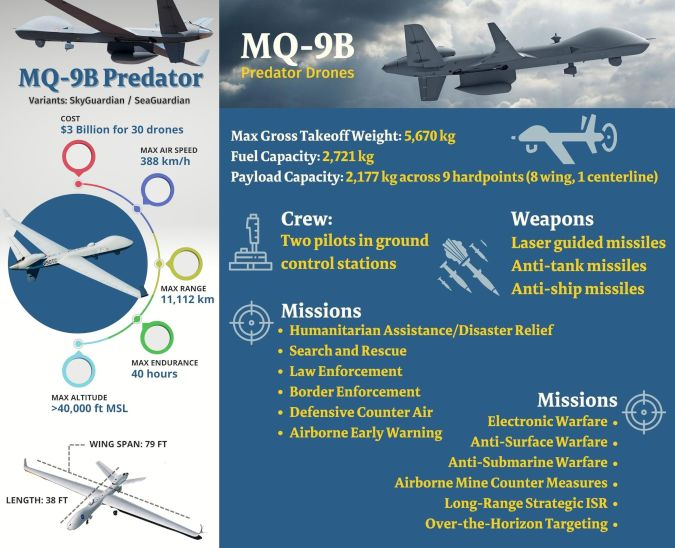
    • MQ-9B drone

    Key Phrases:

    • Security shift from the Gulf of Aden to the Red Sea.
    • Collaboration between pirates and militants.
    • Power rivalries in the Horn of Africa.
    • Socioeconomic realities underlying Somali piracy.

    Key Quotes:

    “The Indian Navy has received deserved praise for its prompt and effective response.” “The growing frequency of attacks in the Gulf of Aden has called into question assumptions about the eradication of piracy in Somali waters.”

    Key Statements:

    • The article emphasizes the prompt and effective response of the Indian Navy in the recent piracy incident.
    • It questions the adequacy of current anti-piracy operations in the Gulf of Aden.

    Key Examples and References:

    • MV Lila Norfolk hijacking on January 5, 2024.
    • Termination of NATO’s anti-piracy mission in 2016.

    Key Facts:

    • 21 crew members, including 15 Indians, were rescued in the recent piracy incident.
    • Attacks on merchant ships in the western Indian Ocean have become increasingly common in the past six weeks.

    Key Data:

    • The MV Lila Norfolk, sailing under the Liberian flag, was hijacked 850 km east off Africa’s coast.
    • The Indian Navy deployed the INS Chennai, a guided missile destroyer, in response to the hijacking.

    Critical Analysis:

    The article critically examines various theories behind the resurgence of piracy, highlighting the complexity of the issue and the challenges faced by regional navies. The lack of concrete evidence for certain theories is acknowledged, emphasizing the multifaceted nature of the problem.

    Way Forward:

    • Strengthen international cooperation and presence in the Gulf of Aden to address the piracy resurgence.
    • Conduct further research to understand the root causes of piracy, including socioeconomic factors and power dynamics.
    • Reassess and enhance anti-piracy operations to adapt to evolving security challenges in the region.
  • Operation Sadbhavana by Indian Army

    Operation Sadbhavana

    Introduction

    • The Indian Army has recently adopted Topa Pir village in Poonch district, Jammu and Kashmir, as a model village under Operation Sadbhavana.

    Operation Sadbhavana

    • Purpose: Operation Sadbhavana (Goodwill) is an initiative by the Indian Army in Jammu and Kashmir and Ladakh to address the needs of people affected by terrorism, primarily sponsored by Pakistan.
    • Welfare Activities: The operation includes running Army Goodwill Schools, infrastructure development projects, and educational tours for children in remote areas.
    • Focus on Education: There are seven Army Goodwill Schools under Operation Sadbhavana in the Ladakh Region, aiming to improve the standard of education.
    • Objectives: The operation aims to achieve national integration, women empowerment, employment generation, and development activities towards nation-building.
    • Collaborative Approach: Projects under Operation Sadbhavana are selected considering local aspirations and in coordination with the local civil administration.

    Adoption of Topa Pir Village

    • Model Village Initiative: The Army’s adoption of Topa Pir village is a step towards creating a model village, with an emphasis on community development and welfare.
    • Recent Incidents: The village gained attention following a controversial incident involving the alleged torture of civilians by the Army, which led to the deaths of three individuals.
    • Community Relations: The incident has significantly impacted the relationship between the Army and the local Gujjar and Bakarwal communities, who predominantly inhabit areas near the Line of Control (LoC).
  • The delusion of eliminating ‘the last terrorist’

    Battalion approach is not best of counter-terrorism strategies

    Central Idea:

    The article, written by Shashank Ranjan, a retired Indian Army officer and current faculty member at O.P. Jindal Global University, critiques the counter-terrorism approach in Jammu and Kashmir, emphasizing the need to reevaluate the obsession with the number of terrorists killed. It highlights the historical context of insurgency in the Rajouri-Poonch region and argues that a singular focus on ‘kills’ may be counterproductive in achieving long-term stability.

    Key Highlights:

    • The new year in Jammu and Kashmir began with a terror strike in Rajouri-Poonch, leading to a renewed focus on the number of terrorists killed by security forces.
    • The article questions the efficacy of the current counter-terrorism approach, suggesting that an obsession with numbers may not align with the changing dynamics of insurgency in the region.
    • Ranjan draws attention to the historical success in curbing insurgency in Rajouri-Poonch by addressing the root causes, and how the focus on ‘kills’ might be contributing to the re-emergence of instability.

    Key Challenges:

    • The article highlights the challenges posed by a system that is reluctant to adapt to changing dynamics and continues to prioritize short-term gains and competitive career environments over long-term stability.
    • The gap between the tactical-level operations and people-centric approaches is emphasized, pointing out the lapses that have led to civilian casualties and operational rush for ‘kills.’
    • The reluctance of political initiatives in Jammu and Kashmir is mentioned as a challenge, hindering a comprehensive resolution through a whole-of-government approach.

    Key Terms:

    • Counter-terrorism: Measures and strategies to combat terrorism and insurgencies.
    • People-centric: Approaches and operations that prioritize the well-being and acceptance of the local population.
    • Whole-of-Government Approach: An integrated approach involving all government agencies to address complex issues.

    Key Phrases:

    • “Debatable obsession with the numbers of terrorists killed.”
    • “Misplaced focus of the counter-terrorism approach.”
    • “Tail wagging the dog” – Pursuing goals without regard to the means.

    Key Quotes:

    • “In our undue obsession with the numbers of ‘kills’, we may have been winning the battle by addressing the symptoms, but it has indeed been at the cost of the campaign.”
    • “Chasing numbers was the obvious option in the years when terror-related fatalities in J&K touched a yearly mark of 2,000-plus.”

    Key Statements:

    • “The situational dynamics, unfortunately, never ushered in adjustments in the modus operandi of security forces and assessment methodology of unit performance by the hierarchy.”
    • “Leadership is all about compensating any cost to the soldier, with the leader standing up to bridge the gap between the interests of people and soldiers.”

    Key Examples and References:

    • Refers to the historical success in curbing insurgency in Rajouri-Poonch by addressing root causes.
    • Mentions the unfortunate death of three civilians in Dera ki Gali as a consequence of lapses in people-centric policies.

    Key Facts and Data:

    • Reports declining terror-related fatalities in Jammu and Kashmir, contrasting figures at 134 in 2023 with over 2,000 in earlier years.
    • Highlights the absence of Assembly representation in J&K since 2018.

    Critical Analysis:

    The article critically analyzes the counter-terrorism approach, pointing out the flaws in focusing solely on the number of terrorists killed. It underlines the need for adaptation to changing dynamics, a people-centric approach, and a shift from short-term gains to long-term stability.

    Way Forward:

    • Urges a reevaluation of the current counter-terrorism strategy to align with the evolving dynamics of insurgency.
    • Emphasizes the importance of a people-centric approach and addressing the root causes of conflict.
    • Calls for political initiatives and a whole-of-government approach to achieving comprehensive and lasting stability in Jammu and Kashmir.
  • Akash Missile System: India’s Iron Dome

    akash missile

    Central Idea

    • India demonstrated the firepower of its Akash surface-to-air (SAM) weapon system, where a single firing unit simultaneously engaged and destroyed four unmanned targets during the recent Exercise Astrashakti 2023.
    • Countries like Armenia, Brazil, and Egypt have shown interest in acquiring the Akash SAM.

    About Akash Missile System

    Details
    Development and Production Developed by the Defence Research and Development Organisation (DRDO), produced by Bharat Dynamics Ltd (BDL).
    Type Short-range Surface-to-Air Missile (SAM).
    Engagement Capacity Engages four aerial targets simultaneously at a range of 25 km from a single firing unit.
    Target Engagement Capable of targeting multiple threats concurrently in group or autonomous modes.
    Electronic Counter-Counter Measures (ECCM) Equipped to counter enemy jamming and evasion tactics.
    Mobility and Agility Configured on mobile platforms for rapid deployment and relocation.
    Operational Use In service with the Indian Army and the Indian Air Force (IAF).
    Range and Altitude Effective range of 4.5 km to 25 km, with an altitude range of 100 meters to 20 km.
    Physical Dimensions Length: 5,870 mm; Diameter: 350 mm; Weight: 710 kg.
    Automation and Response Fully automated with quick response from target detection to neutralization.
    System Architecture Open-system architecture for adaptability to current and future air defense environments.

    Comparison with Israel’s Iron Dome

    • Interception Capabilities: Akash is often compared to Israel’s Iron Dome due to its ability to intercept UAVs, smaller projectiles, helicopters, and aircraft.
    • Defensive Role: While similar to the Iron Dome, Akash is primarily designed for defense against larger aerial threats like aircraft, rather than small rockets.
  • Chameleon Trojan: Compromising Biometric Security on Android Devices

    Chameleon Trojan

    Central Idea

    • Security researchers have identified an updated version of the ‘Chameleon Trojan’ malware, capable of disabling biometric authentication methods.

    Chameleon Trojan

    • The malware’s primary objective is to steal the phone’s PIN by bypassing fingerprint and face unlock security features.
    • This trojan attaches itself to legitimate Android applications, such as Google Chrome, to evade detection.
    • It operates in the background and is reportedly undetectable during runtime, bypassing Google Protect alerts and other security software.
    • It exploits the Accessibility service on Android 12 and earlier versions, while on newer versions, it circumvents Google’s security restrictions through different methods.

    Modus Operandi of Chameleon Trojan

    • To bypass new restrictions, the malware displays an HTML page instructing users to enable the Accessibility service for the app, compromising device security.
    • Once active, it captures on-screen content, navigates using gestures, and steals PINs and passwords, subsequently accessing more sensitive data like credit card details and login credentials.
    • The malware also tracks app usage habits to time its attacks when the device is least likely to be in use.

    Protection against Chameleon Trojan

    • Users are advised to avoid installing Android apps from unofficial sources to reduce the risk of malware infection.
    • Be wary of enabling the Accessibility service for apps that are not well-known or trusted.
    • Conducting regular security scans on the device can help in identifying and mitigating threats.
    • Ensuring that Google Play Protect is enabled at all times is recommended for continuous monitoring and protection against malware.
  • We want a Digital India. Just not the one we are living in

    Dark Web Investigations: Risk Academy Certification to check - Indiaforensic

    Central idea 

    The increasing frequency of data breaches in India, exemplified by the recent dark web sale of sensitive personal information of 815 million citizens, underscores a pressing cybersecurity challenge. India’s inadequate incident response strategies, lack of transparency, and failure to prioritize cybersecurity pose risks to individuals and national security. A comprehensive approach, focusing on prevention, detection, and transparency, is imperative for building a resilient and secure digital infrastructure in India.

    Key Highlights:

    • Resecurity, a US company, revealed the sale of sensitive personal data of around 815 million Indians on the dark web.
    • The data included Aadhaar numbers, passport information, and addresses, posing a significant threat to individuals.
    • Previous instances of data leaks in India, such as the CoWin website breach and AIIMS ransomware attack, highlight a recurring issue.

    Key Challenges:

    • India faces a rising trend of data breaches, with the potential for severe consequences like identity theft and financial scams.
    • Lack of effective incident response strategies in India compared to countries like the US, where cybersecurity standards are being strengthened.

    Key Terms:

    • Dark web, Aadhaar, Passport number, Ransomware, Cybersecurity, Data breach, Incident response.

    Key Phrases:

    • “Leaking of sensitive information poses a severe threat to individuals’ financial well-being.”
    • “India’s mobile phone usage, enhanced banking access, and growing market size make it an attractive target for bad actors.”

    Key Quotes:

    • “The constant flow of news about data breaches is normalizing massive losses of personal data.”
    • “India’s response to data breaches is criticized for its lack of transparency, accountability, and effective incident response.”

    Key Statements:

    • “Data breaches are at an all-time high globally, and India is particularly vulnerable due to its economic growth and large population.”
    • “Incident response strategies in India are characterized by denials and lack of transparent communication with affected citizens.”

    Key Examples and References:

    • Resecurity’s revelation of the sale of Indians’ personal data on the dark web.
    • Previous data breaches in India, including the CoWin website leak and the AIIMS ransomware attack.

    Key Facts:

    • The data set on the dark web contained personally identifiable information of approximately 815 million Indian citizens.
    • India lacks a long-term cybersecurity strategy, leading to inadequate handling of data breaches.

    Key Data:

    • The sensitive personal data of 815 million Indians was available on the dark web for a price of $80,000.

    Critical Analysis:

    • India’s response to data breaches is criticized for its lack of transparency, accountability, and effective incident response.
    • The Data Protection Act in India is deemed insufficient, especially in addressing sensitive health information.

    Way Forward:

    • Prioritize the prevention, detection, assessment, and remediation of cyber incidents in India.
    • Establish a cybersecurity board with government and private sector participation for concrete recommendations.
    • Adopt a zero-trust architecture and mandate a standardized playbook for responding to cybersecurity vulnerabilities.
    • Inform and empower citizens immediately, taking responsibility for their protection and remediation in the aftermath of cyber incidents.
  • Kashmiri political outfit declared unlawful under UAPA

    Central Idea

    • The Ministry of Home Affairs (MHA) has declared the Muslim League Jammu Kashmir faction as an “unlawful association” under the Unlawful Activities (Prevention) Act (UAPA) for five years.
    • It is a very rare occasion that any election-contesting political party has been banned under UAPA.

    Government’s Stance

    • The Union Home Minister emphasized that the organization and its members are involved in anti-national and secessionist activities, supporting terrorism, and inciting people to establish Islamic rule in Jammu and Kashmir.
    • It stated that the faction is engaged in anti-India and pro-Pakistan propaganda, aiming for Jammu and Kashmir’s secession from India, its merger with Pakistan, and the establishment of Islamic rule.

    About Understanding the Unlawful Activities (Prevention) Act (UAPA)

    • Purpose: The UAPA aims to prevent unlawful activities and associations in India, focusing on maintaining the country’s integrity and sovereignty. Under Section 3 of the UAPA Act, the government has powers to declare an association “unlawful”.
    • Evolution: Originally passed in 1967, the UAPA has evolved from the Terrorist and Disruptive Activities (Prevention) Act (TADA) and the Prevention of Terrorism Act (POTA), with significant amendments in 2004 to include “terrorist act” in its scope.
    • Unlawful Activities: These include actions, whether by deeds, words, or visible representation, that work towards the cession or secession of a part of India, disrupt its sovereignty and territorial integrity, or cause disaffection against the country.
    • Unlawful Association: Under Section 3 of the UAPA Act, the government has powers to declare an association “unlawful”. An association can be deemed “unlawful” if it engages in, supports, or encourages unlawful activities, as defined under Section 2(p) of the UAPA.

    Unlawful Activities and Funding

    • Fundraising for Terrorism: The Ministry highlighted that the outfit has been raising funds through various sources, including Pakistan, to support unlawful activities and terrorism.
    • Stone-Pelting Incidents: The group’s involvement in stone-pelting against security forces was cited as a sign of disrespect towards India’s constitutional authority and setup.

    Linkages with Terrorist Organizations

    • Terror Connections: The MHA provided evidence of the faction’s connections with banned terrorist organizations and its role in supporting terrorist activities to instill terror in the country.
    • Government’s Concerns: The Central government expressed concerns that if unchecked, the faction would continue its anti-national activities, challenging India’s territorial integrity, security, and sovereignty.

    Implications of the Ban

    • UAPA Enforcement: The declaration under Section 3 (3) of the UAPA signifies a stringent approach against the group’s activities for the next five years.
    • National Security Focus: This move aligns with the government’s commitment to maintaining national security and integrity, particularly in the sensitive region of Jammu and Kashmir.

    Conclusion

    • Strong Message: The government’s decision sends a clear message against any forces acting against India’s unity, sovereignty, and integrity.
    • Continued Vigilance: The ban reflects India’s ongoing efforts to combat separatism and terrorism, ensuring peace and stability in Jammu and Kashmir and across the nation.
  • INS Imphal: Everything you need to know

    ins imphal

    Central Idea

    • INS Imphal (Pennant D68), the third ship of the Visakhapatnam class stealth-guided missile destroyers, is set to join the Indian Navy.
    • Part of Project 15B, INS Imphal follows the lineage of the Delhi and Kolkata classes of indigenous destroyers.

    About INS Imphal

    Details
    Ship Name INS Imphal (Pennant D68)
    Class Visakhapatnam class stealth-guided missile destroyer (Project 15B)
    Commissioning Date Scheduled for December 26
    Builder Mazagon Dock Shipbuilders Limited (MDSL)
    Design Indian Navy’s Warship Design Bureau
    Propulsion System Combined gas and gas (COGAG) configuration with four gas turbines
    Maximum Speed 30 knots
    Range 4000 nautical miles
    Armament BrahMos surface-to-surface cruise missiles

    Barak-8 surface-to-air missiles

    127 mm main gun

    AK-630 30mm guns

    Torpedo launchers and anti-submarine rocket launchers

    Helicopter Facilities Can operate two multi-role helicopters (Sea King or HAL Dhruv)
    Strategic Features Stealth capabilities for reduced radar signature

    Advanced combat management system

    Total atmospheric control system (TACS) for protection against nuclear, biological, and chemical threats

    Significance Represents advanced naval warfare capabilities and strategic asset for the Indian Navy
    Tribute to Northeast India Named after the city of Imphal, honoring the strategic and historical significance of the Northeast region