💥Join UPSC 2027,2028 Mentorship (July Batch) + XFactor Notes & Microthemes PDF

Subject: Trivia

  • Chin-Kuki-Zo Tribes: Backdrop of Ethnic Conflict in Manipur

    Why in the news?

    Manipur CM took it to social media where he alleged an “unnatural growth” in the population of the “Chin-Kuki-Zo” tribes in the state, posing a perceived threat to indigenous communities and national security.

    About Chin-Kuki-Zo Tribes

    Chin Tribe Kuki Tribe Zo Tribe
    Ethnic Composition Major ethnic group in Myanmar’s Chin State; known for distinct customs and language. Heterogeneous group in Northeast India; recognized for diverse subtribes. Diverse ethnic group in Northeast India, Myanmar, and parts of Bangladesh.
    Geographical Distribution Primarily in Myanmar’s Chin State; significant populations in Indian states like Mizoram. Mainly in Northeast India; also found in Chin State, Myanmar. Inhabits Northeast India, particularly Mizoram and Manipur; also in parts of Myanmar and Bangladesh.
    Language Chin language, part of Kuki-Chin subgroup of Tibeto-Burman family. Kuki-Chin languages; various dialects with distinct variations. Mizo-Kuki-Chin languages; different dialects within Tibeto-Burman family.
    Culture and Traditions Vibrant music, dance, festivals; celebrates Chin National Day. Rich oral traditions, folk music; celebrates festivals like Chavang Kut. Rich oral literature, vibrant festivals; celebrates Chapchar Kut and Mim Kut.
    Livelihood Historically practiced subsistence agriculture; now diversified livelihoods. Historically practiced shifting (Jhum) cultivation; now engaged in various occupations. Historically practiced shifting (Jhum) cultivation; now diverse livelihood patterns.
    Religion Predominantly Christianity with some traditional animistic beliefs. Predominantly Christianity with traditional animistic practices. Predominantly Christianity with remnants of traditional beliefs.
    Socio-Political Organization Advocates for cultural identity and rights; e.g., Chin National Front. Promotes Kuki identity; active organizations like Kuki National Organization. Promotes Zo identity; e.g., Zomi Council and Mizo Zirlai Pawl.

    Issues with their migration

    The Chin-Kuki-Zo tribes in Manipur are contributing to the conflict in the state due to various factors.

    • There have been longstanding demands from various tribal groups for greater recognition of their ethnic identity and autonomy within Manipur.
    • Land ownership and control are significant issues among the Chin-Kuki-Zo tribes in Manipur.
    [2016]  Consider the following pairs: (2016)

    Community sometimes  mentioned in the news In the affairs of
    1. Kurd Bangladesh
    2. Madhesi Nepal
    3. Rohingya Myanmar

    Which of the pairs given above is/are correctly matched?

    (a) 1 and 2
    (b) 2 only
    (c) 2 and 3
    (d) 3 only

  • Why do we celebrate Women’s Day on March 8?

    women

    In the news

    • March 8 marks International Women’s Day (IWD), a global observance celebrating the social, economic, cultural, and political achievements of women.
    • Rooted in historical movements for women’s rights, IWD serves as a reminder of the ongoing struggle for gender equality.

    Try this PYQ from CSE Mains 2019:

    Q. What are the continued challenges for Women in India against time and space?

    International Women’s Day: It’s Origin

    • First National Woman’s Day: The precursor to IWD dates back to February 28, 1909, when the Socialist Party of America designated this day to honour the 1908 garment workers’ strike in New York City, where women demanded better working conditions and voting rights.
    • First Wave Feminism: These protests were part of the broader First Wave Feminist movement, advocating for women’s suffrage, equal pay, and fundamental rights.
    • Global Initiatives: The call for an International Women’s Day gained momentum at the Second International Conference of Working Women in 1910, where Clara Zetkin proposed the idea of a global day of celebration to press for women’s demands.

    Historical Milestones

    • Russian Influence: March 8 gained prominence globally due to protests by Russian women on February 23, 1917 (according to the Julian calendar), demanding an end to war and food shortages. This date aligned with March 8 on the Gregorian calendar, becoming the symbolic date for IWD celebrations.
    • Role in Russian Revolution: Women’s participation in the 1917 protests played a pivotal role in galvanizing public opinion against the monarchy, ultimately leading to the Russian Revolution and the establishment of a communist state.
    • Global Recognition: Over the years, IWD has garnered international recognition, with governments and organizations commemorating the day to honor women’s contributions to society and advocate for gender equality.

    Evolution and Contemporary Significance

    • Continued Advocacy: Despite progress, challenges persist, necessitating ongoing advocacy for women’s rights and gender equality.
    • Global Celebration: IWD serves as a platform to celebrate women’s achievements and address areas needing improvement, such as leadership representation and gender-based violence.
    • Policy and Recognition: Governments and organizations worldwide recognize IWD’s importance, with initiatives like Women’s History Month emphasizing women’s contributions throughout history.
    • Ongoing Struggle: The fight for gender equality continues, reaffirming the significance of IWD as a rallying point for collective action and solidarity.

    Conclusion

    • International Women’s Day is a testament to women’s resilience and activism throughout history.
    • From its grassroots origins to its global recognition today, IWD embodies the progress made and the challenges that remain in achieving gender parity.
    • As the world celebrates the achievements of women past, present, and future, IWD serves as a beacon of hope and a call to action for a more inclusive and equitable world.
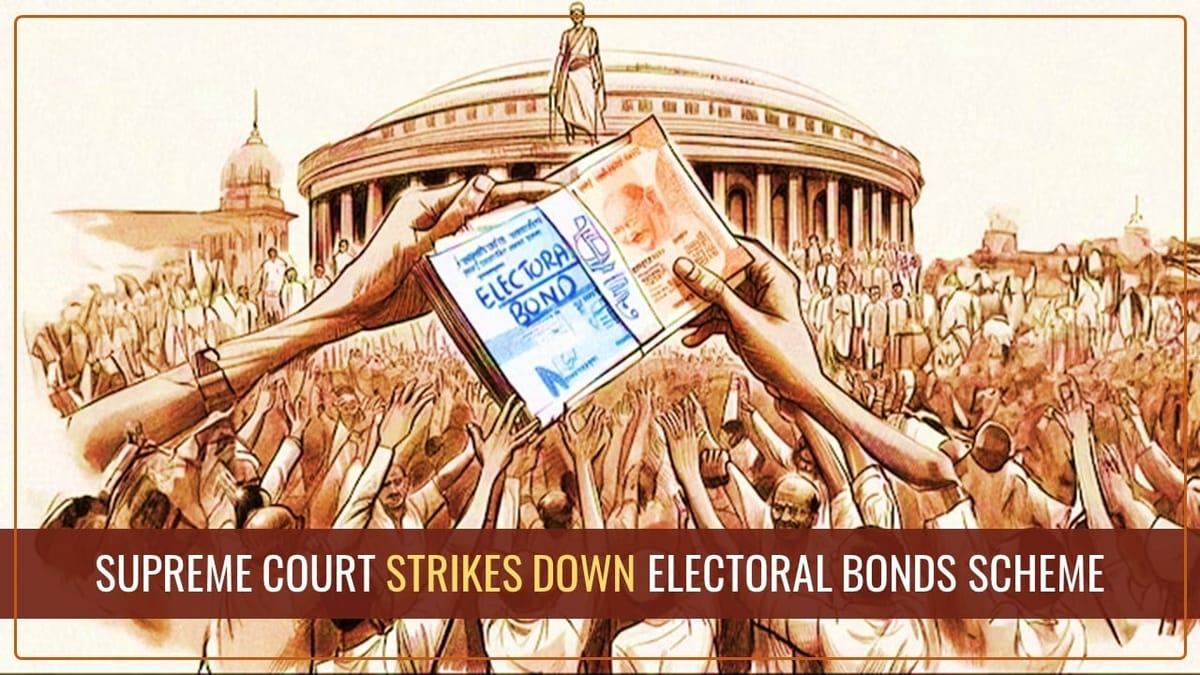
  • The clear message in the Court’s ‘no’ to electoral bonds

    Supreme Court strikes down Electoral Bonds Scheme as 'Unconstitutional'

    Central Idea:

    The Supreme Court’s recent decision to strike down India’s electoral bonds scheme marks a significant victory for transparency in democracy. The judgment highlights the importance of ensuring that political funding is transparent and accountable to the public.

    Key Highlights:

    • The Supreme Court’s ruling on February 15, 2024, declared the electoral bonds scheme unconstitutional due to its lack of transparency.
    • The scheme allowed undisclosed corporate funding of political parties, removing previous limits and potentially enabling influence peddling.
    • Amendments to the Reserve Bank of India Act and other laws to introduce electoral bonds were deemed arbitrary and violative of fundamental rights.
    • The court ordered the State Bank of India to cease issuing electoral bonds and mandated disclosure of all previously issued bonds to the Election Commission.
    • The judgment underscores the importance of judicial review in upholding democratic principles and protecting constitutional rights.

    Key Challenges:

    • The influence of money in elections remains a challenge, including the use of black money and bribery.
    • The lack of independent voting in India’s legislative process allows ruling parties to pass laws without sufficient scrutiny or consultation.
    • Political parties’ resistance to transparency raises concerns about their commitment to serving the public interest.

    Main Terms from the article:

    • Electoral bonds: Instruments for anonymous political donations introduced in India.
    • Transparency: Openness and accountability in political processes and decision-making.
    • Judicial review: The power of courts to assess the constitutionality of laws and government actions.
    • Fundamental rights: Constitutional protections for individual freedoms and equality.
    • Campaign funding: Financial support for political parties and candidates during elections.

    Important phrases for mains answer writing:

    • “Transparency is the basis of campaign funding.”
    • “The judgment restores transparency in political funding.”
    • “The ruling prevents undue influence on the government by corporate donors.”
    • “The power of judicial review is crucial for upholding democracy.”
    • “The price of democracy is eternal vigilance.”

    Quotes for value addition:

    • “The electoral bonds scheme was opaque.”
    • “The judgment prevents crony capitalism from influencing political parties.”
    • “The ruling party bypassed transparency with electoral bonds.”
    • “The power of judicial review is precious.”
    • “We need political parties, but it is up to us to ensure they work for the good of society.”

    Useful Statements:

    • “The Supreme Court’s decision reaffirms the principle that transparency is essential for democracy.”
    • “The ruling highlights the need for robust mechanisms to prevent undue influence on political processes.”
    • “Public scrutiny and vigilance are vital for holding political parties accountable.”
    • “The judgment sets a precedent for upholding constitutional rights in electoral matters.”
    • “Citizens’ engagement is crucial for ensuring that political parties serve the interests of the nation.”

    Examples and References:

    • The case of electoral bonds exemplifies the tension between transparency and political expediency in India’s democracy.
    • Similar challenges with campaign finance transparency have been observed in other democracies worldwide.
    • Instances of corporate influence on policy-making underscore the importance of regulating political funding.
    • Civil society organizations and activists have played a critical role in advocating for transparency in political funding.
    • Past instances of electoral malpractice highlight the need for stronger legal safeguards against undue influence.

    Facts and Data:

    • The Supreme Court’s ruling was issued on February 15, 2024.
    • Electoral bonds were introduced as a means of anonymous political funding.
    • Amendments to various laws facilitated the implementation of the electoral bonds scheme.
    • The Election Commission of India raised concerns about the potential misuse of electoral bonds.
    • The judgment requires the State Bank of India to disclose all previously issued electoral bonds to the Election Commission by March 6, 2024.

    Critical Analysis:

    • The electoral bonds scheme represented a departure from established norms of transparency in political funding.
    • The Supreme Court’s decision underscores the judiciary’s role in upholding democratic principles and constitutional rights.
    • The ruling highlights the challenges of balancing political expediency with the need for transparency and accountability.
    • Political parties’ resistance to transparency raises questions about their commitment to democratic values.
    • The judgment sets a precedent for future legal challenges to electoral practices that undermine transparency and accountability.

    Way Forward:

    • Strengthening legal safeguards to ensure transparency and accountability in political funding.
    • Promoting civic engagement and public awareness to hold political parties accountable.
    • Enhancing mechanisms for independent oversight and regulation of campaign finance.
    • Encouraging broader political reforms to address systemic issues of corruption and undue influence.
    • Emphasizing the importance of upholding democratic principles and constitutional rights in electoral matters
  • M Venkaiah Naidu writes: L K Advani, a leader who never craved power

    Advani's last hurrah? | Mint

    Central Idea:

    The article praises Lal Krishna Advani’s significant contributions to Indian public life, emphasizing his role in promoting Indian civilizational values, correcting historical distortions, and fostering national unity. It highlights his quiet yet effective leadership, dedication to a new India, and his instrumental role in the formation and growth of the Bharatiya Janata Party (BJP). The author commends the government’s decision to confer the Bharat Ratna, India’s highest civilian award, on Advani.

    Key Highlights:

    • Advani’s life mission focused on promoting the glory of Indian thought and building a modern, united nation.
    • His extensive travels and yatras played a crucial role in shaping public opinion on critical issues.
    • Instrumental in founding the BJP, Advani, along with Atal Bihari Vajpayee, contributed to the party’s remarkable rise.
    • Advani’s commitment to a new India, drawing strength from its past and rising to its potential, is highlighted.
    • He vehemently opposed historical distortions, pseudo-secularism, and advocated for the right spirit of secularism and nationalism.

    Key Challenges: The article does not explicitly mention challenges. However, it may be inferred that Advani faced challenges in steering Indian thought away from historical distortions and in promoting a vision of nationalism that unifies all Indians.

    Key Terms/Phrases:

    • Bharat Ratna: India’s highest civilian award.
    • Yatras: Extensive travels or journeys for a specific purpose, often used in the context of political or religious outreach.
    • BJP: Bharatiya Janata Party, a prominent political party in India.
    • Pseudo-secularism: The article criticizes false narratives and distortions in presenting the concept of secularism.
    • Rath Yatra: A chariot procession, referring to Advani’s national movement in 1990.
    • Ram Mandir: Refers to the recently consecrated temple dedicated to Lord Ram.

    Key Quotes/Statements:

    • “Advaniji emerged as one of the leading voices of India during the 70 years of his public life.”
    • “His life’s mission has been to create awareness about the glory of Indian thought and build a modern united nation.”
    • “He spared no effort to correct historical distortions and insults to the idea of India.”
    • “Advaniji is more a man of deeds and less of words.”

    Key Examples and References:

    • Advani’s role in launching a Rath Yatra from Somnath in 1990.
    • The successful partnership between Advani and Atal Bihari Vajpayee in founding and expanding the BJP.
    • Reference to the recently consecrated Ram Mandir and Advani’s contribution to unleashing the power of nationalism.

    Key Facts/Data:

    • Advani’s public life spanning 70 years.
    • The BJP’s parliamentary performance in 1984 and its subsequent rise to a national political force.
    • Advani’s role as the Home Minister and efforts to fortify internal security.

    Critical Analysis:

    The article presents a positive and appreciative view of Advani’s contributions, emphasizing his commitment to Indian values, secularism, and nationalism. It portrays him as a quiet yet effective leader, focusing on tangible results. The author applauds the government’s decision to confer the Bharat Ratna on Advani.

    Way Forward:

    The article does not explicitly suggest a way forward. However, it implies that Advani’s legacy will endure through the principles and morals he upheld, the leaders he mentored, and the impact of his contributions on shaping the idea of India.

  • Lesson from ’12th fail’: In a just society, UPSC obsession would be cruelty. We celebrate it

    12th Fail (2023) - IMDb

    Central Idea:

    The article focus into Vidhu Vinod Chopra’s film, “12th Fail,” capturing the struggles of real-life IPS officer Manoj Kumar Sharma in the competitive UPSC examinations. It highlights the unexpected yet impactful body language of the lead actor, Vikrant Massey, and underscores the film’s exploration of conformity and authenticity in the civil services interview process.

    Key Highlights:

    • Portrayal of Manoj Kumar Sharma’s internal journey in the UPSC examinations.
    • Emphasis on Vikrant Massey’s skill in conveying character emotions through body language.
    • Crucial moments, including the character’s nervousness and a supportive letter from his girlfriend.
    • Vidhu Vinod Chopra’s focus on the significance of staying honest and true to oneself in achieving success.

    Key Challenges:

    • Illustration of challenges faced by candidates in the competitive UPSC examination process.
    • Pressure to conform to societal expectations during interviews.
    • Realities of a low success rate and the potential absence of a happy ending for many candidates.

    Key Terms:

    • UPSC: Union Public Service Commission, responsible for civil service examinations in India.
    • IPS: Indian Police Service.
    • Body language: Non-verbal communication through gestures, postures, and facial expressions.

    Key Phrases:

    • “Internal journey”: Emphasizes the character’s emotional and psychological struggles.
    • “Unfairness of the system”: Highlights challenges of conforming in the competitive examination process.
    • “Without oxygen”: Metaphorically describes the character’s journey to success without significant support.

    Key Quotes:

    • “He has to win by not being himself, by not revealing too much of himself.”
    • “When someone sees you for who you are, they also see you for who you want to be.”
    • “The crucial thing about this film is to show that you can make it big while staying honest.”

    Anecdotes:

    • Manoj Kumar Sharma’s nervousness and struggle with formal attire on the day of the final interview.
    • The pivotal moment when he reads a supportive letter from his girlfriend, providing strength to be true to himself.

    Key Statements:

    • “The real job, as is for most great acting, is internal.”
    • “In a just society, the competitive UPSC process would be seen as cruel.”

    Key Examples and References:

    • Vikrant Massey’s portrayal of Manoj Kumar Sharma’s transformation through body language.
    • Vidhu Vinod Chopra’s emphasis on honesty and integrity in the pursuit of success.

    Critical Analysis:

    The article critically examines societal pressures and challenges in the pursuit of government civil service jobs, advocating for authenticity in success.

    Way Forward:

    Encourages a shift in societal perspectives, promoting a more just and empathetic approach to the challenges faced by candidates in competitive exams, without sacrificing one’s true self.

  • How Imroz’s love built Amrita Pritam, as a woman and a poet

    51 Amrita pritam ideas in 2023 | amrita pritam, gulzar quotes, zindagi quotes

    Who is amrita pritam?
    • Amrita Pritam (1919–2005) was a renowned Indian poet and writer, hailed as one of the leading literary figures in the Punjabi language and Hindi literature. She is best known for her poignant poetry, which often explored themes of love, loss, and the socio-political issues of her time. Amrita Pritam’s notable works include “Ajj aakhaan Waris Shah nu” (Today I invoke Waris Shah), a poem expressing the anguish of the partition of India in 1947.
    • She received several literary awards, including the Sahitya Akademi Award, the Jnanpith Award, and the Padma Vibhushan, one of the highest civilian honors in India. Amrita Pritam’s writing, characterized by its emotional depth and social consciousness, left a lasting impact on Indian literature.

    Central idea 

    The central idea revolves around the enduring 45-year relationship between Amrita Pritam and Imroz, marked by deep respect and devotion. Imroz’s recent passing is seen as a second loss of Amrita, emphasizing their inseparable connection and the profound impact of supportive relationships in shaping artistic legacies. The narrative explores unconventional expressions of love, challenges societal norms, and highlights the importance of understanding and preserving unique bonds between artists.

    Key Highlights:

    • The 45-year-long relationship between Amrita Pritam and Imroz is marked by deep respect, admiration, and devotion.
    • Imroz’s preferred term for Amrita was “Madam,” reflecting his acknowledgment of her seniority.
    • Amrita’s enduring presence is attributed not only to her literary work but also to Imroz’s reflections on her after his recent passing at 97.

    Key Challenges:

    • The loss of Imroz feels like losing Amrita again, emphasizing the inseparable connection between the two artists.
    • The challenge lies in preserving and understanding the unique bond that shaped Amrita Pritam’s identity and creativity.

    Key Phrases:

    • “Too empty an expression”: Imroz’s perspective on not using the term ‘love’ with Amrita, opting for deeper connections.
    • “Lost Amrita all over again”: Imroz’s passing is seen as a second loss of Amrita, underlining their inseparable connection.

    Key Quotes:

    • “We never used the term ‘love’ or that we loved each other. It was too empty an expression.” – Imroz’s perspective on the depth of their connection.
    • “While passing through your poem, I fear that I’m stepping onto Imroz’s wet canvas.” – Gulzar’s tribute, expressing the intertwining of poetry and art.

    Key Statements:

    • Amrita’s courageous exploration of sexuality and self-realization was groundbreaking in Indian literature.
    • Imroz’s unwavering support and understanding of Amrita’s complex relationships contributed to their enduring bond.

    Key Examples and References:

    • Amrita’s relationship with poet Sahir Ludhianvi and Imroz’s dignified response to her affections.
    • Imroz’s role in supporting Amrita during her last years, caring for her children and her ailing husband.

    Key Facts:

    • Imroz, born Indarjeet Singh, was an illustrator for the Urdu magazine Shama before meeting Amrita.
    • Amrita Pritam passed away in 2005, but her legacy lives on through her extensive body of work.

    Critical Analysis:

    • The relationship between Amrita and Imroz challenges societal norms, with Imroz providing unwavering support and understanding.
    • The loss of Imroz is seen as a profound impact, suggesting that their connection was vital in preserving Amrita’s legacy.

    Way Forward:

    • The challenge lies in understanding and preserving the unique bond between artists like Amrita and Imroz for future generations.
    • Recognition of the profound impact of supportive relationships in shaping artists and their work.
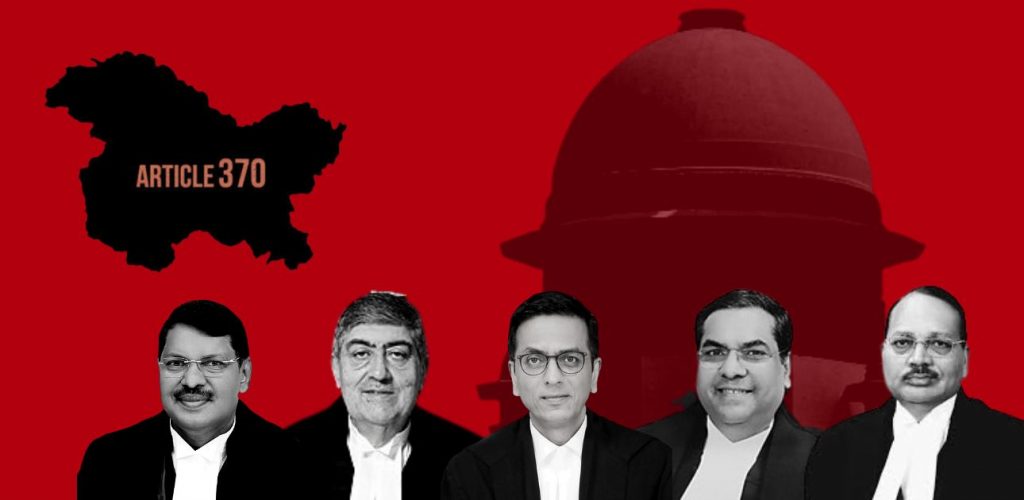
  • Pratap Bhanu Mehta writes on abrogation of Article 370 being upheld: Has SC established a dangerous precedent for federalism?


    Three days before its fourth anniversary, Supreme Court will commence  hearings on abrogation of J&K's special status – The Leaflet

    Central idea 

    The Supreme Court’s validation of the abrogation of Article 370 in Jammu and Kashmir signifies a legal triumph for the Modi government’s approach. The judgment navigates historical complexities, raises questions about federalism, and introduces the need for honest political reconciliation in the region. The Court’s nuanced stance prompts reflections on the balance between integration and preserving regional identity.

    Key Highlights:

    • Supreme Court’s Validation: The judgment upholding the abrogation of Article 370 is considered a significant legal victory for the Narendra Modi government, emphasizing its unwavering approach to Jammu and Kashmir.
    • Historical Ambiguities: The decision reflects on historical ambiguities, procedural intricacies, and legal complexities, asserting that no such considerations should impede the government’s vision of Jammu and Kashmir’s relationship with the Indian Union.
    • Political History Evaluation: Public perception of this judgment hinges on the unfolding of political history. Is it viewed as another instance of Jammu and Kashmir’s betrayal now officially endorsed by the Supreme Court? Does it set potentially precarious precedents for federalism and the credibility of the judiciary?
    • Integration or Half Measures?: The judgment prompts questions about whether this marks the final and complete integration of the state into India’s constitutional scheme or an improvement on the previous half measures, given the special status and autonomy that Article 370 was intended to provide.
    • Valley’s Response: The sullen silence in the Valley is being closely observed. Is it indicative of a final acceptance, a subdued victory, or an opportunity, as suggested by Justice Kaul, to set Kashmir on the path of truth and reconciliation?

    Key Challenges:

    • Federalism and Judiciary’s Authority: A critical challenge lies in the Court’s avoidance of addressing the novel degradation of Indian federalism represented by the downgrading of Jammu and Kashmir to a Union Territory. This non-engagement poses questions about the judiciary’s commitment to upholding constitutional principles.
    • Conjuring Tricks and Constitutional Amendments: The judgment’s acceptance of open-ended promises for restoring statehood at an unspecified future date raises concerns about potential constitutional amendments through backdoor methods, challenging the integrity of the process.

    Key Terms and Phrases:

    • Article 370’s Transitory Nature: The Court’s emphasis on Article 370 being transitory, justifying its abrogation without the Jammu and Kashmir Legislative Assembly’s consent.
    • Jammu and Kashmir Reorganisation Act, 2019: The Act that led to the downgrading of J&K to a Union Territory, a significant departure from the state’s historical status.
    • J&K Legislative Assembly: The absence of the requirement for the assembly’s consent raises questions about the democratic process and representation.
    • Union Territory: The transformation of J&K into a Union Territory, a move that alters its political and administrative status within the Indian Union.

    Key Quotes:

    • “The whole of the Constitution of India applies to Jammu and Kashmir. But not yet.” – The Court’s statement encapsulating a performative aspect that delays full application.

    Key Statements:

    • The Court’s avoidance of addressing the degradation of Indian federalism could undermine its authority and the principles it stands for.
    • Justice Kaul’s call for a Truth and Reconciliation Commission underscores the need for an honest reckoning with the complex history of Jammu and Kashmir.

    Key Facts and Data:

    • Article 370’s gradual attenuation since the 1960s, leading to the question of whether its abrogation was a logical progression.
    • The reorganisation of J&K, creating a new precedent and introducing complexities in its political identity.

    Critical Analysis:

    • The Court’s focus on procedural aspects and historical context while sidestepping federalism concerns creates a nuanced perspective on its role in interpreting constitutional provisions.
    • The judicial acceptance of open-ended promises raises questions about the accountability of the government’s actions and the potential misuse of constitutional powers.

    Way Forward:

    • Honest political reconciliation is deemed essential in the absence of a political force capable of fostering genuine dialogue and resolution.
    • The evolving landscape of Indian politics and the Court’s role in navigating constitutional challenges, ensuring a delicate balance between integration and preserving regional identity.
  • Ethics and Compensation in Controlled Human Infection Studies (CHIS)

    chis

    Central Idea

    • A recent paper from August 2023 discusses the ethical and financial aspects of Controlled Human Infection Studies (CHIS), where participants are deliberately infected with pathogens.
    • The paper argues that $20,000 for a six-month hepatitis C virus challenge study in the U.S. is reasonable, based on participant experiences and responses from potential participants.

    Ethical Considerations in CHIS

    • Contentious Issues: One major ethical concern in CHIS is the potential for disproportionate payment, which could be seen as an inducement for participation.
    • ICMR’s Bioethics Unit Stance: Emphasizes altruism in CHIS participation, suggesting compensation should cover lost wages, incidental expenses, time, and effort.

    Views on Altruism and Compensation

    • Jake D Eberts’ Perspective: Disagrees with the ICMR’s emphasis on altruism, arguing that monetary motivation, if accompanied by informed consent and risk understanding, isn’t inherently negative.
    • Compensation in Past Studies: Eberts received $7,350 for a Shigella study and less than $5,000 for a Zika study. He advocates for higher compensation in CHIS in the U.S.

    Compensation Models and Ethical Frameworks

    • Dr. Anna Durbin and Dr. Wilbur H. Chen’s Approaches: Compensation based on time, specimen collection, and regional study pay standards. Dr. Chen uses a Wage-Payment model, aligning compensation with unskilled labor wages in somewhat risky jobs.
    • Compensation Calculation: For the Shigella study, compensation totaled $7,350, based on various factors like visit duration, risk level, and activities completed.

    Differing Opinions on CHIS Compensation

    • Paul Zimmer-Harwood’s Experience: Participated in malaria and COVID-19 CHIS, with compensation based on study duration, visits, and inconvenience, not risk.
    • COVID-19 CHIS Concerns: Dr. Chen questions the rationale for COVID-19 CHIS, citing the absence of effective therapies and the risk of Long COVID.

    Participant Perspectives and Decisions

    • Paul’s Decision-Making: Chose to participate in the COVID-19 CHIS due to low perceived risk, previous infection, and vaccination status. Compensation was higher but proportional to study demands.
    • Risk Assessment: Paul viewed the risks as acceptable compared to the potential scientific contributions, emphasizing that his decision was informed and measured.

    Conclusion

    • Complex Ethical Landscape: CHIS presents a nuanced ethical landscape where compensation, risk, and participant motivation must be carefully balanced.
    • Importance of Informed Consent: Ensuring participants are fully informed and understand the risks is crucial in maintaining ethical standards in CHIS.
  • Vaishali Rameshbabu: India’s New Chess Grandmaster

    Grandmaster

    Central Idea

    • Grandmaster Title: Indian chess player Vaishali Rameshbabu ( Pragnananda’s sister) has achieved the Grandmaster title by crossing 2,500 FIDE ranking points at the IV El Llobregat Open in Spain.
    • Significance: She becomes only the third Indian woman player to earn this title, joining the ranks of Koneru Humpy and Harika Dronavalli.

    Understanding the Grandmaster Title

    • Highest Chess Honor: The Grandmaster title is the pinnacle of achievement in chess, awarded by the International Chess Federation (FIDE).
    • Prestige: It signifies recognition as one of the world’s most talented chess players, proven in highly competitive environments.

    Other Recognized Chess Titles

    • FIDE Titles: Besides Grandmaster, FIDE awards seven other titles, including International Master (IM), FIDE Master (FM), Candidate Master (CM), Woman Grandmaster (WGM), Woman International Master (WIM), Woman FIDE Master (WFM), and Woman Candidate Master (WCM).
    • Lifetime Validity: All FIDE titles, including the Grandmaster title, are valid for life, barring revocation due to offenses like cheating.

    History and Criteria of Grandmaster Title

    • Origins: The term ‘grandmaster’ dates back about a century and was formalized by FIDE in 1950.
    • Initial Awardees: The first batch of Grandmaster titles in 1950 included 27 players, such as then-world champion Mikhail Botvinnik.
    • Current Criteria: To achieve the Grandmaster title, a player must reach a FIDE Classical or Standard rating of 2,500 and earn three Grandmaster norms.
    • Grandmaster Norms: These norms are based on stringent rules regarding tournament performance, including a performance rating of 2,600 or higher in a FIDE tournament with specific conditions.

    Vaishali Rameshbabu’s Path to Grandmaster

    • Performance: Vaishali’s achievement of the Grandmaster title is a testament to her exceptional performance in international chess tournaments.
    • Representation: Her success adds to India’s growing reputation as a powerhouse in the global chess community.


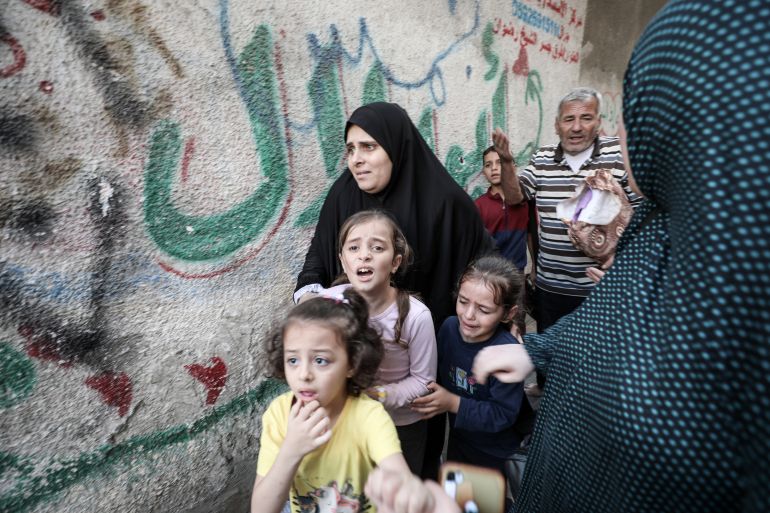
  • The impact of violence on a child’s mind

    Gaza's terrified children all too aware Israel's bombs steal their joy |  Gaza News | Al Jazeera

    Central idea

    The article emphasizes the profound psychological impact of the Israeli-Palestinian conflict on children, drawing insights from educational thinkers like Maria Montessori and Elias Canetti. It highlights challenges such as potential long-term repercussions, the failure of current education systems, and the need for inclusive educational initiatives.

    Key Highlights:

    • Montessori’s Perspective: Maria Montessori’s insights on the impact of childhood experiences, particularly exposure to violence, on the cycle of revenge and its contribution to the root causes of war.
    • Canetti’s Argument: Elias Canetti’s exploration of the child’s mind, emphasizing the development of revengeful thoughts from violent experiences and its potential evolution into adult rebellion.
    • Israeli-Palestinian Conflict: The psychological aftermath of Israel’s assault on Gaza, with a focus on the predicted impact on Palestinian children, especially adolescents, facing forced displacement and an uncertain future.
    • Educational Philosophies: Montessori’s pedagogic philosophy linking childhood experiences to major societal issues and the inter-war movement’s attempt to use education to combat the culture of war.

    Key Challenges:

    • Psychological Impact: Predicted long-term psychological repercussions on Palestinian children due to the trauma of conflict, displacement, and loss of childhood.
    • Failure of Education Systems: Critique of current education systems worldwide for lacking the energy and focus needed to mitigate the political impact of dangerous ideologies and nurture peace.
    • Historical Hostilities: The perpetuation of divisive ideas through education, contributing to the reinforcement of historical hostilities in contiguously located hostile nations.
    • Political Ignorance: Leaders’ disregard for educational messages promoting peace, as exemplified by Israel’s leaders ignoring Montessori’s insights amid conflict.

    Key Examples discussed in article for your value addition in answers:

    • Reference to Maria Montessori’s classics, including “The Secret of Childhood” and “The Absorbent Mind.”
    • Collection of Montessori’s war and peace lectures during the 1930s in the book titled “Education and Peace.”
    • Elias Canetti’s insights in “Crowds and Power,” highlighting the impact of violence on the child’s mind and the development of revengeful thoughts.
    • Montessori and Rabindranath Tagore’s involvement in an inter-war movement using education to combat the culture of war.

    Key Terms and Phrases:

    • Cycle of Revenge: Montessori’s concept that a child’s encounter with violence sets off a cycle of revenge, identified as a root cause of war.
    • Resistance to Social Norms: Canetti’s notion that violence experienced in childhood can lead to adult resistance, transforming into rebellion.
    • Culture of War: The inter-war movement’s initiative, involving educators like Montessori and Tagore, aimed at using education to combat the culture of war.
    • Impact of Dangerous Ideologies: Critique of education’s perceived inability to reverse the political impact of ideologies contributing to conflict.

    Critical Analysis:

    • Educational Potential: Acknowledgment of education’s potential to mitigate the impact of violent imagery, coupled with frustration over the perceived lack of energy in current education systems.
    • Global Disappointment with Education: Growing disappointment with education’s ability to nurture basic good sense, exemplified by the failure to prevent conflicts in Russia, Israel, and the U.S.
    • Focus on Politics: Critique of current discussions about the future of Gaza, primarily focused on politics, with a call to include considerations for the future of education in the region.
    • Reinforcement of Divisive Ideas: Observation that education often reinforces and perpetuates divisive ideas, preparing the adult mind to accept such ideas as the only way forward.

    Way Forward:

    • Inclusive Educational Initiatives: Emphasis on inclusive educational initiatives to combat the culture of war and break the cycle of historical influences on children’s minds.
    • Integration of Philosophical Perspectives: Advocacy for integrating educational and philosophical perspectives to pave the way for a more peaceful future, particularly in conflict-ridden regions.
    • Global Reassessment of Education: Urgent need for a global reassessment of education’s power to inculcate basic good sense and contribute to peace-building.
    • Educational Focus in Political Discussions: Call to include discussions about the future of education alongside political considerations in conflict-ridden regions like Gaza and Israel.