💥Join UPSC 2027,2028 Mentorship (July Batch) + XFactor Notes & Microthemes PDF

Type: Prelims Only

  • Folk dance in news: Lavani

    lavani

    Central idea: The article is based on the controversy surrounding the Maharashtra folk dance form, Lavani, which has come under criticism for being ‘vulgar’ and ‘obscene’.

    What is the Lavani folk art form?

    • The word Lavani comes from ‘lavanya’ or beauty.
    • Lavani is a traditional folk art form in which women dancers wearing nine-yard-long sarees in bright colours, make-up, and ghunghroos perform on dholak beats on a stage before a live audience.
    • As an indigenous art form, Lavani has a history going back several centuries, and it attained particular popularity in the Peshwa era in the 18th century.
    • Traditionally, performances were held in front of kings or lords, and for the entertainment of tired soldiers resting during breaks in fighting.

    Genres of Lavani

    • There are several types of Lavani, of which the most popular is the Shringarik (erotic) kind, in which the lyrics are often teasing, with sensuous dance steps and delicate gestures employed to convey erotic meaning.
    • Over the years, Lavani has gained more acceptability among the people, even though certain taboos around it continue.
    • The audience has historically been all-male, but in recent years, some women too have begun to attend performances.

    Why is it under fire these days?

    • Lost its original form: Some also argue that the commercialization of Lavani has led to a loss of authenticity and cultural significance.
    • Objectifying women: The criticism of Lavani dance centres on the traditional dance form’s alleged objectification and commodification of women’s bodies.
    • Public obscenity: It has been accused of promoting obscenity and vulgarity and reinforcing patriarchal attitudes towards women.
    • Communalizing/Stereotyping: Critics have also argued that the dance form perpetuates negative stereotypes of women from marginalized communities, such as the notion that Dalit women are “loose” or sexually promiscuous.


    Crack Prelims 2023! Talk to our Rankers

    (Click) FREE 1-to-1 on-call Mentorship by IAS-IPS officers | Discuss doubts, strategy, sources, and more

  • InfoCrop v2.1: Indigenous Crop Simulator

    infocrop

    Central idea: Scientists at the Indian Agricultural Research Institute conducted an experiment using InfoCrop version 2.1 to quantify the impact of hot weather on crop yield in Punjab and Haryana.

    What is InfoCrop v2.1?

    • InfoCrop version 2.1 is India’s only dynamic crop simulation model developed and released by the IARI in 2015 to study the long-term impact of climate change and crop management practices on yield.
    • InfoCrop is more suited for India as it has the life cycle data for almost all the local varieties of 11 crops: paddy, wheat, maize, sorghum, pearl millet, pigeon pea, chickpea, soybean, groundnut, potato and cotton.

    How does it work?

    • In InfoCrop, the parameters are already calibrated to Indian crop varieties and they are updated at regular intervals by the institute.
    • The parameters deal with aspects of-
    1. Weather (precipitation, temperature, radiation and others)
    2. Crop growth (phenology, grain characteristics, leaf growth, temperature and flooding sensitivity and others)
    3. Soil (texture and organic carbon, water holding characteristics and pH levels) and
    4. Pests and crop management (organic matter, fertiliser and irrigation).

    Efficiency of InfoCrop model

    • The model has an 85 per cent accuracy rate.
    • This is on par with widely used dynamic models such as the Decision Support System for Agrotechnology Transfer model, developed by the US, and Agriculture Production Systems sIMulator, developed by Australia.

    Utility of this tool

    • Prevent on-field corruption: India currently relies on field trials, which are expensive and resource-intensive as well as highly corrupt practise.
    • Crop insurance prediction: Government and insurance companies can use this for climate impact projections and for pre- or in-season crop yield forecasts to improve accuracy.
    • Assess crop loss: Besides forecasting, simulation models can be used to assess crop loss in the aftermath of an extreme weather event, which can then be used to provide relief packages.


    Crack Prelims 2023! Talk to our Rankers

    (Click) FREE 1-to-1 on-call Mentorship by IAS-IPS officers | Discuss doubts, strategy, sources, and more

  • Marburg Virus

    Central idea: Equatorial Guinea has confirmed its first-ever outbreak of Marburg virus disease.

    Where is Equatorial Guinea located?

    marburg

    • Equatorial Guinea is a country located in Central Africa.
    • It is situated on the west coast of Africa, bordered by Cameroon to the north and Gabon to the south and east. It also includes two small islands, Bioko and Annobon, which are located in the Atlantic Ocean.


    Marburg Virus

    • The Marburg virus is a highly dangerous pathogen that targets several organs and reduces the body’s ability to function on its own.
    • Depending on the strain and case management, the fatality rates for the virus range from 24% to 88%.

    Transmission and Prevention

    • The natural carrier of the Marburg virus is the African fruit bat, which carries the virus but does not fall sick from it.
    • Human-to-human transmission occurs through contact with blood or other bodily fluids.
    • Rehydration treatment to alleviate symptoms can improve the chances of survival.

    Its outbreaks

    • The virus has caused simultaneous outbreaks of disease in laboratories in Marburg, Germany and Belgrade, Serbia in 1967, resulting in seven deaths.
    • During an outbreak in Angola in 2004, the virus killed 90% of the 252 people who were infected, and in Ghana last year, two people died of Marburg.


    Crack Prelims 2023! Talk to our Rankers

    (Click) FREE 1-to-1 on-call Mentorship by IAS-IPS officers | Discuss doubts, strategy, sources, and more

    https://indianexpress.com/article/explained/explained-health/equatorial-guinea-confirms-marburg-virus-outbreak-explained-8443753/

  • What is ‘Office of Profit’?

    Central idea: Jharkhand CM’s chair remains uncertain as the Election Commission (EC) is understood to have conveyed its decision in an office-of-profit complaint against him to the Governor.

    Why in news?

    • Under Section 9A of the Representation of the People Act, 1951, the CM could face disqualification for entering into a government contract.
    • The Constitution of India does not define the Office of Profit. It has only mentioned it under Article 102 (1) and Article 191 (1).

    What is ‘Office of Profit’?

    • In India, the concept of an “Office of Profit” refers to a situation where a person holds a government position that brings them financial gain or other advantages, while at the same time they hold an elected or other public office.
    • The idea behind this concept is to prevent any conflict of interest and ensure that elected representatives do not hold positions that may compromise their independence and impartiality.

    Indian context to this

    • MPs and MLAs, as members of the legislature, hold the government accountable for its work.
    • The essence of disqualification is if legislators hold an ‘office of profit’ under the government, they might be susceptible to government influence, and may not discharge their constitutional mandate fairly.
    • The intent is that there should be no conflict between the duties and interests of an elected member.
    • Hence, the office of profit law simply seeks to enforce a basic feature of the Constitution- the principle of separation of power between the legislature and the executive.

    What governs the term?

    • At present, the Parliament (Prevention of Disqualification) Act, 1959, bars an MP, MLA or an MLC from holding any office of profit under the central or state government unless it is exempted.
    • However, it does not clearly define what constitutes an office of profit.
    • Legislators can face disqualification for holding such positions, which bring them financial or other benefits.
    • Under the provisions of Article 102 (1) and Article 191 (1) of the Constitution, an MP or an MLA (or an MLC) is barred from holding any office of profit under the Central or State government.

    An undefined term

    • The officials of the law ministry are of the view that defining an office of profit could lead to the filing of a number of cases with the Election Commission and the courts.
    • Also, once the definition is changed, one will also have to amend various provisions in the Constitution including Article 102 (1) (a) and Article 109 (1) (a) that deal with the office of profit.
    • It will have an overarching effect on all the other sections of the Constitution.

    Factors constituting an ‘office of profit’

    • The 1959 law does not clearly define what constitutes an office of profit but the definition has evolved over the years with interpretations made in various court judgments.
    • An office of profit has been interpreted to be a position that brings to the office-holder some financial gain, or advantage, or benefit. The amount of such profit is immaterial.
    • In 1964, the Supreme Court ruled that the test for determining whether a person holds an office of profit is the test of appointment.

    What is the ‘test of appointment’?

    Several factors are considered in this determination including factors such as:

    1. whether the government is the appointing authority,
    2. whether the government has the power to terminate the appointment,
    3. whether the government determines the remuneration,
    4. what is the source of remuneration, and
    5. power that comes with the position


    Try this MCQ:

    Q. What is an “Office of Profit” in India?

    a) A position that is controlled by the government and comes with no financial gain or other benefits.

    b) A position that is controlled by the government and comes with some financial gain or other benefits.

    c) A position that is controlled by the private sector and comes with no financial gain or other benefits.

    d) A position that is controlled by the private sector and comes with some financial gain or other benefits.


    [wpdiscuz-feedback id=”u4ubskrwwm” question=”Please leave a feedback on this” opened=”1″]Post your answers here.[/wpdiscuz-feedback]


    Crack Prelims 2023! Talk to our Rankers

    (Click) FREE 1-to-1 on-call Mentorship by IAS-IPS officers | Discuss doubts, strategy, sources, and more

  • India’s first Law Minister Dr. Ambedkar’s resignation letter missing from records

    ambedkar

    Dr. BR Ambedkar was India’s first Law Minister after independence. The letter of his resignation is now missing from official records.

    Dr Ambedkar as Law Minister

    • Dr. B.R. Ambedkar served as Independent India’s first law minister.
    • He was an Indian jurist, economist, politician, and social reforme, who was posthumously awarded the Bharat Ratna in 1990.
    • It is believed that Sardar Patel and Mahatma Gandhi proposed Dr. Ambedkar’s name for the post of Law Minister in the Nehru Cabinet.

    Why was he selected for the post?

    • Being father of our Constitution: Sardar Patel, then deputy PM, had a high regard for Dr. Ambedkar’s intellectual abilities and his contributions to the drafting of India’s Constitution.
    • Political urge for inclusivity: Additionally, Dr. Ambedkar’s role in the Dalit movement and his fight against caste discrimination also made him a significant political figure.
    • Representation of the marginalized: His appointment as the Law Minister was seen as a symbol of inclusivity and representation of marginalized communities in the government.

    Why did Dr. Ambedkar resign?

    • Political differences with Nehru: He resigned as Law Minister, due to differences with the then PM, Jawaharlal Nehru, over the Hindu Code Bill. He specifically wanted to reform Hindu Personal Laws and not every personal laws in India.
    • Row over reforming Personal Laws: The bill aimed to reform Hindu personal laws related to marriage, divorce, and inheritance, but Dr. Ambedkar believed that it did not go far enough in granting women’s rights and wanted more radical changes.
    • Injustice to women: Ambedkar had proposed a more comprehensive set of reforms that would have given women greater rights in matters such as property ownership and inheritance, but his proposals were met with resistance from Nehru and other members of the government.

    Efforts to locate his resignation letter

    • The letter was not found in the National Archives of India and the Ministry of Home Affairs.
    • The Maharashtra government has also been unable to locate the letter in its archives.
    • RTI (Right to Information) requests were also unsuccessful.

    Significance of his letter

    • The missing letter is a matter of concern as it is an important historical document.
    • Ambedkar’s resignation was a significant event in India’s political history and the reasons behind it are still relevant today.
    • The letter could shed light on the differences between the visionary Dr. Ambedkar and then mainstream politicians.


    India’s first Provisional Government (Constitutionally)


    • Jawaharlal Nehru became the first Prime Minister of India after the country gained independence in 1947.
    • The members of his first cabinet, which was sworn in on August 15, 1947, were as follows:
    1. Jawaharlal Nehru – Prime Minister and Minister of External Affairs
    2. Vallabhbhai Patel – Deputy Prime Minister and Minister of Home Affairs
    3. Dr. B.R. Ambedkar – Minister of Law and Member of the Viceroy’s Executive Council
    4. C. Rajagopalachari – Minister of Industry and Supply
    5. John Mathai – Minister of Railways
    6. Liaquat Ali Khan – Minister of Finance
    7. Baldev Singh – Minister of Defence
    8. Sardar Baldev Singh – Minister of Communications
    9. Sardar Swaran Singh – Minister of Works, Mines and Power
    10. Jagjivan Ram – Minister of Labour and Rehabilitation
    11. Dr. Rajendra Prasad – Minister of Food and Agriculture
    12. Maulana Abul Kalam Azad – Minister of Education
    13. Sardar K.M. Panikkar – Minister of States
    14. Rafi Ahmed Kidwai – Minister of Communications (Independent Charge)
    15. Asaf Ali – Minister of Railways (Independent Charge)
    • It is worth noting that this was a provisional government, and the first general election to form a permanent government was held in 1952.


    Note: Azad Hind was not India’s first provisional government. The credit for establishing that – formally known as the ”Hukumat-i-Moktar-i-Hind” – in Kabul on 1st Dec, 1915, goes to Raja Mahendra Pratap and Maulana Barkatullah.

    Crack Prelims 2023! Talk to our Rankers

    (Click) FREE 1-to-1 on-call Mentorship by IAS-IPS officers | Discuss doubts, strategy, sources, and more

  • 1st Saudi Women to space via Axiom-2 Mission

    saudi

    Central idea: Saudi Arabia will send its first-ever woman astronaut on the US-led Axiom 2 space mission later this year, in the latest move to revamp the kingdom’s ultra-conservative image.

    Axiom Mission 2

    • Axiom Mission 2 is a private spaceflight mission organized by Axiom Space, a Houston-based aerospace company.
    • The mission is scheduled to launch in 2023 and aims to send four private individuals on a 10-day trip to the International Space Station (ISS).
    • Rayyana Barnawi will join fellow Saudi male astronaut Ali Al-Qarni on a mission to the International Space Station (ISS) during the second quarter of 2023.
    • The mission is the second private crewed flight to the ISS, following the Inspiration4 mission by SpaceX.
    • The crew is expected to undergo months of training, including simulations, physical conditioning, and emergency procedures.
    • The mission is part of Axiom Space’s plan to establish a private space station attached to the ISS, which is expected to be launched in 2024.


    Crack Prelims 2023! Talk to our Rankers

    (Click) FREE 1-to-1 on-call Mentorship by IAS-IPS officers | Discuss doubts, strategy, sources, and more

  • Who was Maharishi Dayanand Saraswati?

    dayanand

    PM inaugurated celebrations commemorating Maharishi Dayanand Saraswati’s 200th birth anniversary.

    Dayanand Saraswati (1824-1883)

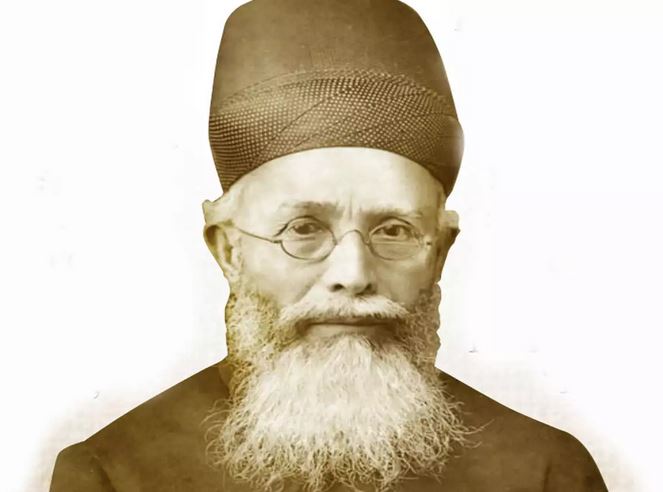
    • Dayanand Saraswati (born Mool Shankar Tiwari) was a religious leader and founder of the Arya Samaj, a reform movement in the nineteenth century.
    • He was a profound scholar of the Vedic lore and Sanskrit language.
    • Dayanand was a great scholar, and was well-versed in the Vedas and the Upanishads.
    • He was also proficient in Sanskrit grammar, philosophy, religion, politics and other sciences.

    Notable works

    (1) Literary works

    • He wrote several books, including the Satyarth Prakash, which became the moral and spiritual foundation of the Arya Samaj.
    • This book was translated into many languages, including Hindi, English and Urdu.

    (2) Freedom movement

    • He was the first to give the call for Swaraj as “Indian for India” – in 1876, a call later taken up by Lokmanya Tilak.
    • Subsequently, the philosopher and President of India, S. Radhakrishnan, called him one of the “makers of Modern India”, as did Sri Aurobindo.

    (3) Religious reform

    • Denouncing the idolatry and ritualistic worship prevalent in Hinduism at the time, he worked towards reviving Vedic ideologies.
    • He believed that the Vedas should be interpreted in the light of reason and not of blind faith.
    • He also campaigned against animal sacrifice and the worship of idols.

    (4) Social reform

    • Dayanand was a staunch advocate of women’s rights.
    • He believed in the equality of all human beings and advocated the abolition of the caste system.

    (5) Education

    • Dayanand was an ardent believer in the power of knowledge and education.
    • He established the Gurukul system of education, which provided free education to all, irrespective of caste or gender.
    • Based on his teachings, in 1885 the first DAV School was established at Lahore which was subsequently upgraded to become the first DAV College.
    • In 1886 the DAV College Trust and Management Society was established and registered.


    Try this PYQ:

    Which among the following event happened earliest?

    (a) Swami Dayanand established Arya Samaj

    (b) Dinabandhu Mitra wrote Neeldarpan

    (c) Bankim Chandra Chattopadhyay wrote Anandmath

    (d) Satyendranath Tagore became the first India to succeed in the Indian Civil Services Examination.


    [wpdiscuz-feedback id=”m4telm58he” question=”Please leave a feedback on this” opened=”1″]Post your answers here.[/wpdiscuz-feedback]


    Crack Prelims 2023! Talk to our Rankers

    (Click) FREE 1-to-1 on-call Mentorship by IAS-IPS officers | Discuss doubts, strategy, sources, and more

  • Scientists discover new ‘Quasicrystals’

    quasicrystals

    Scientists have discovered a new type of quasicrystal, one with 12-fold symmetry, in the Sand Hills of north central Nebraska, USA.

    What is a Quasicrystal?

    • Quasicrystal is essentially a crystal-like substance.
    • However, unlike a crystal, in which atoms are arranged in a repeating pattern, a quasicrystal consists of atoms that are arranged in a pattern that doesn’t repeat itself regularly.
    • For the longest time, physicists believed every crystalline arrangement of atoms must have a pattern that repeats itself perfectly over and over again.
    • However, this changed in 1982, when material scientist Dan Shechtman discovered crystal structures that are mathematically regular, but that do not repeat themselves.

    How are they formed?

    • Electrical discharge triggered quasicrystal formation in the recent finding.
    • It’s also the first time that researchers have found a quasicrystal somewhere other than meteorites or the debris from nuclear blasts.

    Applications of quasicrystals

    • There is no major commercial applications yet exploit properties of the quasicrystalline state directly.
    • Quasicrystals form in compounds noted for their high strength and light weight, suggesting potential applications in aerospace and other industries.
    • They can be used in surgical instruments, LED lights and non-stick frying pans.


    Crack Prelims 2023! Talk to our Rankers

    (Click) FREE 1-to-1 on-call Mentorship by IAS-IPS officers | Discuss doubts, strategy, sources, and more

  • In news: Agasthyarkoodam Observatory

    agasthyarkoodam

    Agasthyarkoodam was once home to a forgotten and long-lost 19th-century observatory established by Scottish meteorologist John Allan Broun.

    Agasthyarkoodam Observatory

    • The Agasthyarkoodam Observatory is an astronomical research observatory located in the state of Kerala.
    • The observatory is situated at an altitude of 1600 meters above sea level and is owned and operated by the Indian Institute of Astrophysics (IIA).
    • The observatory is equipped with a 1-meter optical telescope and various other instruments for studying the night sky.
    • The observatory is used for research and educational purposes and is open to the public for viewing night-sky objects.

    Why in news?

    • Agasthyarkoodam in the Western Ghats once housed a magnetic observatory that was established by Scottish meteorologist John Allan Broun.
    • Broun used it to record magnetic and meteorological observations in tandem with the Thiruvananthapuram astronomical observatory.
    • Broun’s astronomical research in India began after he was invited by the ruler of the erstwhile Travancore Uthram Tirunal Marthanda Varma to helm the Thiruvananthapuram observatory following the death of its first director John Caldecott in 1849.
    • The observatory started recording observations in July 1855.
    • However, it was closed in 1881 by the then Madras Governor Sir William Denison.

    What are magnetic observatories?

    • Magnetic observatories continuously measure and record Earth’s magnetic field at a number of locations.
    • In an observatory of this sort, magnetized needles with reflecting mirrors are suspended by quartz fibres.
    • Light beams reflected from the mirrors are imaged on a photographic negative mounted on a rotating drum.
    • Variations in the field cause corresponding deflections on the negative.
    • Their magnetograms are photographed on microfilm and submitted to world data centres, where they are available for scientific or practical use.


    Crack Prelims 2023! Talk to our Rankers

    (Click) FREE 1-to-1 on-call Mentorship by IAS-IPS officers | Discuss doubts, strategy, sources, and more

  • What is Solar Prominence?

    solar

    Recently, the sun puzzled many scientists with a large prominence near its north pole.

    What is Solar Prominence?

    • A solar prominence (also known as a filament when viewed against the solar disk) is a large, bright feature extending outward from the Sun’s surface.
    • Prominences are anchored to the Sun’s surface in the photosphere, and extend outwards into the Sun’s hot outer atmosphere, called the corona.
    • A prominence forms over timescales of about a day, and stable prominences may persist in the corona for several months, looping hundreds of thousands of miles into space.

    How are they formed?

    • Scientists are still researching how and why prominences are formed.
    • The red-glowing looped material is plasma, a hot gas comprised of electrically charged hydrogen and helium.
    • The prominence plasma flows along a tangled and twisted structure of magnetic fields generated by the sun’s internal dynamo.
    • An erupting prominence occurs when such a structure becomes unstable and bursts outward, releasing the plasma.


    Crack Prelims 2023! Talk to our Rankers

    (Click) FREE 1-to-1 on-call Mentorship by IAS-IPS officers | Discuss doubts, strategy, sources, and more