💥Join UPSC 2027,2028 Mentorship (July Batch) + XFactor Notes & Microthemes PDF

Type: Prelims Only

  • Gandhi Peace Prize

    The Culture Ministry has announced that Sheikh Mujibur Rahman and the late Sultan of Oman, Qaboos bin Said Al Said, would be awarded the Gandhi Peace Prize for 2020 and 2019 respectively.

    Note the features of the award such as prize, the composition of jury etc.

    Gandhi Peace Prize

    • The International Gandhi Peace Prize, named after Mahatma Gandhi, is awarded annually by the Government of India.
    • As a tribute to the ideals espoused by Gandhi, the GoI launched the International Gandhi Peace Prize in 1995 on the occasion of the 125th birth anniversary of Mahatma Gandhi.
    • This is an annual award given to individuals and institutions for their contributions towards social, economic and political transformation through non-violence and other Gandhian methods.

    Its features

    • The award carries ₹1 crore (US$140,000) in cash, convertible in any currency in the world, a plaque and a citation.
    • It is open to all persons regardless of nationality, race, creed or gender.
    • A jury consisting of the PM of India, the Leader of the Opposition in the Lok Sabha, the Chief Justice of India, Speaker of the Lok Sabha and one other eminent person decides the awardees each year.
    • Ordinarily, only proposals coming from competent persons invited to nominate are considered.
    • However, a proposal is not taken as invalid for consideration by the jury merely on the ground of not having emanated from competent persons.

    Information about the awardees

    (1) Sheikh Mujibur Rahman (1920-1975)

    • The Prize recognizes the immense and unparalleled contribution of Bangabandhu Sheikh Mujibur Rahman in inspiring the liberation of Bangladesh.
    • It acknowledges the contribution in bringing stability to a nation born out of strife, laying the foundation for the close and fraternal relations between India and Bangladesh and promoting peace and non-violence in the Indian subcontinent.

    (2)Sultan Qaboos Bin Said (1940-2020)

    • Sultan Qaboos was a visionary leader whose twin policy of moderation and mediation in addressing international issues won him praise and respect across the globe.
    • He played an important role in supporting peace efforts in various regional disputes and conflicts. H.M. Sultan Qaboos was the architect of the special ties between India and Oman.
    • He had studied in India and always maintained a special relationship with India.
    • Under his leadership, India and Oman became strategic partners and our mutually beneficial, comprehensive partnership strengthened and scaled newer heights.
  • Emerging crisis of obtaining Helium in India

    India imports helium for its needs and with the U.S. appearing set to cut off exports of helium since 2021, the Indian industry stands to lose out heavily.

    Helium is not just for balloons but it is the key ingredient for India’s high technology and the most sophisticated medical diagnosis.

    Helium on Earth

    • Helium is a chemical element with the symbol He and atomic number 2.
    • It is a colourless, odourless, tasteless, non-toxic, inert, monatomic gas, the first in the noble gas group in the periodic table. Its boiling point is the lowest among all the elements.

    Its discovery

    • In 1906 a young Englishman by the name of Moris Travers arrived in Bangalore, to take up the position of the Director of Indian Institute of Science.
    • Travers extracted helium in small quantity by heating up monazite sand abundantly available in Kerala beach, in a pioneering effort.
    • Dutch physicist Kamerlingh Onnes liquefied Helium by cooling the gas to -270 degrees Celsius.
    • It is known that Onnes collected helium gas from the springs of Bath in Baden Baden, Germany for his liquefaction experiment.

    Helium in India

    • India’s Rajmahal volcanic basin is the storehouse of helium trapped for billions of years, since the very birth of our Earth from the Sun.
    • At present, researchers are mapping the Rajmahal basin extensively for future exploration and harnessing of helium.

    Why India needs Helium?

    • Every year, India imports helium worth Rs 55,000 crores from the U.S. to meet its needs.
    • Helium is used in medicine, scientific research, for blimp inflation, party balloons as well as having welding applications.
    • It finds many applications, mainly in magnetic resonance imaging (MRI) scans, in rockets and in nuclear reactors.

    US monopoly in Helium

    • The U.S. became the most important exporter of helium across the world.
    • It was soon realized that the U.S. was also the biggest storehouse of helium.
    • The US is now planning to switch off the export of helium from 2021.
    • Qatar is a possible exporter but acute political and diplomatic wrangles have made Qatar unreliable.
  • Indian monsoon 25 million years ago resembled present day Australia’s

    Using leaf fossils, researchers have found that the Indian monsoon 25 million years ago resembled present-day Australia’s.

    Try this PYQ:

    Q.Which one of the following is the appropriate reason for considering the Gondwana rocks as the most important rock systems of India?

    (a) More than 90% of limestone reserves of India are found in them

    (b) More than 90% of India’s coal reserves are found in them

    (c) More than 90% of fertile black cotton soils are spread over them

    (d) None of the reasons given above is appropriate in this context

    India’s drift

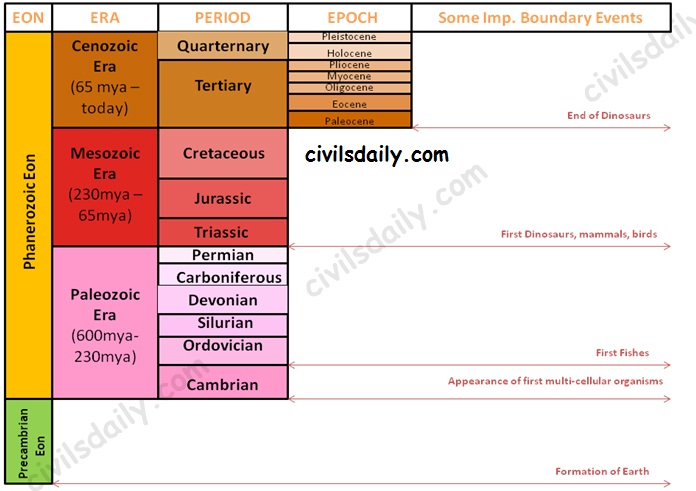
    • About 180 million years ago, India separated from the ancient supercontinent Gondwana and took a long northward journey of about 9,000 km to join Eurasia.
    • During this journey, the subcontinent moved from the southern hemisphere, crossed the Equator to reach its current position in the northern hemisphere.
    • Due to these changing latitudes, it experienced different climatic conditions, and a new study has now tried to map these climatic variations using leaf fossils.

    Clueless over the evolution of monsoon

    • The evolution of the monsoonal climate in India is still debatable and not fully understood.
    • Though recent data indicates that the monsoon system we experience now dates back to about 25 million years, it is still unclear how the climate was during its long voyage.

    Indian research

    • The researchers analysed the morphological characters of fossil leaves collected from Deccan Volcanic Province, East Garo Hills of Meghalaya, Gurha mine in Rajasthan and Makum Coalfield in Assam.
    • The four fossil assemblages were found to be from four different geological ages.
    • It has been observed from across the globe that plant leaf morphological characters such as apex, base and shape are ecologically tuned with the prevailing climatic conditions.
    • The research applied this model to characterize the past monsoon from fossil leaves.

    It’s finding

    • The results indicated that the fossil leaves from India were adapted to an Australian type of monsoon and not the current Indian monsoon system during its voyage.
    • The reconstructed temperature data show that the climate was warm (tropical to subtropical) at all the studied fossil sites with temperatures varying from 16.3–21.3 degrees C.
    • All the fossil sites experienced high rainfall, which varied from 191.6 cm to 232 cm.
  • Who was Lachit Borphukan?

    The Prime Minister (in an election campaign) has called 17th-century Ahom General Lachit Borphukan a symbol of India’s “atmanirbhar” military might.

    Try this PYQ:

    Q.What was the immediate cause for Ahmad Shah Abdali to invade and fight the Third Battle of Panipat:

    (a) He wanted to avenge the expulsion by Marathas of his viceroy Timur Shah from Lahore

    (b) The frustrated governor of Jullundhar Adina Beg khan invited him to invade Punjab

    (c) He wanted to punish Mughal administration for non-payment of the revenues of the Chahar Mahal (Gujrat Aurangabad, Sialkot and Pasrur)

    (d) He wanted to annex all the fertile plains of Punjab upto borders of Delhi to his kingdom

    Who was Lachit Borphukan?

    • The year was 1671 and the decisive Battle of Saraighat was fought on the raging waters of the Brahmaputra.
    • On one side was Mughal Emperor Aurangzeb’s army headed by Ram Singh of Amer (Jaipur) and on the other was the Ahom General Lachit Borphukan.
    • He was a commander in the Ahom kingdom, located in present-day Assam.
    • Ram Singh failed to make any advance against the Assamese army during the first phase of the war.
    • Lachit Borphukan emerged victorious in the war and the Mughals were forced to retreat from Guwahati.

    Lachit Diwas

    • On 24 November each year, Lachit Divas is celebrated statewide in Assam to commemorate the heroism of Lachit Borphukan.
    • On this day, Borphukan has defeated the Mughal army on the banks of the Brahmaputra in the Battle of Saraighat in 1671.
    • The best passing out cadet of National Defence Academy has conferred the Lachit gold medal every year since 1999 commemorating his valour.
  • Tomar king Anangpal II and his connection with Delhi

    The Union government has recently formed a committee to popularize the legacy of 11th-century Tomar king, Anangpal II.

    Revision: Delhi Sultanate and their contemporaries

    Who was Anangpal II?

    • Anangpal II, popularly known as Anangpal Tomar, belonged to the Tomar dynasty that ruled parts of present-day Delhi and Haryana between the 8th and 12th centuries.
    • The capital of Tomars changed many times from being initially at Anangpur (near Faridabad) during the reign of Anangpal I (who founded the Tomar dynasty in the 8th century), to Dhillikapuri (Delhi) during the reign of Anangpal II.
    • The Tomar rule over the region is attested by multiple inscriptions and coins, and their ancestry can be traced to the Pandavas (of the Mahabharata).
    • Anangpal Tomar II was succeeded by his grandson Prithviraj Chauhan, who was defeated by the Ghurid forces in the Battle of Tarain (present-day Haryana) after which the Delhi Sultanate was established in 1192.

    His connection with Delhi

    • Anangpal II is credited to have established and populated Delhi during his reign in the 11th century.
    • He was instrumental in populating Indraprastha and giving it its present name, Delhi.
    • The region was in ruins when he ascended the throne in the 11th century, it was he who built Lal Kot fort and Anangtal Baoli.
    • He was the founder of Dhillikapuri, which eventually became Delhi.
  • Jaapi, Xorai and Gamosa in Assam

    As the polling date draws closer, decorative jaapis (field hats), hand-woven gamosas and bell-metal xorais are making frequent appearances in Assam.

    Primarily used to felicitate important people and guests, these important symbols of Assamese identity and culture are abundantly seen in political campaigns across the state.

    Jaapi

    • The jaapi is a conical hat made of bamboo and covered with dried tokou (a palm tree found in rainforests of Upper Assam) leaves.
    • It is most often used in official functions to felicitate guests.
    • The landscape of rural Assam features a more utilitarian version, which farmers wear to protect themselves from the harsh weather, both sun and rain, while working in the fields.
    • The first possible recorded use of jaapi dates back to the Ahom-era buranjis, or chronicles. Kings and ministers would wear them then.

    Gamosa

    • The Gamosa, which literally translates to a cloth to wipe one’s body, is omnipresent in Assam, with wide-ranging uses.
    • It can be used at home as a towel (uka gamosa) or in public functions (phulam/floral gamosa) to felicitate dignitaries or celebrities.
    • The popularity of the gamosa has now traveled beyond Assam and is often used by a number of public figures.
    • It was during the anti-foreigner Assam Agitation of the early 1980s, when Assamese nationalism reached its crescendo, that the gamosa assumed a new role.

    Xorai

    • Made of bell-metal, the xorai — essentially a tray with a stand at the bottom, with or without a cover — can be found in every Assamese household.
    • While it is primarily used as an offering tray during prayers, or to serve tamale-paan (betel-nut) to guests, a xorai is also presented along with the jaapi and gamosa while felicitating someone.
    • The bulk of xorais in Assam are made in the state’s bell metal hub Sarthebari in Bajali district.
  • What are the Diatoms?

    The Maharashtra Anti-Terrorism Squad has relied on a forensic test known as diatom tests for leads in an alleged murder case of a person inviting high stage political drama.

    What are Diatoms?

    • Diatoms are photosynthesizing algae that are found in almost every aquatic environment including fresh and marine waters, soils, in fact, almost anywhere moist.
    • Diatoms have cell walls made of silica, each species has a distinct pattern of tiny holes in the cell wall (frustule) through which they absorb nutrients and get rid of waste.
    • A diatom is a photosynthetic, single-celled organism which means they manufacture their own food in the same way plants do.

    Diatoms are important as they:

    • provide the basis of the food chain for both marine and freshwater micro-organisms and animal larvae
    • are a major source of atmospheric oxygen responsible for 20-30% of all carbon fixation on the planet
    • can act as environmental indicators of climate change
    • form the basis of some household goods such as pest/mite prevention and mild abrasive

    Never underestimate UPSC. Try this PYQ before you reach any conclusion.

    Q.Which one of the following is the correct sequence of a food chain?

    (a) Diatoms-Crustaceans-Herrings

    (b) Crustaceans-Diatoms-Herrings

    (c) Diatoms-Herrings-Crustaceans

    (d) Crustaceans-Herrings-Diatoms

    What is a diatom test?

    • Diagnosis of death by drowning is deemed as a difficult task in forensic pathology.
    • A number of tests have been developed to confirm the cause of such deaths with the diatom test emerging as one of the most important tests.
    • The test entails findings if there are diatoms in the body being tested.

    The science behind

    • A body recovered from a water body does not necessarily imply that the death was due to drowning.
    • If the person is alive when he enters the water, the diatoms will enter the lungs when the person inhales water while drowning.
    • These diatoms then get carried to various parts of the body, including the brain, kidneys, lungs and bone marrow by blood circulation.
    • If a person is dead when is thrown in the water, then there is no circulation and there is no transport of diatom cells to various organs.
  • Places on PM Modi’s Bangladesh Visit

    PM Modi will be on a two-day visit to Bangladesh where he will take part in commemorations of some epochal events there.

    Bangabandhu shrine in Tungipara

    • Located about 420 kilometres from Dhaka, Tungipara was the place of birth of Rahman, the architect of the 1971 Bangladesh War of Independence.
    • This is also the place where he lies buried inside a grand tomb called the ‘Bangabandhu mausoleum’.
    • Millions of people gather here every year on August 15, to observe the day when Rahman was assassinated by a group of disgruntled army officers.

    Harichand Thakur’s shrine in Orakandi

    • Thakur was the founder of the Matua Mahasangha, which was a religious reformation movement that originated in Orakandi in about 1860 CE.
    • At a very early age, Thakur experienced spiritual revelation, following which he founded a sect of Vaishnava Hinduism called Matua.
    • Members of the sect were the namasudras who were considered to be untouchables.
    • The objective of Thakur’s religious reform was to uplift the community through educational and other social initiatives.
    • Members of the community consider Thakur as God and an avatar of Vishnu or Krishna.
    • After the 1947 Partition, many of the Matuas migrated to West Bengal.

    ‘Sugandha Shaktipith’ (Satipith) temple in Shikarpur

    • Modi is also scheduled to visit the Sugandha Shaktipeeth which is located in Shikarpur, close to Barisal.
    • The temple, dedicated to Goddess Sunanda is of immense religious significance to Hinduism.
    • It is one of the 51 Shakti Pith temples.
    • The Shakti Pith shrines are pilgrimage destinations associated with the Shakti (Goddess worship) sect of Hinduism.

    Rabindra Kuthi Bari in Kushtia

    • The Kuthi Bari is a country house built by Dwarkanath Tagore, the grandfather of Nobel laureate and Bengali poetic giant Rabindranath Tagore.
    • The latter stayed in the house for over a decade in irregular intervals between 1891 and 1901.
    • In this house Tagore composed some of his masterpieces like Sonar Tari, Katha o Kahini, Chaitali etc. He also wrote a large number of songs and poems for Gitanjali here.
    • It was also in this house that Tagore began translating the Gitanjali to English in 1912, for which he was awarded the Nobel Prize in Literature.

    Ancestral home of Bagha Jatin in Kushtia

    • Jatindranath Mukherjee, better known as ‘Bagha Jatin’ (tiger Jatin) was a revolutionary freedom fighter.
    • He was born in Kayagram, a village in Kushtia district, where his ancestral home is located.
    • Jatin acquired the epithet ‘Bagha’ after he fought a Royal Bengal Tiger all by himself and killed it with a dagger.
    • Jatin was the first commander-in-chief of the ‘Jugantar Party’ which was formed in 1906 as a central association dedicated to train revolutionary freedom fighters in Bengal.
    • This was the period when Bengal was seething with nationalist furore against Lord Curzon’s declaration of Partition of the province.
    • Inspired by Jatin’s clarion call, “amra morbo, jagat jagbe” (we shall die to awaken the nation), many young revolutionaries joined the brand of the freedom struggle that the Jugantar Party represented.

    His legend:

    • Jatin is most remembered for an armed encounter he engaged in with the British police at Balasore in Orissa.
    • They were expecting a consignment of arms and funds from Germany to lead an armed struggle when the British found out about the plot and raided the spot where the revolutionaries were hiding. A
    • lthough Jatin lost his life in the Battle of Balasore, his activities did have an impact on the British forces.
    • The colonial police officer Charles Augustus Tegart wrote about Jatin: “If Bagha Jatin was an Englishman, then the English people would have built his statue next to Nelson’s at Trafalgar Square.”
  • [pib] What is Artificial Photosynthesis?

    Scientists have found a method to mimic nature’s own process of reducing carbon dioxide in the atmosphere, namely photosynthesis, to capture excess carbon dioxide in the atmosphere.

    Artificial Photosynthesis

    • Artificial photosynthesis (AP) is a chemical process that mimics the natural process of photosynthesis to convert sunlight, water, and carbon dioxide into carbohydrates and oxygen.
    • The term artificial photosynthesis is commonly used to refer to any scheme for capturing and storing the energy from sunlight in the chemical bonds of fuel (a solar fuel).
    • Photocatalytic water splitting converts water into hydrogen and oxygen and is a major research topic of artificial photosynthesis.
    • Light-driven carbon dioxide reduction is another process studied that replicates natural carbon fixation.

    Try this PYQ:

    Which of the following adds/add carbon dioxide to the carbon cycle on the planet Earth?

    1. Volcanic action
    2. Respiration
    3. Photosynthesis
    4. Decay of organic matter

    Select the correct answer using the code given below:

    (a) 1 and 3 only

    (b) 2 only

    (c) 1, 2 and 4 only

    (d) 1, 2, 3 and 4

    Challenges in AP

    • Research on this topic includes the engineering of enzymes and photoautotrophic microorganisms for microbial biofuel and biohydrogen production from sunlight.
    • This AP harnesses solar energy and converts the captured carbon dioxide to carbon monoxide (CO), which can be used as a fuel for internal combustion engines.
    • In AP, scientists are essentially conducting the same fundamental process in natural photosynthesis but with simpler nanostructures.
    • However, there are plenty of hurdles to overcome as a successful catalyst to carry out AP.

    What have Indian researchers achieved?

    • Indian researchers have designed and fabricated an integrated catalytic system based on a metal-organic framework (MOF-808) comprising of a photosensitizer that can harness solar power and a catalytic centre that can eventually reduce CO2.
    • A photosensitizer is a molecule that absorbs light and transfers the electron from the incident light into another nearby molecule.
    • The scientists have immobilized a photosensitizer, which is a chemical called ruthenium bipyridyl complex ([Ru (bpy)2Cl2]) and a catalytic part which is another chemical called rhenium carbonyl complex ([Re(CO)5Cl]).
    • They have fabricated it inside the nano space of a metal-organic framework for artificial photosynthesis.

    Outcomes of the research

    • The developed catalyst exhibited excellent visible-light-driven CO2 reduction to CO with more than 99% selectivity.
    • The catalyst also oxidizes water to produce oxygen (O2).
    • The Photocatalytic assembly, when assessed for CO2 reduction under direct sunlight in a water medium without any additives, showed superior performance of CO production.
    • Being heterogeneous, the integrated catalytic assembly can be reused for several catalytic cycles without losing its activity.

    Back2Basics:  Photosynthesis

    • It is the process by which green plants and certain other organisms transform light energy into chemical energy.
    • It is a process used by plants and other organisms to convert light energy into chemical energy that, through cellular respiration, can later be released to fuel the organism’s metabolic activities.
    • This chemical energy is stored in carbohydrate molecules, such as sugars, which are synthesized from carbon dioxide and water – hence the name photosynthesis.
  • [pib] US India Artificial Intelligence (USIAI) Initiative

    The US India Artificial Intelligence (USIAI) Initiative was recently launched.

    USIAI Initiative

    • This initiative focuses on AI cooperation in critical areas that are priorities for both countries.
    • It has been launched by the Indo-U.S. Science and Technology Forum (IUSSTF).
    • The IUSSTF is a bilateral organisation funded by the Department of Science & Technology (DST), the GOI and the U.S. Department of States.
    • USIAI will serve as a platform to discuss opportunities, challenges, and barriers for bilateral AI R&D collaboration, enable AI innovation, help share ideas for developing an AI workforce etc.
    • AI R&D is being promoted and implemented in the country through a network of 25 technology hubs working as a triple helix set up under the National Mission on Interdisciplinary Cyber-Physical Systems (NM-ICPS).

    Back2Basics: Artificial intelligence (AI)

    • Artificial intelligence (AI) refers to the simulation of human intelligence in machines that are programmed to think like humans and mimic their actions.
    • The term may also be applied to any machine that exhibits traits associated with a human mind such as learning and problem-solving.
    • The ideal characteristic of artificial intelligence is its ability to rationalize and take actions that have the best chance of achieving a specific goal.
    • A subset of artificial intelligence is machine learning, which refers to the concept that computer programs can automatically learn from and adapt to new data without being assisted by humans.
    • Deep learning techniques enable this automatic learning through the absorption of huge amounts of unstructured data such as text, images, or video.