💥UPSC 2027,2028 Mentorship (May Batch) + Access XFactor Notes & Microthemes PDF

Type: Prelims Only

  • Wildlife Conservation Efforts

    Species in news: Sal Forest Tortoise

    Note4Students

    From UPSC perspective, the following things are important:

    Prelims level: Sal Forest Tortoise

    Mains level: NA

    A recent study by ecologists in the Wildlife Institute of India, Dehradun, has found that the area designated as a protected area network has only a small overlap with the actual habitat of Sal forest tortoise. Over 90% of the potential distribution of the species falls outside the current protected area’s network.

    What you should focus on?

    On map, identify areas where Sal forest tortoise are found.

    Revise the map of various Forest system of India and their characteristics as well.

    Also…..Is tortoise a mammal or an amphibian?…..or something else??

    Sal Forest/ Elongated Tortoise

    • Also known as the elongated tortoise (Indotestudo elongata), the sal forest tortoise, recently assessed as Critically Endangered, is heavily hunted for food.
    • It is collected both for local use, such as decorative masks, and international wildlife trade.
    • The Sal forest tortoise is widely distributed over eastern and northern India and Southeast Asia.
    • It is one of the only four land tortoises found in India. It is legally protected under Schedule IV of the Indian Wildlife (Protection) Act, 1972 as amended up to 2006.
    • According to the IUCN, the population of the species may have fallen by about 80% in the last three generations (90 years).

    About Sal Forest

    • It is a forest type dominated by a single plant species, commonly known as Sal tree (Shorea robusta).
    • It belongs to the category ‘Tropical Moist Deciduous Forest’.
    • The distribution of Sal forests is controlled by the conditions of topography, geology, and soil.
    • Sal forests are mainly distributed in the South and Southeast Asia, occurring along the base of Tropical Himalayas from Assam to Punjab, in the eastern districts of Central India, and on the Western Bengal Hills.

    Also read the complete series on-

    Natural Vegetation and Wildlife- Part 1 | An Overview of Natural Vegetation Types Found in India

  • Wildlife Conservation Efforts

    Mass Hatching of Olive Ridley Turtles begins

    Note4Students

    From UPSC perspective, the following things are important:

    Prelims level: Arribadas, Olive Ridley Turtles

    Mains level: Not Much

    Mass hatching of Olive Ridley turtles began at Odisha’s Rushikulya rookery, a major nesting site of these marine turtles.

    Mass hatching of Olive Ridley turtles is a very celebrated news every year. Also make sure to look at the Rivers system in the region from the map above.

    Olive Ridley Turtles

    • The Olive Ridley Sea Turtle (Lepidochelys olivacea), also known as the Pacific ridley sea turtle, is a medium-sized species of sea turtle found in warm and tropical waters, primarily in the Pacific and Indian Oceans.
    • In the Indian Ocean, the majority of olive ridleys nest in two or three large groups at Rushikulya rookery near Gahirmatha in Odisha.
    • The coast of Odisha in India is the largest mass nesting site for the olive ridley, followed by the coasts of Mexico and Costa Rica.
    • The species is listed as Vulnerable in the IUCN Red List, Appendix 1 in CITES, and Schedule 1 in Wildlife Protection Act, 1972.

    Special feature: Mass nesting

    • They are best known for their behaviour of synchronized nesting in mass numbers, termed Arribadas.
    • Interestingly, females return to the very same beach from where they first hatched, to lay their eggs.
    • They lay their eggs in conical nests about one and a half feet deep which they laboriously dig with their hind flippers.
    • They hatch in 45 to 60 days, depending on the temperature of the sand and atmosphere during the incubation period.
  • Wildlife Conservation Efforts

    Rare Black Panther spotted in Netravali Wildlife Sanctuary

    Note4Students

    From UPSC perspective, the following things are important:

    Prelims level: Netravali Wildlife Sanctuary

    Mains level: Not Much

    A rare Black Panther was spotted in the Netravali WLS in South Goa.

    There are many WLS and National Park in the tiny state of Goa. Unlike others, they rarely find any mention in news. Here a quick revision for you.

    Make sure to locate them on map.

    • Bhagwan Mahavir Wildlife Sanctuary,

    • Bondla Wildlife Sanctuary,

    • Netravali Wildlife Sanctuary,

    • Cotigao Wildlife Sanctuary,

    • Mhadei Wildlife Sanctuary,

    • Salim Ali Bird Sanctuary,

    • Anshi National Park.

    Black Panther

    • Black Panther or Black Leopard is a color variant of spotted Indian leopards, reported from densely forested areas of south India, mostly from the state of Karnataka.
    • A black panther is the melanistic colour variant of any Panthera, particularly of the leopard (P. pardus) in Asia and Africa, and the jaguar (P. onca) in the Americas.
    • They are also known as the ghost of the forest.

    About Netravali Wildlife Sanctuary

    • Netravali Wildlife Sanctuary is located in South-Eastern Goa, India.
    • It constitutes one of the vital corridors of the Western Ghats and covers an area of about 211 sq.km.
    • Netravali or Neturli is an important tributary of River Zuari, which originates in the sanctuary.
    • Forests mostly consist of moist deciduous vegetation interspersed with evergreen and semi-evergreen habitat; there are also two all-season waterfalls in the sanctuary.
    • The Gaur or Indian Bison, Malabar giant squirrel, four-horned antelope or chousingha, leopard, black sloth bear along with a host of other predators and herbivores find home in the sanctuary.
  • Animal Husbandry, Dairy & Fisheries Sector – Pashudhan Sanjivani, E- Pashudhan Haat, etc

    What is African Swine Fever (ASF)?

    Note4Students

    From UPSC perspective, the following things are important:

    Prelims level: African Swine Fever

    Mains level: Not Much

    • Amid the coronavirus pandemic, another disease outbreak is affecting thousands of animals in Assam.
    • Since February, over 2,900 pigs have died in the state due to African Swine Fever (ASF), which does not affect humans but can be catastrophic for pigs.
    • This is the first time that an ASF outbreak has been reported in India.

    As Flu is nowadays a lot in news, keep a tab on them for prelims. Be it the Swine Flue, African Swine Fever or even H5N1.

    African Swine Fever (ASF)

    • ASF is a severe viral disease that affects wild and domestic pigs typically resulting in an acute hemorrhagic fever.
    • The disease has a case fatality rate (CFR) of about 100 per cent.
    • Its routes of transmission include direct contact with an infected or wild pig (alive or dead), indirect contact through ingestion of contaminated material such as food waste, feed or garbage or through biological vectors such as ticks.
    • The disease is characterized by the sudden deaths of pigs.
    • Other manifestations of the disease include high fever, depression, anorexia, loss of appetite, hemorrhages in the skin, vomiting and diarrhoea among others.

    How did the current outbreak start?

    • As per the latest update issued by FAO, the current outbreak of ASF has affected China, Mongolia, Vietnam, Cambodia, Myanmar, the Philippines, Republic of Korea and Indonesia among others.
    • In China, the first ASF outbreak was confirmed in August 2018 and since then more than 1 million pigs have been culled in the country.
    • ASF came into India through Tibet into Arunachal Pradesh and then into Assam, the state with the highest population of pigs in the country.

    How is ASF different from swine flu?

    • Swine influenza or swine flu is a respiratory disease of pigs, which is caused by type A influenza virus that regularly causes outbreaks of influenza in pig populations.
    • While the swine flu causing virus leads to a high number of infections in pig herds, the disease is not as fatal and causes few deaths. Specific swine influenza vaccines are available for pigs.
    • The swine flu viruses are spread among pigs through close contact and through contaminated objects moving between infected and uninfected pigs.
    • Symptoms include fever, depression, coughing, discharge from the nose and eyes, eye redness or inflammation.

    Vaccines availability

    • As of now, there is no approved vaccine, which is also a reason why animals are culled to prevent the spread of infection.
    • It is important that determination of ASF is made through laboratory testing and it is differentiated from Classical Swine Fever (CSF), whose signs may be similar to ASF, but is caused by a different virus for which a vaccine exists.
    • Even so, while ASF is lethal, it is less infectious than other animal diseases such as foot-and-mouth disease.

    What is the impact ASF will have on pig farmers?

    • Pig farmers in Assam describe the outbreak as a “double whammy” since the COVID-19 lockdown was already impacting sales negatively.
    • The outbreak has ruined the prospect of the Northeastern states as a hub for the export of pork products.
  • International Space Agencies – Missions and Discoveries

    Luhman 16A: A binary brown-dwarf system

    Note4Students

    From UPSC perspective, the following things are important:

    Prelims level: Luhman 16A, Binary star system

    Mains level: Not Much

    A group of international astrophysicists have identified cloud bands on the surface of Luhman 16A, one of a pair of binary brown dwarfs in the Vela constellation.

    Space terminology has gained importance in prelims. The Luhman 16A coupled with few more examples of space concepts like binary star and dwarf star are discussed in this newscard.

    Luhman 16A

    • Luhman 16 is a binary star system, the third closest system to the Sun after Alpha Centauri and Barnard’s star.
    • At a distance of about 6.5 light-years from the Sun, this pair of brown dwarfs referred to as Luhman 16A and Luhman 16B orbit each other, casting a dim light.
    • Brown dwarfs are also called failed stars because their masses are intermediate to the largest planets and the smallest main sequence stars.
    • Their masses being too small, they are unable to sustain fusion of their hydrogen to produce energy.
    • It is believed that some of the more massive brown dwarfs fuse deuterium or lithium and glow faintly.

    The cloud band over Luhman

    • The group, by using the Very Large Telescope at European Southern Observatory, Chile, found that Luhman 16A had band-like clouds in its atmosphere, whereas the same was not true of Luhman 16B.
    • Many astronomers detected polarization of brown dwarfs.
    • But what is special in the newest study of Luhman 16 is that the researchers have found the actual structure of the clouds — that they form bands over one of the pair.
    • Understanding the cloud system over a brown dwarf can shed light on the pressure, temperature and climate on the surface of the celestial body.

    Why it has made into a headline?

    • The researchers have used an idea put forth nearly two decades ago by Indian astrophysicist Sujan Sengupta, who works at the Indian Institute of Astrophysics, Bengaluru.
    • Sengupta had propounded the light emitted by a cloudy brown dwarf, or reflected off an extrasolar planet, will be polarized.
    • He then suggested that a polarimetric technique could serve as a potential tool to probe the environment of these objects.

    Back2Basics: Binary Star System

    • A binary star is a star system consisting of two stars orbiting around their common barycenter.
    • Systems of two or more stars are called multiple star systems.
    • These systems, especially when more distant, often appear to the unaided eye as a single point of light, and are then revealed as multiple by other means.
    • Binary star systems are very important in astrophysics because calculations of their orbits allow the masses of their component stars to be directly determined.
  • Civil Aviation Sector – CA Policy 2016, UDAN, Open Skies, etc.

    GARUD portal for fast-track approval to COVID-19 related drone operations

    Note4Students

    From UPSC perspective, the following things are important:

    Prelims level: GARUD Portal

    Mains level: Not Much

    Civil Aviation Ministry and DGCA have launched the GARUD (portal for providing fast track conditional exemptions to government agencies for COVID-19 related drone operations.

    Possible prelim question:

    The Garud Portal which sometimes finds mention in the news is related to-

    a) Air travel of defence personnel

    b) Airlifting of the stranded Indian citizens

    c) Registration of Remotely-piloted aircraft system (RPAS)

    d) None of these

    GARUD portal

    • GARUD is an acronym for ‘Government Authorisation for Relief Using Drones’.
    • The objective of the portal is to assist governmental entities in seeking exemption for COVID-19 related Remotely-piloted aircraft system (RPAS) operations.
    • The Civil Aviation Ministry has clarified that any violation of provisions will make the conditional exemption null and void and will lead to penal action.
  • Wildlife Conservation Efforts

    [pib] Study of flowering plant endemism of Northern Western Ghats

    Note4Students

    From UPSC perspective, the following things are important:

    Prelims level: Abutilon ranadei

    Mains level: NA

    Scientists at the Agharkar Research Institute (ARI), Pune have come up with plant data of the Northern Western Ghats which indicates that plateaus, in addition to the forests, should be prioritized for the conservation of the Northern Western Ghats.

    Last year one  species from our newscard : Species in news: Hump-backed Mahseer made it into the CSP 2019.  The ‘Abutilon ranadei’ flower in the newscard creates such a vibe yet again.

    A stand-alone species being mentioned in the news for the first time often find their way into the prelims. Make a special note here.

    Why conserve Plateaus?

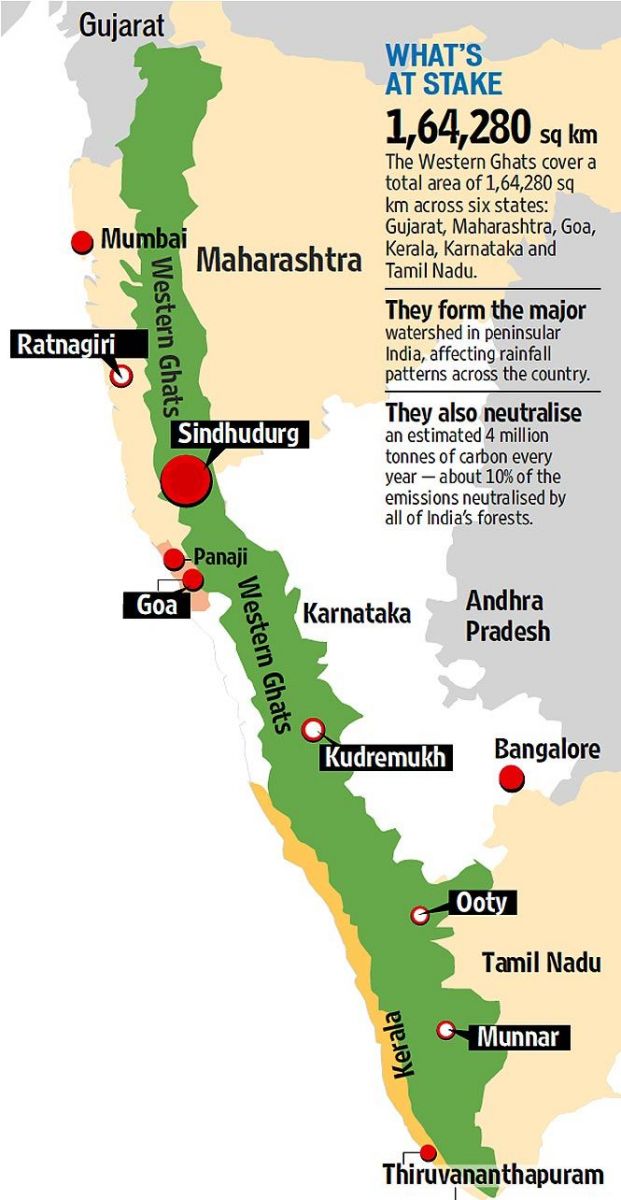
    • The Western Ghats of India is one of the global biodiversity hotspots owing to the endemism that is sheltered by a chain of mountains.
    • The northern part of this along with the Konkan region is considerably different from its southern and central counterparts on account of lesser precipitation and extended dry season.
    • It is the plateaus and the cliffs that harbour most of the endemic species.

    What did the study find?

    • The study found that the Northern Western Ghats has 181 local endemic plant species, including four monospecific genera.
    • They have found that a majority of the endemic species are therophytes, which complete their life cycle in a short period during monsoon.
    • A notable geographical feature of the Northern Western Ghats is the presence of plateaus and cliffs that display maximum endemic species, unlike forests.
    • It is the region of rapid diversification of specific herbaceous endemic genera like Ceropegia, Glyphochloa, Dipcadi, and Eriocaulon.

    One such specie is-

    Abutilon ranadei

    • Abutilon ranadei is a shrub, measuring 2.5-3.5 m high and bears star-shaped hairs.
    • It is a Critically Endangered endemic species from the northern Western Ghats.

    Bonus:

    Consider the following pairs:

    Wildlife Naturally found in
    1. Blue-finned Mahseer Cauvery River
    2. Irrawaddy Dolphin Chambal River
    3. Rusty-spotted Cat Eastern Ghats

    Which of the pairs given above are correctly matched?

    (a) 1 and 2 only

    b) 2 and 3 only

    c) 1 and 3 only

    d) 1, 2 and 3

  • Coronavirus – Health and Governance Issues

    Vande Bharat and Samudra Setu Missions to repatriate Indian nationals

    Note4Students

    From UPSC perspective, the following things are important:

    Prelims level: Vande Bharat and Samudra Setu Missions

    Mains level: Indian migrants and associated issues

    India is all geared to operate flights and naval vessels to repatriate Indian nationals stranded abroad.

    The name Samudra Setu typically sound like a combatant naval exercise whereas Vande Bharat reminds us of Train-18. Both ideas have opposite context and meaning. One must keep this in mind.

    What is the ‘Vande Bharat Mission’ mission about?

    • ‘Vande Bharat Mission’ will see the operation of 64 flights from May 7 to May 13 to bring back around 15,000 Indian nationals stranded abroad.
    • Once completed, it may turn out to be the largest evacuation operation ever since the 1990 airlift of 1.7 lakh people from Kuwait.
    • Approximately, 2,000 people from abroad will fly back to India daily.

    What is Indian Navy’s ‘Operation Samudra Setu’?

    • The Indian Navy launched ‘Operation Samudra Setu’ (Sea Bridge) as a part of national effort to repatriate Indian citizens from overseas.
    • Indian Naval Ships Jalashwa and Magar are presently enroute to the port of Malè, Republic of Maldives to commence evacuation operations from 08 May 2020 as part of Phase-1.
    • INS Jalashwa is the largest amphibious platform in the Navy and is based at the Eastern Naval Command headquarters in Visakhapatnam.
    • It can normally accommodate 1,000 people but will take about 800.
  • International Space Agencies – Missions and Discoveries

    ‘The Long March 5B’ rocket

    Note4Students

    From UPSC perspective, the following things are important:

    Prelims level: The Long March 5B

    Mains level: Not Much

    China has successfully launched a new rocket and prototype spacecraft in a major test of the country’s ambitions to operate a permanent space station and send astronauts to the Moon.

    Can you recall the historical link between the name “The Long March” and China’s History.

    The Long March 5B

    • Long March 5 or Chang Zheng 5 is a Chinese heavy-lift launch system developed by the China Academy of Launch Vehicle Technology (CALT).
    • It is the first Chinese launch vehicle designed from the ground up to focus on non-hypergolic liquid rocket propellants.
    • The maximum payload capacities of the base variant are ~25,000 kilograms to Low Earth Orbit and ~14,000 kilograms to Geosynchronous Transfer Orbit.
    • The spaceship is expected to transport astronauts to a space station that China plans to complete by 2022 — and eventually to the Moon. It will have a capacity for a crew of six.

    Back2Basics: Geosynchronous Transfer Orbit


    • About 35,786 kilometers above the Earth’s surface, satellites are in geostationary orbit. From the center of the Earth, this is approximately 42,164 kilometers. This distance puts it in the high Earth orbit category.
    • At any inclination, a geosynchronous orbit synchronizes with the rotation of the Earth.
    • While geosynchronous satellites can have any inclination, the key difference to geostationary orbit is the fact that they lie on the same plane as the equator.
    • GTO is a an elliptical orbit used to transfer between two circular orbits of different radiuses in the same plane—used to reach geosynchronous or  geostationary orbit using high-thrust chemical engines.
  • Zoonotic Diseases: Medical Sciences Involved & Preventive Measures

    How Remdesivir tricks coronavirus?

    Note4Students

    From UPSC perspective, the following things are important:

    Prelims level: Remdesivir

    Mains level: Coronovirus and the hunt for its vaccine

    A new research has found how Remdesivir treats coronavirus and described the exact mechanism of interaction between the virus and the drug.   Remdesivir is an experimental antiviral made by American pharmaceutical firm Gilead Sciences that was first developed to treat Ebola.

    DNA/RNA related terminologies, Genes and Genomes, etc. always find their way in UPSC Prelims.  Most recent one was-

    With reference to the recent developments in science, which one of the following statements is not correct? (CSP 2019)

    (a) Functional chromosomes can be created by joining segments of DNA taken from cells of different species.

    (b) Pieces of artificial functional DNA can be created in Iaboratories.

    (c) A piece of DNA taken out from an animal cell can be made to replicate outside a living cell in a laboratory.

    (d) Cells taken out from plants and animals can be made to undergo cell division in laboratory petri dishes.

    How Remdesivir kills coronavirus?

    • Remdesivir is designed to obstruct the stage of replication, when the virus creates copies of itself, followed endlessly by the copies creating copies of themselves.

    How does replication take place?

    • Once the virus enters the human cell, it releases its genetic material, which is then copied using the body’s existing mechanism.
    • At every stage of infection, various human proteins, virus proteins, and their interactions come into play.
    • At the replication stage, the key viral protein at play is an enzyme called RdRp (an enzyme is a kind of protein that speeds up chemical reactions within a cell).
    • It is RdRp that makes the copies, by processing components of the RNA of the virus.
    • University of Alberta researchers called it the “engine” of the virus in a paper last week, in which they described the action of Remdesivir against this “engine”.
    • In scientific literature, such an enzyme is called a polymerase (the p is RdRp stands for polymerase) or a replica.
    • In any case, this is the enzyme that is targeted by Remdesivir.

    And how exactly does Remdesivir target this enzyme?

    • In order to replicate, the virus processes raw material from the virus RNA, broken down by another enzyme with that specific function.
    • When a patient is given Remdesivir — the inhibitor — it mimics some of this material and gets incorporated in the replication site.
    • With Remdesivir replacing the material it needs, the virus fails to replicate further.
    • These coronavirus polymerases are sloppy and they get fooled, so the inhibitor gets incorporated many times and the virus can no longer replicate.