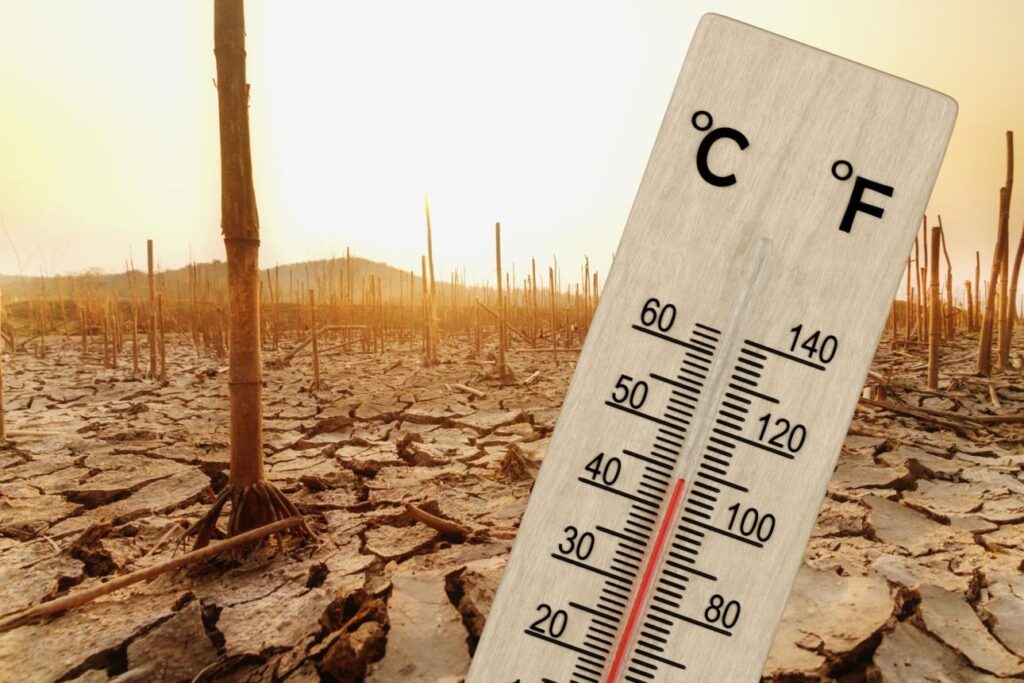
Why in the News?
- A joint report by the Food and Agriculture Organization and World Meteorological Organization warns that extreme heat is threatening global agrifood systems, impacting over a billion people.
Key Findings
- Heatwaves are: More frequent, More intense, and Longer-lasting
- Crop yields decline sharply beyond: ~30°C threshold
- Example: Morocco saw 40% fall in cereal yield
- Impact on Major Crops: Every 1°C rise in temperature leads to:
- ~6% reduction in yields of: Maize, Rice, Wheat, and Soybean
- Marine Impact: Marine heatwaves: Reduce oxygen in oceans and Threaten fish stocks
- In 2024: 91% of oceans experienced marine heatwaves
- Risk Escalation:
- 2°C warming → heat intensity doubles
- 3°C warming → heat intensity quadruples
- Livestock Impact
- 15–25% drop in milk production
- Reduced fertility
- Poultry mortality
| [2014] The scientific view is that the increase in global temperature should not exceed 2°C above pre-industrial level. If the global temperature increases beyond 3°C above the pre-industrial level, what can be its possible impact/impacts on the world? 1 Terrestrial biosphere tends toward a net carbon source. 2 Widespread coral mortality will occur. 3 All the global wetlands will permanently disappear. 4 Cultivation of cereals will not be possible anywhere in the world. Select the correct answer using the code given below. a) 1 only b) 1 and 2 only c) 2, 3 and 4 only d) 1, 2, 3 and 4 |
