Why in the news?
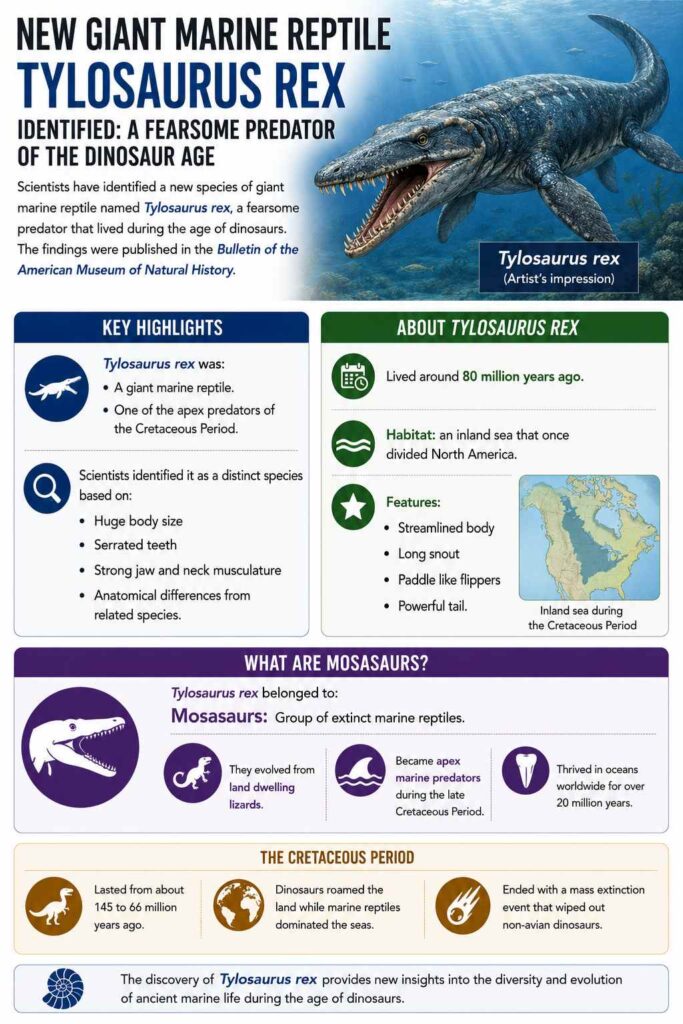
Scientists have identified a new species of giant marine reptile named Tylosaurus rex, a fearsome predator that lived during the age of dinosaurs. The findings were published in the Bulletin of the American Museum of Natural History.
Key Highlights
- Tylosaurus rex was:
- A giant marine reptile.
- One of the apex predators of the Cretaceous Period.
- Scientists identified it as a distinct species based on:
- Huge body size
- Serrated teeth
- Strong jaw and neck musculature
- Anatomical differences from related species.
About Tylosaurus rex
- Lived around 80 million years ago.
- Habitat: an inland sea that once divided North America.
- Features:
- Streamlined body
- Long snout
- Paddle like flippers
- Powerful tail.
What are Mosasaurs?
Tylosaurus rex belonged to:
- Mosasaurs: Group of extinct marine reptiles.
- They evolved from Land dwelling lizards.
- Became: Apex marine predators during the late Cretaceous Period.
[2018] The term “sixth mass extinction/sixth extinction” is often mentioned in the news in the context of the discussion of
A. Widespread monoculture practices in agriculture and large-scale commercial farming with indiscriminate use of chemicals in many parts of the world that may result in the loss of good native ecosystems.
B. Fears of a possible collision of a meteorite with the Earth in the near future in the manner it happened 65 million years ago that caused the mass extinction of many species including those of dinosaurs.
C. Large scale cultivation of genetically modified crops in many parts of the world and promoting their cultivation in other parts of the world which may cause the disappearance of good native crop plants and the loss of food biodiversity.
D. Mankind’s over-exploitation/misuse of natural resources, fragmentation/loss of natural habitats, destruction of ecosystems, pollution and global climate change.