💥Join UPSC 2027,2028 Mentorship (July Batch) + XFactor Notes & Microthemes PDF

Author: Explains

  • 07 July 2018 | High Relevance vs Low Relevance News , Govt. Posters for easy recall

    Reading News for UPSC is utmost important and rising number of questions year on year in UPSC Prelims is a testimony of this

    We are starting a daily series where we will analyze news covered in The Hindu, Indian Express and other newspapers which are important from exam perspective and which are not

    Important news would have been covered in our daily news coverage in form of newscards.

    Unimportant ones will be mentioned here and a short description regarding why it is not relevant for the exam

    Click on news headlines to read the full news

    High relevance news

    India to control Mattala Airport in Hambantota

    https://www.civilsdaily.com/news/india-to-control-mattala-airport-in-hambantota/

    Indian move to counter Chinese encroachment in Sri Lanka. Note the name of the port and places nearby. Can be asked in Prelims.

    Supreme Court upholds Chief Justice of India as ‘Master of Roster’

    https://www.civilsdaily.com/news/supreme-court-upholds-chief-justice-of-india-as-master-of-roster/

    After the 4 judges of SC shown anger towards the functioning of the collegium system and other processes in SC, it had become quite necessary to fix the hole in the ship.

    The judgment comes with regard to this and clears doubts regarding the regular functioning of SC

    Govt. deploys 800 IAS officers for village outreach

    https://www.civilsdaily.com/news/govt-deploys-800-ias-officers-for-village-outreach/

    Although there have been talks of cooperative federalism to increase compatibility between centre and states, this move can be a prime example of centralized tendency of administration.

    Points can be quoted in Mains & Essay.

    Ayushman Bharat: Hub-and-spoke model to help train health workers

    https://www.civilsdaily.com/news/ayushman-bharat-hub-and-spoke-model-to-help-train-health-workers/

    Read and make notes about the ECHO model as being a unique approach to solving manpower issue in the healthcare system.

    Low Relevance News

    SC defers plea on use of govt. land

    The Supreme Court has referred to a larger bench the question of whether religious activities can be allowed on government land or property in a secular State

    Nothing important from exam perspective until a final verdict is announced

    Supreme Court judge defends verdict on SC/ST Act

    Supreme Court judge, Justice A.K. Goel, in his farewell speech justified his controversial March 20 verdict which overrode the written law to grant anticipatory bail to those accused of Dalit atrocities

    No important points for exam in the news


    Govt. Poster for easy recall
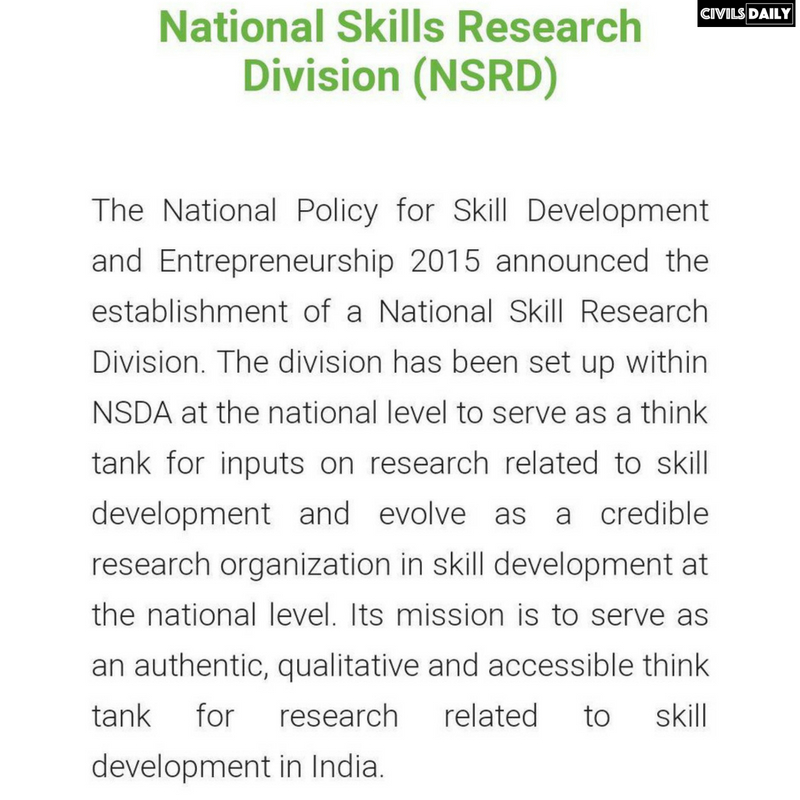
  • [Prelims Spotlight] Minmata Convention

    Here’s a Factoid to brush up your concepts

    Name : Minmata Convention

    Brief Intro : The Minamata Convention on Mercury is an international treaty designed to protect human health and the environment from anthropogenic emissions

    Objective : To protect human health and the environment from the adverse effects of mercury.

    Type : Conventions

    Category : E&B

    Year : 2013

    Importance (wr. Prelims) : High

    Place : Minmata

    Key Terms/ Institutions spinoffs : 1.Under the provisions of the Minamata Convention, developed under United Nations sponsorship, governments have agreed on a range of mercury-containing products whose production, import and export will be banned by 2020. 2.It also seeks to decrease the discharge of mercury into the air, water and land, to promote proper storage and disposal of mercury, as well as reduce the use and discharge of mercury in the process of gold mining in developing countries. 3.The pact, which is expected to take effect in 2016 at the earliest, also calls for a ban by 2018 on the use of mercury to produce acetaldehyde, which was the cause of Minamata disease. 4.It will also provide financial aid through a fund to developing countries to assist their efforts to cut mercury emissions, but does not refer to issues such as compensation for victims and who should be obliged to restore mercury-contaminated environments.

  • 06 July 2018 | Prelims Daily with Previous Year Questions and Answers

    Q.1) The Commission for Agricultural Costs and Prices (CACP) gives three definitions of production costs of agricultural crops. Which of these definitions given below is/are correctly matched?

    1. A2: ​​All paid-out expenses in cash and kind, incurred by farmer for sowing.
    2. C2: ​​A2 + All forgone interest and rentals on owned land and fixed capital assets.
    3. A2+FL:Actual paid out cost including unpaid family labour.

    Select the correct code from the following options:

    a) All of the above
    b) 1 and 2
    c) 1 and 3
    d) 2 and 3

    Inspired by: [op-ed snap] The price is right

    Q.2) Recently the Law commission’s report titled Legal Framework: Gambling and Sports Betting including Cricket in India was published.  

    Consider the following statements with respect to the recommendations made by the commission:

    1. Parliament may legislate in the exercise of its powers under Articles 249 or 252 of the Constitution to legalize gambling and betting.
    2. In case legislation is made under Article 249, states other than the consenting states will be free to adopt the same.

    Which of the statements given above is/are correct?

    a) Only 1
    b) Only 2
    c) Both 1 and 2
    d) None of the above

    Inspired by: Allow gambling, betting on sports as regulated, taxable activities: Law panel

    Q.3) Consider the following statements about Poverty in India:

    1. The World Bank defines a person as extremely poor if she is living on less than 1.90 international dollars a day, which are adjusted for inflation as well as price differences between countries.
    2. India is no longer home to the highest number of people living in extreme poverty.
    3. Research by Brookings Institution say Nigeria had 87 million people living in extreme poverty in May 2018, compared to 73 million in India.

    Which of the given statements is/are correct?

    a) 1, 2 and 3
    b) 1 and 2
    c) 2 and 3
    d) 3 only


    Q.4) Which of the following statements are correct about Bharat Emission Standards?

    1. In 2016, the Indian government announced that the country would skip the BS-V norms altogether and adopt BS-VI norms by 2020.
    2. Bharat Stage IV emission norms have been in place since April 2010 and it has been enforced for entire country since April 2017.
    a) Only 1
    b) Only 2
    c) Both 1 and 2
    d) None of the Above

    Inspired by: [pib] ICAT releases First BS-VI engine certificate

    Q.5) Consider the following statements about Crew Escape (Pad Abort) System:

    1. The Crew Escape System is an emergency escape measure to quickly pull the crew module — the astronaut cabin — along with astronauts out to a safe distance from the launch vehicle in the event of a launch abort.
    2. The first ‘pad abort’ test critical for a future human space mission was conducted successfully by ISRO from Wheeler Islands, Odisha.

    Which of the above statement(s) is/are correct?

    a) Only 1
    b) Only2
    c) Both 1 and 2
    d) None of the above

    For SolutionsClick Here


    Prelims Daily Archive – Click here

  • 06 July 2018 | High Relevance vs Low Relevance News , Govt. Posters for easy recall

    Reading News for UPSC is utmost important and rising number of questions year on year in UPSC Prelims is a testimony of this

    We are starting a daily series where we will analyze news covered in The Hindu, Indian Express and other newspapers which are important from exam perspective and which are not

    Important news would have been covered in our daily news coverage in form of newscards.

    Unimportant ones will be mentioned here and a short description regarding why it is not relevant for the exam

    Click on news headlines to read the full news

    High relevance news

    [pib] ICAT releases First BS-VI engine certificate

    https://www.civilsdaily.com/news/pib-icat-releases-first-bs-vi-engine-certificate/

    Read about ICAT & BS Norms. High probability of appearing in Prelims/Mains seeing the rise in air pollution levels and no solution in sight currently

    HEFA to allot ₹1 lakh crore for education

    https://www.civilsdaily.com/news/hefa-to-allot-%e2%82%b91-lakh-crore-for-education/

    Read the news and note micro details such as where can funding be used and what all institutions come under the agency. A twisted statement can be framed in Prelims.

    ISRO’s first ‘pad abort’ test, critical for future human space mission, successful

    https://www.civilsdaily.com/news/isros-first-pad-abort-test-critical-for-future-human-space-mission-successful/

    Another feather in cap for ISRO. Note details about the technology and where will it be useful. Factual questions related to ISRO missions are frequently being asked in Prelims.

    Uttarakhand HC declares animals to be ‘legal persons

    https://www.civilsdaily.com/news/uttarakhand-hc-declares-animals-to-be-legal-persons/

    After rivers being declared as legal persons, animals are also under the same protection.

    A historic judgment that will have a far-reaching impact on the conservation status of animals

    Note important points to quote in Mains answers as well as Essay.

    Low Relevance News

    SC seeks plan to eradicate leprosy

    The Supreme Court has directed the government to constitute a separate wing devoted to create and extend public awareness that leprosy is curable and not contagious

    Nothing very important from exam perspective. The government has implemented some measures to eradicate leprosy discrimination

    India to take back helicopters gifted to Maldives

    India-Maldives ties have been soaring in recent times due to China’s intervention in Maldives domestic politics.

    Nothing important in news from exam perspective


    Govt. Poster for easy recall

  • [Prelims Spotlight] Poverty, Higher Education Financing Agency (HEFA), Prevention of Cruelty to Animals Act, 1960, Rajukas

    Here are  Back2Basics collections from today’s news items

    B2B #1: From news- [op-ed snap] Is India winning the battle against extreme poverty?

    Definitions of Poverty

    Read more about the Poverty Line in India in this blog

    Poverty Lines in India: Estimations and Committees

    B2B #2: From news- HEFA to allot ₹1 lakh crore for education

    Higher Education Financing Agency (HEFA)

    1. It will be formed as a Special Purpose Vehicle (SPV) within a PSU Bank or the Government-owned-NBFC (Promoter).
    2. HEFA will have an authorized capital of 2,000 crore rupees and the government equity would be 1,000 crore rupees.
    3. The HEFA will also mobilize CSR funds from Corporates/PSUs which will, in turn, be released for promoting research and innovation in these institutions on grant basis.
    4. The principal portion of the loan will be repaid through the ‘internal accruals’ of the institutions earned through the fee receipts, research earnings etc.
    5. All the Centrally Funded Higher Educational Institutions will be eligible to join as members of the HEFA.
    6. For joining as members, the educational institution must agree to escrow a specific amount from their internal accruals for a period of 10 years to the HEFA.

    B2B #3: From news- Uttarakhand HC declares animals to be ‘legal persons’

    Prevention of Cruelty to Animals Act, 1960

    1. The Prevention of Cruelty to Animals Act is an Act of the Parliament of India enacted in 1960 to prevent the infliction of unnecessary pain or suffering on animals and to amend the laws relating to the prevention of cruelty to animals.
    2. The Act further recognizes slaughter for food. Section 11 of the Act does not categorize slaughter of animals for food as cruelty.
    3. It makes a specific exemption for “destruction of any animal as food for mankind unless such destruction or preparation was accompanied by the infliction of unnecessary pain or suffering.
    4. As per the provisions of the law, the government of India formed the Animal Welfare Board of India.

    Here’s a Factoid to brush up your concepts

    Key words related to History : Rajukas

    Dynasty/era : Mauryan period

    Meaning : The pllar Edict IV refers to the rajukas as officers “set over many hundred thousand of people and charged with the duty of promoting the welfare of the janapadas.Rajukas performed judicial duties.

  • 05 July 2018 | Prelims Daily with Previous Year Questions and Answers

    Q.1) Consider the following statements about Central Statistics Office (CSO)

    1. CSO defines jobs as ones that provide at least one government financed (or mandated) social security benefit such as Employees’ Provident Fund (EPF), National Pension Scheme, or Employees’ State Insurance Scheme.
    2. Latest release by CSO has says that 4.1 million new jobs were created in the economy’s formal sector during eight months since September, 2017.

    Which of the given statements is/are correct?

    a) Only 1
    b) Only 2
    c) Both 1 and 2
    d) None of the above

    Inspired by: [op-ed snap] The paradox of job growth

    Q.2) Consider the following statements:

    1. Indian has recently ratified WIPO Copyright Treaty, 1996 and WIPO Performance and Phonograms Treaty, 1996.
    2. These treaties are outcomes of Brussels Convention for protection of literary and artistic works.

    Which of the above statements is/are correct?

    a) Only 1
    b) Only 2
    c) Both 1 and 2
    d) None

    Inspired by: [pib] Cabinet approves accession to WIPO Copyright Treaty, 1996 and WIPO Performance and Phonograms Treaty, 1996

    Q.3) Which of the following statements is/are correct about DNA profiling technology?

    1. DNA fingerprinting or DNA profiling is a method of isolating and identifying variable elements within the base-pair sequence of DNA.
    2. It is utilized by police all over the world for fool-proof identification of criminals who leave their traces at the crime scene while committing the crime.
    a) Only 2
    b) Only 1
    c) Both 1 and 2
    d) None

    Inspired by: [pib] Cabinet approves DNA Technology (Use and Application) Regulation Bill, 2018

    Q.4) Consider the following statements about Institute of Chartered Accountants of India (ICAI):

    1. It was established as an autonomous institution under the Chartered Accountants Act, 1949 enacted by the Parliament to regulate the profession of Chartered Accountancy in India.
    2. It is one of the licensing cum regulating body of the financial audit and accountancy profession in India.

    Which of the statements given above is/are not correct?

    a) Only a
    b) Only b
    c) Both a and b
    d) None

    Inspired by: [pib] Cabinet approves renewal of MoU between the Institute of Chartered Accountants of India & Saudi Organisation for Certified Public Accountants

    Q.5) Khan Prahari is a tool for reporting any activity taking place related to illegal coal mining like rat hole mining, pilferage etc.

    Which of the following statements about “Khan Prahari android app are correct?

    1. One can upload geo-tagged photographs of the incident along with textual information directly to the system.
    2. It can also be used to check Status of Environmental Clearances /Forest Clearances etc. for conducting mining activity.
    a) Only 1
    b) Only 2
    c) Both
    d) None

    Inspired by: [pib] Coal Mine Surveillance & Management System (CMSMS) and ‘Khan Prahari’ App


    For SolutionsClick Here


    Prelims Daily Archive – Click here

  • 05 July 2018 | High Relevance vs Low Relevance News , Govt. Posters for easy recall

    Reading News for UPSC is utmost important and rising number of questions year on year in UPSC Prelims is a testimony of this

    We are starting a daily series where we will analyze news covered in The Hindu, Indian Express and other newspapers which are important from exam perspective and which are not

    Important news would have been covered in our daily news coverage in form of newscards.

    Unimportant ones will be mentioned here and a short description regarding why it is not relevant for the exam

    Click on news headlines to read the full news

    High relevance news

    [pib] Cabinet approves accession to WIPO Copyright Treaty, 1996 and WIPO Performance and Phonograms Treaty, 1996

    https://www.civilsdaily.com/news/pib-cabinet-approves-accession-to-wipo-copyright-treaty-1996-and-wipo-performance-and-phonograms-treaty-1996/

    Two very important treaties concerned with IPR protection. Note all details. Very very important for this year Mains as well as next year Prelims. Also read about WIPO

    [pib] Cabinet approves DNA Technology (Use and Application) Regulation Bill, 2018

    https://www.civilsdaily.com/news/pib-cabinet-approves-dna-technology-use-and-application-regulation-bill-2018/

    Amongst all concerns of the right to privacy, the government has gone ahead with DNA profiling bill.

    Note how it will help in finding missing persons as well as reducing crimes.

    Can be quoted in Mains answers.

    [pib] Three lakh CSC VLEs to be engaged as Banking Correspondents

    https://www.civilsdaily.com/news/pib-three-lakh-csc-vles-to-be-engaged-as-banking-correspondents/

    Digital India is helping to take various services to remote areas of India. Note the details of DigiGaon as these types of schemes are being asked in Prelims.

    Thanjavur Paintings

    https://www.civilsdaily.com/news/thanjavur-paintings/

    Art and Culture News! No need to highlight its importance. Note down all points related to Thanjavur Paintings.

    Low Relevance News

    India braces for more U.S. pressure on Iran sanctions

    The Government of India is bracing for more “pressure“ from the U.S. on Iran sanctions in the coming weeks but hopes that there may be an exception made for its dealings on the Chabahar port

    Nothing important in news from UPSC perspective

    Centre asks Malaysia to extradite Zakir Naik

    The Centre said that it had made a formal request to Malaysia in January for the extradition of the controversial Islamic preacher Zakir Naik

    No important points from exam perspective


    Govt. Poster for easy recall

  • [Burning Issues] Government Litigation

    Image result for Government Litigation

    Why in News?

    Prime Minister Narendra Modi had flagged his concern over the fact that government departments work in silos and two departments of the same government confront each other in court to settle disputes.

    Present status of litigation in India

    Overall

    • 3.2 cr cases were pending in the Indian judicial system (SC + HCs + Subordinate Courts)

    Supreme Court

    • Over 30% of cases in the Supreme Court are more than five-year-old.
    • Those waiting for disposal for more than 10 years constituted 1,550 cases (2% of cases).

    High Court

    • A total of 38 lakh cases are pending in 23 high courts. Out of these almost 22%, were 5 to 10 years old. 19% were more than 10 years old. Combined together, 40 per cent pending cases in the high courts have been waiting disposal for at least 5 years now.

    Subordinate Courts

    • 2.6 Crore cases pending in subordinate courts across country. This figure does not include cases pending in Arunachal Pradesh, Nagaland, Puducherry and Lakshadweep. Despite all the measures adopted, the backlog has shown no sign of decline.

    Government Litigation

    • Government is regarded to be the biggest contributor to litigation in India. Approx 46% of the total pending cases in courts pertains to the government. This includes cases relating to Public Sector Undertakings and other autonomous bodies.
    • Government litigation includes service matters, disputes with private entities as well as inter-se disputes between two government departments and disputes between two PSUs
    • The top 5 central ministries that filed cases were railways, finance, communications, home and defence.

    Concerns over Government Litigation

    Popular Misconception

    • A misconception regarding government litigation is that the government itself is a source of all cases involving the government. This is why existing policies attempt to address the issue of “government being a compulsive litigant” and do not consider cases where the government is a respondent. Only 7% of fresh cases filed before the court in 2014 were filed by the Central government.
    • Nearly 80% of the cases against the govt are filed against a combination of the State Government; parastatal agencies such as the State Road Transport Corporation, universities, etc.; and local bodies. Most of these petitions filed against the State government are in relation to service, land revenue, land acquisition and education. Those against parastatal agencies are in relation to service and labour-related matters, while those against local bodies are service, land acquisition and tax-related.
    • This necessitates a multi-pronged approach to tackle the issue (as per VIDHI Centre of Legal Policy).

    Public and Private Costs

      • Government litigation proves costly to the public exchequer.
    • 126th Law Commission Report highlighted that besides litigation cost the state bears the additional expenses of setting up courts and related manpower. This prevents the executive from performing its primary role of governance.
    • Economic Survey 2017-18  also pointed out that cost of various PPP projects increase due to litigation pending in court.

    Power Imbalance

    • Government litigation is an encounter of unequals where an ill-equipped individual person or entity fights against a massive government machinery
    • Also, 110th Report of Law Commision of India states that procedural law benefits government as compared to litigant which further delays dispensation of justice.

    Absence of Monitoring Body

    • 126th Law Commision Report highlights how the absence of monitoring body allows govt departments to initiate and pursue litigation against each other. This further overburdens the exchequer.

    No Uniform Administrative Control

    • Both 100th and 126th Law Commision Reports recommended setting up of a ‘Litigation Ombudsman’ in every state and to create a ‘Grievance Redressal System’ within departments, specifically to manage disputes between the government and its employees.
    • National Litigation Policy 2010 proposed to set up a national and regional level monitoring system to minimize litigation. Also to monitor the case burden in each department, ‘Nodal Officer’ was designated to “actively” monitor litigation and track court cases. But no efforts have been made till date in this regard.

    National Litigation Policy (NLP), 2010

    • In 2010, the government introduced the NLP with a mission to transform government into an ‘Efficient and Responsible litigant’, so as to achieve the goal of reducing the  average pendency time from 15 years to 3 years.
    • The policy attempts to provide a framework to handle various aspects of government litigation, such as government representation, litigation practices such as seeking adjournments, filing pleadings and appeals, exploring alternative dispute resolution mechanisms etc.
    • The 2015 review was supposed to remove the weaknesses of the NLP 2010 by including fines for govt officers engaging in frivolous litigation.
    • But till date, nothing concrete has been achieved i.e the NLP remains unimplemented.

    Way Forward

    Economic Survey 2018

    • Expanding judicial capacity in the lower courts and reducing the existing burden on high court and Supreme Court.
    • Need to downsize original and commercial jurisdiction of High courts and enabling the lower judiciary to deal with such cases. Reducing the size of original side jurisdiction has allowed the court to reduce its overall pendency.
    • Courts need to revisit the size and scale of their discretionary jurisdictions and have to avoid resorting them unless it is deemed necessary.
    • Courts need to consider prioritizing stayed cases and should impose strict timelines within which cases can disposed off with temporary injunctions, especially when they involve government infrastructure projects.
    • To free up the judicial time, initiatives like Crown Court Management Services of the UK that are dedicated to the management and handling of administrative duties may be considered.
    • Need to create more subject matter and stage specific benches that will allow the courts to build internal specializations and efficiencies in combating pendency and delay.

    LIMBS (Legal Information Management and Briefing System), a web based application created by the Department of Legal Affairs under the Ministry of Law and Justice, is an initiative to make the legal data available at one single point and streamline the procedure of litigation matters. This initiative should be strengthened.

    Benefits of LIMBS in the long run

    • It will help the government in achieving its objectives of “Minimum government, maximum governance”, “Digital India”, “Ease of doing business” and enhance the Transaction Capacity Governance of the government with an efficient legal framework for speedy resolution of disputes.
    • It provides a low cost web technology access to all the stakeholders involved in a court case in a coordinated way whereby it provides inputs which are available seamlessly on 24×7 basis as per the defined access rules.
    • It helps  in organizing scattered Information at one single database and also create a professional base available for expert advice
    • It reduces the huge expenditures involved in resolving the cases, saves time and makes the working of different departments under a ministry

    Recommendations by Law Ministry’s Department of Justice

    • Appointment of a nodal officer in every department at the Joint Secretary Level to coordinate effective resolution of the disputes.
    • Nodal Officer to regularly monitor the status of the cases
    • Promotion of alternative dispute resolution mechanisms- encourage mediation as the preferred form of dispute resolution in service related matters ,Appropriate guidelines in this regard may be drafted by the Government
    • Avoid unnecessary filing of appeals- Appeals should not be filed in routine matters-only in cases where there is a substantial policy matter.
    • An Intuitional ADR mechanism could be considered for resolution of cases between the government and private bodies.
    • All agreements to mandatorily include a reference to either arbitration or mediation.
    • Vexatious litigation should be immediately withdrawn

    Civil Society (VIDHI Centre for Legal Policy) Suggestion – A multi-pronged approach

      • A multi-pronged approach needs to be adopted to tackle the issue of “government litigation”, depending on the kind of litigation.
      • For example, to reduce writ petitions filed under service and labour classifications, the state must put in place robust internal dispute resolution mechanisms within each department which inspire confidence in its workers as a means of addressing their grievances against the management.
    • On the other hand, in land acquisition matters, the state must either ensure that quasi-judicial authorities are judicially trained or create a separate class of judicial officers to discharge quasi-judicial functions.
  • [Prelims Spotlight] Copyright Act, 1957, DNA Profiling Technology, Cartosat-2 series

    Here are  Back2Basics collections from today’s news items

    B2B #1: From news- [pib] Cabinet approves accession to WIPO Copyright Treaty, 1996 and WIPO Performance and Phonograms Treaty, 1996

    Copyright Act, 1957

    1. The Copyright Act 1957(wef 21 January 1958) (as amended by the Copyright Amendment Act 2012) governs the subject of copyright law in India.
    2. The Copyright Act 1957 was the first post-independence copyright legislation in India and the law has been amended six times since 1957.
    3. The most recent amendment was in the year 2012, through the Copyright (Amendment) Act 2012.
    4. The history of copyright law in India can be traced back to its colonial era under the British Empire.
    5. India is a member of most of the important international conventions governing the area of copyright law, including
    • the Berne Convention of 1886 (as modified at Paris in 1971),
    • the Universal Copyright Convention of 1951,
    • the Rome Convention of 1961 and
    • the Agreement on Trade Related Aspects of Intellectual Property Rights (TRIPS)

    India accessed as a member of the WIPO Copyright Treaty (WCT) and the WIPO Performances and Phonograms Treaty (WPPT) in July, 2018.

    WIPO Copyright Treaty

    1. It is a Special agreement under Berne Convention (for protection of literary and artistic works).
    2. It came in force on March 6, 2002 and has been adopted by 96 contracting parties till date.
    3. It has provisions to extend the protection of copyrights contained therein to the digital environment.
    4. Further it recognises the rights specific to digital environment, of making work available, to address “on-demand” and other interactive modes of access.

    WIPO Performances and Phonograms Treaty

    1. It came in force on May 20, 2002 and has 96 contracting parties as its members.
    2. WPPT deals with rights of two kinds of beneficiaries, particularly in digital environment –
    • Performers (actors, singers, musicians etc.)
    • Producers of Phonograms (Sound recordings).

    The treaty empowers right owners in the negotiations with new digital platforms and distributors.

    It recognizes moral rights of the performers for the first time & provides exclusive economic rights to them.

    B2B #2: From news- [pib] Cabinet approves DNA Technology (Use and Application) Regulation Bill, 2018

    DNA profiling technology

    1. DNA fingerprinting or DNA profiling is a method of isolating and identifying variable elements within the base-pair sequence of DNA.
    2. DNA fingerprinting technology is utilized by police all over the world for fool-proof identification of criminals who leave their traces at the crime scene while committing the crime.
    3. The technology plays a crucial role in solving crimes as it has potential to link a series of crimes by placing the suspects by linking them with the crime scene.

    Here’s a Factoid to brush up your concepts

    Name : Cartosat-2 series

    Details : The launch marks the roll out of the 100th satellite by ISRO. 30 other satellites – 28 foreign and 2 Indian. 2nd time that ISRO has been able to place satellites in 2 different orbits This was done through the “multiple burn technology” under which the rocket’s engine is switched off and then switched on to control its height.

    Launch Vehicle : PSLV C40

  • 04 July 2018 | Prelims Daily with Previous Year Questions and Answers

    Q.1) At the recently a meeting of WIPO’s Standing Committee on Copyright and Related Rights (SCCR) was held for the first time in several years. Consider the following statements:

    1. A recommendation to finalise the text of the Broadcasters Treaty was made at this meeting.
    2. India is a signatory to this treaty.

    Select the correct statements from the following:

    a) Only 1
    b) Only 2
    c) Both 1 and 2
    d) None of the above.


    Inspired by: Why Hasn’t India Endorsed the Broadcasters Treaty Yet?

    Q.2) Which of the following statements best describes Metadata?

    a) It is the data that describe the people, places, and things that are involved in an organization’s business.
    b) It is the data encrypted while experimenting quantum Physical analysis.
    c) It is the data about other data and includes information such as username, device info and log-in time also called as “data of data”.
    d) It is the data collected by someone else for some other purpose (but being utilized by the investigator for another purpose).


    Inspired by: [op-ed snap] Why rumours love WhatsApp

    Q.3) The Global Gender Gap Report is released by the:

    a) ILO
    b) UNDP
    c) United Nations Development Fund for Women (UNIFEM)
    d) World Economic Forum

    Inspired by: [op-ed snap] The marriage penalty on women in India

    Q.4) Recently Behdienkhlam Festival was in news. In which state is this festival celebrated?

    a) Tripura and Meghalaya
    b) Arunachal Pradesh and Manipur
    c) Meghalaya
    d) Manipur


    Inspired by: [pib] Behdienkhlam Festival

    Q.5) Which of the following statements best describes NITI Talks?

    a) It is a forum for showcasing successful entrepreneurs from across the country from the field of mobility, sustainable development, climate change and multimodal transport.
    b) It is an online platform inviting various stakeholders for suggesting measure for better policy framework to enhance capabilities of the Think-Tank.
    c) It is as a platform for inputs received from the various States and be global best practices to frame a National Strategy.
    d) It is a monthly publication released by NITI.

    Inspired by: [pib] NITI Aayog to organise India’s First Global Mobility Summit


    For SolutionsClick Here


    Prelims Daily Archive – Click here