💥Join UPSC 2027,2028 Mentorship (July Batch) + XFactor Notes & Microthemes PDF

Author: CD Staff

  • Why Are Rural Wages in India Stuck?

    Note4Students:

    India’s economy and agriculture have grown but rural wages haven’t kept up. Rural wages is a leading indicator for rural poverty. And ‘poverty’ is UPSC’s favorite microtheme for GS Mains (hint: PYQs on microfinance & women empowerment in 2020, non-farm employment in 2015 etc.)

    While Rural wage stagnation is the topic in focus, we have given a separate focus to “Components of Rural Poverty” in the Back2basics so you have a 360 degree understanding. This is static portion which is hard to find in standard reference books. 

    UPSC Microthemes & Mains PYQ:

    Q1.) GS2: “Micro-Finance as an anti-poverty vaccine is aimed at asset creation and income security of the rural poor in India”. Evaluate the role of Self Help Groups in achieving the twin objectives along with empowering women in rural India. (UPSC 2020)

    Q2.) GS3: Livestock rearing has a big potential for providing non-farm employment and income in rural areas. Discuss suggesting suitable measures to promote this sectors in India. (UPSC 2015)

    Microthemes: SHGs,  Non-Farm Activities (Live stock)

    India’s economy and agriculture sector have both grown steadily in recent years, but this growth hasn’t benefited rural wages. Between 2019-20 and 2023-24, the economy expanded at an average rate of 4.6%, while the farm sector grew at 4.2%. However, rural wages have seen minimal increases, especially when adjusted for inflation. This article examines the current state of rural wages, reasons for stagnation, and potential solutions to address this issue, crucial for understanding economic inequalities in India.

    Current State of Rural Wages

    Despite economic growth, rural wages have largely stagnated, highlighting a disconnect between GDP growth and actual earnings for rural workers.

    Wage TypeAverage Annual Growth (2019-20 to 2023-24)
    Nominal Rural Wages5.2%
    Nominal Agricultural Wages5.8%
    Real Rural Wage Growth-0.4%
    Real Agricultural Wages0.2%

    In nominal terms, wages increased slightly, particularly in agriculture, yet inflation outpaced these increases, leading to negative growth in real rural wages. This indicates that while workers earn more in absolute terms, rising prices have eroded their purchasing power.

    Key Factors Behind Rural Wage Stagnation

    FactorExplanationImpact on Rural Wages
    Increased Labour Supply, Especially Among WomenFemale Labour Force Participation Rate (LFPR) surged from 26.4% (2018-19) to 47.6% (2023-24), adding more workers to an already crowded job market.Higher labor supply drives down wages as more workers compete for limited jobs, primarily in agriculture.
    Low Agricultural ProductivityAgriculture has low productivity; additional labor does not yield proportional increases in output.Surplus labor in agriculture limits wage growth as the sector struggles to increase output efficiently.
    Capital-Intensive Economic GrowthEconomic growth is concentrated in capital-intensive sectors (e.g., mechanized farming, industrial machinery) that require fewer workers.Rural job opportunities are reduced, as demand shifts from labor to capital, leading to wage stagnation.
    Limited Non-Farm Job OpportunitiesSmall-scale and cottage industries that could absorb rural labor lack sufficient support, and urban-centered manufacturing and services have not expanded in rural areas.Limited non-agricultural job opportunities restrict wage growth and create over-reliance on low-paying agricultural jobs.
    Weak Wage Guarantee ProgramsDelays in payments, budget constraints, and inefficiencies in schemes like MGNREGA reduce the effectiveness of wage guarantees.Inconsistent or delayed wage payments lower the impact of wage-support programs in improving rural income stability.
    Inflation and Rising CostsInflation has risen faster than income, increasing the cost of essential goods, which outpaces rural wage growth.Real wages decrease as purchasing power erodes, making it difficult for rural families to sustain their standard of living.
    Impact of Climate ChangeClimate issues, such as droughts and floods, disrupt agricultural production, reducing rural incomes and affecting the ability to pay wages.Wage instability arises as unpredictable weather conditions impact agricultural earnings and wage reliability.

    Implications of Stagnant Rural Wages

    1. Reduced Demand for Goods: With limited spending capacity, rural consumers contribute less to the demand for goods, especially affecting small and medium enterprises.
    2. Increased Debt and Financial Vulnerability: Inflation and stagnant wages drive rural households towards debt, often from informal lenders, trapping them in financial instability.
    3. Forced Migration and Urban Overcrowding: Low rural wages push workers to migrate to cities for better opportunities, leading to overpopulation and straining urban infrastructure.
    4. Gender Wage Disparity: Wage stagnation affects both men and women, but women face a double burden as they generally earn less than men for the same jobs.

    Government Measures and Policy Recommendations

    Current Initiatives

    ProgramObjective
    PM-KISANAnnual income support of Rs 6,000 for farmers
    MGNREGAGuaranteed 100 days of rural wage employment
    Mudra YojanaMicro-loans for rural business and job creation
    DDU-GKYSkill development for non-farm rural employment
    PM Gram Sadak YojanaBuilding rural roads to improve access to markets

    Recommended Solutions

    1. Strengthen Income Support: Expanding income transfer schemes like PM-KISAN can reduce the immediate financial strain on rural families.
    2. Regular Wage Adjustments: Periodic revision of minimum wages, accounting for inflation, would protect rural workers from the erosion of their purchasing power.
    3. Promote Rural Non-Farm Employment: Supporting labor-intensive industries (e.g., textiles, food processing, tourism) could diversify job opportunities for rural workers.
    4. Increase Agricultural Productivity: Encouraging modern farming practices, such as efficient irrigation and high-quality seeds, can enhance productivity and potentially increase rural incomes.
    5. Targeted Gender Support Programs: Addressing the gender pay gap through focused schemes like Maharashtra’s Ladki Bahin Yojana could offer greater support to women and low-income families.

    Conclusion

    Rural wage stagnation remains a paradox in India’s growth story. Despite strong economic and agricultural growth, factors such as surplus labor, low productivity, and limited non-farm opportunities have hindered wage improvement. Addressing these issues requires a multi-pronged approach, including targeted income support, wage adjustments, skill development, and agricultural modernization. Only with comprehensive interventions can India foster sustainable wage growth, ensuring that economic gains reach its vast rural population.

    #BACK2BASICS : Rural Wages for alleviating poverty

    Component of Rural PovertyImpact of Rural WagesExamples & Data
    Income InsecurityStable wages create consistent income, reducing dependency on seasonal jobs and low-paying alternatives.Example: MGNREGA provides guaranteed income during lean periods. 2022-23 saw rural wage rates increase by ~6%, enhancing income security in participating areas.
    Limited Access to EducationHigher household income enables investment in children’s education and reduces child labor.Data: Rural education completion rates are 68.7%, lower than urban. Good wages help offset educational costs, increasing enrollment and retention rates.
    Inadequate HealthcareIncreased income allows families to afford better healthcare, reducing out-of-pocket expenses for medical needs.Example: Villages with higher wages under PM-KISAN saw 12% increased healthcare spending. WHO reports rural healthcare costs often exceed urban by 30% per capita.
    Food InsecurityBetter wages mean more consistent purchasing power, reducing hunger and undernutrition.Data: According to NFHS-5, 35.7% of rural children are stunted; higher wages directly support nutrition and food access for households, improving health outcomes.
    Poor Housing and Living ConditionsIncreased income supports better housing materials, repairs, and sanitation facilities, leading to healthier living conditions.Example: Rural housing schemes such as PMAY-G have noted a 20% increase in participation where rural wages are higher, improving home quality and sanitation access.
    Social Vulnerability and ExploitationSteady income strengthens bargaining power, helping rural workers avoid exploitative labor and unfair practices.Data: In areas with better wages, reports of exploitative labor reduced by 15% (NSSO 2021). Regular wages can support self-reliance, reducing forced labor reliance.
    Limited Access to Financial ServicesHigher income allows families to save, invest, and access credit, promoting financial security and economic stability.Example: Self-Help Groups in Tamil Nadu report a 25% increase in savings among higher-wage families, improving access to credit and reducing vulnerability.
    Lack of Infrastructure and Basic ServicesEnhanced wages help create demand and tax revenue for better infrastructure like roads, electricity, and sanitation, improving overall quality of life.Data: A 2021 World Bank study found that rural areas with stable wages experience 18% faster infrastructure improvements, helping close the rural-urban gap.
  • Sailing Towards Self-Reliance: Is India Ready for Atmanirbharta in the Maritime Sector?

    NOTE4STUDENTS:

    This article covers India’s journey toward maritime self-reliance, focusing on indigenous naval production and strategic initiatives. UPSC tends to ask questions that connect current affairs with static knowledge. Many struggle with connecting current events to static concepts. It’s not just about knowing the facts but understanding their broader implications in the context of India’s defense strategy. Another common mistake is not giving enough attention to details of indigenous systems or the technical aspects involved in defense production, which are key to understanding India’s maritime self-reliance. This article breaks down complex topics into simple, digestible pieces. It covers both current news and static knowledge, making it easy to understand how one ties into the other. It also connects real-world events (like the commissioning of warships) with defense policy and technological advancements, helping to bridge gaps in understanding.

    PYQ ANCHORING & MICROTHEMES

    1. GS 2: Sea is an important Component of the Cosmos’. Discuss in the light of the above statement the role of the IMO(International Maritime Organisation) in protecting environment and enhancing maritime safety and security.  [2023]
    2. GS 3 : What are the maritime security challenges in India ? Discuss the organisational, technical and procedural initiatives taken to improve the maritime security. [2022]

    Microtheme: Maritime Security challenges

    On January 15, 2024, Prime Minister Narendra Modi presided over the commissioning of three naval platforms—INS Surat (destroyer), INS Nilgiri (frigate), and INS Vagsheer (submarine)—built at Mazagon Docks, marking a historic milestone in India’s quest for maritime self-reliance (Atmanirbharta). 

    The Indian Navy’s Swavlamban initiative reflects a commitment to Atmanirbhar Bharat (self-reliance), emphasizing innovation and indigenization in defense manufacturing. This aligns with India’s broader aspirations of reducing dependency on imports while leveraging domestic capabilities to add value and boost exports. 

    PRESENT STATUS OF MARINE ATMANIRBHARTA

    AspectDetails
    Present Force LevelApproximately 150 ships and submarines, with 60 large Navy ships valued at Rs 1.5 trillion currently under construction.
    Indigenous Warship and Submarine ProductionWarships: 60 warships/vessels under construction at MDL, GRSE, and GSL, including:
    – INS Vikrant (India’s first indigenous aircraft carrier, commissioned 2022)
    – Project 15B (Visakhapatnam-class destroyers, advanced stealth destroyers)
    – Project 17A (Nilgiri-class frigates, guided missile frigates)
    Submarines:
    – Advanced Technology Vessel (ATV) Project, including Arihant-class nuclear submarines.
    – INS Arihant and Arighat (indigenous nuclear-powered submarines).
    – Kalvari-class submarines (Scorpene, six inducted/planned under Project 75 at MDL).
    Indigenous Weapons Systems– BrahMos Missiles (jointly with Russia, domestically produced)
    – Varunastra Torpedo (indigenous heavyweight torpedo for anti-submarine warfare).
    – DRDO Missiles & Systems (Barak-8, underwater surveillance systems).
    Indigenous Sensors and Electronics– Development of Combat Management Systems (CMS), radar systems (Rohini and Revathi), and Sonars (HUMSA-NG for ships and submarines).
    Aircraft and UAVs– Naval Tejas (Indigenous Light Combat Aircraft for carrier-based operations under development).
    – Dornier 228 Aircraft (locally produced multi-role aircraft for maritime patrol).
    – Rustom UAV (Indigenous unmanned aerial vehicle for surveillance).

    The Indian Navy’s present force level comprises about 150 ships and submarines with 60 large Navy ships, valued around Rs 1.5 trillion, are under construction. India’s naval force has made significant strides in domestic production, showcasing a growing reliance on indigenous capabilities.

    KEY STEPS TOWARDS MARITIME ATMNIRBHARTA

    1. Strategic Vision and Initiatives: SAGAR (Security and Growth for All in the Region) framework emphasizes an open, secure, and inclusive Indo-Pacific, with India as a first responder in the Indian Ocean.

    2. Evolution of Self-Reliance:

    • Make-in-India (2014) aimed at attracting foreign manufacturers to set up operations in India for job creation, skill development, and technology transfer.
    • Atmanirbhar Bharat expands this vision to foster domestic manufacturing (indigenization) and ensure India’s capacity to add value to necessary imports.

    3. Navy’s Success in Indigenization:

    Since the 1960s, the Navy has indigenously designed 19 warship models and built 121 ships and submarines.

    It has developed advanced systems like propulsion mechanisms, sonar, electronic warfare suites, fire control systems, and more, many of which are exported as “world-class” products.

    4. Focus on Technology & MSMEs:

    The Navy’s 15-year Science and Technology Roadmap emphasizes cutting-edge areas like AI, robotics, hypersonic missiles, and bio-technical weapons. E.g. DPSUs and MSMEs Collaboration.

    MSMEs and start-ups play a crucial role in creating disruptive technologies and supporting special operations. E.g. Green Channel Policy.

    5. Collaborations & Innovation Structures:

    The Navy has established the Naval Indigenisation and Innovation Organisation (NIIO), the Naval Technology Acceleration Council (N-TAC), and vendor-development programs to facilitate partnerships with academia, industry, and global players.

    Initiatives like IN STEP engage students to work on naval problem statements.

    NEEDS OF MARITIME ATMNIRBHARTA

    AreaBenefitExample
    National Security and Strategic AutonomyReduces dependence on foreign suppliers, ensuring independence during conflicts.Development of the INS Arihant.
    Economic Growth and Cost-EffectivenessReduces reliance on imports, strengthens local industries, creates jobs, fosters innovation.Construction of INS Kamorta (anti-submarine warfare corvette) in Kolkata.
    Maritime Domain AwarenessEnhances ability to monitor coastlines, EEZ, and IOR with tailored surveillance systems.PierSight’s Varuna.
    Global Influence and Soft PowerBuilds credibility and strengthens international partnerships via defense exports.Export of Offshore Patrol Vessels (OPVs).
    Aligning with Atmanirbhar Bharat VisionSupports India’s goal of self-reliance, reduces import dependency in defense.Construction of the INS Vikrant under Make in India and Defence Acquisition Procedure (DAP) 2020.
    Preparedness for Non-Traditional ThreatsFacilitates quick, tailored responses to maritime threats like piracy and terrorism.Information Fusion Centre-Indian Ocean Region (IFC-IOR).
    Technology and Innovation AdvancementPromotes local technological development benefiting both defense and civilian sectors.Varunastra torpedo.

    CHALLENGES WITH INDIA’S MARITIME ATMNIRBHARTA

    1. Global and Regional Context:
    • The Indian Navy is well-regarded, but still behind major powers like the US and China.
    • True Value Rating (TrV): India ranks 7th globally with 103 major naval units and a TrV of 100.5, while the US and China have much larger fleets with TrVs of 323.9 and 319.8, respectively.
    • Defense Spending: India’s defense budget for 2023 was $84 billion, while the US spent $916 billion and China spent $330 billion.
    1. Challenges in Indigenisation:
    • Shipbuilding Delays: India’s shipbuilding is slow. For example, the INS Surat took 31 months to build, while China built a similar ship in just 4.5 months.
    • Dependence on Imports: A lot of the equipment needed for warships is still bought from other countries. There are few local successes, like the BrahMos missile.
    • R&D Challenges: Progress in developing military technology has been slow, affecting India’s ability to become truly self-reliant in defense.
    1. Technological and Innovation Gaps: India still relies on foreign technology for important systems, like advanced turbines, nuclear propulsion, and anti-submarine weapons. The slow adaptation to new technology makes it harder to keep up with global competition.
    2. Infrastructure and Skilled Workforce Deficits: Shipyards in India, like MDL and GRSE, are overloaded, causing delays in production. There is also a shortage of skilled professionals in areas like submarine design and weapon development.
    3. Bureaucratic and Budgetary Challenges: The process of buying new defense technology is slow and complicated, often leading to delays and cost overruns. This is seen in projects like the Arihant-class nuclear submarines.
    4. Security Vulnerabilities: The increasing use of digital systems, such as those on INS Vikramaditya, exposes the navy to cyber threats. Stronger security measures are needed to protect sensitive technology.
    5. Global Competition and Limited Export: Indian defense products face tough competition from countries like the US and China in the global market. Challenges in scaling up production and selling technology like the INS Kalvari limit India’s export opportunities.

    WAY FORWARD

    1. Defense R&D: Prioritize local development of naval technologies like the INS Vikrant, India’s first indigenous aircraft carrier.
    2. Empowerment: Support local industries like Mazagon Dock Shipbuilders Limited (MDL) in manufacturing naval assets through public-private partnerships.
    3. Strategic Partnerships: Strengthen ties with countries like France for the Scorpene submarine project, which was a joint venture for building nuclear-capable submarines.
    4. Infrastructure Development: Modernize Goa Shipyard to ramp up the construction speed of ships, reducing delays in building vital naval vessels.
    5. Naval Doctrine: Develop strategies for countering hybrid warfare, like India’s policy on anti-submarine warfare and cyber defense strategies to prevent naval vulnerabilities.
    6. Acquisition Reforms: Streamline naval procurement processes as seen with the quick induction of the INS Kalvari, a Scorpene-class submarine.
    7. Visionary Leadership: Provide political direction like in the Make in India campaign, driving India’s commitment to indigenous defense production, such as the BrahMos missile program.
    8. Youth Engagement: Encourage youth in STEM through programs like the Indian Navy’s National level internship scheme, where students work directly on naval technologies.

    #BACK2BASICS: DOMESTIC PRODUCTION FOR INDIA’S NAVY 

    1. Indigenous Warship and Submarine Production:

    a. Warships: 60 warships and vessels are currently under construction in Indian shipyards, including the Mazagon Dock Shipbuilders Limited (MDL), Garden Reach Shipbuilders and Engineers (GRSE), and Goa Shipyard Limited (GSL). Notable projects are:

    INS Vikrant: India’s first indigenous aircraft carrier, commissioned in 2022.

    Project 15B (Visakhapatnam-class destroyers): Advanced stealth destroyers being built domestically.

    Project 17A (Nilgiri-class frigates): Guided missile frigates equipped with state-of-the-art systems.

    b. Submarines:

    Advanced Technology Vessel (ATV) Project: Launched in the 1980s and marked India’s place in designing and building nuclear-powered submarines, leading to the creation of the Arihant-class submarines.

    INS Arihant and Arighat: India’s indigenous nuclear-powered submarine.

    Kalvari-class submarines (Scorpene): Built under Project 75 at MDL in collaboration with France, with six submarines inducted/planned.

    2. Indigenous Weapons Systems:

    BrahMos Missiles: Jointly developed with Russia and domestically produced; equipped on many Indian Navy ships.

    Varunastra Torpedo: Indigenously developed heavyweight torpedo used in anti-submarine warfare.

    DRDO-developed missiles and systems: Advanced missile systems like Barak-8 and underwater surveillance systems.

    3. Indigenous Sensors and Electronics:

    Development of Combat Management Systems (CMS) and radar systems such as the Rohini radar and Revathi radar, enhancing the Navy’s self-reliance.

    Sonars: Indigenous sonars like HUMSA-NG are deployed on Indian Navy ships and submarines.

    4. Aircraft and UAVs:

    Naval Tejas: Efforts are ongoing to operationalize an indigenous Light Combat Aircraft (LCA) for carrier-based operations.

    Dornier 228 Aircraft: Locally produced multi-role aircraft for maritime patrol.

    Rustom UAV: Indigenous unmanned aerial vehicles are under development for surveillance purposes.

  • Hydro Politics: How Will the Neutral Expert’s Decision Impact India-Pakistan Water Disputes?

    NOTE4STUDENTS:

    India-Pakistan’s Indus Water Treaty dispute saw a key development as the Neutral Expert upheld India’s stance. For UPSC aspirants, this topic is crucial for international relations and governance. It highlights how international treaties function, the role of legal mechanisms in dispute resolution, and the broader impact of climate change on shared water resources. Understanding past challenges under the IWT, including Pakistan’s opposition to Indian projects, will provide strong examples for exam answers. The key takeaway is the importance of cooperation, transparency, and dialogue in resolving such disputes. For UPSC preparation, focus on the treaty’s practical aspects, its resolution mechanisms, and environmental challenges to tackle questions on international treaties, conflict resolution, and water governance effectively.

    PYQ ANCHORING & MICROTHEMES:

    GS 2: Project `Mausam’ is considered a unique foreign policy initiative of the Indian Government to improve relationship with its neighbors. Does the project have a strategic dimension? Discuss. [2015]

    Microthemes: Neighbourhood

    Michel Lino, the World Bank-appointed Neutral Expert (NE), declared he is “competent” to decide differences on hydroelectric projects under the Indus Water Treaty (IWT), 1960. India welcomed the decision, emphasizing that all seven technical disputes fall within the NE’s jurisdiction.

    THE CURRENT DISPUTE

    The disagreement between India and Pakistan revolves around two key hydroelectric projects:

    • Kishenganga Project: Located on the Kishenganga River, a tributary of the Jhelum.
    • Ratle Project: Situated on the Chenab River.

    The core issue lies in the differing interpretations of the dispute resolution mechanism under the Indus Water Treaty.

    • India advocates using a Neutral Expert to resolve the dispute, as stipulated in the IWT of 1960.
    • Pakistan insists on seeking adjudication from the Permanent Court of Arbitration (CoA) in The Hague.

    Timeline of Dispute Development:

    1. 2015: Pakistan raised objections to the projects, initially requesting the appointment of a Neutral Expert.
    2. 2016: Pakistan withdrew its Neutral Expert request unilaterally and directly sought adjudication by the CoA, bypassing the treaty’s prescribed sequence in Article IX.
    3. India subsequently requested that the dispute be referred back to a Neutral Expert, adhering to the treaty’s process.

    Parallel Mechanisms and Legal Challenges

    • In 2022, the World Bank facilitated the simultaneous functioning of both a Neutral Expert and a CoA, creating parallel mechanisms.
    • India rejected the CoA as “illegally constituted” and inconsistent with the treaty’s provisions.

    Engagement on Treaty Review

    India and Pakistan are also engaging under Article XII (3) for a review and potential modification of the treaty:

    • January 2023: India formally issued a notice to Pakistan for reviewing and modifying the treaty.
    • August 30, 2024: Another formal notice was sent, but Pakistan has not responded, despite receiving four reminders from India.

    Neutral Expert’s Decision

    The World Bank-appointed Neutral Expert, Michel Lino, upheld India’s stance.

    • Affirmed his jurisdiction under Paragraph 7 of Annexure F of the IWT to address differences.
    • Recognized the Neutral Expert as the competent authority to resolve the seven disputed issues.

    India’s Response

    India welcomed the Neutral Expert’s ruling and criticized the CoA’s legitimacy.

    • Reiterated that the treaty does not allow parallel proceedings on the same matter.
    • The Ministry of External Affairs affirmed that the Neutral Expert was the appropriate body to address the technical disputes, including seven key differences raised concerning the Kishenganga and Ratle projects.

    Next Steps

    The Neutral Expert is now set to:

    1. Evaluate the merits of each of the seven disputes between India and Pakistan.
    2. Deliver a final decision based on the technical and legal considerations.

    This phased resolution process will determine the future trajectory of the Indus Water Treaty and its governance.

    ISSUES WITH THE TREATY & ITS IMPACTS

    IssueDetailsExamplesImpact
    Pakistan’s Frequent OppositionFrequent objections over Indian projects, questioning adherence to treaty specifications.– Opposition to Kishanganga Hydroelectric Project (KHEP) on Jhelum River.
    – Opposition to Ratle Hydroelectric Project on Chenab River.
    Delayed project timelines and increased costs, undermining developmental efforts.
    Limitations of Judicial RecourseIndia seeks resolution via Neutral Expert (spirit of treaty), while Pakistan uses Permanent Court of Arbitration (PCA) (literal interpretation).– July 2023 PCA Verdict: Legally binding decision favoring Pakistan, rejected by India.Lack of consensus undermines trust in the Treaty’s dispute resolution mechanism.
    Strained Bilateral RelationsTreaty’s functioning influenced by geopolitical tensions.– Suspension of biannual talks due to Pakistan’s support for state-sponsored terrorism.Reduced cooperation, increasing risk of Treaty breakdown and potential water conflicts.
    Impact of Climate ChangeAltered precipitation, runoff patterns, and glacial melt affect water availability.– Increased glacial melt in the Himalayas affects Indus Basin flows.
    – Unpredictable monsoons disrupt allocations.
    Treaty fails to account for climate-induced variability, threatening equitable water sharing.
    Third-Party Conflict ResolutionWorld Bank, as guarantor, lacks tools to determine whether changes in flow are illegal interventions or natural variations.– Disputes during low-flow periods often lead to allegations of intentional blockages by India.Misinterpretation of flow changes increases mistrust and unnecessary escalations.
    Inadequate Data SharingLack of regular data sharing limits understanding of river basin dynamics.– Inconsistent hydrological data sharing on Jhelum and Chenab Rivers prevents effective management.Reduces ability to make informed decisions and fuels disagreements.
    Technical Nature of TreatyComplex provisions enable diverse interpretations, leading to frequent disagreements.– Ambiguities in compliance with Annexure D design standards for hydropower projects.Delays developmental projects and creates recurring disputes between the two nations.

    WAY FORWARD

    1. Work Within the Treaty’s Framework: Both countries should make the best use of the treaty’s existing mechanisms to resolve technical issues fairly and effectively.
    2. Be Open and Share Information: By sharing data about water flow and usage, both nations can build trust and solve shared problems.
    3. Team Up to Manage the Basin: With climate change and growing populations putting pressure on the Indus basin, it’s essential for both sides to work together on saving water, controlling floods, and using resources responsibly.
    4. Keep Talking and Stay Committed: Lasting solutions need both governments to stay focused on peaceful dialogue and cooperation rather than getting caught up in conflicts.

    #BACK2BASICS : INDUS WATER TREATY

    Indus Water Treaty: Overview and Key Provisions

    The Indus Water Treaty (IWT), signed in 1960, governs the water-sharing arrangements between India and Pakistan over the Indus River system. The Treaty emerged as a solution to water disputes following the partition of India in 1947, which divided the river system between the two nations.


    Key Provisions of the Indus Water Treaty

    1. Water Sharing Arrangement:
      • The six rivers in the Indus Basin were divided as follows:
        • Western Rivers: Indus, Jhelum, and Chenab were allocated to Pakistan for unrestricted use, except for specified uses by India (e.g., non-consumptive, agricultural, and domestic uses).
        • Eastern Rivers: Ravi, Beas, and Sutlej were allocated to India for unrestricted use.
      • Approximately 80% of the water flow was allocated to Pakistan and 20% to India.
    2. Specific Rights for India on Western Rivers:
      • Annexure C: Grants India rights for limited agricultural usage of waters from the western rivers.
      • Annexure D: Allows India to build ‘run-of-the-river’ hydropower projects (HEPs), which do not involve live water storage.
        • India must adhere to detailed design specifications.
        • Pakistan must be informed about project designs and can raise objections within three months.
    3. Storage Provisions: India is permitted minimal storage on the western rivers for conservation and flood control purposes.
    4. Permanent Indus Commission
      • A Permanent Indus Commission was established under the Treaty, comprising representatives from both nations.
      • Functions: Act as the first step in resolving water-related conflicts and Mandate at least one annual meeting.
    5. Dispute Resolution Mechanism: The IWT outlines a three-step graded dispute resolution mechanism:
      • Permanent Indus Commission/Inter-government Talks: Initial disputes should be resolved through the Commission or inter-government dialogues.
      • Neutral Expert (NE): Unresolved disputes may be referred to the World Bank, which can appoint a Neutral Expert to resolve specific issues.
      • Court of Arbitration (CoA): If disputes involve treaty interpretation or dissatisfaction with the NE’s decision, they may be referred to a Court of Arbitration.
  • Resolving Global Defaults: Is India Ready for a Cross-Border Insolvency Framework?

    NOTE4STUDENTS:

    Cross-border insolvency laws in India need urgent reforms for fairness, efficiency, and global alignment. UPSC often asks about legal gaps and proposed reforms in areas like insolvency, focusing on practical challenges and solutions. Questions could also reference cases like Jet Airways (2019), where Indian and Dutch courts struggled to cooperate, or Videocon Industries (2019), which highlighted the absence of a framework for group insolvency. Students commonly falter by skipping important cases or failing to connect issues to India’s global economic ambitions. Similarly, many struggle to relate India’s domestic legal gaps to broader global challenges, such as aligning with frameworks like the UNCITRAL Model Law or coordinating with foreign jurisdictions. This article bridges these gaps by explaining the need for reforms, like strengthening India’s Insolvency and Bankruptcy Code (IBC) and implementing globally accepted practices. It simplifies challenges such as ad hoc solutions, overburdened legal systems, and unresolved jurisdictional issues, while offering actionable recommendations. What makes this article stand out is its practical examples making it easier to understand and apply.

    PYQ ANCHORING & MICROTHEMES:

    GS 3: Justify the need for FDI for the development of the Indian economy. Why there is gap between MOUs signed and actual FDIs? Suggest remedial steps to be taken for increasing actual FDIs in India. [2016]

    Microthemes: FDI

    The current state of cross-border insolvency laws in India is poor, with existing rules that cannot be enforced effectively and slow progress in making necessary changes. This situation requires urgent reform to ensure a more effective legal framework.

    About Cross-Border Insolvency

    Insolvency means a person or company cannot repay their debts on time. Cross-border insolvency happens when the debtor’s assets or creditors are spread across different countries. Regulating cross-border insolvency is crucial in today’s globalized world to help companies restructure, attract foreign investments, and ensure economic stability.

    Need of Cross-Border Insolvency Laws

    1. Increasing Global Connections: With India growing its trade and signing agreements with over 54 countries, a strong framework is vital for handling multinational insolvency cases.
    2. Protecting Creditors: Ensures fair treatment of both Indian and foreign creditors, boosting investor trust.
    3. Efficient Asset Recovery: Helps recover assets spread across different countries, reducing delays and financial losses.
    4. Resolving Disputes Easily: Clarifies which country has the main authority in a case, preventing conflicts and duplication of proceedings.
    5. Matching Global Standards: Adopting global models like the UNCITRAL Model Law will align India with countries like the USA and UK, attracting more foreign investment.

    Challenges in India’s Cross-Border Insolvency

    1. No Comprehensive Law: India lacks clear laws for such cases; existing sections (234 and 235 of IBC) are not enforceable. For example, in the Jet Airways (2019) case, Indian and Dutch courts couldn’t cooperate effectively.
    2. Complex Jurisdictions: Determining the main authority (Centre of Main Interest or COMI) is tough due to no clear provisions in Indian law.
    3. Temporary Solutions: Cases are resolved through costly ad hoc arrangements instead of structured mechanisms.
    4. Overburdened Legal System: With over 22,000 cases pending (2024), NCLT struggles to focus on cross-border issues that require specialized knowledge.
    5. Group Insolvency Issues: No framework exists for dealing with companies with global subsidiaries. Example: Videocon Industries Ltd. (2019) required the NCLT to extend jurisdiction without proper legal support.

    Recommendations for Cross-Border Insolvency in India

    1. Adopt Global Standards: Implement the UNCITRAL Model Law to streamline cooperation, recognize foreign proceedings, and protect creditors.
    2. Strengthen the IBC: Include a new section (Part Z) for handling international cases, defining COMI and simplifying legal processes.
    3. Enhance NCLT Capabilities: Assign the Principal Bench to manage foreign cases and train judges and professionals in handling complex cases.
    4. Promote Global Coordination: Use the Judicial Insolvency Network (JIN) Guidelines to ensure smooth communication between Indian and foreign courts.
    5. Reciprocal Agreements and Group Insolvency: Finalize agreements with other countries to facilitate cooperation and create a framework for managing cases involving global companies.

    #BACK2BASICS:

    Historical Background of Cross-Border Insolvency in India

    EraKey DevelopmentsLimitations
    Pre-Independence Era– Indian Insolvency Act, 1848: Focused on domestic insolvencies.Focus only on domestic insolvency, ignoring cross-border complexities.
    – Presidency-Towns Insolvency Act, 1909: Applied to major cities (Calcutta, Bombay, Madras).
    – Provincial Insolvency Act, 1920: Governed insolvencies in rural regions.
    Post-Independence Era– Continuation of British-era insolvency laws with no major amendments.Third Law Commission’s recommendations (1964) to modernize laws were not acted upon.
    1990s Economic Liberalization– Globalization increased the need for comprehensive cross-border insolvency laws.Recommendations to adopt the UNCITRAL Model Law on Cross-Border Insolvency remained unimplemented.
    – Committees like Eradi (2000), Mitra (2001), and Irani (2005) pushed for reforms
    Insolvency and Bankruptcy Code (IBC), 2016– Aimed to consolidate and modernize domestic insolvency laws.Sections 234 (reciprocal agreements) and 235 (foreign court requests) are unenforceable due to policy delays.
    – Introduced provisions for cross-border insolvency under Sections 234 and 235.

    KEY CASE STUDIES FROM INDIA

    CaseKey IssuesOutcome
    Jet Airways (India) Limited (2019)– Simultaneous insolvency proceedings in India and the Netherlands.– NCLAT directed joint resolution proceedings under a Cross-Border Insolvency Protocol.
    – Lack of reciprocal agreements under Sections 234 and 235 of IBC.– Recognized India as the Centre of Main Interest (COMI) and Netherlands proceedings as secondary.
    – Jurisdictional conflict between Indian and Dutch courts.
    Videocon Industries Limited (2019)– Inclusion of foreign subsidiaries’ assets in Indian insolvency proceedings.– NCLT included foreign subsidiaries’ assets under the resolution plan.
    – No clarity on group insolvency or cross-border frameworks.– Highlighted the need for legal provisions addressing group insolvency and cross-border disputes.
  • Balancing Security and Privacy: Do the Draft Digital Protection Rules Get It Right?

    NOTE4STUDENTS:

    This article covers the release of the Draft Digital Personal Data Protection Rules (DPDP) and how India is moving forward with its personal data protection framework. It delves into key aspects like consent, data localisation, and rights of data principals, alongside potential advantages and challenges. UPSC often asks questions from such topics in the context of governance, technology, and rights issues. The focus is usually on how laws like these balance individual rights with state or corporate needs. Questions may appear in GS-II or GS-III, particularly around the evolving digital landscape and data protection policies. While preparing for such topics, many get bogged down by technical jargon or the intricate legal language. They miss the bigger picture: understanding the implications of these rules on privacy, governance, and businesses. This article helps by simplifying these complex ideas and breaking them down into digestible points. The “Back2Basics” section is especially valuable, connecting theoretical concepts with real-life examples to highlight the importance of balancing privacy and national security.

    PYQ ANCHORING & MICROTHEMES:

    GS 2:  Examine the scope of Fundamental Rights in the light of the latest judgement of the Supreme Court on Right to Privacy. [2017]

    GS 2: Right to privacy is intrinsic to life and personal liberty and is inherently protect ed under Article 21 of the Constitution. Explain. In this reference discuss the law relating to D.N.A. testing of a child in the womb to establish its paternity. [2024]

    Microthemes: Fundamental Rights

    On January 3, 2025, the MeitY released the much-anticipated Draft Digital Personal Data Protection (DPDP) Rules — a key moment in India’s journey to regulate digital personal data.  This step follows the passage of the DPDP Act, 2023, bringing India closer to operationalising its framework for safeguarding personal data.

    Salient Features of the Digital Personal Data Protection Act (DPDPA) 2023

    CategoryDetails
    RegulationThe DPDP Act regulates the processing of digital personal data and includes provisions to protect individuals’ privacy in the digital age.
    Applicability– Applies to processing digital personal data within India, collected online or digitized after offline collection.
    – Also applies to processing data outside India if it involves providing goods or services to data principals within India.
    Evolution– Based on the report by the Expert Committee chaired by Justice B.N. Srikrishna.
    – Led to the Personal Data Protection Bill, 2019.
    – After multiple iterations and consultations, the Digital Personal Data Protection Act, 2023 was passed by Lok Sabha and Rajya Sabha.
    Key StakeholdersData Principal (DP): The individual or entity whose data is being protected.
    – Must provide written consent for data processing, specifying the purpose.
    – Has the right to withdraw or restrict consent at any time.
    Data Fiduciary: The entity responsible for collecting, storing, and sharing data.
    – Acts as a Consent Manager, enabling DP to give, review, and withdraw consent transparently.
    – The Central Government can classify certain data fiduciaries as Significant Data Fiduciaries
    Features1. Fairness– Organizations must use personal data in a way that is fair and transparent to the individuals involved.
    2. Consent– Personal data can only be processed for a lawful purpose after the individual’s consent is obtained.
    3. Data protection- Individuals have the right to obtain information about how their data is processed, and request corrections or erasure.
    1. Right to Data Protection: It empowers individuals with the right to know and control their personal data. This includes rights to access, correction, and erasure of their data, giving citizens greater control over their personal information.
    2. Data Processing and Consent: The Act mandates that personal data can only be processed with the explicit consent of the individual. Organisations must provide clear and specific consent forms and ensure that consent is obtained before data collection.
    3. Data Localisation: Certain types of sensitive personal data are required to be stored and processed within India. This provision aims to enhance data security and facilitate easier enforcement of data protection laws.
    4. Regulatory Authority: The Act establishes a Data Protection Board of India (DPBI) to oversee compliance and handle grievances. The Board is responsible for adjudicating disputes and imposing penalties for violations.
    5. Data Breach Notification: Organisations are required to notify individuals and the Data Protection Board of any data breaches that may compromise personal information. This provision aims to ensure transparency and prompt action in the event of data leaks.
    6. Fines and Penalties: It outlines stringent penalties for non-compliance, including significant fines for violations. This is intended to incentivize organisations to adhere to data protection standards.

    THE RULES, ADVANTAGES AND DISADVANTAGES

    1. Notice to be given by Data Fiduciary to Data Principal

    • Rule: Data Fiduciaries must provide Data Principals with clear and understandable notices for informed consent. These notices must include:
      • A description of personal data being processed.
      • The purpose and services associated with the processing.
      • Details for withdrawing consent, exercising rights, or filing complaints.

     Advantages:

    • Provides legal certainty by offering clear guidelines on notice requirements, reducing ambiguity for businesses and individuals.
    • Enhances user empowerment by ensuring individuals receive transparent information about their data, enabling informed decisions.

     Challenges:

    • There is a lack of transparency in data processing practices, which may make it difficult for individuals to fully understand how their data is being used.
    • Risk of overly complex notices, leading to user fatigue or confusion.

    2. Consent Management

    • Rule:
      • Data processing requires prior, clear, and informed consent from Data Principals, which may be withdrawn at any time.
      • Consent Managers will facilitate granting, tracking, and withdrawal of consent.

     Advantages:

    • Strengthens trust and consumer confidence by ensuring data processing occurs only with informed consent.
    • Encourages technological innovation in privacy-preserving technologies like automated consent management systems.

     Challenges:

    • Emerging technologies like AI and IoT introduce new challenges in ensuring that consent mechanisms remain transparent and ethical.
    • Operational challenges arise as businesses may struggle with consent tracking, especially across multiple platforms.

    3. Obligations of Data Fiduciaries

    • Rule:
      • Significant Data Fiduciaries (SDFs) have additional obligations, including:
        • Conducting annual data protection impact assessments and audits.
        • Ensuring that algorithms do not harm Data Principals’ rights.
        • Imposing restrictions on specific personal data transfers outside India.
      • General Obligations:
        • Maintain transparency in processing activities.
        • Publish terms of service and grievance redressal mechanisms.

     Advantages:

    • Improves business security by encouraging data fiduciaries to adopt stricter compliance mechanisms.
    • Aligns with global competitiveness by ensuring Indian businesses follow international data protection standards.

     Challenges:

    • Transparency and accountability issues may arise if data fiduciaries do not fully disclose how their algorithms process data.
    • Cross-border compliance complexities create difficulties in following both Indian and foreign data laws.

    4. Rights of Data Principals

    • Rule:
      • Access and Erasure: Individuals can request access to their personal data or demand its erasure through published mechanisms.
      • Grievance Redressal: Data Fiduciaries must address grievances within specified timeframes.
      • Nomination: Data Principals can nominate someone to exercise their rights in case of incapacity or death.
      • Transparency: Data Fiduciaries must provide clear information about data collection, processing, and sharing practices.

     Advantages:

    • Enhances user empowerment by giving individuals more control over their data.
    • Promotes trustworthy data ecosystems, ensuring responsible and ethical data usage.

     Challenges:

    • The digital divide may prevent marginalized groups from fully benefiting from these rights.
    • Operational challenges may arise in ensuring businesses respond to grievances promptly.

    5. Processing of Personal Data Outside India

    • Rule:
      • Transfers to foreign entities must meet government-specified requirements.
      • Data deemed critical for national interests cannot be transferred outside India.

     Advantages:

    • Supports global interoperability, allowing seamless international data transfers while ensuring adequate protections.

     Challenges:

    • International cooperation challenges may arise due to different data protection policies in various countries.

    6. Processing by State for Subsidies and Benefits

    • Rule: The government may process personal data under specific conditions for issuing subsidies, benefits, or services, but such processing must be legally backed.

     Advantages:

    • Supports the growth of the digital economy by streamlining digital governance.

     Challenges:

    • Raises human rights concerns due to potential risks of mass surveillance.

    7. Reasonable Security Safeguards

    • Rule: Data Fiduciaries must implement strong security measures, including:
      • Encryption, obfuscation, and access controls.
      • Logging and monitoring unauthorized access.
      • Retaining logs and data for at least one year unless otherwise specified by law.
      • Contractual safeguards when engaging Data Processors.

     Advantages:

    • Enhances business security by minimizing data breach risks.
    • Encourages technological advancement in privacy-enhancing technologies.

     Challenges:

    • Technology limitations make it difficult to secure data in decentralized systems like blockchain.

    8. Personal Data Breach Intimation

    • Rule: Data Fiduciaries must promptly inform affected Data Principals and the Data Protection Board of India (DPBI) within 72 hours.
      • The notice must include:
        • The nature and extent of the breach.
        • Steps taken to mitigate risks.
        • Contact details for further inquiries.

     Advantages:

    • Strengthens trust and consumer confidence by ensuring transparency in handling breaches.

     Challenges:

    • Operational challenges arise as companies may struggle to detect and report breaches within the 72-hour window.

    9. Erasure of Personal Data

    • Rule:
      • Data must be erased if the specified purpose is no longer valid.
      • Principals must be notified 48 hours before erasure and given an opportunity to retain their data.

     Advantages:

    • Provides legal certainty by clarifying data retention rules.
    • Strengthens user empowerment by giving individuals control over their data.

     Challenges:

    • Transparency issues may arise if companies fail to inform users properly.

    10. Consent for Data of Children or Persons with Disabilities

    • Rule:
      • Fiduciaries must obtain verifiable consent from parents or guardians before processing a child’s data.
      • Verification may involve identity checks through secure digital methods.

     Advantages:

    • Ensures a harmonized approach to protecting vulnerable individuals’ data.

     Challenges:

    • New technology challenges may arise in effectively verifying parental consent in online platforms.

    11. Government Powers

    • Rule:
      • Information Requests: The government may request data from Fiduciaries for purposes listed in the Seventh Schedule.
      • Restrictions on Disclosure: Fiduciaries must seek prior written approval before disclosing sensitive data related to sovereignty, security, or public order.

     Advantages:

    • Strengthens India’s position in international data policy discussions.

     Challenges:

    • Raises human rights concerns due to potential risks of excessive government access to personal data.

    Conclusion

    The DPDP Rules, 2025 attempt to strike a balance between privacy rights and the needs of businesses and the government. However, operational, technological, and human rights challenges must be addressed to ensure effective implementation.

    #BACK2BASICS: WHY IS IT ESSENTIAL TO BALANCE PRIVACY RIGHTS AND NEEDS OF THE GOVERNMENT ?

    PrincipleWhy is it Important?Example
    Beneficial GovernanceGovernments require access to data for governance, public safety, and welfare schemes, but excessive access can lead to mass surveillance and loss of privacy.Aadhaar System (India): Provides efficient social benefits, but concerns over biometric data security have led to legal challenges on privacy.
    Accountability & TransparencyEnsures governments and corporations disclose data usage, preventing misuse and building public trust.GDPR (EU): Mandates companies and governments to disclose how personal data is used, ensuring accountability.
    Lawful Data ProcessingData collection should be legally justified, preventing unauthorized surveillance or misuse.Cambridge Analytica Scandal: Unauthorized use of Facebook data for political manipulation, raising concerns over privacy breaches.
    Adaptability to New TechnologiesLaws should evolve with AI, IoT, and surveillance tech to protect privacy while allowing innovation.China’s Facial Recognition System: Raises mass surveillance concerns, showing the dangers of unchecked tech expansion.
    National Security vs. Individual RightsGovernments cite national security for data collection, but excessive surveillance can infringe on civil liberties.U.S. Patriot Act (Post-9/11): Allowed mass data collection, sparking debates over privacy violations.
    Consent & ControlIndividuals must have the right to control their personal data, ensuring that consent is central to data collection.Apple’s App Tracking Transparency: Enables users to decide if they want apps to track their data, reinforcing control.
    Ethical ImplementationGovernments must ensure ethical, fair, and inclusive use of technology to uphold rights.India’s Right to Privacy Judgment (2017): Supreme Court declared privacy a fundamental right, influencing data protection laws.
  • Patriotism or Compulsion: Is the National Anthem Controversy Justified ?

    NOTE4STUDENTS:

    This article offers a deep dive into the laws and practices regarding the National Anthem in India, presenting a balance between respecting national symbols and protecting individual freedoms. UPSC often frames questions focusing on constitutional provisions, fundamental duties, or landmark judgments. It might ask about the significance of Article 51A(a) or analyze cases like Bijoe Emmanuel v. State of Kerala. Students often falter in understanding how constitutional provisions, judgments, and laws interact. There’s confusion about what is legally mandated versus customary. They also struggle to present balanced arguments when tackling issues of patriotism, rights, and state mandates. This article simplifies these complex intersections by presenting: Key takeaways from Supreme Court judgments, Specific examples of state practices and insights into challenges of enforcing national identity. What stands out in this article is its clear breakdown of the balance between patriotism and individual rights, using real-life examples and landmark judgments.

    PYQ ANCHORING & MICROTHEMES:

    1. GS 2: “The Constitution of India is a living instrument with capabilities of enormous dynamism. It is a constitution made for a progressive society”. Illustrate with special reference to the expanding horizons of the right to life and personal liberty. [2023]

    Microthemes: Fundamental rights

    As per the Governor office, the Tamil Nadu assembly disrespected the Constitution by not playing the National Anthem at the beginning of the governor’s address.  As per the convention of the Tamil Nadu assembly, the State Anthem (‘Tamil Thai Vazhthu’) is played at the beginning of the Governor’s address. The National Anthem is played at the end of the address. 

    **This practice was started in 1991, prior to that there was no practice of playing either of the anthems. 

    LAWS AND PRACTICES REGARDING THE NATIONAL ANTHEM IN INDIA

    India’s laws and conventions related to the National Anthem reflect a balance between promoting respect for national symbols and protecting individual rights. Below is an overview of constitutional provisions, legal directives, Supreme Court judgments, and notable practices concerning the National Anthem.


    1. Constitutional Provisions and Fundamental Duties

    • Article 51A(a) (Fundamental Duties): Citizens are duty-bound to “abide by the Constitution and respect its ideals and institutions, the National Flag, and the National Anthem.”This provision emphasizes the moral obligation to respect national symbols, but it does not enforce mandatory practices.

    2. Guidelines by the Ministry of Home Affairs

    • The Ministry of Home Affairs has issued detailed instructions on when the National Anthem should be played or sung. Key occasions include:
      • Civil and military ceremonies, such as investitures and parades.
      • Formal state functions attended by the President, Governors, or Lieutenant Governors.
      • Cultural or ceremonial events during flag hoisting or mass singing.
      • When regimental or naval colors are presented during parades.
    • For mass singing, the Anthem is required during events such as cultural functions and on occasions involving the President.

    3. The Prevention of Insults to National Honour Act, 1971

    • Section 3: Prohibits preventing the singing of the National Anthem and prescribes penalties of up to three years imprisonment, a fine, or both.
    • General Conduct: The audience is expected to stand in attention whenever the Anthem is played, except when it is part of a newsreel or documentary.

    4. Supreme Court Judgments and Case Law

    • Bijoe Emmanuel v. State of Kerala (1986):
      • Three children from the Jehovah’s Witness sect were expelled from school for not singing the National Anthem. The Supreme Court ruled that forcing them to sing violated their fundamental right to freedom of religion (Article 25).
      • The court emphasized that standing respectfully suffices as respect for the Anthem.
    • Shyam Narayan Chouksey v. Union of India (2018):
      • The Supreme Court initially ordered that the National Anthem be played before movies in cinemas and the audience must stand.
      • This directive was later modified to make playing the Anthem in cinemas optional, balancing respect for the Anthem with individual choice.

    While laws and directives promote respect for the National Anthem, the judiciary has consistently upheld the importance of protecting individual rights:

    • Forcing participation in singing the Anthem violates fundamental rights.
    • Courts have emphasized that playing the National Anthem is often a matter of custom rather than a legal mandate.

    5. State-Specific Practices: National Anthem practices vary across states, reflecting a lack of uniform mandate:

    • Nagaland: The National Anthem was played for the first time in its Assembly in 2021.
    • Tripura: It was introduced in the Assembly for the first time in 2018.
    • Tamil Nadu: The Madras High Court dismissed a petition seeking punishment for not playing the National Anthem during a foundation-laying ceremony in 2019, stating that it is a convention, not a mandate.

    CHALLENGES: BALANCING THE ENFORCEMENT OF NATIONAL SYMBOLS WITH INDIVIDUAL RIGHTS

    ChallengesExplanationExamples & Supreme Court Judgments
    Freedom of Expression vs. State MandatesTension between individual freedoms and state-imposed mandates, such as the requirement to stand for the national anthem, raises concerns about personal liberties.Shyam Narayan Chouksey v. Union of India (2018): SC ruled that playing the national anthem in cinemas was optional, not mandatory.
    Fundamental Duties vs. Civil LibertiesCitizens are expected to respect the national anthem under Article 51A, but controversies arise when enforcing such duties infringes on personal freedoms.Bijoe Emmanuel v. State of Kerala (1986): SC protected the right of children not to sing the anthem due to religious beliefs.
    Cultural Nationalism vs. SecularismThe push to enforce national symbols intersects with India’s secular identity, raising debates about inclusivity and respect for religious and cultural differences.Madras High Court (2019): Court dismissed a petition demanding the anthem at a foundation ceremony, citing no mandate for it.
    Modifying Legal InterpretationsThe role of courts in interpreting laws that balance respect for national symbols and individual rights, often evolving over time.Shyam Narayan Chouksey v. Union of India (2018): SC modified its earlier order on anthem in cinemas, emphasizing it was optional.
    Balancing Patriotism with Individual RightsThe need to uphold patriotism and national symbols is weighed against ensuring individual rights, particularly for minority groups or those with differing beliefs.Dr. Tawseef Ahmad Bhat v. State of J&K (2021): HC ruled that failure to stand during the anthem is not an offense unless it causes disturbance.
    Enforcement of National IdentityThe controversies highlight efforts to enforce a unified national identity through symbols like the national anthem, raising questions about inclusivity and the effectiveness of such mandates.Karnataka Government’s 2024 Order: Controversy over exemptions for private schools from singing the state anthem, later amended.

    Conclusion

    India’s approach to the National Anthem blends respect for national symbols with democratic freedoms. Legal safeguards ensure that the Anthem is treated with dignity, but participation remains largely voluntary, reflecting the country’s pluralistic ethos.

    #BACK2BASICS: CONSTITUTIONAL PATRIOTISM

    Constitutional patriotism means devotion, love, and loyalty towards the Constitution. Although, we can say that the Constitution best caters to the needs of the people and is a great choice to adopt the concept of constitutional patriotism but that is only in theoretical terms. It is quite difficult to execute. Everyone respects each other but still there lies religious and cultural differences between people. Everyone thinks highly of their culture and treats the other one below themselves. Therefore, shifting this respect and love from their respective values and norms to a fixed set of rules can be a bit challenging

    Elements and Examples of Constitutional Patriotism in India

    ElementExample in Indian Context
    Adherence to Constitutional PrinciplesCampaigns like the “Right to Education Act (RTE)” ensure every child gets access to education, upholding equality and justice as constitutional principles.
    Respect for PluralismCelebrating diverse festivals like Eid, Diwali, and Christmas across the nation while ensuring public offices remain secular, reflecting respect for pluralism.
    Upholding Rule of LawLandmark judgments such as the decriminalization of Section 377 of the IPC (2018) showcase the enforcement of constitutional rights over societal prejudices.
    Fostering Equal CitizenshipReservation policies under Article 15 and Article 16 of the Constitution ensure affirmative action to provide equal opportunities for marginalized communities.
    Educational Awareness of the ConstitutionInitiatives like the Constitution Day celebrations (November 26) and inclusion of constitutional values in school curriculums raise awareness among citizens.

    MAJOR JUDGEMENTS IN THE PAST

    YearIncidentSupreme Court Judgment
    2016Mandatory Playing in Cinema Halls: The Supreme Court issued an interim order mandating that all cinema halls play the national anthem before the screening of films, requiring audiences to stand as a sign of respect. Shyam Narayan Chouksey v. Union of India: The Court later modified its order in 2017, making the playing of the national anthem in cinema halls optional rather than mandatory. 
    2017Vande Mataram Status: A petition was filed seeking to equate ‘Vande Mataram’ with the national anthem and make its singing compulsory in schools. The Supreme Court sought a response from the Centre on why ‘Vande Mataram’ should not be treated on par with the national anthem but did not issue a directive making its singing mandatory. 
    2016National Anthem in Courts: A plea was made to mandate the playing of the national anthem in all courts before proceedings. The Supreme Court refused to entertain the plea, stating that its previous order on the national anthem should not be overstretched. 
    2021Dr. Tawseef Ahmad Bhat vs. State of J&K & Anr: Dr. Bhat was charged under Section 3 of the Prevention of Insults to National Honour Act, 1971, for not standing during the national anthem at a university event. The Jammu & Kashmir High Court ruled that mere disrespect to the national anthem is not an offense under Section 3; it penalizes only intentional prevention or causing disturbance during its singing. The court emphasized that while citizens have a fundamental duty to respect the national anthem under Article 51A(a) of the Constitution, failure to do so is not punishable unless it involves preventing or causing disturbance during its singing. 
    2024Karnataka Government’s Order on State Anthem: The Kannada and Culture Department issued an order exempting private schools from singing the state anthem during assemblies, sparking controversy. The order was later termed a “printing mistake” and rectified to include all schools. This incident did not involve a Supreme Court judgment but highlighted the sensitivity surrounding the singing of national and state anthems in educational institutions. 
  • WEALTH TAX: SHOULD IT BE BROUGHT BACK TO FIGHT INEQUALITY ?

    NOTE4STUDENTS:

    India’s top 1% own 40.1% of the nation’s wealth, fueling inequality debates.UPSC often asks about wealth inequality through essay topics, GS paper questions on taxation policies, or the impact of economic disparities. Sometimes, it links wealth concentration to governance, social justice, or economic reforms. Many struggle with these topics because they focus only on memorizing facts. But UPSC wants clear analysis—why a policy was introduced, why it failed, and what alternatives exist. A surface-level understanding isn’t enough. This article simplifies the complex debate on wealth tax. It explains why India removed it, how other countries handle it, and what could work better. The best part? It connects policy with real data, making arguments stronger.

    PYQ ANCHORING & MICROTHEMES:

    GS 3: Capitalism has guided the world economy to unprecedented prosperity. However, it often encourages shortsightedness and contributes to wide disparities between the rich and the poor. In this light, would it be correct to believe and adopt capitalism driving inclusive growth in India? Discuss. [2014]

    MICROTHEMES: Inclusive Growth X Capi talism 

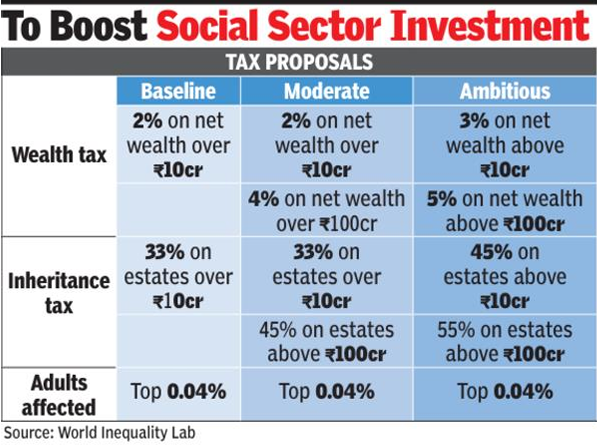
    Wealth inequality has become a pressing issue globally and in India, with the top 1% owning 40.1% of the nation’s wealth. This concentration of wealth, juxtaposed against widespread poverty and dependence on state welfare programs, has reignited the debate on imposing wealth taxes to address inequality and generate public revenue.

    About Wealth Tax 

    Wealth Tax is levied on the net market value of various assets owned by an individual, such as cash, bank deposits, shares, fixed assets, personal cars, and real property. Globally, several countries like France, Portugal, and Spain impose wealth tax. The primary objective of the tax is to target unproductive and non-essential assets of individuals. 

    Wealth Tax in India 

    The Wealth Tax Act was introduced in 1957 based on the recommendations of the Kaldor Committee (1955) as a part of tax rationalization measures. It imposed a 1% tax on earnings exceeding ₹30 lakh per annum for individuals, Hindu Undivided Families (HUFs), and companies. 

    • Abolition: Abolished in 2015 due to issues such as Extensive litigation, Increased compliance burden, and High administrative costs. Replaced by an increase in the surcharge on the super-rich.
    • Replacement measures: The surcharge for individuals with income exceeding ₹1 crore and companies with income over ₹10 crore was increased from 2% to 12%.

    Reasons for Abolition of Wealth Tax

    ReasonDescriptionExamples/Supporting Data
    Loopholes in the Tax SystemWealth tax rules had exploitable loopholes, enabling taxpayers to avoid liabilities.Frequent litigation due to loopholes; taxpayers manipulated asset values to avoid tax.
    Simplification of Tax ProceduresAbolishing wealth tax reduced complexity and multiple tax laws.Replacing wealth tax with a 2% income surcharge improved efficiency and transparency (Post-FY 2015 Budget).
    High Administrative CostsCost of collecting wealth tax was higher than the revenue it generated.In FY 2013-14, wealth tax collection was only ₹1,008 crore, despite an increase in super-rich individuals.
    Revenue OptimizationReplacing wealth tax with a surcharge significantly increased government revenue.An additional ₹9,000 crore was collected annually through income surcharge post-abolition (FY 2015-16).
    Administrative BurdenValuation requirements for assets like jewelry created complexities for taxpayers and regulators.Taxpayers needed valuation certificates for assets, leading to compliance issues and disputes.
    Wider Taxpayer CoverageIncome tax had broader coverage than wealth tax, ensuring better taxpayer inclusion.In FY 2011-12, only 1.15 lakh wealth tax assessees existed, compared to millions filing income tax returns.
    Improved Asset ReportingIncome tax surcharge continued asset reporting, aiding better monitoring and preventing tax evasion.Post-abolition, taxpayers had to declare assets under income tax returns, reducing wealth leakage.
    Low Awareness of Wealth TaxMany individuals were unaware of wealth tax obligations, leading to frequent non-compliance notices.Frequent tax notices to non-compliant taxpayers; poor awareness led to confusion and low participation in wealth taxation.

    BENEFITS AND CHALLENGES OF INTRODUCING WEALTH TAX IN INDIA

    Arguments in Favour of Wealth TaxArguments Against Wealth Tax
    Addressing Inequality: Helps redistribute wealth in an economy where the top 1% control a disproportionate share of resources.Administrative Challenges: Complex valuation of non-liquid assets (e.g., real estate, gold) leads to high costs of collection.
    Revenue Generation for Welfare: Funds raised can support public healthcare, education, and social schemes like MGNREGA.Low Revenue Generation: In 2013-14, India’s wealth tax contributed only ₹1,008 crore, less than 0.1% of total tax revenues.
    Progressive Tax System: Targets the ultra-rich, ensuring the tax burden is equitable.Tax Evasion: The wealthy often find ways to hide or underreport their wealth.
    Moral and Social Responsibility: Promotes fairness by requiring the wealthiest to contribute more to societal development.Capital Flight: High net worth individuals may relocate to tax-friendly countries, as seen in Norway, harming domestic investments.
    Impact on Wealth Creation: Discourages entrepreneurship and investment, critical for India’s growing economy.

    Way Forward: Making Taxation Fair and Effective

    1. Better Alternatives to Wealth Tax – Instead of reintroducing wealth tax, India can improve capital gains tax, property tax, and inheritance tax to ensure the rich pay their fair share.
    2. Higher Taxes for the Ultra-Rich – Raising income tax rates for the wealthiest can make the tax system more progressive without adding new complexities.
    3. Stronger Tax Compliance – Using technology and data analytics can help track high-value transactions and reduce tax evasion.
    4. Expanding the Tax Base – Encouraging more individuals and businesses to enter the formal tax system will distribute the tax burden more fairly.
    5. Transparent Use of Taxes – Clearly linking tax collection to improvements in healthcare, education, and infrastructure will build public trust.
    6. Global Coordination – Working with other countries to prevent capital flight and tax evasion will ensure the wealthy can’t easily avoid taxes.
    7. Encouraging Philanthropy – Offering incentives for voluntary contributions and charitable donations can motivate the rich to give back to society.

    BACK2BASICS: Components of Economic Inequality in India

    ComponentDescriptionExample
    Income InequalityWide disparity in income distribution between different groups and regions.The top 10% of India’s population earns 57% of the national income, while the bottom 50% earns only 13% (2021).
    Wealth InequalityDisproportionate concentration of assets and wealth among the elite, with minimal ownership by lower-income groups.According to Oxfam’s 2023 report, the richest 1% own more than 40% of India’s wealth.
    Educational DisparityUnequal access to quality education, which directly affects employment opportunities and income levels.Rural girls, especially from marginalized communities, have significantly lower school enrollment rates.
    Health InequalityUneven access to healthcare services, resulting in poorer health outcomes for economically disadvantaged groups.Urban areas have 1.5 times more hospital beds per capita than rural areas, exacerbating rural health crises.
    Regional InequalityStark differences in development levels, infrastructure, and living standards across states and regions.Kerala has a high HDI of 0.782, while Bihar lags behind with an HDI of 0.574 (2022).
    Employment InequalityDifferences in access to secure and well-paying jobs, often divided along caste, gender, and regional lines.Women’s participation in the workforce was only 25% in 2022, and Dalits face higher unemployment rates.
  • Unlocking New Frontiers: Are India’s Sunrise Sectors Truly Rising?

    NOTE4STUDENTS:

    India aims to lead in sunrise sectors to achieve a $32 trillion economy. UPSC often asks questions on economic growth, industrial policy, and technological advancements, linking them to government initiatives and global trends. Many aspirants struggle with integrating current affairs into economic frameworks, making their answers generic. This article simplifies the role of sunrise sectors—emerging industries like electric vehicles, semiconductors, renewable energy, and AI—in shaping India’s future. It highlights key drivers, challenges, and policy measures, offering a structured approach to understanding this crucial topic. A standout feature of this piece is its historical perspective—tracing the evolution of sunrise industries from the 1990s to today—helping aspirants build a strong analytical foundation for Mains answers.

    PYQ ANCHORING & MICROTHEMES

    1. GS 1: Discuss the factors for localization of agro-based food processing industries of North-West India. [2019]
    2. GS 1: Do you agree that there is a growing trend of opening new sugar mills in the Southern states of India? Discuss with justification. [2013]

    Microthemes:  Secondary sector 

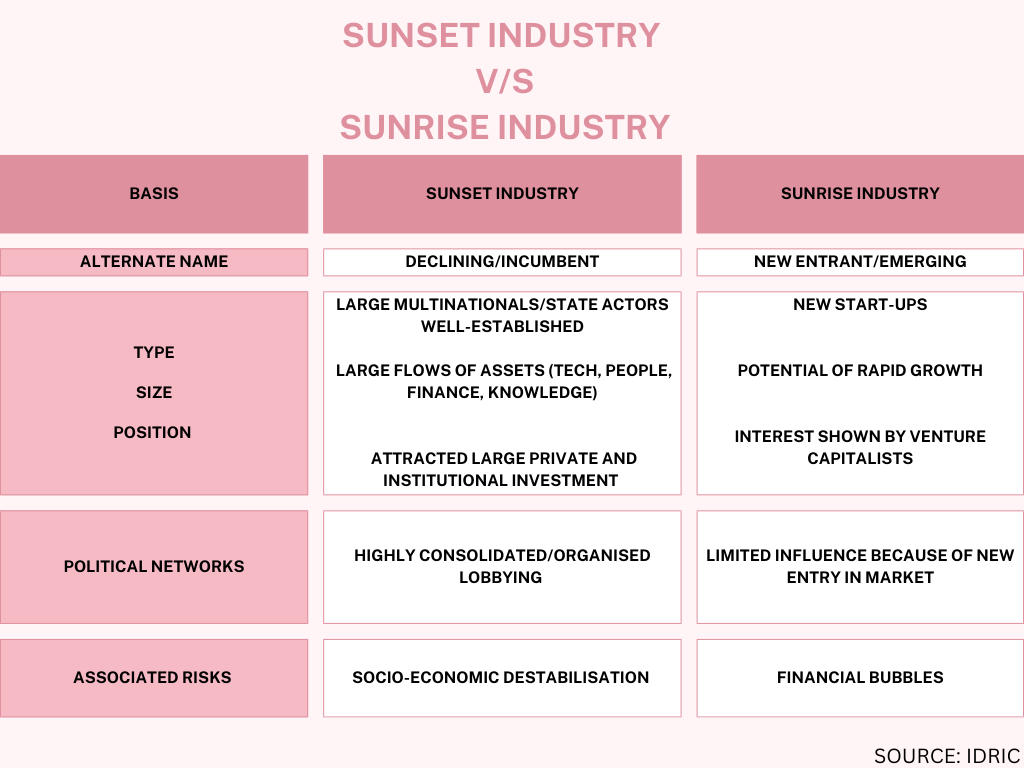
    While addressing Bharat Climate Forum 2025, Niti Ayog CEO highlighted the need for India becoming a global champion in sunrise sectors to achieve the target of becoming a developed nation by 2047 and become a USD 32 trillion economy.

    EVOLUTION OF SUNRISE SECTORS IN INDIA

    1. 1990s: The first wave of sunrise industries emerged with IT, banking, telecom, aviation, and FMCG, driven by economic reforms.
    2. 2000s: The second phase saw the rise of retail, pharmaceuticals, petrochemicals, life sciences, and financial services.
    3. 2020s & Beyond: The third wave includes renewable energy, electric vehicles, AI, green hydrogen, space, startups, e-commerce, semiconductors, biotechnology, mining, and healthcare.

    HIGH POTENTIAL SUNRISE SECTORS OF INDIA

    IndustryCurrent StateKey Growth Drivers
    Electronics & SemiconductorsIndia’s electronics industry is projected to reach $300 Bn by FY26, with semiconductor demand surging to $64 Bn by 2026, nearly 3x its 2019 size ($22.7 Bn). Currently, 65% of the $155 Bn electronics market is domestically produced.Government Incentives: PLI scheme, Semicon India Program (INR 76,000 Cr outlay), and schemes for semiconductor & display fabs (50% cost covered). Tech Expansion: Growth in 5G, AI, IoT, and consumer electronics. Make in India Initiative: Encouraging local manufacturing & exports.
    Electric Vehicles (EV)India aims for 30% EV adoption by 2030. Over 7.3 lakh electric two-wheelers registered in FY24. 12,146+ public EV charging stations installed nationwide.FDI & Investment: 100% FDI allowed in EV sector. Government Support: FAME II scheme (subsidies for public charging infra), PLI scheme for Advanced Chemistry Cells (ACC), and battery swapping initiatives for two- & three-wheelers. Adoption Push: Two-wheelers and three-wheelers prioritized (target: 70-75% electrification by 2030).
    Renewable EnergyIndia targets 500 GW of non-fossil fuel-based energy by 2030, marking the world’s largest renewable energy expansion plan.Government Support: National Green Hydrogen Mission (INR 19,744 Cr), Offshore Wind Energy Targets, Wind-Solar Hybrid Policy. Growing Investment: India’s solar and wind energy sectors are attracting global investors due to favorable policies and high energy demand.
    Agro & Food ProcessingIndia’s agriculture sector is growing due to higher demand, exports, and better farming tech. The food processing industry is expanding rapidly.Supply Chain Strengthening: Logistics schemes like Kisan Rath and Krishi Udaan. Digital Trading: e-NAM platform for online agri trade. PLI Scheme for Food Processing to boost exports. Sustainable Farming Initiatives: Paramparagat Krishi Vikas Yojana, Pradhanmantri Gram Sinchai Yojana.
    Healthcare & PharmaceuticalsIndia’s Medtech industry projected to reach $50 Bn by 2025. The country remains a global leader in vaccine production and generic medicines.FDI & Pharma Growth: 100% FDI allowed in greenfield & brownfield projects. Healthcare Expansion: Ayushman Bharat scheme (world’s largest health protection scheme), medical tourism, and hospital infrastructure expansion. PLI for Pharma & MedTech: Incentives for drug manufacturing & medical device production.

    POTENTIAL IMPACTS OF INVESTING IN SUNRISE INDUSTRY

    • Economic Growth – Investing in sunrise sectors fosters innovation, job creation, and industrial expansion, accelerating India’s journey toward becoming a global economic powerhouse.
    • Sustainability – These industries support global sustainability goals by reducing fossil fuel dependency, promoting renewable energy, and aiding in climate change mitigation.
    • Global Competitiveness – Leading in sunrise sectors like electric vehicles and solar manufacturing can position India as a global hub for advanced technology and innovation.
    • Industrial Transformation – Emerging industries modernize traditional sectors, improving productivity, efficiency, and sustainability in areas like agriculture, infrastructure, and energy.
    • Investment and Economic Resilience – A strong sunrise industry ecosystem attracts foreign investments, diversifies the economy, and reduces reliance on traditional industries, ensuring long-term economic stability.

    CHALLENGES FACED BY THE SUNRISE SECTORS IN INDIA

    CategoryChallengesExamples
    Technological GapIndian industries are lagging in areas like solar panel manufacturing and electric vehicles, often 5-7 years behind global leaders. This gap affects competitiveness and innovation.India’s EV market is still in its nascent stage, while China dominates the global market with advanced battery technology and large-scale production.
    Infrastructure and Investment DeficitsIndia’s infrastructure does not support the rapid expansion of emerging sectors. Additionally, private credit to GDP is lower compared to countries like the US and China, limiting industry scale-up.Limited investments in clean tech R&D and manufacturing infrastructure hinder India’s ability to compete with global leaders.
    Policy and Regulatory BottlenecksLack of clear policies, slow regulatory approvals, and insufficient incentives for new industries. This slows down innovation, expansion, and global competitiveness.India’s green energy policies still require deeper financial incentives and streamlined approvals to compete with global leaders.
    Financial & Manpower ConstraintsHigh capital costs, shortage of skilled professionals, and tax constraints make scaling up sunrise industries difficult.Semiconductor manufacturing in India faces high investment requirements and limited local expertise.
    Climate Impact on AgritechSmall-scale farmers face climate risks, requiring resilient farming techniques and technology-driven solutions.Erratic weather patterns affect agricultural output, impacting the success of agritech innovations.
    Geopolitical and Economic RisksWars, trade restrictions, and Centre-State policy variations can create uncertainty for investors and businesses.Russia-Ukraine and Israel-Hamas conflicts affect global supply chains, impacting raw material availability.

    WAY FORWARD

    • Increased Investment in Research and Development: India must invest heavily in R&D for sunrise sectors, particularly in clean technologies and electric vehicle manufacturing. Government-backed initiatives and partnerships with global players can help bridge technological gaps.
    • Policy Support and Incentives: India should provide stronger policy frameworks, such as tax incentives, subsidies for clean tech investments, and faster clearances for new ventures in sunrise sectors. More investment in infrastructure, particularly for electric vehicle charging stations and renewable energy grids, is crucial.

    #BACK2BASICS : SUNRISE SECTORS

    What are the Sunrise sectors?

    Sunrise Industry

    Sunrise sectors refer to rapidly growing industries that are in their early stages but have high potential for expansion. These sectors attract significant venture capital and are appealing for long-term growth prospects. Niti Aayog CEO believes that excelling in these sectors is crucial for India to meet its ambitious economic targets by 2047.

    Key Sunrise Sectors: 

    • Electric Vehicles (EVs): With initiatives like FAME II, India aims to boost EV manufacturing and infrastructure. The sector is expected to grow significantly, contributing to sustainability and reducing dependence on fossil fuels.
    • Electronics and Semiconductors: The semiconductor market in India is projected to triple by 2026, driven by government incentives and initiatives like the PLI Scheme. This sector is vital for establishing India as a global manufacturing hub.
    • Renewable Energy: India is focusing on renewable energy sources, particularly solar power, where it currently lags behind globally by 5-7 years in manufacturing capabilities.
    • Artificial Intelligence (AI) and advanced tech: It will drive innovation, economic growth, and global competitiveness.
  • The Real Impact of Cash Transfers: What’s Working and What Needs Fixing?

    Why This?

    If you’re gearing up for the UPSC exam, you’ve probably read a lot about cash transfer schemes and their role in welfare. But did you skip over the challenges like financial sustainability or the need for community-driven models? Here’s the deal: UPSC isn’t just about cramming facts, it wants you to dig deeper. It’s not enough to know about PM-Kisan or DBT; understanding the limitations and trade-offs is key. The special part here? The comparison between cash transfer schemes and community-based projects. This insight is crucial for answering those complex GS-2 governance based  questions. Don’t miss out!

    PYQs Anchoring

    • GS 2: Electronic cash transfer system for the welfare schemes is an ambitious project to minimize corruption, eliminate wastage and facilitate reforms. Comment. 2013
    • GS 2: Reforming the government delivery system through the Direct Benefit Transfer Scheme is a progressive step, but it has its limitations too. Comment. 2022

    Microthemes: Welfare and Development Schemes

    In the Maharashtra and Jharkhand Assembly elections, cash transfer schemes for women became a key focus of political campaigns. In August, the Maharashtra government launched the ‘Mukhyamantri Majhi Ladki Bahin Yojana,’ giving ₹1,500 a month to eligible women in their Aadhaar-linked bank accounts. Similarly, the Jharkhand government introduced the ‘Jharkhand Mukhyamantri Maiya Samman Yojana,’ offering ₹1,000 a month to eligible women.

    Reasons for popularity of cash transfer schemes 

    Direct cash transfer schemes are not a new idea in politics. According to Axis Bank, 14 states in India already have such programs, reaching nearly one-fifth of the country’s adult women. Below are the reasons for rising popularity in cash transfer schemes:

    ReasonDescriptionExample
    Increased Voter TurnoutWomen’s participation in elections has significantly risen, reflecting their growing political influence.Women’s voter turnout increased from 47% in 1962 to 66% in 2024, especially in states like Bihar and Uttar Pradesh.
    DBT EfficiencyDirect Benefit Transfers (DBT) eliminate middlemen and reduce corruption, ensuring direct delivery of funds to beneficiaries.The PM-Kisan Scheme directly transfers funds to farmers, cutting delays and middlemen.
    Immediate Political GainsShort-term welfare schemes deliver visible assistance, creating quick political capital compared to long-term projects.Telangana’s KCR Kit Scheme provides financial aid to mothers immediately after childbirth.
    Standardization of WelfareSuccessful welfare models inspire replication in other states, showcasing policy learning and adaptation.Tamil Nadu adopted a maternal welfare scheme modeled after Odisha’s Mamta Scheme.
    Fear of Missing Out (FOMO)States implement similar schemes to remain competitive in garnering electoral support.Rajasthan’s Guaranteed Income Schemes followed Chhattisgarh’s Nyuntam Aay Yojana.
    Addressing Structural IssuesFocused on gender-related challenges like education gaps and child marriage, enhancing targeted social welfare.Madhya Pradesh’s Ladli Laxmi Scheme promotes girl child education and financial empowerment.

    Significance of Bypassing Middlemen

    Direct Cash Transfer (DCT) schemes have revolutionized welfare delivery by ensuring funds reach beneficiaries directly, reducing delays and leakage. They empower individuals to make choices about spending, boosting financial inclusion and local economies. For instance, schemes like PM-KISAN or DBT in LPG subsidies have shown how effective they can be. However, bypassing middlemen is crucial to realizing their full potential. 

    Middlemen often dilute the benefits through corruption or mismanagement. Leveraging technology like Aadhaar-linked accounts and real-time monitoring can eliminate such inefficiencies, ensuring every rupee serves its purpose—uplifting lives without unnecessary hurdles.

    AdvantageDescriptionExample
    Reduction of CorruptionMinimizes corruption by eliminating intermediaries in welfare distribution processes.MGNREGA payments transitioned to DBT, reducing delays and systemic corruption.
    Personalized Political RelationshipsDirect assistance fosters goodwill and loyalty among beneficiaries, enhancing political relationships.West Bengal’s Lakshmi Bhandar Scheme provides monthly stipends to women, building goodwill.
    Immediate ImpactOffers instant financial relief, addressing urgent needs of economically vulnerable populations.Delhi’s Widow Pension Scheme provides immediate support to widowed women in financial distress.
    Enhanced AccountabilityEnsures better tracking and transparency of fund utilization through digital monitoring systems.PM-KISAN transfers are monitored digitally, ensuring timely and accurate disbursements.
    Promotion of Financial InclusionBrings unbanked individuals into the formal financial system, empowering them economically.Jan Dhan-Aadhaar-Mobile (JAM) trinity has enabled access to banking services for millions.

    Key Challenges of Cash Transfer Schemes

    1. Lack of Welfare Innovation
      • Over-reliance on cash transfers hinders the development of diverse, community-based welfare models.
      • Many states replicate cash assistance programs without exploring alternatives such as local empowerment or infrastructure development.
    2. Political Conformity
      • Opposition-controlled states often implement cash transfer schemes to align with central government policies, lacking unique or locally adapted welfare strategies.
      • Even progressive states like Kerala have adopted cash transfers despite previously having strong, distinct welfare systems.
    3. Efficiency vs. State Capacity
      • A focus on cash transfers diverts attention from addressing systemic issues in welfare delivery.
      • Critics argue that schemes like PM-Garib Kalyan Yojana address the symptoms of poverty rather than tackling the root causes, such as employment generation and education reform.
    4. Temporary Solutions
      • Cash transfers offer short-term relief but fail to address long-term solutions to systemic poverty.
      • Programs like Jagananna Ammavodi in Andhra Pradesh provide financial support for education but lack skill-building components necessary for sustainable growth.
    5. Financial Sustainability
      • Relying heavily on cash transfers may strain government finances, especially in the long run.
      • Without regular budgeting adjustments or innovative financing methods, such schemes may face challenges in maintaining financial sustainability.
    6. Exclusion Errors
      • Cash transfer schemes may exclude deserving individuals due to inaccuracies in beneficiary databases or targeting methods.
      • Inaccurate beneficiary lists can lead to marginalized groups being left out of crucial assistance programs.

    Way Forward

    1. Diversification of Welfare Approaches: Move beyond cash transfers by exploring community-based projects and sustainable welfare models.
    2. Improved Targeting and Inclusivity: Enhance the accuracy of beneficiary identification through better data management systems and regular audits.
    3. Focus on Long-term Solutions: Shift the focus from short-term relief to long-term poverty alleviation strategies. Implement programs that include skill-building, job creation, and education reforms alongside cash transfers to address root causes of poverty.
    4. Financial Sustainability and Innovation: Develop innovative financing mechanisms, such as public-private partnerships, to ensure the long-term sustainability of cash transfer programs.Regularly reassess funding strategies to avoid over-reliance on government budgets and ensure that funds are allocated efficiently and sustainably.

    #Back to basics: Cash transfer schemes

    Definition: Direct monetary benefits are transferred to beneficiaries’ bank accounts.

    What is the difference between cash transfer schemes and community based projects?

    ParameterCash Transfer SchemesExample (Cash Transfer)Community-Based ProjectsExample (Community-Based Projects)
    DefinitionDirect monetary benefits transferred to beneficiaries’ bank accounts.PM-Kisan: Income support for farmers.Welfare delivery through community-driven initiatives addressing collective needs.MGNREGA: Employment for public asset creation.
    FocusIndividual financial assistance for immediate relief.Janani Suraksha Yojana: Promotes institutional deliveries.Long-term empowerment through community engagement and infrastructure development.Self-Help Groups (SHGs): Empower rural women to address socio-economic challenges.
    EfficiencyEfficient: Reduces bureaucracy and ensures direct fund transfer.Delhi Widow Pension Scheme: Ensures quick financial relief.Challenging: Requires robust administration and local participation, which can delay implementation.Watershed Development Program: Restores ecosystems for better agriculture.
    Target PopulationTargets specific groups like women, farmers, or low-income households.Ladli Scheme: Promotes girl child welfare.Benefits the entire community, fostering inclusiveness.Amul Cooperative Model: Drives rural economic development through cooperatives.
    SustainabilityLimited: Addresses immediate needs but lacks sustained welfare mechanisms.Rythu Bandhu: Financial aid to farmers for seasonal crops.High: Builds long-term assets like schools, roads, and water resources.Watershed Development Program: Supports sustainable agricultural practices.
    Economic ImpactBoosts consumer spending in the short term.Delhi Widow Pension Scheme: Increases immediate consumption.Improves infrastructure, enhancing productivity and community well-being.Amul Cooperative Model: Rural milk cooperatives boost the economy.
    AccountabilityHigh transparency through DBT but limited public scrutiny of fund utilization.Ladli Scheme: Ensures transparency in fund distribution.Accountability is shared by community members but may face inefficiency or misuse.Sabla Scheme: Empowers adolescent girls through nutrition and education initiatives.

  • Bridging Borders: Nepal-China Agreements and the Evolving India-China Dynamics

    PYQs Anchoring: 

    • GS 2: The West is fostering India as an alternative to reduce dependence on China’s supply chain and as a strategically to counter China’s political and economic dominance.” Explain this statement with examples. (2024)

    Microthemes: India and its neighbourhood

    The recent agreements between Nepal and China mark a significant step in the regional geopolitics of South Asia, particularly under the framework of China’s Belt and Road Initiative (BRI).

    What are the Key Points of the Nepal-China Agreements?

    1. Framework Cooperation Agreement: Includes projects such as the Tokha-Chhahare Tunnel, Hilsa Simkot Road, Kathmandu-Khandbari Road, Kimathanka Bridge, cross-border railway from Rasuwagadhi to Kathmandu, and Amargadhi City Hall.
    2. Focus on Implementation: The Nepali government stressed the need for effective execution, addressing past shortcomings where agreements did not lead to tangible progress.
    3. Investment Modalities: Discussions included shifting from “grants” to “aid,” allowing for broader funding options involving private investors and international financial institutions.
    4. Energy Cooperation: Emphasis on joint hydropower development projects and energy transmission lines to enhance Nepal’s energy exports to China.
    5. Tourism and Trade Boost: Both nations agreed to expand cultural exchanges, visa simplifications, and trade routes to foster bilateral tourism and economic ties.

    Challenges Ahead for Nepal-China Relationship:

    ChallengeDetailsExample
    Implementation GapsMany agreements have not translated into actionable projects, requiring focused efforts to ensure outcomes.The Kathmandu-Kerung Railway project, agreed upon years ago, is still in the feasibility study phase.
    Project-Specific NegotiationsFuture talks will likely focus on individual projects, which could complicate the broader framework without defined objectives and communication.Negotiations for the Tokha-Chhahare Tunnel project faced delays due to unclear terms of collaboration.
    Geopolitical ConsiderationsBalancing relations with neighbors like India and global powers while engaging with China demands diplomatic finesse.Nepal’s participation in China’s Belt and Road Initiative raised concerns in India about strategic encirclement.
    Funding ChallengesMany projects require substantial investment, and reliance on foreign aid or loans can increase Nepal’s debt burden.The cross-border railway project from Rasuwagadhi to Kathmandu has funding hurdles due to high estimated costs.
    Environmental ConcernsInfrastructure projects may face criticism for their impact on local ecosystems and communities.The proposed Hilsa-Simkot Road project could disrupt biodiversity in the area, raising objections from activists.

    Key Statements in Parliament on India-China Relations

    1. Troop Disengagement and Temporary Measures
      • The External Affairs Minister highlighted successful troop disengagement efforts after China’s military buildup and India’s counter-deployment.
      • Temporary and limited measures were implemented at certain friction points to prevent further clashes.
      • He noted that while disengagement is a priority, these measures remain flexible and could be revisited as needed, reflecting the fluid nature of the situation.
    2. Ongoing De-escalation Efforts
      • Emphasis was placed on India’s stance that peace along the border is essential for strengthening bilateral relations.
      • The Minister acknowledged that troop deployments continue, signaling that normalcy is yet to be restored.
    3. Cautious Optimism in Bilateral Relations
      • The Minister observed some progress in India-China relations, particularly following recent developments like Nepal-China agreements.
      • However, he cautioned against expecting a major reset in ties until the border situation stabilizes and structural issues, such as economic security concerns with China, are adequately addressed.

    Key Unanswered Questions in India-China Relations

    Key IssuesDetailsExamples
    Unclear Disengagement TermsDisengagement specifics remain vague, particularly on patrolling rights and “temporary measures.”Access to traditional patrolling points like Depsang and Demchok remains uncertain.
    Status Quo ConcernsIndia opposes unilateral status quo changes, but China has made significant alterations since 2020.Restricted patrol access at Finger 4 on Pangong Tso reflects China’s altered ground realities.
    Restricted Patrol PointsReports indicate India has limited access to traditional patrol routes under current agreements.Patrols at PP10, PP11A, and PP12 in the Depsang Plains face significant restrictions.
    Chinese Patrols in Arunachal PradeshChinese troops are attempting to patrol disputed areas despite India’s objections.Reports of increased patrol activity near the Yangtse area in Arunachal Pradesh.
    Call for Restoration of Status QuoArmy Chief emphasizes returning to April 2020 status quo, yet MEA has softened this stance.China’s control over Galwan Valley remains a contentious issue, challenging India’s original stance.

    Strategies to Bridge the India-China Political Divide

    1. Strengthening Diplomatic Engagement
      • Conduct regular high-level talks between leaders to rebuild trust.
      • Focus discussions on strategic areas like economic cooperation, climate change, and technology beyond border issues.
    2. Encouraging Cultural and Economic Exchanges
      • Resume direct flights and simplify visa processes for citizens, businesses, and diplomats.
      • Organize cultural events such as film screenings and art exhibitions to foster mutual understanding.
    3. Building Institutional Mechanisms
      • Establish coordinated patrolling frameworks and regular joint military drills to de-escalate border tensions.
      • Promote transparent communication channels to prevent misunderstandings during sensitive situations.
    4. Leveraging Multilateral Platforms
      • Collaborate in regional forums such as BRICS and SCO to address shared security and economic concerns.
      • Involve other stakeholders in dialogues to strengthen regional stability.
    5. Prioritizing Trade and Economic Cooperation
      • Identify and resolve non-tariff barriers to increase bilateral trade.
      • Promote joint ventures in key sectors like renewable energy, technology, and infrastructure.