đŸ’„Join UPSC 2027,2028 Mentorship (July Batch) + XFactor Notes & Microthemes PDF

Author: CD Staff

  • [Burning issue] Wildlife (Protection) Amendment Bill, 2022

    wild

    Context

    • Rajya Sabha passed the Wildlife (Protection), Amendment Bill, 2022. The Lok Sabha passed the Bill in the Monsoon Session.
    • The amendment seeks to give effect to India’s obligations under the Convention on International Trade on Endangered Species of Wild Fauna and Flora (‘CITES’), which requires countries to regulate the trade of all listed specimens through permits.
    • In this context, this edition of the burning issue analyses the Wildlife (Protection) Amendment Bill, 2022.

    About the Wildlife Protection Act (WPA), 1972

    • WPA provides for the protection of the country’s wild animals, birds and plant species, in order to ensure environmental and ecological security.
    • It provides for the protection of a listed species of animals, birds and plants, and also for the establishment of a network of ecologically-important protected areas in the country.
    • It provides for various types of protected areas such as Wildlife Sanctuaries, National Parks etc.
    • The object and purpose of the WPA – to protect animals in their natural environment – was lent credence in the 42nd Constitutional Amendment Act,1976, which added the fundamental duty to “protect and improve 
 wildlife, and to have compassion for living creatures” under Article 51A(G).
    • This Amendment also inserted Article 48A in the Directive Principles of State Policy, which outlined the protection and safeguarding of wildlife as an ideal to be followed in the governance of the country.
    • There are six schedules provided in the WPA for the protection of wildlife species which can be concisely summarized as under:
    Schedule I:These species need rigorous protection and therefore, the harshest penalties for violation of the law are for species under this Schedule.
    Schedule II:Animals under this list are accorded high protection. They cannot be hunted except under threat to human life.
    Schedule III & IV:This list is for species that are not endangered. This includes protected species but the penalty for any violation is less compared to the first two schedules.
    Schedule V:This schedule contains animals which can be hunted.
    Schedule VI:This list contains plants that are forbidden from cultivation.

    About CITES

    • CITES stands for the Convention on International Trade in Endangered Species of Wild Fauna and Flora.
    • It is an international agreement aimed at ensuring “that international trade in specimens of wild animals and plants does not threaten their survival”.
    • It was drafted after a resolution was adopted at a meeting of the members of the International Union for Conservation of Nature (IUCN) in 1963.
    • It entered into force on July 1, 1975, and now has 183 parties.
    • The Convention is legally binding on the Parties in the sense that they are committed to implementing it; however, it does not take the place of national laws.
    • India is a signatory to and has also ratified CITES convention in 1976.

    It has three appendices:

    • Appendix I includes species threatened with extinction. Trade-in specimens of these species are permitted only in exceptional circumstances.
    • Appendix II provides a lower level of protection.
    • Appendix III contains species that are protected in at least one country, which has asked other CITES Parties for assistance in controlling trade.

    Provisions of the Wildlife Protection Amendment Bill, 2022

    • In line with CITES: Insert a new Schedule for specimens listed in the Appendices under CITES.
    • Constitute a Standing Committee: Amendment to Section 6 to constitute Standing Committee to exercise such powers and duties as may be delegated to it by the State Board for Wildlife.
    • Elephant usage: Amendment to Section 43 to permit elephants, a Schedule I animal, to be used for ‘religious or any other purpose’.
    • Management authority for export/import: Insert Section 49E to empower the Central government to designate a Management Authority to grant export or import permits for the trade of specimens. It further requires every person possessing live specimens of scheduled animals to obtain a registration certificate from the Management Authority.
    • Create a scientific authority: Insert Section 49F to empower the Central government to designate a Scientific Authority to advise on aspects related to the impact on the survival of the specimens being traded. These provisions are set to ensure the “sustainable” exploitation of flora and fauna.
    • Better control of sanctuaries: The Bill seeks to regulate the control of sanctuaries. It provides that the Chief Wildlife Warden shall act in accordance with the management plans for the sanctuary, to be prepared as per Central guidelines.
    • Creation of conservation reserve: It also empowers both Central and State governments to declare areas adjacent to national parks and sanctuaries as conservation reserves, for protecting flora and fauna, and their habitat.
    • Managing alien invasive species: The Bill also empowers the Central government to regulate and stop the import, trade or possession of invasive plant or animal alien species.
    • Enhanced penalties: The Bill also enhances the penalties prescribed for violation of provisions of the Act. For ‘General violations’, the maximum fine is increased from Rs 25,000 to Rs. 1 lakh. In the case of Specially protected animals, the minimum fine of Rs. 10,000 has been enhanced to Rs. 25,000.

    Positive aspects of the bill

    • Enhanced Protection of wild animals: Bill seeks to enhance punishment for trade in animal and plant specimens.
    • Locals use of Protected Areas: the bill permits certain activities like grazing of livestock and community use of drinking water by local communities.
    • Ease of elephant ownership: The Bill seeks to amend Section 43 of the principal Act to permit the transfer or transport of a captive elephant for a religious or any other purpose by a person having a valid certificate of ownership.

    Negative aspects of the bill

    • Vague clause in section 43: The Bill seeks to amend Section 43 of the principal Act to permit the transfer or transport of a captive elephant for a religious or any other purpose by a person having a valid certificate of ownership. Many members raised concern about this provision, stating that the phrase “any other purpose” is vague and has the potential of encouraging the commercial trade of elephants, their captivity and brutality.
    • Silent of important issues: The government missed the opportunity to address the issues relating to Human-Wildlife conflict, Eco-sensitive zone rule, etc.
    • The schedule lists not complete: They pointed out that the species listed in all the 3 schedules of the Bill are incomplete as per the report submitted by the Parliamentary Standing Committee and a need was felt for greater inclusion of scientists, botanists, biologists in process of listing all existing species of wildlife.
    • Reduced role of states in wildlife management: Protection of wild animals and birds is a subject under the Concurrent List of the Constitution. the proposed amendment bill renders the State Boards for Wildlife chaired by Chief Ministers defunct and provides for establishing a Standing Committee of Board for Wildlife to be headed by the Forest Minister with a maximum of 10 nominated members. This injures the federal structure of India.
    • Against the fundamental objective of WPA: The new proviso creates a legal pathway to encourage the further commercialization and transfer of elephants through the vague wording of “religious or any other purpose.” This goes against the fundamental object and purpose of the WPA.

    Way forward

    • An additional mechanism may be introduced for acquiring animals for religious institutions.
    • The Management and Scientific Authorities contemplated under the Bill must take into account the strong principles of Federalism and ensure constructive engagement of State governments.
    • Clauses related to human-animal conflicts and eco-sensitive zones should also be added to the law to provide a legal framework to deal with these issues.
    • State’s wildlife bodies should be given due importance in the conservation of wildlife as the subject is a concurrent subject.

    Conclusion

    • The amendment bill tries to bring the WPA law up to date with the CITES mandate and present environment scenario.
    • However, several lacunas have been highlighted by environmental experts which need attention from the government and need to be fixed to bring out the best for the nation’s wildlife.

    Click and get your FREE Copy of CURRENT AFFAIRS Micro Notes

    (Click) FREE 1-to-1 on-call Mentorship by IAS-IPS officers | Discuss doubts, strategy, sources, and more

  • [Sansad TV] Perspective: Regulations for Dedicated Freight Corridor

    Context

    • With over 80% of the Dedicated Freight Corridors (DFCs) running parallel to passenger lines, a parliamentary panel has raised concerns over the lack of safety rules for the goods-only network.

    News: Leniency over regulations of DFCs

    • The Standing Committee on Transport in its report, pointed out that while rules and regulations are defined for passenger trains, no such regulation exists for the Dedicated Freight Corridors.
    • There are many instances where rules were amended by the Ministry of Railways without consulting the commission, even when provisions to such consultations exist.

    What are Dedicated Freight Corridors (DFCs)?

    • The DFC project was first proposed in April 2005 to address the needs of the rapidly developing Indian economy.
    • They were proposed to ensure a more reliable, economical, and faster transportation of goods.
    • These corridors seek to bring a paradigm shift in Railway Freight Operations in the country, thus providing relief to the heavily congested Golden Quadrilateral.

    Its conceptualization

    • The inception of DFCs can be understood clearly as one delves into Indian Railways’ freight operations scenario in the past.
    • It was majorly the Golden Quadrilateral, linking the four metropolitan cities of Delhi, Mumbai, Chennai and Howrah and its two diagonals.
    • This comprised 16% of the route, which carried over 52% of passenger traffic and 58% of freight traffic.

    Principal components: Eastern and Western DFCs

    1. Eastern DFC: It passes through Punjab, Haryana, Uttar Pradesh, Bihar, Jharkhand and West Bengal.
    2. Western DFC: From JNPT to Dadri via Vadodara-Ahmedabad- Palanpur-Phulera- Rewari, Western DFC will pass through Haryana, Rajasthan, Gujarat, Maharashtra and Uttar Pradesh.

    Need for DFCs

    • Logistics boost: To resolve the increasing need for road decongestion, accident reduction and ensuring energy security, the DFCs were launched to aid the growth of rail transportation in India.
    • Industrial competitiveness: This will also lead to the construction of industrial corridors and logistic parks along these routes, thereby making the industrial ecosystem more competitive.
    • Optimizing logistics cost: The new corridors will permit the trains to carry higher loads, in a more reliable manner, thereby reducing logistic costs.
    • Speedy movement: These lines are also being built to maximize speeds to 100 km/hour, up from the current average freight speed of 20 km/hour. This will also reduce transit time from freight source to destination.
    • Global successes: China’s new DFCs have been designed with the objective to link hinterland areas with ports, along with the aim to transfer commodities, raw materials, and other critical resources.

    Issues with Railways Freight

    • Highways are more feasible: The share of roads in freight transport is more than half in India; while in China, it is only 30%. As more highways are built rapidly, the share of roads in freight transport is increasing.
    • Costly transport: The working of Indian Railways is caught up between making it a self-sufficient organization and serving it as a transport system for the poor.  The passenger fares usually remain static for years.
    • Decline in coal freight: Decreasing dependency on coal with increasing thrust on renewable energy has crippled railway revenue from freights.
    • Lack of finances:  About 94 percent of the system’s revenues are spent on operating costs and social obligations, leaving little to modernize its infrastructure.
    • Delayed movement: Most passenger and freight lines are shared, and, when there is a delay, passenger trains are always prioritized. This makes it impossible to ensure deliveries within a set time.
    • Stuck into monopoly: The Indian railways have lacked investment. There’s been an inability to raise passenger fares because it’s a political ideology that public transport in India needs to be accessible for everyone.
    • Populist developments: Railways sometimes seem to be diverting from core issues of safety and operation and to populist needs aimed at wooing corporate travelers.
    • Regulation issue: The Commission of Railway Safety falls under the administrative control of the Ministry of Civil Aviation, and deals with matters pertaining to safety of rail travel and train operations.

    Significance of DFCs

    • Decongestion of road: Around 70% of the freight trains currently running on the Indian Railway network are slated to shift to the freight corridors, leaving the paths open for more passenger trains.  
    • Increased NTKM Capacity: NTKM stands for transportation of 1 tonne of goods over 1 km. Goods trains shall be able to run freely on DFC without any restrictions imposed by the movement of passenger trains.
    • Improvised logistics and connectivity: Tracks on DFC are designed to carry heavier loads than most of the Indian Railways. It will connect the existing ports and industrial areas for faster movement of goods.
    • Speed and Punctuality: To begin with, freight trains will run according to a timetable and as fast as express trains.  
    • Employment generation: Thousands of people will get employed in the construction of the corridor and other facilities along the corridor, including logistics parks to handle cargo and townships these corridors.

    Way forward

    • DFCs present a significant opportunity for freight logistics in India. What is important is to see how increasingly optimistic traffic projections will be realized.  
    • That depends upon the industrial and trade growth in India and the development of industrial corridors and the feeder network.
    • It would also play a lead role in transforming the railways from a loss-making operation to an efficient and profitable venture.
    • Also, it would be interesting to see the potential all these corridors hold for the regions they pass through.

    Click and get your FREE Copy of CURRENT AFFAIRS Micro Notes

    (Click) FREE 1-to-1 on-call Mentorship by IAS-IPS officers | Discuss doubts, strategy, sources, and more

  • [Sansad TV] Diplomatic Dispatch: Nepal Elections and India

    Context

    • Nepal’s next government is beginning to take shape.  The elections have provided a complex, fragmented mandate. Political stability could be elusive.
    • In this article, we will focus on the outcome of the recent Nepalese elections and their implications of newly elected govt on ties with India.

    Nepal politics and India

    • Sher Bahadur Deuba-led coalition is likely to form the next government in Nepal. This government is likely to enable smooth ties with India.
    • The Rakhi Diplomacy initiated by Deuba’s wife, was one of the landmark development for India.
    • The former prime minister KP Sharma Oli was “pro-China”.
    • Even before Oli began his first term in October 2015, India and Nepal had a bitter falling out over Nepal’s new constitution.

    India-Nepal Ties: A quick backgrounder

    • Ancient ties: The relationship between India and Nepal goes back to the times of the rule of the Sakya clan and Gautama Buddha.
    • Cultural relations: From 750 to 1750 AD period saw a shift from Buddhism to Hinduism in Nepal and witnessed widespread cultural diffusion.
    • Diplomatic ties: The India-Nepal Treaty of Peace and Friendship of 1950 forms the bedrock of the special relations that exist between India and Nepal.

    Various facets of India-Nepal ties

    (1) Cultural ties

    • While enjoying their own peculiarities, both India and Nepal share a common culture and ways of life.
    • Religion is perhaps the most important factor and plays a predominant role in shaping the cultural relations between these two countries, marked by a cross country pilgrimage on Char Dham Yatra, Pashupatinath Temple and some Buddhist sites.

     (2) Strategic ties

    • Nepal is a buffer state between India and China.
    • Several Nepali Citizens are also deployed in Indian defence forces as well. Ex. Gorkha Regiment.

    (3) Political ties

    • Constitutional turmoil is not new in Nepal. India has played a vital role in the democratic transition in Nepal against the monarch King Gyanendra.
    • Nepali Congress (NC) is one of the country’s oldest parties which supports relations with India, but the communist parties show a tilt towards China.

    (4) Economic ties

    • Nepal is an important export market for India. India is Nepal’s largest trading partner.
    • Himalayan rivers flowing through Nepal can be used for hydroelectric power projects which will benefit Border States of UP, Bihar and other adjacent areas.
    • Also, Nepal is the largest borrower of Indian Currency in South Asia. Nepal has escalating trade deficit with India.  

    (5) Connectivity

    • The 1950 Treaty of Peace and Friendship was sought by the Nepali authorities in 1949 to provide for an open border and for Nepali nationals to have the right to work in India.
    • The BBIN Motor Vehicles Agreement (MVA) in which Nepal is a partner will permit the member states to ply their vehicles in each other’s territory for the transportation of cargo and passengers.

    (6) Multilateral and Regional Fora

    • Both Nepal and India work in tandem in the United Nations, Non-aligned Movement and other international fora on most of the important international issues.
    • Both countries have been deeply engaged in the regional and sub-regional frameworks of SAARC, BIMSTEC and BBIN for enhancing cooperation for greater economic integration.

    China’s role in Nepal – A matter of concern

    • Once considered a buffer state between India and China, Nepal is now showing an inclination towards Beijing.
    • China is trying to stimulate and tempt Nepal with multiple aids, economic growth and acquisition.
    • China has overtaken India as the largest source of foreign direct investment with the annual development assistance being worth $120 million.

    Indo-Nepal Border Disputes

    India and Nepal share about an 1800 Km long border. There are 2 major border or territorial disputes:

    (1) Kalapani

    • The Kali River in the Kalapani region demarcates the border between India and Nepal.
    • The Treaty of Sugauli signed by the Kingdom of Nepal and British India (after the Anglo-Nepalese War) in 1816 located the Kali River as Nepal’s western boundary with India.
    • The discrepancy in locating the source of the Kali River led to boundary disputes between India and Nepal, with each country producing maps supporting their own claims.

    (2) Susta Region

    • It is about 140 sq. km of land in Uttar Pradesh at the Nepal border in the Terai area. India has control of the territory. Nepal claims this territory.
    • The change of course by the Gandak River is the main reason for disputes in the Susta area.

    Issue of Simultaneous floods in Bihar and Nepal

    • Some of Nepal’s biggest river systems originate in the Himalayan glaciers which then flow into India through Bihar.
    • During the monsoons, these river systems flood causing many problems for Bihar.
    • It is a necessity that there is process-driven coordination between the Centre and the Government of Bihar to handle the flooding in Nepal’s Terai and North Bihar (largely the Mithilanchal region).

    Why Nepal is Important to India?

    • Buffer to China: It acts as a strategic buffer against the aggression of China.
    • Pakistan factor: peddling of FICN, drugs and terrorism through the Indo-Nepal border. It makes the cooperation of Nepal important.
    • Common culture: There are huge Nepali communities in Darjeeling and Sikkim. Many marital relations across the border exist.
    • National Security: There is a lot of interdependence. Gurkha Regiment in Indian Army is known for its valiance.
    • Energy Security: Nepal has the potential of 80 GW of hydroelectricity. But only 600 MW potential is realized so far.

    Major irritants in bilateral ties

    • Nepali nationalism and Anti-India sentiments: Anti-India Sentiment in Nepal is largely politically motivated as it is wrongly perceived as India’s backing to Monarchy.
    • China factor: Nepal’s assent for the ‘One Belt One Region’ (OBOR) initiative of China is viewed by India with suspicion. It has been slowly fallen prey to China’s inroad debt trap policy.
    • India’s perception of Nepal: The reality is that India has ignored the changing political narrative in Nepal for far too long.
    • Open borders: The issue of open borders has also been a point of debate in Nepal in recent years- Nepalese people argue that India is benefiting more from it than Nepal.
    • Madhesis Issue: Madhesis share extensive cross-border ethnic and linguistic links with India. India upset that the final draft of the Constitution did not include the marginalization concerns of the Madhesi and the Tharu.

    Way Forward

    • Dialogues: In the best spirit of friendship, Nepal and India should restart the water dialogue and come up with policies to safeguard the interests of all those who have been affected on both sides of the border.
    • Investments: TheBilateral Investment Promotion and Protection Agreement (BIPPA) signed between India and Nepal needs more attention from Nepal’s side.
    • Sensitization: The onus is on India to rethink on a long-term basis how to recalibrate its relationship with Nepal provided Nepal should not ignore its relations with India.
    • Strengthening Economic Ties: The power trade agreement needs to be such that India can build trust in Nepal.

    Click and get your FREE Copy of CURRENT AFFAIRS Micro Notes

    (Click) FREE 1-to-1 on-call Mentorship by IAS-IPS officers | Discuss doubts, strategy, sources, and more

  • [Burning Issue] The G20 Grouping

    g20

    Context

    • On December 1, India assumed the presidency of the G20 forum, taking over from Indonesia. Prime Minister Narendra Modi called it a â€œhuge opportunity for India”
    • In this context, this edition of the Burning Issue will talk about the G20 grouping and India’s presidency of the grouping next year.

    About G20

    • What: The Group of Twenty, or G20, is the premier forum for international cooperation on the most important aspects of the international economic and financial agenda. It brings together the world’s major advanced and emerging economies.
    • When: The G20 was created in response to both the financial crises that arose in a number of emerging economies in the 1990s and to a growing recognition that some of these countries were not adequately represented in global economic discussion and governance.
    • Who are the members? The G20 comprises Argentina, Australia, Brazil, Canada, China, EU, France, Germany, India, Indonesia, Italy, Japan, Mexico, Russia, Saudi Arabia, South Africa, South Korea, Turkey, UK and USA.

    The objectives of the G20

    • Stability: The Group was formed with an aim of studying, reviewing, and promoting high-level discussion of policy issues pertaining to the promotion of international financial stability.
    • Fiscal responsibilities: The forum aims to pre-empt the balance of payments problems and turmoil in financial markets by improved coordination of monetary, fiscal, and financial policies.
    • Universal Support: The forum seeks to address issues that go beyond the responsibilities of any one organization.
    • Policy coordination between its members in order to achieve global economic stability and sustainable growth.

    Origin and Evolution

    • The G20 was created in response to both the financial crises that arose in a number of emerging economies in the 1990s and to a growing recognition that some of these countries were not adequately represented in global economic discussion and governance.
    • In December 1999, the Finance Ministers and Central Bank Governors of advanced and emerging countries of systemic importance met for the first time in Berlin, Germany, for an informal dialogue on key issues for global economic stability.
    • Since then, Finance Ministers and Central Bank Governors have met annually. India hosted a meeting of G20 finance ministers and central bank governors in 2002. G20 was raised to the Summit level in 2008 to address the global financial and economic crisis of 2008.

    Organizational Structure of G20

    • The G-20 operates without a permanent secretariat or staff. The chair rotates annually among the members and is selected from a different regional grouping of countries.
    • The chair is part of a revolving three-member management group of past, present and future chairs referred to as the Troika.
    • The preparatory process for the G20 Summit is conducted through the established Sherpa and Finance tracks that prepare and follow up on the issues and commitments adopted at the Summits.
    • The Sherpas’ Track focuses on non-economic and financial issues, such as development, anti-corruption and food security, while addressing internal aspects such as procedural rules of the G20 process. The Sherpas carry out important planning, negotiation and implementation tasks continuously.
    • The Finance Track focuses on economic and financial issues. The Sherpa and Finance track both rely on the technical and substantive work of a series of expert working groups. Additionally, the thematic agenda is developed through the organization of several Ministerial Meetings, such as the Joint Meeting of Finance and Development Ministers, and the Labour, Agriculture and Tourism Ministerial meetings.

    Significance of G20

    • Together, the G20 members represent 2/3rd of the world population, 85% of the global gross product, 75% of international trade, 80% of global investments in research and development.
    • These figures have remained relatively stable while the corresponding rates for Group of Seven (G7) nations, a smaller group of advanced democracies, have shrunk, as larger emerging markets take up a relatively greater share of the world’s economy.
    • The G20’s membership is still more representative of the current international balance of power than blocs of countries formed earlier, such as the G7.

    Economic significance of G20

    • Include developing countries also: G20 is a platform where the Leaders committed to work with developing countries, particularly low-income countries to support them in implementing their nationally driven policies and priorities which are needed to fulfil internationally agreed development goals, particularly the Millennium Development Goals (MDGs) and reaffirmed their standstill commitment.
    • G20 provides policy coherence, analysis and practical tools to support growth and development. This helps G20 members to better target their cooperation with developing countries and can help amplify development efforts on the international agenda. It promotes inclusive societies and opportunities for all.
    • Coordinated work associated with G20 on human resources has helped many job-seekers with employment opportunities. The G20 members have and will continue to have, important implications for growth and development in Low-Income Developing Countries (LIDCs).
    • G20 plays a critical role in creating an enabling environment for inclusive global growth and development. Its work on ensuring financial stability, promoting growth and avoiding and managing crises is critical in supporting opportunities.
    • In turn, the increasing integration of developing countries into the global economy contributes to the G20’s objective of strong, sustainable, balanced and inclusive global growth.
    • The 2030 Agenda for Sustainable Development also sets an ambitious, transformative and universal agenda for sustainable development efforts. The G20 is well-placed to contribute to its implementation and can maximize its collective impact.

    Achievements of the G20 Group

    • It brought increased participation of emerging countries in global issues. It helped provide a platform for developing countries to interact with developed nations and become part of the global decision-making process.
    • The improvement in the regulations of the economies whose problems led to the crisis and the creation of safety nets to prevent problems in the future.
    • The G20 also specifically helped to provide emergency funds during the 2008 crisis and plays an important role in financing development.

    Shortcomings of the Group

    • No permanent secretariat: Simultaneously, the informal structure of the G20, with a rotating chair and no permanent secretariat, means that agendas are determined each year by the chair and so can swing widely, and formal mechanisms to monitor follow-through on countries’ public commitments are weak.
    • Considered Bias: The G20 is composed of 20 large and important economies. This creates a situation in which small countries have to follow their big brothers, in order to survive.
    • Failed to live up to the expectations: Finance ministers and heads of state now come to the table with their hands tied, their positions determined in advance by their governments and a formal script that precludes meaningful and creative compromises.
    • More showoff and less efficient: Meetings have become talkfests and photo opportunities. The willingness to come together in the hostile environment of late 2008 and early 2009 has entirely dissipated. The G20 agenda utterly fails to break with the tired, broken policies of the free market.
    • Lack of consensus: At recent summits, countries have struggled to reach a unified consensus—the hallmark of previous iterations of the conference—as the interests of high- and low-income economies continue to diverge.

    Bali G20 summit, 2022

    Indonesia has focused on three key pillars in its presidency of G20 presidency:

    • Global health architecture: president of Indonesia Joko Widodo talked about a global contingency fund for medical supplies, building capacity in developing countries to manufacture vaccines and the creation of global health protocols and standards.
    • Sustainable energy transition: as part of its roadmap to reach net zero by 2060, Indonesia had slashed the coverage area of forest fires sevenfold. The country has restored peatlands and rehabilitated 50,000 hectares of mangrove forests.
    • Digital transformation

    Opportunity for India: 2023 G20 India Summit

    • India’s presidency of the G20 grouping next year arguably the sole remaining effective forum for global governance presents an enormous opportunity to accelerate sustainable growth within India, in the emerging world, and beyond.

    1] Underlining the need for a new framework

    • Redefining common concerns: First, the presumed equality that we are all in the same boat, recognized in the case of climate change, needs to be expanded to other areas with a global impact redefining ‘common concerns’
    • Second, emerging economies are no longer to be considered the source of problems needing external solutions but a source of solutions to shared problems.
    • Ensuring adequate food, housing, education, health, water and sanitation and work for all should guide international cooperation.
    • Principles of common but differentiated responsibilities for improving the quality of life of all households can guide deliberations in other fora on problems that seem intractable in multilateralism based on trade and aid.

    2] Collaboration around science and technology

    •  The global agenda has been tilted towards investment, whereas science and technology are the driving force for economic diversification, sustainably urbanizing the world, and ushering the hydrogen economy and new crop varieties as the answer to both human well-being and global climate change.
    •  A forum to exchange experiences on societal benefits and growth as complementary goals would lead to fresh thinking on employment and the environment.

    3] Redefining digital access as a universal service

    • Harnessing the potential of the digital-information-technology revolution requires redefining digital access as a “universal service” that goes beyond physical connectivity to sharing specific opportunities available.
    • For global society to reap the fruits of the new set of network technologies, open-access software should be offered for more cost-effective service delivery options, good governance and sustainable development.

    4] Collaboration in space technology

    • Space is the next frontier for finding solutions to problems of natural resource management ranging from climate change-related natural disasters, and supporting agricultural innovation to urban and infrastructure planning.
    • Analysing Earth observation data will require regional and international collaboration through existing centers that have massive computing capacities, machine learning and artificial intelligence.

    5] Collaboration in the health sector

    • Public health has to learn from the COVID-19 fiasco with infectious diseases representing a market failure.
    • A major global challenge is the rapidly growing antimicrobial resistance which needs new antibiotics and collaboration between existing biotechnology facilities.

    6]  Avoiding strategic competition

    • Overriding priority to development suggests avoiding strategic competition.
    • Countries in the region will support building on the 1971 UNGA Declaration designating for all time the Indian Ocean as a zone of peace and non-extension into the region of rivalries and conflicts that are foreign to it.

    7] Reviving Global Financial Transaction Tax

    • A Global Financial Transaction Tax, considered by the G20 in 2011, needs to be revived to be paid to a Green Technology Fund for Least Developed Countries.

    Conclusion

    • The role of G20 has become more and more fierce and integral. A comprehensive and collective endeavor is a need for an hour for the institution to live.
    • Also, India’s presidency next year must leave the grouping with the agility and energy to respond to new realities, and it must create a future-ready multilateralism through a novel and robust institutional architecture.
    • It is said that “Those who hold the pen, write the rules”. The time has come for India to both hold the pen and write the rules for more equitable global economics and governance.

    Click and get your FREE Copy of CURRENT AFFAIRS Micro Notes

    (Click) FREE 1-to-1 on-call Mentorship by IAS-IPS officers | Discuss doubts, strategy, sources, and more

  • [Burning Issue] Monetary Policy Of RBI

    [Burning Issue] Monetary Policy Of RBI

    Context

    • Recently, the Reserve Bank of India’s (RBI) Monetary Policy Committee (MPC)  hiked the repo rate by 35 basis points (bps) to 6.25 per cent with immediate effect.
    • The RBI policy rate is now at its highest level since August 2018 and this is the fifth rate hike by the central bank in this financial year.
    • In this context, this edition of the Burning Issue will talk about the Monetary policy of RBI, the tools used by it and its analysis.

    What is monetary policy?

    • Monetary policy is the macroeconomic policy laid down by the central bank. It involves the management of money supply and interest rate and is the demand side economic policy used by the government of a country to achieve macroeconomic objectives like inflation, consumption, growth and liquidity.
    • Economic statistics such as GDP, the rate of inflation, and industry and sector-specific growth rates influence monetary policy strategy.
    • A central bank may revise the interest rates it charges to loan money to the nation’s banks. As rates rise or fall, financial institutions adjust rates for their customers such as businesses or home buyers.
    • Additionally, it may buy or sell government bonds, target foreign exchange rates, and revise the amount of cash that the banks are required to maintain as reserves.

    Goals of Monetary Policy

    • Control Inflation: Contractionary monetary policy is used to target a high level of inflation and reduce the level of money circulating in the economy.
    • Reduce Unemployment: An expansionary monetary policy decreases unemployment as a higher money supply and attractive interest rates stimulate business activities and expansion of the job market.
    • Manage Exchange Rates: The exchange rates between domestic and foreign currencies can be affected by monetary policy. With an increase in the money supply, the domestic currency becomes cheaper than its foreign exchange.

    Types of Monetary Policy: Expansionary and contractionary

    • Contractionary policy: A contractionary policy increases interest rates and limits the outstanding money supply to slow growth and decrease inflation, where the prices of goods and services in an economy rise and reduce the purchasing power of money.
    • Expansionary policy: During times of slowdown or a recession, an expansionary policy grows economic activity. By lowering interest rates, saving becomes less attractive, and consumer spending and borrowing increase.

    Monetary policy in India and the Role of RBI

    • Aim of Monetary Policy: In India, the monetary policy of the Reserve Bank of India is aimed at managing the quantity of money to meet the requirements of different sectors of the economy and to increase the pace of economic growth.
    • Tools of Monetary Policy: The RBI implements the monetary policy through open market operations, bank rate policy, reserve system, credit control policy, moral persuasion and through many other instruments. Using any of these instruments will lead to changes in the interest rate or the money supply in the economy.
    • Types of Monetary policy: It can be expansionary and contractionary in nature. Increasing the money supply and reducing interest rates indicate an expansionary policy. The reverse of this is a contractionary monetary policy.
    • For instance, liquidity is important for an economy to spur growth. To maintain liquidity, the RBI is dependent on the monetary policy. By purchasing bonds through open market operations, the RBI introduces money into the system and reduces the interest rate.

    Monetary policy tools of RBI

    [A] Quantitative tools

    Bank Rate Policy

    • The bank rate is the minimum rate at which the central bank of a country provides a loan to the commercial bank of the country.
    • Bank rate is also called discount rate because the central bank provides finance to commercial banks by rediscounting bills.
    • The RBI uses bank rate to control credit in the economy.

    Open Market Operations

    • OMO are another important instrument of credit control.
    • OMO means the purchase and sale of securities by the RBI.
    • For instance, in an inflationary scenario, the RBI will start selling government securities, the selling of securities will reduce the money supply from the system (Since the buyer of the securities will pay for them in Rupee, hence currency from the system goes out), reduction in money supply will lead to a reduction in funds with the commercial banks, which further reduce their lending capability. A fall in lending thus contracts credit in the economy.

    Cash Reserve Ratio

    • Banks in India are required to keep certain proportions of their deposits in the form of cash with themselves as reserves.
    • If the legal CRR is 10%, then the bank will have to keep Rs 100 as reserves against the deposit of Rs 1000.

    Liquidity Adjustment Facility

    • LAF is a monetary policy instrument which allows commercial banks and primary dealers to borrow money through repurchase agreements or Repos/reverse repos.
    • LAF is used to aid banks in adjusting day-to-day fluctuations in liquidity.
    • RBI extends LAF facility only to commercial banks (excluding RRBs) and Primary dealers.
    • LAF allowed banks to park their excess money with the RBI in case of excess liquidity or to avail liquidity from the RBI at the time of deficit on an overnight basis against the collateral of government securities.

    Repo and reverse repo

    • Repos or Repurchase Agreements is an instrument which allows banks to borrow money from the RBI to manage short-term needs of liquidity against the selling of government securities with an agreement to repurchase the same government securities at a predetermined date and rate. The rate at which the RBI lends to the banks is called Repo Rate.
    • Reverse Repo is an instrument which allows the RBI to borrow from the banks by lending government securities. The rate at which the Banks lend to the RBI is called Reverse Repo Rate.
    • Repo injects money into the system whereas Reverse Repo takes money out of the system.
    • The RBI increases the Repo Rate during the time of inflation and decreases the Repo Rate during the time of deflation and low growth.

    Marginal Standing Facility

    • MSF is a new scheme announced by the RBI in the year 2011-12.
    • MSF is a penal rate at which banks can borrow money from the RBI over and above what they can borrow from the RBI under the LAF window.
    • MSF is a penal rate and is always fixed at a higher rate than the Repo rate.
    • The MSF would be a penal rate for banks, and the banks can borrow funds by pledging government securities within the limits of the statutory liquidity ratio.
    • The scheme has been introduced by RBI with the main aim of reducing volatility in the overnight lending rates in the inter-bank market and enabling smooth monetary transmission in the financial system.

    Statutory Liquidity Ratio

    • SLR is the percentage of the deposits that the banks have to hold with themselves in highly liquid government securities.
    • SLR is one of the many arrows in the RBI’s monetary policy quiver. These are used, sometimes in isolation, sometimes in combination, to manage the money supply, interest rates and credit availability in the country.
    • The SLR is an important tool of monetary policy, and its primary aim is to ensure that banks always have enough liquidity (cash and cash equivalent securities) to honour depositors’ demands and that they don’t lend away all their funds.

    Bank Base Rate

    • The Base Rate is the minimum interest rate of a bank below which it is not permissible to lend, except in some cases if allowed by the RBI.
    • BR is the minimum interest rate that a bank must charge because below the base rate it is not viable for the bank to lend.
    • The base rate, introduced with effect from 1st July 2011 by the Reserve Bank of India, is the new benchmark rate for lending operations of banks.
    • Thus, all categories of domestic rupee loans should be priced only with reference to the Base Rate.

    [B] Qualitative Measure of the RBI

    Fixing Margin Requirements

    • The margin refers to the “proportion of the loan amount which is not financed by the bank”. Or in other words, it is that part of a loan which a borrower has to raise in order to get finance for his purpose.
    • For example, If the RBI feels that more credit supply should be allocated to the agriculture sector, then it will reduce the margin and even 85-90 per cent loan can be given.

    Consumer Credit Regulation

    • Under this method, consumer credit supply is regulated through hire-purchase and instalment sale of consumer goods. Under this method, the down payment, instalment amount, loan duration, etc., is fixed in advance. This can help in checking credit use and then inflation in a country.

    Publicity

    • This is yet another method of selective credit control. Through it, Central Bank (RBI) publishes various reports stating what is good and what is bad in the system. This published information can help commercial banks to direct credit supply in the desired sectors. Through its weekly and monthly bulletins, the information is made public, and banks can use it for attaining goals of monetary policy.

    Credit Rationing

    • Central Bank fixes credit amount to be granted. Credit is rationed by limiting the amount available for each commercial bank. This method controls even bill rediscounting. For certain purpose, the upper limit of credit can be fixed, and banks are told to stick to this limit. This can help in lowering banks credit exposure to unwanted sectors.

    Moral Suasion

    • It implies pressure exerted by the RBI on the Indian banking system without any strict action for compliance with the rules. It is a suggestion to banks. It helps in restraining credit during inflationary periods. Commercial banks are informed about the expectations of the central bank through monetary policy. Under moral suasion, central banks can issue directives, guidelines and suggestions for commercial banks regarding reducing credit supply for speculative purposes.

    New Monetary Policy Framework: The MPC and Inflation Targeting

    What is Monetary Policy Agreement?

    • In 2015 The Government of India and the Reserve Bank of India signed a Monetary Policy Framework Agreement. The new monetary policy framework was formed following the recommendations of a committee headed by RBI Deputy Governor Urjit Patel.
    • The objective of monetary policy framework is to primarily maintain price stability while keeping in mind the objective of growth.
    • As per the agreement, RBI would set the policy interest rates and would aim to bring inflation below 6 per cent by January 2016 and within 4 per cent with a band of (+/-) 2 per cent for 2016-17 and all subsequent years.
    • The central bank will be deemed to have missed its target if consumer inflation is at more than 6 percent or at less than 2 percent for three consecutive quarters starting in the 2015/16 fiscal year.
    • If the central bank misses the inflation target, it will send a report to the government citing reasons and remedial actions.
    • The central bank will also need to give an estimated time period within which it expects to return to the target level.

    Significance of Monetary Policy Agreement 

    • While the agreement gives a free hand to the RBI Governor to decide on the monetary policy measures to achieve the inflation target, it also requires the RBI to give out to the Central Government a report in case the target is missed for some time. Thus, it is a fine balance between autonomy and accountability.
    • The World over, the Central banks are moving towards an inflation targeting based criteria for managing monetary policy. The MPA is a step in that direction.
    • The MPA will put India into the League of Nations that followed a rule-based monetary policy mechanism.

    Monetary policy committee

    • The monetary policy committee framework will replace the current system where the RBI governor and his internal team have complete control over monetary policy decisions. While a technical advisory committee advises the RBI on monetary policy decisions, the central bank is under no obligation to accept its recommendations.
    • The committee will have six members, with three appointed by the Reserve Bank of India (RBI) and the remaining nominated by an external selection committee. The RBI governor will have the casting vote in case of a tie.
    • According to the Finance Bill, the committee will consist of the RBI governor, the deputy governor in charge of monetary policy and one official nominated by the central bank.
    • The other three members will be appointed by the central government through a search committee.
    • This search committee will comprise the cabinet secretary, the secretary of the Department of Economic Affairs, the RBI governor and three experts in the field of economics or banking as nominated by the central government.
    • The members of the MPC appointed by the search committee shall hold office for a period of four years and shall not be eligible for re-appointment.
    • The idea to set up a monetary policy committee was mooted by an RBI-appointed committee led by deputy governor Urjit Patel in 2014.

    Assessment of the Monetary Policy of RBI

    Achievements

    • The overall requirements of expanding economic activities have been met adequately.
    • In respect of priority sectors, for example, the objective of providing 40 percent of the bank credit has been met.
    • Again, the funding of several important development programmes for the weaker sections of the population has been reasonably satisfactory.
    • Even in respect of the control of inflation, the monetary policy has fared well. Overall, inflation has remained in the desired bracket except in a few instances.

    Failures

    • The most unsatisfactory result has been in respect of the expansion of the money supply. The growth rate of money has been much more than the growth in real products.
    • Another shortcoming lies in the allocation of funds to various areas of sectors. The imbalances in credit allocation are more pronounced when one considers agriculture and small industry on the one hand and the large, organised industry and service sector on the other.
    • Agriculture continues to be dependent upon money lenders to a considerable extent for its credit needs. Very small industries, mostly in the unorganised sector, have virtually no institutional source for funds.
    • Also, there has been criticism that the new monetary policy framework has reduced RBI’s role to just inflation manager with little help from government fiscal policy.
    • Transmission of changes in policy rates is not fairly transferred by commercial banks to consumers. For example, In terms of the marginal cost lending rate (MCLR) by the banks (as per the data released by the RBI), the rate reduction was only 10 bps against the reduction of 250 bps by the RBI.

    Conclusion

    • Thus, monetary policy holds an important role in a country’s growth and development.
    • Till now, the monetary policy has fared well but there is a need to enhance the transmission of changes made to it by RBI to get better outcomes and impacts on the economy.

    Click and get your FREE Copy of CURRENT AFFAIRS Micro Notes

    (Click) FREE 1-to-1 on-call Mentorship by IAS-IPS officers | Discuss doubts, strategy, sources, and more

  • [EPW] Healthcare as a Right

    [EPW] Healthcare as a Right

    Context

    • In September this year, the Rajasthan State government introduced the Rajasthan Right to Health Bill, 2022 in the state legislative assembly.
    • As it is still being debated in the legislative assembly and has become a major part of public discourse among health care providers as well as different interest groups.
    • It becomes important to understand its legal dimensions, and more importantly, the short term and long term implications of its implementation.

    What is Right to Health?

    • The right to health is the economic, social, and cultural right to a universal minimum standard of health to which all individuals are entitled.
    • It was first articulated in the WHO Constitution (1946).
    • It states that the enjoyment of the highest attainable standard of health is one of the fundamental rights of every human being.
    • It defines health as a state of complete physical, mental and social well-being and not merely the absence of disease or infirmity.

    Features of this Right

    The 1948 Universal Declaration of Human Rights mentioned health as part of the right to an adequate standard of living (article 25). It covers-

    1. Highest attainable standard of physical and mental health
    2. Reduction of the stillbirth-rate and of infant mortality
    3. Healthy development of the child
    4. Environmental and industrial hygiene
    5. Prevention, treatment and control of epidemic, endemic, occupational and other diseases
    6. Assure to all medical service and medical attention in the event of sickness

    Locating right to health in India

    • Fundamental rights: Article 21 of the Constitution protects and upholds the right to life and liberty.  Courts have often taken a progressive stance in expanding the scope of the right to life to include the right to health.
    • Directive Principles: Articles 38, 39, 42, 43, & 47 of the DPSP put the obligation on the state in order to ensure the effective realization of the right to health.
    • Judicial observations: In State of Punjab and Ors versus Mohinder Singh Chawla (1996), the Supreme Court proclaimed the right to life includes within its fold the right to health.

    What is the Rajasthan Bill about?

    • In bringing forth the right to health bill, the Rajasthan government has acted on its constitutional mandate by providing health care services to residents of the state.
    • Falling under Item 6 of the State List in the Seventh Schedule of the Constitution, the state governments have the duty to ensure the promotion of public health and provision of medical services.

    What are the rights and duties prescribed in the Bill?

    • OOP Expenditure control: The preamble of the Bill at the outset makes the intentions of the government clear -promoting health care without causing catastrophic out-of-pocket expenditure.
    • Free checkups: The Bill provides for free and affordable health check-ups, and surgery in both private and public hospitals.
    • Special provisions for residents: It makes it a matter of right for the residents to avail free services as laid down in various insurance schemes.
    • Right to medical information: The Bill goes one step further in in tackling another thorny issue of the right to medical information in medical establishments.
    • Rights to healthcare providers: The Bill has also provided rights for health care providers such as exemption from liability in bona fide acts, a safe working environment, and access to protective gears.

    Key feature: Balancing the burden of rights

    • While the residents have enough incentives and protection to seek medical care and information about the same, health care providers would not be at a disadvantage in doing their duty.
    • If followed in other states, this balance of rights and duties can help in creating a robust health infrastructure and improving overall public health levels.

    Obligations on the state government

    With rights, come duties.  The government would be obligated to-

    1. Provide funds
    2. Set up institutions
    3. Set up grievance redressal systems
    4. Coordinate among different departments and offices for adequate and
    5. Safe drinking water and sanitation

    Issues in the realization of Right to Health

    • Poor Infrastructure:  There is a dearth of hospitals in India.
    • Fewer doctors per thousand: The WHO mandates that the doctor-to-population ratio should be 1:1,000, while India had a 1:1,404 ratio as of February 2020.
    • Lack of primary healthcare services: The existing public primary health care model is not adequate for existing healthcare burden.
    • Lack of funding: Expenditure on public health funding has been consistently low in India (approximately 1.3% of GDP).
    • Burden of NCDs: Heart ailments are rising like anything in India. It is challenging to tackle Non-communicable Diseases, which is all about prevention and early detection.

    Major policy move: Ayushman Bharat

    The Ayushman Bharat Yojana, now called the Pradhan Mantri Jan Arogya Yojana (PMJAY), aims to be one of the world’s largest health insurance schemes. It covers-

    • Healthcare cover of Rs. 5 lakh per family
    • All families listed in the SECC database to be covered
    • Priority to the girl child, women and senior citizens
    • Secondary and tertiary care
    • Cashless and paperless registration and administration
    • Private sector participation in helping to achieve public health goals

    Way forward

    • Universal health coverage: As part of the SDGs, all countries have pledged to deliver universal health coverage (UHC) by 2030.
    • Increasing healthcare professionals in numbers: India has handled the COVID-19 pandemic exceptionally well. However, considering the rise in the number of infections, India is in dire need of more medical staff and amenities.
    • More funding: Public funding on health should be increased to at least 2.5% of GDP as envisaged in the National Health Policy, 2017.
    • Revamping medical education: The government needs to rapidly build medical institutions and increase the number of doctors.
    • Enhancing pandemic preparedness: With COVID-19 we risk once again falling into the trap of a narrow vertical disease-specific approach.
    • Use of technology: There is a growing use of mobile apps, online consultations, e-pharmacies, and other tools. These are all welcome and must be leveraged.

    Conclusion

    • The Bill appears to be an ideal starting point for making the right to health a more attainable and tangible fundamental right.

    Click and get your FREE Copy of CURRENT AFFAIRS Micro Notes

    (Click) FREE 1-to-1 on-call Mentorship by IAS-IPS officers | Discuss doubts, strategy, sources, and more

  • [Yojana Archive] Paradigm of Coastal Security

    yojana

    Context

    • India has a vast coastline stretched over 7000 kilometres having over 1000 offshore islands that bring enormous resources and opportunities. 
    • The long stretch of shores has been a habitat of varied coastal communities as well as vegetation. 
    • Safeguarding these waters from external threats and protecting India’s maritime interests is of great importance, particularly in the existing geopolitical and security situation.

    Trade potential of India’s Coast

    • Around 95% of India’s trade by volume and 68% by value is conducted through these waters, with priority being accorded to port-led development plans in recent years.
    • The safety and unhindered continuity of maritime trade, through a wide network of ships, is also a primary national concern as it directly impacts our economy. 

    India’s Coastline Vulnerability

    • Critical assets: The coastal areas host major commercial cities, and significant strategic and vital installations of Defence, Atomic Energy, Petroleum, and private ventures besides 12 major ports.
    • Ports: It has more than 239 non-major ports which increases the coastline’s vulnerability.

    Major challenges

    • Geostrategic location of the Indian peninsula poses typical oceanic challenges owing to-
    • Proximity to major international shipping lanes,
    • Hostile neighbourhood-sponsored cross-border terrorism,
    • Transnational maritime crimes like narcotics and weapon trafficking, human trafficking, etc., and
    • Dense fishing traffic 
    • Increased likelihood of maritime incidents
    • The use of sea routes by terrorists during the attacks of 26/11 highlighted the vulnerabilities of India’s coastline and its security.

    Stakeholders in oceanic governance

    • Several agencies including the Indian Coast Guard, Indian Navy, Coastal Security Police, Customs, Fisheries, Port Authorities, Intelligence Agencies, and other Central and State Departments look after maritime security and governance.
    • The multi-agency concept mandates cooperation, coordination, and institutionalised domain control of the respective agency to achieve foolproof security by optimum utilisation of limited resources. 
    • As per the concept of a tiered mechanism for surveillance in-depth, the Indian Coast Guard is additionally responsible for coastal security in territorial waters.
    • The Director General of the Indian Coast Guard is designated as Commander, Coastal Command with responsibility for overall coordination between state and central agencies in matters of coastal security.

    Various security enhancement moves

    • Coastal Security Exercise namely ‘Sagar Kavach’ is conducted by the Indian Navy along with the Indian Coast Guard and all stakeholders involved in Coastal Security.
    • The exercise involves synergised application of maritime surveillance assets, coordinated air and maritime strikes, air defence, and submarine and landing operations.
    • Joint Coastal Patrol (JCP) by the Indian Coast Guard and Coastal Police has been instituted across all coastal States and Union Territories.
    • The apex level monitoring and review of the implementation of measures for enhancing the effectiveness of the Coastal Security Framework are done by the National Committee on Strengthening of Maritime and Coastal Security.

    Conclusion

    • The coastal security construct of the present day has successfully built synergy and coordination, which are very much required in the current security environment.
    • The Indian Coast Guard has grown into a force to be reckoned with and is rightfully called “Sentinels of Sea,” executing the roles of maritime law enforcement, ocean peacekeeping, and many other tasks.
  • [Burning Issue] Cyber security threats to India

    [Burning Issue] Cyber security threats to India

    Context

    • On November 23, 2022, the premier medical institute in the country, the All India Institute of Medical Sciences New Delhi (AIIMS) was crippled by a major cyber-attack.
    • A few days later, another premier hospital, Safdarjung hospital also witnessed a cyber attack. In the past also, witnessed several cyber attacks on its critical infrastructure assets.
    • In this context, this edition of the Burning Issue will analyze the issue of cyber security and threats to India.

    What is cyberspace?

    • A global domain within the information environment consisting of the interdependent network of information technology infrastructures, including the Internet, telecommunications networks, computer systems, and embedded processors and controllers.

    The situation of Cyber Connectivity in India

    • 3rd highest internet users: India ranks 3rd in terms of the highest number of internet users in the world after the USA and China, the number has grown 6-fold between 2012-2017 with a compound annual growth rate of 44%.
    • Rapid digitalization under progress: India has witnessed rapid digitalization in almost all spheres of public life. There is greater and easy access to financial services even for rural populations. Missions like Make in India and Digital India are creating a positive ripple effect across the economy.

    What are Cyber Security Threats?

    • Cyber Security is protecting our cyberspace (critical infrastructure) from attack, damage, misuse and economic espionage.
    • Cyber Intrusions and Attacks have increased dramatically over the last decade, exposing sensitive personal and business information, disrupting critical operations, and imposing high costs on the economy.
    • While traditional businesses are adopting e-platforms to widen their reach, new businesses based solely on new technologies like social, mobile, analytics and cloud (SMAC) are growing at breakneck speed. The Internet of Things (IoT)1, where interconnected devices could monitor various aspects of professional and personal life using internet-based technology, is fast becoming a reality.
    • Although smart devices connected to the internet will make lives simpler, they are also likely to expose individuals and organizations to cyber threats.
    • Cyber-attacks can vary in nature and include scenarios – such as the introduction of malicious software like trojans, worms, viruses and spyware; password phishing; and denial-of-service attacks intended to crash websites.
    • Any successful cyberattack on a critical asset such as a power grid will have a multiplier effect, crippling communications, and transportation and even endangering the health and safety of citizens.

    Cyber security situation in India

    • Top 10 spam-sending countries: India secures a spot amongst the top 10 spam-sending countries in the world alongside the USA.
    • One of the most affected countries: India was ranked among the top five countries to be affected by cybercrime, according to a 22 October report by online security firm Symantec Corp.
    • India witnessed over 18 million cyber-attacks and threats, at an average of nearly 200,000 threats every day, in the first three months of 2022, according to the cyber security firm, Norton.

    Famous examples of Cyber-Attacks in India

    • In May 2021, the national airline Air India reported a cyber-attack in which the data of 4.5 million of its customers across the world, was compromised.
    • In October 2019, there was an attempted cyber-attack on the Kudankulam Nuclear power plant.
    • In February 2022, a suspected ransomware attack briefly knocked out the management information system (MIS) at Jawaharlal Nehru Port Container Terminal (JNPCT), one of five marine facilities in India’s top container gateway of JNPT (Nhava Sheva).

    Impacts of Cyber Security Breaches

    • Compromise integral defense systems: Tactical teams trained in cyber warfare have been deployed to attack critical infrastructure to compromise integral defence systems and infrastructure. 
    • Huge ransom demands: A growing number of miscreants are holding large companies ransom through systemic attacks and ransomware. Recently, in India, a large power company’s operations were compromised due to a ransomware attack.
    • Increases risk of fraud, data breaches: These incidents increase an organization’s risk of fraud, intellectual property theft, network incapacitation and damage to brand and corporate reputation – all of which can have far-reaching and expensive consequences.

    Steps taken to bolster cyber security infrastructure in India

    • Legal framework: There are two legislations: The Information Technology Act 2000, provides the legal framework for addressing cybercrimes and cyberattacks. Criminal countermeasures include the use of this Act along with the Indian Penal Code.
    • Administrative: The Ministry of Electronics and Information Technology (MeitY) is responsible for cyber security. The Computer Emergency Response Team, CERT-IN, an office within MeitY, is the nodal agency for dealing with cyber security threats. CERT-IN also augments the security-related defence of the Indian Internet domain.
    • Institutional: Several other government agencies are involved in dealing with cyber security and allied issues. The National Security Council Secretariat is the central coordinating body for cybersecurity and internet governance. The National Critical Information Infrastructure Protection Center (NCIIPC) focuses on cyber threats to critical information infrastructure and has been successful. The Cyber and Information Security Division (C&IS) of the Ministry of Home Affairs, is also concerned with cybersecurity and cybercrime
    • Policy: India’s National Cyber Policy, 2013 is up for an overhaul and a new National Cybersecurity policy will be announced in the near future.
    • Coordination with states: The Indian Cybercrime Co-ordination Centre (I4C) established by the Ministry of Home Affairs, acts as a nodal point in the response against cybercrime by coordinating with state police forces across the country. It also co-ordinates the implementation of mutual legal assistance treaties (MLAT) with other countries.
    • Intelligence wing: The National Technical Research Organisation (NTRO) is a technical intelligence agency under the National Security Advisor in the Prime Minister’s Office. The NCIIPC works within the NTRO.
    • Improved rankings: With continuous efforts at improvement, India has moved up 37 places to be ranked 10th in the Global Cybersecurity Index 2020 (GCI), according to a report by the International Telecommunication Union (ITU)

    What more can be done: The Way Forward

    • Private sector participation: Companies like Mastercard which have decades of global expertise in managing such risks and creating architecture that mitigate them can help build and strengthen cybersecurity systems.
    • Active roles of governments: Governments, both at the state and central level as well as industry will need to play an active role in spreading awareness and training individuals.
    • Strengthening the trifecta of policy, infrastructure and awareness: A large part of India’s population is digitally literate but unaware of basic security measures. As India embarks on its Techade of growth and global leadership, the trifecta of policy, infrastructure and awareness will be imperative to ensure that digital growth does not come at the cost of compromised cybersecurity.
    • A whole-of-nation approach must be followed: This requires a comprehensive national risk assessment in line with the criticality of Indian assets and capabilities of the adversaries. It must be done by engaging stakeholders and creating a trusted information-sharing mechanism.
    • A clear governance structure for organizations: mandated with cybersecurity and cyber crisis management, with a proper mandate clarifying the roles and responsibilities of different bodies, should be established to take stock of existing policies practices and capabilities.
    • Creating a massive information-sharing mechanism: Stakeholders Including different state and central government departments, law enforcement and even corporates should also be engaged through a wide consultation and information-sharing mechanism to create baseline security benchmarks, and test them by organizing regular security drills, thereby augmenting incident response capabilities.
    • Promote PPP model: The government must act as a facilitator and create a public-private partnership and lay adequate stress on user awareness and education. Most importantly, privacy and security should be balanced while handling cybercrime and fostering R&D to maintain a position of dominance in cyberspace.
    • International cooperation: India must be a part of international cooperation efforts to promote responsible behavior in cyberspace. The country is still not a signatory to several conventions including the Budapest Convention. The two-decade-old Budapest Convention can be updated and made more democratic by taking into account the concerns of the developing world, where the majority of the world’s future consumers are from.

    Conclusion

    • As cybersecurity will continue to remain a potent factor in India’s digital ecosystem, all stakeholders must focus on a collaborative approach to develop formidable solutions that can create safer digital spaces.
    • The role of policymakers will be equally crucial as they can help the industry in catalyzing innovation and bringing new solutions to the market at a faster pace and with enhanced agility.
  • [Sansad TV] Perspective: Russian Oil Price Cap

    Context

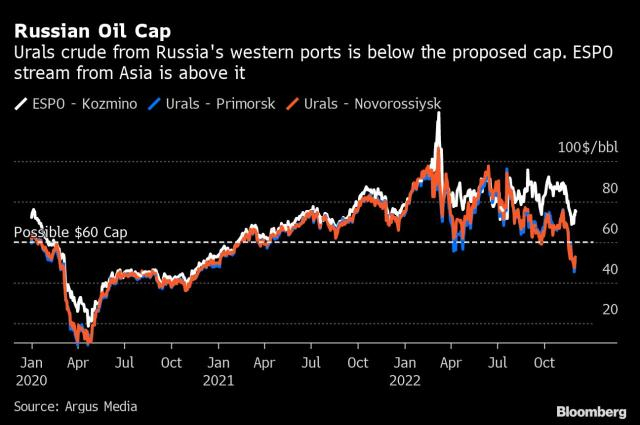
    • The US has proposed to cap price of Russia’s oil exports along with other G7 allies as a way to limit Russia’s earnings while keeping Russian oil flowing to the global economy.
    • The cap is set to take effect from today, the same day when European Union will impose a boycott on most Russian oil.
    • If there was ever any doubt what the premise of the cap was, it’s now clear: the US and its allies want Russia’s crude to keep flowing.

    What is the Russian Oil Price Cap?

    • The $60 per barrel cap is intended to cut Russia’s oil revenues while keeping Russian crude on the market by denying insurance, maritime services, and finance provided by the Western allies for tanker cargoes priced above a fixed dollar-per-barrel cap.
    • Without insurance, tanker owners may be reluctant to take on Russian oil and face obstacles in delivering it.
    • The US-proposed cap aims to hurt Moscow’s finances while avoiding a sharp oil price spike if Russia’s oil is suddenly taken off the global market.

    How would oil keep flowing to the global economy?

    • Universal enforcement of the insurance ban, imposed by the EU and U.K. in earlier rounds of sanctions, could take so much Russian crude off the market that oil prices would spike.
    • Western economies would suffer, and Russia would see increased earnings from whatever oil it can ship in defiance of the embargo.
    • Russia, the world’s No. 2 oil producer, has already rerouted much of its supply to India, China and other Asian countries at discounted prices after Western customers shunned it even before the EU ban.

    Russian response to the cap

    • Russia has said it will not observe a cap and will halt deliveries to countries that do.
    • It could retaliate by shutting off shipments in hopes of profiting from a sharply higher global oil price on whatever it can sell around the sanctions.
    • Buyers in China and India might not go along with the cap, while Russia or China could try to set up their own insurance providers to replace those barred by US, UK and Europe.

    How can Russia bypass this cap?

    • Using dark fleet: Russia also could sell oil off the books by using “dark fleet” tankers with obscure ownership, as have Venezuela and Iran.
    • Blending: Oil could be transferred from one ship to another and mixed with oil of similar quality to disguise its origin.

    How does it impact G7?

    • For countries that join the coalition, it would mean simply not buying Russian oil unless the price is reduced to where the cap is determined.
    • For countries that don’t join the coalition, or buy oil higher than the cap price, they would lose access to all services provided by the coalition countries including for example, insurance, currency payment, facilitation and vessel clearances for their shipments.
    • Most insurers are located in the EU or the United Kingdom and could be required to participate in the cap.

    Implications of the Oil Price Cap

    • Inflationary impacts: Initially, traders and the tanker owners would find it difficult. There might be a drop in exports and some shock in the production of necessary commodities.
    • Energy insecurity: Countries all over the world will have to bear the spillovers effects of the cap. The effect will be more pronounced for developing countries.

    Efficacy of the Cap

    • Non-comprehensiveness: There is no consensus regarding the cap that should be imposed because of internal disputes in the European Union (EU). Moreover, there is no clarity on the price yet.
    • Dual pricing: It is going to create a dual-price market with an official price and a discounted price. We already know that Russia is already selling oil at a discounted price to India, China, and Turkey.
    • Global price dynamics: The implications of the sanction on Russia will depend on a number of factors including the World oil prices.   
    • Loopholes of sanctions: Sanctions are difficult to enforce. Earlier sanctions on Russia have not yielded the desired results.

    Hurdles to US intentions

    • OPEC+ price control: Much remains to be seen on the response of the OPEC plus countries, where Russia is a major player.
    • Lack of consensus: The enforcement of the sanctions would be difficult as there is no consensus among the members.

    Impacts on India

    • The price cap imposed by the G7, EU and which also includes Australia is aimed to force Russia to sell its crude not above $60.
    • China and India purchased crude at a massive $33.28 discount to Brent, indicating that the prices were well below the price cap imposed this week.
    • The price cap applies to nations intending to use Western ships and Western insurers—which means it won’t apply to India.

    How has India responded?

    • The US tried to bring India on board with: from asking India to change its uncritical stance on Russia by-
    • Cutting down oil imports
    • Stopping defence and other purchases from Russia and
    • Avoid the rupee-rouble payment mechanism that circumvent their sanctions
    • India has rejected any “moral” duty to join the price cap coalition.

    Conclusion

    • India has made it clear, through its cabinet ministers, that it will work to ensure energy security of its citizens and will prioritise that over anything else.

    Click and get your FREE Copy of CURRENT AFFAIRS Micro Notes

    (Click) FREE 1-to-1 on-call Mentorship by IAS-IPS officers | Discuss doubts, strategy, sources, and more

  • [Burning Issue] CCUS Policy Framework of NITI Aayog

    [Burning Issue] CCUS Policy Framework of NITI Aayog

    Context

    • A report titled ‘Carbon Capture, Utilisation, and Storage (CCUS) Policy Framework and its Deployment Mechanism in India’ has been released by NITI Aayog.
    • The report explores the importance of technology as an emission reduction strategy to achieve deep decarbonization from the hard-to-abate sectors. This edition of Burning Issue will highlight the key aspects of this report.   

    What is CCUS?

    • The International Energy Agency (IEA) defines Carbon Capture, Utilization and Storage (CCUS) as a group of technologies for capturing CO2 from large and stationary CO2 emitting sources, such as fossil fuel-based power plants and other industries.
    • CCUS also involves the transport of the captured CO2 (typically by pipeline and in certain situations through shipping, rail or trucks also) to sites, either for utilization in different applications or injection into geological formations or depleted oil & gas fields for permanent storage and trapping of the CO2.

    Significance of CCUS technologies

    CCUS can contribute to decarbonization and transition to clean energy systems in various ways:

    • Hard-to-abate sectors: CCUS offers the only known technology for the decarbonization of hard-to-electrify CO2-intensive sectors such as steel, cement, oil & gas, petrochemicals & chemicals, and fertilizers.
    • Creation Low carbon hydrogen economy: CCUS is expected to play a major role in enabling the hydrogen economy in India, through the production of blue hydrogen based on the utilization of our rich endowments of coal.
    • Removal of the CO2 stock from the atmosphere: The race towards net zero and containing global temperature within 1.5 degrees from pre-industrial levels is not possible without the removal of excess CO2 from the atmosphere through Direct Air Capture (DAC).
    • Sustenance of existing emitters: Existing thermal power plants and industrial plants (such as steel and cement production facilities) can be retrofitted with CO2 capture infrastructure.

    Need for CCUS in India

    • Growing CO2 emissions: India is the 3rd largest emitter of CO2 in the world after China and the US, with estimated emissions of 2.6 gigatonnes per annum (gtpa) in 2019. With rapid economic growth, infrastructure and industrial development, as well as a growing population, the total CO2 emissions are expected to cross 4 gtpa by the year 2030.
    • Sustainable solutions for the decarbonization of sectors -The decarbonization challenge for India is to identify scalable and economically sustainable solutions for the decarbonization of sectors that contribute to 70% of emissions. CCUS has a critical role to play, especially for India to accomplish net zero by 2070.
    • Enabling clean and green energy generation: CCUS also has a role to play in enabling clean and green baseload power and ensuring the sustenance and non-stranding of our over 210 GW of coal and lignite-based thermal power plants.
    • Limit global temperature rise- The International Energy Agency points out that reaching net zero without CCUS is virtually impossible. The Intergovernmental Panel on Climate Change (IPCC) also concludes that without CCUS, it would not be possible to stabilize the CO2 concentration in the atmosphere between 450 – 750 ppmv (parts per million by volume) and limit global temperature rise between 1.5 to 2 degrees Celsius above pre-industrial levels.
    • Fulfill commitments of the Paris Agreement and ‘Panchamrit Strategy’-As a signatory of the Paris Agreement 2015, India has committed to reducing emissions by 50% by the year 2050 and reaching net zero by 2070. Given the sectoral composition and sources of CO2 emissions in India, CCUS will have an important and integral role to play in ensuring India meets its stated climate goals, through the deep decarbonization of energy and CO2 emission-intensive industries such as thermal power generation, steel, cement, oil & gas refining, and petrochemicals.
    • Enabling sunrise sectors- CCUS can enable the production of clean products while utilizing our rich endowments of coal, reducing imports and thus leading to a strong Indian economy. CCUS also has an important role to play in enabling sunrise sectors such as coal gasification and the nascent hydrogen economy in India.

    Current usage of CCUS in India

    • Presently carbon capture in India is confined to certain industries/applications where carbon capture is part of the process, viz., the manufacture of urea. India’s urea production is about 24 mtpa, where captured CO2 is utilized in the ammonia-to urea conversion process.
    • CO2 is also captured as part of the gas conditioning process in the gasifiers of Reliance Industries Limited in Jamnagar (10 mtpa of petcoke gasification capacity) and JSPL in Angul (2 mtpa of coal gasification capacity), but the CO2 is largely released to the atmosphere and not utilized or stored.
    • While there are few pilot-scale carbon capture projects (viz. IOCL R&D’s amine and biological enzyme-based carbon capture plant and Tata Steel Jamshedpur’s pilot-scale carbon capture plant for capturing 5 tonnes per day CO2 from Blast Furnace gases), there are no commercial-scale dedicated CCUS projects in India.

    Carbon Capture and Storage Technologies

    CO2 capture technologies separate carbon dioxide from gas streams that are released from industrial processes such as power plants, chemical production, cement production or steel making. There are three different broad categories of technologies for capturing CO2: Post-combustion capture, Pre-combustion and Oxy-fuel combustion.

    • Cryogenic separation for CO2 capture is similar to the conventional distillation process, except that it involves the separation of components from a gaseous mixture (instead of liquid) based on the difference in their boiling points.
    • In the adsorption-based CO2 capture process, the CO2 molecules selectively adhere to the surface of the adsorbent material and form a film. This is possible because of the difference in diffusivities and heat of adsorption values for the feed gas stream components.
    • Solvent-based CO2 capture processes have been used for over half a century for processing natural (sour) gas, combustion flue gas and Fischer-Tropsch (FT) synthesis products. The fundamental principle on which solvent-based CO2 capture technologies work is the ‘selective absorption’ of CO2 over the other gaseous constituents.
    • Microalgae-Based Carbon Capture– The basic philosophy behind the process of carbon capture by microalgae is the use of CO2 as a nutrient for the cultivation of microalgae. The selected strains of microalgae can be cultivated in ponds. The CO2 will be absorbed by the microalgae and the resulting gas will leave the cultivation system.

    Utilization of the carbon captured

    • Green urea: Green urea can be produced from the captured CO 2 and cost-competitive green hydrogen, from renewable energy-based electrolysis of water. Green urea can replace/complement the traditional LNG/NG-based production and import of ammonia and urea.
    • Food and beverages applications: CO2 is utilized in F&B applications such as carbonated drinks, dry ice, and modified atmosphere packing; however, the scales are much lower compared to green urea.
    • Building materials (concrete and aggregates): There is a large market for aggregates and concrete in a developing country like India, providing a pathway for utilizing CO2 for producing building materials through concrete curing and aggregate formation. In these applications, CO2 is injected in a liquid state without any conversion, thus reducing energy requirements.
    • Chemicals (methanol and ethanol): Conversion of CO2 to methanol and ethanol from CO2 is proven at a commercial scale in different parts of the world.
    • Polymers (including bio-plastics): The conversion of CO2 to polymers presents another possible CO2 utilization route.

    Storage of the carbon captured

    • Storage in oil wells– The injection of CO2 for Enhanced Oil Recovery has been studied and applied for years, especially in North America. CO2 is miscible with crude oil which helps in recovering oil not possible by secondary methods. This also helps in permanently storing CO2 in oil reservoirs, thus making CO2 EOR a sustainable option for abating CO2.
    • Storage in coal seams- The CO2 injected is accumulated in the coal cleats in a dense gas phase. This CO2 is adsorbed and absorbed in the coal. Since CO2 has a higher affinity for coal than CBM, it pushes the coal bed methane toward production wells, thus enhancing its primary recovery. Similar to CO2 EOR, ECBMR can help in permanently storing CO2 and the recovered methane can also help offset the cost of carbon capture.
    • Storage in Deep Saline Aquifers– Captured CO2 can be permanently stored in deep saline aquifers. Unlike EOR and ECBMR, injection of CO2 in deep saline aquifers has no economic benefit. Deep saline aquifers are spread across very large areas and thus have the potential to store very large quantities of CO2.
    • CO2 Storage in Basalts– Recently studies have been carried out to learn about the CO2 storage potential of basaltic rocks. Basaltic rock constitutes divalent cations of Ca, Mg, and Fe. They can react with the CO2 dissolved in water to form stable carbonate minerals and thus can offer a safe CO2 sequestration method for an extended period.

    Policy framework for India

    Key Risks Associated with CCUS

    • Technical Risks– such as Reservoir Suitability for CO2 Flooding for EOR and the extent of CO2 abatement possible through EOR depend on the comparative performance and cost-effectiveness of CO2.
    • Financial Risks– Cost of Capture The main cost driver in the CCUS value chain is the capture cost. In industrial processes such as natural gas processing and gasification, carbon capture is part of the process itself and hence there is no additional cost of carbon capture. However, in the case of thermal power plants and other industrial processes, there are significant capital and cash costs, leading to financial risks for the entire CCUS value chain.
    • Loss of Storage Site– Complications during CO2 injection may lead to the stoppage of operations at CO2 storage sites. Although reservoir management should provide adequate warning of such occurrences, there are technical risks in Carbon Capture Utilization and Storage (CCUS) – Policy Framework and Deployment Mechanism in India CCUS Policy Framework for India estimating/predicting the final capacity of a new storage site with certainty.

    Promoting the Adoption of CCUS Technologies in India: The Way Forward

    • The envisaged CCUS policy needs to adopt a multi-pronged approach to promote the adoption of CCUS technologies in India. The key elements of the approach need to incentivize the following: i) Technology transfer:
    • Technology transfer, Assimilation and Adoption– Carbon capture, CO2 sequestration and CO2 EOR technologies are already demonstrated at a commercial scale in different parts of the world and particularly in the US for nearly 50 years. Hence the focus for India should be on technology transfer, assimilation and adoption of such proven technologies (TRL 8 and 9), rather than reinventing the wheel.
    • Promoting R&D in novel technologies: While carbon capture technologies and technologies for CO2 EOR and sequestration are well developed and implemented at a commercial scale, technologies for the utilization of CO2 are relatively less developed.
    • Private sector participation: Private sector participation is quintessential to promote the transfer and commercialization of existing CCUS technologies and also push the envelope for the development of new and emerging technologies in both capture and utilization.
    • Carbon Capture Finance Corporation (CCFC)– It is proposed that the Government of India set up a financial institution for the promotion and development of CCUS projects in India. The financial institution, which can be called the “Carbon Capture Finance Corporation (CCFC)” shall provide tax and cash credits for carbon capture projects in India.
    • Promoting Coal Gasification Projects with CCUS-Coal gasification (with CCUS) is an important and strategic sector for ensuring the future energy and materials security of India and reducing import-dependence for critical chemicals and commodities. It is recommended to set up a special purpose organization to drive and promote coal gasification in India, including the production of blue hydrogen to enable the hydrogen economy.

    Conclusion

    • Carbon Capture Utilization and Storage (CCUS) has an important and critical role to play for India to halve CO2 emissions by 2050 and accomplish net zero by 2070.
    • Energy transitions take decades and hence it is important to implement the framework and policy instruments for CCUS to become a reality in India and make a meaningful contribution to decarbonization in India.

    Click and get your FREE Copy of CURRENT AFFAIRS Micro Notes

    (Click) FREE1-to-1 on-call Mentorship by IAS-IPS officers | Discuss doubts, strategy, sources, and more