💥Join UPSC 2027,2028 Mentorship (July Batch) + XFactor Notes & Microthemes PDF

Author: CD Staff

  • [Burning issue] Future of Reservations in India

    reservation

    Click and get your FREE Copy of CURRENT AFFAIRS Micro Notes

    Context

    • In the recent EWS judgment by the Supreme Court, Three judges on the Constitution Bench said the policy of reservation in education and employment cannot continue for an indefinite period.
    • The statement made highlights the issue of reservations in India. Therefore, this edition of the burning issue will analyze the issue of reservations in India, its future, challenges and way forward.

    About the Reservation Policy of India

    • Reservation is a system of affirmative action in India that provides for historically disadvantaged groups.
    • The legal origin of the Reservation Policy in India began with the lying down of the Government of India Act, of 1919, and the Communal award in 1932.
    • Post-independence, based on provisions in the Indian Constitution (Article 15, Article 16 and Article 335), it allows the Union Government and the States and Territories of India to set reserved quotas or seats, which lower the qualifications needed in exams, jobs openings, university admissions, scholarships, promotions, etc. for “socially and educationally backward citizens.
    • Reservation is primarily given to all 4 groups: Scheduled Castes, Scheduled Tribes, Other Backward Classes, and Economically Weaker Section, abbreviated as SC, ST, OBC, and EWS respectively. Originally only SC and ST communities were eligible for reservation.
    • In 1987, it was extended to include OBCs after the implementation of the Mandal Commission report. In 2019, the reservation was extended for the Economically Weaker Section within the General Category, however, all the categories mentioned receive different monetary values for their reservation: usually SC, and ST draws higher quota or benefits, then OBC, then EWS.

    Constitutional provisions regarding the reservation

    The Constitution of India lays down certain provisions regarding the reservation in India, namely:

    • Article 15(4) of the Indian Constitution states that the State has the right to make special provisions for the advancement of any socially and educationally backward classes of citizens or the Scheduled Castes and the Scheduled Tribes.
    • Article 15(5) of the Indian Constitution states provisions created for the reservation of SC, ST, and Backward classes in private educational institutions.
    • Article 16(4) of the Indian Constitution states that the State has the right to make provisions for the reservation to provide adequate representation of all the castes in Government services.
    • Article 330 and 332 of the Indian Constitution provides for specific representation through the reservation of seats for SCs and STs in the Parliament and the State Legislative Assemblies respectively.

    Current situation of reservations in India

    • Currently, Reservation is given to different categories of applicants in educational institutions or government jobs.
    • Scheduled Castes get 15%, Scheduled Tribe -7.5%, Other Backward Class (OBC) -27%, Economically Weaker Sections (EWS)-10%, and Persons with Benchmark Disabilities get 4% reservation.
    • From above, it is clear that 60% reservation is given to various categories such as SCs, STs, OBC, and EWS with respect to government jobs and educational institutions.
    • Initially, the reservation was provided based on social and educational backwardness. But, after the 103rd Constitutional Amendment of 2019, economic backwardness was also considered for reservation.
    • Every state has the right to reserve certain seats for underprivileged people. The state-wise distribution of reservations varies from state to state. For example, The total reservation in Maharashtra State was 52%, Tamil Nadu has 69% reservation etc.

    The biggest debate related to Reservations: Should reservations continue?

    Yes, it should!

    • The low representation of Reserved communities: According to data presented by the Education Minister in the Rajya Sabha, in Indian Institute of Science (IISc) Bengaluru, only 2.1 per cent of candidates admitted to the Ph.D. programs were from the ST category, 9 per cent were from SC and 8 per cent from OBC categories from 2016-2020. Most of the IITs do not have a single professor from the SC/ST community.
    • Still lack equal opportunity: Even though India is progressing, still there is a need to provide reservations to certain classes of society. It is the duty of the government to provide equal opportunity and status to unprivileged people. Even today many people belong to the lower caste and do not have access to equal opportunity and status.
    • Discrimination continuing: the real purpose of introducing reservation was to break the age-old caste prejudices and discrimination against the reserved communities. But, Even after years of independence, the lower caste people are looked upon in the same way they were some years ago. Great caste discrimination still exists in rural areas.
    • Gives a Level Playing field: Reservation provides a level playing field as it is difficult for the backward sections who were historically deprived of education, skills, and economic mobility to suddenly start competing with those who had access to those means for centuries.
    • Reducing opportunities for reserved community: since LPG reforms, the privatization of PSU and the education sector has led to reduced opportunities for the reserved communities due to a lack of reservation in the private sector hence reservations in public institutions seem to be a tool to compete with general category candidates.

    The flip side. Reservation should not continue!

    • Causing a “race to backwardness”: the reservation policy has led to race among several new communities, even dominant regional caste groups to demand reservations in government jobs and educational institutions.   
    • Becoming redundant: Reservation through a caste-based system has become redundant in the modern age and is taking away opportunities from those who are underprivileged in economical terms.
    • Strengthening casteism: Moreover, the reservation system only divides the society leading to discrimination and conflicts between different sections since it is oppressive and does not find its basis in casteism. It is promoting casteism in India.
    • Ever widening quotas: with new castes, categories and tribal communities being added to the list the beneficiaries of the reservations, the quantum of the reservation is increasing year by year, breaching the 50% quota limit set by SC in the Indira Sawney case.
    • Loss of original purpose of reservations: According to Surith Parthasarthy, Advocate Madras HC, the reservation policy today has lost its original purpose to end the prejudice against certain communities and correct historical injustice. But today it has become a tool to gain public employment and seats in public educational institutes.
    • Reservation is not a fundamental right: It is a settled law, time and again reiterated by the Supreme Court, that there is no fundamental right to reservation or promotion under Article 16(4) or Article 16(4 A) of the Constitution. Rather they are enabling provisions for providing reservation if the circumstances so warrant (Mukesh Kumar and Another vs State of Uttarakhand & Ors. 2020).
    • An inefficient system: TheJustice G. Rohini Commission’s report concluded that 97% of central OBC quota benefits go to just under 25% of its castes. As many as 983 OBC communities — 37% of the total — have zero representation in both central government jobs and admissions to central universities. Also, the report states that just 10% of the OBC communities have accrued 24.95% of jobs and admissions.
    • Opening pandora box: the reservation issue is giving rise to new challenges like the demand for caste census, the definition of creamy layers, reservation in the private sector, domicile-based reservations etc.

    Important Supreme Court cases related to Reservations

    Indra Sawhney Judgment (1992)

    • In the judgment, a nine-judge bench presided by CJI MH Kania upheld the constitutionality of the 27% reservation.
    • But it put a ceiling of 50% unless exceptional circumstances warranted the breach so that the constitutionally guaranteed right to equality under Article 14 would remain secure.
    • While Article 16(1) is a fundamental right, Article 16(4) is an enabling provision and not an exception.
    • Further, the Court directed the exclusion of the creamy layer by way of horizontal division of every other backward class into creamy layer and non-creamy layer.

    M. Nagaraj (2006) Case

    • A five-judge bench of the Supreme Court declared the 1995 amendment as not vocative of the basic structure of the Constitution.
    • It laid down certain conditions which included the collection of quantifiable data showing the backwardness of the class and inadequacy of representation of that class in public employment.
    • The bench held that the creamy layer among SCs and STs is to be excluded from the reservation.

    Jarnail Singh vs Lachhmi Narain Gupta (2018)

    • It was authored by Justice Rohinton Nariman and indicates a critical turn in the jurisprudence of reservation.
    • In this case, a constitutional bench of the Supreme Court was called on to examine the wisdom of the 2006 judgment.
    • This task was to examine the constitutionally recognized socio-economic backwardness of the SCs and STs which may not require any further substantiation.
    • It was also contended that the requirement to identify creamy lawyers among SC and STs fell foul of Indra Sawhney’s decision.
    • The constitution bench invalidated the requirement to collect quantifiable data in relation to SCs and STs.
    • It upheld the principle of applicability of creamy lawyers in relation to SCs and STs.

    Dr. Jaishri Laxmanrao Patil vs Chief Minister (2021)

    • Despite the Indra Sawhney ruling, there have been attempts on the part of many States to breach the rule by way of expanding reservation coverage.
    • The Maharashtra Socially and Educationally Backward Classes Act 2018, (Maratha reservation law) came under challenge before the Supreme Court.
    • This case was referred to a bench of five judges to question whether the 1992 judgment needs a relook.
    • Interestingly, the Supreme Court affirmed the Indra Sawhney decision and struck down Section 4(1)(a) and Section 4(1)(b) of the Act which provided 12% reservation for Marathas in educational institutions and 13% reservation in public employment respectively.
    • This judgment gave out a strong message that some State governments blatantly disregard the stipulated ceiling on electoral gains rather than any exceptional circumstances.

    What is needed right now- Reforms!

    • Evidence-based policy option: We need to develop a wide variety of context-sensitive, evidence-based policy options that can be tailored to meet the specific requirements of specific groups.
    • Institution: We need an institution like the Equal Opportunities Commission of the United States or the United Kingdom which can undertake two important but interrelated things: Make a deprivation index correlating data from the socio-economic-based census of different communities. And Undertake an audit on the performance of employers and educational institutions on non-discrimination and equal opportunity and issue codes of good practice in different sectors.
    • This will make the formulation of policy and its monitoring simpler at an institutional level.
    • Similar suggestions were made a decade ago in the recommendations that the expert committee for an Equal Opportunities Commission (2008) made in its comprehensive report that it submitted to the Ministry of Minority Affairs.

    Conclusion

    • The policy of reservation can be fair and effective if it acts as affirmative action for the benefit of the backward sections of society. To meet the aim of the reservation policy, its aid should reach the majority of the population which is considered an underprivileged section of society.
    • In the present time, there is a need to revise the reservation policy of India so that the benefit can reach the marginalized sections of the deprived classes. But while revising the reservation policy, we must ensure that the benefit of the reservation should reach the socially, economically, and educationally backward sections of society. Social, educational and economic criteria should be taken cumulatively to determine the backward classes of the society.

    As Justice Ravindran in the Ashok Kumar Thakur vs Union of India case rightly said, “When more people aspire for backwardness rather than of forwardness, the country itself stagnates”.

  • [Sansad TV] Mudda AapKa: POCSO Act

    Click and get your FREE Copy of CURRENT AFFAIRS Micro Notes

    Context

    • Non-reporting of sexual assault against a minor child despite knowledge is a serious crime, held the Supreme Court under the POCSO Act.
    • It further added that such non-reporting is more often than not done in an attempt to shield the offenders of the crime.
    pocso

    What is POCSO Act?

    • The Ministry of Women and Child Development championed the introduction of the Protection of Children from Sexual Offences (POCSO) Act, 2012.
    • The Act has been enacted to protect children from offences of sexual assault, sexual harassment and pornography and provide for establishment of Special Courts for trial of such offences.
    • The Act was amended in 2019, to make provisions for enhancement of punishments for various offences so as to deter the perpetrators and ensure safety, security and dignified childhood for a child.

    Features of the Act   

    • Gender neutrality: The Act is gender neutral and regards the best interests and welfare of the child. The Act calls for mandatory reporting of sexual offences. A false complaint with intent to defame a person is punishable under the Act.
    • Definition of Child: The Act defines a child as any person below eighteen years of age.
    • Definitions of sexual abuses: It defines different forms of sexual abuse, including penetrative and non-penetrative assault, as well as sexual harassment and pornography.
    • Prevents child trafficking: People who traffic children for sexual purposes are also punishable under the provisions relating to abetment in the Act.  
    • Preventing re-victimization of child: Adequate provisions are made to avoid re-victimization of the Child at the hands of the judicial system.
    • Sensitization of Police: The Act assigns a policeman in the role of child protector during the investigation process.
    • Child friendly investigation: The Act stipulates that such steps must be taken which makes the investigation process as child-friendly as possible.
    • Speedy disposal: The Act provides for the establishment of Special Courts for the trial of such offences and stipulates that the case is disposed of within one year from the date of reporting of the offence.

    What is the rationale behind the legislation?

    • Multiple facets of crime: New forms of child abuse like online bullying, harassment and Child Pornography have emerged to a greater extent.
    • Exception handling: As per the last available data from the National Crime Records Bureau of child rape cases came up before the courts under the POCSO Act read with Indian Penal Code Section 376.
    • Larger conviction: Less than three per cent cases ended in convictions, pointing to the need for better access to justice for all, and not just more stringent conviction in a small percentage of cases.
    • Deterrence against crime: There is the belief that harsher punishments will deter people from committing child rape.
    • Zero-tolerance: Lastly, the disgust for the crime makes the perpetrator ‘deserving’ of death penalty.

    Issues with the Law

    • Recurrence of such crime: In the context of child rape, many preventive measures and policies do have a definitive impact on preventing child rape.
    • Lower conviction: The conviction rates are low under the Protection of Children from Sexual Offences Act, 2012.
    • Investigation bottlenecks: There is lack of specialised investigators, prosecutors, judges, mental health professionals, doctors, forensic experts and social workers.
    • Protection bottlenecks: Inadequate child protection and rehabilitation services, lack of compliance with child-friendly legal procedures are some other concerns.
    • Under-reporting: A large proportion of perpetrators are family members or those close to or known to the family. This results in massive underreporting of such crimes.
    • Protection of convicts: This concern will only intensify with death penalty, as the child’s family often settles a case of known person preventing him to the gallows.
    • Vulnerability: The arbitrariness of the death penalty in India also arises from the discriminatory impact of the choice of what constitutes ‘rarest of rare’.
    • Delay of trials: The Kathua Rape case took 16 months for the main accused to be convicted whereas the POCSO Act clearly mentions that the entire trial and conviction process has to be done in one year.
    • Communal Politicization:  Considering rapes on communal angles is another challenge. The Unnao rape case and Kathua rape case are some of the examples.

    Way forward

    • The social menace of child rape requires sustained planning, engagement, and investment of resources by the government.
    • The need of the hour is to prioritise prevention activities against abuse, creating safe (physical and online) environments for children.
    • Developing a comprehensive outreach system to engage parents, schools, communities, NGOs partners and local governments as well as police and lawyers is needed.
    • This will ensure better implementation of the legal framework, policies, national strategies and standards.

    Click and get your FREE Copy of CURRENT AFFAIRS Micro Notes

  • [Burning issue] World Energy Outlook Report 2022

    energy

    Click and get your FREE Copy of CURRENT AFFAIRS Micro Notes

    Context

    • Recently, the International Energy Agency released its flagship World energy outlook report. The report analyses the current and future energy of the world and specific regions.
    • In this context, this edition of the burning issue is highlighting the key observations made in the report about the energy scenario of the world and the relevant way forward.

    About the WEO Report

    • The World Energy Outlook report is the International Energy Agency’s annual publication
    • and is recognized as the authoritative source for global energy projections and analysis.
    • The report presents detailed projections of production, energy demand, trade and investment, and fuel by fuel region-wise.
    • It offers crucial insights into the world’s energy demand and supplies under various scenarios and the implications for energy security, climatic goals, and economic growth.

    Three Possible Scenarios

    The Outlook has explored three scenarios that provide a framework for thinking about the future of energy and exploring the implications of various policy choices, investment trends, and technology dynamics. The scenarios are:  

    • Stated Policies Scenario (STEPS): which looks not at what governments say they will achieve, but at what they are actually doing to achieve the targets and objectives they have set out, and assesses where this leads the energy sector.  
    • Announced Pledges Scenario (APS): which examines where all current announced energy and climate commitments – including net zero emissions pledges as well as commitments in areas such as energy access – would take the energy sector if implemented in full and on time.  
    • Net Zero Emissions by 2050 Scenario: which maps out a way to achieve a 1.5 °C stabilization in global average temperature and meet key energy‐related UN Sustainable Development Goals. 

    Key findings of the report – World View

    (A) Global energy crisis and the world economy:

    • Russia’s invasion of Ukraine has sparked a global energy crisis. According to the report, Russia’s actions have turned a rapid economic recovery from the pandemic into full‐blown energy turmoil.
    • The crisis has stoked inflationary pressures and created a looming risk of recession, as well as a huge USD 2 trillion windfalls for fossil fuel producers above their 2021 net income.

    (B) Is the crisis a boost, or a setback, for energy transitions?

    • With energy markets remaining extremely vulnerable, today’s energy shock is a reminder of the fragility and unsustainability of our current energy system. A key question for policymakers is whether the crisis will be a setback for clean energy transitions or will catalyze faster action.
    • Climate policies and net zero commitments were blamed in some quarters for contributing to the run‐up in energy prices, but there is scant evidence for this.
    • In the most affected regions, higher shares of renewables were correlated with lower electricity prices, and more efficient homes and electrified heat have provided an important buffer for some – but far from enough – consumers.

    (C) Policy responses are fast‐tracking the emergence of a clean energy economy

    • New policies in major energy markets help propel annual clean energy investment to more than USD 2 trillion by 2030.
    • Clean energy becomes a huge opportunity for growth and jobs, and a major arena for the international economy. As markets rebalance, renewables, supported by nuclear power, see sustained gains; the upside for coal from today’s crisis is temporary.
    • The increase in renewable electricity generation is sufficiently fast to outpace growth in total electricity generation, driving down the contribution of fossil fuels for power competition.

    (D) Fossil fuel peak into view now

    • For the first time, a WEO scenario based on prevailing policy settings has the global demand for each of the fossil fuels exhibiting a peak or plateau.
    • In the STEPS, coal use falls back within the next few years, natural gas demand reaches a plateau by the end of the decade, and rising sales of electric vehicles (EVs) mean that oil demand levels off in the mid‐2030s before ebbing slightly to mid‐century.
    • Global fossil fuel use has risen alongside GDP since the start of the Industrial Revolution in the 18th century: putting this rise into reverse while continuing to expand the global economy will be a pivotal moment in energy history.

    (E) Led by clean electricity, some sectors are poised for a faster transformation

    • Investments in clean electricity and electrification, along with expanded and modernized grids, offer clear and cost‐effective opportunities to cut emissions more rapidly while bringing electricity costs down from their current highs.
    • Today’s growth rates for the deployment of solar PV, wind, EVs and batteries, if maintained, would lead to a much faster transformation than projected in the STEPS, although this would require supportive policies not just in the leading markets for these technologies but across the world.
    • Supply chains for some key technologies – including batteries, solar PV and electrolyzers – are expanding at rates that support higher global ambition.

    (F) Efficiency and clean fuels get a competitive boost

    • Today’s high energy prices underscore the benefits of greater energy efficiency and are prompting behavioral and technology changes in some countries to reduce energy use.
    • Demand for cooling needs to be a particular focus for policymakers, as it makes the second‐ largest contribution to the overall rise in global electricity demand over the coming decades (after EVs).
    • In the STEPS, cooling demand in emerging and developing economies rises by 2 800 terawatt‐hours by 2050, which is the equivalent of adding another European Union to today’s global electricity demand.
    • This growth is reduced by half in the APS because of tighter efficiency standards and better building design and insulation bolstered by stronger policy support – which are brightening the prospects for many low‐emissions fuels.

    However, there is a FLIP SIDE too

    (A) Rapid transitions ultimately depend on investment

    • A huge increase in energy investment is essential to reduce the risks of future price spikes and volatility and to get on track for net zero emissions by 2050.
    • From USD 1.3 trillion today, clean energy investment rises above USD 2 trillion by 2030 in the STEPS, but it would have to be above USD 4 trillion by the same date in the NZE Scenario, highlighting the need to attract new investors to the energy sector.
    • Governments should take the lead and provide strong strategic direction, but the investments required are far beyond the reach of public finance. It is vital to harness the vast resources of markets and incentivize private actors to play their part.
    • Shortfalls in clean energy investment are largest in emerging and developing economies, a worrying signal given their rapid projected growth in demand for energy services.

    (B) What if transitions don’t pick up?

    • If clean energy investment does not accelerate as in the NZE Scenario then higher investment in oil and gas would be needed to avoid further fuel price volatility, but this would also mean putting the 1.5 °C goal in jeopardy.
    • In the STEPS, an average of almost USD 650 billion per year is spent on upstream oil and natural gas investment to 2030, a rise of more than 50% compared with recent years. This investment comes with risks, both commercial and environmental, and cannot be taken for granted.

    India-specific observations in the report

    • Coal and gas production to peak: India’s coal generation and oil imports are going to peak in 2030, while gas imports will double around the same time.
    • Challenge of electricity sufficiency: The primary challenge for the country is going to be about meeting its rising electricity demand. It said India will have to find out ways to meet this increasing demand with renewables and nuclear on a scale that is large enough to reduce the use of “unabated coal‐fired generation”, which provides nearly three‐quarters of the electricity supply currently.
    • 2nd Largest coal producer now: It revealed that India became the world’s second‐largest coal producer in 2021 (in energy terms), overtaking Australia and Indonesia, and that it plans to increase domestic production by more than 100 million tonnes of coal equivalent (Mtce) by 2025 from the current levels.
    • Again rise in coal demand: Coal demand in India rose rapidly between 2010 and 2019, mainly as increases in electricity demand were largely met through coal‐fired power. Coal use in India dropped by 7 percent in 2020 due to the pandemic, but increased by 13 percent in 2021, therefore already surpassing the 2019 levels.
    • Rising energy demand: India becomes the world’s most populous country by 2025 and, combined with the twin forces of urbanisation and industrialisation, this underpins rapid growth in energy demand, which rises by more than 3 percent per year in the stated policies scenario (STEPS) from 2021 to 2030. It sees the largest increase in energy demand of any country,
    • Possible energy security: Even though India continues to make great strides with renewables deployment and efficiency policies, the sheer scale of its development means that the combined import bill for fossil fuels doubles over the next two decades in the STEPS, with oil by far the largest component. This points to continued risks to energy security. 
    • Oil imports to peak soon: Coming to oil imports, the IEA found that in the APS, India’s oil imports will peak in the 2030s and fall below the current level by 2050.

    What should be done for a better energy transition

    • Affordable transition: A focus on affordable, secure transitions based on resilient supply chains from non-renewables to renewables should be made. A new energy security paradigm is needed to maintain reliability and affordability while reducing emissions. The Outlook includes ten principles that can help guide policymakers through the period when declining fossil fuel and expanding clean energy systems co‐exist.
    • Scale up clean energy technologies: Synchronise scaling up a range of clean energy technologies with scaling back fossil fuels.
    • Promote energy efficiency also: Tackle the demand side and prioritize energy efficiency. The energy crisis highlights the crucial role of energy efficiency and behavioral measures to help avoid mismatches between demand and supply.
    • Inclusive energy economy: Reverse the slide into energy poverty and give poor communities a lift into the new energy economy.
    • Bring down the cost: Collaborate to bring down the cost of capital in emerging markets and developing economies. The cost of capital is a signal of the real and perceived risks associated with the investment, and it is higher in many emerging markets and developing economies than elsewhere.
    • Promote supply chain resilience: Ensure diverse and resilient clean energy supply chains. High and volatile critical mineral prices and highly concentrated supply chains could delay energy transitions or make them more costly.
    • Foster the climate resilience of energy infrastructure: The growing frequency and intensity of extreme weather events present major risks to the security of energy supplies.

    Conclusion

    • The energy crisis promises to be a historic turning point towards a cleaner and more secure energy system. The alignment of economic, climate and security priorities has already started to move the dial toward a better outcome for the world’s people and the planet.
    • Much more remains to be done, and as these efforts gather momentum, it is essential to bring everyone on board, especially at a time when geopolitical fractures on energy and climate are all the more visible. This means redoubling efforts to ensure that a broad coalition of countries has a stake in the new energy economy.
    • The journey to a more secure and sustainable energy system may not be a smooth one. But today’s crisis makes it crystal clear why we need to press ahead.

    Click and get your FREE Copy of CURRENT AFFAIRS Micro Notes

  • [Sansad TV] Perspective – Israel Elections: Netanyahu Returns

    Click and get your FREE Copy of CURRENT AFFAIRS Micro Notes

    Context

    • Israel’s former Prime Minister Benjamin Netanyahu is on the brink of a dramatic comeback, after partial election results showed he was on course to win a majority in parliament with the far right’s help.
    • Netanyahu is its master and Israel is a nation now shaped more by the right wing – and perhaps its most extreme elements – than at any point in its history.

    Netanyahu’s comeback: Implications on the World

    Netanyahu has proven himself inherently risk-averse when it comes to acting on matters of war and peace.

    • Crackdown on Palestine: The confrontation with Palestinians in the West Bank or in Jerusalem, between Israeli Jews and Arabs will likely grow.
    • Iranian rhetoric: On Iran, Netanyahu’s rhetoric will intensify. The US will have an opportunity to intensify its crackdown on Iran.

    Implications on India

    • Netanyahu’s likely victory could see an upward trajectory in Indo-Israel ties, which flourished while he was in power till 2021.
    • Over this, Prime Minister Modi congratulated Netanyahu for his success in the Israeli general elections and said he looks forward to continuing their joint efforts to deepen the India-Israel strategic partnership.

    A quick recap of bilateral ties

    • In January this year, India and Israel marked 30 years of full diplomatic relations.
    • Israel had opened its embassy in Delhi in February 1992.
    • The Indian Embassy in Tel Aviv opened on May 15 that year.

    How PM Modi and Netanyahu re-shaped India-Israel Relations?

    (1) First ever visit by Indian PM

    • An advocate of strong bilateral ties with India, Netanyahu was the second Israeli PM to visit India in January 2018.
    • PM Modi made his historic visit to Israel, the first by an Indian Prime Minister, in July 2017 when the ‘chemistry’ between the two leaders became the subject of intense discussion.

    (2) Trade

    • The strong relations between the two nations can be gauged from the fact that the bilateral merchandise trade grew from $200 million in 1992 to $7.86 billion during 2021-2022.
    • The balance of trade is highly in India’s favour.
    • Discussions around a Free Trade Agreement are underway, but it has not matched the heightened hype so visible with Netanyahu in power.

    (3) Strategic Partnership

    • India and Israel elevated their bilateral relations to a strategic partnership during Modi’s visit to Israel.
    • Since then, the relationship between the two countries has focused on expanding knowledge-based partnership, which includes collaboration in R&D, including boosting the ‘Make in India’ initiative.
    • India’s relations with Israel progressed with I2U2 (India, Israel, the United States and the United Arab Emirates).

    Reasons for India prioritizing Israel

    • India’s exclusion from OIC: The formation of an Organisation of Islamic Cooperation (OIC) in 1969 which neglected the sentiments of Indian Muslims by blocking India’s membership to this group by Pakistan is one of the primary triggers for the change instance.
    • Backing of Kashmir: India has received no backing from the Arab countries on the Kashmir Issue. There have been no serious attempts by the Arab world to put pressure on Pakistan to reign in the cross-border insurgency in Kashmir.
    • Support in crucial wars: Israel supported India during the Indo-Pak wars even before full diplomatic ties were established.
    • India’s US allegiance: With the collapse of the Soviet Union and the rise of the US as a superpower, India started aligning itself with the US, and this further added to our improved relations with Israel.
    • Deviation from NAM: After decades of Non-Alignment and Pro-Arab policy, in 1992 India changed its stance and established full diplomatic ties with Israel.
    • Support at global forums: Israel has always been a vocal supporter of India’s permanent seat in the UNSC.
    • Technology: India’s world-class institutes of higher education could benefit from the strong culture of research and high-end innovation that thrives in Israel.

    Israeli interests in India

    • Huge Indian markets: India presents a massive market for Israel’s manufactured goods and technology.
    • Respect for religion: India has for long enjoyed great goodwill among Israel’s citizens as the only country in the world where Jews have not faced anti-Semitism.
    • Support for holocaust survivors: There are many instances of Jews under Hitler’s persecution finding shelter in India including some that were said to have been facilitated by Nehru. The minuscule Jew community was able to rise to eminence in various fields.
    • Haifa war support: Israel cherishes its admirers in India for its ability to thrive in spite of very adverse situations in its short history as an independent nation.

    Why is Israel India’s most crucial partner?

    [A] Military Collaboration

    • Against terrorism: India and Israel have increased collaboration in military ventures since both nations face the threats of rising radical terrorism and separatism.
    • Arms trade: India is the largest buyer of Israeli military equipment and Israel is the second-largest defense supplier to India after Russia.
    • Security: Working groups in areas of border management, internal security and public safety, police modernization, and capacity building for combating crime, crime prevention, and cybercrime were established.
    • Defence R&D: IAI is developing the Barak 8 missile for the Indian Navy and Indian Air Force which is capable of protecting sea vessels and ground facilities from aircraft and cruise missiles.

    [B] Agriculture collaboration

    • India has chosen Israel as a strategic partner (G2G) in the field of agriculture.
    • This partnership evolved into the Indo-Israel Agricultural Project (IIAP), under the Indo-Israel Action Plan, based on an MOU signed by Indian and Israeli ministers of Agriculture in 2006.
    • The partnership aims to introduce crop diversity, increase productivity & increase water use efficiency.
    • India has a lot to learn from the dryland agriculture of Israel. The Economic Survey 2016-17 batted for Indo-Israel cooperation in drip-irrigation technologies.

    Various deterrents in ties

    • Bilateral Trade and investment still below potential: From just $200 million in 1992, bilateral trade (excluding defense) peaked at about $5 billion in 2012 but since then it has dropped to about $4 billion. Also, bilateral trade has not diversified much—diamonds and chemicals still make up for the large chunk of the pie.
    • Connectivity between the two countries is still poor with just one direct flight from Mumbai 3 times a week and no direct flights from Delhi.
    • Historical retrenchment: India’s consistent support for a sovereign, independent, viable, and united Palestinian state with East Jerusalem as its capital, living within secure and recognized borders, side by side, and at peace with Israel and Pro-Arab stance has been a sticky point.
    • Limited People to People ties and cultural differences: Israelis and Indian approach business differently and often find it difficult to get on the same page.
    • India’s support for Palestinian Cause: Though formal ties were established in 1992, the ideological divide resurfaces time and again due to India’s affinity for Palestine.

    Way forward

    • Indian policy appears to be guided primarily by strategic considerations.
    • There is a strong need to use soft power diplomacy to build people-to-people bridges and to add to economic benefits through robust inter-country tourism.
    • The Indian and Israeli markets do not compete with one another but complete one another.
    • A potential quadrilateral with US and UAE can help this relationship soar to new heights.

    Click and get your FREE Copy of CURRENT AFFAIRS Micro Notes

  • [Burning Issue] The Case of Governor’s Activism

    governor

    Click and get your FREE copy of Current Affairs micro notes

    Context

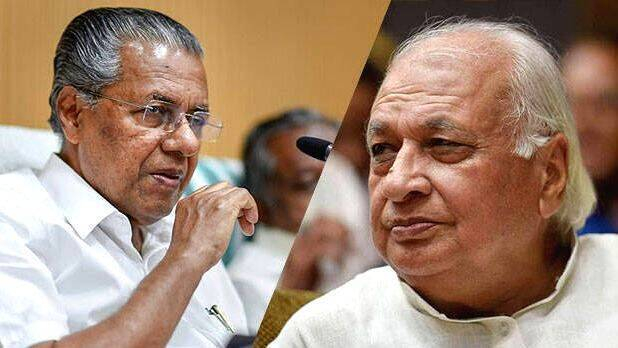
    • A tweet put out recently by the office of the Kerala Governor evoked nationwide attention. The Governor sent a letter to the Kerala CM asking him to act against the State Finance Minister, who, according to the Governor, had “ceased to enjoy” the Governor’s “pleasure”. The Chief Minister declined to do so.
    • In the recent past, Indian parliamentary democracy has witnessed several examples of Governor’s activism from Maharashtra to west Bengal with this being the latest incident.
    • In this context, this edition of the Burning issue will analyze the issues related to the Governor’s office, and the governor’s Activism and suggest a way forward.

    About Governors Post in India

    • Parallel to President: The Governors of the states of India have similar powers and functions at the state level as those of the President of India at the Central level. The Governor’s post finds its origin in the Government of India Act, 1935.
    • Nominal head: The Governor acts as the nominal head whereas the real power lies with the Chief Ministers of the states and her/his councils of ministers.

    Constitutional Provisions related to the Governor

    • Article 154: The executive power of the state shall be vested in the
      Governor and shall be exercised by him either directly or through
      officers subordinate to him in accordance with this Constitution.
    • Article 163 (1): There shall be a council of ministers with the chief minister as the head to aid and advise the Governor in the exercise of his functions, except in so far as he is required to exercise his functions at his discretion.
    • Article 163 (2): If any question arises whether a matter falls within the Governor’s discretion or not, the decision of the Governor is final and the validity of anything done by him cannot be called in question on the ground that he ought or ought not to have acted in his discretion.

    Governor’s Constitutional and Situational Discretion

    Constitutional Discretion

    • Reservation of a bill for the consideration of the President (Articles 200 and 201).
    • Recommendation for the imposition of the President’s Rule in the state (Article 356).
      While exercising his functions as the administrator of an adjoining Union territory (in case of an additional charge).
    • Special responsibility for 5th and 6th schedule areas.
    • Seeking information from the chief minister with regard to the administrative and legislative matters of the state.

    Situational discretion

    • Appointment of the chief minister when no party has a clear-cut majority in the state legislative assembly or when the chief minister in office dies suddenly and there is no obvious successor.
    • Dismissal of the council of ministers when it cannot prove the confidence of the state legislative
      assembly.
    • Dissolution of the state legislative assembly if the council of ministers has lost its majority.

    Legislative Powers of the Governor

    • Governor summons the sessions of both houses of the state legislature and prorogues them.
    • The Governor can even dissolve the State Legislative Assembly.
    • These powers are formal and the Governor’s use of these powers must comply with the advice of the Council of Ministers headed by the Chief Minister.
    • He addresses the first session of the state legislature after the general elections in the state.

    Appointments to the legislature

    • He appoints 1/6th of members of the State Legislative Council in states wherever there is a bicameral legislature.
    • He nominates one member in the state legislative assembly from the Anglo-Indian Community if in view; the community is not well represented.
    • Governor is empowered under Article 192 to disqualify a member of the State legislature when the election commission recommends that the legislator is no longer complying with provisions of Article 191.

    Passing of Bills

    • All the bills passed by the state legislatures are sent to the Governor for assent.
    • Once a bill is sent to Governor for assent, he can give assent to the bill, Withhold the assent, Return the bill to the legislature for reconsideration if it is not a money bill or Reserve the bill for consideration of the President.
    • If the bill is re-passed by the legislature with or without amendment, the Governor has to give assent to the bill.

    When is the Bill sent to the President?

    • This is done under the circumstances when a bill:
    • Violates the constitution or against directive principles of state policy (DPSP)
    • Conflict with union powers
    • Against the larger interest of the country and people
    • May endanger the position of the high court in the state.

    Ordinance making power

    • When the state legislature is not in session and the Governor considers it necessary to have a law, then the Governor can promulgate ordinances.
    • These ordinances are submitted to the state legislature at its next session.
    • They remain valid for no more than six weeks from the date the state legislature is reconvened unless approved by it earlier.

    Executive functions of the Governor include

    • An important function of the Governor is to appoint the Chief Minister of the State.
    • Other ministers are also appointed by the Governor on the advice of the Chief Minister.
    • The ministers including the Chief Minister hold office at the pleasure of the Governor.
    • The Governor has the constitutional right to know the decisions of the Council of Ministers relating to the administrative affairs of the State and the proposals for legislation.

    Nani A. Palkhivala- “The Constitution intended that the Governor should be the instrument to maintain the fundamental equilibrium of the people of the State and to ensure that the mandates of the Constitution are respected in the State”. 

    Storm in news: Doctrine of pleasure

    • The Doctrine of Pleasure is a special prerogative of the British Crown where a servant of the Crown holds office during the pleasure of the Crown and he can be dismissed from the service of the Crown at pleasure.
    • The tenure of the office of a civil servant can be terminated at any time without assigning any cause. The justification for the rule is that the crown should not be bound to continue in public service for any person whose conduct is not satisfactory.
    • In India, Article 310 of the Constitution says every person in the defense or civil service of the Union holds office during the pleasure of the President, and every member of the civil service in the States holds office during the pleasure of the Governor. However, Article 311 imposes restrictions on the removal of a civil servant. 
    • Under Article 164, the Chief Minister is appointed by the Governor; and the other Ministers are appointed by the Governor on the CM’s advice. It adds that Ministers hold office during the pleasure of the Governor.
    • ISSUE: In a constitutional scheme in which they are appointed solely on the CM’s advice, the ‘pleasure’ referred to is also taken to mean the right of the Chief Minister to dismiss a Minister and not that of the Governor. This is what lies at the core of the Kerala Governor and Chief Minister’s current controversy.

    Other Issues with Governors in India

    • Appointment by Union Only: This often leads to the appointment of persons aligning with the party’s ideology to the post of Governor and he/she remains faithful to the Union government of the day rather than acting on the advice of the State Executive.
    • Arbitrary removal: Even after the Supreme Court Judgement in B.P. Singhal v. Union of India calling for a fixed tenure for Governors to encourage neutrality and fairness in the discharge of their duties, it is not being implemented on the ground.
    • Withholding or delaying assent to State bills: The question of whether a Governor is permitted by the Constitution to cause uncertainty in the matter of giving assent to the Bills passed by State legislatures assumes great importance, the best example of it being the NEET bill controversy in Tamil Nadu.
    • Presidential Assent: The provision concerned makes it clear that a Bill can be reserved for the consideration of the President only if the Governor forms an opinion that the Bill would endanger the position of the High Court by whittling away its powers. The Constitution does not mention any other type of Bill which is required to be reserved for the consideration of the President. Nevertheless, the courts have conceded a certain discretion to the Governors in the matter of sending Bills to the President.
    • Constitution ambiguity: The Constitution does not mention the grounds on which a Governor may withhold assent to a Bill.
    • No remedy: The Indian Constitution does not provide any such remedy to tackle the above issue. The courts too have more or less accepted the position that if the Governor withholds assent, the Bill will go. Thus, the whole legislative exercise will become fruitless. It does not square with the best practices in old and mature democracies.
    • Lack of a timeline: Since the Constitution does not fix any timeline for the Governor to decide the question of assent, he can wait for any length of time without doing anything. This is illogical and militates against the constitutional scheme in respect of law-making by the legislatures.
    • Misuse of discretionary powers: States allege that this provision has often been misused by the Governor who acts on the behest of the union government which is opposed to the basic scheme of the Indian Constitution.
    • Contradictory Aid and advise and Discretion: Article 163(1) says that the Council of Ministers must aid and advise the Governor. However, according to Article 163(2), the Governor can act at his discretion in certain matters as permitted by the Constitution
    • Apparatus of interaction missing: There are no provisions laid down for how the Governor and the state must engage publicly when there is a difference of opinion. The management
    • Political appointment: This is because Governors have become political appointees. Politicians become Governors and then resign to fight elections.
    • Nature of appointment: In the Constitution, there are no guidelines for the exercise of the Governor’s powers, including for appointing a CM or dissolving the Assembly.
    • Defying constituent assembly: The Constituent Assembly envisaged Governor to be apolitical.
    • Nature of appointment: The CM is answerable to the people. But the Governor is answerable to no one except the Centre.
    • Constitutional vacuum: One can relate it with ideas of constitutional morality and values, but the truth is there is a fundamental defect in the Constitution.
    • Security of Tenure: There is no provision for impeaching the Governor, who is appointed by the President on the Centre’s advice. While the Governor has 5-year a tenure, he can remain in office only until the pleasure of the President.
    • Powers in legislation: There is no limit set for how long a Governor can withhold assent to a Bill.

    SC judgments related to Governor’s post

    B.P. Singhal Vs Union of India

    • In the B.P. Singhal versus Union of India (2010) SC said “A Governor is neither an employee nor an agent of the Union Government… Like the President, Governors are expected to be apolitical, discharging purely constitutional functions, irrespective of their earlier political background.
    • “Governors cannot be politically active. While some of them may come from a political background, once they are appointed as Governors, they owe their allegiance and loyalty to the Constitution and not to any political party.”
    • It was also held that judicial review of withdrawal of pleasure was limited in the case of a Governor and that only when a prima facie case of the arbitrariness of mala fide was made out, could the court require the Centre to produce materials to satisfy itself that the withdrawal of pleasure was for good and compelling reasons.

    Nabam Rebia & others

    • The Nabam Rebia judgment was a consequence of the Arunachal Pradesh Governor J.P. Rajkhowa’s decision to advance the Assembly session, a move which led to unrest in the State and culminated in the President’s rule. The Constitution Bench held Mr. Rajkhowa’s decision to be a violation of the Constitution.
    • The SC said: “It is an accepted principle that in a parliamentary democracy with a responsible form of government, the powers of the Governor as Constitutional or formal head of the State should not be enlarged at the cost of the real executive, viz. the Council of Ministers.”
    • The Supreme Court highlighted how Article 163 of the Constitution does not give the Governor a “general discretionary power to act against or without the advice of his Council of Ministers”.

    Way forward

    • Recommendations of the Punchhi Commission and Sarkaria Commission: should be considered as guiding light for the appointment and conduct of the Governors.
    • Various Supreme Court Judgments should also serve as directions for the union and state governments to deal with the office of Governors.
    • Governor’s office should be apolitical. A collegium involving the CM, opposition, and the judiciary in the selection procedure of the Governor. Governor should be appointed only after consultation with the CM of the state where he/she will work.
    • Constitutional amendments should be done in relevant articles to curtail the Discretionary powers of the Governor, including setting a timeline for assent to bills in important matters.
    • The Governor should diligently follow the “Doctrine of neutrality” to be seen as a patron of the state rather as a ‘union’s agent.

    Conclusion

    • It is worth noting here that during the Constituent Assembly debates Dr. B. R. Ambedkar categorically stated: “If the Constitution remains in principle the same as we intend that it should be, The Governor should be a purely constitutional Governor, with no power of interference in the administration of the province…”

    Click and get your FREE copy of Current Affairs micro notes

  • [Sansad TV] Perspective: Interpol- Secure World & Global Responsibility

    Click and get your FREE Copy of CURRENT AFFAIRS Micro Notes

    Context

    • A safe and a secure world is a shared responsibility. When threats like terrorism, drug trafficking, corruption and organized crime are global, the response to them cannot just be local.  
    • That was PM Modi’s emphasis at the 90th Interpol General Assembly, recently held in New Delhi.
    • Interpol will turn 100 next year. Now is the time to calibrate to counter emergent challenges.

    What is INTERPOL?

    • The Interpol, or International Criminal Police Organization, is an inter-governmental organization comprising 195 member countries, which helps police forces in all these countries to better coordinate their actions.
    • It was set up in 1923 by 19 countries in the wake of an urgent need to facilitate cooperation between police across borders.
    • It enables member countries to share and access data on crimes and criminals and offers a range of technical and operational support.
    • It is run by a secretary general with its headquarters in Lyon, France, with a global complex for innovation in Singapore, and several satellite offices in different regions.
    • India accepted Interpol membership in June 1956.
    • The General Assembly is the apex governing body of Interpol that meets every year to discuss its functioning.

    Key functions of INTERPOL

    • Global police-level cooperation: Interpol is a global organisation that provides a platform for cooperation between the police forces of various member countries even between countries that do not have existing diplomatic relations.
    • Database of crime and criminals: It also manages databases with information on crimes and criminals which are accessible in real-time to member countries.
    • Investigative and training support: It lends investigative and training support such as forensics, analysis, and assistance in locating fugitives around the world.
    • Combating global crimes: Interpol also plays a key role in combating crimes across three global areas namely terrorism, cybercrime and organized crime which pose a significant threat in the current era.

    Key challenges to global security

    • At present countries across the world are facing unprecedented complexity in the criminal threat landscape with threats including-
    • Cybercrime
    • Cross-border terrorism
    • Drug trafficking and
    • Women and child sexual abuse

    All these crimes are interlinked. Here is how?

    • Mixed nature of crime: Transnational organised crime continues to thrive due to illicit networks that operate on the strength of money laundering.
    • Radicalization: In recent years, terrorism is not only spreading in physical space but has started spreading its presence through online radicalization and cyber threats.
    • Financial crimes: Corruption and money laundering threaten people in every aspect of their lives across the world. So are the payment frauds.
    • Environmental crime: This includes illicit cross-border trade in wildlife.

    Why need INTERPOL?

    • Rising criminality has caused law enforcement to come under strain.  
    • In a democratic polity, police forces have to act with restraint, within the boundaries of legal procedures.
    • Lawbreakers enjoy the ease of mobility and access to the internet. There is no diminishing trend of these threats within sight.

    How is INTERPOL equipped to curb transnational crimes?

    • Interpol uses 19 databases and tools for issuing alerts, sharing information about criminals and their modus operandi.
    • It has a huge repository of fingerprints, DNA profiles, facial recognition kits, cyber-enabled financial crimes, and property crimes, among others.
    • Providing information about crime and criminals in the digital space, preventing abuse of cyberspace and stalling hackers on the dark web are areas where Interpol’s global security architecture is used.
    • Interpol issues colour-coded notices of various hues — red, yellow, blue, black, orange, green and purple.

    INTERPOL and India

    • A large number of red corner notices have been issued at the request of Indian law enforcement, resulting in the detention of several accused and convicted fugitives.
    • India, as one of the oldest and strongest members of Interpol, has been involved in productive engagements over the years.
    • Several operations have been undertaken by the CBI with Interpol.

    Limitations of INTERPOL

    • Vague composition: In its composition, Interpol is like the UN. But it is not meant for dispute resolution. It is designed to assist the police forces of member nations.
    • Not a policing body: Interpol is neither an investigative agency like the CBI nor a front-line police force.
    • Assistive role: It is mandated to share information and provide back-end technical assistance to law enforcement agencies.
    • Not an independent organization: Interpol action against notorious fugitives is consequential upon commensurate action from member nations where the fugitives might be seeking shelter.
    • More of a bilateral tool: Interpol cannot act on its own. The desired legal course of action depends on bilateral arrangements like mutual legal assistance treaties.

    How can India leverage INTERPOLs benefit?

    • India becoming the fifth-largest economy in the world, and on the path to becoming the third-largest in the near future.
    • The country has created a positive impact by bringing down terrorist-related violence.
    • Moreover, India is now an acknowledged technology powerhouse.
    • This demographic dividend of a large and young technology-oriented workforce in startups can be utilised for upgrading the security architecture.
    • Indian skill development resources through capacity building programmes run by the CBI training academy are used periodically by the international police fraternity.

    Way forward

    • There should be close collaboration between global security organisations such as the Interpol, United Nations Security Council (UNSC) and Financial Action Task Force (FATF).
    • It is important that these security organisations reposition their strategies in line with the realities of the current century and the latest advancements.
    • In this context, India must push for the establishment of the Comprehensive Convention on International Terrorism (CCIT) which was proposed by India in 1996.
    • It is time for Indian coaxial engagements with Interpol and other member nations to accelerate further, both bilaterally and multilaterally.

    Click and get your FREE copy of Current Affairs micro notes

  • [Sansad TV] Perspective: Big Tech Monopoly

    Click and get your FREE copy of Current Affairs micro notes

    Context

    • The Competition Commission of India has imposed a provisional penalty of Rs. 1337.76 crore on Google for abusing its dominant position in multiple markets in the Android Mobile device ecosystem.
    • The regulator also issued cease and desist directions to the tech giant on a number of its business practices.
    • Big tech companies have faced similar actions in various other countries as well.

    Broader Issue: Big Tech Competition

    • During the course of inquiry, Google argued about the competitive constraints being faced from Apple.
    • However the Commission noted the differences in the two business models which affect the underlying incentives of business decisions.
    • Google manages the Android operating system as well as other licences, which gives it advantage over its competitors to pre-install most prominent apps and widget like Chrome browser on Android devices.

    Major contention with Google: Tech Monopoly and Hegemony

    • Monopolies like Amazon and other Big Tech companies have been allowed to conduct blatantly anti-competitive and discriminatory disinformation practices.
    • This is no new thing for a huge market like India.
    • Google is facing more antitrust scrutiny at home and abroad.

    What is Monopoly?

    • A monopoly that occurs when a single firm controls manufacturing methods necessary to produce a certain product, or has exclusive rights over the technology used to manufacture it.
    • Technological monopolies differ from those based on vertical or horizontal consolidation in that the exclusivity derives from the production process itself.

    What is a Technology Monopoly?

    • Facebook, Google, Rogers, Microsoft, and Amazon – you have heard their names and you might even use them on a day to day basis.
    • Turning trillions of consumer dollars each year, these tech giants have dominated the global market.
    • These companies have wiped out any competition in order to maintain their monopolies on power.
    • Or Facebook, which has acquired over 94 companies, the most notable being Instagram, WhatsApp Messenger, Oculus Virtual Reality, Giphy, and more.
    • These are just a few examples of how these companies consolidate power and monopolize the industry.

    Issues with Big-tech Monopoly

    (1) Data Privacy

    • A major issue with technology monopolies is the accumulation of users’ data.
    • We never read the privacy policies under the terms and conditions of a website.
    • Technology monopolies get to set the bar in what they do with our data instead of the individual deciding.
    • This accumulation of data in a centralized domain makes it more enticing for hackers to breach these companies’ security measures.

    (2) User manipulation

    • Especially regarding media companies like social media or news outlets, these large corporations can push their personal agendas and biases on the public.
    • The lack of variety in major media sources can result in a reduction of different perspectives and a narrowed personal point of view.
    • Censorship can also aid in manipulating what the public gets to see (or does not get to see) and can obstruct religious, political, social, and other viewpoints.

    (3) Ability to bypass regulator

    • Due to rapid innovation and advancement by the Big Tech firms, the regulators are only able to react, not be in readiness.
    • Before the policymakers could realize prospects of a disrupting tech, the technology replaces itself. Ex. Intellectual Property manipulations by Pharma companies.
    • Due to this, they can avoid any negative repercussions for their continued violations.

    Does this really affect us?

    • Sudden disruptions: Recently, the WhatsApp went down for no known reasons. Also Instagram and Netflix do.  Luckily for us it was a network system failure.
    • Lack of alternatives would disrupt everything: But if this is what a mere maintenance mistake, imagine what a cyber-attack on one of these companies could do.

    How vulnerable is India to such monopolies?

    • Use of the targeted algorithm: You might have seen a video in which Google CEO admits that it records and monitors every movement or click by a user.
    • Consumer manipulation: Tech giants are using users’ search data to push advertisements to the users. The ads are specifically targeted to users based on their recent search over the internet.
    • Ambiguity over data control: This has raised serious privacy concerns and also created anti-trust investigations by various governments. The Cambridge Analytica scandal of Facebook is one such example. The recent WhatsApp privacy policy also created widespread concern.
    • Predatory pricing: The tech giants usually drive out competitors using anti-competitive behaviour. For example, accusations on Amazon favouring their self-branded products over third-party products.
    • Societal impact: The big techs are the foremost medium of fake news, hate speech, etc. These were seen as un-democratic activities by countries.
    • Impact on economy: The combined market capitalization of the big techs is more than the GDP of most countries except China and the USA. The sheer economic presence and their market presence make them create aggressive clauses in their terms and conditions, contract agreements etc.

    Steps taken in India

    • Competition Act, 2002 established the Competition Commission of India (CCI). The CCI has been established to eliminate practices having an adverse effect on competition.
    • Information and Technology Act, 2000 governs all activities related to the use of computer resources in India.  
    • Open Network for Digital Commerce (ONDC) seeks to promote open networks, which are developed using the open-source methodology. The project is aimed at curbing “digital monopolies”.

    Way Forward

    • Capitalizing information: Big Tech companies must negotiate a fair payment with all the stakeholders for using their content in Facebook’s newsfeed and Google’s Search.
    • Personal data protection bill: At a point in time where data is the new gold standard, the regulation of how tech companies use consumers’ personal data needs to be established by a proper legislation.
    • Comprehensive regulation: One umbrella legislation is far better than having multiplicity of legislations.

    Conclusion

    • The implications of tech monopolies have real life consequences, and the actions of these corporations have a direct effect on each of us as individuals.

    Click and get your FREE copy of Current Affairs micro notes

  • [Burning issue] Indian Space Industry

    Click and Get your FREE copy of Current Affairs Micro notes             

    Context

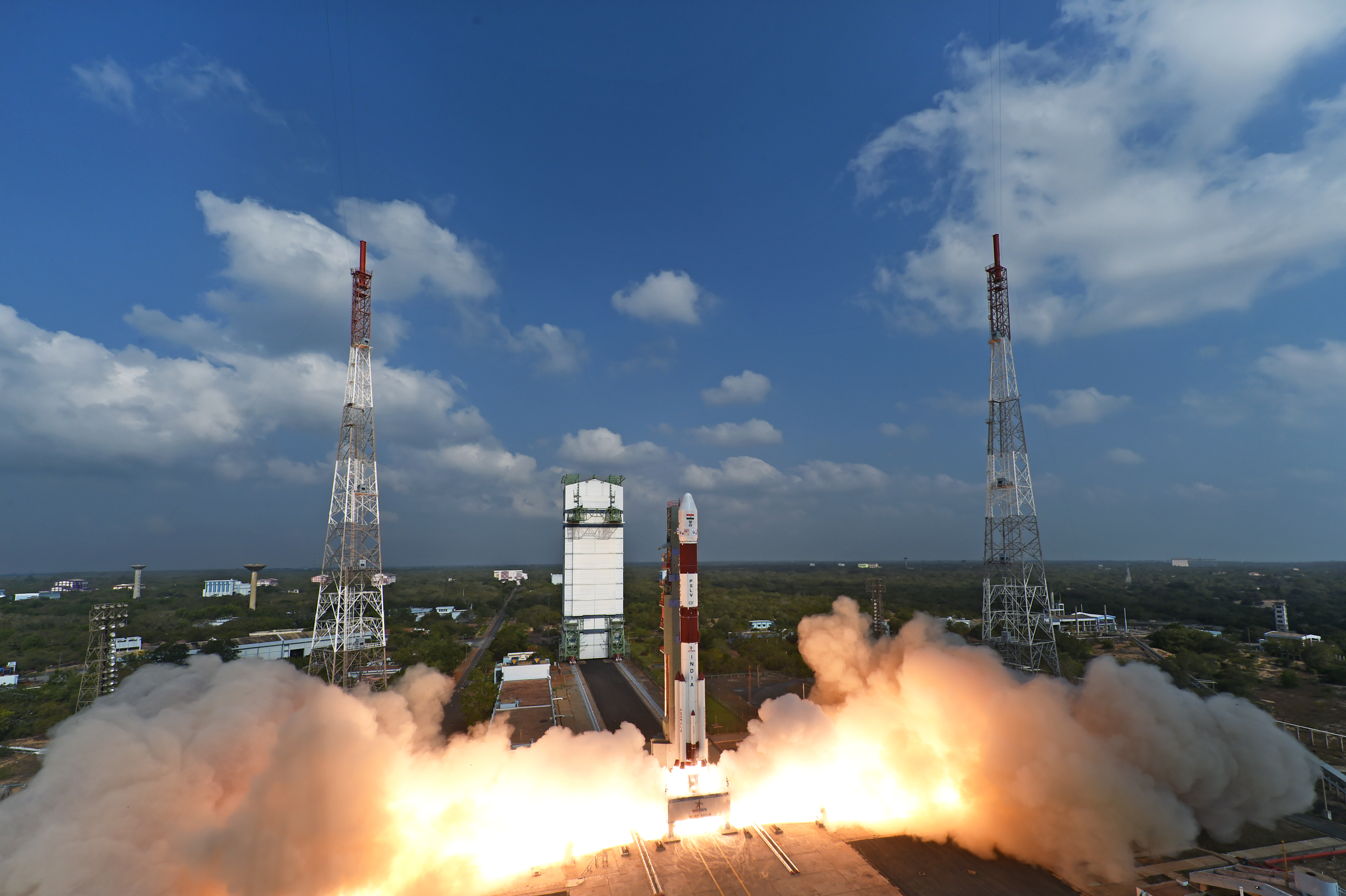
    • The Indian Space Research Organisation recently launched a constellation of 36 broadband satellites developed by OneWeb to Low Earth Orbit.
    • This was the first commercial launch for LVM-3 and the mission is being conducted under an agreement between OneWeb and New Space India Limited (NSIL).
    • Also, the Principal Scientific Adviser Ajay Kumar Sood stated in July 2022 that the government would soon come up with a new space policy to increase private sector participation in the industry.
    • In this context, in this edition of the burning issue, we will be analyzing the Indian Space Industry in detail and suggest what more needs to be done to further improve the industry.

    Vision and Background of the Indian space industry

    • The Indian space program is driven by the vision of Vikram Sarabhai, considered the father of the Indian space program.
    • India’s interest in space travel began in the early 1960s, when scientists launched a Nike-Apache rocket from TERLS, Kerala.
    • The Indian National Committee for Space Research was subsequently set up, which later became the Indian Space Research Organisation (ISRO) functioning under a new independent Department of Space in the 1970s under the Prime Minister of India.
    • India’s space program has impressively evolved for the past 50 years. Throughout the years, ISRO has upheld its mission of bringing space to the service of the common man, and the service of the Nation.
    • Currently, India’s Space Industry is predominantly driven by the national Indian Space Research Organisation (ISRO). The industry includes over 500 private suppliers and other various bodies of the Department of Space in all commercial, research and arbitrary regards.

    Facts about the Indian space industry

    • Among Top 5 nations: In terms of technological capabilities, India ranks among the top 5 space-faring nations of the world.
    • Costing edge over others: India is globally recognized for building low-cost satellites and launch vehicles. The global space economy is estimated at ~US $440 billion.
    • 6th largest market player: As per SpaceTech Analytics, India is the sixth-largest player in the industry internationally having 3.6% of the world’s space-tech companies (as of 2021). The U.S. holds the leader’s spot housing 56.4% of all companies in the space-tech ecosystem. Other major players include the U.K. (6.5%), Canada (5.3%), China (4.7%) and Germany (4.1%).
    • Exponential growth ahead: In 2019, the space industry of India accounted for $7 billion or 2% of the global space industry. Antrix Corporation expects the industry to grow up to $50 billion by 2024 if provided with appropriate policy support.

    Achievements of the Indian space industry

    • Growing budget: India’s total budgetary allocation for FY2022-23 towards the Department of Space was ₹13,700 crore.
    • Startups boom: As per Tracxn data, funding into the sector’s start-ups (in India) nearly tripled to $67.2 million on a year-over-year basis in 2021. There were more than 40 startups in India in early 2021 in various stages of developing their launch vehicles, designing satellites and other allied activities
    • Reliable satellite launcher: By 2019, India had launched more than 300 satellites for various foreign states. ISRO has a record on its name of launching 104 satellites in one go. The recent LVM launch is a further extension of it.
    • Growing Private sector participation: Reforms liberalizing the space sector and nondisclosure agreements came in the late 2010s, leading to the emergence of various private spaceflight companies such as Larsen and Toubro, Godrej aerospace etc.
    • Successful Interplanetary missions: ISRO has launched several interplanetary missions such as the Mars orbiter mission, Chandrayaan 1 and 2. Ambitious missions like Gaganyaan, and Aditya L1 are in pipeline.

    Role of the private sector in the Indian Space Industry

    (A) Initial Growth

    • Over four decades, ISRO continued transferring technologies to small and medium enterprises (SMEs), leading to there being over 500 suppliers of various components in 2017.
    • During 1990’s, The Department of Space actively promoted the growth of the sector, leading to the establishment of the manufacturing of various systems. Large mapping projects for various civilian and military requirements were outsourced by the government, which drove the growth of India’s private space sector. However, the private sector still played a supporting role, while the government continued to dominate the space sector.

    (B) Emergence of startups

    • In the late 2010s, a large number of startups started to emerge throughout the country with their proposals and concepts to develop various satellite technologies and rockets.
    • A range of initiatives to deregulate the private space sector was introduced by Narendra Modi’s cabinet in June 2020, and the Indian National Space Promotion and Authorisation Centre (INSPACe) was established for incubating technology into private firms.
    • Throughout this time, various nondisclosure agreements and tech transfers have been taking place between ISRO and private entities. In February 2020, 35 startups came up in the space sector, of which three focused on designing rockets, 14 on designing satellites, and the rest on drone-based applications and services sector.
    • The number further grew to over 40 in January 2021. Two companies, Skyroot Aerospace and AgniKul Cosmos, have tested their engines and are in the advanced stages of developing their launch vehicles, while others have their launchers in the production pipeline and have launched satellites using ISRO rockets.

    Challenges to the Indian space industry

    • Absence of a framework: The reason for the lack of independent private participation in space includes the absence of a framework to provide transparency and clarity in-laws.
    • Brain drain: Another aspect to throw light on is the extensive brain drain in India, which has increased by 85% since 2005.
    • Policy bottlenecks: Brain drain can be linked to the bottlenecks in policies that create hindrances for private space ventures and founders to attract investors, making it virtually non-feasible to operate in India.
    • Security concerns from private activities: Government worries over knowledge sharing, launch methods, and satellite capabilities have led to a reluctance to allow private actors in the market due to security concerns.
    • Long gestation period: Many approval processes take a long time to complete. Approvals take around a year and a half. This comes at a time when the next three to four years are critical for the sector’s growth.
    • State control: The ISRO is directly controlled by the Department of Space (DOS), which is under the Prime Minister’s Office.
    • Licensing issues: Another regulatory worry is the licensing structure for satellite earth station gateways, which needs to be transformed to make it easier for any satellite operator to set one up.
    • Limited indigenization: Another challenge is promoting indigenous innovation. In the new global climate, the challenge for the country is to continue to benefit from this innovation.
    • Restricted FDI: Presently, FDI in space is allowed under government routes only for satellite establishment and operations. FDI in space is approved by the Government on a case-by-case basis and often this approval takes time.

    Criticisms of Space Programmes

    • For a long, India is known to be making investments in the space arena for social, scientific and security purposes. However, many fundamentalists see investment in space as a waste of money.
    • All previous missions of ISRO are about the race for planetary resources. Unfortunately, it has not planned for any missions to asteroids, an ideal bed for mineral mining.
    • After Chandrayaan-2 failure, there is a danger that future ambitious missions could also end up only as a ‘feel-good program’ with Gaganyaan coming ahead.

    Steps taken to promote the space industry

    • ANTRIX: ISRO’s business branch is called Antrix, which markets ISRO’s space products and technologies to a global audience.
    • Launching of the Indian Space Association (ISpA):  In 2021, the Government of India launched the Indian Space Association (ISpA) to open the Indian space industry to private sectors and start-ups. Several private companies like Larsen & Toubro, Nelco (Tata Group), OneWeb, MapmyIndia, Walchandnagar Industries are founding members of this organization.
    • Establishment of IN-SPACe: The Indian National Space Promotion and Authorisation Centre (IN-SPACe) was mandated with the task of promoting, authorizing and licensing private players to carry out space activities.
    • Establishment of NSIL: New Space India Ltd (NSIL), is mandated to transfer the matured technologies developed by the ISRO to Indian industries.
    • Boost to Atmanirbhar call: This will enhance the diffusion of space technology and boost the space economy within the country, for a resurgent, AatmaNirbhar Bharat. Additionally, it will enable the commercialization of space technology, boost private investments, and prepare the youth as space leaders, and innovations in the sector for the progress of humanity.
    • Increased FDI limit in certain cases: witnessing the change in the approach of the Indian Government towards private player’s involvement, Indian companies will be allowed to invest up to 100% and 70% through FDI with approval of the center in all the streams viz. Upstream, midstream and downstream segments.
    • New Space Activities Bill: As of 2021, a new Space Activities Bill and a space policy are being drafted by NALSAR Centre for Aerospace and Defence laws to regulate space manufacturing and the legal aspects of the industry in India.

    What more needs to be done?

    • Creating a policy and regulatory framework: that is predictable for both ISRO and private firms.
    • Renting ISRO’s facility: Allowing commercial enterprises to rent ISRO testing facilities to test their products and equipment.
    • Improved regulatory clarity: this would result in fewer hurdles to entry for private companies and better synergy between ISRO and private partners.
    • Private companies should be given more incentives: to develop satellites or test rockets, lowering costs and increasing incentives for enterprises to build operational spacecraft.
    • ISRO’s assistance: ISRO should assist the private sector in attracting both domestic and foreign direct investment by offering access to its satellite technology, facilities, and orbital slots (FDI).
    • Need for space legislation in India: India has invested enormous resources in its space program through the ISRO. We need space legislation enabling coherence across technical, legal, commercial, diplomatic and defense goals.

    Conclusion

    • Future readiness is the key to maintaining an edge in technology and ISRO endeavors to optimize and enhance its technologies as the needs and ambitions of the country evolve.
    • Indian space industry thus is at the cusp of major evolution. Strong government handholding and ISRO’s mentorship of startups could play a significant role in the socioeconomic and technological development of India.

    Click and Get your FREE copy of Current Affairs Micro notes             

  • [Burning Issue] China as India’s ‘Frenemy’

    Context

    • China has placed a hold on the proposal to designate Shahid Mahmood as a global terrorist under the 1267 Al Qaeda Sanctions Committee of the UN Security Council. It is the fourth time that China has blocked an India-US proposal in recent months.
    • Some analysts reckon that India and China are fated to remain “frenemies” — entities that share the characteristics of both friends and enemies – and for reasons that have puzzled observers around the world.
    • In this context, in this edition of the burning issue, we will analyze the ‘Frenemy’ relations between the two nations.

    Beginning of India-China Relations

    • The two countries have played up their cultural links-such through the importation of Buddhism into China by wandering Chinese monks more than 1,500 years ago.
    • India and China got independence from the British yoke at the almost same time in the late 1940s. India and China established diplomatic relations on 1st April 1950.
    • India was the first non-socialist country to establish relations with the People’s Republic of China and the catchphrase ‘Hindi Chini Bhai Bhai’ became famous.
    • Both countries attended the Asian-African Conference in which 29 countries participated in Bandung, Indonesia and jointly advocated the Bandung Spirit of solidarity, friendship and cooperation.

    Who is a frenemy?

    • When two countries share interests in multiple arenas such as economic prosperity, regional and global stability, counterterrorism, non-proliferation, energy security, and climate change, but they differ in the ways they pursue those common interests, which creates a constant tension in the relationship, such a pair of countries are called Frenemies in International Relations.
    • For example, India-China, China-Taiwan, China-Japan etc.

    China as a friend: Areas of Cooperation

    Political Relations

    • Border Peace agreement: In 1993, an Agreement on the Maintenance of Peace and Tranquility along the Line of Actual Control (LAC) on the India-China Border Areas was signed to bring stability and substance to bilateral ties. In 2008, the two countries have also extended their strategic and military relations.
    • High-Level Dialogue Mechanism: India and China have also established a High-Level Dialogue Mechanism on Counter-Terrorism and Security.
    • Provincial Leaders Forum: To facilitate exchanges between Indian states and Chinese provinces, States/Provincial Leaders Forum was established.

    Commercial and Economic Relations

    • Investments: China will establish two Industrial Parks in India and expressed its intention to enhance Chinese investment in India. In 2019, Chinese investors invested $6.68 billion in Indian start-ups across 232 deals.
    • Bilateral Trade: The India-China trade is on course to cross USD 100 billion for the second consecutive year as it has gone up to USD 67.08 billion in the first half of this year amid a big surge of Chinese exports.
    • Multiple economic dialogues: Trade and Economic Relationships are shaped through various dialogue mechanisms such as Joint Economic Groups led by the Commerce Ministers of both sides, Strategic Economic Dialogues led by the Vice Chairman of NITI Aayog and the Chairman of National Development and Reform Commission of China.
    • Asian infrastructure and investment bank: India also was a founding member of the China-backed Asian Infrastructure Investment Bank, which plans to be formally established by year’s end and seeks to emulate institutions such as the World Bank and International Monetary Fund. 

    Cultural Relations

    • Movies: India and China have entered into an agreement on the co-production of movies.
    • Kailash yatra ease: MoU was signed to open an additional route for Kailash Mansarovar Yatra through Nathu La.
    • Yoga promotion: Yoga is becoming increasingly popular in China. China was one of the co-sponsors of the UN resolution designating June 21 as the International Day of Yoga

    Education Relations:

    • Education Exchange Programme: India and China signed Education Exchange Programme (EEP), which is an umbrella agreement for educational cooperation between the two countries.
    • Hindi scholarship: Chinese students are also annually awarded scholarships to study Hindi at Kendriya Hindi Sansthan, to learn Hindi

    Indian Community

    • Students and professionals: Presently around 35,500 Indians are staying in China, and students and working professionals form a major part of it.
    • PICFA: Pondicherry India China friendship association is an NGO dedicated to developing people-to-people relations between India and China in the areas of education, culture and tourism.

    Multilateral cooperation

    • BRICS, SCO and RIC grouping: Both are members of the BRICS grouping of emerging economies, which is now establishing a formal lending arm, the New Development Bank. Also, both nations are members of the Shanghai Cooperation Organisation and Russia-India-China informal dialogue minilateral.
    • Voice for Developing nations: both nations serve as the voice of the developing countries at WTO and climate change negotiations.

    China as enemy

    • Arunachal affinity of China: Beijing recently renamed 15 places in Arunachal Pradesh, following the six it had done in 2017. China justifies the renaming as being done based on its historical, cultural and administrative jurisdiction. In January 2022, Beijing’s new land border law came into force, which provides the People’s Liberation Army (PLA) with full responsibility to take steps against “invasion, encroachment, infiltration, provocation” and safeguard Chinese territory.
    • Doklam and Galwan incidents: in 2017, where, for 70 days, Indian and Chinese troops faced off on the doklam plateau, it is that it has led Chinese President Xi Jinping and Indian Prime Minister Narendra Modi to institutionalize their informal summits to avoid a repeat performance of these types of confrontations.
    • Belt Road Initiative: India has objected to this, since its inception on grounds of violating its sovereignty pointing to China Pakistan Economic Corridor.
    • Beijing’s non-reciprocation of goodwill: India’s support to China on global issues has not led to Beijing’s reciprocation for instance: China opposed India’s permanent membership to the UN Security Council and entry into NSG, The U.N. Security Council as a permanent member.
    • UN Blockings: Blocking of U.N. listings of Pakistani terrorists at the UNSC and also bringing resolution in UNSC against India’s Article 370 abrogation move.
    • Huge Trade deficit: India faces a trade imbalance heavily in favor of China. In 2017-18, the trade deficit has gone wide to US$62.9 billion in China’s favor.
    • Border disputes: Two countries failed to resolve their border dispute and steadily established military infrastructure along border areas Indian media outlets have repeatedly reported Chinese military incursions into Indian territory
    • China’s presence in IOR: China has expressed concerns about Indian military and economic activities in the disputed South China Sea. The same way India is also concerned about rising Chinese activities in the Indian Ocean.
    • Pakistan’s all-weather support: China’s strong strategic bilateral relations with Pakistan and other neighboring countries like Nepal and Bhutan are the cause of concern as these countries act as buffer states.

    What are the options for India to ‘manage’ China: Way forward

    • Inevitable Race: The prevailing tension on the China-India border is a symptom of the broader strategic competition between the two Asian neighbors.
    • Quad grouping: Immediately after the clashes, India leaned toward the Quad a grouping of the United States, Australia, Japan, and India with multiple summit meetings and other engagements. Until that point, India was unwilling to refer to the Quad as the Quad, instead using the cumbersome India-Australia-Japan-United States grouping.
    • Equal seriousness: Both sides should treat the military escalation in eastern Ladakh with equal seriousness.
    • Armed coexistence: Even after the resolution of the present standoff in eastern Ladakh, both sides may be in a prolonged period of armed coexistence as a new normal. As the forces on both sides are likely to be relatively balanced, it would be advantageous for both to return to the agreements and understandings from 1993 onward and improve upon them. Clarifying the LAC is a crucial step in this effort.
    • Address trade imbalance: India has flagged the unsustainable trade imbalance at the front and center of the relationship, and this has gone unaddressed. China will need to work on resolving the trade deficit with India. At any rate, decoupling will happen selectively, in the same way, and for the same reasons that China is choosing to decouple from the United States. A balanced trade and economic relationship might lay a solid foundation for future relations, given the size of both economies.
    • Dialogue is necessary: Better understanding of each other’s regional initiatives through open dialogue is important to build trust. The Indo-Pacific vision is as much a developmental necessity for India as the BRI may be for China. Part of building trust must be an open discussion on each other’s intentions in key regions South Asia and the northern Indian Ocean and East Asia and the western Pacific as well as respect for each other’s special positions in the western Pacific and northern Indian Oceans.
    • Protect the core interest: The two sides would need to accommodate the legitimate interests of the other side on key partnerships: China’s with Pakistan and India’s with the United States. These may not be desirable, but in the current circumstances neither will give up its partners, and both India and China could talk through a modus vivendi on the red lines of concern.

    EAM S. Jaishankar’s Suggestion to deal with China

    The External Affairs Minister suggested “Three Mutuals” and “Eight Broad Propositions” as a way forward for the relationship.

    Three mutuals

    • Mutual Respect and Mutual Sensitivity to each other concerns and Mutual Interests to cooperate are the “determining factors” for India-China relations to grow.

    Eight Major propositions

    • Adhering to commitment: The first proposition was that agreements already reached must be adhered to in their entirety, both in letter and in spirit.
    • Respect for LAC: Both sides also needed to strictly observe and respect the LAC, and any attempt to unilaterally change the status quo was completely unacceptable.
    • Maintaining peace and tranquillity: Peace and tranquillity in border areas were the basis for the development of the relationship in other domains. If that was disturbed, he said, the rest of the relationship would be too.
    • Broader partnership: The fourth proposition was that while both remain committed to a multipolar world, they should recognize that a multipolar Asia was one of its essential constituents.
    • Reciprocity: While each state had its interests, concerns and priorities, sensitivities to them could not be one-sided and relations were reciprocal in nature. As rising powers, neither should ignore the other’s set of aspirations.
    • Divergences management: While both sides had made a common cause on development and economic issues and common membership of plurilateral groups was a meeting point, there were divergences when it came to interests and aspirations.
    • Civilizational ties: The last proposition was that as civilizational states, India and China must always take the long view.
    • Cooperation and competition: Even before the events of 2020, the relationship had reflected a duality of cooperation and competition.

    Conclusion

    • India-China relations, though occasionally showing signs of peace and cooperation, have often been afflicted by tension and mistrust. With the potential to make big contributions to regional peace and development, these two Asian powers have, by design or accident, themselves been the sources of regional tension and insecurity to some extent.
    • The two countries are standing at a crossroads, and this might be the final chance to take the path to the coexistence of cooperation and competition. If not, a new phase of antagonistic rivalry may be starting, with the countries sliding into possible confrontation as the strategic periphery of China collides with the strategic backyard of India in the Indian Ocean region.
    • Therefore, China and India should be “Good Neighbors, Good Friends,” as both countries are “important engines of the world economic growth.” By building on that theme, the two countries should “enhance dovetailing of the two countries’ development strategies” to build a “manufacturing partnership.”
    • As Kissinger once said: ‘There are no permanent friends or enemies in international relations, only interests. This is the single most important lesson India should keep in mind if it wants to keep its ‘frenemy’ in check.
  • [Sansad TV] Diplomatic Dispatch: India-Australia Ties

    Context

    As External Affairs Minister Dr S Jaishankar has just completed a visit to Australia after attending the annual Foreign Ministers’ Framework Dialogue. In this article we take a deep dive into India’s relationship with Australia.

    India-Australia Relations: A Backgrounder

    • The India-Australia bilateral relationship has undergone evolution in recent years, developing along a positive track, into a friendly partnership.
    • The two nations have much in common, underpinned by shared values of a pluralistic, Westminster-style democracy, Commonwealth traditions, expanding economic engagement etc.
    • Several commonalities include strong, vibrant, secular and multicultural democracies, free press, independent judicial system and English language.

    Historical Perspective

    • The historical ties between India and Australia started immediately following European settlement in Australia from 1788.
    • All trade, to and fro from the penal colony of New South Wales was controlled by the British East India Company through Kolkata.
    • India and Australia established diplomatic relations in the pre-Independence period, with the establishment of India Trade Office in Sydney in 1941.
    • The end of the Cold War and simultaneously, India’s decision to launch major economic reforms in 1991 provided the first positive move towards development of bilateral ties.

    Various dimensions of ties

    [A] Political partnership

    • Both the countries are members of G-20, ASEAN Regional Forum (ARF), IORA (Indian Ocean Rim Association), Asia Pacific Partnership on Climate and Clean Development, East Asia Summit and the Commonwealth.
    • Australia has been extremely supportive of India’s quest for membership of the APEC (Asia Pacific Economic Cooperation).
    • Australia whole-heartedly welcomed India’s joining of the MTCR (Missile Technology Control Regime).

    [B] Trade and Economy

    • India is the 5th largest trade partner of Australia with trade in goods and services.
    • Two-way trade between India and Australia was worth A$24.3 billion ($18.3 billion) in 2020, up from just $13.6 billion in 2007, according to the Australian government.
    • After a series of attempts, in 2016, Australia opened the door for uranium exports to India.
    • An Australia-India Strategic Research Fund (AISRF) which was established in 2006, supports collaboration between scientists in India and Australia on cutting-edge research.

    [C] Cultural ties

    • There is a longstanding people-to-people ties, ever increasing Indian students coming to Australia for higher education.
    • Growing tourism and sporting links, especially Cricket and Hockey, have played a significant role in further strengthening bilateral relations between the two countries.
    • India is one of the top sources of skilled immigrants to Australia.
    • The number of Indian students continue to grow with approximately 105,000 students presently studying in Australian universities.
    • After England, India is the second largest migrant group in Australia in 2020.

    [D] Strategic Partnership

    • In 2009, India and Australia established a ‘Strategic Partnership’, including a Joint Declaration on Security Cooperation which has been further elevated to Comprehensive Strategic Partnership in 2020.
    • The Mutual Logistics Support Agreement has been signed during the summit that should enhance defence cooperation and ease the conduct of large-scale joint military exercises.
    • There is a technical Agreement on White Shipping Information Exchange.
    • Both nations conduct bilateral maritime exercise AUSINDEX. In 2018, Indian Air Force participated for the first time in the Exercise Pitch Black in Australia.
    • Foreign and Defence Ministers of both countries agreed to meet in a ‘2+2’ format biennially.
    • The first-ever Quad Leaders’ Virtual Summit held on 12 March 2021 saw the participation of Prime Ministers of India, Australia, Japan and President of USA.
    • A Civil Nuclear Cooperation Agreement between the two countries was signed in September 2014 during the visit of then-PM Tony Abbott to India.

    Significance of the ties

    • COVID Management: Australia is one of the few countries that has managed to combat COVID-19 so far through “controlled adaptation” by which the coronavirus has been suppressed to very low levels.
    • STEM: From farming practices through food processing, supply and distribution to consumers, the Australian agribusiness sector has the desired R&D capacity, experience and technical knowledge.
    • Natural resources: Australia is rich in natural resources that India’s growing economy needs. It also has huge reservoirs of strength in higher education, scientific and technological research.
    • Alliance with US: The two countries also have increasingly common military platforms as India’s defence purchases from the US continue to grow.
    • Affinity with ASEAN: Australia has deep economic, political and security connections with the ASEAN and a strategic partnership with one of the leading non-aligned nations, Indonesia.
    • Containing China: The Indo-Pacific region has the potential to facilitate connectivity and trade between India and Australia. Both nations can leverage their equation in QUAD to contain China.

    International cooperation

    • Support at UNSC: Australia supports India’s candidature in an expanded UN Security Council.
    • APEC: Australia is an important player in APEC and supports   India’s membership in the organization. In 2008, Australia became an Observer in SAARC.

    Some irritants in ties

    • Trade imbalance: India’s trade deficit with Australia has been increasing since 2001-02 due to India-Australia Free Trade Agreement. It is also a contentious issue in the ongoing RCEP negotiations which India left.
    • High tariff on agri products in India: India has a high tariff for agriculture and dairy products which makes it difficult for Australian exporters to export these items to India.
    • Non-tariff barriers in Australia: At the same time, India facesnon-tariff barriers and its skilled professionals in the Australian labour market face discrimination.
    • Visa Policy: India wants greater free movement and relaxed visa norms for its IT professionals, on which Australia is reluctant.
    • Future of QUAD: Australian lobby has sparked speculation over the fate of the Quadrilateral Consultative Dialogue (the ‘Quad) involving India, Australia, Japan and the United States.
    • Nuclear reluctance: Building consensus on non-nuclear proliferation and disarmament has been a major hurdle given India’s status as a nuclear power.    
    • Racism against Indians: Increasing Racist attacks on Indians in Australia has been a major issue.  

    Way forward

    • Upgradation of 2+2 format: It is prudent too for New Delhi and Canberra to elevate the ‘two plus two’ format for talks from the Secretary level to the level of Foreign and Defence Ministers.
    • Removal of trade barriers: Both nations need to resolve disputes at the WTO with regard to the Australian sector can act as a serious impediment.
    • Balancing China: An ‘engage and balance’ China strategy is the best alternative to the dead end of containment.

    Conclusion

    • Given the changing geopolitics, both Canberra and New Delhi are keen to move beyond mere rhetoric and build a robust partnership
    • The key is to keep the Australia story thriving in India, and India story thriving in Australia on a consistent basis in public memory.
    • This involves a holistic multi-stakeholder strategy and approach which deepens understanding and appreciation of each other.

    UPSC 2023 countdown has begun! Get your personal guidance plan now! (Click here)