💥Join UPSC 2027,2028 Mentorship (July Batch) + XFactor Notes & Microthemes PDF

Author: CD Staff

  • [Sansad TV] Perspective: Record FDI Inflow

    UPSC 2023 countdown has begun! Get your personal guidance plan now! (Click here)

    Context

    • India rapidly emerges as a preferred investment destination with Foreign Direct Investment (FDI) inflows increasing 20-fold in the last 20 years.
    • Highest ever annual FDI inflow of 83.57 billion US Dollars were recorded in the Financial Year 2021-22.
    • This figure stood at 45.15 billion US Dollars.

    Major feats achieved this year

    • In terms of investor countries of FDI Equity inflow, Singapore is at the top with 27%, followed by the US with 18% and Mauritius with 16% for the FY 2021-22.
    • Computer Software & Hardware’ has emerged as the top recipient sector of FDI Equity inflow during this period with around 25% share followed by Services Sector and Automobile Industry with 12% each.
    • With 53 % Karnataka has received the majority share of FDI equity in the `Computer Software & Hardware’ sector.

    Significance of rising FDI

    • This is a testament of India’s status among global investors.
    • It also signifies political, economic and social stability

    What is Foreign Direct Investment (FDI)?

    • An FDI is an investment in the form of a controlling ownership in a business in one country by an entity based in another country.
    • It is thus distinguished from a foreign portfolio investment by a notion of direct control.
    • FDI may be made either “inorganically” by buying a company in the target country or “organically” by expanding the operations of an existing business in that country.
    • Broadly, FDI includes “mergers and acquisitions, building new facilities, reinvesting profits earned from overseas operations, and intra company loans”.
    • In a narrow sense, it refers just to building a new facility, and lasting management interest.

    Features of FDI

    • Any investment from an individual or firm that is located in a foreign country into a country is FDI.
    • Generally, FDI is when a foreign entity acquires ownership or controlling stake in the shares of a company in one country, or establishes businesses there.
    • It is different from foreign portfolio investment where the foreign entity merely buys equity shares of a company.
    • In FDI, the foreign entity has a say in the day-to-day operations of the company.
    • FDI is not just the inflow of money, but also the inflow of technology, knowledge, skills and expertise.
    • It is a major source of non-debt financial resources for the economic development of a country.

    FDI in India

    • Foreign investment was introduced in 1991 under Foreign Exchange Management Act (FEMA), driven by then FM Manmohan Singh.
    • Economic liberalisation started in India in the wake of the 1991 crisis and since then, FDI has steadily increased in the country.
    • India, today is a part of top 100-club on Ease of Doing Business (EoDB) and globally ranks number 1 in the Greenfield FDI ranking.

    There are two routes by which India gets FDI.

    1) Automatic route: By this route, FDI is allowed without prior approval by Government or RBI.

    2) Government route: Prior approval by the government is needed via this route. The application needs to be made through Foreign Investment Facilitation Portal, which will facilitate the single-window clearance of FDI application under Approval Route.

    • India imposes a cap on equity holding by foreign investors in various sectors, current FDI in aviation and insurance sectors is limited to a maximum of 49%.
    • In 2015 India overtook China and the US as the top destination for the Foreign Direct Investment.

    Sectors that come under the ‘ 100% Automatic Route’ category are

    • Agriculture & Animal Husbandry, Air-Transport Services (non-scheduled and other services under civil aviation sector)
    • Airports (Greenfield + Brownfield),
    • Asset Reconstruction Companies,
    • Auto-components, Automobiles,
    • Biotechnology (Greenfield),
    • Broadcast Content Services (Up-linking & down-linking of TV channels, Broadcasting Carriage Services,
    • Capital Goods, Cash & Carry Wholesale Trading (including sourcing from MSEs), Chemicals, Coal & Lignite, Construction Development,
    • Construction of Hospitals,
    • E-commerce Activities, Electronic Systems,
    • Food Processing, Gems & Jewellery, Healthcare, Industrial Parks, IT & BPM, Leather, Manufacturing, Mining & Exploration of metals & non-metal ores, Other Financial Services,
    • Pharmaceuticals, Plantation sector
    • Ports & Shipping, Railway Infrastructure, Renewable Energy, Roads & Highways,
    • Single Brand Retail Trading, Textiles & Garments,
    • Thermal Power,
    • Tourism & Hospitality and
    • White Label ATM Operations.

    Sectors that come under up to 100% Automatic Route’ category are

    • Infrastructure Company in the Securities Market: 49%
    • Insurance: up to 49%
    • Medical Devices:up to 100%
    • Pension: 49%
    • Petroleum Refining (By PSUs): 49%
    • Power Exchanges: 49%

    Sectors that come under the ‘up to 100% Government Route’ category are– 

    • Banking & Public sector: 20%
    • Broadcasting Content Services: 49%
    • Core Investment Company: 100%
    • Food Products Retail Trading: 100%
    • Mining & Minerals separations of titanium bearing minerals and ores: 100%
    • Multi-Brand Retail Trading: 51%
    • Print Media (publications/ printing of scientific and technical magazines/ specialty journals/ periodicals and facsimile edition of foreign newspapers): 100%
    • Print Media (publishing of newspaper, periodicals and Indian editions of foreign magazines dealing with news & current affairs): 26%
    • Satellite (Establishment and operations): 100%

    FDI prohibition

    There are a few industries where FDI is strictly prohibited under any route. These industries are

    • Atomic Energy Generation
    • Any Gambling or Betting businesses
    • Lotteries (online, private, government, etc.)
    • Investment in Chit Funds
    • Nidhi Company
    • Agricultural or Plantation Activities (although there are many exceptions like horticulture, fisheries, tea plantations, Pisciculture, animal husbandry, etc.)
    • Housing and Real Estate (except townships, commercial projects, etc.)
    • Trading in TDR’s
    • Cigars, Cigarettes, or any related tobacco industry

    Benefits offered by FDI

    • Employment generation: FDI boosts the manufacturing and services sector which results in the creation of jobs and helps to reduce unemployment rates in the country.
    • Economic growth: Increased employment translates to higher incomes and equips the population with more buying powers, boosting the overall economy of a country.
    • Human capital development: Skills that employees gain through training and experience can boost the education and human capital of a specific country. Through a ripple effect, it can train human resources in other sectors and companies.
    • Technology boost: The introduction of newer and enhanced technologies results in company’s distribution into the local economy, resulting in enhanced efficiency and effectiveness of the industry.
    • Increase in exports: Many goods produced by FDI have global markets, not solely domestic consumption. The creation of 100% export oriented units help to assist FDI investors in boosting exports from other countries.
    • Exchange rate stability: The flow of FDI into a country translates into a continuous flow of foreign exchange, helping a country’s Central Bank maintain a prosperous reserve of foreign exchange which results in stable exchange rates.
    • Improved Capital Flow: Inflow of capital is particularly beneficial for countries with limited domestic resources, as well as for nations with restricted opportunities to raise funds in global capital markets.
    • Creation of a Competitive Market: By facilitating the entry of foreign organizations into the domestic marketplace, FDI helps create a competitive environment, as well as break domestic monopolies.  
    • Climate mitigation: The United Nations has also promoted the use of FDI around the globe to help combat climate change

    Limitations created by FDI

    • Hindrance of domestic investment: Sometimes FDI can hinder domestic investment. Because of FDI, countries’ local companies start losing interest to invest in their domestic products.
    • Risk from political changes: Other countries’ political movements can be changed constantly which could hamper the investors.
    • Negative exchange rates: FDI can sometimes affect exchange rates to the advantage of one country and the detriment of another.
    • Higher costs: When investors invest in foreign counties, they might notice that it is more expensive than when goods are exported. Oftentimes, more money is invested into machinery and intellectual property than in wages for local employees.
    • Economic non-viability: Considering that FDI may be capital-intensive from the point of view of the investor, it can sometimes be very risky or economically non-viable.
    • Expropriation: Constant political changes can lead to expropriation. In this case, those countries’ governments will have control over investors’ property and assets.
    • Modern-day economic colonialism: Many third-world countries, or at least those with a history of colonialism, worry that foreign direct investment would result in some kind of modern-day economic colonialism, which exposes host countries and leave them vulnerable to foreign companies’ exploitation.
    • Poor performance: Multinationals have been criticized for poor working conditions in foreign factories.

    Recent amendments in 2020

    • The govt. has amended para 3.1.1 of extant FDI policy as contained in Consolidated FDI Policy, 2017.
    • In the event of the transfer of ownership of any existing or future FDI in an entity in India, directly or indirectly, resulting in the beneficial ownership, such subsequent change in beneficial ownership will also require Government approval.

    The present position and revised position in the matters will be as under:

    Present Position

    • A non-resident entity can invest in India, subject to the FDI Policy except in those sectors/activities which are prohibited.
    • However, a citizen of Bangladesh or an entity incorporated in Bangladesh can invest only under the Government route.
    • Further, a citizen of Pakistan or an entity incorporated in Pakistan can invest, only under the Government route, in sectors/activities other than defence, space, atomic energy and sectors/activities prohibited for foreign investment.

    Revised Position

    • A non-resident entity can invest in India, subject to the FDI Policy except in those sectors/activities which are prohibited.

    [spot the difference]

    • However, an entity of a country, which shares a land border with India or where the beneficial owner of investment into India is situated in or is a citizen of any such country, can invest only under the Government route.
    • Further, a citizen of Pakistan or an entity incorporated in Pakistan can invest, only under the Government route, in sectors/activities other than defence, space, atomic energy and sectors/activities prohibited for foreign investment.

    Various policy initiatives

    The government has taken plenty of initiatives to attract FDI in India:

    • The government has amended rules of the Foreign Exchange Management Act (FEMA), allowing up to 20% FDI in the insurance company LIC through the automatic route.
    • The Government of India is considering easing scrutiny on certain FDI from countries that share a border with India.
    • The implementation of measures like PM Gati Shakti, single window clearance and GIS-mapped land bank are expected to push FDI inflows in 2022.
    • The government is likely to introduce at least three policies as part of the Space Activity Bill in 2022. This Bill is expected to clearly define the scope of foreign FDI in the Indian space sector.
    • In September 2021, the Union Cabinet announced that to boost the telecom sector, they’ll allow 100% FDI via the automatic route in, up from the previous 49%.
    • In August 2021, the government amended the Foreign Exchange Management (non-debt instruments) Rules, 2019, to allow the 74% increase in FDI limit in the insurance sector.
  • [Burning Issue] Sex Work as a Profession

    Context

    • In a significant order recognising sex work as a “profession”, the Supreme Court has directed that police should neither interfere nor take criminal action against adult and consenting sex workers.
    • A recent Bollywood movie is also nowadays perceived as an ode to sex workers honouring their struggle and spirit.

    Sex Work in India

    • It is said that sex work is the oldest profession in the world.
    • In India, their presence can be dated back to ancient times with scriptures mentioning their presence.
    • In later times, such women were considered the wives of a temple deity or a Devdasi, who saw their god in all their lovers.

    So, where does India stand?

    • Prostitution is not illegal in our country, but soliciting and public prostitution are.
    • Owning a brothel is also illegal, but because places like GB Road are already in place, these laws are rarely enforced.

    Legality check

    • According to the Indian Penal Code (IPC), prostitution in its broader sense is not really illegal per se.
    • But there are certain activities which constitute a major part of prostitution that are punishable under certain provisions of the act, which are:
    1. Soliciting prostitution services in public places
    2. Carrying out prostitution activities in hotels
    3. Indulging in prostitution by arranging for a sex worker
    4. Arrangement of a sexual act with a customer

    Sex Work, not Prostitution: Making the difference

    • Sex workers are adults who receive money or goods in exchange for consensual sexual services or erotic performances, either regularly or occasionally.
    • The term “sex worker” recognizes that sex work is work.
    • Prostitution, on the other hand, has connotations of criminality and immorality.
    • Many people who sell sexual services prefer the term “sex worker” and find “prostitute” demeaning and stigmatizing, which contributes to their exclusion from health, legal, and social services.

    How did the term ‘Prostitution’ materialized in India?

    • In the 1800s, it is reported that the British military established and maintained brothels for its troops to use across India.
    • A report by the BBC states that the girls, many in their early teens from poor, rural Indian families, were recruited and paid directly by the military, which also set their prices.
    • The British have long gone, but the earned infame continues in the country at prime locations of major cities such as GB Road (New Delhi), Budhwar Peth (Pune), Kamathipura (Mumbai) etc.
    • While some estimate that there are around 8,00,000 sex workers in India, the actual number could be as high as 20 lakh across the country.

    Perspectives on Sex Work

    Perspectives on sex workers’ rights generally fall into two categories.

    (1) Feminist perspective

    • It assumes that all people involved in sex work have been coerced, bribed, blackmailed or forced into the trade.
    • No woman could “choose” to be in sex work, and making money from sex thus becomes synonymous with sexual exploitation.
    • Following this perspective, the only approach to giving sex workers their rights is to “free” them from the flesh trade.

    (2) Legal-rational (Modern) perspective

    • It perceives sex work as legitimate business and expects to be treated as such.
    • Viewing sex as business provides a basis for organizing to solve many of the problems associated with commercial sex work.
    • They constitute an integral part of India’s informal sector economy.

    Various issues faced by Sex Workers

    (1) Various violence faced

    • Physical violence: They are often subjected to physical force such as- being slapped, pushed, shoved, hit, being kicked, dragged, beaten up and mutilation of genitals.
    • Sexual violence: Rape, gang rape, sexual harassment, being physically forced or psychologically intimidated to engage in sex or subjected to sex acts against one’s will or that one finds degrading or humiliating.
    • Psychological violence: Being insulted by labelling derogatory names; being humiliated or belittled in front of other people; being confined or isolated from family or friends; being threatened with harm to oneself or someone one cares about; verbal abuse etc.

    (2) Lifetime issues

    • Stigma and Marginalization: Sex work is not treated as work, but as a dirty and immoral lifestyle threatening to taint the “innocent” public.
    • Lack of access to justice: Their uncertain status in law result in judgments that often mark sex-workers as criminals and repeat offenders.
    • Social and civil exclusion: For sex workers, the State is an instrument of violence; feared, rather than seen as protectors of rights.  
    • Identity crisis: Most sex workers hide their identity and origin. They are often raided from their premises and are unable to return to their residences.
    • Denial of basic amenities: Due to this discrimination, women in sex work have been denied safety, proper healthcare, education and, most importantly, the right to practice the business of making money from sex.
    • Risks of violence: People in sex work are not only at a higher risk for violence, but they are also less likely to get protection from the police—often the very perpetrators of this violence.
    • Marginalization: Illiteracy, ignorance and fear of the medical establishment make it difficult for women to access healthcare.

    (3) Human-rights abuses

    Human-rights violations that should be considered in conjunction with violence against sex workers are:

    1. Money extortion by Police and Goons
    2. Denied or refused food or other basic necessities
    3. Refused or cheated of salary, payment or money that is due to the person
    4. Forced to consume drugs or alcohol
    5. Arbitrarily stopped, subjected to invasive body searches or detained by police
    6. Arbitrarily detained or incarcerated in police stations, detention centres and rehabilitation centres without due process
    7. Refused or denied health-care services
    8. Subjected to coercive health procedures such as forced STI and HIV testing, sterilization, abortions
    9. Deprived of sleep by force

    Why is it a vicious trap?

    • The stigma against a woman in sex work is not limited to the woman herself; it carries down to her children, regardless of their own professions or lifestyles.
    • Children of sex workers repeatedly report discrimination, ostracization and isolation felt on account of their mothers’ work.
    • Many are embarrassed by their home lives.
    • This has had significant effects on their education, as the drop-out rate in this community is particularly high.
    • Children abandon school for myriad reasons, ranging from exam performance to harassment by teachers and classmates.
    • Undoubtedly this harassment leads to lower self-esteem and a lack of motivation in school.

    Debunking myths about Sex Work

    Popular media fuels the image of women as either overly sexual outcastes who threaten the very structure of Indian family life. Indian laws and policies regarding sex work are crafted from a moralistic standpoint and people involved in sex work are defined by—and treated as— their “immoral” profession.

    In fact, women in sex work cannot be put into a box.

    • While there are certainly victims of trafficking in sex work today, the majority of women in sex work consent to doing it.
    • They have decided that making money from sex is a lucrative option for them and their families.
    • But traditionalists cannot divorce sex from its sacred and religious implications. Tawaif and Devdasi system is a testimony to this.

    Why sex work is not recognized/promoted in India?

    • A victimless crime: Prostitution creates a setting whereby crimes against men, women, and children become a commercial enterprise. It is an assault when he/she forces a prostitute to engage in sex scenes.
    • Evils of institutionalizing: Even with the decriminalization of prostitution, women and even children can still suffer from violence and physical abuse. People who are into this profession are prone to rape.  
    • Sexually transmitted diseases: Even if a worker is being tested every week for HIV, she will test negative for at least the first 4-6 weeks and possibly the first 12 weeks after being infected. This means that she can be a silent vector of the deadly virus.
    • Encourage human trafficking: Human trafficking, especially of girl children, is rampant in our country. With poverty driving some parents to sell their kids to sexual predators is alarming and if prostitution will be legal, more children will be coerced to be sex workers.

    Various policy moves

    (1) Ujjwala Scheme

    • The Ministry of Women and Child Development implements the Ujjawala Scheme.
    • It is a comprehensive scheme for prevention of trafficking and rescue, rehabilitation and re-integration of victims of trafficking for commercial sexual exploitation.
    • The protective and rehabilitative homes provide basic amenities such as food, clothing, medical care, legal aid, education for rescued children and vocational training to provide them alternate livelihood options.

    (2) Protection against forceful sex work

    • The Immoral Traffic (Prevention) Act, 1986 is an amendment of the original act.
    • As per this act, prostitutes are to be arrested if they are found soliciting their services or seducing others.
    • Furthermore, call girls are prohibited from making their phone numbers public.
    • They can be punished for up to 6 months along with penalties if found doing so.

    (3) Constitutional safeguard

    Article 23 of the Indian Constitution, amended in 2014, includes the following provisions:

    1. Prohibition of human trafficking and forced labour.
    2. Traffic in human beings and bears and other similar forms of forced labour are prohibited and any contravention of this provision shall be an offence punishable in accordance with the law.
    3. Nothing in this article precludes the State from imposing compulsory service for public purposes, and the State shall not discriminate solely on the basis of religion, race, caste, or class, or any combination thereof, in imposing such service.

    Why they are still excluded in India?

    • No documentation of socio-economic status: Stigma related to their work and identity and the migratory nature of work prevents sex workers from accessing identification documents, essential to accessing entitlements. They are yet to have Aadhaar Cards.
    • Denial of formal education: Residence proof, father’s name and caste, and the ration card are some documents required for getting their children registered in schools.
    • Food insecurity: The Public Distribution System (PDS), meant for people below the poverty line to access food items cheaply, needs supporting proof of sex workers being below poverty line.
    • Denial of safe environment and labour protection: Sex work happens in informal settings and is an occasional form of income or a long term occupation. This includes access to benefits, legal redress for workplace grievances, adequate health and safety regulations.

    Recent Supreme Court Directive: Key Takeaways

    (1) Recognition to profession and personal dignity

    • Sex Work is a profession whose practitioners are entitled to dignity and equal protection under law.
    • Criminal law must apply equally in all cases, on the basis of ‘age’ and ‘consent’.
    • It need not be gainsaid that notwithstanding the profession, every individual in this country has a right to a dignified life under Article 21 of the Constitution, the court observed.
    • The order was passed after invoking special powers under Article 142 of Constitution.

    (2) Cautions to Police

    • It is clear that the sex worker is an adult and is participating with consent, the police must refrain from interfering or taking any criminal action.
    • The Bench ordered that sex workers should not be “arrested or penalised or harassed or victimised” whenever there is a raid on any brothel.
    • Since voluntary sex work is not illegal and only running the brothel is unlawful.
    • Basic protection of human decency and dignity extends to sex workers and their children, the court noted.
    • A child of a sex worker should not be separated from the mother merely on the ground that she is in the sex trade, the court held.
    • Further, if a minor is found living in a brothel or with sex workers, it should not be presumed that the child was trafficked.

    (3) Taking cognisance of sexual crimes against sex workers

    • The court ordered the police to not discriminate against sex workers who lodge a criminal complaint of offence committed against them is of a sexual nature.
    • Sex workers can also be victims of sexual assault should be provided every facility including immediate medico-legal care.
    • The court said media should take “utmost care not to reveal the identities of sex workers, during arrest, raid and rescue operations.

    What will change if the Policymakers endorse the Court’s direction?

    • Sex workers will be accorded equal legal protection.
    • If a sex worker reports a criminal/sexual or other type of offence, the police will take it seriously and act in accordance with the law.
    • If a brothel is raided, the sex workers involved will not be arrested, penalised, harassed, or victimised.
    • Any sex worker who is a victim of sexual assault will be given all of the same services as a survivor of sexual assault, including immediate medical attention.
    • Provisions similar to those of Transgenders will be extended to sex workers.

    Sex work in other countries

    Some countries choose to outright ban the practice, while others have attempted to regulate prostitution and provide health and social benefits to sex workers.

    Here are a few examples of countries where prostitution is legal:

    • New Zealand: Prostitution has been legal since 2003. There are even licenced brothels operating under public health and employment laws, and they get all the social benefits.
    • France: Prostitution is legal in France, though soliciting in public is still not allowed.
    • Germany: Prostitution is legalised and there are proper state-run brothels. The workers are provided with health insurance, have to pay taxes, and they even receive social benefits like pensions.
    • Greece: The sex workers get equal rights and have to go for health checkups as well.
    • Canada: Prostitution in Canada is legal with strict regulations.

    Way forward

    • Decriminalization: It is a prerequisite to ensure the physical and emotional inviolability of sex workers, their right to life, right to freedom of labour, health and reproductive and sexual rights.
    • Trafficking and should not be conflated with sex work:  Trafficking of Adult Persons and Trafficking of Children should be dealt with under two separate laws to ensure that consenting adults are not infantilised and children are given justice.
    • Rehabilitation with consent: Shut down compulsory detention or rehabilitation centres for people involved in sex work. Instead, provide sex workers with evidence-based, voluntary, community empowerment services.
    • Participation in policy making: Ensure participation of sex work organisations in drafting/ amending laws, policies and programs relevant to them and in its eventual implementation process as the govt did for Transgenders.
    • Policing reforms: Sensitivity to issues faced by sex workers should be made a part of training for police personnel, public prosecutors and the judiciary in partnership with community organisations of sex workers.
    • Human rights protection: Strengthen National Human Rights Commission (NHRC) and increase their accountability to respond to complaints or initiate suo moto action reports of violence against sex workers.
    • Access to justice: Ensure Free Legal Services are available in rural areas for sex workers and offered by lawyers who have been trained in issues faced by sex workers.

    UPSC 2023 countdown has begun! Get your personal guidance plan now! (Click here)

  • [Sansad TV] Mudda Aapka: Indo-Pacific Economic Framework (IPEF)

    UPSC 2023 countdown has begun! Get your personal guidance plan now! (Click here)

    Context

    • India agreed to be a part of the Indo-Pacific Economic Framework for Prosperity (IPEF), a US-led economic grouping comprising 12 countries.
    • The recent Quad meet in Tokyo initiated the path for negotiations among the ‘founding members.’

    What is IPEF?

    • It is a US-led framework for participating countries to solidify their relationships and engage in crucial economic and trade matters that concern the region, such as building resilient supply chains battered by the pandemic.
    • It is not a free trade agreement. No market access or tariff reductions have been outlined, although experts say it can pave the way to trade deals. 

    Members of IPEF

    • The member nations include Australia, Brunei, India, Indonesia, Japan, South Korea, Malaysia, New Zealand, the Philippines, Singapore, Thailand and Vietnam.
    • It includes seven out of 10 members of the Association of South East Asian Nations (ASEAN), all four Quad countries, and New Zealand.
    • Together, these countries account for 40 per cent of the global GDP. 

    Four pillars of IPEF

    1. Trade that will include digital economy and emerging technology, labor commitments, the environment, trade facilitation, transparency and good regulatory practices, and corporate accountability, standards on cross-border data flow and data localisations;
    2. Supply chain resilience to develop “a first-of-its-kind supply chain agreement” that would anticipate and prevent disruptions;
    3. Clean energy and decarbonization that will include agreements on “high-ambition commitments” such as renewable energy targets, carbon removal purchasing commitments, energy efficiency standards, and new measures to combat methane emissions; and
    4. Tax and anti-corruption, with commitments to enact and enforce “effective tax, anti-money laundering, anti-bribery schemes in line with [American] values”.

    How do members participate?  

    • Countries are free to join (or not join) initiatives under any of the stipulated pillars but are expected to adhere to all commitments once they enrol.
    • Negotiations are meant to determine and list the provisions under each pillar and open the floor for countries to choose their ‘commitments’.
    • The framework would be open to other countries willing to join in the future provided they are willing to adhere to the stipulated goals and other necessary obligations.

    Reasons for the creation of IPEF

    • US regaining lost credibility: IPEF is also seen as a means by which the US is trying to regain credibility in the region after Trump pulled out of the Trans Pacific Partnership TPP).
    • Rising Chinese influence: Since then, there has been concern over the absence of a credible US economic and trade strategy to counter China’s economic influence in the region.
    • Competing RCEP: It is also in the 14-member Regional Comprehensive Economic Partnership, of which the US is not a member (India withdrew from RCEP).
    • “Pivot to Asia” strategy: US has intensified its engagement with the wider Asia-Pacific region to advance its economic and geopolitical interests.

    India’s perception of IPEF

    • PM Modi described the grouping as born from a collective desire to make the Indo-Pacific region an engine of global economic growth.
    • India has called for common and creative solutions to tackle economic challenges in the Indo-Pacific region.

    What does it have to do with China?  

    • The US strategists believe the US lacks an economic and trade strategy to counter China’s increasing economic influence in the region since 2017.
    • US companies are looking to move away from manufacturing in China.
    • IPEF would therefore offer an advantage to participating countries, allowing them to bring those businesses into their territory.
    • However, it officially excluded Taiwan despite its willingness and economic merit to join.
    • This exhibits Washington’s geopolitical caution.

    Reactions from the opponents

    • Chinese Foreign Minister Wang Yi criticized the initiative as an attempt to further economic decoupling from China.
    • He argued that the initiative, and the US Indo-Pacific strategy as a whole, created divisions and incited confrontation. It is destined to be ultimately be a failure.
    • Taiwan was excluded in order to appease key “fence-sitter” countries such as Indonesia whose governments feared angering China.

    Issues with IPEF framework

    • IPEF would neither constitute a ‘free trade agreement,’ nor a forum to discuss tariff reductions or increasing market access.
    • Unlike a traditional trade agreement, the US administration will not need congressional approval to act under the IPEF. Hence its legal status is questionable.
    • This also raises doubts among potential participants about their reluctance to offer significant concessions under the agreement.
    • The volatility of US domestic politics has raised concerns about IPEF’s durability.
    • Unlike traditional FTAs, the IPEF does not subscribe to the single undertaking principle, where all items on the agenda are negotiated simultaneously.

    Given the divisive nature of American politics, it is unclear whether the IPEF will survive past the Biden administration.

    Way forward

    • The IPEF’s launch in Tokyo was symbolic in nature; bringing the IPEF to fruition will involve significant domestic and international challenges.
    • Without ratification by Congress, the IPEF’s fortunes will remain in limbo.
    • Going forward, the US and the founding partners need to develop the process and criteria by which other countries from the region will be invited to join the negotiations on the IPEF.

    Conclusion

    • The Quad’s plan would take several years to ultimately fructify but it is moving in the right direction.
    • There is no doubt these plans will extend to the new economic alliance as many of its members are powerhouses in the technology sector.

    UPSC 2023 countdown has begun! Get your personal guidance plan now! (Click here)

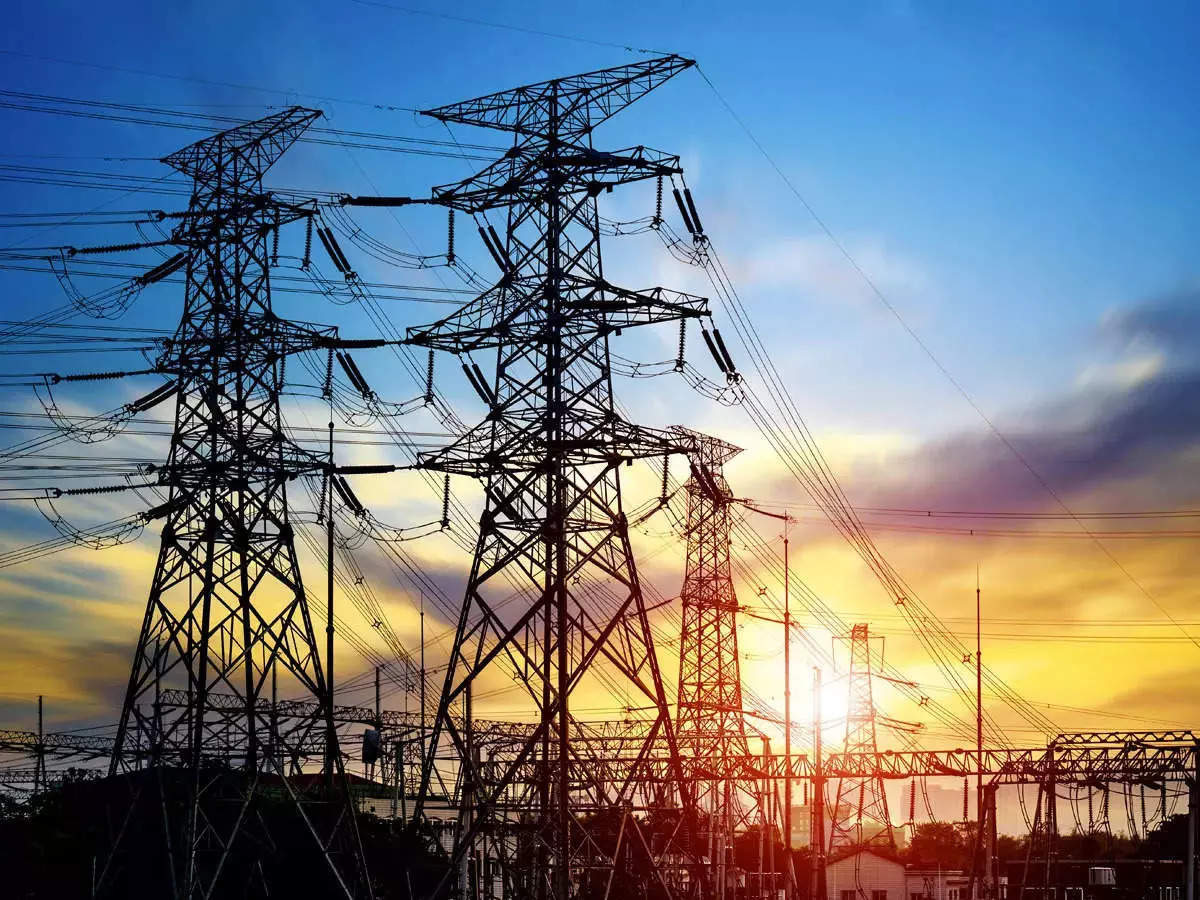
  • [Burning Issue] Power Crisis in India

    https://img.etimg.com/thumb/width-1200,height-900,imgsize-178130,resizemode-1,msid-87097716/industry/energy/power/how-rains-and-lack-of-foresight-of-power-producers-and-states-caused-a-power-crisis-in-india.jpg

    Context

    • India is facing one of the worst power crises in its History and the scariest point is that this power crisis is not something that rarely has been haunting almost every year for 10 years now!!
    • As a result, businesses all across the country are facing lakhs and even crores of losses due to power shortage!! and at the macro level, the economy of India itself is taking a hit!!

    A layman’s analysis

    • When we say power crisis you might think maybe India does not have enough energy source!!
    • But the fun fact is that India has the 5th largest coal reserve globally with 9.5% of the entire world’s coal reserve right here in our country itself!!
    • We have so much coal that with the existing energy demands, these reserves can power India for 111 years!!
    • Also the completion of universal household electrification has been a huge achievement.

    So the question is:

    1. Inspite being one of the largest coal reserve why is India facing a power crisis?
    2. What are the factors that cause this to happen every single year?

    Power value chain in India

    • The first thing we need to understand is the power value chain in India and how energy actually comes from the coal mines to your laptop.
    • This value chain includes four major steps:
    • Producers who mine and refine fuels
    • Power generation
    • Electricity transmission
    • Electricity distribution (Discoms)
    • The value chain starts with the energy producers who mine and refine fuels that are used in electricity production this includes all types of energy sources like coal gas oil or even nuclear based fuels.
    • The fuels are then delivered to the generation facilities where the electricity generator uses the fuel to drive a generator to produce electricity and then to dispatch it to a transmission and distribution system or Discoms.
    • This system distributes the electricity to consumer locations through a transmission and distribution grid.

    India’s dependency on Coal

    • As of September 2021, thermal power comprised 60% of India’s installed capacity in power generation.
    • Coal-based power generation, with a capacity of around 210 gigawatts (GW) of the total 396 GW, accounts for about 53% of India’s total power capacity as on March 2022.
    • India imports about 20% of its thermal coal requirements.

    Why is there a Power Shortage?

    • India was recently hit by a power crisis when the daily peak power shortage rose to 10,778 MW and the energy deficit reached 5% at the national level.
    • Some states experienced steep deficits of up to 15%.
    • Consequently, discoms resorted to load-shedding, resulting in long hours of outage for many households and rationed supply for economic activities.
    • Depleting coal supplies at thermal power plants has resulted in this crisis.

    (1) Largest share in energy basket

    • Coal is the most important and abundant fossil fuel in India. It accounts for 55% of the country’s energy needs.
    • Coal demand is driven by the rising population, expanding economy and a quest for improved quality of life.
    • Currently, India doesn’t have a feasible replacement of Coal Based Thermal Energy in near future.

    (2) Demand for power has soared

    • For instance, New Delhi’s peak power demand touched 5,460 megawatts (MW) recently, the highest ever in April’s first fortnight.
    • This was due to severe heatwaves all across the nation.
    • Several states, including Andhra Pradesh, Madhya Pradesh, Punjab, Haryana, Telangana, and Maharashtra, are facing power outages.

    (3) Lack of coal availability in stock

    • The coal stock with power generation companies (gencos) is not adequate to meet the rising demand.
    • Normally, a power plant must maintain 26 days of coal stock.
    • However, at present, several power plants are reporting critical levels of coal stock.
    • Data from the Central Electricity Authority (CEA) shows that 97 power plants out of the 173 have critical levels of coal inventory.
    • These have an average of 28% of the stock compared to the normal scenario.

    Stress on Power plants

    • There has been a moderation in coal supply towards certain gencos because of the overdues or delays in the payments.
    • As a result, discoms/state governments will either have to absorb the cost burden with increased imported coal-based generation.
    • This however has to be passed on the same through tariff hikes which never happened in India.
    • Inspite, DISCOMS constrained to offtake power, resulting in load shedding, which has been visible in a few states recently.

    Major reason: Underperformance of Coal Sector

    • The state power distribution companies (discoms) have also not been able to clear their dues to power generation companies.
    • According to the government’s PRAAPTI portal, distribution companies faced financial liability of nearly Rs 1 lakh crore.
    • The challenges facing the finances of the distribution companies have only been exacerbated by the COVID-19 crises.
    • The impact of the nation-wide lockdown in 2020, which shuttered commercial and industrial enterprises was severe for their finances.
    • Revenues from historically subsidizing consumers decreased, even as supply to subsided consumers, agricultural and residential consumers, either increased or remained the same.
    • Indian railways owing to no reception of payment from DISCOMS stopped or reduced coal supplies.

    Factors attributing to the deteriorating finances

    [1] Lack of Cost-reflective Tariffs

    • The costs of supplying high-voltage consumers is significantly less than that of supplying to lower voltage consumers
    • The complexity of tariff determination is accentuated by the existence of multiplicity of categories in the tariff structures, with numerous subcategories and slabs.
    • There is significant variation in this between states.

    [2] Distorted Cross-subsidies

    • Households and agricultural consumers paying less than the average cost of supply and to make up for this, tariffs for commercial and industrial consumers are higher.
    • In developed countries, high voltage industrial consumers have the lowest tariff reflecting lower costs.
    • This increases industrial competitiveness by lowering energy costs.
    • DISCOMs in states with poor industrialization tend to correspondingly have larger losses.
    • Increased domestic consumption due to expanded electrification and rise in per capita incomes and increased agricultural consumption due to increased demand for irrigation have not been matched by a similar growth in subsidizing consumers.
    • Consistent losses have meant that distribution companies do not have the financial capacity to invest in necessary capital expenditure, resulting in paying consumers needing to invest on their own in independent sources of power.

    [3] Misaligned Political Incentives and Mismanagement

    • The govt could have declared the extent to which tariffs would become lower as AT&C losses were brought down.
    • Consumers would pay more than necessary to the extent AT&C (Aggregate Technical & Commercial) losses were higher.
    • De-metering of agricultural consumption has been another example.
    • It is considered to have encouraged ‘a culture of unaccountability in the sector, leading to theft and line losses being hidden within the agricultural category’.
    • There are also electricity bills waivers as populist election freebies.

    [4] Lack of Regular Tariff Increase

    • Another major cause of the high financial losses has been that tariffs do not increase commensurate to increase in costs in many states.
    • Since the 1990s, revenue recovered by DISCOMs had been, on average, 30% lower than the cost incurred.
    • This resulted in approximately Rs 1.15 lakh crores of costs, which were not recovered through tariffs.
    • Due to a variety of reasons, including state government interventions or a lack of preparedness, DISCOMs do not file petitions in a timely manner.

    [5] Delays/non-payment of Subsidy Amounts and Dues by States

    • The rapid rise in subsidized consumers and increased populist announcements of greater subsidies have meant an increase in the requirement of subsidies from the state governments.
    • Delays in release of subsidies, as well as underpayment of committed subsidies impact the ability of DISCOMs in managing operating costs.
    • Moreover, since the fraction of the cost structure meant to be covered by subsidy payments has risen.
    • Also, government departments often also do not release payments for outstanding dues in a timely manner.

    Various policy measures

    [1] 2001 Scheme for Repayment of SEB Due

    • The first bailout package was intended as a one-time settlement of outstanding dues till September 2001.
    • Based on the recommendations of the Committee constituted under Montek Singh Ahluwalia, in May 2002, the government circulated a tripartite agreement between the RBI, Central and State Governments.
    • States were to implement reforms such as setting up SERC, metering distribution feeders, and improving revenue realization, in exchange for which 60% of interest/surcharge on delayed payments was waived for participating states

    [2] 2012 Financial Restructuring Plan (FRP)

    • The states were unable to turn around the fortunes of their electricity boards as required by the financial restructuring plan (FRP) finalized in September 2012.
    • This was because of reasons such as low tariff increases, slow progress in reducing losses, higher electricity purchase costs and crippling debt.
    • The scheme has been availed by Tamil Nadu, Uttar Pradesh, Rajasthan, Haryana, Jharkhand, Bihar, Andhra Pradesh and Telangana.
    • This is the second such bailout for the Indian distribution sector.
    • Some states including Uttar Pradesh and Rajasthan have also not converted outstanding state government loans into equity—another requisite.

    [3] 2015 Ujwal DISCOMs Assurance Yojana (UDAY)

    • The UDAY scheme was introduced with the objective to improve the operational and financial efficiency of state DISCOMs.
    • The scheme allowed state governments to take over 75% of outstanding DISCOM debt over two years.
    • Incentives offered to participating states included access to additional/priority funding through Central Government schemes such as DDUGJY, IPDS, Power Sector Development Fund (PSDF).
    • This however could not alter the situation on the ground.

    [4] Atmanirbhar Bharat Abhiyan Package

    • This was a part of the package announced to mitigate the impact of the COVID-19 pandemic on the economy.
    • It infused liquidity support of Rs 90,000 crore in the form of concessional loans from Power Finance Corporation and Rural Electrification Corporation.
    • It provided for rebates by Central Public Sector Gencos to DISCOMs; and relaxation of conditions of existing loans and relief from certain late payments and surcharges were announced.
    • The borrowing limits for states were also relaxed, with part of the increased borrowing linked to reforms on power distribution.

    [5] Reforms-based Result-Linked Power Distribution Sector

    • Launched in July 2021, the RDSS is the latest of many central government grant-based programmes towards electricity distribution network investments.
    • It has an outlay of Rs 3 lakh crore for five years.
    • Half of the outlay is for better feeder and transformer metering and pre-paid smart consumer metering.
    • The remaining half, 60 percent of which will be funded by central government grants, will be spent on power loss reduction and strengthening networks.
    • RDSS stipulates universal pre-paid metering but post-paid options may be suitable in many contexts.

      What are the recent reforms in Coal Sector?

    • Commercial mining of coal is allowed, with 50 blocks to be offered to the private sector.
    • Entry norms will be liberalized as it has done away with the regulation requiring power plants to use “washed” coal.
    • Coal blocks to be offered to private companies on revenue sharing basis in place of fixed cost.
    • Coal gasification/liquefaction to be incentivized through rebate in revenue share.
    • Coal bed methane (CBM) extraction rights to be auctioned from Coal India’s coal mines.

    Averting the power crisis: A way forward

    (1) Ramp-up domestic coal production

    • The efforts are being taken to fill the shortage of coal from domestic mines and to do so the government is working closely with coal producing companies to ramp up domestic production of coal.

    (2) Reduce demand-supply mismatches

    • Load shading is not new to India. Rationing of power supply in rural and semi-urban areas will be the immediate solution for the power distress in industrial areas.

    (3) Rationalize the coal imports

    • India will need to amplify its imports despite the financial cost. The gap in the coal demand after domestic production has to be filled by the imports from Indonesia and Australia.

    (4) Focus on Hydro-power generation and natural gal

    • India has the immense potential in the Hydro-power generation and is among the most important sector for generating electricity after thermal power plants. There could be a larger role for natural gas to play, even with global prices currently surging.

    (5) Increasing the share of Renewable energy

    • Experts advocate a mix of coal and clean sources of energy as a possible long-term solution. It’s not completely possible to transition and it’s never a good strategy to transition 100% to renewables without a backup.
    • Long term investment in multiple power sources aside a crisis like the current one can be averted with better planning.

    (6) Increased coordination

    • There is need for closer coordination between Coal India Limited – the largest supplier of coal in the country and other stakeholders.
    • For now, the government is working with state-run enterprises to ramp up production and mining to reduce the gap between supply and demand.

    (7) Decentralized power generation

    • The main issue is that we are dependent on large, centralized power generation.
    • The only way our power sector can absorb shocks better is if large power plants are augmented by decentralized generation sources at village level.
    • This can be a template for better resilience to future power crises.

    (8) Coal stocking norms

    • To avoid such a crisis situation in future, the Ministry of Power has worked out a strategy which includes tweaking the coal stocking norms. If the power plants do not follow them, then there will be a penal provision.
    • To overcome the storage issue in the generation of electricity from renewable sources, the government is working on a provision for creating more storage facilities in the grid.

    Conclusion

    • India can learn a lesson from Europe’s power crisis. While Europe has gas power plants to stand in, India doesn’t have similar options.
    • As we move more towards greening our power sources, we need to provision for paying for standby thermal generation to avoid a mega-crisis.
    • Adequate liquidity for backup reserve capacity needs to be planned and provisioned for.
    • Probably, the present situation is a good opportunity to rethink and fine-tune the energy policy without further delay.
    • Bits and pieces reforms will not work anymore, as the chain has to been broken and a complete overhaul is required.

    UPSC 2023 countdown has begun! Get your personal guidance plan now! (Click here)

  • [Sansad TV] Perspective: Cluttered Space

    UPSC 2023 countdown has begun! Get your personal guidance plan now! (Click here)

    Context

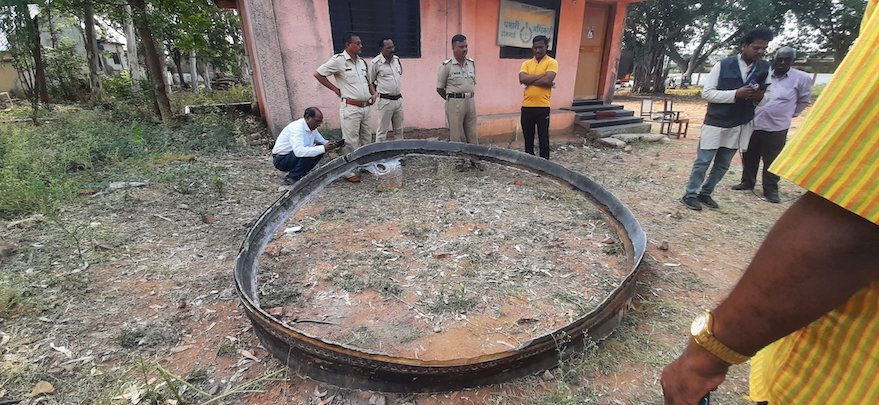
    • Four spherical metal balls fell from the sky in some villages of Gujarat over the past few days.
    • Some experts say they are most likely the debris of a Chinese rocket Chang Zheng 3B or fuel storage tanks of space launch vehicles.
    • With more & more space launches and events like space tourism kicking off, the space above Earth is overcrowded – calling for urgent attention from countries to declutter it.
    https://spacenews.com/wp-content/uploads/2022/04/chinese-rocket-debris-in-Indian-village-2022-04-02.jpeg

    What is Space Junk?

    • Space junk, or space debris, is any piece of machinery or debris left by humans in space.
    • It can refer to big objects such as dead satellites that have failed or been left in orbit at the end of their mission.
    • It can also refer to smaller things, like bits of debris or paint flecks that have fallen off a rocket.
    • Space debris encompasses both natural meteoroid and artificial (human-made) orbital debris.
    • Meteoroids are in orbit about the sun, while most artificial debris is in orbit about the Earth (hence the term “orbital” debris).

    How are they generated?

    • All space junk is the result of us launching objects from Earth, and it remains in orbit until it re-enters the atmosphere.
    • Some objects in lower orbits of a few hundred kilometres can return quickly.
    • They often re-enter the atmosphere after a few years and, for the most part, they’ll burn up – so they don’t reach the ground.
    • But debris or satellites left at higher altitudes of 36,000 kilometres – where communications and weather satellites are often placed in geostationary orbits – can continue to circle Earth for hundreds or even thousands of years.
    • Some space junk results from collisions or anti-satellite tests in orbit.

    How much space junk is there?

    • While there are about 2,000 active satellites orbiting Earth at the moment, there are also 3,000 dead ones littering space.
    • What’s more, there are around 34,000 pieces of space junk bigger than 10 centimetres in size and millions of smaller pieces that could nonetheless prove disastrous if they hit something else.

    What risks does space junk pose to space exploration?

    Fortunately, at the moment, space junk doesn’t pose a huge risk to our exploration efforts.

    • Collisions:  Collisions could cause significant damage to the space properties of the countries. Upon collision, the debris disables the satellites’ onboard electronics and may disrupt the services provided by the space assets.
    • Collateral damage: The biggest danger it poses is to other satellites in orbit. These satellites have to move out of the way of all this incoming space junk to make sure they don’t get hit and potentially damaged or destroyed.
    • High momentum strikes: As these debris travel at high speeds in the low earth orbit, they risk colliding with functional satellites or even the space station. Given that these particles travel at speeds of 8 metres per second, even a 100g object could create an impact comparable to a 30-kg stone travelling at 100kmph.
    • Usability of space: This debris orbit the earth several times a day. As the mass of space junk continues to grow, parts of the space may become unusable.  
    • Kessler Syndrome: It refers to a theoretical scenario in which the amount of space debris becomes so high that a single collision or destruction event could lead to a snowballing cascade of space debris- like a domino effect.

    India and Space Debris

    • India had 103 spacecraft, including active and defunct satellites, and 114 space debris objects, including spent rocket bodies orbiting the earth.
    • So, the country has a total of 217 space objects orbiting the earth.
    • Presently, the ISRO has taken up research activities to study the feasibility and technologies required to undertake active debris removal (ADR).
    • ADR was one of the active methods suggested by the Space Debris Research Community to contain the growth of space debris objects.

    Mechanism against damage

    Space is beyond national jurisdiction and falls under the ambit of international law:

    • Under the Convention on International Liability for Damage Caused by Space Objects, countries can claim compensation from other countries for damages incurred from space debris.
    • The Outer Space Treaty, 1967 and the like outline the guidelines for the countries’ activities in space.
    • All space objects, including the defunct space debris, are under the jurisdiction of the ‘State of Registry’.
    • If something goes wrong during such manoeuvres, a liability regime under the applicable international law applies to not only the launching country but also other countries involved in the launch.
    • The UN Committee on the Peaceful Use of Outer Space (COPUOS) is tasked with space governance and there are already accepted guidelines for space debris mitigation and sustainability of space activities.

    Efforts for space debris removal

    There are four techniques that can move debris from heavily trafficked orbits:

    1. Deorbiting (the deliberate, forced re-entry of a space object into the Earth’s atmosphere by application of a retarding force, usually via a propulsion system)
    2. Orbital lifetime reduction (accelerating the natural decay of spacecraft and other space objects to reduce the time that they remain in orbit)
    3. Disposal orbits– Moving objects into less populated “disposal” orbits at the end of their functional lifetime
    4. Active removal of debris from orbit

    Global efforts

    • NASA undertakes DAMs or Debris Avoidance Manoeuvres, which are navigation manoeuvres that take the space station away from its normal trajectory to avoid collisions, are undertaken based on the probability of collision.
    • NORAD, or the North American Aerospace Defence Command, is an initiative of the U.S. and Canada that shares selective debris data with many countries.
    • Clearspace-1 (of European Space Agency), which is scheduled to launch in 2025, will be the first space mission to eliminate debris from orbit.

    India’s efforts: Project NETRA

    • NETRA stands for Network for Space Objects Tracking and Analysis (NETRA) project.
    • Project NETRA is an early warning system in space to detect debris and other hazards to Indian satellites.
    • In this pursuit, space debris tracking radar with a range of 1,500 km and an optical telescope will be inducted as part of establishing an effective surveillance and tracking network under NETRA.

    Way forward

    • Space junk is no one country’s responsibility, but the responsibility of every spacefaring country.
    • Spacefaring nations must minimize the risks to people and property on Earth of re-entries of space objects and maximize transparency regarding those operations.
    • High-accuracy assessment and prediction tools are essential for reducing risk to current systems and future launches.
    • Space traffic management is a crucial area that requires attention since the satellites in orbit can come in the way of each other.

    UPSC 2023 countdown has begun! Get your personal guidance plan now! (Click here)

  • [Burning Issue] Abortion Debate

    UPSC 2023 countdown has begun! Get your personal guidance plan now! (Click here)

    Context

    • Around 36 million women across the US are on the verge of losing their right to legal abortion.
    • A draft document, leaked a couple of weeks ago, suggests that the Supreme Court has decided to overturn the 1973 Roe v. Wade decision which legalized abortion across the country.

    What will be the implications if Roe v Wade is struck down? How will the decision reverberate around the world? Let us analyse.

    The Roe vs. Wade case: Upholding the Right to Abortion

    • Roe, short for Jane Roe, is the pseudonym for a Texas woman who in 1970 sought to have an abortion when she was five months pregnant.
    • Texas then had ban on abortions except to save a mother’s life. The case then went to the US Supreme Court (SCOTUS).
    • The 7-2 majority opinion of the SCOTUS written in 1973, paved the way for the recognition of abortion as a constitutional right in the US considering foetal viability.

    [Foetal viability is the point at which a foetus can survive outside the womb, at the time considered to be around 28 weeks, but today is closer to 23 or 24 weeks owing to advances in medicine and technology.]

    Right to Abortion Judgment: Key takeaways

    Based on the Roe vs Wade case, the framework of regulations that applied towards the right to abortion:

    1. Almost no limitations could be placed on that right;
    2. Only limitations to abortion rights that were aimed at protecting a woman’s health were permitted; and in the third trimester,
    3. State governments had greater leeway to limit the right to abortion except for cases in which the life and health of the mother were endangered.

    What is the debate?

    The abortion debate is the ongoing controversy surrounding the moral, legal, and religious status of induced abortion.

    The sides involved in the debate are the self-described “pro-choice” and “pro-life” movements.

    1. Pro-choice emphasizes the woman’s choice whether to terminate a pregnancy.
    2. Pro-life position stresses the humanity of both the mother and foetus, arguing that a fetus is a human person deserving of legal protection.

    Ethical questions raised

    (1) The primary questions

    The moral debate about abortion deals with two separate questions:

    1. Is abortion morally wrong?
    2. Should abortion be legal or illegal?

    (2) The secondary questions

    But those two questions don’t end the debate.

    1. If we conclude that abortion is not morally wrong, that doesn’t mean that it’s right to have an abortion;
    2. We need to ask whether having an abortion is the best thing (or least bad thing) to do in each particular case.
    3. If we conclude that abortion is morally wrong, that doesn’t mean that it’s always impermissible to have an abortion; we need to ask whether having an abortion is less wrong than the alternatives.

    Why is there a possibility of the judgment being overturned?

    • Foetuses feel the pain: If the foetus is beyond 20 weeks of gestation, gynaecs assume that there will be pain caused to the foetus.
    • Biblical gospel: The Bible does not draw a distinction between foetuses and babies. By the time a baby is conceived, he or she is recognized by God.
    • Abortions cause psychological damage: Young adult women who undergo abortion may be at increased risk for subsequent depression.
    • Abortions reduce the number of adoptable babies: Instead of having the option to abort, women should give their unwanted babies to people who cannot conceive. Single parenthood is also gaining popularity in the US.
    • Cases of selective abortion: Such cases based on physical and genetic abnormalities (eugenic termination) is overt discrimination.
    • Abortion as a form of contraception: It is immoral to kill an unborn child for convenience. Many women are using abortion as a contraceptive method.
    • Morality put to question: If women become pregnant, they should accept the responsibility that comes with producing a child. People need to take responsibility for their actions and accept the consequences.
    • Abortion promotes throwaway culture: The legalization of abortion sends a message that human life has little value and promotes the throwaway culture.
    • Racial afflictions: Abortion disproportionately affects African American babies. In the US, black women are 3.3 times as likely as white women to have an abortion.

    Arguments in favour for Abortion Rights

    • Upholding individual conscience and decision-making:  The US Supreme Court has declared abortion to be a fundamental right guaranteed by the US Constitution.
    • Reproductive choice empowers women: The choice over when and whether to have children is central to a woman’s independence and ability to determine her future.
    • Foetal viability occurs post-birth:  Personhood begins after a foetus becomes “viable” (able to survive outside the womb) or after birth, not at conception. Abortion is the termination of a pregnancy, not a baby.
    • No proof of foetal pain: Most neuroscientists believe that the cortex is necessary for pain perception. The cortex does not become functional until at least the 26th week of a foetus’ development.
    • Preventing illegal abortions: Access to legal, professionally-performed abortions reduces maternal injury and death caused by unsafe, illegal abortions.
    • Mother’s health: Modern abortion procedures are safe and do not cause lasting health issues such as cancer and infertility.
    • Child’s health: Abortion gives pregnant women the option to choose not to bring fetuses with profound abnormalities to full term.
    • Prevents women’s exclusion: Women who are denied abortions are more likely to become unemployed, to be on public welfare, to be below the poverty line, and to become victims of domestic violence.
    • Reproductive choice protects women from financial disadvantage: Many women who choose abortion don’t have the financial resources to support a child.
    • Justified means of population control: Many defends abortion as a way to curb overpopulation. Malnutrition, starvation, poverty, lack of medical and educational services, pollution, underdevelopment, and conflict over resources are all consequences of overpopulation.

    Indian Case: Medical Termination of Pregnancy (MTP) Act

    • Abortion in India has been a legal right under various circumstances for the last 50 years with the introduction of Medical Termination of Pregnancy (MTP) Act in 1971.
    • The Act was amended in 2003 to enable women’s accessibility to safe and legal abortion services.
    • Abortion is covered 100% by the government’s public national health insurance funds, Ayushman Bharat and Employees’ State Insurance with the package rate for surgical abortion.

    The idea of terminating your pregnancy cannot originate by choice and is purely circumstantial. There are four situations under which a legal abortion is performed:

    1. If continuation of the pregnancy poses any risks to the life of the mother or mental health
    2. If the foetus has any severe abnormalities
    3. If pregnancy occurred as a result of failure of contraception (but this is only applicable to married women)
    4. If pregnancy is a result of sexual assault or rape

    These are the key changes that the Medical Termination of Pregnancy (Amendment) Act, 2021, has brought in:

    1. The gestation limit for abortions has been raised from the earlier ceiling of 20 weeks to 24 weeks, but only for special categories of pregnant women such as rape or incest survivors. But this termination would need the approval of two registered doctors.
    2. All pregnancies up to 20 weeks require one doctor’s approval. The earlier law, the MTP Act 1971, required one doctor’s approval for pregnancies upto 12 weeks and two doctors’ for pregnancies between 12 and 20 weeks.
    3. Women can now terminate unwanted pregnancies caused by contraceptive failure, regardless of their marital status. Earlier the law specified that only a “married woman and her husband” could do this.
    4. There is also no upper gestation limit for abortion in case of foetal disability if so decided by a medical board of specialist doctors, which state governments and union territories’ administrations would set up.

    Way forward

    • A search for the middle path perhaps the right of a woman to choose what to do with the foetus has to be balanced with the right of the foetus to survive.
    • It is only that a foetus does not have the ability to exercise an option while the person who carries it does.
    • There could be no two opinions that a victim of rape shall be allowed the choice to abort.
    • Rather than banning abortion, lawmakers must focus on counselling, employment security, social welfare, and financial support to persuade pregnant women to give birth to their children.
    • We must achieve some degree of protection for the unborn by obtaining voluntary recognition of personal responsibility and respect for the personhood of the unborn.

    UPSC 2023 countdown has begun! Get your personal guidance plan now! (Click here)

  • [Burning Issue] Energy Transition & Challenges

    Context

    • India has set ambitious targets towards the achievement of the dual goals of climate action and sustainable development through its nationally determined contributions and energy access commitments.
    • As India starts a new decade of energy transition, it is an opportune time to assess where India stands in achieving its targets as well as to identify the key challenges being faced during this transition.

    What is Energy Transition?

    • Energy transition refers to the global energy sector’s shift from fossil-based systems of energy production and consumption — including oil, natural gas and coal — to renewable energy sources like wind and solar, as well as lithium-ion batteries.
    • The increasing penetration of renewable energy into the energy supply mix, the onset of electrification and improvements in energy storage are all key drivers of the energy transition.
    • Regulation and commitment to decarbonization has been mixed, but the energy transition will continue to increase in importance as investors prioritize environmental, social and governance (ESG) factors.

    Ongoing Energy Trends

    • Global oil production has been basically static: Some areas are in an irreversible productive decline (e.g., the North Sea) while others, mainly the continental US, are experiencing a true renaissance in the production of petroleum liquids owing to the exploitation of oil shales.
    • Worldwide mineral production is generally static: The mining industry is facing the problem of diminishing ore grades for most minerals and the consequence is the need of more energy to maintain the same levels of production.
    • Agriculture is facing an energy problem: Agriculture is heavily dependent on fossil fuels for powering agricultural machinery, for the supply of fertilizers, pesticides, and irrigation. The increasing prices of fossil fuels are being reflected in higher prices for all agricultural products.
    • Nuclear energy faces considerable difficulties: The past decade had seen a minor renaissance in the start of the construction of new plants, although still in numbers insufficient to replace the old plants being retired.  
    • Renewable energy is seeing an explosive growth worldwide:  The energy produced by the new renewables is still a minor fraction of the total of the world primary energy production, but it has been growing at exponential rates that, so far, show no sign of abating.
    • Focus on energy efficiency: We see an evident trend towards higher efficiency in both production and end uses of energy. It is a trend particularly evident in the residential sector, with buildings that reduce energy consumption by means of better insulation, high efficiency lighting, and more.  
    • Crunches for Fossil Fuels: We are facing more and more difficult times in maintaining the current system based on fossil fuels. The combined effects of depletion and of climate change are pushing humankind in undue energy anxiety.

    India’s Energy Transition: Context- Setting

    (1) Ambitious Target

    • India’s energy transition is characterized by its ambitious targets.  By the year 2022,
    • India seeks to provide all households in the country 24×7 power.
    • By 2022, India also seeks to install 175 GW of new renewable energy (RE) in the country.

    (2) NDC Commitments

    • India in its Nationally Determined Contributions (NDCs) committed to three targets, which are to be achieved by the year 2030.
    • First, by 2030, 40% of India’s cumulative electric power installed capacity will come from non-fossil fuel-based energy sources.
    • Second, India will reduce the emission intensity of its gross domestic product (GDP) by 33–35% (vis-à-vis 2005 levels).
    • Third, India will create an additional carbon sink of 2.5–3 billion tonnes of CO2 equivalent (through additional forest and tree cover).

    (3) Current RE Capacity

    • India is world’s 3rd largest consumer of electricity and world’s 3rd largest renewable energy producer with 38% of energy capacity installed in the year 2020 (136 GW of 373 GW) coming from renewable sources.
    • Many states are still at early stages of developing their renewable energy capacity.
    • This is important to consider as India seeks to add more RE capacity in the coming months and years.

    () Leadership

    • India is also showing global clean energy leadership through initiatives such as the International Solar Alliance, which has more than 70 member countries.
    • This is yet to materialize in its full capacity.

    Various challenges

    (1) Slowdown in the RE Tendering Process

    • India’s RE growth was at the slowest pace in the past 4 years.
    • There were several reasons for this, including the trends seen during the process of auctioning RE capacity.

     (2) Renewable Purchase Obligations as a Ceiling

    • One of the mechanisms for promoting the installation of RE capacity in India has been the stipulation of targets for a mandatory minimum purchase of a certain percentage of RE by utilities.
    • This is known as a Renewable Purchase Obligation (RPO).
    • Many states has been asked by its regulator to curtail further procurement of solar energy from large-scale projects.

    (3) Financial crunches  

    • When DISCOMs face cash flow issues, this results in RE producers also facing a liquidity crisis. Public sector banks are hesitant to grant loans to RE projects.
    • Not many private sector banks are forthcoming with loans.
    • Additionally, the interest rate of existing loans to RE companies has also witnessed a rise in recent months.

    (4) Policy Uncertainty

    • Experts emphasize the importance of policy certainty for the enforcement of contracts and for the rule of law.
    • The value of the certainty of contracts and the importance of consistency and stability in rules and policy cannot be overstated in the energy sector in India.
    • Similar concerns have been raised by RE companies over the uncertainty over import duties, particularly for solar cells.

    (5) Burden of demands

    • Much like China, India is finding itself in a precarious position.
    • To meet its high electricity demands, India has had to increase its reliance on fossil fuels while still developing its national grid to cope with expected surges in power demand.

    (6) Others

    • High initial cost: While the coal-based power plants require an initial investment of about Rs. 4 crores per MW, the investments for solar and wind energy is far higher.  
    • Weather-dependency: Renewable energy sources like solar, wind, tide, etc., are dependent on weather conditions. If the favourable weather conditions are not available, it becomes inefficient and unfeasible.
    • Topographic barriers: Most renewable energy plants occupy large areas of space. This brings in the issue of the cost of the vast land area and other issues related to land acquisition.  
    • Threats to ecosystem: The turbines have caused noise pollution and are also killing birds while functioning. Ex. Decline in bustard population in Rajasthan.

    Various govt. initiatives

    • Separate ministry: India is the first country in the world to have an exclusive ministry that is involved in the promotion and development of renewables – the Ministry of New and Renewable Energy (MNRE).
    • Nation Green Corridor Programme: This project aims at synchronizing energy that is produced from renewable energy sources with conventional stations.
    • National Clean Energy Fund: It is the fund created using the carbon tax for backing research and development of innovative eco-friendly technologies.
    • Draft National Wind-Solar Hybrid Policy: Through this policy, the government seeks to promote new renewable energy projects and hybridization of the existing ones.  
    • National Offshore Wind Energy Policy: This involves the utilization of India’s Exclusive Economic Zone (EEZ) for the development of offshore wind farms up to 200 Nautical Miles from the baseline.
    • Grid Connected Solar Rooftop programme: It involves the installation of solar panel at the rooftops of the residential, commercial, industrial, and institutional buildings.
    • Small Hydropower Programme:  The potential of this programme is about 20,000 MW and it is mostly in the Himalayan States where the rivers are abundant and in States which have sufficient irrigation canals.
    • National Solar Mission: It is a part of the National Action Plan on Climate Change. It is an initiative to promote solar power in India.  .
    • Pradhan Mantri- Kisan Urja Suraksha evam Utthaan Mahabhiyan: PM- KUSUM aims at providing financial and water security to farmers by means of utilizing solar energy capacities of 25,750 MW by 2022.

    Way forward

    • Ensure equity: It must be ensured that the opportunities of India’s transition are shared fairly throughout society — and workers and communities are not left to face the challenges alone.
    • Make it people-centric: To achieve the trifecta of jobs, growth and sustainability, India must strive to put people at the centre of its energy transformation.
    • Provisions for coal-dependent regions: New jobs would need to be found over time for the coal miners affected by the changes, as well as for people who work in the fossil fuel power plants that will close down.
    • Transition funds: Policymakers must earmark special“transition funds” to help coal-dependent regions, some of which are among India’s poorest.
    • Increase investment by rationalizing energy subsidies: Energy subsidies must be rationalized and directed towards those who need them most.
    • Finance mobilization: Fiscal resources freed up through subsidy reform should then be invested in clean energy solutions, especially in underdeveloped regions and marginalised communities.
    • Community participation: While India’s energy transition will create many new jobs, the limited participation of women in the growing green workforce must be addressed.
    • Engage youth: Engaging the youth is critical to ensure that the energy transition is sustainable, inclusive and enduring.

    Conclusion

    • There is no doubt that ambitious RE and climate targets have pushed India well on its way to a clean energy future.
    • However, more needs to be done to help India achieve its potential.

    UPSC 2023 countdown has begun! Get your personal guidance plan now! (Click here)

  • [Sansad TV] Perspective: Judicial Reforms

    UPSC 2023 countdown has begun! Get your personal guidance plan now! (Click here)

    Context

    • Chief Ministers of States and Chief Justices of High Courts (CMCJs) participated in a joint conference in the national capital to discuss various aspects of the justice delivery system.
    • Participating in the inaugural session PM Modi said that judicial reform is not merely a policy matter and Human sensitivities should be kept in the centre of all the deliberations on this issue.

    Key takeaways from the CMCJ summit

    • PM stressed on the importance of Mediation as an important tool for the settlement of pending cases in the courts, especially at the local level.
    • CJI N V Ramanna in his remarks said a National Judicial Infrastructure Authority should be created for the standardization and improvement of judicial infrastructure which currently needs urgent attention.
    • Both CJI and Prime Minister also highlighted the need to promote local languages in the courts so that people of the country feel connected with the judicial process.

    The main subjects that were discussed, are as under:

    • Infrastructure of Subordinate Courts
    • Performance of Morning/Evening and Holiday Courts
    • Conditions of Jails with particular reference to under trial prisoners
    • Implementation of Information and Communication Technology
    • Strengthening the Legal-Aid Programmes
    • Strengthening of Juvenile Justice System
    • Utilization of grants
    • Review of Quality Legal Education Programmes in the States
    • Post-Retirement benefits to Judges
    • Model Courts and the Establishment of Commercial Courts, Commercial Division and Commercial Appellate Division High Courts
    • Filling up vacancies in the High Courts

    Indian Judiciary: A Backgrounder

    • Our Judicial system has been the nation’s moral conscience keeper.
    • It speaks truth to political power, upholds the rights of citizens, mediates between Centre-state conflicts, provides justice to the rich and poor alike, and on several momentous occasions, saved democracy itself.
    • Despite its achievements, a gap between the ideal and reality has been becoming clear over the years.
    • The justice delivery is slow, the appointment of judges is mired in controversy, disciplinary mechanisms scarcely work, hierarchy rather than merit is preferred, women are severely under-represented, and constitutional matters often languish in the Supreme Court for years.
    • As Justice Chelameswar said in his dissent in the NJAC judgment, the courts must reform, so that they can preserve.

    Challenges to the judicial system

    • Lack of infrastructure of courts
    • High vacancy of judges in the district judiciary
    • Pendency of Cases
    • Ineffective planning in the functioning of the courts
    • Delay in the delivery of judgements
    • Lack of transparency in appointment and transfers.
    • Corruption
    • Undertrials serving Jail
    • Outdated laws ex. Section 124A IPC

    What led to under-performance of Indian Judiciary?

    The primary factors contributing to docket explosion and arrears as highlighted by Justice Malimath Committee report are as follows:

    • Population explosion
    • Litigation explosion
    • Hasty and imperfect drafting of legislation
    • Plurality and accumulation of appeals (Multiple appeals for the same issue)
    • Inadequacy of judge strength
    • Failure to provide adequate forums of appeal against quasi-judicial orders
    • Lack of priority for disposal of old cases (due to the improper constitution of benches)

    Recent developments:

    Proposal for the creation of National Judicial Infrastructure Corporation (NJIC)

    • The CJI has pitched to set up a National Judicial Infrastructure Corporation (NJIC) to develop judicial infrastructure in trial courts.
    • He indicated a substantial gap in infrastructure and availability of basic amenities in the lower judiciary.
    • There is a dearth of court halls, residential accommodation, and waiting room for litigants in trial courts, especially in smaller towns and rural areas.
    • Experience shows that budgetary allocation for state judiciary often lapses since there is no independent body to supervise and execute such works.
    • NJIC is expected to fill this vacuum and overcome problems related to infrastructure.

    Way forward

    • Creating NJIC: It will bring a revolutionary change in the judicial functioning provided the proposed body is given financial and executive powers to operate independently of the Union and the State governments.
    • Appointment reforms: There are many experts who advocate the need to appoint more judges with unquestionable transparency in such appointments.
    • Creating All Indian Judiciary Services: It would be a landmark move to create a pan-India Service that would result in a wide pool of qualified and committed judges entering the system.
    • Technology infusion: The ethical and responsible use of AI and ML for the advancement of efficiency-enhancing can be increasingly embedded in legal and judicial processes. Ex. SUPACE.
    • Legal education: This should be in alignment with the evolving dynamics of the law must be propagated in trial and constitutional courts. This will improve the competence of the judicial system.
    • Alternate Dispute Resolution (ADR): ADR mechanisms should be promoted for out-of-court settlements. Primary courts of appeal should be set up.
  • [Burning Issue] Wheat Exports Ban

    Context

    • India has banned exports of wheat effective immediately, citing a risk to food security.
    • This is partly due to the war in Ukraine and as a scorching heatwave curtailed output and domestic prices hit a record high.
    • The price which was already high in the wake of Russia’s invasion of major wheat exporter Ukraine — jumped to 435 euros ($453) per tonne as the European market opened.

    Do you know?

    India is the second-largest producer of wheat in the world, with China being the top producer and Russia the third-largest — Ukraine is the world’s eighth-largest producer of wheat.

    India’s Wheat Exports

    • Modi’s goal of India becoming a major wheat exporter hinged on the opportunity presented by the war.
    • While India has been the world’s second-largest producer of the commodity, most of it was used domestically.
    • Its share in the global wheat exports has been only around 1%.
    • It hoped to considerably plug the deficit created by Russia, which accounts for 30% of the global wheat exports.
    • To some extent, Indian wheat exports did rise. Countries like Egypt and Turkey, besides others in Asia, tapped India following the onset of the war.

    Top wheat exporters globally (in million metric tons):

    Top wheat exporters globally (in million metric tons):

    Why did India ban the export of wheat?

    • Harvest reduction due to heatwaves: Heatwaves in the latter part of March, especially in northwest India, impacted production of foodgrains.
    • High inflation: Record retail inflation has punctured India’s export hopes.
    • Food security: While wheat prices are up nearly 20%, prices of essential food items such as flour have risen nearly 15% last year.  

    China’s factor in the export ban

    There is also China factor behind the sudden decision to ban the export of wheat.

    • China is using this opportunity to hoard wheat. It is importing wheat on a large scale to store it to disrupt the global market soon.
    • China can store the wheat for a short time and divert it to its allies in the coming days or sell it at a higher price.
    • By hoarding it, China can effectively control the market prices of wheat globally.
    • With its huge foreign exchange reserves, China can purchase the wheat stocks at a higher price, only to control the wheat market in the coming days.
    • This will hinder smaller and vulnerable developing countries from buying the necessary wheat.

    Inherent challenges to India’s wheat exports

    • Logistics challenges: Logistical challenges such as congestion at ports and unavailability of train rakes are major infrastructural bottlenecks for wheat exports from India.
    • Cost efficiency: Unless seamless infrastructural facilities and timely and cheaper modes of transport are available in the coming days, India may find it difficult to make significant inroads into the wheat export market.
    • MSP factor: India’s export competitiveness is influenced by the Centre’s MSP.  Due to high MSP, India has remained a rather small player in the export market, even when thousands of tonnes of grains rot in the FCI warehouses.
    • High procurement costs: The inefficiency associated with open-ended procurement of wheat in quantities far in excess of our normal requirement is well known. The policymakers justify it on the ground that it ensures farmers get remunerative prices.
    • Government interventions: Wheat, being an essential commodity, is prone to frequent government interventions in terms of export bans and imposition of higher import duty. This creates market distortions.
    • Climate change: Many challenges confront Indian wheat export, not the least of which is global warming and climate change. Whether deliberate or out of ignorance, many experts overlook the well-recognised fact that Indian wheat is at the limit of heat tolerance.
    • Low acreage under wheat crop: At about 33 million hectares, the area under wheat cultivation is perhaps reaching a saturation point. There is a case for shifting a part of the wheat area in Punjab and Haryana to other crops such as oilseeds and pulses.

    What about government procurement?

    • Dip in procurement: This year the government’s wheat purchase has seen a dip owing to several reasons from lower yield to higher market prices being offered by private traders.
    • Costlier than MSP: A large quantity of wheat was being bought by traders at a higher rate than the minimum support price (MSP).
    • Stock hoarding: Farmers and traders are holding on to some quantity of wheat, expecting higher prices for their produce in the near future.

    Is India staring at a food shortage?

    • No. India’s grain stocks are well above the buffer levels and the decision to regulate wheat exports was taken largely to check prices and curb hoarding.
    • The public distribution system PDS would be run smoothly in the country.
    • However, the government has replaced wheat with rice in the Pradhan Mantri Garib Kalyan Yojana scheme for 2022-23.
    • The effort clearly is a response to the reduced availability of wheat.

    What has been the global reaction to the ban?

    • Global wheat prices rose nearly 50% since the start of this year as supplies from Russia, the number one wheat exporter, and Ukraine, number six, were hit.
    • Agriculture ministers from G7 condemned India’s decision to withhold wheat exports amid a global grain shortage.
    • India was expected to fill the gap created because of the Ukraine war.

    How will the ban affect India’s neighbors?

    • This ban has widely deemed a failure for India’s soft-power, geopolitical standpoint.
    • Even with the ban, there is a window open for neighbouring countries.
    • The export will be allowed to other countries “based on the request of their governments”.
    • This window is crucial for Sri Lanka because the country is facing an economic crisis.
    • Wheat exports will be allowed in cases where an irrevocable letter of credit has already been issued.
    • Also, Bangladesh and Nepal have traditionally relied on Indian wheat.

    What is the impact on farmers and traders?

    • Missed opportunity: The ban has deprived Indian wheat traders the opportunity to gain from the global grain shortage.
    • No profitmaking: It may have an unfavourable impact on wheat farmers too.

    Issues with the ban

    • This ban has impacted the credibility of India as a reliable supplier of anything in global markets.
    • It conveys that we don’t have any credible export policy as it can turn its back at the drop of a hat.
    • More interestingly, it also reflects a deep-rooted consumer bias in India’s trade policies.
    • It is this consumer bias that indirectly becomes anti-farmer. This ban deprives farmers from profit-making.
    • It only shows the hollowness of agri-trade policies and dreams of doubling agri-exports.
    • The export ban also reflects poorly on India’s image in playing its shared global responsibility amid the Russia-Ukraine war.

    Way forward

    • Balancing between food security and ensuring better returns to farmers through exports is a delicate act.
    • India’s wheat export ban will not help tame inflation at home.
    • The Government could have announced a bonus of Rs 200-250/quintal on top of MSP to augment its wheat procurement.
    • The govt could have calibrated exports by putting some minimum export price (MEP).

    UPSC 2023 countdown has begun! Get your personal guidance plan now! (Click here)

  • [Sansad TV] Mudda Aapka: India’s Pharma Exports Boom

    UPSC 2023 countdown has begun! Get your personal guidance plan now! (Click here)

    Context

    • India is a significant player in the global medicines industry.
    • Indian pharma exports witnessed a growth of 103% since 2013-14, from Rs. 90, 415 Crores in 2013-14 to Rs. 183,422 Crores in 2021-22.

    Feats achieved by India’s Pharma Sector

    • Surplus trade: The Pharma trade balance continues to be in India’s favour. 
    • Worldwide production: India ranks 3rd worldwide for Pharmaceutical production by volume and 14th by value. The current market size is around USD 50 billion. 
    • High competitiveness: Indian pharma companies enabled by their price competitiveness and good quality have made a global mark with 60% of the world’s vaccines and 20% of generic medicines coming from India.   
    • Major destinations: India’s top 5 pharma export destinations are the USA, UK, South Africa, Russia and Nigeria.
    • Regulatory compliance: Around 55 % of our pharma exports from India cater to highly regulated markets. For instance, the largest number of FDA approved plants outside the US is in India.

    India’s Pharma Sector: A Backgrounder

    • India enjoys an important position in the global pharmaceuticals sector.
    • The country has a large pool of scientists and engineers with the potential to steer the industry ahead to greater heights.
    • Presently, over 80% of the antiretroviral drugs used globally to combat AIDS (Acquired Immune Deficiency Syndrome) are supplied by Indian pharmaceutical firms.

    Its evolution

    Over the last few decades, the Indian pharmaceutical industry has experienced rapid expansion, which may be divided into four stages:

    1. Foreign domination: The time before 1970 is considered as the first stage of the pharma industry. At that time, the Indian market was dominated by foreign companies.
    2. Rise of domestic companies: The second stage covers 1970 to 1990 when several domestic companies began operations.
    3. LPG reforms: 1990 to 2010 is the third stage, where liberalization led Indian components to launch operations in foreign countries.
    4. Patent assisted boom: The introduction of the patent bill was one of the first advancements in the pharma industry. It allowed the Indian pharmaceutical sector to become less reliant on intellectual property laws in the US.
    5. Rise of OTC drugs: Over-the-counter drugs (bought without prescriptions) constitute the next biggest segment with 21% of the market segment.

    Market Size

    • According to the Indian Economic Survey 2021, the domestic market is expected to grow 3x in the next decade.
    • India’s domestic pharmaceutical market is at US$ 42 billion in 2021 and likely to reach US$ 65 billion by 2024 and further expand to reach ~US$ 120-130 billion by 2030.
    • India’s biotechnology industry comprises biopharmaceuticals, bio-services, bio-agriculture, bio-industry, and bioinformatics.

    Who regulates Indian Pharma Sector?

    • The Drugs and Cosmetics Act, 1940 was the central legislation that regulates India’s drug and cosmetic import, manufacture, distribution and sale.
    • The Act clearly defines the spurious drugs, adulterated drugs and mis-branded drugs.
    • This also established the Central Drugs Standard Control Organization (CDSCO).
    • The Act establishes the regulatory control over the manufacture and sale of drugs.
    • State Health department has to regulate the manufacturing, sales and distribution of drugs.
    • Drug Inspectors will control the implementation at ground level.

    What made India the world’s pharmacy?

    • Low manufacturing costs: Compared to other nations, the cost of manufacturing pharmaceutical goods in India is much lower and more effective.
    • Skilled workforce: India now has a highly-skilled workforce as a result of technological advancements.
    • R&D: India’s pharma industrial sector is also robust. Most pharma labs has turned incubators.
    • Marketing benefits: With economic liberalization, India’s marketing and distribution system are likewise on the higher side. The sector is additionally strengthened by its diversified ecosystem.
    • Focus on generics: The companies broke into the worldwide market by exploring generic alternatives to costly proprietary medications.

    Various govt. policies

    • FDI relaxation: The government has allowed 100% FDI in Greenfield pharmaceutical projects and 74% FDI in brownfield pharmaceutical projects.   
    • PM Bhartiya Janaushadhi Pariyojana: The government had launched this scheme to supply low-cost pharma drugs to the economically weaker sections.
    • Bulk Drug Parks: In March 2020, the centre approved the establishment of mega ‘Bulk Drug Parks’ to provide common facilities like solvent recovery, effluent treatment, distillation, etc.
    • PLI scheme: The Cabinet also approved the ‘Production Linked Incentive Scheme’ for encouraging domestic manufacturing of drug intermediaries.
    • SPI Scheme: In March 2022, under the Strengthening of Pharmaceutical Industry (SPI) Scheme, a total financial outlay of Rs. 500 crore (US$ 665.5 million) for the period FY 21-22 to FY 25-26 were announced.

    Various challenges

    • FDA mandate in US: The US accounts for more than a quarter of Indian pharmaceutical exports. Every medicine sold in the United States is subject to FDA monitoring and site visits by Indian businesses.
    • Hostile competition: There is stiff competition from firms in countries like China, Israel and Japan. Hostile and negative lobbying by the big players who frequently accuse Indian firms of violating patent laws.
    • Over-dependence on China: The industry is highly dependent on China for pharmaceutical raw materials. Indian drug-makers import around 70% of their total Active Pharmaceutical Ingredients (API) / bulk drug requirements from China.
    • Hollowing out: India today is preferred low-cost producer and exporter of simpler off-patent formulations, the road taken is ‘hollowing out’ manufacturing in raw material: API.
    • Plagiarism: Fake versions of high value and/or high volume brands of the pharma companies are adversely affecting their business performance. It can also create a health hazard.
    • Domestic drug price control: The GoI’s Drug Price Control Order put excessive pressure on product pricing, affecting pharmaceutical companies’ profitability. Small businesses face a danger from the new MRP-based excise duty structure.
    • Low spending on R&D: India’s current public expenditure on R&D consistently remains low, at less than 1% of gross domestic product (GDP).  
    • Burden of new diseases: New diseases, curbing costs, medical infrastructure, and foreign regulations are some of the challenges being faced by the pharma industry.
    • Regulatory lacunae: Many states have an inadequate number of drug inspectors – sometimes even as high as 53% vacancies like in Karnataka. The CDSCO itself suffers from insufficient personnel with 22% vacancies.

    Major contribution of Pharma Sector: Medical Diplomacy

    • Medical diplomacy is the state’s use of essential medicines’ trade and medical personnel’s dispatch to affected countries to improve its international relations.
    • India’s vaccine diplomacy during the pandemic also reaped huge praises all across the world.
    • India has been supplying essential drugs like hydroxychloroquine (HCQ) and paracetamol to different categories of countries ranging from USA, Russia, France and UK to African and Latin American countries like Zambia, Uganda, Niger, Kenya, Colombia and Uruguay.
    • In the neighbourhood, the drugs are being supplied to Afghanistan, Bangladesh, Bhutan, Nepal, Maldives, Mauritius, Myanmar and Sri Lanka.
    • While some of these countries received the drugs on a commercial basis, others received it as grants from India.

    Way forward

    • Harnessing global value-chain: Besides the volume share, India now needs to capture value share as well.  
    • R&D boost: India will need to make exponential investments in R&D, manufacturing and digital transformations to become a global pharmaceutical innovation hub.
    • Incentivization: The government needs to urgently explore mechanisms to incentivize investment in R&D and evaluate various funding mechanisms that can help co-research.
    • Focus on API: This is also an opportunity to bring a much larger proportion of manufacturing of APIs back into India, so that the country is not dependent on imports of critical inputs.
    • Rational drug pricing: India needs to rationalize drug price control. Pharma companies must not be loaded with the cost public health.