đŸ’„Join UPSC 2027,2028 Mentorship (July Batch) + XFactor Notes & Microthemes PDF

Author: CD Staff

  • [Sansad TV] Perspective: Dollar Dominance: Under threat?

    UPSC 2023 countdown has begun! Get your personal guidance plan now! (Click here)

    Context

    As per IMF’s first deputy managing director Gita Gopinath, financial sanctions imposed on Russia threaten to gradually dilute the dominance of the U.S. dollar and could result in a more fragmented international monetary system.

    To understand more on this and related risks to the dominance of the dollar in view of the prevailing global situation and what it means for the international financial market.

    Russia- Ukraine War and USD

    • The Russia-Ukraine conflict conveys no signal of coming to an end or any tendency towards a peaceful settlement.
    • This has disrupted the global supply chain and has caused a major blow to the global economy.
    • The World Bank has reduced its annual global growth forecast for 2022 by nearly a full percentage point, from 4.1% down to 3.2%.
    • The financial sanctions imposed on Russia by the major Western powers have prompted changes in the international financial order driven by USD.
    • The United States has to some extent weaponized the dollar against Russia.
    • Countries are concerned that the money it holds in dollars would be worthless if dollar inflation set in.

    How US Dollar became the global currency?

    • The U.S. dollar has been the world’s dominant currency since the end of World War II.
    • Roughly half of international trade, international loans, and global debt securities are denominated in USD.
    • The USD became the official reserve currency of the world in 1944. The decision was made by a delegation from 44 Allied countries called the Bretton Woods Agreement.
    • Despite the challenges faced by the US economy due to fiscal and external deficits of the 1980s, the dollar’s share of global reserves remained steady and reserves even grew as time progressed.
    • The dominance of the dollar is backed by strong and highly credible institutions, deep markets and the fact that it is freely convertible.
    • Almost 40% of the world’s debt is issued in dollars. As a result, foreign banks need a lot of dollars to conduct business. This became evident during the 2008 financial crisis.

    Implications of USD led inflation

    • The dollar’s role as the world’s “reserve currency” is a cornerstone of the global economy and global finance as well as geopolitics.
    • Most of the transactions are dollar-dominated, currency depreciation is rather unlikely to increase exports.
    • A depreciation in the currency relative to the dollar leads to an increase in the price of imported goods which means high pressures on inflation.

    Challenges to USD

    • In the 1990s the dollar’s role started diminishing and the US became a net debtor to the world.
    • With the emerging global value chains, China’s integration into the world economy has been an impediment to the economic growth of the US.
    • A considerable decline in the dollar’s share can be attributed to the greater use of the Chinese renminbi.
    • It was notified by the IMF official that the dollar’s share of international reserves had fallen from 70% to 60% over a period of time with the growing trading currencies led by the Australian dollar.

    Calls for a one world currency

    • In March 2009, China and Russia called for a new global currency.
    • China is a huge player in world trade, which you might think would make people want to hold a lot of yuan assets.
    • They wanted the world to create a reserve currency that is disconnected from individual nations and is able to remain stable in the long run.
    • They thus want to remove the inherent deficiencies caused by using credit-based national currencies.
    • In the fourth quarter of 2016, the Chinese renminbi became another one of the world’s reserve currencies.
    • China wants its currency to be fully traded on the global foreign exchange markets. It would like the Yuan to replace the dollar as the global currency.

    What lies ahead?

    • For many years, undermining the dollar’s dominance has been the dream of governments that have looked uneasily at US global primacy, and formed coalitions.
    • Some experts also advocate that either China’s or Russia’s threat to the dollar hegemony will remain a fantasy.
    • It is predicted that the sanctions against Russia will not foreshadow the decline of the dollar as the reserve currency.
    • The Russia-Ukraine Conflict will definitely slow down the global economy but will not cause a global recession.

  • [Burning Issue] Demolition of Encroachments

    UPSC 2023 countdown has begun! Get your personal guidance plan now! (Click here)

    Context

    • The recent anti-encroachment drive in northwest Delhi’s violence-hit Jahangirpuri has become the latest flashpoint between political parties in the national capital.
    • The matter also reached the Supreme Court, which ordered a stay on the drive.
    • However, dissidents has now put questions over the legality of actions by municipal authorities and the manner in which certain structures were razed to the ground using bulldozers.

    A close look at the pertinent legal provisions and constitutional principles involved in issues related to coercive processes against unauthorised constructions and encroachments may help putting the entire controversy in the right perspective:

    What is Encroachment?

    • Encroachment is a real estate situation where a property owner violates contractual property rights by unlawfully entering, building, or extending structures onto Public Land without permission.
    • Structural encroachment occurs when a property owner unlawfully builds or extends structures on the Public Land.

    Examples of Encroachment:

    1. Unlawfully entering, trespassing, or walking through a property
    2. Building a fence that goes past own property line
    3. Extending structures or buildings onto the public domain (e.g., roads and sidewalks)
    4. Non-government construction that overlaps govt property lines

    Why encroachment is a problem?

    • Land is already a scarce commodity: Illicit occupation of public land puts stress on the already declining land resource availability.
    • Encroachment results in constriction of the public spaces: Road is narrowed down since it is occupied by structures supporting the livelihoods of the poor.
    • Public has the right of way: Pedestrians would suffer as people would have fewer spaces to walk. Encroachment on public roads increases the road traffic.
    • Maintenance of civic amenities becomes difficult: Severs, nullahs are chocked up due to encroachment. This creates sanitation and health crisis especially during monsoons.

    Genesis of anti-encroachment drives in India

    • Anti-CAA protests: In 2019, after protests against the Citizenship Amendment Act (CAA) turned violent in Uttar Pradesh.
    • Compensation of public property damage: The CM ordered that compensation from property damage will be extracted from those who participated in the riots, to the tune of Rs 50 lakh.
    • Seizure of properties: He also announced that properties will be seized if people default on these payments.

    How is Encroachment Demolition related to Rioting?

    • Prevention of Damage to Public Property Act, 1984: This is what governs actions taken against people convicted of rioting. However, this act levies a jail term and a fine on the offenders.
    • Assessment of damages caused: In 2009, the Supreme Court had said that respective high courts can appoint benches to adjudicate on damages during protests and riots.
    • Civil liability against damaging: In 2018, the Supreme Court had said that individuals will invite civil and criminal liability if found guilty of damaging public property. 

    What is the communal angle of recent demolition drive?

    Ans. State-directed demolition of homes of the alleged rioters

    • The demolition drive was initiated by North Delhi Municipal Corporation (NDMC) to demolish the “illegal constructions” of the rioters in Jahangirpuri.
    • Communal violence had broken out in the area when a religious procession, which did not have police permission, clashed with minority community as it went alongside the place of worship.
    • This put a repulsive on other incidents, in Khargone in MP and Khambhat in Gujarat, where communal flare-ups were followed by the state-directed demolition of homes of the alleged rioters.

    How did this intimidate minority groups?

    Anti-encroachment drives in India are not new. What is new is that the current drives are outside the pale of the law.

    • Actions without notice: Irrespective of the legal status of the settlement, no public authority can demolish buildings without giving the affected parties a chance to be heard.
    • Bulldozing of petty areas: The bulldozer has now become a symbol of brute state power and a revolting mascot to intimidate minority groups in the country.
    • Collective punishment is state tyranny: It conveys the cynical use of brute state power for collective punishment undermining the basic tenets of criminal law.
    • Flawed binary of legality over illegality: The binary of slums settlements has very little meaning in Delhi, and much of urban India, since a majority of the residents appears to be of minority community.
    • Revengeful majoritarian justice: The demolition of homes and shops of alleged culprits of portrays the establishment as a bulldozer state that dispenses revengeful justice.
    • Public endorsement from the far-rights: Worryingly, the new rule of the bulldozer state seems to have some level of public endorsement.

    Why impulsive encroachment demolition is a bad idea?

    • Issue of fair trial: From the legal perspective, the concept of a fair trial comes under question, since the government issued those notices before the people accused of participating in the riots were tried by any court.
    • Ambiguity of Public Property Act, 1984: Senior advocates thus said that such a decision is unconstitutional and has no backing from the law.
    • Curbing dissent: They also claimed seizure of property was being used as a means to curb peaceful dissent staged by certain communities.
    • Disregard for the due process of law: Such actions show a blatant disregard for the due process of law and established judicial precedents regarding evictions.
    • Arbitrary actions:  Even before any charges are framed, the executive rather than the judiciary arbitrarily imposes a form of collective punishment upon a whole neighbourhood.
    • Creation of communal disharmony: Petitioners in the case claimed that the demolition drives were communal in nature since they were aimed at the localities of minority communities.

    Larger impact: Rise of minority assertion

    • Marginalization and alienation: Minority community in India feels to be increasingly marginalized ever since the reigning in of the right-winged government. They have faced a spike in attacks, hate speech and harassment.
    • Demonizing the entire community: The modus operandi looks similar these days, i.e. to create an event of communal tension and clashes, declare names of rioters in a one-sided way, hence demonizing the community.
    • Rise in collective insecurity: Arbitrarily punitive demolition of this kind using a bulldozer as an extrajudicial threat or extrajudicial punishment is adding fuel to this temptation of insecurity.
    • Communal disharmony: Arbitrary state actions tends to divide people on religious lines– in most cases the minority and to win power on the basis of a religious identity.
    • Threats of radicalization: The poor and marginalized community is often vulnerable to the brisk of radicalization. There is a possibility of its inevitability.

    Supreme Court rulings on removal of unauthorised constructions and encroachments

    There has been a long line of cases underlining the significance of due process and adherence to the principle of natural justice where people are deprived of their rights to shelter or to earn a livelihood:

    (1) Ahmedabad Municipal Corporation Vs Nawabkhan Gulabkhan and others (1977)

    • The top court held that while a notice may not be required in cases of encroachment of recent origin, if a municipal body allows settlement of encroachers for a long time, it must give a notice of reasonable time to such settlers.
    • If the encroachment is not removed within the specified time, it added, the competent authority would be at liberty to have it removed.
    • That would meet the fairness of procedure and principle of giving opportunity to remove the encroachment voluntarily by the encroachers.

    (2) Olga Tellis Vs Bombay Municipal Corporation (1985)

    • The landmark verdict acknowledged the right to shelter and the right to earn livelihood as forming part of right to life under Article 21 of the Constitution.
    • The apex court rejected the plea of BMC that no notice need be given to slum dwellers since slums were sheer encroachments on public lands.
    • Removal of encroachments without prior notice was arbitrary; the court held that such powers are designed to operate as an “exception” and not the “general rule.”

    (3) MC Mehta Case (2006)

    • The Supreme Court was dealing with sealing of properties in Delhi on account of unauthorised use of properties (residential properties being used for commercial purposes).
    • It directed that the MCD would first issue public notices in leading newspapers, asking violators to stop misuse of properties within the period of 30 days.

    Official justification of the recent demolition drive

    • Anti-encroachment drives were long due: Officials claimed in court, that the demolitions were a part of anti-encroachment drives that had been planned in advance and were not specifically targeting the alleged rioters.
    • Discouraging the ever-increasing Slumization: The non-enforcement of strict regulations against encourages the public for encroachment hence the move was carried out.
    • No communal intent: The demolition drive in New Delhi has bulldozed all illicit constructions irrespective of the encroachers identity since the areas are inhabited by all communities.

    Way Forward

    • Prevention of further encroachments: The local authorities and the state governments must become proactive in the prevention of encroachment of public lands.
    • Law abiding citizens: The citizens should abide by the rules and regulations and if they violate the rule of law, the violators should be penalized.
    • Due process of law must be held prime: Respecting the law of the land should be the norm and if there are any deviations the illegal structures should be bulldozed only after following due process of law.
    • Considering involuntary and forceful encroachments: The Supreme Court’s guidelines in the Olga Tellis judgment needs to be imbibed in true spirit.
    • Rehabilitation of slum-dwellers: and not the destruction of slums is the only way forward.

    Conclusion

    • Slums and ‘unauthorised’ colonies like Jahangirpuri form the underbelly of India’s capital.
    • The city derives its energy from the thousands of informal workers living in these colonies.
    • It is high time the State recognizes their value and rights. 

    UPSC 2023 countdown has begun! Get your personal guidance plan now! (Click here)

  • [Sansad TV] Mudda Aapka: India–Mauritius Relations

    UPSC 2023 countdown has begun! Get your personal guidance plan now! (Click here)

    Context

    • Mauritius Prime Minister Pravind Kumar Jugnauth is on an eight-day visit to India.
    • The purpose of this visit is to further strengthen the relations between the two countries. Mauritius is becoming an integral part of the goals of India’s maritime diplomacy.
    • Mauritius is very important for India’s security from the point of view of the Indian Ocean and yet being highest FDI investor.

    As Mauritius becomes a key part of India’s renewed Ocean Diplomacy at a time when the world is changing in fundamental ways, what should be India’s approach to this island-nation?

    India-Mauritius Relations: A Backgrounder

    • Connections between India and Mauritius date back to 1730, diplomatic relations were established in 1948 before Mauritius became an independent state.
    • For far too long, Delhi has viewed Mauritius through the prism of diaspora. This was, perhaps, natural since 68% of the Mauritian population comprise of Indian origin.
    • More recently, Delhi has certainly begun to see the strategic significance of Mauritius thanks to the renewed great power contestation in the Indian Ocean.
    • In 2014, Prime Minister Modi saw Mauritius as part of India’s neighbourhood and invited its leaders to join his inauguration along with other South Asian leaders.
    • In 2015 that Modi unveiled an ambitious policy called the SAGAR (security and growth for all). It was India’s first significant policy statement on the Indian Ocean in many decades.

    Significance of Mauritius to India

    [A] Geostrategic significance

    • In 2015, the Indian Prime Minister signed an agreement to set up eight Indian-controlled coastal surveillance radar stations
    • Mauritius is part of India’s security grid including Coastal Surveillance Radar (CSR) station of Indian Navy’s National Command Control Communication Intelligence network.
    • The Head of Mauritius Navy and the Mauritian National Security Advisor are Indian officers.
    • India is also building a secret naval base in Agalega Islands of Mauritius.
    • If Delhi takes an integrated view of its security cooperation in the southwestern Indian Ocean, Mauritius is the natural node for it.

    [B] Economic opportunities

    • The Mauritius pivot can facilitate a number of Indian commercial activities in the southwestern Indian Ocean — as a banking gateway, the hub for flights to and from Indian cities and tourism.
    • India could also contribute to the evolution of Mauritius as a regional centre for technological innovation.
    • Companies registered in Mauritius are the largest source of foreign direct investment (FDI) into India.
    • Mauritius and India signed a Comprehensive Economic Cooperation and Partnership Agreement (CECPA) on 22 February 2021, during the visit of the External Affairs Minister Dr. Subrahmanyam Jaishankar.

    [C] Geo-economics

    • India is Mauritius’s largest trading partner and has been the largest exporter of goods and services to the Indian Ocean island nation since 2007.
    • The French description of the island as a “central geographic point” holds equally true for commerce and connectivity in the Indian Ocean.
    • As a member of the African Union, Indian Ocean Rim Association and the Indian Ocean Commission, Mauritius is a stepping stone to multiple geographies.
    • As new investments pour into Africa, Mauritius is where a lot of it gets serviced. Mauritius can be the fulcrum for India’s own African economic outreach.

    [D] Mauritius as pivot of New Delhi’s island policy

    • Until now India has tended to deal with the so-called Vanilla islands of the southwestern Indian Ocean — Comoros, Madagascar, Mauritius, Mayotte, Reunion and Seychelles — on a bilateral basis.
    • If the Indian establishment thinks of them as a collective, it could make Mauritius the pivot of Delhi’s island policy.

    [E] Indian Community

    • There are nearly 11,000 Indian nationals in Mauritius. There are around 750 OCI Card holders and about 3500 PIO Card holders.
    • To increase tourism inflow from India, Mauritian Government had introduced a visa-free regime for Indian tourists in October 2004.
    • Indian tourists visiting Mauritius for a period up to 60 days do not require a visa, provided they can show sufficient funds to cover their stay.
    • Mauritian nationals visiting India are entitled to gratis E-Tourist Visa.

    [F] Institutional collaboration

    • The Mahatma Gandhi Institute (MGI) was established in 1976 as a joint venture between the Government of India and the Government of Mauritius for the promotion of Indian culture and education. It also hosts the ICCR Chair in Sanskrit and Indian Philosophy.
    • The Rabindranath Tagore Institute (RTI) was established with the assistance of the Government of India in 2000 as a Centre of Studies on Indian culture and traditions.
    • Mauritius also hosts the World Hindi Secretariat, an India-Mauritius bilateral organization which was inaugurated during the visit of President in March 2018.  

    Common challenges

    • Some existential challenges for Mauritius and the neighbouring island states are:
    • Climate change
    • Sustainable development and
    • Blue economy
    • The impact of natural disasters, the degradation of coastal and marine ecosystems and sea level rise are their biggest security threats as these threaten their very existence.
    • According to a World Bank Report in 2018, Mauritius Ranks 16th highest disaster risk country, being highly vulnerable to the adverse effects of climate change.

    Why India needs to revamp its neighbourhood strategy?

    • Responsiveness against China: India has often been accused of being self-centred in its relations with its smaller neighbours, as well as being interested in them only when China becomes a big enough presence in these countries. This is not an unfair criticism.
    • IOR Strategy: As the power dynamic in the Indian Ocean Region (IOR) is changing, India has come to view Mauritius as an integral part of the new security architecture that it would like to see emerge here.
    • Security-centric: Mauritius is dotted with naval outfits, communication and surveillance outposts, and/or port facilities/developments, from Tanzania, Kenya, to Oman, Iran, Pakistan, Sri Lanka, Maldives, Bangladesh and Myanmar.
    • Multiple identities: Mauritius, much like India, sees itself in many dimensions. It sees itself as a sovereign nation, as a vibrant democracy; as multi-ethnic, multi-cultural and multi-religious nation too. It is important for India in its approach towards Mauritius to embrace its multitude of identities.

    Way forward

    • The urgent need for New Delhi is to discard the deep-rooted perception that Mauritius is simply an extension of India.
    • Delhi must take a fresh and more strategic look at Mauritius.
    • One way of getting there is to have an early Indian summit with the leaders of the Vanilla Islands.
    • India, with its strong intelligence network, will also be helpful in maritime law enforcement by Mauritius and Seychelles.
    • While declaring support for India’s maritime security plans, there is need to pointed out that small nations are equally important in the contemporary world order and need to be taken seriously for the sake of preserving the security and order.

    Conclusion

    • Our close multifaceted relations have steadily developed over the years, based on the secure foundations of kinship and family ties, and of shared values of democracy, tolerance, peace and development.
    • It is time that both nations take it forward with mutual cooperation.
    • Jugnauth’s visit is a good moment for India to visibly demonstrate its respect for the sovereignty of Mauritius.
  • [Yojana Archive] Harnessing Multiplier Effect

    UPSC 2022 countdown has begun! Get your personal guidance plan now! (Click here)

    March 2022

    Context

    • Recently, the Finance Minister has stressed upon the need to increase capital expenditure by both public sector as well as private sector.
    • This is in order to improve the economic growth and invigorate demand in the country.

    Why increase CAPEX?

    • As per the various studies, capital expenditure has a multiplier effect of 2.45 in the short term and 4.8 in the long term.
    • This means that a single rupee spent on capital expenditure has the potential to add Rs 2.45 in the short term and Rs 4.8 in the long term to the overall economy.

    What is multiplier effect in economy?

    • The multiplier effect is an economic term, referring to the proportional amount of increase, or decrease, in final income that results from an injection, or withdrawal, of capital.
    • In effect, it measures the impact that a change in economic activity—like investment or spending—will have on the total economic output of something.

    Amount of Capital Expenditure in this year Budget

    • The budget for 2022-23 has proposed a hike of 24.47% in capital expenditure, amounting to almost Rs 7.5 Lakh Crore.
    • If grants in aid for the creation of capital assets (including MGNREGA assets) are included in the capital expenditure, the effective capital expenditure increases to Rs 10.68 Lakh Crore.
    • This is 27% more than the capital expenditure of Rs 8.4 Lakh Crore in 2021-22.

    Similar Provisions in the Budget

    • Due to COVID-induced economic slowdown, the Union government has relaxed various provisions related to expenditure.
    • For e.g. the Borrowing limit for the states has been enhanced to 4% of the Gross State Domestic Product (GSDP). 
    • The government has allowed Rs 2 Lakh Crore for States and Autonomous bodies for capital expenditure.

    Need for Increase in Capital Expenditure

    • Pandemic: As mentioned above, COVID-induced lockdown has resulted in closure of industries for an extended period of time.
    • Crowding-in private investment: There is a need to crowd-in private investment through direct investment and signalling through favorable policy interventions by the government in the Economy.
    • Shortfall in Tax Revenues: The pandemic has led to a decrease in the realization of tax revenues due to a fall in demand as well as temporary closure of industries. This can be countered by sustained investment by the government, providing the necessary boost to animal spirits within the Economy.
    • Benefits of Capital Expenditure: Capital Expenditure has various effects on the Economy of a country including creating capacity and increasing supply, increasing employment generation and rise in wages, in turn, stimulating demand for the goods and services and attracting FDI.
    • Supplementary fundings: The increased allocations would be available for investment in PM Gati Shakti Plan and its associated initiatives. The funds can also be used for supplementary funding in projects like PM Gram Sadak Yojana.
    • Scheme for Special Assistance to States for Capital Expenditure: These funds under will also be used to encourage the government to undertake reforms for increasing the development in the States. The associated sectors include digitization of the Economy, including digital payments, and reform in areas like town planning, transit oriented development, building bylaws and transferable development rights.

    Conclusion

    • Overall, this budget aims to create a long-term multiplier effect by focusing its resources and capital in the right direction.
    • In future years, the government will need to stay the course set today, as the impact of these initiatives will be seen in the long term.
  • [Sansad TV] Diplomatic Dispatch: New Govt in Pakistan

    UPSC 2022 countdown has begun! Get your personal guidance plan now! (Click here)

    Context

    • Pakistan has witnessed dramatic political developments where yet another elected govt has been unable to complete its full term.
    • It now has a new ‘Wazir-e-Azam’. His name is Shehbaz Sharif. A member of the wealthy Sharif dynasty. A man famous for his impassionate speeches.
    • It does not matter who rules Pakistan, the country is never going to change (any way that’s the prevailing argument.)

    However, in this article, we will study what this latest change in Pakistan mean for Pakistan, for India, and the rest of the world.

    Pakistan conundrum: A quick recap

    (1) Attempt for a constitutional coup

    • In a high stage political drama, Imran Khan was ousted as the PM after a political and constitutional crisis emerged in Pakistan.
    • Pakistani National Assembly Speaker dismissed a no-confidence motion against PM during a session in which it was expected to be taken up for a vote, alleging foreign country’s involvement.
    • The Supreme Court of Pakistan (SCP) took a suo moto notice of the ongoing situation, creating a constitutional crisis, as effectively, Imran Khan led a constitutional coup.

    (2) Questions over Pak Army’s role

    • Meanwhile, Imran Khan had ordered termination of its Army Chief who was his staunch supporter turned opponent.
    • He has broken that consensus within Pakistan’s political class on deference to the Pakistan army and has demonised his political opponents.
    • Shortly after midnight on 10 April, a majority of members voted and passed the no-confidence motion, removing Khan from office, and making him the first prime minister in Pakistan to be removed from office through a no-confidence motion.

    Geopolitical impacts of Pakistan Crisis

    The nation of more than 220 million people lies between Afghanistan to the west, China to the northeast and India to the east, making it of vital strategic importance.

    • Defiance from the US: Since coming to power in 2018, Khan’s rhetoric has become more anti-American.
    • Support for Russian invasion of Ukraine: He expressed a desire to move closer to China and, recently, Russia – including talks with President Putin on the day the invasion of Ukraine began.

    Here is what the upheaval, which comes as the economy is in deep trouble, means for countries closely involved in Pakistan:

    [A] INDIA

    • Terrorism: Any regime change in Islamabad has always been monitored closely by New Delhi for potential changes in the border scenario, and militancy.
    • Ongoing Ceasefire: As with Afghanistan, it is Pakistan’s military that controls policy in the sensitive area, and tensions along the de facto border there are at their lowest level since 2021, thanks to a ceasefire.
    • Absence of formal dialogue: There have been no formal diplomatic talks between the rivals for years because of deep distrust over a range of issues, including Khan’s extreme criticism of Indian PM.
    • Push of geo-economics: The Pakistani military has put pressure on the new government in Islamabad to build successful ties for geo-economics and bilateral trade.
    • Change in Kashmir rhetoric: The powerful army chief General Qamar Javed Bajwa said recently that his country was ready to move forward on Kashmir if India agrees.

    [B] AFGHANISTAN

    • Ongoing crisis: Now that the Taliban are back in power in Afghanistan, and facing an economic and humanitarian crisis due to a lack of money and international isolation.
    • Row over Durand Line: Tensions have risen between the Taliban and Pakistan’s military, which has lost several soldiers in attacks close to their mutual border.
    • Putting curb on terror activities: Pakistan wants the Taliban to do more to crack down on extremist groups and worries they will spread violence into Pakistan by the Tehreek-i-Taliban Pakistan (TTP) faction.

    [C] CHINA

    • “All weather” friends: Khan consistently emphasised China’s positive role in Pakistan and in the world at large.
    • Continuance of CPEC: The $60 billion China-Pakistan Economic Corridor (CPEC) which binds them together was actually conceptualised and launched under Pakistan’s two established political parties, both of which are set to share power in the new government.

    [D] UNITED STATES

    • No priority for US: Pakistan’s political crisis is unlikely to be a priority for President Joe Biden, who is grappling with the war in Ukraine, unless it led to mass unrest or rising tensions with India.
    • Pak retreat on alleged US involvement: With the Pakistani military maintaining its behind-the-scenes control of foreign and security policies, the change of government was not a major concern.
    • Damage control over Russian ties: Imran Khan’s visit to Moscow had been a “disaster” in terms of U.S. relations, and that a new government in Islamabad could at least help mend ties “to some degree”.

    Pakistan- the way it is: A Rogue State

    • Obsession for Kashmir: Ever since Pakistan came into being, its biggest obsession has been India and Kashmir. Even after losing 3 crucial wars, the saga has never ended.
    • Obsession with India: The deploring economic condition, ever-increasing scarcity of water, dishevelled education system and growing radicalisation take a back seat in the breadth of bleeding India by a thousand cuts.
    • Perceived ‘conspiracy’ in all walks of polity: The only thing that helps the army/govt to stay in power is by vilifying India (/ US/ Semitism) and delineating India as the biggest threat to their survival.
    • Lack of credible civilian leadership: Pakistan’s founders expected the idea of Pakistan to shape the state of Pakistan; instead, a military bureaucracy governs the state and imposes its own vision of a Pakistani nation. 
    • Army is the Deep-State: This shortcoming gave the army a chance to intervene and take over the functioning of the civilian government.  Ever since its inception, the army has played a decisive role in the internal governance and foreign policy.
    • Demographic bottlenecks: At the time of partition, Pakistan received a large share of military personnel as compared to the share of civilian migrants from India.
    • De-indigenization of own history:  Pakistan has always tried to de-indigenise its history, culture. It has always tried to attach its cultural habits with the Arabs and the invader Turks.
    • Crusade for Islam: Pakistan often stunts to be the khalifa of the Islamic world. It has propagated the rhetoric of Islamophobia despite being a Islamic republic.
    • Terrorism as a diplomatic tool: Pakistan is idiosyncratic to the common notion of diplomacy. Pakistan is the only state in the world which sponsors terrorism as a state policy be it in India or Afghanistan

    Dilemma for India

    • Leadership vacuum in Pakistan: Indian policymakers have not been able to engage in a formal diplomatic talk due to the leadership vacuum and deep distrust.
    • No talks amid Terrorism: India has tried both the diplomatic and the military ways to find a solution to the problem.  But nothing has worked out so far that could deter Pakistan from sponsoring terrorism.
    • Offensive defence: Even after 26/11, India’s responses were mostly limited to diplomatic and covert operations. Indian responses pre-surgical-strike were mostly dictated by the nuclear hangover.
    • Short-lived military deterrence: Surgical strike and Balakot strike manifested change in India’s attitude to take punitive and decisive action. But the deterrence which was expected to have been created have been short-lived.
    • Atomic hangover of Pakistan: It often reiterates the stance of being a potential atomic superpower, whenever reference to the ties with India are invoked.

    Imperatives for India

    From India’s point of view, two positive developments have taken place in the course of this turmoil:

    • Praise for India: First, Imran Khan, the outgoing prime minister who has alleged a US-led foreign conspiracy to oust his government, has heaped fulsome praise on India for its independent foreign policy.
    • Army wants ties with India: Pakistan’s powerful army chief, General Qamar Javed Bajwa, has yet again reached out to India with a message of peace, which the Modi government must not reject. He regards religious extremism, not India, to be a greater threat to Pakistan’s national security.

    What could be the reasons compelling Pakistan’s military to seek peace with India?

    Ans.

    (1) Looming Economic Crisis

    • Pakistan is going through an acute economic crisis, which has made its military leaders to do some introspection.
    • Today, Pakistan stands at the crossroads of its economic and strategic goals. It has north-south connectivity (Pakistan to Afghanistan to Central Asia and Russia).
    • It now wants to capitalize the build connectivity from east to west (India to Iran) that will increase trade and benefit Pakistan and the region.  

    (2) Own jihadists hitting back

    • Tehrik-e-Taliban Pakistan (TTP) is the largest militant organization fighting against the state in Pakistan.
    • It was once bred by Pak Army and ISI to wage Jihad against India in Kashmir Valley.
    • According to the UN, the TTP also boasts several thousand fighters in Afghanistan, with strongholds on both sides of the Afghanistan-Pakistan border.

    (3) Crisis in Balochistan

    (4) Stalled progress of China Pakistan Economic Corridor

    Way forward

    • Capitalizing on-going conundrum: India cannot let these tactical advantages go in vain. It will have to capitalise on them.
    • Resumption of dialogue: The visionary Pak army chief will retire this year. Hence, there is a small window of opportunity in which India and Pakistan can resume dialogue and achieve a meaningful breakthrough.
    • Alert policy imperatives: India should respond careful to the peace message from our western neighbour — coming from none other than its army chief.
    • All-factor considerations: India needs to prepare a grand strategy to decipher this Pakistan conundrum which should take into consideration all the facets of the problem.
    • Balancing China: Another important aspect of this grand strategy, which would need greater accentuation, is the bonhomie between China and Pakistan.
  • [Sansad TV] Perspective: INDIA-USA Dialogue

    UPSC 2022 countdown has begun! Get your personal guidance plan now! (Click here)

    India and USA have reaffirmed their commitment to promote regional stability and rule of law at the fourth 2 +2 Ministerial Dialogue held in Washington recently.

    Outcome of the dialogue

    • India’s Defence and EAM and their US counterparts undertook a comprehensive review of cross-cutting issues in the India-US bilateral agenda related to Foreign Policy, Defence and Security.
    • PM Modi and US President Biden also held a virtual meeting before the 2+2 dialogue where both leaders discussed the destabilizing impacts of Russia’s war against Ukraine.
    • Modi also pointed out that India placed importance on the safety of the civilian population in Ukraine and the uninterrupted supply of humanitarian aid to them including medicines and relief materials.
    • Both sides also expressed their commitment to strengthening the bilateral relationship through cooperation.

    Major Outcome: Both agreed to differ on Ukraine

    • India stood firm in its stand despite what appeared to be growing pressure from the US.
    • New Delhi continued to promote dialogue to end the war.
    • It didn’t criticise Russia directly but chose some strong words about the need to respect the sovereignty of each nation.
    • In a candid remark, Mr Blinken agreed that India’s relationship with Russia has developed over decades at a time when the United States was not able to be a partner to India.

    What is the 2+2 talks between India and allies?

    • The 2+2 dialogue is a format of meeting of the foreign and defence ministers of India and its allies on strategic and security issues.
    • A 2+2 ministerial dialogue enables the partners to better understand and appreciate each other’s strategic concerns and sensitivities taking into account political factors on both sides.
    • This helps to build a stronger, more integrated strategic relationship in a rapidly changing global environment.
    • India has 2+2 dialogues with four key strategic partners: US, Australia, Japan, and RUSSIA.

    Inception of the idea

    • The inaugural 2+2 dialogue with Australia was held in September 2021 when Jaishankar and Singh met with their counterparts Marise Payne and Peter Dutton in New Delhi.
    • India held its first 2+2 dialogue with Russia in December last year, when Russian Foreign Minister Sergey Lavrov and Defence Minister Sergei Shoigu visited India.
    • The first India-Japan talks in the 2+2 format were held on November 30, 2019 in New Delhi.

    Dialogue with the US

    • The US is India’s oldest and most important 2+2 talks partner.
    • The first 2+2 dialogue between the two countries was held during the Trump Administration.
    • It hosted then-Secretary of State Michael Pompeo and then-Secretary of Defence James Mattis and the late Sushma Swaraj and then Defence Minister Nirmala Sitharaman in New Delhi in September 2018.
    • The second and third editions of the 2+2 dialogues were held in Washington DC and New Delhi in 2019 and 2020 respectively.

    Defence and strategic agreements

    • Over the years, the strategic bilateral relationship with its partners, including the dialogues held in the 2+2 format, have produced tangible and far-reaching results for India.
    • India and the US have signed a troika of “foundational pacts” for deep military cooperation, beginning with the:
    1. Logistics Exchange Memorandum of Agreement (LEMOA) in 2016
    2. Communications Compatibility and Security Agreement (COMCASA) after the first 2+2 dialogue in 2018, and
    3. Basic Exchange and Cooperation Agreement (BECA) in 2020

    Deterrents in the dialogue

    • Bullying India: For the first time since the Biden administration came to office, the US has raised the issue of India’s human rights record in a public forum.
    • No defined protocol: There is little doubt as to how beneficial this mechanism has been.
    • Progress in Indo-Pacific: On one side, the ‘two plus dialogue’ is expected to abate, if not resolve, highly problematic issues such as Chinese aggression.
    • Russia factor: This time, the US is sceptical of India’s mammoth oil import from Russia. Another problematic pointer is India’s voluminous weaponry sanctions from Russia.

    Holding 2+2 with Russia

    Russia is one of those countries with which a 2+2 format talk “fits perfectly” in India’s foreign policy.

    • Traditional partners: Having a 2+2 with Russia also means that India is “not in anyone’s camp” and that bilateral ties between Moscow and New Delhi are “traditional and comprehensive”.
    • Strategic partnership: India and Russia have shared a strategic relationship since October 2000, which later got upgraded to ‘Special and Privileged Strategic Partnership’ in December 2010. To be sure, the India-Russia 2+2 does have a particularly strong signalling component when seen against the backdrop of the S400 controversy.
    • Non-Alignment: Holding the 2+2 talks with Russia is much needed. This gives out a strong message to the world that India sees everyone to be on the same level.
    • National interests: This is visible messaging that India cannot be compelled to choose partners. India pursues an independent foreign policy serving its national and non-allied interests.

    Onus lies on the US

    • It’s clear that there is a lot more ground to cover for the US to replace Moscow as India’s largest partner.
    • Washington acknowledged that Russia is India’s biggest defence supplier – accounting for more than 50% of its imports.
    • In contrast, the US was India’s second-largest supplier between 2011 and 2015 after Russia, but fell behind France and Israel in the period between 2016 and 2021.
    • India continues to import from Russia because it gets good value for money, and, crucially, transfers of technology in some areas.
    • The US needs to give commitments on technology transfers to be able to get a bigger share of India’s defence imports.

    Way forward

    • India and the US don’t set ‘red lines’ and are pushing for “an honest dialogue”, the ongoing 2+2 dialogue is an opportunity for both India and the US.
    • The US also understands that India is one of the few countries that could leverage its relationship with Russia to bring the two warring parties to the negotiating table through a ceasefire and diplomatic resolution.
    • For Delhi, it is a season for careful and adroit diplomacy.

    UPSC 2022 countdown has begun! Get your personal guidance plan now! (Click here)

  • [Sansad TV] Perspective: The Sri Lankan Default

    UPSC 2022 countdown has begun! Get your personal guidance plan now! (Click here)

    Context

    • After weeks of economic turmoil, Sri Lanka announced that it would be defaulting on all of its external debt worth $51 billion.
    • After running out of foreign exchange for imports, Colombo called the move a last resort.
    • The island nation is grappling with its worst economic downturn since independence, with regular blackouts and acute shortages of food and fuel.

    Sri Lankan Crisis: A backgrounder

    (1) Fragility of Sri Lankan Economy

    • Post-independence from the British in 1948, Sri Lanka’s agriculture was dominated by export-oriented crops such as tea, coffee, rubber and spices.
    • A large share of its gross domestic product came from the foreign exchange earned from exporting these crops. That money was used to import essential food items.
    • Over the years, the country also began exporting garments, and earning foreign exchange from tourism and remittances (money sent into Sri Lanka from abroad, perhaps by family members).
    • Any decline in exports would come as an economic shock, and put foreign exchange reserves under strain.

    (2) Series of BoP Crises

    • For this reason, Sri Lanka frequently encountered balance of payments crises.
    • From 1965 onwards, it obtained 16 loans from the International Monetary Fund (IMF).
    • Each of these loans came with conditions including that once Sri Lanka received the loan they had to reduce their budget deficit, maintain a tight monetary policy, cut government subsidies for food for the people of Sri Lanka, and depreciate the currency.
    • But usually in periods of economic downturns, good fiscal policy dictates governments should spend more to inject stimulus into the economy. This becomes impossible with the IMF conditions.
    • Despite this situation, the IMF loans kept coming, and a led the economy soaked up more and more debt.
    • The last IMF loan to Sri Lanka was in 2016. The country received US$1.5 billion for three years from 2016 to 2019.

    The conditions were familiar, and the economy’s health nosedived over this period. Growth, investments, savings and revenues fell, while the debt burden rose.

    (3) Terror attack changed the course

    • A bad situation turned worse with two economic shocks in 2019.
    • There was a series of bomb blasts in churches and luxury hotels in Colombo in April 2019.
    • The blasts led to a steep decline in tourist arrivals – with some reports stating up to an 80% drop – and drained foreign exchange reserves.
    • Second, the new government under President Gotabaya Rajapaksa irrationally cut taxes.
    • Growth demands stability and stability lies on effective leadership which is totally blurred in Sri lanka which is suffering from ongoing financial crisis.

    (4) Pandemic

    • In March 2020, the COVID-19 pandemic struck.
    • In April 2021, the Rajapaksa government made another fatal mistake. To prevent the drain of foreign exchange reserves, all fertiliser imports were completely banned.
    • Sri Lanka was declared a 100% organic farming nation.
    • This policy, which was withdrawn in November 2021, led to a drastic fall in agricultural production and more imports became necessary.
    • A fall in the productivity of tea and rubber due to the ban on fertiliser also led to lower export incomes.

    (5) Immediate triggers of the crisis

    1. Leadership issues: Another instance that proved detrimental for Sri Lankan leadership is government where few members of the cabinets were immediate relatives of the Prime Minister (Rajapaksas).
    2. Ukraine War:  The invasion of Ukraine has further exacerbated the economic calamity of the country as Russia is the second biggest market to Sri Lanka in tea exports and its tourism sector is heavily reliant upon these two nations as most of the tourist arrivals are from Russia and Ukraine.

    All these factors led to the implosion of Sri Lankan economy.

    Is China the real culprit behind?

    • Many believe Sri Lanka’s economic relations with China are a main driver behind the crisis.  The United States has called this phenomenon “debt-trap diplomacy”.
    • This is where a creditor country or institution extends debt to a borrowing nation to increase the lender’s political leverage – if the borrower extends itself and cannot pay the money back, they are at the creditor’s mercy.

    A reality check

    Sri Lanka’s economy, in recent months, started experiencing, what economists refer to as a ‘twin crisis’: in form of a combined balance of payment and sovereign debt crisis. 

    (1) Debts

    • The most “burdensome debt” in terms of maturity and rates is typically owed to international sovereign bonds.
    • Loans from China accounted for only about 10% of Sri Lanka’s total foreign debt in 2020.
    • The largest portion – about 30% – can be attributed to international sovereign bonds.
    • Japan actually accounts for a higher proportion of their foreign debt, at 11%.

    (2) Losses from Ports

    • Defaults over China’s infrastructure-related loans to Sri Lanka, especially the financing of the Hambantota port, are being cited as factors contributing to the crisis.
    • But these facts don’t add up. The construction of the Hambantota port was financed by the Chinese Exim Bank.
    • The port was running losses, so Sri Lanka leased out the port for 99 years to the Chinese Merchant’s Group, which paid Sri Lanka US$1.12 billion.

    Repercussions of the crisis

    • Sustenance crisis: For Sri Lankans, the crisis has turned their daily lives into an endless cycle of waiting in lines for basic goods, many of which are being rationed.
    • Energy sources exhausted: Soldiers are stationed at gas stations to calm customers, who line up for hours in the searing heat to fill their tanks. Some people have even died waiting.
    • Sacking of the public savings: Even members of the middle class with savings are frustrated, fearing they could run out of essentials like medicine or gas.
    • Public outrage: Meanwhile, Sri Lanka has imposed several curbs on social media and news flow, its stock market and currency is sharply down. Unrest is brewing, so police action, possibly brutal, looks inevitable.

    What’s next for Sri Lanka?

    • In all probability, Sri Lanka will now obtain a 17th IMF loan to tide over the present crisis, which will come with fresh conditions.  
    • Sri Lanka is now seeking financial support from the IMF and turning to regional powers that may be able to help.
    • Earlier, President Rajapaksa had weighed the pros and cons of working with the IMF and had decided to pursue a bailout from the US.
    • Sri Lanka has also requested help from China and India, with New Delhi already issuing a credit line of $1 billion in March.

    Lessons to be learnt

    (1) For India

    While the Sri Lankan economic crisis may not directly impact India for now, the crisis itself offers useful political economy lessons for the Indian government. 

    • Populist freebies has a dear cost: A majoritarian government announcing populist measures amidst a low-growth performance cycle creates macroeconomic crisis scenarios over time. 
    • SL had fared better than India: Unlike Sri Lanka, India’s per capita income and performance in social sectors like healthcare, education and social security is worse.
    • Long term inflation is risky: India’s unemployment and joblessness crisis is far worse – in aggregate. Inflation too has remained high with the RBI struggling to keep consumer prices low.

    The idea here is not to compare Sri Lanka with India as like-with-like. They are two different and geographically distinct nation-states with different social, political and economic features. 

    (2) Other SAARC members

    • Nations are collapsing: From Afghanistan and Pakistan, and now, Sri Lanka (with Nepal in queue), each nation’s political economy landscape appears to be in a depressing situation. 
    • SAARC has become dysfunctional: Besides India, no other South Asian countries have offered any form of support or assistance to Sri Lanka, which raises alarm over the absence of regional cooperation in South Asia.

    Way forward

    • Fiscal consolidation and discipline: What the Lankan economy would need is a robust path towards revenue based fiscal consolidation.
    • Near-term monetary policy tightening: It is needed to ensure that the recent breach of the inflation target band is only temporary.
    • Institution building reforms: such as revamping the fiscal rule, would also help ensure the credibility of the strategy, as the IMF report suggests. 
    • Flexible exchange rate policy: Other (longer-term) reforms would need to include the creation of a flexible exchange rate policy and a medium-to-long-term debt reduction strategy, while ensuring most government spending in targeted social areas continues for developmental objectives.

    Conclusion

    • It is no doubt that the over-dependence on China for economic development could be a miserable option for any country, and the latest examples of it, are Pakistan and Sri Lanka.
    • Also, Sri Lanka is a prime example of a third world country led by a post-colonial elite on the brisk of collapsing as a nation.
  • [Yojana Archive] Strengthening Federalism

    Context

    • Cooperation and competition are the two sides of the same coin— ‘Federalism’. Both are essential to take the ‘New India’ march forward economically and socially.
    • While on the one hand the States need to be assisted with resources and sound policy advice, on the other they need to be encouraged to improve their performance.
    • The Budget 2022-23 is a continuation of a series of reforms, policies and measures that have strengthened India’s federal system.

    Cooperative Federalism

    • Governing Council of NITI Aayoga – NITI’s Governing Council, chaired by the Prime Minister, comprises of all the Chief Ministers and LGs of UTs as equal members and a selected Government of India ministers. The Governing Councilmeets annually to evolve a shared vision of country’s economic development.
    • India @75 document – One of NITI Aayog’s major initiative since its inception has been formulating the Strategy document in 2017 (India@75), its preparation followed an extremely participative approach.
    • Other steps indicative of cooperative federalism – These steps are showcased in-
      1. Development blueprints prepared jointly with Governments of Uttar Pradesh, Tripura, and Madhya Pradesh.
      2. Regular sharing of best practices; policy support and capacity development of State/UT functionaries, etc., are other areas where NITI partners with State governments.
      3. The 17 goals and 169 targets under the SDGs are interdependent and inter-connected, and require concerted and coordinated action within the various departments.
      4. This inherent nature of the goals has forced States to dissolve silo-based functioning prevalent in government institutions.

    Various moves for Competitive Federalism

    (A) Indicators and transparent rankings

    • NITI Aayog stimulates healthy competition among States through developing indicator frameworks and transparent rankings in various sectors.
    • States are ranked through various indices measuring ease of doing business to Sustainable Development Goals.
    • Some of the indices launched by NITI Aayog are Composite Water Management Index, India Innovation Index, Export Competitiveness Index, School Education Quality Index, State Health Index and Sustainable Development Goals Index.

    (B) Aspirational Districts Programme  

    • NITI Aayog also releases rankings in the monthly changes in the performance of Aspirational Districts.
    • The Aspirational Districts Programme (ADP) of NITI Aayog focuses on 112  of  India’s  most  developmentally  challenged  districts  across  sectors  such  as  health  and  nutrition; education; agriculture and water resources; basic infrastructure; and financial inclusion and skill development.
    • Districts are challenged and encouraged first to catch up with the best district in their State, and then aspire to become one of the best in the nation, by competing and learning from others in the competitive and cooperative spirit of federalism.
    • Top ranked aspirational district gets Rs 10 crore, second best receives Rs 5 crore and sector wise best gets Rs 3 crore each.

    (C) Localization of SDGs

    • Starting in 2018, NITI defined the contours of the national progress monitoring on SDGs based on key national development Priorities in its first ever framework for monitoring the country’s progress on the SDGs – SDG India Index and Dashboard.
    • Now, it has been institutionalized and established as the country’s principal and official policy tool on benchmarking national and sub-national Progress.
    • Most recently, as a part of its localization efforts, NITI published the first regional index — The North-Eastern Region District SDG Index.
    • Taking the successful SDG localization model further to the level of urban areas, NITI Aayog developed and released the SDG Urban Index & Dashboard (2021-22).
    • This interactive tool is aimed at strengthening SDG localization at the city level.
    • NITI Aayog has created strong partnership with States to achieve SDG-oriented development agenda. This enables it to foster cooperative federalism.

    Strengthening Fiscal Federalism

    • Devolution of finances: The successive Finance Commissions have raised the share of States in tax revenues from 29.5% between 2000 and 2005 to 42% currently.
    • Centrally Sponsored Schemes (CSCs): In line with Finance Commission recommendations, 130 Centrally Sponsored Schemes have been revamped and restructured into 65, enabling greater flexibility and impact.
    • Increased borrowing limits: Among the key fiscal support measures by Centre to States to fight Covid-19, the Centre increased the borrowing limits of States from 3.0% of GSDP to 5.0% for 2020-21.
    • GST Collection: GST has been a landmark reform of independent India showcasing the spirit of cooperative federalism. Despite the surge in Covid-19 cases, gross GST collections for the month of January 2022 were recorded at Rs 1,40,986 crore, which is the highest since the inception of GST.
    • Special assistance: In her Budget speech, the finance minister pointed out that the ‘Scheme for Financial Assistance to States for Capital Investment’ has been extremely well received by the States.
  • [Sansad TV] Perspective: Unmasking Criminals

    UPSC 2022 countdown has begun! Get your personal guidance plan now! (Click here)

    Context

    Passed by the Parliament this week, the Bill seeks to repeal The Identification of Prisoners Act, 1920 and expands the scope of information the government can collect from convicts, arrested persons and other persons such as habitual offenders.

    According to Union Home Minister, the sole objective of the legislation is:

    1. To improve the conviction rate in the country
    2. To protect the human rights of crores of law-abiding citizens
    3. Send a strong message in the society

    Opposition members, however, claim the legislation is:

    1. Violative of fundamental rights
    2. Infringes upon individual freedom and privacy

     How valid are these concerns? What checks and balances does the proposed law provide to prevent misuse and how effective will it be in strengthening our criminal justice system?

    The Criminal Procedure (Identification) Bill, 2022: Major Propositions

    • It authorises law enforcement agencies to collect, store and analyse physical and biological samples of convicts and other persons for the purposes of identification and investigation in criminal matters.
    • It seeks to repeal the Identification of Prisoners Act 1920 which provided for the collection of only fingerprints and footprints.
    • The said Act, in its present form, provides access to a limited category of persons whose body measurements can be taken.
    • As per the Bill, any state government OR Union Territory administration may notify an appropriate agency to collect, preserve and share the measurements of a person of interest in their respective jurisdictions.

    Key features of the Bill

    The Bill seeks to:

    • Define “measurements”: To include finger impressions, palm-print and foot-print impressions, photographs, iris and retina scan, physical, biological samples and their analysis, etc.;
    • Empower the National Crime Records Bureau (NCRB): To collect, store and preserve the record of measurements and for sharing, dissemination, destruction and disposal of records;
    • Empower a Magistrate: To direct any person to give measurements; a Magistrate can also direct law enforcement officials to collect fingerprints, footprint impressions and photographs in the case of a specified category of convicted and non-convicted persons;
    • Empower police or prison officers: To take measurements of any person who resists or refuses to give measurements
    • Authorises police to record signatures, handwriting or other behavioural attributes: Referred to in section 53 or section 53A of the Code of Criminal Procedure, 1973, for the purposes of analysis.

    Notable feature: Maintenance of Record

    • The National Crime Records Bureau (NCRB) will be the repository of physical and biological samples, signature and handwriting data that can be preserved for at least 75 years.
    • The record of these measurements will be retained in digital or electronic form for a period of seventy-five years from the date of collection.
    • The court or Magistrate, for reasons to be recorded in writing, can direct agencies to maintain the records.
    • The records are to be destroyed in the case of any person who has not been previously convicted of an offence punishable under any law with imprisonment for any term.

    Refusal to Comply

    • Resistance to or refusal to allow the taking of measurements under this Act shall be deemed to be an offence under section 186 of the Indian Penal Code (IPC);
    • No suit or any other proceeding shall lie against any person for anything done, or intended to be done in good faith under this Act or any rule made thereunder;
    • Central government or state government may, by notification in the Official Gazette, make rules for carrying out the purposes of this Act;
    • Manner of collection, storing, preservation of measurements and sharing, dissemination, destruction and disposal of records under sub-section (1) of section 4;

    Comparison of key provisions of the 1920 Act and the 2022 Bill

    1920 ActChanges in the 2022 Bill
    Data permitted to be collected
    Fingerprints, foot-print impressions, photographsAdds: (i) biological samples, and their analysis, (ii) behavioural attributes including signatures, handwriting, and (iii) examinations under sections 53 and 53A of CrPC (includes blood, semen, hair samples, and swabs, and analyses such as DNA profiling)
    Persons whose data may be collected
    Convicted or arrested for offences punishable with rigorous imprisonment of one year or more Persons ordered to give security for good behaviour or maintaining peaceMagistrate may order in other cases collection from any arrested person to aid criminal investigationConvicted or arrested for any offence.  However, biological samples may be taken forcibly only from persons arrested for offences against a woman or a child, or if the offence carries a minimum of seven years imprisonmentPersons detained under any preventive detention law On the order of Magistrate, from any person (not just an arrested person) to aid investigation
    Persons who may require/ direct collection of data
    Investigating officer, officer in charge of a police station, or of rank Sub-Inspector or aboveOfficer in charge of a police station, or of rank Head Constable or above.  In addition, a Head Warder of a prison
    MagistrateMetropolitan Magistrate or Judicial Magistrate of first class.  In case of persons required to maintain good behaviour or peace, the Executive Magistrate
    With inputs from PRS.

    Why need such law?

    • The world has undergone technological and scientific changes, crime and its trend have increased.
    • Advanced countries across the globe are relying on new “measurement” techniques for reliable results.
    • It was felt necessary to expand the “ambit of persons” whose measurements can be taken as this will help investigating agencies gather sufficient legally admissible evidence and establish the crime of the accused person.
    • The Bill will not only help our investigation agencies but also increase prosecution.
    • There is also a chance of an increase in conviction rates in courts through this.

    Practical significance of the bill

    • Beyond the accuracy of biometrics: The existing law only allowed authorities to take only fingerprint and footprint impressions of a limited category of convicted persons.
    • Ambit of the persons: The new bill also expands the “ambit of persons” whose measurements can be collected will help the investigating agencies to obtain necessary legally admissible evidence and establish the crime of the accused person.
    • Unfolding the covert crimes: Criminals are proficient in identity theft and identity fraud. They keep changing their modus operandi.
    • Enhancing national security: The bill will help to check serious national and global threats posed by them.

    Issues with the Bill

    • Un-constitutionality: The proposed law will be debated against Article 20(3) of the Constitution, which is a fundamental right that guarantees the right against self-incrimination.
    • Violation of Article 21: Dissemination of biometric and biological data is against Article 21 of the Constitution.
    • Misuse of preventive detention provisions: The Bill also seeks to apply these provisions to persons held under any preventive detention law.
    • Legislative competence of Centre: The Bill was beyond the legislative competence of Parliament as it violated fundamental rights of citizens, including the right to privacy.
    • Lack of data protection in India: While the European Union has the General Data Privacy Regulation (GDPR) and additional statutes, India’s structure is still in development, with new regulations promising to rationalise data protection.
    • Non-conformity of parliamentary debate: The government resorted to the usual binary arguments: If prisoners have human rights, so do victims. The Bill is not about victims but about arrestees, detenus and prisoners.
    • Others: While the jurisprudence around the right to be forgotten is still in an early stage in India, the Puttaswamy judgment discusses it as a facet of the fundamental right to privacy.

    Potential for Misuse

    • Contentious provisions: The Bill proposes to collect samples even from protesters engaged in political protests. There is no MP, MLA, political worker, trade unionist, student leader, social activist or progressive writer or poet who has never been arrested or who can claim to be never be arrested.
    • Promotes self-incrimination: The bill fails to comply with Article 20(3) of the Constitution, which explicitly states that no person accused of any offence shall be compelled to be a witness against himself.
    • Violation of prisoners’ rights: Use of force to take measurements in the Bill violates the rights of the prisoners laid down in series of Supreme Court judgements, such as A.K. Gopalan (1950), Kharak Singh (1962), Charles Sobhraj (1978), Sheela Barse (1983) and Pramod Kumar Saxena (2008).
    • Lack of clarity: The statement of objects says it provides for collection of measurements for “convicts and other persons” but the expression “other persons” is not defined. It is ambiguous whether the ‘measurements’ include narcoanalysis, polygraph test, BEAP and psychiatric examination.
    • Overpowering the state: The bill overpowers the state by facilitating invasive biometric measurements for all arrested, convicted, and detained persons, regardless of the gravity of the offense.
    • Profiling of the criminals (and the citizens): If taken to its logical conclusion is an attempt to create a comprehensive profile of all the citizens in this country.  

    Way forward

    • Balancing threats and rights: No society is perfect, nor is ours. There are deeply held biases and prejudices embedded in our social consciousness. Our police is a product of its social milieu, and as such is far from being perfect. However, that does not mean we do not empower it with requisite powers and instruments.
    • Political will: There is no law in India which is not misused. We can have much political willpower that we will not allow it to be misused.
    • Third-party regulation: The bill can limit state power with third party regulator having the power to enforce the rules and penalise infractions.
    • Global best practices: These best practices must go hand in hand with expanded biometrics collection rather than following as an afterthought.

    Only then can the government’s stated intent of modernising its criminal identification processes turn into a beneficial reality, rather than a citizen’s nightmare.

  • [Sansad TV] Perspective – Project Tiger: Reclaiming Territories

    UPSC 2022 countdown has begun! Get your personal guidance plan now! (Click here)

    Context

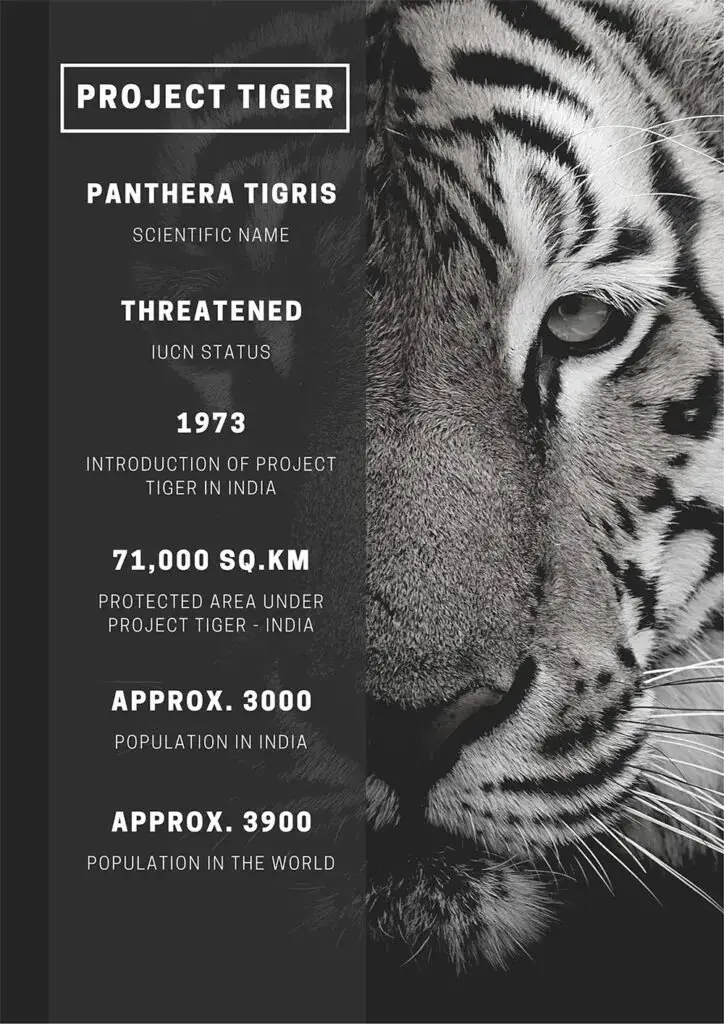
    • Project Tiger started in 1973, one of the largest species conservation initiatives in the world, is in its 49th year.
    • It has helped in restoring the population and strengthening conservation efforts for tigers.
    • However there are many challenges too. Managing the tiger population, giving them safe habitat, avoiding human-tiger conflicts are some of the issues that the project has faced.
    • Having said that, less than three thousand populations still puts these majestic cats in endangered species.

    What more needs to be done to create a safe and secure environment for tigers? What are the challenges? We will try to find out in this article.

    What is Project Tiger?

    https://www.naturesafariindia.com/wp-content/uploads/2021/07/bengal-tiger-factss1-724x1024.jpg.jpg

    • Launched from Jim Corbett National Park, Uttarakhand, the project is an ongoing scheme of the Ministry of Environment, Forest and Climate Change (MoEFCC).
    • The centrally sponsored scheme is applicable in nine reserves of different States, namely Assam, Bihar, Karnataka, Madhya Pradesh, Maharashtra, Odisha, Rajasthan, Uttar Pradesh, and West Bengal. 
    Project Tiger has been converted into a statutory authority, National Tiger Conservation Authority (NTCA) by providing enabling provisions in the Wild Life (Protection) Act, 1972 through an amendment, via Wild Life (Protection) Amendment Act, 2006.  The NTCA addresses ecological and administrative concerns for conserving tigers. It provides a statutory basis for the protection of tiger reserves and provides strengthened institutional mechanisms for the protection of ecologically sensitive areas and endangered species.

    Purpose of Project Tiger

    The tiger is a unique animal that plays a pivotal role in the health and diversity of an ecosystem.

    • Predation balance: It is a top predator which is at the apex of the food chain.
    • Regulation of herbivores: It keeps the population of wild ungulates in check, thereby maintaining the balance between prey herbivores and the vegetation upon which they feed.
    • Ecosystem balance: Therefore, the presence of tigers in the forest is an indicator of the well being of the ecosystem.
    • Tourism: Apart from the ecological services provided by the animal, the tiger also offers direct use such as attracting tourists, which provide incomes for local communities.

    Execution of the Project

    Project Tiger was administered by the NTCA. The overall administration of the project is monitored by a steering committee, which is headed by a director. A field director is appointed for each reserve, who is assisted by a group of field and technical personnel.

    1. Shivalik-Terai Conservation Unit
    2. North-East Conservation Unit
    3. Sunderbans Conservation Unit
    4. Western Ghats Conservation Unit
    5. Eastern Ghats Conservation Unit
    6. Central India Conservation Unit
    7. Sariska Conservation Unit
    8. Kaziranga Conservation Unit

    The various tiger reserves were created in the country based on the ‘core-buffer’ strategy:

    • Core Area: are free of all human activities. It has the legal status of a national park or wildlife sanctuary. It is kept free of biotic disturbances and forestry operations like a collection of minor forest produce, grazing, and other human disturbances are not allowed within.
    • Buffer Areas: are subjected to ‘conservation-oriented land use’. They comprise forest and non-forest land. It is a multi-purpose use area with twin objectives of providing habitat supplement to spillover population of wild animals from the core conservation unit and providing site-specific co-developmental inputs to surrounding villages for relieving their impact on the core area.

    Issues with the Project

    • Implementation bottlenecks: The efforts were hampered by poaching, as well as debacles and irregularities in Sariska and Namdapha, both of which were reported extensively in the Indian media.
    • Forest Dwellers Rights: The Forest Rights Act passed by the Indian government in 2006 recognizes the rights of some forest dwelling communities in forest areas. This has led to controversy over implications of such recognition for tiger conservation.
    • Man-Animal Conflict: Some have argued that this is problematic as it will increase conflict and opportunities for poaching; some also assert that “tigers and humans cannot co-exist”.
    • Abuse of Authority: Others argue that this is a limited perspective that overlooks the reality of human-tiger coexistence and the abuse of power by authorities, evicting local people and making them pariahs in their own traditional lands.

    Other efforts to save Tigers

    India is home to 70 percent of the global tiger population. Therefore, the country has an important role to play in tiger conservation.

    [1] Project Tiger

    (discussed above)

    [2] CITES (Convention on International Trade in Endangered Species of Wild Fauna and Flora)

    • Besides protecting tiger territory, other measures being taken to save the tiger include: curbing wildlife trade through international agreements.
    • CITES is an international agreement between governments aimed at ensuring that international trade in specimens of wild animals and plants, including tigers, does not threaten their survival. India ratified this treaty in 1976.

    [3] Global Tiger Forum and Tiger Range Countries

    • Established in 1994, the Global Tiger Forum is the only inter-governmental body for tiger conservation.
    • Its membership includes seven tiger range countries: Bangladesh, Bhutan, India, Cambodia, Myanmar, Nepal and Vietnam.

    [4] CA|TS

    • 14 tiger reserves have been accredited under CA|TS (Conservation Assured | Tiger Standards) categories.
    • The CA|TS is a set of criteria that examines the management of tiger sites to gauge the success rates of tiger conservation.

    [5] St. Petersburg Declaration   

    • This resolution was adopted In November 2010, by the leaders of 13 tiger range countries (TRCs) assembled at an International Tiger Forum in St. Petersburg, Russia
    • It aimed at promoting a global system to protect the natural habitat of tigers and raise awareness among people on white tiger conservation.

    [6] Various NGOs

    • International NGO members consist of World Wildlife Fund, International Fund for Animal Welfare (IFAW), and TRAFFIC.
    • Several national NGOs from India and Nepal are also members.

    Success of the Project Tiger

    The four-year tiger census report, Status of Tigers in India, 2018 shows numbers of the big cat have increased across all landscapes.

    The total count has risen to 2,967 from 2,226 in 2014 — an increase of 741 individuals (aged more than one year), or 33%, in four years.

    • At present, India has around 75% of tiger population and its source areas amongst the 13 tiger range countries in the world.
    • 2.24% of country’s geographical area is spread out in 51 tiger reserves in 18 States.

    Various threats to Tigers

    • Despite measures being initiated to protect wild tigers, habitat loss and poaching continue to pose a threat to the animal’s survival.
    • Tiger parts are used in traditional Chinese medicines, tiger skin is used for decorative and medicinal purposes and tiger bones are again used for medicinal purposes for curing body pain, et al.
    • Between 2000 and 2014, TRAFFIC’s research found that parts of a minimum of 1,590 Tigers were seized in Tiger range States, an average of two Tigers per week.

    Other existential threats to tigers

    • Man-Animal conflict: This largely seems a normal phenomenon in India. We broadly remember the case of Tigress Avni which was finally shot dead by the forest officials in Maharashtra.
    • Shrinking habitat: This often leads to territorial conflicts among the Tigers.
    • Issues with Tourism: Excess of tourist activities is problematic for animals. Frequent visits in reserved forests areas disrupt them to move freely for their prey.
    • Climate Change: The effects of climate change and floods are a major problem.  The latest study by WWF shows that Sundarban which is one of the biggest home of tigers in India would sink entirely in 2070.

    Way forward

    • The process of tiger conservation should be more dynamic and compatible with the future possibilities of climatic changes as well.
    • The Forest Department and the Central government can collaborate to protect the natural corridors to ensure the free movement of the tigers for better food resources.
    • Campaigns such as ‘Save the Tiger’ are recommended as effective measures to make people across the country and globe aware of the significance of conserving tiger species.
    • Sensitization of local communities against poaching is also a crucial measure in this regard.
    • We have to make the environment and development co-exist and go hand in hand by planning our future developmental goals in such a manner that our environmental goals are not compromised.