💥Join UPSC 2027,2028 Mentorship (July Batch) + XFactor Notes & Microthemes PDF

Author: CD Staff

  • Highlights of the Union Budget 2022-23

    The Union Finance Minister has tabled the Union Budget 2022-23 in Parliament today.

    What is Union Budget in India?

    • The Union Budget also referred to as the Annual Financial Statement in Article 112 of the Constitution of India is the annual budget of India.
    • The Government presents it on the first day of February so that it could be materialized before the beginning of new financial year in April.
    • Until 2016 it was presented on the last working day of February by the Finance Minister in Parliament.
    • The budget, which is presented by means of the Finance bill and the Appropriation Bill, has to be passed by Lok Sabha before it can come into effect on 1 April, the start of India’s financial year.

    Components of the Budget

    There are three major components — expenditure, receipts and deficit indicators.

    The budget is generally classified into Revenue Budget and Capital Budget.

    [A] Revenue Budget

    • It includes the government’s revenue receipts and expenditure.
    • There are two kinds of revenue receipts – tax and non-tax revenue.
    • Revenue expenditure is the expenditure incurred on day to day functioning of the government and on various services offered to citizens.
    • If revenue expenditure exceeds revenue receipts, the government incurs a revenue deficit.

    [B] Capital Budget

    • It includes capital receipts and payments of the government.
    • Loans from public, foreign governments and RBI form a major part of the government’s capital receipts.
    • Capital expenditure is the expenditure on development of machinery, equipment, building, health facilities, education etc.
    • Fiscal deficit is incurred when the government’s total expenditure exceeds its total revenue. 

    What are fiscal rules and how do they affect policy?

    • Fiscal rules provide specific policy targets on the basis of which fiscal policy is formed.
    • In India’s case, its present fiscal rule is guided by the recommendations of the N.K. Singh Committee Report.
    • Allowing for some deviations under exceptional times, it has three policy targets — maintaining a specific level of debt-GDP ratio (stock target), fiscal deficit-GDP ratio (flow target) and revenue deficit-GDP ratio (composition target). 

    Highlights of the Union Budget 2022-23

    PART A

    Entering Amrit Kaal, the 25 year long lead up to India @100, the budget provides impetus for growth along four priorities:

    1. PM Gati-Shakti
    2. Inclusive Development
    3. Productivity Enhancement & Investment, Sunrise opportunities, Energy Transition, and Climate Action
    4. Financing of investments

    (1) PM GatiShakti

    The seven engines that drive PM Gati-Shakti are Roads, Railways, Airports, Ports, Mass Transport, Waterways and Logistics Infrastructure:

    1. National Highways Network to be expanded by 25000 Km in 2022-23
    2. One Station One Product concept to help local businesses & supply chains
    3. 2000 Km of railway network to be brought under Kavach, the indigenous world class technology and capacity augmentation in 2022-23
    4. 400 new generation Vande Bharat Trains to be manufactured during the next three years
    5. National Ropeways Development Program, Parvatmala to be taken up on PPP mode

    (2) Inclusive Development

    Agriculture

    • Grains Procurement
    • NABARD Loans:  To facilitate fund with blended capital to finance startups for agriculture & rural enterprise.
    • Kisan Drones: for crop assessment, digitization of land records, spraying of insecticides and nutrients.
    • Ken Betwa project: 1400 crore outlay for implementation of the Ken – Betwa link project.

    MSME Sector

    • MSME: ECLGS to be extended up to March 2023; Udyam, e-shram, NCS and ASEEM portals to be interlinked
    • Raising and Accelerating MSME performance (RAMP) Program: with outlay of Rs 6000 Crore to be rolled out.

    Skill Development

    • Digital Ecosystem for Skilling and Livelihood (DESH-Stack e-portal):  It will be launched to empower citizens to skill, reskill or upskill through on-line training.
    • Drone-As-A-Service (DrAAS):  Startups will be promoted to facilitate ‘Drone Shakti’.

    Education

    • One class-One TV channel’ programme of PM eVIDYA: To be expanded to 200 TV channels.
    • Virtual labs: skilling e-labs to be set up to promote critical thinking skills and simulated learning environment.
    • High-quality e-content: It will be developed for delivery through Digital Teachers.
    • Digital University: for world-class quality universal education with personalized learning experience to be established. 

    Health

    • National Digital Health Ecosystem: An open platform to be rolled out.
    • National Tele Mental Health Programme: for quality mental health counseling and care services to be launched
    • Saksham Anganwadi: Integrated benefits to women and children through Mission Shakti, Mission Vatsalya, Saksham Anganwadi and Poshan 2.0

    Housing for All

    • Housing for All: Rs. 48,000 crore allocated for completion of 80 lakh houses in 2022-23 under PM Awas Yojana
    • Har Ghar, Nal Se Jal: Rs. 60,000 crore allocated to cover 3.8 crore households in 2022-23 under this

    Prime Minister’s Development Initiative for North-East Region (PM-DevINE)

    •  New scheme PM-DevINE launched to fund infrastructure and social development projects in the North-East.
    • An initial allocation of Rs. 1,500 crore made to enable livelihood activities for youth and women under the scheme.

    Vibrant Villages Programme

    • Vibrant Villages Programme for development of Border villages with sparse population, limited connectivity and infrastructure on the northern border.

    Urban Planning

    • Modernization of building byelaws, Town Planning Schemes (TPS), and Transit Oriented Development (TOD) will be implemented.
    • Battery swapping policy to be brought out for setting up charging stations at scale in urban areas.

    (3) Industrial Sector

    Telecom Sector

    • Scheme for design-led manufacturing to be launched to build a strong ecosystem for 5G as part of the Production Linked Incentive Scheme.

    Export Promotion

    • Special Economic Zones Act to be replaced with a new legislation to enable States to become partners in ‘Development of Enterprise and Service Hubs’.

    Atmanirbharta in Defence

    • 68% of capital procurement budget earmarked for domestic industry in 2022-23, up from 58% in 2021-22 

    GIFT-IFSC

    • World-class foreign universities and institutions to be allowed in the GIFT City.

    An International Arbitration Centre to be set up for timely settlement of disputes under international jurisprudence

    (4) Energy Transition and Climate Action

    • Five to seven per cent biomass pellets to be co-fired in thermal power plants
    • CO2 savings of 38 MMT annually
    • Extra income to farmers and job opportunities to locals
    • Help avoid stubble burning in agriculture fields
    • Pilot projects to be set up for coal gasification and conversion of coal into chemicals for the industry
    • Financial support to farmers belonging to Scheduled Castes and Scheduled Tribes, who want to take up agro-forestry

    (5) Mobilizing Resources

    • Data Centres and Energy Storage Systems to be given infrastructure status.
    • Venture Capital and Private Equity invested more than Rs. 5.5 lakh crore last year facilitating one of the largest start-up and growth ecosystems
    • Blended funds to be promoted for sunrise sectors
    • Sovereign Green Bonds to be issued for mobilizing resources for green infrastructure.

    Digital Rupee

    • Introduction of Digital Rupee by the Reserve Bank of India starting 2022-23.

    Providing Greater Fiscal Space to States

    • Enhanced outlay for ‘Scheme for Financial Assistance to States for Capital Investment’:

    (6) Fiscal Management

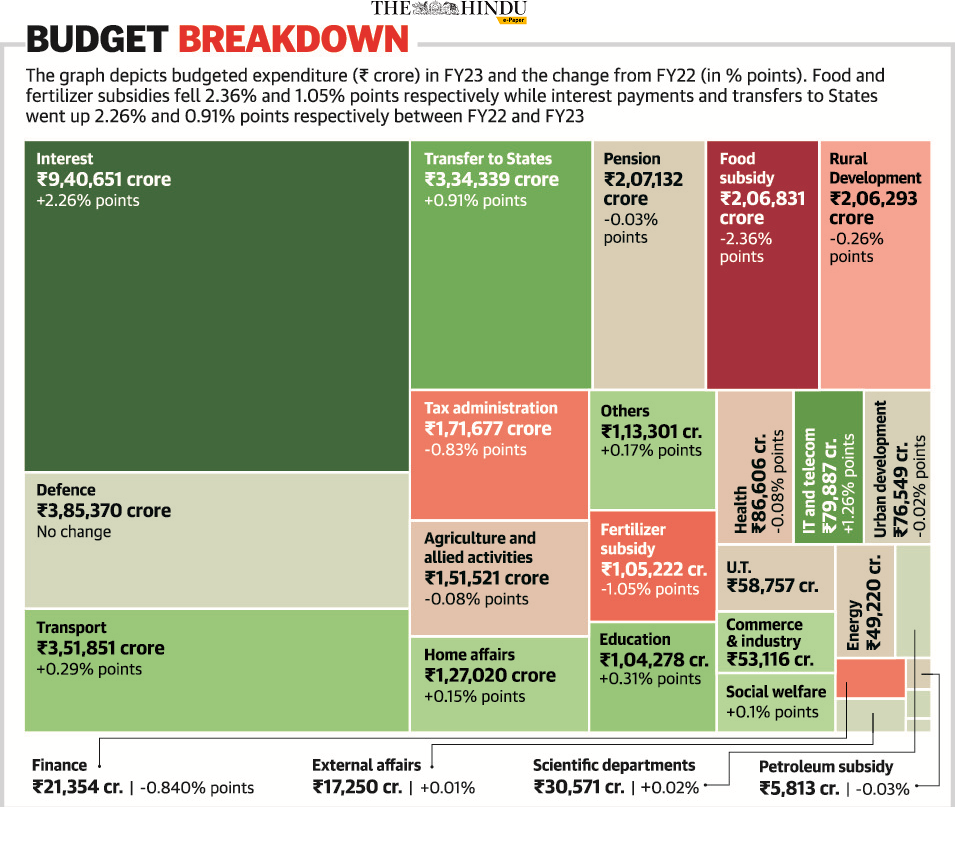
    • Budget Estimates: Rs. 34.83 lakh crore
    • Revised Estimates: Rs. 37.70 lakh crore
    • Total expenditure estimated at Rs. 39.45 lakh crore
    • Total receipts other than borrowings estimated at Rs. 22.84 lakh crore
    • Fiscal deficit in current year: 6.9% of GDP (against 6.8% in Budget Estimates)

    PART B

    DIRECT & INDIRECT TAXES

    (Not necessary)

  • Highlights of the Economic Survey 2021-22

    The Union Minister for Finance & Corporate Affairs has presented the Economic Survey 2021-22 in Parliament.

    What is the Economic Survey?

    • The Economic Survey is a report on the state of the economy in the past one year, the key challenges it anticipates, and their possible solutions.
    • One day before the Union budget, the Chief Economic Adviser (CEA) releases the Economic Survey.
    • The document is prepared by the Economic Division of the Department of Economic Affairs (DEA) , Ministry of Finance.
    • Once prepared, the Survey is approved by the Finance Minister.
    • The first survey was presented in 1950-51. Until 1964, the document was presented along with the Budget.

    Why is the Economic Survey significant?

    • The Economic Survey is a crucial document as it provides a detailed, official version of the government’s take on the country’s economic condition.
    • It can also be used to highlight some key areas of focus — for example, in 2018, the survey presented by the then CEA Arvind Subramanian was pink in colour, to stress on gender equality.

    Is it binding on the government?

    • The government is NOT constitutionally bound to present the Economic Survey or to follow the recommendations that are made in it.
    • If the government so chooses, it can reject all suggestions laid out in the document.
    • But while the Centre is not obliged to present the Survey at all, it is tabled because of the significance it holds.

    Highlights of the Economic Survey 2021-22

    [1] State of the Economy

    • Economic growth: Indian economy estimated to grow by 9.2 percent in real terms in 2021-22 (as per first advanced estimates) subsequent to a contraction of 7.3 percent in 2020-21. 
    • GDP growth: GDP projected to grow by 8- 8.5 percent in real terms in 2022-23.  
    • Agriculture and allied sectors: They are expected to grow by 3.9 percent; industry by 11.8 percent and services sector by 8.2 percent in 2021-22.

     [2] Fiscal Developments

    • Revenue receipts: These have gone up by 67.2 percent (YoY) as against an expected growth of 9.6 percent in the 2021-22 Budget Estimates.
    • Gross Tax Revenue: It registered a growth of over 50 percent during April to November, 2021 in YoY terms. 
    • Borrowings: With the enhanced borrowings on account of COVID-19, the Central Government debt has gone up from 49.1 percent of GDP in 2019-20 to 59.3 percent of GDP in 2020-21/

    [3] External Sectors

    • India’s merchandise exports and imports rebounded strongly and surpassed pre-COVID levels during the current financial year.
    • Net capital flows: These were higher at US$ 65.6 billion in the first half of 2021-22, on account of continued inflow of foreign investment, revival in net external commercial borrowings, higher banking capital and additional special drawing rights (SDR) allocation.
    • India’s external debt: It rose to US $ 593.1 billion at end-September 2021, from US $ 556.8 billion a year earlier, reflecting additional SDR allocation by IMF, coupled with higher commercial borrowings.
    • Foreign Exchange Reserves: It touched US $ 633.6 billion in Dec 2021 making India the fourth largest forex reserves holder in the world after China, Japan and Switzerland.

    [4] Monetary Management and Financial Intermediation

    • Repo was maintained: The liquidity in the system remained in surplus. Repo rate was maintained at 4 per cent in 2021-22.
    • GSAP: RBI undertook various measures such as G-Sec Acquisition Programme and Special Long-Term Repo Operations to provide further liquidity.
    • NPAs declined: The Gross Non-Performing Advances ratio of Scheduled Commercial Banks (SCBs) declined from 11.2 per cent at the end of 2017-18 to 6.9 per cent at the end of September, 2021.

    [5] Prices and Inflation

    • Control over food inflation: The decline in retail inflation was led by easing of food inflation. Proactive measures were taken to contain the price rise in pulses and edible oils.
    • Supply constraints eased: Effective supply-side management kept prices of most essential commodities under control during the year.
    • Fuel price reduction: Reduction in central excise and subsequent cuts in Value Added Tax by most States helped ease petrol and diesel prices. 

    [6] Sustainable Development and Climate Change

    • Sustainable development: India’s overall score on the NITI Aayog SDG India Index and Dashboard improved to 66 in 2020-21 from 60 in 2019-20 and 57 in 2018-19.
    • Rise in forest cover: India has the tenth largest forest area in the world. In 2020, India ranked third globally in increasing its forest area during 2010 to 2020. In 2020, the forests covered 24% of India’s total geographical, accounting for 2% of the world’s total forest area.
    • Plastic waste management (PWM): In August 2021, the PWM Amendment Rules, 2021, was notified which is aimed at phasing out single use plastic by 2022.
    • Extended Producer Responsibility for plastic: Draft rules for plastic packaging was notified.
    • Pledge on Net-Zero Emissions: The PM participated at COP-26 in Glasgow. He announced ambitious targets to achieve net-zero by 2070.

    [7] Agriculture and Food Management

    • Minimum Support Price (MSP) policy: It is being used to promote crop diversification.
    • Allied sector growth: Allied sectors including animal husbandry, dairying and fisheries are steadily emerging to be high growth sectors and major drivers of overall growth in agriculture sector.
    • Food security:  Government has further extended the coverage of food security network through schemes like PM Gareeb Kalyan Yojana (PMGKY).
    • Income Support: Timely release of PM-KISAN Funds.

    [8] Industry and Infrastructure:

    • Index of Industrial Production (IIP): It grew at 17.4 percent (YoY) during April-November 2021 as compared to -15.3 percent in April-November 2020.
    • Extent of road construction per day: This has increased substantially in 2020-21 to 36.5 Kms per day from 28 Kms per day in 2019-20 – a rise of 30.4 percent.
    • Production Linked Incentive (PLI) Scheme: It gave a major boost to infrastructure-both physical as well as digital.

    [9] Services Sector

    • Growth despite pandemic: Overall service Sector GVA is expected to grow by 8.2 percent in 2021-22.
    • Opening up of space sector to private players: Major government reform.
    • India becomes start-up hub: India has become 3rd largest start-up ecosystem in the world after US and China.
    • Unicorns in India: 44 Indian start-ups have achieved unicorn status in 2021 taking overall tally of unicorns to 83, most of which are in services sector.

    [10] Social Infrastructure and Employment

    • Universal vaccination: 157.94 crore doses of COVID-19 vaccines administered (as on 16th January 2022).
    • Employment recovery: As per the quarterly Periodic Labour Force Survey (PFLS) data up to March 2021, employment in urban sector affected by pandemic has recovered almost to the pre-pandemic level.
    • Expenditure on social services (health, education and others): This expenditure by Centre and States as a proportion of GDP increased from 6.2 % in 2014-15 to 8.6% in 2021-22.
    • National Family Health Survey-5:
    1. Total Fertility Rate (TFR) came down to 2 in 2019-21 from 2.2 in 2015-16
    2. Infant Mortality Rate (IMR), under-five mortality rate and institutional births have improved in 2019-21 over year 2015-16
    3. Jal Jeevan Mission (JJM): Under this, 83 districts have become ‘Har Ghar Jal’ districts.
    4. Continuance of MGNREGS: Increased allotment of funds to Mahatma Gandhi National Rural Employment Guarantee Scheme (MNREGS) to provide buffer for unorganized labour in rural areas during the pandemic.

  • [Sansad TV] Perspective: Keeping Drones in Check

    UPSC 2022 countdown has begun! Get your personal guidance plan now! (Click here)

    Context

    • The potential use of drones in a terrorist incident or attack against a critical infrastructure and soft targets is a growing concern for law enforcement agencies worldwide.
    • India has also witnessed increased rogue drone activity along its Western border with Pakistan in the recent years with drones dropping weapons, ammunition and drugs.

    Recent incidences of Drone Strikes

    • Drones have also been increasingly used in the Middle East, particularly in Iraq and Syria, by the US to carry out targeted assassinations.
    • Recently, many including two Indians were killed in Abu Dhabi in a drone attack claimed by Yemen’s Houthi rebels.
    • In 2020, Iranian general Qasem Soleimani, the most powerful figure in Iran after its supreme leader, was killed in a US drone strike in Iraq.

    What are Drones?

    • In layman terminology, drones are unmanned flying machines that can be remotely controlled or fly autonomously through software-controlled flight plans in their embedded systems.
    • Section 2(h) of the new Draft Rules, 2021 defines drones as an aircraft without a pilot on board that can operate autonomously or can be operated remotely.

    Significant applications of Drone Technology

    Drones are a transformative technology. They have been and can be used in various areas such as:

    • Land mapping: The drone technology in the SVAMITVA scheme has helped about half a million village residents to get their property cards by mapping out the areas.
    • Emergency response: Drones are significant for the agencies such as the fire and emergency services wherever human intervention is not safe. It can perfectly save human efforts during disaster management.
    • Distant and remote delivery purposes: Recently, the Ministry of Civil Aviation has approved a project with the Telangana government for using drone technology to deliver vaccines in remote areas.
    • Agriculture: In the agriculture sector, micronutrients, hazardous pesticides can be spread with the help of drones. It can also be used for performing surveys for identifying the challenges faced by the farmers.
    • E- Commerce: Drones offer a perfect and cost-effective solution for delivery of products by e-com facilitators.
    • Monitoring: The railways are using drones for track monitoring. Telecom companies are using drones for monitoring the tower.
    • Security and defence: Drone system can be used as a symmetric weapon against terrorist attacks. They can be integrated into the national airspace system.

    Threats posed by Drones

    The operation of drones without any adequate legal backing can pose several security threats.

    • Espionage: Drones can be stealthily used for spying purposes.
    • Terror sponsoring: Procurement of combat drones by non-state actors poses serious threats.
    • Stealth in warfare: Drones can easily escape security checks due to its compact size.
    • Easy available weapons: Given the easy availability of advanced technology to the common man at a reduced cost and the proliferation of information via the Internet, this threat will invariably grow.
    • Cost effective: Drones are relatively cheaper in comparison to conventional weapons. Many open resources on DIY (do it yourselves) drones are available and thus can be easily assembled.
    • Destruction of security apparatus: They can be put to destructive use, to slam into critical targets, destroy infrastructure and so on.
    • Smuggling of arms: Incidents of arms being dropped by drones are also there such as the recent Jammu drone attacks.

    Why are drones such stealthy?

    • Radar complicacies: Conventional air defence systems are less effective against drones and military radars are designed to track larger, fast-moving aircraft and cannot always pick up small, slow, low-flying drones.
    • Feasibility of securitization: It is not cost effective to use expensive anti-aircraft systems to shoot down these drones, which are typically cheap and can be easily devised.
    • Eyespoting not possible every time: Currently, border forces in India largely use eyesight to spot drones and then shoot them down. Drones can be easily disguised as bird or any other un-identified flying object.

    India’s vulnerability: Terror sponsoring neighborhood

    • India is always subjected to continuous threats of cross border terrorism, drug trafficking and arms trafficking from Pakistan. 
    • Sighting of drones near the India-Pakistan border and the Line of Control has been frequent these days. 
    • We often get to hear news about Punjab Police seizing drones which dropped arms consignment, narcotic drugs supplies from Pakistan.
    • There were many drone-dropped arms consignments seized by the Indian police and security forces.

    Way forward

    • As technology advances, security architects and countries have taken cognizance of this fact and are working on the technological as well as policy fronts to counter it.
    • The Defence Research and Development Organisation (DRDO) has developed a detect-and-destroy technology for drones, but it is not yet into mass production.
    • GPS technology can be imbibed and be inbuilt in drones so that they cannot enter in non flying area.
    • For installations such as oil refineries, power stations or military station a ‘mid segment model’ that includes primary and passive detection and soft kill options can be adopted.

    Conclusion

    • Modern drones, in the hands of terrorists, could cause considerable panic and damage if not countered adequately.
    • Though drones pose a sub-tactical threat, it requires a strategic response. Entire threat perception has to be relooked.
    • It is essential to ensure that the security measures are set up in time so as to avoid any untoward occurrence or a major catastrophe.
  • [Sansad TV] Perspective: Candidates with Criminal Record

    UPSC 2022 countdown has begun! Get your personal guidance plan now! (Click here)

    Context

    • Political parties in 5 states are pulling out the stops in their quest for winning candidates.
    • Most are even overlooking criminal backgrounds of candidates.
    • It is also a heated issue in some states like UP where contesting candidates have been accused of serious causing Riots, Communal Tensions and even Lynchings.

    Criminalization of politics: Indian Case

    • The criminalization of politics has become a headache for the Indian democracy and it is a harsh reality now.
    • Criminalization of politics in India includes political control of the police, state money, corruption, weak laws, lack of ethics, values, vote bank politics and loopholes in the function of the election commission.
    • Deep down, it’s a large nexus of police, money, corrupt bureaucracy, casteism, religion and the drawbacks of functioning in the election commission.

    Why are tainted candidates inducted by political parties?

    • Innocent until proven guilty maxim: The other reason offered by political parties is summarised by the maxim of Indian law, which is that any accused is innocent until proven guilty.
    • Popularity: Such candidates with serious records seem to do well despite their public image, largely due to their ability to finance their own elections and bring substantive resources to their respective parties.
    • Prospected victory: The logic of a candidate with criminal charges doing better for the cause of people of is another flawed argument.
    • Destabilizing other electors: Others do not seek to punish these candidates in instances where they are in contest with other candidates with similar records.
    • Vested interests: Some voters tend to view such candidates through a narrow prism: of being able to represent their interests by hook or by crook.

    A harsh reality of Political Asylum

    • The NN Vohra committee’s report on the criminalization of politics discussed how criminal gangs flourish under the care and protection of politicians.
    • Many times the candidates themselves are the gang leaders.
    • This protection is paid back to them during elections through capital investment in election spending and voter support.

    Issues with Criminals in Politics

    • Morality of the process: It is extremely important that the people who enter the field of politics have a clear image and high moral character.
    • No rule of law: A leader with criminal character undoubtedly tends to undermine the rule of law.
    • Violation of right to equality: There were 4.78 lakh prisoners (as of December 2019) of whom 3.30 lakh were under trial, i.e. not yet proven guilty.
    • Problem of undertrial: An “innocent” undertrial cannot vote, but a man chargesheeted for murder can even contest election from jail.

    Supreme Courts guidelines in this regard

    The Supreme Court earlier in Feb 2020 had ordered political parties to publish the entire criminal history of their candidates for Assembly and Lok Sabha elections.

    • Reasons for nomination: It has also asked for the reasons that goaded them to field suspected criminals over decent people.
    • Publication of records: The information should be published in a local as well as a national newspaper as well as the parties’ social media handles.
    • 48hr time frame: It should mandatorily be published either within 48 hours of the selection of candidates or less than two weeks before the first date for filing of nominations, whichever is earlier.
    • Contempt for non-compliance: It also ordered political parties to submit compliance reports with the Election Commission of India within 72 hours or risk contempt of court action.
    • No escape: The judgment is applicable to parties both at Central and State levels.

    Immediate Reason for Judicial Action

    • The immediate provocation is the finding that 46% of MPs have criminal records.
    • The number might be inflated as many politicians tend to be charged with relatively minor offences —“unlawful assembly” and “defamation”.
    • The real worry is that the current cohort of Lok Sabha MPs has the highest (29%) proportion of those with serious declared criminal cases compared to its recent predecessors.

    Way forward

    (1) ECI suggestion on vendetta politics

    The ECI has suggested some safeguards against vendetta politics.

    • First, only offences that carry an imprisonment of at least 5 years are to be considered.
    • The case against the candidate should have been filed at least six months before the scheduled elections for it to be considered.
    • And finally, a competent court must have framed the charges.

    (2) Speedy trials

    • An alternative solution would be to try cases against political candidates in fast-track courts.
    • The SC had sent a directive in 2014, directing that cases against political candidates must be completed within a year, failing which the matter should be reported to the CJs.

    (3) Legislative reforms

    • We must have a law which debars persons with serious criminal cases from entering the assemblies and the Parliament.
    • There must be stringent criteria in Representation of Peoples Act as well.

    (4) Revamping Criminal Justice System

    • The criminal justice system must be revamped as recommended by the Malimath Committee.
    • An institution comprising representatives of the police/CBI/NIA, IB, IT department, Revenue Intelligence and Enforcement Directorate should be set up to monitor the activities of the mafia and criminal syndicates in the country.
  • [Yojana Archive] Women Entrepreneurship

    UPSC 2022 countdown has begun! Get your personal guidance plan now! (Click here)

    A woman entrepreneur is the one who assumes dominant financial control (minimum financial interest of 51 percent of the capital) in an enterprise.

    Status of women entrepreneurs in India

    • According to the National Sample Survey, women entrepreneurs account for only 14% of all enterprises in India.
    • Women are founders of only 6% of the Indian Start-ups.
    • In terms of ownership of equity, business stakes held by women are highest in India’s manufacturing sector (mainly related to paper and tobacco products) even exceeding 50% .

    Various hurdles for women

    • Male dominant economy: Women have to work in the male-dominant world facing discrimination and social stigma.
    • Familial Constraints: Even though a lot of women have the potential as well as ambition to make it to the top in arenas that are usually dictated by a stark male presence.
    • Small scale: The majority of the businesses are self-funded and operate on a small scale.
    • Uncertain times: At the same time, uncertainty is an important concern for women. They fear failing, especially if the people are sceptical about their business capability.
    • Under-representation: Despite India’s rapid economic growth in recent decades, India still has very few women entrepreneurs.
    • Lack of Funds: It is not unheard of for women entrepreneurs to be denied basic enablers such as easy access to funds and sponsorships.
    • Lack of enterprise: With fewer female business founders, the pool of women who can mentor and advise fellow entrepreneurs is consequently smaller.

    These factors restrict women’s participation in the business sphere.

    Various Initiatives

    The Government of India has taken various steps towards women’s economic empowerment by way of initiatives like:

    1. Stree Shakti Package
    2. Udyogini Scheme
    3. Mahila Udyam Nidhi Scheme
    4. Stand Up India Scheme
    5. Mahila e-Haat
    6. Mahila Bank
    7. Mahila Coir Yojana
    8. Women Entrepreneurship Platform (WEP)

    Why need women entrepreneurs?

    There are various reasons why women Entrepreneurs are always required in the world of business.

    • Better management of finance: It is a fact that women can easily utilize the funds whether it is raised for home expenses or the business expenditure.
    • Access and Vigilance: The basic characteristic of an Entrepreneur is that they must stay high on the updated information related to science and technology which would be helpful in the business field.
    • Self-employment: As all women are doing study and capable to grab the job opportunities but due to less availability of positions in their field of interest they are facing unemployment.
    • Empowerment: Women have always a misconception in their minds that they cannot manage or run a business like other men.  
    • Breakthrough orthodox views: In this world of non-conventional business fields, women need to get up and stay strong to change the conventional thinking of segregating different sectors for women and men as well.
    • Narrow down the Gender Gap:  Women Entrepreneurship motivates women to inspire and run a business.
    • Better company culture: It has been observed that women-owned enterprises provide a well-developed and safe atmosphere within the company.  

    Way Forward

    • The key drivers of women entrepreneurship are investment in infrastructure and education, which predict a higher proportion of businesses started by women in India.
    • Better education and health that increase female labour-force participation, reduced discrimination and wage differentials that encourage more effort, and improved career-advancement.
    • The government can also provide interest-free loans to encourage women entrepreneurs, increase the subsidy for loans and make provisions of microcredit system to the women entrepreneurs.
    • Existing women entrepreneurs have an important role to play as they can reach out to other aspiring female entrepreneurs in their region.
  • [Sansad TV] Perspective: Regulating Mobile Apps

    UPSC 2022 countdown has begun! Get your personal guidance plan now! (Click here)

    Context

    • Mobile apps have become a significant part of the lives of smartphone users. Almost every person seems to be dependent on them.
    • However there is a huge flipside of this flourishing mobile app environment which has become evident quite often in the recent past in cases like that of Bulli Bai App.
    • These apps were used to target women and communities.

    So how do we deal with such challenges and what are the provisions in the legal framework to tackle such issues.

    Bulli Bai App Controversy: A Backgrounder

    • On New Year’s Day, hundreds of Muslim women in India including journalists, social workers, and other prominent personalities found their images and derogatory content about them on a new app called “Bulli Bai”.
    • The app, created on hosting platform Github, offered an online “auction” of women.
    • It derives its name from the derogatory term used for women of a particular community.

    A critical case of abuse

    • The app is clearly an example of online trolling where the dignity and modesty of a woman is highly downgraded.
    • This has not been the very first time. Earlier, no arrests were ever made showing Police inaction.
    • The authorities were using the Mutual Legal Assistance Treaty (MLAT) to obtain information about the creators of such apps from California-based GitHub.

    Why is it a cause of worry?

    • Large user-base: There are about 40 crore internet users and about 25 crore social media users in India.
    • Behavioral impact: Apart from having a huge impact on the life of people, the apps also influence how a person thinks, behaves, or perceives.
    • Lack of regulatory framework: India currently does not have a dedicated legal framework to govern mobile applications.
    • No self regulations: There is no government or self guidelines currently in place in India, regulating the apps.

    Legal provisions against such Crimes

    For making arrests, the police have invoked Sections 153A, 153B, 295A, 354D, 500 and 509 of the Indian Penal Code (IPC) and Section 67 of the Information Technology Act.

    • Section 153A pertains to the offence of promoting enmity between different groups on grounds of religion, etc., and doing acts prejudicial to the maintenance of harmony
    • Section 153B relates to imputations, assertions prejudicial to national-integration
    • Section 295A provides punishment for deliberate and malicious acts intended to outrage religious feelings
    • Section 354D provides that any man who monitors the use by a woman of the internet, email or any other form of electronic communication with malintent, commits the offence of stalking.
    • Section 500 defines the punishment for defamation
    • Section 509 addresses the offence of word, gesture or act intended insulting the modesty of a woman
    • Section 67 of the IT Act lays down the punishment for publishing or transmitting obscene material in electronic form

    What are the other provisions related to cybercrimes?

    • Section 66E of the IT Act prescribes punishment for violation of privacy.
    • IPC sections 354A (sexual harassment and punishment for sexual harassment) and 354C (voyeurism) of the IPC were introduced along with sections 354B and 354D in 2013.

    Threats posed by such apps

    • Foreign scams: These apps are run by scammers in Pakistan and China.
    • Money laundering: More than 40,000 crore hawala transactions took place in India through the distribution of instant loans.
    • Espionage: Mobile apps which are being operated by India’s hostile countries were also used for espionage.
    • Online betting: There are also gaming and betting apps that are currently being used extensively by mobile users in India.
    • Revenue bypass: PUBG (though a banned) gaming app reportedly raised a profit of 2500 crores functioning in India but did not pay any taxes in India.

    Psycho-social impacts

    • These applications pose challenges such as addiction and induce violent behavior among children.
    • There are also examples of apps being used to promote hate crime and hate speeches as recently seen in the case of the Bulli Bai app.

    Need for Regulations

    • No legal liability on intermediaries: The intermediaries are not liable for any third-party data or communication link hosted or stored on their platforms.
    • Inadequacy of cyber laws: Despite having provisions that address mobile applications, the entire aspect of regulating the affairs of mobile applications has not been defined or adequately dealt with under the Indian cyber laws.
    • Lack of holistic approach: The existing regulations hence do not cover the holistic challenges that are posed by the mobile applications and are to be updated and regulated to tackle the current challenges.

    Way Forward

    • There is a need for a comprehensive umbrella IT Law that needs to be proactive and be reviewed from time to time to check the new challenges posed by the technology.
    • The available laws should be enforced in a stringent manner and strict actions should be taken against any violations.
    • Industry interventions should also be allowed in the implementation of the policies to make them dynamic and compliant with economic interests.
  • [Sansad TV] Perspective: Contribution of Indian Diaspora

    UPSC 2022 countdown has begun! Get your personal guidance plan now! (Click here)

    Context

    To mark the contribution of the overseas Indian community in the development of India, the Pravasi Bharatiya Divas is celebrated on 9th January every year.

    Indian Diaspora: A backgrounder

    • Indian Diaspora is a generic term used for addressing people who have migrated from the territories that are currently within the borders of India.
    • From Google CEO to Nobel laureate scientist Har Gobind Khorana, the list of Indians abroad and their contribution to the world goes endlessly.
    • One of the greatest economic contributions of Indian Diaspora has been in terms of remittances.

    Historical perspective

    • Imperialism led-migration: The incorporation of the British Empire in India can be linked to the existence of modern Indian Diaspora all over the world.
    • Indentured labor: Dating back to the nineteenth century, Indian indentured labor was taken over to the British colonies in different parts of the world.
    • World Wars: In the post World War II period, most of the Indian labor and professionals got scattered and it was a worldwide phenomenon.
    • European reconstruction: The reconstruction of Europe after the war was provided by Indians and other South Asians, particularly in the United Kingdom and Netherlands.
    • Modern brain-drain: Most recently, Indians have made their presence visibly felt in professions in countries like the United States, Canada, and Australia.

    Major sections of Indian Diaspora

    (1) Indians in the Gulf

    • Around 8.5 million Indians live and work in the Gulf countries, one of the largest concentrations of migrants in the world.
    • The geographical and historical proximity makes it a convenient destination for Indians.
    • Today migrants from across India are working and living in the Gulf countries (Saudi Arabia, UAE, Qatar, Bahrain, Oman, and Kuwait).

    (2) Indians in USA

    • In recent decades the population has grown substantially, with 2.4 million Indian immigrants resident in the United States as of 2015.
    • This makes the foreign-born from India the second-largest immigrant group in the US after Mexicans.

    Categorizing Indian’s abroad

    Overseas Indians, officially known as Non-resident Indians (NRIs) or Persons of Indian Origin (PIOs), are people of Indian birth, descent or origin who live outside the Republic of India:

    (A) Non-Resident Indian (NRI)

    • Strictly asserting non-resident refers only to the tax status of a person who, as per section 6 of the Income-tax Act of 1961, has not resided in India for a specified period for the purposes of the Act.
    • The rates of income tax are different for persons who are “resident in India” and for NRIs.

    (B) Person of Indian Origin (PIO)

    Person of Indian Origin (PIO) means a foreign citizen (except a national of Pakistan, Afghanistan, Bangladesh, China, Iran, Bhutan, Sri Lanka and/or Nepal), who:

    • at any time held an Indian passport OR
    • either of their parents/grandparents/great-grandparents were born and permanently resident in India as defined in GoI Act, 1935 and other territories that became part of India thereafter provided neither was at any time a citizen of any of the aforesaid countries OR
    • is a spouse of a citizen of India or a PIO.

    (C) Overseas Citizenship of India (OCI)

    • After multiple efforts by leaders across the Indian political spectrum, a pseudo-citizenship scheme was established, the “Overseas Citizenship of India”, commonly referred to as the OCI card.
    • The Constitution of India does not permit full dual citizenship.
    • The OCI card is effectively a long-term visa, with restrictions on voting rights and government jobs.

    Significance of Indian diaspora 

    (A) Contribution in the freedom struggle

    • Mahatma Gandhi’s struggle for ending institutionalized discrimination against Indians in South Africa became an inspiring legend for enduring sentimentalism about the diaspora in modern India.
    • The diaspora also became a vehicle for promoting the cause of Indian independence among the political elites of major countries.
    • As the independence movement gathered momentum at home, it began to influence many Indian communities abroad.

    (B) Diaspora as Cultural extension

    • The act of migration is not just limited to geographical limits; rather it is a cultural extension.
    • Let us take the example of the Sikh community. The Sikhs are one of the largest migrants from India to the UK, Canada and many other countries.
    • They have very well maintained their culture and ethnic existence for decades.

    (C) Remittances

    • Money sent home by migrants is one of the largest financial inflows to developing countries.
    • According to a World Bank Report, India received approximately 87 billion dollars in remittances in 2021 with USA being the biggest source, accounting for over 20% of these funds.
    • Without these remittances, India’s balance of payment position would have looked worse.

    (D) Diaspora as ‘Agents of change’

    • Diaspora acts as ‘agents of change’ facilitating and enhancing investment, accelerating industrial development, and boosting international trade and tourism.
    • Diaspora’s motives to invest in India are long-lasting as many of them wish to establish a long-term base in India.

     (E) Technological development and entrepreneurship

    • Another tangible long-term advantage in nurturing ties with an active diaspora is an accelerated technological sector and increased socio-economic development.
    • Some examples to illustrate this phenomenon are Bengaluru, Gurugram and Hyderabad as thriving IT hubs that not only house multinational companies (MNCs) but also multiple Indian start-ups.

    (F) Enhancing India’s global say

    • India’s permanent membership to the UNSC can become a reality with support from the diaspora.
    • Apart from political pressures and ministerial and diplomatic level lobbying, India can leverage its diaspora to influence states such as Canada and Mexico to support India’s membership

    Most Importantly,

    (G) Diaspora diplomacy

    • The diaspora’s ability to spread Indian soft power, lobby for India’s national interests, and contribute economically to India’s rise is now well-recognized.
    • A less tangible but important advantage in having a large immigrant group is “diaspora diplomacy”.
    • The recent engagement of Indian leaders in US general elections is a continuation of the extraordinary political investment in engaging the Indian diaspora.

    India’s engagement with Diaspora: A policy-wise perspective

    • Many of the themes of India’s contemporary diaspora policy had their origins in the approach of the Indian national movement before independence.
    • The nationalist backlash against the Indian communities in Africa and Asia in the 1950s and 1960s saw Delhi consciously distance itself from the diasporic communities.
    • As India turned inwards, Delhi also took a dim view of the “brain drain” as many well-trained Indians began to look for opportunities elsewhere.
    • It was only in the late 1980s that Delhi began to rethink its approach to the diaspora.

    Change in recent years

    • PM Rajiv Gandhi was the first to appreciate the potential role diaspora could play in advancing national development and improving India’s ties with the US.
    • In 2000, the Pravasi Bharatiya Divas was commenced to be celebrated and also led to the formation of a separate Ministry for Overseas Indians under PM AB Vajpayee.
    • Other innovative initiatives like the Know India Programme (KIP) and Study India Programme (SIP) were launched.
    • These have engaged the youth living abroad and the Tracing the Roots Scheme, through which some Indians have been able to trace their roots in India.

    Most recent initiatives

    • India has been following the spirit of 4 Cs i.e. Connect – Contribute – Celebrate – Care.
    • There is a dedicated Diaspora Welfare Officer.
    • The authorities have been ensuring 100 percent grievance redressal through E-Migration Portal, Madad Portal, and CPGRAMS.

    Various policy initiatives   

    • Education: NRI seats are reserved in all the medical, engineering and other professional colleges.
    • Voting rights: The Representation of the People (Amendment) Bill 2017 the provision would help non-resident Indians (NRIs) to participate in the electoral process through ‘proxy voting’.
    • Know India Program (KIP): It is a flagship initiative for Diaspora engagement which familiarizes Indian-origin youth (18-30 years) with their Indian roots and contemporary India has been refashioned.
    • Minimum Referral Wages (MRW): A number of policies were announced keeping in mind the protection of welfare and interest of Indians abroad; for example, the 2014 Minimum Referral Wages (MRW).
    • Easing the passport facility: The last three years saw the launch of Head Post Offices as passport centers enabling thousands more to apply for a passport.

    Challenges faced by Diaspora

    • Racial antagonism: Rising incidence of hate speech and crimes against Indians by the locals due to racism, communalism emboldened by coming of nationalist and ultra-nationalist governments to power in many countries.
    • Protectionism: Fear of losing jobs and educational opportunities to outsiders has resulted in stricter visa rules in many countries including the USA, Australia, etc.
    • Terrorism: Sectarian crisis, increasing terrorist activities and war in the Middle East countries (Yemen, Oman, Libya, Syria etc) leave our diaspora vulnerable to attacks.
    • Political Polarization: Many Indians abroad are turning against India since the change of government and some extreme right wing factionists.
    • Anti-national tendencies: India has had problems with negative campaigning and foreign funding, coming from abroad, for separatist movements like the Khalistan movement.

    Way forward

    • India has enjoyed being viewed more favorably by the world since 2014, and the diaspora can further these perceptions.
    • India needs both additional resources as well as better systems to deal with the recurring challenges of supporting citizens abroad.
    • The diaspora can step up and act as Indian ‘ambassadors’, as it is insufficient and ineffective for a country or its missions abroad to rely only on press releases to change public opinion.
    • The diaspora can provide the requisite strategic impulse, which makes it all the more important to unlock their potential.
  • [Yojana Archive] Capacity Building of PSUs

    UPSC 2022 countdown has begun! Get your personal guidance plan now! (Click here)

    December 2011: Aatmanirbhar Bharat

    Context

    • Training and capacity building in Public Sector Undertakings (PSUs) is an area that is gaining importance, particularly due to rapid advancements in technology and other operational methodologies.
    • To meet the training needs in the current dynamic scenario, it is imperative that there is synergising of resources and a more active exchange of technical knowledge and other related ideas among PSUs.

    What are Public Sector Undertakings (PSUs)?

    • A state-owned enterprise in India is called a PSU or a public sector enterprise.
    • These companies are owned by the union government of India or one of the many state or territorial governments or both.
    • The company stock needs to be majority-owned by the government to be a PSU.
    • PSUs strictly may be classified as central public sector enterprises (CPSEs) or state level public enterprises (SLPEs).
    • CPSEs are companies in which the direct holding of the Central Government or other CPSEs is 51% or more.
    • They are administered by the Ministry of Heavy Industries and Public Enterprises.

    Need for Capacity Building of PSUs

    • PSUs play a multifaceted role in India, laying a solid platform for industrial growth. These firms have contributed to economic prosperity by focusing on infrastructure development and expansion.
    • Many people have found work as a result of these businesses. PSUs want to boost exports while lowering imports.
    • Modern procedures and capacity building in the form of functional competencies, knowledge, and attitudes will encourage a culture of efficiency and competitiveness.

    Issues with PSUs through years

    • Economic failure: Inefficient PSU’s were largely responsible for the macro-economic crisis faced by India during 1980’s.
    • Lack of autonomy: Lack of autonomy, political interference, nepotism & corruption has further deteriorated the situation.
    • Bureaucratic rigidities: The entire mechanism did not turn out as efficient as it ought to be, all thanks to the prevailing hierarchy and bureaucracy.
    • Revenue losses: Due to the expenditure on items such as interest payments, wages and salaries of PSU employees and subsidies, the Government is left with hardly any surplus for capital expenditure on social and physical infrastructure.
    • Lack of Competitiveness: In an era of LPG industrial competitiveness has especially assumed an important role, necessitating privatization or disinvestment of PSUs.
    • Poor performance: Despite the huge injection of funds in the past decades, the functioning of many public sector units (PSUs) has traditionally been characterized by poor management, slow decision-making procedures, lack of accountability etc.

    Also in discussion: Strategic disinvestment of PSUs

    The Union Cabinet has approved sale of the government’s stake to cut shareholding in select public sector firms below 51% to boost revenue collections that have been hit by slowing economy.

    The following main objectives of disinvestment were outlined:

    • To reduce the financial burden on the Government.
    • To improve public finances.
    • To introduce, competition and market discipline.
    • To fund growth.
    • To encourage wider share of ownership.
    • To depoliticize non-essential services.

    Why disinvestment?

    • Presently, the Government has about Rs. 2 lakh crore locked up in PSUs.
    • Disinvestment of the Government stake is, thus, far too significant. The importance of disinvestment lies in the utilization of funds for:
    1. Financing the increasing fiscal deficit
    2. Financing large-scale infrastructure development
    3. For investing in the economy to encourage spending
    4. For retiring Government debt- Almost 40-45% of the Centre’s revenue receipts go towards repaying public
      debt/interest
    5. For social programs like health and education

    Way forward for capacity building of PSUs

    • Collaborative Facilities: There is a need to bring about collaboration between training facilities of various PSUs and create a pool of shared resources. It will create cross-synergization and develop a vibrant pool of common resources to be shared.
    • Centres of Excellences: Resource training should be institutionalized and two or more training institutes should be designated as “Centres of Excellence”.
    • Geographic Clusters: Identify geographic clusters where several training institutes from separate fields are located.
    • Thematic Clusters: There are different institutes offering similar core competencies. Tie-ups between such centres could help create Thematic Centres of Excellence.
    • Ethics standards: PSUs need to be built as agents of socio-economic growth in society. Training inputs can help in developing a sense of responsibility towards nation-building.

    Conclusion

    PSUs and banks need to collaborate on capacity building, share resources, identify and strengthen the core competencies. This will optimize resource utilization and have benefits of specialization.

  • [Sansad TV] Perspective: Innovation in Education

    UPSC 2022 countdown has begun! Get your personal guidance plan now! (Click here)

    Context

    • The buzzword across the globe for the 21st century is Innovation which is considered to be the primary driver of progress.
    • Incentivising innovation and intellectual property creation is important for India’s future growth prospects.
    • Making all these considerations, the Ministry of Education’s innovation cell has recently released the third edition of Atal Ranking of Institutions on Innovation Achievements (ARIIA) 2021.

    What is Atal Ranking of Institutions on Innovation Achievements (ARIIA)?

    • ARIIA ranking classifies participating institutions into two major categories; technical and non-technical.
    • It is developed by the All India Council for Technical Education (AICTE) and the Ministry’s Innovation Cell.
    • It aims to systematically rank all major higher educational institutions and universities in India.

    Highlights of ARIIA 2021

    • In the technical ranking IIT Madras has been recognised as the Most Innovative Educational Institute in India.
    • This is the third time that IIT Madras has secured the first rank. IIT Bombay and IIT Delhi were placed at the second and third ranks respectively.
    • Out of total of 3551 HEIs registered, 1438 institutions including all IITs, NITs, IISc, etc. participated in this exercise.

    Why discuss innovation?

    • Academic nature: For the longest of time in India, innovation was either tucked away in the R&D centres of government enterprises, academia and the MNEs.
    • Situational constraints: Quiet often it was around unorganised markets in the form of the cheap Jugaad.
    • Rise of Unicorns: With over 35 Unicorns (and counting), India has become the third-largest hub of Unicorns globally, something that is not even remotely replicable by others in similar class of economies.
    • Pitch for Indigenization: Introduced at the beginning of the 2020s, the ‘Vocal for Local’ credo is symbolic of a nation that is beginning to believe in its own self-worth.
    • Unleashed potential: From ISRO’s groundbreaking low-budget streaks to India being a frontrunner in the Covid vaccine development, India’s ability to innovate is beginning to make a lasting impact on the world.
    • Global acknowledgement: The Global Innovation Index indicates India has been consistently outperforming other economies. India’s ranking has gone up from 81 (2015) to 48 (2020).

    For a better India

    • The once stereotypical attitude of ‘chalta hai’ is giving way to the newfound zeal around ‘how to make things work better.
    • This is the question that Indian entrepreneurs are applying to the products and services landscape of new India.

    Why does India need innovation?

    • Heterogeneity of users: With the hard metrics of innovation ecosystem in place, what really acts as the magic ingredient is the vast and heterogenous user segments in India that are hungry for novel solutions.
    • Capable institutions: This combination of strong capabilities and categories ripe for disruption makes India a fertile ground for new innovations.
    • Youth: India is also a young country. While population growth is under control, it is still growing at two per cent per year in population.
    • Being later than never: Technology is clearly the biggest area of transformation in India. India has some advantages in this area from being a ‘late mover’, which has enabled it to leapfrog the competition in many cases.

    Hurdles to Innovation in HEIs

    • Low gross enrolment ratio is a major challenge in India towards the introduction of innovation in education
    • Inadequate quality of education and infrastructure that is requisite to boost innovation
    • Lack of funds for state-run Universities
    • Faculty crunch and severe shortage of teaching staff and poor facilities
    • Stagnant academic syllabus in institutions other than IITs/NITs
    • Decline in research standards due to lack of infrastructure
    • Limited institutional support- While India has the scientific talent, we do not have the deep pockets and the enabling ecosystem that drives most of the innovation in the West.

    Structural lacunae

    • Lack of incubation centres: In terms of world-class manufacturing, India still lags behind.
    • Limited policy successes: Even though the government has an initiative in place to encourage companies under Make In India/ Vocal for Local, it hasn’t had any major victories in terms of attracting big players.
    • Weaker IPR regime: The lack of funding support in the country forces innovators in India to park their IP rights outside the country.

    Significance of Innovation in Higher Education

    • Competition: The ranking system of ARIIA facilitates a healthy competitive environment among institutions to expand the purview of innovation. 
    • Formative years of students: This ecosystem would inspire young students to put forth their ideas in their formative years. 
    • Quality enhancement: ARIIA will exert a large emphasis on the quality of innovation and will make an attempt to examine the influence of the innovations nationally and internationally. 
    • Social applications: The innovation in education has a far-reaching impact on human development for productivity, research and improved value chain interaction across different spheres of the economy.

    Way forward

    • In today’s knowledge-driven economy, innovation is the primary driver of progress. And, a large reservoir of entrepreneurial energy in India waiting to be tapped lies in these HEIs.
    • For innovation to flourish, ideas must be funded and taken to market. The HEIs are the right place to invest in for innovations.
    • It is by investing in breakthrough ideas and embracing entrepreneurship as an economic model of growth that India will be able to unleash the power of innovation to ensure a better life for its billion-plus citizens.

    Conclusion

    • We must build the credibility of Indian innovation within our borders and convince people that the quality of research done in India is at par with the best in the world.
    • This can be done by promoting more innovations in HEIs.
  • [Sansad TV] Perspective: Saving the Tiger

    UPSC 2022 countdown has begun! Get your personal guidance plan now! (Click here)

    Context

    • India has registered biggest margin of drop in tiger numbers in a decade in the year 2021.
    • 127 big cats have fallen prey to everything from poachers and accidents to natural causes with man-animal conflict last year.

    Tigers in India

    • India is home to a third of the global tiger population and the country’s success in saving the big cat is crucial to global efforts to protect their numbers.
    • India was the first country in the world to champion the cause of conservation of the tiger and its natural habitats.
    • The aesthetic, ethical and cultural value of tigers have also proved to be critical factors for saving tigers, which has also ensured the success of tiger conservation in India.

    Why is it necessary to conserve Tigers?

    The tiger is a unique animal that plays a pivotal role in the health and diversity of an ecosystem.

    • Predation balance: It is a top predator which is at the apex of the food chain.
    • Regulation of herbivores: It keeps the population of wild ungulates in check, thereby maintaining the balance between prey herbivores and the vegetation upon which they feed.
    • Ecosystem balance: Therefore, the presence of tigers in the forest is an indicator of the well being of the ecosystem.
    • Tourism: Apart from the ecological services provided by the animal, the tiger also offers direct use such as attracting tourists, which provide incomes for local communities.

    Various efforts to save Tigers

    India is home to 70 percent of the global tiger population. Therefore, the country has an important role to play in tiger conservation.

    [1] Project Tiger

    • The Government of India started ‘Project Tiger’ in 1972 with a view to conserving the animal.
    • As part of this project nine core buffer areas for maintaining tiger population were notified. Now, this has >expanded to 48 tiger reserves.

    [2] CITES (Convention on International Trade in Endangered Species of Wild Fauna and Flora)

    • Besides protecting tiger territory, other measures being taken to save the tiger include: curbing wildlife trade through international agreements.
    • CITES is an international agreement between governments aimed at ensuring that international trade in specimens of wild animals and plants, including tigers, does not threaten their survival. India ratified this treaty in 1976.

    [3] Global Tiger Forum and Tiger Range Countries

    • Established in 1994, the Global Tiger Forum is the only inter-governmental body for tiger conservation.
    • Its membership includes seven tiger range countries: Bangladesh, Bhutan, India, Cambodia, Myanmar, Nepal and Vietnam.

    [4] CA|TS

    • 14 tiger reserves have been accredited under CA|TS (Conservation Assured | Tiger Standards) categories.
    • The CA|TS is a set of criteria that examines the management of tiger sites to gauge the success rates of tiger conservation.

    [5] St. Petersburg Declaration   

    • This resolution was adopted In November 2010, by the leaders of 13 tiger range countries (TRCs) assembled at an International Tiger Forum in St. Petersburg, Russia
    • It aimed at promoting a global system to protect the natural habitat of tigers and raise awareness among people on white tiger conservation.

    [6] Various NGOs

    • International NGO members consist of World Wildlife Fund, International Fund for Animal Welfare (IFAW), and TRAFFIC.
    • Several national NGOs from India and Nepal are also members.

    Success of these efforts

    The four-year tiger census report, Status of Tigers in India, 2018 shows numbers of the big cat have increased across all landscapes.

    The total count has risen to 2,967 from 2,226 in 2014 — an increase of 741 individuals (aged more than one year), or 33%, in four years.

    • At present, India has around 75% of tiger population and its source areas amongst the 13 tiger range countries in the world.
    • 2.24% of country’s geographical area is spread out in 51 tiger reserves in 18 States.

    Various threats to Tigers

    • Despite measures being initiated to protect wild tigers, habitat loss and poaching continue to pose a threat to the animal’s survival.
    • Tiger parts are used in traditional Chinese medicines, tiger skin is used for decorative and medicinal purposes and tiger bones are again used for medicinal purposes for curing body pain, et al.
    • Between 2000 and 2014, TRAFFIC’s research found that parts of a minimum of 1,590 Tigers were seized in Tiger range States, an average of two Tigers per week.

    Other existential threats to tigers

    • Man-Animal conflict: This largely seems a normal phenomenon in India. We broadly remember the case of Tigress Avni which was finally shot dead by the forest officials in Maharashtra.
    • Shrinking habitat: This often leads to territorial conflicts among the Tigers.
    • Issues with Tourism: Excess of tourist activities is problematic for animals. Frequent visits in reserved forests areas disrupt them to move freely for their prey.
    • Climate Change: The effects of climate change and floods are a major problem.  The latest study by WWF shows that Sundarban which is one of the biggest home of tigers in India would sink entirely in 2070.

    Way forward

    • The process of tiger conservation should be more dynamic and compatible with the future possibilities of climatic changes as well.
    • The Forest Department and the Central government can collaborate to protect the natural corridors to ensure the free movement of the tigers for better food resources.
    • Campaigns such as ‘Save the Tiger’ are recommended as effective measures to make people across the country and globe aware of the significance of conserving tiger species.
    • Sensitization of local communities against poaching is also a crucial measure in this regard.
    • We have to make the environment and development co-exist and go hand in hand by planning our future developmental goals in such a manner that our environmental goals are not compromised.