💥Join UPSC 2027,2028 Mentorship (July Batch) + XFactor Notes & Microthemes PDF

Category: Burning Issues

  • [Burning Issue] Nagaland Incident and Furore over AFSPA

    UPSC 2022 countdown has begun! Get your personal guidance plan now! (Click here)

    Context

    The recent killing of civilians by security forces in a case of alleged mistaken identity in Nagaland has once again rekindled the debate over the Armed Forces Special Powers Act (AFSPA).

    Six civilians said to be workers in a coal mine were killed by security forces in an area between Tiru and Oting village in Nagaland’s Mon district. The incident triggered violence in the area in which eight more civilians were killed after security forces allegedly opened fire.

    The killing of civilians has been condemned by local civil society organizations, Naga outfits, national political parties, and the state government itself. The Government has promised an inquiry by a Special Investigation Team.

    What can be the impact of the killings?

    • Retard the peace process: It can stall the ongoing Naga peace process and has the potential to revive the narrative of India versus the Naga people.
    • Threat to internal security: The incident can be used by the insurgent groups to recruit and even strengthen the positions.
    • Resentment among groups:
      • NSCN(I-M), the key Naga group negotiating with the Centre, has already declared the incident as a “black day” for all Nagas.
      • While, Naga National Political Group (NNPG) has blamed the continued implementation of the Armed Forces Special Powers Act (AFSPA), 1958 for such incidents.
    • Demand for repeal of AFSPA: There have been mounting demands for repeal of AFSPA in the Nagaland region.

    Multiple views of the incident

    • Opportunity for Naga separatists to push their demands: For those sympathetic to the rebel Nagas, this is an opportunity to tarnish the image of the Army, demand its withdrawal from the area, and push their agenda to demand a separate Constitution and a separate flag for the Naga separatists.
    • Difficult task for security forces amidst insurgencies: It must be remembered that the security forces are performing an extremely difficult and complicated task in the midst of multiple insurgencies in the Northeast.
      • Counterinsurgency operations are full of uncertainties and in such a situation, mistakes and blunders happen.
    • Political failure: In fact, they are paying the price for our political mis-management and blunders since the mid-fifties when trouble erupted in the Naga Hills.
    • Other international examples of such mishaps: In Iraq, on March 1, 2017, during a strike on ISIS near Mosul, there was an unintentional death of 14 civilians because the blast set off a secondary explosion.
      • Recently, on August 30, a drone strike by the US forces killed 10 civilians near the Kabul International Airport.
    • Proper enquiry is must: However, it cannot be denied that the incident was negligible, but it needs to be carefully investigated, and if there was any malafide or excessive use of force, the guilty must be punished.

    Let us learn about the Armed Forces Special Powers Act (AFSPA), 1958 in detail.

    AFSPA: A Backgrounder

    • The AFSPA, 1958 came into force in the context of insurgency in the North-eastern States decades ago.
    • It provides “special power” to the Armed Forces applies to the Army, the Air Force and the Central Paramilitary forces etc.
    • It has been long contested debate whether the “special powers” granted under AFSPA gives total immunity to the armed forces for any action taken by them.

    Armed Forces (Special Powers) Act, 1958

    • Armed Forces Special Powers Act, to put it simply, gives armed forces the power to maintain public order in “disturbed areas.”
    • AFSPA gives armed forces the authority use force or even open fire after giving due warning if they feel a person is in contravention of the law.
    • The Act further provides that if “reasonable suspicion exists”, the armed forces can also arrest a person without warrant; enter or search premises without a warrant; and ban the possession of firearms.

    What are the Special Powers?

    The ‘special powers’ which are spelt out under Section 4 provide that:

    (a) Power to use forceincluding opening fireeven to the extent of causing death if prohibitory orders banning assembly of five or more persons or carrying arms and weapons, etc are in force in the disturbed area;

    (b) Power to destroy structures used as hide-outs, training camps, or as a place from which attacks are or likely to be launched, etc;

    (c) Power to arrest without warrant and to use force for the purpose;

    (d) Power to enter and search premises without a warrant to make arrest or recovery of hostages, arms and ammunition and stolen property, etc.

    What are the Disturbed Areas?

    • A disturbed area is one that is declared by notification under Section 3 of the AFSPA.
    • As per Section 3, it can be invoked in places where “the use of armed forces in aid of the civil power is necessary”.

    Who can declare/notify such areas?

    • The Central Government or the Governor of the State or administrator of the Union Territory can declare the whole or part of the State or Union Territory as a disturbed area.
    • A suitable notification would have to be made in the Official Gazette.

    Presently ‘Disturbed Areas’

    • AFSPA is currently in force in Assam, Nagaland, Manipur, 3 districts of Arunachal Pradesh, and areas falling within the jurisdiction of 8 police stations in Arunachal Pradesh bordering Assam.
    • In Jammu and Kashmir, a separate law Armed Forces (Jammu and Kashmir) Special Powers Act, 1990 has been in force.

    AFSPA: Is it a License to Kill?

    While the operation of the Section has been controversial in itself, it has attracted much criticism when actions have resulted in the death of civilians.

    • Power to kill: Section 4 of the Act granted officers the authority to “take any action” even to the extent to cause the death.
    • Protection against prosecution: This power is further bolstered by Section 6 which provides that legal can be instituted against the officer, except with the previous sanction of the Central Government.

    The case for repeal of AFSPA

    • The repeal of AFSPA is necessary not just for restoring constitutional sanity, but also as a way of acknowledging dark history of our conduct in Nagaland.
    • If the moral case for repealing AFSPA is strong, the political case points in the same direction as well.
    • Need for ensuring individual dignity: The political incorporation of Nagaland (and all other areas where this law applies) will be set back if the guarantees of individual dignity of the Indian Constitution are not extended.
    • Not state of exception: We often describe AFSPA in terms of a “state of exception”.
    • But this theoretical term is misleading. How can a law that has been in virtually continuous existence since 1958 be described as an “exception”.

    Why AFSPA is counterproductive to Army

    • Distortion of choice: First, giving wide immunity to the forces can distort the choice of strategy in counter insurgency operations.
    • Reduce professionalism: Second, wider immunity can often reduce rather than increase the professionalism of the forces.
    • Against federalism: Third, we are constantly in the vicious circle that leads to central dominance in a way that undermines both Indian federalism and operational efficiency.

    Powers and limits under AFSPA

    • The Act grants extraordinarily sweeping powers to the armed forces of search, seizure, arrest, the right to shoot to kill.
    • No blanket immunity: It is true that AFSPA does not grant blanket immunity.
    • The SC guidelines: The Supreme Court laid down guidelines for the use of AFSPA in 1997; and in principle, unprofessional conduct, crimes and atrocities can still be prosecuted.
    • But this will run into two difficulties.
    • Lack of accountability mechanism: As the Jeevan Reddy Committee that advocated the repeal of AFSPA pointed out, the accountability mechanisms internal to AFSPA have not worked.
    • In 2017, the Supreme Court ordered a probe into 1,528 extra-judicial killings in Manipur.
    • At the least, this order seemed to suggest the problems with AFSPA were systemic.
    • But there have apparently been no hearings in this case for three years.
    • Lack of human empathy: At the heart of AFSPA is a profound mutilation of human empathy.
    • Our discourse is a rather abstract one, balancing concepts of human rights and national security.

    Supreme Court’s Observations over AFSPA

    • These extra-judicial killings became the attention of the Supreme Court in 2016.
    • It clarified that the bar under Section 6 would not grant “total immunity” to the officers against any probe into their alleged excesses.
    • The judgment noted that if any death was unjustified, there is no blanket immunity available to the perpetrator(s) of the offense.
    • The Court further noted that if an offense is committed even by Army personnel, there is no concept of absolute immunity from trial by the criminal court constituted under the CrPC.

    Constitutionality of AFSPA

    • Attempts have been made to examine the constitutionality of the Act on the grounds that it is contravention to the:
    1. Right to Life and Personal Liberty (Article 21) and
    2. Federal structure of the Constitution since law and order is a State subject

    Recommendations to repeal AFSPA

    (1) Justice B.P. Jeevan Reddy Commission

    • The 2004 Committee headed by Justice B.P. Jeevan Reddy, the content of which has never officially been revealed by the Government, recommended that AFSPA be repealed.
    • Additionally, it recommended that appropriate provisions be inserted in the Unlawful Activities Prevention Act, 1967 (UAPA) instead.
    • It also recommended that the UAPA be modified to clearly specify the powers of the armed forces and paramilitary forces and grievance cells should be set up in each district where the armed forces are deployed.

    (2) ARC II

    • The Administrative Reforms Commission in its 5th Report on ‘Public Order’ had also recommended that AFSPA be repealed.
    • It recommended adding a new chapter to be added to the Unlawful Activities Prevention Act, 1967.
    • However, the recommendation was considered first and then rejected.

    Other issues with AFSPA

    (1) Sexual Misconduct by Armed Forces

    • The issue of violation of human rights by actions of armed forces came under the consideration of the Committee on Amendments to Criminal Law (popularly known as Justice Verma Committee) set up in 2012.
    • It observed that- in conflict zones, legal protection for women was neglected.

    (2) Autocracy

    • The reality is that there is no evidence of any action being taken against any officer of the armed forces or paramilitary forces for their excesses.

    The caution given by the Supreme Court

    A July 2016 judgment authored by Justice Madan B. Lokur in Extra Judicial Execution Victim Families Association quoted the “Ten Commandments” issued by the Chief of the Army Staff for operations in disturbed areas:

    1. Definite circumstances: The “power to cause death is relatable to maintenance of public order in a disturbed area and is to be exercised under definite circumstances”.
    2. Declaration preconditions: These preconditions include a declaration by a high-level authority that an area is “disturbed”.
    3. Due warning: The officer concerned decides to use deadly force on the opinion that it is “necessary” to maintain public order. But he has to give “due warning” first.
    4. No arbitrary action: The persons against whom the action was taken by the armed forces should have been “acting in contravention of any law or order for the time being in force in the disturbed area”.
    5. Minimal use of force: The armed forces must use only the “minimal force required for effective action against the person/persons acting in contravention of the prohibitory order.”
    6. Empathy with perpetrators: The court said that: the people you are dealing with are your own countrymen. All your conduct must be dictated by this one significant consideration.
    7. People friendliness: The court underscored how the Commandments insist that “operations must be people-friendly, using minimum force and avoiding collateral damage – restrain must be the key”.
    8. Good intelligence: It added that “good intelligence is the key to success”.
    9. Compassion: It exhorted personnel to “be compassionate, help the people and win their hearts and minds. Employ all resources under your command to improve their living conditions”.
    10. Upholding Dharma (Duty): The judgment ended with the final Commandment to “uphold Dharma and take pride in your country and the Army”.

    Conclusion

    • Despite demands by civil society groups and human rights activities, none of the recommendations have not been implemented to date.
    • It is high time that all parties come together to repeal AFSPA. It will also be in the fitness of things if all parties got together to acknowledge the trauma in Nagaland and elsewhere.
    • This will strengthen, not weaken, the comatose Indian constitutional project.

    Try this question for mains:

    Q.  Evaluate the need for AFSPA in disturbed areas. Discuss in the context of the recent Nagaland incident. 


    UPSC 2022 countdown has begun! Get your personal guidance plan now! (Click here)

  • [Burning Issue] Green Revolution in India

    UPSC 2022 countdown has begun! Get your personal guidance plan now! (Click here)

    Introduction

    • Richard Bradly in 1940 called India a “begging bowl” due to its heavy import dependence of food grains from the USA.
    • The Green Revolution was an endeavor initiated by Norman Borlaug in the 1960s. He is known as the ‘Father of Green Revolution’ in world.
    • It led to him winning the Nobel Peace Prize in 1970 for his work in developing High Yielding Varieties (HYVs) of wheat.
    • Green Revolution refers to the multiple growths in crop production in 3rd world countries based on the use of modern inputs, technologies, HYVs, farm mechanization, and irrigation facilities.

    Green Revolution in India

    • In India, the Green Revolution was mainly led by M.S. Swaminathan.
    • In 1961, M.S. Swaminathan invited Norman who suggested a revolution like what has happened in Mexico, Japan, etc in Indian agriculture. 
    • Green Revolution was introduced with the Intensive Agriculture District Program (IADP) on an experimental basis in 7 districtin India.
    • In 1965-66 the HYV program was started which is the starting point of the Green Revolution in India.
    • The Green Revolution, spreading over the period from 1967-68 to 1977-78, changed India’s status from a food-deficient country to one of the world’s leading agricultural nations.
    • The Green Revolution resulted in a great increase in production of food grains (especially wheat and rice) due to the introduction into developing countries of new, high-yielding variety seeds, beginning in the mid-20th century.
    Green Revolution in India

    History of Green Revolution in India

    • The history of Green Revolution is drawn back to the 1940s when the USA established a scientific operation to help the development of agricultural technology in Mexico. HYVs were at the focus of the novel technology.
    • Dr. Norman Borlaug, the Norway-born, U.S-based agricultural scientist was the innovator of ‘miracle seeds’ (HVY) of dwarf varieties of wheat.
    • In 1943, India suffered from the world’s worst recorded food crisis; the Bengal Famine, which led to the death of approximately 4 million people in eastern India due to hunger.
    • Even after independence in 1947, until 1967 the government largely concentrated on expanding the farming areas. But the population was growing at a much faster rate than food production.
    • This called for an immediate and drastic action to increase yield. The action came in the form of the Green Revolution.
    • The Green Revolution in India begun in the late 1960s. Green Revolution was functional in the period from 1967 to 1978 basically in parts of Punjab and Haryana.
    • At this stage, the Green Revolution was concern only with Wheat & Rice. Dr. M S Swaminathan from India led the Green Revolution as the Project.
    • In contrast, the agricultural growth in the 1980s (the second wave of the Green Revolution) involved almost all the crops including rice and covered the whole country.

    What are the Objectives of Green Revolution?

    1. Short Term: The revolution was launched to address India’s hunger crisis during the second Five Year Plan.
    2. Long Term: The long term objectives included overall agriculture modernization based on rural development, industrial development; infrastructure, raw material etc.
    3. Employment: To provide employment to both agricultural and industrial workers.
    4. Scientific Studies: Producing stronger plants which could withstand extreme climates and diseases.
    5. Globalization of the Agricultural World: By spreading technology to non-industrialized nations and setting up many corporations in major agricultural areas.

    Basic Features of the Green Revolution

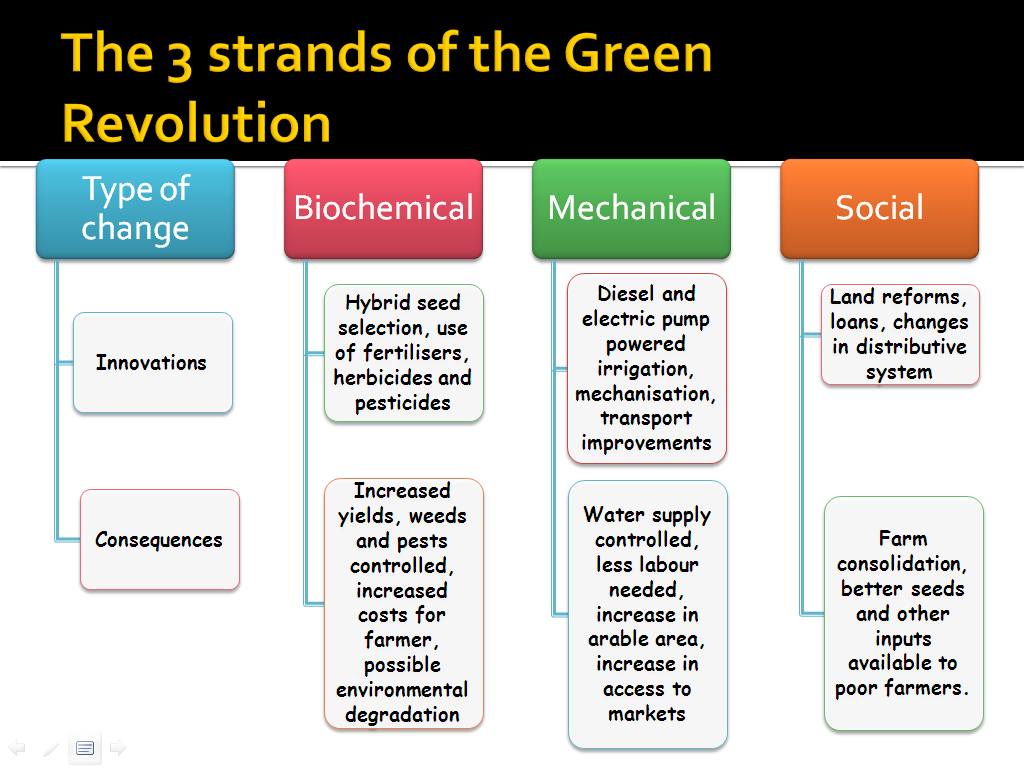
    • High Yielding Varieties (HYVs): These are the genetically modified seed which can yield 2 to 3 times more than normal crop.
      • They are dwarf variety with dense canopy and needs grater amount of water, use of chemical fertilizer, protection from pest and weeds as it very tender and fragile.
      • It also requires on farm activities like soil preparation. It has short generation period and leads to greater production in short period of time.
    • Irrigation facilities: The net irrigated area in 1960 was only 30 million hectare and it was a daunting task to extend irrigation to rest of India.
    • Credit Requirements: Green Revolution required a good network of rural credit and micro financing for supporting the needs of farmers.
    • Commercialization of agriculture: Introduction of Minimum Support Prices for crops gave farmers extra reason to grow more crops.
    • Farm Mechanization: It was required for increasing the crop production.
    • Command Area Development Program (CADP): CADP was introduced in 1974. It consisted of two methods:
      • On farm development activities: It includes construction of agricultural channels, ploughing, leveling, budding etc.
      • Off farm development activities: It includes construction of roads, rural connectivity, marketing, transportation communication etc.
    • Use of chemical fertilizer: Indian soil is deficient in Nitrogen so NPK fertilizers were used with standard ratio of 4:2:1 but the actual ratio used was 3:8:1.
    • Use of insecticide, Pesticide, weedicide
    • Rural electrification: It was the precondition for increasing farm mechanization practices.
    • Land holding and land reforms: Land holding refers to consolidation of land and land reforms involves various steps such as abolition of intermediaries, abolition of Zamindari, tenancy reforms etc.
    • Important Crops in the Revolution:
      • Main crops were Wheat, Rice, Jowar, Bajra and Maize.
      • Non-food grains were excluded from the ambit of the new strategy.
      • Wheat remained the mainstay of the Green Revolution for years.

    Phases of Green Revolution in India

    (1) First Phase of Green Revolution (1965-66 to 1980)

    • India was in ardent need of immediate food supply and self sufficiency in food grain production. Wheat revolution was successful in various 3rd world countries like Mexico, Egypt, etc.
    • The first phase of green revolution was not only crop specific but also region specific because- 
      1. The agriculture infrastructure was well developed in Punjab while Haryana and Western Uttar Pradesh took advantage of its vicinity where irrigation facility could be easily extended.
      2. This region was free from natural hazards.
    • This phase stared with IADP and IAAP program on experimental basis but main initiative was the HYV program during the Annual Plan of 1965-66.
    • In 1974 with Command Area Development Program, Green Revolution was reemphasized.
    • The food production in 1950-51 was merely 25 MT and it was 33 MT in 1965-66. In 1980 it jumped to 100 MT which was three times increase in a span of 10 years.
    • It was more centralized towards wheat production which was increased by 2.5 times in 5 years. This was termed as Green Revolution.
    • This provided India with self sufficiency in food grain production and the incidences of malnutrition, famine, poverty, starvation were mitigated. India was successful in coming out of the Begging Bowl image.
    Phase to Dominated by extensive agriculture. Reforms in the form of land grant and land reforms. Phase to Productivity enhancement measures through green revolution technologies. Phase till now. Attempted liberalization of agriculture.

    (2) Second Phase of Green Revolution (1980-1991)

    • During the 6th and 7th plan, wet agriculture (mainly rice) was targeted.
    • During the first phase, rice production was increase merely 1.5 times. The regions having rainfall more than 100 cm like West Bengal, Bihar, Eastern Uttar Pradesh, Assam, Coastal plains were targeted.
    • It met with partial success and Krishna-Godavari delta and Cauvery basin yielded the coveted results. West Bengal and Bihar also showed increased productivity.
    • The full potential of productivity in rice was however not realized due to institutional factors like land reforms, tenancy etc.
    • The traditional outlook of farmers was also a major limiting factor in the success of Second phase of Green revolution.

    (3) Third Phase of Green Revolution (1991-2003)

    • During the 8th and 9th plan, dry land agriculture was targeted and HYV was introduced in cotton, oilseeds, pulses, millets etc. This met with partial success.
    • Integrated Watershed Management Programme was initiated to improve the conditions in sub- humid and semi-arid regions of India.
    • However, it was not very successful except in the Narmada – Tapi doab and the Tungbhadra basin and also the Bhima – Krishna basin.
    • After the end of 9th plan, there was a paradigm shift in approach of the govt policies. 
    • The ecological repercussion in the green revolution areas led to relatively new concept of balanced Agriculture growth based on agricultural ecology, conversation method and sustainable development (10th plan).
    • The entire agricultural sector was targeted and it is known as the Rainbow Revolution.
    • The process of Rainbow Revolution had affiliated in 1980’s with Yellow revolution (oilseeds), Blue Revolution, White Revolution (milk earlier in 1970’s), Brown Revolution (fertilizers) and Silver revolution (poultry).
    • In the 11th plan, the idea has been further elevated to sustainable agriculture with balanced growth referred to as inclusive growth.
    Allocation of the harvested area under cereal production

    Impact of Green Revolution in India

    • Tremendous Increase in Crop Produce: It resulted in a grain output of 131 million tonnes in the year 1978-79 and established India as one of the world’s biggest agricultural producers.
    • Reduced Import of Food-Grains: India became self-sufficient in food-grains and had sufficient stock in the central pool, even, at times, India was in a position to export food-grains.
      • The per capita net availability of food-grains has also increased.
    • Benefits to the Farmers: The introduction of the Green Revolution helped the farmers in raising their level of income.
      • Farmers ploughed back their surplus income for improving agricultural productivity.
      • The big farmers were particularly benefited by this revolution by investing large amounts of money in various inputs like HYV seeds, fertilizers, machines, etc. It also promoted capitalist farming.
      • Green Revolution gave rise to capitalistic farming practices in India.
      • Surplus was generated in agriculture which led to its commercialization.
    • Industrial Growth: The Revolution brought about large scale farm mechanization which created demand for different types of machines like tractors, harvesters, threshers, combines, diesel engines, electric motors, pumping sets, etc.
      • Besides, demand for chemical fertilizers, pesticides, insecticides, weedicides, etc. also increased considerably.
      • Several agricultural products were also used as raw materials in various industries known as agro based industries.
      • Development of agro-processing industries, food-processing industries led to industrialization of tier – II/III towns. It led to higher rate of urbanization.
    • Rural Employment: There was an appreciable increase in the demand for labour force due to multiple cropping and use of fertilizers.
      • The Green Revolution created plenty of jobs not only for agricultural workers but also industrial workers by creating related facilities such as factories and hydroelectric power stations.
      • Green Revolution led to the removal of hunger and famine.
      • Green Revolution led to the development of rural infrastructure which was a pre condition to Green Revolution.

    Negative Effects of Green Revolution in India

    • Focus on limited food-grains: Although all food-grains including wheat, rice, jowar, bajra and maize have gained from the revolution, other crops such as coarse cereals, pulses and oilseeds were left out of the ambit of the revolution.
      • Major commercial crops like cotton, jute, tea and sugarcane were also left almost untouched by the Green Revolution.
    • Limited Coverage of HYVP: High Yielding Variety Programme (HYVP) was restricted to only five crops: Wheat, Rice, Jowar, Bajra and Maize.
    • Economic Effects
      • Inter – personal disparity emerged which led to differences between people due to difference in earning at different places.
      • Inter – regional disparity emerged due to difference in crop production e.g. West UP vs. East UP.
      • Inter – state disparity emerged, for e.g. in 1960 Punjab and Bihar, both states contributed same in terms of crop production but due to Green Revolution there became a huge gap in crop production between the two states by 1990.
      • Due to increase in informal credit services labors and cultivators got into the vicious cycle of debt – trap.
    • Excessive Usage of Chemicals: The Green Revolution resulted in a large-scale use of pesticides and synthetic nitrogen fertilisers for improved irrigation projects and crop varieties.
      • However, little or no efforts were made to educate farmers about the high risk associated with the intensive use of pesticides.
      • This causes more harm than good to crops and also becomes a cause for environment and soil pollution.
    • Increased Water Consumption: The crops introduced during the green revolution were water-intensive crops.
    • Impacts on Soil and Crop Production: Repeated crop cycle in order to ensure increased crop production depleted the soil’s nutrients.
      • To meet the needs of new kinds of seeds, farmers increased fertilizer usage.
      • The pH level of the soil increased due to the usage of these alkaline chemicals.
      • Toxic chemicals in the soil destroyed beneficial pathogens, which further led to the decline in the yield.
    • Social Effects
      • Increased rural landlessness, smaller marginal farmers were rendered landless and became agricultural labourers which led to rural handicapness and health hazards.
      • Greater unemployment due to mechanisation.
      • Patriarchy was strengthened, female discrimination, female foeticide, dowry increased.
    • Health Hazards: The large-scale use of chemical fertilizers and pesticides such as Phosphamidon, Methomyl, Phorate, Triazophos and Monocrotophos resulted in resulted in a number of critical health illnesses including cancer, renal failure, stillborn babies and birth defects.

    Conclusion

    • Green Revolution in India was directed towards food sufficiency for the country. The goal has been achieved. Thus it requires sustainable agricultural pattern.
    • Also, much wider area could be brought under the Green Revolution and instead of Green Revolution it can be transformed into evergreen Revolution.
    • It represented the successful adaptation and transfer of the same scientific revolution in agriculture that the industrial countries had already appropriated for themselves.
    • However, lesser heed was paid to factors other than ensuring food security such as environment, the poor farmers and their education about the know-how of such chemicals.
    • As a way forward, the policymakers must target the poor more precisely to ensure that they receive greater direct benefits from new technologies and those technologies will also need to be more environmentally sustainable.

    Try this question for mains:

    Q.  In spite of having several achievements, the green revolution has several defects. Examine

    FAQs

    Who started the Green Revolution in India?
    The Green Revolution in India was primarily initiated by Dr. M.S. Swaminathan and supported by the Indian government, which adopted various agricultural policies and investments.

    How is the Green Revolution relevant for UPSC?
    The Green Revolution is an essential subject in the UPSC syllabus, covering aspects like its history, impact, and policies related to agricultural development in India. Understanding this movement is crucial for aspiring civil servants.

    What was the impact of the Green Revolution in India?
    The Green Revolution significantly increased food production, reduced famine risk, and improved farmers’ incomes. However, it also led to environmental concerns, such as soil degradation and increased pesticide use.


    UPSC 2022 countdown has begun! Get your personal guidance plan now! (Click here)

  • [Burning Issue] Surrogacy in India

    UPSC 2022 countdown has begun! Get your personal guidance plan now! (Click here)

    Recently, the Lok Sabha has passed the Assisted Reproductive Technology (Regulation) Bill, 2021. The Bill seeks to regulate and supervise assisted reproductive technology clinics and banks, prevent misuse of the technology, and promote the ethical practice of the services. The bill has excluded live-in couples, single men, and the LGBTQ community.

    What is Assisted Reproductive Technology (ART)?

    • Assisted reproductive technology (ART) refers to fertility treatments and procedures that can help with difficulties or an inability to conceive children.
    • ART techniques involve the manipulation of eggs, sperm, or embryos to increase the likelihood of a successful pregnancy.
    • It works by removing eggs from a woman’s body. The eggs are then mixed with sperm to make embryos. The embryos are then put back in the woman’s body.
    • In vitro fertilization (IVF) is the most common and effective type of ART.

    Surrogate vs. gestational carrier

    • ART procedures sometimes use donor eggs, donor sperm, or previously frozen embryos. It may also involve a surrogate or gestational carrier.
    • A surrogate is a woman who becomes pregnant with sperm from the male partner of the couple.
    • A gestational carrier becomes pregnant with an egg from the female partner and the sperm from the male partner.
    • The most common complication of ART is a multiple pregnancy. It can be prevented or minimized by limiting the number of embryos that are put into the woman’s body.

    What is Infertility?                     

    • Infertility is when people cannot conceive after a period of regular sexual intercourse without the use of birth control.
    • Primary infertility: Women who are currently married for more than 5 years, currently not pregnant, having no terminated pregnancy, never used contraceptives and have zero total children ever born.
    • Childlessness: Women who are currently married for more than 5 years, currently not pregnant, having no terminated pregnancy, never used contraceptives and have no living children.
    • Census of 1981 estimates infertility in India around 4-6 percent and according to NFHS-1 childlessness is around 2.4 percent of currently married women over 40 years in India.
    • Childlessness in India is around 5.5 percent for 30-49 age group and 5.2 percent for 45-49 age group.
    • According to World Health Organization estimate the overall prevalence of primary infertility in India is between 3.9 to 16.8%.
    • In Indian states prevalence of infertility varies from state to state such as 3.7 percent in Uttar Pradesh, Himachal Pradesh and Maharashtra, to 5 percent in Andhra Pradesh, and 15 percent in Kashmir and prevalence varies in same region across tribes and caste.

    Childlessness: A cause of emotional and psychological distress

    • The inability to have children affects couples and causes emotional and psychological distress in both men and women.
    • Despite the various social, psychological, economic and physical implications, infertility prevention and care often remain neglected public health issues especially for low-income countries that are already under population pressure.
    • But in recent years there is increased awareness to integrate infertility prevention, care and treatment into the basic health care services.

    IVF

    • IVF involves a doctor extracting eggs and fertilizing them in a special lab. Specialists can combine this with an embryo transfer (IVF-ET) and transfer the resulting embryos into a person’s uterus.
    • The Society for Assisted Reproductive Technology states that IVF-ET accounts for 99% of ART procedures.
    • The Centers for Disease Control and Prevention (CDC) lists the 2018 success rates of IVF treatments for one oocyte retrieval from people using their own eggs as:
      • 52% for people aged 35 or younger
      • 38.1% for people aged 35–37
      • 23.5% for people aged 38–40
      • 7.6% for those over the age of 40

    Features of the ART Regulation Bill, 2020

    (1) Defining ART

    • The Bill defines ART to include all techniques that seek to obtain a pregnancy by handling the sperm or the oocytes (immature egg cell) outside the human body and transferring the gamete or the embryo into the reproductive system of a woman.
    • Examples of ART services include –
      1. gamete (sperm or oocyte) donation,
      2. in-vitro-fertilization (fertilizing an egg in the lab), and
      3. gestational surrogacy (the child is not biologically related to surrogate mother)
    • ART services will be provided through:
      1. ART clinics, which offer ART related treatments and procedures, and
      2. ART banks, which store and supply gametes.

    (2) Regulation of ART clinics and banks

    • The Bill provides that every ART clinic and the bank must be registered under the National Registry of Banks and Clinics of India.
    • The National Registry will be established under the Bill and will act as a central database with details of all ART clinics and banks in the country.
    • State governments will appoint registration authorities for facilitating the registration process.
    • Clinics and banks will be registered only if they adhere to certain standards (specialized manpower, physical infrastructure, and diagnostic facilities).
    • The registration will be valid for five years and can be renewed for a further five years. Registration may be cancelled or suspended if the entity contravenes the provisions of the Bill.

    (3) Conditions for gamete donation and supply

    • Screening of gamete donors, collection and storage of semen, and provision of oocyte donor can only be done by a registered ART bank.
    • A bank can obtain semen from males between 21 and 55 years of age, and oocytes from females between 23 and 35 years of age.
    • An oocyte donor should be an ever-married woman having at least one alive child of her own (minimum three years of age).
    • The woman can donate oocyte only once in her life and not more than seven oocytes can be retrieved from her.
    • A bank cannot supply gamete of a single donor to more than one commissioning couple (couple seeking services).

    (4) Conditions for offering ART services

    • ART procedures can only be carried out with the written informed consent of both the party seeking ART services as well as the donor.
    • The party seeking ART services will be required to provide insurance coverage in the favor of the oocytes donor (for any loss, damage, or death of the donor).
    • A clinic is prohibited from offering to provide a child of pre-determined sex. The Bill also requires checking for genetic diseases before the embryo implantation.

    (5) Rights of a child born through ART 

    • A child born through ART will be deemed to be a biological child of the commissioning couple and will be entitled to the rights and privileges available to a natural child of the commissioning couple.
    • A donor will not have any parental rights over the child.

    (6) National and State Boards

    • The Bill provides that the National and State Boards for Surrogacy constituted under the Surrogacy (Regulation) Bill, 2019 will act as the National and State Board respectively for the regulation of ART services.
    • Key powers and functions of the National Board include:
      1. advising the central government on ART related policy matters,
      2. reviewing and monitoring the implementation of the Bill,
      3. formulating code of conduct and standards for ART clinics and banks, and
      4. overseeing various bodies to be constituted under the Bill
    • The State Boards will coordinate enforcement of the policies and guidelines for ART as per the recommendations, policies, and regulations of the National Board.

    (7) Offences and penalties

    • Offences under the Bill include:
    1. abandoning, or exploiting children born through ART,
    2. selling, purchasing, trading, or importing human embryos or gametes,
    3. using intermediates to obtain donors,
    4. exploiting commissioning couple, woman, or the gamete donor in any form, and
    5. transferring the human embryo into a male or an animal
    • These offences will be punishable with a fine between five and ten lakh rupees for the first contravention.
    • For subsequent contraventions, these offences will be punishable with imprisonment for a term between eight and 12 years, and a fine between 10 and 20 lakh rupees.
    • Any clinic or bank advertising or offering sex-selective ART will be punishable with imprisonment between five and ten years, or fine between Rs 10 lakh and Rs 25 lakh, or both.
    • No court will take cognizance of offences under the Bill, except on a complaint made by the National or State Board or any officer authorized by the Boards.

    Need for the ART Regulation Bill

    • To regulate and standardize protocols
      • There are so many such ART clinics that have been running without regulation and there are implications on the health of those who undertake the procedure.
      • Without proper regulation, the unethical practices will increase.
    • To Protect Women and Children
      • The need to regulate the Assisted Reproductive Technology Services is mainly to protect the affected Women and the Children from exploitation
      • The oocyte (a cell in an ovary) donor needs to be supported by an insurance cover. Multiple embryo implantations needs to be regulated and children born through ART need to be protected.
    • Overcoming social stigmas: The ART Bill can overcome the social stigma of being childless and respecting the reproductive rights of a woman.
    • Increasing popularity of ART technique in India
      • India is among countries that have seen the highest growth in the number of ART centers and ART cycles performed every year.
      • India has become one of the major centers of the global fertility industry (ART), with reproductive medical tourism becoming a significant activity the need to regulate it is a much needed step.

    Concerns

    (1) Excludes single men, cohabiting heterosexual couples, and LGBTQ+ individuals

    • The Bill shows progressive attitude by allowing a married heterosexual couples and a woman above the age of marriage to use ARTs however, it excludes single men, cohabiting heterosexual couples and LGBTQ+ individuals and couples from accessing ARTs.
    • LGBTQ+ stands for lesbian, gay, bisexual, transgender, queer (or sometimes questioning), and others. The “plus” represents other sexual identities including pansexual, intersex, and asexual.
    • The Bill seems to violate:
    1. Article 14 of the Constitution
    2. Right to Privacy (In the Puttaswamy case, the Supreme Court held that “the sanctity of marriage, the liberty of procreation, the choice of a family life and the dignity of being” concerned all individuals irrespective of their social status and were aspects of privacy.)
    3. Court’s direction to the States to take positive steps for equal protection for same-sex couples (Navtej Singh Johar vs Union of India, 2018).

    (2) No prohibition on foreign citizens accessing the ARTs: Foreigners can access ART but not Indian citizens in loving relationships. This is an illogical result that fails to reflect the true spirit of the Constitution.

    (3) Bill restricts egg donation to a married woman with a child (at least three years old). Even here, egg donation as an altruistic act is possible only once a woman has fulfilled her duties to the patriarchal institution of marriage.

    (4) Little protection for donors

    • The Bill does little to protect the egg donor. Harvesting of eggs is an invasive process which, if performed incorrectly, can result in death.
    • Need for counseling: The Bill requires an egg donor’s written consent but does not provide for her counseling or the ability to withdraw her consent before or during the procedure.
    • Exploitation of women: A woman receives no compensation or reimbursement of expenses for loss of salary, time and effort. Failing to pay for bodily services constitutes unfree labor, which is prohibited by Article 23 of the Constitution.
    • Only an insurance policy is not enough: The commissioning parties only need to obtain an insurance policy in her name for medical complications or death with no amount or duration specified.

    (5) Ambiguity in disorders

    • The Bill requires pre-implantation genetic testing and where the embryo suffers from “pre-existing, heritable, life-threatening or genetic diseases”, it can be donated for research with the commissioning parties’ permission.
    • These disorders are not specified and the Bill risks promoting an impermissible programme of eugenics.
    • Eugenics is the practice or advocacy of improving the human species by selectively mating people with specific desirable hereditary traits.

    (6) Hides information

    • Children born from ART do not have the right to know their parentage, which is crucial to their best interests and was protected under previous drafts.

    (7) Possible Gamete Shortage

    • Gamete shortage is likely to happen as there is no clarity on if gametes could be gifted between known friends and relatives now, which was not allowed earlier.
    • Gametes are an organism’s reproductive cells. They are also referred to as sex cells. Female gametes are called ova or egg cells, and male gametes are called sperm.

    (8) Poorly Drafted

    • Further, Bill’s prohibition on the sale, transfer, or use of gametes and embryos is poorly worded and will confuse foreign and domestic parents relying on donated gametes.

    (9) Enhanced Punishments

    • The SRB and the Bill impose high sentences (8-12 years) and hefty fines.
    • The poor enforcement of the Pre-Conception and Pre-Natal Diagnostic Techniques (PCPNDT) Act, 1994 demonstrates that enhanced punishments do not secure compliance.

    ART Bill vs. Surrogacy Bill

    • Although the Bill and the SRB regulate ARTs and surrogacy, respectively, there is considerable overlap between both sectors. Yet the Bills do not work in tandem.
    • Core ART processes are left undefined; several of these are defined in the SRB but not the Bill. Definitions of commissioning “couple”, “infertility”, “ART clinics” and “banks” need to be synchronized between the Bills.
    • A single woman cannot commission surrogacy but can access ART. The Bill designates surrogacy boards under the SRB to function as advisory bodies for ART, which is desirable.
    • However, both Bills set up multiple bodies for registration which will result in duplication or worse, lack of regulation, e.g. surrogacy clinic is not required to report surrogacy to National Registry.
    • Also, the same offending behaviors under both Bills are punished differently; punishments under the SRB are greater. Offences under the Bill are bailable but not under the SRB.

    Way Forward

    • ART Regulation Bill 2020 follows the introduction in Parliament of the Surrogacy Regulation Bill 2020, and the approval of the Medical Termination of Pregnancy Amendment Bill 2020. These legislative measures are path breaking steps to protect women’s reproductive rights.
    • However, the above mentioned concerns have to be addressed in order to make India an egalitarian society.
    • Heterosexual couples and LGBTQI community have fought a long way for recognition of their rights, to give them their equal share of rights is the duty of the law makers in the country.

    Try this question for mains:

    Q. What is Assisted Reproductive Technology? Discuss the salient features of ART Regulation Bill, 2020?


    UPSC 2022 countdown has begun! Get your personal guidance plan now! (Click here)

  • [Burning Issue] NANOTECHNOLOGY

    UPSC 2022 countdown has begun! Get your personal guidance plan now! (Click here)

    Introduction

    Nanotechnology is science, engineering, and technology conducted at the nanoscale, which is about 1 to 100 nanometers. Nanoscience and nanotechnology are the study and application of extremely small things and can be used across all the other science fields, such as chemistry, biology, physics, materials science, and engineering.

    Nanotechnology proposes the construction of new nanoscale devices that possess extraordinary properties as they are lighter, smaller and less expensive, and more precise. Materials reduced to the nanoscale can show properties compared to what they exhibit on a macro-scale, enabling unique applications.

    Two main approaches are used in nanotechnology:

    1. Bottom-up approach – materials and devices are built from molecular components that assemble themselves chemically by principles of molecular recognition.
    2. Top-down approach – nano-objects are constructed from larger entities without atomic-level control.

    Why do we need it?

    (1) Health sector

    • Nanomedicine: It has healthcare applications such as treatment and diagnostics of various diseases using nanoparticles in medical devices, as well as nanoelectronic biosensors and molecular nanotechnology.
    • Smart pills: Nano-level electronic devices that are shaped and designed like pharmaceutical pills but perform more advanced functions such as sensing, imaging, and drug delivery.
    • Cancer detection and treatment: Regular chemotherapy and radiation damages body’s healthy cells during the treatment. New nanomedicine approaches are being used in the treatment of skin cancer, which enables efficient delivery of drugs and other therapeutic treatments to specific tumor sites and target cells with low toxic side-effects.
    • Nanobots: Nanobots are micro-scale robots, which essentially serve as miniature surgeons. They can be inserted into the body to repair and replace intracellular structures. They can also replicate themselves to correct a deficiency in genetics or even eradicate diseases by replacing DNA molecules. Nanobots can also be used to clear artery blockages by drilling through them.
    • Nanofibers: Nanofibers are being used in wound dressings and surgical textiles, as well as in implants, tissue engineering, and artificial organ components.
    • Nanotech-based wearables: Such wearables have embedded nanosensors in the cloth that record medical data such as heartbeat, sweat components, and blood pressure. It helps save lives by alerting the wearer and medical professionals of any adverse changes faced by the body

     (2) Food Industry

    • Nanotechnology provides the potential for safe and better quality food and improved texture and taste of the food.
    • A contamination sensor, using a flash of light can reveal the presence of E-coli.
    • Antimicrobial packaging made out of cinnamon or oregano oil or nanoparticles of zinc, calcium, etc., can kill bacteria.
    • The nano-enhanced barrier can keep oxygen-sensitive food fresh.
    • Nano-encapsulating can improve the solubility of vitamins, antioxidants, healthy omega, etc.
    • Nanobarcodes are used to tag individual products and trace outbreaks.

    (3) Electronic components

    Nanotechnology has greatly improved the capacity of electronic components by:

    • Reducing the size of the integrated circuits’ transistors
    • Improving the display screens of the electronic devices
    • Reducing power consumption, weight, and thickness of the electronic devices.

    (4) Energy-efficient

    • This technology can improve the efficiency of the existing solar panels. It can also make the manufacturing process of solar panels cheaper and efficient.
    • It can improve the efficiency of fuel production and consumption of petroleum materials.
    • It is already being made use of in many batteries that are less-flammable, efficient, quicker-charging and are lightweight and higher power density.

    (5) Textile industry

    • Nanotechnology has already made revolutionary changes in the textile industry and is estimated to make a market impact worth hundreds of billions of dollars.
    • Nanoscience has now produced stain and wrinkle resistant cloths and may further improve upon the existing innovations.

    (6) Environment

    • It has the potential to address the current problem of pollution.
    • It can provide for affordable, clean drinking water through swift detection of impurities and purification of water.
    • The nanotechnology can be used to remove industrial water pollutants in the groundwater through chemical reactions at a cheaper rate.
    • Nanotechnology sensors and solutions also have the potential to detect, identify, filter and neutralise harmful chemical or biological agents in the air and soil.

    (7) Transport

    • Nanotechnology contributes to manufacturing lighter, smarter, efficient and greener automobiles, aircraft and ships.
    • It also allows various means to improve transportation infrastructures like providing resilience and longevity of the highway and other infrastructure components.
    • The nanoscale sensors and devices can also provide for cheap and effective structural monitoring of the condition and performance of the bridges, rails, tunnels, etc. They can also enhance transportation infrastructure that makes the drivers avoid collisions and congestions, maintain lane position, etc.

    (8) Space

    • Materials made of carbon nanotubes can reduce the weight of the spaceships while retaining or increasing the structural strength.
    • They can also be used to make cables that are needed for the space elevator. Space elevators can significantly reduce the cost of sending materials to the orbit.
    • The nanosensors can be used to monitor the chemicals in the spacecraft to look into the performance of the life support system.

    (9) Agriculture

    • The nanocapsule can enable effective penetration of herbicides, chemical fertilizers, and genes into the targeted part of the plant. This ensures a slow and constant release of the necessary substance to the plants with minimized environmental pollution.
    • The nanosensors and delivery systems can allow for precision farming through the efficient use of natural resources like water, nutrients, chemicals etc.
    • The nanosensors can also detect the plant viruses and soil nutrient levels.
    • Nano-barcodes and nano-processing could also be used to monitor the quality of agriculture produce.

    Carbon Nanotubes

    • Carbon nanotubes (CNTs) are cylindrical molecules that consist of rolled-up sheets of single-layer carbon atoms (graphene).
    • They can be single-walled (SWCNT) (dia<1nm) or multi-walled (MWCNT) (dia>100nm), consisting of several concentrically interlinked nanotubes. Their length can reach several micrometers or even millimeters.
    • Like their building block graphene, CNTs are chemically bonded with sp2 bonds, an extremely strong form of molecular interaction

    Applications:

    • Used in electric wires to reduce losses
    • It can replace silicon made transistors as they are small and emit less heat and it can revolutionise electronics
    • Can be used in solar cell

    Graphene

    • Graphene is a one-atom-thick sheet of carbon atoms arranged in a honeycomb-like pattern. Graphene is considered to be the world’s thinnest, strongest and most conductive material – of both electricity and heat.
    • All of these properties are exciting researchers and businesses around the world – as graphene has the potential to revolutionize entire industries – in the fields of electricity, conductivity, energy generation, batteries, sensors and more.

    Issues in Nanotechnology

    • The nanotechnology may pose a potential risk to the environment, health and other safety issues.
    • Since this field is still at its nascent stage, the likely risks are contentious. As for whether or not this technology requires special government regulation, the issue is still debated.
    • The regulatory authorities like the US Environmental Protection Agency and the Health and Consumer Protection Directorate of the European Commission have started assessing the potential risks posed by the nanoparticles.
    • The organic food sector is the first to be regulated so that the engineered nanoparticles are excluded from the organic produce. It has been implemented in Australia, UK and Canada as well as all the food certified under the Demeter International Standards.
    • Nanotoxicology is the study of potential health risks of nanomaterials.  The human body can easily take up the nanomaterials as they are small in size.
    • However, there is a need for detailed research on how it would behave inside an organism. The behaviour of nanoparticles based on their size, shape and surface reactivity must be thoroughly analysed before launching them into the market.
    • Nanopollution is the generic term that is used to describe the waste generated by the nanodevices or nanomaterials during the manufacturing process.
    • Nanowastes may be of risk due to their size and different properties and interactions. Since the man-made nanoparticles are not naturally made, living organisms may not have the appropriate means to deal with them.
    • The risk of nanotechnology on health, environment, society, economy, security, and trade is not yet fully assessed. This in itself is a threat.

    Government Measures

    • Nanotechnology regulatory board to regulate industrial nano products
    • Nano technology institutes like Indian Institute of Nano sciences at Bangalore,Mumbai,kolkata
    • Nano technology initiatives program by Department of Information technology and for nano electronic products
    • Nano mission:1000 crore allotted for 5 years for development of nano technology
    • Department of Science and Tech-Nanomission (nano-biotechnology activities) through DBT, ICMR, and CoE in Nanoelectronics by MeitY support nanoscience, nanotechnology, nanobiotechnology, and nanoelectronics activities.
    • Eighteen sophisticated analytical instruments facilities (SAIFs) established by DST across India play a major role in the advanced characterization and synthesis of nanomaterials for various applications.
    • The Center of Excellence in Nanoscience and Nanotechnology established by DSTNanomission helps research and PG students in various thrust areas.
    • Thematic Units of Excellence (TUEs) for various areas of nanoscience and nanotechnology play a major role in product-based research to support nanotechnology.
    • Visveswaraya Ph.D. fellowships offered by MeitY supports various nanotechnology activities in the country.
    • INSPIRE scheme supports research fellows to work in interdisciplinary nanotechnology, nanoscience, and nano-biotechnology areas.
    • DST-Nanomission supports more than 20 PG teaching programs to create a baseline for nanoscience and nanotechnology in India, out of about 70 PG programs currently running in India.

     Mission on Nano Science and Technology (Nano Mission)

    • Launched in 2007.
    • It is as an “umbrella capacity-building programme”.
    • The Mission’s programmes will target all scientists, institutions and industry in the country.
    • It will also strengthen activities in nano science and technology by promoting basic research, human resource development, research infrastructure development, international collaborations, among others.
    • It will be anchored in the Department of Science and Technology and steered by a Nano Mission Council chaired by an eminent scientist.

     Outcomes and significance of the mission

    • As a result of the efforts led by the Nano Mission, today, India is amongst the top five nations in the world in terms of scientific publications in nano science and technology (moving from 4th to the 3rd position).
    • The Nano Mission itself has resulted in about 5000 research papers and about 900 Ph.Ds and also some useful products like nano hydrogel based eye drops, pesticide removal technology for drinking water, water filters for arsenic and fluoride removal, nanosilver based antimicrobial textile coating, etc.
    • The Nano Mission has thus helped establish a good eco-system in the country to pursue front-ranking basic research and also to seed and nurture application-oriented R&D, focused on useful technologies and products.

    Conclusion

    Nanotechnology provides a bright future for humankind. However, much is yet to be known about its impacts and risks. The government, before indulging in the promotion and launch of this new technology, must invest more in basic research to understand this field.


    UPSC 2022 countdown has begun! Get your personal guidance plan now! (Click here)
  • [Burning Issue] Non-Aligned Movement

    UPSC 2022 countdown has begun! Get your personal guidance plan now! (Click here)

    This month has the birth anniversary of Jawaharlal Nehru and the 60th anniversary of the Non-Aligned Movement. The concept of a country’s policy not aligning with others can be traced to Congress of Vienna (1814–15) when Switzerland’s neutrality, by which that country would stay away from the conflicts of others, was recognized.

    Not attending that last few summits, had signaled India’s sudden departure away from NAM and having adopted the policy of multi-alignment. This has raised eyebrows of those who still believe in the true spirit of Non-Alignment of which India has been the champion for a long time.

    What is NAM?

    • Non-Aligned Movement (NAM) is a forum of 120 developing world states that are not formally aligned with or against any major power bloc.
      • After the United Nations, it is the largest grouping of states worldwide.
    • Drawing on the principles agreed at the Bandung Conference in 1955, the NAM was established in 1961 in Belgrade, SR Serbia, and Yugoslavia.
    • It was an initiative of then PM Jawaharlal Nehru, Ghanaian President Kwame Nkrumah, Indonesian President Sukarno, Egyptian President Gamal Abdel Nasser and Yugoslav President Josip Broz Tito.
    • The countries of the NAM represent nearly two-thirds of the United Nations’ members and contain 55% of the world population.

    Membership of NAM

    • Diverse members: Membership is particularly concentrated in countries considered to be developing or part of the Third World, though the NAM also has a number of developed nations.

    The reason behind NAM creation

    • Balancing the US and USSR: Non-alignment, a policy fashioned for the Cold War, aimed to retain the autonomy of policy (not equidistance) between two politico-military blocs i.e. the US and the Soviet Union.
      • The NAM provided a platform for newly independent developing nations to join together to protect this autonomy.

    Relevance TODAY

    • Changing with emerging scenarios: Since the end of the Cold War, the NAM has been forced to redefine itself and reinvent its purpose in the current world system.
    • Focus towards development: It has focused on developing multilateral ties and connections as well as unity among the developing nations of the world, especially those within the Global South.

    Fading significance of the NAM

    • Loosing relevance: The policy of non-alignment lost its relevance after the disintegration of the Soviet Union and the emergence of unipolar world order under the leadership of the US since 1991.
    • De-colonization was largely complete by then, the apartheid regime in South Africa was being dismantled and the campaign for universal nuclear disarmament was going nowhere.
    • Freed from the shackles of the Cold War, the NAM countries were able to diversify their network of relationships across the erstwhile east-west divide.

    India and the NAM

    • Important role played by India: India played an important role in the multilateral movements of colonies and newly independent countries that wanted into the NAM.
      • India’s policy was neither negative nor positive.
    • India as a leader: Country´s place in national diplomacy, its significant size and its economic miracle turned India into one of the leaders of the NAM and upholder of the Third World solidarity.
    • The principle of ‘acting and making its own choices’ also reflected India’s goal to remain independent in foreign policy choices, although posing dilemmas and challenges between national interests on international arena and poverty alleviation.
    • Preserving the state’s security required alternative measures: Namely, the economic situation with the aim to raise the population’s living standards challenged the country’s defense capacity and vice versa.
    • Fewer choices: Wars with China and Pakistan had led India to an economically difficult situation and brought along food crisis in the mid-1960s, which made the country dependent on US food.
      • India’s position was further complicated due to agreements with the Soviet Union about military equipment.
      • This placed India again in a situation where on one hand the country had to remain consistent on the principles of NAM while on the other hand to act in a context with fewer choices.

    What is meant by Strategic Autonomy?

    • Strategic autonomy for India denotes its’ ability to pursue its national interests and adopt its preferred foreign policy without being constrained in any manner by other states.
    • In its pure form, strategic autonomy presupposes the state in question possessing overwhelmingly superior power.
    • This is what would enable that state to resist the pressures that may be exerted by other states to compel it to change its policy or moderate its interests.
    • Today’s ideation of ‘strategic autonomy’ is much different from the Nehruvian era thinking of ‘non-alignment’.
    • Strategic autonomy is today a term New Delhi’s power corridors are well-acquainted with. It is an issue & situation-based, and not ideological.

    Beyond Power-Politics nexus

    • Strategic autonomy for India is both about power-politics and responsibilities.
    • India’s quest for strategic autonomy is more about justice in terms of creating the international system where all states’ voices will be heard and decisions are made on value-based consensus.
    • Such an idea is often misunderstood and confused with ‘opposing some states and allying the others.’

    What dictates India’s alignment now?

    India acknowledged the importance of economic growth as a factor in domestic poverty alleviation and for the realization of national interests in the international arena.

    (1) National security

    • China’s rise and assertiveness as a regional and global power and the simultaneous rise of middle powers in the region mean that this balancing act is increasing in both complexity and importance, simultaneously.
    • China’s growth presents great opportunities for positive engagement, but territorial disputes and a forward policy in the region raise concerns for New Delhi, particularly in the Indian Ocean and with Pakistan.

    (2) Global decision-making

    • Another distinctive feature of India’s foreign policy has been the aim to adjust international institutions consistent with changes in international system.
    • The support for strengthening and reforming the UN as a multilateral forum, restructuring the international economic system and preserving independence in its decision-making has become an integral part of India’s foreign policy.

    (3) Prosperity and influence

    • India’s 21st century’s strategic partnerships with two of the biggest economies, the USA and EU rely heavily on trade and technology cooperation.
    • In addition, the partnership with the USA has touched the boundaries of strategic issues like cooperation on counter-terrorism, defence trade, joint military exercises, civil nuclear cooperation and energy dialogue.

    (4) Multi-polarism

    • Another means to execute India’s foreign policy strategy of autonomy has been forming extensive partnerships with other emerging powers.
    • India has been an active G4 country speaking for the reform of the UN Security Council and having been elected seven times as a non-permanent member.
    • As a result, there is an overlap of countries in different platforms, as can be seen in cases of India’s partnership with BRICS, SAARC, etc.
    • The purpose of India is to increase the participation and share of developing countries in global policy-making.

    Benefits out of strategic alignment

    • India needs investments, technology, a manufacturing ecosystem to employ millions of its young population and improve its living standards.
    • It requires advanced weapons and technologies for its military. India is ambitious and wants to be a great power and the US and the Western world recognise this and are willing to partner India.
    • US along with France, are India’s principal backers in the UN Security Council and also support its membership in it.
    • The Quad of India, US, Japan and Australia is also slowly institutionalizing the multilateral partnership that is committed to an open, secure, inclusive and prosperous Indo-Pacific region.

    China’s “not-peaceful rise”

    • India is a long term rival for China, which does not want India’s rise. It wants to keep India boxed into South Asia, and tries to keep it off balance using Pakistan which it arms and supports.
    • It has made inroads into the region using the Belt and Road Initiative (BRI). It continues to block India’s membership in the Nuclear Suppliers Group (NSG) and continues to needle in the UNSC over Kashmir.
    • We all know the recent heat up after Ladakh standoff. It occupies parts of Indian Territory and also claims the entire state of Arunachal.

    Hence, the Non-alignment is difficult because,

    • We have to safeguard ourselves from a power which has trampled upon all her neighbours most blatantly and the whole world has seen and withstood them with deafening silence.
    • China has kept our territory since 1962 violating all international norms and we could do nothing with this diplomatic tool called Non- Alignment.
    • Any policy formulation has to serve the national interest.
    • The US prefers its partners to pay for and manage their own security, but collaborate in all possible ways — weapons sale, sharing civil and military arsenals, diplomatic support, intelligence sharing etc.
    • It will be pragmatic to take advantage of the great power rivalry by suitably aligning with a power that India can derive maximum benefit from.

    But Wait, NAM still matters!

    (1) Global perception of India

    • India’s image abroad has suffered as a result of allegations that creep into our secular polity and a need arises to actively network and break out of isolation.
    • India’s partnership with America faces an uncertain future in the post-pandemic period ahead of the regime change under Joe Biden.
    • Indeed, India is overtly keen to upgrade a quadrilateral alliance with the US, Japan and Australia — but there too, we’re all dressed up and nowhere to go. There is no concrete commitment yet.
    • We can sense the growing proximity between the NAM member countries and China.
    • As it is, one-half of NAM comprises members of the Organisation of the Islamic Conference, which remains highly critical of the plight of Indian Muslims.

    (2) For the Impulsive U.S.

    • For India complete dependence on the U.S. to counter China would be an error.
    • As the U.S. confronts the challenge to its dominance from China, the classical balance of power considerations would dictate accommodation with Russia.
    • A strong stake in India’s relations with the US could reinforce Russia’s affinity for China.
    • Russia, these days looks less pragmatic to see Indian ties with its rivals as a joint venture, not an alliance in which they could pursue shared objectives to mutual benefit.

    Importance of NAM: As a power booster for multilateralism

    The NAM  can never lose its relevance because-

    • Cold War has revitalized with time: Critics of NAM who term it as an outcome of the Cold War must also acknowledge that a new Cold War is beginning to unfold, this time between the US and China, which if reflected in Trade War, Protectionism, Indo-Pacific narrative, etc.
    • NAM provides a much bigger platform:  NAM becomes relevant to mobilize international public opinion against terrorism, weapons of mass destruction (WMDs), nuclear proliferation, ecological imbalance, safeguarding interests of developing countries in WTO (World Trade Organization) etc.
    • NAM as a tool for autonomy: NAM’s total strength comprises 120 developing countries and most of them are members of the UN General Assembly. Thus, NAM members act as an important group in support of India’s candidature as a permanent member in UNSC.
    • A podium for India’s leadership: India is widely perceived as a leader of the developing world. Thus, India’s engagement with NAM will further help in the rise of India’s stature as the voice of the developing world or global south.
    • NAM for multilateralism:  Though globalization is facing an existential crisis, it is not possible to return to isolation. In the world of complex interdependence, countries are linked to each other one way or another. With rising threats such as climate change, terrorism, and receding multilateralism, the global south and NAM countries find themselves in a precarious condition.
    • NAM as a source for soft power: India can use its historic ties to bring together the NAM countries. India’s strength lies in soft power rather than hard power. Therefore, NAM cannot be based on the current political structure where military and economic power is often used to coerce countries.
    • NAM as a tool for institutional reforms: Global institutions such as WTO and the UN are facing an existential crisis because only a few nations dictate their functions. India can use the NAM platform to push for reforms in these institutions for a more equal and democratic world order.

    Way Forward

    In the post-COVID-19 world, India will have to make a disruptive choice — of alignment.

    • In the threat environment marked by a pushy China, India should aim to have both- American support and stay as an independent power centre by cooperation with middle powers in Asia and around the world.
    • Complete dependence would be detrimental to India’s national interest such as its ties with Iran and Russia and efforts to speed up indigenous defence modernization.
    • Rather than proclaiming non-alignment as an end in itself, India needs deeper engagement with its friends and partners if it is to develop leverage in its dealings with its adversaries and competitors.
    • A wide and diverse range of strategic partners, including the U.S. as a major partner is the only viable diplomatic way forward in the current emerging multipolar world order.

    Conclusion

    Though sections of the Indian establishment still want to reinvent non-alignment under ever new guises, India is showing signs of pursuing strategic autonomy separately from non-alignment.

    • India continues to practice a policy of non-alignment in an attempt to maintain sovereignty and oppose imperialism.
    • Indo-US ties are complementary, and a formal alliance will only help realize the full potential of these relations.
    • India, thus, emphasizes the relations with the region and emerging powers not only in terms of economic development but also as actors with similar understandings and expectations of the world system.
    • In some way, the relations can be described as expectations without expectations. States interact with each other in expectations to change the international system, but without expectations to ‘ally or oppose.’
    • India believes in making value-based decisions and maintains its coherent foreign policy. As it is familiar with the phrase ‘multi-vector’ foreign policy, it is high time to maximise its potential.

    UPSC 2022 countdown has begun! Get your personal guidance plan now! (Click here)

  • [Burning Issue] Ports Development

    UPSC 2022 countdown has begun! Get your personal guidance plan now! (Click here)

    Ports infrastructure is key to the development of any nation. India has a coastline spanning about 7,500 km. Around 90 percent of India’s external trade by volume and 70 percent by value are handled by ports. Imports of crude petroleum, iron ore, coal, and other essential commodities are all through the sea route. Twelve major ports and 205 non-major ports operate on India’s coast.

    The blockage of the Suez Canal by the giant container ship had educated many about the necessity of state-of-the-art shipping and the dependence of the world trade on modernized ports. The alarm created by the shutdown raised fears of extended delays, goods shortages, and rising costs for consumers.

    Background

    What are ports?

    A port can be defined as a harbor or an area that is able to provide shelter to numerous boats and vessels (transferring people or cargo) and can also allow constant or periodic transactions of shipment.

    Types of the port according to cargo handled

    1) Industrial Ports: These ports specialize in bulk cargo-like grain, sugar, ore, oil, chemicals, and similar materials.

    2) Commercial Ports: These ports handle general cargo-packaged products and manufactured goods and passenger traffic.

    3) Comprehensive Ports: Such ports handle bulk and general cargo in large volumes. Most of the world’s great ports are classified as comprehensive ports.

    Types of port on the basis of location

    1) Inland Ports: These ports are located away from the sea coast. They are linked to the sea through a river or a canal. Such ports are accessible to flat bottom ships or barges.

    Eg. Kolkata is located on the river Hoogli.

    2) Out Ports: These are deep water ports built away from the actual ports. These serve the parent ports by receiving those ships which are unable to approach them due to their large size.

    Significance of port development and port connectivity for India

    1) Reducing Logistics cost

    • Defragmented logistics: The World Bank Logistics Index released in 2018 ranked India 44th, far behind the US at 14 and China at 26.
    • Cost-effective: India aims to reduce the logistics cost from the present 14% of GDP to less than 10% by 2022 using coastal shipping and inland waterways as they would be 60 to 80 percent cheaper.

    2) Blue Economy: Blue Economy as a concept includes all the economic activities related to oceans, seas, and coastal areas and emerges from a need for integrated conservation and sustainability in the management of the maritime domain.

    • India’s blue economy supports 95% of the country’s business through transportation and contributes an estimated 4% to its GDP.
    • India is also among the top 5 fish and aquaculture fish producing countries in the world.

    3) Security

    • Ensuring safety of strategic installations: Port development would result in development of India’s coasts that harbor several strategic installations such as naval bases, nuclear power plants, satellite and missile launching ranges.
    • Curtailing transnational organized crime at sea: India is vulnerable to narcotic drug trafficking as it is located between two largest Opium producing regions of the world i.e. Golden Crescent (Iran, Afghanistan and Pakistan) in the west and Golden Triangle (Myanmar, Thailand and Laos) in the east.
    • Port development and efficient management of port resources would curtail such illegal practices and ensure safety of Sea Lanes of Communication (SLOC).

    4) Keeping an eye on maritime traffic: Indian Ocean Region (IOR) is also the busiest maritime trade route, with 11,000 to 12,000 ships present in it at any given time.

    • Monitoring these vessels and regulating their movement is challenging but a necessity for prosperity of the country.

    5) International Relations

    • Countering the influence of China: Through its Belt and Road Initiative, China has proactively exacerbated India’s pre-existing Sri Lanka-linked trans-shipment problem. Sri Lanka has already leased Hambantota port to China for 99 years. Therefore, port development and ensuring local trans-shipment facilities is a vital strategic necessity for India.
    • Regional integration: India’s eastern seaboard can help recreate an integrated hub and spoke model for regional connectivity in the Bay of Bengal as South Asia remains one of the least integrated areas.
    • Net Security Provider in the IOR: Many western countries are hedging on India’s ability to counter China in the IOR. India could hedge on their support to realize its ambition of Net Security Provider in the IOR by enhancing its coastal security and ensuring port modernizations and its connectivity with the hinterland.

    6) Environment: The Indian Ocean is warming three times faster than the Pacific Ocean. Overfishing, coastal degradation, and pollution are also harming the marine ecosystem. Hence, good design and sound environmental impact management of construction and operational activities of the port are critical.

    7) Social

    • Inclusive development: Industries require a safe and cheap means of exporting finished goods and importing raw materials. Hence, most industries in the world are located in the coastal belts, in the vicinity of major ports.
    • Sustainable livelihood development in the fisheries sector: India is the second largest fish producer in the world. By enhancing the capability to ship them to foreign countries, India could raise the income of fisher folk and secure the food security and nutrition security.
    Examples of Port-led Development
    1. Singapore: Singapore’s natural deep-sea ports and the geographical location at the crossroads of important shipping channels make its trade a major economic sector, next to production and services.
    2. China: According to the Liner Shipping Connectivity Index (LSCI), several of China’s container ports rank among the most connected in the world.
    3. UK: It is estimated that in 2017 the ports industry directly contributed to 61% of turnover, 57% of GVA, and 52% of employment.  

    Significance of Port-led development

    • To improve the ease of trading across borders, port-led development is crucial.
    • Developing ports enables efficient and cost-effective import and export.
    • For this, India needs to develop major transshipment ports, provide last-mile connectivity to ports, develop linkages with new regions, and enhance multi-modal connectivity with ports.

    Governance of ports in India

    Ports in India are classified as Major and Minor Ports. Major Ports are owned and managed by the Central Government and Minor ports are owned and managed by the State Governments. India has 12 major and 205 notified minor and intermediate ports.

    Major Ports:

    • Major Ports are under the Union list of the Indian Constitution and are administered under the Indian Ports Act 1908 and the Major Port Trust Act, 1963.
    • Each major port is governed by a Board of Trustees appointed by the Government of India. Their functions include planning, management and operations of ports.

    Minor Ports

    • Minor ports are managed at the State level by the department in charge of ports or the State Maritime Board, if created, as is the case in Gujarat, Maharashtra, and Tamil Nadu.
    • The functions of the State maritime boards are similar to those of port trusts, and also include the authority to set tariffs.
    • They also focus on attracting private investment by awarding concession contracts, providing incentives, exclusivity rights and assuring land acquisition.

    Service port model vs. Landlord port model

    • The service port model: The port authority owns the land and all available assets—fixed and mobile—and performs all regulatory and port functions.
    • The landlord port model: The publicly governed port authority acts as a regulatory body and as landlord while private companies carry out port operations—mainly cargo-handling activities.
      • Here, the port authority maintains ownership of the port while the infrastructure is leased to private firms that provide and maintain their own superstructure and install own equipment to handle cargo.

    The recent performance of India’s port sector

    • Almost a quarter of India’s maritime trade is shipped through ports in other countries and over 80 percent of its trans-shipment cargo uses facilities at ports in Singapore, Colombo in Sri Lanka, and Klang in Malaysia.
    • Trans-shipment costs are leading to Indian port industry losses of Rs 15 billion annually. Thus, India has huge potential to harness when it comes to port utilization.

    Issues and challenges in India’s port connectivity

    • High turnaround times: Ports in India suffer from high turnaround times for ships. For example, in Singapore, average ship turnaround time is less than a day. However, in India, it is over two days.
    • Port congestion: Port congestion due to container volume, shortage of handling equipment and inefficient operations is a major concern. Eg. Nhava Sheva port
    • Sub-optimal Transport Modal Mix: Lack of requisite infrastructure for evacuation from major and non-major ports leads to sub-optimal transport modal mix.
    • Limited Hinterland Linkages: There is inefficiency due to poor hinterland connectivity through rail, road, highways, coastal shipping and inland waterways. This in turn increases the cost of transportation and cargo movement.
    • Lengthy inspection and scrutiny: Though customs operations in India are rapidly going paperless and converting to digital, inspections and scrutiny continue to be lengthy for cargo and other shipping operations.
    • Inadequate infrastructure and Technology Issues:
      • Lack of adequate berthing facility, number of berths, and sufficient length for proper berthing of the vessels at the Non-Major Ports.
      • Most Non-Major Ports do not have proper material handling equipment in place which could facilitate a quick turnaround.
      • lack of equipment for handling large volume
      • lack adequate navigational aids, facilities and IT systems
    • Issues with Regulations:
      • Major and non-major ports fall under different jurisdictions. Further, the regulatory framework is rigid.
      • Foreign-flagged vessels are not allowed to ship cargo from one Indian port to another as that remains a protected turf for domestic shippers
      • Land acquisition and environmental clearances
    • Issues with PPP Model:
      • Most port PPPs impose strict limits on what private operators are allowed to do, usually in terms of the types of cargo they are allowed to handle.
      • Until recently, Other problems were related to tariff regulation and absence of dispute resolution mechanism
    • Environmental impact:
      • During the operation of ports, spillage or leakages from the loading and unloading of cargo and pollution from oil spills are common due to poor adherence to environmental laws and standards.
      • The water discharged during the cleaning of a ship and the discharge of ballast water is a threat to marine ecosystems
      • Dredging causes environmental problems (increased sedimentation) affecting local productivity of the local waters and its fisheries.
    • Social impacts of Port Development:
      • Most port projects and development results in displacement (such as Gangavaram Port in Andhra and Mundra in Gujarat).
      • other important concern expressed by fishing communities is the restriction of access to fishing grounds around a port
    • Manpower and Labor Issues: Lack of adequate training, falling manpower quality, opposition to reform are major issues
    • Unhealthy Competition: Analysts have cited the concerns over development of multiple ports in close vicinity handling similar cargo as it might lead to ports competing for the same cargo arrivals.

    Government initiatives

    1) Sagarmala program

    • It focuses on modernizing and developing ports, enhancing port connectivity, supporting coastal communities, and stimulating port-linked industrialization.
    • Sagarmala aims to reduce the logistics costs for foreign and domestic trade. It also aims to double the share of water transportation in the modal mix.

    2) Jal Marg Vikas project (JMVP)

    • It is a project for the development of National Waterways in India.
    • It was implemented as an initiative towards national integration with an aim to reduce rail and road congestion, carbon footprint, and minimal resource depletion.

    3) Central Road and Infrastructure Fund

    • The Ministry of Finance has amended the Central Road Fund Act, 2000 to include a list of projects and infrastructure sub-sectors, including inland waterways, for which the CRF could be used.
    • The CRF has since been renamed the Central Road and Infrastructure Fund.

    4) The Draft Indian Ports Bill 2021 aims to centralize the administration of minor ports that are currently managed by state governments.

    5) The Inland Vessels Bill 2021

    • Instead of distinct regulations created by the states, the bill attempts to include a single legislation for the country.
    • The registration certificate will be valid throughout the country and state approvals will not be necessary.
    • It also establishes a single database for recording vessel and crew information on an Internet portal.

    6) Marine Aids to Navigation Bill 2021: It was passed by the Parliament, incorporating global best practices, technological developments and India’s international obligations in this field.

    Way Forward

    • Environmental clearances, Tariff norms, land acquisition etc. need to be standardized and implemented for the port sector so as to boost foreign investments
    • It is important to provide rail and road connectivity to major and minor ports in order to ensure seamless multimodal transport and improve efficiency
    • Priority should be given on expanding capacity and improving operational efficiency. Emphasis should be placed on installing advanced cargo handling processes, scalability in processes and mechanization of port operations.
    • Technologies like big data and advanced GPS navigation systems should be optimally used for better functioning of ports
    • The regulatory regime should be made less complex and less rigid. Further, there should be vertical integration of all stakeholders for holistic development of ports in India
    • Port modernization and new port development, port connectivity enhancement, port-linked industrialization and coastal community development under the Sagarmala project has an immense scope for reduction in transportation and logistics costs and boosting export competitiveness.
    • The government needs to open up the dredging market to attract more players, particularly international players, in dredging activities to increase and maintain draft depth at ports to attract large vessels and enable them to become hub ports.

    UPSC 2022 countdown has begun! Get your personal guidance plan now! (Click here)

  • [Burning Issue] Farm Laws and Farmers Protest

    UPSC 2022 countdown has begun! Get your personal guidance plan now! (Click here)

    Recently, Prime Minister Narendra Modi announced that the central government will repeal all three farm laws. Farmers have been protesting against the farm laws and demanding their rollback since 2020.

    The Modi government has been confrontational with farmers’ organizations, giving so far an impression that it would not repeal the laws as the protesting farmers didn’t represent the “real” farmers. These laws will be repealed in the Winter Session of Parliament.

    Let us look at the topic in detail and try to understand the factors behind the policy retreat of the government.

    Background

    • Long pending reforms: Government wanted to convert the COVID-19 crisis into a reform opportunity by undertaking long pending reforms in agriculture marketing.
    • Out of 11 measures, 3 measures seek to liberalize agricultural marketing and hence hailed as 1991 moment for agriculture.
    • The 3 farms acts ware:  
      1. Act to promote Inter-state and Intra-State Trading
      2. Act to promote Contract farming
      3. Amendments to Essential Commodities Act
    • However, these 3 farm Acts have been opposed by various stakeholders- Farmers, Traders and State Governments on account of various reasons:
      1. Discontinuation of MSP via open-ended procurement
      2. Gradual dismantling of the Public Distribution System (PDS),
      3. Loss of price discovery mechanism established by the APMC mandis
      4. Exploitation by the corporates,
      5. Fear of a reduction in the scope and size of PDS

    In what circumstances were the laws passed?

    • Ordinance route: The government initially cleared them as ordinances in June 2020, there were token protests with the country’s attention gripped by the first wave of Covid-19.
    • Without consultation and haste: In Parliament, there was no thorough scrutiny of the Bills by a parliamentary panel. The government dismissed these demands and pushed the legislation through.
    • Opposition disregard: The Opposition benches were suspended for a week for their “disorderly conduct” while protesting against the rushed passage of the laws.

    The Three Contentious Laws: A quick recap

     (1) Farmers’ Produce Trade and Commerce (Promotion and Facilitation) Act, 2020:

    • It expands the scope of trade areas of farmers produce from select areas to “any place of production, collection, and aggregation”. It allows electronic trading and e-commerce of scheduled farmers’ produce.
    • It prohibits state governments from levying any market fee, cess or levy on farmers, traders, and electronic trading platforms for trade of farmers’ produce conducted in an ‘outside trade area’.

    (2) Farmers (Empowerment and Protection) Agreement on Price Assurance and Farm Services Act, 2020:

    • It creates a national framework for contract farming through an agreement between a farmer and a buyer before the production or rearing of any farm produce.
    • It provides farmers engaging with Agri-business firms, processors, wholesalers, exporters or large retailers for farm services and sale of future farming produce by a mutually agreed price framework.

    (3) Essential Commodities (Amendment) Act 2020:

    • It allows for the center to regulate food items through essential commodities. 
    • It also requires that imposition of any stock limit on agricultural produce be based on price rise.

    Why are farmers fuming over these laws?

    These bills sought to bring much-needed reforms to the agricultural marketing system. However, farmers are apprehensive that the free market philosophy supported by these bills could undermine the MSP system and make farmers vulnerable to market forces.

    Let us look at all their concerns one by one:

    (1) Fear against the end of Mandi System

    • The APMC regulates the mandi (marketplace) where farmers bring their produce, and therefore, guarantees that they receive the MSP.
    • Since the state governments will not be able to regulate the trade outside the APMC markets, farmers believe the laws will gradually end the mandi system and leave farmers at the mercy of corporates.

    (2) Fear over MSPs and procurement guarantee

    • Farmers believe that dismantling the mandi system will bring an end to the assured procurement of their crops at MSP.
    • Similarly, farmers believe the price assurance legislation may offer protection to farmers against price exploitation, but will not prescribe the mechanism for price fixation.
    • They are demanding the government guarantee MSP in writing, or else the free hand given to private corporate houses will lead to their exploitation.

    (3) Fear of Arhatiyas

    • The arhatiyas (commission agents) and farmers enjoy a friendship and bonding that goes back decades.
    • On an average, at least 50-100 farmers are attached with each arhatiyas, who takes care of farmers’ financial loans and ensures timely procurement and adequate prices for their crop.
    • Farmers believe the new laws will end their relationship with these agents and corporates will not be as sympathetic towards them in times of need.

     (4) Fear over the end of subsidized electricity

    • Farmers concerns are also fuelled by the proposed Electricity (Amendment) Bill 2020 which might end their access to subsidized electricity.
    • The bill seeks to create an Electricity Contract Enforcement Authority (ECEA), a move aimed to further centralization.
    • Another concern is the transfer of subsidies through DBT. Farmers will have to pay first from their own pocket, after which they will get subsidies.

    (5) Fear over Contract Farming

    • The FAPA Act formalizes contract cultivation through a “national framework” and explicitly prohibits any sponsor firm from acquiring the land of farmers through purchase, lease or mortgage.
    • But farmers fear over the big corporate players’ monopoly over food processing industry and its supply chain dynamics.
    • They fear that their ownership rights would be at risk as the Act provides for debt instruments for the companies which have their own recovery mechanisms.

    (6) Fear over dispute resolution

    • The FAPA Act provided for a three-level dispute settlement mechanism by the conciliation board, Sub-Divisional Magistrate and Appellate Authority.
    • Since the highest level of appeal for the farmer against any private entity was the Appellate Authority, the farmer is effectively prevented from moving the Court.
    • Thus, they claim that the Act was highly skewed in favor of private entity as the individual farmers did not have the resources that private companies had.

    (7) Fear over EC Amendment Act

    • The original EC Act de-regulated food items including cereals, pulses, potato, onion, edible oilseeds, and oils, and could only be regulated in the extraordinary circumstances.
    • The new law states that government regulation of stocks will be based on rising prices.
    • This stock-limiting puts farmers at the peril of the government and thus prevent them from making from any profit during any extra-ordinary circumstances as most of the time they only have to bear losses.

    How were protests could sustain for so long?

    • Unity: The leaders of farmers unions were very strategic in their approach to the protest and decided to work together very early in the agitation.
    • Finances: The protest sites at the Delhi border needed a steady injection of resources to keep going. Aware of this need, the unions had begun making monthly collections.
    • People: The unions behind the farm stir are well-organised machineries with committees at the level of villages, blocks and districts.
    • Communication: Social media has been central to the scale of this agitation.
    • Engagement: The unions kept the stakeholders engaged by ensuring that there was never a dull moment in this agitation.

    In practical terms, what was the status of the three laws until the repeal?

    • The farm laws were in force for only 221 days — June 5, 2020, when the ordinances were promulgated to January 12, 2021, when the Supreme Court stayed their implementation.
    • The Supreme Court stayed the implementation of the three laws on January 12 this year.
    • Since the stay, the laws have been suspended.
    • The government has used old provisions of the Essential Commodities Act, 1955 to impose stock limits, having amended the Act through one of the three farm laws.

    Reasons for the repeal

    There are contrasting suggestions about the timing of the decision to announce the repeal.

    • Forthcoming elections: There are crucial Assembly elections early next year in five states, including Uttar Pradesh and Punjab.
    • Public appeasement: The PM sought to announce this on Guru Nanak Jayanti probably in a move to appease a community, to which a significant segment of protesting farmers from Punjab belongs.
    • Rising anxiety among Public: There was a risk that anxiety among the protesters could lead to tensions as there had been many deaths since the protests began.
    • Fury over year-long protests: The protest had created a ruckus on the streets of capital due to continuous blockades even after the intervention of Supreme Court.
    • Rising political differences: Given that it took the government a year to realise the socio-political costs, the repeal also signals a weakened political feedback mechanism within the party.

    Significance of the repeal

    • Reflects popularity of the govt: In the immediate term, the repeal exposes the government to charges of being on the wrong path and against popular sentiments, notwithstanding its claims to the contrary.
    • Dedication over farmers cause: The govt moves were increasingly perceived as being not in tune with the needs of rural farming communities.
    • Political stewardship: The PM was clearly balancing his political posture that has thrived on the image of a strong and decisive leadership.

    Implications of the repeal

    • CAA standpoint: Although the anti-CAA protests were called off,almost two years on, the Home Ministry has not yet framed the rules for implementation of the CAA.
    • Statehood for J&K: There is no such unanimity over Article 370. Most of these parties have largely been united for the restoration of statehood to J&K, and early elections.

    An analysis of the enactment-repeal conundrum

    (1) Reforms are must

    • There may be some deficiencies in the exact design and mechanism of the reforms proposed in the three farm laws.
    • However, most advocates of agricultural reform would agree that they were in the right direction.

    (2) Reforms don’t occur overnight

    • These laws could be a great example for passionate reforms.  However, Legislative tapasya (penance) is all about listening to outer world (i.e the farmers), not inner self.
    • It requires listening to those for whose benefit laws and policies are crafted. It can’t be a meditation in isolation and implementation as a divine ordeal.

    (3) Answerability and consultation matters

    • That the government chose to push these reforms through its own set of consultations left many stakeholders feeling left out, and created a backlash.
    • The repeal underlines that any future attempts to reform the rural agricultural economy would require a much wider consultation.

    (4) Success lies in the acceptance of reforms

    • The better design of reforms ensures wider acceptance.
    • The repeal would leave the government hesitant about pursuing these reforms in stealth mode again.

    Way forward

    • Parliamentary scrutiny is must: Parliament approved the laws even as dialogue around them was missing. While the Union government did speak to farmer leaders, it always maintained it would implement the laws.
      • It is very essential to take various stakeholders under consideration including opposition leaders.
    • Consultation with Farmers: There were no dialogues or inputs from farmers. They were simply bulldozed into implementation, fuelling an impression that some vested private interests were guiding them.
      • That could be the reason why many such laws have been brought in as ordinances and were then approved in Parliament using brute majority. Public scrutiny for laws is always treated as seditious.
      • The government has to do away with such forceful imposition of laws on public without giving due consideration to their demands.
    • A lesson for the upcoming legislations: Many similar legislations will be passed in the next few months. Amendments to the Forest Conservation Act will be one of them.
      • Here also there are many stakeholders at the receiving end government must consider their demands.
    • No stopping here: Though not accepted, reforms are necessary and government should strive to bring them with necessary changes. Agriculture is the backbone of the majority of Indian population and their concerns and wellbeing should be the priority of the government.

    UPSC 2022 countdown has begun! Get your personal guidance plan now! (Click here)

  • [Burning Issue] Crypto Banking and Decentralized Finance

    UPSC 2022 countdown has begun! Get your personal guidance plan now! (Click here)

    Context

    The RBI has repeatedly reiterated its strong views against cryptocurrencies since it gained popularity in India following a sudden boom in Bitcoin prices. The central bank’s argument is that cryptocurrencies pose serious threats to the macroeconomic and financial stability of the country.

    The development of Bitcoin and thousands of other cryptocurrencies in a little over a decade has changed the definition of money — and spawned a parallel universe of alternative financial services, allowing crypto businesses to move into traditional banking territory.

    In recent times, new services and platforms have been introduced to help people manage bitcoin and other such digital coins in day-to-day finances. Let us learn about the topic in detail.

    Cryptocurrencies

    (1) Rise of Cryptocurrencies: After the growth and response received to bitcoin, many newer coins have also been introduced and their cumulative market value touched $2.5 trillion by May 2021.

    (2) Significance of Cryptocurrencies

    • Corruption Check: As blocks run on a peer-to-peer network, it helps keep corruption in check by tracking the flow of funds and transactions.
    • Time Effective: Cryptocurrencies can help save money and substantial time, as it is conducted entirely on the Internet, involves very less transaction fees and is almost instantaneous.
    • Cost Effective: Intermediaries such as banks, credit card and payment gateways draw almost 3% from the total global economic output of over $100 trillion, as fees for their services.
      • Integrating blockchain into these sectors could result in hundreds of billions of dollars in savings.

    (3) Cryptocurrencies in India

    • RBI’s apprehension: In 2018, The RBI issued a circular preventing all banks from dealing in cryptocurrencies. This circular was declared unconstitutional by the Supreme Court in May 2020.
    • Govt’s stand: Recently, the government has announced to introduce a bill; Cryptocurrency and Regulation of Official Digital Currency Bill, 2021, to create a sovereign digital currency.
    • Boosting startups ecosystem: In India, the funds that have gone into the Indian blockchain start-ups account for less than 0.2% of the amount raised by the sector globally.
      • The current approach towards cryptocurrencies makes it near-impossible for blockchain entrepreneurs and investors to acquire much economic benefit.

    What do crypto businesses offer?

    • Lending and borrowing services: Generally, crypto businesses offer lending and borrowing services. One can earn interest on holdings of digital currencies, often a lot more than on cash deposits in a bank.
    • Collateral to bank: Borrow with crypto as collateral to back a loan. Crypto loans generally involve no credit checks as transactions are backed by digital assets.

    Benefits

    • Fosters financial inclusion
    • Unusually high return on their holdings for consumers
    • Provide financial stability for customers in countries with volatile government-issued currencies.

    What is cryptocurrency banking?

    • The virtual currency is not held in physical form. Digital currency is decentralized by a ledger system called blockchain, which means that it is not controlled by a bank or central authority.
    • Cryptocurrency banking mostly just allows people to hold their funds in a digital wallet or spend it like they would spend traditional money.
    • People can manage their cryptocurrency balances on exchange platforms.
    • These banking services can include simply holding a balance, making payments with a crypto debit card and even earning interest involving one or more cryptocurrencies.

    Why such high yields?

    • Similar to traditional banking: Crypto outfits pool deposits to offer loans and give interest to depositors, just as traditional banks.
    • No reserve requirements: But by law, banks are required to have minimum reserves as a safety backup. Unlike this, crypto banks do not have the reserve requirements; the institutions they lend to can take risky bets.
    • Other risks: Cyber attacks, extreme market conditions, or other operational or technical difficulties that could lead to a temporary or permanent halt on withdrawals or transfers.

    What is a stablecoin?

    Crypto is very volatile, making it less practical for transactions like payments or loans. That’s where stablecoins come in.

    • Pegged to stable assets: stablecoins are cryptocurrencies pegged to stable assets, commonly the dollar.
      • They are meant to provide the steady value of government-issued money in digital form for blockchain transactions, but they are issued by private entities.
      • Popular dollar-tied tokens include Tether and USD Coin.
    • High global appeal: The number of stablecoins in circulation globally has jumped from $29 billion in January to $117 billion as of early September.
    • Keep the value of digital currency stable: It aims to do in digital form what government money does.
    • But issued by private entities: They provide the steady value of government-issued money in digital form for blockchain transactions, but they are issued by private entities.

    Risks involved

    • Stablecoin issuers hold and monitor reserves, just as central bankers manage supply and demand.
    • But there is no guarantee they actually hold the one-to-one dollar backing they claim.
    • So, a sudden surge in withdrawals could lead to a collapse in one of those assets, putting clients and the broader economy at risk.
    • Also, a central bank digital currency would render stablecoins irrelevant.

    What is a central bank’s digital currency?

    • Offer reliability: Central bankers are examining the potential for issuance of a government-issued cryptocurrency which would offer the convenience of crypto with the reliability of money controlled by a central bank.
    • Growing innovation is a challenge: But governments catching up to the innovations in the market for years will be a challenge.
    • Introducing India’s own cryptocurrency: The government is considering the possibility of introducing India’s own cryptocurrency, code-named “Lakshmi”.

    What is the need?

    • Crypto-currency is a digital currency that allows transacting parties to remain anonymous while confirming the transaction is valid.
    • The provision of anonymity is widely misused especially in making cross-border transactions.
    • They are widely used as a means for money-laundering, terror funding and drug trafficking, and other illegal activities.
    • The increasing share and presence of bitcoins due to speculative trading for return on investments is getting to be a cause of concern.

    How can legalizing help address this?

    • Status of fiat currency: India’s attempt to legalize and introduce its own cryptocurrency would give it the status of a fiat currency.
    • Good alternative: This formal government authorization could prove to be an alternative to popular non-fiat cryptocurrencies such as bitcoin and ethereum.
    • Syncing with the technology: “Lakshmi” would adopt a variation of the blockchain technology employed by bitcoin.
    • Avoid dual transaction: The technology would help verify every trade and rule out the possibility of dual transactions employing the same coin.
      • Also, the new currency would be subject to the same capital account controls as the rupee, in terms of cross-border transactions.
    • No manipulation in money supply: The money supply at every instant is known and cannot be manipulated, unlike with normal fiat currencies.
      • Besides, users would have to submit to the usual know-your-customer norms.

    What are the challenges?

    • The introduction of such a new cryptocurrency, would make it a legal tender alongside the rupee.
    • This requires legislative action of making amendments to the Currency Act.
    • Pegging it to rupee would have an impact on the rupee exchange rate along with the risk of fluctuations.

    What is Decentralized finance (DeFi)?

    • Alternative finance ecosystem: DeFi, refers to an alternative finance ecosystem where consumers transfer, trade, borrow and lend cryptocurrency.
      • Financial products become available on a public decentralized blockchain network, independently of traditional financial institutions and the regulatory structures.
    • Eliminating middleman: DeFi aims to “disintermediate” finance, using computer code to eliminate the need for trust and middlemen from transactions.
      • It’s a computer-controlled market that automatically executes transactions.
    • User governed: DeFi platforms are structured to become independent from their developers and backers over time and to ultimately be governed by a community of users.

    What are the benefits of Crypto Finance?

    • Financial Inclusion: Innovators argue that crypto fosters financial inclusion. Consumers can earn unusually high returns on their holdings, unlike at banks.
    • Quick and Cheap Transactions: Crypto finance gives people long excluded by traditional institutions the opportunity to engage in transactions quickly, cheaply and without judgment.
    • Low checks and hassles: As crypto backs their loans, the services generally require no credit checks, although some take customer identity information for tax reporting and anti-fraud purposes.
    • Privacy: On a DeFi protocol, users’ personal identities are generally not shared, since they are judged solely by the value of their crypto.

    What are some risks associated with DeFi?

    • DeFi cuts out the third parties that financial regulators rely on to ensure market integrity.
    • Licensed operators like banks and brokers play a quasi-governmental role in traditional finance, collecting and reporting data to the authorities, including information on capital gains, to ensure taxes are paid.
    • By contrast, DeFi programs are unregulated apps created by coders interested in capital markets.
    • Users’ assets can and have been hacked, and not all of the operations are built in good faith. Possibility of developers abandoning programs after investors contribute significant assets cannot be refused.

    Way Forward

    • Require new approach: New technology demands a new approach; novel risks can be addressed without necessarily restricting innovation.
      • E.g., Requirements like code audits and risk parameters, instead of mandating that DeFi protocols maintain the reserves of a bank and collect customer information.
    • Controlling financial frauds: Using artificial intelligence and data analysis to monitor suspicious activity and tracking identity to fight financial fraud.
    • Monitor suspicious activity: Using artificial intelligence and data analysis to monitor suspicious activity and working back to track identity.

    UPSC 2022 countdown has begun! Get your personal guidance plan now! (Click here)

  • [Burning Issue] Protectionism, Globalization and COVID-19 Pandemic

    UPSC 2022 countdown has begun! Get your personal guidance plan now! (Click here)

    The COVID-19 pandemic has caused widespread economic uncertainty globally, and coupled with the US-China trade war, has caused countries to adopt protectionist measures. While the regulations introduced by India, the US, the UK, and the European Union have taken different forms, the underlying concern is uniform – save homegrown companies, especially in strategic sectors, from being acquired by state-backed investors from other countries.

    In this article, we will try to understand the world trade order in the Covid-19 pandemic and in what ways it has impacted globalization, and how the world has reacted to it in the form of protectionism to save the crumbling domestic industry.  

    Let us first understand the basic terms so that we can understand the topic in detail.

    What is meant by Globalization?

    • It refers to the economic, social and political integration of nations. It entails the spread of products, technology, information and jobs across national borders and cultures.
    • It is the process of international integration arising from the interchange of world views, products, ideas and other aspects of culture.
    • In economic terms, it describes an interdependence of nations around the globe, fostered through free trade.

    What are the factors aiding globalization?

    1) Technology: It has reduced the speed of communication manifolds. The integration of technology in India has transformed jobs that required specialized skills and lacked decision-making skills to extensively-defined jobs with higher accountability that require new skills.

    2) LPG Reforms: The 1991 reforms in India have led to greater economic liberalization which has, in turn, increased India’s interaction with the rest of the world.

    3) Faster Transportation: Improved transport, making global travel easier.

    4) Rise of WTO: The formation of WTO in 1994 led to a reduction in tariffs and non-tariff barriers across the world. It also led to the increase in the free trade agreements among various countries.

    5) Improved mobility of capital: In the past few decades, there has been a general reduction in capital barriers. This has increased the ability for firms to receive finance and the global interconnectedness of financial markets.

    6) Rise of MNCs: Multinational corporations operating in different geographies have led to a diffusion of best practices. MNCs source resources from around the globe and sells their products in global markets leading to greater local interaction.

    Where globalization helps to bring global financial markets close to each other and increases their interaction, protectionism aims to protect domestic industries from dumping and other trade-distorting practices by other countries.

    What is Protectionism?

    • Protectionism is the practice of following protectionist trade policies.
    • A protectionist trade policy allows the government of a country to promote domestic producers, and thereby boost the domestic production of goods and services by imposing tariffs or otherwise limiting foreign goods and services in the marketplace.
    • Protectionist policies also allow the government to protect developing domestic industries from established foreign competitors.

    Types of Protectionism

    Protectionist policies come in different forms, including:

    1. Tariffs

    • The taxes or duties imposed on imports are known as tariffs. Tariffs increase the price of imported goods in the domestic market, which, consequently, reduces the demand for them.

    2. Quotas

    • Quotas are restrictions on the volume of imports for a particular good or service over a period of time. Quotas are known as a “non-tariff trade barrier.”
    • A constraint on the supply causes an increase in the prices of imported goods, reducing the demand in the domestic market.

    3. Subsidies

    • Subsidies are negative taxes or tax credits that are given to domestic producers by the government. They create a discrepancy between the price faced by consumers and the price faced by producers.

    4. Standardization

    • The government of a country may require all foreign products to adhere to certain guidelines. For instance, the UK Government may demand that all imported shoes include a certain proportion of leather.
    • Standardization measures tend to reduce foreign products in the market.

    5. Anti-dumping duty

    • Dumping is the process of selling goods far below market value to drive out competition. India is the highest initiator of anti-dumping measures aimed at shielding domestic industry from import competition.
    • According to the WTO, from 2015 to 2019, India initiated 233 anti-dumping investigations, which is a sharp increase from 82 initiations between 2011 and 2014.

    6. Rules of Origin

    • India amended the Rules of Origin requirement under the Customs Act. India has imposed onerous burdens on importers to ensure compliance with the rules of origin requirement.
    • The intent appears to be to dissuade importers from importing goods from India’s Free Trade Agreement (FTA) partners.

    Why do countries adopt Protectionism?

    • National security: The argument pertains to the risk of dependency upon other nations for economic sustainability. It is argued that in case of war, economic dependency can restrict one’s options. Also, the other country can affect other country’s economy in a negative way.
    • Infant industry: It is argued that protectionist policies are required to protect industries in their initial stages. As if the market is kept open, global established companies can capture the market. This can lead to the end of domestic players in the new industry.
    • Dumping: Many countries dump their goods (sell them at lower price than their cost of production or their cost in the local market) in other countries.
      • The objective of dumping is to increase market share in a foreign market by driving out competition and thereby create a monopoly.
    • Saving jobs: It is argued that buying more domestically will drive up national production, and that this increased production will in turn result in a healthier domestic job market.
    • Outsourcing: it is common practice for companies to identify countries having cheaper labor and easier systems of governance and outsource their job work. This leads to loss of jobs in domestic industries.
    • Intellectual Property Protection: Patents, in a domestic system, protect the innovators. On a global scale, however, it is quite common for developing nations to copy new technologies via reverse engineering.

    Arguments against Protectionism

    • Trade Agreements: India has benefited immensely from international trade agreements. As per the Commerce Ministry data, India has entered into Free Trade Agreements (FTA) with about 54 individual countries.
      • They provide tariff concessions thereby giving opportunities for exports of products including those related to small and medium enterprises (SMEs).
    • Against WTO Regulations: India has been a member of WTO since its inception. WTO’s regulations prohibit imposing restrictions on imports from other countries.
      • They can be imposed only for certain purposes like balance of payment difficulties, national security etc. Such barriers cannot be imposed to protect domestic industry from healthy competition.
    • Inflationary in Nature: Protectionist policies by restricting imports, can lead to rising prices in the domestic market. Thus, hurting the interest of the consumers directly.
    • Uncompetitive Domestic Industries: By protecting the local industries, they have no incentive to innovate or spend resources on research and development (R&D) of new products.

    Increasing protectionism by India

    • Increase in average tariffs: The simple average of India’s tariffs that stood at 8.9 per cent in 2010-11 has increased by almost 25 per cent to 11.1 per cent in 2020-21.
      • These increases in tariff rates have reversed the political consensus on tariff liberalization that India followed since 1991.
    • Initiator of anti-dumping measures: India is the highest initiator of anti-dumping measures aimed at shielding domestic industry from import competition.
      • According to the WTO, from 2015 to 2019, India initiated 233 anti-dumping investigations, which is a sharp increase from 82 initiations between 2011 and 2014 (June).
    • Expanding the scope of Article 11(2)(f): India recently amended Section 11(2)(f) of the Customs Act of 1962, giving the government the power to ban the import or export of any good if it is necessary to prevent injury to the economy.
      • Expanding the scope of Article 11(2)(f) to cover any good is inconsistent with India’s WTO obligations.
      • While, WTO allows countries to impose restrictions on imports in case of injury to domestic industry, not to the “economy”.
    • Restrictive rules of origin: Undue claims of FTA benefits pose a threat to the domestic industry. Subsequently, India amended the rules of origin requirement under the Customs Act.
      • Rules of origin determine the national source of a product.
      • This helps in deciding whether to apply a preferential tariff rate (if the product originates from India’s FTA partner country) or to apply the most favored nation rate (if the product originates from a non-FTA country).
      • The intent appears to be to dissuade importers from importing goods from India’s FTA partners.
    • Impact of vocal for local: The clarion call given by PM Modi to be “vocal for local” is creating an ecosystem where imports are looked at with disdain, upsetting competitive opportunities and trading partners.

    Protectionist measures in the wake of Covid-19 pandemic by India

    India has introduced protectionist measures in two ways.

    1) Launch of the “Atmanirbhar Bharat” policy which translates to “self-reliant India”, to promote local industry and reach self-sufficiency in the near future.

    2) Restriction on foreign direct investments in Indian companies from border sharing countries now requires prior approval of the Indian government.

    • Applicable for: direct investments, as well as investments which are beneficially held by entities or citizens of neighboring countries.
    • Aimed at: regulating investments from China and may also cover investments from entities based in Hong Kong and Taiwan.

    Self-Reliance through Artmnirbhar Bharat and impacts

    As the majority of the businesses worldwide face disruptions and economic fallout after the COVID-19 pandemic, India will have the opportunity to build an economy that is more resilient, diversified, and attractive to global manufacturers and services. India with its large population has a big potential to become the manufacturing hub of the world.

    • Identify Core Sectors: Indian companies need to re-look at their supply chain and start building domestic capacity for essential products to reduce dependence on China.
      • There is a need to identify and enlist core sectors in which India can become self-reliant and design a strategy to replace too much reliance on China for the imports, particularly Pharma APIs.
      • Shifting the supply chains from China may also offer FDI opportunities.
      • Such industries where we have to become more independent and where there is too much monopoly for example- APIs, support needs to be provided in the form of limited, sector-specific, and focused protection.
    • Increasing Automation: With COVID-19 every industry will become less labor dependant and more automated. Labor-intensive sectors will take a hit.
      • Therefore there’ll be a need to produce more and more skilled labour force that could handle basic machines.
    • Liquidity crunch: Businesses have started facing massive working capital/cash flow issues due to lockdown and they will continue even post that because of reduced demand. MSME and startups are the worst hits.
      • The liquidity needs of companies need to be addressed to help them remain solvent. Though the government has started taking steps via SIDBI to help MSMEs, we still need to do more.
    • High taxes and competitiveness: The issue of higher taxes, credit risks, and liquidity crunch will be some of the glaring issues that need to be resolved in a time-bound manner.
      • The new policy to offer a reduced corporate tax rate of 15% to new manufacturing facilities set up after October 1, 2019, should attract people to set up manufacturing in India.
      • Cheaper credits and lesser taxation need to be provided to ensure the level playing field for manufacturers in India.
      • India needs more open trade and investment policies to drive competitiveness

    Measures adopted by other countries

    Measures in the US

    • The Foreign Investment Risk Review Modernization Act came into force in the US.
    • It empowers the Committee on Foreign Investment in the United States (CFIUS) to address national security concerns regarding foreign exploitation of certain investment structures.
    • Acquisition of minority interests in certain specified sectors, such as telecom, power, oil and gas, defense and finance, also have to be notified to the CFIUS.

    Measures in the European Union

    • Similarly, the European Union has also encouraged member states to adopt screening mechanisms for foreign investments which are likely to affect security or public order.
    • To determine whether an investment is likely to affect security or public order, member states must consider whether the investment:
      • has an impact on critical infrastructure (such as water, energy, transport, health and communications);
      • has an impact on critical technologies (such as artificial intelligence, cybersecurity, defence and energy storage);
      • results in access to sensitive information, including, personal data; etc.
    • Currently, among other members of the European Union, France, Italy, Germany and Spain have adopted national mechanisms to screen foreign investments.

    Measures in the UK

    • The National Security and Investment Bill has been introduced in the UK Parliament, which seeks to empower the Secretary of State to investigate certain acquisitions risking national security.

    Way forward

    India is not alone in imposing measures to protect national interests from opportunist acquisitions. However, the implications for India, as a developing economy, maybe far-reaching as compared to the developed countries.

    1) Important to recognize FDI

    • As the Indian economy recovers from the pandemic, it is important to recognize that foreign investment, including investment from neighboring countries.
    • It represents a key mechanism for supporting domestic industries and rebuilding India’s economic capacity. After all, India received almost INR6.1 billion in direct equity inflows from China and Hong Kong in 2020.

    2) Protecting national interests and attracting foreign investment

    • Over the past two decades, India has gradually continued on the path of liberalization and opened up more sections of its market to foreign investment.
    • Consequently, India has reaped the benefits of globalization, including, an increase in employment opportunities and exports, development of infrastructure and technological capabilities, and availability of a better quality of goods and services.
    • It is important for India to strike a balance between protecting national interests and attracting foreign investment and to continue to be a part of the global economy.

    3) Inclusive Approach

    • Addressing the needs of the most vulnerable countries – measures, for example in relation to export restrictions and creation of regional stockpiles, could include specific exemptions or assistance to address the needs of the poorest countries.

    4) De-bureaucratisation

    • India needs to put in place such policies that improve its competitiveness, de-bureaucratize some sectors such as agriculture, and make labor laws less complicated.
    • A holistic and easily accessible ecosystem, from the procuring of raw materials to the outlet of finished products, must be made available.

    5) Alternative global alliance

    • The sudden call for a video-conference by Indian Prime Minister, with SAARC leaders to chalk out a common strategy to fight COVID-19, sets an example to the world.
    • India needs to now move beyond regional alliances and look forward to a cooperative alliance between like-minded countries in terms of trade such as the USA, EU, and Japan, to figure out an alternative to break the hegemony of China in the global supply chain.
    • India needs to expand its cooperation programs into a global effort by engaging in the multilateral development of solutions to global policy challenges and share lessons and experiences to progressively strengthen public systems and state institutions worldwide.

    6) Promote R&D and capacity building

    • There’s a need to prioritize building capacity and policy framework to become cost-competitive and quality competitive.

    UPSC 2022 countdown has begun! Get your personal guidance plan now! (Click here)

  • [Burning Issue] Data: The New Gold

    UPSC 2022 countdown has begun! Get your personal guidance plan now! (Click here)

    In the age of the digital economy, data is the “new oil” and the “new gold”. Lots of apps have no revenue generation, but their only benefit is data. This business model of the Internet is called Surveillance capitalism, where all social media apps and other such platforms make their money collecting data on users and monetizing that. Companies such as Google, Facebook, and Amazon have all built empires atop the data economy.

    India is in a strong position to lead the world in the industry 4.0 revolution that relies on big data analytics and digital technology to improve manufacturing. The cheap cost of mobile data in India and the increasing use of digital technology to set up businesses will facilitate economic transactions and interaction with the government. Let us understand the topic in detail and try to understand what data is and why it has garnered such importance.

    What is Data?

    • Data refers to distinct pieces of information, usually formatted and stored in a way that is concordant with a specific purpose.
    • Since the advent of computer science in the mid-1900s, however, data most commonly refers to information that is transmitted or stored electronically.
    • Data has become the forefront of many mainstream conversations about technology. New innovations constantly draw commentary on data, how we use and analyze it, and broader implications for those effects.

    What is Big data?

    • Big Data is a phrase used to mean a massive volume of both structured and unstructured data that is so large it is difficult to process using traditional database and software techniques.
    • Through the use of high-end computing and algorithms, Big data has been used in the industry to provide customer insights by analyzing and predicting customer behavior through data derived from social media.
    • Big data analytics: The process of collecting, organizing, and synthesizing large sets of data to discover patterns or other useful information.

    What is Data privacy?

    • Data privacy or information privacy is a branch of data security concerned with the proper handling of data – consent, notice, and regulatory obligations.
    • It got highlighted when identifiable data of about 50 million Facebook users was breached by an analytics firm.
    • Privacy is a basic human right, in the digital age where life has so prominently got integrated with the digital world, data privacy has become a human right too.

    What is Industrial Revolution 4.0?

    • The Fourth Industrial Revolution (IR 4.0) is a term that describes present technological age. It is the fourth industrial era since the inception of the initial Industrial Revolution of the 18th century.
    • The key elements of the fourth revolution are the fusion of technologies ranging from the physical, digital to biological spheres.

    Characteristics of IR 4.0

    • It is characterized by a fusion of technologies that is blurring the lines between the physical, digital, and biological spheres.
    • It brings together digital technology and the physical world to create a new range of products and services.
    • The possibilities of billions of people connected by mobile devices, with unprecedented processing power, storage capacity, and access to knowledge, are unlimited.
    • And these possibilities will be multiplied by emerging technology breakthroughs in fields such as artificial intelligence, robotics, the Internet of Things, autonomous vehicles, 3-D printing, nanotechnology, biotechnology, materials science, energy storage, and quantum computing.
    • The revolution is evolving at an exponential rather than a linear pace and it is disrupting almost every industry in every country.

    Why data is so important?

    • How data will be employed fruitfully, and its value captured, will decide a nation’s rank in the emerging new global geo-economic and geo-political hierarchies.
    • The global digital or artificial intelligence (AI) economy is currently a two-horse race between the U.S. and China.
    • It is feared that all other countries, including the European Union (EU) and major developing countries such as India, will have to become fully digitally dependent on one of these two digital superpowers.
    • This will considerably compromise their economic and political independence, something referred to as digital colonization.
    • The shift to digital power, and its concentration, is very evident. Seven of the top eight companies by market cap globally today are data-based corporations.
    • A decade back, this list was dominated by industrial and oil giants. Almost all top digital corporations in the world are U.S. or Chinese.

    What is Digital India

    • Digital India is a campaign launched to ensure the Government’s services are made available to citizens electronically by improved online infrastructure and by increasing Internet connectivity or by making the country digitally empowered in the field of technology.
    • The initiative includes plans to connect rural areas with high-speed internet networks.
    • Digital India consists of three core components: the development of secure and stable digital infrastructure, delivering government services digitally, and universal digital literacy.
    • Key Projects include Digilockers, SBM Mobile app, e-Sign framework to enable citizens to digitally sign document online, online registration system launched under e-Hospital application, etc.

    What is the digital economy?

    • Digital economy is defined as an economy that focuses on digital technologies, i.e. it is based on digital and computing technologies.
    • It essentially covers all business, economic, social, cultural etc. activities that are supported by the web and other digital communication technologies.
    • There are three main components of this economy:
      1. e-business
      2. e-business infrastructure
      3. e-commerce

    Data Requires Infrastructure

    • Just as oil requires infrastructure for storage and transportation, data requires infrastructure in the form of software and hardware.
    • Any business that wants to maintain data for analytics will need technology for collecting the data and storing the data.
    • Good data infrastructure has the following qualities:
      1. Available — obviously, you should be able to retrieve data from the system in a reasonable amount of time. Especially if you plan to frequently reuse the data for analytics.
      2. Fault-tolerant — what happens if a machine suddenly fails and the data on it is lost or corrupted? You need a system that can handle events such as these without losing data. This is where distributed computing comes into play in big data applications.
      3. Cost-effective — data infrastructure that becomes unnecessarily expensive becomes a liability rather than an asset.

    Why Digital Economy is important for India?

    • Increase in Revenues: When the transactions are digitized, monitoring sales and taxes becomes convenient. This increase the revenue of the government resulting in growth of the overall financial status of the country.
    • Removal of Black Economy: When the transactions are made digitally, they can be easily monitored. There will be no means for illegal transactions to occur. By restricting the cash-based transactions can efficiently expel the black economy.
    • Empowerment to People: One of the biggest advantages of moving towards digital economy is that it gives an empowerment to the citizens. When the payments move digital, each and every individual is bound to have a bank account, a mobile phone, etc.
      • The government can easily transfer the subsidies directly to Aadhaar-linked bank accounts of people.
    • Creation of New Jobs: The digital economy has a lot of potential to enhance job opportunities in new market as well as increasing employment opportunities in some of the existing occupations in the government.
    • Paves the Way to e-Governance: The quicker, safe, and more efficient alternative traditional governance, e-governance will be the ultimate outcome of the digital economy. Thus, it is convenient for people to access the information they need on the go.

    What is digital market imbalance and how to fix it?

    • Due to inability of government to address this market concentration, it has resulted in the creation of digital market oligarchy because larger players like Facebook, Google, Amazon etc enjoy significant returns to scale.
    • Thereby the digital economy poses a problem for competition policy.
    • Economic policies must itself move towards digitization to remain relevant in this digital era. This can be done by:
      1. India must protect its startups from becoming proprietary of foreign brands (through takeovers), this can be done by allowing preferential shares.
        • For eg: Take over of Flipkart by Walmart.
      2. Data must be monetized on part of data subjects, data subjects must be paid a royalty for use of their data.
      3. The government must lay down policies that put a check on anti-competitive policies of these digital companies. In this light, Draft e-commerce policy is a welcome step.
      4. India till now has no law to stop apps from sharing your data with data brokers or data analytics firms.
      5. An ideal data protection law must reflect the Supreme Court’s recent decision: That all interference with the right to privacy must be necessary and proportionate.
      6. Data protection law must incorporate inspiration from the European Union’s implementation of the General Data Protection Regulation (GDPR) and BN Srikrishna report.
      7. The law must also lay down norms of accountability on part of digital tech giants.
      8. Also, the government must clear the air around the use of Aadhaar that has raised speculations about the surveillance state.

    What is mean data protection?

    • Data protection is the process of safeguarding important information from corruption, compromise or loss.
    • Data is the large collection of information that is stored in a computer or on a network.
    • The importance of data protection increases as the amount of data created and stored continues to grow at unprecedented rates.

    What is the need for data protection?

    • Large number of web users: There are about 504 million active web users and India’s online market is second only to China.
    • Data as a source of profit: Large collection of information about individuals and their online habits has become an important source of profits.
    • Concern of privacy: It is also a potential avenue for invasion of privacy because it can reveal extremely personal aspects.
      • Companies, governments, and political parties find it valuable because they can use it to find the most convincing ways to advertise to you online.

    Laws for Data Protection across the Globe:

    • European Union: The primary aim of the General Data Protection Regulation (GDPR) is to give individuals control over their personal data.
    • US: It has sectoral laws to deal with matters of digital privacy such as the US Privacy Act, 1974, Gramm-Leach-Bliley Act etc.

    Initiatives in India

    1) Information Technology Act, 2000

    • It provides for safeguard against certain breaches in relation to data from computer systems. It contains provisions to prevent the unauthorized use of computers, computer systems and data stored therein.

    2) Personal Data Protection Bill 2019

    • The Supreme Court maintained the right to privacy as a fundamental right in the landmark decision of K.S. Puttaswamy vs Union of India 2017 after which the Union government had appointed Justice B.N. Srikrishna Committee for proposing skeletal legislation in the discipline of data protection.
    • The Committee came up with its report and draft legislation in the form of the Personal Data Protection Bill, 2018.
    • In 2019, Parliament again revised the Bill and much deviation from the 2018 Bill was evident. The new Bill was named as Personal Data Protection Bill, 2019.
      • The purpose of this Bill is to provide for protection of privacy of individuals relating to their Personal Data and to establish a Data Protection Authority of India for the said purposes and the matters concerning the personal data of an individual.

    Way Forward

    • In this digital age, data is a valuable resource that should not be left unregulated.
      • The time is ripe for India to have a robust data protection regime.
    • Policies need to be reformulated to ensure that it focuses on user rights with an emphasis on user privacy. A privacy commission would have to be established to enforce these rights.
    • The government would also have to respect the privacy of the citizens while strengthening the right to information.
    • Additionally, the technological leaps made in the last two to three years also need to be addressed knowing that they have the capacity of turning the law redundant.

    Conclusion

    • The digital economy seems to be growing and flourishing very well even without such regimes.
    • Disengaging from signing binding agreements on uninhibited data flows across borders does not mean that a country would simply localize all data.
      • Some kinds of data may indeed need to be localized, while others should freely flow globally.
    • It just means that a country retains complete data policy space, and the means to shape its digital industrialization, and thus its digital future.
    • Appropriate data policies must ensure that the required data is actually available to Indian digital businesses.

    UPSC 2022 countdown has begun! Get your personal guidance plan now! (Click here)