💥Join UPSC 2027,2028 Mentorship (July Batch) + XFactor Notes & Microthemes PDF

Category: Burning Issues

  • [Burning Issue] Institutionalization of police brutality

    UPSC 2022 countdown has begun! Get your personal guidance plan now! (Click here)

    The institutionalization of police brutality, as an unofficial policy of the State, poses a serious challenge to every modern civilization. It doesn’t just raise obvious questions around respect for human rights and the rule of law but is also a serious threat to the survival of democracy in a state where the Constitution is supreme. This threat stares in our faces today.

    While the debate around police reforms across the globe has slowly intensified, there is a lack of any meaningful discourse on the same in India. There is very little public outrage and, in many cases, strong public support for police misconduct. It is the failure of the citizenry to meaningfully engage with the State on critical and key issues that have led to such an unfortunate development. Let us critically analyses key issues with the help of several recent domestic developments.

    Understanding police brutality

    • Cases of custodial deaths, extra-judicial killings, torture, and violence against protesters, are all illustrations of this form of brutality.
    • Methods of torture by the police include inhuman, degrading and barbaric practices that fall squarely within the description of third-degree torture.
    • These are not sporadic incidents of police brutality, but appear to be part of the police administration machinery and have been normalized to an alarming extent in society at large.

    In complete defiance of the Constitution and the laws

    • Extra-judicial killings by the police, for instance, are legally permitted and do not amount to a criminal offence in only three types of cases:
      1. when it is caused in the exercise of the right to private defense under Section 96 of the Indian Penal Code (IPC).
      2. when it is caused under Section 100 (when the right of private defense of the body extends to causing death) or Exception 3 of Section 300 of the IPC (when the public servant exceeds his power for the advancement of justice).
      3. if it is necessary to exert force against the accused to arrest him for a crime punishable with death or imprisonment for life. This is mandated under Section 46 of the Code of Criminal Procedure (CrPC).
    • Constitutional provisions such as Article 21, which guarantees the right to life and personal liberty and Article 22 which grants every accused person the right to an advocate stand violated in cases of fake police encounters.

    A collective failure

    • The rise in police brutality in India is due to the failure of three key stakeholders:
      1. the Parliament and the Executive (that is, the political component of the State),
      2. the Judiciary, and
      3. the citizenry
    • The failure of the parliament to decolonize statutes, remove unreasonable immunity granted to police officers under the laws and create foolproof legislations after due consultation from every stakeholder, is evident.
    • The failure of the executive to control and discipline the police force is equally obvious. Accountability for law enforcement misconduct is flawed, and has huge structural problems.
    • The judiciary has also failed in the sense that its judgments are given little importance and are virtually not implemented for all practical purposes by police officers on the ground.
      • For instance, in its landmark judgment in the case of Prakash Singh & Ors. vs. Union of India (2006), the Supreme Court issued several directives for police reforms.
      • 15 years since that judgment was delivered, no state or Union territory has fully complied with its directives.
    • Failure of implementation of landmark judgments: Landmark judgments like this therefore end up becoming good pieces of jurisprudential literature and only have a symbolic value.
      • It makes no sense when landmark judgments that prohibits the police to commit acts of torture and violence and yet, there are large scale violations of those judgments that take place regularly.

    A citizens’ failure

    • Failure of the citizenry is critical: The failure of the State is a consequence of the failure of the citizenry to meaningfully engage with it and raise questions that are vital for democratic survival.
    • The political system is merely a reflection of its masses: As a key stakeholder, citizens form the backbone of any democracy and act as counter-narrative to forces that promote democratic backsliding.
      • Their actions and nature of engagements define politics and policies of the State.
    • In the case of police brutality there are three issues that the citizens have failed to engage with the State on:
      1. the rise in majoritarian politics,
      2. increasing corruption, and
      3. the rise in predatory capitalism.

    Rise in majoritarianism

    • India is a democracy and not a rule of the majority: While democracy functions with the belief that the majority will continue to change with changing issues, majoritarianism, on the other hand, is characterized by an organized majority.
      • Majoritarianism is forged by introducing factors (such as religion) that make the division between the majority and the minority more definite and permanent.
    • Use the police force as a tool for political mobilization: Majoritarianism has led to huge transformation in the Indian political ecosystem. It has inter alia given birth to populist leaders and their politics of appeasement.
      • It is because of this rise in the latter that we now see a new tendency of the State to use the police force as a tool for political mobilization.
      • It is happening in Uttar Pradesh where the state government highlights encounters as its achievements on a Republic Day. The trend in UP has now spilled over to states like Assam and other areas.
      • In the communal riots broke out during the anti-Citizenship (Amendment) Act protests and post the police attacks on the Jamia Milia Islamia University campus, almost 53 citizens lost their lives.
    • All of the above instances are examples of how a majoritarian state suppresses the minority in order to reinforce and perpetuate the division on which its politics survives. Such a suppression is in the form of police brutality.

    Increasing corruption

    • Police force is by far, the most corrupt institution in India. There are two kinds of corruption within the police force in this country:
      • One is the monetary compensation that police officers receive from common citizens to deliver preferential treatment in matters of law enforcement.
      • Second is a specific kind of political corruption in the form of receiving personal gains, career advancements and such other kinds of favors from their political bosses in return for acting or not acting in a certain way.
    • A report by IndiaSpend states how 28% of police respondents mentioned that political pressure is the biggest hindrance in police investigations.
    • Public outrage against corruption in the police force has been rare and discourse over its relationship with police brutality rarer still. Corruption within the police force is directly proportional to police brutality.
    • It is purely an economic model – the ones who pay will get away and the ones who don’t will either be met with state sponsored violence or eventually faces the wrath of an extremely hostile administration.
      • This is primarily also because of the huge powers and discretion that the police enjoy under our laws.

    Support for predatory capitalism

    • The police force in India was formed under the British Raj through the Indian Councils Act of 1861.
    • The idea for a special police force was inherited from the East India Company, which had introduced the ‘Cornwallis System’ or the ‘Daroga System’ in 1764.
    • The company had brought in the Cornwallis system only to strengthen its hold over the Indian population and to check any act of conspiracy or revolution against the company.
    • This is evidence of the fact that the origin of the police force itself was to protect the capitalists and their interests and not prevention of crime.
    • Capitalism itself has undergone massive transformation. From being once regarded as a tool to prosperity, it has now become a means to oppress the working class and further deepen divides and differences among people.
    • The gap between the rich and poor is at an all-time high. Human relationships and social interactions are increasingly shaped by economic considerations through a cost and benefit analysis.

    The role of the state in perpetuating capitalism

    • In a State where there is increasing level of competition, cops do policing only to serve the interest of the capitalist class and protect the ‘rule of the capital’.
    • The role of the State under a capitalist system has also changed. It has today assumed the position of a facilitator rather than a regulator. This is primarily because of its financial dependence on businesses.
    • For predatory capitalism to succeed the working class will have to be necessarily silenced. That’s when the capitalists, with the help of bourgeois politicians, use the police to propagate violence against the working class in order to suppress their voices of dissent.

    The state of police infrastructure and capitalism

    • The state of police infrastructure in the country is also evidence of how the police exist today to further the interests of the capitalists.
      • The unequal distribution and subsequent utilization of resources for police infrastructure in Delhi vis-à-vis rural Bihar shows how we treat those who are at the bottom of the pyramid versus those at the top.
    • This also shows that support for predatory capitalism and resentment against police brutality cannot go hand in hand and are rather contradictory.
      • One cannot protest against police brutality without protesting against predatory capitalism and its excesses.
    • This has not been seen in India. Public outrage has therefore been misplaced, and will need an overhaul to tackle the problem more effectively.

    The Way Forward

    • Curbing Criminalization of Politics: The criminal nexus with politics will have to be broken and reforms must start with the political system. Thus, there is a need for laws which debars persons with serious criminal cases from entering the assemblies and the Parliament.
    • Revamping Criminal Justice System: There is a need to incorporate the Menon Committee and Malimath Committee recommendations for devising a national policy paper on the criminal justice system. Some of the key recommendations are as follows:
      • Creation of a fund to compensate victims who turn hostile from the pressure of culprits.
      • Setting up of separate authority at the national level to deal with crimes threatening the country security.
      • A complete revamp of the entire criminal procedure system.
    • Independent Complaints Authority: The Supreme Court has observed that there is a need to have an independent complaints authority to inquire into complaints of police misconduct.
    • The Model Police Act, 2006 requires each state to set up an authority comprising retired High Court Judges, civil society members, retired police officers and public administrators from another state.
    • Implementing the Supreme Court’s Directive: The Supreme Court’s directions in Prakash Singh case 2006 on police reforms must be implemented. The court laid out seven directives where considerable work in police reforms is still needed.

    UPSC 2022 countdown has begun! Get your personal guidance plan now! (Click here)

  • [Burning Issue] Nobel Prizes 2021

    UPSC 2022 countdown has begun! Get your personal guidance plan now! (Click here)

    On 27 November 1895, Alfred Nobel signed his last will and testament, giving the largest share of his fortune to a series of prizes in physics, chemistry, physiology or medicine, literature, and peace – the Nobel Prizes. In 1968, Sveriges Riksbank (Sweden’s central bank) established ‘The Sveriges Riksbank Prize in Economic Sciences’ in Memory of Alfred Nobel.

    Let us learn more about the Nobel Prize laureates in 2021 here and what is their contribution to society.

    The Nobel Prize in Physics 2021

    The 2021 Nobel Prize in Physics is awarded one half jointly to Syukuro Manabe, Klaus Hasselmann, and the other half to Giorgio Parisi “for groundbreaking contributions to our understanding of complex physical systems.”

    • This is the first time climate scientists (Manabe and Hasselmann) have been awarded the Physics Nobel. Last year, the award was given for the research into black holes.
    • Three scientists received the Nobel Prize in Physics for work that is essential to understanding how the Earth’s climate is changing, pinpointing the effect of human behaviour on those changes and ultimately predicting the impact of global warming.

    Who are the laureates?

    • The winners were Syukuro Manabe, Klaus Hasselmann of Germany, and Giorgio Parisi from Italy.
    • In 2015, at a UK-based climate-focused online publication sought to identify the three most influential climate change research papers ever published.
    • The paper that received the most votes was one by Syukuro Manabe and Richard Wetherald way back in 1967.
    • These reports for the first time, had described the impact of carbon dioxide and water vapour on global warming.

    Citation for their Climate Model

    • Manabe is a senior meteorologist and climatologist at Princeton University.
    • In the 1960s, he led ground-breaking research into how increased levels of carbon dioxide lead to higher temperatures on the surface of the Earth.
    • This laid the foundation for the development of current climate models.
    • Hasselmann is a German physicist and oceanographer who greatly advanced public understanding of climate change through the creation of a model that links climate and chaotic weather systems.
    • Parisi has focused on quantum field theory and complex systems.

    Why it is a significant feat?

    • This is the first-time climate scientists have been awarded the Physics Nobel.
    • The IPCC had won the Peace Nobel in 2007, an acknowledgement of its efforts in creating awareness for the fight against climate change.
    • A Chemistry Nobel was also awarded to Paul Crutzen in 1995, for his work on the ozone layer, is considered the only other time someone from atmospheric sciences has won this honour.
    • The recognition of Manabe and Hasselmann, therefore, is being seen as an acknowledgement of the importance that climate science holds in today’s world.

    The Nobel Prize in Chemistry 2021

    • The 2021 Nobel Prize in Chemistry was awarded to Benjamin List and David MacMillan for their development of a precise new tool for molecular construction: organocatalysis.
    • This has had a great impact on pharmaceutical research, and has made chemistry greener.
    • Last year, the honour went to Frenchwoman Emmanuelle Charpentier and American Jennifer Doudna, for developing the gene-editing technique known as CRISPR-Cas9 – DNA snipping “scissors”.

    What are Catalysts?

    • When two or more compounds react to form new compounds, the process is often aided by other chemicals that do not change themselves but help speed up the reaction.
    • These catalysts have been known at least since the middle of the 19th century, and are used in virtually every chemical process these days.
    • Till around 2000, only two kinds of chemicals were known to act as effective catalysts: metals, mainly heavier metals; and enzymes, naturally occurring heavy molecules that facilitate all life-supporting biochemical processes.
    • Both these sets of catalysts had limitations.

    Issues with conventional catalysts

    • Heavier metals are expensive, difficult to mine, and toxic to humans and the environment.
    • Despite the best processes, traces remained in the end product; this posed problems in situations where compounds of very high purity were required, like in the manufacture of medicines.
    • Also, metals required an environment free of water and oxygen, which was difficult to ensure on an industrial scale.
    • Enzymes on the other hand, work best when water is used as a medium for the chemical reaction.
    • But that is not an environment suitable for all kinds of chemical reactions.

    Nobel invention: Organo-catalysis

    • List and MacMillan, the both, started experimenting with simple organic compounds.
    • Organic compounds are mostly naturally occurring substances, built around a framework of carbon atoms and usually containing hydrogen, oxygen, nitrogen, sulfur, or phosphorus.
    • Life-supporting chemicals like proteins, which are long chains of amino acids (carbon compounds containing nitrogen and oxygen) are organic.
    • Enzymes are also proteins, and therefore, organic compounds.
    • List and MacMillan started working with individual amino acids in enzymes — and struck gold.

    What is asymmetric catalysis?

    • Substances can have exactly the same chemical composition and molecular formula; yet differ widely in their properties. They are known as isomers.
    • One type of isomers are those that differ in the way individual atoms are oriented in three-dimensional space.
    • Two molecules could be exactly the same, except that they are mirror images of each other, like our hands.
    • For simplicity, scientists often refer to these molecules as left-handed or right-handed.
    • This simple difference can sometimes have enormous consequences because it allows the molecules to bind in different locations when they interact with other molecules.
    • The end product in a chemical reaction is usually a mixture of left-handed and right-handed molecules.
    • List and MacMillan discovered that by using a natural compound like an amino acid as a catalyst, they were obtaining only one specific mirror image of the end-product.
    • This was later named asymmetric catalysis.

    Significance of their discovery

    • The new catalysts, derived from naturally occurring chemicals, were greener and cheaper and ensured that the end product of the chemical reaction was of a specific variety.
    • The end product need not go through a purification process to yield the desired type of compound.
    • The discovery being awarded the Nobel Prize in Chemistry 2021 has taken molecular construction to an entirely new level.
    • Its uses include research into new pharmaceuticals and it has also helped make chemistry greener.

    Nobel Prize for Economic Sciences 2021

    • The 2021 Nobel Prize in Economic Sciences has been awarded in one half to Canadian-born David Card and the other half jointly to Israeli-American Joshua D Angrist and Dutch-American Guido W Imbens.
    • David Card has been awarded for his empirical contributions to labor economics. Joshua D Angrist and Guido W Imbens won the award “for their methodological contributions to the analysis of causal relationships.”
    • The 2020 Nobel Prize in Economic Sciences was awarded to Paul R Milgrom and Robert B Wilson “for improvements to auction theory and inventions of new auction formats”.
    • Unlike the other Nobel prizes, the economics award wasn’t established in the will of Alfred Nobel but by the Swedish central bank in his memory in 1968.

    What makes this year’s award special?

    • This is the first time the economic prize has been divided in this fashion with one half going to one awardee and other half divided across two awardees.
    • In the past, prize money was divided equally between the awardees even if the prize was for different topics as is the case this time around.
    • It may appear that the Nobel Prize has been given for two different contributions, but there is a common theme: “natural experiments.”

    What are Natural Experiments?

    • Economists are often interested in causal questions such as the impact of education on incomes, impact of COVID-19 on poverty and so on.
    • They are also interested is understanding the direction of causality.
    • Economists have used two kinds of experiments to study these causality and direction of causality questions: random experiments and natural experiments.

    (I) Random experiments

    • Under randomized experiments, the researchers allocate say medicines to a treatment group and compare the effect of the medicine with the control group which is not given the medicine.
    • In 2019, the Nobel Committee gave awards to three scholars for their contribution to the field of randomized experiments.
    • However, one cannot randomize experiments to study issues such as why certain people and regions are more unequal or have fewer educational opportunities and so on.

    (II) Natural experiments

    • In natural experiments, economists study a policy change or a historical event and try to determine the cause and effect relationship to explain these developments.
    • The trio used such natural experiments to make some landmark contributions to economic development.
    • Natural experiments are more difficult for two reasons. The first is to identify what will serve as a natural experiment.
    • Second, in a random experiment, the researcher knows and controls the treatment and control groups which allows them to study the cause and effect of medicine.
    • But in natural experiments, such clear differentiation is not possible because people choose their groups on their own and even move between the two groups.
    • Despite the limitations, the researchers could use the natural setting to answer some big policy questions.

    Natural experiments conducted by David Card

    • One question of interest for policymakers is to understand the impact of higher minimum wages on employment.
    • Earlier studies showed that increasing minimum wages leads to lower unemployment.
    • Economists were also not sure of the direction of causation between minimum wages and employment.
    • Say a slowdown in the economy leads to higher unemployment amid lower income groups.
    • This could lead to lower income groups demanding higher minimum wages. In such a case, it is higher unemployment which leads higher minimum wages.

    Contribution of Angrist and Imbens

    • Angrist and Imbens showed how natural experiments can be used to identify cause and effect precisely.
    • We have discussed above how natural experiments make it difficult to separate control and treatment groups. This makes it difficult to establish causal relations.
    • In the 1990s, the duo developed a methodology – Local Average Treatment Effect (or LATE) – which uses a two-step process to help grapple with these problems of natural experiments.
    • Say, one is interested in finding the impact of an additional year of schooling on the incomes of people.
    • By using the LATE approach, they showed that effect on income of an additional year of education is around 9%.
    • While it may not be possible to determine individuals in the group, one can estimate the size of the impact.

    What is the importance of the award today?

    • Earlier it was difficult to identify natural experiments and even if one identified them, it was difficult to generate data from these experiments.
    • With increased digitalization and dissemination of archival records, it has not just become easier to identify natural experiments but also get data.
    • Economists have been using natural experiments to help us understand the impact of past policies.
    • As the 2020 pandemic struck, economists used the natural experiments approach extensively to analyze how previous pandemics impacted different regions and tried to draw policy lessons.

    India context

    • The methodology date back to the early and mid-90s and they have already had a tremendous influence on the research undertaken in several developing countries such as India.
    • For instance, in India, too, it is commonly held that higher minimum wages will be counterproductive for workers.
    • It is noteworthy that last year, in the wake of the Covid-induced lockdowns, several states, including UP, had summarily suspended several labour laws.
    • This included the ones regulating minimum wages, arguing that such a move will boost employment.
    • The main learning is that minimum wages can be increased in India without worrying about reducing employment.

    The Nobel Prize in Physiology or Medicine 2021

    • Recently, two United States-based scientists, David Julius and Ardem Patapoutian, have been awarded the 2021 Nobel Prize for Physiology/Medicine for their discoveries of receptors for temperature and touch.
    • Their discoveries have unlocked one of the secrets of nature by explaining the molecular basis for sensing heat, cold and mechanical force, which is fundamental for our ability to feel, interpret and interact with our internal and external environment.
    • They have focused their work on the field of somatosensation, that is the ability of specialized organs such as eyes, ears and skin to see, hear and feel.

    Who are the Laureates?

    • David Julius and Ardem Patapoutian, working independently in the United States, made a series of discoveries in the late 1990s and early 2000s.
    • They figured out the touch detectors in our body and the mechanism through which they communicate with the nervous system to identify and respond to a particular touch.

    What did they discover?

    • They discovered the molecular sensors in the human body that are sensitive to heat, and to mechanical pressure, and make us “feel” hot or cold, or the touch of a sharp object on our skin.
    • In 1997, Dr. Julius and his team published a paper in Nature detailing how capsaicin, or the chemical compound in chili peppers, causes the burning sensation.
    • They created a library of DNA fragments to understand the corresponding genes and finally discovered a new capsaicin receptor and named it TRPV1.
    • This discovery paved the way for the identification of many other temperature-sensing receptors.
    • They identified another new receptor called TRPM8, a receptor that is activated by cold. It is specifically expressed in a subset of pain-and-temperature-sensing neurons.
    • They identified a single gene PIEZO2, which when silenced made the cells insensitive to the poking. They named this new mechanosensitive ion channel Piezo1.

    How do they work?

    • The human ability to sense heat or cold and pressure is not very different from the working of the many detectors that we are familiar with.
    • When something hot, or cold, touches the body, the heat receptors enable the passage of some specific chemicals, like calcium ions, through the membrane of nerve cells.
    • It’s like a gate that opens up on a very specific request. The entry of the chemical inside the cell causes a small change in electrical voltage, which is picked up by the nervous system.
    • There is a whole spectrum of receptors that are sensitive to different ranges of temperature.
    • When there is more heat, more channels open up to allow the flow of ions, and the brain is able to perceive higher temperatures.

    Therapeutic implications

    • Breakthroughs in physiology have often resulted in an improvement in the ability to fight diseases and disorders. This one is no different.
    • There are receptors that make us feel pain. If these receptors can suppress, or made less effective, the person had felt less pain.
    • Chronic pain is present is a number of illnesses and disorders. Earlier, the experience of pain was a mystery.
    • But as we understand these receptors more and more, it is possible that we gain the ability to regulate them in such a way that the pain is minimized.

    The Nobel Peace Prize 2021

    GN41861C_EN
    • Recently, the 2021 Nobel Peace Prize was awarded to journalists Maria Ressa of the Philippines and Dmitry Muratov of Russia for their efforts to safeguard freedom of expression, which is a precondition for democracy and lasting peace.
    • In 2020, the award was given to the World Food Programme (WFP), a United Nations (UN) agency.
    • The Norwegian Nobel Committee is convinced that freedom of expression and freedom of information are crucial prerequisites for democracy and protect against war and conflict.
    • The 2021 peace prize laureates are representative of all journalists who stand up for this ideal in a world in which democracy and freedom of the press face increasingly adverse conditions.

    Maria Ressa:

    • She is an investigative journalist; in 2012 she co-founded Rappler, a digital media platform for investigative journalism, which she continues to head.
    • Rappler has focused critical attention on President Rodrigo Duterte’s regime’s controversial, murderous anti-drug campaign.
    • In the 2021 World Press Freedom Index, the Philippines ranked 138 of 180 nations (India was ranked lower, at 142).
    • She has also authored Seeds of Terror: An Eyewitness Account of Al-Qaeda’s Newest Center, and From Bin Laden to Facebook: 10 Days of Abduction, 10 Years of Terrorism.
    Short biographies of Maria Ressa and Dmitry Muratov, winners of the Nobel Peace Prize 2021 – AFP / AFP

    Dmitry Muratov:

    • Muratov has for decades defended freedom of speech in Russia under increasingly challenging conditions.
    • Russia has ranked 150 in the 2021 World Freedom Index.
    • He along with around 50 colleagues started Novaya Gazeta (Newspaper) in 1993, as one of its founders. He has served as the newspaper’s editor-in-chief since 1995.
    • Committee to Protect Journalists, a US-based non-profit, had felicitated Muratov as one of its International Press Freedom awardees in 2007.
    • Six of Muratov’s colleagues have been killed since the newspaper started, which has often faced harassment, threats, violence and murder from its opponents.
    • Despite the killings and threats, editor-in-chief Muratov has refused to abandon the newspaper’s independent policy.

    What is the significance?

    • Free, independent and fact-based journalism serves to protect against abuse of power, lies and war propaganda.
    • Without freedom of expression and freedom of the press, it will be difficult to successfully promote fraternity between nations, disarmament and a better world order to succeed in our time.

    World Food Programme

    • The WFP is the food-assistance branch of the United Nations and the world’s largest humanitarian organization focused on hunger and food security.
    • Founded in 1961, it is headquartered in Rome and has offices in 80 countries.
    • In addition to emergency food aid, WFP focuses on relief and rehabilitation, development aid, and special operations, such as making food systems more resilient against climate change and political instability.
    • It is an executive member of the United Nations Development Group, which collectively aims to fulfil the 17 Sustainable Development Goals (SDG), and has prioritized achieving SDG 2 for “zero hunger” by 2030.

    UPSC 2022 countdown has begun! Get your personal guidance plan now! (Click here)

  • [Burning Issue] Glasgow Climate Change Conference (COP 26)

    UPSC 2022 countdown has begun! Get your personal guidance plan now! (Click here)

    United Nations Climate Change Conference (UNFCCC), also known as COP26 is scheduled to be held in the city of Glasgow, Scotland, between 31 October and 12 November 2021.

    Let us look at in detail the UNFCCC and the latest COP26.

    Climate change: A disaster in making

    • Anthropogenic climate change can be traced back to the industrial revolution.
    • The atmospheric concentration of carbon dioxide equivalent (CO2e) greenhouse gas has increased to 415 parts per million (ppm) from 280 ppm since then.
    • A global momentum, therefore, was required to get all countries on board.

    Realization of climate action: Birth of UNFCCC

    • The idea led to the formation of the United Nations Framework for Climate Change Convention (UNFCCC, also known as ‘The Convention’) in 1992, at the Earth Summit in Rio de Janeiro.
    • The convention divided the countries on the basis of their differing commitments: Annex I and II consisted of industrialized and developed countries and Non-Annex I comprised developing countries.

    A timeline

    The Conference of Parties (CoP) is the supreme decision-making body at the convention and comprises states that are party to it.

    COP 1:

    • At CoP1 in Berlin 1995, the Convention highlighted the shortcomings of UNFCCC — the voluntary nature of the agreement.
    • It stressed how no substantive action was taken to address the cause against climate change, which in turn put forward the need for “legally binding” actions.

    COP 2:

    • The proposal of legally binding targets was further emphasised upon in COP2 in Geneva in 1996.

    COP 3:

    • In COP3 in Kyoto in 1997, the legally binding targets were approved of by different countries. They came to be known as the Kyoto Protocol.
    • It is considered to be one of the most important steps despite its late acceptance for it paved the way for further negotiations through legally binding targets for Annex I countries and establishment of carbon markets.
    • The mechanisms proposed by Kyoto Protocol to reduce emissions included Joint Implementation, Clean Development Mechanisms (CDM) and Emissions Trading.

    COP 4 and COP 5:

    • In COP4 in 1998 and COP5 in 1999, the rulebook for implementing the Kyoto Protocol was on the process with the adoption of the Buenos Aires Plan of Action in COP4, along with continued negotiation efforts in COP5.

    COP 7:

    • In COP7 in Marrakesh in 2001, the guidelines for flexible mechanisms of joint implementation, CDM markets, emissions trading was agreed upon. It came to be known as the Marrakesh Accord.
    • It was particularly important because mitigation efforts had already started and special attention was given to developing countries.
    • It asked them to build their capacities and ensuring technology transfer through least developed countries (LDC) Fund, special climate change fund (SCCF) and adaptation fund.

    COP 8:

    • The COP8 in 2002, which was held in “New Delhi”, emphasised on adaptation measures and stressed that poverty alleviation and development were the utmost priority of developing countries.

    COP 10:

    • The future course of action was discussed in COP10 in Montreal in 2005 after Russia ratified the Protocol in 2004 at COP10 in Argentina.
    • A two-track approach was formed, which included the constructive implementation of UNFCCC as well as formation an ad-hoc committee for the Kyoto Protocol.

    COP 15:

    • Copenhagen COP 2009 was set by the ad-hoc working group on Kyoto protocol formed during Montreal COP 2005.
    • The group agreed to have a deal in 2009 regarding a legally binding climate regime from 2012-2020.
    • The discussions lost track when developed countries started advocating for burden-sharing with developing countries.

    COP 16:

    • The disappointment of Copenhagen was turned into an opportunity in Cancun 2010, where the Copenhagen Accord was accepted.
    • It looked forward to a second commitment period for the Kyoto Protocol and established the Cancun Adaptation Framework.
    • For the first time, a temperature target of 2 degrees Celsius was included. The Green climate fund was formed and developed countries agreed to contribute.

    COP 17:

    • Following Cancun, Durban COP 2011 took place wherein the seed of the Paris Agreement was sown.
    • The seed started sprouting in Doha COP 2012, where countries decided to avoid the gap between Kyoto and next legal climate regime.
    • So, the second regime of Kyoto was decided from 2012-2020. The third pillar of loss and damage was incorporated for the first time.

    COP 20:

    • In COP in Lima in 2014, countries submitted their own climate ambitions in the form of intended nationally determined contributions (INDCs).

    COP 21: The Pathbreaker

    • In 2015, the Paris agreement was finally adopted and the INDCs were annexed to it.
    • It was agreed that the Paris agreement would start from 2021.
    • 2015 was known as a year of multilateral agreements because, in addition to the Paris agreement, sustainable development goals and Sendai Framework was also adopted.
    • 2015, therefore, came out to be a successful year.

    Being a very important conference with respect to climate change, let us look at the topic in short.

    • The key vision of Paris Agreement is to keep global temperatures “well below” 2.0C (3.6F) above pre-industrial times and “endeavour to limit” them even more, to 1.5C.
    • Paris Accord talks about limiting the amount of greenhouse gases emitted by human activity to the same levels that trees, soil and oceans can absorb naturally, beginning at some point between 2050 and 2100.
    • It also mentions the need to review each country’s contribution to cutting emissions every five years so they scale up to the challenge.
    • Rich countries should help poorer nations by providing “climate finance” to adapt to climate change and switch to renewable energy.
    • The Paris Agreement has a ‘bottom up’ structure in contrast to most international environmental law treaties which are ‘top down.
    • The agreement is binding in some elements like reporting requirements, while leaving other aspects of the deal such as the setting of emissions targets for any individual country as non-binding.

    Nationally Determined Contributions (NDC)

    • The national pledges by countries to cut emissions are voluntary.
    • The Paris Agreement requires all Parties to put forward their best efforts through “nationally determined contributions” (NDCs) and to strengthen these efforts in the years ahead.
    • This includes requirements that all Parties report regularly on their emissions and on their implementation efforts.
    • In 2018, Parties will take stock of the collective efforts in relation to progress towards the goal set in the Paris Agreement.
    • There will also be a global stock take every 5 years to assess the collective progress towards achieving the purpose of the Agreement and to inform further individual actions by Parties.

    India’s Intended Nationally Determined Contribution (INDC)

    • India’s INDC include a reduction in the emissions intensity of its GDP by 33 to 35 per cent by 2030 from 2005 level.
    • India has also pledged to create an additional carbon sink of 2.5 to 3 billion tonnes of CO2 equivalent through additional forest and tree cover by 2030.
    • India will anchor a global solar alliance, INSPA (International Agency for Solar Policy & Application), of all countries located in between Tropic of Cancer and Tropic of Capricorn.

    COP22 :

    • To move forward on writing the rule book of the Paris Agreement.
    • Launched the Marrakech Partnership for Climate Action.

    COP23:

    • Countries continued to negotiate the finer details of how the agreement will work from 2020 onwards.
    • First set of negotiations since the US, under the presidency of Donald Trump, announced its intention earlier this year to withdraw from the Paris deal.
    • It was the first COP to be hosted by a small-island developing state with Fiji taking up the presidency, even though it was being held in Bonn.

    COP 24:

    • It finalized a “rulebook” to operationalise the 2015 Paris Agreement.
    • The rulebook covers climate financing facilities and the actions to be taken as per Nationally Determined Contributions (NDC).

    COP25, Madrid:

    • It was held in Madrid (Spain).
    • There were no concrete plans regarding the growing climatic urgency.

    Why COP26  is important?

    The agreement works on a five-year cycle of climate actions, which is part of the reason COP26 is so important to tackle climate change: it’s the first five-year meeting since Paris.

    The agreement required signatories to:

    • Announce ‘nationally determined contributions’ (NDCs) – i.e., the self-determined goals to reduce national emissions and adapt to the impacts of climate change (required update in 2020 and every 5-years after);
    • Provide a long-term strategy to decarbonise their economies by 2050; and 
    • For ‘developed’ countries to collectively scale up their climate finance under the UNFCCC to at least a collective USD $100 billion per year by 2020.

    COP26

    What are the COP26 goals?

    According to the UNFCCC, COP26 will work towards four goals:

    (1) Secure global net-zero by mid-century and keep 1.5 degrees within reach

    • Countries are being asked to come forward with ambitious 2030 emissions reductions targets that align with reaching net zero by the middle of the century.
    • For achieving these ambitious targets, countries will have to follow the following roadmap:
    • Accelerate the phase-out of coal
    • Curtail deforestation
    • Speed up the switch to electric vehicles
    • Encourage investment in renewables.

    (2) Adapt to protect communities and natural habitats

    • Countries will work together to ‘protect and restore ecosystems and build defences, warning systems and resilient infrastructure and agriculture to avoid loss of homes, livelihoods and even lives.’

    (3) Mobilise finance

    • To deliver on first two goals, developed countries must make good on their promise to mobilise at least $100bn in climate finance per year by 2020.

    (4) Work together to deliver

    • Another important task at the COP26 is to ‘finalise the Paris Rulebook’.
    • Leaders will work together to frame a list of detailed rules that will help fulfil the Paris Agreement.

    Why COP26  is important?

    The agreement works on a five-year cycle of climate actions, which is part of the reason COP26 is so important to tackle climate change: it’s the first five-year meeting since Paris.

    The agreement required signatories to:

    • Announce ‘nationally determined contributions’ (NDCs) – i.e., the self-determined goals to reduce national emissions and adapt to the impacts of climate change (required update in 2020 and every 5-years after);
    • Provide a long-term strategy to decarbonise their economies by 2050; and 
    • For ‘developed’ countries to collectively scale up their climate finance under the UNFCCC to at least a collective USD $100 billion per year by 2020.

    What Needs to Happen at COP26

    • COP 26 is shaping up as the most important meeting since 2015. Not only is it the first 5-year review, but it also encompasses several important issues that were deferred from COP25.
    • The meeting will “set the trajectory for future generations” and will be the “last, best chance of making progress” towards meeting the 2015 Paris Agreement goals.
    • Member states have the opportunity to re-evaluate their targets against more recent climate science. This is especially important because current targets will fall short of the Paris goals for global temperature rise.
    • Climate Action Tracker, a leading independent research organization that assesses climate policies, estimates that current pledges would only limit global heating to 30C.

    What India could do to reach its targets?

    1. Update NDCs: It is time for India to update its Nationally Determined Contributions or NDCs. (NDCs detail the various efforts taken by each country to reduce the national emissions)
    2. Effective planning: Sector by sector plans are needed to bring about development. We need to decarbonise the electricity, transport sector and start looking at carbon per passenger mile.
    3. Energy transition: Aggressively figure out how to transition our coal sector
    4. Robust legal framework: India also needs to ramp up the legal and institutional framework of climate change.

    What is next after COP26

    • COP26 may well be the most important climate meeting of our generation. Not only does it mandate a review of progress towards the 2015 Paris Agreement.
    • But it allows members to re-evaluate 2015 goals in the light of new science and generate new targets.

    Conclusion

    • Asia and particularly India’s size, population, and economic might is critical to any global climate change targets. COP26 is a great opportunity for Asia to show leadership and be a positive example for other regions.
    • Asia has started to make good strides towards a cleaner future, in particular with clean energy investment.
    • However, the latest predictions show that all nations must continue to drive towards ever-decreasing emissions if we are to limit global warming to 1.50C.
    • This trend will continue to create opportunities for public and private investment in Asia’s growing renewable energy network.

    What are the goals for UNFCCC COP26 and why it is so important? What India can do to reach the targets? (250 words)

    Post your answers in comments below.

    UPSC 2022 countdown has begun! Get your personal guidance plan now! (Click here)

  • [Burning Issue] 5G Technology

    UPSC 2022 countdown has begun! Get your personal guidance plan now! (Click here)

    5G is the next-generation wireless cellular technology that will provide faster and more reliable communication with ultra-low latency. A government panel report points out that with 5G, the peak network data speeds are expected to be in the range of 2-20 Gigabit per second (Gbps). This can help in good governance and can lead to higher economic growth in India.

    Being a game-changer technology in many aspects, be it an economy or a science and technology or development, knowing about it is very important from an exam point of view. So let us look at the topic in detail.

    What is 5G technology?

    • 5G or fifth generation is the latest upgrade in the long-term evolution (LTE) mobile broadband networks.
    • 5G enables a new kind of network that is designed to connect virtually everyone and everything together including machines, objects, and devices. 
    • It’s a unified platform which is much more capable than previous mobile services with more capacity, lower latency, faster data delivery rate and better utilisation of spectrum.

    The low, mid, and high-frequency spectrum

    • 5G mainly works in 3 bands, namely low, mid and high frequency spectrum — all of which have their own uses as well as limitations.
    • The low band spectrum has a great promise in terms of coverage and speed of internet and data exchange but the maximum speed is limited to 100 Mbps (Megabits per second).
    • So Telcos can use and install it for commercial cell phone users who may not have specific demands for very high speed internet, the low band spectrum may not be optimal for specialized needs of the industry.
    • The mid-band spectrum offers higher speeds compared to the low band, but has limitations in terms of coverage area and penetration of signals.
    • This band may be used by industries and specialized factory units for building captive networks that can be moulded into the needs of that particular industry.
    • The high-band spectrum offers the highest speed of all the three bands, but has extremely limited coverage and signal penetration strength.
    • Internet speeds in the high-band spectrum of 5G has been tested to be as high as 20 Gbps (giga bits per second), while, in most cases, the maximum internet data speed in 4G has been recorded at 1 Gbps.

    Timeline: Evolution from 1G to 5G

    • 1G: Launched in the 1980s. Analog radio signals and supported only voice calls.
    • 2G: Launched in the 1990s. Uses digital radio signals and supported both voice and data transmission with a Bandwidth (BW) of 64 Kbps.
    • 3G: Launched in the 2000s. With a speed of 1 Mbps to 2 Mbps it has the ability to transmit telephone signal including digitized voice, video calls and conferencing.
    • 4G: With a peak speed of 100 Mbps-1 Gbps it also enables 3D virtual reality.
    • 5G: with a speed of more than 1Gbps, it is capable of connecting entire world without limits.

    How is 5G different from 4G?

    5G4G
    5G uses utilize much higher radio frequencies of 28 GHz.4G uses lower reading frequencies of 700 MHz to 2500 MHz.
    5G transfers more data over the air at faster speeds.4G speed is lesser with less data transfer.
    5G has lower latency i.e the delay before a transfer of data begins following an instruction. Latency for 5G is predicted to be below 10 milliseconds and in best cases around 1 millisecond.4G has higher latency as compared to 5G. The latency for 4G is around 20-30 milliseconds.
    5G uses a millimeter-wave spectrum which enables more devices to be used within the same geographic area supporting around one million per square kilometer.4G supports a lesser number of devices of about 4,000 devices per square kilometer.
    5G uses a new digital technology that improves coverage, speed, and capacity.4G has led to more congestion and lesser coverage as compared to 5G.

    Salient features

    • Capability: 5G will provide much faster mobile broadband service as compared to the previous versions and will provide support to previous services like mission critical communication and the massive Internet Of Things (IoT).
    • Upgraded LTE: 5G is the latest upgrade in the long-term evolution (LTE) mobile broadband networks.
    • Speed: With peak delivering rate of up to 20 Gbps and an average of 100Mbps, it will be much faster as compared to its predecessors. The speed increment is partly achieved partly by using higher-frequency radio waves than previous networks.
    • Capacity: There will be up to 100 x increase in traffic capacity and network efficiency.
    • Spectrum usage: Will provide better usage for every bit of spectrum, from low bands below 1 GHz to high bands.
    • Latency: It’s expected to have lower latency with better instantaneous, real-time access of the data. The 5G, like 4G LTE, also uses Orthogonal Frequency Division Multiplexing (OFDM) but the new 5G NR (New Radio) air interface will enhance OFDM and provide better flexibility in data delivery.
    • Millimeter wave spectrum: The 5G networks will operate in the millimeter wave spectrum (30-300 GHz) which has the advantage of sending large amounts of data at very high speeds because the frequency is so high, it experiences little interference from surrounding signals.

    Applications of 5G technology

    1. High-Speed mobile network: 5G will revolutionize the mobile experience with supercharged wireless network. Compared to conventional mobile transmission technologies, voice and high-speed data can be simultaneously transferred efficiently in 5G.
    2. Entertainment and multimedia: 5G can provide 120 frames per second, high resolution and higher dynamic range video streaming without interruption. Audiovisual experience will be rewritten after the implementation of the latest technologies powered by 5G wireless. Augmented Reality and virtual Reality services will be better experienced over 5G.
    3. Internet of Things:  IoT applications collects huge amount of data from millions of devices and sensors and thus requires an efficient network for data collection, processing, transmission, control and real-time analytics which 5G network is a better candidate.
    4. Smart cities: Smart city application like traffic management, Instant weather update, local area broadcasting, energy management, smart power grid, smart lighting of street, water resource management, crowd management, emergency response etc can use a reliable 5G wireless network for its functioning.
    5. Smart farming: 5G technology will be used for agriculture and smart farming in the future. Using smart RFID sensors and GPS technology, farmers can track the location of livestock and manage them easily. Smart sensors can be used for irrigation control, access control and energy management.
    6. Mission critical applications: Like telemedicine services, remote control of critical infrastructure and vehicles. It has the potential to transform industries with highly reliable, low latency link.
    7. Better Governance: Better speed and connectivity would reduce red tapism. It will enhance speedy completion of projects and better implementation of policies. It will enable accountability in the system through a better monitoring system and will reduce corruption.
    8. Employment generation: 5G wireless technology will open greater opportunity for new device manufactures and application developers. New VoIP devices and smart devices will be introduced in the market and thus more job opportunities as well. This will help in inclusive growth reaping demographic dividend.
    9. Enhanced Security: 5G wireless technology is one the best solution for security surveillance due to higher bandwidth and unlicensed spectrum. It will enhance better coordination among various agencies. Smart appliances which can be configured and accessed from remote locations, closed circuit cameras will provide high quality real-time video for security purposes.
    10. Logistics and shipping: Logistic and shipping industry can make use of smart 5G technology for goods tracking, fleet management, centralized database management, staff scheduling and real-time delivery tracking and reporting.
    11. Industrial Growth: Future industries will depend on smart wireless technologies like 5G and LTE advanced for efficient automation of equipment, maintenance, safety, tracking, smart packing, shipping, logistics and energy management.
    12. Agricultural applications: 5g technology can be used for agriculture and smart farming in future. Using smart RFID sensors and GPS technology, farmers can track location of livestock and manage them easily. Smart sensors can be used for irrigation control, access control and energy management.
    13. Healthcare and mission critical applications: 5G technology will support medical practitioners to perform advanced medical procedures with reliable wireless network connected to another side of the globe. Doctors can connect with patients from anywhere anytime and advice them when necessary. Scientists are working on smart medical devices which can perform remote surgery. Smart medical devices like wearable will continuously monitor patient’s condition and activate alert during emergency.

    What are India’s Plans for 5G technology?

    • India is working on technologies that would enable to launch its Indigenous 5G.
    • This will help running its IOT platforms on indigenous technology for civilian as well as military applications.
    • PM is pushing for Aatamnirbharta (self-reliance), with the success of Digital India being a priority.
    • India banned Chinese apps & blocked its hardware supply chains to protect India’s business and security interests.
    • Scientists and Industries should work together to bring 5G technology quicker rather than getting entangled in policy processes & bureaucratic rift.
    • The implementation of 5G technology can make India a good alternative to China.
    • All the private telecom players in India have been urging the DoT to lay out a clear road map of spectrum allocation and 5G frequency bands, so that they would be able to plan the roll out of their services accordingly.

    What are the hurdles?

    • Enabling critical infrastructures: 5G will require a fundamental change to the core architecture of the communication system. The major flaw of data transfer using 5G is that it can’t carry data over longer distances. Hence, even 5G technology needs to be augmented to enable infrastructure.
    • Financial liability on consumers: For transition from 4G to 5G technology, one has to upgrade to the latest cellular technology, thereby creating financial liability on consumers.
    • Capital Inadequacy: Lack of flow of cash and adequate capital with the suitable telecom companies (like Bharti Airtel and Vodafone Idea) is delaying the 5G spectrum allocation.

    National Digital Communications Policy 2018

    • The new National Digital Communications Policy – 2018 has been formulated, in place of the existing National Telecom Policy-2012, to cater to the modern needs of the digital communications sector of India.
    • It will enable India to enter the era of modern technological advancements in the Telecom Sector such as 5G, loT, M2M etc.
    • It will introduce a ‘customer focused’ and ‘application driven’ policy for the Indian Telecom Sector, which can form the main pillar of Digital India by addressing emerging opportunities for expanding not only the availability of telecom services but also telecom based services.

    Objectives

    1. Broadband for all;
    2. Creating four million additional jobs in the Digital Communications sector;
    3. Enhancing the contribution of the Digital Communications sector to 8% of India’s GDP from ~ 6% in 2017;
    4. Propelling India to the Top 50 Nations in the ICT Development Index of ITU from 134 in 2017;
    5. Enhancing India’s contribution to Global Value Chains; and
    6. Ensuring Digital Sovereignty.

    In pursuit of accomplishing these objectives by year 2022, it envisages three Missions:

    1. Connect India: Creating Robust Digital Communications Infrastructure To promote Broadband for All as a tool for socio-economic development, while ensuring service quality and environmental sustainability.
    2. Propel India: Enabling Next Generation Technologies and Services through Investments, Innovation and IPR generation To harness the power of emerging digital technologies, including 5G, AI, IoT, Cloud and Big Data to enable provision of future ready products and services; and to catalyse the fourth industrial revolution (Industry 4.0) by promoting Investments, Innovation and IPR.
    3. Secure India: Ensuring Sovereignty, Safety and Security of Digital Communications To secure the interests of citizens and safeguard the digital sovereignty of India with a focus on ensuring individual autonomy and choice, data ownership, privacy and security; while recognizing data as a crucial economic resource.

    High-Level 5G India 2020 forum

    The government has constituted the High-Level 5G India 2020 Forum with three Secretaries of key Ministries/Departments Telecom, Meity, and DST, and also comprising renowned experts. The primary aims of the forum are:

    • early deployment of 5G in India.
    • A globally competitive product development and manufacturing ecosystem targeting 50% of India market and 10% of global market over next 5 to 7 years.

    The 5G Club ‘D10’

    • The Britain is proposing a ‘D10’ club of democratic partners that groups the G7 nations with Australia and the Asian technology leaders South Korea and India.
    • It would include G7 countries – UK, US, Italy, Germany, France, Japan and Canada – plus Australia, South Korea and India.
    • It is aimed for channeling investments into existing telecommunication companies within the 10 member states.
    • The group aim to create alternative suppliers of 5G equipment and other technologies to avoid relying on China.

    The China Factor

    China is taking its 5G technological advancement into other countries to digitally encircle the world.

    What are China’s plans for 5G technology in Nepal & outcomes of it?

    • China and Nepal recently agreed to increase the height of Mount Everest by three metres.
    • Infrastructure development by China in mountaineering sites will make Nepal’s borders vulnerable & keeps it under China’s control.
    • Nepal’s tourism industry might get attracted to Chinese cheap loans leading to a strategic debt trap.
    • Chinese 5G technological inroads in Nepal could affect Nepal’s business interests.
    • Nepal has to depend on Chinese 5G for Real-time information on weather, routes, map/terrain details, logistics and rescue programmes, etc.

    What are the other Chinese Investments across the world?

    • Chinese companies have made huge investments across the world to spread a 5G network.
    • They aim to encircle the planet digitally through technology.
    • Belt and Road Initiative (BRI) will aid this aim & China-Pakistan Economic Corridor is a clear example of how easily a country can be encircled.
    • Pakistan is today a virtual vassal state of China.
    • During pandemic, many countries who do not have indigenous 5G military capabilities had to depend on China.
    • These countries later became hostage to Chinese technology.

    Conclusion

    • India should not miss the opportunity and should proactively work to deploy 5G technology. We should focus on strengthening our cyber infrastructure.
    • Funds should be allocated and local technology and telecom firms should be incentivized to develop their internal capacities which would in turn help 5G technology succeed in the country.
    • 5G start-ups that enable this design and manufacturing capabilities should be promoted. This will spur leaps in the coverage, capacity and density of wireless networks.
    • It will power a surge in IoT technology and usher in a new era of technological capabilities.
    • This 5G Technology would bring low latency communication systems which can be used in agriculture, manufacturing sector and retail verticals too.
    • 5G however is still at a nascent stage in India and no commercial development has taken place so far.  Experts say that the move to adopt 5G technology and AI would usher into totally different use cases.

    What is 5G technology? Discuss the challenges and advantages of 5G technology for India. (250 words)

    Post your answers in comments below.

    UPSC 2022 countdown has begun! Get your personal guidance plan now! (Click here)

  • [Burning Issue] Hunger and Poverty in India

    UPSC 2022 countdown has begun! Get your personal guidance plan now! (Click here)

    India, with a population of over 1.3 billion, has seen tremendous growth in the past two decades. Gross Domestic Product has increased 4.5 times and per capita consumption has increased 3 times. Similarly, food grain production has increased almost 2 times. However, despite phenomenal industrial and economic growth and while India produces sufficient food to feed its population, it is unable to provide access to food to a large number of people, especially women and children.

    In recently published the Global Hunger Index (GHI), India has slid down, falling behind its South Asian neighbors to rank 101 out of 116 countries. The government has dismissed the report’s ‘unscientific’ methodology.

    Poverty and hunger have been a universal and increasing menace to humankind. Let us learn about these issues in detail.

    Hunger

    • Hunger is the condition where both adults and children cannot access food constantly and have to decrease food intake, eat poor diets, and often go without any food. (Dillon and Marquand, 2011).
    • According to Amartya Sen, the real cause for hunger is the lack of ability to pay for food.

    Root causes of hunger

    • World hunger has many annoying factors and major causes, such as insufficient economic systems, misinformation, and climate changes.
    • But the main unbearable factor is poverty as poverty always has led to people going without regular meals because they cannot afford to eat.
    • There are majority of people in developing countries such as Kenya, Uganda, and Ethiopia that are in desperate need of food. With the growth of population, the number of hungry people also increases at an uneven rate.
    • Climate change is also a major issue for world hunger.
      • With the amount of rain that a country gets increases, it can possibly lead to serious flooding. Flooding adversely affects how much food is produced and available to the impoverished and raises the costs.
    • Among numerous issues, Hunger and malnutrition are closely associated in Indian scenario.
      • The Global Study revealed that 42% children in India are underweight and 58% of children are stunted by two years of age.
      • Malnutrition occurs when a person’s body receives little or no nutrients. People who are malnourished get sick more often and as a result in many cases die.
      • Malnutrition is consequently the most important risk factor for the problem of disease in developing countries.
      • It is the direct cause of about 300,000 deaths per year and is indirectly responsible for about half of all deaths in young children.
    • It can be said that world hunger must be taken seriously and should be approached with all deliberate and instant policies.
    • There are different issues of world hunger but the three main ones are poverty, climate changes, and also feeble economies.

    Poverty

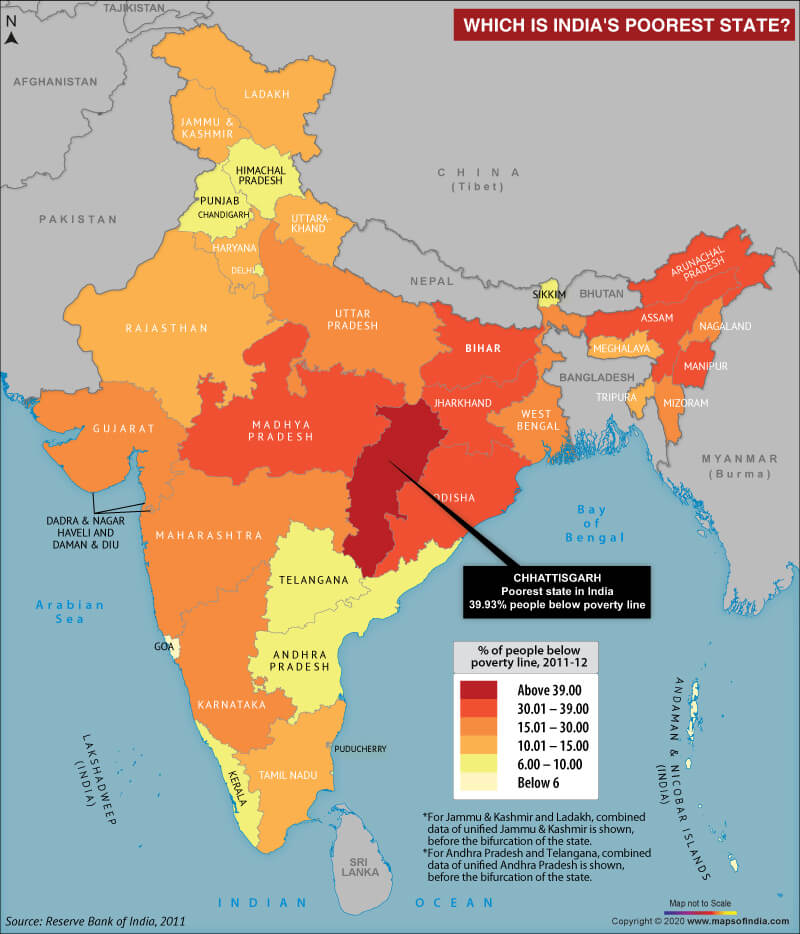
    • In India, 21.9% of the population lives below the national poverty line in 2011.
    • In India, the proportion of the employed population below $1.90 purchasing power parity a day in 2011 is 21.2%.
    • For every 1,000 babies born in India in 2017, 39 die before their 5th birthday.
    • Poverty is a condition characterized by lack of basic needs such as water, health care, foods, sufficient access to social and economic services, and few opportunities for formal income generation.
    • Poverty is often described in terms of the income level below which people are unable to access sufficient food for a healthy working life.
    • Hunger and food insecurity are the most serious forms of extreme poverty.
    • Progress in poverty reduction has been concentrated in Asia and especially East Asia. In other areas, the number of people in extreme poverty has increased especially in sub-Saharan Africa.
    • Poverty in India is primarily due to improper government policies and the misuse of the financially weaker section by the wealthier community.
    • The main outcome of poverty is hunger. Hunger’s seriousness can be understood easily from the fact that every year, 5.8 million children die from hunger related-causes around the world (FAO Hunger Report 2008).
    • Poverty involves more than the lack of income and productive resources to ensure sustainable livelihoods. Its manifestations include hunger and malnutrition, limited access to education and other basic services, social discrimination and elimination as well as the lack of participation in decision-making.

    Poverty in India and other developing countries

    Reports of the World Bank revealed that India is one of the poorest countries in the world.  Some of the main issues associated with prevalent poverty in India are poor health services, and insufficient education and training. Almost half of India’s population drops out of school by the age of thirteen and only one in ten people receive some form of job training.

    • Poor health services: It has been observed that People of India have less access to good health services as compared to industrialized nations. The relationship between poverty and access to health care can be seen as part of a larger cycle, where poverty leads to ill health and ill health maintains poverty.
    • Child malnutrition: The occurrence of under-nutrition in India is amongst the highest levels found in any country in the world and in spite of the development in food production, disease control and economic and social development; India is facing an acute problem of child malnutrition.
    • Insufficient education and training: In developing countries, children do not have access to basic education because of inequalities that originate in sex, health and cultural identity. It has been revealed in reports that illiteracy and lack of education are common factor that lead to poverty.
      • Governments of developing countries often cannot have enough money to provide for good public schools, especially in rural areas.
      • Poor people also often sacrifice schooling in order to concentrate on making a minimal living.
      • Additionally, developing countries tend to have few employment opportunities, especially for women. As a result, people do not want to attend school.
    • Corruption and warfare: Political power is unreasonably centralized. This often causes development problems. In these situations politicians make decisions about places that they are unaware with, lacking sufficient knowledge about the context to design effective and appropriate policies and programs.
      • Another issue related with poverty is corruption often accompanies centralization of power, when leaders are not accountable to those they serve. Corruption hinders development.
      • Warfare also lead to entrenched poverty by diverting scarce resources allocated for reducing poverty to maintaining a military.
    • Environmental degradation: It is also a major issue in increasing poverty.
      • In the developing world, the poor communities depend on natural resources to fulfill their basic needs.
      • Therefore, the depletion and impurity of water sources directly impend the livelihoods of those who depend on them.
    • Inequality: One of the more deep-rooted sources of poverty around the globe is social inequality that stems from cultural ideas about the relative worth of different genders, races, ethnic groups, and social classes.
    • Other causes include:
      1. Population Rise
      2. Low Productivity in Agriculture
      3. Under-Utilized Resources
      4. Low Rate of Economic Development
      5. Price Rise
      6. Unemployment
      7. Shortage of Capital and Able Entrepreneurship
      8. Social Factors

    Global Hunger Index (GHI)

    The Global Hunger Index is a peer-reviewed annual report, jointly published by Concern Worldwide and Welthungerhilfe.

    • It determines hunger on a 100-point scale, where 0 is the best possible score (no hunger) and 100 is the worst.
    • It is designed to comprehensively measure and track hunger at the global, regional, and country levels.
    • The aim of the GHI is to trigger action to reduce hunger around the world.

    For each country in the list, the GHI looks at four indicators:

    1. Undernourishment (which reflects inadequate food availability): calculated by the share of the population that is undernourished (that is, whose caloric intake is insufficient)
    2. Child Wasting (which reflects acute undernutrition): calculated by the share of children under the age of five who are wasted (that is, those who have low weight for their height)
    3. Child Stunting (which reflects chronic undernutrition): calculated by the share of children under the age of five who are stunted (that is, those who have low height for their age)
    4. Child Mortality (which reflects both inadequate nutrition and unhealthy environment): calculated by the mortality rate of children under the age of five

    India’s (poor) performance

    • India is among the 31 countries where hunger has been identified as serious.
    • Only 15 countries fare worse than India.
    • Some of these include Afghanistan (103), Nigeria (103), Congo (105), Mozambique (106), Sierra Leone (106), Timor-Leste (108), Haiti (109), Liberia (110), Madagascar (111) and Somalia (116).
    • India was also behind most of the neighbouring countries.
    • Pakistan was placed at 92 rank, Nepal at 76 and Bangladesh also at 76.

    Reasons for such poor performance

    • Poor maternal health: Mothers are too young, too short, too thin and too undernourished themselves, before they get pregnant, during pregnancy, and then after giving birth, during breast-feeding.
    • Poor sanitation: Poor sanitation, leading to diarrhoea, is another major cause of child wasting and stunting.
    • Food insecurity: Low dietary diversity in India is also a key factor in child malnutrition.
    • Poverty: Almost 50 million households in India are dependent on these small and marginal holdings.
    • Livelihood loss: The rural livelihoods loss after COVID and lack of income opportunities other than the farm sector have contributed heavily to the growing joblessness in rural areas.

    Issues with GHI

    • The GHI is largely children-oriented with a higher emphasis on undernutrition than on hunger and its hidden forms, including micronutrient deficiencies.
    • The first component — calorie insufficiency — is problematic for many reasons.
    • The lower calorie intake, which does not necessarily mean deficiency, may also stem from reduced physical activity, better social infrastructure (road, transport and healthcare) and access to energy-saving appliances at home, among others.
    • For a vast and diverse country like India, using a uniform calorie norm to arrive at deficiency prevalence means failing to recognise the huge regional imbalances in factors that may lead to differentiated calorie requirements at the State level.

    Understanding the connection between stunting and wasting and ways to tackle them

    • India’s wasting prevalence (17.3%) is one among the highest in the world.
    • Its performance in stunting, when compared to wasting, is not that dismal, though.
    • Child stunting in India declined from 54.2% in 1998–2002 to 34.7% in 2016-2020, whereas child wasting remains around 17% throughout the two decades of the 21st century.
    • Stunting is a chronic, long-term measure of undernutrition, while wasting is an acute, short-term measure.
    • Quite possibly, several episodes of wasting without much time to recoup can translate into stunting.
    • Effectively countering episodes of wasting resulting from such sporadic adversities is key to making sustained and quick progress in child nutrition.
    • Way forward: If India can tackle wasting by effectively monitoring regions that are more vulnerable to socioeconomic and environmental crises, it can possibly improve wasting and stunting simultaneously.

    Low child mortality

    • India’s relatively better performance in the other component of GHI — child mortality — merits a mention.
    • Studies suggest that child under nutrition and mortality are usually closely related, as child under nutrition plays an important facilitating role in child mortality.
    • However, India appears to be an exception in this regard.
    • This implies that though India was not able to ensure better nutritional security for all children under five years, it was able to save many lives due to the availability of and access to better health facilities.

    Initiatives by Government to Curb Poverty in India

    Ending poverty in all its forms is the first of the 17 Sustainable Development Goals (SDGs) of the 2030 Agenda for Sustainable Development.

    The government of India took several initiatives to eradicate poverty from the country.

    1. Saansad Aadarsh Gram Yojana (SAGY)Ministry of Rural development initiated the scheme in 2014. The scheme aims to develop five ‘Adarsh Villages’ or ‘Model Villages’ by 2024.
    2. National Rural Livelihood Mission (NRLM)Ministry of Rural Development started NRLM 2011 to evolve out the need to diversify the needs of the rural poor and provide them jobs with regular income on a monthly basis.
    3. Mahatma Gandhi National Rural Employment Guarantee Act (MGNREGA) – In 2005 Ministry of Rural Development initiated MGNEREGA to provide 100 days of assured employment every year to every rural household. One-third of the proposed jobs would be reserved for women.
    4. National Urban Livelihood Mission (NULM) – In 2013, NULM was commenced by the Ministry of Housing and Urban Affairs focusing on organizing urban poor in Self Help Groups, creating opportunities for skill development leading to market-based employment, and helping them to set up self-employment ventures by ensuring easy access to credit.
    5. Pradhan Mantri Jan Dhan Yojana (PMJDY) – the Ministry of Finance in 2014 initiated PMJDY that aimed at direct benefit transfer of subsidy, pension, insurance, etc., and attained the target of opening 1.5 crore bank accounts. The scheme particularly targets the unbanked poor.

    Hunger and Poverty are the biggest challenges for good governance in India still today. Evaluate how far successive governments have progressed in dealing with these humongous problems. Suggest measures for improvement. (250 words)

    Post your answers in comments below.

    Initiatives by Government to fight against Hunger in India

    The Government of India took several initiatives to fight against hunger across the nation.

    1. National Nutrition Mission (NNM), Poshan Abhiyan – NNM was started in 2018 by the Ministry of Women and Child Development to reduce the level of under-nutrition and also enhance the nutritional status of children in the country.
    2. National Food Security MissionMinistry of Agriculture initiated NFSM in 2007 to increase the production of rice, wheat, pulses, and coarse cereals through area expansion and productivity enhancement in a sustainable manner.
    3. Zero Hunger Programme – launched on October 16, 2017 with the aim to make farm inventions, organizing the farming system for nutrition, setting up genetic gardens for biofortified plants and initiating zero hunger training.
    1. Eat Right India Movement: An outreach activity organized by the Food Safety and Standards Authority of India (FSSAI) for citizens to nudge them towards eating right.
    2. Pradhan Mantri Matru Vandana Yojana: A centrally sponsored scheme executed by the Ministry of Women and Child Development, is a maternity benefit programme being implemented in all districts of the country with effect from 1st January, 2017.
    3. Food Fortification: Food Fortification is the addition of key vitamins and minerals such as iron, iodine, zinc, Vitamin A & D to staple foods such as rice, milk and salt to improve their nutritional content.
    4. National Food Security Act, 2013: It legally entitled up to 75% of the rural population and 50% of the urban population to receive subsidized food grains under the Targeted Public Distribution System.
    5. Mission Indradhanush: It targets children under 2 years of age and pregnant women for immunization against 12 Vaccine-Preventable Diseases (VPD).

    Global Initiative against Poverty and Hunger

    Food is at the core of the Sustainable Development Goals (SDGs). Goal 2 of SDG deals with Zero Hunger. Given below are some global level initiatives to fight poverty and hunger-

    1. The End to Poverty Initiative – This Centenary Initiative is designed specifically as the vehicle to take forward the ILO’s work in implementing the 2030 Agenda for Sustainable Development to alleviate poverty.
    2. Zero Hunger By World Food Programme – with humanitarian food assistance, provide nutritious food to those in urgent need. Meanwhile, the complementary programs address the root causes of hunger and build the resilience of communities.
    3. Fight Hunger First – With a vision to have a world without hunger and poverty, Welthungerhilfe- WHH has been implementing several initiatives in rural areas of India and Bangladesh. It was set up by a UN agency FAO.
    4. Zero Hunger Challenge (Save Food) by FAO – The 2012 United Nations Conference on Sustainable Development, also known as Rio+20, launched the Zero Hunger Challenge which includes addressing the sustainability of all food systems and the vision of zero food loss and waste (FLW).

    Conclusion

    Food insecurity remains an alarming issue due to such entitlement failures in India. While the government has rejected the findings of the Global Hunger Index as “unscientific”, we cannot ignore the dismal ground realities. India faces a malnutrition challenge that is not only large but worsening. It is time for the government to face up to these inconvenient truths and pursue the means and mechanisms needed to improve the situation. A safe and bright future for our children will translate into a safe and bright future for the country. And that’s the message we want every fellow citizen to internalize — Sahi Poshan, Desh Roshan.

    There is a growing divergence in the relationship between poverty and hunger in India. The shrinking of social expenditure by the government is forcing the poor to spend more on non-food essential items squeezing their food budget. Elucidate. (250 words)

    Post your answers in comments below.

    UPSC 2022 countdown has begun! Get your personal guidance plan now! (Click here)

  • [Burning Issue] Rural Electrification

    UPSC 2022 countdown has begun! Get your personal guidance plan now! (Click here)

    India has achieved its long-pending goal of 100% electrification of its villages. But there is still a long way to go in providing electricity to all households in the country. According to Central Electricity Authority (CEA), a village is considered electrified only if the Gram Panchayat certifies that the basic infrastructure has been provided to the inhabited area, including Dalit hamlets, and 10% of the households are electrified.

    Rural Electrification in India

    • Rural electrification is considered to be the backbone of the rural economy.
    • The electricity generation capacity in India is the fifth largest in the world.
    • India is the sixth largest consumer of electricity and accounts for 3.4 percent of the global energy consumption.
    • The year 2022, has been earmarked for achieving the target of ‘24×7 Power for All’.

    Rural electrification has five major facets:

    1. Setting up of Rural Electricity Infrastructure
    2. Providing connectivity to households
    3. Adequate supply of desired quality of power
    4. Supply of electricity at affordable rates
    5. Providing clean, environmentally benign and sustainable power in efficient way

    When a village is called an Electrified Village?

    Prior to October 1997

    A Village should be classified as electrified if electricity is being used within its revenue area for any purpose whatsoever.

    After October 1997

    A village will be deemed to be electrified if the electricity is used in the inhabited locality, within the revenue boundary of the village for any purpose whatsoever.

    As per the new definition, a village would be declared as electrified, if:

    • Basic infrastructure such as Distribution Transformer and Distribution lines are provided in the inhabited locality as well as the Dalit Basti hamlet where it exists.
    • Electricity is provided to public places like Schools, Panchayat Office, Health Centers, Dispensaries, Community centers etc.
    • The number of households electrified should be at least 10% of the total number of households in the village.

    What is Rural Electrification provides for?

    1. Increase in agriculture yield.
    2. Business of Small and household enterprises shall grow resulting into new avenues for employment.
    3. Improvement in Health, Education, Banking (ATM) services.
    4. Improvement in accessibility to radio, telephone, television, internet and mobile.
    5. Betterment in social security due to availability of electricity.
    6. Accessibility of electricity to schools, panchayats, hospitals and police stations.
    7. Rural areas shall get increased opportunities for comprehensive development.

    Energy source and Percentage Share in installed capacity

    National Electricity Policy 2005

    • In compliance with section 3 of the Electricity Act 2003 the Central Government notified the National Electricity Policy.
    • The National Electricity Policy aims at laying guidelines for accelerated development of the power sector, providing supply of electricity to all areas and protecting interests of consumers and other stakeholders keeping in view availability of energy resources, technology available to exploit these resources, economics of generation using different resources, and energy security issues.
    • The National Electricity Policy was evolved in consultation with and considering views of the State Governments, Central Electricity Authority (CEA), Central Electricity Regulatory Commission (CERC) and other stakeholders.

    The aims and objectives of the policy

    1. Access to Electricity – Available for all households in next five years
    2. Availability of Power – Demand to be fully met by 2012. Energy and peaking shortages to be overcome and adequate spinning reserve to be available.
    3. Supply of Reliable and Quality Power of specified standards in an efficient manner and at reasonable rates. Per capita availability of electricity to be increased to over 1000 units by 2012.
    4. Minimum lifeline consumption of 1 unit/household/day as a merit good by year 2012.
    5. Financial Turnaround and Commercial Viability of Electricity Sector.
    6. Protection of consumers’ interests.

    National Rural Electrification Policy, 2006

    1. Goals include provision of access to electricity to all households by the year 2009, quality and reliable power supply at reasonable rates, and minimum lifeline consumption of 1 unit/household/day as a merit good by year 2012.
    2. For villages/habitations where grid connectivity would not be feasible or not cost effective, off-grid solutions based on stand-alone systems may be taken up for supply of electricity. Where these also are not feasible and if only alternative is to use isolated lighting technologies like solar photovoltaic, these may be adopted. However, such remote villages may not be designated as electrified.
    3. State government should, within 6 months, prepare and notify a rural electrification plan which should map and detail the electrification delivery mechanism. The plan may be linked to and integrated with district development plans. The plan should also be intimated to the appropriate commission.
    4. Gram panchayat shall issue the first certificate at the time of the village becoming eligible for declaration as electrified. Subsequently, the Gram Panchayat shall certify and confirm the electrified status of the village as on 31st March each year.
    5. The state government should set up a committee at the district level within 3 months, under the chairmanship of chairperson of the Zilla Panchayat and with representations from district level agencies, consumer associations, and important stakeholders with adequate representation of women.
    6. The district committee would coordinate and review the extension of electrification in the district and consumer satisfaction, etc.
    7. Panchayat Raj institutions would have a supervisory / advisory role.
    8. Institutional arrangements for backup services and technical support to systems based on non-conventional sources of energy will have to be created by the state government.

    National policy for renewable energy-based micro and mini-grids

    • Introduced by Ministry of New and Renewable Energy
    • It targets setting up of at least 10,000 projects with a minimum capacity of 500MW by 2021
    • The draft policy proposes to extend energy services beyond lighting

    Draft National Electricity Policy 2021

    • NEP 2021 covers multiple areas– grid operation, power markets, regulatory process, energy efficiency, optimal generation mix, transmission, distribution and many more.
    • The draft talks about the creation of Electric Vehicle charging stations, Smart meters, power markets, environment and more.
    • Ministry of Power has created a committee of experts to submit suggestions to the draft NEP 2021 within two months of the release of the draft.
    • The members of the committee include members from state governments, the Ministry of New and Renewable Energy (MNRE), NITI Aayog, and the Central Electricity Authority.

    Areas of improvement:

    • It lacks a fair and coherent approach to energy transition from coal to renewable.
    • It mentions the addition of coal capacity, despite the clear writing on the wall that thermal power is becoming unviable.
    • New coal capacity should be considered only if shown essential based on rigorous modelling studies.
    • Since many coal plants are going to retire, NEP should give policy directions to generating companies to take responsibility post-retirement for waste management as well as restoration of the land, water bodies and air quality in their project areas.
    • Prevention of electricity accidents requires focus, the current NEP has provisions for efforts to build consumer awareness, but this is sadly missing in the new draft. 

    What is the actual scenario of rural electrification?

    • Recently Union government announced it has achieved 100% rural electrification.
    • The definition of electrification was limited to the provision of basic infrastructure such as transformers, of electricity in public places like schools and panchayats, and electrification of at least 10% households in the village.
    • India continues to harbour energy poverty with 31 million rural households and about five million urban households still unconnected to the electricity grid.
      • A significant portion of connected rural households are yet to get adequate quantity and quality of supply.
    What are the plans of the government on electrification?
    • Union government under Deen Dayal Upadhyaya Gram Jyoti Yojana (DDUGJY) and Integrated Power Development Scheme (IPDS) planning to provide universal electrification.
    • By which it has an ambitious target of connecting all remaining households by the end of March 2019 and made budgetary allocations to cover the cost of electrification.
    • As part of a Centre-State joint initiative on 24×7 ‘Power for All’, State governments have already committed to ensuring round-the-clock supply to all households from April 2019.

    What are the challenges for India’s electrification target?

    • Regional imbalances in electricity access is persisting in seven States namely Uttar Pradesh, Bihar, Odisha, Jharkhand, Assam, Rajasthan and Madhya Pradesh, which account for 90% of un-electrified households.
    • Coincidentally, these States are ranked poorly in social development indices and house about two-thirds of the population living below the poverty line.
    • There are a range of implementation shortcomings in universal electrification by state governments due to sluggish finance structure of the union government.
    • Most of the Indian power distribution companies (discoms) in these states are bankrupt and are unable to purchase power and provide it to consumers.
    • As a result, discoms don’t have the capacity to sign power purchase agreements (PPAs).
    • Add to this the issue of aggregate technical and commercial (AT&C) losses, heightened by the rampant problem of power theft.
    • Given the context, it is uncertain whether the goal of electrifying all ‘willing households’ by March 2019 would translate into universal access to electricity.

    Related Schemes

    (1) Deen Dayal Upadhyaya Gram Jyoti Yojana (DDUGJY)

    Aim

    • To ensure electrification of all the un-electrified villages by 2017 in mission mode
    • The Scheme draws its inspiration from the similar pioneering scheme implemented by the Government of Gujarat
    • It will enable to initiate much awaited reforms in the rural areas

    Objectives

    • To provide electrification to all villages
    • Feeder separation to ensure sufficient power to farmers and regular supply to other consumers
    • Improvement of Sub-transmission and distribution network to improve the quality and reliability of the supply
    • Metering to reduce the losses

     (2) Pradhan Mantri Sahaj Bijli Har Ghar Yojana –“Saubhagya”

    • The Saubhagya is a scheme to ensure electrification of all willing households in the country in rural as well as urban areas.
    • It was launched in September 2017.
    • The Rural Electrification Corporation Limited (REC) is the nodal agency for the operationalization of the scheme throughout the country.

    Objective

    • To provide energy access to all by last mile connectivity and electricity connections to all remaining un-electrified households in rural as well as urban areas
    • To achieve universal household electrification in the country

    Beneficiaries of the project

    • The beneficiaries for free electricity connections would be identified using Socio-Economic and Caste Census (SECC) 2011 data.
    • However, un-electrified households not covered under the SECC data would also be provided electricity connections under the scheme on payment of Rs. 500 which shall be recovered by DISCOMs in 10 installments through electricity bill.
    • The solar power packs of 200 to 300 Wp with battery bank for un-electrified households located in remote and inaccessible areas, comprises Five LED lights, One DC fan, One DC power plug.
    • It also includes Repair and Maintenance (R&M) for 5 years.

    Expected outcomes of the scheme

    What are the issues involved?

    1. Definition: Only 1 in 10 households need to have electricity supply for the village to be officially electrified. According to 2011 census, only 55.3% of all rural households had access to electricity
    2. Quality: Around 67% of electrified villages suffer from erratic and unreliable power supply. Low voltage was widely reported.
    3. The distribution transformers catering to villages had the capacity to support the load of only 10% of the households and thus the instances of overloading and transformer breakdowns are significant.
    4. Only 7%–10% rural locations receive supply during the full evening hours (5 pm to 11 pm).
    5. In Bihar, Jharkhand and UP, more than one-third of electrified households received less than four hours of supply during the day and voltage fluctuations are also common.
    6. Metering: More than 28% electrified villages reported overcharging and ad-hoc billing. One-time connection charges also differed from village to village.
      • There are also instances of billing delays, particularly in issuing the first bill after connection. This increases the likelihood of payment defaults leading to disconnection of supply.
    7. Accountability: 52% villages face issues with contractors, repair persons and power distribution companies. Either no one turns up to address complaints or repairs are done after paying bribes or residents get repairs done at their own cost.
    8. Inaccessibility: Geographical terrain is posing a problem to grid expansion in at least 13% of all villages.
    9. NPA: Banks do not lend to mini-grid developers due to poor recovery of loans
    10. Kerosene dependence: Despite having electricity connection.
    11. Affordability: Among the most energy deprived states, while most villages and more than two-thirds of the households had electricity connections, less than 40 per cent had meaningful access to electricity.
    12. Financial Issues: High upfront cost is the major reason behind consumer disinterest in taking up and sustaining  an electricity connection.
    13. Implementation and operational roadblocks: Network investments for rural electrification have been slower than planned. Lack of timely network investments jeopardizes the provision of reliable, affordable power supply.
    14. Operational issues: In the first phase of RGGVY, rural franchisees were expected to manage distribution operations in newly electrified areas. However, most of them are not operational and DDUGJY does not envisage such franchisees.

    Way forward

    • Metering and data management using ICT: Use information technology to monitor metering at feeder and distribution transformer levels to allow proper auditing of power supply.
      • Parameters such as DT failure rate, hours of supply (especially during evening hours), metering and billing information, information on consumer disconnections, new connections for entrepreneurial use, electrification of rural institutions., could be tracked and reported on the national dashboards on a monthly basis for every district or division.
      • With usage technology to monitor hours of supply, the duration of supply and interruptions can be recorded without manual intervention and tracked at a disaggregated level. This information can be used by SERCs and consumers to make DISCOMs more accountable for power supply.
    • Expansion:
      • The first step towards the target would be to provide new connections to un-electrified households and legalising existing illegal connections.
      • Improving uptake of connections by addressing financial hurdles and awareness barriers is to be taken up.
      • Financial constraint: While BPL households already receive a free connection under the Deen Dayal Upadhyaya Gram Jyoti Yojana (DDUGJY), APL families could be given a low-cost EMI based connection.
    • Awareness: Empowering and encouraging local authorities to organise awareness campaigns and enrolment camps in habitations exhibiting limited awareness are also essential.
    • Best practice: Bihar has currently evolved a good model both awareness campaigns subsidy for APL families.
    • Supply situation: Improving the supply situation for already electrified households is to be done.
    • DISCOM reforms: DISCOMs need to better plan for their infrastructure, factoring in near-term increase in demand, strengthening maintenance, and improving supply.
    • Innovative Business: As managing rural customers, particularly in remote areas, is a challenge innovative business models need to be explored.
    • Accountability: There is a need to hold DISCOMs accountable for monitoring of supply quality and operation and maintenance efforts in rural areas in order to ensure uninterrupted supply.
    • Tariff changes:
      • In many states, small industrial and commercial consumers pay tariff rates comparable to large industrial units and commercial complexes. There needs to be innovation in tariff design to encourage home-based or small enterprises in newly electrified villages
      • Currently, supply of one unit of power costs the DISCOMs about Rs. 7 and this cost will most likely increase at a rate of more than 4% per unit in the coming years. As such costs will be unaffordable for many consumers, and with the contribution of cross-subsidies reducing, substantial subsidy support will be necessary.
    • Research:
      • Even after the targets of connections are met, there is a need for a national institution, with rural electrification as its key focus.
      • Its mandate need not be to operate the rural distribution businesses but to provide knowledge and financial support to DISCOMs for maintaining and strengthening the rural network and ensuring supply.
      • Success mainly depends on curbing DISCOM losses and ensuring consumer honesty. It is hoped that electrification would lead to improved consumer satisfaction, as electricity truly becomes an enabler of prosperity in rural India.
      • Concerted efforts to monitor supply hours for rural, remote and newly electrified households are needed.

    Discuss how the rural electrification has the potential to become a driver of rural economic growth. (250 words)

    Post your answers in comments below.

    UPSC 2022 countdown has begun! Get your personal guidance plan now! (Click here)

  • [Burning Issue] India’s Coal Crisis

    UPSC 2022 countdown has begun! Get your personal guidance plan now! (Click here)

    With rising power demands in the domestic sector, Indian utilities are facing a severe shortage of coal, which is the primary fuel powering 70 percent of India’s energy consumption. More than half of the country’s 135 coal-fired power plants are running on fumes – as coal stocks run critically low. India’s thermal power plants currently have an average of four days worth of coal stock against a recommended level of 15-30 days, with a number of states highlighting concerns about blackouts as a result of the coal shortage.

    Coal has become a priceless commodity of late in a white-hot market with an over 100 percent jump in prices, which is driven mainly by China and India – the two largest consumers of thermal coal globally.

    What is the extent of the current coal crisis?

    A number of states including Delhi, Punjab, and Rajasthan have raised concerns about potential blackouts as a result of low coal inventory at thermal power plants and have already reported load shedding. India is the world’s second-largest importer of coal despite also being home to the fourth-largest coal reserves in the world.

    Increase in power demand

    • The shortage in coal is a result of a sharp uptick in power demand as the economy recovered from the effects of the pandemic.

    Global factors

    • A sharp increase in the international prices of coal due to a shortage in China have also contributed to the coal shortage.
    • Unseasonal rains in Indonesia, Covid-induced production cuts in Australia have ensured a once-in-a-lifetime bull run in coal prices.
    • A balance is possible if and when the global supply chain – both in terms of prices as well as availability – improves.
    • China consumes nearly half of the coal produced globally and Indonesia and Australia happen to be two of the largest exporters.
    • India sources 43 per cent of its imported coal from Indonesia and 26 per cent from Australia.

    Low accumulation of stocks by Thermal power plants

    • Low accumulation of stock by thermal power plants has contributed to the coal shortage in India.
    • Heavy rains in coal bearing areas had also led to a slowdown in the supply of coal to thermal plants.
    • Coal and lignite fired thermal power plants account for about 54 per cent of India’s installed power generation capacity but currently account for about 70 per cent of power generated in the country.

    Increase in the price of the other fuels

    • Incidentally, the demand for coal has also gone up because other sources of generating power – natural gas, for instance – have become even costlier.
    • The price of natural gas, too, has increased nearly 100 per cent in 2021 alone.
    • This has hampered the plan to grow the share of renewable energy as well.

    Legacy issues

    • Legacy issues of heavy dues of coal companies from certain states viz., Maharashtra, Rajasthan, Tamil Nadu, UP, Rajasthan and Madhya Pradesh also contributed to this coal shortage.
    • Power plants that usually rely on imports are now heavily dependent on Indian coal, adding further pressure to already stretched domestic supplies.

    Why is the demand for natural gas surging?

    • Nations across the world are committed to reducing carbon emissions. China has committed to becoming carbon neutral by 2060.
    • To reduce its emissions, China needs to give up coal, reduce consumption of other dirty fossil fuels and adopt cleaner energy such as natural gas and renewables.
    • The country is also taking harsh measures to reduce pollution in Beijing before the February 2022 Winter Olympics and thus display its commitment to decarburization.
    • The targets China has set for itself is seen to have escalated the current energy crisis in the nation where two-thirds of the electricity was generated from burning coal.
    • European Union has targeted to become carbon neutral by 2050 and reduce greenhouse gas emissions by 55% by 2030 compared to 2005 levels.

    Why are prices between domestic and global coal widening?

    • Domestic coal prices in India are largely decided by Coal India. An increase in coal prices generally has a knock on effect on power prices and inflation..
    • Coal India has kept prices steady over the last year despite global coal prices rising steeply in the same period.
    • Meanwhile, Asia’s coal price benchmarks have hit record highs in the recent times, buoyed by global demand for power generation fuels as economies open up.
    • A major power crisis in China is the latest event driving global demand for the fuel.

    Why are utilities unable to pass on higher costs?

    • India’s power tariffs, set by the respective states, are among the lowest in the world as state-run distribution companies have absorbed higher input costs to keep tariffs steady.
    • This has left many of these companies deeply indebted, with cumulative liabilities running into billions of dollars.
    • This triggered delayed payments to power producers, often affecting cash flows and disincentivising further investment in the electricity generation sector.
    • Indian power producers locked in long-term agreements with distribution utilities often cannot pass on higher input costs unless clauses are included in their contracts.

    What does the deepening energy crisis mean for India?

    • The sharp rise in global coal prices came as a boon for domestic suppliers such as Coal India.
    • As the supply crunch in the key overseas markets grew and prices soared, the demand for coal from domestic sources climbed. Coal India and other producers increased output, yet supply remains quite tight.
    • Over 70% of India’s power is generated from burning coal while the share of natural gas is just about 5%. Thus, rising natural gas prices had a limited impact on the cost of power generation in India.
    • India, however, suffered a scare when the inventory of coal with power plants reached critically low levels, as demand surged about 11%. The situation was resolved by diverting coal away from non-power uses.
    • The power demand is set to climb higher when more restrictions are eased, including those on cinema halls and multiplexes.
    • While efforts are on to provide an uninterrupted supply of coal to power plants, non-power users are likely to suffer.
    • Indian households were more affected by the rise in prices of petroleum products as consumption of cooking gas, petrol and diesel grew.

    What does it mean for global recovery?

    • Higher fuel prices are only one part of the problem. Temporary closures of factories in China will slow the repair of global value chains that broke down last year when countries locked down their economies.
    • These shutdowns will lead to another round of disruption in the supply of parts to makers of various goods across the globe.
    • The temporary shutdowns also mean missed deadlines for delivery of merchandise ahead of the November-January holiday season sales in many parts of the world.
    • When power rationing was ordered, factories in China were racing to meet the global and domestic demand for everything from apparel to mobile phones and other gadgets.
    • Higher fuel prices and shortages will add to inflationary pressures in the global economy and hurt the recovery of demand in lower-income economies.

    What are the recent Reforms in Coal Sector?

    • Commercial mining of coal allowed, with 50 blocks to be offered to the private sector.
    • Entry norms will be liberalized as it has done away with the regulation requiring power plants to use “washed” coal.
    • Coal blocks to be offered to private companies on revenue sharing basis in place of fixed cost.
    • Coal gasification/liquefaction to be incentivized through rebate in revenue share.
    • Coal bed methane (CBM) extraction rights to be auctioned from Coal India’s coal mines.

    Challenges posed

    • The desire to cut its reliance on heavily polluting coal burning power plants has been a major challenge for the government in recent years.
    • The question of how India can achieve a balance between meeting demand for electricity from its almost 1.4bn people has to be answered.

    Way Forward

    Ramp-up domestic coal production

    • The efforts are being taken to fill the shortage of coal from domestic mines and to do so the government is working closely with coal producing companies to ramp up domestic production of coal.

    Reduce demand-supply mismatches

    • Load shading is not new to India. Rationing of power supply in rural and semi-urban areas will be the immediate solution for the power distress in industrial areas.

    Rationalize the coal imports

    • India will need to amplify its imports despite the financial cost. The gap in the coal demand after domestic production has to be filled by the imports from Indonesia and Australia.

    Focus on Hydro-power generation and natural gal

    • India has the immense potential in the Hydro-power generation and is among the most important sector for generating electricity after thermal power plants.
    • The sector performs at its peak around the rainy season which typically extends from June to October.
    • There could be a larger role for natural gas to play, even with global prices currently surging.

    Increasing the share of Renewable energy

    • Experts advocate a mix of coal and clean sources of energy as a possible long-term solution.
    • It’s not completely possible to transition and it’s never a good strategy to transition 100% to renewables without a backup.
    • Long term investment in multiple power sources aside a crisis like the current one can be averted with better planning.

    Increased coordination

    • There is need for closer coordination between Coal India Limited – the largest supplier of coal in the country and other stakeholders.
    • For now, the government is working with state-run enterprises to ramp up production and mining to reduce the gap between supply and demand.

    Decentralized power generation

    • The main issue is that we are dependent on large, centralized power generation.
    • The only way our power sector can absorb shocks better is if large power plants are augmented by decentralized generation sources at village level.
    • This can be a template for better resilience to future power crises.

    Coal stocking norms

    • To avoid such a crisis situation in future, the Ministry of Power has worked out a strategy which includes tweaking the coal stocking norms. If the power plants do not follow them, then there will be a penal provision.
    • To overcome the storage issue in the generation of electricity from renewable sources, the government is working on a provision for creating more storage facilities in the grid.

    Conclusion

    India can learn a lesson from Europe’s power crisis. While Europe has gas power plants to stand in, India doesn’t have similar options. As we move more towards greening our power sources, we need to provision for paying for standby thermal generation to avoid a mega-crisis. Adequate liquidity for backup reserve capacity needs to be planned and provisioned for.

    Probably, the present situation is a good opportunity to rethink and fine-tune the energy policy without further delay. Bits and pieces reforms will not work anymore, as the chain has to been broken and a complete overhaul is required.


    UPSC 2022 countdown has begun! Get your personal guidance plan now! (Click here)

  • [Burning Issue] Pandora Papers Leak

    UPSC 2022 countdown has begun! Get your personal guidance plan now! (Click here)

    Global elites continue to exploit the cracks in tax laws and the lax jurisdiction in tax havens to ring-fence their assets, through complex offshore structures, from scrutiny by authorities. The leak of financial documents, called the Pandora Papers, follows similar such exposés in the past, for instance, the Panama Papers and the Paradise Papers. While the earlier revelations had forced governments to tighten the regulatory architecture, owing to worries over these channels being used to launder money and evade taxes, the uncovering of this trove of 12 million documents now only underlines the challenges that the authorities continue to face.

    There are at least 300 persons of Indian nationality in the Pandora Papers. The papers consist of as many as 12 million documents from 14 companies in offshore tax havens with details of ownership of 29,000 offshore companies and Trusts.

    Let us look at the issue in detail.

    What is Pandora papers leak?

    • The Pandora Papers show that over 300 Indians have set up such offshore structures. It is the largest trove of leaked data exposing tax haven secrecy in history.
    • It includes over 11.9 million leaked files from 14 global corporate services firms which set up about 29,000 off-the-shelf companies and private trusts in not just obscure tax jurisdictions.
    • Such structures are typically used to not pay taxes, to launder money gotten through illegal means, and to sequester assets.
    • They provide a rare window into the hidden world of offshore finance, casting light on the financial secrets of some of the world’s richest people.
    • Businessmen, who have declared themselves bankrupt before recovery tribunals, hold billions through such offshore entities. Some have set up offshore trusts to hold assets.
    • The use of such structures may not necessarily be illegal; they do raise questions over the nature of the transactions.
    • These documents relate to the ultimate ownership of assets ‘settled’ (or placed) in private offshore trusts and the investments including cash, shareholding, and real estate properties, held by the offshore entities.

    What do these papers reveal?

    • They reveal how the rich, the famous and the notorious, many of whom were already on the radar of investigative agencies, set up complex multi-layered trust structures for estate planning.
    • This is particularly in jurisdictions that are loosely regulated for tax purposes, but characterized by air-tight secrecy laws.
    • The purposes for which trusts are set up are many, and some genuine too.

    But a scrutiny of the papers also shows how the objective of many is two-fold:

    1. Tax Avoidance: to hide their real identities and distance themselves from the offshore entities so that it becomes near impossible for the tax authorities to reach them and,
    2. Tax Evasion: to safeguard investments — cash, shareholdings, real estate, art, aircraft, and yachts — from creditors and law enforcers.

    How is Pandora different from the Panama Papers and Paradise Papers?

    • The Panama and Paradise Papers dealt largely with offshore entities set up by individuals and corporates respectively.
    • The Pandora Papers investigation shows how businesses disguised as Trusts have created a new normal with rising concerns of money laundering, terrorism funding, and tax evasion.

    What is a Trust?

    • A trust can be described as a fiduciary arrangement where a third party, referred to as the trustee, holds assets on behalf of individuals or organizations that are to benefit from it.
    • It is generally used for estate planning purposes and succession planning.
    • It helps large business families to consolidate their assets — financial investments, shareholding, and real estate property.
    • A trust comprises three key parties:
      1. Settlor — one who sets up, creates, or authors a trust;
      2. Trustee — one who holds the assets for the benefit of a set of people named by the ‘settlor’; and
      3. Beneficiaries — to whom the benefits of the assets are bequeathed.
    • A trust is not a separate legal entity, but its legal nature comes from the ‘trustee’.
    • At times, the ‘settlor’ appoints a ‘protector’, who has the powers to supervise the trustee, and even remove the trustee and appoint a new one.

    Is setting up a trust in India or one offshore/outside the country illegal?

    • The Indian Trusts Act, 1882 gives legal basis to the concept of trusts.
    • While Indian laws do not see trusts as a legal person/ entity, they do recognize the trust as an obligation of the trustee to manage and use the assets settled in the trust for the benefit of ‘beneficiaries’.
    • India also recognizes offshore trusts i.e., trusts set up in other tax jurisdictions.

    If it’s legal, what’s the investigation about?

    • There are legitimate reasons for setting up trusts — and many set them up for genuine estate planning.
    • A businessperson can set conditions for ‘beneficiaries’ to draw income being distributed by the trustee or inherit assets after her/his demise.
    • For instance, while allotting shares in the company to say, four siblings, the father promoter set conditions that a sibling can get the dividend from the shares and claim ownership of the shares.
    • This could be to ensure ownership of the enterprise within the family.
    • But trusts are also used by some as secret vehicles to park ill-gotten money, hide incomes to evade taxes, protect wealth from law enforcers.

    Why are the trusts set up overseas?

    Overseas trusts offer remarkable secrecy because of stringent privacy laws in the jurisdiction they operate.  From the investigation, some key tacit reasons why people set up trusts are:

    (1) Maintain a degree of separation

    • Businesspersons set up private offshore trusts to project a degree of separation from their personal assets.

    (2) Hunt for enhanced secrecy

    • Offshore trusts offer enhanced secrecy to businesspersons, given their complex structures. The Income-Tax Department can get information only with the financial investigation agency or international tax authority.

    (3) Avoid tax in the guise of planning:

    • Businesspersons avoid their NRI children being taxed on income from their assets by transferring all the assets to a trust.
    • Further, the tax rates in overseas jurisdictions are much lower than the 30% personal I-T rate in India plus surcharges, including those on the super-rich (those with annual income over Rs 1 crore).

    (4) Prepare for estate duty eventuality

    • There is pervasive fear that estate duty, which was abolished back in 1985 when Rajiv Gandhi was PM, will likely be re-introduced soon.
    • Setting up trusts in advance, business families have been advised, will protect the next generation from paying the death/ inheritance tax, which was as high as 85 per cent.

    (5) Flexibility in a capital-controlled economy

    • India is a capital-controlled economy. Individuals can invest only $250,000 a year under the Reserve Bank of India’s Liberalized Remittance Scheme (LRS).
    • To get over this, businesspersons have turned NRIs, and under FEMA, NRIs can remit $1 million a year in addition to their current annual income, outside India.

    (6) The NRI angle

    • Offshore trusts, as noted earlier, are recognised under Indian laws, but legally, it is the trustees — not the ‘settlor’ or the ‘beneficiaries’ — who are the owners of the properties and income of the trust.
    • An NRI trustee or offshore trustee taking instructions from another overseas ‘protector’ ensures they are taxed in India only on their total income from India.

    Can offshore Trusts be seen as resident Indians for tax purposes?

    • There are certain grey areas of taxation where the Income-Tax Department is in contestation with offshore trusts.
    • After the Black Money (Undisclosed Foreign Income and Assets) and Imposition of Tax Act, 2015, came into existence, resident Indians — if they are ‘settlors’, ‘trustees’, or ‘beneficiaries’ — have to report their foreign financial interests and assets.
    • NRIs are not required to do so — even though, as mentioned above, the I-T Department has been sending notices to NRIs in certain cases.

    What are the grey areas of Indian taxation

    • There are certain grey areas of taxation where the Income-Tax Department is in contest with offshore trusts.
    • After the Black Money (Undisclosed Foreign Income and Assets) and Imposition of Tax Act, 2015, came into existence, resident Indians have to report their foreign financial interests and assets.
    • NRIs are not required to do so.
    • The I-T Department may consider an offshore trust to be a resident of India for taxation purposes if the trustee is an Indian resident.
    • In cases where the trustee is an offshore entity or an NRI, if the tax department establishes the trustee is taking instructions from a resident Indian, then the trust may be considered a resident of India for taxation purposes.

    What are the government initiatives on Indian Taxation?

    (1) Legislative Action

    • The Fugitive Economic Offenders Act, 2018

    It seeks to confiscate properties of economic offenders who have left the country to avoid facing criminal prosecution or refuse to return to the country to face prosecution.

    • The Central Goods and Services Tax Act, 2017

    Uniform SGST and IGST rates will reduce the incentive for evasion by eliminating rate arbitrage between neighboring States and that between intra and inter-state sales.

    • The Benami Transactions (Prohibition) Amendment Act, 2016
      • It is designed to curb black money and passed by parliament in came into effect.
      • Persons indulging in benami transactions may face up to 7 years’ imprisonment and fine.
      • Furnishing false information is punishable by imprisonment up to 5 years and fine.
      • Properties held benami are liable for confiscation by government without compensation.
      • Initiating Officer may pass an order to continue holding property and may then refer case to Adjudicating Authority which will then examine evidence and pass an order.
      • Appellate Tribunal will hear appeals against orders of Adjudicating Authority. High Court can hear appeals against orders of Appellate Tribunal.
    • The Black Money (Undisclosed Foreign Income and Assets) and Imposition of Tax Act, 2015
      • It penalizes the concealment of foreign income and provides for criminal liability for attempting to evade tax in relation to foreign income.
      • The Act gave a one-time opportunity to Indian residents to declare undisclosed foreign income and assets.
      • The concerned person had to pay tax at the rate of 30% and an equal amount by way of penalty if found having undisclosed overseas wealth.
      • However, in case of non-declaration, the provisions included slapping of tax at the rate of 30% along with a penalty equal to three times the amount of tax evaded or 90% of the undisclosed income or the value of the asset.
      • The Act provides for punishment of jail for 3-10 years for the willful evasion.
    • Prevention of Money Laundering Act, 2002
      • The PMLA was enacted in 2002 and it came into force in 2005. The chief objective of this legislation is to fight money laundering, that is, the process of converting black money into white.
      • The Act enables government authorities to confiscate property and/or assets earned from illegal sources and through money laundering.
      • Under the PMLA, the burden of proof lies with the accused.

    (2) International cooperation

    • Double Taxation Avoidance Agreements (DTAAs): India is proactively engaging with foreign governments with a view to facilitate and enhance the exchange of information under Double Taxation Avoidance Agreements (DTAAs)/Tax Information Exchange Agreements (TIEAs)/Multilateral Conventions.
    • Automatic Exchange of Information: India has been a leading force in the efforts to forge a multilateral regime for proactive sharing of financial information known as Automatic Exchange of Information which will greatly assist the global efforts to combat tax evasion.
    • Foreign Account Tax Compliance Act of USA: India has entered into an information sharing agreement with the USA under the act.

    Way Forward

    • In the current running economy, the measures taken by the governments are not sufficient enough to solve the problems of over growing scams and other economic crimes.
    • There is need of strict provisions to deal with such problems.
    • The governments are required to bring out certain reforms to overcome these issues such as to govern the crimes of economics the government should revamp the laws since the existing laws are not so harsh.
    • Also the enforcement agencies should try to keep bars on the benefits arising out of such crimes by the offenders or scam.
    • Side by side, all the private or public agencies such as income tax department, custom offices, police departments, SEBI, etc. should work in a coordination to quickly get rid of these economics crimes.

    Conclusion

    • It is clearly evident from the aforementioned cases that the occurrence and re – occurrence of such scams can only be attributed to the weak financial regulations and a failure of corporate governance in finance.

    UPSC 2022 countdown has begun! Get your personal guidance plan now! (Click here)

  • [Burning Issue] Ayushman Bharat Digital Mission

    UPSC 2022 countdown has begun! Get your personal guidance plan now! (Click here)

    Prime Minister Narendra Modi recently launched the Ayushman Bharat Digital Mission via video conferencing. Currently, the program is being implemented on a pilot basis in six Union Territories. Ayushman Bharat Digital Mission has the potential to bring revolutionary changes to our health facilities. It marks a new phase in 7-year efforts to strengthen health facilities.

    Ayushman Bharat Digital Mission will create a seamless online platform that will enable interoperability within the digital health ecosystem and will now connect the digital health solutions of hospitals across the country with each other. Under the New Mission, every citizen will now get a digital health ID and their health record will be digitally protected.

    Background

    Before knowing about the latest initiative, let us look at India’s flagship ‘Ayushman Bharat Scheme’.

    What is Ayushman Bharat Scheme?

    • The Government announced two major initiatives in health sector, as part of Ayushman Bharat programme.
    • Health and Wellness Centre
    • National Health Protection Scheme
    • Aimed at making path breaking interventions to address healthcare problems holistically, in primary, secondary and tertiary care systems.
    • Covers both prevention and promotion of health.

    Need for Ayushman Bharat

    1. India is in a state of health transition.
    2. Infectious diseases such as tuberculosis, malaria, dengue, H1N1 pandemic influenza and antimicrobial resistance are a threat.
    3. Also the country is facing the emerging problem of chronic non-communicable diseases such as cardiovascular diseases, diabetes, cancer which are now the leading cause of mortality.
    4. New factors are emerging that threatens the country’s health security like ageing population, climate change, globalization, urbanization and changing lifestyles.
    5. We lag behind in addressing healthcare delivery across the length and breadth of the country.
    6. We have one of the highest levels of out-of-pocket spending on health.
    7. Average cost of treatment in private hospitals is 4 times higher than that of public. This pushes many people below poverty line.
    8. Funding for healthcare has been a major concern.
    9. Several states have implemented or supplemented their own health protection schemes. Ayushman Bharat programme builds on these schemes.
    10. Failure of Rashtriya Swasthya Bima Yojana (RSBY).

    Health and Wellness Centre

    1. Health and Wellness Centres will be the foundation of country’s health system.
    2. 1.5 lakh centres will bring health care system closer to the homes of people.
    3. Will provide comprehensive health care, including for non-communicable diseases and maternal and child health services.
    4. Will also provide free essential drugs and diagnostic services.
    5. Also provide mental health services, vaccinations against selected communicable diseases, and screening for hypertension, diabetes, and some cancers.
    6. Allocation of Rs. 1200 crore for this flagship programme.
    7. Contribution of private sector through CSR and philanthropic institutions in adopting these centres is also envisaged.

    National Health Protection Scheme

    1. National Health Protection Scheme will cover over 10 crore poor and vulnerable families or around 50 crore people.
    2. Will provide coverage upto 5 lakh rupees per family per year for secondary and tertiary care hospitalization.
    3. Identification of eligible families through the socio-economic caste census (SECC) data.
    4. World’s largest government funded health care programme.
    5. National Health Agency will govern the implementing mechanism.
    6. Adequate funds will be provided for smooth implementation of this programme.
    7. Cost of packages will be decided by National Health Agency.

    Significance of Ayushman Bharat

    1. Move towards the goal of universal health coverage
    2. Creating Swasth Bharat.
    3. Accessible healthcare at secondary and tertiary level institutions for the bottom 40% of the population.
    4. High involvement of states as the states are the custodians and the implementers of the scheme.
    5. Ensures enhanced productivity, well being and avert wage loss and impoverishment.
    6. Generation of lakhs of jobs, particularly for women.
    7. Like Jan Dhan scheme did for financial inclusion, Ayushman Bharat will create huge awareness of health insurance
    8. A higher life expectancy.
    9. The country will meet its social development goals.
    10. With respect to infrastructure and trained medical professionals, tertiary healthcare faces a big challenge. This problem is more acute in rural areas. AB will address this challenge.
    11. Will improve access to healthcare and bridge the demand-supply gap.

    National Digital Health Eco-system

    It is a National Digital Health Eco-system that supports Universal Health Coverage in an efficient, accessible, inclusive, affordable, timely, and safe manner, through the provision of a wide range of data, information, and infrastructure services, duly leveraging open, interoperable, standards-based digital systems, and ensuring the security, confidentiality, and privacy of health-related personal information.

    Knowing in detail the main scheme, let us look at the current developments and initiatives by the government to bring the health sector and Digital India mission in confluence to provide better services to the people of India and increasing governance through ICT.

    What is Ayushman Bharat Digital Mission?

    • It aims to provide digital health IDs for all Indian citizens to help hospitals, insurance firms, and citizens access health records electronically when required.
    • The pilot project of the Mission had been announced by the Prime Minister from the ramparts of the Red Fort on 15th August 2020.
    • The project is being implemented in the pilot phase in six States & Union Territories.

    Features of the Mission:

    Use of technology

    • There had also been an unprecedented expansion of telemedicine in the corona period- so far about 125 crore remote consultations completed through e-Sanjeevani.
    • The Ayushman Bharat Digital Mission would now connect the digital health solutions of hospitals across the country with each other.

    Health ID:

    • It will be issued for every citizen that will also work as their health account. This health account will contain details of every test, every disease, the doctors visited, the medicines taken and the diagnosis.
    • Health ID is free of cost, voluntary. It will help in doing analysis of health data and lead to better planning, budgeting and implementation for health programs.

    Healthcare Facilities & Professionals’ Registry:

    • The other major component of the programme is creating a Healthcare Professionals’ Registry (HPR) and Healthcare Facilities Registry (HFR), allowing easy electronic access to medical professionals and health infrastructure.
    • The HPR will be a comprehensive repository of all healthcare professionals involved in delivering healthcare services across both modern and traditional systems of medicine.
    • The HFR database will have records of all the country’s health facilities.

    Ayushman Bharat Digital Mission Sandbox:

    • The Sandbox, created as a part of the mission, will act as a framework for technology and product testing that will help organizations, including private players intending to be a part of the national digital health ecosystem become a Health Information Provider or Health Information User or efficiently link with building blocks of Ayushman Bharat Digital Mission.

    Who will be the implementing agency for the mission?

    • National Health Authority (NHA) under the Ministry of Health and Family Welfare.

    What are the intended benefits of the mission?

    • Indians will be able to use IT-enabled tools to share prescriptions, blood test reports and X-ray diagnostics with doctors, irrespective of where they were generated.
    • It involves the creation of a unique health ID for every citizen and a digital registry that aims to facilitate seamless interactions between healthcare experts.
    • This is a much-needed intervention given that management of chronic diseases has become a critical public health challenge in the past 15 years.
    • Data portability could expedite the treatment of the critically ill, especially those who suffer from more than one ailment.
    • The severity of Covid-19 effects amongst those with comorbidities has highlighted the need for a repository that alerts a doctor to a patient’s medical history at the click of a computer mouse.
    • In the long run, the creation of a health record system could improve public health monitoring and advance evidence-based policymaking.
    • It ensures ease of doing business for doctors and hospitals and healthcare service providers.
    • Enable access and exchange of longitudinal health records of citizens with their consent.
    • Create integration within the digital health ecosystem, similar to the role played by the Unified Payments Interface (UPI) in revolutionizing payments.
    • Old medical records cannot get lost as every record will be stored digitally. The Digital Ecosystem will also enable a host of other facilities like Digital Consultation, Consent of patients in letting medical practitioners access their records, etc.  
    • Based on the foundations laid down in the form of Jan Dhan, Aadhaar and Mobile (JAM) trinity and other digital initiatives of the government, Ayushman Bharat Digital Mission will create a seamless online platform.
    • Through this platform, the provision of a wide range of data, information and infrastructure services, duly leveraging open, interoperable, standards-based digital systems while ensuring the security, confidentiality and privacy of health-related personal information.

    Global learning

    • Globally, the tryst with e-health innovations has been a mixed one.
    • The UK’s National Health Service was one of the first to deploy a digital system to make patients’ records accessible to doctors across the country.
    • The programme did not earn the trust of doctors and failed to adequately address issues related to data confidentiality. Aborted in 2011, the project is regarded as amongst the most expensive failures in IT history.
    • In the US and Australia, where digital healthcare has enjoyed a relatively better outing, the creation of a patient and physician-centric e-healthcare ecosystem remains a work in progress.
    • The US medical system has witnessed regular debates on what must be jotted down in hospital records and prescriptions.

    What are the challenges and concerns?

    • The lack of a data protection bill could lead to the misuse of data by private firms and bad actors.
    • Exclusion of citizens and denied healthcare due to faults in the system are also a cause of concern.
    • Evolving a language of communication in the digital health ecosphere could pose unforeseen problems in India given the country’s diversity and its chronic shortage of doctors, especially in public health centres — the main source of medical care for a vast number of people in the country.
    • Poor internet speeds could make data entry an onerous proposition for the rural healthcare provider.

    Way Forward

    • The NDHM still does not recognize Health as a justifiable right. There should be a push draft at making health a right, as prescribed in the draft National Health Policy, 2015.
    • Learning from the global experiences, India has to wisely draft the policy rules and implement according to current infrastructural limitations and present needs. The experience out of corona pandemic will be the key guiding factor behind the implementation of the mission.
    • The standardisation of NDHM architecture across the country will need to find ways to accommodate state-specific rules.
    • It also needs to be in sync with government schemes like Ayushman Bharat Yojana and other IT-enabled schemes like Reproductive Child Health Care and NIKSHAY etc.
    • The Ayushman Bharat Digital Mission gives patients the option to choose the records they want to share. The areangements should be accordingly made to protect the privacy of the people and save them from further exploitation.

    UPSC 2022 countdown has begun! Get your personal guidance plan now! (Click here)

  • [Burning Issue] Gender Responsive Budgeting amid COVID-19

    UPSC 2022 countdown has begun! Get your personal guidance plan now! (Click here)

    The concept of Gender Responsive Budgeting (GRB) gained widespread popularity in the early 20th century when budgets began to be regarded as a significant fiscal innovation tool to achieve gender equality. Since then, more than 80 countries have adopted some variant of gender budgeting. This list includes India, where in the past 16 years, finance ministers have all promised to improve women’s welfare through higher and more gender-focused government expenditures.

    COVID-19 pandemic and need of the GRB

    • The COVID-19 pandemic — which has exacerbated pre-existing economic inequalities within India’s patriarchal society — rigorous and concentrated GRB efforts are needed more than ever.
    • The GRB process could, in fact, help governments identify gender needs, allocate resources to programs by applying a gender lens, and prioritize gender-specific outcomes.
    • Given this context, it becomes important to understand how useful past Indian gender budgets have proven to be and analyze whether India’s first pandemic gender budget (2021-2022) will be able to facilitate a gender sensitive economic recovery in the face of the current crisis.

    What is Gender Responsive Budgeting (GRB)?

    • Gender Budgeting in India: India adopted gender budgeting in 2004-05 based on the recommendations of an expert group committee constituted by the Ministry of Finance on “Classification of Budgetary Transactions”.
    • Objective: Gender budgeting, a fiscal innovation was envisioned and incorporated into the financing mechanism to tackle gender inequalities in India.
    • Gender Responsive Budgeting is concerned with gender sensitive formulation of legislation, programmes and schemes; allocation of resources; implementation and execution; audit and impact assessment of programmes and schemes; and follow-up corrective action to address gender disparities.
    • GRB is a powerful tool for achieving gender mainstreaming so as to ensure that benefits of development reach women as much as men.
    • GRB entails dissection of the Government budgets to establish its gender differential impacts and to ensure that gender commitments are translated in to budgetary commitments.
    • It does not seek to create a separate budget but seeks affirmative action to address specific needs of women and monitors expenditure and public service delivery from a gender perspective.
    • The impact of government budgets on the most disadvantaged groups of women is a focus of special attention.

    Rationale Behind Gender Budgeting

    • Women, constitute 48% of India’s population (according to 2011 census), but they lag behind men on many social indicators like health, education, economic opportunities, etc.
    • Hence, they need special attention due to their vulnerability and lack of access to resources.
    • Women face disparities in access to and control over services and resources.
    • Bulk of the public expenditure and policy concerns are in ‘‘gender neutral sectors”.
    • Gender responsive budgets policies can contribute to achieving the objectives of gender equality, human development and economic efficiency.

    Who implements a Gender Responsive Budget in India?

    Though the Ministry of Women and Child Development (MWCD)  is the nodal agency to implement GRB in India, it is the Ministry of Finance in coordination with the National Institute of Public Finance and Policy (NIPFP) that carries out the pioneering study on GRB to design the matrices of gender budgeting.

    Why Gender Responsive Budgeting is important?

    • Eliminating gender inequalities: GRB has both intrinsic and instrumental relevance.
      • GRB is critical for eliminating gender inequalities with significant improvements in social, educational, health and economic indicators of a country. 
    • Economic rationale: Persistent gender inequality hinders the overall growth and development of a nation. The economic rationale for promoting a gender-sensitive budget also emanates from efficiency and equity perspectives.
      • It addresses budgetary gender inequality issues, such as how gender hierarchies influence budgets, and gender-based unpaid or low paid work.
    • Achieving social goals: Gender inequality is correlated with a loss in human development due to inequality.
      • Gender inequality translates into other areas of human development, threatening progress across the 2030 Agenda for Sustainable Development.
    • Public expenditures with gender implications:
      • While some public expenditure is by nature ‘non-excludable’ and ‘non-rival’, such as defence, road/bridge-building, etc.
      • Some public expenditure like on education, health, sanitation may have intrinsic gender implications and require separate assessment/monitoring/evaluation of gender-specific needs.
      • Rationale for gender budgeting arises from the recognition of the fact that national budgets impact men and women differently through the pattern of resource allocation.

    Gender Responsive Budgeting and India

    • Increasing trend in the Budget allocation: Over the last 16 years, India’s gender budget has witnessed a six-fold increase in absolute terms, growing from 242 billion rupees in 2005-2006 to 1.4 trillion rupees in 2020-21.
    • The gender budget statement has been divided into two parts:
      • Part A reflects schemes with 100 percent allocation for women, such as the maternity benefit scheme or widow pension scheme; and
      • Part B entails schemes with nearly 30 percent of funds allocated for women, such as the rural livelihood mission and mid-day meals program.
    • Stands out globally: India’s gender budgeting efforts stand out globally because they have not only influenced expenditure but also revenue policies (like differential rates for men and women in property tax rates and reconsideration of income tax structure) and have extended to state government levels.
    • Gender budgeting efforts in India have encompassed four sequential phases:

    (i) knowledge building and networking,

    (ii) institutionalizing the process,

    (iii) capacity building, and

    (iv) enhancing accountability.

    • Gender budgeting in India is not confined to an accounting exercise. The gender budgeting framework has helped the gender-neutral ministries to design new programs for women.
    • Gender Budgeting Cells (GBC) as an institutional mechanism has been mandated to be set up in all Ministries/Departments.
      • GBCs conduct gender based impact analysis, beneficiary needs assessment and beneficiary incidence analysis to identify scope for re-prioritization of public expenditure and improve implementation etc.

    What are the shortcomings in India’s GRB?

    • Lack of amount allocated towards women’s welfare: Despite such a large growth in Budget (in monetary term), the amount allocated toward women’s welfare has stagnated in the last 13 years.
    • Dominance of Part B of Gender Budget: Since its inception, schemes that partly benefit women have continued to dominate the gender budget, with allocations under Part B accounting for at least two-thirds of the total gender budget.
      • Women in India have remained deprived of schemes that are entirely targeted toward their development and have therefore only partially benefited from the introduction of the gender budget statement.
    • Omission of schemes beneficial schemes: The gender budget is a summation of funds allocated by different ministries toward the goal of women’s empowerment but in doing so, it has also ended up omitting several schemes that are actually beneficial for women.
      • e.g.: Jal Jeevan Mission — a scheme aimed at providing rural households with tap connections which will particularly improve the quality of life for women, the Department of Water and Sanitation has not reported any part of the allocation under the gender budget.
    • Unequal allocations of funds across ministries under GRB: Only five government ministries and departments have cornered nearly half of the total gender budget allocations in the last three years.
      • These include the Ministry of Rural Development, Ministry of Women and Child Development, Ministry of Agriculture, Ministry of Health and Family Welfare, and Ministry of Human Resource Development.

    Are outcomes of GRB satisfactory?

    • Omission of schemes and women-led-programs, along with unequal allocations of funds across ministries, continue to pose severe disadvantages for women in India, limiting the facilitation of an equitable access of resources and services for all.
    • This is particularly concerning as India has lots of ground to cover with regards to its gender equality goals.
    • India, in fact, slipped from 108th position among 153 countries in the World Economic Forum’s Global Gender Gap Index 2018 to 112th in 2020.
    • According to the report, it will take nearly 100 years to close the gender gap across politics, economic, health and education.
    • In light of these limitations, it would be fair to state that India’s GRB process has resulted in a lack of outcome-oriented budgeting.
    • Government ministries and departments in India have merely reduced GRB to an aggregation exercise, with the central goal of achieving gender parity often taking a back seat.

    Pandemic Gender Budget: Beneficial or Not?

    • Despite emerging evidence about the disproportionate impact of COVID-19 on women and young girls, India’s first pandemic gender budget has continued to follow the worrying historical trends.
    • In fact, the gender budget outlay in the Union Budget 2021-22 was cut by 26 percent, plummeting from 2.1 trillion rupees in 2020-21 (revised estimate) to 1.5 trillion rupees in 2021-22 (budget estimate).
      • It therefore, accounts for merely 4.4 percent of the total budgetary expenditure and 0.7 percent of GDP, which is considerably insufficient.
    • These allocations are particularly disappointing for a time when economic activities have reduced to a bare minimum, with women standing at the forefront of layoffs, job losses, and wage cuts.
    • The GRB 2021-22 has remained concentrated within a few ministries and traditional schemes or programs, where only 34 of more than 70 central ministries and departments have reported some kind of allocations.
      • Yet, the same five ministries that dominated the former gender budgets have received 87 percent of the allocations even in the current financial year.
      • For an effective and adequate mainstreaming of gender concerns, all ministries and departments should receive some amount of funding.
    • The new priority areas that have emerged in the wake of the pandemic — including digital literacy, domestic violence, skill training, and more — have only received 2 percent of the budget allocation in 2021-22.
      • As per the United Nations, these are some of the key short-terms priorities that need government action not only to reduce the disproportionate burden of the pandemic on women’s shoulders but also to bring about the gender-sensitive social and economic recovery of a country.

    Conclusion

    The current budgetary provisions as specified in the Union Budget 2021-22 may turn out to be incompetent to tackle the mounting problems of job losses faced by women, the high dropout rates of young girls, increasing gender-based violence, and so on.

    The GRB process in India has clearly been marred by various limitations that often result in suboptimal outcomes, with gender inequality remaining rife in every aspect of Indian life. These inequalities are nonetheless being reinforced and, to some extent, deepened in the current COVID-19 pandemic. As a result, a greater focus needs to be laid on the gender budgets in India.         


    UPSC 2022 countdown has begun! Get your personal guidance plan now! (Click here)