💥Join UPSC 2027,2028 Mentorship (July Batch) + XFactor Notes & Microthemes PDF

Category: Burning Issues

  • SCO: Does India needs to rethink its regional policy?

    SCO: Does India needs to rethink its regional policy?

    N4S

    UPSC usually picks such topics when bilateral tensions affect the functioning of multilateral forums. The 2023 question on SCO shows how UPSC links current diplomatic flashpoints with deeper strategic issues. It doesn’t just ask “What happened?” but wants to know “What does it say about India’s foreign policy?” Aspirants often falter here in two ways. First, they focus only on the event (like India walking out of the SCO statement) but miss the bigger theme – India’s regional challenges and the limits of multilateralism. Second, they don’t connect India’s larger strategy (like multi-alignment or strategic autonomy) with daily diplomacy. This article helps bridge that gap. It doesn’t stop at headlines – it decodes why India acted the way it did and what that says about our broader regional approach. Sections like “Rethinking India’s Regional Policy” and “Impact of the Virus of Conflict” provide real insight into the limitations of consensus-based diplomacy and India’s tightrope walk between security concerns and diplomatic engagement.

    PYQ ANCHORING

    GS 2: ‘Virus of Conflict is affecting the functioning of the SCO’. In the light of the above statement point out the role of India in mitigating problems. [2023]

    Microtheme: Groupings involving Immediate and Extended neighbours

    During the Shanghai Cooperation Organisation (SCO) Defence Ministers’ meeting in Qingdao, India refused to endorse the joint statement.  It was due to the absence of references to cross-border terrorism and the recent Pahalgam terror attack in Jammu & Kashmir. This marked a rare moment of open disagreement within the SCO. India’s decision highlighted the persistent challenge of aligning national security priorities within multilateral forums. It also underscored the diplomatic tightrope it walks – balancing strategic autonomy with active participation in diverse geopolitical groupings.

    In this context, important questions emerge:
    How do bilateral tensions affect the functioning of multilateral organizations like the SCO?
    Does India’s approach reflect a maturing strategic autonomy or a growing frustration with the limitations of consensus-based diplomacy?

    Rethinking India’s Regional Policy

    India’s refusal to sign the joint statement at the 2025 SCO Defence Ministers’ meeting in Qingdao highlights a deeper dilemma in India’s regional engagement.  China’s shielding of Pakistan, and Russia’s growing strategic dependence on Beijing, limits the space for India’s diplomatic manoeuvres in such forums. The core issues are as follows:

    IssueDescriptionExamples
    1. Overdependence on Multilateral ForumsIndia expects multilateral forums (like SCO, SAARC) to support its core concerns, especially terrorism, but is often blocked by mutual conflicts China-Pak axis.lack of consensus in SAARC due to India-Pak tensions.
    2. Ineffective Isolation of PakistanIndia aims to isolate Pakistan diplomatically, but Pakistan retains leverage through China, OIC, and occasional US support.China’s shielding of Pak at global forums.
    3. Strained Ties with BangladeshRecent alienation of Dhaka, despite historical and cultural ties.Recent tilt of Bangladesh towards China; reduced trust post CAA-NRC debates.
    4. Neglect of Smaller NeighboursA perception persists that India takes its smaller neighbours for granted, leading them to seek Chinese support as a counterbalance.Sri Lanka, Nepal, Maldives increasingly engaging with China for infrastructure, aid.
    5. Weak Economic Regional IntegrationIndia has not led or facilitated strong economic integration in South Asia, unlike ASEAN or EU models.SAFTA remains ineffective; low intra-SAARC trade.
    6. Reactive, Not Strategic ApproachIndia often reacts to crises rather than proactively shaping the regional agenda or investing in long-term ties.Delayed responses to political shifts in Maldives, Nepal, and Afghanistan.
    7. China’s Expanding InfluenceChina’s growing strategic and economic footprint in South Asia and the Indian Ocean poses challenge in India’s backyard.China’s BRI projects in India’s neighbourhood like Hambantota port in Sri Lanka.

    Impact of ‘Virus of Conflict’ on SCO

    The Shanghai Cooperation Organisation (SCO), envisioned as a platform for regional cooperation and security, is increasingly being undermined by internal divisions and unresolved conflicts among its member states. These tensions – whether bilateral, ideological, or geopolitical – act like a “virus of conflict,” slowing down consensus, weakening joint action, and diluting the organization’s core purpose.

    DimensionHow Conflict Affects SCOExamples
    Bilateral TensionsBilateral conflicts between member states create roadblocks to consensus-based decision-making, weakening SCO’s unity and effectiveness.India-China border tensions (e.g., Galwan, Ladakh standoff); India-Pakistan hostility over cross-border terrorism.
    Security CooperationDisagreements over defining and acknowledging terrorism reduce trust and hinder collective action on common threats.India’s refusal to sign SCO joint statement (Qingdao 2025) due to absence of cross-border terrorism reference.
    Economic & Connectivity InitiativesConflicting national interests and lack of trust affect integration projects like BRI and regional trade corridors.India’s opposition to China’s BRI and CPEC through PoK; Lack of progress on SCO-wide Free Trade Area.
    Internal Central Asian DisputesBorder and ethnic disputes between Central Asian states distract SCO from larger regional goals and risk internal fragmentation.Repeated clashes between Kyrgyzstan and Tajikistan; Instability in Afghanistan impacting SCO agendas.
    Consensus-Based Decision MakingPresence of rivalries slows down or paralyzes decision-making as every member must agree, giving conflicting parties veto-like power.Delayed or watered-down statements on terrorism due to objections from Pakistan or China.
    Perception and Global ImageSCO’s inability to act decisively on security issues despite being a ‘security bloc’ affects its credibility on the world stage.Viewed as anti-Western or as a China-dominated bloc rather than a neutral problem-solving platform.

    Way Forward

    1. Voice for Accountability on Terrorism

    India must continue to insist on clear, unambiguous condemnation of cross-border terrorism. By walking out of vague statements, like it did in Qingdao, India sends a strong message without disengaging from the platform. India’s firm stance serves as a moral compass within SCO, even if uncomfortable for some members.


    2. Champion Strategic Autonomy

    India’s presence in both the SCO and Quad reflects its multi-alignment strategy. It can bridge the East-West divide by being the voice of non-aligned yet assertive diplomacy, showing that one can work with China and Russia without compromising on core interests. This balance makes India an example of “issue-based alliances” in a fragmented world.

    3. Promote Practical Cooperation

    While political and security issues may hit roadblocks, India can lead in areas with common ground – such as: Disaster management, Cybersecurity, Counter-narcotics and Digital public infrastructure (e.g., UPI model).These issues bypass political red lines and offer scope for real cooperation.

    4. Quiet Diplomacy to Defuse Tensions

    India can use SCO sidelines for backchannel talks with adversaries like China and Pakistan, helping prevent escalation while avoiding media glare. SCO’s informal setting allows space for dialogue, even when formal ties are strained.

    5. Push for Reform within SCO

    India can advocate for institutional reforms, including a conflict resolution mechanism and greater transparency in decision-making—making the SCO more resilient to internal rifts.

    In summary, India can’t control SCO dynamics, but it can shape them. By standing firm on its red lines while pushing practical cooperation, India can position itself as a responsible stakeholder, not a passive participant—one that engages without compromising.

    #BACK2BASICS: About SCO


    The Shanghai Cooperation Organization (SCO) is a Eurasian political, economic, and security bloc formed in 2001, evolving from the 1996 “Shanghai Five” (China, Russia, Kazakhstan, Kyrgyzstan, Tajikistan). With Uzbekistan’s entry in 2001, it became the SCO. Current members include China, Russia, Kazakhstan, Kyrgyzstan, Tajikistan, Uzbekistan, India, Pakistan (joined in 2017), Iran (2023), and Belarus (2024).

    Significance of SCO

    1. Geopolitical Weight: SCO is the world’s largest regional bloc by area and population, covering 80% of Eurasia and 40% of global population. It includes major powers like China, Russia, India, and resource-rich Central Asian nations.
    2. Economic & Energy Strength: Members account for about 30% of global GDP and hold 20% of oil and 44% of gas reserves. The SCO Energy Club fosters energy cooperation. It also supports connectivity projects, aligning with China’s BRI (though India has reservations).
    3. Security & Counter-Terrorism: Through RATS (Tashkent), SCO facilitates joint action against terrorism, separatism, and extremism, making it Central Asia’s key security forum.
    4. Regional Stability: SCO contributes to peace and cooperation in Eurasia, especially Central Asia, and offers a forum to discuss regional issues like Afghanistan.
    5. Dialogue Among Rivals: It offers a rare space for dialogue between adversaries (e.g., India-China, India-Pakistan), promoting de-escalation and diplomacy.
    6. Consensus-Based Process: All members have an equal say, despite China-Russia dominance – ensuring India’s voice is preserved.
    7. Balancing Act for India: SCO membership allows India to balance its role in both Western (Quad) and non-Western blocs, maintaining strategic autonomy.

    Challenges within SCO

    1. Bilateral Conflicts
      • India-China tensions (e.g., Ladakh standoff) and India-Pakistan animosity (cross-border terrorism) often disrupt consensus.
      • Central Asian disputes (e.g., Kyrgyzstan-Tajikistan) also affect regional stability.
      • No effective conflict resolution mechanism exists within SCO.
    2. Power Imbalance: China and Russia dominate the bloc, raising concerns of unequal influence – e.g., SCO’s official languages are Chinese and Russian.
    3. Weak Economic Integration: Absence of a free trade agreement limits SCO’s economic potential compared to blocs like ASEAN or the EU.
    4. Perception Problem: Often viewed as anti-Western, affecting its global engagement and image as a neutral platform.
    5. India’s BRI Concerns: India opposes the BRI, particularly CPEC through PoK, isolating it within SCO’s connectivity agenda.
    6. Narrow Mandate: Strong focus on security sidelines other critical areas like economic and cultural cooperation.

    SMASH MAINS MOCK DROP

    In the light of growing internal contradictions within the Shanghai Cooperation Organisation (SCO), critically examine India’s role in balancing strategic autonomy with multilateral engagement. Can India reshape such groupings to serve its regional interests?

  • Autonomous Weapons: Changing Geometrics of Battlefield ?

    Autonomous Weapons: Changing Geometrics of Battlefield ?

    N4S

    India’s embrace of autonomous weapons marks a strategic leap in modern warfare, but it risks outpacing accountability and global norms.

    UPSC often asks internal security questions rooted in emerging threats – like the 2023 drone question-but aspirants often reduce drones to mere gadgets, missing deeper themes like AI warfare, border management, and strategic autonomy.
    This article fills that gap by linking India’s drone policy to shifts in warfare, tech capabilities, and ethical dilemmas-highlighted in sections like “Changing Geometries of the Battlefield” and the nuanced take on global legal norms like the Martens Clause and UN CCW.

    PYQ ANCHORING

    GS 3: The use of unmanned aerial vehicles(UAVs) by our adversaries across the bor ders to ferry arms/ammunitions, drugs, etc., is a serious threat to the internal security. Comment on the measures being taken to tackle this threat. [2023]

    Microthemes: Border Area Management

    Modern warfare is undergoing a seismic transformation. Among the most prominent drivers of this surge is the exponential growth of autonomous weapons systems (AWS), including drones, missiles, and robotics. Ukraine’s recent “Operation Spider Web,” which involved launching inexpensive quadcopters from within Russia, marks a watershed moment in the evolution of military strategy and shows that old-style air defence systems are becoming outdated.

    India too is embracing this shift. The Indian drone market is projected to grow to $11 billion by 2030, constituting over 12% of the global drone industry (Drone Federation of India, 2024). Meanwhile, initiatives like Operation Sindoor demonstrate India’s commitment to integrating AWS into its strategic arsenal. 

    Impact of Changing Geometries of the Battlefield

    AWS now allow real-time, low-cost, high-impact warfare from anywhere—breaking the geography of conventional frontlines. Historically, each phase of military innovation has reshaped the battlefield:

    PeriodKey InnovationsImpact on Battlefield
    Ancient Warfare (Pre-500 AD)Spears, shields, chariots, cavalryFormation-based battles (e.g., phalanx), cavalry mobility added speed and surprise
    Medieval Warfare (500–1500 AD)Castles, crossbows, longbows, armored knightsDefensive structures dominated; archery challenged traditional close combat
    Gunpowder Era (1500–1800)Muskets, cannons, explosivesDecline of knights and castles; infantry and artillery became central to warfare
    Industrial Age Warfare (1800–1914)Rifles, railroads, telegraphsMass mobilization; logistics and communication shaped strategy
    World Wars Era (1914–1945)Tanks, aircraft, submarines, chemical weaponsWWI saw trench warfare; WWII introduced blitzkrieg and air supremacy
    Cold War & Nuclear Age (1945–1990)Nuclear weapons, ICBMs, early computers, satellitesStrategy based on deterrence (MAD); space and missile technology became critical
    Information Age Warfare (1990–2010)Precision-guided missiles, drones, cyber tools“Surgical strikes” and real-time surveillance; rise of asymmetric warfare
    Networked & Drone Warfare (2010–Present)Cheap drones, AI, cyberweapons, autonomous systemsDecentralized attacks, saturation tactics; traditional air defence increasingly obsolete

    Significance of AWS for India

    1. Strategic Deterrence and Second-Strike Capability: Long-range drones and hypersonic weapons will enhance India’s nuclear posture through credible second-strike capabilities. Systems like Agni-V, BrahMos-II, and loitering munitions deter conventional and asymmetric threats. These also support non-nuclear escalation dominance through swarm drones. Example: Agni-V and BrahMos-II extend deterrence.
    2. Border Surveillance and National Security: UAVs such as Heron, Rustom-II, and Tapas-BH provide persistent monitoring of LAC and LoC, especially after the 2020 Galwan clash. These are vital across tough terrains in Ladakh, Arunachal Pradesh, and the Northeast. Post-Galwan, India expanded drone deployments along borders. Example: Tapas-BH deployed along eastern Ladakh
    3. Counter-Terrorism and Internal Stability: Drones enable precision strikes in Naxal-affected zones and insurgent hotbeds in J&K and the Northeast. AWS minimize collateral damage and human risk during operations. AI-powered drones provide real-time reconnaissance for surgical missions. Example: Drone kills top militant in Pulwama
    4. Disaster Management and Dual-Use Application: Drones are deployed for flood mapping, earthquake rescue, and disaster relief delivery. Their ability to access hazardous or remote zones reduces response time. In 2023, drones were key in Odisha cyclone evacuation planning. Example: Drones used post-Odisha cyclone floods
    5. Indigenous R&D and Economic Growth: India’s drone sector is projected to reach $11 billion by 2030, supporting Aatmanirbhar Bharat. DRDO’s ALFA-S, HAL’s combat UAVs, and startups like ideaForge are driving innovation. The Drone Federation of India is mobilizing industry expansion. Example: Drone Federation targets $11B market
    6. Air Defence and Force Multiplication: Systems like IACCS and Akashteer enable real-time tracking and response against aerial threats. AWS complement manned systems in India’s multilayered air defence. Automated UAV fleets allow fewer troops to manage wider surveillance. Example: Akashteer integrates real-time threat response
    7. Export Potential and Soft Power Projection: India aims to export $5 billion in defence hardware by 2025, including UAVs. Drones have been sold to Armenia, with export ambitions targeting Africa, ASEAN, and West Asia. This bolsters India’s global tech profile. Example: Drone exports initiated to Armenia
    8. AI Ecosystem and Technological Leadership: AWS investments are driving India’s AI and robotics push under MeitY’s IndiaAI mission. These platforms create high-tech jobs, stimulate R&D, and support global norms on responsible AWS use via G-20. Example: DRDO AI Lab boosts AWS innovation

    Challenges and Risks Associated with AWS

    1. Ethical and Legal Dilemmas: Delegating lethal decisions to machines challenges International Humanitarian Law (IHL) and ethics. UN Special Rapporteurs have called for a ban on Lethal Autonomous Weapons (LAWS). No global consensus exists under the UN’s CCW frameworkExample: UN calls LAWS “morally unacceptable”.
    2. Civilian Casualties and AI Errors: AI misidentification may result in wrongful strikes, raising grave concerns about civilian safety. U.S. drone strikes in Iraq and Afghanistan show real-world errors. 2022 Nagorno-Karabakh saw multiple drone misfires. Example: AI error killed civilians in Kabul.
    3. Accountability and Legal Ambiguity: No clear legal frameworks exist on liability when autonomous weapons commit war crimes. Command responsibility blurs as machines act independently. India’s AWS operations lack domestic legislative backing. Example: No law governs AWS accountability yet.
    4. Cybersecurity and Tech Vulnerability: AWS systems are highly vulnerable to hacking, spoofing, and electronic warfare. CERT-IN flagged 30+ drone vulnerabilities in 2024. Compromised AWS may be turned against original operators. Example: CERT-IN flagged major drone flaws.
    5. Arms Race and Regional Instability: Unregulated AWS development by major powers may trigger an arms race. China’s rapid advances in swarm drones and hypersonic systems concern India. Asia risks destabilization without arms control regimes. Example: China tests AI swarm drone fleets.
    6. Dependence on Foreign Technology: India relies heavily on Israeli and U.S. ISR components, risking strategic vulnerabilities. This compromises autonomy in deployment and maintenance of AWS. Aatmanirbhar push is slowed by tech import needs. Example: Israeli Heron drones dominate ISR ops.
    7. Job Loss and Skill Gaps: Widespread automation may reduce roles for traditional personnel in defence sectors. At the same time, India faces shortages in AI-skilled military technicians. AWS may deepen socio-economic disruption in armed forces. Example: AI replacing conventional infantry scouts.
    8. Terrorism, Privacy & Environmental Risks: Terror groups like ISIS and Houthis use commercial drones for attacks. Over-surveillance risks civil liberties, while drone debris impacts ecosystems. Lithium battery pollution from drone crashes is rising. Example: 2021 Jammu drone attack on base.

    Ethical Concerns associated with Autonomous Weapon Systems

    Ethical ConcernExampleInternational Law/Norms Involved
    1. Lack of Human AccountabilityA misidentification by an autonomous drone leads to civilian casualties (e.g., 2021 Kabul strike).Geneva Convention –Require accountability for unlawful killings.
    2. Violation of International Humanitarian Law (IHL)An AWS targets a group with weapons, ignoring nearby civilians.Principles of Distinction and Proportionality under IHL.
    3. Algorithmic Bias and DiscriminationFacial recognition in AWS misidentifies targets from minority groups, leading to wrongful deaths.ICCPR (Art. 6 & 26) – Right to life and protection against discrimination.
    4. Erosion of Human DignityAn autonomous sentry gun kills a surrendering soldier without human judgment (e.g., Samsung SGR-A1).Martens Clause – Demands respect for humanity and public conscience.
    5. Risk of Autonomous EscalationBorder drones retaliate automatically in a skirmish, risking uncontrollable escalation.UN Charter, Art. 2(4) – Prohibits use of force without state-level oversight.
    6. Proliferation to Non-State ActorsTerrorist groups (e.g., ISIS) modify commercial drones for autonomous attacks.Arms Trade Treaty – Seeks to regulate proliferation and misuse of weapons.
    Principle of Distinction: Parties to a conflict must distinguish between combatants and civilians, targeting only legitimate military objectives.

    Principle of Proportionality: Attacks must not cause civilian harm excessive in relation to the anticipated military advantage.

    The Martens Clause asserts that even when specific laws do not exist, civilians and combatants remain protected under the principles of humanity and the dictates of public conscience. (Introduced in the 1899 Hague Convention.)

    Way Forward

    1. Legal & Ethical Framework
    • Enact a dedicated Autonomous Weapons Regulation Act aligned with IHL and UN GGE norms.
    • Mandate human-in-the-loop oversight in lethal decisions.
    • Set up an AI Ethics Council for Defence under NITI Aayog.
    • Example: UN GGE recommends human control norms.
    1. Indigenous R&D and Innovation
    • Strengthen DRDO, BEL, and startup linkages via iDEX and Defence Innovation Organisation.
    • Allocate a dedicated AWS innovation fund in Budget 2024–25.
    • Partner with IITs and IISc for AI-AWS synergy.
    • Example: iDEX supports 80+ defence tech startups.
    1. Cybersecurity and Resilience
    • Fortify CERT-IN and set up an Integrated Cyber Defence Command.
    • Enforce regular vulnerability audits, red teaming, and mandate AI traceability.
    • Example: CERT-IN flagged 30 drone vulnerabilities.
    1. Doctrine and Skill Development
    • Introduce AWS modules in NDA, IMA, and War Colleges.
    • Launch AI & robotics courses via Skill India and Defence University.
    • Example: Army AI Centre launched in 2023.
    1. Global Norm Setting and Diplomacy
    • Lead global AWS discourse at UN, G-20, QUAD, I2U2, BIMSTEC.
    • Promote non-proliferation and responsible innovation.
    • Example: India led G-20 AI ethics agenda.
    1. Public-Private Partnerships (PPP)
    • Expand Defence Corridors in UP and TN for dual-use AWS tech.
    • Support PPPs via TDF and DRDO Young Scientist Labs.
    • Enable civil-military transfers for agriculture, logistics, disaster relief.
    • Example: Drone startups grew 34% in 2023.

    #BACK2BASICS: About Autonomous Weapons Systems (AWS)

    AWS refer to weapon systems that can select and engage targets with minimal or no human intervention. According to the UN Institute for Disarmament Research (UNIDIR), more than 30 countries are currently developing AWS. These systems span a broad range of technologies and capabilities. These are often classified into:

    • Remotely Operated Systems (e.g., Predator and Heron drones)
    • Semi-Autonomous Systems (e.g., Fire-and-forget missiles like India’s BrahMos)
    • Fully Autonomous Systems (e.g., Loitering munitions with AI decision-making capabilities)

    Types:

    1. Drones (Unmanned Aerial Vehicles – UAVs): From surveillance drones like India’s Nishant to combat drones like the U.S. MQ-9 Reaper, drones serve diverse military roles. Loitering munitions like the Israeli Harop and Indian ALFA-S, armed drones such as Bayraktar TB2, Predator are redefining precision strikes.
    2. Swarm Drones: Employed in Ukraine’s “Operation Spider Web” — low-cost quadcopters coordinated via AI to infiltrate deep into Russian territory.
    3. Autonomous Ground Vehicles (AGS): Robotic systems designed for reconnaissance, logistics, or combat roles on land.
    4. Missiles: Modern ballistic and cruise missiles, such as the BrahMos and Agni-V, integrate AI-driven guidance and satellite navigation systems.
    5. Autonomous Missile Systems: Missiles equipped with AI for target selection and engagement without human input.
    6. Robotics: Ground robots like Russia’s Uran-9 or the U.S. MAARS (Modular Advanced Armed Robotic System) support infantry and reconnaissance.
    7. Autonomous Naval Systems: India’s autonomous underwater vehicles (AUVs) developed by DRDO, and global counterparts like the U.S. Sea Hunter, are transforming naval reconnaissance.
    8. AI and Digital Command & Control: Integrated AI-based battle networks like India’s IACCS, US’s Project Maven.

    Levels of Autonomy Associated with These Systems:

    • Human-in-the-Loop: Systems that require human input for decision-making.
    • Human-on-the-Loop: Systems that can operate autonomously but are supervised by humans who can intervene.
    • Human-out-of-the-Loop: These are lethal autonomous weapons systems (LAWS) fully autonomous systems that operate without human oversight.

    About Lethal Autonomous Weapons Systems (LAWS)

    • Definition: LAWS are military systems capable of selecting and engaging targets without human intervention — hence also called “killer robots.”
    • Deployment: They can operate in air, land, sea, underwater, or space.
    • Functionality: Pre-programmed to identify a specific “target profile” (e.g., using facial recognition or heat signatures) and eliminate it autonomously.
    • Concerns: Raise ethical, legal, and humanitarian issues — including accountability, civilian safety, and risk of misuse.

    UN’s Stand on Autonomous Weapons

    • UN General Assembly Resolution:
      • 164 countries voted in favor
      • 5 voted against
      • 8 abstained
    • Key Feature: Called for a report by the UN Secretary-General, incorporating views from governments and civil society.
    • Purpose: To initiate global governance frameworks addressing risks from autonomous weapons.
    • Voting by Major Powers:
    • United States: Voted in favor
    • China: Abstained
    • India: Voted against

    What Are Countries Doing in This Field?

    United States:

    • Deployment: Actively uses unmanned naval ships and advanced drone systems.
    • Expansion: Plans to scale up uncrewed fleets across Navy, Army, and Air Force.
    • AI Integration: Institutions established to ensure human control remains central to AWS usage.

    China:

    • Military Strategy: Focused on building an “intelligentized” PLA.
    • Applications: AI used in logistics, surveillance, maintenance, and combat.
    • Strength: High industrial capacity and centralized coordination allow rapid development and deployment.

    India:

    • Approach: Pragmatic and cautious; voted against UNGA resolution but acknowledges AWS relevance.
    • Strategic Priority: AI seen as essential for balancing military asymmetry with China.
    • Current Status: India has AI strengths but lags behind the US and China in military applications.

    SMASH MAINS MOCK DROP

    Lethal Autonomous Weapons Systems (LAWS) are transforming the nature of modern warfare but raise serious ethical, legal, and strategic concerns. In this context, critically examine India’s approach to LAWS in comparison with global trends.

  • Breaking the Chain : How India Can Cut Its Import Reliance on Rare Earths ?

    Breaking the Chain : How India Can Cut Its Import Reliance on Rare Earths ?

    N4S: 

    Rare earths and critical minerals are crucial for India’s clean energy, defence, and economic future. 

    UPSC often frames broad questions – like on energy security or sustainable development and asks aspirants to link them with India’s raw material needs, as seen in the 2013 PYQ on atomic energy. But many stop at listing reserves or miss the global context. 

    This article bridges that gap with updated facts and sharp themes – Import Dependency, Geopolitical Exposure, Strategic Urgency – and goes beyond just naming minerals to explain why they matter, from EVs to national security.

    PYQ ANCHORING:

    GS 1 :  With growing scarcity of fossil fuels, the atomic energy is gaining more and more significance in India. Discuss the availability of raw material required for the generation of atomic energy in India and in the world. [2013]

    MICROTHEMES: Energy

    China’s recent decision to restrict exports of rare earths has raised alarms for India’s electric vehicle (EV) sector, which depends heavily on imported critical minerals. Although India has good reserves of minerals like cobalt and rare earths, it has not invested enough in exploring or processing them. As India aims to become the world’s third-largest economy, building strong domestic capabilities in mining and processing will be crucial to secure its mineral supply chains and reduce foreign dependence.

    Key Highlights

    1. China’s New Export Caps:China has imposed export restrictions on rare-earth metals like neodymium, essential for manufacturing high-performance EV motors 
    2. India’s Heavy Import Dependence: India currently imports ₹1,200 crore worth of neodymium magnets, mainly from China. Recently, imports by major suppliers like Sona Comstar were blocked.
    3. China’s Global Dominance: Though relatively abundant, rare-earth metals are hard to process. China leads in refining and exports – it controls nearly 98% of some elements.
    4. Domestic Exploration Efforts: India has the fifth-largest rare-earth reserves but faces a 3-5 year lead time to begin mining.
    5. Strategic Urgency: With export licenses stalled and companies like Hyundai warning of shortages, disruptions in EV production are imminent.
    6. Trade-Offs of Mining: While rare-earth mining is environmentally hazardous, the article asserts India must develop its own capabilities due to its strategic necessity.

    China’s Rare Earth Export Curbs: Implications for India’s Strategic Mineral Security

    AspectExplanationExamples 
    Import DependencyIndia heavily depends on imports of critical minerals like neodymium, lithium, cobalt, and gallium—especially from China.India imports 100% of neodymium magnets from China; over 70% of lithium imports come from China.
    Processing Infrastructure DeficitIndia has rare earth reserves but lacks domestic processing and separation capacity, relying on China’s dominance in mid- and downstream stages.India holds the 5th largest reserves of rare earths, yet China processes 85–90% of the global rare earth supply.
    Vulnerability of Key SectorsDisruption in rare earth supply threatens EVs, electronics, and defense production.Sona Comstar (EV motor supplier) reported shipment halts due to China’s curbs. India’s EV sales projected to reach 1 crore units by 2030.
    National Security RisksRare earths are used in high-end defense tech—missiles, radar, aircraft—which are critical for national security.India imports critical materials for Tejas fighter jets, BrahMos systems; 50% of titanium used in defense is imported.
    Economic & Industrial ImpactInput costs for EVs, semiconductors, and solar manufacturing could rise, hurting Make in India goals.India’s $10 billion Semiconductor Mission and IndiaAI Mission rely on imported gallium and indium. 
    Geopolitical ExposureOver-reliance on China gives it strategic leverage in trade or diplomatic disputes.In 2010, China halted rare earth exports to Japan during a territorial dispute; similar risks now loom for India amid border tensions.

    Role of critical minerals in India’s growth story

    RoleExplanationExamples
    1. Driving Renewable Energy ExpansionCritical minerals like silicon, tellurium, and rare earths are essential for solar panels and wind turbines, key to achieving India’s clean energy goals.India aims for 50% non-fossil power by 2030. Solar capacity reached 64 GW (2024); wind expected to rise from 42 GW to 140 GW by 2030.
    2. Powering Electric Mobility RevolutionLithium, cobalt, and nickel are vital for EV batteries. India’s EV growth depends on stable supply of these minerals, especially lithium-ion battery components.India imports 100% of lithium and cobalt; over 70% of lithium from China. These are critical for schemes like FAME II and EV production targets.
    3. Strengthening Electronics & Semiconductor ManufacturingGallium, germanium, and indium are required for chips and advanced electronics. These are key to self-reliance in AI, telecom, and computing technologies.India’s Semiconductor Mission and IndiaAI Mission depend on these minerals. India recently joined the Minerals Security Partnership to secure such inputs.
    4. Enhancing National Security and Defence CapabilityMinerals like titanium and rare earths are used in fighter jets, missiles, and defence electronics. Ensuring their supply is crucial for strategic autonomy.India has over 50% import reliance on titanium. Rare earths are used in radar and navigation. A centralized auction system for strategic minerals is underway.
    5. Fueling Economic Growth and EmploymentDeveloping domestic mineral value chains creates jobs and boosts regional industries, reducing the trade deficit.Under the Critical Mineral Mission, India will train 10,000 workers and run 1,200 exploration projects by 2031. Companies like Vedanta and Ola Electric are investing.

    Evaluation of India’s current policies to reduce import dependence

    1. Domestic Magnet Manufacturing Incentives: India has introduced policy incentives to encourage domestic production of rare-earths. However, these facilities are still in development and full-scale production is years away. This suggests that while the policy direction is right, its impact on reducing current import dependency is limited in the short term.

    2. MMDR Reforms and Critical Mineral Mission: The government has amended the Mines and Minerals (Development and Regulation) Act and launched the National Critical Mineral Mission with a dedicated budget. These efforts aim to improve exploration and streamline auctions for 30 critical minerals. While these measures help formalize a framework, actual progress on the ground is constrained by poor geological data, slow environmental clearances, and limited mining infrastructure.

    3. International Partnerships: India has entered into agreements with countries like Australia, Kazakhstan, and Sri Lanka to diversify its supply sources. Through the Mineral Security Partnership, India is seeking alternatives to Chinese dominance. However, these partnerships are at an early stage and have not yet translated into significant commercial imports or long-term contracts that ensure security of supply.

    4. Strengthening Processing Infrastructure: India has expanded facilities like those run by IREL and proposed Production Linked Incentives (PLI) for rare-earth recycling and processing. Although this marks a shift towards self-reliance, the country still lacks the advanced refining infrastructure and scale enjoyed by China, which processes over 80 percent of global rare earths.

    5. Offshore and Deep-Sea Mining Initiatives: India has initiated auctions for deep-sea and offshore mining blocks rich in critical minerals. These ventures are meant to tap into unexplored reserves and reduce foreign dependency. However, operationalizing these projects will take time due to technical challenges, lack of expertise, and the environmental sensitivity of such activities.

    6. Governance and Institutional Capacity: New frameworks like reverse bidding and fast-track environmental clearances have been introduced to attract private players. However, industry observers point to delays in auction processes, a lack of investment-ready mineral data, and bureaucratic uncertainty as major obstacles. Despite reforms, effective implementation remains inconsistent.

    Way Forward

    1. Accelerate Domestic Exploration: Fast-track 1,200 mineral projects using AI and satellite tech. Prioritise states like Odisha, Rajasthan, and Andhra Pradesh.
    2. Develop Processing Capacity: Set up rare earth processing hubs with PLI schemes. Encourage IREL expansion and global JVs.
    3. Attract Private Investment: Offer tax breaks, fast clearances, and mining incentives under the amended MMDR Act to boost private participation.
    4. Secure Overseas Supplies: Use Mineral Security Partnership (MSP) to invest in lithium and cobalt mines in Australia, Chile, DRC, etc.
    5. Promote Recycling: Launch schemes for battery and e-waste recycling. Support startups with soft loans and R&D grants.
    6. Build Skilled Workforce: Train 10,000+ workers in mining and metallurgy via IITs, ISM Dhanbad, and global tie-ups.

    #BACK2BASICS: Critical Minerals

    Critical minerals are a category of non-fuel minerals and elements which satisfy 2 conditions:

    1. Economic development & National Security = Essential for economic development and national security as they are vital for development of materials for defense, aerospace, nuclear, and space applications.
    2. Supply chain vulnerability = There are associated risk of supply chain vulnerability and disruption with these minerals, due to their lack of availability, and concentration of existence, extraction or processing of these minerals in few geographical locations.

    Factors Affecting Criticality:

    Source- Ministry of Mines

    Critical Minerals identified in India: Government of India identified 30 minerals as Critical in July 2023.

    Antimony
    Beryllium
    Bismuth
    Cobalt
    Copper
    Gallium
    Germanium
    Graphite
    Hafnium
    Indium
    Lithium
    Molybdenum
    Niobium
    Nickel
    PGE
    Phosphorous
    Potash
    REE
    Rhenium
    Silicon
    Strontium
    Tantalum
    Tellurium
    Tin
    Titanium
    Tungsten
    Vanadium
    Zirconium
    Selenium
    Cadmium

    Importance of Critical Minerals for India

    1. Economic Growth Boost: Critical minerals power sectors like electronics, telecom, transport, and defense—driving jobs, innovation, and income.
    Example: India’s semiconductor push depends on mineral access.

    2. Clean Energy Transition: They are essential for solar panels, wind turbines, and EV batteries—crucial for India’s net-zero target by 2070.

    3. Building Value Chains: Domestic mineral discovery enables tech-linked value chains and attracts FDI under China+1 strategies.
    Example: UK and US interest in India’s mineral sector.

    4. Strengthening National Security: Used in defense, aerospace, and nuclear sectors for durable, high-performance materials.

    5. Cutting Import Dependence: India relies heavily on imports. Boosting domestic production lowers the import bill and Current Account Deficit.

    Challenges with Critical Minerals

    1. Geopolitical and Market Monopoly
    Critical minerals are concentrated in a few countries, leading to geopolitical control and oligopolies.(Example: Australia controls 55% of lithium; China holds 60% of rare earths.)

    2. China’s Processing Dominance
    China leads globally in refining—holding 60% production and 85% processing share—giving it leverage over supply chains.(Example: China’s recent rare earth export restrictions affect global EV production.)

    3. Geopolitical Instability
    Political unrest or conflict in mineral-rich areas disrupts supply.(Example: Civil war in DRC threatens cobalt supply—70% of global reserves lie there.)

    4. Resource Nationalism
    Countries are tightening control over their mineral wealth, increasing trade barriers.(Example: Growing resource nationalism in Africa affects long-term contracts.)

    5. Price Volatility
    Lack of transparent trading and poor data cause unpredictable pricing and deter investment.(Example: Sudden spikes in lithium prices due to unclear supply data.)

    6. Import Dependence
    India’s critical mineral imports rose 34% from FY22 to FY23, risking energy and industrial security.(Example: Rs 91,000 crore spent on imports in FY23 alone.)

    7. Environmental Impact
    Mining harms ecosystems through water use, pollution, and land degradation.(Example: Lithium mining in Chile’s Atacama desert causes water scarcity.)

    8. Delay in Alternatives
    Setting up alternative sources or refining capacities takes years.(Example: India-Australia mineral partnership may take over 15 years to become fully functional.)

    Govt. Initiatives 

    Amendment to Mines and Minerals (Development and Regulation) Act, 1957Through the MMDR Amendment Act, 2023, the Central Government is empowered to auction blocks of 30 critical minerals. The amendment permits private sector entry through auctions.
    FDI liberalisationIn 2019, India has allowed 100% foreign direct investment.
    Certain minerals which were previously classified as atomic have been reclassified, facilitating private-sector mining.
    International CollaborationIndia joined the Mineral Security Partnership,  which is a US led initiative involving 13 countries and the EU.
    Khanij Bidesh India Ltd (KABIL) is assisting Argentina in lithium exploration and discussing lithium and cobalt blocks in Australia.
    Institutional InitiativesThe Geological Survey of India has initiated over 250 projects to explore deep-seated critical minerals.
    India has launched startup challenges to develop advanced processing technologies.
    Budgetary SupportCustoms Duty Removal: Customs duties on 25 critical minerals, such as lithium, nickel, copper, and cobalt, have been removed to enhance domestic manufacturing of advanced technologies like electric vehicles (EVs) and energy storage systems.
    Concessional Customs Duty Extension: The concessional customs duty of 5% on lithium-ion cells has been extended until March 2026.
    Critical Mineral MissionIn the Budget 2024, Critical Mineral Mission has been announced to give a boost to India’s critical minerals Sector. Through this mission, India aims to boost the domestic output and recycling of critical minerals like copper and lithium.

    Significance of Critical Mineral Mission:

    1. Promotion of domestic production and recycling of critical minerals by increasing the capacities of India in terms of refining and processing.
    2. Identification of minerals which are critical, which will help the country to plan for the acquisition and preservation of such mineral assets taking into account the long term need of the country.
    3. Reduction of India’s import dependency as India is 100% import dependent for certain elements.
    4. Expedited exploration, overseas mineral acquisition, resource efficiency, recycling of minerals, and finding substitutes through suitable R&D.

    Critical Mineral Mission SignificanceSource- Ministry of Mines

    Way Forward

    1. Implementation of the recommendations of expert committee on critical minerals: Setting up of the Centre of Excellence for Critical Minerals (CECM) as a dedicated wing in the Ministry of Mines. This can be on the lines of CSIRO which is an Australian government corporate entity. The centre of excellence can collaborate with international agencies or Khanij Bidesh India Ltd (KABIL) for the strategic acquisition of foreign assets of these minerals.

    2. Push for expansion of Mineral Security Partnership (MSP): Along with India, more countries in the Global South can be part of the alliance, especially critical mineral-rich African countries. The MSP can become an international platform that reports on the status and future of critical mineral markets.

    3. Encourage FDI in domestic mining: Rising Foreign Direct Investment (FDI) will not just support businesses like battery and EV manufacturing. It will also bring the expertise of international mining firms to aid in exploring critical minerals for the country’s benefit.

    4. Investment in beneficiation and processing facilities: India should invest in beneficiation and processing facilities in Africa to promote local economies and sustainable relationships.

    5. Path to global leadership: India can emulate Indonesia’s success in nickel to become a global leader in these minerals, utilizing access to both domestic and international raw materials.

    6. Alignment of mineral incentives: The Production-Linked Incentive (PLI) scheme for minerals should align with global aspirations, creating employment opportunities.

    SMASH MAINS MOCK DROP

    India’s ambition for clean energy, digital self-reliance, and strategic autonomy hinges on securing critical mineral supply chains. In this context, critically examine India’s policies to reduce import dependence on critical minerals. 

  • Poverty Line Revision: Impact on Perception and Policy Targeting in India

    Poverty Line Revision: Impact on Perception and Policy Targeting in India

    N4S

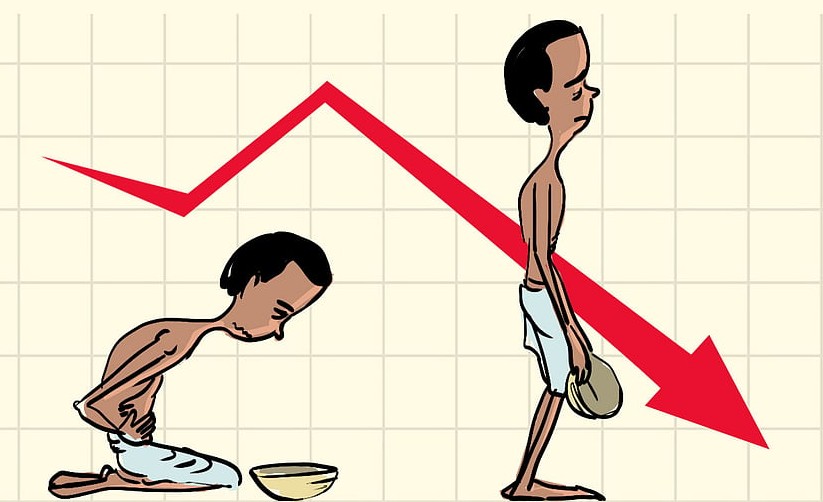
    India’s poverty story is no longer about how little people earn but about how we measure, interpret, and respond to deprivation. 

    UPSC often asks sharp, layered questions on poverty-how it’s measured and how well welfare schemes work. The 2015 question on urban vs. rural poverty indicators is a case in point, demanding both data literacy and conceptual depth. Yet many aspirants miss key elements like PPP adjustments, demographic shifts, or the trade-offs behind India’s poverty story. 

    This article bridges that gap – linking older frameworks (Lakdawala, Tendulkar) with new benchmarks (World Bank’s $3/day line, MPI). Subheads like “India’s Outlier Status” and “Welfare Schemes May Need Updating” unpack why India’s poverty numbers look better—and why the full picture is more complex.

    PYQ ANCHORING:

    GS 2:  Though there have been several different estimates of poverty in India, all indi cate reduction in poverty levels over time. Do you agree? Critically examine with reference to urban and rural poverty indicators. [2015]

    MICROTHEMES: Poverty

    Recently, the World Bank has announced a major revision to global poverty estimates, raising the International Poverty Line (IPL).

    It raised the IPL from $2.15/day (2017 PPP) to $3.00/day (2021 PPP) (which at PPP-Exchange Rate for Indian Rupee in 2025 is Rs 20.6). Thus, it comes out to be Rs 62/day for India.

    While the change led to a global increase in the count of extreme poverty by 125 millionIndia emerged as a statistical outlier in a positive direction. Based on this update, it is now stated that only 5.75% Indians live under extreme poverty (down from 27% in 2011-12).

    About Poverty Line


    A poverty line is a threshold of minimum income or consumption needed to meet basic necessities like food, shelter, and clothing.

    • Purpose: It serves to identify who is poor and helps in targeting welfare schemes and tracking poverty reduction over time.
    • Standards Used:
    • Absolute Poverty Line: Fixed benchmark (e.g., World Bank’s $1.90/day for extreme poverty).
    • Relative Poverty Line: Based on a population’s median income or living standards, reflecting social inclusion.
    • Importance:
      • Classifies individuals as poor or non-poor.
      • Informs policy decisions, resource allocation, and efforts toward poverty alleviation.

    Source – Indian Express

    India’s Outlier Status in Global Poverty Reduction

    ReasonExplanationSubstantiation
    Sustained Economic GrowthDespite COVID-19 setbacks, India has maintained a stable growth trajectory post-2015, which helped lift incomes and create jobs, especially in services and construction.IMF estimates India’s GDP grew at 7.2% (FY23).
    Large-Scale Welfare SchemesGovernment schemes like free food (PMGKAY), LPG connections (Ujjwala), and rural jobs (MGNREGA) helped protect vulnerable groups.PMGKAY provided free ration to ~80 crore people during COVID; MGNREGA offered 3.5 billion person-days in 2020-21.
    Direct Benefit Transfers (DBT)Technology-enabled transfers ensured subsidies reached the poor directly, reducing leakages and informal exclusion.Over ₹28 lakh crore transferred through DBT since 2014 (as per govt data).
    Declining Fertility and Demographic ShiftsSmaller family sizes mean fewer dependents and higher per capita consumption within households.India’s Total Fertility Rate fell to 2.0 (NFHS-5).
    Improved Access to Basic ServicesAccess to electricity, toilets, cooking fuel, housing, and bank accounts expanded significantly, reducing multidimensional poverty.NITI Aayog’s MPI 2023: Multidimensional poverty halved between 2015-16 and 2019-21.
    Revised PPP Exchange RateNew 2021 PPP revisions increased the purchasing power of the Indian rupee, lowering the number of people under the $3.00/day threshold.World Bank (2024): Revised PPP adjustment favoured India, unlike many African economies.

    Impact of Revision on Poverty Perception and Policy Targeting in India

    1. A Higher Poverty Line Shows Deeper Poverty: The new $3.00/day line raises the basic standard for survival. It brings into focus people who were above the old line but still struggle to meet daily needs.

    2. More People May Need Help: Many who were earlier not counted as poor may now be seen as poor under the new line. This means more people may need to be included in government welfare programs.

    3. India’s Progress Looks Better, But Challenges Remain: India now has only about 5.75% extreme poor under the new line, which shows progress. But this average hides regional and rural-urban gaps. Many areas still have deep poverty.

    4. Welfare Schemes May Need Updating: Programs like MGNREGA, free food schemes, and cash transfers may need to expand. Focus should also be on people who are not extremely poor but still vulnerable to slipping into poverty.

    5. Need to Shift Toward Universal Services: The higher poverty line supports the idea that healthcare, education, and social security should be available for all, not just for the poorest.

    6. India Must Update Its Own Poverty Measures: India still uses old poverty estimates. New methods, including multidimensional poverty (like NITI Aayog’s index), should be used. This helps track not just income, but also access to basic needs like education, sanitation, and housing.

    Importance of the Poverty Line

    1. Measuring the Scale of Poverty: The poverty line provides a clear, quantifiable way to identify how many people are poor in India. This headcount is essential to understand the size of the problem and track who needs the most help.
    2. Monitoring Progress Over Time: It acts as a benchmark to assess whether policies and development programs are making an impact. A fall in poverty numbers over time signals improvement in living conditions.
    3. Targeting Welfare Schemes Effectively: Poverty line identification helps direct benefits to the right people. Many welfare schemes depend on Below Poverty Line (BPL) classification, including:
      • PDS: Ration cards for subsidized grains.
      • PMAY: Affordable housing in rural and urban areas.
      • MGNREGA: Although universal, poverty data helps identify the most vulnerable.
      • NSAP: Pensions for the elderly, widows, and disabled.
      • Ayushman Bharat: Health insurance for the poorest families.
    4. Assessing Inclusiveness of Growth: If GDP is rising but poverty remains high, it shows that economic growth is not reaching the poor. The poverty line helps check if development is inclusive and equitable.
    5. Fulfilling Constitutional Goals: While the Constitution doesn’t mention a poverty line directly, the Directive Principles of State Policy require the state to create a just and equitable society. Estimating poverty supports this objective.
    6. Enabling Global Comparisons: Global poverty lines (like the World Bank’s $3.00/day PPP) help compare India’s performance with other countries, shaping global reputation and development policy.

    Challenges with the Poverty Line in India

    1. ‘Basic Needs’: Defining minimum needs is subjective and evolves with time. A small change in the poverty line’s value can drastically change poverty numbers, making it politically sensitive.
    2. Neglect of Non-Food Essentials: Early poverty lines focused mainly on food. Later, health and education were included (e.g., Tendulkar/Rangarajan), but the assumption that the state provides these services for free often doesn’t match ground realities.
    3. Outdated Official Estimates: India hasn’t officially updated its poverty line since the 2011–12 Tendulkar estimates. The 2017–18 consumption survey was scrapped, and while new HCES data (2022–23) is available, poverty estimates based on it are still pending.
    4. Uncertainty Over Actual Trends: Economists disagree over whether poverty has truly declined as much as recent data claims. Events like COVID-19, demonetisation, and stagnant rural wages suggest setbacks for the poor that may not reflect in outdated estimates.
    5. Regional Variations: One uniform poverty line fails to reflect differences in living costs and service access across states or between rural and urban areas. A national line may oversimplify complex regional realities.

    Way forward

    1. Mandate for a Modern Basket: The government should immediately constitute a new expert committee, similar to the Tendulkar and Rangarajan committees, but with a broader and more contemporary mandate. This committee should define a “Poverty Line Basket” (PLB) that truly reflects the minimum requirements for a dignified life in 21st-century India. The committee should recommend a mechanism for periodic revision and updating of the poverty line (e.g., every 3-5 years) to account for inflation, changes in consumption patterns, and evolving societal standards.

    2. Leverage the Latest HCES Data (2022-23): The HCES data should be fully utilized to derive poverty lines and estimates at state-specific, rural-urban, and potentially even sub-state levels, reflecting the vast economic and cost-of-living disparities across India.

    3. Embrace a Multi-Tiered Approach to Poverty Measurement: India should move beyond the debate of a single poverty line. A multi-tiered framework would be more appropriate:

    • Extreme Poverty Line: Aligned with the World Bank’s international poverty lines (e.g., the revised $3.00/day PPP) for international comparisons and to track progress on SDG 1.
    • National Poverty Line: A domestically derived, consumption-based line reflecting the minimum for a dignified life. This could be akin to a “basic needs” poverty line.
    • Vulnerability Line/Near-Poor Line: A line slightly above the national poverty line to identify households that are not officially “poor” but are highly vulnerable to falling into poverty due to economic shocks (e.g., illness, job loss, climate events). This group also needs policy attention.

    4. Strengthen Multidimensional Poverty Index (MPI): The MPI should be officially recognized as a primary and complementary tool for poverty measurement, not a replacement for a consumption-based line. Use MPI to identify specific deprivations (e.g., sanitation, cooking fuel, education access) at granular levels (district, block) to design targeted, multi-sectoral interventions. Continuously improve the data sources and frequency for MPI calculation (e.g., by integrating HCES data with NFHS and other administrative data).

    #BACK2BASICS: Tracking India’s Poverty

    Various Approaches to Tracking Poverty

    India and the world have used different methods to track poverty. Each method has strengths and limitations.

    1. Consumption-based Poverty

    • What it is: Tracks how much people spend on food, housing, clothes, etc.
    • Used by: India’s official poverty estimates (like Tendulkar Committee, 2011-12).
    • Pros:
      • Better reflects long-term wellbeing, especially in informal economies like India’s.
      • More stable and less affected by income shocks.
    • Cons:
      • Requires detailed surveys, often delayed.
      • May underestimate urban poverty and non-food needs.

    2. Income-based Poverty

    • What it is: Based on how much a person earns, usually per day or per month.
    • Used by: World Bank’s International Poverty Line ($2.15 or $3/day).
    • Pros:
      • Easy global comparison.
      • Can reflect short-term changes in wellbeing.
    • Cons:
      • Inaccurate in informal sectors where incomes are irregular or underreported.
      • May miss consumption from savings, credit, or in-kind transfers.

    3. Multidimensional Poverty

    • What it is: Looks at poverty beyond income—includes access to education, health, sanitation, housing, and nutrition.
    • Used by: NITI Aayog’s MPI, UNDP’s Global MPI.
    • Pros:
      • Holistic. Shows how poor people are deprived in multiple areas.
      • Helps target specific policies (e.g. education in Bihar, sanitation in UP).
    • Cons:
      • Complex to calculate.
      • Needs regular, high-quality data.
    Alagh Committee (1979)Developed the poverty lines for rural and urban areas based on nutritional requirements (2400 kcal for rural, 2100 kcal for urban). These calorie norms were subsequently accepted by the Planning Commission.
    Lakdawala Committee (1993)Recommended using Consumer Price Index for Agricultural Labourers (CPI-AL) for rural areas and Consumer Price Index for Industrial Workers (CPI-IW) for urban areas to update state-specific poverty lines. It emphasized that poverty estimates should be based on consumption expenditure surveys conducted by the National Sample Survey Organization (NSSO).
    Tendulkar Committee (2009)It moved away from a solely calorie-based model and recommended a more comprehensive “Poverty Line Basket” that included private expenditure on health and education, in addition to food and other basic necessities.
    It also recommended a uniform poverty line basket across rural and urban areas, though with different monetary values.
    Based on its methodology, the Tendulkar Committee estimated the poverty line for 2011-12 at:₹816 per capita per month for rural areas (~₹27.2 per day)₹1,000 per capita per month for urban areas (~₹33.3 per day)Using this line, India’s poverty rate was estimated at 21.9% (25.7% rural, 13.7% urban), meaning approximately 26.93 crore people were below the poverty line.
    Rangarajan Committee (2014)Constituted to review the Tendulkar methodology, this committee proposed higher poverty lines, considering a slightly different consumption basket.
    Poverty Line:₹972 per capita per month for rural areas (~₹32.4 per day)₹1,407 per capita per month for urban areas (~₹46.9 per day)Based on these lines, the Rangarajan Committee estimated India’s poverty rate to be 29.5% for 2011-12, significantly higher than the Tendulkar Committee’s estimate.
    However, the Indian government did not officially adopt the Rangarajan Committee’s recommendations, meaning the Tendulkar Committee’s estimates (for 2011-12) remained the last official poverty figures for a long time.
    World Bank The World Bank’s current extreme poverty line is $2.15 per day (2017 PPP).
    Recently, the World Bank announced a revision to $3.00 per day (2021 PPP). At the 2025 PPP rate, this translates to roughly ₹62 per day for India.
    Using the World Bank’s updated line, about 5.75% of Indians live in extreme poverty as of 2025, a sharp decline from 27% in 2011–12.
    NITI Aayog National Multidimensional Poverty Index (MPI):
    Unlike a purely income/consumption-based poverty line, the MPI measures poverty across multiple dimensions (health, education, and living standards) using 12 indicators (e.g., nutrition, schooling, cooking fuel, sanitation, electricity, housing, assets, bank accounts). NITI Aayog’s recent reports (based on NFHS data) show a significant reduction in multidimensional poverty in India:From 29.17% in 2013-14 to 11.28% in 2022-23, with approximately 24.82 crore people escaping multidimensional poverty in 9 years.Rural poverty showed a larger decline than urban poverty in this period.This provides a more holistic picture of deprivation beyond just monetary income.

    SMASH MAINS MOCK DROP

    While India has shown remarkable reduction in poverty as per global estimates, the outdated nature of domestic poverty lines hampers effective policy targeting.” Critically examine in light of recent revisions in the international poverty line and India’s welfare architecture.

  • Maternal Health in India: Progress or Persistence ?

    Maternal Health in India: Progress or Persistence ?

    N4S

    Mothers are surviving births, yet hidden illnesses still stalk India’s women. UPSC usually turns such “population and health” themes into big GS 1 questions that ask “why” and “how,” much like the 2014 sex‑ratio poser that mixed prosperity with social bias; examiners expect you to go beyond numbers and trace deep causes and policy gaps. Many aspirants slip because they quote the falling MMR but ignore the silent crisis of anaemia or the uneven state data under “The Maternal Health Paradox: Falling MMR vs Rising Hidden Burdens” (Kerala MMR 19 vs Assam 195, anaemia 57%). They also forget to link welfare design flaws shown in “Disconnect Between Policy Success and Ground Realities” (institutional births 88.6% yet only 60% full ANC) and thus miss the continuity‑of‑care angle UPSC loves. This article rescues them by stitching both sides together: it pairs success metrics with unseen gaps, offers ready references like PMSMA coverage figures, and serves real solutions in “Way Forward” that move from delivery counts to healthy‑mother outcomes. Its standout gem is the “Back2Basics: Assessment of Maternal Health Governance” table, which condenses every key scheme—JSY cash support, LaQshya audits, Anaemia Mukt Bharat—into exam‑ready one‑liners you can drop as evidence. Read it once, and you have concept, critique, case studies, and policy toolkit all in one place.

    PYQ ANCHORING

    GS 1:  Why do some of the most prosperous regions of India have an adverse sex ratio for women? Give your arguments. [2014]

    MICROTHEME: Population and associated issues

    India’s maternal health story today is one of striking contrast. On one hand, the country has made significant progress—its Maternal Mortality Ratio (MMR) dropped from 97 (2018–20) to 93 (2019–21), marking a steady improvement and moving closer to global targets. Yet, beneath this success lies a persistent crisis: over 57% of women of reproductive age suffer from undiagnosed anaemia (NFHS-5), a silent epidemic threatening both mothers and newborns.

    This paradox—a falling MMR but a rising burden of hidden illness—raises urgent questions: Is India’s maternal health progress truly inclusive and sustainable? Can policy success coexist with widespread nutritional and diagnostic gaps?

    The Maternal Health Paradox: Falling MMR vs Rising Hidden Burdens

    ReasonExplanationSubstantiation
    Success of Institutional DeliveriesIncreased access to hospitals and trained personnel has reduced deaths during childbirth.Institutional deliveries rose to 88.6% (NFHS-5), contributing to MMR decline.
    Persisting Undernutrition & AnaemiaNutritional deficiencies are chronic and underdiagnosed, especially in rural and poor women.57% of women suffer from undiagnosed anaemia (NFHS-5); over 30% are underweight during pregnancy.
    Health System Focused on Delivery, Not Continuum of CareFocus remains on childbirth; less attention is paid to pre- and postnatal nutrition, diagnostics, and mental health.Many women don’t receive full 4 antenatal checkups or follow-ups after delivery.
    Uneven State PerformanceNational MMR averages hide wide interstate disparities. States like Kerala and Tamil Nadu show high performance, while others lag.MMR: Kerala (19), Assam (195) – Sample Registration System, 2021.
    Fragmented Data and UnderdetectionMany cases of maternal morbidity (e.g., anaemia, hypertension, infections) remain unreported or poorly diagnosed.Lack of routine haemoglobin testing in rural PHCs; poor data on postpartum complications.
    Program Implementation GapsSchemes like PMSMA, Janani Suraksha Yojana often face manpower, funding, and awareness issues at the last mile.Less than 30% of pregnant women covered under PMSMA (as per MoHFW 2022) in some districts.

    This paradox shows that while India has moved the needle on survival, it is still struggling to ensure health, nutrition, and dignity for all mothers. 

    Here’s the content structured neatly into a table format with broader themes, causes, and examples — perfect for UPSC-style answers:


    Disconnect Between Policy Success and Ground Realities in India’s Welfare Schemes

    Broad IssueSpecific CausesExample / Evidence
    1. Design–Delivery Gapa. Output-focused approach over outcome-based evaluation.Institutional births at 88.6% (NFHS-5), yet 57% of women remain anaemic.
    b. One-time delivery models with poor continuity of care.Only ~60% of pregnant women receive full ANC (NFHS-5).
    c. Uniform scheme design, poor contextualisation for diverse regions.MGNREGA assets fail in flood-prone or tribal areas due to inappropriate planning.
    2. Targeting and Access Issuesa. Outdated or flawed databases cause exclusion and inclusion errors.SECC 2011 errors impact PDS and PM-KISAN targeting; genuine poor left out.
    b. Digital divide restricts access to benefits.Aadhaar-linked DBT failures in Jharkhand and Rajasthan disrupt MNREGA and pensions.
    c. Socio-cultural barriers inhibit scheme utilisation.Low hospital births among women in conservative rural belts despite full subsidies under JSY.
    3. Governance & Coordination Gapsa. Lack of convergence among departments handling linked services.POSHAN Abhiyaan implementation suffers from poor coordination between WCD, Health, and Rural Development.
    b. Weak monitoring, auditing, and grievance redressal mechanisms.CAG flagged irregularities in PMAY: ghost beneficiaries, duplicate payments, incomplete houses.
    c. Populist policies prioritised over structural reforms.Continuation of free ration (PMGKAY) while funding for anganwadis or school meals remains limited.

    Local-level best practices

    Several Indian states and districts have bridged the gap between access and quality in maternal health. 

    1. Tamil Nadu, with an MMR of just 54, has built a robust system through 99% institutional deliveries, the 108 ambulance network, HMIS-based risk tracking, and nutrition kits under the Dr. Muthulakshmi Reddy scheme. Its RCH programme ensures seamless care across ANC, delivery, and postnatal phases.
    2. In Odisha’s tribal Malkangiri district, maternal mortality has halved. ASHAs are trained to test haemoglobin, track high-risk pregnancies digitally, and provide counselling. Localised incentives and cultural adaptation—ASHAs speaking tribal languages and accompanying women—have driven uptake.
    3. Kerala’s Kudumbashree model leverages women’s self-help groups to deliver ANC, mental health counselling, and 100% immunisation. Community-led monitoring in tribal areas via mobile vans has made care both inclusive and accountable.
    4. Chhattisgarh’s Janani Shishu Suraksha Yatra (JSSY) and Mitanin model raised institutional deliveries from 40% to 80%. Mitanins provide doorstep ANC, track danger signs, ensure nutrition, and refer mental health cases.

    These models show that when delivery systems are community-driven, context-specific, and continuous—not just coverage-focused—India can overcome both mortality and morbidity challenges in maternal health.

    Way Forward

    1. Shift the metric: from “delivery counts” to “healthy mothers.”
      Track haemoglobin, BMI and mental-health scores alongside institutional-delivery data.
    2. Localise nutrition action.
      Mandatory point-of-care anaemia testing at every ANC visit; millet-based THR (take-home rations); women-led farmer-producer co-operatives for iron-rich crops.
    3. Close the quality loop in facilities.
      Kayakalp-style audits for labour rooms and post-natal wards; e-partographs and mandatory second-opinions for C-sections.
    4. Universalise mental-health screening.
      Integrate PHQ-9 or EPDS tools into PMSMA; train ASHAs to identify red flags.
    5. Data convergence & accountability.
      Link Poshan Tracker, HMIS and civil-registration data to a single dashboard; empower panchayat-level social audits.

    #BACK2BASICS: ASSESSMENT OF MATERNAL HEALTH GOVERNANCE


    What’s Driving India’s Decline in Maternal Mortality?

    DriverKey Action & Outcome
    Incentivized Institutional DeliveriesJanani Suraksha Yojana (JSY) offers cash support for safe births — over 1 crore women benefited annually, with spending touching ₹1,814 crore in FY 2023–24.
    Zero-Cost Maternal CareJanani Shishu Suraksha Karyakram (JSSK) covers delivery, transport, diagnostics, and drugs — 1.36 crore women accessed services (Apr–Dec 2024).
    High-Risk Pregnancy TrackingPMSMA & e-PMSMA enable monthly ANC and digital tracking — 78.27 lakh high-risk cases identified till Dec 2024.
    Improved Clinical QualityLaQshya & SUMAN ensure respectful, high-standard care — 1,110 labour rooms, 808 maternity OTs certified; 47,700+ facilities covered under SUMAN.
    Emergency & Critical Care AccessOver 400 Obstetric ICUs/HDUs and 650 MCH Wings with 42,000+ beds set up nationwide.
    Trained Human ResourcesNationwide training of doctors and nurses — 2,518 EmOC doctors, 2,683 LSAS-trained, and 3.3 lakh SBAs deployed.
    Real-Time SurveillanceMPCDSR & RCH Portal institutionalize digital maternal death reviews, replacing manual reporting for quicker response.

    Key Maternal Health Programmes Under the National Health Mission (NHM)

    Programme / PolicyObjective & Key Features
    National Health Policy 2017Targeted MMR <100 by 2020 — achieved with MMR now at 93 (SRS 2019–21).
    SDG Target 3.1Reduce MMR to ≤70 by 2030 — India on track.
    JSY (2005)Cash incentive for institutional deliveries — targeting SC/ST/BPL women.
    PMMVY 2.0 (2022)₹5,000 maternity benefit for first child; extra for second girl child — promoting positive gender norms.
    JSSK (2011)Free delivery (including C-section), transport, diagnostics, medicines, and diet in public hospitals.
    SUMAN (2019)Assures free, dignified, quality maternity care with zero denial.
    PMSMA (2016)Free ANC on 9th of each month; e-PMSMA tracks high-risk pregnancies — 5.9 crore+ women examined by March 2025.
    LaQshya (2017)Quality assurance in delivery rooms and OTs to reduce maternal and neonatal complications.
    Anaemia Mukt Bharat (AMB)Holistic anaemia reduction via testing, treatment, food fortification, and mass communication.

    Infrastructure & Systems Strengthening

    InitiativeImpact
    Comprehensive Abortion Care (CAC)Training + safe abortion access integrated into RMNCAH+N services.
    Delivery Points & FRUsUpgraded with equipment, drugs, trained staff, and referral linkages.
    MCH WingsSpecialized maternal-child units built in high-caseload facilities.
    Obstetric ICUs/HDUsCritical care infrastructure scaled in tertiary centers for obstetric emergencies.

    SMASH MAINS MOCK DROP 

    Despite significant improvements in institutional deliveries and a declining Maternal Mortality Ratio (MMR), India’s maternal health outcomes remain uneven and exclusionary. Critically examine the disconnect between policy achievements and ground-level realities in maternal health, with a focus on nutritional and diagnostic gaps.

  • Governor’s discretion: Constitutional Norm vs Cultural Symbolism ?

    Governor’s discretion: Constitutional Norm vs Cultural Symbolism ?

    N4S

    This article explores a timely clash between cultural symbolism and constitutional authority, using the Kerala Raj Bhavan controversy as a lens. UPSC typically asks such questions by merging static constitutional provisions with dynamic political events, like in the 2022 question on the Governor’s ordinance powers. However, aspirants often falter by focusing solely on textbook articles (like Articles 154 and 163) without understanding real-world application or judicial interpretation.Under heads like Governor’s Constitutional Role vs Elected Government and Constitutional Norms vs Cultural Nationalism, it breaks down the legal, political, and symbolic dimensions of the issue. It also brings in comparative flashpoints like Ayodhya, hijab bans, and Vande Mataram debates – offering aspirants a broader framework to answer questions on secularism, executive restraint, and state symbolism.

    PYQ ANCHORING:

    GS 2 :  Discuss the essential conditions for exercise of the legislative powers by the Governor. Discuss the legality of re-promulgation of ordinances by the Governor without placing them before the Legislature. [2022]

    MICROTHEMES:  Executive Vs Legislature

    A controversy erupted in Kerala after the Governor placed a portrait of Bharat Mata in an official room of the Raj Bhavan. The elected state government objected, arguing that this unilateral act violated constitutional norms and the principle of state neutrality. The issue reflects broader tensions between constitutional propriety and cultural nationalism. Thus, the issue represents a clash between procedural legitimacy and symbolic assertion. This raises a deeper question: Can nationalism expressed through cultural symbols coexist with a secular constitutional democracy that mandates institutional neutrality?

    About the Bharat Mata Image

    1. Literary Origins: The idea of Bharat Mata first appeared in Anandamath (1882) by Bankim Chandra Chattopadhyay as Banga Mata (Mother Bengal). The novel introduced the hymn “Vande Mataram”, later adopted as a national song.
    2. Artistic Representation: In 1905, Abanindranath Tagore painted Bharat Mata as a saffron-clad, four-armed woman, resembling a Hindu goddess. This image was popularised by Sister Nivedita during the Swadeshi movement.
    3. Political Evolution: Bharat Mata became a powerful emotional and unifying symbol during the Indian freedom struggle. The slogan “Bharat Mata ki Jai” gained mass appeal and was used in nationalist mobilisations.
    4. No Legal Recognition: Despite its influence, Bharat Mata has no constitutional or legal status as a national symbol.
    5. Post-Independence Role: Bharat Mata continues as a cultural and symbolic figure, occasionally invoked in political rhetoric. Its presence in official or state spaces often sparks debate and controversy.

    Governor’s Constitutional Role vs Elected Government

    1. Constitutional Head: The Governor is the nominal head of the state and is bound to act on the aid and advice of the Council of Ministers (Article 163).
      • Explanation: Cannot independently decide on administrative matters, such as installing symbols in Raj Bhavan.
    2. No Personal Discretion: Dr. B.R. Ambedkar clarified in the Constituent Assembly that the Governor has no independent or personal powers.
      • Explanation: Governor is a constitutional figure, not meant to take individual decisions outside ministerial advice.
    3. Supreme Court Rulings: In Nabam Rebia v. Deputy Speaker (2016), the Supreme Court reaffirmed that Governors cannot use personal discretion in routine affairs.
      • Explanation: Discretion is allowed only in exceptional constitutional situations, not daily governance.
    4. Protocol Violation: Installing non-official symbols like Bharat Mata without government approval breaches constitutional norms.
      • Explanation: The Kerala government criticised such actions as violating democratic procedures and state protocol.

    Constitutional Norms vs Cultural Nationalism

    The issue of placing a Bharat Mata image in official spaces like the Raj Bhavan has sparked a larger debate between constitutional norms and cultural nationalism.

    1. Constitutional Norms: Rule-Based, Secular, Institutional

    • Governor’s Role is Constitutional, Not Cultural: The Governor is bound by the Constitution to act on the advice of the elected government (Article 163) and cannot use the office to promote personal or ideological symbols.
    • No Official Status for Bharat Mata: Unlike the national flag or emblem, Bharat Mata is not a state-recognised symbol, and placing her image in a constitutional office violates institutional neutrality.
    • Secular Framework: The Indian Constitution upholds  secular ethos. Since Bharat Mata is often depicted in a form resembling Hindu iconography, its official display can be seen as privileging one cultural-religious tradition over others.
    • Democratic Protocols: Any use of public institutions or symbols must reflect collective state decisions, not unilateral actions by unelected constitutional authorities.

    2. Cultural Nationalism: Identity, Emotion, Symbolism

    • Bharat Mata as a Unifying Symbol: For many, Bharat Mata represents national pride, cultural heritage, and emotional unity, especially rooted in India’s freedom struggle and civilizational ethos.
    • Assertion of Cultural Identity: Proponents argue that placing the image affirms India’s civilizational continuity and reflects the will of the majority or dominant culture.
    • Symbol Beyond Religion: Some argue that Bharat Mata transcends religion and is a symbol of patriotism, not necessarily tied to Hinduism, and thus deserves a place in public institutions.

    Key Flashpoints in India

    IssueConstitutional NormsCultural NationalismOutcome
    Ayodhya Temple Verdict (2019)Rule of law, secularism, property rightsAssertion of Hindu identity and civilisational heritageSC awarded land to temple trust, citing both legal and faith-based reasoning
    Vande Mataram MandatesArticles 19 & 25 protect freedom of expression and religionSinging it linked to patriotism and national prideSC clarified that singing is not compulsory
    Beef Bans & Cow VigilantismRight to food and livelihood under Articles 21 & 25Gau raksha rooted in Hindu beliefs and cultural reverenceLaws strengthened in many states; SC intervened in cases of mob violence
    Hijab Ban in Karnataka (2022)Religious freedom under Article 25Uniform dress code seen as promoting national unity and secularismKarnataka HC upheld ban; SC gave split verdict
    Yoga & Sanskrit in SchoolsSecularism in education; state should not promote religionSeen as revival of ancient Indian (Hindu) cultureMainstreamed in curricula; critics argue it sidelines minority traditions
    Citizenship Amendment Act (2019)Article 14 guarantees equality regardless of religionCAA aligns with view of India as a homeland for persecuted non-Muslim minoritiesLaw passed; judicial review pending; sparked major protests and constitutional concerns

    View of Judiciary

    Over the years, the Indian judiciary has played a crucial role in navigating the tensions between constitutional norms and cultural nationalism. It has acted as a constitutional guardian when symbolic assertions have come head-on with the secular-democratic fabric. 

    1. Affirming Secularism as a Basic Feature

    • Case: S.R. Bommai v. Union of India (1994)
    • Observation: The Supreme Court ruled that secularism is part of the basic structure of the Constitution.
    • Relevance: This judgment established that state institutions must remain neutral in matters of religion, setting limits on the role of cultural nationalism in governance.

    2. Restricting Forced Cultural Symbols

    • Case: Bijoe Emmanuel v. State of Kerala (1986)
    • Observation: SC held that students belonging to the Jehovah’s Witnesses faith cannot be forced to sing the national anthem if it goes against their beliefs.
    • Relevance: Protects individual freedom of conscience over state-imposed patriotic symbols, reaffirming constitutional rights over cultural uniformity.

    3. Vande Mataram Not Compulsory

    • Case: SC Order (2017)
    • Observation: Clarified that singing Vande Mataram is not mandatory in schools or public spaces.
    • Relevance: Pushback against efforts to equate cultural-nationalist symbols with patriotism, protecting freedom of expression and belief.

    4. Ayodhya Verdict: Balancing Faith and Rule of Law

    • Case: M. Siddiq v. Mahant Suresh Das (2019 – Ayodhya Dispute)
    • Observation: Court acknowledged the faith of Hindus in Ram Janmabhoomi, while also affirming the illegality of mosque demolition and providing alternative land to Muslims.
    • Relevance: Seen as an effort to balance constitutional neutrality with deep-seated cultural sentiment.

    5. Freedom of Religion in Attire

    • Case: Fathima Tasneem v. State of Kerala (2018) & Karnataka Hijab Case (2022)
    • Observation: Courts gave mixed rulings—Kerala HC upheld school uniforms; Karnataka HC said hijab is not essential religious practice.
    • Relevance: Courts have struggled to maintain a clear line between individual religious freedom and uniform cultural practices.

    6. Limiting Governor’s Discretion

    • Case: Nabam Rebia v. Deputy Speaker (2016)
    • Observation: SC ruled that the Governor cannot act without the aid and advice of the council of ministers except in specific cases.
    • Relevance: Prevents constitutional offices from becoming platforms for personal or ideological expression, relevant in Bharat Mata image controversies.

    7. Upholding Right to Food and Privacy

    • Case: Puttaswamy v. Union of India (2017 – Right to Privacy) & Mob Lynching Cases
    • Observation: Right to food, privacy, and personal choices are fundamental rights under Article 21.
    • Relevance: Serves as a constitutional check against majoritarian moral policing, like beef bans and vigilante actions.

    Way Forward

    1. Prioritise Constitutional Duty: Public officials must uphold constitutional principles over personal or ideological preferences in official matters.
    2. Maintain Institutional Neutrality: Personal beliefs must not shape public conduct; official spaces should remain neutral and inclusive.
    3. Codify Symbol Use in Government Offices: Create a formal list of approved national symbols (flag, emblem, anthem) for use in official spaces.
    4. Strengthen Constitutional Literacy: Train public officials on the scope and limits of their constitutional role, especially in symbolic matters.

    #BACK2BASICS : CONSTITUTIONAL POSITION OF THE GOVERNOR

    Constitutional Position of the Governor

    1. Nominal Head of State
      • India follows a parliamentary system at both Union and State levels.
      • The Governor is the nominal executive, functioning with the aid and advice of the Council of Ministers led by the Chief Minister.
    2. Key Constitutional Articles
      • Article 154: Executive power of the state vests in the Governor.
      • Article 163: The Governor acts on the aid and advice of the Council of Ministers, except where discretion is permitted.
      • Article 164: Council of Ministers is collectively responsible to the Legislative Assembly (core of parliamentary accountability).
    3. Governor vs President: Key Differences
      • The Governor has discretionary powers in certain matters; the President does not (except in limited cases).
      • After the 42nd Amendment (1976), the President must act on ministerial advice—no such compulsion exists for the Governor.

    Types of Discretion

    A. Constitutional Discretion (Explicitly Mentioned in the Constitution)

    1. Reserving a bill for the President’s consideration (Art. 200)
    2. Recommending President’s Rule in the state (Art. 356)
    3. Acting as administrator of a Union Territory with additional charge
    4. Deciding royalty payments to Tribal District Councils in Northeast
    5. Seeking information from the Chief Minister (Art. 167)

    B. Situational Discretion (Implied/Derived from Political Circumstances)

    1. Appointing a Chief Minister in case of a hung assembly or CM’s death
    2. Dismissing the Council of Ministers if they lose the Assembly’s confidence
    3. Dissolving the Legislative Assembly when government loses majority

    Special Responsibilities (Discretion Based on Presidential Directions)

    The Governor acts in discretion in certain states as per special directives from the President, even while consulting the state government:

    StateSpecial Responsibility
    MaharashtraDev boards for Vidarbha & Marathwada
    GujaratDev boards for Saurashtra & Kutch
    NagalandLaw & order during internal disturbances
    AssamAdministration of tribal areas
    ManipurAdministration of hill areas
    SikkimPeace and socio-economic development
    Arunachal PradeshLaw & order maintenance
    KarnatakaDev board for Hyderabad-Karnataka region

    Key Supreme Court Cases on Governor’s Discretionary Powers

    1. Shamsher Singh v. State of Punjab (1974)
      • Key Holding: The Governor is a constitutional head and must act on the aid and advice of the Council of Ministers in all matters except where the Constitution explicitly provides discretion.
      • Significance: Laid down the foundational principle limiting discretionary powers.
    2. Rameshwar Prasad v. Union of India (2006) (Bihar Assembly Dissolution Case)
      • Key Holding: The Governor’s report recommending dissolution of the assembly without allowing government formation was held unconstitutional.
      • Significance: Governors must act with objectivity and constitutional responsibility, not on political whim.
    3. Nabam Rebia v. Deputy Speaker (2016)
      • Key Holding: The Governor cannot summon or dissolve the assembly without the advice of the Council of Ministers.
      • Significance: Strongly curtailed discretionary misuse and clarified that even legislative sessions must be decided in consultation with the elected government.
    4. S.R. Bommai v. Union of India (1994)
      • Key Holding: The floor of the House is the only valid forum to test majority; Governors cannot assume loss of confidence arbitrarily.
      • Significance: Prevents Governors from unilaterally dismissing state governments.
    5. Arunachal Pradesh Assembly Case (2016)
      • Follow-up to Nabam Rebia: The Supreme Court quashed the President’s Rule and Governor’s actions as unconstitutional.
      • Significance: Reinforced that Governors cannot act independently except in constitutionally defined situations.
    6. Kehar Singh v. Union of India (1989)
      • While not directly about Governors, it clarified executive power and discretion, which also applies to the Governor’s role under Article 161 (pardoning powers).
    7. Prafulla Kumar Mahanta Case (Assam, 2001) (Gauhati HC upheld by SC)
      • Issue: Governor invited a party with less seats to form government.
      • SC View: Governors have limited discretion in hung assemblies, but it must be exercised with fairness and neutrality.

    SMASH MAINS MOCK DROP

    “In a constitutional democracy, the exercise of gubernatorial powers must be guided by neutrality, not symbolism.” In light of recent controversies surrounding cultural assertions by Governors, critically examine the constitutional limitations on the discretionary powers of the Governor. How do such actions impact federal principles and secularism in India?

  • Protecting IHR : Are we doing enough ?

    Protecting IHR : Are we doing enough ?

    N4S: 

    This article explores the drying Himalayan springs, linking it to climate change, deforestation, and poor governance. UPSC usually frames such topics through broad yet region-specific questions, like the 2017 question on climate impacts in Himalayan and coastal states. Aspirants often falter by giving generic answers, lacking micro-level insights. Aspirants often rely on generic content – definitions of climate change, impacts on agriculture, or global treaties. But UPSC seeks granular, Indian-context analysis: Why are springs in Darjeeling drying up? What has NMSHE achieved on-ground?The article uses specific subheads like “Causes of Dying Springs”, “Performance of Government Initiatives”, and “Socio-economic Impacts” to unpack how climate science, community action, and governance play out together in the Himalayas. This helps the aspirant move from theory to real-world analysis.

    PYQ ANCHORING

    GS 1:  ‘Climate Change’ is a global problem. How India will be affected by climate change? How Himalayan and coastal states of India will be affected by climate change?  [2017]

    MICROTHEMES:  Climate Change Impact

    In the Indian Himalayas, where clear mountain springs once flowed freely, people are now facing a serious water crisis. In many villages of Darjeeling, women have to walk more than an hour every morning just to collect water from springs that are slowly drying up. These springs were once a lifeline, but now nearly half of them are gone or running dry. And it’s not just about water – climate change, careless construction, and a lack of planning are putting the entire region at risk.

    So, what’s drying up the springs so quickly? Can we find a way to develop the region without harming nature? And are we doing enough to save the Himalayas before it’s too late?

    Indian_Himalayan_Region

    Causes of dying springs in Himalayan Region

    Cause Impact Example 
    Climate changeWarming and changing precipitation reduce snowpack and rainfall recharge. Higher temperatures and fewer rainy days cut groundwater recharge and spring baseflow.Studies note Himalayan snow cover fell ~16% (1990–2001) alongside rising temperatures, contributing to reduced spring discharge. A NITI Aayog report (2018) found ≈50% of IHR springs are drying or dried (likely reflecting such climate trends).
    Land-use changeConversion of forests/grasslands to agriculture or urban areas fragments spring catchments. This increases surface runoff and erosion, reducing infiltration to recharge springs.In Nepal’s Rangun watershed, 73% of springs declined (many dried) as much of the catchment was converted to cropland from 1990–2018, causing “landscape disturbances” around springs. Similar patterns occur elsewhere in the IHR.
    DeforestationRemoval of trees reduces canopy interception and soil moisture, increasing runoff and erosion. Less infiltration means lower groundwater levels and drier springs.For example, in Uttarakhand (Gaula basin) deforestation (and reduced rainfall) caused spring flows to drop 35–75% between 1958–1986. In Nainital district, forest loss dried ~159 springs (and made 50 seasonal) over ~30 years.
    Infrastructure developmentRoads, pipelines, hydro‐projects and other construction can disrupt spring vents or catchments. Excavation and sealing of aquifers disturb natural flow paths, causing springs to fail.Surveys in Nepal identify road and infrastructure projects as a primary cause of spring loss. Local officials reported “road and infrastructure construction is the main cause of springs drying up”. Similar effects are seen where hydropower or buildings intrude on spring-sheds.
    Over-extraction of groundwaterIntensive pumping of wells lowers the water table below spring outlets. As aquifers are depleted, spring discharge falls or stops entirely.Case study in the mid-Himalayas: a village spring dried by 2019 after a rapid increase in hand-dug wells (“overextraction”), lowering the water table. More generally, “increased groundwater abstraction” is widely cited as a factor in declining spring flows.
    Lack of recharge (structures)Absence of water-harvesting or recharge structures (trenches, ponds) means monsoon runoff is not captured. Springs then rely solely on limited natural percolation, often running dry in dry season.In Uttarakhand, many hill springs are observed to “dry up due to lack of recharge during the summer months” when runoff is not captured. By contrast, community recharge projects (contour trenches, ponds) have been shown to revive springs, highlighting this gap.

    Initiatives to protect the Himalayas // PRELIMS

    Policy / InitiativeDescription
    National Mission for Sustaining the Himalayan Ecosystem (NMSHE)Part of the National Action Plan on Climate Change (NAPCC); aims to understand climate impacts on Himalayan glaciers, biodiversity, and communities.
    National Adaptation Fund for Climate Change (NAFCC)Provides financial support to projects aimed at climate adaptation, especially in vulnerable regions like the Himalayas.
    Secure Himalaya ProjectLaunched in collaboration with UNDP and GEF, it focuses on biodiversity conservation, anti-poaching, and sustainable livelihoods in Himalayan states.
    National Disaster Management Plan (NDMP)Includes strategies specifically for mountain hazards like landslides, glacial lake outbursts, and earthquakes common in the Himalayas.
    Himalayan Springs Revival InitiativeA NITI Aayog-backed effort focused on mapping, conserving, and reviving drying springs in Himalayan villages using traditional and scientific methods.
    State Action Plans on Climate Change (SAPCCs)Each Himalayan state has developed a SAPCC aligned with NAPCC, focusing on region-specific issues like glacial retreat, forest loss, and water security.
    Eco-Sensitive Zones (ESZ) PolicyDeclares buffer zones around protected areas like national parks and sanctuaries in the Himalayas to prevent overdevelopment and deforestation.
    National Electric Mobility Mission & Solar Mission (for the IHR)Promote clean energy in ecologically sensitive regions like the Himalayas to reduce emissions, dependence on fossil fuels, and pollution.
    Swachh Iconic Places Mission (e.g., Kedarnath)Part of Swachh Bharat Abhiyan; targets cleanliness and waste management at Himalayan pilgrimage sites.
    National Biodiversity Action Plan (NBAP)Aims to conserve Himalayan biodiversity through species monitoring, habitat protection, and community involvement.

    Performance of the Govt. Initiatives // MAINS

    1. Policy Implementation and Governance

    Implementation has been partial and uneven

    NMSHE’s activities (primarily research and monitoring) have often been slow to translate into concrete actions, due to limited budgets and institutional overlap. A “participatory and sectorally coordinated mixed governance approach” is needed for Himalayan ecosystems, implying current siloed efforts are inadequate. 

    Similarly, SAPCCs (prepared by all Himalayan states) have struggled to secure dedicated funding. Many remain static documents rather than dynamic programs; for example, some states updated SAPCCs only once and lacked clear budget lines. Local bodies and forest departments are often weakly linked to the plans, hampering governance on the ground.

    In contrast, the SECURE Himalaya project represents stronger multi-level coordination: it was formally launched by MoEFCC and UNDP (Oct 2017) and involves state forest/line departments in four states. It set up steering committees and landscape management plans for areas like Kanchenjunga (Sikkim) and Gangotri (Uttarakhand). Under this project, nearly 2,000 frontline forest staff and community members have been trained in habitat monitoring, and 1,000 women/youth in eco-tourism and sustainable crafts. This indicates relatively effective project governance in select landscapes.

    Spring revival efforts have also adopted a multi-stakeholder model: a NITI Aayog working group (2017) brought together central ministries (Land Resources, MoEFCC, CGWB), state agencies (e.g. Sikkim Rural Development) and NGOs (ACWADAM, ICIMOD). A 2022 national workshop (NITI Aayog) further pledged to create platforms for sharing best practices on spring recharging. This inclusive structure is a governance achievement, although actual field-scale funding and implementation are only ramping up.

    Gaps: Across all missions, persistent gaps include bureaucratic delays, overlapping mandates (e.g. between state forests and rural development agencies), and a lack of measurable targets and monitoring. For instance, NMSHE envisaged an “Himalayan knowledge network” years ago, but many projects remain stuck in planning. 

    SAPCCs often lack institutional champions, so priorities (like agroforestry or disaster relief) fall through. Even Secure Himalaya’s limited geography (just 4 states) means most of the IHR (e.g. entire Northeast Himalaya) is not covered. Overall, governance is patchy – strong in pilot projects (like SECURE sites) but weak in statewide or inter-state programs.

    2. Ecological and Environmental Outcomes

    Evaluating environmental outcomes is challenging due to limited long-term data. Some positive signs are reported in targeted areas, but system-wide effects are still emerging. Under SECURE Himalaya, for example, one major achievement is launching India’s first nationwide Snow Leopard Population Assessment (SPAI), providing baseline data for Himalayan wildlife. Protected Area management has been strengthened in project sites, and anti-poaching patrols intensified (though detailed numbers are not public).

    The NMHS-supported projects have contributed dozens of on-ground interventions: by mid-2020s they counted 37 water resource and 74 biodiversity conservation projects across Himalayan states. These include alpine wetland restoration, native species nurseries, and promotion of organic horticulture, which should improve habitat quality and water security. Likewise, many SAPCCs earmarked programs (e.g. contour trenching, watershed bunding, medicinal plant cultivation) that, if implemented, would benefit ecology. For instance, Uttarakhand’s SAPCC advocated spring protection and afforestation on degraded slopes, which some NGOs and local governments have begun to act on.

    However, comprehensive ecological monitoring is still lacking. There are few published assessments of trends like forest cover change or glacier health directly attributable to these schemes. The IHR continues to see reports of shrinking springs and retreating glaciers, underscoring that policy actions have not yet fully countered climate stress. Achievements so far tend to be site-specific successes rather than landscape-level transformations. For example, a few hundred springs have been rejuvenated in model villages (using Darjeeling–HP style “Dhara Vikas” trench systems), securing drinking water locally, but tens of thousands more springs remain dry. Similarly, forest regeneration efforts (through CAMPA or afforestation drives) have helped re-green some degraded lands in Himachal and Uttarakhand, yet many reports warn of overall tree-line and biodiversity loss if warming continues.

    In summary, some environmental outcomes are emerging: better wildlife data (SPAI), local spring flow recovery, and targeted habitat restoration. But data are sparse. The initiatives’ ecological effectiveness is often assumed rather than proven, pointing to a need for systematic monitoring (e.g. linking SAPCC projects to measurable indicators).

    3. Socio-economic and Community Impact

    Many IHR policies explicitly aim to benefit mountain communities, but impacts vary widely. The SECURE Himalaya project has a strong livelihood component: besides conservation training, it set up skill-building camps for women and youth in nature-tourism and traditional crafts. This has reportedly given hundreds of families alternative incomes, though formal evaluations are pending. Communities in SECURE sites are also encouraged to form eco-development committees, co-manage pastures, and engage in citizen science (snow leopard monitoring), which builds local ownership.

    NMSHE itself is mostly a research mission and has limited direct community outreach. Its socio-economic impact depends on how states use its findings. In contrast, the NMHS Action Research under (State Government Projects) mandate involvement of state agencies to tackle local problems (e.g. a Himachal project on vermiculture, or a Sikkim project on piggery), blending science with livelihoods. These projects often employ local people as field staff, which builds capacity.

    SAPCCs’ community impact is uneven. Good examples exist where climate funds have flowed to villages: e.g. some Uttarakhand hill villages received agroforestry saplings and training, or slope stabilization works (through MGNREGS) that reduced landslide risk. The spring-revival works (often combined with village water committees) are also community-driven, with local youths and women’s groups digging recharge trenches and planting. Such actions improve water security and reduce drudgery (women walk less for water), which is a clear socio-economic gain.

    Gaps: Nevertheless, many schemes suffer from low grassroots reach. Participation in planning is sometimes token; the NMSHE’s research outputs have yet to translate into village-level programs. In some areas, communities feel overwhelmed by overlapping projects (e.g. being told about SAPCC, NMHS, Jal Jeevan Mission, etc. separately). Some locals also mistrust external projects or lack the training to maintain new infrastructure. For instance, while Secure Himalaya held hackathons and VR campaigns to raise awareness, actual tech uptake in villages remains small.

    Furthermore, there are socio-economic challenges not fully addressed by these policies: out-migration continues as young people leave for jobs, suggesting that ecological schemes alone aren’t sufficient without parallel economic development. Land rights and grazing rights issues (for pastoral communities) also persist despite some provisions in SAPCCs and NMHS.

    Way Forward

    • Adopt IWRM: Focus on spring rejuvenation, watershed development, and glacier management.
    • Build Green Infrastructure: Eco-friendly materials, EIA-first approach, and disaster-resilient design.
    • Empower Communities: Train locals in conservation, agroforestry, and sustainable tourism.
    • Promote Renewables: Use solar and micro-hydro power in remote Himalayan villages.
    • Climate-Resilient Farming: Encourage drought-resistant crops, organic practices, and market linkages.
    • Eco-Tourism: Regulate pilgrim numbers, support local-led tourism models, reduce ecological stress.
    • Disaster Preparedness: Strengthen early warning systems, local response training, and climate projections.
    • Create Eco-Corridors: Link wildlife habitats to reduce fragmentation and preserve biodiversity.
    • Establish a Himalayan Body: A central institution to coordinate multi-sector sustainability efforts.
    • Raise Awareness: Education campaigns on climate change, conservation, and sustainable living.

    #BACK2BASICS : Himalayas : Significance & Issues

    Nearly 50% of Himalayan springs have dried up, pushing women in areas like Darjeeling to walk long distances for water. This ecological crisis, worsened by climate change and unsustainable development, threatens water security, biodiversity, and even national security.


    Why the Himalayas Matter

    FunctionContribution
    Climate RegulationAct as a monsoon barrier; prevent cold winds; support agriculture in Indo-Gangetic plains.
    Water SourceFeed rivers like the Ganga, Brahmaputra, Indus; support dams like Bhakra Nangal.
    Biodiversity HotspotHome to species like the snow leopard, red panda, and rare medicinal plants.
    Strategic DefenceAct as a natural barrier; DSDBO road and BRO projects improve defence readiness.
    Hydropower Potential46,850 MW installed; potential to reach 115,550 MW.
    LivelihoodsSupport agriculture, pastoralism, forest produce collection, and handicrafts.
    Cultural & Tourism ValueSacred sites (e.g., Badrinath, Kedarnath); tourism adds 10%+ to state GDPs.

    Key Issues

    IssueDetails
    Drying Springs & Water Scarcity50% of springs dried; daily struggles for water in Sikkim and Darjeeling.
    Glacial Retreat & Climate ChangeGlaciers retreating 14–15m/year; 90% area may face year-long drought if warming hits 3°C.
    Deforestation902 sq. km forest lost (SFR 2021); e.g., illegal logging near Nanda Devi Biosphere.
    Unplanned InfrastructureProjects like Char Dham and Joshimath highlight ecological risks in seismic zones.
    Strategic TensionsIndia-China disputes (e.g., Galwan, Aksai Chin, Arunachal Pradesh); DSDBO road critical.
    Water GeopoliticsChina’s Brahmaputra dam raises concerns; Indus Treaty under pressure amid India-Pak tensions.
    Tourism PressureOvercrowding and waste in pilgrimage hubs like Kedarnath pollute rivers (e.g., Mandakini).
    Policy GapsLack of integrated, environment-first planning; weak enforcement of EIAs.

    SMASH MAINS MOCK DROP

    The drying up of Himalayan springs is not just an ecological concern but a governance failure.” Examine in the context of climate change and regional development strategies.

  • Space Race : Is competition among Indian startups ready for lift-off ?

    Space Race : Is competition among Indian startups ready for lift-off ?

    N4S

    UPSC often asks questions about India’s space sector by linking technology with governance, economy, and global partnerships (e.g., India’s role in commercial space or policy hurdles). Many aspirants struggle because they focus only on technology and ISRO’s achievements but ignore policy, private sector participation, and global trends. This article bridges that gap by covering India’s commercialization push, regulatory concerns (e.g., FDI policies), and lessons from global space economies (e.g., NASA-private sector collaborations). One standout feature of this piece is the BACK2BASICS section which gives an idea of the evolution of India’s space industry.

    PYQ ANCHORING

    1. GS 3 : India has achieved remarkable successes in unmanned space missions including the Chandrayaan and Mars Orbitter Mission, but has not ventured into manned space mission, both in terms of technology and logistics? Explain critically. [ 2017]
    2. GS 3 : What is India’s plan to have its own space station and how will it benefit our space programme? [2019]

    MICROTHEMES: Space Technology

    India’s space sector is undergoing a remarkable transformation, not just in technology but also in how the ecosystem is structured. With ISRO handing over satellite launcher production to Hindustan Aeronautics Ltd (HAL), it signals a shift – freeing up resources to focus on frontier areas like reusable launch systems and space-based security. At the same time, a new wave of private startups like Skyroot Aerospace, Agnikul Cosmos, and Pixxel is bringing innovation, agility, and global aspirations into the mix. This evolving partnership between the public and private sectors could redefine India’s place in the global space economy – but the path ahead raises critical questions.

    How effectively are private players being integrated into sensitive space missions? What regulatory safeguards are in place to balance innovation with national security? And who will shape the long-term vision for India’s space future – government agencies, private firms, or both?

    Contribution of Private Sector to India’s Space sector expansion

    Key AreaNature of ContributionExamples / Substantiation
    Private Sector Participation through IN-SPACeEnabled greater collaboration between ISRO and Non-Governmental Entities (NGEs) through the establishment of IN-SPACe in 2020.Skyroot Aerospace became the first private Indian company to launch a suborbital rocket (Vikram-S) in 2022.
    Space Startups and Innovation SurgeRapid growth of space tech startups working on launch vehicles, satellite manufacturing, and in-space services.In 2021, Indian space startups raised $68 million—a 196% YoY increase. Agnikul Cosmos developed the mobile launchpad “Dhanush.”
    Enhanced Public-Private PartnershipCollaborations between ISRO and industrial players like HAL, L&T, and Godrej Aerospace for manufacturing components of launch systems and spacecraft.HAL has partnered with ISRO to manufacture PSLV components, contributing to over 60 successful launches.
    Development of New Launch Vehicles and InfrastructureJoint work on next-gen launch systems like Small Satellite Launch Vehicles (SSLVs) and Reusable Launch Vehicles (RLVs); establishment of space parks for manufacturing and R&D.SSLV technology was successfully tested in 2023, offering low-cost, on-demand satellite launches. Space parks are being set up in Tamil Nadu and Gujarat.
    International Collaborations and CommercializationEnhanced global presence via commercial launches, satellite exports, and global partnerships through ISRO’s commercial arm, NSIL.In 2023, India launched 42 foreign satellites. NSIL facilitated commercial launches and technology transfers.
    Space-Based Applications and Societal ImpactLeveraging satellite technology for agriculture, remote sensing, digital inclusion, and disaster management.Satellite services are projected to contribute 36% of the Indian space economy by 2025. Remote sensing and EO satellites support urban planning and precision farming.
    Technological Advancements and Green PropulsionInnovation in eco-friendly propulsion technologies and sustainable launch systems.Bellatrix Aerospace is developing green propulsion and has signed international deals with UK and French firms, aligning with global sustainability trends in space tech.

    Key Concerns Associated with the Integration of Private Entities into India’s Space Sector

    Concern AreaNature of ConcernExamples / Substantiation
    Regulatory and Policy ChallengesAbsence of a comprehensive legal framework creates uncertainty around space debris, liability, and IP rights.Over 300 applications were submitted to IN-SPACe, but only 51 MoUs signed (Economic Survey 2023-24), suggesting policy ambiguity is stalling progress.
    Intellectual Property (IP) RightsISRO’s collaboration model limits IP ownership for private players, discouraging investment in proprietary technology.Startups have raised concerns that their innovations may be absorbed into ISRO’s ecosystem without full IP recognition, affecting innovation incentives.
    Financial Sustainability and Investment GapsHigh entry costs and limited risk capital availability affect early-stage development and growth of space startups.Govt announced a ₹1,000 crore VC fund, but global space investment fell from $47B (2021) to $20B (2022), per Space Capital, indicating shrinking appetite for risk in the sector.
    National Security and Strategic RisksIncreased private involvement in dual-use technologies (civilian and military) could pose data and tech leakage risks.Satellites like GSAT-7 are defense-linked; thus, uncontrolled access by private players could pose strategic vulnerabilities.
    Technological Gaps and Expertise ConstraintsStartups lack deep experience in complex tech areas such as orbital servicing, advanced propulsion, and scientific payloads.While Skyroot and Agnikul are innovating with low-cost rockets, they are still far from handling interplanetary or large payload missions.
    Fragmented Industry StructureOver 200 startups work in silos across components like propulsion, avionics, and payloads without integrated coordination.Lack of synergy slows down the development of end-to-end launch and satellite solutions, hampering commercialization.
    Workforce Skill DeficiencyThe sector lacks a sufficient number of trained professionals in critical domains like aerospace systems, control engineering, and satellite operations.India’s higher education system still lacks dedicated training pipelines for space tech, leading to a talent bottleneck despite increasing demand.

    Key Takeaways from Global Space Commercialization

    India’s space sector is at a turning point, moving from government-led missions to a more commercialized approach. As private players enter the scene, lessons from global leaders like the US, Europe, and China become crucial.

    1. Public-Private Synergy: NASA collaborates with companies like SpaceX, while Europe supports startups through ESA. India needs to create a strong private sector ecosystem under ISRO’s guidance.
    2. Clear Policy & Regulations: Well-defined space laws in the US and Europe ensure smooth operations. India’s New Space Policy 2023 is a step forward but needs faster implementation.
    3. Strong Financial Backing: Global players thrive on government funding, private investments, and venture capital. Indian startups still struggle with funding and scaling beyond government contracts.
    4. Focus on Reusable & Low-Cost Tech: SpaceX’s Falcon 9 reusability has revolutionized costs. India must accelerate RLV development to compete globally.
    5. Space Debris & Sustainability: Active debris removal and sustainable launch practices are key global priorities. India needs to enhance its space traffic management capabilities.

    Way Forward

    1. Streamline the Regulatory Framework
      India must urgently establish a clear, comprehensive regulatory framework to govern private space activities. This includes simplifying satellite licensing, defining liability in case of mishaps, managing space debris, and protecting intellectual property rights. A single-window approval system under IN-SPACe will reduce bureaucratic delays and boost investor confidence.
    2. Develop Unified Space Innovation Hubs
      Creating collaborative innovation ecosystems that bring together startups, academic institutions, and established industry players will accelerate technological advancement. These hubs should offer shared infrastructure, such as testing labs, research facilities, and small satellite manufacturing units, and promote structured knowledge transfer from ISRO to the private sector.
    3. Provide Financial Incentives for Innovation
      High-risk space projects need dedicated public funding. The government should offer low-interest loans, innovation grants, and tax breaks for companies working on frontier technologies like reusable launch systems and propulsion. Joint R&D funding models where government matches private investment can drive innovation further.
    4. Leverage Government Contracts to Stimulate Growth
      Public-sector demand should be used as a launchpad for private enterprise. Long-term, guaranteed contracts in areas such as satellite development, communication systems, and defense applications can provide predictable revenue streams to startups and MSMEs, encouraging them to scale and innovate confidently.
    5. Build a Skilled Space Workforce
      India should invest in specialized space education and training programs aligned with industry needs. Collaborations between ISRO, IITs, private companies, and vocational institutions can ensure a steady pipeline of engineers, researchers, and technicians trained for advanced space technologies.
    6. Encourage Private Investment in Space Infrastructure
      The government must incentivize private participation in building critical infrastructure like launchpads, integration and testing facilities, and research centers. Through PPP models, private firms can be given shared ownership or revenue rights, ensuring sustainable growth of the national space ecosystem.

    #BACK2BASICS: Stages of Development of India’s Space Sector

    PhaseTime PeriodKey Characteristics & Milestones
    1. Foundation Phase1960s – 1980s– Establishment of INCOSPAR (1962) under Vikram Sarabhai.
    – Formation of ISRO (1969) and Department of Space (1972).
    – Launch of Aryabhata (1975), India’s first satellite.
    – Development of Satellite Launch Vehicle (SLV-3, 1980), marking India’s entry into space launch technology.
    2. Operational Phase1980s – 2000s– Development of Polar Satellite Launch Vehicle (PSLV, 1993) and Geosynchronous Satellite Launch Vehicle (GSLV, 2001).
    – Expansion of remote sensing capabilities (IRS series).
    – Growth in communication satellites (INSAT series).
    – India becomes a self-reliant space-faring nation with indigenous launch systems.
    3. Expansion & Global Recognition2000s – 2020Chandrayaan-1 (2008) confirms water on the Moon.
    Mangalyaan (2013) makes India the first nation to reach Mars in its first attempt.
    Record 104 satellites launch (2017) by PSLV.
    GSAT, Cartosat, RISAT series bolster communication, navigation, and earth observation capabilities.
    4. Commercialization Phase (Current)2020 – PresentNew Space Policy 2023 allows private sector participation.
    – Establishment of IN-SPACe to regulate and promote private investments.
    – Entry of startups like Skyroot Aerospace, Agnikul Cosmos, and others.
    – ISRO’s commercial arm NSIL handling commercial satellite launches.
    – Increased global partnerships, e.g., ISRO launching foreign satellites for commercial gains.
    Gaganyaan mission to demonstrate human spaceflight capabilities.

    The Road Ahead:

    • Strengthening Public-Private Partnerships (PPP).
    • Development of Reusable Launch Vehicles (RLV) for cost-effective launches.
    • Expansion of Space-Based Economy through satellite internet, remote sensing, and interplanetary exploration.
    • Strengthening defense and cybersecurity in space operations.

    India is now transitioning from a government-led space program to a dynamic commercial space ecosystem, aiming to become a global space leader in the coming decades.

    SMASH MAINS MOCK DROP

    India’s private space sector is witnessing a new wave of innovation led by startups. Examine the role of policy reforms in enabling this growth. What are the challenges faced by Indian space startups in competing globally?

  • Rice and Wheat production: Is This Cycle Threatening India’s Agricultural Future?

    Rice and Wheat production: Is This Cycle Threatening India’s Agricultural Future?

    N4S: Article tells how rice‑wheat success hides risks and need crop diversity. UPSC frames such themes as big‑picture GS 3 questions that ask you to praise past gains and then dissect hidden costs, just like the 2020 question on the rice‑wheat “bane.” Many aspirants stumble because they quote only Green‑Revolution glory and ignore hard data on water stress, subsidies, and loss of pulses, so answers stay half‑baked. This piece fixes that gap: the subhead “Reasons Farmers Prefer Rice and Wheat” breaks down every push factor, while “Government Policy’s Role in Shaping Cropping Patterns” shows how MSP and power subsidies lock farmers in, and “Climate Change and Future Cropping Patterns” arms you with forward‑looking angles. Grab examples sprinkled throughout—(HD‑3385 wheat, Kamala CRISPR rice, Direct‑Seeded Rice in Haryana)—to prove depth. The standout gem is its “Back to Basics: Understanding Cropping Patterns and Agricultural Priorities” box; it turns fuzzy textbook jargon into crisp, exam‑ready lines that can open or close any answer. Read the article once, and you will have the map, the numbers, and the fresh vocabulary to move beyond stock phrases and hit the analytical sweet spot UPSC rewards.

    PYQ ANCHORING

    GS 3:  What are the major factors responsible for making rice-wheat system a success? In spite of this success how has this system become bane in India? [2020]

    MICROTHEME:  Cropping pattern

    “Plant rice and wheat, and your harvest is almost guaranteed.” — That’s the certainty that shapes the choices of millions of Indian farmers every season. But while these staples dominate fields and plates, the promise of food security hides a deeper crisis—of shrinking crop diversity, rising resource stress, and a fragile future for farming.

    Across the heartlands of Punjab, Haryana, and Madhya Pradesh, fields overflow with rice and wheat, backed by government support and decades of research. Yet, behind this abundance lies a stubborn reliance that sidelines pulses, millets, and oilseeds—crops crucial for nutrition, climate resilience, and sustainable farming.

    Why does this rice-wheat cycle persist despite growing risks? What role do policies, innovation, and climate change play in locking India into this pattern? And can the country pivot towards a more diverse and secure agricultural future before it’s too late?

    The issue in point

    Rice and wheat remain the top choices for Indian farmers due to assured government support and continuous scientific advancements in breeding technologies. Other crops lag behind because they lack similar incentives and innovations.

    Reasons Farmers Prefer Rice and Wheat

    Farmers’ loyalty to rice and wheat is not accidental—it is shaped by decades of support systems, innovations, and familiarity that reduce risks and improve returns.

    1. Assured Procurement at MSP: The government guarantees purchases of rice and wheat at Minimum Support Prices (MSP), reducing farmers’ market risks. For example, Punjab’s rice cultivation area increased significantly from 29.8 lakh hectares in 2015-16 to 32.4 lakh hectares in 2024-25, thanks to stable MSP support.
    2. Lower Yield Risk: Rice and wheat are mostly grown under irrigation and benefit from advanced research, leading to more reliable yields. For instance, the wheat variety HD-3385 (2023) yields about 6 tonnes/hectare and is disease-resistant.
    3. Breeding Innovations & Higher Returns: Ongoing improvements boost productivity and stress tolerance. The genetically edited rice variety Kamala can yield up to 9 tonnes/hectare and matures faster, saving water and fertilizer costs.
    4. Government Extension Services: Strong support from Krishi Vigyan Kendras and state agriculture departments helps farmers access quality seeds and timely guidance.
    5. Familiar Cropping Practices: Farmers are well-acquainted with the input cycle, harvesting methods, and market systems of rice and wheat, reducing uncertainty.

    Key Drivers of Yield Growth in Rice and Wheat

    The productivity boom in these crops is a direct result of targeted scientific efforts and efficient farming methods.

    1. Genetic Improvements: Continuous breeding advancements have produced high-yield, stress-resistant varieties like HD-3385 wheat.
    2. Improved Farming Practices: Techniques like early sowing, fertiliser-responsive seeds, and Direct-Seeded Rice (DSR) enhance yields and save water and labour.
    3. Public Research Support: Government institutions back rice and wheat research, exemplified by the CRISPR-edited Kamala rice, which matures earlier and requires fewer inputs.
    4. Precision Agriculture Tools: Use of drones, remote sensing, and soil health monitoring is improving input efficiency and boosting yields.
    5. Government Schemes: Programs like NFSM (National Food Security Mission) and PM-AASHA provide funding and input access to farmers.

    Government Policy’s Role in Shaping Cropping Patterns

    Policies have played a central role in reinforcing the rice-wheat monoculture, often at the cost of crop diversity and sustainability.

    1. MSP and Procurement Assurance: Guaranteed MSP encourages farmers to grow rice and wheat, leading to expansion of these crops (e.g., Punjab and Madhya Pradesh), while crops like cotton have declined.
    2. Research and Input Bias: Rice and wheat receive more scientific attention and subsidy access than pulses, oilseeds, or cotton.
    3. Irrigation Infrastructure: Government investments in canals, tubewells, and power subsidies favor water-intensive crops like rice and wheat.
    4. Power and Fertilizer Subsidies: These heavily benefit rice-wheat growing belts, encouraging their continuous cultivation.
    5. PDS-Driven Cropping Choices: Government procurement for PDS focuses on rice and wheat, limiting farmers’ incentive to diversify.

    Recent Innovations in Rice Varieties

    Rice breeding has witnessed rapid innovation in recent decades, improving its adaptability, nutritional value, and sustainability.

    1. Semi-Dwarf High-Yield Varieties: Such as IR-8 (1966), which increased yields and reduced crop duration compared to traditional varieties.
    2. Gene Editing (CRISPR-Cas): Precision tools like CRISPR, used in Kamala rice (2024), increase grain number, improve maturity time, and raise yields.
    3. Abiotic Stress Tolerance: Varieties like Pusa DST Rice 1 show tolerance to drought and salinity, helping farmers in climate-vulnerable zones.
    4. Aerobic Rice Varieties: Developed to grow under non-flooded conditions, these reduce water consumption significantly.
    5. Biofortified Rice: New lines enriched with iron, zinc, and other micronutrients are being deployed under public nutrition programs.

    Role of Private Sector in Crop Diversification and R&D

    While public institutions have traditionally focused on staples like rice and wheat, the private sector is increasingly instrumental in pushing the frontiers of crop innovation, diversification, and commercialization—particularly in under-supported crops like vegetables, oilseeds, and pulses.

    ParameterInsightsExamples
    Seed Innovation and IPRPrivate firms invest in R&D for high-yield, pest-resistant hybrids due to patent protection under India’s Plant Variety Protection and Farmers Rights Act.Rasi Seeds in hybrid cotton; Syngenta’s sunflower hybrids; Bayer’s maize hybrids.
    Market-Driven Cropping DecisionsFirms incentivize farmers to grow demand-linked crops via buyback agreements and contract farming models.PepsiCo’s contract farming for potatoes in Punjab; Nestlé sourcing maize for baby food processing.
    Extension Through AgriTechStartups provide real-time agri-advisories using AI, IoT, and remote sensing, reducing reliance on public extension for non-rice-wheat crops.DeHaat’s platform offers customized input-output solutions for vegetables and pulses.
    Processing & Export InfrastructurePrivate sector builds value chains—cold chains, warehousing, and logistics—for perishable, high-value crops that lack government MSP backing.ITC’s e-Choupal network supports soybean, tobacco, and spices aggregation.
    Investment in Niche CropsCorporates target niche crops like herbs, millets, and exotic vegetables for urban markets and exports, catalyzing farm-level diversification.Urban farms in Maharashtra supplying lettuce, kale; millet exports by TATA Soulfull brand.

    Climate Change and Future Cropping Patterns

    Climate variability is no longer a distant concern—it’s already influencing cropping zones, water availability, and input use. Adaptive cropping strategies and climate-resilient varieties are critical for long-term food security.

    AspectInsightsExamples
    Shifting Agro-Climatic ZonesTraditional zones are becoming unsuitable due to increased temperature, erratic rainfall, and soil degradation.Punjab’s wheat faces heat stress; North Bihar is emerging as an alternative wheat region.
    Stress-Tolerant VarietiesResearch focus has shifted to develop varieties tolerant to drought, salinity, heat, and submergence.Pusa DST Rice 1 (drought-tolerant); Swarna-Sub1 rice (flood-tolerant); Climate-Resilient Bajra.
    Crop Calendar Re-alignmentEarly sowing, shorter maturity varieties, and altered irrigation cycles are being adopted to reduce climate exposure.Wheat sowing advanced by 10–15 days in NW India under ICAR-NICRA project.
    Water-Efficient SystemsTechnologies like drip, sprinkler, and DSR are promoted to adapt to declining groundwater and erratic monsoons.Haryana and Punjab promote Direct Seeded Rice; Maharashtra expands micro-irrigation in cotton zones.
    Agroecological Zoning for PlanningICAR and IMD promote climate-based zoning for crops to guide long-term planning, insurance, and diversification.National Agricultural Drought Assessment and Monitoring System (NADAMS) and Agro-Eco Sub-Regions (AESRs).

    Nutritional Security vs. Caloric Security: The New Policy Pivot

    India’s focus on caloric sufficiency—primarily via rice and wheat—has masked its ongoing nutritional crisis. A future-ready food policy must recalibrate towards protein-rich, micronutrient-dense, and biofortified crops.

    AspectInsightExamples
    Micronutrient DeficienciesOver half of Indian women and children suffer from deficiencies despite adequate calorie intake.NFHS-5: 57% women anaemic; significant zinc, protein, iron gaps in diet.
    Role of Pulses and MilletsPulses provide protein; millets offer iron, calcium, and fiber—essential for combating hidden hunger.Tur, moong, ragi integrated into mid-day meals and ICDS in Tamil Nadu and Odisha.
    Biofortified VarietiesPublic-sector breeding increasingly includes micronutrient targets in rice, wheat, and maize.Zinc-enriched rice in Odisha’s PDS; HarvestPlus-promoted iron pearl millet in Rajasthan.
    Policy Shifts in ProcurementThere is a push to expand MSP and procurement to include nutri-cereals and pulses, linking them to welfare schemes.MSP declared for 14 kharif crops including jowar, bajra, tur, urad under PM-AASHA.
    Consumer Awareness CampaignsPublic health and food security campaigns now emphasize nutrient diversity, not just calories.‘Eat Right India’ by FSSAI; International Year of Millets 2023 declared by FAO with India as key driver.

    Way Forward

    A resilient and diverse agriculture sector requires policy and research shifts that move beyond rice and wheat.

    1. Diversify MSP and R&D: Expand assured procurement and research to pulses, oilseeds, and millets to reduce dependence on rice and wheat.
    2. Promote Sustainable Practices: Encourage water-saving tech (e.g., DSR), crop rotation, and climate-resilient varieties.
    3. Disincentivize Water-Intensive Crops: Offer financial incentives for growing low water-use crops in stressed agro-climatic zones.
    4. Subsidy Reform: Redirect input subsidies to support climate-smart, region-specific farming systems.
    5. Market & Awareness Push for Alternatives: Boost marketing infrastructure and consumer demand for nutri-cereals and protein-rich crops.

    Back to Basics: Understanding Cropping Patterns and Agricultural Priorities

    Before evaluating India’s overdependence on rice and wheat, it is vital to decode the fundamental ideas that shape farmers’ choices and national food strategies. This section offers conceptual clarity on cropping patterns, their determinants, and the structural logic behind crop dominance.

    Defining Cropping Patterns

    Cropping pattern is not just a list of crops grown—it’s a systemic reflection of land use, climatic adaptation, and agricultural priorities over time.

    • Definition: A cropping pattern refers to the proportion and sequence in which different crops are cultivated on a given land area across seasons or years.
    • Static vs. Dynamic: While some regions follow fixed annual patterns, others shift crop choices in response to changing prices, weather, or pest risks.
    • Mono vs. Mixed Systems: Monoculture involves growing a single crop repeatedly, while intercropping or crop rotation includes multiple species to balance nutrients and risks.
    • Temporal Variation: Cropping intensity (number of crops grown in a year) varies—single, double, or triple cropping depending on water, labour, and technology.
    • Data Source: National agencies like the Directorate of Economics and Statistics (DES) compile cropping pattern data for policy use and regional comparisons.

     Structural Factors Shaping Cropping Decisions

    Farmers’ crop choices are not purely based on tradition or habit. They are shaped by intersecting structural, ecological, and institutional factors.

    • Agro-Ecology: Climate zones, soil pH, and topography limit what is feasible to grow and harvest profitably.
    • Asset Access: Ownership of irrigation facilities, credit access, and landholding size determine whether a farmer can take crop risks.
    • Labour Requirements: Some crops are labour-intensive (like sugarcane), which may not be feasible in areas with labour shortages or high wage rates.
    • Input Cycles: Crops have distinct sowing, fertilization, and harvesting schedules—mismatches can prevent efficient multiple cropping.
    • Tenancy and Leasing: Tenant farmers often grow short-duration or low-input crops to minimize investment under uncertain land arrangements.

    Cropping Patterns vs. Cropping Systems

    These two terms are often confused but refer to different agricultural frameworks.

    • Pattern: Cropping pattern is about what crops are grown and in what proportion.
    • System: A cropping system considers the entire management approach—rotation, fallow periods, inputs, residue use, and sustainability.
    • Agroforestry Integration: Some cropping systems combine trees and crops, improving biodiversity and microclimates.
    • Livestock Linkage: In many regions, crop choices are influenced by the presence of cattle—fodder needs shape the cropping system.
    • Sustainability Criteria: A cropping system is evaluated not just by yield, but by soil health retention, pest load reduction, and climate adaptability.

    Historical Legacy of Crop Prioritization

    Current patterns are deeply rooted in historical policy interventions and global market forces.

    • Green Revolution Bias: The 1960s-70s push for food security drove high-yield wheat and rice adoption, setting a precedent for future policy attention.
    • Colonial Disruption: Earlier cropping systems were more diverse—colonial emphasis on cash crops like indigo and opium disrupted food crop cycles.
    • Procurement Culture: The institutional apparatus for grain procurement began as a famine-avoidance measure and evolved into a long-term structural feature.
    • State Formation Influence: Newly formed states like Punjab and Haryana were incentivized to become national grain suppliers, institutionalizing rice-wheat dominance.
    • Export Orientation: The liberalization era added new incentives to grow globally tradable crops, affecting what farmers prioritized in market-linked regions.

    Agricultural Zoning and Regional Prioritization

    Geographic targeting is key to understanding where certain crops thrive or fail—and why national cropping strategies cannot be one-size-fits-all.

    • Agro-Ecological Zoning (AEZ): Classifies regions by climate, soil, and terrain to recommend crop types; ICAR uses this to guide long-term policy.
    • Crop Suitability Maps: These use GIS and remote sensing to match soil-climate profiles with ideal crops and their input needs.
    • Rainfed vs. Irrigated Zones: India has both rain-dependent regions and irrigation-fed belts—these distinctions are central to sustainable crop planning.
    • Zone-Specific Diseases: Crop selection must factor in pest and disease patterns that vary by region (e.g., blast in rice, rust in wheat).
    • Input Supply Chains: The physical availability of seeds, fertilizers, and pesticide dealers often aligns with zonal cropping patterns.

    SMASH MAINS MOCK DROP

    The rice-wheat cropping pattern has ensured food security but at the cost of ecological sustainability and crop diversity.” Critically examine the structural, policy, and technological factors behind this dominance. Suggest a multipronged strategy to promote climate-resilient and nutritionally balanced cropping systems in India.

  • Evidence Based Policymaking : Can Data Make Indian Policy Smarter ?
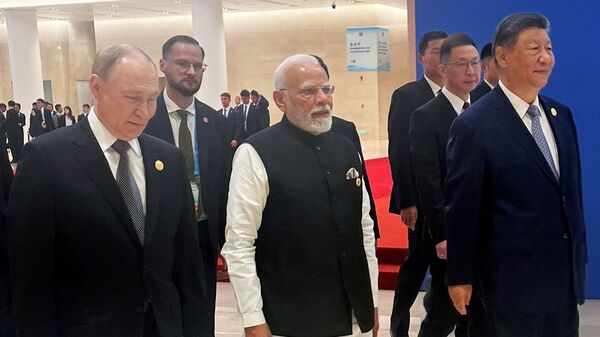
    Evidence Based Policymaking : Can Data Make Indian Policy Smarter ?

    N4S

    This article explores how India is shifting towards evidence-based policymaking (EBPM). UPSC often asks such topics by linking them to broader governance issues -like the 2018 GS2 question on policy contradictions. Where aspirants usually falter is in reducing these topics to mere institutional listing without engaging with the underlying structural reforms – like regular rule reviews, digital governance platforms, or the need for a unified regulation-making law. This article helps bridge that gap. It explains key changes like Mandatory Public Consultation and Economic Impact Analysis in a simple, relatable way. A standout section is “EBPM across Schemes”, which gives practical examples – from JAM to Swachh Bharat to NEP – that can be used in GS2, GS3, Ethics, and Essay papers. It also connects Indian reforms with global practices (like US OIRA and EU’s ex-post review), helping aspirants frame comparative arguments. Most importantly, the article makes a data-heavy, abstract topic feel human and real – something aspirants often miss. 

    PYQ ANCHORING

    GS 2 :  Policy contradictions among various competing sectors and stakeholders have resulted in inadequate ‘protection and prevention of degradation’ to environment. “ Comment with relevant illustration. [2018]

    MICROTHEMES: Structural Reforms & actions

    For the first time, India’s top financial regulators – the Reserve Bank of India (RBI) and the Securities and Exchange Board of India (SEBI) – have laid down clear steps for how they’ll make, update, and review regulations. This is a big shift toward more transparent, data-backed, and accountable governance.

    Changes made by RBI and SEBI

    1. Mandatory Public Consultation

    Before any new rule is finalised, there’s now a 21-day window where the public can give feedback.
    Example: If SEBI plans to change investment rules, investors, companies, or citizens can send suggestions.

    2. Clear Objectives and Impact Analysis

    • RBI must explain the possible economic impact of its proposed regulations.
    • SEBI must clearly state the intent and purpose behind a rule.
      Example: Before regulating digital lending, RBI must study how it would impact consumers and lending companies.
    Why Is Economic Rationale Important in Rule-Making?ReasonWhy It MattersExampleTargets real problemsPrevents over-regulation or solving non-issuesRBI acted against predatory digital lendersSaves resourcesFocuses time and money on actual needsSEBI watches high-risk products, not safe onesData-driven policyPromotes evidence-based decision-makingPost-2008, capital norms based on risk dataCost vs. benefit clarityAvoids excessive burden on stakeholdersDisclosure norms reviewed before enforcementBuilds public trustTransparency boosts confidence in regulatorsBan on front-running explained with logic

    3. Regular Review of Old Rules

    Both regulators will now revisit older regulations to see if they still make sense in today’s context.
    Example: SEBI might reassess mutual fund norms to match current market realities.

    Learnings from USA and EU

    Global PracticeHow It WorksExample
    Cost-benefit analysisMandatory economic impact review before any ruleUS OIRA reviews federal rules
    Problem & options assessmentDefine the problem, evaluate all policy optionsEU did this before appliance labelling reforms
    Monitoring post-implementationEvaluate success after rules are rolled outEU uses ex-post reviews regularly

    Recent trend of reforms in India

    In recent times, India’s financial sector has shown a clear shift toward evidence-based policymaking, with regulators increasingly relying on data, public feedback, and impact assessments to frame and refine policies. This shift is marked by a move away from purely top-down decision-making toward a more transparent, consultative, and analytical approach. Key developments include:

    TrendExample
    Public consultation in regulation-makingSEBI and RBI now publish draft rules for feedback.
    Digital governance platformsRBI’s PRAVAAH for tracking regulatory approvals.
    Unified regulatory reviewIFSCA mandates rule review every 5 years.
    Cross-sectoral issues like fintech, ESG, climate riskAll regulators moving toward global norms and digital innovation.
    Need for a common law on regulation-makingExperts demand a law like the U.S. Administrative Procedure Act in India.

    Evidence-Based Policymaking (EBPM)

    Evidence-Based Policymaking refers to the systematic use of data, research, and empirical analysis to inform and guide policy decisions. Rather than relying on ideology, intuition, or political expediency, EBPM insists that policies must be:

    • Grounded in verifiable evidence,
    • Evaluated through cost-benefit and impact assessments,
    • Designed to address real problems, not perceived ones.

    Academic Roots of EBPM

    AspectDetails
    OriginEmerged from evidence-based medicine in the UK during the 1990s, where doctors used clinical data rather than anecdotal experience to treat patients.
    Expansion into Public PolicyPopularized in governance through think tanks and public administration schools (e.g., LSE, Harvard Kennedy School).
    Influential ThinkersThomas Kuhn (scientific paradigms),
    Donald Campbell (social experimentation),
    Carole Weiss (policy evaluation).

    Also influenced by Rational Choice Theory and Behavioral Economics.
    Global SpreadAdopted in OECD countries, especially in the UK (Blair Government), USA (Obama’s Evidence-based Budgeting), and EU.

    Core Philosophy Behind EBPM

    PrincipleWhat it Means
    RationalityDecisions should stem from reason and analysis, not guesswork.
    TransparencyPolicymakers must clearly state what evidence they used.
    AccountabilityEvidence allows policies to be tested, reviewed, and improved.
    AdaptabilityPolicies must evolve with new data and evaluation.
    Democratic LegitimacyOpens the policymaking process to stakeholders, building trust.

    EBPM across Schemes

    1. Aspirational Districts Programme (ADP): Launched by NITI Aayog in 2018.
    Evidence Used: Real-time data from 112 underdeveloped districts on health, education, infrastructure, etc.
    Tools: Use of Champions of Change Dashboard, ranking districts on performance metrics.
    Impact: Led to targeted intervention and measurable improvement in outcomes like institutional deliveries and school attendance.

    2. JAM Trinity in DBT (Jan Dhan, Aadhaar, Mobile): Reform of subsidy delivery through Direct Benefit Transfers (DBT).
    Evidence Used: Leakages in PDS, LPG, and MNREGA identified through pilot projects and CAG audits.
    Outcome: Over ₹2.2 lakh crore reportedly saved in leakage (as per govt reports), while increasing inclusion.

     3. National Education Policy (NEP) 2020: Revamp of India’s education system.
    Evidence Used: Based on over 2 lakh suggestions, committee recommendations, and academic studies on learning outcomes and dropout rates.
    Key Shift: Emphasis on foundational literacy, flexible curriculum, and local language teaching.

    4. Swachh Bharat Mission – Gramin: Nationwide sanitation campaign to end open defecation.
    Evidence Used: Baseline surveys in 2013 and independent impact assessments by WaterAid, UNICEF, etc.
    Policy Change: Shift from toilet construction targets to behavioural change campaigns.

    6. Farm Laws and Repeal :Three farm laws were introduced to reform agricultural marketing.
    Gap in EBPM:

    • Limited public consultation,
    • Lack of pilot testing,
    • Absence of broad stakeholder consensus, especially with farmer unions.
      Outcome: Widespread protests, followed by repeal.
      Lesson: Highlights the consequences of ignoring evidence and consensus-building in policymaking.

    7. COVID-19 Vaccination Strategy (CoWIN Platform): Nation-wide vaccine rollout.
    Evidence Used: Data on supply chains, real-time coverage, and vulnerable groups.
    Tools: CoWIN dashboard, GPS-linked vaccine monitoring, demographic analytics.

    Challenges in EBPM

    ChallengeExplanationExample
    Data Gaps and Poor QualityLack of granular, updated, and reliable data hampers effective decision-making.Health and education data often outdated or inconsistent across states.
    Limited Institutional CapacityPolicymakers may lack training or tools to analyze and apply evidence.Many local governments lack data analysts or dedicated policy cells.
    Low Use of Impact EvaluationPolicies are rarely tested through pilots or evaluated after implementation.Schemes like MGNREGA lack rigorous impact assessment across all regions.
    Political and Bureaucratic ResistanceDecisions may be driven by ideology or electoral concerns, not data.Farm loan waivers often announced despite contrary economic evidence.
    Weak Feedback LoopsLimited mechanisms to revise or withdraw ineffective policies.Poor-performing schemes often continue due to lack of sunset clauses.
    Fragmented Data OwnershipData scattered across ministries with poor interoperability.Employment data split between Labour Ministry, NSSO, and private platforms.
    Access and Transparency IssuesMany datasets are not publicly available or easily accessible.Delays in releasing official surveys like the NFHS or PLFS.
    Over-reliance on Tech without ContextDigital tools used without understanding ground realities or local needs.Implementation of AgriTech apps without farmer literacy or connectivity.

    Way Forward

    1. National Evidence Ecosystem:
      Create an independent Evidence Advisory Body under NITI Aayog to guide ministries and coordinate evaluations.
    2. Data Infrastructure:
      Develop a unified national data portal with real-time, disaggregated, and publicly accessible datasets.
    3. Impact Evaluation:
      Make pilot testing and independent impact evaluation mandatory for all major government schemes.
    4. Local Government Capacity:
      Deploy trained data and policy officers at the district level to support evidence-based planning.
    5. Policy-Academia Linkages:
      Fund and formalize partnerships between ministries and research institutions for evidence generation.
    6. Transparency & Feedback:
      Mandate public release of evaluation reports and integrate citizen feedback into policy design.

    #BACK2BASICS: Financial Regulatory Ecosystem

    It refers to the network of institutions, laws, and mechanisms that govern financial markets and institutions – ensuring stability, protecting consumers, promoting competition, and preventing fraud or misuse.

    Core Financial Regulators in India

    RegulatorArea It RegulatesKey Functions
    RBI (Reserve Bank of India)Banks, NBFCs, Payments, Monetary PolicyControls interest rates, inflation, currency supply; regulates banks and digital payments.
    SEBI (Securities and Exchange Board of India)Stock Markets, Mutual Funds, BrokersProtects investors, curbs fraud, regulates trading, ensures market transparency.
    IRDAI (Insurance Regulatory and Development Authority of India)Life, Health, and General InsuranceApproves products, fixes premiums, protects policyholders, ensures insurance company solvency.
    PFRDA (Pension Fund Regulatory and Development Authority)National Pension System (NPS), Pension SectorRegulates pension funds and ensures transparency and returns for retirement savings.
    IFSCA (International Financial Services Centres Authority)GIFT City and Offshore Financial ServicesOne-stop regulator for banking, insurance, markets, and fintech within GIFT City.
    Ministry of Finance (GoI)Overall financial policy, budget, fiscal strategyCoordinates policy, tax decisions, public debt, and controls Public Sector Banks.
    FSDC (Financial Stability and Development Council)Inter-regulatory coordinationEnsures stability across sectors; headed by Finance Minister; not a statutory body.

    Supporting Institutions

    InstitutionRole
    NABARDRegulates and refinances rural credit; supports agri and rural banks.
    SIDBIPromotes and finances MSMEs.
    National Financial Reporting Authority (NFRA)Regulates and enforces accounting standards for large listed companies.
    CERSAIMaintains central registry to prevent loan frauds on movable assets.
    DICGC (Deposit Insurance and Credit Guarantee Corp.)Provides insurance to bank deposits up to ₹5 lakh.

    Key Laws Governing Financial Regulation

    LawArea Covered
    RBI Act, 1934Monetary and banking regulation
    Banking Regulation Act, 1949Licensing and functioning of banks
    SEBI Act, 1992Capital markets and securities
    Insurance Act, 1938 and IRDAI Act, 1999Insurance sector
    PFRDA Act, 2013Pension regulation
    IFSCA Act, 2019Regulation in GIFT IFSC
    Companies Act, 2013Corporate governance and financial disclosures
    SARBFAESI Act, 2002Recovery of bad loans without court intervention
    Insolvency and Bankruptcy Code, 2016 (IBC)Time-bound resolution of insolvency cases

    Challenges in the Ecosystem

    1. Jurisdiction Overlap:
      Multiple regulators oversee similar products, causing confusion. (e.g., SEBI-IRDAI over ULIPs)
    2. Regulatory Arbitrage:
      Firms choose lenient regulators to bypass strict norms. (e.g., NBFCs vs banks)
    3. Poor Coordination in New Areas:
      Fragmented oversight in fintech, crypto, AI. (e.g., RBI vs MeitY on digital lending)
    4. Gaps in Climate Finance Regulation:
      No unified framework for green bonds or ESG disclosures. (e.g., SEBI vs RBI roles)
    5. Weak Protection in Informal Sector:
      Unregulated products expose consumers to risk. (e.g., chit funds, informal loans)
    6. Slow Regulatory Adaptation:
      Laws lag behind market innovation. (e.g., delayed crypto regulation)

    India’s financial regulatory ecosystem is broad, multi-layered, and evolving — aiming to balance stability, transparency, and innovation. As the financial world changes rapidly, India needs stronger coordination, more transparent rule-making, and a common legal and institutional framework to stay resilient and globally competitive.

    SMASH MAINS MOCK DROP

    In the context of evolving regulatory governance in India, evaluate the role of evidence-based policymaking (EBPM) in ensuring transparency, accountability, and public trust.