💥Join UPSC 2027,2028 Mentorship (August Batch) + XFactor Notes & Microthemes PDF

Distribution: weekly

  • Who was freedom fighter Udham Singh?

    December 26 was the birth anniversary of freedom fighter Udham Singh, who is known for avenging the Jallianwala Bagh massacre of 1919.

    Try this PYQ:

    Q.The Ghadr (Ghadar) was a –

    (a) Revolutionary association of Indians with headquarters at San Francisco.

    (b) Nationalist organization operating from Singapore

    (c) Militant organization with headquarters at Berlin

    (d) Communist movement for India’s freedom with head-quarters at Tashkent

    Who was Udham Singh?

    • Singh, born in Sunam in Punjab’s Sangrur district in 1899, was a political activist who got associated with the Ghadar Party while in the US.
    • The multi-ethnic party was believed to have communist tendencies and was founded by Sohan Singh Bhakna in 1913.
    • Headquartered in California, the party was committed to the ouster of the British from India.
    • In 1934, Singh made his way to London with the purpose of assassinating O’Dwyer, who in 1919 had been the Lieutenant Governor of Punjab.

    Why did he consider O’Dwyer responsible for the massacre?

    • O’Dwyer ordered Brigadier Reginald Dyer to Amritsar before the massacre; he was worried that there might be a second Indian mutiny, given the Hindu-Muslim unity and the demonstrations and strikes.
    • Instead of Dyer, O’Dwyer is considered to be the actual perpetrator, since Dyer could not have executed it without his permission.
    • On March 13, 1940, Udham Singh shot O’Dwyer at a meeting of the East India Association and the Royal Central Asian Society at Caxton Hill.
    • He was immediately arrested and held in Brixton prison and was sentenced to death and was hanged on July 31, 1940, at Pentonville Prison.

    A legend in India

    • For avenging the Jallianwala Bagh massacre, Singh is seen by many as a hero. Gandhi, though, had famously called Singh’s revenge as an “act of insanity”.
    • While being on trial, he referred to himself as Mohamed Singh Azad, to symbolize Hindu-Sikh-Muslim unity in the fight for India’s freedom.
    • In 1974, his remains were sent back to India and he was cremated in his village in Sunam.
    • There have been several demands in the past few years for Udham Singh’s statue to be installed in Jallianwala Bagh and the Parliament complex.
    • In 2018, his statue was installed at Jallianwala Bagh during Baisakhi.
    • Udham Singh Nagar district in Uttarakhand is named after the freedom fighter.
  • [pib] PM-JAY SEHAT

    The Prime Minister has launched Ayushman Bharat PM-JAY SEHAT to extend coverage to all residents of Jammu & Kashmir.

    Q.Discuss various challenges in ensuring Universal Healthcare in India. (150W)

    PM-JAY SEHAT

    • The full form of SEHAT is social, endeavor for health, and telemedicine. Under this scheme, the SEHAT card will be distributed to all the eligible beneficiaries.
    • All the eligible beneficiaries of Jammu and Kashmir can apply for the Scheme through common service center operators
    • Around 1 crore beneficiaries will cover under this scheme. All the eligible citizens of Jammu and Kashmir will get cashless treatment up to Rs 5 lakh under the Scheme.

  • How dangerous is Ammonia?

    Two persons died and several took ill in a major ammonia gas leakage at a fertilizers unit at Prayagraj.

    Try this PYQ:

    Q. With reference to chemical fertilizers in India, consider the following statements:

    1. At present, the retail price of chemical fertilizers is market-driven and not administered by the Government.
    2. Ammonia, which is an input of urea, is produced from natural gas.
    3. Sulphur, which is a raw material for phosphoric acid fertilizer, is a by-product of all oil refineries.

    Which of the statements given above is/are correct?

    (a) 1 only

    (b) 2 and 3 only

    (c) 2 only

    (d) 1,2 and 3

    Ammonia

    • Ammonia is critical in the manufacturing of fertilizers and is one of the largest-volume synthetic chemicals produced in the world.
    • More than 80 per cent of ammonia made is consumed in the manufacturing of fertilizer, and most of the remainder goes into the production of formaldehyde.
    • A tri-hydroid of nitrogen (NH3), ammonia is a building block for ammonium nitrate (NH4NO3) that is used in agriculture as a high-nitrogen fertilizer.

    Why is it harmful?

    • According to experts in Chemistry, ammonia is stored for industrial use in liquid form under high pressure or in gaseous form at low temperature.
    • In such cases, the cause of death is always suffocation as in the case of Prayagraj incident, the victims must have been very close to the point of a gas leak.

    Effects on the human body

    • Ammonia, even in moderate concentration, can cause irritation to eyes, skin, nose and throat.
    • It interacts immediately upon contact with moisture present in the skin, eyes, oral cavity, and respiratory tract to form ammonium hydroxide.
    • It is very caustic and disrupts the cell membrane lipids, ultimately leading to cellular destruction.
    • As cell proteins break down, water is extracted, resulting in an inflammatory response that causes further damage.

    Secretion in humans

    • Ammonia, which is highly soluble in water, is found in soil, air, and water; it is naturally present in the body.
    • It is secreted by the kidneys to neutralize excess acid.
    • However, it is highly diluted when in the environment and does not affect the human body to a noticeable level.
  • Places in news: Rahim’s Tomb

    This newscard is an excerpt from the original article published in The Hindu.

    Try this PYQ:

    Q.With reference to Mian Tansen, which one of the following statements is not correct?

    (a) Tansen was the title given to him by Emperor Akbar.

    (b) Tansen composed Dhrupads on Hindu gods and goddesses.

    (c) Tansen composed songs on his patrons.

    (d) Tansen invented many Ragas.

    Who was Rahim?

    • Dating back to 1598, during the rule of Akbar, Abdur Rahim Khan I Khanan was one of the Navratna in the court.
    • Winning wars with his military training and hearts with his dohas and translated texts — he was a man who survived despite his father Bairam Khan’s assassination when he was just four.
    • Meant to be a dedication of a husband to his wife, the tomb ended up housing his own remains too when he died in 1627.

    His works

    • Apart from writing various dohas, Rahim translated Babar’s memoirs, Baburnama from Chagatai language to the Persian language, which was completed in 998 (1589–90) AD.
    • He had an excellent command over the Sanskrit language.
    • In Sanskrit, he wrote two books on astrology, Khetakautukam and Dwatrimshadyogavali.

    Why in news?

    • The tomb is in a run-down situation but undergoing renovation.
    • The historical and cultural significance is more than the archaeological and architectural significance, so restoring the dignity of the burial place has been very important.
  • Governance reforms in central universities

    Central Universities need reforms in their Governing Councils to make them realise their potential.

    Central Universities in the need of reforms

    • There are 55 central universities.
    • These are endowed with prime land, extensive funding from the central government and there is a long line of students waiting to get in.
    • However, they are in turmoil. In recent years, six vice-chancellors (VCs) of central universities have been sacked.
    • Some of these institutions have seen their glory days, yet increasingly, the energy is going out of the system.
    • However, not a single new private university has so far been able to create a true broad-based Vishwa Vidyalaya with the full range of humanities, social and natural sciences, and professional disciplines.
    • Therefore, to save academia in India, central universities must be saved.

    Organizational structure

    • Each of the 55 central universities is governed by a separate Act. but the broad structure is as follows.
    • The Visitor of the university is the President of India.
    • On his behalf, the Ministry of Education recommends an eminent citizen as the chancellor, whose role is mostly ceremonial.
    • The Ministry also constitutes a search committee for the post of VC, which comes up with a list of 3 candidates.
    • From this list, the government picks a VC.
    • Separately, and through a different process, the governing council (GC) is chosen.
    • The governing council (GC) of the university usually have nominees from various stakeholders, including the government, faculty, students, and citizens.
    • The university’s work is carried out by the executive council chaired by the VC, who also appoints the registrar.
    • A separate finance committee is constituted, headed by a chief finance officer, who is often a civil servant on secondment to the university.
    • This arrangement is designed to maintain financial checks and balances.

    Issues with the governance

    • The GC has no say in the selection of the VC.
    • The GC typically meets only once a year and its size is usually very large.[Delhi University has 475 members]
    • In theory, the VC presents and gets approval for the annual plan of the university from the GC.
    • In practice, after much grandstanding on both sides, the plan is rubberstamped.
    • After that, throughout the year, there is the minimal direction or monitoring from the GC, which may or may not meet again.
    • There are typically no quarterly updates, and there is little oversight.
    • Under the circumstances, the high number of failures should not come as a surprise, since effectively, there is minimal governance.

    Comparing with provisions in IIM Bill

    • The new IIM Bill very sensibly limits the GC to at most 19 members.
    • They are expected to be eminent citizens, with broad social representation and an emphasis on alumni.
    • This GC chooses the director, provides overall strategic direction, raises resources, and continuously monitors his or her performance.
    • Within the guidelines provided by the GC, the director has full autonomy but also full accountability.

    Way forward

    • The governing councils of all central universities, IITs, and all other central institutions, need to be restructured by an Act of Parliament.
    • The most eminent alumni of these institutions must be brought on their boards.
    • The dynamism and exposure that these alumni bring to the table will promptly lead to world-class innovations.

    Conclusion

    To allow central universities, the IITs and other public institutions to truly blossom, we need to reform their Governance. There is no time to waste.

  • History: Visva-Bharati University

    The Visva-Bharati University established by Gurudev Rabindranath Tagore has completed its centenary.

    Do you remember the scheme of education by Gandhi Ji, called Nai Talim?

    Visva-Bharati University

    • The university was set up by Nobel laureate Rabindranath Tagore in 1921 at Santiniketan, Bolpur in West Bengal’s Birbhum district.
    • It was founded by Rabindranath Tagore who called it Visva-Bharati, which means the communion of the world with India.
    • Until independence, it was a college. Soon after independence, the institution was given the status of a central university in 1951 by an act of the Parliament.

    Its establishment

    • The origins of the institution date back to 1863 when Debendranath Tagore was given a tract of land by the zamindar of Raipur, the zamindar of Kirnahar.
    • He set up an ashram at the spot that has now come to be called chatim tala at the heart of the town.
    • The ashram was initially called Brahmacharya Ashram, which was later renamed Brahmacharya Vidyalaya.
    • It was established with a view to encouraging people from all walks of life to come to the spot and meditate.
    • In 1901 his youngest son Rabindranath Tagore established a co-educational school inside the premises of the ashram.

    What makes it special?

    • Rabindranath Tagore believed in open-air education and had reservations about any teaching done within four walls.
    • This was due to his belief that walls represent the conditioning of the mind.
    • Tagore did not have a good opinion about the Western method of education introduced by the British in India; on this subject, Tagore and Gandhiji’s opinion matched.
    • So he devised a new system of learning in Visva-Bharati. He allowed students to continue their course till the student and his teacher both are satisfied.
    • At Visva-Bharati, if a course demanded by a student is not available, then the university will design a course and bring teachers for that course.
    • The university would not be bothered by the consideration of whether there is a demand for the course.
  • What are Fastags?

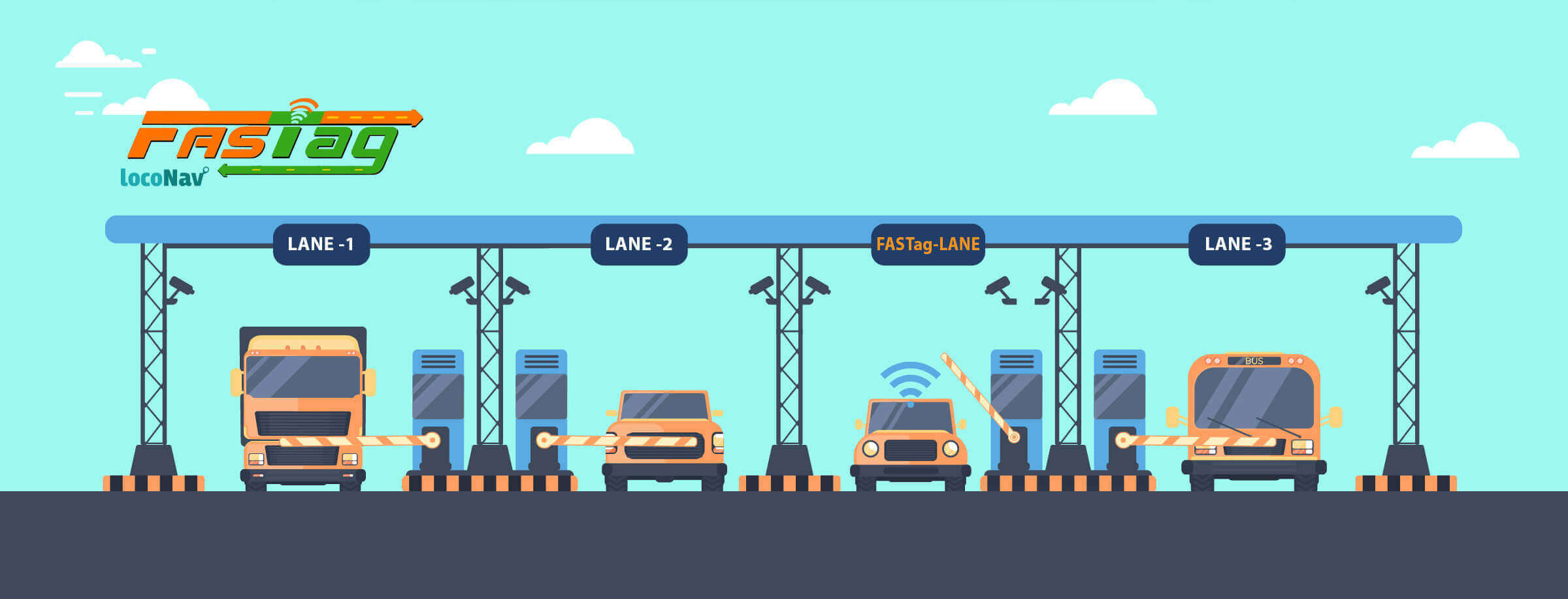
    From January 1, all lanes of National Highways will accept only electronic payments through FASTag.

    Fastags work on a unique technology called RFID (Radio Frequency Identification). This has gone unnoticed in several competitive exams. Hence it is still relevant for the aspirants.

    Also read

    Fastags

    • As per Central Motor Vehicles Rules, 1989, since 1st December 2017, the FASTag had been made mandatory for all registered new four-wheelers and is being supplied by the Vehicle Manufacturer or their dealers.
    • It has been mandated that the renewal of fitness certificate will be done only after the fitment of FASTag.
    • For National Permit Vehicles, the fitment of FASTag was mandated since 1st October 2019.

    What is ‘FASTag’?

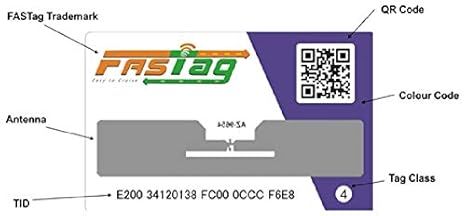
    • FASTags are stickers that are affixed to the windscreen of vehicles and use Radio Frequency Identification (RFID) technology to enable digital, contactless payment of tolls without having to stop at toll gates.
    • The tags are linked to bank accounts and other payment methods.
    • As a car crosses a toll plaza, the amount is automatically deducted, and a notification is sent to the registered mobile phone number.

    How does it work?

    • The device employs Radio Frequency Identification (RFID) technology for payments directly from the prepaid or savings account linked to it.
    • It is affixed on the windscreen, so the vehicle can drive through plazas without stopping.
    • RFID technology is similar to that used in transport access-control systems, like Metro smart card.
    • If the tag is linked to a prepaid account like a wallet or a debit/credit card, then owners need to recharge/top up the tag.
    • If it is linked to a savings account, then money will get deducted automatically after the balance goes below a pre-defined threshold.
    • Once a vehicle crosses the toll, the owner will get an SMS alert on the deduction. In that, it is like a prepaid e-wallet.
  • [pib] Tso Kar Wetland Complex

    India has added Tso Kar Wetland Complex in Ladakh as its 42nd Ramsar site, which is a second one in the Union Territory (UT) of Ladakh. With this, India now has forty-two Ramsar sites.

    Try this PYQ:

    In which one among the following categories of protected areas in India are local people not allowed to collect and use the biomass?

    (a) Biosphere reserves

    (b) National parks

    (c) Wetlands declared under Ramsar convention

    (d) Wildlife sanctuaries

    Tso Kar Wetland Complex

    • It is a high-altitude wetland complex, consisting of two principal waterbodies, Startsapuk Tso, a freshwater lake of about 438 hectares to the south, and Tso Kar itself, a hypersaline lake of 1800 hectares to the north.
    • It is situated in the Changthang region of Ladakh.
    • It is called Tso Kar, meaning white lake, because of the white salt efflorescence found on the margins due to the evaporation of highly saline water.

    Ecological significance

    • Wetlands provide a wide range of important resources and ecosystem services such as food, water, fibre, groundwater recharge, water purification, flood moderation, erosion control and climate regulation.
    • They are, in fact, a major source of water and our main supply of freshwater comes from an array of wetlands which help soak rainfall and recharge groundwater.
    • The Tso Kar Basin is an A1 Category Important Bird Area (IBA) as per BirdLife International and a key staging site in the Central Asian Flyway.
    • The site is also one of the most important breeding areas of the Black-necked Crane (Grus nigricollis) in India.

    Back2Basics: Wetlands

    • A wetland is a distinct ecosystem that is flooded by water, either permanently or seasonally, where oxygen-free processes prevail.
    • The primary factor that distinguishes wetlands from other landforms or water bodies is the characteristic vegetation of aquatic plants, adapted to the unique hydric soil.
    • Wetlands provide a wide range of important resources and ecosystem services such as food, water, fibre, groundwater recharge, water purification, flood moderation, erosion control and climate regulation.

    What is the Ramsar Convention?

    • The Ramsar Convention on Wetlands of International Importance Especially as Waterfowl Habitat is a treaty for the conservation and sustainable use of such sites.
    • The convention, signed in 1971 in the Iranian city of Ramsar, is one of the oldest inter-governmental accords for preserving the ecological character of wetlands.
    • Also known as the Convention on Wetlands, it aims to develop a global network of wetlands for the conservation of biological diversity and for sustaining human life.
    • Over 170 countries are party to the Ramsar Convention and over 2,000 designated sites covering over 20 crore hectares have been recognised under it.
  • Mapping: Caspian Sea

    The Caspian is actually a lake, the largest in the world and it is experiencing a devastating decline in its water level that is about to accelerate.

    Note the countries bordering the Caspian Sea: Kazakhstan, Russia, Azerbaijan, Iran and Turkmenistan. Or else remember the acronym ‘TARIK(h)’ (Hindi word for date).

    You can frame a mnemonic statement of your choice. Do similarly for major lakes and inland seas. But dont let it move over TARIK pe TARIK!

    Caspian Sea

    • The Caspian Sea is the world’s largest inland body of water, variously classed as the world’s largest lake or a full-fledged sea.
    • As an endorheic basin, it lies between Europe and Asia.
    • An endorheic basin is a drainage basin that normally retains water and allows no outflow to other external bodies of water, such as rivers or oceans, but converges instead into lakes or swamps, permanent or seasonal that equilibrates through evaporation
    • Its level is the product of how much water is flowing in from rivers, mostly the mighty Volga to the north, how much it rains and how much evaporates away.
    • At the end of the century, the Volga and other northern rivers will still be there.
    • However, a projected temperature rise of about 3℃ to 4℃ in the region will drive evaporation through the roof.

    Now try this PYQ:

    Q.Which of the following has/have shrunk immensely/ dried up in the recent past due to human activities?

    1. Aral Sea
    2. Black Sea
    3. Lake Baikal

    Select the correct option using the code given below:

    (a) 1 only

    (b) 2 and 3 only

    (c) 2 only

    (d) 1 and 3 only

    Why in news?

    • By the end of the century, the Caspian Sea will be nine metres to 18 metres lower. That’s a depth considerably taller than most houses.
    • The Caspian’s surface is already dropping by 7 cm every year, a trend likely to increase.
    • It means the lake will lose at least 25 per cent of its former size, uncovering 93,000 sq km of dry land.
    • If that new land were a country, it would be the size of Portugal.

    Past strides in its level

    • The Caspian Sea has a history of violent rises and falls.
    • In Derbent, on the Caucasus coast of Russia, submerged ancient city walls testify to how low the sea was in medieval times.
    • Around 10,000 years ago, the Caspian was about 100 metres lower.
    • A few thousand years before that it was about 50 metres higher than today and even over spilt into the Black Sea.
  • World to breach 1.5°C threshold by 2027-2042

    The planet will breach the threshold of 1.5 degrees Celsius above pre-industrial levels between 2027 and 2042 according to new research.

    Ever wondered why is there so much of hue to halt the temperature rise at 1.5°C above pre-industrial levels, and why not 2°C? Read this newscard to get aware….

    What does that mean?

    • The world will heat up more than it can take much earlier than anticipated.
    • The Intergovernmental Panel on Climate Change (IPCC) had estimated that breach to occur between now and 2052.
    • But researchers have now claimed to have introduced a more precise way to project the Earth’s temperature based on historical climate data.

    The fuss over 1.5°C threshold

    • For decades, researchers argued the global temperature rise must be kept below 2C by the end of this century to avoid the worst impacts.
    • The idea of two degrees as the safe threshold for warming evolved over a number of years from the first recorded mention by economist William Nordhaus in 1975.
    • By the mid-1990s, European ministers were signing up to the two-degree limit, and by 2010 Cancun COP it was official UN policy.
    • However, small island states and low-lying countries were very unhappy with this perspective, because they believed it meant their territories would be inundated with sea-level rise.
    • They commissioned research which showed that preventing temperatures from rising beyond 1.5C would give them a fighting chance.

    Why 1.5°C is preferred over 2°C?

    • Global warming is already impacting people and ecosystems. The risks at 1.5°C and 2°C are progressively higher.
    • There will be worse heatwaves, drought and flooding at 2°C compared to 1.5°C. It is characterized as “substantial differences in extremes”.
    • Sea levels are expected to rise 10cm higher this century under 2°C of warming than 1.5°C.
    • The collapse of ice sheets in Greenland and Antarctica could lead to rises of several metres.
    • The quantity and quality of staple crops suffer under 2°C warming compared to 1.5C, as do livestock. That is bad for the availability of food in many parts of the world.

    New model shows the breach in threshold

    • The study according to which prediction model deployed reduced uncertainties by half compared to the approach used by the IPCC.
    • The IPCC uses the General Circulation Models (GCM) to express wide ranges in overall temperature projections.
    • This makes it difficult to circle outcomes in different climate mitigation scenarios.

    What is the General Circulation Model (GCM)?

    • GCM represents physical processes in the atmosphere, ocean, cryosphere and land surface.
    • It is the most advanced tool currently available for simulating the response of the global climate system to increasing greenhouse gas concentrations.
    • GCMs depict the climate using a three-dimensional grid over the globe, typically having a horizontal resolution of between 250 and 600 km.
    • Many physical processes, such as those related to clouds, also occur at smaller scales and cannot be properly modelled.

    Why GCM is tricky?

    • Climate models are mathematical simulations of different factors that interact to affect Earth’s climate, such as the atmosphere, ocean, ice, land surface and the sun.
    • The data is tricky, and predictions can more often than not be inaccurate.
    • For example, an IPCC model would predict a temperature increase of a massive range — between 1.9oC and 4.5oC — if carbon dioxide in the atmosphere is doubled.

    Back2Basics: Intergovernmental Panel on Climate Change

    • The IPCC is an intergovernmental body of the United Nations that is dedicated to providing the world with an objective, scientific information relevant to understanding the scientific basis of the risk of human-induced climate change.
    • It was established in 1988 by the World Meteorological Organization (WMO) and the United Nations Environment Programme (UNEP).
    • Its membership is open to all members of the WMO and UN.
    • The IPCC produces reports that contribute to the work of the United Nations Framework Convention on Climate Change (UNFCCC), the main international treaty on climate change.
    • The IPCC’s Fifth Assessment Report was a critical scientific input into the UNFCCC’s Paris Agreement in 2015.