💥Join UPSC 2027,2028 Mentorship (August Batch) + XFactor Notes & Microthemes PDF

Distribution: weekly

  • What is Large Hadron Collider (LHC)?

    hadron

    Central idea: The article provides an overview of the LHC, its construction, how it works, and what it has discovered. It also discusses the future of the LHC, including plans to upgrade it and build a bigger version.

    Large Hadron Collider (LHC)

    • The Large Hadron Collider (LHC) is the world’s largest science experiment built by the European Organisation for Nuclear Research (CERN).
    • It is a collider that smashes two beams of particles in opposite directions and these particles are hadrons.
    • The LHC is on the energy frontier of physics research, conducting experiments with highly energized particles.
    • Currently, the LHC is being warmed up for its third season of operations following upgrades that have made it more sensitive and accurate.

    How does the LHC work?

    • Hadrons are subatomic particles made up of smaller particles, and the LHC typically uses protons.
    • Protons are energized by accelerating them through a narrow circular pipe that is 27 km long.
    • The pipe encircles two D-shaped magnetic fields created by almost 9,600 magnets.
    • Protons are accelerated through the beam pipe by rapidly switching the direction of the magnetic field.
    • Eventually, protons move at 99.999999% of the speed of light, according to the special theory of relativity.

    What happens when particles are smashed?

    • When two antiparallel beams of energized protons collide head-on, the energy at the point of collision is equal to the sum of the energy carried by the two beams.
    • The highest centre-of-mass collision energy the LHC has achieved so far is 13.6 TeV.
    • At the moment of collision, there is chaos, and energy coalesces into different subatomic particles under the guidance of the fundamental forces of nature.
    • Different particles take shape depending on the amount and flavour of energy available.

    What has the LHC found so far?

    • The LHC consists of nine detectors, and they study particle interactions in different ways.
    • The ATLAS and CMS detectors discovered the Higgs boson in 2012 and confirmed their findings in 2013.
    • Using the data from collisions, scientists have tested the predictions of the Standard Model of particle physics, observed exotic particles, and pieced together information about extreme natural conditions.

    What is the LHC’s future?

    • The LHC has not been able to find ‘new physics’ that can explain the nature of dark matter or why gravity is such a weak force.
    • One way forward is to improve the LHC’s luminosity by 10x by 2027 through upgrades.
    • Another idea is to build a bigger and more powerful version of the LHC, based on the hypothesis that it can find ‘new physics’ at even higher energies.
    • Physicists are divided on whether to invest in building a bigger machine or less expensive experiments with guaranteed results.

    B2BASICS

    What is Hadron?

    • Hadron is any member of a class of subatomic particles that are built from quarks and thus react through the agency of the strong force. The hadrons embrace mesons, baryons (e.g., protons, neutrons, and sigma particles), and their many resonances.

    CERN

    • European Organisation for Nuclear Research (CERN) is the world’s largest nuclear and particle physics laboratory.
    • CERN is based in Geneva on the French-Swiss border. It has 23 member states.
    • India in 2016 became an associate member of the CERN. Indian scientists have played a significant role in the ALICE experiment, which is a dedicated experiment for search and study of Quark Gluon Plasma (QGP).

    Try this MCQ

    Which of the following is a subatomic particle made up of smaller particles and is commonly used in the Large Hadron Collider (LHC)?

    (a) Protons

    (b) Electrons

    (c) Neutrons

    (d) Photons


    [wpdiscuz-feedback id=”uv5cuojqwi” question=”Please leave a feedback on this” opened=”1″]Post your answers here.[/wpdiscuz-feedback]

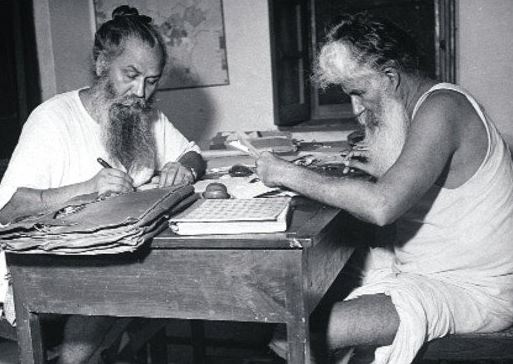


  • Teja Singh Sutantar: Remembering the revolutionary leader

    teja

    Punjab Chief Minister unveiled a statue of Teja Singh Sutantar, a former MP and revolutionary leader.

    Teja Singh Sutantar

    • Teja Singh was born as Samund Singh in 1901 in Aluna village of Gurdaspur district.
    • After completing his schooling, he joined Khalsa College in Amritsar.
    • Following the Jallianwala Bagh massacre in 1919, he joined the Akali Dal to participate in the movement to liberate gurdwaras from degenerate mahants.
    • However, in September 1921, he formed his own squad called the Sutantar Jatha, which successfully liberated a gurdwara in a village called Teja in Gurdaspur district from the mahants.
    • He later freed another gurdwara in Othian village from mahants.

    Early life and revolutionary activities

    • In early 1923, Teja Singh went to Kabul as a Sikh missionary and there he came into contact with a few leaders of the Ghadar Party, who were preparing for their second attempt to overthrow the British government.
    • They persuaded Teja Singh to undergo military training, so he joined the Turkish military academy in 1925 under the pseudonym Azad Beg.
    • He later moved to Berlin and then to Canada and the United States, where he addressed congregations of Indians, mainly Punjabi Sikh immigrants.

    Political Career

    • After visiting several countries, Teja Singh returned to India and became a prominent leader of the communist party (CPI).
    • He contributed revolutionary articles to the party journal, the Kirti, frequently writing about issues that plagued peasants.
    • In May 1937, he was elected unopposed to the Punjab Legislative Assembly as a nominee of the Indian National Congress while he was still in prison.
    • He continued to remain a member of the Punjab Legislative Assembly till 1945.
    • He was also the secretary of the Communist Party (Punjab) from 1944 to 1947.


  • Exercise Cope India 23

    The Indian Air Force (IAF) fighters, including Light Combat Aircraft (LCA), Rafale, SU-30MKI, and Jaguars, are set to participate in bilateral air Exercise Cope India 23 with US Air Force (USAF) F-15 fighters and B-1B long-range bombers.

    Exercise Cope India

    • Cope India began in 2004 as a fighter training exercise held at Air Station Gwalior.
    • The exercise has evolved to incorporate subject matter expert exchanges, air mobility training, airdrop training and large-force exercises, in addition to fighter-training exercises.
    • The exercise was last held in 2009.
    • The exercise showcases US and India’s efforts and commitment to a free and open Indo-Pacific region.

    Highlights of the 2023 version

    • The exercise will be conducted in two phases, with the first phase practicing the air-mobility component involving transport aircraft of both countries.
    • The IAF element will include the Su-30MKI, Rafale, Tejas, and Jaguar fighter aircraft, while Japan is taking part in the exercise as an observer.
    • The second phase of the exercise will witness the participation of B-1B bombers of USAF, and F-15 fighter aircraft of the USAF will join the exercise subsequently, according to an IAF statement.
    • The exercise will be supported by aerial refuellers, Airborne Warning and Control System, and Airborne Early Warning and Control aircraft of the IAF.


  • ESA to launch Jupiter Icy Moons Explorer (JUICE) Mission

    juice

    The European Space Agency (ESA) is all set to launch the Jupiter Icy Moons Explorer, or Juice, mission from its spaceport in French Guiana on an Ariane 5 launcher.

    What is the Juice Mission?

    • Jupiter Icy Moons Explorer (Juice) mission is a project by the European Space Agency (ESA) to explore the Solar System’s largest planet Jupiter and its three largest moons, Ganymede, Callisto, and Europa.
    • Juice is constructed by an industrial consortium led by Airbus Defence and Space and is planned to reach Jupiter in 2031 using remote sensing, geophysical, and in situ instruments.

    Goals of the Juice mission

    • Juice aims to create a detailed map of the surfaces of Jupiter’s moons and to look beneath them to probe their potential habitability by creating a comprehensive picture of Jupiter.
    • One of the primary goals of the Juice mission is to gain insight into how planetary systems form and evolve over time and how possibly habitable environments can arise in Jupiter-like systems around other stars.
    • Juice will also analyze the chemistry, structure, dynamics, weather, and climate of Jupiter and its ever-changing atmosphere.

    Ganymede: Focus of the Juice mission

    • Ganymede is the largest moon in the Solar System and the only one to generate its magnetic field.
    • Juice will move into Ganymede’s orbit after approximately four of arriving at Jupiter.
    • Juice will use its suite of ten sophisticated instruments to measure how Ganymede rotates, its gravity, its shape and interior structure, its magnetic field, its composition, and to penetrate its icy crust using radar down to a depth of about nine km.

    Can Juice detect life?

    • Juice is not equipped to detect life on Jupiter or its moons.
    • It is, however, capable of finding out whether there could be places around Jupiter, inside the icy moons, where the necessary conditions, such as water, biological essential elements, energy, and stability, to sustain life are present.
    • Scientists believe that there is a possibility that life is present on Jupiter’s moons, in the form of microbes or more advanced species, such as those found in deep-sea trenches and at hydrothermal vents on Earth.


  • The 17th Lok Sabha: A Short-Lived Parliament with Low Productivity

    17th Lok Sabha

    Central Idea

    • The 17th Lok Sabha is set to complete its five-year term in 2024. However, with only 230 sitting days so far, it is unlikely to surpass the 331 days of the shortest full-term Lok Sabha since 1952. The latest session, the Budget session, was marked by minimal legislative activity and continuous disruptions, with only one item, the Motion of Thanks on the President’s Address, being discussed.

    Low Productivity of the 17th Lok Sabha

    • The Lok Sabha has functioned for only 33% of its scheduled time (46 hours) during the Budget session, with the Rajya Sabha working for 24% (32 hours).
    • The second part of the session was even more unproductive, with the Lok Sabha working for only 5% and the Rajya Sabha for 6% of their scheduled time.
    • The number of Bills introduced and passed has also declined significantly since the first session, with fewer than 10 Bills being introduced or passed in each of the last four sessions.
    • The latest Budget session was also one of the shortest since 1952, with the Lok Sabha spending only 18 hours on financial business, compared to an average of 55 hours in previous Budget sessions of the 17th Lok Sabha.
    Lok Sabha Term Total Sitting Days Bills Introduced Bills Passed Average Sitting Days per Year
    15th 2009-2014 357 244 181 71
    16th 2014-2019 331 247 156 66
    17th 2019-2024 Less than 331 (projected) 150 (as of April 2023) 131 (as of April 2023) 58 (projected)

    Lack of Debates and Discussions

    • Short-duration discussions: The Rules of Procedure of both Houses of Parliament provide for various devices that can be used to draw attention to matters of public importance and hold the government accountable. However, in the 17th Lok Sabha, only 11 short-duration discussions and one half-an-hour discussion have been held so far, and none were held during the latest session.
    • Question Hour: This is despite the fact that the latest session saw the least amount of time spent on questions in the current Lok Sabha. Question Hour functioned for only 19% of the scheduled time in the Lok Sabha and 9% of the scheduled time in the Rajya Sabha.

    Why the Lok Sabha’s productivity has been low?

    • Disruptions and Protests: The 17th Lok Sabha witnessed frequent disruptions and protests from opposition parties, leading to a significant loss of time and decreased productivity. Some of the major issues that led to disruptions include the Citizenship Amendment Act (CAA), National Register of Citizens (NRC), and farm laws.
    • Lack of Consensus: The ruling party enjoyed a clear majority in the Lok Sabha, but there was still a lack of consensus on many key issues, resulting in a delay in passing important bills and legislation.
    • COVID-19 Pandemic: The COVID-19 pandemic also contributed to the low productivity of the Lok Sabha as many sessions were delayed or cancelled due to safety concerns.
    • Speaker’s Decision: The decision of the Speaker of the Lok Sabha to disallow opposition MPs from raising certain issues also resulted in protests and disruptions, further reducing the productivity of the house.
    • Shorter Sessions: The 17th Lok Sabha had shorter sessions compared to previous Lok Sabhas, which also contributed to lower productivity. Many important bills and issues were left pending as there was not enough time to discuss and debate them thoroughly.

    Implications of low productivity of the Lok Sabha

    • Delay in passing important bills: When the Lok Sabha is unable to function effectively, it can lead to a delay in passing important bills, which may have an adverse impact on the economy and governance. For example, crucial bills related to taxation, infrastructure, and social welfare may get delayed, affecting the overall progress of the country.
    • Poor quality of legislation: When the Lok Sabha is unable to function effectively, it may lead to poor quality of legislation. There may be a lack of debate and discussion, leading to hasty decision-making and poor-quality laws that may have unintended consequences.
    • Damage to democratic institutions: When the Lok Sabha is unable to function effectively, it can damage the democratic institutions of the country. It can erode the trust of citizens in the democratic process and lead to a feeling of disenchantment and disengagement among the people.
    • Wastage of taxpayers’ money: When the Lok Sabha is unable to function effectively, it leads to wastage of taxpayers’ money. The salaries and allowances of Members of Parliament are paid from the public exchequer, and if they are not able to discharge their duties effectively, it amounts to a waste of taxpayers’ money.
    • Negative impact on investor confidence: When the Lok Sabha is unable to function effectively, it can have a negative impact on investor confidence. Investors may be hesitant to invest in the country, leading to a slowdown in economic growth and development.
    • Lack of accountability: When the Lok Sabha is unable to function effectively, it may lead to a lack of accountability. Members of Parliament may not be held accountable for their actions, and the executive may be able to push through decisions without proper scrutiny or oversight.

    17th Lok Sabha

    Conclusion

    • The 17th Lok Sabha has been marked by low productivity and a lack of debates and discussions, despite the availability of mechanisms to hold the government accountable. The upcoming year is unlikely to see a significant increase in the number of sitting days. This lack of productivity and accountability could undermine the role of Parliament in a democracy and the ability of the government to pass important legislation.

    Mains Question

    Q. What are the reasons for the low productivity of the 17th Lok Sabha? What are the implications of its low productivity, and how might it affect the country’s progress and democratic institutions?

  • IMD predicts normal monsoon despite El Nino effect

    nino

    Central idea

    • India’s four-year run of abundant summer monsoon rainfall is likely to end this year, with the India Meteorological Department (IMD) forecasting a 4% shortfall in the coming season.
    • The monsoon forecast for 2022 is still categorized as “normal” but at 96% of the long-period average (LPA), it is at the lowest end of the range.
    • El Nino, a cyclical phenomenon of warming in the central Pacific, is believed to be the key factor responsible for the below-normal forecast.

    Factors affecting the forecast

    • El Nino: It has been linked to diminished rainfall in six out of 10 years in India, and 2022 is expected to see its development.
    • La Nina: It has been influencing the rainfall in India since 2019 and is expected to end this year.
    • Reduced snow cover in Eurasia: It can have a positive impact on the monsoon forecast, and this year’s snow cover in Eurasia was below normal.
    • Positive phase of the Indian Ocean Dipole (IOD): IOD could result in more moisture and rainfall over India during August and September, and therefore, have a reduced impact of the El Nino.
    • IMD’s dynamical monsoon forecast techniques: It involves the simulation of global atmospheric and ocean conditions to forecast climate conditions, which the IMD has started to rely on more heavily in recent years.

    What is El Nino and La Nina?

    • El Nino and La Nina are two opposite phases of the El Nino-Southern Oscillation (ENSO) cycle.
    • ENSO is a naturally occurring phenomenon that involves the interaction between the ocean and atmosphere in the equatorial Pacific.

    Here is a detailed comparison of El Nino and La Nina

    El Nino La Nina
    Definition Warmer-than-normal sea surface temperatures Cooler-than-normal sea surface temperatures
    Frequency Every two to seven years Every two to seven years
    Duration Several months to a year or more Several months to a year or more
    Impact on winds Weakens trade winds, leading to changes in patterns Strengthens trade winds, leading to changes in patterns
    Impact on rains Reduces rainfall and can cause droughts Increases rainfall and can cause flooding
    Impact on temp. Warmer-than-average temperatures Colder-than-average temperatures
    Global effects Droughts in Asia and Africa, floods in Americas Floods in Asia and Africa, droughts in South America


    Impacts on India

    El Nino La Nina
    Associated with weak monsoons and drought-like conditions in India Associated with above-normal rainfall and floods in India
    Sea surface temperature in the equatorial Pacific Ocean rises above normal levels Sea surface temperature in the equatorial Pacific Ocean drops below normal levels
    Changes in the atmospheric circulation patterns Changes in the atmospheric circulation patterns
    Shift in the location of the jet stream, affecting the strength and direction of the monsoon winds Increase in the strength of the monsoon winds, bringing more moisture and rainfall to India
    Results in reduced rainfall, dry spells, and heatwaves, leading to crop failures and water scarcity Excessive rainfall can also lead to floods and landslides, causing damage to crops and infrastructure


    Back2Basics: Long Period Average (LPA) study of Monsoon

    • The IMD predicts a “normal”, “below normal”, or “above normal” monsoon in relation to a benchmark “long period average” (LPA).
    • The LPA of rainfall is the rainfall recorded over a particular region for a given interval (like month or season) average over a long period like 30 years, 50 years, etc.
    • LPA refers to the average rainfall recorded from June to September for the entire country, the amount of rain that falls every year varies from region to region and from month to month.
    • The IMD’s prediction of a normal monsoon is based on the LPA of the 1971-2020 period, during which India received 87 cm of rain for the entire country on average.
    • It has in the past calculated the LPA at 88 cm for the 1961-2010 period, and at 89 cm for the period 1951-2000.

    IMD Rainfall Distribution Categories

    Rainfall Distribution Categories Percentage Departure of Actual Rainfall from LPA
    Normal or Near Normal +/- 10% of LPA (between 96-104% of LPA)
    Below Normal Less than 10% of LPA (90-96% of LPA)
    Above Normal 104-110% of LPA
    Deficient Less than 90% of LPA
    Excess More than 110% of LPA


  • What is the Amul versus KMF controversy?

    amul

    Central idea

    • Amul, the country’s largest dairy player, announced on April 5 that it would supply milk and curd through e-commerce portals in Bengaluru.
    • The announcement was met with opposition from Kannadigas, who saw it as an attempt to threaten the iconic Nandini milk brand of the Karnataka Milk Federation (KMF).

    Political Controversy

    • The Amul vs. KMF row turned into a political tool in poll-bound Karnataka.
    • Dissenting sections expressed fears that Amul would eat into the market of Nandini and pose a threat to its business in the state.
    • The ruling government was accused of attempting to privatize the milk sector and “finish off” a home-grown product.

    A quick backgrounder

    • Both Amul Dairy and KMF are successful examples of adopting the three-tiered ‘Anand’ model of dairy procurement.
    • Farmers supply milk to dairy cooperatives at the village level, which is then procured by milk unions at the district and state levels.
    • There are 16 district milk unions in Karnataka supplying milk to the dairy cooperatives.
    • KMF provides competitive prices to dairy farmers.
    • KMF corners most of the market share for surplus milk provided by farmers in the state.

    Anand Model of Dairy Procurement

    • It is a system of milk collection and distribution pioneered by the Amul cooperative in Anand, Gujarat, India.
    • This model has revolutionized the dairy industry in India by providing a fair price to dairy farmers, eliminating the need for middlemen, and improving the quality of milk.
    • Under the Anand model, farmers are organized into dairy cooperatives, which collect and market their milk.
    • The cooperatives are managed by the farmers themselves and are supported by the infrastructure and marketing expertise of the Amul cooperative.
    • The farmers are paid a fair price for their milk, which is based on its quality and quantity, and they receive regular payments for their milk.

    Why are people protesting?

    • Overpricing: The pricing difference between Amul’s toned milk and Nandini’s toned milk was highlighted, with Amul’s milk priced at ₹54 per litre and Nandini’s at ₹39 per litre.
    • Unhealthy competition: KMF’s online presence in the state could create unhealthy competition with Amul’s online presence, despite the pricing difference, according to the federation.

    The turf war

    • The KMF is the second-largest milk cooperative in India after Amul.
    • While Amul and KMF compete in neutral regions like Mumbai, Nagpur, Goa, Hyderabad, and Chennai markets, they have not clashed on home turfs.
    • Karnataka is a milk-excess market that meets the needs of the state and exports surplus to other states.
    • KMF plans to write to the National Dairy Development Board, requesting it to direct Amul not to venture into the Bengaluru market and concentrate on milk-deficient states.

    Clarification by Amul

    • Amul clarified that it was launching its fresh milk and curd only for a niche market through e-commerce channels and not through the mass market distribution network.


  • The Legend of Guru Tegh Bahadur

    guru

    The Parkash Purab (birth anniversary) of Sri Guru Tegh Bahadur, the ninth guru of the Sikhs, was celebrated on April 11.

    Who was Guru Tegh Bahadur?

    • Guru Tegh Bahadur was born on April 1, 1621, in Amritsar, Punjab.
    • He was the ninth Guru of the Sikhs and the son of Guru Hargobind, the sixth Guru of the Sikhs, and Mata Nanaki.
    • His birth name was Tyag Mal, which means “master of renunciation.”
    • He spent his early years in Amritsar and was trained in religious studies, martial arts, and horse riding.
    • He was also trained in music and poetry, and he became a skilled poet and musician.

    His teachings and beliefs

    • Guru Tegh Bahadur’s teachings were based on the importance of meditation, self-discipline, and living a moral and ethical life.
    • He believed in the idea of one God and the unity of all religions.
    • His term as Guru ran from 1665 to 1675. One hundred and fifteen of his hymns are in Guru Granth Sahib.
    • He emphasized the importance of serving others and treating everyone with respect and dignity, regardless of their religion or social status.
    • He also believed in the principle of selfless service and encouraged his followers to help those in need.

    Significance in Indian History

    • Guru Tegh Bahadur played a crucial role in Sikh history by defending the religious freedom of Hindus against the Mughal Emperor Aurangzeb.
    • Aurangzeb was known for his intolerance towards non-Muslims and had imposed a tax on Hindu pilgrims visiting the holy city of Varanasi.
    • When a group of Kashmiri Pandits approached Guru Tegh Bahadur for help, he decided to defend their right to practice their religion freely.
    • He refused to convert to Islam despite facing torture and persecution, and was eventually executed by Aurangzeb in 1675.
    • His martyrdom is remembered as a significant event in Indian history, and he is considered a hero and a martyr by Sikhs around the world.

    His legacy

    • His legacy continues to inspire Sikhs and people of all religions and backgrounds.
    • His teachings and beliefs are an essential part of Sikhism today and are embodied in the Sikh scripture, the Guru Granth Sahib.
    • He is remembered as a saint, scholar, and warrior who sacrificed his life to defend the rights of others.
    • Many Gurudwaras (Sikh temples) around the world are dedicated to him, including the Gurudwara Sis Ganj Sahib in Delhi, where he was martyred.
    • His martyrdom is commemorated each year on the occasion of Guru Tegh Bahadur’s Martyrdom Day, which is observed on December 19.

    Try this PYQ:

    Q.Consider the following Bhakti Saints:

    1. Dadu Dayal
    2. Guru Nanak
    3. Tyagaraja

    Who among the above was/were preaching when the Lodi dynasty fell and Babur took over?

    (a) 1 and 3

    (b) 2 only

    (c) 2 and 3

    (d) 1 and 2


    [wpdiscuz-feedback id=”24618ltpkt” question=”Please leave a feedback on this” opened=”1″]Post your answers here.[/wpdiscuz-feedback]


  • Zojila Tunnel to revolutionise connectivity to Ladakh

    zojila

    Union Transport Minister recently visited the Zojila Tunnel In Jammu & Kashmir which is Asia’s longest as well as highest.

    About Zojila Tunnel

    • The Zojila tunnel is an upcoming 14.15 km road tunnel that will connect Srinagar and Leh in the Union Territory of Ladakh.
    • It is being constructed as part of a project to improve connectivity in the region, with a connecting tunnel from Z-Morh to the Zojila tunnel also being built.
    • The tunnel is being built at a cost of more than Rs 4,600 crore and is expected to be completed by December 2023.

    Need for the tunnel

    • All weather connectivity: The Zojila Pass is closed during harsh winters due to fears of avalanches, landslides, and slippery roads, cutting off areas beyond the pass from the rest of the country for at least five months.
    • Military mobilization: The upcoming Zojila tunnel will provide perennial connectivity between Ladakh and the rest of the country and benefit both civilians and the military.
    • Time and effort saving: The distance from Baltal to Minamarg, currently 40 km, will come down to 13 km, with travel time expected to be cut by an hour and a half.

  • Russia and China Aim To Build A Post-Western Order

    Central Idea

    • Russia and China aim to exploit divisions within the West to transform the global order and build a post-Western order. However, the Indian strategic community should not expect the fault lines within the West to be fatal, as history has shown that such dreams have not come to fruition.

    Post-Western Order

    • Building a post-Western order: Russia and China have talked of upending the world order before, with the history of international communism in the 20th century being about building a post-Western order.
    • America’s internal fissures and divisions between the US and Europe: While Moscow and Beijing are convinced that they can put the West on the defensive by pooling their strengths, the success of this strategy rests on the Moscow-Beijing axis successfully leveraging America’s internal fissures and divisions between the US and Europe.

    Dividing America from Europe

    • The Moscow and Beijing are hoping to divide America from Europe: Russia’s latest version of its foreign policy doctrine singles out the US as the main instigator, organizer, and executor of the aggressive anti-Russian policy of the collective West.
    • China’s diplomatic Europe strategy: China’s love for Europe’s strategic autonomy is equally passionate. However, it is unlikely that there will be a decisive movement on either issue, but both sides see the diplomatic dance as a valuable exercise.

    Sino-European Engagement

    • Europe’s pressure on Russia: Europe wants Xi to put pressure on Putin to end the war in Ukraine, and Beijing would like Europe to distance itself from the US on its China policy.
    • Europe not ready to busy China’s peace initiative: While Europe is not ready to buy China’s peace initiative on Ukraine, it has convinced itself that Xi is the only leader who can nudge Putin towards peace.

    India’s Perspective

    • The realists in India are aware of the many differences between the US and Europe, but they are also aware that Western strategic unity has endured since World War II.
    • The Russian and Chinese overreach has cemented broad Western unity rather than separating Europe from the US.

    Conclusion

    • While Russia and China aim to exploit divisions within the West to transform the global order, it is unlikely that they will succeed in building a post-Western order. The fault lines within the West are real, but they are by no means fatal.