💥Join UPSC 2027,2028 Mentorship (August Batch) + XFactor Notes & Microthemes PDF

Distribution: weekly

  • India joins G20’s Troika

    India has joined the G20 ‘Troika’with Indonesia and Italy.

    G20 Troika

    • Troika refers to the top grouping within the G20 that consists of the current, previous and incoming presidencies — Indonesia, Italy and India.
    • With this move, India has started the procedure for taking over the G20 presidency.

    Significance of the move

    • India will assume the G20 presidency on December 1, 2022 from Indonesia, and will convene the G20 Leaders’ Summit for the first time in India in 2023.
    • Indonesia took over the G20 presidency this year.

    Do you know?

    A Sherpa is the personal representative of a head of state or head of government who prepares an international summit, such as the annual G7 and G20 summits.

    About G20 Countries

    • Formed in 1999, the G20 is an international forum of the governments and central bank governors from 20 major economies.
    • Collectively, the G20 economies account for around 85 percent of the Gross World Product (GWP), 80 percent of world trade.
    • The members of the G20 consist of 19 individual countries plus the European Union (EU).
    1. The 19 member countries of the forum are Argentina, Australia, Brazil, Canada, China, France, Germany, India, Indonesia, Italy, Japan, Mexico, Russia, Saudi Arabia, South Africa, South Korea, Turkey, United Kingdom and the United States.
    2. The European Union is represented by the European Commission and by the European Central Bank.
    • India has been a member of the G20 since its inception in 1999.


    UPSC 2022 countdown has begun! Get your personal guidance plan now! (Click here)

  • EU unveils Global Gateway Project

    The European Union has unveiled a project called ”Global Gateway” that is worth 300 billion euros ($340 billion). The project is being seen as a response to China’s Belt and Road strategy.

    Global Gateway Project

    • It is the initiative Build Back Better World and the European Global Gateway that are reinforcing each other.
    • The bloc will mobilize the financial aid in public and private infrastructure investment around the world.
    • It is an offshoot of a plan by G7 countries to offer developing countries an alternative to Belt and Road.
    • The project will probably extend the remit of the European Fund for Strategic Investment, or create a similar institution, which can act as a guarantor for riskier investments in the ‘Global South’.
    • The EU has indicated it especially wants to compete for infrastructure development projects in Africa.

    About Belt and Road Initiative

    • The Belt and Road is a flagship project of Chinese President Xi Jinping that was launched in 2013.
    • Beijing has invested $139.8 billion in the project which is the centerpiece of Chinese foreign policy.
    • BRI aims to develop land and sea infrastructure to better connect China to Asia, Europe and Africa for trade and development, and it has found many partners around the world.


    UPSC 2022 countdown has begun! Get your personal guidance plan now! (Click here)

  • WHO Framework Convention on Tobacco Control (FCTC)

    The World Health Assembly (WHA) took the historic decision to form a global treaty to “strengthen pandemic prevention, preparedness and response”.

    Significance of the launch

    • The launch of putting together this accord is the second such initiative taken under Article 19.
    • The first initiative was the WHO Framework Convention on Tobacco Control (FCTC), which came into effect in 2005.

    About FCTC

    • The Framework Convention on Tobacco Control (FCTC) is the world’s first modern-day global public health treaty.
    • It is also the first treaty negotiated under the auspices of the World Health Organization (WHO).
    • The treaty entered into force in February 2005.
    • It was signed by 168 of the 192 WHO member states and more than 180 WHO member states have become parties to the convention.

    Highlights of the FCTC

    The FCTC provides an internationally coordinated response to combating the tobacco epidemic and sets out specific steps for governments addressing tobacco use, including:

    • Adopting tax and price measures to reduce tobacco consumption
    • Banning tobacco advertising, promotion and sponsorship
    • Creating smoke-free work and public spaces
    • Putting prominent health warnings on tobacco packages
    • Combating illicit trade in tobacco products


    UPSC 2022 countdown has begun! Get your personal guidance plan now! (Click here)

  • With India’s demographic transition, come challenges

    Context

    Recent results from National Family Health Survey-5 (NFHS-5) suggest that we are entering an era where we will have to tackle these challenges.

    A milestone in India’s demographic history: TFR at 2.0

    • NFHS-5 places the total fertility rate (TFR) at 2.0.
    • With two parents having two children, we have reached a replacement level of fertility.
    • Due to many young people, the population will continue to grow, but the replacement level fertility is a significant milestone in India’s demographic history.
    • This decline is spread evenly across the country, with 29 states and UTs having a TFR of 1.9 or less, with seven below 1.6.
    • All southern states have a TFR of 1.7-1.8, similar to that of Sweden.
    • Even states that have not reached replacement fertility — Bihar and Uttar Pradesh — seem to be headed in that direction.
    • Part of the original coterie of lagging states, Madhya Pradesh and Rajasthan both have achieved TFRs of 2.0.

    Challenge: Supporting the ageing population

    • Supporting ageing population: As fertility declines, the proportion of the older population grows, and societies face the challenge of supporting an ageing population with a shrinking workforce.
    • This challenge is greater for leaders at the beginning of the demographic transition — Kerala and Tamil Nadu.
    •  Interestingly, these are also among the more prosperous states in India, whose economic activities increasingly rely on migrant labour from other states.
    • Many industries such as auto parts manufacturing and construction in southern states rely on semi-skilled migrants, often transported under contractual arrangements, from northern and eastern states, particularly Bihar, Uttar Pradesh and Odisha.

    Rethinking the critical dimension of Indian federalism

    • Dependence on migrat workforce: Many industries such as auto parts manufacturing and construction in southern states rely on semi-skilled migrants, often transported under contractual arrangements, from northern and eastern states, particularly Bihar, Uttar Pradesh and Odisha.
    • Allocation of political power: While the Indian constitution mandates allocation of Lok Sabha seats across states in proportion to their population via the Delimitation Commission, the Emergency-era 42nd amendment froze seat allocation to the population share of states in the 1971 Census.
    • Equity consideration in central allocation to states: The division of central allocation to states is another area where population concerns have dominated equity considerations.
    • Much of the Centre-state revenue sharing occurs through recommendations of various Finance Commissions.
    • The sixth to fourteenth Finance Commissions allocated resources between states using the 1971 population shares of various states.
    • The Fifteenth Finance commission used Census data from 2011, but it also added the criteria of demographic performance, rewarding states with lower TFR.

    Type of demographic policy India needs to pursue

    • Pursue policy followed by China? Does India want to pursue China’s route of sharply lower fertility, with a large number of families stopping at one child, or are we content with moderately below replacement fertility of about 1.7-1.8?
    • If the latter, we are well-positioned to head in this direction.
    • Issues faced by China: while very low fertility provides a temporary demographic dividend with a reduced number of dependents to workers, the increased burden of caring for the elderly may become overwhelming over the long term.
    • Advantage of Regional demographic variation in India: India is fortunate that its demographic dividend may be smaller, but is likely to last for a more extended period due to regional variation in the onset of the fertility decline.
    • As southern states struggle with the growing burden of supporting the elderly, northern states will supply the workforce needed for economic growth.
    • Economic expansion: The increasing pace of migration may help shore up economic expansion in the south with its shrinking workforce augmented by workers from other states.

    Consider the question “Examine the influence of regional demographic variation on the fedaralism in India? How such variation can help India?”

    Conclusion

    The Sixteenth Finance Commission and the next Delimitation Commission must be freed from the burden of managing the demographic transition, focused on carrying out their tasks in the best interests of Indian federalism.

    UPSC 2022 countdown has begun! Get your personal guidance plan now! (Click here)

  • Over 6 lakh Indians renounced Citizenship

    More than six lakh Indians renounced citizenship in the past five years, the Ministry of Home Affairs (MHA) informed the Lok Sabha.

    Citizenship in India

    • Citizenship is in the Union List under the Constitution and thus under the exclusive jurisdiction of Parliament.
    • The Constitution does not define the term ‘citizen’ but gives, in Articles 5 to 11, details of various categories of persons who are entitled to citizenship.
    • Unlike other provisions of the Constitution, which came into being on January 26, 1950, these articles were enforced on November 26, 1949 itself, when the Constitution was adopted.

    Various provisions for Indian Citizenship

    Article 5

    • It provided for citizenship on the commencement of the Constitution.
    • All those domiciled and born in India were given citizenship.
    • Even those who were domiciled but not born in India, but either of whose parents was born in India, were considered citizens.
    • Anyone who had been an ordinary resident for more than five years, too, was entitled to apply for citizenship.

    Article 6

    • Since Independence was preceded by Partition and migration, Article 6 laid down that anyone who migrated to India before July 19, 1949, would automatically become an Indian citizen if either of his parents or grandparents was born in India.
    • But those who entered India after this date needed to register themselves.

    Article 7

    • Even those who had migrated to Pakistan after March 1, 1947 but subsequently returned on resettlement permits were included within the citizenship net.
    • The law was more sympathetic to those who migrated from Pakistan and called them refugees than to those who, in a state of confusion, were stranded in Pakistan or went there but decided to return soon.

    Article 8

    • Any Person of Indian Origin residing outside India who, or either of whose parents or grandparents, was born in India could register himself or herself as an Indian citizen with Indian Diplomatic Mission.

    Various Amendments for Citizenships

    • According to Article 11, Parliament can go against the citizenship provisions of the Constitution.
    • The Citizenship Act, 1955 was passed and has been amended four times — in 1986, 2003, 2005, and 2015.
    • The Act empowers the government to determine the citizenship of persons in whose case it is in doubt.
    • However, over the decades, Parliament has narrowed down the wider and universal principles of citizenship based on the fact of birth.
    • Moreover, the Foreigners Act places a heavy burden on the individual to prove that he is not a foreigner.

    (1) 1986 amendment

    • The constitutional provision and the original Citizenship Act gave citizenship on the principle of jus soli to everyone born in India.
    • However, the 1986 amendment to Section 3 was less inclusive as it added the condition that those who were born in India on or after January 26, 1950 but before July 1, 1987, shall be an Indian citizen.
    • Those born after July 1, 1987 and before December 4, 2003, in addition to one’s own birth in India, can get citizenship only if either of his parents was an Indian citizen at the time of birth.

    (2) 2003 amendment

    • The then government made the above condition more stringent, keeping in view infiltration from Bangladesh.
    • Now the law requires that for those born on or after December 4, 2004, in addition to the fact of their own birth, both parents should be Indian citizens or one parent must be Indian citizen and other should not be an illegal migrant.
    • With these restrictive amendments, India has almost moved towards the narrow principle of jus sanguinis or blood relationship.
    • This lay down that an illegal migrant cannot claim citizenship by naturalization or registration even if he has been a resident of India for seven years.

    (3) Citizenship (Amendment) Act, 2019

    • The amendment proposes to permit members of six communities — Hindus, Sikhs, Buddhists, Jains, Parsis and Christians from Pakistan, Bangladesh and Afghanistan — to continue to live in India if they entered India before December 14, 2014.
    • It also reduces the requirement for citizenship from 11 years out of the preceding 14 years, to just 6 years.
    • Two notifications also exempted these migrants from the Passport Act and Foreigner Act.
    • A large number of organisations in Assam protested against this Bill as it may grant citizenship to Bangladeshi Hindu illegal migrants.

    Losing of Indian Citizenship

    • The Citizenship Act, 1955 also lays down the three modes by which an Indian citizen may lose his/her citizenship.
    • It may happen in any of the three ways: renunciation, termination and deprivation.

    (1) Renunciation

    • An Indian Citizen of full age and capacity can renounce his Indian citizenship by making a declaration to that effect and having it registered.
    • But if such a declaration is made during any war in which India is engaged, the registration shall be withheld until the Central Government otherwise directs.
    • When a male person renounces his citizenship, every minor child of him ceases to be an Indian citizen.
    • Such a child may, however, resume Indian citizenship if he makes a declaration to that effect within a year of his attaining full age, i.e. 18 years.

    (2) Termination

    • If a citizen of India voluntarily acquires the citizenship of another country, he shall cease to be a citizen of India.
    • During the war period, this provision does not apply to a citizen of India, who acquires the citizenship of another country in which India may be engaged voluntarily.

    (3) Deprivation

    • Deprivation is a compulsory termination of citizenship of India.
    • A citizen of India by naturalization, registration, domicile and residence, may be deprived of his citizenship by an order of the Central Government if it is satisfied that the Citizen has:
      1. Obtained the citizenship by means of fraud, false representation or concealment of any material fact
      2. Shown disloyalty to the Constitution of India
      3. Unlawfully traded or communicated with the enemy during a war
      4. Within five years after registration or neutralization, been imprisoned in any country for two years
      5. Ordinarily resident out of India for seven years continuously


    UPSC 2022 countdown has begun! Get your personal guidance plan now! (Click here)

  • Government-owned Contractor-operated (GOCO) Model

    The Army’s ambitious plan for modernization of the Army Base Workshops (ABWs) and implementation of the ‘Government-owned, contractor-operated (GOCO)’ model is delayed, the Comptroller and Auditor General (CAG) said in its report.

    What is GOCO Model?

    • The GOCO model was one of the recommendations of the Lt. Gen. DB Shekatkar (Retd.) committee to enhance combat capability and re-balancing defence expenditure.
    • In GOCO model, the assets owned by the government will be operated by the private industries.
    • Under the GOCO model, the private companies need not make investments on land, machinery and other support systems.

    What is the current system?

    • Maintenance, repair and overhaul (MRO): The Army follows the traditional ‘womb to tomb’ life cycle support management for maintenance, repair and overhaul (MRO) of its costly equipment.
    • Corps of Electronics and Mechanical Engineers (EME): It is responsible for the MRO system.

    Need for GOCO Model

    • High end technologies: In the last three decades, there has been a quantum jump in military technology and the MRO of military equipment has become very complex.
    • Lack of infrastructure: However, some repairs and overhauls have run into problems on account of lack of infrastructure, spares and expertise.
    • Poor performance of Corps: The infrastructure, expertise and work culture has not kept pace with time, leading to below par and inefficient performance.

     Benefits offered by the GOCO Model

    • Time savings: The main advantage of the model is that the targets are achieved in lesser time frame.
    • Competitiveness: Also, it will boost competitiveness among the private entities paving way to newer technologies.
    • Efficiency: The GOCO model will bring in corporate culture, leading to efficiency and accountability.
    • Expertise: Private operators can easily go into partnership with Original Equipment Manufacturer (OEM), both for expertise and spares.
    • Manpower saving: The government can save on manpower — 12,500 personnel workforce of the ABWs.
    • Technical training: This model also opens avenues for absorbing trained retired personnel, which can be built into the contract.

    Major issues with GOCO

    • Costly affair: The corporate world is driven by market forces, which means the GOCO model will be more costly. In most cases, private operators will want better infrastructure, which would have to be upgraded or replaced at government cost.
    • Corporate management: Private operators may not have the expertise to deal with military equipment; they are also unlikely to absorb the existing manpower and will want a younger and better-trained workforce.


    UPSC 2022 countdown has begun! Get your personal guidance plan now! (Click here)

  • National Health Accounts Estimates: 2017-18

    Out-of-pocket expenditure (OOPE) as a share of total health expenditure and foreign aid for health has both come down as per the findings of the National Health Accounts (NHA) estimates for India for 2017-18.

    What is National Health Accounts (NHA)?

    • The NHA estimates are prepared by using an accounting framework based on internationally accepted System of Health Accounts 2011, provided by the World Health Organization (WHO).
    • It is released by Ministry of Health & Family Welfare.
    • It describes health expenditures and flow of funds in the country’s health system over a financial year of India.
    • It answers important policy questions such as what are the sources of healthcare expenditures, who manages these, who provides health care services, and which services are utilized.
    • It is a practice to describe the health expenditure estimates according to a global standard framework, System of Health Accounts 2011 (SHA 2011), to facilitate comparison of estimates across countries.

    Objective of the NHA

    • To describe the Current Health Expenditures (CHE).

    The details of CHE are presented according to

    • Revenues of healthcare financing schemes: – entities that provide resources to spend for health goods and services in the health system;
    • Healthcare financing schemes: entities receiving and managing funds from financing sources to pay for or to purchase health goods and services;
    • Healthcare providers: entities receiving finances to produce/ provide health goods and services;
    • Healthcare functions: It describes the use of funds across various health care services.

    About NHA (2017-2018)

    • The 2017-18 NHA estimates shows government expenditure on health exhibiting an increasing trend and growing trust in public health care system.
    • With the present estimate of NHA 2017-18, India has a continuous Time Series on NHA estimates for both government and private sources for five years since 2013-14.
    • These estimates are not only comparable internationally, but also enable the policy makers to monitor progress towards universal health coverage as envisaged in the National Health Policy, 2017.

    Key Highlights

    Increase in GDP share: The NHA estimates for 2017-18 clearly show that there has been an increase in the share of government health expenditure in the total GDP from 1.15% in 2013-14 to 1.35% in 2017-18.

    Increase in govt share in expenditures: In 2017-18, the share of government expenditure was 40.8%, which is much higher than 28.6% in 2013-14.

    Per-Capita increase in expenditure: In per capita terms, the government health expenditure has increased from Rs 1042 to Rs.1753 between 2013-14 to 2017-18.

    Focus on total healthcare: The primary and secondary care accounts for more than 80% of the current Government health expenditure.

    Social security expenditure: The share of social security expenditure on health, which includes the social health insurance program, Government financed health insurance schemes, and medical reimbursements made to Government employees, has increased.

    Decline in foreign aid: The findings also depict that the foreign aid for health has come down to 0.5%, showcasing India’s economic self-reliance.

    Decline in OOPE: The government’s efforts to improve public health care are evident with out-of-pocket expenditure (OOPE) as a share of total health expenditure coming down to 48.8% in 2017-18 from 64.2% in 2013-14.

    Way forward

    • After 18 months of Covid-19, financial year 2017-18 appears to be from another era.
    • However, learnings from that year’s NHA help us to plan for health system strengthening in the post-Covid years.
    • The special financing packages for Covid emergency response, announced by the central government in 2020 and 2021, represent an extraordinary situation.
    • The resolve to increase public financing for health must remain strong even after Covid.


    UPSC 2022 countdown has begun! Get your personal guidance plan now! (Click here)

  • [pib] Soil Health Card Scheme

    National Productivity Council (NPC) has carried out a study on ‘Soil Testing Infrastructure for Faster Delivery of Soil Health Card in India’ in 2017.

    What did the study find?

    • In the study it was found that application of fertilizer and micronutrients based on Soil Health Card (SHC) recommendations resulted in 8-10% of savings.
    • It has led to an overall increase in the yield of crops to the tune of 5-6% reported by adopting the SHC recommendations.

     About Soil Health Card Scheme

    • Soil Health Card (SHC) scheme is promoted by the Department of Agriculture & Co-operation under the Ministry of Agriculture and Farmers’ Welfare.
    • An SHC is meant to give each farmer soil nutrient status of his/her holding and advice him/her on the dosage of fertilizers and also the needed soil amendments, that s/he should apply to maintain soil health in the long run.
    • SHC is a printed report that a farmer will be handed over for each of his holdings.
    • It will be made available once in a cycle of 2 years, which will indicate the status of soil health of a farmer’s holding for that particular period.
    • The SHC given in the next cycle of 2 years will be able to record the changes in the soil health for that subsequent period.

    Parameters of SHC:

    • N, P, K (Macro-nutrients)
    • Sulfur (S) (Secondary- nutrient)
    • Zn, Fe, Cu, Mn, Bo (Micronutrients)
    • pH, EC (Electrical conductivity) , OC (Organic content)

    Try this PYQ:

    Q. The nation-wide ‘Soil Health Card Scheme’ aims at:

    1. expanding the cultivable area under irrigation.
    2. enabling the banks to assess the quantum of loans to be granted to farmers on the basis of soil quality.
    3. checking the overuse of fertilizers in farmlands.

    Which of the above statements is/are correct?

    (a) 1 and 2 only

    (b) 3 only

    (c) 2 and 3 only

    (d) 1, 2 and 3


    [wpdiscuz-feedback id=”2l7krk8ive” question=”Please leave a feedback on this” opened=”1″]Post your answers here.[/wpdiscuz-feedback]


    UPSC 2022 countdown has begun! Get your personal guidance plan now! (Click here)

  • What is Dual Command System of Policing?

    The Dual Command System of Policing is being implemented in Bhopal and Indore.

    What is the ‘Dual Command’ System?

    • Under the dual command system, the District Magistrate and the Superintendent of Police (SP) share powers and responsibilities in a district.
    • Under this structure, the DM is entrusted with issuing arrest warrants, licenses while the SP has powers and responsibilities to investigate crime and make arrests.
    • The system is designed to ensure a lower concentration of power and making the police more accountable to the DM at the district level.

    How does the commissionerate system empower the police?

    • Under the police commissionerate system, the powers of both policing and magistracy are concentrated with the commissioner, who is directly accountable to the state government and the state police chief.
    • The commissioner of police under the commissionerate system exercises the powers and duties of a District Magistrate.
    • These powers are also available to any officer under the commissioner who is not below the rank of an Assistant Commissioner of Police.
    • The police are also empowered to conduct externment proceedings and issue written orders to remove a person from their jurisdiction of the commissionerate for a maximum of two years.

    Need for such system

    Various committees constituted to suggest police reforms have recommended implementation of a police commissioner system.

    • Rapidly urbanized cities: This is for cities which have witnessed rapid urbanization and have a population of more than 10 lakhs.
    • Better accountability: In the 6th report of the National Police Commission, it noted that as compared to police in districts, police in commissionerate in small areas had a better account of themselves.
    • Complex security threats: It further pointed out that in urban areas, the changing dynamism and growing complexities of security threats required a swift and prompt response.
    • Quick responsivity: Usually in large urban areas, law and order situations develop rapidly, requiring a speed and effective operational response from the police.
    • Avoiding delayed action: In districts where the SPs and DMs do not have an understanding, orders to swiftly act are rarely issued in time which aggravates the situation.

    Issues with the system

    • Power-sharing: There needs to be some clarity on what powers will be taken away from the revenue officers, collectors, SDMs and how it will impact the society before implementing it.


    UPSC 2022 countdown has begun! Get your personal guidance plan now! (Click here)
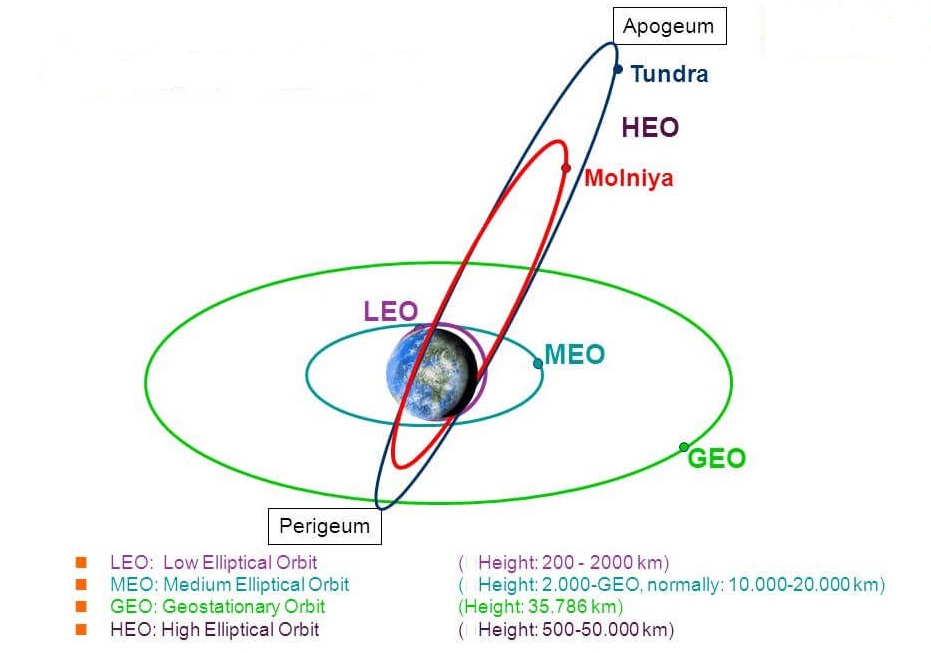
  • What is a Tundra Satellite?

    Russia has successfully placed into orbit a military satellite believed to be part of the Kremlin’s early warning anti-missile system. This launch could be delivering a Tundra satellite.

    Tundra Satellite

    • The Tundra or EKS (Edinaya Kosmicheskaya Sistema) series of satellites is the next generation of Russian early-warning satellites.
    • The development of the EKS started in 2000.
    • These satellites carry a secure emergency communications payload to be used in case of a nuclear war.
    • They are launched on Soyuz-2-1b Fregat boosters into Molniya-orbits, inclined highly elliptical 12 h orbits.

    What are Tundra Orbits?

    • A Tundra orbit is a highly elliptical geosynchronous orbit with a high inclination (approximately 63.4°), an orbital period of one sidereal day.
    • A satellite placed in this orbit spends most of its time over a chosen area of the Earth, a phenomenon known as apogee dwell.
    • It makes satellites particularly well suited for communications satellites serving high latitude regions.
    • The ground track of a satellite in a Tundra orbit is a closed figure 8 with a smaller loop over either the northern or southern hemisphere.
    • This differentiates them from Molniya orbits designed to service high-latitude regions, which have the same inclination but half the period and do not hover over a single region.

    Back2Basics: Types of Orbits

    [1] Geostationary orbit (GEO)

    • Satellites in geostationary orbit (GEO) circle Earth above the equator from west to east following Earth’s rotation – taking 23 hours 56 minutes and 4 seconds – by travelling at exactly the same rate as Earth.
    • This makes satellites in GEO appear to be ‘stationary’ over a fixed position.
    • In order to perfectly match Earth’s rotation, the speed of GEO satellites should be about 3 km per second at an altitude of 35 786 km.
    • This is much farther from Earth’s surface compared to many satellites.
    • GEO is used by satellites that need to stay constantly above one particular place over Earth, such as telecommunication satellites.
    • Satellites in GEO cover a large range of Earth so as few as three equally-spaced satellites can provide near-global coverage.

    [2] Low Earth orbit (LEO)

    • A low Earth orbit (LEO) is, as the name suggests, an orbit that is relatively close to Earth’s surface.
    • It is normally at an altitude of less than 1000 km but could be as low as 160 km above Earth – which is low compared to other orbits, but still very far above Earth’s surface.
    • Unlike satellites in GEO that must always orbit along Earth’s equator, LEO satellites do not always have to follow a particular path around Earth in the same way – their plane can be tilted.
    • This means there are more available routes for satellites in LEO, which is one of the reasons why LEO is a very commonly used orbit.
    • It is most commonly used for satellite imaging, as being near the surface allows it to take images of higher resolution.
    • Satellites in this orbit travel at a speed of around 7.8 km per second; at this speed, a satellite takes approximately 90 minutes to circle Earth.

    [3] Medium Earth orbit (MEO)

    • Medium Earth orbit comprises a wide range of orbits anywhere between LEO and GEO.
    • It is similar to LEO in that it also does not need to take specific paths around Earth, and it is used by a variety of satellites with many different applications.
    • It is very commonly used by navigation satellites, like the European Galileo system of Europe.
    • It uses a constellation of multiple satellites to provide coverage across large parts of the world all at once.

    [4] Polar Orbit

    • Satellites in polar orbits usually travel past Earth from north to south rather than from west to east, passing roughly over Earth’s poles.
    • Satellites in a polar orbit do not have to pass the North and South Pole precisely; even a deviation within 20 to 30 degrees is still classed as a polar orbit.
    • Polar orbits are a type of low Earth orbit, as they are at low altitudes between 200 to 1000 km.

    [5] Sun-synchronous orbit (SSO)

    • SSO is a particular kind of polar orbit. Satellites in SSO, travelling over the polar regions, are synchronous with the Sun.
    • This means they are synchronised to always be in the same ‘fixed’ position relative to the Sun.
    • This means that the satellite always visits the same spot at the same local time.
    • Often, satellites in SSO are synchronised so that they are in constant dawn or dusk – this is because by constantly riding a sunset or sunrise, they will never have the Sun at an angle where the Earth shadows them.
    • A satellite in a Sun-synchronous orbit would usually be at an altitude of between 600 to 800 km. At 800 km, it will be travelling at a speed of approximately 7.5 km per second.

    [6] Transfer orbits and geostationary transfer orbit (GTO)

    • Transfer orbits are a special kind of orbit used to get from one orbit to another.
    • Often, the satellites are instead placed on a transfer orbit: an orbit where, by using relatively little energy from built-in motors, the satellite or spacecraft can move from one orbit to another.
    • This allows a satellite to reach, for example, a high-altitude orbit like GEO without actually needing the launch vehicle.
    • Reaching GEO in this way is an example of one of the most common transfer orbits, called the geostationary transfer orbit (GTO).


    UPSC 2022 countdown has begun! Get your personal guidance plan now! (Click here)