💥Join UPSC 2027,2028 Mentorship (August Batch) + XFactor Notes & Microthemes PDF

Distribution: weekly

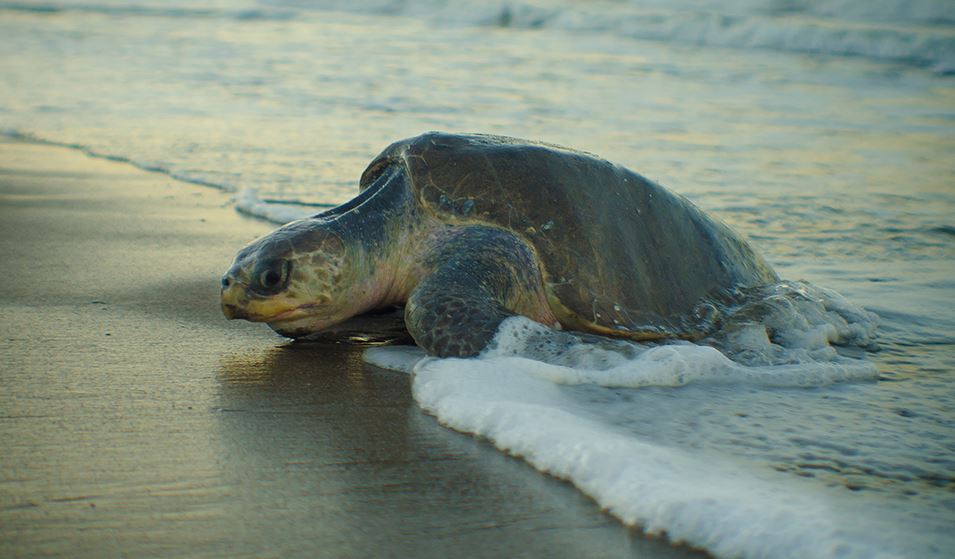
  • Operation Olivia to protect Olive Ridley Turtles

    Every year, the Indian Coast Guard’s “Operation Olivia”, initiated in the early 1980s, helps protect Olive Ridley turtles as they congregate along the Odisha coast for breeding and nesting from November to December.

    Answer this question from CSP 2012 in the comment box:

    Q.Which one of the following is the national aquatic animal of India?

    (a) Saltwater crocodile

    (b) Olive ridley turtle

    (c) Gangetic dolphin

    (d) Gharial

    Olive Ridley Turtles

    • The Olive Ridley (Lepidochelys olivacea) is listed as vulnerable under the International Union for Conservation of Nature’s Red list.
    • All five species of sea turtles found in India are included in Schedule I of the Indian Wildlife Protection Act, 1972, and in the Appendix I of the CITES, which prohibits trade in turtle products by signatory countries.
    • Odisha has also formulated laws for protecting Olive Ridley turtles, and the Orissa Marine Fisheries Act empowers the Coast Guard as one of its enforcement agencies.
    • Studies have found three main factors that damage Olive Ridley turtles and their eggs — heavy predation of eggs by dogs and wild animals, indiscriminate fishing with trawlers and gill nets, and beach soil erosion.
    • Dense fishing activity along the coasts of Andhra Pradesh, Odisha and West Bengal, especially ocean-going trawlers, mechanized fishing boats, and gill-netters pose a severe threat to turtles.

    Their habitats

    • The Olive Ridley has one of the most extraordinary nesting habits in the natural world, including mass nesting called arribadas.
    • The 480-km-long Odisha coast has three arribada beaches at Gahirmatha, the mouth of the Devi river, and in Rushikulya, where about 1 lakh nests are found annually.
    • They generally return to their natal beach, or where they were born, to lay eggs as adults.
    • Mating occurs in the offshore waters of the breeding grounds and females then come ashore to nest, usually several times during a season.
    • They crawl ashore, dig a flask-shaped nest about 1.5 to 2 foot deep, and lay 100 to 150 eggs in each clutch.
    • Hatchlings emerge from their nests together in about seven to 10 weeks.
  • Challenges in Vaccinating All

    Reoriented vaccine policy

    • The foremost challenge in vaccination in India has been a supply deficit.
    • Announcing a reoriented vaccine policy recently, the Prime Minister announced a coherent path forward.
    • Starting from June 21, the Union government will take charge of 75 per cent of the total procurement, and provide vaccines to states at no cost.
    • The government has reserved 30 crore vaccines with Hyderabad-based Biological-E by facilitating an advance payment of Rs 1,500 crore.
    • Fortnightly updates on the supply of vaccines to states are being taken to ensure transparency and efficiency in planning.

    Dealing with two complex challenges

    • Two other complex challenges that need immediate focus are vaccine hesitancy and the much-discussed digital divide in the country.

    1) Challenge of vaccine hesitancy

    • Contextualised and curated approaches are crucial.
    • The WHO has put forth the BeSD (behavioural and social drivers) vaccination model, which emphasises “motivation” as the vanguard of human psychology during a vaccination drive.
    • Vaccination coverage could be increased by incentivising and motivating citizens.
    • Unfortunately, in India, misinformation, disinformation and misplaced beliefs have led to fears about the potential harmful effects of vaccines.
    • The diversity of India necessitates community engagement at the local level to counter this narrative of misinformation.
    • A successful information campaign requires dissemination through mediums that invoke trust.
    • Local languages and dialects should be used to engage people via local radio, television channels and regional newspapers.
    • Another network that can be leveraged at the district level is that of the ASHA workers and the auxiliary nurse-midwives.
    • These are trusted local figures.

    2) Bridging the digital divide

    • It is important to introduce solutions that bridge the digital divide.
    • A toll-free helpline number 1075 has been activated for those without internet.
    • Similarly, districts can explore missed-call campaigns, which could ensure that minimal infrastructure is being optimised for processing high-volume user requests.
    • Even though the reported adverse events following immunisation stands at only 0.012 per cent, dedicated representatives can provide vaccine-related pre- and post-counselling to individuals.

    Way forward

    Startups could help bridge digital divide

    • The devastating effects of the second wave in rural areas have prompted fintech startups to enable vaccine registration.
    • PayNearby has helped over 8 lakh citizens register through its network of agents called “digital pradhans”, who are present in kirana, ration, mobile and hardware stores, frequented regularly by rural users. 

    Use points of contact for publicising benefits of vaccine and registration

    • Almost 81 crore beneficiaries, 75 per cent of whom are in rural areas, procure ration from 5,46,165 fair price shops across India.
    • There are over 11 lakh business correspondent outlets in India working mostly in rural areas to advance the mission of financial inclusion.
    • A network of around 1,54,965 post offices (as on March 2017) exists in India of which 1,39,067 are in the rural areas.
    • Such points of contact can be leveraged as dedicated units for publicising the benefits of Covid vaccines and as physical locations for vaccine registration

    Direct engagement with citizens

    • The Prime Minister recently described district officials as “field commanders” in our efforts against Covid.
    • This ambit should move beyond just the district bureaucracy to the extensive network of public services. 
    • A stellar example of direct engagement also stems from the success of the Swachh Bharat Abhiyan.
    • Direct engagement with citizens contributed greatly to the operational success of previous immunisation campaigns like the pulse polio programme.

    Consider the question “What are the factors responsible for vaccine hesitency? Suggest the ways to deal with it.”

    Conclusion

    Thinking local and utilising established networks to create culturally resonant messages is the need of the hour to reduce vaccine hesitancy, bridge the digital divide and achieve vaccine saturation.


  • Protection of ‘Heritage Trees’ in Maharashtra

    The Maharashtra government will make amendments to the Maharashtra (Urban Areas) Protection and Preservation of Trees Act of 1975, to introduce provisions for the protection of ‘heritage trees’.

    What are Heritage Trees?

    • Under the proposed amendment, a tree with an estimated age of 50 years or more shall be defined as a heritage tree.
    • It may belong to specific species, which will be notified from time to time.
    • Experts believe that in addition to the age, the state climate change department should also consider a tree’s rarity, its botanical, historical, religious, mythological and cultural importance in defining a heritage tree.
    • The local Tree Authority will have to ensure tree census to be carried out every five years along with counting of heritage trees

    How is the age of the tree determined?

    • The most common method of determining the age of the tree is Dendrochronology – or tree-ring dating also called growth rings.
    • Each year, roughly a tree adds to its girth, the new growth is called a tree ring. By counting the rings of a tree, the age can be determined.
    • However, the process is invasive. To analyse the rings, core samples are extracted using a borer that’s screwed into the tree and pulled out, bringing with it a straw-size sample of wood.
    • The hole in the tree is then sealed to prevent disease.

    Why was the concept of heritage tree introduced?

    • A heritage tree will get special protection.
    • Crucially, the tree’s age will determine the number of trees to be planted as part of the compensatory plantation – that is anyone cutting a heritage tree will need to plant trees in the same numbers as the cut tree’s age.
    • According to the current Compensatory Plantation in the state, one sapling has to be planted for each tree that is cut.
    • In Mumbai, as per the Tree Authority set up in 1976, to help in regulating the felling of trees and providing for the planting of an adequate number of new trees, the compensation ratios are 1:3.

    Changes with the amendment

    • As per the amendment, the number of trees planted will be equal to the age of the heritage tree that is cut.
    • For instance, if a 52-year-old tree is to be felled, then the party felling the tree will have to plant 52 trees in compensation, with each compensatory tree at least 6-8 ft in height at the time of planting.
    • The organization planting the compensation trees will also have to ensure the survival of the plantation for seven years and geo-tag the trees.
    • Such plantations can be carried out either in the same plot or a common amenity plot.
    • Through the introduction of a heritage tree, the state environment wants to discourage the cutting of heritage trees.
    • The amendment has the fine for illegal felling of trees from a maximum of Rs 5,000 to Rs 1 lakh per tree.

    What is the economic value of the tree?

    • In case compensatory plantation is not possible, the tree feller has to pay compensation for the economic valuation of the trees being felled.
    • While the state government has not defined the economic value of the tree, experts say that the amount of oxygen that a tree releases into the environment should determine its economic value.
    • A realistic assessment of the economic value of a tree, which may be permitted to fell, concerning its value to the environment and its longevity, about factors such as:

    the production of oxygen and carbon sequestration, soil conservation, protection of flora/fauna, its role in habitat and ecosystem integrity and any other ecologically relevant factor, distinct from timber/wood

    Tree Authority formation

    • The amendments also make room for the formation of the Maharashtra State Tree Authority and also tree authority in local civic bodies and councils.
    • The Tree Authority is tasked with “increasing the tree cover in urban areas and protecting the existing ones.” Experts shall be a part of the local tree authority.
    • Their knowledge and expertise will form the basis of decisions taken up by the authority.
    • A proposal to cut more than 200 trees of age 5 years or more, will be referred to the state tree authority.
    • The local TA will have to ensure that the project is not sub-divided into smaller parts to keep the number of trees below the defined threshold.
    • Ensure preparation of a tree plan and should aspire over the years to have 33 percent green belt in their area.
  • Delhi’s Master Plan 2041

    The Delhi Development Authority gave its preliminary approval to the draft Master Plan for Delhi 2041.

    What is the Master Plan 2041 for Delhi?

    • The draft of the Master Plan seeks to “foster a sustainable, liveable and vibrant Delhi by 2041”.
    • It includes analysis, recommendations, and proposals keeping in mind the population, economy, housing, transportation, community facilities, and land use.
    • The current master plan of Delhi — Master Plan 2021 — expires this year.
    • The first volume is an introduction, providing an overview of Delhi in present times, its global and regional positioning, estimates of population, and projections for 2041.
    • The draft MPD presents a plan for the city for the next 20 years.

    What are the main focus areas of the master plan?

    • In the housing sector, it talks about incentivizing rented accommodation by inviting private players and government agencies to invest more, keeping in mind the large migrant population.
    • It addresses parking problems and suggests a ‘user pays principle, which means users of all personal motor vehicles, except for non-motorized ones, have to pay for authorized parking facilities, spaces and streets.

    How does the master plan tackle environmental pollution?

    • The draft plan aims to minimize vehicular pollution through key strategies, including a switch to greener fuels for public transport and the adoption of mixed-use of transit-oriented development (also known as TOD).
    • It also addresses improving the quality of water, which is taken from the Yamuna river as well as various lakes, natural drains and baolis.
    • The draft lays a clear boundary of the buffer zone near the Yamuna river and explores how to develop it.
    • As per the plan, a green buffer of 300-metre width shall be maintained wherever feasible along the entire edge of the river.

    How is it different from the 2021 Master Plan?

    • The world has gone through a drastic change due to the pandemic, and the growing population has led to shrinking spaces and unemployment.
    • The 2041 plan aims to develop common community spaces to provide refuge spots, common kitchens and quarantine space in an emergency.
    • To improve the nighttime economy, the plan focuses on cultural festivals, bus entertainment, metro, sports facilities, and retail stores included in Delhi Development Authority (DDA)’s Night Life Circuit plan.
    • It also proposes to reduce vulnerability to airborne epidemics through decentralized workspaces, mandatory creation of open areas, better habitat design and green-rated developments to reduce dependence on mechanical ventilation systems.

    What challenges will its implementation face?

    • The master plan on paper looks like a perfect document for the city’s progress.
    • However, when the implementing agencies try to replicate it on the ground, they face challenges like confrontation from political wings, lack of resources and funds, corruption in different departments, lack of political and bureaucratic will and multiplicity of agencies.
    • For instance, despite talks of increasing surface parking, removing junk vehicles, imposing fines for dumping debris, garbage burning, and segregation of waste, a lot of these things could never be implemented.
    • In some cases like, increasing parking or increasing its charges, there is resistance from politicians due to vote-bank politics. In other cases, lack of funds and improper implementation mar the projects.
  • EnVision Mission to Venus

    Following NASA’s footsteps, the European Space Agency (ESA) announced that it has selected EnVision as its next orbiter that will visit Venus sometime in the 2030s.

    Last week, NASA selected two missions to the planet Venus, Earth’s nearest neighbour. The missions called DAVINCI+ and VERITAS have been selected based on their potential for scientific value and the feasibility of their development plans.

    What is EnVision?

    • EnVision is an ESA-led mission with contributions from NASA. It is likely to be launched sometime in the 2030s.
    • The earliest launch opportunity for EnVision is 2031, followed by 2032 and 2033.
    • Once launched on an Ariane 6 rocket, the spacecraft will take about 15 months to reach Venus and will take 16 more months to achieve orbit circularization.
    • The spacecraft will carry a range of instruments to study the planet’s atmosphere and surface, monitor trace gases in the atmosphere and analyses its surface composition.

    What are other such missions?

    • EnVision will follow another ESA-led mission to Venus called ‘Venus Express’ (2005-2014) that focused on atmospheric research and pointed to volcanic hotspots on the planet’s surface.
    • Other than this, Japan’s Akatsuki spacecraft has also been studying the planet’s atmosphere since 2015.

    Why are scientists interested in studying Venus?

    • At the core of the ESA’s mission is the question of how Earth and Venus evolved so differently from each other considering that they are roughly of the same size and composition.
    • Venus is the hottest planet in the solar system because of the heat that is trapped by its thick cloud cover.
    • Last year, a team of scientists reported that they had found phosphine gas (a chemical produced only through biological processes) in the atmosphere of Venus.
    • This triggered excitement in the scientific community that some life forms might be supported by the planet.
    • But the existence of life on the planet is nearly impossible given the high temperatures of Venus and its acidic atmosphere.

    Back2Basics: Venus Planet

    • For those on Earth, Venus is the second-brightest object in the sky after the moon.
    • It appears bright because of its thick cloud cover that reflects and scatters light.
    • But while Venus, which is the second closest planet to the Sun, is called the Earth’s twin because of their similar sizes, the two planets have significant differences between them.
    • For one, the planet’s thick atmosphere traps heat and is the reason that it is the hottest planet in the solar system, despite coming after Mercury, the closest planet to the Sun.
    • Surface temperatures on Venus can go up to 471 degrees Celsius, which is hot enough to melt lead.
    • Further, Venus moves forward on its orbit around the Sun but spins backwards around its axis slowly.
    • This means on Venus the Sun rises in the west and sets in the East.
    • One day on Venus is equivalent to 243 Earth days because of its backward spinning, opposite to that of the Earth’s and most other planets.
    • Venus also does not have a moon and no rings.
  • What is Fastly Internet Outage?

    Several big websites around the world went down for about half an hour because of a major issue with the content delivery network (CDN) of American cloud computing services provider Fastly.

    Global internet outage: Which websites were affected?

    • com, Reddit, Twitch, Spotify, Pinterest, Stack Overflow, GitHub, gov.uk, Hulu, HBO Max, Quora, PayPal, Vimeo and Shopify are some of the big names.
    • Prominent news websites impacted were the Financial Times, the Guardian, the New York Times, CNN, and Verge, to name some.
    • Most users would have seen a 503 error when trying to access these websites, indicating that the browser was not able to access the server.

    What is Fastly?

    • Fastly is a cloud computing services provider, which offers CDN, edge computing, cloud storage services.
    • All of its geographies, including the three stations it has in India — Chennai, Mumbai and New Delhi — were suffering from “Degraded Performance”.

    Answer this PYQ from CSP 2018:

    Q.The terms ‘WannaCry, Petya, Eternal Blue’ sometimes mentioned news recently are related to

    (a) Exoplanets

    (b) Crypto currency

    (c) Cyber attacks

    (d) Mini satellites

    What is a CDN?

    • A CDN refers to a geographically distributed group of servers that work together to provide fast delivery of Internet content.
    • They house content close to the telecom service providers’ networks.
    • Majority of web traffic across the world today is routed through CDNs.
    • Platforms such as Netflix, Facebook, Amazon — ones with large quantities of data held in global libraries — host their geographically relevant content closer to where that content is to be consumed.
    • This ensures the end customer is able to access the content faster.
    • Another reason companies rely on these CDNs is to help protect their sites against traffic spikes, distributed denial of service (DDOS) attacks, etc.
  • [pib] Aspirational Districts Programme

    In an independent appraisal report released today, United Nations Development Programme (UNDP) India has lauded the Aspirational Districts Programme (ADP) as a very successful model of local area development.

    Aspirational Districts Programme

    • Launched in January 2018, the ‘Transformation of Aspirational Districts’ initiative aims to remove this heterogeneity through a mass movement to quickly and effectively transform these districts.
    • The broad contours of the programme are Convergence (of Central & State Schemes), Collaboration (of Central, State level ‘Prabhari’ Officers & District Collectors), and Competition among districts driven by a spirit of mass Movement.
    • With States as the main drivers, this program will focus on the strength of each district, identify low-hanging fruits for immediate improvement, measure progress, and rank districts.

    Selection of districts

    • A total of 117 Aspirational districts have been identified by NITI Aayog based upon composite indicators.
    • These include Health & Nutrition, Education, Agriculture & Water Resources, Financial Inclusion and Skill Development and Basic Infrastructure which have an impact on Human Development Index.

    Weightage has been accorded to these districts as below:

    • Health & Nutrition (30%)
    • Education (30%)
    • Agriculture & Water Resources (20%)
    • Financial Inclusion & Skill Development (10%)
    • Basic Infrastructure (10%)
  • [pib] Sub-Mission on Agricultural Mechanization (SMAM)

    To empower the farmers through the Sub-Mission on Agricultural Mechanization (SMAM) scheme, the government has released funds for various activities of Farm Mechanization.

    Sub-Mission on Agricultural Mechanization (SMAM)

    • The Agri ministry has launched this mission in 2014-15 with the objectives of increasing the reach of farm mechanization to small and marginal farmers and to the regions & difficult areas where farm power availability is low.
    • Under this scheme, it has been proposed to established Village Level farm Machinery Bank (VLFMB), Custom Hiring Centres (CHC) and High Tech Hubs (HTH) in order to facilitate easy availability of farm implements and machinery for hire by farmers.

    Why need such a scheme?

    • Agricultural Mechanization plays a vital role in optimizing the use of land, water energy resources, manpower and other inputs like seeds, fertilizers, pesticides etc to maximize the productivity of the available cultivable area and make agriculture a more profitable and attractive profession for rural youth.
    • It is one of the key drivers for the sustainable development of the agriculture sector.
    • Sustainable Agriculture mechanization growth will require appropriate and precision agricultural machinery adequately supported by the latest technology.
  • What Centre must do to meet the economic challenges

    The article takes an overview of the fiscal and monetary challenges posed by the second covid wave and suggest ensuring the availability of liquidity.

    GDP projections need to be re-examined

    •  According to NSO’s provisional estimates for 2020-21, the annual contraction in real GDP turned out to be 7.3 per cent.
    • The erstwhile GDP growth projections for 2021-22 are being re-examined to take into account the adverse impact of the second wave of the pandemic.
    • The RBI has revised down its 2021-22 real GDP growth forecast to 9.5 per cent.
    • Some other recent estimates (ICRA) indicate the feasibility of a 9 per cent growth.
    •  It is also important to consider nominal GDP growth for 2021-22 since that would be a critical determinant of fiscal prospects. 
    • In the light of supply-side and cost-push pressures, the RBI has projected CPI inflation at 5.1 per cent.
    • The nominal GDP growth may be projected at 13.4 per cent, that is, 1 percentage point lower than Centre’s budget assumption of 14.4 per cent.

    Fiscal aggregates

    • The Controller General of Accounts’ data indicate a gross tax revenues (GTR) of Rs 20.2 lakh crore and net tax revenue of Rs 14.2 lakh crore for 2020-21. 
    • The likely growth in GTR for 2021-22 may be derived by applying a buoyancy of 0.9.
    • This gives a tax revenue growth of 12 per cent, translating that to projected gross and net tax revenues for 2021-22 would mean Rs 22.7 lakh crore and Rs 15.8 lakh crore respectively. 
    • This implies some additional net tax revenues to the Centre amounting to Rs 0.35 lakh crore as compared to the budgeted magnitudes.
    • The main expected shortfall may still be in non-tax revenues and non-debt capital receipts.
    • According to the CGA numbers, their 2020-21 levels are respectively Rs 2.1 lakh crore and Rs 0.57 lakh crore.
    • Applying a growth rate of 15 per cent on these, a shortfall in 2021-22 to the tune of Rs 1.3 lakh crore may arise in non-tax revenues and non-debt capital receipts.

    So, how much would be the Fiscal Deficit?

    • The growth rates of non-tax revenues and and non-debt capital receipts average to a little lower than 15 per cent during the five years preceding 2020-21.
    • In any case, the large budgeted growth of 304 per cent in non-debt capital receipts for 2021-22 seems quite unlikely because of the challenges posed by the second wave.
    • Taking into account RBI’s recently announced dividend of Rs 0.99 lakh crore to the Centre, the main shortfall may be in non-debt capital receipts.
    • Together, the overall shortfall in total non-debt receipts may be limited to about Rs 0.9 lakh crore, or 0.4 per cent of estimated nominal GDP.
    • This indicates that a slippage, if any, in the budgeted fiscal deficit of 6.7 per cent of GDP, as revised in view of the recently released GDP data, could be a limited one.

    Way forward: Prioritise three heads

    • First, an increase in the provision for income support measures for the vulnerable rural and urban population.
    • Second, in light of the recent decision, the budgeted expenditure on vaccination of Rs 0.35 lakh crore ought to be augmented, at the very least, doubled.
    • Third, additional capital expenditure for select sectors, particularly healthcare, should also be provided for.
    • Together these additional expenditures would amount to Rs 1.7 lakh crore, about 0.8 per cent of the estimated nominal GDP.
    • Thus, we need to plan for a fiscal deficit of about 7.9 per cent of GDP.

    Borrowing programme would need RBIs support

    • The Centre has announced borrowings of Rs 1.6 lakh crore to meet the shortfall in the GST compensation cess.
    • Given the higher fiscal deficit, it would need to add to its borrowing programme another Rs 2.6 lakh crore, taking the total borrowing, including GST compensation, to about Rs 16.3 lakh crore, from Rs 12.05 lakh crore now.
    • Borrowing by states would be in addition to this.
    • The net result will be an unprecedented borrowing programme by the Centre which may require RBI’s support.
    • RBI is injecting liquidity into the system through various channels.
    • Banks have sufficient liquidity to subscribe to new debt.
    • This is indirect monetisation of debt.
    • This is not new, but the scale is much higher.
    • Direct monetisation is best avoided.
    • The success of the borrowing programme of the Centre depends on the support provided by the RBI.
    • The support need not be direct.
    • It can be indirect as is currently happening. RBI is injecting liquidity into the system in a big way.
    • Despite this, the money multiplier is low.
    • This may be attributed to two reasons: Low credit expansion and larger leakage in the form of currency.
    • The potential for money supply growth is large.
    • The discussion in the monetary policy statement on inflation is focused entirely on supply availability and bottlenecks in the distribution of commodities.
    • The output gap is certainly relevant.
    • But equally relevant in an analysis of inflation is liquidity in the system, and its impact on output and prices with lags.
    • The injection of liquidity has its limits.

    Conclusion

    With higher expenditure, financed through borrowings, the impact of liquidity expansion on inflation needs to be monitored.

  • US, UK seek to sign New Atlantic Charter

    US President Joe Biden and British Prime Minister Boris Johnson seeks to sign a new Atlantic Charter.

    What is Atlantic Charter?

    • The Atlantic Charter was a statement issued on 14 August 1941 that set out American and British goals for the world after the end of World War II.
    • The charter’s adherents signed the Declaration by United Nations on 1 January 1942, which was the basis for the modern United Nations.
    • The charter inspired several other international agreements and events that followed the end of the war.
    • The dismantling of the British Empire, the formation of NATO, and the General Agreement on Tariffs and Trade (GATT) all derived from the Atlantic Charter.

    Why sign new charter?

    • At their meeting, the two leaders plan to sign what they’re calling a new Atlantic Charter, pledging to “defend the principles, values, and institutions of democracy and open societies.”
    • US hopes to reassure European allies that the US had shed the transactional tendencies of Donald Trump’s term and is a reliable partner again.
    • The US staunchly opposed the Brexit movement, the British exodus from the European Union that Mr. Johnson championed, and has expressed great concern with the future of Northern Ireland.
    • Biden once called the British leader a “physical and emotional clone” of Trump.