The European Space Agency (ESA) launched its Moonlight Lunar Communications and Navigation Services (LCNS) Programme.
About Moonlight Programme
Details
Agency
European Space Agency (ESA)
Purpose
To establish a communications and navigation infrastructure around the Moon to support future lunar missions by space agencies and private companies.
Planned Missions
Supports over 400 moon missions planned over the next 20 years.
Satellite Constellation
Deployment of 5 lunar satellites to provide communication and navigation services.
Data Transfer Range
Enables data transfer between Earth and the Moon over a distance of 400,000 km.
First Satellite
Lunar Pathfinder, a communications relay satellite built by Surrey Satellite Technology Ltd, is set to launch in 2026.
Operational Timeline
Initial services expected to begin by 2028, with full operational capability by 2030.
Primary Focus Area
Coverage around the Moon’s South Pole, an area of high interest due to favorable lighting conditions and potential water ice presence in permanently shadowed craters.
Global Collaboration
Collaboration with NASA and JAXA (Japanese Space Agency) as part of LunaNet for standardizing lunar mission communications and navigation.
Significance
– Enables over 400 lunar missions
– Supports NASA’s Artemis programme
– Provides continuous all-weather connectivity for lunar missions
– Focuses on the South Pole for ice deposits
– Reduces costs by sharing infrastructure
– Technological advancements for Mars missions (MARCONI)
Strategic Advantage
Enhances ESA’s role in global lunar exploration and contributes to the future of commercial lunar activities.
Some militants attacked workers building the Z-Morh tunnel on the Srinagar-Sonamarg highway, killing seven people.
What is the Z-Morh Tunnel?
The Z-Morh tunnel is a 6.4-kilometer tunnel located near Gagangir village, connecting the Sonamarg health resort to Kangan town in the Ganderbal district of central Kashmir.
It is part of the larger Zojila tunnel project, which aims to provide year-round road connectivity between Srinagar and Ladakh.
It is part of the Srinagar-Sonamarg-Leh highway.
It is being constructed at an altitude of over 8,500 feet.
It derives its name from the Z-shaped road stretch where it is being built.
The project was originally conceived by the Border Roads Organisation (BRO) in 2012.
A soft opening of the tunnel was held in February 2024, although the full inauguration has been delayed.
Significance of the Z-Morh Tunnel
The tunnel provides all-weather road connectivity to the Sonamarg health resort, ensuring that the popular tourist destination remains accessible year-round.
It is essential for maintaining all-weather connectivity to Ladakh, a region of strategic importance for India, particularly due to the military presence along the border with Pakistan and China.
The tunnel is strategically important for the Indian Army, as it provides quick and safe access to forward areas in Ladakh, reducing the dependence on air transport for the movement of troops and supplies.
It will also reduce expenditure on air maintenance of forward locations, thereby increasing the lifespan of Indian Air Force aircraft.
The tunnel will boost economic growth by improving accessibility to Sonamarg, thereby supporting tourism in the region.
PYQ:
[2016] Border management is a complex task due to difficult terrain and hostile relations with some countries. Elucidate the challenges and strategies for effective border management.
The Chief Justice of India unveiled a new ‘lady justice’ statue at the Supreme Court.
This new statue replaces the previous version and is clothed in a saree, holds scales in one hand, and the Indian Constitution in the other, with its eyes uncovered—symbolizing that justice sees all equally.
About the Lady Justice Statue:
Details
History
Introduced during colonial rule, becoming a common feature in Indian courthouses.
Depicted in the Calcutta High Court (1872) and the Bombay High Court, with variations in blindfold status.
Modern Depiction
In 2024, a new 6-foot statue was unveiled by the Supreme Court of India, created by Vinod Goswami.
Symbolism
Absence of the blindfold signifies that “law is not blind,” promoting the idea of equality in justice.
Origins
Traces back to Greek mythology with Themis and Roman mythology with Justitia, traditionally depicted with a blindfold, scales, and a sword.
Notable Changes
Symbolizes that “the law is not blind,” emphasizing equality in justice.
Adorned in a Saree, reflecting Indian heritage and tradition.
Holds a copy of the Indian Constitution instead of a sword, representing rights and fairness.
Continues to hold scales, emphasizing the need for balance in weighing evidence and arguments.
Breaks free from colonial influences, aligning with contemporary Indian values.
Signifies a justice system that is aware, inclusive, and rooted in constitutional principles.
Positioned in theJudges’ Library of the Supreme Court, highlighting its significance in Indian jurisprudence.
The Supreme Court stated that laws regulating institutions run by religious or linguistic minorities do not inherently violate the principle of secularism.
The CJI made this observation while hearing a challenge to the Allahabad High Court’s decision to strike down the Uttar Pradesh Board of Madrasa Education Act, 2004.
Why do we need to discuss this?
The 2004 Act regulated madrasas in Uttar Pradesh, and the High Court concluded that it violated secular principles.
It had ordered the transfer of madrasa students to regular schools, which affected nearly 17 lakh students across 16,000 madrasas in the state.
Petitioners pointed out that the High Court believed that madrasas violated Article 28 of the Constitution, which prohibits religious instruction in institutions fully funded by the State.
Key Observations made by the SC:
A law regulating a minority institution does not, by itself, violate secularism.
The CJI referred to the Hindu Religious Endowments and Charitable Institutions Act, which regulates the administration of religious institutions in many states, from Maharashtra to Tamil Nadu.
The CJI emphasized that the State has the right to legislate to improve the quality of education in government-aided minority-run institutions.
He noted that children attending madrasas need a broad-based education to learn essential subjects required to lead a proper life and become worthy citizens.
About Minority Educational Institutions in India:
Details
Constitutional Provision
Article 30(1) of the Constitution of India grants linguistic and religious minorities the right to establish and administer educational institutions of their choice.
Legislative Framework
National Commission for Minority Educational Institutions Act, 2004 safeguards the educational rights of minorities as per Article 30(1).
Definition
A “Minority Educational Institution” is defined as a college or institution established or maintained by a person or group from amongst the minorities (Section 2(g) of the Act).
Judicial Precedent
In T.M.A. Pai Foundation vs. State of Karnataka (2002), the Supreme Court ruled that minority status is determined by state demographics, not national population.
Rights of Minority Institutions
Article 29 protects the interests of minorities by allowing them to conserve their distinct language, script, or culture.
Minority institutions do not have an absolute right to appoint staff;
This was upheld in the context of the West Bengal Madrasah Service Commission Act, 2008.
Recognized Minority Communities
Muslims, Sikhs, Christians, Buddhists, Jains, and Zoroastrians (Parsis) are recognized as minority communities under the National Commission for Minorities Act of 1992.
Significance
Minority educational institutions play a crucial role in preserving the cultural and linguistic heritage of minority communities while providing access to education.
PYQ:
[2011] In India, if a religious sect/community is given the status of a national minority, what special advantages it is entitled to?
1. It can establish and administer exclusive educational institutions.
2. The President of India automatically nominates a representative of the community to Lok Sabha.
3. It can derive benefits from the Prime Minister’s 15-Point Programme.
Which of the statements given above is/are correct?
Q) Naxalism is a social, economic and developmental issue manifesting as a violent internal security threat. In this context, discuss the emerging issues and suggest a multilayered strategy to tackle the menace of Naxalism. (UPSC CSE 2022)
Q) What are the determinants of left-wing extremism in Eastern part of India? What strategy should the Government of India, civil administration and security forces adopt to counter the threat in the affected areas? (UPSC CSE 2020)
Q) Effective utilization of public funds is crucial to meet development goals. Critically examine the reasons for under-utilization and mis-utilization of public funds and their implications. (UPSC CSE 2019)
Q) Left Wing Extremism (LWE) is showing a downward trend, but still affects many parts of the country. Briefly explain the Government of India’s approach to counter the challenges posed by LWE. (UPSC CSE 2018)
Mentor’s Comment: Data indicates a decline in Naxal-related violence over the past decade, with a reported 76% decrease in incidents by 2022 compared to 2010. Yet, the ‘Naxalite’ issue in India represents a significant challenge to internal security, rooted in socio-economic disparities and historical grievances.
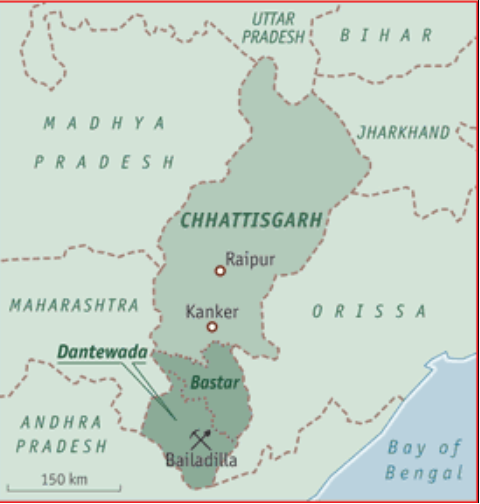
Bastar (Chattisgarh) has been a focal point of conflict due to ongoing violence between Security forces and Maoist insurgents. This conflict has led to numerous civilian casualties and widespread trauma among the local population. Without proper victims’ data/registry, many individuals suffer in silence, lacking access to necessary support and recognition.
Today’s editorial addresses the pressing need for a comprehensive victims’ register in the Bastar region, an area that is significantly affected by left-wing extremism (LWE). Today, we will study the significance of recognizing and documenting the experiences of victims to facilitate justice and rehabilitation.
_
Let’s learn!
Why in the News?
Union Home Minister has set a deadline of March 31, 2026, for the complete eradication of Naxalism in India, emphasizing the four districts of the Bastar region.
He also announced plans for a welfare scheme to support those affected by Naxal violence, aiming to assist in jobs and healthcare.
What is the purpose of the victims’ register in Bastar?
The purpose of the victims’ register in Bastar is to document and recognize individuals affected by violence, particularly those impacted by Maoist activities and state responses. This initiative aims to:
To provide formal recognition of the experiences of victims.
To enable victims and their families to receive reparations and government support inclusively ensuring no one is overlooked.
Serve as a foundation for dialogue and peace-building efforts in the region. (E.g., in Colombia).
How does the initiative draw from international examples, particularly Colombia?
The Colombian model has successfully aided in providing reparations and integrating victims (over 9 million) back into society.
The Bastar initiative seeks to establish similar mechanisms for compensating victims through financial aid, land, jobs, and healthcare support.
Mirroring Colombia’s inclusive approach that does not differentiate between types of victimization, register aims to include diverse narratives from various groups
The process in Bastar involves community participation, allowing victims to share their testimonies in local languages, akin to Colombia’s efforts to ensure that victims’ voices are heard and validated.
Colombia’s experience has been successful where such measures contributed to National unity post-conflict.
How can the government support the ‘New Peace Process’ initiative in Bastar?
Facilitating Dialogue: The government needs to actively engage in negotiations with both tribal leaders and Maoist representatives to foster an environment conducive to peace talks. For example, ‘Bastar Dialogues’ to bridge gaps between conflicting parties.
Collaborate with local organizations and community groups like the ‘Sarva Adiwasi Samaj’ to amplify grassroots efforts for peace.
Implement the Victims’ Register: Establish and maintain a comprehensive victims’ register that aligns with successful models from other countries, such as Colombia.
Enhance Rehabilitation Programs: Develop robust rehabilitation policies for both victims and surrendered like job training, education, and healthcare services tailored to their needs, ensuring they can reintegrate into society effectively.
By Monitoring the Progress: Establish mechanisms to monitor the progress of peace initiatives and community sentiments regarding the peace process, allowing for adjustments based on feedback from affected populations.
On October 17, 2024, political parties widely welcomed the Supreme Court’s decision upholding Section 6A of the Citizenship Act, addressing citizenship under the Assam Accord.
What is Section 6A?
Section 6A of the Citizenship Act, added in 1985, grants citizenship to immigrants in Assam who entered between January 1, 1966, and March 25, 1971, under the Assam Accord provisions.
What are the implications of upholding Section 6A for citizenship in Assam?
Legal Recognition of the Assam Accord: The verdict reinforces the Assam Accord’s legal status, acknowledging the cut-off date of March 25, 1971, for granting citizenship to immigrants. This solidifies the Accord’s role as a foundational legal document addressing the state’s citizenship issues.
Clarifying Citizenship Status: The ruling provides legal clarity on the citizenship status of individuals who entered Assam between January 1, 1966, and March 25, 1971. They are granted citizenship if they comply with specific conditions, while those arriving post-1971 are deemed illegal immigrants.
Impact on the NRC Process: The decision may influence the National Register of Citizens (NRC) process in Assam by determining who is eligible for inclusion. The cut-off date could guide the verification of citizenship claims, potentially affecting those at risk of being declared stateless.
How does this ruling interact with existing immigration laws and policies?
Consistency with the Foreigners Act: The ruling aligns with existing immigration policies under the Foreigners Act, where illegal immigrants are identified and potentially deported.
Implications for Deportation and Detection: The verdict mandates continued efforts to detect and deport illegal immigrants who arrived post-March 25, 1971.
This may intensify identification and deportation processes, requiring robust legal and administrative mechanisms.
Role in NRC and Citizenship Amendment Act (CAA) Debate: The ruling interacts with ongoing discussions about the CAA, which grants citizenship to non-Muslim migrants from neighboring countries who entered before December 31, 2014.
What are the broader constitutional implications of this decision?
Federalism and Regional Autonomy: The judgment upholds Assam’s unique historical and cultural context, recognizing the state’s special legal provisions under the Assam Accord.
Right to Equality and Non-discrimination: By validating different cut-off dates for citizenship determination in Assam compared to the rest of India, the ruling raises questions about equal treatment and the uniformity of laws across the country.
Judicial Endorsement of Accord-based Legislation: The ruling sets a precedent for upholding legislation based on historical accords or regional agreements.
Way forward:
Full Implementation of the Assam Accord: Ensure the complete execution of all clauses of the Accord, including detecting, deleting, and deporting illegal immigrants, while providing support to those recognized as citizens to integrate smoothly into society.
Strengthen Legal and Administrative Frameworks: Enhance the infrastructure for the NRC process, deportation mechanisms, and border management to maintain consistency in immigration policies, while addressing humanitarian concerns for affected individuals.
On October 16, 2024, the FAO said that poor households around the world lose 5% of their income each year due to heat stress and 4.4% due to floods.
About FAO:
The Food and Agriculture Organization (FAO) is indeed a specialized agency of the United Nations (UN), established to lead international efforts aimed at combating hunger and improving food security and nutrition globally.
It founded on October 16, 1945, FAO operates from its headquarters in Rome, Italy, and comprises 195 members, including 194 countries and the European Union.
Key Objectives of the Food and Agriculture Organization (FAO):
Eradicate Hunger and Malnutrition: The FAO aims to eliminate hunger, food insecurity, and malnutrition worldwide by promoting sustainable agricultural practices and increasing food availability.
Promote Sustainable Agriculture: The organization encourages sustainable management of natural resources and resilient agricultural systems to combat climate change and preserve biodiversity.
Reduce Rural Poverty: FAO works to improve the livelihoods of rural populations through economic development, social protection measures, and improved access to markets.
Enhance Food Systems: It focuses on improving food production, distribution, and consumption to ensure the global population has access to nutritious, safe, and affordable food.
Respond to Crises: The FAO assists countries in addressing food-related emergencies and building resilience against future shocks, such as natural disasters and conflicts.
Key Highlights of the Present Report by FAO:
Economic Losses from Climate Stress: The report highlighted that poor households globally lose 5% of their income due to heat stress and 4.4% due to floods annually, compared to better-off households.
Impact on Rural Poor in India: It found that rural poor households in India are affected by climate stress differently, with reduced off-farm employment opportunities during droughts, forcing them to allocate more resources to agriculture.
Structural Inequalities: The report noted that poor households’ vulnerability to climate stressors is rooted in structural inequalities, calling for policy measures such as expanding social security.
Recommendations for Livelihood Support: Suggested scaling up anticipatory social protection programs and improving off-farm employment opportunities to reduce reliance on negative coping strategies.
Gender and Employment Barriers: The report urged addressing gender disparities in non-farm employment through gender-transformative approaches to tackle discriminatory norms.
What is NITI Aayog’s Response?
Efforts to Combat Climate Change: NITI Aayog highlighted India’s proactive measures, such as the National Innovations on Climate Resilient Agriculture (NICRA) project, which supports farmers’ adaptation to severe climate conditions.
Social Safety Nets: Emphasized India’s implementation of a nationwide employment guarantee scheme and extensive food distribution efforts during the pandemic as evidence of social protection measures.
Women’s Workforce Participation: Cited data from the Periodic Labour Force Surveys showing increased female participation in the workforce, indicating progress in addressing gender issues.
Open to FAO Suggestions: Acknowledged the value of considering the FAO’s recommendations for further policy improvement while emphasizing India’s existing initiatives.
Way forward:
Strengthen Social Protection: Expand anticipatory social protection programs and climate-resilient agricultural practices to support vulnerable households, reducing income losses from climate stress.
Address Structural Inequalities: Enhance off-farm employment opportunities, tackle gender disparities, and implement policies targeting the root causes of vulnerability to climate-related risks.
On September 9-10, 2023, New Delhi hosted the G-20 Summit, where participants committed to enhancing the implementation of the UN Agenda 2030 for Sustainable Development.
How effectively is India progressing towards achieving the SDGs by 2030?
Current Status: India is classified in the “medium human development” category, with an HDI value of 0.644 and a rank of 134 out of 193 countries.
Improvement Over Time: India saw an increase of 48.4% in HDI value from 1990 (0.434) to 2022 (0.644), indicating positive long-term trends despite recent stagnation and slight declines due to factors such as the COVID-19 pandemic.
SDG Interconnections: India’s HDI dimensions directly align with several SDGs, including SDG-3 (good health), SDG-4 (quality education), and SDG-5 (gender equality). Progress in these areas is critical for achieving broader SDG targets.
Rank Improvements: From 2015 to 2022, India improved its HDI ranking by four places, while neighboring countries such as Bangladesh and Bhutan improved their rankings by 12 and 10 places, respectively, highlighting the need for India to enhance its efforts.
What are the key human development challenges that India faces?
Gender Inequality: India has one of the largest gender gaps in the Labor Force Participation Rate (LFPR), with a stark difference of 47.8 percentage points between women (28.3%) and men (76.1%). The GDI indicates significant disparities in HDI achievements between genders, which undermines development.
Income Inequality: India experiences high income inequality, with the richest 1% holding 21.7% of total income, significantly higher than many neighboring countries and above global averages. This poses a barrier to sustainable development and equitable growth.
Education and Health: The impact of the COVID-19 pandemic has negatively affected education and health sectors, leading to increased vulnerabilities among poorer and marginalized populations.
Urban-Rural Divide: There is a notable disparity in female labour force participation between rural (41.5%) and urban areas (25.4%), suggesting that urban policy initiatives may not adequately support women’s employment.
What strategies can be implemented? (Way forward)
Strengthening Gender Equality: Implement gender-transformative approaches to enhance women’s participation in the labour force and address systemic barriers. This includes policies promoting work-life balance, flexible work arrangements, and targeted skill development programs.
Enhancing Education and Skill Development: Invest in quality education, vocational training, and lifelong learning opportunities that cater to both genders, particularly in rural areas.
Promoting Social Protection: Expand social safety nets and anticipatory social protection programs that target vulnerable populations, particularly women and marginalized groups.
Reducing Income Inequality: Implement progressive taxation and wealth redistribution policies to address the concentration of income.
Multi-Stakeholder Engagement: Foster collaboration between government, civil society, and the private sector to implement sustainable development initiatives.
Mains PYQ:
Q National Education Policy 2020 isin conformity with the Sustainable Development Goal-4 (2030). It intends to restructure and reorient education system in India. Critically examine the statement. (UPSC IAS/2020)
Ukraine is currently dealing with a serious outbreak of West Nile virus (WNV), with health officials raising alarms as the death toll rises.
About West Nile Virus
Details
Virus Type
Member of the flavivirus genus, family Flaviviridae
First Isolated
1937 in a woman in the West Nile district of Uganda
Geographical Distribution
Commonly found in Africa, Europe, Middle East, North America, and West Asia
Transmission
Primarily transmitted through infected mosquito bites; mosquitoes become infected by feeding on infected birds. Can also spread through infected animal tissues.
Symptoms
– Asymptomatic: ~80% of infected individuals show no symptoms
– West Nile Fever: ~20% develop symptoms like fever, headache, fatigue, body aches, nausea, vomiting, and occasional skin rash.
Peak Infection Period
Typically spikes between June and September (summer to autumn)
Reported Outbreaks
19 countries have reported outbreaks, including Albania, Austria, Bulgaria, Croatia, Cyprus, Czechia, France, Germany, Greece, Hungary, Italy, North Macedonia, Romania, Serbia, Slovakia, Slovenia, Spain, Türkiye, and Kosovo.
Treatment
No vaccine available; supportive treatments provided for neuroinvasive WNV patients
PYQ:
[2017] Consider the following statements:
1. In tropical regions, Zika virus disease is transmitted by the same mosquito that transmits dengue.
2. Sexual transmission of Zika virus disease is possible.
Which of the statements given above is/are correct?
The Drugs Technical Advisory Board (DTAB), the highest statutory body on technical drug-related matters in India, has recommended including all antibiotics under the definition of ‘New Drugs’ in the New Drugs and Clinical Trial (NDCT) Rules, 2019.
What are ‘New Drugs’?
According to Rule 122 E of the Drugs and Cosmetics Rules, 1945, a new drug is one that:
Has not been used in the country.
Has not been recognized as effective and safe by the licensing authority.
May also be an already approved drug with modified claims such as new indications, dosages, or routes of administration.
Implications of Including Antibiotics in the New Drug Category:
If antibiotics are classified as new drugs:
Their manufacturing, marketing, and sale will be documented.
Clearance for manufacturing and marketing will need to be obtained from the Central government instead of State drug administrations.
Antibiotics will only be sold to patients on prescription.
Additional Recommendations:
The board is considering amending the labelling rules under the Drugs Rules, 1945, by adding a blue strip or box for antimicrobial products.
It has recommended that antimicrobials should not be sold to non-pharmaceutical industries unless they have the necessary licences.
About the Drugs Technical Advisory Board:
Details
Authority
Highest statutory decision-making body on technical matters related to drugs in India
Establishment
Constituted under the Drugs and Cosmetics Act, 1940
Affiliation
Part of the Central Drugs Standard Control Organization (CDSCO)
Nodal Ministry
Ministry of Health and Family Welfare
Functions
– Advises the Central and State Governments on technical matters related to the Drugs and Cosmetics Act
– Carries out functions assigned by the Act
Role of CDSCO
– Approval of drugs
– Conduct of clinical trials
– Establishing standards for drugs
– Quality control of imported drugs
– Coordination with State Drug Control Organizations
Specialized Licenses
Responsible for granting licenses for critical categories of drugs, including blood products, IV fluids, vaccines, and sera
Decision-Making
Provides expert advice and technical recommendations to ensure drug safety, efficacy, and quality
PYQ:
[2019] Which of the following are the reasons for the occurrence of multi-drug resistance in microbial pathogens in India?
Genetic predisposition of some people
Taking incorrect doses of antibiotics to cure diseases
Using antibiotics in livestock farming
Multiple chronic diseases in some people
Select the correct answer using the code given below.
(a) 1 and 2
(b) 2 and 3 only
(c) 1, 3 and 4
(d) 2, 3 and 4