In India, Ovarian Cancer ranks among top three cancers affecting women, accounting for 6.6% of all female cancer cases.
In 2022, India alone reported 47,333 new ovarian cancer cases and 32,978 deaths, emphasizing the critical need for awareness, early detection, and effective treatment.
What is Ovarian Cancer?
Details
About
Referred to as the “silent killer” due to its subtle symptoms like bloating, pelvic pain, loss of appetite, and frequent urination. Late diagnosis is common.
Common Symptoms
• Bloating
• Pelvic/abdominal pain
• Loss of appetite
• Frequent urination
• Indigestion, back pain, fatigue, and weight loss
Cancer Subtypes
• Type I tumours: Less common, early diagnosis, better prognosis
• Type II tumours: More common, aggressive, diagnosed at advanced stages
Screening
• No effective screening tests available
• CA125 blood test used post-diagnosis but not recommended for routine screening due to limited specificity
Genetic Risk Factors
• Linked to mutations in BRCA1/BRCA2 genes, increasing risk by up to 50%
• Genetic testing aids in personalized risk management
Endometriosis
• Associated with a higher risk of certain ovarian cancers, though overall risk remains low
Lifestyle Factors
• Mixed evidence regarding talcum powder usage and its potential link to ovarian cancer
• Hair products (dyes, straighteners) may increase risk, though further research is required
HRT & Genetic Counselling
• Hormone replacement therapy (HRT) is linked to a higher risk of ovarian cancer
• Genetic counselling helps at-risk individuals with preventive measures
Q Bringing out the circumstances in 2005 which forced amendment to the section 3(d) in Indian Patent Law, 1970, discuss how it has been utilized by the Supreme Court in its judgement in rejecting Novartis’ patent application for ‘Glivec’. Discuss briefly the pros and cons of the decision. (UPSC IAS/2013)
Q What do you understand by Fixed Dose drug Combinations (FDCs)? Discuss their merits and demerits. (UPSC IAS/2013)
Mentor comment:Today’s editorial highlights ongoing challenges within India’s Health Ministry regarding the implementation of necessary regulatory reforms. This topic is significant due to the critical need for effective healthcare governance, especially in light of recent public health emergencies, such as the emergence of Mpox (monkeypox) cases in India.
Following the Mpox case, the Union Health Ministry issued advisories urging states to enhance screening and contact tracing efforts. This reflects the urgent need for a robust regulatory framework to manage public health threats effectively.
The article discusses how regulatory reforms are essential for improving the responsiveness and efficiency of the health sector, particularly in crises.
_
Let’s learn!
Why in the News?
Due to the ongoing regulatory challenges, the Health Ministry has established a National Task Force to address healthcare challenges.
The stagnation in reforms and public policy efforts could hinder the government’s ability to manage current and future public health challenges effectively.
The Drugs Controller General of India (DCGI) introduced new policy initiatives in April 2024, which aimed at enhancing public health through recall guidelines, good distribution practices, and regulations against similar brand names. However, these measures are criticized for lacking legal enforcement and being poorly conceived, perpetuating a cycle of ineffective reforms.
Key highlights by the 59th Report Parliamentary Standing Committee (PSC):
Storage Standards: The issue of lack of proper standards for storage of drugs, especially during transportation was raised by the Supreme Court in Swantraj & Ors vs State Of Maharashtra (1974).
Confusing Brand Names: The issue of similar brand names for different drugs leading to prescription errors was flagged by the Court in Cadila Healthcare Limited vs Cadila Pharmaceuticals Limited (2001).
Stagnation in Reforms: Despite over a decade of discussion, these issues remain unresolved due to bureaucratic inertia.
Lack of Guidelines: Drugs ordered to be withdrawn in one State due to quality concerns were being sold in a neighboring state.
What are the challenges around Procedural implementation?
Lack of Consensus: After the PSC report, a proposal to adopt good distribution practices guidelines formulated by the WHO came up for discussion in 2013.
The distribution practices and guidelines were to be made legally binding but it faced opposition from DCC because it was difficult to implement across the estimated six lakh retail outlets in the country.
Ineffective Laws and Procedures: After receiving a rap on its knuckles from the Delhi High Court in 2019, the ministry created a rule requiring pharmaceutical companies to provide a self-declaration that their proposed brand name was not similar to any of the existing brand names in the market.
In most other countries, it is the duty of the regulator to vet the brand name, to ensure that it is not confusing or misleading from a public health perspective.
When trademark applications are filed, the Registrar of Trade Marks conducts a perfunctory “confusion analysis” that does not include a public health perspective.
Enforcement issues: In practical, the DCGI lacks the legal power to make rules that are binding and have the force of law. Only the Ministry of Health has that power under the Constitution.
Need to break the procedural loop:
With every newly appointed joint secretary, files go through with repeated consultations with stakeholders in the pharmaceutical industry.
In each of these consultations, the trade associations of pharmacies and pharmaceutical companies use every trick to stall the concrete action.
Hence, regulatory governance needs to be consistent and avoid the higher political interference.
Last week, PTI reported that the India Meteorological Department (IMD) plans to reintroduce District Agro-Meteorology Units (DAMUs) as part of the Gramin Krishi Mausam Sewa (GKMS) scheme.
Background: In 2018, the IMD set up 199 District Agro-Meteorology Units (DAMUs) in collaboration with the Indian Council of Agricultural Research to provide sub-district level agricultural advisories based on weather data. However, these DAMUs were shut down in March following an order from the IMD.
What are Agro-Meteorological Advisories?
Agro-meteorological advisories provide farmers with critical information about weather conditions that affect agricultural practices. This includes forecasts related to rainfall, temperature, and wind speeds, which are crucial for planning sowing, harvesting, irrigation, and the use of fertilizers and pesticides.
These advisories are particularly important for small and marginal farmers, who make up about 80% of India’s farming community and primarily rely on rain-fed agriculture.
The advisories are disseminated in local languages, ensuring accessibility. They are shared through various channels, including text messages, WhatsApp groups, newspapers, and direct communication from DAMU staff.
By providing timely weather information, these advisories help farmers plan their agricultural activities effectively and ultimately contribute to enhancing crop yields and farmers’ incomes.
Why Did the Government shut down the District Agro-Met Units (DAMUs)?
Agro-meteorological data was automated: The closure of DAMUs was influenced by claims from the NITI Aayog that agro-meteorological data was automated, which undermined the role of DAMU staff in preparing and disseminating agricultural advisories. This misrepresentation led to recommendations for privatization and monetization of the services previously offered for free.
Financial and Administrative Issues: The decision to shut down DAMUs was attributed to ongoing financial challenges, including delayed salary disbursements for DAMU staff, and administrative issues that hampered the program’s effectiveness.
Shift Towards Centralization: The government suggested transitioning to a centralized model for weather data collection and advisory services, which could potentially reduce the localized support that DAMUs provided to farmers.
Way forward:
Re-establish Local Support: Reinstate District Agro-Meteorology Units (DAMUs) to provide localized, targeted weather advisories and support, ensuring that small and marginal farmers receive timely, relevant information.
Improve Data Integration and Communication: Enhance the integration of automated weather data with localized advisory services, and streamline communication channels to reach farmers through various platforms effectively.
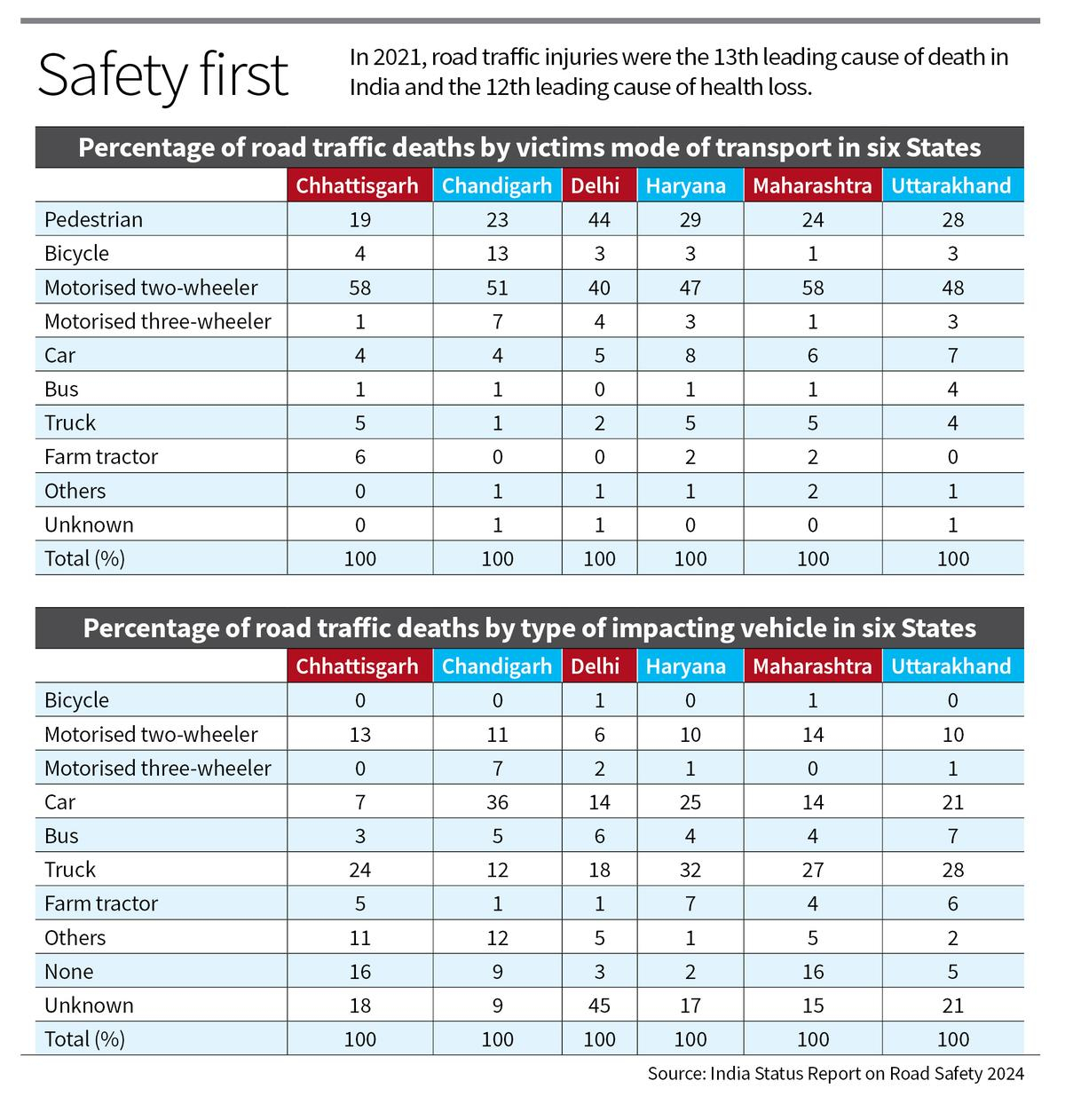
The India Status Report on Road Safety 2024 highlights India’s slow progress in reducing road fatalities and stresses the need for tailored approaches to improve road safety.
What does the ‘India Status Report on Road Safety 2024’ state?
The report highlights India’s limited success in reducing road accident fatalities, despite the country’s efforts in other sectors. The report stresses that most Indian States are not on track to meet the UN Decade of Action for Road Safety goal to halve traffic deaths by 2030.
It emphasizes the connection between road construction, mobility, and safety,
Road traffic injuries remain a significant public health challenge. In 2021, these injuries were the 13th leading cause of death and the 12th leading cause of health loss (measured in Disability-Adjusted Life Years or DALYs).
The report reveals significant disparities in road traffic death rates across Indian States, with vulnerable groups such as motorcyclists and truck-involved crashes being particularly high.
Note: The report used FIR data from six States and audits of State compliance with Supreme Court directives on road safety.
Which States have the lowest rates of road accident deaths?
West Bengal and Bihar have the lowest rates of road accident deaths, with 5.9 per 1,00,000 people in 2021
What is a crash surveillance system?
A crash surveillance system is a national-level database that records detailed data on road accidents, including specific variables like the mode of transport of victims.
India lacks such a system, with current data being aggregated from police station records, limiting the depth of analysis and effectiveness of interventions.
Implementing this system would enhance road safety management and allow for better evaluation of policy interventions.
Way forward:
Establish a National Crash Surveillance System: Implement a comprehensive database for road accidents to enable detailed analysis and improve targeted interventions for road safety. This would enhance data accuracy and guide more effective policies.
Prioritize State-Specific Road Safety Strategies: Tailor interventions to the unique challenges of each State, focusing on vulnerable road users like motorcyclists and improving safety infrastructure, such as helmet usage, traffic calming, and trauma care facilities.
A study published last week in the journal Nature revealed that India is responsible for contributing one-fifth of the world’s plastic pollution.
What did the Paris Agreement (2015) and the UN Environmental Assembly (2022) say on plastic pollution?
Paris Agreement (2015): Primarily on climate change, the Paris Agreement doesn’t directly address plastic pollution. However, the agreement encourages countries to reduce emissions and promote sustainable practices.
UN Environmental Assembly (2022): The UNEA agreed in 2022 to develop the first legally binding international treaty on plastic pollution by the end of 2024. Objectives: The treaty aims to curb plastic pollution through measures like phasing out single-use plastics.
Challenges in Implementation
Lack of Cohesive Policies: There is often a disconnect between global agreements and national policies, leading to fragmented approaches that fail to address the scale of plastic pollution effectively.
Infrastructure Deficiencies: Many countries, particularly in the Global South, lack the necessary infrastructure for waste management, leading to high levels of unmanaged plastic waste. Inadequate public servicesand resources exacerbate this situation.
Economic Dependencies: Countries reliant on plastic production for economic growth may resist regulations aimed at reducing plastic use, complicating the implementation of international agreements.
Why do we need more research on this issue?
Understanding Environmental Impact: Comprehensive studies are needed to elucidate the sources and impacts of plastic pollution, including its relationship with climate change and public health.
Informing Policy Development: Research can guide policymakers in creating effective strategies for reducing plastic waste and improving waste management systems, ensuring that solutions are tailored to specific regional challenges.
Health Implications: As microplastics increasingly infiltrate ecosystems and human bodies, understanding their health impacts is critical for public health initiatives and regulatory frameworks.
Way forward:
Strengthen Global Plastic Reduction Targets: Implement binding international commitments to reduce plastic production, particularly single-use plastics, and promote sustainable alternatives, aligning with climate goals.
Improve Waste Management Infrastructure: Prioritize investment in waste management systems, especially in the Global South, to ensure proper collection, recycling, and disposal, reducing unmanaged plastic pollution.
The 2024 edition of the India-U.S. Army bilateral exercise Yudh Abhyas has begun at the Mahajan field firing ranges in Rajasthan.
Concurrently, Phase-II of the Indian Air Force’s (IAF) largest multilateral exercise, Tarang Shakti, is underway in Jodhpur, with eight countries participating, including India.
About Exercise Yudh Abhyas
Details
Type
Bilateral joint military exercise between India and the United States
Inception Year
2004
Frequency
Annual
Primary Objective
Enhance military cooperation and joint operational capabilities, particularly focusing on counter-terrorism and counter-insurgency operations.
Location
Held alternately in India and the USA
Earlier Edition (2023)
Held at Fort Wainwright, Alaska, focusing on cold-weather operations and high-altitude warfare
Focus
Counter-terrorism operations in semi-desert and desert terrains
Urban warfare (FIBUA – Fighting in Built-Up Areas)
Participating Forces in 2024
Indian Army: 600 troops from the RAJPUT Regiment
US Army: 1-24 Battalion of the 11th Airborne Division, Alaska
Tactical Drills in 2024
Joint planning sessions
Joint responses to terrorist actions
Combined field training exercises
Significance
Reflects the growing military partnership between India and the US
Enhances interoperability and strengthens strategic defence ties
PYQ:
[2024] Which of the following statements about the Exercise Mitra Shakti-2023 is/ are correct?
This was a joint military exercise between India and Bangladesh.
It commenced in Aundh (Pune).
Joint response during counter-terrorism operations was a goal of this operation.
Mumbai-based Entod Pharmaceuticals has announced that the Drug Controller General of India (DCGI) has approved its new eye drop, PresVu, aimed at reducing the dependency on reading glasses for individuals with presbyopia.
What is Presbyopia?
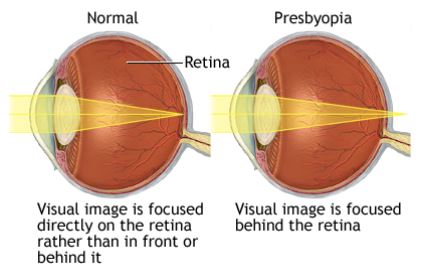
Presbyopia is an age-related condition where the eyes gradually lose the ability to focus on nearby objects, typically developing after the age of 40.
Spectacles are one of the most commonly recommended solutions for managing presbyopia.
How does PresVu work?
The active ingredient in PresVu is pilocarpine, a compound that contracts the iris muscles, controlling the size of the pupil and helping individuals focus better on nearby objects.
PresVu also uses an advanced dynamic buffer technology to adapt to the pH levels of tears, ensuring consistent efficacy and safety for extended use over the years.
However, PresVu’s effects are temporary, typically lasting between four to six hours, and it is prescription-only.
PresVu should not be used by individuals with iris inflammation.
Regular use may lead to side effects such as:
Itching and redness
Eyebrow pain
Muscle spasms in the eyes
Is this a Novel Therapy?
Although Entod claims PresVu is novel, the main compound, pilocarpine, has been available in India for decades and is commonly used as a first-line therapy for cataracts.
Pilocarpine’s ability to temporarily improve the depth of focus has been explored in other countries, including the United States, where the FDA approved a pilocarpine eye drop for presbyopia in 2021.
In India, the government regulates the ceiling price of pilocarpine in 4% and 2% concentrations, whereas PresVu contains 1.25%.
PYQ:
[2018] Appropriate local community-level healthcare intervention is a prerequisite to achieve ‘Health for All’ in India. Explain.
Q Can the strategy of regional-resource-based manufacturing help in promoting employment in India?(UPSC IAS/2019)
Q “Success of the ‘Make in India’ program depends on the success of the ‘Skill India’ programme and radical labour reforms.” Discuss with logical arguments. (UPSC IAS/2015)
Q “While we flaunt India’s demographic dividend, we ignore the dropping rates of employability.” What are we missing while doing so? Where will the jobs that India desperately needs come from? Explain (UPSC IAS/2014)
Prelims: Priority Sector Lending by banks in India constitutes the lending to: (UPSC IAS/2013) (a) Agriculture (b) Micro and small enterprises (c) Weaker sections (d) All of the above
Mentor comment: Chinese smartphone companies dominate the Indian market, holding over 50% share by 2023. Now, the Indian government aims to balance local manufacturing and Chinese investments. However, there are challenges which include the lack of a robust supply chain and ancillary industries in India. To solve this issue at this point in the geopolitical situation, complete self-reliance on smartphones is difficult in the short term period for India. On the same note, today’s editorial discusses the complex relationship between India and Chinese companies, particularly in the context of the “Make in India” initiative.
_
Let’s learn!
Why in the News?
The Indian government is considering allowing certain Chinese investments in high-tech electronics on a case-by-case basis, especially in areas like compressors, display panels, and semiconductors.
According to the International Data Corporation’s WorldwideQuarterly Mobile Phone Tracker, four of the top five best-selling smartphone brands were Chinese at the end of 2023.
The dilemma between ‘Make in India’ and China’s presence:
About ‘Make in India’ Initiative: ◉ The Make in India initiative was launched in 2014 to promote India as a global manufacturing destination. ◉ The initiative aims to increase India’s manufacturing sector’s contribution to GDP to 25% by 2025.
The ‘Make in India’ aimed to represent India’s strength in manufacturing and National pride, but the Chinese smartphone companies have emerged as significant beneficiaries of this initiative, becoming dominant players over the past decade.
The widespread use of Android smartphones in India, with a market share of about 70%, has favored Chinese brands, increasing their consumer base.
Chinese companies have navigated fluctuations in India-China relations, maintaining their market presence until the Galwan Valley incident in 2020.
Initiatives Taken for Indianization in the Economy:
By Private Players: As a contract manufacturer, Tata Electronics has emerged as a key player in the Indian smartphone manufacturing landscape by replacing Wistron (Taiwanese suppliers for Apple).
The company also aims to develop local capabilities and reduce dependency on imports by creating high-precision machinery for smartphone components.
Adaptation of Chinese Companies: Chinese smartphone companies are adapting by complying with Indian government regulations, introducing Indian distributors, and streamlining their operations.
They are teaming up with domestic manufacturers to benefit from the Production Linked Incentive (PLI) scheme and increasingly seeking equity partners to strengthen their presence in India.
Production Linked Incentive Scheme:
◉ It is a form of performance-linked incentive to give companies incentives on incremental sales from products manufactured in domestic units. It is aimed at boosting the manufacturing sector and to reduce imports. ◉ In 2021, the Government announced the PLI scheme for 13 key sectors:Auto components, Automobile, Aviation, Chemicals, Electronic systems, Food processing, Medical devices, Metals & mining, Pharmaceuticals, Renewable energy, Telecom, Textiles & apparel, and white goods. ◉ In Budget 2024-25, these incentives were extended to more sectors, such as the small and medium-sized enterprise (SME) sector to participate in the global market. A portion of incentives could be allocated for skill training and capacity building.
Challenges for complete Indianisation:
Need for Infrastructure Development: Manufacturing all smartphone components in India requires a robust supplier network, technological knowledge-sharing clusters, and improvements in power supply and workforce conditions.
Current Limitations: India currently lacks the necessary infrastructure at scale to support complete local manufacturing of smartphone components.
Technology Sharing Reluctance: Chinese companies are hesitant to share technology without clear equity arrangements, complicating the Indianisation efforts.
Way Forward:
Address Skill Gaps: Collaborate with educational institutions to ensure that the workforce is equipped with relevant skills in engineering, electronics, and automation.
Streamline Regulatory Processes: Provide clear regulatory guidelines to create a business-friendly environment that encourages investment.
Enhance Local Manufacturing Capabilities: Foster innovation and support startups in the electronics sector to create a diverse manufacturing ecosystem and reduce dependency on imports and enhance value addition in smartphone manufacturing.
Attract Foreign Investments: Continue offering incentives, subsidies, and tax breaks to attract foreign smartphone manufacturers to set up operations in India.
Primary care remains underdeveloped, while the private sector has seen significant growth in secondary and tertiary care.
What are the major necessities in Public Health?
Diseases of Poverty: This includes health issues predominantly affecting the poor and vulnerable populations, such as tuberculosis, malaria, undernutrition, maternal mortality, and illnesses caused by food and water-borne infections like typhoid and diarrheal diseases.
Addressing these needs is critical not only from a health perspective but also as a matter of human rights.
Middle-Class Health Concerns: The second category focuses on health issues related to environmental pollution, including air and water quality, waste management, and food safety.
These issues are often exacerbated by inadequate infrastructure and poor market regulations, leading to chronic illnesses and road traffic accidents.
Curative Care Needs: The most visible public health needs are those related to curative care, which is divided into three levels: primary, secondary, and tertiary care.
The poor often rely on public primary health care for affordable services, while secondary care remains historically neglected.
Tertiary care is primarily addressed through government schemes like the Pradhan Mantri Jan Arogya Yojana (PMJAY) under Ayushman Bharat, aimed at providing coverage for serious health issues.
How do the private hospitals become a real beneficiary in present times?
Limited Coverage: India’s health insurance primarily covers only hospitalisation expenses, leaving out outpatient and primary care services. This benefits private hospitals as they can monopolise high-cost medical treatments, while the larger uninsured population faces commercialised care at market rates.
Weakening of Public Health Sector: The government’s shift in focus from strengthening public sector health care to outsourcing via insurance schemes like PMJAYindicates a failure to build adequate secondary and tertiary public health services.
Threats to Public Healthcare:
Neglect of Secondary and Tertiary Care: The inadequate investment in strengthening secondary- and tertiary-level health care in the public sector, leads to a reliance on private hospitals.
Transformation of Primary Health Centres (PHCs) and Sub-centres: The conversion of sub-centres and PHCs into Health and Wellness Centres (HWCs) has undermined their original role in preventive and promotive health care.
Loss of Trust in Public Healthcare: Due to overcrowding, poor infrastructure, and inadequate funding, public health institutions are losing credibility. Coupled with the commercial interests of private providers, this creates a dual crisis of access and quality in the healthcare system.
Rebranding of Health Centres: The recent renaming of HWCs as “Ayushman Arogya Mandirs” raises concerns about cultural relevance and secularism in public health institutions, especially for non-Hindi-speaking populations, further undermining trust in the system.
Way forward:
Strengthen Public Healthcare Infrastructure: Invest in enhancing secondary and tertiary care facilities in the public sector to reduce dependence on private hospitals.
Integrate Health Insurance and Primary Care: Expand health insurance coverage to include outpatient and primary care services, and ensure that public health centers retain their focus on preventive and promotive care.
Mains PYQ:
Q Public health system has limitation in providing universal health coverage. Do you think that private sector can help in bridging the gap? What other viable alternatives do you suggest? (UPSC IAS/2015)
![[10th September 2024] The Hindu Op-ed: Regulatory reform stuck in a loop in Health Ministry](https://www.civilsdaily.com/wp-content/uploads/2024/09/10-SEP1-1568x882.jpg)
![[9th September 2024] The Hindu Op-ed: With or without Chinese companies is the question](https://www.civilsdaily.com/wp-content/uploads/2024/09/9-SEP-1-1568x882.jpg)