💥Join UPSC 2027,2028 Mentorship (July Batch) + XFactor Notes & Microthemes PDF

Distribution: yearly

  • In new: Mekedatu Project

    Why in the News?

    Karnataka CM has offered to discuss with Tamil Nadu, the implementation of Mekedatu Project across River Cauvery.

    About Mekedatu Project

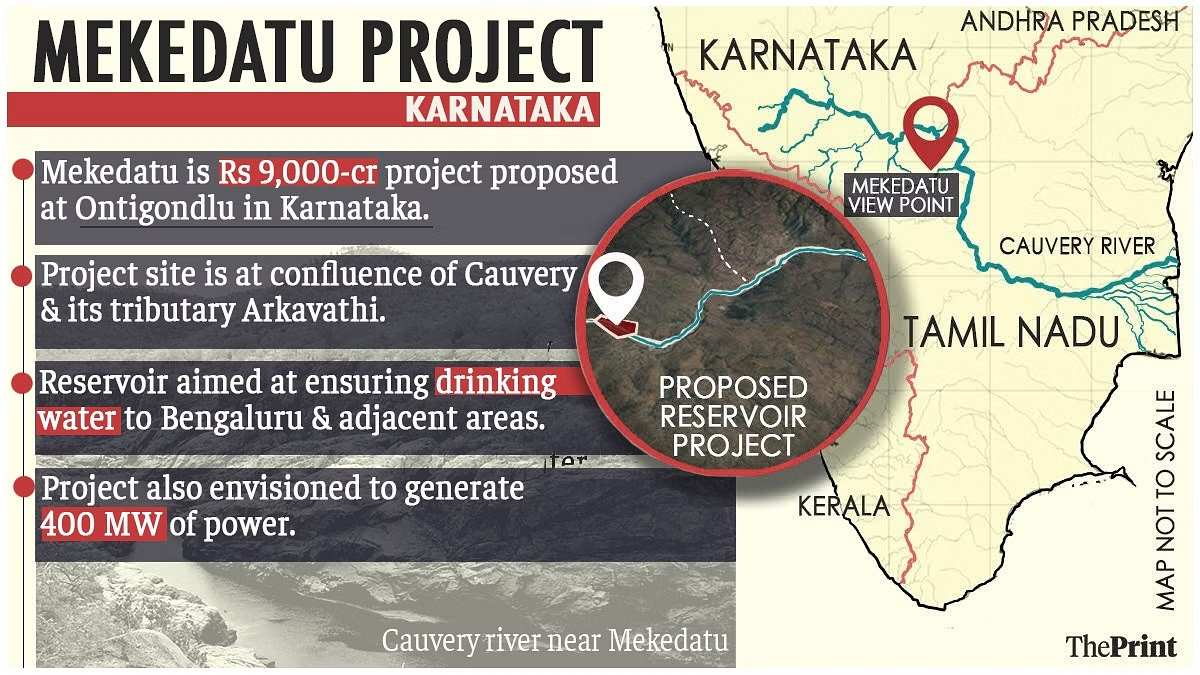
    • Mekedatu is a location along Kaveri in the border of Chamarajanagar and Ramanagara Districts in Karnataka.
    • Karnataka intends to build a reservoir across River Cauvery near Mekedatu.
    • The dam is proposed to have a capacity of 48 TMC feet (thousand million cubic) and is estimated to cost Rs 6,000 crore.
    • It was first proposed in 2003 with an intention:
      • To use the water for a hydro power station (400 MW) and
      • Supply drinking water to Bengaluru city.
    • At Mekedatu, the Kaveri runs through a deep, narrow ravine of hard granite rock.

    Tamil Nadu’s concerns over the Project

    • Tamil Nadu has all along strongly opposed the project and approached the Supreme Court as well.
    • Its argument is that any dam proposal by upper riparian states in the Cauvery basin would deprive the state’s delta farmers of their rightful share of water as per the top court verdict.
    • Tamil Nadu contends that the proposed dam violates the final award of the Cauvery Water Disputes Tribunal, which determined the water-sharing arrangements between the two states.

    About Cauvery River

    • The Cauvery River, also spelled as ‘Kaveri’ and known as ‘Ponni’ in Tamil, originates from Talakaveri in the Brahmagiri range located in Karnataka’s Kodagu district.
    • It spans approximately 800 km, traversing through the states of Karnataka and Tamil Nadu, until it eventually discharges in the Bay of Bengal.
    • The river’s catchment area covers regions in Tamil Nadu, Kerala, Karnataka, and the Union Territory of Pondicherry.
    • Key tributaries that join the Cauvery include Harangi, Hemavati, Kabini, Suvarnavathi, and Bhavani.
    • Cauvery remains perennial due to its dual reliance on both advancing and retreating monsoons for rainfall.

    Justifications and proposals by Karnataka

    • Ensuring adequate flow to TN: Karnataka argues that the construction of the Mekedatu dam will not hinder the stipulated quantum of water release to Tamil Nadu nor be utilized for irrigation purposes.
    • Allocation of funds and willingness to negotiate: The Karnataka government has earmarked Rs 1,000 crore for the project, indicating its commitment. It also expresses willingness to engage in discussions and negotiations with Tamil Nadu to address concerns and find a resolution.
    • Clearance of feasibility study: The Central Water Commission cleared a feasibility study for the Mekedatu project in 2018, providing additional support for Karnataka’s justifications and indicating the project’s viability.

    PYQ:

    [2016] Recently, linking of which of the following rivers was undertaken?

    (a) Cauvery and Tungabhadra

    (b) Godavari and Krishna

    (c) Mahanadi and Sone

    (d) Narmada and Tapti

  • Landslides in Wayanad

    Why in the News?

    Many people have died, and hundreds are feared trapped after three landslides hit Kerala’s Wayanad district.

    About Wayanad

    • Wayanad is the only plateau in Kerala, forming a continuation of the Mysore Plateau, part of the Deccan Plateau.
    • The Kabini River, a tributary of the Kaveri River, originates in Wayanad.
    • The Chaliyar River, the fourth longest river in Kerala, also originates on the Wayanad plateau.
    • Wayanad is home to the Wayanad Wildlife Sanctuary.

    Susceptibility to Landslides:

    • The region predominantly has laterite soil, which is highly prone to erosion.
    • The steep and undulating terrain of Wayanad makes it naturally susceptible to landslides.
    • Wayanad receives intense and prolonged monsoon rains that cause water infiltration, leading to soil saturation and increased pore water pressure, which destabilizes slopes.
    • Large-scale deforestation for agriculture and settlement reduces the binding capacity of the soil and its ability to absorb water, exacerbating the risk of landslides.

    What are Landslides?

    • A landslide is the downward and outward movement of materials including rock, earth, or debris down a slope due to gravitational force. Landslides are disasters of hydrogeological origin, resulting from the failure of materials falling down a slope due to gravity.
    • India is among the top five landslide-prone countries globally, with at least one death per 100 sq km reported annually due to landslides.

    Regional Distribution

    • North-western Himalayas: 66.5% of landslides.
    • North-eastern Himalayas: 18.8% of landslides.
    • Western Ghats: 14.7% of landslides.

    Key Policy Initiative: National Landslide Susceptibility Map

    • The National Remote Sensing Centre (NRSC) under ISRO released the Landslide Atlas of India in 2023.
    • This detailed guide identifies landslide hotspots across the country with a 100 sq. m resolution overview of landslide susceptibility.
    • The map highlights traditional high-risk areas and uncovers new regions of concern, broadening the scope of landslide monitoring.
    • Scientists conducted a risk assessment based on 80,000 landslides recorded between 1998 and 2022 across 147 districts in 17 states and two Union Territories, creating a “Landslide Atlas” of the country.

    Key Highlights of the Landslide Atlas:

    Top States by Landslide Events:

    • Mizoram: 12,385 events in the past 25 years.
    • Uttarakhand: 11,219 events.
    • Other states: Kerala, Jammu and Kashmir, Nagaland, Arunachal Pradesh, and Tripura.

    Districts with Maximum Landslide Exposure:

    • Arunachal Pradesh: 16 districts.
    • Kerala: 14 districts.
    • Uttarakhand and Jammu and Kashmir: 13 districts each.
    • Himachal Pradesh, Assam, and Maharashtra: 11 districts each.
    • Mizoram: 8 districts.
    • Nagaland: 7 districts.

    Highest Landslide Density and Risk Exposure:

    • Rudraprayag and Tehri Garhwal districts in Uttarakhand.

    PYQ:

    [2021] Describe the various causes and the effects of landslides. Mention the important components of the National Landslide Risk Management Strategy.

  • What is FnCas9 Enzyme?

    Why in the News?

    • Scientists from the “CSIR-Institute of Genomics and Integrative Biology” have developed an enhanced genome-editing system using FnCas9 that can modify DNA more precisely and more efficiently than existing CRISPR-based technologies.
      • CRISPR occurs naturally in some bacteria, as a part of their immune system that limits infections by recognizing and destroying viral DNA.

    What is FnCas9?

    • FnCas9 is a variant of the Cas9 enzyme derived from the bacterium Francisella novicida.
    • It is used in genome editing technologies, particularly within the CRISPR (Clustered Regularly Interspaced Short Palindromic Repeats) system, to make precise modifications to DNA sequences.

    What is CRISPR-Cas9 System?

    • CRISPR-Cas9 is a revolutionary genome-editing tool adapted from a natural bacterial defense mechanism against viruses.
    • Bacteria use CRISPR sequences to store segments of viral DNA, which helps them recognize and combat viruses in subsequent infections.
    • The most commonly used Cas9 enzyme is derived from Streptococcus pyogenes.

    Mechanism:

    • Guide RNA (gRNA): A specifically designed RNA molecule that matches the target DNA sequence.
    • Cas9 Enzyme: Acts as molecular scissors that cut DNA at a location specified by the gRNA.
    • Proto-spacer Adjacent Motif (PAM): A short DNA sequence adjacent to the target site that Cas9 must recognize and bind to in order to cut the DNA.
    • DNA Repair: Once the DNA is cut, the cell’s natural repair mechanisms either repair the break or introduce desired genetic changes.

    Applications:

    • Agriculture: Enhancing crop yield and nutritional value.
    • Healthcare: Diagnosing and treating genetic disorders.
    • Research: Studying gene functions and interactions.

    Challenges with Traditional Cas9: SpCas9 can sometimes cut DNA at unintended sites, leading to potential unintended genetic modifications.

    How FnCas9 overpowers traditional Cas9 (SpCas9)?

    • FnCas9 is known for its higher specificity in targeting DNA sequences compared to SpCas9, resulting in fewer off-target effects.
    • More accurate targeting reduces unintended genetic modifications.
    • It ensures more reliable and safer genome editing.

    Achievements by Indian Scientists

    • Scientists at the CSIR-IGIB in New Delhi have modified FnCas9 to enhance its efficiency without compromising specificity.
    • Key Modifications include:
      • Amino Acid Tinkering: Researchers modified amino acids in FnCas9 that interact with the PAM sequence to increase binding affinity.
      • Improved Binding: Enhanced binding affinity allows FnCas9 to sit more securely on the DNA, improving gene-editing effectiveness.
      • Flexibility: The enhanced FnCas9 can access and edit hard-to-reach regions of the genome.

    Experimental Results:

    • Enhanced FnCas9 cuts target DNA at a higher rate than the unmodified version.
    • FnCas9 improved ability to detect single-nucleotide changes in the genome, broadening its diagnostic and therapeutic applications.
    PYQ:

    [2019] What is Cas9 protein that is often mentioned in news?

    (a) A molecular scissors used in targeted gene editing

    (b) A biosensor used in the accurate detection of pathogens in patients

    (c) A gene that makes plants pest-resistant

    (d) A herbicidal substance synthesized in genetically modified crops

    [2016] In the context of the developments in Bioinformatics, the term ‘transcriptome’, sometimes seen in the news, refers to:

    (a) a range of enzymes used in genome editing

    (b) the full range of mRNA molecules expressed by an organism

    (c) the description of the mechanism of gene expression

    (d) a mechanism of genetic mutations taking place in cells

  • DAC approves amendment to MQ-9B UAV deal with US

    Why in the News?

    • The Defence Acquisition Council (DAC) has reviewed and approved amendments to the deal for 31 MQ-9B High Altitude Long Endurance (HALE) Unmanned Aerial Vehicles (UAVs) from General Atomics of the US.
      • The DAC also approved a proposal for the scheduled refit of aircraft carrier INS Vikramaditya later this year.

    About MQ-9B HALE UAV

    • The MQ-9B drone is a version of the MQ-9 “Reaper” and has two models: Sky Guardian and Sea Guardian.
    • It is built by the General Atomics.
    • This drone can fly over 40,000 feet high, making it useful for watching the Himalayan border areas.
    • It can stay in the air for up to 40 hours, perfect for long surveillance missions.
    • The MQ-9B has advanced features like automatic take-off and landing, a system to avoid other objects, secure GPS, and encrypted communications.
    • It can offer 80% of a manned aircraft’s capabilities at 20% of the cost per hour.
    • Deployment:
      • The MQ-9B drones are planned to be deployed at four places, including INS Rajaji near Chennai and Porbandar in Gujarat, by the Indian Navy.
      • The other two services will keep them jointly at two bases in Sarsawa and Gorakhpur in Uttar Pradesh at Air Force bases due to long runway requirements.

    Specifications of the Procurement:

    • India is looking to procure 31 MQ-9B UAVs, including 15 Sea Guardians for the Indian Navy and 16 Sky Guardians (eight each for the Indian Army and Air Force).
    • The Indian Navy has leased two MQ-9As with the maiden flight taking place on November 21, 2020.
    • The estimated cost is $3.99 billion.
    • As part of the deal, General Atomics will establish a Global Maintenance, Repair, and Overhaul (MRO) facility in India, contributing to offset obligations.

    Significance of the deal

    • The SeaGuardian model can help the Navy patrol large areas more economically than manned aircraft.
    • For the Army and Air Force, these drones will help monitor movements along the borders, especially with China.

    Back2Basics: Defence Acquisition Council (DAC)

    Details
    Constitution Established under the Defence Ministry for guiding defence procurement planning.
    Role Highest decision-making body in the Defence Ministry for new policies and capital acquisitions for the Army, Navy, Air Force, and Indian Coast Guard.
    Formation Created in 2001 following recommendations on reforming the National Security System after the Kargil War.
    Chairman Minister of Defence.
    Members Chief of Defence Staff (CDS), Minister of State for Defence, Three Service Chiefs (Army, Navy, Air Force), Chief of Integrated Staff Committees, Defence Secretary, Secretary Defence Research & Development.
    Functions
    • In-principle approval of the 15 Year Long-Term Integrated Perspective Plan for Defence Forces.
    • Accord of Acceptance of Necessity for acquisition proposals.
    • Categorize acquisition proposals into ‘Buy’, ‘Buy & Make’, and ‘Make’.
    • Decisions on offset provisions for acquisitions above Rs. 300 crores.
    • Decisions regarding the transfer of technology under the ‘Buy & Make’ category.


    PYQ:

    [2018] What is “Terminal High Altitude Area Defense (THAAD)”, sometimes seen in the news?

    (a) An Israeli radar system

    (b) India’s indigenous anti-missile programme

    (c) An American anti-missile system

    (d) A defence collaboration between Japan and South Korea

  • Specie in news: Charles Darwin’s Frog

    Why in the News?

    • The Charles Darwin frog, a species native to the Andaman Islands, is exhibiting unusual mating and egg-laying behaviors. 

    About Charles Darwin’s Frog

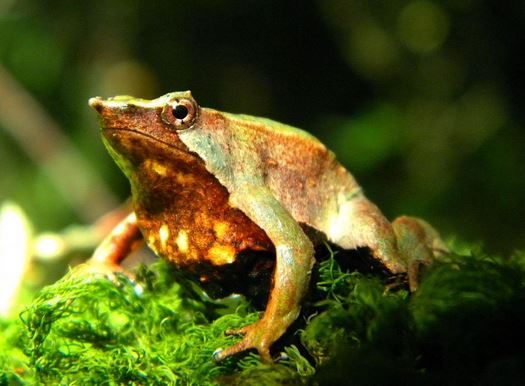
    • Charles Darwin’s frog, scientifically known as Minervarya charlesdarwini, is a frog species endemic to the Andaman Islands.
    • This species is named after the famous naturalist Charles Darwin.
    • It belongs to the family Dicroglossidae, a large group of Asian frogs with over 220 species.
    • Detailed morphological descriptions and specific physical characteristics are still being studied.
    • The species is listed as VULNERABLE on the International Union for Conservation (IUCN) Red List.

    Study and Findings:

    • The frog species engages in upside-down mating and egg-laying behavior.
    • The frogs increasingly use artificial objects, such as plastic sapling bags and discarded containers, as breeding sites.
    • This shift is likely a response to habitat loss and fragmentation, forcing the frogs to adapt to rapidly changing environments.

    PYQ:

    [2020] With reference to India’s biodiversity, Ceylon frogmouth, Coppersmith barbet, Gray-chinned minivet and White-throated redstart are:

    (a) Birds
    (b) Primates
    (c) Reptiles
    (d) Amphibians

  • Surprising ‘Dark Oxygen’ discovery could ensnarl deep-sea mining    

    Why in the News?

    Scientists reported on July 22 in Nature Geoscience that an unknown process is generating oxygen in the deep oceans, where photosynthesis is not possible due to the lack of light.

    About the recent study:

    • Discovery of Oxygen: Scientists reported an unknown process producing oxygen in the deep ocean, specifically in the abyssal zone, where photosynthesis is not feasible due to insufficient sunlight.
    • Location of Study: The study was conducted in the Clarion-Clipperton Zone, located off Mexico’s west coast, which is known for having the highest concentration of polymetallic nodules.
    • Oxygen Measurement: At a depth of 4 km, researchers observed unexpected increases in oxygen levels, sometimes tripling within two days, contrary to expectations of decreasing levels due to consumption by marine life.
    • Source of Oxygen: The researchers hypothesized that the oxygen could be generated by polymetallic nodules, which may create electric charges that split water molecules, releasing oxygen. The nodules exhibited voltages up to 0.95 V, suggesting they could function like battery cells.

    What is Deep-Sea Mining?

    • Deep-Sea Mining: It involves extracting minerals from the ocean floor at great depths, targeting resources such as polymetallic nodules, polymetallic sulphides, and cobalt-rich ferromanganese crusts.

    Economic and Strategic Importance of Deep-sea Mining:

    • Resource Potential: The Clarion-Clipperton Zone holds substantial reserves, including 6 billion tonnes of manganese, and over 200 million tonnes each of copper and nickel, making it a significant target for future mining operations.
    • International Contracts: The International Seabed Authority has granted exploration contracts to various contractors, including the Government of India, for deep-sea mining activities.

    What is Dark Oxygen?

    • “Dark oxygen” refers to the oxygen found in the deep ocean, specifically in regions where photosynthesis cannot occur due to the absence of sunlight. In such areas, known as the abyssal zone, oxygen levels are typically low and depend on global ocean circulation for replenishment.

    Impact of Deep-Sea Mining

    • Ecological Concerns:
      • Potential Damage: The recent findings highlight the potential risks of deep-sea mining to unique marine ecosystems that depend on ‘dark oxygen’. There is concern that mining could disrupt these ecosystems, leading to significant and possibly irreversible environmental impacts.
      • Historical Evidence: Previous experiments, such as the DISCOL Experiment, have shown long-term ecological damage from simulated mining activities, including reduced biodiversity and altered sedimentological profiles.
    • Industry Response and Challenges:
      • Insurance Withdrawal: In response to growing concerns, major European insurance companies announced they would exclude deep-sea mining from their underwriting portfolios.
      • Sustainability Issues: The new discovery of ‘dark oxygen’ adds complexity to the debate on deep-sea mining. If sustainable practices are not implemented, such mining could become unfeasible due to its potential negative impacts on marine ecosystems.

    Way forward: 

    • Develop Comprehensive Environmental Regulations: The Government should establish and enforce robust environmental regulations and impact assessment protocols for deep-sea mining.
    • Promote Sustainable Mining Practices: Need to invest in research and innovation to develop and implement technologies and methods that minimize environmental impact.

    Mains PYQ: 

    Q Coastal sand mining, whether legal or illegal, poses one of the biggest threats to our environment. Analyse the impact of sand mining along the Indian coasts, citing specific examples. (2019)

  • SC to examine acquitted man’s ‘Right to be Forgotten’: What is this right, and how have courts ruled earlier?    

    Why in the News?

    Last week, the Supreme Court agreed to hear a case that could define the scope of the “Right to be Forgotten” referred to in European privacy law as the “Right to Erasure” in India.

    What is the ‘Right to be Forgotten’?

    • The right to be forgotten allows individuals to remove or de-index their personal information from the internet if it infringes on their right to privacy. It is based on the principle that personal data should be removed when it is outdated, irrelevant, or no longer necessary.
    • Affirmed by the Court of Justice of the European Union (CJEU) in the “Google Spain case” (2014), which ruled that search engines must remove data if it is inadequate, irrelevant, or excessive in light of the time elapsed.
    • Under the EU’s General Data Protection Regulation (GDPR), Article 17 describes the right to erasure, reflecting the concept of informational self-determination.

    How is this ‘Right’ interpreted in India?

    • Absence of Statutory Framework: India lacks specific legislation explicitly addressing the right to be forgotten.
    • Judicial Interpretation: The 2017 Supreme Court ruling in Justice K.S. Puttaswamy v. Union of India recognized the right to privacy as a fundamental right. Justice S.K. Kaul’s concurring opinion suggested that the right to be forgotten involves removing personal data that is no longer necessary or relevant.
    • Judicial Guidelines: Justice Kaul outlined valid justifications for overriding this right, including freedom of expression, legal compliance, public interest, and research purposes.

    How have Courts ruled on the Issue?

    • Rajagopal vs. State of Tamil Nadu (1994): The Supreme Court recognized a “right to be let alone” but differentiated it from public records, including court decisions. Once something becomes public, privacy rights are diminished.
    • Dharamraj Bhanushankar Dave vs. State of Gujarat (2017): Gujarat HC refused to remove details of an acquittal, asserting that court orders should remain public.
    • The Registrar General (2017): Karnataka HC protected the name of a petitioner in a sensitive annulment case, aligning with trends in Western jurisdictions.
    • Delhi HC (2021): Extended the right to be forgotten to criminal cases, allowing details of an acquittal to be removed from search results to protect the petitioner’s career prospects.
    • Orissa HC (2020): Noted the need for a broader debate on the right to be forgotten, particularly concerning “revenge porn” and online content.

    Way forward: 

    • Legislative Framework Development: India should consider drafting comprehensive legislation that explicitly addresses the right to be forgotten, aligning with international standards while balancing privacy, freedom of expression, and public interest.
    • Judicial and Policy Clarity: The Supreme Court’s upcoming ruling should aim to establish a clear legal precedent on the right to be forgotten, ensuring consistency across lower courts and aligning with global practices.

    Mains PYQ: 

    Q Examine the scope of Fundamental Rights in the light of the latest judgement of the Supreme Court on the Right to Privacy. (2017)

  • CITES eases Export of Agarwood from India

    Why in the News?

    • India successfully prevented the inclusion of Aquilaria malaccensis (agarwood) in the Review of Significant Trade (RST) of the Convention on International Trade in Endangered Species of Wild Fauna and Flora (CITES).
      • CITES notified a new export quota for Aquilaria malaccensis from India, effective April 2024.

    What is Agarwood?

    • Agarwood (the Wood of Gods) also known as “Oud,” is a highly valuable and aromatic resinous wood produced by the Aquilaria tree.
    • The resin forms in the heartwood of the tree when it becomes infected with a particular type of mold (Phialophora parasitica).
    • This infection causes the tree to produce a dark, fragrant resin, which is highly sought after for its distinctive aroma.
    • This contains essential oils with compounds like sesquiterpenes, chromones, and phenylethyl chromone derivatives.
    • It thrives in tropical forests, at altitudes up to 1000 meters, often found in areas with high humidity and rainfall.
    • Conservation Status:
      • IUCN Status: Listed as Critically Endangered.
      • CITES: Listed in Appendix II in 1995 based on India’s proposal at CoP9 in 1994.

    Uses of Agarwood

    • It is traditionally used as incense.
    • Extracts (agarwood oil) are used in perfumes, the aroma industry, medicine, air fresheners, and purifiers.
    • Essential oil has anti-inflammatory, anti-rheumatic, analgesic, and anti-oxidant properties.
      • Agarwood cultivation is prevalent in parts of India, especially in the Northeast.
      • This development will benefit lakhs of farmers in districts of Assam, Manipur, Nagaland, and Tripura.

    What is the issue over the inclusion of ‘Agarwood’ (Aquilaria malaccensis) in the RST of the CITES list?

    • Aquilaria malaccensis was listed in Appendix II of CITES in 1995, which means its trade is controlled to avoid utilization incompatible with its survival.
    • The RST process assesses whether trade in a species is detrimental to its survival and recommends actions to ensure sustainability.
    • India’s stance was supported by a study conducted by the Botanical Survey of India (BSI), which suggested that the harvest from wild populations should be prohibited, while allowing harvest from plantations and private/community lands.

    Arguments against Inclusion in RST

    • Controlled Harvesting: India argued that it has established controlled harvesting practices, ensuring that only cultivated agarwood is used for trade.
    • Economic Impact: Inclusion in the RST could have disrupted the livelihoods of farmers and traders who depend on agarwood cultivation, particularly in the northeastern states of Assam, Manipur, Nagaland, and Tripura.
    • Sustainable Practices: The NDF indicated that the current practices in India were sustainable and that the species was being cultivated widely, reducing pressure on wild populations.

    New Export Quota

    • Establishment of Quota: CITES notified a new export quota for agarwood from India, effective from April 2024. The quota was set at 1,51,080 kg/year for agarwood chips and powder/sawdust, and 7,050 kg/year for agarwood oil.
    • Formal Trade: The absence of an export quota for a long period had led to informal trade and increased prices. The new quota aims to regulate and legalize the trade, ensuring benefits to local growers and the economy.
    [2016] With reference to ‘Red Sanders’, sometimes seen in the news, consider the following statements:

    1. It is a tree species found in a part of South India.

    2. It is one of the most important trees in the tropical rainforest areas of South India.

    Which of the statements given above is /are correct?

    (a) 1 only

    (b) 2 only

    (c) Both 1 and 2

    (d) Neither 1 nor 2

  • Himachal witnesses gradual snowfall pattern shift  

    Why in the News?

    • Himachal Pradesh is experiencing a reducing snow cover over the years.
      • There is a noticeable shift in snowfall occurrence from winter months towards early summer months.

    Findings from the Latest Study:

    • The study by the Centre on Climate Change of Himachal Pradesh Council for Science Technology-Environment (HIMCOSTE) shows an overall decrease of 12.72% in snow cover area in 2023-24 compared to 2022-23.
    • The study used Advanced Wide Field Sensor (AWiFS) satellite data to analyze snow cover trends.
    • Early winter months (October-November) showed a decrease in snow cover area except for the Ravi basin, which showed a marginal increase in October.
    • Peak winter months (December-January) saw a negative trend in snow cover area.
    • Late winter months (February-March) showed a positive trend with an increase in snow cover area in all basins compared to the previous year.
    • Snow cover area increased in April due to fresh snowfall in the early summer period.

    Impact on Water Availability

    • The decrease in snow cover during peak winter months (December and January) is especially alarming.
    • Snowfall during these months sustains longer and enhances the discharge dependability of major river basins during summer.
    • Reduced snow cover in winter could affect water availability during the summer months.

    Concerns and Implications

    • Environmentalists and scientists are concerned about the shifting snowfall patterns.
    • Depleting snow cover and changing snowfall patterns have significant impacts on hydro-power, water sources, people, livestock, forests, farms, and infrastructure.

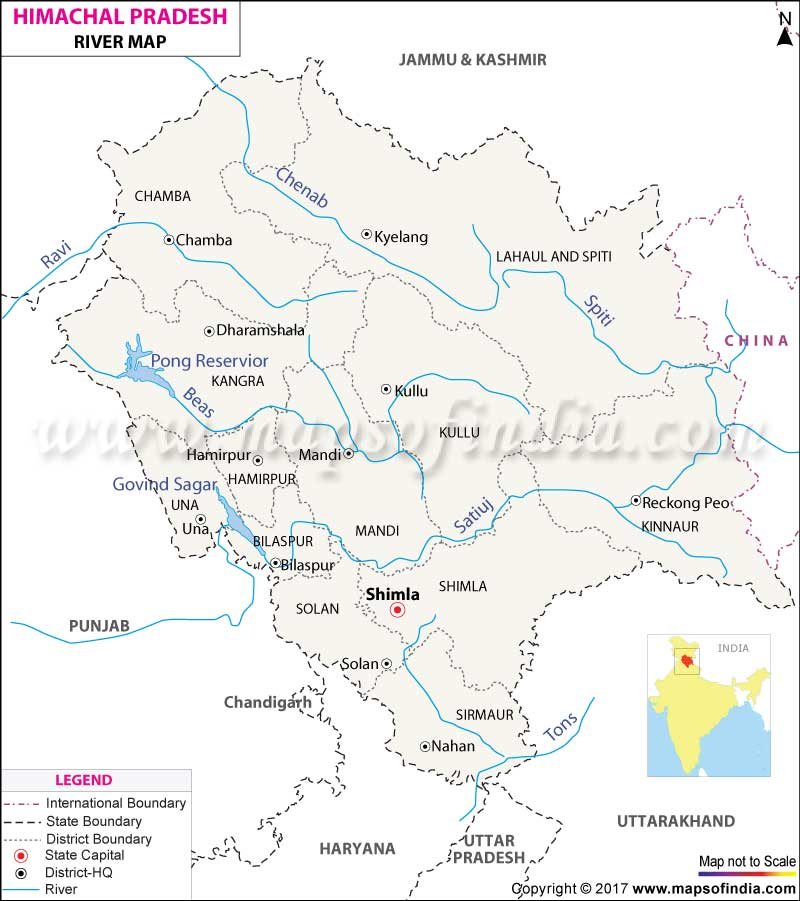
    Back2Basics: Rivers of Himachal Pradesh   

    Description
    Satluj
    • Originating from Rakas Lake in Tibet, the Satluj River is the longest river in Himachal Pradesh.
    • It flows through the districts of Kinnaur, Shimla, Kullu, Mandi, Solan, and Bilaspur, and enters Punjab near Nangal.
    • The river is crucial for hydropower generation and irrigation.
    • Hydropower Dams: Bhakra Dam (Bhakra-Nangal Project), Nathpa Jhakri Dam, Karcham Wangtoo Dam.
    • Glaciers Feeding: Rakas Lake (Tibet), Zema Glacier, Shipki La Glacier.
    Beas
    • The Beas River originates from Beas Kund near Rohtang Pass.
    • It flows through the districts of Kullu, Mandi, Hamirpur, and Kangra, eventually entering Punjab.
    • It is known for its picturesque valleys and is significant for agriculture and hydropower.
    • Hydropower Dams: Pandoh Dam, Pong Dam (Maharana Pratap Sagar).
    • Glaciers Feeding: Beas Kund Glacier.
    Ravi
    • Originating from the Bara Bhangal Glacier in the Himalayas, the Ravi River flows through the Chamba district of Himachal Pradesh.
    • It eventually enters Pakistan. The river is crucial for both hydropower and irrigation in the region.
    • Hydropower Dams: Chamera Dam (Chamera I, II, and III).
    • Glaciers Feeding: Bara Bhangal Glacier.
    Chenab
    • The Chenab River, formed by the confluence of the Chandra and Bhaga rivers, originates from the Bara Lacha Pass in Lahaul-Spiti.
    • It flows through the districts of Lahaul and Chamba before entering Jammu and Kashmir.
    • It is one of the largest rivers in terms of discharge and is vital for hydropower.
    • Hydropower Dams: No major dams within Himachal Pradesh, but significant potential for hydropower.
    • Glaciers Feeding: Bara Shigri Glacier, Miyar Glacier.
    Yamuna
    • The Yamuna River originates from the Yamunotri Glacier in the Garhwal Himalayas.
    • It forms the eastern boundary of Himachal Pradesh with Uttarakhand.
    • It is one of the most sacred rivers in India and supports major irrigation systems downstream.
    • Hydropower Dams: No significant major hydropower projects within Himachal Pradesh (major dams located downstream in Uttarakhand and Uttar Pradesh).
    • Glaciers Feeding: Yamunotri Glacier.
    Spiti
    • The Spiti River originates from the Kunzum Range and flows through the cold desert region of Spiti Valley in Himachal Pradesh.
    • It joins the Satluj River near Khab. The river is known for its stunning landscapes and unique ecosystem.
    • Hydropower Dams: No significant major hydropower projects (projects primarily focused on other rivers in the region).
    • Glaciers Feeding: Kunzum Range Glaciers.
    Parbati
    • The Parbati River originates from the Parbati Glacier in the Kullu district.
    • It is a tributary of the Beas River.
    • The river is significant for its hydropower potential and scenic beauty, attracting many trekkers and nature enthusiasts.
    • Hydropower Dams: Parbati Hydroelectric Project.
    • Glaciers Feeding: Parbati Glacier.
  • President appoints six new Governors  

    Why in the News?

    President Droupadi Murmu has appointed six new Governors and reshuffled three others.

    New appointments:

    Name New Position
    Om Mathur Governor of Sikkim
    K. Kailashnathan Lieutenant Governor of Puducherry
    Santosh Kumar Gangwar Governor of Jharkhand
    Jishnu Dev Varma Governor of Telangana
    Ramen Deka Governor of Chhattisgarh
    C.H. Vijayashankar Governor of Meghalaya
    Haribhau Kisanrao Bagde Governor of Rajasthan

    About the Office of Governor and his/her Appointment

    Details
    Role
    • Constitutional head of a state, similar to the President at the central level.
    • Exists in states, while lieutenant governors and administrators are in union territories.
    • Independent constitutional office, not subordinate to Central government.
    Articles Articles 153 to 167 in Part VI of the Constitution deal with the state executive
    Part of State Executive Consists of the Governor, Chief Minister, Council of Ministers, and Advocate General
    Borrowed Office
    • From the Government of India Act of 1935.
    • Canadian model adopted: Governor appointed by President by warrant under his hand and seal.
    Dual Role
    • Chief executive Head of the States (nominal).
    • Agent of the central government.
    Qualifications
    • Constitutional: Citizen of India, 35+ years old.
    • Conventional: Outsider to the state, President consults the Chief Minister.
    Oath
    • Administered by the Chief Justice of the state High Court (or senior-most judge available)
    • Swears to execute office faithfully, preserve the Constitution, and serve the people
    Term of Office
    • No fixed term, holds office for 5 years subject to President’s pleasure
    • Eligible for reappointment.
    • Can be transferred or hold office beyond term until successor assumes charge
    Removal
    • Can resign by addressing the President
    • Can be removed by the President at any time without specified grounds
    • Chief Justice of state high court may temporarily discharge functions in contingencies
    Additional Functions
    • Acts on advice of Chief Minister and Council of Ministers
    • Holds executive power, legislative power (to some extent), and discretionary power
    • Functions as Chancellor of state universities, where applicable
    Reforms  stipulated by Sarkaria Commission (1988)
    • Governor should be appointed by the President after consulting the Chief Minister.
    • Should be a person of eminence, not belonging to the state.
    • Should not be removed before term completion except in rare circumstances.
    • Act as a bridge between the center and state.
    • Exercise discretionary powers judiciously.


    PYQ:

    [2013] Which one of the following statements is correct?

    (a) In India, the same person cannot be appointed as Governor for two or more States at the same time

    (b) The Judges of the High Court in India are appointed by the Governor of the State just as the Judges of the Supreme Court are appointed by the President

    (c) No procedure has been laid down in the Constitution of India for the removal of a Governor from his/her post

    (d) In the case of a Union Territory having a legislative setup, the Chief Minister is appointed by the Lt. Governor on the basis of majority support.