The Union Food and Consumer Affairs Minister announced that States can now directly purchase rice from the Food Corporation of India (FCI) under the Open Market Sale Scheme (Domestic) without participating in e-auctions.
Key Announcements:
Direct Rice Purchase of Rice by the States:
States can procure rice directly from FCI at ₹2,800 per quintal (excluding transportation cost), down from the earlier rate of ₹2,900 per quintal.
Recent reports suggest that the government might reduce or discontinue the Sovereign Gold Bond (SGB) scheme due to its high cost.
Decline in Popularity of SGB:
This speculation follows the Union budget’s decision to slash customs duties on gold and silver from 15% to 6%.
The reduction in customs duties is expected to decrease demand for SGBs, which has already led to a 2-5% drop in their prices on the National Stock Exchange (NSE).
About Sovereign Gold Bonds (SGBs)
Details
Launch
2015
Nature
Government securities denominated in grams of gold.
Issued by RBI.
Objective
Reduce dependence on gold imports and shift savings from physical gold to paper form.
Eligibility
Resident in India, including individuals, HUFs, trusts, universities, and charitable institutions.
Denomination and Tenor
Denominated in multiples of grams of gold, with a basic unit of 1 gram.
Tenor of 8 years with an exit option from the 5th year on interest payment dates.
Investment Limits
Minimum: 1 gram of gold.
Maximum: 4 kg for individuals and HUFs,
20 kg for trusts and similar entities per fiscal year.
Benefits
Quantity of gold protected, receiving market price at redemption.
Eliminates storage risks and costs.
Assured market value at maturity and periodic interest.
Free from making charges and purity issues.
Held in RBI books or demat form, eliminating scrip loss risk.
Add-ons
Can be used as collateral for loans.
Loan-to-value (LTV) ratio set equal to ordinary gold loans.
PYQ:
[2016] What is/are the purpose/purposes of Government’s ‘Sovereign Gold Bond Scheme’ and ‘Gold Monetization Scheme’?
To bring the idle gold lying with Indian households into the economy
To promote FDI in the gold and jewellery sector
To reduce India’s dependence on gold imports
Select the correct answer using the codes given below:
The Health Ministry has requested the Sports Authority of India (SAI) and the Board of Control for Cricket in India (BCCI) to implement measures to prevent surrogate advertisements of tobacco and alcoholrelated products by sportspersons.
AboutSports Authority of India (SAI)
Details
Establishment
Founded in 1984 by the Ministry of Youth Affairs and Sports, Government of India
Headquarters
Jawaharlal Nehru Stadium Complex, New Delhi, India
Objectives
Promote sports and physical education
Develop sports infrastructure
Identify and nurture sports talent
Conduct coaching and training programs
Key Programs
National Sports Talent Contest Scheme (NSTC)
Special Area Games (SAG)
SAI Training Centres (STC)
Centres of Excellence (COE)
National Sports Academies (NSA)
Major Facilities
Jawaharlal Nehru Stadium, New Delhi
Indira Gandhi Stadium Complex, New Delhi
Major Dhyan Chand National Stadium, New Delhi
Netaji Subhas National Institute of Sports (NSNIS), Patiala
Notable Initiatives
Khelo India Program
Target Olympic Podium Scheme (TOPS)
Mission Olympic Cell (MOC)
About Board of Control for Cricket in India (BCCI)
Details
Establishment
Founded in December 1928
Headquarters
Cricket Centre, Wankhede Stadium, Mumbai, India
Objectives
Promote and develop cricket in India
Organize domestic and international cricket matches
Identify and nurture cricket talent
Maintain cricket infrastructure and facilities
Key Responsibilities
Selection of national cricket teams (men’s, women’s, and junior)
Organization of domestic cricket tournaments
Administration of Indian Premier League (IPL)
Conducting training and coaching programs
Major Tournaments
Indian Premier League (IPL)
Ranji Trophy
Vijay Hazare Trophy
Syed Mushtaq Ali Trophy
Duleep Trophy
Irani Cup
Funding and Support
Funded through sponsorships, broadcasting rights, and match revenues
Provides financial assistance and contracts to cricketers
Reforms
Justice Lodha Committee: Result of the report submitted by the Justice Mukul Mudgal Committee after an investigation into the 2013 IPL betting scandal.
PYQ:
[2021] Consider the following statements in respect of the ICC World Test Championship:
1. The finalists were decided by the number of matches they won.
2. New Zealand was ranked ahead of England because it won more matches than England.
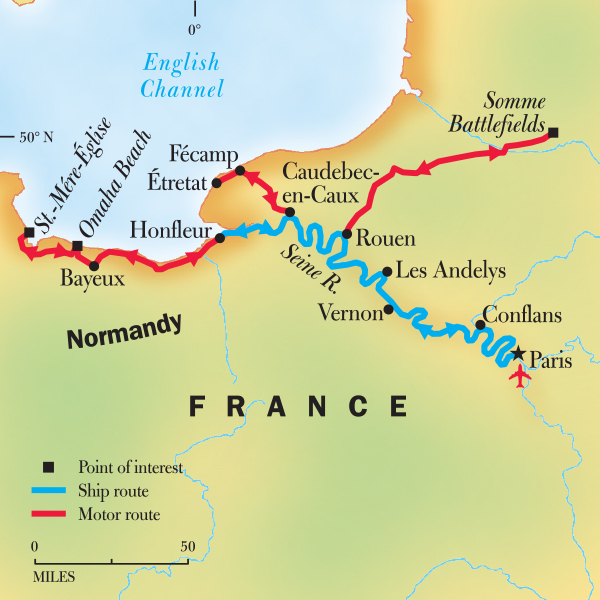
The swimming events in the ongoing Paris Olympics were postponeddue to concerns about the water quality of the River Seine.
Issues with River Seine’s Water Quality:
Old Sewage System: Paris’ aged sewage system combines rainwater and wastewater in the same pipes, leading to overflow during heavy rains.
Untreated Sewage Discharge: Overflowing pipes cause untreated sewage to be discharged directly into the Seine instead of being treated.
Wildlife Contamination: Heavy rains wash wildlife, such as rodents, into the river, adding to the contamination.
E. coli Threat: The River often has high levels of E. coli bacteria, which can cause severe gastrointestinal and urinary tract infections.
Exceeding Safe Levels: Following heavy rains, E. coli levels in the Seine frequently exceed the safe threshold of 900 colony-forming units (cfu) per 100 ml of water.
Long-term Pollution: The Seine has been historically polluted, with a swimming ban in place since 1923 due to health risks.
Health Risks: High contamination levels pose significant health risks to swimmers, including infections and illnesses.
About River Seine
Details
Country
France
Length
777 km
Major Cities Along Course
Paris, Troyes, Melun, Rouen, Le Havre
Major Tributaries
Aube, Marne, Yonne, Oise, Eure
Population in Basin
About 17 million people, including the Paris metropolitan area
Navigability
Navigable for about 560 kilometers from the estuary to Burgundy
Estuary Location
Empties into the English Channel at Le Havre and Honfleur
Estuary Type
Tidal estuary with significant tidal influence up to Rouen
Historical Significance
Central to Paris, with landmarks like Notre-Dame Cathedral, Eiffel Tower, and the Louvre along its banks
UNESCO Status
Banks of the Seine in Paris are listed as a UNESCO World Heritage Site
Economic Importance
Major waterway for commercial shipping and tourism; key ports include Paris, Rouen, and Le Havre
Recreational Activities
Popular for river cruises, boating, fishing, and walking along its banks
PYQ:
[2020] Consider the following pairs?
River: Flows into
Mekong: Andaman sea
Thames: Irish Sea
Volga: Caspian Sea
Zambezi: Indian Ocean
Which of the pairs above is/are correctly matched?
On July 31, 1940, Indian revolutionary leader Udham Singh was executed at the Pentonville prison in London for killing Michael O’Dwyer, the former lieutenant governor of Punjab.
Singh was born in Sunam in Punjab’s Sangrur district in 1899.
Political Activism
Became associated with the Ghadar Party while in the US, which was founded by Sohan Singh Bhakna in 1913 and headquartered in California.
Purpose and Actions
In 1934, Singh travelled to London to assassinate Michael O’Dwyer, the former Lieutenant Governor of Punjab during the 1919 Jallianwala Bagh massacre.
Reason for Targeting O’Dwyer
O’Dwyer had ordered Brigadier Reginald Dyer to Amritsar before the massacre, fearing a second Indian mutiny due to Hindu-Muslim unity and demonstrations.
Assassination of O’Dwyer
On March 13, 1940, Singh shot O’Dwyer at a meeting in Caxton Hall, London.
Arrest and Execution
Arrested immediately, held in Brixton prison, sentenced to death, and hanged on July 31, 1940, at Pentonville Prison.
Legacy and Recognition
Regarded as a hero for avenging the Jallianwala Bagh massacre.
Gandhi termed it an “act of insanity”.
He symbolized Hindu-Sikh-Muslim unity by adopting the name ‘RamMohamed Singh Azad’ during his trial.
Posthumous Honors
His remains were returned to India in 1974 and cremated in his village in Sunam.
His statue was installed at Jallianwala Bagh in 2018;
Udham Singh Nagar district in Uttarakhand is named after him.
PYQ:
[2014] The Ghadr (Ghadar) was a:
(a) Revolutionary association of Indians with headquarters at San Francisco.
(b) Nationalist organization operating from Singapore
(c) Militant organization with headquarters at Berlin
(d) Communist movement for India’s freedom with head-quarters at Tashkent
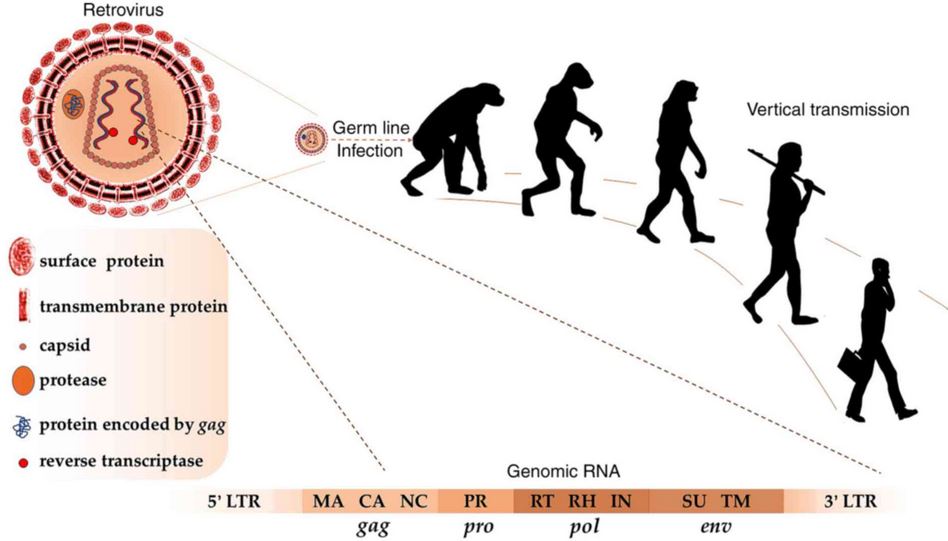
Research suggests that around 8% of the human genome is composed of Endogenous Retroviruses (ERVs) often referred to as ‘zombie’ regions.
Retroviruses and Human Genome Integration
Most viruses can’t affect the human genome, but retroviruses are an exception.
Retroviruses can integrate and reshape the genomes of their hosts.
They have an RNA genome and can reverse-transcribe it to DNA, inserting it into the host’s genome.
This process is facilitated by the enzyme reverse transcriptase.
Discovered by Howard Temin and David Baltimore in 1971, this enzyme converts the virus’s RNA into a corresponding DNA sequence.
Historical Discoveries:
Viral causes of cancer were known even before the mechanism was understood.
In 1908, Oluf Bang and Vilhelm Ellermann discovered the viral cause of chicken leukosis.
In 1957, Ludwik Gross isolated a leukaemia-causing virus in mice.
What are Endogenous Retroviruses (ERVs)?
ERVs are remnants of ancient viral infections that have integrated into the genome of the host species.
When these retroviruses infect germ cells (sperm or egg cells), their genetic material can be passed down to the next generation, becoming a permanent part of the host’s DNA.
Zombie Regions:
They refer to inactive viral sequences within the genomethat no longer produce functional viruses but remain as embedded genetic fossils.
These regions are a result of retrovirus integration that has lost its ability to replicate and produce proteins, yet they persist in the host’s DNA.
Evolutionary Significance of ERVs:
In the life cycle of a retrovirus, reverse-transcribed DNA is integrated into the host’s DNA with the help of integrase.
The viral DNA, called a provirus, hijacks human cells, turning them into virus-making factories.
Over tens of thousands of years, many retroviruses have left genomic elementsin human genome, contributing to evolutionary processes.
Example:
Syncytins are genes thought to have descended from ERVs and are crucial for placental development. These genes originally came from viruses and were acquired during mammalian evolution.
Their Contribution to Human Biology
ERVs are highly expressed in the placenta and may influence conditions like preeclampsia.
Researchers found that a particular RNA derived from an ERV is dysregulated in early-onset preeclampsia, suggesting it could be used as a biomarker for the condition.
ERVs play a role in cell-type differentiationduringembryo development.
A protein called MERVL-gag is derived from an ERV. This transition is crucial for producing pluripotent stem cells capable of forming different cell types.
Researchers also found that a human ERV element LTR10affects tumour formation in colorectal cancer.
PYQ:
[2021] Consider the following statements :
1. Adenoviruses have single-stranded DNA genomes whereas retroviruses have double-stranded DNA genomes.
2. Common cold is sometime caused by an adenovirus whereas AIDS is caused by a retrovirus.
Which of the statements given above is/are correct?
Finance Minister Nirmala Sitharaman’s decision to eliminate indexation for calculating long-term capital gains (LTCG) tax in the Union Budget has received a lukewarm response from stakeholders.
Changes in the LTCG Regime
The new LTCG regime removes the indexation benefit for property, gold, and other unlisted assets.
The LTCG tax rate is reduced from 20% to 12.5%.
For assets purchased before 2001, the fair market value as of April 1, 2001, is considered the cost of acquisition.
What is long-term capital gains (LTCG) tax?
LTCG refers to the profit realized from the sale of an asset that has been held for more than one year. This includes various types of assets such as stocks, bonds, real estate, and mutual funds.
If an asset is sold before this holding period, the gains are classified as short-term capital gains (STCG) and are taxed at different rates.
Why has the Union Finance Minister done away with indexation for computing long-term capital gains (LTCG) tax?
Simplification of Tax Computation: The Finance Minister proposed the change to “ease computation of capital gains for the taxpayer and tax administration.” The intention is to simplify the tax process.
Uniform Tax Rate: Long-term gains on all financial and non-financial assets would now be taxed at a flat rate of 12.5%, replacing the previous tiered structure.
High real estate return: The Income Tax department believes that the real estate returns (12-16% per annum) are higher than indexation for inflation (4-5%). Thus, it predicts “substantial tax savings” for a “vast majority” of taxpayers under the new system.
What is indexation?
Indexation is a mechanism used to adjust the original purchase price of an asset to account for inflation. It helps in calculating the real gains and prevents inflation from inflating the tax liability. The adjusted purchase price is called the indexed cost of acquisition.
How does Indexation help in Tax Savings?
Adjusts the purchase price for inflation: Indexation increases the original purchase price of an asset to account for inflation between the time of purchase and sale. This results in a lower taxable capital gain.
Reduces the taxable capital gains: By revising the purchase price upwards using the Cost Inflation Index, indexation reduces the difference between the sale price and purchase price. This lowers the taxable capital gains amount.
Leads to lower tax liability: With a reduced taxable capital gain, the tax payable on it also decreases. For example, on a ₹48 lakh gain from selling a house, indexation can bring down the taxable gain to ₹28.6 lakh, saving ₹4,264 in tax (assuming 20% LTCG rate).
What has been the feedback from corporates and industry regarding the move?
Concerns Over Increased Tax Liability: Many stakeholders expressed apprehension that the removal of indexation would lead to higher tax obligations for ordinary investors, particularly in the real estate sector.
There are fears that this might encourage the undervaluation of properties to reduce capital gains tax and potentially increase black money transactions in real estate.
Mixed Reactions from Realty Players: While some real estate developers and consultants indicated that the removal of indexation might not significantly impact demand and prices, especially for primary home buyers, they noted that high-end properties could see a drop in demand.
Some developers viewed the changes positively and said that the lowered tax rate (from 20% to 12.5%) could make real estate a more attractive long-term investment.
Government Justifications and Clarifications: The government has argued that the new tax regime simplifies the capital gains tax structure and is beneficial for most taxpayers.
Way forward:
Transitional Provisions: Govt. should implement transitional provisions for existing investments to ease the shift from the old system to the new one.
Strengthen the monitoring system: Need to strengthen monitoring mechanisms to prevent the undervaluation of properties and reduce black money transactions.
Mains PYQ:
Q Comment on the important changes introduced in respect of the Long-term Capital Gains Tax (LCGT) and Dividend Distribution Tax (DDT) in the Union Budget for 2018-2019. (UPSC IAS/2018)
Mains: Q1 Has digital illiteracy, particularly in rural areas, coupled with lack of Information and Communication Technology (ICT) accessibility hindered socio-economic development? Examine with justification. (UPSC IAS/2021)
Q2 What do understand by the concept “freedom of speech and expression”? Does it cover hate speech also? Why do films in India stand on a slightly different plane from other forms of expression? Discuss. (UPSC IAS/2014)
Note4Students:
Mains: Issues related to Broadcasting Regulation Bill, 2024;
Mentor comments: Could Dhruv Rathee and Ravish Kumar’s YouTube videos have swayed voter preferences in the 2024 general election? This question arises in the context of a Union government that anticipated a return to power with a larger majority but instead was re-elected as a coalition with a reduced mandate. Recognizing a threat to its authority, the government seeks to undermine digital creators through the Broadcasting Regulation Bill, 2024. Data from two CSDS-Lokniti surveys reveal that 29% of voters consume political content daily on digital platforms, suggesting a shift towards a “content election” where digital media increasingly challenges traditional television news.
Let’s learn!
__
Why in the News?
The Broadcasting Bill, 2024 exhibits clear characteristics of a digital authoritarianism initiative aimed at controlling online narratives.
Recent changes Convergence of IT and broadcasting ministries:
Ashwini Vaishnaw remains the Minister for Electronics and Information Technology (MeitY) and has also been given the Ministry of Information and Broadcasting (MIB) portfolio. This reflects a growing convergence and interest of these ministries in controlling digital content.
Key highlights of the Bill
Expanded Definition of Broadcasters: The Bill classifies individual commentators as “Digital News Broadcasters” and content creators as “OTT Broadcasters.”
This allows the Ministry of Information and Broadcasting (MIB) to set and modify thresholds for subscribers or users, mandating registration for those who meet these criteria, thus significantly broadening government oversight over digital media.
New Compliance Requirements: The Bill introduces additional compliance measures for online platforms, establishing a new safe harbor regime separate from the Information Technology Act, 2000.
It enables the MIB to enforce censorship and require platforms like YouTube to implement specific compliance measures entities.
Expanding legal powers for censorship: A formal legal basis for this censorial partnership was established through the IT Rules, 2021 which expanded MeitY’s powers, including a traceability mandate compromising end-to-end encryption.
The rules also granted the MIB new powers to require registration and block digital news media and online entertainment streaming apps. The MIB has publicly disclosed enforcement action only when it aligns with nationalistic themes fitting its political interests.
Creation of an Autocratic Weapon for Digital Censorship
Expansion of IT Rules: Following the inadequacies of the IT Rules, 2021, the Union Government expanded its powers twice in 2023, first by establishing Grievance Appellate Committees (GACs) to handle appeals regarding digital content and then by amending the IT Rules to allow the government to remove content deemed “fake, false, and misleading.“
Broadcasting Services (Regulation) Bill, 2023: The introduction of this bill is seen as a significant step towards increased government control over digital content.
If passed, it would require online creators, such as those on YouTube and Instagram, to register and operate under the Ministry of Information and Broadcasting (MIB), effectively granting the government unprecedented authority over digital expression.
Concerns Over Transparency and Accountability: Critics argue that the Broadcasting Bill, 2023, and its subsequent version, the Broadcasting Services (Regulation) Bill, 2024, would enhance government powers while reducing transparency and accountability. This could lead to an erosion of fundamental rights, particularly freedom of expression.
Secrecy and Lack of Public Access: The latest draft of the Broadcasting Bill, 2024, has not been made public, and access has been restricted to select stakeholders under stringent conditions.This secrecy contradicts the government’s own Pre-Legislative Consultation Policy, raising concerns about the democratic process and public participation in law-making.
Way forward:
The government should adhere to its own Pre-Legislative Consultation Policy and make the latest draft of the Broadcasting Services (Regulation) Bill, 2024, publicly accessible to allow for meaningful public participation and scrutiny.
Processes should be put in place to ensure transparency in the decision-making process of the Grievance Appellate Committees (GACs) and the enforcement actions taken by the Ministry of Information and Broadcasting (MIB).
Legal insights from well-structured think tanks can be crucial in clarifying the true intent of specific legislation for the government.
Scope to Review the Process of Legal Consultancy
Need for Structured Legal Inputs: The handling of legal issues by the National Democratic Alliance has been inadequate. There is a need for continuous, informed, and empirically valid legal inputs from structured think tanks to clarify legislative intents.
Proposal for a Legal Advisory Council (LAC): Establishing a LAC akin to the Economic Advisory Council could provide the Prime Minister with timely legal analysis and insights, helping to preempt legal challenges and enhance the legislative process.
Need of Think Tank:
Expert Legal and Policy Analysis: Well-structured think tanks provide informed and empirical legal analysis that can enhance the legislative process.
Facilitation of Evidence-Based Decision Making: Think tanks can contribute to evidence-based decision-making by conducting research and providing data-driven insights on complex legal and social issues.
Recent Legal Issues and the Puttaswamy Case Judgment
Electoral Bonds Scheme: The Supreme Court recently ruled the electoral bonds scheme unconstitutional for violating voters’ right to information. This decision highlights the importance of conducting proportionality tests before implementing laws to balance privacy rights with transparency.
Aadhaar Act Intervention: A similar legal examination prior to the implementation of the Aadhaar Act could have prevented the Supreme Court’s intervention in the K.S. Puttaswamy v. Union of India case, which addressed privacy concerns.
Transporter Strike: Concerns over the hit-and-run provisions in the Bharatiya Nyaya Sanhita, 2023, led to nationwide protests by transporters, indicating the need for thorough legal viability assessments before introducing potentially problematic legislation.
Anticipating Challenges
Proactive Legal Analysis: The proposed LAC would conduct legal analyses of issues referred by the government and perform suo motu research on contemporary legal matters, allowing for proactive identification of potential legal challenges.
Engagement with National Law Universities: Leveraging the expertise of national law universities can enhance the legal consultancy process, ensuring that laws are constitutionally viable and socially acceptable. Regular research inputs from these institutions can aid in formulating better legislation and addressing legal challenges before they escalate.
Way forward:
The LAC should comprise legal experts, eminent jurists, academicians, and researchers with specializations in various fields frequently legislated upon by the government, such as criminal law, trade law, international law, business laws, and taxation laws.
Establish formal mechanisms for collaboration, such as the Committee for Reforms in Criminal Laws at the National Law University Delhi set up by the Ministry of Home Affairs, to facilitate the exchange of ideas and research between the government and academia.
The NPPA monitors the prices of scheduled as well as non-scheduled medicines under Drugs (Prices Control) Order, 2013 (DPCO, 2013), informed the Union Minister of State for Chemicals and Fertilizers.
What are Scheduled and Non-Scheduled Formulations?
[A] Scheduled Formulations:
Defined as formulations listed in Schedule-I of the Drugs (Prices Control) Order, 2013 (DPCO, 2013).
Ceiling prices of these formulations are revised annually based on the Wholesale Price Index (WPI) for the preceding calendar year.
National Pharmaceutical Pricing Authority (NPPA) is responsible for revising and notifying these prices.
[B] Non-Scheduled Formulations:
Defined as formulations not included in Schedule-I of the DPCO, 2013.
Prices of these formulations can be increased by manufacturers, but the Maximum Retail Price (MRP) cannot be increased by more than 10% during the preceding 12 months.
NPPA also monitors the prices of non-scheduled formulations to ensure compliance.
Action is taken against companies selling formulations at prices higher than permissible, and overcharged amounts are recovered.
About National Pharmaceutical Pricing Authority (NPPA)
NPPA was set up as an independent regulator on August 29, 1997, for drug pricing and ensuring affordable access to medicines.
It is an attached office of the Department of Pharmaceuticals (DoP), Ministry of Chemicals & Fertilizers.
NPPA is not a Statutory or Constitutional Body.
It is responsible for implementing and enforcing the provisions of the DPCO.
Functions of NPPA:
Fixation and revision of prices of ‘Scheduled’ drugs under Drug (Price Control) Orders.
Scheduled drugs (15% of the pharma market) are allowed an increase based on WPI.
Non-scheduled drugs (85% of the pharma market) are allowed an automatic 10% increase annually.
Monitoring and enforcement of drug prices.
Ensuring availability and accessibility of all medicines and medical devices, including non-scheduled drugs.
Undertaking or sponsoringstudies on drug pricing.
Collecting and maintaining data on production, exports, imports, market share, and profitability of pharmaceutical companies.
Advising the Central Government on changes or revisions in drug policy.
Back2Basics:Drugs (Prices Control) Order (DPCO)
The DPCO is an order issued by the Government of India under Sec. 3 of Essential Commodities Act, 1955 to regulate the prices of drugs.
The Order provides the list of price controlled drugs, procedures for fixation of prices of drugs, method of implementation of prices fixed by Govt., penalties for contravention of provisions etc.
Under the provisions of DPCO 2013, only the prices of drugs that figure in the National List of Essential Medicines (NLEM) are monitored and controlled by the regulator, the National Pharmaceutical Pricing Authority.
Essential medicines are those that satisfy the priority healthcare needs of the majority of the population.
PYQ:
[2019] How is the Government of India protecting traditional knowledge of medicine from patenting by pharmaceutical companies?
![[31st July 2024] The Hindu Op-ed: A Licence Raj for digital content creators](https://www.civilsdaily.com/wp-content/uploads/2024/07/31-july-1568x882.jpg)