💥Join UPSC 2027,2028 Mentorship (July Batch) + XFactor Notes & Microthemes PDF

Distribution: yearly

  • Niger struggles with Security, Economic Crises

    Why in the News?

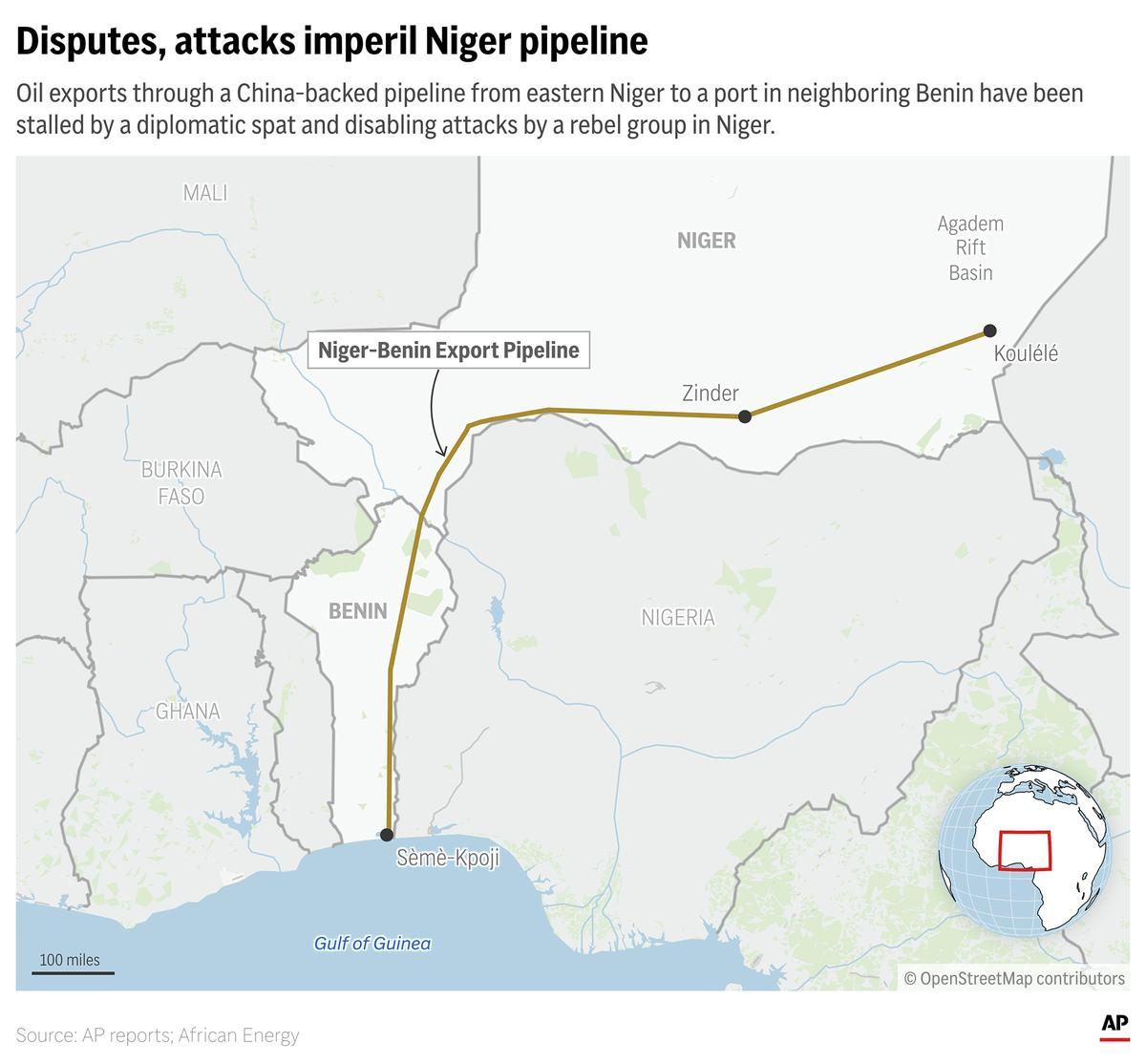
    • The China-backed Niger-Benin Export Pipeline that would make Niger an oil-exporting country is being threatened by an internal security crisis and a diplomatic dispute with neighboring Benin.
      • These issues arose after last year’s coup that toppled Niger’s democratic government.

    About Niger

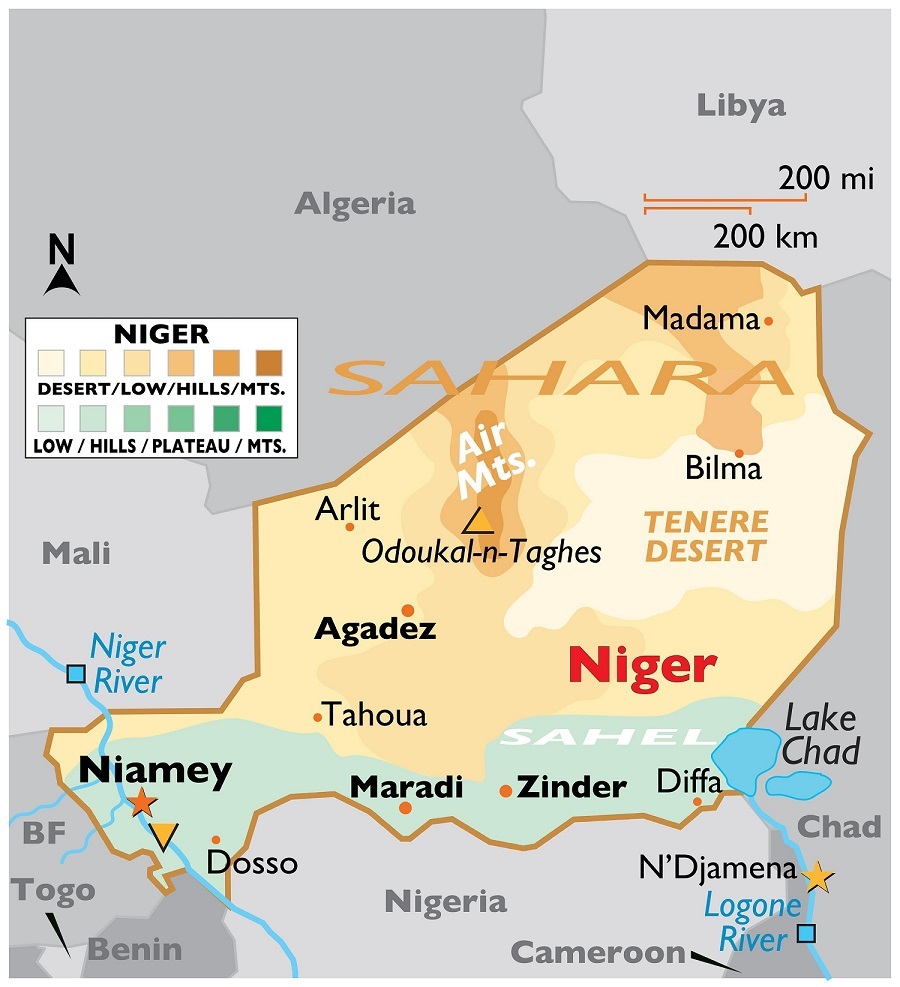
    • Niger, located in West Africa, is a landlocked country known for its vast desert landscapes and significant cultural heritage.
    • The northern region of Niger is dominated by the Sahara Desert, comprising more than half of the country.
    • The central part of Niger is characterized by the Sahel, a semi-arid transition zone between the Sahara
    • The Aïr Mountains, located in the northern central part are a significant mountain range with the highest peak, Mont Idoukal-n-Taghès (2,022 m).
    • The Niger River is the country’s primary water source.
    • Lake Chad is a significant body of water shared with Nigeria, Chad, and Cameroon. Its size keep on fluctuating.

    About Niger Benin Export Pipeline

    • The 1,930-kilometer pipeline runs from Niger’s Chinese-built Agadem oil field to the port of Cotonou in Benin.
    • It was designed to help Niger achieve an almost 5x increase in oil production through a $400 million deal with China’s state-run national petroleum company.
    • The pipeline faces significant challenges, including a recent diplomatic disagreement with Benin.
    • These issues threaten to strain Niger’s economy, heavily reliant on external support now withheld after a coup.


    PYQ:

    [2018] Which of the following has/have shrunk immensely/dried up in the recent past due to human activities?

    1. Aral Sea
    2. Black Sea
    3. Lake Baikal

    Select the correct answer using the code given below:

    (a) 1 only

    (b) 2 and 3

    (c) 2 only

    (d) 1 and 3

  • [25th July 2024] The Hindu Op-ed: An outlining of urban transformation strategies

    [25th July 2024] The Hindu Op-ed: An outlining of urban transformation strategies

    PYQ Relevance:

    Mains:

    Q1 What are ‘Smart Cities’? examine their relevance for urban development in India. Will it increase rural-urban differences? Give arguments for ‘Smart Villages’ in the light of PURA and RURBAN Mission. (UPSC IAS/2016) 

    Q2 The frequency of urban floods due to high intensity rainfall is increasing over the years. Discussing the reasons for urban floods, highlight the mechanisms for preparedness to reduce the risk during such events.  (UPSC IAS/2016) 


    Prelims: 
    Q With reference to ‘Asia Pacific Ministerial Conference on Housing and Urban Development (APMCHUD)’, consider the following statements (2017)
    1. The first APMCHUD was held in India in 2006 on the theme ‘Emerging Urban Forms — Policy Responses and Governance Structure’. 
    2. India hosts all the Annual Ministerial Conferences in partnership with ADB, APEC and ASEAN. Which of the statements given above is/are correct? 
    (a) 1 only 
    (b) 2 only 
    (c) Both 1 and 2 
    (d) Neither 1 nor 2

    Note4Students: 

    Prelims: Initiative related to Housing in India;

    Mains: Issues related to Urbanisation;

    Mentor comments:  Urban planning in India focuses on managing rapid urbanization, which has seen the urban population grow from 62.4 million in 1951 to 377.1 million in 2011, projected to reach 590 million by 2030. Key challenges include inadequate infrastructure, housing shortages, and solid waste management. The government is promoting initiatives like the Pradhan Mantri Awas Yojana and Smart Cities Mission to enhance urban livability and sustainability, emphasizing public participation and financial investment in urban infrastructure.

    Let’s learn!

    __

    Why in the News? 

    The new government’s first Budget has acknowledged cities as key growth hubs and provided numerous opportunities and options for their planned development and expansion.

    Initiative related to Housing in Budget (2024-2025)

    • Pradhan Mantri Awas Yojana (Urban): Launched in 2015, the scheme has successfully provided 85 lakh housing units for Economically Weaker Sections (EWS) and Middle Income Groups (MIG) with an investment of approximately ₹8 lakh crore.
      • The Budget allocates ₹30,171 crore for the current year to support the construction of housing units and provide interest subsidies to facilitate affordable loans for beneficiaries.
    • New Rental Housing for Industrial Workers: The Budget introduces plans for new rental housing with dormitory-type accommodations for industrial workers, developed through public-private partnerships (PPP) with financial support under the Viability Gap Funding (VGF) scheme.
    • Core Infrastructure Development: The Atal Mission for Rejuvenation and Urban Transformation (AMRUT) is allocated ₹8,000 crore to enhance essential urban infrastructure, including water supply, sanitation, roads, and sewerage systems.
    • Investment in Urban Infrastructure: A significant investment of ₹11.11 lakh crore is earmarked for capital expenditure in infrastructure, which includes provisions for urban development.
    • Smart Cities Mission: The Budget provides ₹2,400 crore for the Smart Cities Mission, which has seen a reduction in funding compared to previous years, focusing on completing existing commitments.
    Issues related to housing in India:

    Housing Shortage: India faces a significant housing deficit, with approximately 19 million households lacking decent housing in urban areas, contributing to a slum population of 65.5 million living in 13.7 million slum households in major cities like Mumbai and Delhi.
    Affordable Housing Crisis: The gap between housing demand and supply has led to the proliferation of slums. The 2011 Census indicates that 4.5 lakh homeless families and a total of 17.73 lakh individuals are living without any roof over their heads.
    Urbanization Pressure: Rapid urbanization is putting immense pressure on urban resources. The urban population in India is projected to nearly double between 2018 and 2050, intensifying the existing housing crisis and straining infrastructure.
    Environmental Degradation: Unplanned urban expansion and inadequate housing development contribute to environmental issues, such as urban heat islands, pollution, and inadequate drainage systems, leading to crises like the Chennai floods in 2015.

    Budget on Urban Planning:

    • The Budget has declared a focus on the planned development of cities, recognizing the importance of strategic urban planning.
      • Municipalities will receive the normal ‘Finance Commission Grant’ of ₹25,653 crore to support their development initiatives.
    • On Transit-Oriented Development: The development of mass rapid transit systems in cities will enable transit-oriented development, allowing for denser development around transit hubs without overburdening roads.
      • The Budget has announced an enhanced focus on economic and transit planning, emphasizing the orderly development of peri-urban areas through town planning schemes.
    • On Electric Bus Systems: The Budget proposes encouraging the adoption of electric bus systems in cities, providing ₹1,300 crore in support.

    Budget on Solid Waste Management:

    • Government Initiatives: The Budget has announced a special thrust to introduce bankable projects for solid waste management in collaboration with state governments and financial institutions. This indicates a commitment to improving waste management systems.
    • Viability Gap Funding (VGF): States and municipalities can utilize the Viability Gap Funding (VGF) to support SWM projects, making it financially feasible for local governments to implement effective waste management solutions.
    Successful Models: Cities like Indore in Madhya Pradesh have demonstrated successful models of solid waste management, showcasing that SWM can be a financially viable proposition. Indore has been recognized for its effective waste segregation and processing systems.
    • Street Vendors and Urban Planning: The Street Vendors Act, 2014, aims to regulate street vending and protect the rights of vendors, which can contribute to organized waste management in urban areas. The Budget proposes the development of 100 weekly ‘haats’ or street food hubs, which can be integrated into broader waste management strategies.

    Way forward: 

    • Integrated Housing Policies: Develop integrated housing policies that address the entire housing continuum, from emergency shelters to affordable housing, to bridge the gap between demand and supply.
    • Sustainable Urban Development: Implement sustainable urban development practices, focusing on environmentally friendly infrastructure, green spaces, and resilient housing to mitigate environmental degradation.
  • Why SC couldn’t agree on the environmental release of GM mustard? 

    Why in the news?

    A two-judge Bench of the Supreme Court delivered a split verdict on Tuesday, July 23, regarding the “environmental release” of Genetically Modified (GM) mustard.

    About GM Mustard Crop 

    • Development and Approval Process: On September 15, 2015, the Centre for Genetic Manipulation of Crop Plants (CGMCP) at Delhi University sought approval from the Genetic Engineering Appraisal Committee (GEAC) for the environmental release of GM mustard DMH-11.
    • Biosafety Dossier: The CGMCP submitted a biosafety dossier to the GEAC, which created a sub-committee to examine its contents. After revisions, the sub-committee submitted its report, inviting comments in September 2016.
    • GEAC Recommendations: On May 11, 2017, the GEAC recommended the environmental release of GM mustard, allowing field tests to assess the crop’s effects. However, the Ministry of Environment sent the proposal back for re-examination in March 2018 after receiving several representations.
    • Deferred Tests: The GEAC directed the CGMCP to examine the effects of GM mustard on honey bees and soil microbial diversity, but these tests were deferred through 2020-21.
      • The GEAC-appointed expert committee found that honeybees do not discriminate between other GM crops such as genetically engineered canola.

    What is the case before the Supreme Court?

    • Background of the Case: The case arose from challenges by environmentalist Aruna Rodrigues and the organization Gene Campaign against the GEAC’s approval for the environmental release of GM mustard, arguing that the decision violated the precautionary principle and lacked proper scientific scrutiny.
    • Split Verdict: The Supreme Court delivered a split verdict regarding the approval for the environmental release of genetically modified (GM) mustard, specifically the hybrid DMH-11. Justices B.V. Nagarathna and Sanjay Karol had differing opinions on the legality of the Genetic Engineering Appraisal Committee’s (GEAC) decision-making process.
    • Justice Nagarathna’s Opinion: Justice Nagarathna held that the GEAC’s approval was flawed and did not follow the necessary procedures, particularly failing to conduct promised field tests. She emphasized that the approval violated public trust and the precautionary principle, which is essential for protecting the environment and public health.
    • Justice Karol’s Opinion: In contrast, Justice Karol argued that the GEAC’s decision was valid and aligned with the development of scientific temper. He stated that field trials are necessary to assess the environmental safety of GM mustard and that the decision-making process was independent and reasoned.
    • Unanimous Directives: Despite the split decision, both judges agreed on the need for the Union government to formulate a national policy regarding GM crops. This policy should involve consultations with various stakeholders, including experts, farmers, and state governments.
    • Case referred to larger bench: The case will be referred to a larger bench for further adjudication due to the differing opinions. The Supreme Court directed that the Ministry of Environment, Forest, and Climate Change (MoEF&CC) should conduct a national consultation within four months to develop this policy.
    • Concerns Raised: Justice Nagarathna pointed out that the GEAC did not consider the long-term effects of GM mustard on health and the environment, while Justice Karol noted the importance of conducting field trials under strict safeguards to monitor the crop’s impact.

    Conclusion: The Union government should formulate a detailed and inclusive national policy on genetically modified crops. This policy should be based on extensive consultations with experts, farmer representatives, state governments, and other stakeholders to ensure a balanced approach that considers scientific, environmental, and public health perspectives.

    Mains PYQ: 

    Q  What are the present challenges before crop diversification? How do emerging technologies provide an opportunity for crop diversification? (2021)
  • A big step towards the transformation of various sectors  

    Why in the news?

    The 2024-25 Budget is a progressive proposal featuring several commendable initiatives aimed at boosting India’s economic growth and advancing social progress.

    Prioritized areas in the recent Budget 2024-25

    • Job Creation and Skilling: The budget allocates ₹1.48 lakh crore towards job creation, employment, and skilling, emphasizing the importance of developing a skilled workforce to support India’s service sector. This shift from a focus on manufacturing to skilling reflects a strategic move towards building a service-oriented economy.
    • Energy Transformation: There is significant investments are directed towards energy transformation initiatives, including solar panel manufacturing and nuclear energy development. The budget allocates ₹89,287 crore to crucial sectors, indicating a commitment to sustainable energy solutions.
    • Healthcare Initiatives: The budget includes measures to enhance healthcare access, such as customs duty exemptions on life-saving cancer medications and components for advanced medical equipment.
    • Technology and Innovation: A framework with nine priorities is introduced to leverage advanced technology and foster collaboration between the government and private sector, promoting growth and innovation across various sectors.
      • For example: The budget allocates ₹1 lakh crore specifically for research and innovation, accompanied by a 50-year interest-free loan.

    What does the budget say on Accessibility and Affordability?    

    • Customs Duty Exemptions on drugs: The budget exempts customs duties on three essential cancer medications, making them more affordable and accessible to patients. This move addresses the high costs associated with cancer treatments, which often pose significant barriers to access.
    • Support for Medical Equipment: Customs duties are also waived for components of X-ray tubes and digital detectors, which are crucial for advanced medical technologies.
    • Alignment with Domestic Capacity: The budget emphasizes aligning customs duties with domestic capacity under the phased manufacturing program, fostering a conducive environment for startups and encouraging local manufacturing.

    On Prioritizing Inclusivity and Fiscal Prudence

    • Women’s Workforce Participation: The budget focuses on boosting women’s participation in the economy through targeted initiatives such as hostels, creches, and skilling programs.
      • According to a report by McKinsey, India can increase its 2025 GDP, estimated at $4.83 trillion, by 16%-60% simply by enabling women to participate in the economy on par with men
    • Research and Development: With India spending only 0.7% of its GDP on research, the budget encourages private sector collaboration with the government to increase investments in R&D. This collaboration is vital for fostering innovation and ensuring sustainable economic growth.
    • Public-Private Partnerships: The budget promotes public-private partnerships to enhance healthcare delivery and infrastructure, reflecting a commitment to inclusivity and collaboration in achieving economic and social goals.

    Conclusion: The government should expand the scope of skilling programs to cover a wider range of sectors and skill levels while ensuring the workforce is equipped to meet the evolving demands of the service-oriented economy.

  • A Budget that places health on the margins

    Why in the news?

    • With the worst of the COVID-19 pandemic behind us (though the World Health Organization warns the virus still lingers), the Union Budget shifted focus to economic growth levers like infrastructure and employment.
    • It was also hoped that recognizing population health as crucial for economic growth would lead to continued investment in strengthening health systems.
    A budget estimate refers to the initial allocation of funds designated for various programs, departments, or projects within a fiscal year. It represents the government’s expectations regarding how much money will be required to meet planned expenditures.

    In contrast, revised estimates come into play later in the fiscal year. After assessing the actual expenditures and needs after the first six months, the government may adjust the initial budget estimates based on how much of the allocated funds have been utilised and what additional resources may be necessary.

    Comparisons with Previous Years

    • Budgetary Estimates: The comparison of the Budget Estimates (BE) for health between 2023-24 and 2025-25, reveals minimal increases:
      • Overall Health Ministry Budget: 1.98% increase
      • National Health Mission (NHM): 1.16% increase
      • PMJAY: 1.4% increase
    • Overall Health Ministry budget: The present allocation made in the current Budget is deemed to be inadequate for expanding health coverage services and enhancing the impact of flagship health programs, particularly in light of rising non-communicable diseases and the goal of universal health coverage by 2030.
    • Misleading Comparisons: When we compare the Budget estimates with the previous Revised estimates (RE) the budgetary increase of nearly 12% is misleading, as the RE reflects actual spending rather than the program’s needs.

    Missed Opportunities

    • Health Workforce Development: While the budget mentioned an increase in new medical colleges, it failed to address the critical need for a multi-layered, multi-skilled health workforce.
    • Drug Pricing Mechanisms: Although customs duties were waived on three anti-cancer drugs. However, the budget missed the chance to implement price controls and pooled procurement strategies that could have lowered drug costs across both public and private healthcare sectors. Establishing such mechanisms could enhance the affordability and accessibility of essential medications.
    • Climate-Resilient Agriculture: While the budget committed to climate-resilient agriculture, which is crucial for food security, it did not sufficiently link these efforts to health outcomes, such as nutrition and public health, which are critical in the context of rising health challenges.

    Challenges to the Inclusivity of PMJAY

    • Limited Coverage of Middle Class: PMJAY primarily targets the bottom 40% of the population based on economic status, leaving the middle class without coverage.
    • Focus on Secondary and Tertiary Care: The program emphasizes secondary and tertiary healthcare, often neglecting primary care services. This approach limits comprehensive health coverage and fails to address preventive healthcare needs, which are crucial for achieving UHC.
    • Awareness and Accessibility Issues: There is a significant disparity in awareness and accessibility of PMJAY across states.
      • For example, awareness is notably higher in Tamil Nadu (80%) compared to Bihar (20%). 

    Way forward: 

    • Targeted Funding for Flagship Programs: Need to allocate a more substantial increase in the budget for the National Health Mission (NHM) and Pradhan Mantri Jan Arogya Yojana (PMJAY) to the eradication of non-communicable diseases, tuberculosis elimination by 2025.
    • Strengthen Primary Healthcare: Govt. should ensure adequate funding for primary healthcare services, which form the foundation for preventive and community health initiatives.

    Mains PYQ:

    Q The public health system has limitations in providing universal health coverage. Do you think that the private sector can help in bridging the gap? What other viable alternatives do you suggest? (2015)

  • ICMR develops CRISPR Cas-based TB Detection Kit

    Why in the News?

    The Indian Council of Medical Research (ICMR) Regional Medical Research Centre for North East has developed the “world’s cheapest CRISPR Cas-based TB testing system”.

    Back2Basics: CRISPR-Cas9 Technology

    • CRISPR-Cas9 stands for Clustered Regularly Interspaced Short Palindromic Repeats and CRISPR-associated protein 9.
    • It is a technology that allows geneticists and researchers to edit parts of the genome by altering sections of the DNA sequence.
    • Emmanuelle Charpentier and Jennifer Doudna’s work on CRISPR-Cas9 as a ‘molecular scissor’ earned them the 2020 Nobel Prize in chemistry.
    • The system consists of two key components:
    1. Cas9: This is the enzyme that acts like a pair of molecular scissors. It is responsible for cutting the DNA strand at a specific location, allowing for the removal, addition, or alteration of DNA at that site.
    2. Guide RNA (gRNA): This is a piece of RNA that is designed to find and bind to a specific sequence of DNA that matches its code. The gRNA guides the Cas9 enzyme to the exact spot in the genome where an edit is desired.
    • Mechanism:
      • The process begins with the design of a gRNA that matches the DNA sequence where an edit is needed.
      • Once inside the cell, the Cas9 enzyme and the gRNA form a complex that can identify and bind to the target DNA sequence.
      • The Cas9 then cuts the DNA at this location.
      • After the DNA is cut, the cell’s natural repair mechanisms can be harnessed to add or remove genetic material, or to make specific changes to the DNA.
    • Applications: Used for gene editing to correct genetic disorders, develop targeted cancer therapies, enhance diagnostics for infectious diseases, and create personalized medicine approaches.

    About the New TB Detection System

    • The system can detect TB bacteria using DNA from a patient’s saliva at a very low cost.
      • Specific DNA sequences unique to Mycobacterium tuberculosis (the bacteria causing TB) are identified.
    • It can identify the bacteria in preliminary stages and test over 1,500 samples simultaneously within approximately two hours.
    • The technology is simple enough to be used in primary health centres in villages.

    TB Situation in India:

    • TB kills an estimated 480,000 Indians annually, or over 1,400 patients every day.
    • India has more than a million ‘missing’ TB cases each year, which remain undiagnosed or inadequately diagnosed and treated in the private sector.

    National Goals for Elimination of TB: 

    • Pradhan Mantri TB Mukt Bharat Abhiyan (2022): It is stipulated to meet the goal of ending the TB epidemic by 2025 from the country, five years ahead of the Sustainable Development Goals (SDG) for 2030.
    • Nikshay Poshan Yojana (2018): Launched in 2018, this scheme provides nutritional support to TB patients. Under this scheme, TB patients receive a direct benefit transfer (DBT) of Rs. 500 per month to purchase food.

    PYQ:

    [2019] What is Cas9 Protein that is often mentioned in news?

    (a) A molecular scissors used in targeted gene editing

    (b) A biosensor used in the accurate detection of pathogens in patients

    (c) A gene that makes plants pest-resistant

    (d) A herbicidal substance synthesized in genetically modified crops

    [2014] Can overuse and free availability of antibiotics without Doctor’s prescription, be contributors to the emergence of drug-resistant diseases in India? What are the available mechanisms for monitoring and control? Critically discuss the various issues involved.

  • In news: Gandhi Sagar Sanctuary

    Why in the News?

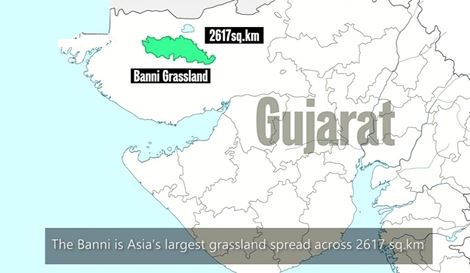
    • The Gandhi Sagar sanctuary in Madhya Pradesh is the preferred location for the next batch of cheetah’s relocation plan.
      • However, Banni in the Rann of Kutch, Gujarat is also being prepared to house some of them.

    Cheetah Reintroduction in India:

    • In India, cheetahs disappeared in the early 1950s due to hunting and the loss of their habitat.
    • The ‘Action Plan for Reintroduction of Cheetah in India /Project Cheetah (2022)’ aims to bring cheetahs from African countries to various national parks.
    • It is spearheaded by the National Tiger Conservation Authority (NTCA).
    • Recently, cheetahs from Namibia were reintroduced in Kuno National Park, Madhya Pradesh.
    • Cheetah are listed as VULNERABLE by the IUCN; Schedule II of the Wild Life (Protection) Act, 1972.
    • Kuno NP and Gandhi Sagar has an ideal habitat parallel to Maasai Mara (a National Park) in Kenya, suitable for cheetahs.

    About Gandhi Sagar Wildlife Sanctuary

    • It is located in western Madhya Pradesh and covers an area of 368.62 sq km.
    • It is a flat rocky plateau characterized by shallow topsoil and exposed sheetrock.
    • It is divided by the Chambal River, with the Gandhi Sagar dam and reservoir within its boundaries.
    • Flora and Fauna:
      • Flora: The sanctuary features a savannah ecosystem with open grasslands interspersed with dry deciduous trees. Riverine valleys within the sanctuary support evergreen vegetation.
      • Fauna: The sanctuary is home to a diverse range of wildlife, including species like leopards, sloth bears, striped hyenas, grey wolves, golden jackals, jungle cats, Indian foxes, and marsh crocodiles.

    About Banni Grasslands:

    • The Banni Grassland is located in the Kutch district of Gujarat, covering around 3,847 square km.
    • The climate is arid and semi-arid, with extremely hot summers (temperatures above 45°C) and mild winters (12°C to 25°C), receiving 300-400 mm of annual rainfall mainly during the monsoon.
      • Flora: Grasses such as Dichanthium, Sporobolus, and Cenchrus species, with salt-tolerant plants, shrubs, and trees like Acacia and the invasive Prosopis juliflora.
      • Fauna: Indian wolf, hyena, chinkara, Great Indian Bustard, flamingos, and various raptors, reptiles, and invertebrates.
    • It is inhabited by pastoral communities like the Maldharis, who rely on livestock grazing (cattle, buffalo, and sheep) for their livelihood.
    • Agriculture is limited due to arid conditions, with some areas used for salt production.

    PYQ:

    [2024]  Consider the following statements:

    1. Lions do not have a particular breeding season.

    2. Unlike most other big cats, cheetahs do not roar.

    3. Unlike male lions, male leopards do not proclaim their territory by scent marking.

    Which of the statements given above are correct?

    (a) 1 and 2 only

    (b) 2 and 3 only

    (c) 1 and 3 only

    (d) 1, 2 and 3

    [2012]  Consider the following: (2012)

    1. Black-necked crane
    2. Cheetah
    3. Flying squirrel
    4. Snow leopard

    Which of the above are naturally found in India?

    (a) 1, 2 and 3 only
    (b) 1, 3 and 4 only
    (c) 2 and 4 only
    (d) 1, 2, 3 and 4

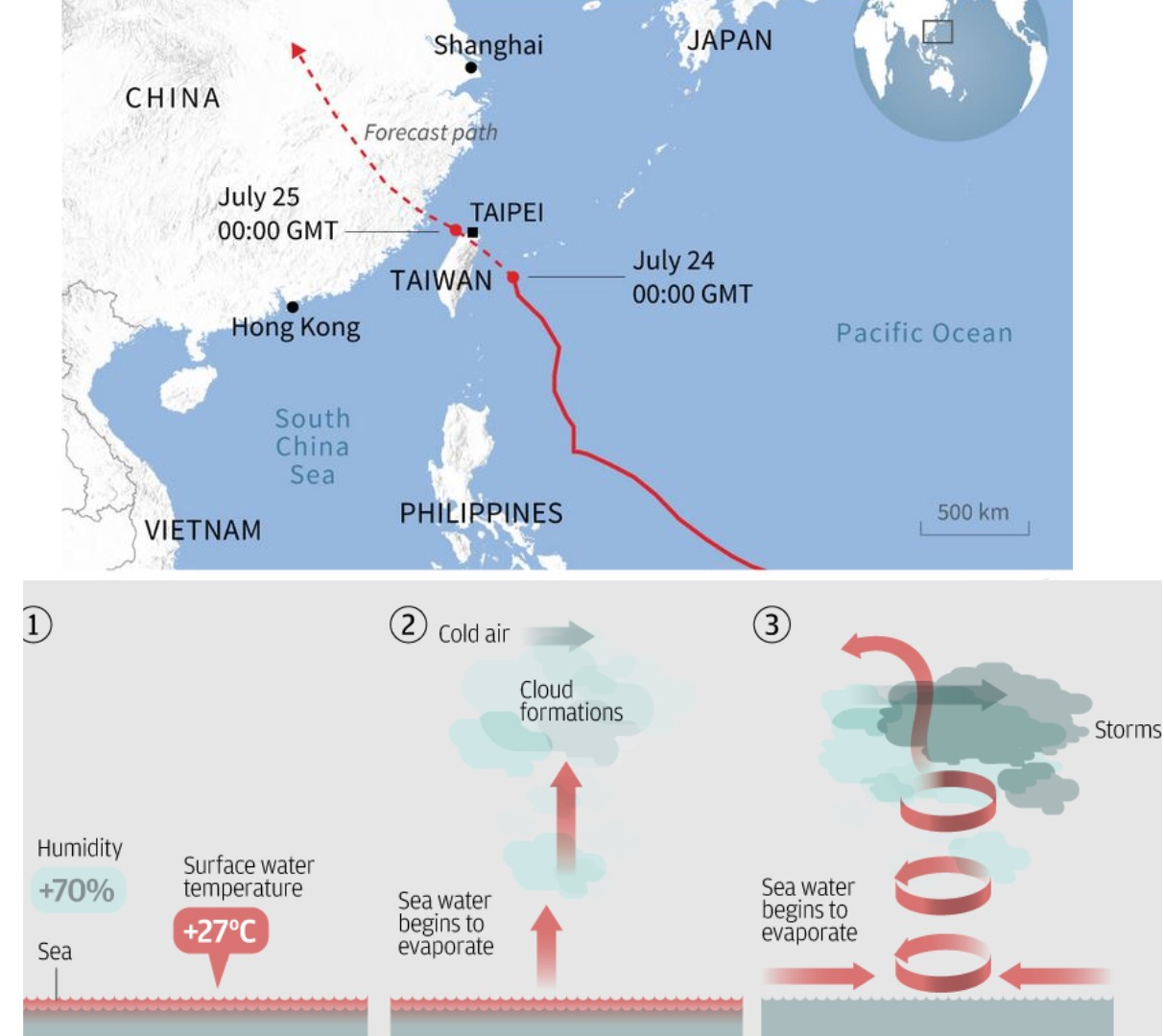
  • Typhoon Gaemi 

    Why in the News?

    After making landfall in the Philippines, Typhoon Gaemi is heading towards Taiwan.

    What is a Typhoon?

    • A typhoon is a mature tropical cyclone that forms in the Northwest Pacific Ocean, primarily between 100°E and 180°E.
    • It is characterised by strong winds, and heavy rain, and can cause significant damage due to high wind speeds, storm surges, and flooding.

    Factors causing its formation:

    • It needs sustained ocean temperatures of 26.5°C or higher.
    • High moisture content in the mid-troposphere.
    • Presence of the Coriolis force to initiate rotation.
    • Minimal vertical wind shear to allow for storm growth.
    • Atmospheric instability to promote rising motion and thunderstorm activity.
    • An initial low-pressure area or tropical wave to trigger development.
      • Formation Regions: Northwest Pacific Ocean in areas east of the Philippines, southeast of Japan, and near Taiwan; South China Sea and in Western North Pacific near the Mariana Islands and Guam.
    Note: Typhoons do not form in the South Atlantic Ocean and the southeastern Pacific Ocean because of cooler sea surface temperatures and higher wind shear in those regions.


    PYQ:

    [2015] In the South Atlantic and South-Eastern Pacific regions in tropical latitudes, cyclone does not originate. What is the reason?

    (a) Sea surface temperatures are low
    (b) Inter-Tropical Convergence Zone seldom occurs
    (c) Coriolis force is too weak
    (d) Absence of land in those regions

  • Right to Shelter is a Fundamental Right: Supreme Court     

    Why in the News?

    The Supreme Court emphasised the need to balance railway infrastructure development in Haldwani, Uttarakhand, with the fundamental right to shelter nearly 50,000 people accused of illegally encroaching on railway land.

    What was the Case?

    • The hearing was based on an application filed by the Railways seeking to modify a January 2023 Supreme Court order.
    • The order had stayed a Uttarakhand HC direction to evict the families within a week, even using paramilitary forces.
    • The application pointed out that the Ghaula River flood has disrupted railway operations in the region and that more land was urgently needed to lay new tracks.

    What is the Right to Shelter?

    • The right to shelter is derived from the Right to Life under Article 21 of the Constitution of India, which guarantees the protection of life and personal liberty.
    • Article 19(1)(e) provides the Right to reside and settle in any part of the territory of India.

    Judicial pronouncements related to it:

    • Olga Tellis v. Bombay Municipal Corporation (1985): The Supreme Court recognized the right to livelihood as a part of the right to life under Article 21.
    • Chameli Singh v. State of Uttar Pradesh (1996): The Supreme Court declared that the right to shelter is a fundamental right under Article 21. It includes adequate living space, safe and decent structures, clean surroundings, light, air, water, electricity, and sanitation.
    • Ahmedabad Municipal Corporation v. Nawab Khan Gulab Khan (1997): The Supreme Court directed the state to construct affordable houses for the poor, reiterating the state’s duty to provide shelter and make the right to life meaningful.

    Various Legislations supporting the Right to Shelter:

    • The Scheduled Tribes and Other Traditional Forest Dwellers (Recognition of Forest Rights) Act, 2006
    • The Right to Fair Compensation and Transparency in Land Acquisition, Rehabilitation and Resettlement Act, 2013
    • The Slum Areas (Improvement and Clearance) Act, 1956


    PYQ:

    [2021] Consider the following statements :​

    1. ‘Right to the City’ is an agreed human right and the UN-Habitat monitors the commitments made by each country in this regard.​
    2. ‘Right to the City’ gives every occupant of the city the right to reclaim public spaces and public participation in the city.​
    3. ‘Right to the City’ means that the State cannot deny any public service or facility to the unauthorized colonies in the city.​

    Which of the statements given above is/are correct?

    (a) 1 only

    (b) 3 only

    (c) 1 and 2

    (d) 2 and 3

  • For the social sector, it is old wine in an old bottle 

    Why in the News?

    Budget 2024 maintains the same approach as previous years regarding social sector allocations.

    Decreasing allocations in the Budget for social sector schemes

    • Education Sector: The allocations for school education increased by ₹5,000 crore and for higher education by ₹3,000 crore. The increased recoveries from fees and self-financing schemes suggest a shift towards cost recovery in educational institutions.
    • Health Sector: The allocation for the Department of Health and Family Welfare rose by only ₹1,500 crore.
      • Food Subsidy: There is a limited increase in food subsidies despite rising economic costs and the need to update coverage based on the latest population figures.
    • Shift in Approach: The government giving greater emphasis on cost-effectiveness and privatization in education and health, shifting focus towards contributory schemes like the Atal Pension Yojana.

    Social Sector Schemes in Budget 2024-25

    • Social Protection Schemes:
        • POSHAN Scheme: There is a slight increase from ₹11,600 crore to ₹12,467 crore, but still less than the actual expenditure in 2022-23.
        • Saksham Anganwadi Scheme: The allocation increased to ₹21,200 crore from ₹20,554 crore, but no increase in salaries for Anganwadi workers or honorarium for mid-day meal cooks.
    • Maternity and Social Assistance:
        • Samarthya Scheme: The budget reduced to ₹2,517 crore from ₹2,582 crore. The PMMVY scheme’s maternity benefits have remained unchanged since 2017.
        • NSAP: Allocation for social security pensions remains unchanged at ₹9,652 crore, reducing real coverage and value.

    Schemes for the Unemployed

        • The ‘Prime Minister’s Package for Employment and Skilling’ includes government-sponsored internships, formalization of jobs through incentives for EPFO enrolments, and skill-development programmes
        • An allocation of ₹2 lakh crore over five years for the employment package, linked to industry response

    Schemes for Street Vendors

      • The PM SVANidhi Scheme (PM Street Vendor’s AtmaNirbhar Nidhi) aims to benefit over 50 Lakh street vendors across India
      • All lending institutions, including NBFCs, are participating in the scheme to provide affordable loans to street vendors

    Employment Challenges

    • Stagnant Wages and Dampened Demand: The Indian economy faces significant challenges with stagnant wages, which affect consumer demand. This stagnation can hinder overall economic growth and employment generation.
    • Reliance on the Private Sector for Job Creation: The government is increasingly looking to the private sector to address employment challenges.
      • Initiatives like the ‘Prime Minister’s Package for Employment and Skilling’ aim to incentivize private sector job creation through government-sponsored internships and skill development programs.
    • Limited Budgetary Allocations: The budgetary allocations for employment-related schemes are limited, with the entire employment package amounting to ₹2 lakh crore over five years.
    • Focus on Supply-Side Solutions: The current approach emphasizes supply-side measures to incentivize the private sector rather than addressing the underlying demand-side issues, such as low consumer spending and economic uncertainty.

    Way forward: 

    • Enhance Social Sector Investments: The government should significantly increase budget allocations for critical social sector schemes, particularly in education, health, and social protection.
    • Comprehensive Employment Strategy: Need to develop a holistic approach to employment that addresses both supply and demand-side issues.