💥Join UPSC 2027,2028 Mentorship (July Batch) + XFactor Notes & Microthemes PDF

Distribution: yearly

  • The State of India’s Informal Economy    

    Why in the news? 

    The NSSO’s 2021-22 and 2022-23 survey outcomes reveal effects of significant economic shocks due to demonetisation, GST implementation, and the COVID-19 pandemic on India’s economy.

    About NSSO: 

    • The NSSO is India’s premier agency for conducting large-scale nationwide sample surveys on socio-economic aspects that collects data on employment, consumption, health, education, and other areas to provide essential inputs for policy and planning.
    • The NSSO was merged with the Central Statistical Office in 2019 to form the National Statistical Office.

    Key highlight as per the recent survey by NSSO   

    • Impact of Economic Shocks: The surveys reflect the aftermath of major economic events such as demonetisation (November 2016), the rollout of GST (July 2017), and the COVID-19 pandemic (starting March 2020).
    • Employment Trends: There has been a noticeable decline in employment within the informal sector over the past seven years, with around 16.45 lakh jobs lost.
    • Sectoral Dynamics: The unincorporated manufacturing sector saw a significant contraction, with the number of enterprises declining by 9.3% from 19.7 million in 2015-16 to 17.82 million in 2022-23.

    What are unincorporated enterprises?  

    • Unincorporated enterprises are informal businesses not legally registered as companies.
    • They include MSMEs, household units, own-account enterprises, and partnerships, operating outside formal regulatory frameworks but contributing significantly to employment and economic activity.

    Why are these survey results important and what do they represent?  

    • Timely Insights: These survey results offer current data crucial for understanding the evolving role of the informal sector in job creation, particularly during economic slowdowns when formal sector employment may decline.
    • Impact Assessment: They provide a detailed analysis of how significant economic events like demonetisation, GST implementation, and the COVID-19 lockdowns have affected the informal sector, highlighting vulnerabilities and resilience.
    • Policy Relevance: The findings inform policymaking aimed at supporting and regulating the informal sector, ensuring that measures address its unique challenges and contributions to overall economic stability and inclusivity.

    What has been the pattern of ‘Informal Employment’ across states?

    • The data shows a mixed pattern across states, with 16 out of 34 states/UTs recording a decline in informal sector workers in 2022-23 compared to 2015-16.
    • Around 63 lakh informal enterprises shut down due to GST between 2015-16 and 2022-23, resulting in a loss of about 1.6 crore jobs.
    • The number of informal enterprises plunged from 50.32 lakh with 85.6 lakh workers in April-June 2021 at the peak of the COVID-19 second wave, to 1.91 crore firms with 3.12 crore employees in January-March 2022.

    Way Forward: 

    • The government should provide targeted support and incentives to help informal enterprises adapt to the post-GST and post-pandemic environment.
    • Policymakers should aim to facilitate a gradual transition of informal enterprises to the formal sector.

    Mains PYQ: 

    Q How globalization has led to the reduction of employment in the formal sector of the Indian economy? Is increased informalization detrimental to the development of the country? (UPSC IAS/2016)
  • Choosing the right track to cut post-harvest losses

    Why in the News? 

    India holds the position of the second-largest agricultural producer globally however, it only accounts for 2.4% of global agricultural exports, ranking eighth worldwide due to the post-harvest loss.

    A closer look at India’s post-harvest loss:

    • Economic Impact: India faces annual post-harvest losses amounting to approximately ₹1,52,790 crore, significantly impacting farmer incomes and the agricultural economy.
    • Perishable Commodities: The biggest losses occur in perishable commodities like livestock produce (22%), fruits (19%), and vegetables (18%). Export processes further add to these losses, particularly at the import-country stage.
    • Supply Chain Inefficiencies: There is Inefficiencies in storage, transportation, and marketing, alongside a lack of assured market connectivity, contribute to significant post-harvest losses. Small and marginal farmers, who make up 86% of the farming community, struggle with economies of scale and market access.

    Initiatives taken by the Railways Department:

    • Truck-on-Train Service: Indian Railways introduced the truck-on-train service, allowing loaded trucks to be transported on railway wagons. This service has been expanded following successful trials with commodities like milk and cattle feed.
    • Parcel Special Trains: During the COVID-19 pandemic, the Railways introduced parcel special trains to transport perishables and seeds between producers and markets, ensuring timely delivery and reducing post-harvest losses.
      • The DFI (Doubling farmers’ income) committee recommends streamlining loading and unloading processes to minimize transit times and address staffing shortages through recruitment and training initiatives.
    • Kisan Rail Scheme: It was launched to connect production surplus regions with consumption regions. This scheme facilitates the transportation of perishables (including milk, meat, and fish) more efficiently.
    • Specialized Wagons and Facilities: Investment in specialized wagons for temperature-controlled transport and establishing rail-side facilities for safe cargo handling are essential steps taken by the Railways.

    Way for Untapped Opportunities:

    • Enhanced Environmental Benefits: Rail transport generates up to 80% less carbon dioxide for freight traffic compared to road transport.
    • Public-Private Partnerships: The private sector can play a crucial role in enhancing operational efficiency and strengthening rail infrastructure through public-private partnerships, thereby improving the overall logistics ecosystem for agricultural produce.
    • Budgetary Support and Infrastructure Development: The budgetary allocation for agriculture in 2024 aims to bridge the farm-to-market gap with modern infrastructure and value-addition support.
    • Technology Integration: Incorporating advanced technologies like real-time tracking, temperature monitoring, and automated loading/unloading systems.

    Way forward: 

    • Expand climate-controlled storage facilities and cold storage capacity to accommodate a larger share of agricultural produce.
    • Provide small and marginal farmers access to storage facilities through cooperatives or subsidies.
    • Invest in specialized rail wagons for temperature-controlled transport and establish rail-side cargo handling facilities.

    Mains PYQ: 

    Q How do subsidies affect the cropping pattern, crop diversity and economy of farmers? What is the significance of crop insurance, minimum support price and food processing for small and marginal farmers? (UPSC IAS/2017)

  • The problems with sub-caste reservations

    Why in the News?

    The Supreme Court has reserved its decision on sub-caste reservations for SC/STs. Any ruling on this matter must be substantiated not only legally but also academically.

    What is the Sub-categorization of castes?

    It refers to the practice of further dividing larger caste categories into smaller groups or sub-groups based on specific criteria such as socio-economic status, geographical location, historical background, or specific needs for policy implementation.

    Background of the Case:

    • The case involves the validity of sub-classification within the SC and ST categories for providing reservations in government jobs and education.
    • In 2004 Supreme Court strikes down Andhra Pradesh Scheduled Castes (Rationalisation of Reservations) Act, 2000, citing violation of the right to equality in the E.V. Chinnaiah v State of Andhra Pradesh case and emphasised that the SC list should be treated as a single, homogeneous group
      • Only Parliament has the power to sub-classify SCs and STs for reservations
      • The Supreme Court is now considering whether states have the power to create sub-classifications within these reserved categories.
    • The case stems from a 1975 Punjab government notification that divided its 25% reservation for SCs into two categories: half for Balmikis (Valmikis) and Mazhabi Sikhs, and the other half for the remaining groups within the SC category.

    Objectives behind the implementation of reservations and present SC scenario:

    • Objective of Reservations: The primary objective of reservations, as advocated by Dr. B.R. Ambedkar, is to ensure equitable representation and opportunities for historically marginalized communities, particularly Scheduled Castes (SCs).
    • Present SC scenario: Despite reservations, certain sub-castes within SCs continue to face challenges in securing adequate representation in jobs and education. This under-representation is often attributed to factors such as inadequate educational opportunities, economic disparities, and historical discrimination.

    The policy of economic empowerment in India and its associated challenges:

    • Policies for Economic Empowerment: These policies complement reservations by focusing on enhancing the ownership of capital assets (like land and businesses) and improving educational attainment among SC individuals
      • For example, Self-Employment Scheme for Rehabilitation of Manual Scavengers (SRMS), National Scheduled Castes Finance & Development Corporation (NSFDC) and National Safai Karamcharis Finance & Development Corporation (NSKFDC).
      • These policies are aimed at building capabilities and enabling greater participation in economic activities.
    • Challenges: There are challenges in implementing economic empowerment policies including inadequate access to credit and financial resources, lack of skill development initiatives, and persistent socio-economic barriers that hinder the upward mobility of SC communities.
      • Intersection with Reservations: Integrating economic empowerment with reservations is crucial to ensure that individuals from SC backgrounds not only secure reserved positions but also have the necessary skills and resources to thrive in competitive environments.

    What must be our focus? (Way Forward)

    • Holistic Approach: There is a need for a holistic approach that combines reservations with targeted economic and educational interventions. This approach should address both systemic discrimination and socio-economic barriers faced by SC communities.
    • Capacity Building: There should be emphasis on enhancing the educational infrastructure and skill development programs tailored to the needs of SC individuals.
    • Data-Driven Policy: The policy decisions related to sub-caste reservations should be informed by empirical data that assesses the actual impact of discrimination versus socio-economic factors on under-representation.

    Mains PYQ: 

    Q Whether National Commission for Scheduled Castes (NCSC) can enforce the implementation of constitutional reservation for the Scheduled Castes in the religious minority institutions? Examine (UPSC IAS/2018)

  • Cave on the Moon: What this discovery means for space exploration?

    Why in the News?

    • Scientists have confirmed the presence of a cave on the Moon, near the site of the first lunar landing 55 years ago.
    • This discovery could provide astronauts with a potential habitat on the Moon in the future.

    About the Cave on Mare Tranquillitatis

    • A study titled “Radar evidence of an accessible cave conduit on the Moon below the Mare Tranquillitatis pit” was published in the journal Nature Astronomy.
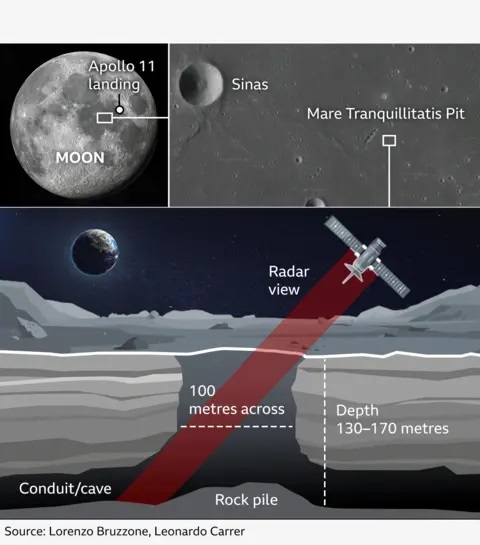
    • The study established the presence of a moon cave at the Sea of Tranquillity, a large, dark, basaltic plain on the Moon’s surface.
    • The cave is located 400 kilometers from where astronauts Neil Armstrong and Buzz Aldrin landed in 1969.
    • It is roughly 45 meters wide and up to 80 meters long, with an area equivalent to 14 tennis courts.

    Research Method

    • Researchers analyzed photos taken in 2010 by NASA’s Lunar Reconnaissance Orbiter (LRO) spacecraft.
    • They concluded that the pit was the entry point to a cave created by the collapse of a lava tube, a tunnel formed when molten lava flows beneath a field of cooled lava.

    Back2Basics: Lunar Reconnaissance Orbiter (LRO) 

    • NASA launched the LRO on June 18, 2009.
    • LRO’s primary mission is to map the Moon’s surface in high detail to identify safe landing sites and locate potential resources.
    • It is equipped with seven scientific instruments, including a camera, a laser altimeter, and a radiation detector.
    • LRO has provided critical data on lunar topography, temperature, and radiation levels, significantly enhancing our understanding of the Moon.

    Characteristics of Lunar Caves

    • Craters are bowl-shaped and result from asteroid or comet strikes.
    • Pits, in contrast, appear as massive steep-walled depressions.
    • At least 200 such pits have been discovered, with 16 believed to have formed from collapsed lava tubes due to volcanic activity over a billion years ago.

    Benefits for Human Exploration

    • The Moon is exposed to solar radiation 150 times stronger than Earth.
    • The lunar surface heats to about 127 degrees Celsius during the day and cools to around -173 degrees Celsius at night.
    • Caves, however, maintain stable average temperatures of around 17 degrees Celsius.
    • They could shield human explorers from radiation and micrometeorites, making them viable for future lunar bases or emergency shelters.

    Challenges and Further Research

    • The depth of such caves could present challenges for accessibility.
    • There are risks of potential avalanches and cave-ins.

    Need for Further Research

    • Further research is needed to understand and map the structural stability of the caves.
    • This could be done using ground-penetrating radar, robots, or cameras.
    • To become viable habitats, caves would need systems to monitor movement or seismic activity and safety zones for astronauts in case of a cave collapse.

    PYQ:

    [2008] Selene-1, the lunar orbiter mission belongs to which one of the following?

    (a) China

    (b) European Union

    (c) Japan

    (d) USA

  • Could Pythons be a Protein alternative?

    Why in the News?

    • In the farmlands of central Thailand, thousands of pythons are raised in a warehouse for their diamond-patterned skins, which are sold to high-end European fashion houses.
      • Some scientists and industry insiders believe the true value of these snakes lies in their meat.

    Python Farming in Asia

    • Researchers estimate that China and Vietnam alone have at least 4,000 python farms, producing several million snakes primarily for the fashion industry.
    • A study published in Nature highlighted python farming as a flexible and efficient response to global food insecurity.

    Benefits of Python Farming

    • Pythons can survive for months without food or water and maintain their condition.
    • They were fed waste chicken and wild-caught rodents, offering a more efficient feed-to-meat ratio than poultry, beef, and even crickets.
    • Female pythons can lay between 50 and 100 eggs annually, leading to rapid reproduction.

    Advantages of Python Meat

    • Pythons offer a more efficient feed-to-meat ratio than poultry, beef, and even crickets.
    • They can survive without food and water for months without losing condition.
    • Python meat has a chicken-like texture and is low in saturated fats.
    • It could provide a sustainable protein source with a lower environmental impact compared to traditional meat.

    Challenges and Market Acceptance

    • Despite the advantages, the market is limited for python meat.
    • Python farmers struggle to convince people to consume snake meat, resulting in most of it being discarded or sold to fish farms.

    Environmental Impact of Traditional Meat

    • The UN’s IPCC notes that meat from grazing animals has the greatest environmental impact.
    • The climate impact of traditional meat is significant, with beef identified as having the greatest environmental impact.
    • The UN and climate activists advocate for a more plant-based diet, but the demand for meat is expected to increase by 14% by 2032.
    • Drought and extreme weather are making traditional farming difficult in many parts of the world, increasing the need for alternative protein sources.
    • The paradox of rising meat demand and environmental concerns has spurred interest in alternatives like edible insects and lab-grown meats.

    Python Meat as an Alternative

    • Protein-energy malnutrition caused nearly 190,000 deaths globally in 2021, emphasizing the urgent need for protein sources in many parts of the world.
    • Python meat could help address this issue, offering a sustainable and efficient alternative.


    PYQ:

    [2018] How far do you agree with the view that the focus on lack of availability of food as the main cause of hunger takes the attention away from ineffective human development policies in India?

  • Union Govt. eases Procurement Rules for Scientific Research Goods

    Why in the News?

    • The Finance Ministry has announced new rules under the General Finance Rules (GFR) to give scientific Ministries more flexibility in importing and buying research equipment.
      • These changes address scientists’ concerns about strict rules have slowed down research.

    Changes introduced in GFR

    • The limit for buying goods without needing a tender has been raised from ₹25,000 to ₹1,00,000.
    • For goods priced between ₹25,000 and ₹250,000, a committee of three members must check the market for the best value and quality.
    • This limit has been raised from ₹1,00,000 to ₹10,00,000.

    Note: These changes only apply if the goods are NOT available on the Government e-Marketplace (GeM).

    What are General Finance Rules (GFR)?

    • The General Finance Rules (GFR) are a set of rules issued by the Government of India to regulate financial matters in public administration.
    • They provide a framework for financial management, ensuring accountability, transparency, and efficiency in the use of public funds.
    • The GFR were first issued in 1947, post-independence.
    • The rules have been revised multiple times, with significant updates in 1963, 2005, and the latest in 2017.
    • The GFR applies to all central government departments, ministries, and organizations funded by the government.

    Key Provisions:

    • General System of Financial Management: Guidelines on budgeting, accounting, and auditing.
    • Procurement of Goods and Services: Rules for procurement, emphasizing transparency and competition.
    • Contract Management: Procedures for awarding, managing, and terminating contracts.
    • Inventory Management: Guidelines for managing government inventories and assets.
    • Grants-in-Aid: Procedures for providing grants to institutions and individuals.

    Major Highlights:

    • Emphasis on e-procurement to enhance transparency and efficiency.
    • Use of the Government e-Marketplace (GeM) for procurement of common use goods and services.
    • Requirement for performance security in government contracts to ensure compliance and reduce risk.
    • Strengthening of internal controls and audit mechanisms to ensure compliance with rules and regulations.

    Back2Basics: Government e-Marketplace (GeM)  

    • The GeM is a one-stop National Public Procurement Portal to facilitate online procurement of common use Goods & Services required by various Government Departments / Organizations / PSUs.
    • It was launched in 2016 by the Ministry of Commerce and Industry.
    • It was developed by the Directorate General of Supplies and Disposals (under MCI) with technical support from the National E-Governance Division (MEITy).
  • ‘Telecom sector awaits next frontier in communications via policy reform’  

    Why in the News?

    The telecom industry has proposed several policy recommendations to the Ministry of Communications that are essential to realize the Government’s vision of promoting digital empowerment and inclusivity.

    Present global status of the Indian market: 

    • Digital Connectivity Advancements: India has made significant strides in digital connectivity, positioning itself as the third-largest digitized country globally, following the USA and China.
    • Telecommunications Infrastructure: The telecommunications infrastructure in India serves as a cornerstone for digital transformation, facilitating connectivity across various devices and applications, thereby contributing to higher standards of living and economic growth.
    • Policy Reforms: Ambitious policy reforms have been implemented to elevate India’s status as a leading digital economy. These reforms aim at fostering digital empowerment and inclusivity, crucial for sustaining growth and competitiveness in the global market.

    Recommendations submitted by the telecom industry   

    • Reduction in Levy and Tax Burden:
      • Abolishment of the USOF (Universal Service Obligation Fund) levy because of  imposes a burden on telecom service providers (TSPs), diverting resources that could be invested in newer technologies such as 5G and network upgrades
        • USOF is the pool of funds generated by 5% Universal Service Levy that is charged upon all the telecom fund operators on their Adjusted Gross Revenue (AGR).
      • Reduction of the license fee from 3% to 1%.
      • Clarity in the definition of Gross Revenue (GR) to exclude non-telecom activities from tax calculations.
    • Exemption and Duty Reductions:
      • Exemption of Service Tax on additional Adjusted Gross Revenue (AGR) liabilities is demanded because it is crucial for the recovery of the industry’s financial health and ensuring efficient 5G rollout.
        • AGR has resulted in massive dues of over ₹1.5 lakh crore that telecom companies like Bharti Airtel, Vodafone Idea, and others have to pay.
      • Reduction of Customs Duty to zero for telecom manufacturing, with gradual increases for 4G and 5G products.
      • Urgency in renewing Customs Duty exemptions for submarine cable vessels to prevent future cost increases.
    • Spectrum Allocation:
      • Prioritization of 6 GHz spectrum for 5G deployment in India.
      • Strategic planning of 6 GHz spectrum for future 6G technologies, aiming at enhancing network quality, coverage, and supporting a range of advanced applications like telemedicine and smart cities.
    • Telecommunications Act 2023:
      • Introduction of the Telecommunications Act 2023, addressing critical issues such as Right of Way (RoW) for telecom infrastructure.
      • Standardization of RoW rules across states, simplification of licensing processes, and delinking telecom infrastructure from property taxes to facilitate faster deployment of 5G services.
    • Implementation of Reforms:
      • Emphasis on the swift implementation of regulatory reforms to minimize bureaucratic delays and operational hurdles.
      • Creation of a conducive environment for telecom investments by ensuring clarity and uniformity in RoW regulations, thereby improving the Ease of Doing Business (EoDB) in the sector.

    Conclusion: The Government should prioritize the swift implementation of proposed policy reforms, including the reduction of levies and taxes, clarity in revenue definitions, and spectrum allocation for 5G and future 6G technologies. Timely execution will bolster investor confidence, accelerate infrastructure development, and enhance digital connectivity nationwide.

    Mains PYQ:

    Q Cyber warfare is considered by some defence analysts to be a larger threat than even Al Qaeda or terrorism. What do you understand by Cyberwarfare? Outline the cyber threats which India is vulnerable to and bring out the state of the country’s preparedness to deal with the same. (2013)

  • As thoughts become digitised, who will protect our Neurorights? 

    Why in the News?

    Many researchers anticipate the imminent development of wearable EEGs capable of enhancing human cognitive functions directly.

    • Elon Musk’s Neuralink has also sparked optimism by exploring brain-computer interfaces to potentially restore lost functions in physically impaired individuals.
    • Neuralink is a company founded by Elon Musk in 2016 that’s developing a brain-computer interface called “the Link,” which is a surgically embedded neural-chip implant designed to decode and stimulate brain activity.
    • Neuralink implanted its first device in a patient’s brain in January 2024.

    What is EEG?

    EEGs refer to electroencephalograms, which are devices used to record electrical activity in the brain. These devices are valuable in neuroscience for monitoring brain functions and diagnosing various neurological conditions.

    What is Neuroscience?

    Neuroscience is the scientific study of the nervous system, which includes the brain, spinal cord, and peripheral nerves. It is a multidisciplinary field that combines various approaches to understand the structure, function, and disorders of the nervous system.

    What is Neuro data?

    Neuro-data refers to data related to the nervous system, particularly the brain. It encompasses various types of data collected through neuroscience research and clinical studies.

    Significance of Neurodata:

    • Medical Advancements: It has the potential to provide precise diagnosis and personalized treatment of neurological disorders. It facilitates the continuous monitoring of brain health and early detection of abnormalities.
    • Technological Innovation: It supports the development of brain-computer interfaces (BCIs) and wearable neurodevices. It would enhance rehabilitation options for individuals with neurological impairments.
    • Research and Insights: It can provide data for studying brain functions, cognition, and behaviour. It fuels advancements in neuroscience, leading to new therapies and interventions.

    What are your neurorights?

    • Right to Mental Privacy: Individuals have the right to privacy concerning their neural activities and cognitive processes. This includes protection against unauthorized access to neural data and ensuring confidentiality in the use of neurotechnologies.
    • Right to Neurological Integrity: Individuals possess the right to autonomy over their neurological functions and activities. This entails the freedom from undue manipulation or coercion through neurotechnological interventions, ensuring that such technologies respect and preserve individuals’ neurological integrity.

    What is Neuroethics?

    Neuroethics is a field that addresses the ethical, legal, and social implications of advancements in neuroscience and neurotechnologies. It aims to ensure that the development and application of these technologies benefit humanity while minimising harm.


    The digitisation of neuro-data raises great opportunities as well as concerns  

    • Opportunities:

      • Enhanced Cognitive Assistance: Wearable EEGs and other neurotech devices can directly aid cognitive functions. For example, Brain-computer interfaces (BCIs) like Neuralink could help physically impaired individuals restore lost functions.
      • Medical Advancements: It provides Real-time health monitoring and personalized healthcare options. For example, Improved diagnosis and treatment of brain disorders through detailed neuro-data.
      • Commercial and Research Value: It provides Valuable insights for neuromarketing to understand and influence consumer behaviour.
      • Integration with Daily Life: It can be used in daily life by using Smartwatches and apps that can track physiological activities and emotions, integrating neurotech into everyday activities.
    • Concerns:

      • Surveillance Risks: It has a potential misuse of neuro data for monitoring by employers, governments, and private companies.
      • Privacy and Security: It may threaten mental privacy and autonomy with the collection and analysis of sensitive neuro data.
      • Ethical and Legal Challenges: It has the potential for ethical dilemmas in mental privacy, consent, and the use of neurotech in various societal contexts.
      • Impact on Individual Rights: The right to think freely and safeguard one’s mental state from monitoring could be compromised. For example, Digitized health data’s commercial value could lead to exploitation and loss of personal control.

    Initiatives related to neuroethics: 

    • Institutional Efforts:
      • U.S. Presidential Commission on Bioethics: In 2015, it published the ‘Gray Matters’ report, addressing cognitive enhancement, consent capacity, and the legal implications of neuroscience.
    • Global Initiatives:
      • OECD Recommendations: In 2019, the OECD recommended principles such as safeguarding personal brain data and monitoring potential misuse of neurotechnologies.
      • UNESCO’s Concerns: In 2022, UNESCO highlighted issues related to human identity, freedom of thought, and privacy, emphasizing the risks of unauthorized access to neural data.
    • Research and Training:
      • Institute of Neuroethics: In 2023, researchers emphasized the need for proactive consideration of the implications of scientific advances and incorporating ethics into research training.

    Conclusion: Governments and international bodies should collaborate to create robust regulations that govern the collection, use, and sharing of neuro data. These regulations should ensure that neurotechnologies are used ethically, protecting mental privacy, consent, and individual rights.

    Mains PYQ: 

    Q Discuss the advantages and security implications of cloud hosting of servers vis-a-vis in-house machine-based hosting for government business. (2015)

  • Trying juveniles as adults is not the answer  

    Why in the News?

    In May, a speeding car, allegedly driven by a teenager, resulted in the deaths of two young techies in Pune.

    • The Juvenile Justice Board (JJB) initially granted the minor bail on conditions like writing a 300-word essay on road safety. This decision sparked public outrage and criticism from the Maharashtra Deputy CM.
    • Later, the JJB canceled the minor’s bail and sent him to an observation home, which was again challenged in the Bombay High Court.
    • The Bombay High Court eventually ordered the release of the minor, stating that the JJB’s remand order was illegal and that the minor should be in the care of his paternal aunt as per the Juvenile Justice Act.

    What were the provisions led under the previous Juvenile Justice (Care and Protection of Children) Act of 2015?

    Definitions:
    • Section 2 defines a “child” as a person below the age of 18 years.
    • Section 2(13) defines “children in conflict with law” as those who are alleged or found to have committed an offence.
    • Section 2(14) defines “children in need of care and protection” as those meeting certain criteria, such as being homeless, engaged in illegal labour, victims of abuse, etc.
    Juvenile Justice Boards (JJBs):
    • Section 4 mandates the establishment of Juvenile Justice Boards in each district.
    • Section 4(2) states that the JJBs shall comprise a Metropolitan Magistrate or a Judicial Magistrate of the First Class and two social workers.
    • Section 8 outlines the powers and functions of the JJBs in handling cases related to children in conflict with the law.
    Child Welfare Committees (CWCs):
    • Section 27 requires the establishment of Child Welfare Committees in each district.
    • Section 28 defines the composition and functions of the CWCs in the care, protection, treatment, development, and rehabilitation of children in need of care and protection.
    Adoption Procedures:
    • Chapter VIII (Sections 56-65) provides a comprehensive adoption regime, including the establishment of the Central Adoption Resource Authority (CARA).
    • Sections 56-65 outline the adoption procedures and ensure transparency and accountability.
    Rehabilitation and Social Reintegration: Section 39 emphasizes the rehabilitation and social reintegration of children in conflict with the law through various measures, including counseling, education, skill development, and community-based programs.
    Preliminary Assessment for Heinous Offences: Section 15 mandates a preliminary assessment by the JJB to determine if a child in the age group of 16-18 years accused of committing a heinous offence should be tried as an adult.
    Children’s Court: Section 19 provides for the establishment of a Children’s Court to try children in the age group of 16-18 years accused of committing heinous offences.
    Mandatory Reporting: Section 19(1) makes it mandatory to report the presence of a child in need of care and protection to the authorities, and failure to do so is a punishable offence.
    Registration of Child Care Institutions: Section 41 requires all childcare institutions, whether run by the government or NGOs, to be registered within six months of the commencement of the Act.
    Penalties: Chapter XI (Sections 75-85) prescribes penalties for various offences, including the non-registration of childcare institutions and the sale and procurement of children.

    Amendment in 2021 

    • Empowering District Magistrates: The amendment authorized District Magistrates, including Additional District Magistrates, to issue adoption orders under Section 61 to ensure speedy disposal of cases and enhance accountability.
    • Strengthening Child Welfare Committees (CWCs): The eligibility parameters for the appointment of CWC members were redefined, and criteria for disqualification were introduced under Section 28 to ensure that only competent and capable individuals were appointed.
    • Categorization of Offences: The amendment categorized offences where the maximum sentence is more than 7 years imprisonment but no minimum sentence is prescribed or the minimum sentence is less than 7 years as “serious offences” under Section 2(54).
    • Addressing Implementation Challenges: The amendment introduced changes to remove difficulties arising in the interpretation of various provisions of the Act and to clarify the scope of certain provisions.

    Need for Accountability:

    • Promoting Justice and Fairness: Accountability ensures that juvenile offenders are held responsible for their actions in a manner that aligns with principles of justice and fairness.
    • Preventing Recidivism and Ensuring Rehabilitation: Holding juvenile offenders accountable helps in addressing underlying issues that contribute to their offending behaviour.
    • Maintaining Public Confidence and Trust: Accountability in the juvenile justice system enhances public confidence in the legal process and ensures transparency in decision-making.

    Conclusion: Implement comprehensive rehabilitation programs that are tailored to the individual needs of juvenile offenders, focusing on mental health support, educational opportunities, vocational training, and family reintegration.

    Mains PYQ: 

    Q Examine the main provisions of the National Child Policy and throw light on the status of its implementation. (2016)

  • Last Universal Common Ancestor (LUCA)

    Why in the News?

    • The origin of life on Earth remains one of the world’s most enduring mysteries.
      • Numerous competing theories exist, but none have conclusive proof.
      • A significant concept in understanding the origin of life is the Last Universal Common Ancestor (LUCA).

    What is the Last Universal Common Ancestor (LUCA)?

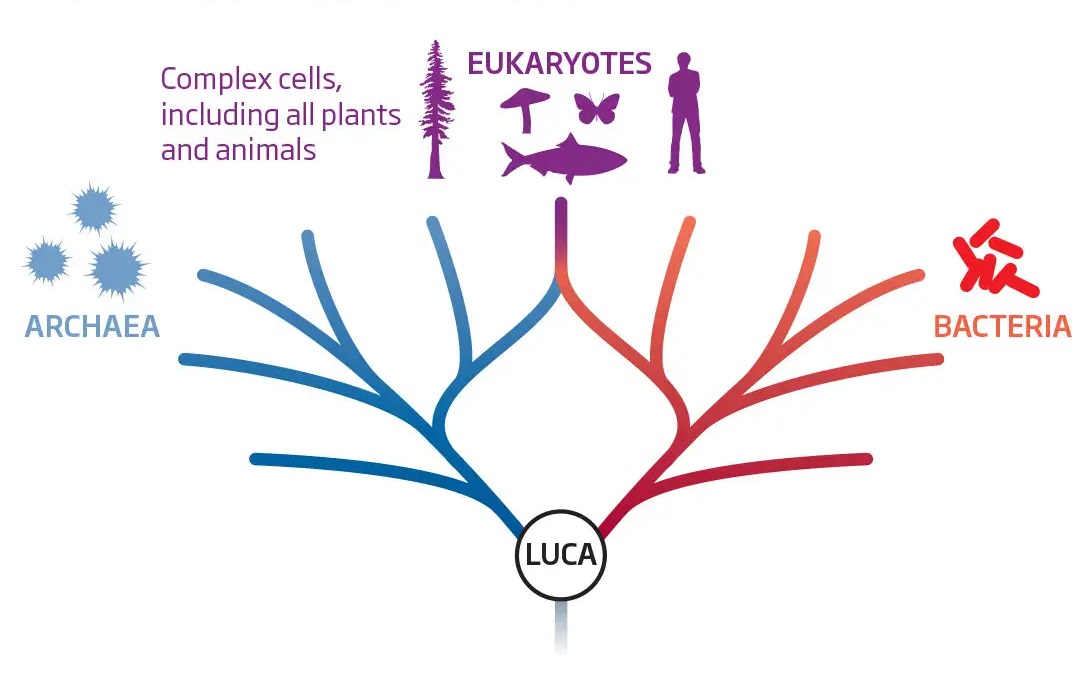
    • Researchers believe that all life forms— the Bacteria, the Archaea, and the Eukarya —originated from a single cell known as the last universal common ancestor (LUCA).
    • It is suggested to have been a “cellular organism that had a lipid bilayer and used DNA, RNA, and protein“.
    • There is a lack of clarity about direct fossil evidence of LUCA.
    • However, the shared features of modern genomes provide significant insights into this ancient ancestor.

    LUCA and the Molecular Clock:  

    • The molecular clock theory was proposed by molecular biologist Emile Zuckerkandl and biochemist Linus Pauling in the 1960s and later refined by biologist Motoo Kimura.
    • The theory allows scientists to reconstruct the evolutionary timeline.
    • According to the theory, the rate at which mutations are added or removed from a population’s genome is proportional to the rate of acquiring new mutations, which is constant.
    • By calibrating the molecular clock with known events, such as the emergence of the first mammals or the age of certain fossils, researchers can estimate the time between evolutionary events.

    Recent Research Findings on LUCA’s Age and Genome

    • Researchers at the University of Bristol and Exeter estimate that LUCA originated around 4.2 billion years ago, nearly 1 billion years earlier than previously thought. 
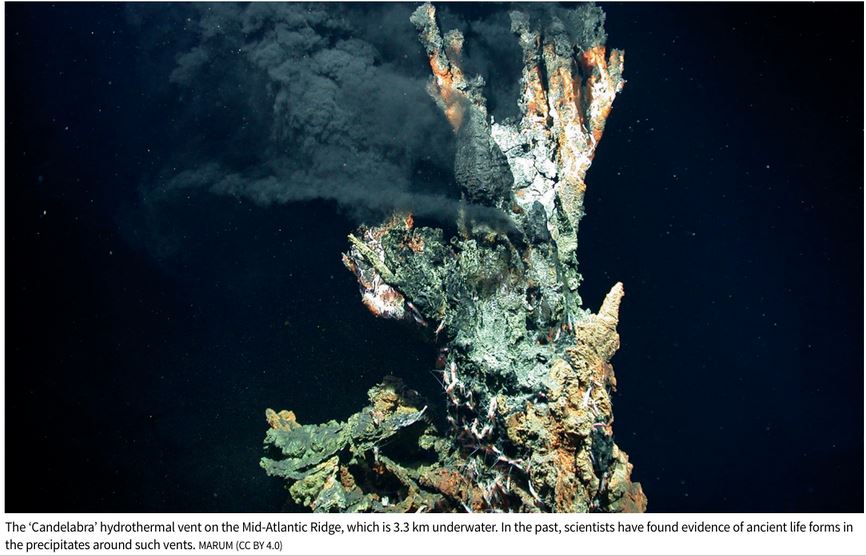
      • They obtained evidence from the 3.3 km deep Candelabra’ hydrothermal vent on the Mid-Atlantic Ridge.
    • LUCA had a small genome of about 2.5 million bases encoding 2,600 proteins, sufficient for survival in a unique niche.
    • Its metabolites may have created a secondary ecosystem for other microbes.
    • The presence of immunity genes in LUCA suggests it had to defend against viruses.

    Evidence Verification using Miller-Urey Experiment

    • In 1952, Stanley Miller and Harold Urey conducted an experiment at the University of Chicago, simulating lightning strikes on a mixture of methane, ammonia, and water, which resulted in the formation of amino acids.
    • This demonstrated that complex organic compounds could arise from inorganic compounds under the right conditions.

    Which is older: LUCA or fossils?

    • LUCA’s estimated origin at 4.2 billion years predates the earliest fossil records by almost 1 billion years.
    • Fossil records from the Pilbara Craton in Australia suggest life emerged around 3.4 billion years ago, but the study pushes this date back.

    Alternative Theories: 

    (1) Extraterrestrial Origin

    • Another prominent theory suggests that meteorites from space could have brought the building blocks of life to Earth.
    • This theory is supported by various discoveries.
    • In August 2019, French and Italian scientists reported finding 3.3 billion-year-old extraterrestrial organic material.
    • Japan’s Hayabusa 2 mission to the asteroid Ryugu detected more than 20 amino acids, further supporting the possibility of an extraterrestrial origin for the building blocks of life.

    (2) Oparin-Haldane Hypothesis

    • In the 1920s, Alexander Oparin and J.B.S. Haldane independently proposed theories regarding the origin of life.
    • They suggested that life originated from a “primordial soup” in a prebiotic environment on the young Earth.
    • This concept is now known as the Oparin-Haldane hypothesis.


    PYQ:

    [2012] Which one of the following sets of elements was primarily responsible for the origin of life on the Earth?

    (a) Hydrogen, Oxygen, Sodium

    (b) Carbon, Hydrogen, Nitrogen

    (c) Oxygen, Calcium, Phosphorus

    (d) Carbon, Hydrogen, Potassium