💥Join UPSC 2027,2028 Mentorship (July Batch) + XFactor Notes & Microthemes PDF

Distribution: yearly

  • New Asset Class proposed by SEBI

    Why in the News?

    • The markets regulator, SEBI, has proposed a new asset class designed to offer investment products positioned between mutual funds (MFs) and portfolio management services (PMS).
      • This new category aims to fill an opportunity gap for investors and offer greater flexibility in portfolio construction.

    Note:

    • PMS provides customized investment solutions to high net-worth individuals (HNIs) with a minimum investment limit of Rs 50 lakh.
    • MFs, on the other hand, have a much lower minimum investment limit of just Rs 100, managed by a professional fund manager.

    About the New Asset Class

    • The new asset class aims to provide an intermediate option with more flexibility in portfolio construction, helping investors avoid unregistered and unauthorized schemes.
    • It will have a risk-return profile between MFs and PMS, targeting investors with higher risk tolerance and larger investment amounts than those typical of MFs but lower than PMS.
    • The current range of investment products includes:
    1. MF schemes: Focused on retail investors,
    2. PMS: For HNIs, and
    3. Alternative investment funds (AIF): For sophisticated investors.

    How will investments in the new asset class work?

    • The new asset class will be introduced under the MF structure with necessary relaxations in prudential norms.
    • The minimum investment amount is proposed to be Rs 10 lakh per investor within the asset management company (AMC)/MF.
    • This high threshold is intended to deter retail investors while attracting those with investible funds between Rs 10 lakh and Rs 50 lakh.

    Significance of the New Asset Class:

    • SEBI noted that the gap between investment opportunities in MFs and PMS has led some investors towards unauthorized investment avenues.
    • The new asset class will help curb the proliferation of unregistered investment products and provide a structured and regulated option for investors.
    • SEBI emphasized that the new asset class would offer a regulated and structured investment suited to investors looking for opportunities between MFs and PMS.

    Investment Strategies:

    • Like MF schemes, the new asset class will provide options for Systematic Investment Plan (SIP), Systematic Withdrawal Plan (SWP), and Systematic Transfer Plan (STP).
    • AMCs can offer ‘investment strategies’ under a pooled fund structure with tailored redemption frequencies (daily, weekly, monthly, etc.).

    PYQ:

    [2021] Indian Government Bond Yields are influenced by which of the following?

    1. Actions of the United States Federal Reserve
    2. Actions of the Reserve Bank of India
    3. Inflation and short-term interest rates

    Select the correct answer using the code given below.

    (a) 1 and 2 only
    (b) 2 only
    (c) 3 only
    (d) 1, 2 and 3

  • CPCB plans to check violations in Plastic Waste Trading Regime 

    Why in the News?

    • The Central Pollution Control Board (CPCB) has started a national audit of about 800 plastic-waste recyclers across India.
      • This action follows the discovery that four firms in Karnataka, Maharashtra, and Gujarat issued nearly 600,000 fake certificates under the Extended Producer Responsibility (EPR) programme.

    About Central Pollution Control Board (CPCB): Overview

    • The Central Pollution Control Board (CPCB) is a statutory organization established in September 1974.
    • It was constituted under the Water (Prevention and Control of Pollution) Act, 1974.
    • CPCB is also entrusted with powers and functions under the Air (Prevention and Control of Pollution) Act, 1981.
    • It serves as a technical arm of the Ministry of Environment, Forests, and Climate Change, implementing the provisions of the Environment (Protection) Act, 1986.

    Principal Functions:

    • Water Pollution Control:
      • Promote the cleanliness of streams and wells in different states by preventing, controlling, and abating water pollution.
      • Oversee the National Water Quality Monitoring Program to collect, collate, and disseminate technical and statistical data relating to water pollution.
    • Air Pollution Control:
      • Improve the quality of air and prevent, control, or abate air pollution in the country.
      • Conduct air quality monitoring as part of air quality management.
      • Implement the National Air Monitoring Programme (NAMP) to determine current air quality status and trends, regulate pollution from industries, and provide background air quality data for industrial siting and town planning.

    Key Initiatives and Programs:

    • National Air Monitoring Programme (NAMP): Established to monitor air quality status and trends, and to control and regulate industrial pollution to meet air quality standards.
    • National Air Quality Index (NAQI): Provides real-time air quality data and trends.
    • Graded Response Action Plan (GRAP): A set of measures to be taken based on the severity of air pollution levels.
    • Clean Air Campaign: Initiatives aimed at reducing air pollution through public awareness and actionable measures.

    Role in Data Management:

    • CPCB collects, collates, and disseminates technical and statistical data related to water and air pollution.
    • Provides necessary data for regulatory and planning purposes, including industrial siting and urban planning.

    What is Extended Producer Responsibility (EPR) Programme?

    • Extended Producer Responsibility (EPR) means the responsibility of a producer for the environmentally sound management of the product until the end of its life.
    • India had first introduced EPR in 2011 under the:
    1. Plastic Waste (Management and Handling) Rules, 2011
    2. E-Waste Management and Handling Rules, 2011.
    • The EPR scheme requires businesses using plastic packaging to recycle a certain percentage of the plastic used in the previous two years.

    Implementation of EPR:

    • Registration: Producers must register with the Central Pollution Control Board (CPCB) and submit an EPR plan.
    • Collection Mechanisms: Producers set up collection centers, return schemes, or partner with authorized recyclers to manage waste.
    • Documentation: Producers are required to maintain detailed records of waste collected and processed and submit regular reports to the CPCB.
    • Compliance Audits: The CPCB conducts audits to ensure that producers comply with EPR requirements.

    Function of EPR Certificates:

    • Registered plastic waste recyclers generate EPR certificates by recycling plastic waste.
    • Every tonne of plastic recycled generates a certificate.
      • According to a CPCB report in May, nearly 3.7 million tonnes of recycled plastic generated certificates.
    • In 2022-23, about 18,000 companies using plastic packaging were registered with the CPCB, aiming to recycle about 3.3 million tonnes.

    Compliance and Targets:

    • Companies must recycle 70% of the packaging used in the previous two financial years for 2022-23 and 100% for 2023-24. Non-compliance with these targets can result in fines.
    • EPR certificates are uploaded on a dedicated portal maintained by the CPCB, allowing recyclers and buyers to trade online.

    PYQ:

    [2019] In India, ‘extended producer responsibility’ was introduced as an important feature in which of the following?

    (a) The Bio-medical Waste (Management and Handling) Rules, 1998

    (b) The Recycled Plastic (Manufacturing and Usage) Rules, 1999

    (c) The e-Waste (Management and Handling) Rules, 2011

    (d) The Food Safety and Standard Regulations, 2011

  • What is the International Centre for Audit of Local Governance?  

    Why in the news? 

    On July 18, CAG Girish Chandra Murmu inaugurated the International Centre for Audit of Local Governance (iCAL) in Rajkot, marking India’s first institute to set global standards for auditing local governance.

    How will iCAL work?

    • iCAL will serve as a platform for policymakers, administrators, and auditors connected with local governments to enhance collaboration and share best practices.
    • Objective: It aims to improve the independence and effectiveness of local government auditors through training, leadership development, and capacity-building initiatives.
    • Significance: iCAL will act as a think tank for addressing governance issues at the grassroots level through interactive workshops, knowledge-sharing sessions, and peer exchanges.

    How are local bodies audited in India?

    • India has a three-tier system consisting of the Union government, state governments, and local bodies (both urban and rural).
    • Local bodies like Panchayats and Urban Local Bodies (ULBs) are audited by various entities:
      • State-level offices like the Examiner of Local Fund Accounts (ELFA)/Director of Local Fund Accounts (DLFA) audit the utilisation of state funds by local bodies.
      • CAG conducts audits of all funds at the central and state levels, including those of local bodies. The CAG also advises and supports ELFA/DLFA.

    Why was a need felt for it?

    • Increased Funding and Need for Proper Auditing: With significant funds flowing to local bodies, there is a pressing need for improved auditing practices to ensure proper utilisation and financial management.
    • Global Practices and Collaboration: There is a need to promote global good practices and institutionalised collaboration among supreme audit institutions (SAIs) to enhance local government audit practices and share best practices.
    • Addressing Inefficiencies: Concerns have been raised about inefficiencies in local body financial management and reporting, as highlighted by the Reserve Bank of India’s 2022 report. iCAL aims to address these inefficiencies through better auditing practices and capacity building.

    Way forward: 

    • Expand Capacity Building and Training Programs: Enhance iCAL’s focus on training and capacity-building for auditors and local government officials.
    • Foster International Collaboration and Knowledge Sharing: Strengthen partnerships with global audit institutions and engage in knowledge exchange initiatives.

    Mains PYQ: 

    Q In the absence of well – educated and organised local-level government systems, Panchayats and Samitis have remained mainly political institutions and not effective instruments of governance. Critically Discuss. (UPSC IAS/2015)

  • The Green Revolution in Maize

    Why in the news? 

    Over the past two decades, India’s maize production has more than tripled, emerging as a private sector-driven green revolution success story. Maize has transitioned from being primarily a feed crop to also serving as a fuel crop.

    What was the Green Revolution?

    • Began in 1968 with the introduction of high-yielding variety (HYV) seeds, especially for wheat and rice, developed by agronomist Norman Borlaug
    • Institutions like CIMMYT (International Maize and Wheat Improvement Center) and IARI (Indian Agricultural Research Institute), led by scientists like Norman Borlaug and M S Swaminathan, played a crucial role.
    • The Green Revolution is credited to M.S. Swaminathan, known as the “Father of the Indian Green Revolution”, who introduced Borlaug’s wheat varieties and other technologies.
    • The initiative focused on increasing agricultural productivity through advanced breeding techniques, fertilizers, and irrigation methods.
    • Wheat production increased from 12 million tons in 1964-65 to 20 million tons in 1970-71.India became self-sufficient in food grain production and a major exporter

    Present India’s Maize Production called as a Green Revolution in Maize

    • Significant Production Increase: Over the last two decades, India’s maize production has surged from 11.5 million tonnes in 1999-2000 to over 35 million tonnes in 2023-24, showcasing a remarkable increase in both yield and output.
    • Private Sector Leadership: This growth has been largely driven by the private sector, with more than 80% of the maize area planted with high-yielding hybrids developed by private seed companies, indicating a successful private sector-led green revolution.
    • Diverse Utilization: Maize in India has evolved from being primarily a feed crop for poultry and livestock to also being a vital industrial crop used for starch and ethanol production, reflecting its expanded role in the economy.

    On Starch and Ethanol Production

    • Maize contains 68-72% starch, with significant industrial applications in textiles, paper, pharmaceuticals, food, and beverages.
    • Maize is emerging as a key feedstock for ethanol production, especially for blending with petrol.
    • IARI has developed a waxy maize hybrid with high amylopectin content, enhancing its suitability for ethanol production.
    • The new Pusa Waxy Maize Hybrid-1 has 71-72% starch with 68-70% recoverable, increasing ethanol yield per tonne.

    Can India adopt new strategies? (Way forward)

    • India can adopt new strategies through innovative breeding techniques like the doubled haploid (DH) technology used by CIMMYT.
    • The DH facility in Karnataka speeds up the development of genetically pure inbred lines, enhancing the efficiency of maize breeding.
    • IARI’s waxy maize hybrid is ready for field trials and commercial release, potentially boosting ethanol production.
    • Collaboration between public sector institutions and private seed companies can drive the adoption of high-yielding, disease-resistant maize varieties.
    • Private sector-bred hybrids account for over 80% of India’s maize area, indicating strong potential for further growth and innovation in maize production.

    Mains PYQ: 

    Q Explain various types of revolutions, that took place in Agriculture after Independence in India. How these revolutions have helped in poverty alleviation and food security in India? (UPSC IAS/2017)

  • Bombay HC quashes Exemption from RTE Quota for Private Schools  

    Why in the News?

    The Bombay High Court has cancelled the Maharashtra government’s new rule that allowed private schools within 1 kilometer of government or government-aided schools to avoid reserving 25% of their seats for students from weaker sections and disadvantaged groups.

    Right to Education (RTE) Act: Overview

    • The Right to Education (RTE) Act, 2009 ensures free and compulsory education as fundamental right under Article 21A of the Indian Constitution.
    • It mandates that every child has the right to full-time elementary education of satisfactory and equitable quality in a formal school that meets certain essential norms and standards.
    • Key Provisions:
      • The RTE Act provides for free and compulsory education for all children between 6 and 14 years.
      • Schools must be available within a prescribed distance from the child’s residence to ensure accessibility.
      • The Act ensures the provision of adequate teachers and the establishment of standards for their training and quality.
    • Teacher Qualification: The teacher must pass the Teacher Eligibility Test (TET), which is administered by the respective government authority. The National Council for Teacher Education (NCTE) has established the minimum qualifications required for a person to be eligible for appointment as a teacher for classes I to VIII.
    • The RTE Act does NOT apply to Minority institutions.

    Section 12(1) (C) of the RTE Act:

    • Section 12(1) (C) requires private unaided and specified category schools to reserve at least 25% seats for children from economically weaker sections and disadvantaged groups.
    • This provision aims to promote social inclusion and ensure that children from all backgrounds have access to quality education.
    • The government reimburses schools for the expenses incurred for admitting these children, based on per-child expenditure incurred by the state.
    • Children from economically weaker sections and disadvantaged groups benefit from this Section as it provides them access to private schooling.
    • This section aims to contest education apartheid and bring parity and equality of opportunity for all children.

    Details of the Exemption Rule in Maharashtra

    • The notification stated that private unaided schools within one kilometer of a government or government-aided school would not need to reserve 25% of seats for socio-economically backward students.
    • Students in these areas would first be considered for admission to nearby government or government-aided schools.
    • The exemption also applied to future private schools established within a one-kilometer radius of government or government-aided schools.
    • If no such schools existed in the vicinity, private schools would be identified for RTE admissions.

    Similar Exemptions in Other States

    • Maharashtra joined Karnataka and Kerala in implementing this regime to exempt private schools from RTE admissions.
    • Karnataka introduced the rule in December 2018, referencing Kerala’s rules introduced in 2011.
    • In Kerala, the fee concession is available to RTE quota students only if there are no government or aided schools within one kilometer for Class 1 students.

    Reasons for Introducing Exemptions

    • Karnataka’s Law Minister stated in 2018 that the primary intention of RTE is to provide education to all classes of students.
    • Allowing parents to admit children to private schools despite nearby government schools resulted in a drop in enrollment ratios in government schools.
    • Private schools and teachers’ organizations highlighted that state governments often failed to reimburse fees for students admitted through the RTE quota.
      • Section 12(2) of the RTE Act binds state governments to reimburse expenses incurred by schools per child or the fee amount, whichever is less.
      • In Maharashtra, the Maharashtra English School Trustees Association (MESTA) threatened to boycott RTE admissions last December due to pending reimbursements of Rs 1,800 crore.

    PYQ:

    [2022] The Right of Children to Free and Compulsory Education Act, 2009 remains inadequate in promoting incentive-based systems for children’s education without generating awareness about the importance of schooling. Analyse.

    [2018] Consider the following statements:

    1. As per the right to education (RTE) Act, to be eligible for appointment as a teacher in a state, a person would be required to possess the minimum qualification laid down by the concerned State council of Teacher education.
    2. As per the RTE Act, for teaching primary classes, a candidate is required to pass a Teacher Eligibility Test conducted in accordance with the National Council of Teacher Education guidelines.
    3. In India, more than 90 % of teacher education institutions are directly under the State Governments.

    Which of the statements given above is/are correct?

    (a) 1 and 2
    (b) 2 only
    (c) 1 and 3
    (d) 3 only

  • Bhil Tribe have again demanded a separate ‘Bhil Pradesh’

    Why in the News?

    A large number of people from the Bhil tribe recently gathered at a rally in Rajasthan’s Mangarh Dham to raise the demand for an independent ‘Bhil state’.

    Background of the Bhil Pradesh Demand

    • The idea of a tribal state, comprising parts of Rajasthan, Madhya Pradesh, Gujarat, and Maharashtra, has been discussed previously.
    • The demand for a separate tribal state in western India was put forward by the Bharatiya Tribal Party (BTP) formed in 2017.
    • The Bhil community has been demanding that 49 districts be carved out of the four states to establish Bhil Pradesh.
    • The demand for Bhil Pradesh has been raised repeatedly since Independence.

    Historical Context

    • Bhil social reformer and spiritual leader Govind Guru first raised the demand for a separate state for tribals in 1913.
    • The demand followed the Mangarh massacre, where hundreds of Bhil tribals were killed by British forces.
    • The massacre took place six years before the Jallianwala Bagh massacre and is sometimes referred to as the “Adivasi Jallianwala”.

    Reasons for the Demand

    • Earlier, the tribal-majority regions were a single entity but were divided post-Independence.
    • According to the 2011 census, tribals comprise almost 14% of Rajasthan’s population.
    • Several Union governments have brought various laws and schemes for tribals but have been slow in implementation.

    Example of Implementation Issues

    • The Provisions of the Panchayats (Extension to Scheduled Areas) Act, 1996, aimed to decentralize governance and empower gram sabhas in tribal areas.
    • The Rajasthan government adopted the law in 1999, but its rules were only formulated in 2011.
    • Many people, including local leaders, are still unaware of the law.

    PYQ:

    [2013] Consider the following pairs :

    Tribe: State

    1. Limboo Limbu : Sikkim

    2. Karbi : Himachal

    3. Dongaria Kondh : Odisha

    4. Bonda : Tamil Nadu

    Which of the above pairs are correctly matched?

    (a) 1 and 3 only

    (b) 2 and 4 only

    (c) 1, 3 and 4 only

    (d) 1, 2, 3 and 4

  • Sighting of Peru’s uncontacted Mashko Piro people

    Why in the News?

    An NGO has released rare photographs of the Mashco Piro tribespeople, one of the world’s 100-odd uncontacted tribes.

    Who are the Mashko Piro people?

    • The Mashco Piro tribe, possibly numbering over 750, are nomadic hunter-gatherers.
    • They live in the Amazon jungles of the Madre de Dios Region, near Peru’s border with Brazil and Bolivia.
    • Almost all uncontacted tribes, including the Mashco Piro, live in the jungles of the Amazon and Southeast Asia.
    • The Mashco-Piro speak a dialect of the Piro language.
    • The tribe is highly reclusive and only occasionally contacts the Yine people, another native group.

    Threats from the logging activities

    • Logging companies has been allotted 53,000 hectares in the Madre de Dios forests to extract cedar and mahogany.
    • The Mashco Piro have expressed their disapproval of the logging companies through the Yine people, reporting feelings of pressure and upset due to company assaults.

    Historical Context:

    • The Mashco Piro’s territory was invaded during Peru’s rubber boom in the 1880s, resulting in displacement, enslavement, and mass killings.
    • Survivors moved further upstream on the Manu River and have lived in isolation since then.

    Protective measures from the Government

    • In 2002, the Peruvian government established the Madre de Dios Territorial Reserve to protect the Mashco Piro’s territory.
    • However, large parts of their traditional lands lie outside the reserve and have been sold as logging concessions.
    • The Peruvian government has forbidden all contact with the Mashco Piro to prevent the spread of diseases to which the tribe has no immunity.
    • As logging companies encroach on their territories, the Mashco Piro have nowhere left to go.

    PYQ:

    [2016] Consider the following pairs:

    Community sometimes in the affairs of mentioned in the news

    1. Kurd : Bangladesh
    2. Madhesi : Nepal
    3. Rohingya : Myanmar

    Which of the pairs given above is/are correctly matched?

    (a) 1 and 2

    (b) 2 only

    (c) 2 and 3

    (d) 3 only

  • How do Assam’s Foreigners Tribunals function? 

    Why in the news? 

    On July 5, the Assam government instructed the Border wing of the State police not to refer cases of non-Muslims who entered India illegally before 2014 to the Foreigners Tribunals (FTs).

    About Foreigners Tribunals: 

    • Foreigners Tribunals are quasi-judicial bodies established to determine if a person staying illegally in India is a “foreigner” or not.
    • They were set up under the Foreigners (Tribunals) Order, 1964, enacted by the central government under the Foreigners Act, 1946.
    • Initially, only the central government could set up these tribunals. But a 2019 amendment empowered district magistrates in all states and UTs to establish Foreigners Tribunals.
    • The tribunals have the powers of a civil court to summon witnesses, require document production, and examine evidence.

    Decision-Making Process of Foreigners Tribunals:

    • Referral: Individuals suspected of being foreigners are referred to FTs by local authorities or border police. This referral can be based on various factors, including lack of documentation or doubtful voter status.
    • Notice Issuance: Upon receiving a reference, the FT issues a notice to the person alleged to be a foreigner. This notice is served in English or the state’s official language.The person has 10 days to respond to the notice and an additional 10 days to submit evidence supporting their claim of citizenship.
    • Submission of Evidence: The individual must present evidence to prove their Indian citizenship. This may include documents like birth certificates, school certificates, land records, or other official records.
    • Verification: The tribunal examines the documents and evidence provided, and may call witnesses or seek additional information if necessary.
    • Hearing: The FT has the authority to summon and examine the individual on oath, and to require the production of additional documents. The tribunal operates with certain powers of a civil court.
    • Judgment: If the evidence provided is deemed insufficient to prove citizenship, the individual may be declared a foreigner. If evidence is adequate, the person is recognized as an Indian citizen.
    • Detention and Deportation: If declared a foreigner and unable to appeal successfully, the person may be sent to a detention center (transit camp) for deportation.

    Role of Border Police:

    • Detection and Referral: The Assam Police Border Organisation is responsible for detecting illegal foreigners and referring suspicious cases to FTs.
    • Patrolling and Defence: They patrol the India-Bangladesh border, work with the Border Security Force, and maintain a second line of defense.
    • Monitoring: They monitor people settled in riverine and char (sandbar) areas.
    • Cases of ‘D’ Voters: They refer cases of ‘D’ (doubtful) voters to FTs as directed by the Election Commission of India.
    • NRC Appeals: People excluded from the NRC can appeal to the FTs through this wing to prove their citizenship.

    Challenges and Criticisms:

    • Supreme Court Rulings: The Supreme Court has overturned FT orders citing grave miscarriages of justice, such as the wrongful declaration of a deceased farmer, Rahim Ali, as a foreigner.
    • Corruption and Malpractice: Observations have been made about corruption within the system, with allegations of notices being improperly served.

    Conclusion: Need to Implement stricter oversight and auditing of Foreigners Tribunals to ensure fairness and adherence to legal procedures. Regular reviews and monitoring can help prevent corruption and malpractice, ensuring that notices are properly served and tribunal processes are transparent.

    Mains PYQ: 

    Q How far are India’s internal security challenges linked with border management particularly in view of the long porous borders with most countries of South Asia and Myanmar? (UPSC IAS/2013)

  • What is OpenAI’s secret Project ‘Strawberry’?

    Why in the News?

    • US-based OpenAI emerged as a major player with its AI chatbot ChatGPT, capable of answering questions and processing images.
      • OpenAI is now reportedly developing a new AI model with improved reasoning capabilities, potentially changing the AI landscape.

    What is Project Strawberry?

    • Nearly six months ago, OpenAI’s secretive Project Q* (Q-Star) gained attention for its innovative approach to AI training.
    • OpenAI is now working on a new reasoning technology under the code name “Strawberry” believed to be the new name for Project Q*.
    • Strawberry aims to enable AI models to plan ahead, autonomously search the internet, and conduct deep research.

    What are Large Language Models (LLMs)?

    • LLMs are advanced artificial intelligence (AI) systems designed to understand, generate, and process human language.
    • They are built using deep learning techniques, particularly neural networks, and are trained on vast amounts of text data.

    Difference from Existing AI Models

    • Existing Large Language Models (LLMs) can summarize texts and compose prose but struggle with common sense problems and multi-step logic tasks.
    • Current LLMs cannot plan ahead effectively without external frameworks.
    • Strawberry models are expected to enhance AI reasoning, allowing for planning and complex problem-solving.
    • These models could enable AI to perform tasks that require a series of actions over an extended time, potentially revolutionizing AI’s capabilities.

    Potential Applications of Strawberry Models

    • Advanced AI models could conduct experiments, analyze data, and suggest new hypotheses, leading to breakthroughs in sciences.
    • In medical research, AI could assist in drug discovery, genetics research, and personalized medicine analysis.
    • AI could solve complex mathematical problems, assist in engineering calculations, and participate in theoretical research.
    • AI could contribute to writing, creating art and music, generating videos, and designing video games.

    Ethical Considerations  

    • Impact on Jobs: Improved AI capabilities may intensify concerns about job displacement and the ethical implications of AI reproducing human work.
    • Power Consumption and Ethics: The vast amounts of power required to run advanced AI models raise environmental and ethical questions.

    PYQ:

    [2020] With the present state of development, Artificial Intelligence can effectively do which of the following?

    1. Bring down electricity consumption in industrial units.
    2. Create meaningful short stories and songs.
    3. Disease diagnosis.
    4. Text-to-Speech Conversion.
    5. Wireless transmission of electrical energy.

    Select the correct answer using the code given below:

    (a) 1, 2, 3 and 5 only
    (b) 1, 3 and 4 only
    (c) 2, 4 and 5 only
    (d) 1, 2, 3, 4 and 5

  • Places in News: Niger, Ivory Coast and Pacific Island States

    Why in the News?

    Details

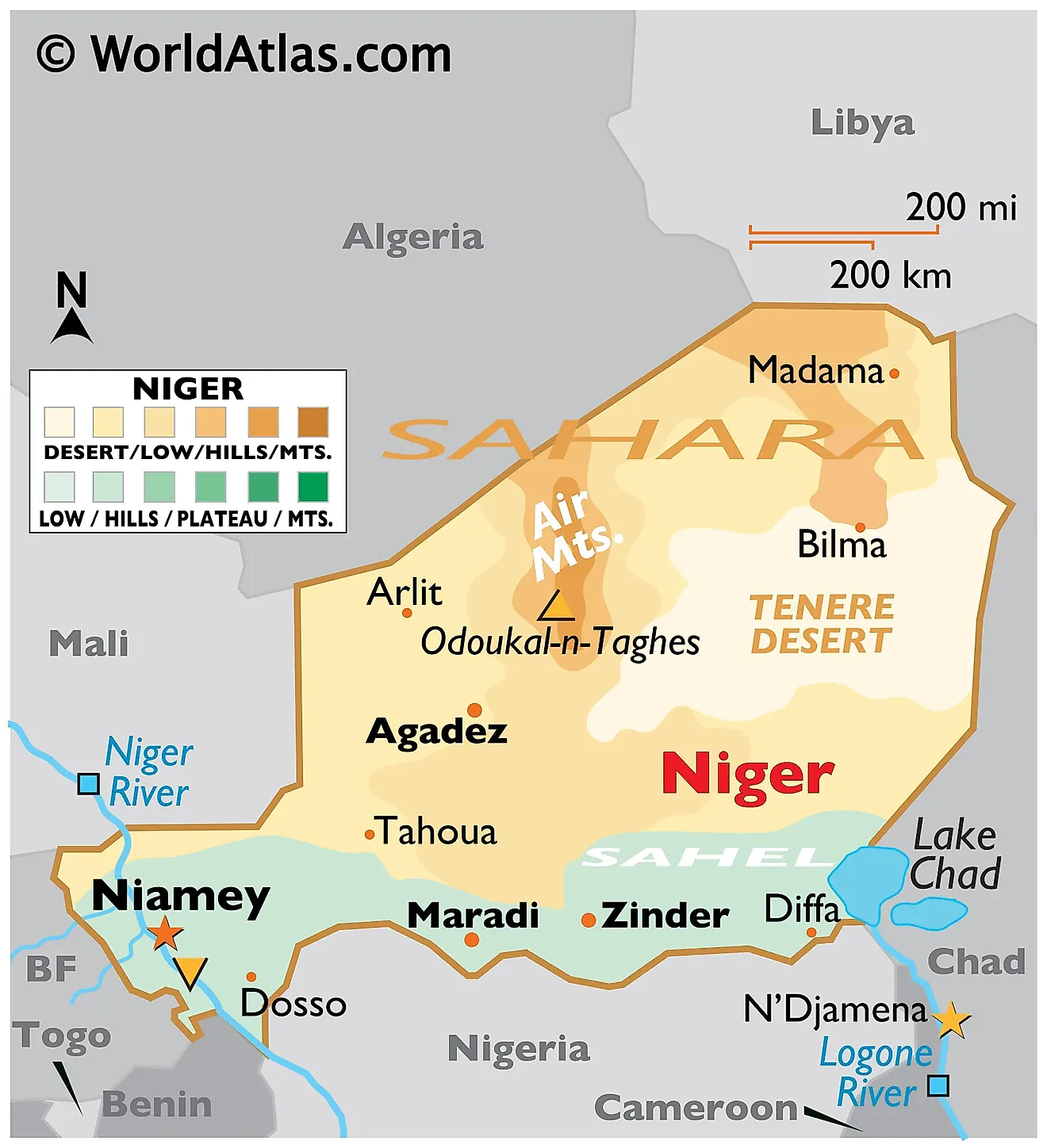
    Niger

    • Turkish delegation visited to strengthen military cooperation with the junta, shifting alliances to Turkey and Russia.
    Geography: Landlocked in West Africa, bordered by Algeria, Libya, Chad, Nigeria, Benin, Burkina Faso, and Mali. Population ~26.3 million; capital Niamey.

    Key Points:

    • Gained independence from France in 1960.
    • Political instability with coups and a military junta in 2023.
    • It faces significant challenges including desertification, water scarcity, and economic development issues.
    • It is one of the world’s poorest nations despite having large uranium reserves.

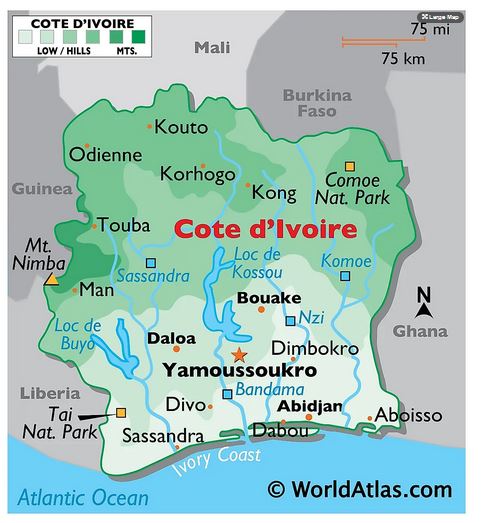
    Ivory Coast

    • Recent discoveries have revealed substantial oil reserves estimated at six billion barrels, potentially making Ivory Coast a net oil exporter by the end of the decade.
    • The Baleine field, operated by Eni, aims to reach significant production levels by 2026.
    Geography: Located on the southern coast of West Africa; bordered by Liberia, Guinea, Mali, Burkina Faso, Ghana, and the Gulf of Guinea. Population ~30.9 million; capital Yamoussoukro.

    Key Points:

    • Gained independence from France in 1960.
    • Experienced political instability, now relatively stable since 2016.
    • Fast-growing economy dependent on cocoa, coffee, and expanding into gold mining and oil refining.
    • Abidjan is a major hub for West African economic activities.

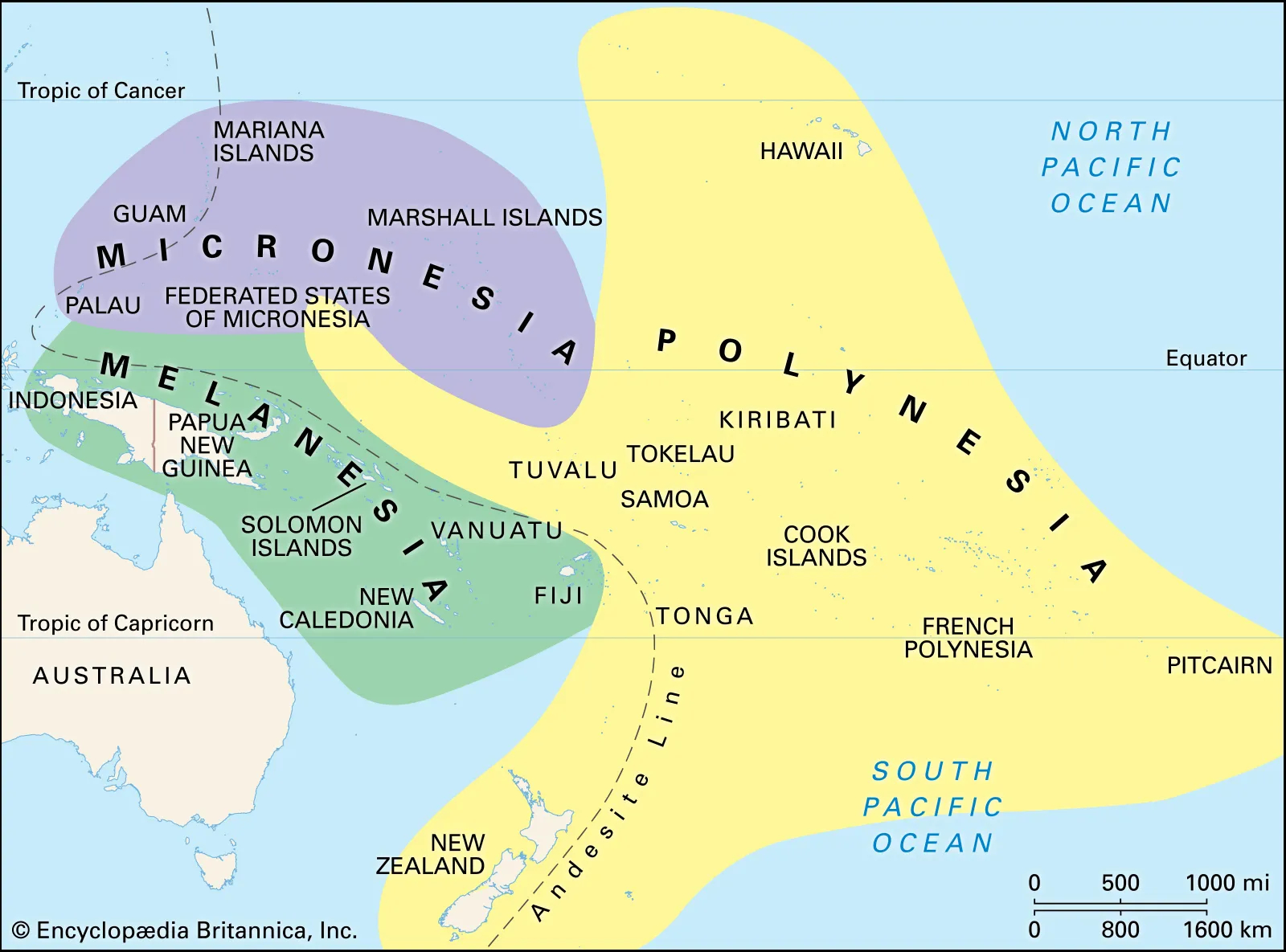
    Pacific Island States

    • Participated in a summit with Japan expressing concerns over military build-ups and the need for regional peace and security.
    • Geography: Vast region in the Pacific Ocean, categorized into Melanesia, Micronesia, and Polynesia; diverse climates and ecosystems.
    • They face challenges such as climate change impacts, biodiversity loss, and varying levels of development.
    • Economic activities include tourism, agriculture (especially coconut and palm oil), and fishing.
    • These islands play a crucial role in global biodiversity and climate resilience efforts.


    PYQ: 

    [2022] Consider the following pairs:

    Region often mentioned in the news: Country

    1. Anatolia: Turkey
    2. Amhara: Ethiopia
    3. Cabo Delgado: Spain
    4. Catalonia: Italy

    How many pairs given above are correctly matched?

    (a) Only one pair

    (b) Only two pairs

    (c) Only three pairs

    (d) All four pairs

    [2018] Consider the following pairs:

    Towns sometimes mentioned in news: Country

    1. Aleppo: Syria

    2. Kirkuk: Yemen

    3. Mosul: Palestine

    4. Mazar-i-Sharif:  Afghanistan

    Which of the pairs given above are correctly matched?

    (a) 1 and 2

    (b) 1 and 4

    (c) 2 and3

    (d) 3 and 4