💥Join UPSC 2027,2028 Mentorship (July Batch) + XFactor Notes & Microthemes PDF

Distribution: yearly

  • 2025 to be International Year of Quantum Science and Technology

    Why in the News?

    • The United Nations has designated 2025 as the ‘International Year of Quantum Science and Technology’ to increase public awareness about the significance of quantum science and its applications.
      • This initiative, led by Mexico and supported by nearly 60 countries, aims to promote activities at all levels to highlight the importance of quantum science and technology worldwide.
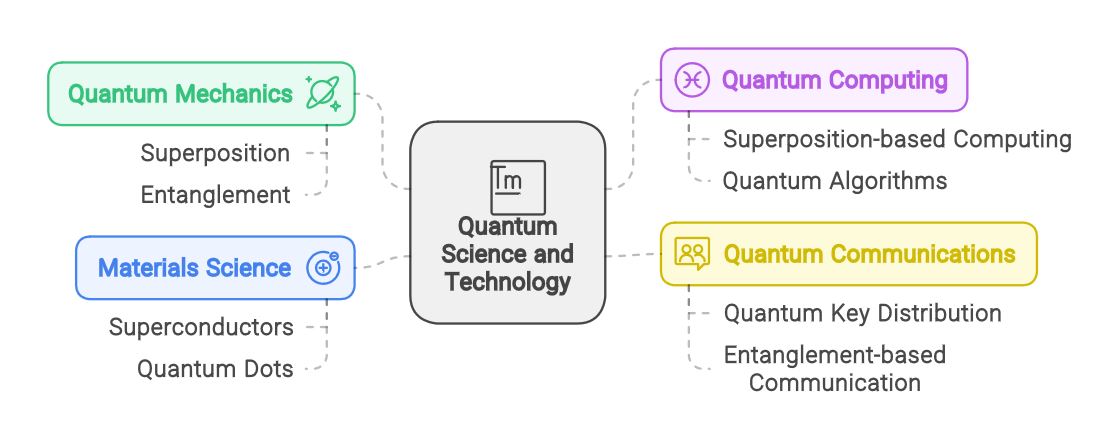
    International Year of Quantum S&T

    • Growing Relevance: Quantum science and technologies, especially quantum computing, have gained prominence in public discourse due to their potential transformative impact on various fields.
    • Anniversary of Heisenberg’s Work: The proclamation coincides with the upcoming centenary of Werner Heisenberg’s groundbreaking paper on quantum mechanics, published in 1925.
    • Support from International Bodies: The proclamation has received endorsements from various international organisations, including the International Union of Pure and Applied Physics and the International Union of Pure and Applied Chemistry.

    What does one mean by Quantum?

    • “Quantum” refers to the smallest discrete unit of any physical quantity involved in an interaction according to quantum theory.
    • In classical physics, many properties, such as energy and momentum, are thought to be continuous and infinitely divisible.
    • However, in quantum mechanics, certain properties, like energy levels and the behaviour of particles, are quantised, meaning they can only exist in specific discrete amounts or levels.

    What is Quantum Theory?

    • Quantum theory is a fundamental theory in physics that provides a description of the physical properties of nature at the scale of atoms and subatomic particles.
    • Quantum mechanics differs from classical physics in that energy, momentum, and angular momentum.

    Development in Quantum Theory So Far

    • Planck’s assumption: In 1900, Planck made the assumption that energy was made of individual units or quanta.
    • Albert Einstein’s theory: In 1905, Albert Einstein theorized that not just the energy, but the radiation itself was quantized in the same manner.
    • Louis de Broglie theory: In 1924, Louis de Broglie proposed that there is no fundamental difference in the makeup and behaviour of energy and matter; on the atomic and subatomic level either may behave as if made of either particles or waves. This theory became known as the principle of wave-particle duality: elementary particles of both energy and matter behave, depending on the conditions, like either particles or waves (wave-particle duality).
    • Heisenberg proposed: In 1927, Werner Heisenberg proposed that precise, simultaneous measurement of two complementary values – such as the position and momentum of a subatomic particle – is impossible. Contrary to the principles of classical physics, their simultaneous measurement is inescapably flawed; the more precisely one value is measured, the more flawed will be the measurement of the other value. This theory became known as the uncertainty principle, which prompted Albert Einstein’s famous comment, “God does not play dice.”

    What is Entanglement?

    • Entanglement was another of several weird properties exhibited by these tiny particles.
    • Two particles, having ‘interacted’ with each other at some stage, were found to have got ‘entangled’ in a way that the behaviour of one produced an instantaneous reaction in the other even if the two were no longer connected in any way and were separated by very large distances.
    • The entanglement property opened up new technological possibilities first time that it was possible to ‘teleport’ the quantum states of a particle to another location without the particle moving anywhere and without a medium.

    What is Superposition?

    • It’s a phenomenon where, a particle exists simultaneously at multiple locations, known as superposition.
    • The chance of finding the particle at any given place was dictated by probabilistic calculations, and once it was found, or observed, at one location, it ceased to exist at all other places.

    What is Quantum Computing?

    • Quantum computing is a new and super powerful way of doing computer stuff.
    • Instead of using regular computer bits that are either 0 or 1, quantum computers use special bits called qubits that can be both 0 and 1 at the same time, thanks to a thing called “quantum superposition.”
    • This allows them to do lots of calculations all at once, making them really fast at solving certain types of problems.

    Back2Basics: National Quantum Mission (NQM)

    Details
    Mission Duration 2023-2031
    Implementing Authority Department of Science and Technology (DST) under the Ministry of Science & Technology
    India’s Position Seventh country to have a dedicated quantum mission after the US, Austria, Finland, France, Canada, and China
    Focus Areas
    • Intermediate-scale quantum computers with 50-100 physical qubits in 5 years and 50-1000 physical qubits in 8 years
    • Quantum computation, Quantum communication, Quantum Sensing & Metrology, Quantum Materials & Devices
    Development
    • High-sensitivity magnetometers for precision timing, communications, and navigation
    • Satellite-based secure quantum communications within India and with other countries
    • Design and synthesis of quantum materials like superconductors, novel semiconductor structures, and topological materials
    Thematic Hubs Establishment Four Thematic Hubs (T-Hubs) would be set up in top academic and National R&D institutes on the domains of Quantum Technology:

    1. Quantum computation
    2. Quantum communication
    3. Quantum Sensing & Metrology
    4. Quantum Materials & Devices

    PYQ:

    [2022] Which one of the following is the context in which the term “Qubit” is mentioned?

    (a) Cloud Services

    (b) Quantum Computing

    (c) Visible Light Communication Technologies

    (d) Wireless Communication Technologies

  • How SpaceX’s Starship can revolutionise space travel and exploration?

    Why in the News?

    • SpaceX’s Starship rocket completed its first fully successful test flight. This test flight brings SpaceX closer to its goal of creating a fully reusable rocket system, a development that could revolutionize space exploration and travel.

    What is Starship?

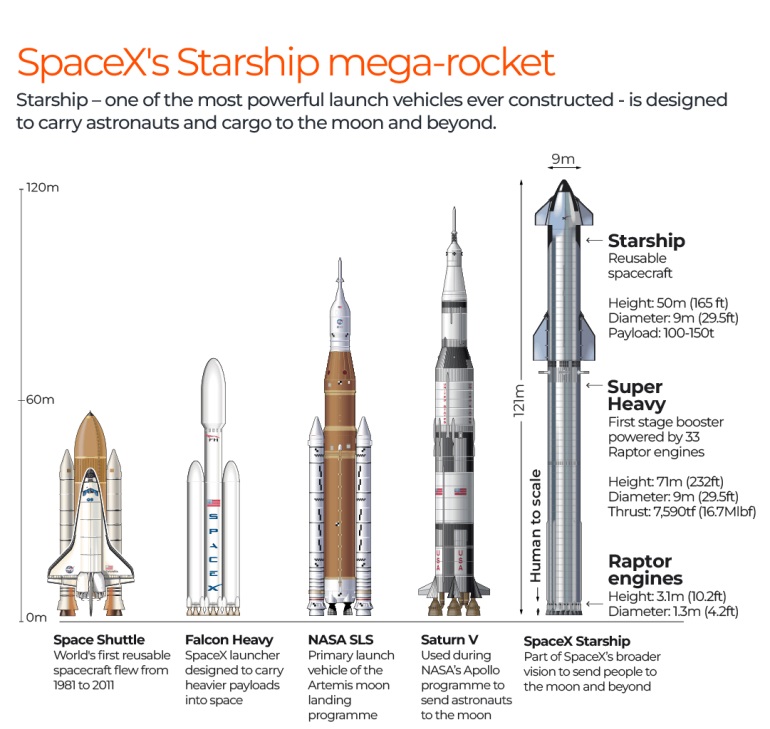
    • Starship is a two-stage heavy lift-off vehicle designed for crew and cargo transport to Earth orbit, the Moon, Mars, and beyond.
    • It stands nearly 120 meters tall, surpassing the Saturn V rocket.
    • The Super Heavy booster is powered by 33 Raptor engines, generating significant thrust, surpassing existing rocket systems like NASA’s Space Launch System (SLS).
    • Raptor engine fuel uses a mix of liquid oxygen and liquid methane, enabling efficient propulsion for the rocket.

    Cost Reduction and Efficiency with Starship

    • Starship can carry up to 150 tonnes of payload to low-Earth orbit.
    • It can be refuelled in space, thereby promising a significant reduction in the cost of space travel.
    • In-orbit refuelling allows Starship to operate like an aeroplane, reducing downtime between missions and maximizing efficiency.
    • Starship’s fully reusable design minimizes the need for costly hardware replacement, unlike traditional rocket systems.

    Scientific Benefits of Starship

    • Enhanced Payload Capability: Starship’s capacity for heavy payloads enables the launch of larger space telescopes and equipment for lunar and Martian missions.
    • Exploration Potential: Scientists can deploy larger and more sophisticated instruments, such as drilling rigs, to explore the Moon and Mars in unprecedented detail.
    • Sample Return Missions: Starship’s capability to return to Earth facilitates the retrieval of valuable samples from other planets, aiding in scientific research and understanding.

    PYQ:

    [2018] With reference to India’s satellite launch vehicles, consider the following statements:

    1. PSLVs launch satellites useful for Earth resources monitoring whereas GSLVs are designed mainly to launch communication satellites.
    2. Satellites launched by PSLV appear to remain permanently fixed in the same position in the sky, as viewed from a particular location on Earth.
    3. GSLV Mk III is a four-stage launch vehicle with the first and third stages using solid rocket motors, and the second and fourth stages using liquid rocket engines.

    Which of the statements given above is/are correct?

    (a) 1 only
    (b) 2 and 3
    (c) 1 and 2
    (d) 3 only

  • Portable Optical Atomic Clock for accurate timekeeping at Sea

    Why in the News?

    • Atomic clocks power GPS systems, guiding us in navigation, emergencies, and military operations.
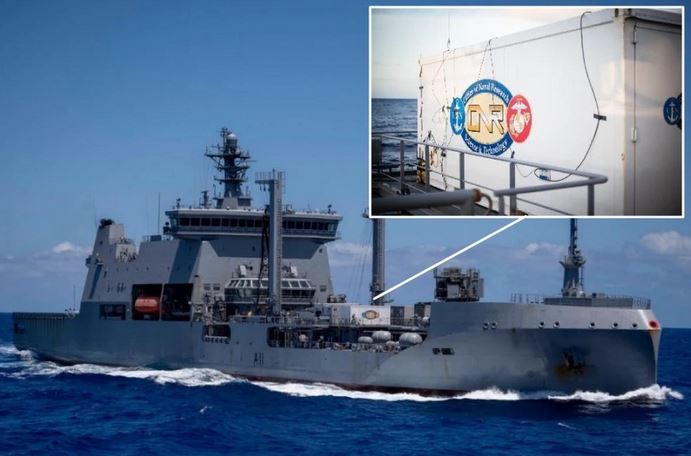
      • Scientists are developing optical atomic clocks to enhance timekeeping accuracy for Navies.

    What are Atomic Clocks?

    • Atomic clocks are accurate timekeeping devices that use the vibrations of atoms as a precise measure of time.
    • They rely on the natural oscillations of atoms, usually Caesium or Rubidium atoms, which are extremely stable and predictable.
    • This stability allows atomic clocks to keep time with extraordinary accuracy, often losing or gaining less than a second over millions of years.
      • However they are big, need a lot of power, and are expensive, so they’re mostly used in big research places.

    Working Principle:

    • Use of Stable Atoms: Atomic clocks use stable atoms like Cs-133 to keep time really accurate.
    • Atom Energy Levels: Atoms have energy levels like steps on a ladder, and they move between these levels when they’re excited.
    • Creating Resonance: Cesium atomic clocks make caesium atoms vibrate by using microwave radiation at a certain frequency.
    • Defining Time: One second is how long it takes for caesium atoms to vibrate a certain number of times, which sets the standard for time.
    • Accuracy Control: Atomic clocks keep themselves accurate by constantly adjusting to make sure they’re vibrating at the right rate.

    Portable Optical Atomic Clocks for Maritime Use

    • New portable optical atomic clocks for ships are more accurate and durable, making them suitable for use at sea.
    • These clocks are the best at sea, which is a big deal for keeping time on ships.

    How Optical Atomic Clocks Are Different?

    • Use of Laser: Optical atomic clocks are even more accurate because they use lasers instead of microwaves.
    • Operating Frequency: They work at higher frequencies, which means they can measure smaller time intervals more precisely.
    • Narrow Linewidths: Optical atomic clocks are really stable because they have a narrow range of frequencies, which helps them stay accurate.

    Testing and Applications of Portable Optical Atomic Clocks

    • Initial Testing: Scientists tested the new clocks and found they were really stable and accurate, which is a big deal for keeping time.
    • Comparative Performance: These new clocks worked better than old ones, showing they could change how we keep time.
    • Sea Trials: Tests at sea showed the clocks worked well even on a moving ship, proving they could be used for navigation and other important tasks.

    Do you know?

    • Three rubidium atomic clocks and six hydrogen maser clocks onboard the Indian Regional Navigation Satellite System (IRNSS) had failed.
    • The failed satellite, IRNSS-1A, is still being used for messaging activities, and the data from other operational satellites will be used to maintain the system’s functionality.


    PYQ:

    [2018] Why is Indian Regional Navigational Satellite System (IRNSS) needed? How does it help in navigation?

    [2018] With reference to the Indian Regional Navigation Satellite System (IRNSS), consider the following statements:

    1. IRNSS has three satellites in geostationary and four satellites in geosynchronous orbits.
    2. IRNSS covers entire India and about 5500 sq. km beyond its borders.
    3. India will have its own satellite navigation system with full global coverage by the middle of 2019.

    Which of the statements given above is/are correct?

    (a) 1 only
    (b) 1 and 2 only
    (c) 2 and 3 only
    (d) None

  • [11 June 2024] The Hindu Op-ed: From warp speed to reset, the state of India-US ties

    [11 June 2024] The Hindu Op-ed: From warp speed to reset, the state of India-US ties

    PYQ Relevance:

    Q How will the I2U2 (India, Israel, UAE and USA) grouping transform India’s position in global politics? (UPSC IAS/2022)

    Q Quadrilateral Security Dialogue (Quad) is transforming itself into a trade bloc from a military alliance, in present times Discuss. (UPSC IAS/2020)

    Mentors comment: A year after Prime Minister Narendra Modi’s state visit to the United States, marked by promising announcements of strategic cooperation, progress in the U.S.-India relationship has fallen short of expectations due to various internal and external factors. As Indian and U.S. leaders prepare to meet at the G-7 outreach summit and for bilateral discussions in Delhi, the dynamics of the relationship warrant careful examination.

    Let’s learn … 

    Why in the News?

    • A year ago, Prime Minister Narendra Modi’s state visit to the U.S. marked a significant moment in U.S.-India relations, with announcements on strategic and high-tech cooperation.

    India-US Relations: One-Year Review 

    • iCET Initiative: The U.S.-India initiative on Critical and Emerging Technology (iCET) was a highlight, aiming to usher in a new phase in bilateral ties.
    • Slow Progress: However, a year later, the relationship’s progress has been slower than anticipated due to various external and internal factors.
    • Current Engagement: As Modi engages with U.S. President Joseph Biden at the G-7 outreach summit in Italy, it’s crucial to examine the “good, the not-so-good, and what could become ugly” in the relationship.

    Significance of the ties

    • Historical turn-around: Last September marked 25 years since the turnaround in ties post-Pokhran, initiated by Prime Minister Atal Bihari Vajpayee’s speech in 1998, calling India and the U.S. “natural allies.”
    • Strategic Strengthening: Strategic ties have strengthened over the years, with dialogues in numerous areas including climate change, green energy, critical and emerging technologies, and outer space.
    • Growing Trust: Over the past decade, strategic trust has grown, marked by foundational agreements, military exercises, interoperability, coordination on maritime operations, and significant military hardware purchases.
    • De-hyphenation and Engagement: The de-hyphenation of U.S.-India ties with Pakistan, silence on Jammu-Kashmir issues, India’s increased engagement with the Quad, and shared concerns over China’s aggression have brought Delhi and Washington closer.

    Contention: India’s neutrality over Russia

    Despite thriving bilateral engagement, some areas remain work in progress:

    • Russia’s War in Ukraine: Multilateral cooperation on global conflicts, such as Russia’s war in Ukraine, remains a major area of difference. The U.S. frames the war in terms of international rule of law and humanitarian principles, while India considers the disruption to the Global South, including food, fertilizer, and energy security.
    • Compromises and Delays: The U.S. has compromised by withdrawing objections to India’s continued purchase of Russian oil and exports, while India has delayed the annual India-Russia summit for two years.
    • Moral Stance: U.S. support for Israel’s actions in Gaza and continued civilian casualties has somewhat mitigated its moral stance.

    What led to the recent souring of ties?

    • Logistical Challenges in the South China Sea: On multilateral fronts, particularly concerning China’s threats against Taiwan and the South China Sea, India-U.S. cooperation at the Quad has faced logistical challenges:
    • Decline of R-Day Invitation: President Biden’s decision to decline the invitation for India’s Republic Day in 2024 meant the Quad Summit was foregone and rescheduled after the U.S. elections in November.
    • Others:
      • Gaza Impact: Planned visits by U.S. National Security Adviser Jake Sullivan were cancelled due to the Gaza crisis, affecting the iCET review and other high-level visits.
      • Manipur: There has been no Indian Ambassador in Washington for months, and ties with U.S. Ambassador to India Eric Garcetti are strained over comments on Manipur and human rights.

    Tensions over ‘Terrorist’s Assassin Plots’

    • Assassination Plot: The attempted assassination of Khalistani separatist and U.S. citizen Gurpatwant Singh Pannun in New York, allegedly ordered by Indian security officials, remains a significant issue:
    • Impact on Relations: The plot in the U.S. and the killing of Canadian citizen Hardeep Singh Nijjar have caused discomfort in U.S.-India relations.
    • Public Accountability: Concerns over India’s alleged involvement in the killing of foreign citizens in friendly countries have impacted the relationship.
    • Public Demand: The U.S. demand for India to publicly account for the plot is a non-starter, but India’s theory of “rogue actors” will not suffice either.
    • Escalation Potential: The issue is expected to escalate as more details emerge during the trial in New York and Canada.

    Future Prospects

    • Adjusting to Realities: The Indian government must adjust to new coalition realities after the general election results and engage with the U.S. before it enters “lame-duck” season.
    • Possible Presidency: A possible Trump presidency in November might resolve some issues but introduce more uncertainty.
    • Necessary Engagement: The opportunity for a Biden-Modi meeting and Sullivan’s visit to Delhi for the iCET review is crucial for a necessary restart in the relationship, a year after it seemed to have reached “warp speed.”

    Conclusion

    The India-U.S. relationship is at a crucial juncture, with significant potential for growth but also substantial challenges to overcome.The future path of U.S.-India relations will depend on both countries’ ability to navigate complexities, foster trust, and prioritize mutual interests for a stable and prosperous partnership.

  • On Special Category Status for Andhra Pradesh

    Why in the News?

    With the completion of the 2024 Lok Sabha elections, the demand for Special Category Status to Andhra Pradesh is again gaining attention.

    Why is the demand for special status for Andhra Pradesh back in the political limelight?

    • Unfulfilled Promise: Despite assurances by the previous Prime Minister and BJP leaders, the Special Category Status (SCS) promised to Andhra Pradesh post bifurcation remained unfulfilled.
    • Economic Struggles: Andhra Pradesh faces revenue deficits and escalating debts post-bifurcation, hampering its development projects and infrastructure initiatives.
    • Dependency on Central Aid: With the need for funding for critical projects like Amaravati’s development and ongoing revenue deficits, Andhra Pradesh seeks central assistance for its economic stability and growth.

    Five factors stood as the qualifying benchmark for the granting of SCS

    • States that comprise a majority tribal population, low density of population, hilly States and close to international borders, have socio-economic and industrial backwardness and lack adequate State finances.
    • At present, the States that have the SCS include Arunachal Pradesh, Assam, Himachal Pradesh, Jammu and Kashmir, Manipur, Meghalaya, Mizoram, Nagaland, Sikkim, Tripura, and Uttarakhand.

    Why did Chandrababu Naidu, back in 2018, settle for a special package?

    • Pressure from Opposition: Facing criticism and a strong opposition campaign over the unmet promise of SCS, Naidu, then allied with the NDA, agreed to a Special Package (SP) as an alternative.
    • Naidu’s decision to accept the SP was influenced by political considerations that included maintaining stability within the NDA alliance and counter-opposition attacks.

    Is the State qualified to be granted Special Status?

    • Debatable Qualification: Andhra Pradesh’s eligibility for SCS is contested, with some arguing it doesn’t meet the criteria outlined for special status, including socio-economic and geographical disadvantages.
    • Previous Annulment: The 14th Finance Commission equated SCS with general category status and annulled it for new states, citing increased tax devolution and revenue deficit grants as alternatives.

    What did the 14th Finance Commission state?

    • On Alternative Grants: Instead of SCS, the commission increased tax devolution to states and introduced revenue deficit grants to address fiscal disparities, providing Andhra Pradesh with financial assistance.
    • Scope for Review: While the 14th Finance Commission did not explicitly rule out SCS, it left the decision to the Union Government, suggesting a potential review by subsequent finance commissions and policy bodies.

    Way forward:

    • Comprehensive Economic Reform: Implement structural reforms to boost economic growth, reduce fiscal deficits, and attract investments, ensuring sustainable development beyond dependency on special status or central aid.
    • Targeted Development Projects: Prioritize funding for infrastructure projects based on critical needs and potential economic returns, focusing on sectors like agriculture, manufacturing, and technology to drive growth and employment.

    Mains PYQ:

    Q The political and administrative reorganization of states and territories has been a continuous ongoing process since the mid-nineteenth century. Discuss with examples. (UPSC IAS/2022)

  • What are the powers of the Speaker, why is the post crucial?

    Why in the News?

    The pivotal role of the Speaker in parliamentary democracy is underscored as both the TDP and JD(U), crucial allies within the NDA, compete for the position, highlighting its significance.

    Constitutional Mandate:

    • Speaker and Deputy Speaker are elected as per Article 93 of the Constitution, with the Speaker chosen by a simple majority.
    • The speaker’s term ends with the House dissolution and no-confidence motion can be moved against the Speaker.
    • No specific qualifications for the Speaker, who is distinct from other members.

    Powers of the Speaker

    • Conducting the House: The Speaker decides House conduct and government business, ensuring adherence to rules, crucial for opposition participation. There are Rules and Procedure for the functioning of the House, but the Speaker has vast powers in ensuring these Rules are followed, and in choosing procedures.
    • Questions & Records: The Speaker holds authority over determining the validity of queries raised by members and overseeing the publication of House proceedings. The Speaker possesses the power to remove, wholly or partially, statements deemed unparliamentary.
    • Voice Votes, Division: The speaker can push bills through by voice vote or division, crucial for the legislative process.
      • As per the Rules of Procedure and Conduct of Business in Lok Sabha, if the Speaker thinks that is “unnecessarily claimed”, simply ask the members who are for ‘Aye’ and those for ‘No’ respectively to rise in their places and decide.
    • No-Confidence Motion: A pivotal moment where the Speaker’s neutrality significantly affects the Opposition is during the presentation of a motion of no-confidence against the government.
      • In 2018, when notices for a no-confidence motion were submitted by the YSRCP and TDP, Speaker Sumitra Mahajan postponed the House multiple times before acknowledging the motion and conducting the vote.
    • Casting Vote: As per Article 100 of the Constitution, pertaining to voting in the Houses, the Chairperson of the Rajya Sabha or the Speaker of the Lok Sabha, or any individual acting in such a capacity, “shall refrain from voting initially but must cast a deciding vote in the event of a tie.”
    • His Removal:
      • Motion: A member of the Lok Sabha gives a written notice for the removal of the Speaker, citing specific grounds such as misconduct or inability to perform duties.
      • Support: The motion needs support from at least 50 members to be admitted for discussion in the House.
      • Resolution: Once admitted, the House discusses the motion. If the majority of members present and voting support the motion, a resolution for the Speaker’s removal is passed.
    Note: During the process of removal of the Lok Sabha Speaker in India, the Speaker typically remains present and presides over the proceedings until the resolution for their removal is passed. The Speaker maintains their role in overseeing the House’s functioning unless and until the majority of members vote in favor of the motion to remove them. Once the resolution is passed and approved by the President, the Speaker ceases to hold office and their duties are formally relinquished.

    Disqualification of Members

    • Power of the Speaker: The Speaker of the House holds the authority to disqualify legislators who defect from their party, as per the provisions of the Tenth Schedule.
    • Introduction of the Anti-Defection Law: The Tenth Schedule, also known as the anti-defection law, was incorporated into the Constitution in 1985 through the Fifty-Second (Amendment) Act.
    • Judicial Review: The Supreme Court, in the landmark case of Kihoto Hollohan versus Zachillhu in 1992, upheld the power vested in the Speaker to decide on defection cases. It ruled that only the final order of the Speaker is subject to judicial review.
    • Impact on Government Stability: Defections can change the numerical strength of political parties in the House, potentially destabilizing governments if members defect in significant numbers. Timely action by the Speaker in disqualifying defective members is crucial to maintaining the integrity of the Tenth Schedule and ensuring that governments retain their majority.
    • Supreme Court Directives: The Supreme Court has issued directives emphasizing the need for Speakers to expedite disqualification proceedings. For instance, in 2020, it ruled that Speakers must decide on disqualification pleas within three months, except in exceptional circumstances.
    • Impact on Government Formation: Delays in deciding disqualification petitions can have significant political ramifications, as seen in cases where governments have collapsed due to prolonged delays in addressing defection issues.
    • Case Example: In 2023, the Supreme Court directed the Maharashtra Assembly Speaker to expedite disqualification proceedings against members of factions within the Shiv Sena party. Prolonged delays in these proceedings contributed to the collapse of the government led by Uddhav Thackeray.

    Conclusion: The Speaker holds significant powers in conducting the House, ensuring adherence to rules, deciding on crucial matters like no-confidence motions, and maintaining political stability through the judicious application of these powers.

    Mains PYQ: 

    Q ‘Once a Speaker, Always a Speaker’! Do you think this practice should be adopted to impart objectivity to the office of the Speaker of Lok Sabha? What could be its implications for the robust functioning of parliamentary business in India? (UPSC IAS/2020)

  • What are Coronal Mass Ejections (CMEs)?

    Why in the News?

    • India’s solar mission Aditya-L1 recently captured images of the Sun and it’s Coronal Mass Ejections (CMEs) during a solar storm in May.
      • The Active region AR13664 on the Sun erupted several X-class and M-class flares, which were associated with Coronal Mass Ejections (CMEs).

    Coronal Mass Ejections (CMEs)

    • CMEs were discovered in 1971 and established their importance in solar-terrestrial relations later in the 1980s.
    • It consists of massive clouds of solar plasma and magnetic field lines.
    • It typically accompanies solar flares and filament eruptions.
    • The frequency of CMEs varies with the 11-year solar cycle, with about one a week observed during solar minimum and an average of two to three CMEs per day observed near solar maximum
    • They travel at thousands of km per hour.
    • They can lead to geomagnetic storms, aurorae, and in extreme cases, damage to electrical power grids.
    • Not all CMEs interact with Earth, but those that do can cause disruptions to satellite communications and power grids.
    • Halo CMEs are Earth-directed CMEs visible as rings in white-light coronagraph observations.

    About Aditya-L1:

    • Aditya-L1 mission is India’s first space mission to observe the Sun.
    • It is ISRO’s 2nd space-based astronomy mission after AstroSat, which was launched in 2015.
    • It was launched on September 2nd 2023 to observe the Sun and the solar corona.
    • The L1 point is a location in space where the gravitational forces of two massive objects, such as the Earth and the Sun, balance each other out, allowing a spacecraft to “hover” in a stable orbit.

    Launch Details: 

    • Polar Satellite Launch Vehicle (PSLV) with 7 payloads (instruments) on board.

    The 7 payloads include: 

      1. Visible Emission Line Coronagraph (VELC): Images of the solar corona in visible light to study its structure and dynamics.
      2. Solar Ultraviolet Imaging Telescope (SUIT): Images the solar chromosphere and transition region in ultraviolet light to understand heating and dynamics.
      3. Solar Low Energy X-ray Spectrometer (SoLEXS): Measures solar X-ray spectrum to study solar flares and coronal mass ejections.
      4. High Energy L1 Orbiting X-ray Spectrometer (HEL1OS): Measures high-energy solar X-rays to understand particle acceleration.
      5. Plasma Analyser Package for Aditya (PAPA): Measures solar wind plasma properties to study its interaction with Earth’s magnetosphere.
      6. Aditya Solar Wind Particle Experiment (ASPEX): Measures energetic particle properties in the solar wind to study their effects on Earth’s atmosphere.
    • Solar Irradiance Monitor (SIM): Measures solar irradiance variations and their impact on Earth’s climate.

    Objectives:

    • Aditya L1 will study the coronal heating, solar wind acceleration, coronal magnetometry, origin and monitoring of near-UV solar radiation and continuously observe the photosphere, chromosphere and corona, solar energetic particles and the magnetic field of the Sun.

    Location:

    • Aditya is placed in L1 Halo orbit which is about 1.5 million km from the Earth. The orbit allows the mission to look at the Sun continuously.
    • L1 refers to Lagrangian/Lagrange Point 1, one of 5 points in the orbital plane of the Earth-Sun system.
    • Lagrange Points are positions in space where the gravitational forces of a two-body system like the Sun and Earth produce enhanced regions of attraction and repulsion.

    PYQ:

    [2017] The terms ‘Event Horizon’, ‘Singularity’, ‘String Theory’ and ‘Standard Model’ are sometimes seen in the news in the context of-

    (a) Observation and understanding of the Universe

    (b) Study of the solar and lunar eclipses

    (c) Placing satellites in the orbit of the Earth

    (d) Origin and evolution of living organisms on the Earth


    https://www.thehindu.com/sci-tech/science/isro-releases-images-of-sun-captured-by-aditya-l1-during-may-solar-storm/article68273124.ece

  • BRICS Foreign Ministers’ Meeting

    Why in the News?

    • India joined a meeting of foreign ministers from the BRICS group, which was held in Russia. This meeting was the first one after BRICS expanded in 2023 to include Egypt, Ethiopia, Iran, Saudi Arabia, and the UAE became as full-time members.

    What is BRICS?

    Details
    Members BRICS (Brazil, Russia, India, China, South Africa)
    Origin Coined by economist Jim O’Neill in 2001 as BRIC, formalized as BRICS in 2010
    Formation First meeting of BRIC Foreign Ministers in 2006
    South Africa’s Inclusion Invited to join BRIC in December 2010
    Global share of BRICS
    • Population: 41%
    • GDP: 24%
    • Global trade: 16%
    Chairmanship Rotated annually among members, following sequence B-R-I-C-S
    India’s Hosting Hosted the 2021 BRICS Summit
    Key Initiatives
    • New Development Bank (NDB) established in 2014: Approved 70 infrastructure and sustainable development projects
    • Contingent Reserve Arrangement signed in 2014: Aims to forestall short-term balance of payments pressures and strengthen financial stability
    • Customs agreements signed for trade facilitation
    • BRICS Remote Sensing Satellite Constellation initiated in 2021: Involves six existing satellites developed by members

    Objective of BRICS

    • The primary objectives of BRICS (Brazil, Russia, India, China, and South Africa) are to promote economic cooperation, development, and influence in world affairs.
    • Key goals include fostering economic growth and cooperation among member nations, creating institutions for development financing, and strengthening political coordination and dialogue on international issues.

    BRICS-11 Expansion

    • BRICS celebrated its 15th summit by adding six new members, growing from five to eleven countries. This move aims to boost its global influence.
    • New members include Egypt, Iran, Saudi Arabia, UAE, Ethiopia, and Argentina, expanding BRICS’ reach across different regions.
    • These countries full membership commenced on January 1, 2024.

    Challenges within BRICS

    • No Unified Vision: BRICS lacks a clear and unified vision for addressing global issues, hindering coordinated action.
    • Bilateral Conflicts: Tensions between member countries, such as China-India border disputes and Russia’s conflicts, undermine cohesion and collaboration within BRICS.
    • Economic Disparities: Economic inequality among member nations, with China dominating the group economically, poses challenges to equitable decision-making and cooperation.
    • Trade Imbalances: Trade imbalances among member states hinder intra-BRICS trade and economic integration efforts.
    • Heterogeneity: Cultural, linguistic, and political diversity among member nations limit the development of common strategies and objectives.
    • Limited Institutional Framework: BRICS lacks robust institutional mechanisms for effective coordination and implementation of collective initiatives.

    PYQ:

    [2014] With reference to a grouping of countries known as BRICS, consider the following statements:

    1. The First Summit of BRICS was held in Rio de Janeiro in 2009.
    2. South Africa was the last to join the BRICS grouping.

    Which of the statements given above is/are correct?

    (a) 1 only

    (b) 2 only

    (c) Both 1 and 2

    (d) Neither 1 nor 2

  • PM-KISAN Scheme: Boosting Farmer Welfare

    Why in the News?

    Prime Minister has approved the 17th instalment of the PM Kisan scheme. This move will benefit 9.3 crore farmers, amounting to a distribution of approximately Rs 20,000 crore.

    About the PM-KISAN Scheme

    • The Pradhan Mantri Kisan Samman Nidhi (PM-KISAN) is a Central Sector Scheme with 100% funding from the Government of India.
    • It is being implemented by the Ministry of Agriculture and Farmer’s Welfare.
    • Launched: In February 2019.
    • Aim: To help procure various inputs to ensure proper crop health and appropriate yields, commensurate with the anticipated farm income at the end of each crop cycle.
    • Objective: To provide eligible farmers with an annual financial assistance of ₹6,000.
      • This assistance is distributed in three equal instalments of ₹2,000 each every 4 months, via Direct Benefit Transfer (DBT) into the bank accounts of beneficiaries.
    • Beneficiaries:
      • Farmer families that hold cultivable land can apply for the benefits of this plan.
      • Small and Marginal Farmers (SMFs) (a farmer who owns cultivable land up to 2 hectares as per land records of the concerned State/UT.).
      • The entire responsibility of identification of beneficiary farmer families rests with the State / UT Governments.

    Significance for Farmers

    • Beneficiaries outreach: Over 11 crore farmers (with more than 3 crore women farmers) across the country have availed of the PM-Kisan scheme, indicating its widespread reach and impact.
    • Financial Support: This financial aid helps farmers meet their agricultural expenses, purchase seeds, fertilizers, and other inputs, and support their families’ livelihoods.
    • Improved Agricultural Practices: This contributes to food security and boosts the agricultural sector’s growth.
    • Poverty Alleviation: The scheme plays a crucial role in alleviating poverty among small and marginal farmers by providing them with a steady source of income just like Universal Basic Income (UBI).
    • Enhanced Livelihoods: PM-Kisan supports farmers’ livelihoods, by providing a safety net during times of agricultural distress or economic uncertainties, ensuring a better quality of life for rural communities.

    PYQ:

    [2020] Under the Kisan Credit Card scheme, short-term credit support is given to farmers for which of the following purposes?

    1. Working capital for maintenance of farm assets.
    2. Purchase of combine harvesters, tractors and mini trucks.
    3. Consumption requirements of farm households.
    4. Post-harvest expenses.
    5. Construction of family house and setting up of village cold storage facility.

    Select the correct answer using the code given below:

    (a) 1, 2 and 5 only

    (b) 1, 3 and 4 only

    (c) 2, 3, 4 and 5 only

    (d) 1, 2, 4 and 5

  • What is happening in the French territory of New Caledonia?

    Why in the News?

    New Caledonia, France’s Pacific island territory, is under a state of emergency due to deadly riots.

    About New Caledonia 

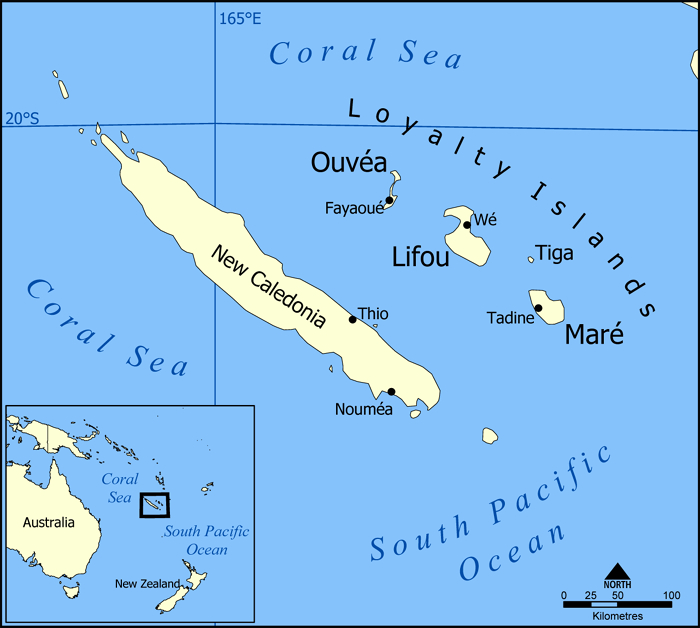
    • New Caledonia is a French overseas territory in the Pacific.
    • It enjoys a large degree of autonomy but depends heavily on France for matters like defence and education.
    • It includes the island of New Caledonia where the capital, Noumea, is located, the Loyalty Islands; the Belep Islands; and the Ile des Pins.
    • New Caledonia’s lagoons were designated a UNESCO World Heritage site in 2008.

    The Crisis: A Quick Recap

    • New Law: The French government passed a law that has upset people in New Caledonia.
    • Vote Reforms: Now, French citizens who lived on the island for 10 years or more can vote. The government says it’s fairer this way.
    • Resistance from Indigenous people: The locals, especially the Kanak community, feel this gives too much power to French settlers and stops them from gaining independence.

    How did France occupy this territory? 

    • Exploration: British explorer James Cook named the island New Caledonia in 1774 after the Latin name for Scotland.
    • French Annexation: France annexed it in 1853 and New Caledonia became a French overseas territory in 1946.
    • Fewer Locals: France brought in lots of French people. Now, the original Kanak people are only 40% of the population, while others, like the Caldoches and newer French arrivals, make up the rest.

    Why are the people protesting?

    • There were similar fights in the 1990s, leading to promises of more power for locals.
    • In 2018, 2020, and 2021, they voted on whether to be independent from France. But many boycotted the last vote, saying it wasn’t fair because of the pandemic.

    Why is it significant for France?

    • France sees New Caledonia as important for keeping power in the region.
    • It wants to stay strong in the Pacific to stand up to other big powers, like China.

    PYQ:

    [2014] Explain how the foundations of the modern world were laid by the American and French revolutions.