💥Join UPSC 2027,2028 Mentorship (July Batch) + XFactor Notes & Microthemes PDF

Distribution: yearly

  • NATO Pipeline System (NPS)

    Why in the News?

    Poland announced its long-awaited entry into the NATO Pipeline System (NPS) — a strategic move coming 25 years after joining NATO.

    About the NATO Pipeline System (NPS): 

    • Origin: 1950s, Cold War-era logistics backbone, upgraded over decades.
    • Purpose: Ensures continuous supply of aviation fuel, diesel, kerosene & lubricants to NATO forces.
    • Scale: ~10,000 km network across 12 NATO countries; storage ≈ 4.1 million m³.
    • Structure: Connects refineries, depots, airbases, airports & pumping stations.
    • Funding & Oversight: Through NATO Security Investment Programme (NSIP); managed by NATO Support & Procurement Agency (NSPA) under the NATO Petroleum Committee.
    • Member Countries: Belgium, France, Germany, Luxembourg, Netherlands, UK, Italy, Greece, Portugal, Turkey, Norway and Denmark; Poland will become the 13th member after integration.
    • Main System: Central Europe Pipeline System (CEPS) – 5,300 km, est. 1958; moves ≈ 12 million m³ fuel/yr.
    • Other Networks: North European, Turkish, Greek, Portuguese, Italian, Norwegian & Danish systems.
    [UPSC 2025] Consider the following countries:

    I. Austria II. Bulgaria III. Croatia IV. Serbia V. Sweden VI. North Macedonia.

    How many of the above are members of the North Atlantic Treaty Organization?

    (a) Only three (b) Only four* (c) Only five (d) All the six


  • [pib] Exercise KONKAN-25

    Why in the News?

    Exercise KONKAN-25 has commenced off the western coast of India, marking two decades of India–UK maritime cooperation.

    About Exercise KONKAN:

    • Nature & Objective: Exercise KONKAN is an annual bilateral maritime exercise between the Indian Navy and the Royal Navy of the United Kingdom.
    • Objective: To strengthen interoperability, joint maritime operations, and mutual understanding.
    • Origin: Initiated in 2004, the exercise has expanded into a multi-domain naval engagement involving surface, sub-surface, and aerial warfare.
    • Venue Rotation: Conducted alternately in Indian and UK waters, it symbolises the long-standing India–UK strategic defence partnership.
    • Vision: It aligns with the India–UK Vision 2035, promoting free, open, and rules-based seas across the Indo-Pacific.

    Key Features:

    • Two-Phase Format:
      • Harbour Phase – Professional interactions, cross-deck visits, sports & cultural events, subject-matter expert exchanges, and working group meetings.
      • Sea Phase – Complex operational drills including anti-air, anti-surface, and anti-submarine warfare, flying operations, seamanship drills, and live-fire gunnery.
    • Major Participants (2025):
      • IndiaCarrier Battle Group led by INS Vikrant, supported by destroyers, frigates, submarines, and naval air assets.
      • United KingdomCarrier Strike Group 25 (CSG-25) led by HMS Prince of Wales, joined by allies Norway (HNoMS Roald Amundsen) and Japan (JS Akebono).
    • Special Highlight: First-ever carrier strike group collaboration between India and the UK, marking a new milestone in joint naval power projection.
    [UPSC 2024] Which of the following statements about ‘Exercise Mitra Shakti-2023’ are correct?

    1. This was a joint military exercise between India and Bangladesh.

    2. It commenced in Aundh (Pune).

    3. Joint response during counter-terrorism operations was a goal of this operation.

    4. Indian Air Force was a part of this exercise.

    Select the answer using the code given below:

    (a) 1, 2 and 3 (b) 1 and 4 (c) 1 and 4 (d) 2, 3 and 4*


  • [4th October 2025] The Hindu Op-ed: The maritime signalling after Operation Sindoor

    PYQ Relevance

    [UPSC 2022] What are the maritime security challenges in India? Discuss the organizational, technical and procedural initiatives taken to improve the maritime security.

    Linkage: The post-Operation Sindoor naval manoeuvres highlight India’s evolving response to maritime security challenges, reflecting the same organizational, technical, and procedural upgradation, from indigenous fleet expansion (INS Nistar) to enhanced Indo-Pacific coordination, envisaged in this PYQ.

    Mentor’s Comment

    Operation Sindoor may have concluded in the skies, but its echoes now reverberate across the sea. With both India and Pakistan recalibrating their naval postures, the maritime domain has emerged as the new theatre of strategic competition. This article explores how post-Sindoor developments from naval manoeuvres to capability upgrades are reshaping deterrence dynamics, inviting questions about escalation control, external involvement, and evolving doctrines in the Indian Ocean.

    Introduction

    While the standoff with Pakistan in May 2025 ended in the air domain, subsequent developments reveal a strategic shift to the maritime theatre. Both nations are now engaged in assertive naval signalling, deploying assets, testing missiles, and broadcasting intent. India’s Operation Sindoor, initially a demonstration of naval deterrence, has transitioned into a long-term posture recalibration with new vessels, strategic patrols, and sharper rhetoric. Defence Minister Rajnath Singh’s warning on October 2 about a “resounding response” to any Pakistani misadventure in the Sir Creek region, coupled with Pakistan’s launch of the Hangor-class submarine PNS Mangro and missile tests, underline a renewed contest at sea. This is significant — because for decades, the India-Pakistan rivalry was air and land-focused, not maritime. The sea, it seems, is now the new frontier of strategic signalling.

    Why in the News

    The post-Operation Sindoor phase marks the first time in decades that India and Pakistan are simultaneously signalling deterrence through sustained maritime manoeuvres, overlapping missile tests, and forward deployments. India has conducted its first joint patrols with the Philippines in the South China Sea and commissioned the indigenously designed INS Nistar. Pakistan, meanwhile, has expanded naval activity from Karachi to Gwadar, launched new submarines and ballistic missiles, and tested the P282 ship-launched missile. This pattern is unprecedented not just in intensity but in its potential to redefine deterrence stability and crisis escalation in the Indian Ocean.

    Why is the Maritime Theatre Gaining Strategic Centrality?

    1. Shift from air to sea: After Operation Sindoor’s air engagement, both sides are redirecting deterrence signalling to the Arabian Sea, with forward deployments and missile tests.
    2. Recalibration of naval posture: India’s Operation Sindoor emphasised a forward deterrent posture, a readiness to act first if provoked.
    3. Symbolic rhetoric: Defence Minister Rajnath Singh’s statement evoking the 1965 war reinforced the seriousness of India’s deterrent message.

    What Signals Are India and Pakistan Sending at Sea?

    1. India’s assertive posture: Through INS Nistar, stealth frigates, and joint patrols, India projects both self-reliance and Indo-Pacific alignment.
    2. Pakistan’s parallel moves: Launch of PNS Mangro, expansion of infrastructure in Sir Creek, and P282 missile tests signify deterrence-by-denial.
    3. Operational friction: Overlapping NOTAMs and live-fire drills, sometimes just 60 nautical miles apart, indicate heightened tension and risk of miscalculation.

    How Does the Naval Balance of Power Look Now?

    1. India’s advantage but narrowing: Despite a numerical and geographical edge, India’s fleet faces ageing issues, raising modernization concerns.
    2. Pakistan’s modernization: With Chinese-designed submarines and Babur-class corvettes from Türkiye, Pakistan’s Navy now wields improved radar, EW, and anti-surface weaponry.
    3. Emerging parity: The Navy Chief’s acknowledgment of Pakistan’s “surprising growth” underscores a reality where India’s maritime superiority is no longer absolute.

    What Makes Maritime Escalation More Risky?

    1. Harder escalation control: Unlike air skirmishes, naval engagements are slow, continuous, and harder to de-escalate.
    2. Psychological vulnerability: Memories of 1971 naval strikes amplify Pakistan’s sensitivity; even limited Indian action could trigger disproportionate reaction.
    3. Anti-Access/Area Denial (A2/AD): Pakistan’s Gwadar and Karachi hubs serve both operational and psychological roles in denying India unchallenged dominance.
    4. Chinese factor: The PLAN’s presence at Gwadar increases risk of external entanglement in future crises.

    Is There an External and Doctrinal Dimension?

    1. China’s role: Chinese involvement in Gwadar and Karachi raises fears of dual-use support during crises.
    2. Türkiye’s growing linkages: Supply and training cooperation with Pakistan diversify its defence dependencies, complicating India’s strategic calculations.
    3. India’s Indo-Pacific strategy: Joint patrols and multilateral engagement hint at a twofold Indian approach, deterrence towards Pakistan and cooperation across the Indo-Pacific.
    4. Doctrinal drift: Both nations risk anchoring strategy in outdated crisis models, despite new technologies like drones and hypersonic missiles changing escalation ladders.

    Does the Emerging Maritime Pattern Help or Hurt Stability?

    1. Persistent signalling: Continuous naval presence, unlike air sorties, lingers — shaping adversarial perception and intent.
    2. Learning by observation: Regular drills, while risky, can create mutual operational awareness that paradoxically reduces fog of war.
    3. Dual outcome: The same actions that raise tensions might also stabilize future crises through transparency of capability and doctrine.

    Conclusion

    Operation Sindoor may have ended, but its maritime aftermath is redrawing South Asia’s deterrence geography. The Arabian Sea has emerged as a stage for calibrated signalling, doctrinal experimentation, and external power play. India faces a dual challenge to assert deterrence without escalation and prepare for future crises where the sea, not the sky, sets the tone. The Indian Navy’s modernization drive, from indigenously designed vessels to Indo-Pacific collaborations, suggests a conscious shift one that seeks to combine strategic restraint with decisive readiness. The sea, long a silent frontier, is now a theatre of both opportunity and peril.

  • A red sunset? Why Maoist movement is on the decline

    Introduction

    For nearly six decades, the Maoist insurgency has tested India’s state capacity, governance, and security architecture. Born from socio-economic inequalities and agrarian distress, it once posed a threat spanning the “Red Corridor” from Andhra Pradesh to Bihar. However, in 2025, India seems to be witnessing what could be a historical inflection point, a near end of the movement. The combination of relentless security operations, developmental outreach, and ideological erosion has pushed the insurgency to its lowest ebb in history, limited now to just 38 districts.

    Why is this in the news?

    For the first time in six decades, the Maoist movement has reached the brink of extinction. This sharp decline is a historic reversal from the early 2000s, when the insurgency had spread across nearly 180 districts, posing an existential challenge to internal peace.

    The Union Home Ministry’s data for 2025 reveals:

    1. 270 Maoists killed, 680 arrested, and 1,225 surrendered.
    2. The insurgency is now confined to 38 districts, a dramatic fall from its 2005 peak.
    3. Top Maoist leaders, including Mallojula Venugopal Rao, have called for the “cessation of armed struggle”, signaling an ideological collapse within.
    4. This represents a turning point in India’s counter-insurgency history, where military, governance, and psychological strategies appear to have converged successfully.

    What led to the decline of the Maoist movement?

    • Relentless Security Operations
      1. Persistent operations by security forces under the Union Ministry of Home Affairs and state police coordination have dismantled Maoist strongholds.
      2. Leaders such as Katta Ramachandra Reddy and Kalayari Reddy have been neutralized, causing organizational paralysis.
    • Curtailment of Resources: Maoists face acute shortages of arms, ammunition, and funding, with security blockades choking supply lines across Bastar-Dandakaranya region.
    • Collapse of Ideological Unity: 
      1. Internal ideological fractures deepened after the deaths of key leaders like Kishenji and Charu Majumdar.
      2. Letters by surviving leaders calling for surrender reflect a moral fatigue within the movement.
    • Tribal Alienation: Once rooted in tribal grievances, the Maoist narrative lost resonance as tribal communities began benefiting from welfare schemes, education, and employment programs.

    Has this happened before? Understanding the cyclical pattern

    • Historical Fluctuations: The Maoist movement, born in Naxalbari (West Bengal, 1967), has seen cycles of rise and suppression.
      1. 1970s: Spread into Andhra Pradesh, Chhattisgarh, Jharkhand, and Odisha.
      2. 1990s: Revival through the People’s War Group (PWG).
      3. 2000s: Peak insurgency affecting nearly 180 districts.
    • Distinctiveness of 2025 Phase: Unlike previous lulls, this decline is structural, not temporary—rooted in the erosion of ideology and grassroots support rather than mere state force.

    Is the movement really over?

    1. Residual Threats Persist:
      1. Maoist influence lingers in border areas of Chhattisgarh, Jharkhand, and Odisha.
      2. Their transition to smaller, mobile guerrilla units may prolong low-intensity violence.
    2. Surrender vs. Rehabilitation:
      1. While many cadres have surrendered, effective reintegration policies—jobs, skill-building, and psychological counseling—remain key to ensuring they don’t relapse into militancy.
    3. Need for Vigilance: Experts warn against complacency. Maoism thrives in governance vacuums—where corruption, displacement, or inequality persist, new movements could emerge.

    What lessons does this offer for internal security and governance?

    1. Integrated Strategy Works: A mix of security action, development, and psychological outreach has proven effective—embodying the “Samadhan Doctrine” (Solution through Smart Leadership, Aggressive Strategy, Motivation, and Action).
    2. Development as Deterrence: Expanding roads, schools, and welfare programs in tribal areas helped dismantle Maoist influence.
    3. Institutional Coordination: Joint efforts by the Centre and States, under continuous review of MHA, have created sustained momentum.

    Conclusion

    The “Red Sunset” of the Maoist insurgency is not just a victory of arms but a triumph of governance and persistence. India’s approach, combining security precision with socio-economic inclusion, offers a replicable model for countering internal conflicts.

    However, sustaining peace will depend on addressing root causes, land alienation, forest rights, and local governance deficits, lest another insurgency rises from the same soil.

    PYQ Relevance

    [UPSC 2022] Naxalism is a social, economic and development issues manifesting as a violent internal security threat. In this context, discuss the emerging issues and suggest a multilayered strategy to tackle the menace of Naxalism.

    Linkage: The 2025 developments highlighted in “A Red Sunset” perfectly exemplify how the government’s multi-dimensional approach, combining security operations, socio-economic welfare, and ideological disengagement, has yielded tangible results. It reinforces the UPSC 2022 theme that Naxalism is not merely a law-and-order issue but a socio-economic one demanding a holistic, multilayered strategy.
  • Sir Creek Border Dispute

    Why in the News?

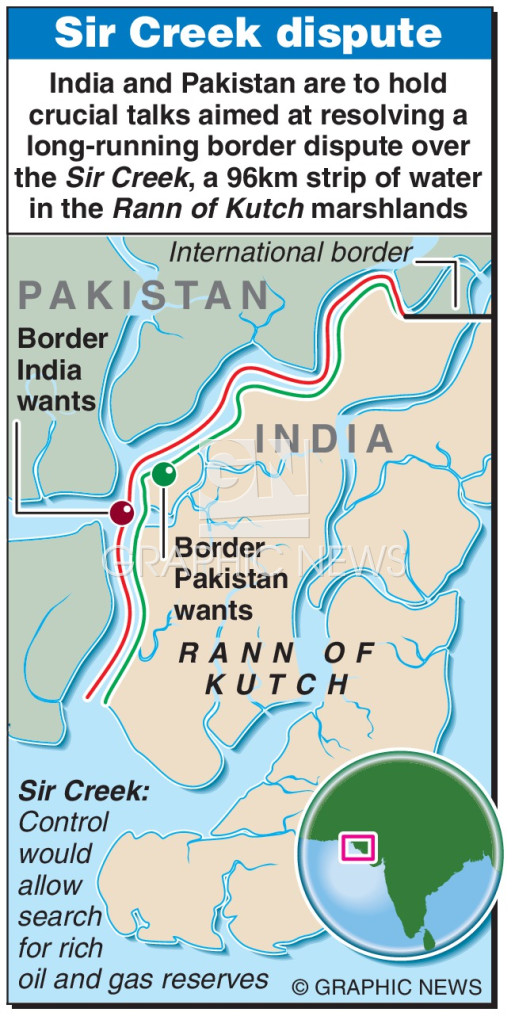
    Union Defence Minister recently warned Pakistan against misadventure in the Sir Creek region, stressing India’s resolve to defend its territorial integrity.

    Sir Creek Border Dispute

    About Sir Creek:

    • Location & Geography: Sir Creek is a 96-km-long tidal estuary in the Rann of Kutch, forming part of the border between Gujarat (India) and Sindh (Pakistan).
    • Physical Features: It flows into the Arabian Sea, with marshy, saline mudflats that provide vital habitat for migratory birds.
    • Historical Name: Originally known as Ban Ganga, renamed Sir Creek after a British surveyor, Sir Richard Burton (commonly credited).
    • Economic & Strategic Importance: The area hosts rich fishing grounds and potential oil and gas deposits, while being crucial for maritime boundary delimitation and coastal security.

    Historical Background of the Dispute:

    • 1908 Conflict: Disagreement between the Kutch ruler (British India) and Sindh government over fishing rights and territorial limits.
    • 1914 Bombay Government Resolution: Placed the boundary along the eastern bank (favouring Sindh/Pakistan), but also referred to the Thalweg Principle, supporting India’s claim.
      • This principle defines the border along the line of greatest depth of a river’s main navigable channel
    • 1924–25 Developments: Boundary pillars were erected and Survey of India maps marked the mid-channel as the boundary, strengthening India’s case.
    • Post-Partition Period: Dispute intensified; following the 1965 India–Pakistan war, the Rann of Kutch issue went to a UN-sponsored Tribunal.
    • 1968 Tribunal Award: Allocated 90% of the Rann to India but excluded Sir Creek, leaving it unresolved.
    • Post-1982 UNCLOS Impact: With the introduction of Exclusive Economic Zones (EEZs), control over Sir Creek gained renewed importance for maritime claims and resource access.

    India’s Position:

    • Navigability Claim: India asserts that Sir Creek is navigable at high tide, making the Thalweg Principle applicable.
    • Legal & Historical Basis:
      • 1925 Resolution and Survey of India maps.
      • Boundary pillars of 1924 marking mid-channel.
      • 1819 Treaty between East India Company and Kutch rulers, showing continued Indian jurisdiction.
    • Geographical Argument: India maintains the Rann is land, not water, invalidating Pakistan’s demand for median-line division.
    • Strategic Implication: Acceptance of India’s position ensures larger EEZ access, security leverage, and greater control in the Arabian Sea.
    [UPSC 2022] Consider the following countries:

    1. Azerbaijan 2. Kyrgyzstan 3. Tajikistan 4. Turkmenistan 5. Uzbekistan

    Which of the above have borders with Afghanistan ?

    Options: (a) 1, 2 and 5 only (b) 1, 2, 3 and 4 only (c) 3, 4 and 5 only* (d) 1, 2, 3, 4 and 5


  • Thumri maestro Pandit Chhannulal Mishra passes away

    Why in the News?

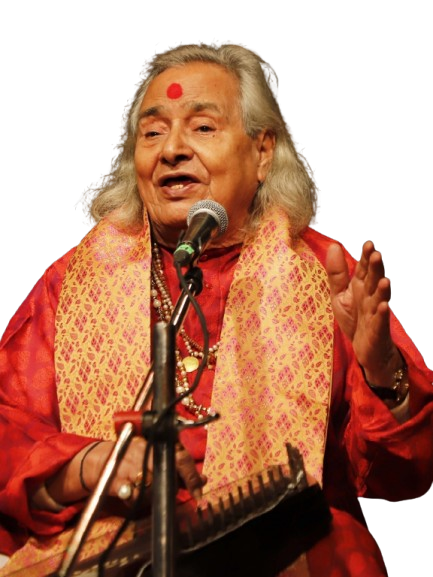
    Pandit Chhannulal Mishra, a maestro of Hindustani classical music and Padma Vibhushan recipient, passed away at 89.

    Who was Pandit Chhannulal Mishra?

    Thumri maestro Pandit Chhannulal Mishra passes away

    • Background: Born in 1936 in Varanasi, Pandit Chhannulal Mishra emerged from a modest family to become one of India’s greatest Hindustani classical vocalists.
    • Musical Lineage: Foremost exponent of the Purab Ang Thumri of the Banaras Gharana, blending the melodic precision of Kirana with the emotive depth of Banaras traditions.
    • Artistic Range: Mastered Thumri, Dadra, Kajri, and Chaiti, combining folk vitality and classical discipline, hallmarks of the Kashi musical spirit.
    • Voice & Expression: His gravelly, resonant voice conveyed devotion, mysticism, and deep emotion, evoking Lord Shiva, the Ganga, and the eternal mood of Banaras.
    • Cultural Symbol: Alongside Ustad Bismillah Khan, he personified the Ganga–Jamuni tehzeeb, symbolising the harmony of Hindu–Muslim artistic traditions.
    • Honours: Recipient of the Padma Vibhushan, his legacy unites classical rigor, folk heart, and spiritual emotion in a single aesthetic stream.

    About Thumri Music:

    • Nature: Thumri is a semi-classical vocal genre of North India known for its emphasis on emotion (bhava) rather than rigid raga structure.
    • Origin: Developed in the 19th century under Nawab Wajid Ali Shah of Lucknow; later enriched in Banaras, where it absorbed devotional and folk influences.
    • Etymology: Derived from thumakna (“to walk gracefully”), reflecting its rhythmic, fluid, and expressive nature tied to Kathak dance.
    • Themes: Revolves around Sringara rasa, love, separation, and devotion especially, Radha-Krishna narratives; often sung from a female perspective.
    • Language: Primarily in Braj Bhasha, Awadhi, and Hindi, with traces of Urdu and Sanskrit.
    • Musical Features:
      • Uses popular ragas like Bhairavi, Khamaj, Kafi and tālas like Dadra and Keherva.
      • Allows improvisation, vocal ornamentation (murki, meend, gamak), and interpretive freedom.
    • Forms of Thumri:
      • Bandish-ki-Thumri: Structured composition, rhythmically defined.
      • Bol-Banao Thumri: Lyrical, slow, emotive style allowing deeper expression.
    • Major Gharanas:
      • Lucknow Gharana: Courtly refinement and dance association (Begum Akhtar).
      • Banaras Gharana: Devotional Purab Ang tradition (Girija Devi, Rasoolan Bai, Siddheshwari Devi, Chhannulal Mishra).
      • Patiala Gharana: Fast, rhythm-oriented style with tappa influence (Bade Ghulam Ali Khan).

    Thumri and Indian Classical Tradition:

    • Position in the Hindustani system:
      • Thumri is semi-classical, bridging the gap between pure classical forms (like Khayal and Dhrupad) and folk/dance traditions.
      • It prioritises emotional storytelling over technical display, making classical music accessible to the wider public.
    • Connection with Kathak:
      • Thumri complements Kathak dance, aiding abhinaya (expressive gesture) through musical narration.
    • Hindustani vs Carnatic contrast:
      • Hindustani classical music (North India) focuses on raga improvisation;
      • Carnatic music (South India) is composition-centric with structured kritis and rigid tala frameworks.
    • Cultural Role:
      • Thumri mirrors the fusion of classical, folk, and devotional idioms, symbolising India’s cultural inclusivity.
      • It thrives on the interplay of bhava (emotion), raga (melody), and laya (rhythm)—a trinity central to Indian aesthetics.
    [UPSC 2019] With reference to Mian Tansen, which one of the following statements is not correct? Options: (a)Tansen was the title given to him by Emperor Akbar.*

    (b) Tansen composed Dhrupads on Hindu gods and goddesses.

    (c) Tansen composed songs on his patrons.

    (d) Tansen invented many Ragas.


  • Govt identifies 100 Aspirational Agriculture Districts (AADs)

    Why in the News?

    The Centre has announced the identification of 100 Aspirational Agriculture Districts under the Prime Minister Dhan-Dhaanya Krishi Yojana (PMDDKY) to boost farm productivity, sustainability, and rural incomes.

    What are Aspirational Agriculture Districts (AADs)?

    • Overview: The AADs comprise 100 districts across 29 States and Union Territories with low productivity, moderate crop intensity, and limited access to agricultural credit.
    • Selection Basis: Districts were chosen to ensure balanced regional representation, considering each state’s net cropped area and number of operational holdings.
    • Purpose: Designed as focal points for agricultural transformation, akin to the Aspirational Districts Programme (ADP) model for holistic development.
    • Objective: Accelerate agricultural growth and raise farmers’ income through data-driven governance, technology adoption, and scheme convergence.
    • Leading States: Uttar Pradesh (12), Maharashtra (9), Madhya Pradesh & Rajasthan (8 each), and Bihar (7).
    • Implementation Mechanism: Each district formulates a District Agriculture Development Plan (DADP) integrating existing central and state schemes for productivity enhancement, irrigation, crop diversification, and credit inclusion.
    • Monitoring Framework: Employs a performance-based index with measurable outcome indicators for real-time progress tracking.

    About Prime Minister Dhan-Dhaanya Krishi Yojana (PMDDKY):

    • Overview: Introduced in July 2025 by the Ministry of Agriculture and Farmers Welfare.
    • Aim: Transform 100 low-performing agricultural districts into high-productivity, market-linked, and climate-resilient hubs.
    • Design: Modeled on the Aspirational Districts Programme, emphasizing saturation-based development in agriculture.
    • Key Objectives:
      • Boost productivity through modern technology and best practices.
      • Promote crop diversification and climate-resilient farming.
      • Expand irrigation coverage and credit access.
      • Strengthen post-harvest infrastructure, storage, and value addition at grassroots levels.
      • Build market linkages and sustainable practices for inclusive rural growth.
    • Implementation Structure:
      • Convergence of 36 schemes from 11 Ministries/Departments, with no separate budget allocation.
      • District PMDDKY Committees, headed by Collectors, plan and execute projects.
      • 100 Central Nodal Officers (CNOs), mostly Joint Secretaries, monitor implementation.
      • A digital dashboard tracks 117 indicators across agriculture, irrigation, and markets.
    • Budget & Duration: Convergence-based outlay of ₹24,000 crore annually for six years (FY 2025–31), benefiting 1.7 crore farmers.
    • Expected Outcomes:
      • Improved productivity, resilience, and market efficiency.
      • Enhanced credit systems and localized agri-infrastructure.
      • Contribution toward “Viksit Bharat 2047” through sustainable agricultural transformation.
    [UPSC 2020] Under the Kisan Credit Card scheme, short-term credit support is given to farmers for which of the following purposes?

    1. Working capital for maintenance of farm assets
    2. Purchase of combine harvesters, tractors and mini trucks
    3. Consumption requirements of farm households
    4. Post-harvest expenses
    5. Construction of family house and setting up of village cold storage facility

    Options:

    (a) 1, 2 and 5 only

    (b) 1, 3 and 4 only *

    (c) 2, 3, 4 and 5 only

    (d) 1, 2, 3, 4 and 5


  • Niti Aayog proposes Presumptive Taxation for Foreign Companies

    Why in the News?

    NITI Aayog has released a working paper recommending the introduction of an optional presumptive taxation scheme for foreign companies operating in India.

    What is Presumptive Taxation?

    • Overview: Presumptive taxation allows taxpayers to declare income at a fixed percentage (presumed rate) of total turnover or receipts without maintaining detailed books of accounts.
    • Purpose: Simplifies taxation for small businesses or specific sectors by reducing compliance and administrative burden.
    • Domestic Example: Under the Income Tax Act, Sections 44AD, 44ADA, and 44AE permit presumptive taxation for small businesses, professionals, and transporters.
    • Key Feature:
      • Tax is levied on deemed profits instead of actual income.
      • Taxpayers opting for this scheme are exempt from detailed audits or complex record-keeping.

    What has NITI Aayog Proposed?

    • Scope: Extend the presumptive taxation concept to foreign companies operating in India.
    • Objective: To reduce litigation related to Permanent Establishment (PE) status and profit attribution in cross-border taxation.
    • Main Features:
      • Optional Scheme: Foreign companies can either choose the presumptive scheme for certainty or file regular returns if actual profits are lower.
      • Sector-Specific Rates: Different deemed profit rates for sectors such as manufacturing, digital services, and logistics.
      • Safe Harbour Clause: Once a company opts in, tax authorities cannot separately litigate the PE existence for that activity.
      • Alignment with Global Norms: Codify PE and attribution principles in domestic law consistent with OECD standards.
      • Administrative Reforms: Training of tax officials to ensure consistent application in digital and cross-border cases.

    Significance:

    • Provides tax certainty and simplicity for foreign investors.
    • Reduces disputes and promotes ease of doing business.
    • Balances India’s sovereign tax rights with the need for a predictable, investor-friendly regime.
    • Positions India as a more attractive FDI destination, aligned with its economic and tax reform agenda.
    [UPSC 2020] With reference to India’s decision to levy an equalization tax of 6% on online advertisement services offered by non-resident entities, which of the following statements is/are correct?

    1. It is introduced as a part of the Income Tax Act.

    2. Non-resident entities that offer advertisement services in India can claim a tax credit in their home country under the “Double Taxation Avoidance Agreements”.

    Select the correct answer using the code given below:

    Options: (a) 1 only (b) 2 only (c) Both 1 and 2 (d) Neither 1 nor 2 *


  • Can diaspora please stand up

    Introduction

    The Indian-American diaspora is often hailed as one of the most successful immigrant groups in the United States, with the highest median household income among all ethnicities, six Fortune 500 CEOs, governors, Congress members, and leaders in federal agencies like the CDC and FBI. However, recent U.S. policy shifts, such as increased tariffs on Indian goods, restrictions on H-1B visas, and sanctions affecting India’s strategic infrastructure, have highlighted the limits of diaspora influence. Despite its success, the community faces a pressing question: will it remain silent, or rise to defend India’s interests when challenged abroad?

    Why is this in the news?

    In recent months, the Trump administration unleashed a series of punitive measures: slapping 50% tariffs on Indian goods, imposing a $100,000 fee on H-1B visa applications (of which Indians receive 70%), restricting student visas, and sanctioning India’s strategic infrastructure projects like the Chabahar port. These measures directly affect Indian professionals, businesses, and students in the U.S. Surprisingly, the celebrated Indian-American diaspora has responded with muted or absent voices, raising serious concerns about the costs of silence. This marks a sharp contrast: while India has celebrated its diaspora as “soft power champions,” their political engagement on issues of consequence appears weak.

    What makes the Indian-American diaspora so influential?

    1. High economic success: Highest median household income among ethnic groups, concentration of CEOs, professionals, and leaders in U.S. politics and administration.
    2. Symbol of integration: From Bollywood films to biryani, diaspora blends nostalgia with modern influence.
    3. Strategic assets: Strong presence in STEM, academia, corporate America, and policymaking.

    Why is the diaspora silent on anti-India measures?

    1. Fear of backlash: Second-generation Indian-Americans feel their American identity questioned if they oppose U.S. policy too strongly.
    2. Fragmentation: Divided by region, religion, political orientation; no unified lobbying voice.
    3. Political caution: Many supported Trump for pro-business stance or Hindu nationalist sentiment but hesitated to confront his administration.
    4. Practical concerns: Rising costs for H-1B visas, employment restrictions on STEM graduates, yet little public opposition.

    What are the consequences of this silence?

    1. Weakening of India’s strategic position: If diaspora fails to defend against hostile U.S. measures, it undermines India’s global partnerships.
    2. Loss of moral voice: Diaspora loses legitimacy as defenders of India’s interests.
    3. Encouragement of further punitive actions: Silence signals complicity, emboldening further sanctions and restrictions.
    4. Cultural reductionism: Diaspora risks being seen as only symbolic carriers of Bollywood, biryani, and Bharatanatyam rather than political actors.

    What should be the role of the diaspora?

    1. Bridge-builder: Act as advocates for India when U.S. policies hurt strategic ties.
    2. Political engagement: Use lobbying capacity, financial resources, and media influence to defend India’s interests.
    3. Principled advocacy: Support India not just through nostalgia or identity politics but through substantive action.
    4. Moral responsibility: As beneficiaries of U.S. democracy, they must speak truth to power, not remain bystanders.

    Conclusion

    The Indian-American diaspora stands at a crossroads: to remain silent and symbolic or to act as a true strategic partner for India. Its wealth, numbers, and influence offer immense potential to shape narratives in Washington, but silence risks rendering it irrelevant. For India, the diaspora must be more than a cultural soft-power asset, it must become a political and moral force that safeguards India’s interests globally.

    PYQ Relevance

    [UPSC 2020] Indian diaspora has a decisive role to play in the politics and economy of America and European Countries. Comment with examples.

    Linkage: The article highlights how the Indian-American diaspora, despite its economic and political clout, has remained largely silent on hostile U.S. measures like tariffs and H-1B restrictions. This directly links to the PYQ as it shows both the potential role of diaspora in shaping politics and economy abroad, and the limits of its current influence when it fails to actively advocate for India.

    Value Addition

    Size and Spread

    1. Largest diaspora in the world – 18 million (UN DESA, 2021).
    2. Major hubs – USA (4.8 mn), UAE (3.5 mn), Saudi Arabia (2.5 mn), UK (1.6 mn), Canada (1.7 mn), Australia (0.7 mn).

    Economic Role

    1. Remittances – India received $125 billion in 2023 (World Bank), highest globally.
    2. Investment channels – NRI deposits (over $141 billion in Indian banks).
    3. Entrepreneurship – Indian-Americans own ~80,000 businesses in the US, employing ~200,000 people.

    Diplomatic and Strategic Role

    1. Lobbying in the US – India Caucus in US Congress, among the largest country caucuses.
    2. Strengthening bilateral ties – Diaspora played a role in the US–India nuclear deal (2008).
    3. Community mobilisation – Helped India’s COVID-19 vaccine diplomacy; strong mobilisation for relief during natural disasters (Kerala floods, Nepal earthquake).

    Cultural and Soft Power Influence

    1. Bollywood & cuisine – Bollywood films rank in top 10 foreign releases in Gulf and US theatres; Indian food chains like Patel Brothers in US are cultural hubs.
    2. International Day of Yoga (21st June) – Promoted by diaspora across 170+ countries.
    3. Cricket diplomacy – Popularised Indian Premier League abroad; diaspora support in stadiums gives visibility.

    Challenges and Criticism

    1. Brain drain vs. brain gain – Loss of skilled talent, though remittances compensate.
    2. Fragmentation – Religious, regional, and political divides weaken unified lobbying.
    3. Political caution – Reluctance to challenge host-country policies that hurt India.
    4. Exploitation in Gulf – Migrant workers face poor labour conditions and weak legal recourse.

    Initiatives by India

    1. Pravasi Bharatiya Divas (PBD) – Celebrated biennially since 2003.
    2. Overseas Citizenship of India (OCI) – Allows lifelong visa, parity with NRIs in most fields (except politics & purchase of agricultural land).
    3. Scholarship Program for Diaspora Children (SPDC) – Assists NRI/PIO children studying in India.
    4. Madad Portal & e-Migrate – For welfare and grievance redressal of emigrants.

    Comparative Diaspora Roles in Other Countries

    1. China – Chinese diaspora heavily invests in home-country infrastructure, strong lobbying in US.
    2. Israel – Jewish diaspora played a decisive role in US foreign policy.
    3. Ireland – Irish-American lobby influenced US policy on Northern Ireland.
  • 50 years of Integrated Child Development Services (ICDS) Scheme

    Why in the News?

    The Integrated Child Development Services (ICDS) scheme, launched on 2 October 1975 by then Prime Minister Indira Gandhi, has completed 50 years in 2025.

    50 years of Integrated Child Development Services (ICDS) Scheme

    What is Integrated Child Development Services (ICDS) Scheme?

    • Launched: 2nd October 1975 by PM Indira Gandhi.
    • Nodal Ministry: Ministry of Women and Child Development (MoWCD).
    • Nature: Flagship centrally sponsored scheme and world’s largest community-based outreach programme for early childhood care.
    • Beneficiaries: Children (0–6 years), pregnant women, lactating mothers, and adolescent girls (under extensions).
    • Objectives:
      • Improve nutritional and health status of 0–6 year children.
      • Lay foundation for physical, psychological, and social development.
      • Reduce mortality, morbidity, malnutrition, and school dropouts.
      • Provide non-formal pre-school education.
      • Enhance maternal health & nutrition awareness.

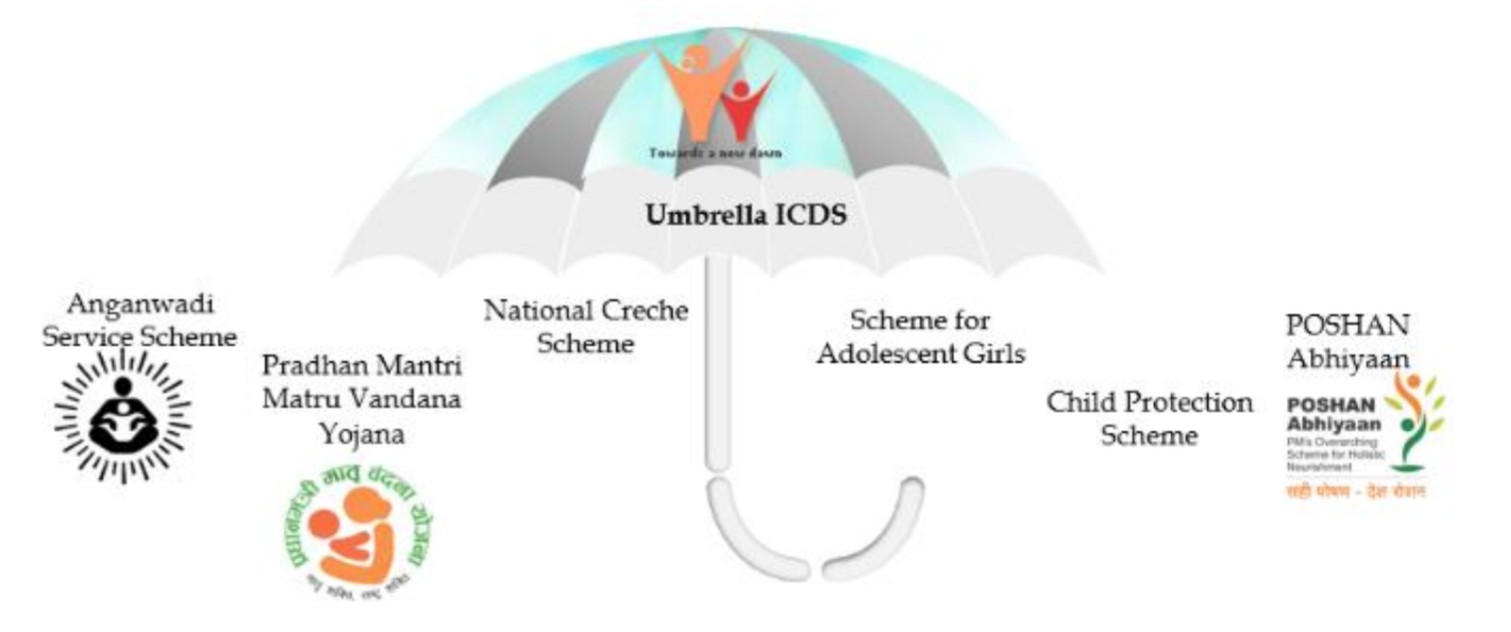
    About Umbrella ICDS Scheme:

    • Origin: The Integrated Child Development Services (ICDS) scheme was restructured and renamed as the Umbrella ICDS scheme in 2016–17.
    • Aim: Strengthen child nutrition, early childhood care, adolescent girl support, and child protection services.
    • Key Feature: Convergence model – Anganwadi Centres serve as hubs delivering integrated health, nutrition, and education.
    • Funding Pattern:
      • General States: 60:40 (Centre: State).
      • Supplementary Nutrition: 50:50.
      • NE & Himalayan States: 90:10.
      • UTs without legislatures: 100% Centre.

    Key Components and Their Features

    1. Anganwadi Services

    • Core ICDS component.
    • Provides six services: supplementary nutrition, pre-school non-formal education, health check-ups, immunization, referral services, and nutrition/health education.
    • Nutrition support: Take-Home Rations (THR), Hot Cooked Meals, snacks.
    1. Pradhan Mantri Matru Vandana Yojana (PMMVY)

    • Conditional cash transfer scheme for pregnant and lactating women.
    • Provides ₹5,000 in three instalments for wage loss, nutrition, and healthcare.
    • Delivered through Direct Benefit Transfer (DBT).
    1. National Creche Scheme

    • Day-care facilities for children (6 months–6 years) of working women.
    • Services include supplementary nutrition, early childcare education, health check-ups, and sleeping facilities.
    • Functions 7.5 hours/day, 26 days/month.
    1. Scheme for Adolescent Girls (SAG – SABLA)

    • Focus on out-of-school girls (11–14 years).
    • Nutrition support: 600 kcal/day, 18–20 g protein.
    • Non-nutrition support: life skills, home management, health & hygiene awareness, educational and skill training.
    • Encourages mainstreaming into formal education and skill development.
    1. Child Protection Services (CPS)

    • Ensures care, protection, and rehabilitation of children in difficult situations.
    • Prevents abuse, exploitation, neglect, and family separation.
    • Runs child care institutions, helplines, adoption and foster care systems.
    1. POSHAN Abhiyaan (National Nutrition Mission)

    • Launched in 2018 to reduce stunting, anaemia, and low birth weight.
    • Uses Poshan Tracker (ICT-based real-time monitoring).
    • Promotes inter-ministerial convergence and community participation via Poshan Maah and Poshan Pakhwada.
    [UPSC 2013] Consider the following statements in relation to Janani Suraksha Yojna:

    1. It is safe motherhood intervention of the State Health Departments.

    2. Its objective is to reduce maternal and neonatal mortality among poor pregnant women.

    3. It aims to promote institutional delivery among poor pregnant women.

    4. Its objective includes providing public health facilities to sick infants up to one year of age.

    How many of the statements given above are correct?

    Options: (a) Only one (b) Only two* (c) Only three (d) All four