💥Join UPSC 2027,2028 Mentorship (July Batch) + XFactor Notes & Microthemes PDF

Distribution: yearly

  • Highlights of the proposed Digital India Act, 2023

    Central Idea

    • The Digital India Bill, a comprehensive overhaul of Internet laws, will be unveiled in June 2023. This bill represents a significant update since the Information Technology Act of 2000.

    What is the Digital India Bill?

    • DIA will consist of 4 parts:
    1. Digital Personal Data Protection Bill,
    2. DIA rules,
    3. National Data Governance Policy, and
    4. Indian Penal Code amendments

    Need for such legislation

    • India has 850 million internet users, making it the world’s largest “digitally connected democracy.”
    • The IT Act, created for the pre-digital era, lacks provisions for user rights, trust, safety, and modern cyber threats.
    • Growing cyber crimes, disinformation, and privacy concerns necessitate an updated legislation.

    Goals of the Digital India Bill 

    • Evolvable digital law: Flexible rules adaptable to changing technological trends.
    • Adjudicatory mechanism: Accessible mechanism for resolving online civil and criminal offenses.
    • Principles and rules-based approach: A legislative framework based on overarching governing principles.

    Key components of the DIA

    • Open Internet: Promotes choice, competition, diversity, fair market access, and ease of doing business, preventing the concentration of power.
    • Online Safety and Trust: Safeguards users against cyber threats, revenge porn, defamation, cyberbullying, and moderates fake news. Advocates for digital rights and protects minors.
    • KYC Requirements: Mandates Know Your Customer (KYC) for privacy-invading devices like spy camera glasses.
    • Monetization Rules: Overhauls rules for platform and user-generated content to align with the DIA.

    Key feature: Reconsideration of Safe Harbour

    • The government is reconsidering a key aspect of cyberspace — ‘safe harbour’.
    • Safe harbour is the principle that so-called ‘intermediaries’ on the internet are not responsible for what third parties post on their website.
    • This is the principle that allows social media platforms to avoid liability for posts made by users.
    • Safe harbour has been reined in in recent years by regulations like the Information Technology (Intermediary Guidelines and Digital Media Ethics Code) Rules, 2021, which require platforms to take down posts when ordered to do so by the government, or when required by law.

    Way Forward

    • The detailed timeline is undisclosed, but the government aims to conduct a comparative study of global laws and consult with experts, industry, the public, and relevant forums.
    • The draft Bill will undergo consultation, followed by a draft Cabinet note before the final version is released.


    Get an IAS/IPS ranker as your personal mentor for UPSC 2024

  • Digital Census and Self-enumeration through NPR Update

    Central Idea

    • The article discusses implementation of a digital Census and the option for citizens to self-enumerate through updating their National Population Register (NPR) details online.

    What is the news?

    • Census 2021, the first digital Census, will allow citizens to “self-enumerate” when it is conducted.
    • The government has not announced the date for the Census yet, and a notification from January 2, 2023, indicates that the exercise is postponed until at least September.

    What is National Population Register (NPR)?

    • The NPR is a register that records the usual residents of the country.
    • It is prepared at various levels, including local, sub-district, district, state, and national.
    • The creation of the NPR is governed by the provisions of the Citizenship Act 1955 and the Citizenship (Registration of Citizens and issue of National Identity Cards) Rules, 2003.
    • It is mandatory for every usual resident of India to register in the NPR.
    • A usual resident is defined as a person who has resided in a local area for the past 6 months or more, or a person intending to reside for next 6 months or more.

    Differences between NPR and Census

    • The census involves a detailed questionnaire, collecting information such as age, sex, marital status, occupation, religion, and more.
    • The NPR collects basic demographic data and biometric particulars.
    • The census is governed by the Census Act, 1948, while the NPR operates under a set of rules framed under the Citizenship Act, 1955.

    Stipulated process for self-enumeration

    • Self-enumeration for the Census will be available only to households that have updated their NPR details online.
    • The Office of the Registrar General of India (ORGI), responsible for the Census, has developed a web-based “self-enumeration (SE)” portal, presently available in English.
    • The mobile-friendly portal, yet to be launched, will allow users to register their mobile numbers in the NPR database, self-enumerate, and fill in Houselisting Operations details.
    • During self-enumeration, the collection of Aadhaar or mobile numbers is mandatory.

    How are NPR and NRC related?

    • According to the Citizenship Rules 2003, the NPR is the initial step in compiling the National Register of Indian Citizens (NRIC/NRC).
    • The NPR was updated in 2015, but new questions were added as part of a trial exercise involving 30 lakh respondents in September 2019.
    • The exercise is seen as a step towards the compilation of the National Register of Indian Citizens (NRC) as per the Citizenship Rules, 2003.

    What about data confidentiality?

    • While similar data is collected through the Census, individual data remains confidential under Section 15 of the Census Act, 1948.
    • Only aggregated data is released at administrative levels.
    • Data collected under the NPR are shared with states and used by the Central government for various welfare schemes at the individual level.

    Way forward

    To ensure the success of the digital Census and self-enumeration process, the government should consider the following:

    • Conduct thorough awareness campaigns to educate citizens about the self-enumeration process and its benefits.
    • Provide multi-language support on the self-enumeration portal to accommodate diverse language preferences.
    • Address concerns regarding data privacy and security to build trust among citizens.
    • Establish a robust support system to assist citizens in case of technical issues or questions during self-enumeration.
    • Regularly update and improve the self-enumeration portal based on user feedback to enhance user experience and ease of use.


    Get an IAS/IPS ranker as your personal mentor for UPSC 2024

  • 73% projects completed under Smart Cities Mission

    Smart Cities Mission

    Central Idea

    • The Union Urban Affairs Ministry announced that significant progress has been made under the Smart Cities Mission, with more than 90% of the allocated funds being utilized and 73% of the projects already completed.

    Why discuss this?

    • The projects were supposed to be completed within five years of the selection of the city.
    • However, in 2021 the Ministry changed the deadline for all cities to June 2023, which was earlier the deadline for Shillong alone.

    What is Smart Cities Mission?

    • The Smart Cities Mission is an initiative of the Union Housing and Urban Affairs Ministry that was launched by PM on June 25, 2015.
    • Cities across the country were asked to submit proposals for projects to improve municipal services and to make their jurisdictions more liveable.
    • Between January 2016 and June 2018 (when the last city, Shillong, was chosen), the Ministry selected 100 cities for the Mission over five rounds.

    How does it work?

    • Each smart city has created a Special Purpose Vehicle (SPV) responsible for planning, appraising, approving, releasing funds, implementing, and managing, operating, monitoring, and evaluating development projects.
    • The SPV is led by a full-time CEO and includes nominees from the Central and State governments, as well as the Urban Local Bodies (ULBs) on its Board.

    Monitoring and Reporting

    • The implementation of the SCM is overseen by an Apex Committee, led by the Secretary of the Ministry of Housing and Urban Affairs.
    • The committee utilizes the Real Time Geographical Management Information System (GMIS) to provide regular reports on project progress.

    Features of the mission

    • Smart Infrastructure: Upgrading urban systems, including transportation, water, and waste management.
    • E-Governance: Digital platforms for transparent government services and citizen engagement.
    • Smart Solutions: Integration of IoT and data analytics to optimize urban systems.
    • Sustainability: Green initiatives, renewable energy, and eco-friendly practices.
    • Social and Economic Development: Affordable housing, healthcare, and fostering entrepreneurship.
    • Data-Driven Decision Making: Utilizing data for evidence-based planning and resource allocation.

    Progress status

    (1) Funds Utilization

    • As of May 1, a total of ₹38,400 crore was released for the Smart Cities Mission.
    • Out of this amount, ₹35,261 crore has already been utilized for various projects.
    • The utilization of funds accounts for over 90% of the allocated budget.

    (2) Project Completion

    • The Smart Cities Mission encompasses approximately 7,800 projects, valued at ₹1.8 lakh crore.
    • Among these projects, more than 5,700, valued at ₹1.1 lakh crore, have been completed.
    • The remaining projects are expected to be completed by June 30, 2024.
    • Currently, only 22 out of the 100 designated cities have successfully concluded all projects under the mission.

    Conclusion

    • By emphasizing effective funds utilization and project completion, the government intends to transform cities into smarter, more sustainable, and citizen-centric urban spaces.


    Get an IAS/IPS ranker as your personal mentor for UPSC 2024

  • In news: Krishna Water Dispute

    krishna

    Central Idea

    • The dispute over the water share of the Krishna River between Andhra Pradesh (AP) and Telangana has remained unresolved for nine years since the bifurcation of the combined state.

    About Krishna River

    Explanation
    Origin Mahabaleshwar, Maharashtra
    Length Approximately 1,400 km
    States swept Maharashtra, Karnataka, Telangana, Andhra Pradesh
    Tributaries Tungabhadra, Bhima, Ghataprabha, Malaprabha, Musi
    Significance Irrigation, hydropower, drinking water
    Basin Approximately 2,59,000 sq km
    Dams Srisailam, Nagarjuna Sagar, Almatti, Koyna
    Delta Forms fertile delta in Bay of Bengal


    What is Krishna Water Dispute?

    • The dispute dates back to the formation of AP in November 1956.
    • Before the formation of AP, a Gentlemen’s Agreement was signed in February 1956 by four senior leaders from different regions of Andhra.
    • The agreement aimed to protect Telangana’s interests and ensure equitable distribution of water resources based on global treaties.
    • However, the focus on irrigation facilities favored Andhra, which had existing systems developed by the British at the expense of drought-prone areas in Telangana.

    Resolution achieved till now

    (1) Bachawat tribunal

    • In 1969, the Bachawat Tribunal (KWDT-I) was established to settle the water share dispute among Maharashtra, Karnataka, and AP (before bifurcation).
    • The Tribunal allocated 811 tmcft (thousand million cubic feet) of dependable water to AP.
    • The water was later divided in a 512:299 tmcft ratio between Andhra and Telangana, respectively, based on the command area developed by each region.
    • The Tribunal recommended diverting water from the Tungabhadra Dam to the drought-prone Mahabubnagar area of Telangana, but this recommendation was not implemented, leading to discontent.

    (2) Water-sharing arrangement after bifurcation

    • The AP Reorganisation Act, 2014, did not mention water shares, as the KWDT-I Award was still in force and had not specified region-wise allocations.
    • In 2015, the two states agreed to an ad hoc arrangement of sharing water in a 34:66 ratio (Telangana: Andhra) during a meeting convened by the Ministry of Water Resources.
    • The arrangement was supposed to be reviewed annually.
    • The Act focused on the establishment of the Krishna River Management Board (KRMB) and the Godavari River Management Board (GRMB) for water resource management.

    Claims by each state

    • Telangana argues that it is entitled to a minimum of 70% share in the allocation of the 811 tmcft based on global practices and basin parameters.
    • Telangana highlights how AP diverts around 300 tmcft of water from within the basin, affecting drought-prone areas in Telangana.
    • AP also claims a higher share of water to protect the interests of already developed command areas.

    Centre’s position

    • The Centre convened two meetings of the Apex Council in 2016 and 2020, involving the Union Minister and Chief Ministers of Telangana and AP, but no substantial progress was made.
    • In 2020, following a suggestion by the Ministry of Jal Shakti (MoJS), Telangana withdrew its petition from the Supreme Court with the assurance that the matter would be referred to a Tribunal.
    • However, the Centre has not taken any action on the issue for over two years, while the two states continue to engage in ongoing disputes.

    Way Forward

    Considering the prolonged dispute and the failure to reach a resolution, it is crucial for all stakeholders to take proactive steps. The following measures could be considered:

    • Mediation: Appoint an independent body or mediator to facilitate negotiations between the two states and assist in finding a fair and mutually agreeable solution.
    • Scientific assessment: Conduct a comprehensive scientific assessment of the basin parameters, water requirements, and the impact of existing water utilization practices to inform the allocation of water shares.
    • Public awareness: Raise public awareness about the importance of water conservation, efficient utilization, and sustainable practices to reduce the overall demand for water resources.
    • Implementation of recommendations: Act upon the recommendations of previous tribunals and committees to ensure equitable distribution of water resources and address the grievances of both states.
    • More deliberations: Foster a spirit of cooperation and collaboration between AP and Telangana to jointly manage and sustainably utilize the Krishna River water resources for the benefit of both regions.

    It is crucial for the central government to play an active role in facilitating dialogue, providing necessary support, and expediting the resolution process to ensure a fair and just outcome for all parties involved.


    Get an IAS/IPS ranker as your personal mentor for UPSC 2024

  • Forum for India Pacific Islands Cooperation (FIPIC)

    pacific

    Central Idea: The third summit of Forum for India Pacific Islands Cooperation (FIPIC) was recently held at Port Moresby in Papua New Guinea. It was attended by PM Modi.

    What is FIPIC?

    • The FIPIC is an intergovernmental forum that facilitates cooperation and dialogue between India and the Pacific island countries (PIC).
    • It was established by India in 2014 as a platform to enhance engagement and strengthen ties with the countries of the Pacific region.
    • FIPIC serves as a mechanism for mutual collaboration, addressing shared challenges, and promoting development cooperation between India and its Pacific island partners.

    Members of FIPIC:

    • FIPIC consists of 14 member-countries.
    • They are- Fiji, Cook Islands, Kiribati, Marshall Islands, Micronesia, Nauru, Niue, Palau, Papua New Guinea, Samoa, Solomon Islands, Tonga, Tuvalu, and Vanuatu.

    History of FIPIC

    • The establishment of FIPIC reflects India’s commitment to deepening its engagement with the Pacific island nations.
    • The inaugural FIPIC summit was held in November 2014 in Suva, Fiji, where India and the Pacific island countries came together to discuss bilateral and multilateral cooperation.
    • The summit marked a significant milestone in India’s efforts to strengthen relations with the Pacific island states and promote inclusive development in the region.

    Key highlights of the Summit

    (1) Imbibing perception change

    • During the FIPIC-3 summit held in Port Moresby, PM Modi emphasized the importance of recognizing the small island nations of the Pacific Ocean as “large ocean states.”
    • PM reiterated India’s commitment to supporting the development goals of the Pacific island states.

    (2) Advancing development goals

    • India expressed unwavering dedication to supporting Pacific island states in various ways.
    • Acknowledged challenges such as climate change, natural calamities, and disruptions in food and fuel supply chains.
    • India has been a reliable supplier of essential items, including vaccines, medicines, wheat, and sugar.

    (3) Voices to lead Global South

    • Prime Minister James Marape of Papua New Guinea urged India to serve as an advocate for the Global South.
    • Requested India’s representation in key global forums like the G-7 and G-20.

    Why does India need PIC?

    • Geopolitical Significance: Strengthening ties in Indo-Pacific to bolster regional influence, promote stability, and shape regional dynamics.
    • Maritime Trade Routes: Securing access to vital sea-lanes, ensuring smooth trade flow, and protecting maritime interests.
    • Resources: Expanding access to valuable resources such as minerals, hydrocarbons, and fisheries for economic growth and energy security.
    • Economic Opportunities: Exploring untapped markets, attracting investments, and fostering trade partnerships for mutual economic benefits.
    • Climate Change and Disaster Management: Collaborating on climate resilience strategies, sharing expertise in disaster management, and supporting sustainable development.
    • Diplomatic Relations: Establishing strategic alliances, enhancing multilateral cooperation, and strengthening India’s presence in the Pacific region.
    • Indian Diaspora: Supporting and engaging with the Indian diaspora, promoting cultural ties, and leveraging their contributions for bilateral cooperation and understanding.

    Conclusion

    • The FIPIC-3 summit provided a platform for India and Pacific island nations to deepen cooperation and address shared challenges.
    • India’s commitment to supporting development goals and its role as a reliable supplier underscores its dedication to the Pacific island states.
    • India’s active engagement in global forums and advocacy for the Global South aims to amplify voices and advance interests.
    • The summit signifies a strengthened partnership, fostering mutual growth and shared progress.


    Get an IAS/IPS ranker as your personal mentor for UPSC 2024

  • Study reveals unique Nervous System in Comb Jellies

    comb

    Central Idea

    • Comb jellies, or ctenophores, are marine animals with jelly-like bodies and iridescent combs.
    • They represent an ancient animal lineage and have a distinct nervous system.
    • A recent study published in Science examined the comb jelly nervous system and made surprising discoveries.

    What are Comb Jellies?

    • Comb jellies, also known as ctenophores, are marine animals that belong to the phylum Ctenophora. They are fascinating creatures with a unique and delicate appearance.
    • Despite their name, comb jellies are not actually true jellyfish.
    • They have a gelatinous, transparent body that is often luminescent and adorned with rows of cilia, or comb-like structures, which give them their characteristic shimmering appearance.

    Findings of the new study

    • The researchers aimed to investigate how nerve net neurons in comb jellies connect.
    • Contrary to expectations, synapses (junctions between neurons) were absent in the nerve net.
    • Instead, nerve-net neurons were continuously connected by a single plasma membrane.

    Significance of ctenophores

    • In the 1950s, electron microscopy confirmed the separate-cell nature of neurons connected by synapses.
    • Ctenophores challenge this notion by having a syncytial nerve net, as observed in the new study.
    • Ctenophores attracted attention due to their status as a potential early animal lineage.
    • Whole-genome sequencing studies supported the theory that ctenophores branched off early in animal evolution.

    Evolution of ctenophore nervous systems

    • The evolution of ctenophore nervous systems remains unclear to biologists.
    • Leonid Moroz proposed a controversial theory of independent nervous system evolution in ctenophores and other animals.
    • Ctenophores exhibit a unique nervous system lacking classical neurotransmitter pathways and common neuronal genes.
    • The absence of muscle-based movement and reliance on cilia might have driven the evolution of a different signal conduction system.

    Questions for further research

    • Researchers aim to study the development of nerve net neurons in ctenophores.
    • They seek to determine if adult ctenophores retain syncytial nerve nets or develop synapses.
    • The uniqueness of ctenophore nervous systems provides valuable insights into the evolution of the nervous system.
    • Comparative analyses of unique animal systems like ctenophores aid in understanding neuronal function and treating disorders.

    Conclusion

    • Understanding the functional and evolutionary significance of syncytial nerve net neurons in ctenophores requires further research.
    • This study serves as a crucial foundation for investigating the evolution of nervous systems in animals.
    • Comparative studies on small marine creatures like ctenophores offer insights into the fundamental principles of brain function.

    Key Terminologies

    • Ctenophores: Another term for comb jellies, referring to marine animals belonging to the phylum Ctenophora.
    • Nerve Net: The diffuse nervous system found in comb jellies, composed of interconnected neurons.
    • Synapses: Junctions between neurons that allow for communication and transmission of signals in most animals, including humans.
    • Plasma Membrane: The outer membrane of a cell that separates its internal components from the external environment.
    • Neurotransmitter Pathways: The specific chemical signals used by neurons to communicate with each other in the nervous system.
    • Syncytial Nerve Net Neurons: Neurons within the nerve net of comb jellies that are interconnected without the presence of synapses.
    • Colloblasts: Specialized cells in comb jellies used for capturing prey by producing adhesive substances.

    Get an IAS/IPS ranker as your personal mentor for UPSC 2024

  • Antarctic Sea Ice Cover at Record Low

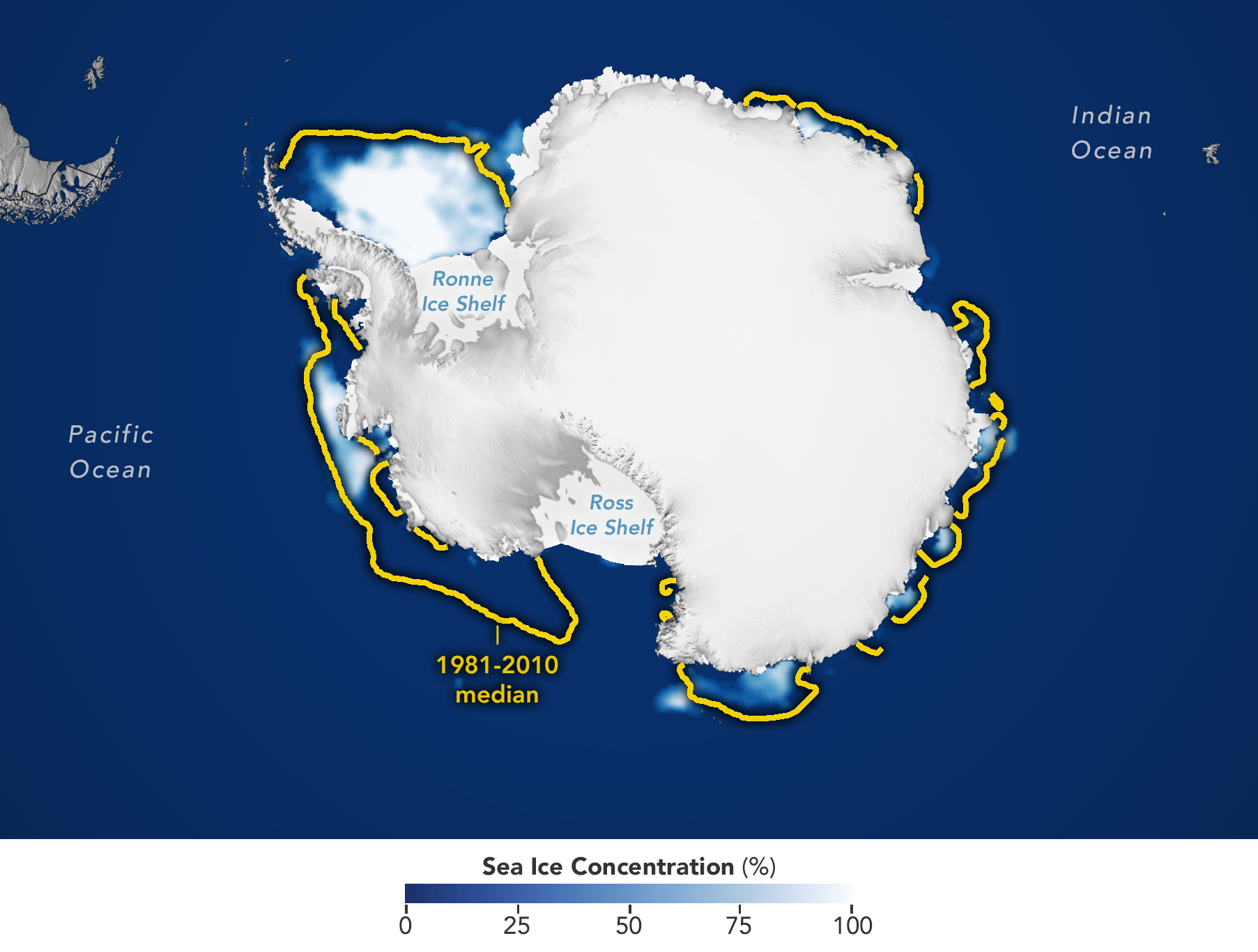
    antarctic

    Central Idea

    • Sea ice in Antarctica reached its smallest area on record in February for the second consecutive year, continuing a decade-long decline.

    Ice cover decline: Key data

    (1) Square km decline

    • The European Union’s Copernicus Climate Change Service (C3S) provided the figures, highlighting the significant decrease in Antarctic sea ice.
    • On February 16, the ocean surface covered by ice around Antarctica shrank to 2.09 million square kilometers (800,000 square miles), the lowest level since satellite records began.

    (2) Warming trends

    • Both the North and South poles have experienced significant warming, with temperatures rising by approximately 3 degrees Celsius compared to late 19th-century levels, three times the global average.
    • Arctic sea ice has been diminishing by about 3 percent per year since the late 1970s, while sea ice in Antarctica has remained relatively constant with large annual variations.

    (3) Regional variances and vulnerabilities

    • Recent ice cover reduction during the southern hemisphere summer has been most pronounced in West Antarctica, which is more vulnerable to the impacts of global warming compared to East Antarctica.
    • Antarctica witnessed its first recorded heatwave in 2020, with temperatures 9.2 degrees Celsius above the mean maximum. Unusual temperature spikes have been observed in various parts of Antarctica.
    • The Arctic has also experienced significant declines in sea ice, with the record minimum sea ice extent occurring in 2012.

    Impact of declining Ice Cover

    • Global sea level rise: Melting ice in Antarctica contributes to rising sea levels worldwide.
    • Disruption of ecosystems: Declining ice cover disrupts habitats and food sources for ice-dependent species.
    • Increased warming: Less ice reflects sunlight, leading to more heat absorption and further ice melting.
    • Changes in ocean circulation: Declining ice cover can disrupt currents and impact global climate patterns.
    • Release of stored carbon: Melting ice releases trapped carbon, potentially affecting marine ecosystems and contributing to climate change.
    • Amplification of global warming: Reduced ice cover creates a positive feedback loop, exacerbating climate change.
    • Disruption of biodiversity and food chains: Changing ice conditions impact species relying on ice algae and affect the overall Southern Ocean ecosystem.

    Future projections

    • The Intergovernmental Panel on Climate Change (IPCC) predicted with high confidence that the Arctic Ocean would become practically ice-free in September at least once by mid-century.
    • The decreasing trends in both Arctic and Antarctic sea ice highlight the urgent need to address climate change and its impact on the Polar Regions.


    Get an IAS/IPS ranker as your personal mentor for UPSC 2024

  • What is PARAKH Program?

    Central Idea

    • The Ministry of Education has organized a workshop in New Delhi to discuss the unification of 60 school examination boards operating across different states and union territories.
    • The key component of this plan is PARAKH, the National Assessment Centre established under the National Council of Educational Research and Training.

    What is PARAKH?

    • PARAKH stands for Performance Assessment, Review, and Analysis of Knowledge for Holistic Development.
    • It is an organization created to bring school boards from various states and union territories onto a unified platform.
    • It has been launched as part of the implementation of the National Education Policy (NEP)-2020.
    • It acts as a constituent unit of the NCERT.
    • It is tasked with holding periodic learning outcome tests like the National Achievement Survey (NAS) and State Achievement Surveys.
    • It will work on three major assessment areas: large-scale assessments, school-based assessment, and examination reforms.

    Key objectives of PARAKH

    • Uniform Norms & Guidelines: Setting comprehensive norms, standards, and guidelines for student assessment and evaluation in all recognized school boards.
    • Enhance Assessment Pattern: Encouraging school boards to adopt assessment patterns aligned with the skill requirements of the 21st century.
    • Reduce Disparity in Evaluation: Establishing uniformity across state and central boards, which currently employ different evaluation standards, resulting in significant score disparities.
    • Benchmark Assessment: Developing a benchmark assessment framework to move away from rote learning and align with the objectives of the NEP 2020.

    Outcomes of the recent workshop

    (1) Establishing Equivalence of Boards

    • The Centre is planning for the equivalence of boards to facilitate seamless transitions for students across different boards or regions.
    • The objective is to align curriculum standards, grading systems, and evaluation methodologies to enhance the credibility and recognition of certificates and grades obtained across boards.

    (2) Moving away from Rote Examination Culture

    • The workshop highlighted the need to reassess the prevailing rote examination culture in the education system.
    • There is a growing realization that holistic assessments, considering various dimensions of a student’s abilities and potential, are equally important.

    (3) Standardization and Fairness in Assessments

    • The discussion emphasized the importance of well-designed and standardized question papers to ensure fairness and consistency across schools and boards.
    • Striking a balance between formative and summative assessments was identified as a means to reduce the burden of high-stakes examinations while effectively measuring student progress.

    Conclusion

    • PARAKH’s significance lies in its potential to bring about transformative change, facilitating collaboration, and benchmarking assessments.
    • It is an important step towards creating a standardized and equitable assessment system, providing students with a fair platform to demonstrate their abilities and skills.


    Get an IAS/IPS ranker as your personal mentor for UPSC 2024

  • RBI Surplus Transfer to Govt.

    surplus rbi

    Central Idea

    • The Central Board of Directors of the RBI approved the transfer of ₹87,416 crore as surplus to the Union government for the accounting year 2022-23.
    • This amount is almost three times the ₹30,307 crore transferred in the previous fiscal year.

    Reserve funds of RBI

    The RBI has two types of reserves: Currency & Gold Revaluation Account (CGRA) and Contingency Fund (CF).

    1. CGRA: It represents the value of gold and foreign currency held by the RBI on behalf of India and fluctuates based on market movements.
    2. Contingency Fund: It is a provision to meet unexpected contingencies arising from the RBI’s monetary policy and exchange rate operations.

    Calculation of Surplus

    • RBI’s surplus is the amount transferred to the government after meeting its needs and provisions.
    • The surplus is determined by deducting expenses, including provisions made to the CF, from the RBI’s income, mainly generated through interest on securities.

    How does RBI earn its INCOME?

    The RBI earns profits through various functions and operations it carries out, including:

    1. Managing the borrowings of the Government of India and State governments.
    2. Supervising and regulating banks and non-banking finance companies.
    3. Managing the currency and payment systems.

    RBI generates income through the following sources:

    1. Returns on its foreign currency assets, such as bonds and treasury bills of other central banks or top-rated securities.
    2. Interest earned on holdings of local rupee-denominated government bonds or securities.
    3. Interest earned from lending to banks for short tenures, such as overnight loans.
    4. Management commission received for handling government and state government borrowings.

    Expenditure by RBI

    The RBI’s expenditures include-

    1. Costs related to printing currency notes
    2. Staff salaries
    3. Commissions paid to banks for government transactions and
    4. Payments to primary dealers for underwriting borrowings

    How the transfer of surplus takes place?

    • The RBI, as a central bank, is not a commercial organization owned or controlled by the government.
    • The RBI was initially a private shareholders’ bank but was nationalized by the government in January 1949.
    • According to Section 47 (Allocation of Surplus Profits) of the Reserve Bank of India Act, 1934, the RBI transfers the excess of income over expenditure to the government.
    • This provision mandates the transfer of profits to the Central Government after accounting for necessary provisions and obligations.

    Does the RBI pay tax on these earnings or profits?

    • No, the RBI is exempted from paying income tax or any other tax as per Section 48 (Exemption of Bank from income-tax and super-tax) of the RBI Act, 1934.
    • This exemption ensures that the RBI is not liable to pay income tax or super-tax on its income, profits, or gains.

    Policy inputs

    (1) Y H Malegam Committee

    • It reviewed the adequacy of reserves and surplus distribution policy in 2013, recommended a higher transfer to the government.
    • Prior to this recommendation, the RBI transferred a portion of the surplus to the Contingency Fund and the Asset Development Fund.
    • Following the Malegam committee’s recommendation, the percentage of surplus transferred to the government significantly increased from 53.40% in 2012-13 to 99.99% in 2013-14.

    (2) Bimal Jalan Committee

    • The RBI in November 2018 had constituted a 6-member committee, chaired by former governor Dr Bimal Jalan.
    • It was tasked to review the current economic capital framework (ECF), after the Ministry of Finance asked the central bank to follow global practices.

    Key recommendations

    1. Differentiate between realised equity and revaluation balances for RBI’s economic capital.
    2. Adopt Expected Shortfall (ES) for measuring market risk with a target of ES 99.5% confidence level.
    3. Maintain Contingent Risk Buffer (CRB) between 6.5% and 5.5% of RBI’s balance sheet.
    4. Implement surplus distribution policy based on realised equity.
    5. Review RBI’s Economic Capital Framework every five years.


    Get an IAS/IPS ranker as your personal mentor for UPSC 2024 | Schedule your FREE session and get the Prelims prep Toolkit!

  • Rasht-Astara Railway Link

    rasht

    Russia and his Iran has signed a deal to finance and build the 162 km Rasht-Astara Iranian railway, the main connection in the emerging North-South Transport Corridor.

    Rasht-Astara Railway Link

    • The Rash Astra Railway is a 162-kilometer railway connecting Rasht (Iran) and Astara (Azerbaijan) on the border.
    • It is part of the International North-South Transport Corridor (INSTC) and will significantly diversify global traffic flows.
    • The railway will facilitate connections between Russian ports on the Baltic Sea and Iranian ports in the Indian Ocean and the Gulf.

    About INSTC

    • The INSTC is a 7,200-kilometer Multi-Mode Transit System connecting India, Iran, Azerbaijan, Russia, Central Asia, and Europe.
    • It promotes transportation cooperation among member states and includes ship, rail, and road routes.
    • Membership has expanded to include additional countries, and observer states and Baltic countries have expressed interest in joining.

    Significance of INSTC for India

    • Central Asia trade: India has invested in the Chabahar Port in Iran, which serves as a doorway for trade with Central Asian countries.
    • Extended connection: INSTC offers potential connections to the Baltic, Nordic, and Arctic regions.
    • Bypassing Pakistan: INSTC provides an alternate route for India to connect with Central Asia, bypassing obstacles in Pakistan.
    • Fastest freight: It reduces transit time by 40% and freight costs by 30% compared to the Suez Canal route.
    • Alternative to Suez: Russia claims the project could ultimately rival the Suez Canal in terms of trade flows.

    Challenges of INSTC

    • Challenges include limited financial support from major international institutions due to US sanctions on Iran.
    • Harmonization of tariffs and customs, increased private sector involvement, and improved informational connectivity are necessary for success.

    Conclusion

    • More financing, cooperation, political will, and strategic planning are required to realize the full benefits of INSTC.
    • Addressing demand deficits and enhancing informational connectivity are crucial.
    • Collaboration and the establishment of industrial parks and special economic zones can contribute to the corridor’s development and commercial value.


    Key terminologies

    Multi-Mode Transit System: A system that integrates multiple modes of transportation, such as ship, rail, and road, for efficient movement of goods.

    Joint Comprehensive Plan of Action (JCPOA): An agreement reached in 2015 between Iran and world powers regarding Iran’s nuclear program.

    Suez Canal: A major global trade route connecting the Mediterranean Sea to the Red Sea.

    Chabahar Port: A port in Iran’s Sistan-Balochistan province, providing India with access to Central Asian countries.

    Baltic Countries: Countries located in the Baltic region of Northern Europe, including Latvia and Estonia.


    Get an IAS/IPS ranker as your personal mentor for UPSC 2024 | Schedule your FREE session and get the Prelims prep Toolkit!