💥Join UPSC 2027,2028 Mentorship (July Batch) + XFactor Notes & Microthemes PDF

Distribution: yearly

  • RTE Act and Minority Educational Institutions

    Why in the News?

    The Supreme Court has referred to a larger Bench the question of whether Minority Educational Institutions (MEIs) are completely exempt from the purview of the Right to Education (RTE) Act, 2009.

    About Minority Educational Institutions (MEIs):

    • Constitutional Basis:
      • Article 30(1) grants religious and linguistic minorities the right to establish and administer educational institutions of their choice.
      • Article 29 protects their cultural and educational rights.
    • Legal Framework:
      • Defined under the National Commission for Minority Educational Institutions (NCMEI) Act, 2004.
      • The NCMEI adjudicates disputes, grants recognition, and safeguards the autonomy of such institutions.
    • Recognized Minority Communities: Muslims, Christians, Sikhs, Buddhists, Jains, and Zoroastrians (Parsis) are notified as minorities by the Government of India.
    • Judicial Principles:
      • In T.M.A. Pai Foundation vs. State of Karnataka (2002), SC held that minority status is determined state-wise, not nationally.
      • Minority institutions can reserve seats for their community and enjoy greater control over administration and recruitment.
    • Purpose and Role:
      • Preserve the cultural, linguistic, and religious heritage of minority groups.
      • Provide quality education with constitutional protection from excessive state interference.

    What is the Right to Education (RTE) Act, 2009?

    • Genesis: Stemming from Unnikrishnan vs. State of Andhra Pradesh (1993), where SC declared education as a Fundamental Right under Article 21.
      • Later given constitutional backing through the 86th Amendment Act (2002), which inserted Article 21A – free and compulsory education for children aged 6–14 years.
    • Enactment: To operationalize Article 21A, Parliament passed the Right of Children to Free and Compulsory Education Act, 2009.
    • Key Provisions:
      • Free and compulsory education for all children aged 6–14 in a neighbourhood school.
      • 25% reservation in private schools for children from disadvantaged groups and weaker sections.
      • No detention, expulsion, or board exams up to Class VIII (amended in 2019 to allow states discretion).
      • Teacher norms: TET (Teachers Eligibility Test) qualification mandatory; ban on private tuitions by teachers.
      • School Management Committees (SMCs): Parents, local authority reps, and teachers oversee school functioning.
      • Curriculum & Standards: Developed by an academic authority (often NCERT/SCERT).
    • Amendments:
      • 2012: Included children with disabilities; exempted minority/religious institutions.
      • 2019: Abolished uniform “no-detention policy,” left to states’ choice.


    [UPSC 2018] Consider the following statements:

    1. As per the Right to Education (RTE) Act, to be eligible for appointment as a teacher in a State, a person would be required to possess the minimum qualification laid down by the concerned State Council of Teacher Education.

    2. As per the RTE Act, for teaching primary classes, a candidate is required to pass a Teacher Eligibility Test conducted in accordance with the National Council of Teacher Education guidelines.

    3. In India, more than 90% of teacher education institutions are directly under the State Governments

    Which of the statements given above is/are correct?

    Options: (a) 1 and 2 (b) 2 only* (c) 1 and 3 (d) 3 only


  • Data shows seas rising faster around Maldives, Lakshadweep than believed

    Introduction

    Sea-level rise is one of the most significant consequences of global warming, threatening ecosystems, economies, and human settlements. In the Indian Ocean, recent findings based on coral microatolls suggest that sea levels began rising rapidly as early as the 1950s, decades before satellite and tide-gauge data had indicated. This challenges existing assumptions in climate change studies and raises critical questions about preparedness for vulnerable island states like Maldives, Lakshadweep, and the Chagos archipelago.

    Coral Microatolls as Natural Recorders of Sea-Level History

    • Unique natural recorders: Coral microatolls are disk-shaped colonies that stop growing upwards once constrained by the lowest tide, making their surface a natural reflection of long-term sea-level change.
    • Longevity and accuracy: They can survive for decades or centuries, providing high-resolution, continuous data.
    • Study site: Research conducted on Mahutigalaa reef, Huvadhoo Atoll (Maldives), measured a Porites microatoll covering 1930–2019.

    Acceleration and Scale of Sea-Level Rise in the Indian Ocean

    • Accelerated rise: Data showed a 0.3 metre increase over 90 years.
    • Rates of rise:
      • 1930–1959: 1–1.84 mm/year
      • 1960–1992: 2.76–4.12 mm/year
      • 1990–2019: 3.91–4.87 mm/year
    • Striking revelation: Sea-level rise began in the late 1950s, not around 1990 as earlier assumed.
    • Cumulative impact: Maldives, Lakshadweep, and Chagos have witnessed 30–40 cm rise in half a century, worsening flooding and erosion risks.

    Climate Variability and Environmental Signals Captured in Corals

    • Climate variability: Slow or interrupted coral growth coincided with El Niño and negative Indian Ocean Dipole (IOD) events.
    • Astronomical influence: The 18.6-year lunar nodal cycle was reflected in the growth bands, showing tidal and sea-level oscillations.
    • Tectonic stability: Critical factor ensuring that coral growth data reflects sea-level change rather than land movement.

    Regional Significance of Findings for the Indian Ocean Basin

    • Above-average warming: The Indian Ocean is heating faster than the global average, amplifying sea-level fluctuations.
    • Strategic gaps: Despite its ecological and geopolitical importance, the central Indian Ocean is one of the least-monitored basins.
    • Regional variations: Coastal areas saw recent acceleration, but the central basin experienced earlier, stronger rise, influenced by shifts in Southern Hemisphere westerlies, ocean heat uptake, and the Intertropical Convergence Zone.

    Vulnerabilities and Adaptation Imperatives for Island Nations

    • Existential threat: Infrastructure and communities are concentrated just above sea level in Maldives and Lakshadweep.
    • Adaptation strategies: Understanding historic timing and magnitude of sea-level rise is vital for coastal planning, disaster preparedness, and climate resilience.
    • Scientific value: Microatolls cannot replace tide gauges or satellites but offer a vital complementary tool to refine projections in data-sparse regions.

    Conclusion

    The discovery that sea-level rise in the Maldives and Lakshadweep began decades earlier than thought is a wake-up call for policymakers and communities. Coral microatolls, silent sentinels of the ocean, have revealed the urgency of accelerating adaptation and resilience measures. As the Indian Ocean warms faster than global averages, the survival of low-lying nations will depend on proactive international cooperation and evidence-based planning.


    Value Addition

    Global Reports and Scientific Frameworks

    • IPCC AR6 (2021–22): Predicts global mean sea level rise of 0.28–1.01 m by 2100, depending on emission scenarios.
    • World Meteorological Organization (WMO): State of the Global Climate 2023: Confirms Indian Ocean warming faster than the global average, intensifying regional sea-level anomalies.
    • UNFCCC & Paris Agreement: Commitments to limit warming below 2°C directly shape adaptation strategies for vulnerable island nations.

    Case Studies for Enrichment

    • Maldives: Declared intent to become a carbon-neutral nation by 2030; adaptation measures include artificial islands and elevated infrastructure.
    • Kiribati (Pacific Island): Purchased land in Fiji to relocate populations – showcases climate migration.
    • Lakshadweep Islands: Reports of shoreline erosion, freshwater lens salinity, and threat to tourism livelihoods.

    Scientific Concepts for Enrichment

    • Thermal Expansion: Ocean water expands as it warms, contributing ~50% to global sea-level rise.
    • Cryosphere–Ocean Linkages: Melting of Greenland & Antarctic ice sheets accelerates rise beyond thermal expansion.
    • Lunar Nodal Cycle (18.6 years): Natural oscillation in tides influencing local sea-level variability, as confirmed in microatoll data.

    PYQ Relevance

    [UPSC 2023] The Intergovernmental Panel on Climate Change (IPCC) has predicted a global sea level rise of about one metre by AD 2100. What would be its impact in India and the other countries in the Indian Ocean region?

    Linkage: The article’s findings on coral microatolls show that sea-level rise in the Maldives, Lakshadweep, and Chagos began as early as the 1950s, much earlier than assumed. This reinforces IPCC projections of accelerated rise, highlighting existential risks for low-lying islands. For India and the wider Indian Ocean region, the impacts include intensified coastal erosion, loss of habitats, and the need for urgent adaptation strategies.

  • NGO ‘Educate Girls’ wins Ramon Magsaysay Award 2025

    Why in the News?

    The Ramon Magsaysay Award 2025 has been awarded to Educate Girls, an Indian NGO working to promote girls’ education in rural and disadvantaged regions.

    Other winners include:

    • Shaahina Ali (Maldives): A noted environmental activist.
    • Fr. Flaviano Antonio L. Villanueva (Philippines): A human rights defender, critic of Duterte’s drug war.

    About Educate Girls:

    • Founded as: Foundation to Educate Girls Globally; CEO: Gayatri Nair Lobo.
    • Mission: Address gender inequality in education and uplift rural communities through girls’ schooling.
    • Impact:
      • Operates in India’s most rural and remote regions.
      • Employs community workers (preraks, team balikas) to mobilise enrollment and retention.
      • Creates ripple effects: education empowers girls → uplifts families → strengthens communities.
    • Significance: It is the first Indian organisation to win the award since its inception in 1958.

    About Ramon Magsaysay Award:

    • “Nobel Prize of Asia”: Awarded annually since 1958.
    • Purpose: Celebrate “greatness of spirit and transformative leadership” in Asia.
    • Recognition: Individuals/organisations showing integrity in governance, service, and idealism in democracy.
    • Origin:
      • Established April 1957 by Rockefeller Brothers Fund trustees with support of the Philippines govt.
      • Named in honour of Ramon Magsaysay, former Philippine President (1953–57), noted for administrative and military leadership.
    • Original Categories (1958–2008): Govt Service, Public Service, Community Leadership, Journalism & Arts, Peace & International Understanding, and later Emergent Leadership (2001).
    • Since 2009: Fixed categories dropped (except Emergent Leadership), award now honours diverse forms of excellence.
    • Notable Indian Recipients:
      • Vinoba Bhave (1958): Bhoodan movement.
      • Mother Teresa (1962): humanitarian service.
      • Satyajit Ray (1967): cinema.
      • M.S. Subbulakshmi (1974): music.
      • Arvind Kejriwal (2006): anti-corruption work.
      • Ravish Kumar (2019): journalism.
      • Sonam Wangchuk (2018): educational innovation.
      • Educate Girls (2025): first Indian organisation to be honoured.
    [UPSC 2004] Sandeep Pandey, the winner of Ramon Magsaysay Award, is mainly an activist in:

    Options: (a) a campaigner for urban sanitation (b) an anti-child labour activist (c) Environmental protection (d) Education and livelihood projects for Dalits*


  • Collapse of Atlantic Meridional Overturning Circulation (AMOC)

    Why in the News?

    A new study warned that the collapse of the Atlantic Meridional Overturning Circulation (AMOC) is no longer a low-likelihood scenario.

    What is AMOC?

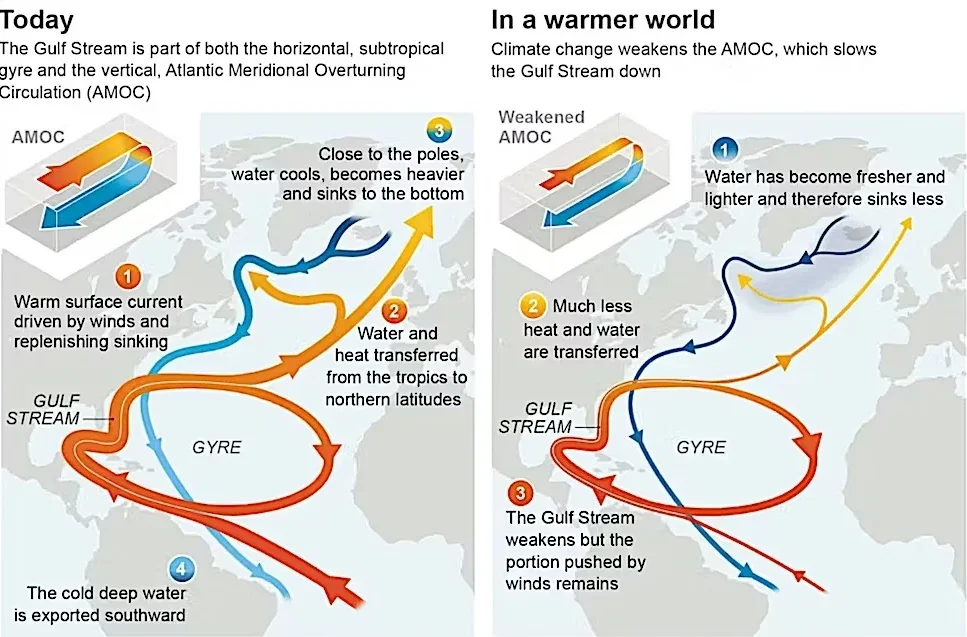
    • Overview: It is a large system of ocean currents, part of the thermohaline circulation (THC) or global ocean conveyor belt.
    • Function: Moves warm tropical surface waters northward.
    • Deep Currents: In the North Atlantic, cooled water sinks and flows back south as deep currents.
    • Global Link: Connected to the Antarctic Circumpolar Current, making it part of a worldwide circulation system.
    • Key Role: Distributes heat and nutrients across the world’s oceans.

    Collapse of Atlantic Meridional Overturning Circulation (AMOC)

    Why is AMOC slowing down?

    • Melting Ice Sheets: Greenland and Arctic ice melt releases freshwater, lowering seawater density, preventing sinking, and weakening circulation.
    • Indian Ocean Warming (2019 Study): Extra rainfall in the Indian Ocean reduces rainfall in the Atlantic.
    • Temporary Boost: Atlantic water becomes saltier, sinks faster, giving AMOC short-term strengthening.
    • Future Outlook: Effect fades once Pacific and other oceans catch up in warming.
    • Climate Models: Predict a 34–45% weakening of AMOC by 2100 under continued global warming.

    What happens if AMOC collapses?

    • Severe Cooling: Europe and the North Atlantic would face strong cooling.
    • Rainfall Reduction: Decline in rainfall over Europe.
    • ENSO Impact: Altered El Niño–Southern Oscillation patterns.
    • Sea Ice Expansion: Increase in Greenland–Iceland–Norwegian seas.
    • Rain-belt Shift: Southward movement over the tropical Atlantic.
    • Long-term Impact: Global climate instability with regional extremes.
    [UPSC 2012] Consider the following factors:

    1. Rotation of the Earth 2. Air pressure and wind 3. Density of ocean water 4. Revolution of the Earth

    Which of the above factors influence the ocean currents?

    Options: (a) 1 and 2 Only (b) 1, 2 and 3* (c) 1 and 4 (d) 2, 3 and 4


  • [pib] Adi Vaani App: India’s First Tribal AI Translator

    Why in the News?

    The Ministry of Tribal Affairs has launched the Beta Version of “Adi Vaani”, India’s first AI-based translator for tribal languages.

    About Adi Vaani:

    • What is it: India’s first AI-powered translator for tribal languages.
    • Launch: Released in Beta Version (2025) by the Ministry of Tribal Affairs.
    • Inception: Developed under Janjatiya Gaurav Varsh to empower tribal communities and safeguard endangered tribal languages.
    • Created by: A team led by IIT Delhi with BITS Pilani, IIIT Hyderabad, IIIT Nava Raipur, and Tribal Research Institutes.
    • Impact: Strengthens digital literacy, ensures inclusive governance, preserves cultural identity, and positions India as a global leader in AI for endangered languages.

    Key Features:

    • Translation Modes: Text-to-Text, Text-to-Speech, Speech-to-Text, and Speech-to-Speech.
    • Languages (Beta): Santali, Bhili, Mundari, and Gondi. Kui and Garo to be added next.
    • AI Models: Based on NLLB (No Language Left Behind) and IndicTrans2, adapted for low-resource languages.
    • Community-Driven: Data collected, validated, and iteratively developed by local experts and Tribal Research Institutes.
    • Toolkit Additions: OCR for digitizing manuscripts, bilingual dictionaries, and curated repositories.
    [UPSC 2020] With the present state of development, Artificial Intelligence can effectively do which of the following?

    1. Bring down electricity consumption in industrial units 2. Create meaningful short stories and songs

    3. Disease diagnosis 4. Text-to-Speech Conversion

    5. Wireless transmission of electrical energy

    Options: (a) 1, 2, 3 and 5 only (b) 1, 3 and 4 only* (c) 2, 4 and 5 only (d) 1, 2, 3, 4 and 5


  • Species: Indian Rosewood (Dalbergia latifolia)

    Why in the News?

    The Indian Rosewood (Dalbergia latifolia) species is under threat as Tamil Nadu allowed the lapse of the Rosewood Conservation Act (1995–2025).

    Species: Indian Rosewood (Dalbergia latifolia)
    Indian Rosewood (Dalbergia latifolia)

    About Indian Rosewood (Dalbergia latifolia):

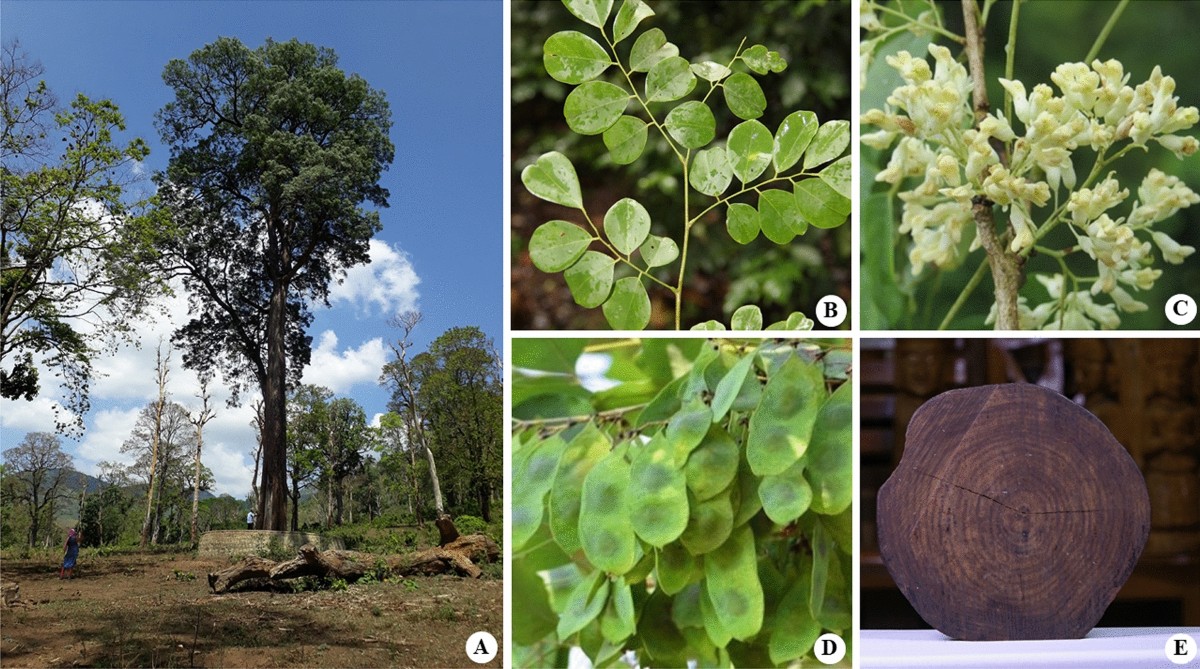
    • Type: Tall deciduous or semi-evergreen tree reaching up to 40 metres.
    • Native Range: Nilgiris, Anamalai, and Parambikulam ranges of Tamil Nadu; also found in parts of Southeast Asia.
    • Adaptation: Thrives in tropical monsoon climates; considered drought hardy.
    • Wood Characteristics: Heartwood ranges from golden brown to purplish-brown with darker streaks, releasing a rose-like scent when worked.
    • Durability: Fine-grained, resistant to rot and insects; known as the “ivory of the forests.”
    • Uses: Premium furniture, cabinetry, decorative veneers, and musical instruments.
    • Conservation Status:
      • Classified as Vulnerable by IUCN since 2018.
      • Included under Appendix II, regulating international trade through permits.

    Legal Protection:

    • Indian Framework: Covered under the Indian Forest Act, 1927, regulating felling, harvest, and transport of timber.
    • Tamil Nadu Law (1995):
      • Prohibited cutting without government permission; extended in 2010 for 15 years.
      • Act lapsed in February 2025, exposing privately owned rosewood trees, especially in Nilgiri tea plantations, to felling.
    [UPSC 2007] Dalbergia species is associated with which one of the following?

    Options: (a) Cashew nut (b) Coffee (c) Tea (d) Rosewood*


  • Why are Killer Whales offering fresh prey to humans?

    Why in the News?

    A new study in the Journal of Comparative Psychology documents rare instances of Killer Whales (Orcinus orca) sharing freshly killed prey with humans.

    Why are Killer Whales offering fresh prey to humans?

    About Killer Whales (Orcinus orca):

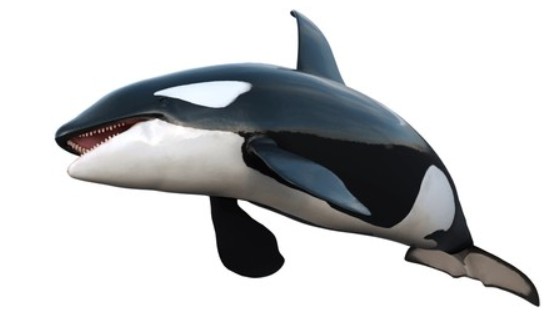
    • Overview: Largest member of the dolphin family (Delphinidae), often called “wolves of the sea”.
    • Apex predators: At the top of the marine food chain.
    • Physical traits:
      • Black dorsal side, white underside, distinctive eye patch, saddle patch behind dorsal fin.
      • Can grow up to 9 m, weigh over 5,000 kg, and swim up to 54 km/hr.
    • Social structure: Live in pods led by a matriarch; highly coordinated hunters using complex tactics.
    • Distribution: Found in all oceans worldwide, from polar to tropical seas, in both open and coastal waters.
    • IUCN – Data Deficient: But many regional populations face threats from climate change, prey decline, and pollution.

    Why do they offer their fresh prey to humans?

    • Study Findings (2004–2024):
      • Killer whales were observed offering whole prey to humans (fish, birds, mammals, etc.) in multiple oceans.
      • In most cases, they waited for a human response before reclaiming or abandoning prey.
    • Possible Reasons:
      • Exploration/Curiosity: Reflects their advanced cognition and social curiosity; a way to learn about humans.
      • Prosocial Behaviour: They are among the few species that share food within and outside their groups.
      • Play Theory Rejected: Behaviour not limited to juveniles; adults also involved, often with whole prey.
      • Scientific Thinking Analogy: Behaviour resembles “asking questions” and testing human reactions — a form of exploratory intelligence.
      • Machiavellian Behaviour: Could sometimes be manipulative, as killer whales are known to steal fish and disrupt vessels.
    [UPSC 2023] Which one of the following makes a tool with a stick to scrape insects from a hole in a tree or a log of wood?

    Options: (a) Fishing cat (b) Orangutan * (c) Otter (d) Sloth bear


  • Fireflies emerge as Ecological Indicators

    Why in the News?

    A recent study in Tamil Nadu documented multiple firefly species and highlighted their role as ecological indicators of habitat health.

    About Fireflies and their behaviour traits:

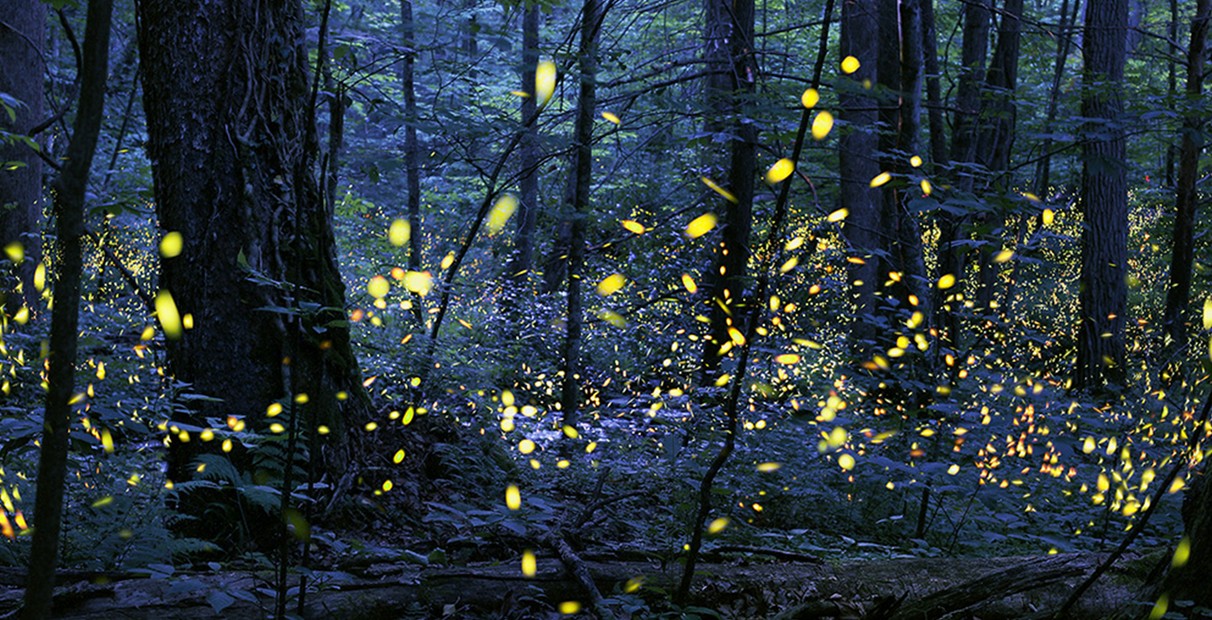
    • Identity: Bioluminescent beetles (not true flies) of the family Lampyridae.
    • Life Cycle: Larvae live in soil/leaf litter feeding on snails and worms; adults emerge after rains and live briefly to reproduce.
    • Indian Species: Abscondita chinensis, Luciola ovalis, Luciola nicolleri, Asymmetricata humeralis, Pyrocoelia analis.
    • Distribution: Found in tropical and temperate regions; most visible on humid monsoon nights.
    • Bioluminescence: Glow produced in abdominal light organ using luciferin, luciferase, oxygen, and ATP.
    • Light Nature: Cold and efficient, colours vary between green and yellow depending on species.
    • Courtship Function: Flashing used as mating signal; males emit species-specific codes, females respond if correct.

    Ecological Role and Conservation Significance:

    • Sensitivity: Strongly affected by pesticides, habitat loss, artificial lights, and polluted water.
    • Habitat Health Indicator: Large synchronised gatherings reflect intact ecosystems; sparse numbers signal disturbance.
    • Light Pollution Impact: Artificial lighting disrupts flashing, forcing males to waste energy and reducing mating success.
    • Local Evidences: Communities like the Malasar and Irula report declines linked to pesticides and polluted streams.
    • Indicator Role: Act as proxy species for nocturnal biodiversity, signalling risks to moths, bats, and amphibians.
    [UPSC 2024] Which one of the following shows a unique relationship with an insect that has coevolved with it and that is the only insect that can pollinate this tree?

    Options: (a) Fig* (b) Mahua (c) Sandalwood (d) Silk cotton


  • ClassGPT: How AI is reshaping campuses

    Introduction

    Artificial Intelligence (AI), particularly generative models like ChatGPT and Gemini, has become both a boon and a challenge in higher education. Students increasingly rely on AI for assignments, summaries, coding, and even emails, while faculty members grapple with maintaining originality, academic honesty, and critical thinking. With AI growing faster than existing regulatory or pedagogical frameworks, Indian institutions are experimenting with varied approaches, ranging from outright bans to integration into curricula. The choices made today will determine not just the future of learning but also India’s knowledge economy and workforce readiness.

    The Changing Landscape of Education with AI

    How widespread is AI usage among students and teachers

    1. IIT Delhi Survey (2024): Four out of five students admitted to using AI, often several times a week. One in ten subscribed to premium versions.
    2. Faculty usage: 77% of surveyed teachers used AI for summarising papers, creating slides, or drafting communication.
    3. Student motivations: Simplification of concepts, summarisation of material, mind maps, and scenario simulations.
    4. Concerns: Errors in math, flawed debugging, weak context handling.

    The integrity dilemma in classrooms

    1. Blurred lines: Students question whether using AI counts as “cheating” or “time-saving.”
    2. Academic honesty: IIT Delhi’s committee recommended rewriting plagiarism policies to require disclosure of AI use.
    3. Critical thinking loss: Faculty fear students may accept AI answers as “Truth” without questioning them.

    Institutional responses in India

    • Policy innovations:
      1. IIT Delhi – integration of AI/ML in curricula, AI workshops, campus-wide licenses.
      2. IIIT Delhi – shifted evaluation to 90% exams, 10% assignments.
      3. IIM Ranchi – evaluation rubric for responsible AI integration.
      4. Shiv Nadar University – five-level “Gen AI Assessment Scale” from prohibition to responsible autonomy.
      5. Ashoka University – AI literacy courses, foundation modules, ethics of AI curriculum.
      6. Strict resistance: Some universities (Delhi University’s Dept. of Education) enforce “No AI” policies, insisting on handwritten assignments.
    • Pedagogical experiments with AI
      1. Classroom integration: AI tools are increasingly used to automate routine tasks like code generation, freeing classroom time for higher-order problem-solving.
      2. Assessment innovation: Institutions are shifting towards interactive methods such as AI-assisted viva voce, project-based evaluation, and scenario testing to ensure genuine understanding.
      3. Ethics in curriculum: Courses on “Ethics of AI” and AI literacy modules are being introduced to sensitise students towards responsible and transparent usage.
      4. Balanced usage: AI is deployed after core concepts are taught, ensuring students retain critical thinking and do not outsource judgment entirely.

    Global responses and comparative perspectives

    1. USA: Princeton provides ChatGPT licenses; Oxford mandates disclosure but allows professors to decide; assignments redesigned to integrate AI.
    2. Australia: TEQSA guidelines legitimise AI but require mandatory disclosure; oral exams and viva voce are making a comeback.
    3. UK: Universities pilot TeacherMatic to ensure sector-wide learning models.

    Conclusion

    Generative AI has irreversibly entered the Indian classroom. The challenge is not whether to allow or ban it but how to regulate, integrate, and ethically harness it. From IITs’ committees to global universities’ adaptive models, the world is learning that AI can either weaken critical thinking or be a catalyst for higher-order learning. For India, the stakes are especially high: with its demographic dividend and growing tech economy, how students learn today will define the nation’s competitiveness tomorrow.

    Value Addition

    Real-Time Usage of AI in Education

    1. Adaptive Learning Platforms : AI customises lesson plans, adjusting pace and difficulty based on student performance, ensuring personalised learning outcomes.
    2. Automated Assessment and Feedback : AI evaluates tests, essays, coding tasks, and provides instant feedback, saving teacher time and helping students improve faster.
    3. Language Translation and Accessibility : Real-time translation, speech-to-text, and text-to-speech tools remove linguistic barriers, supporting multilingual and differently-abled learners.
    4. AI-Powered Virtual Tutors : Chatbots and digital assistants are available 24×7 to clarify doubts, simulate problem-solving, and provide personalised tutoring.
    5. Plagiarism and Academic Integrity Checks : AI tools detect plagiarism and even AI-generated content, ensuring transparency and originality in student submissions.
    6. Immersive Learning with AI + AR/VR : Virtual labs and simulations powered by AI allow safe, hands-on learning in science, medicine, and engineering.
    7. Administrative Automation : AI automates attendance, timetabling, grading records, and performance monitoring, reducing non-teaching workload for faculty.
    8. Industry 4.0 Skill Development : AI-based coding assistants, real-time debugging, and project simulators prepare students for jobs in data science, robotics, and emerging tech.

    PYQ Relevance

    [UPSC 2023]  Introduce the concept of Artificial Intelligence (AI). How does AI help clinical diagnosis? Do you perceive any threat to privacy of the individual in the use of AI in the healthcare?

    Linkage: AI’s growing role in education parallels its use in healthcare, where it aids efficiency but raises ethical and privacy concerns. Just as AI in clinical diagnosis demands accuracy, transparency, and accountability, AI in classrooms requires disclosure, integrity, and critical oversight. Both contexts highlight the larger governance challenge of balancing innovation with responsibility.
  • Grant of Bail in India

    Why in the News?

    The US President has stopped federal funds that allowed cashless bail, sparking debate on whether the system is fair to the poor.

    Cashless Bail System in the US:

    • Cashless Bail: Removes upfront cash requirement, relying on non-financial conditions like monitoring or appearance assurance.
    • Criticism of Cash Bail: Disadvantages the poor, keeping undertrials jailed for minor offences. Imposes financial strain that may itself push individuals toward further crime.

    About Bail Provisions in India (BNSS, 2023, replacing CrPC, 1973):

    • Bail is essentially a mechanism to release an accused from custody with assurances that they will not abscond or tamper with evidence.
    • Governed by Chapter 35 of the Bharatiya Nagarik Suraksha Sanhita (BNSS), 2023.

    Types of Bail under BNSS:

    1. Regular Bail:
      • For bailable offences (Sec. 478): Bail is a right.
      • For non-bailable offences (Secs. 480, 483): Bail is at court’s discretion, depending on seriousness of offence, evidence, risk of absconding, and public interest.
    2. Anticipatory Bail (Sec. 482): Pre-arrest bail in non-bailable offences, granted by higher courts with conditions such as no interference in investigation or threats to witnesses.
    3. Interim Bail: Temporary release while a regular or anticipatory bail application is pending.
    4. Statutory/Default Bail (Sec. 187): Accused has the right to bail if chargesheet not filed within the stipulated period.

    Bail Mechanisms in Practice:

    • Bond: Accused signs a bond and deposits cash as guarantee; refunded after trial unless terms are violated.
    • Bail Bond: Surety given by another person such as a friend, family member, or employer. Courts verify their documents, financial stability, and residence. In Mumbai, a solvency certificate issued by a revenue officer is required, which delays bail.
    • Personal Recognisance (PR) Bond: Accused released without immediate cash deposit but must arrange money within a specified time. Courts often hesitate to grant PR bonds citing trial integrity.

    Challenges in India’s Bail System

    • Undertrials stuck despite bail:
      • Many accused cannot furnish surety or small sums (₹5,000 or less).
      • Maharashtra (2022): 1,600+ persons in jail unable to meet bail conditions; 600 in Mumbai Metropolitan Region alone.
      • Prisons overcrowded: Maharashtra prisons had 12,343 excess prisoners (July 2025).
    • Judicial concerns: 268th Law Commission Report (2017):
      • Monetary bail system is discriminatory & unconstitutional.
      • Violates right to fair trial; leads to arbitrary classifications.
    • Supreme Court (2023 guidelines):
      • If an accused remains in jail >1 week despite bail, jail superintendent must inform District Legal Services Authority (DLSA).
      • DLSA can send para-legal volunteers/lawyers to assist release.
      • Based on NALSA data: ~5,000 undertrials jailed despite bail.
    • Reform under BNSS (2023):
      • Jail authorities must apply for bail for undertrial prisoners who have:
        • Served 1/3 of maximum sentence (first-time offenders).
        • Served 1/2 of maximum sentence (repeat offenders).
      • Not applicable in life imprisonment or death penalty cases.
    [UPSC 2021] With reference to India, consider the following statements:

    1.Judicial custody means an accused is in the custody of the concerned magistrate, and such an accused is locked up in the police station, not in jail.

    2.During judicial custody, the police officer in charge of the case is not allowed to interrogate the suspect without the approval of the court.

    Which of the statements given above is/are correct?

    Options: (a) 1 only (b) 2 only* (c) Both 1 and 2 (d) Neither 1 nor 2