💥Mains Ready By December. Smash Mains & Smash PYQ Admissions Open

GS Paper: GS3-19.Disaster and Disaster Management.

  • Prime Minister’s National Relief Fund (PMNRF)

    Keeping in view the novel coronavirus crisis across the country, various govt. employees, celebrities and political dignitaries are open-heartedly contributing to the PM’s National Relief Fund (PMNRF) to help combat the disease.

    PM’s National Relief Fund (PMNRF)

    • In pursuance of an appeal by the then PM, Pt. Nehru in January, 1948, the Prime Minister’s National Relief Fund (PMNRF) was established with public contributions.
    • It was aimed to assist displaced persons from Pakistan.
    • The resources of the PMNRF are now utilized primarily to render immediate relief to families of those killed in natural calamities like floods, cyclones and earthquakes, etc. and to the victims of the major accidents and riots.
    • Assistance from PMNRF is also rendered, to partially defray the expenses for medical treatment like heart surgeries, kidney transplantation, cancer treatment and acid attack etc.
    • The fund consists entirely of public contributions and does not get any budgetary support.

    Legal status

    • PMNRF has not been constituted by the Parliament.
    • The fund is recognized as a Trust under the Income Tax Act and the same is managed by PM or multiple delegates for national causes.

    Donations

    • PMNRF accepts only voluntary donations by individuals and institutions.
    • Contributions flowing out of budgetary sources of Government or from the balance sheets of the public sector undertakings are not accepted.
    • Conditional contributions, where the donor specifically mentions that the amount is meant for a particular purpose, are not accepted in the Fund.

    Its operation

    • PMNRF operates from the Prime Minister’s Office and does not pay any license fee.
    • PM is the Chairman of PMNRF and is assisted by Officers/ Staff on an honorary basis. Permanent Account Number of PMNRF is AACTP4637Q.

    Tax exemptions

    • PMNRF is exempt under the Income Tax Act, 1961 under Section 10 and 139 for return purposes.
    • Contributions towards PMNRF are notified for 100% deduction from taxable income under section 80(G) of the Income Tax Act, 1961.
  • Explained: Notified Disaster

    The Ministry of Home Affairs has decided to treat COVID-19 as a notified disaster for the purpose of providing assistance under the State Disaster Response Fund (SDRF).

    What is a Disaster?

    According to the Disaster Management Act, 2005 a disaster is defined as-

    • A catastrophe, mishap, calamity or grave occurrence in any area, arising from natural or manmade causes, or by accident or negligence which results in substantial loss of life or human suffering or damage to, and destruction of, property, or damage to, or degradation of, environment, and is of such a nature or magnitude as to be beyond the coping capacity of the community of the affected area.
    • The MHA has defined a disaster as an “extreme disruption of the functioning of a society that causes widespread human, material, or environmental losses that exceed the ability of the affected society to cope with its own resources.

    What is the State Disaster Response Fund?

    • The SDRF is constituted under the Disaster Management Act, 2005 and is the primary fund available with state governments for responses to notified disasters.
    • The Central government contributes 75 per cent towards the SDRF allocation for general category states and UTs, and over 90 per cent for special category states/UTs (which includes northeastern states, Sikkim, Himachal Pradesh and Uttarakhand).
    • For SDRF, the Centre releases funds in two equal instalments as per the recommendation of the Finance Commission.
    • The disasters covered under the SDRF include cyclones, droughts, tsunamis, hailstorms, landslides, avalanches and pest attacks among others.

    The NDRF

    The National Disaster Response Fund, which is also constituted under the Disaster Management Act, 2005 supplements the SDRF of a state, in case of a disaster of severe nature, provided adequate funds are not available in the SDRF.

    Categories of disaster

    • A High Power Committee on Disaster Management was constituted in 1999 to identify disaster categories.
    • It identified 31 disaster categories organised into five major subgroups, which are: water and climate-related disasters, geological related disasters, chemical, industrial and nuclear-related disasters and biological related disasters, which includes biological disasters and epidemics.

    Have there been such instances in the past?

    • In 2018, in view of the devastation caused by the Kerala floods, political leaders in Kerala demanded that the floods be declared a “national calamity”.
    • As of now, there is no executive or legal provision to declare a national calamity.
    • In 2001, the National Committee on Disaster Management under then PM was mandated to look into the parameters that should define a national calamity.
    • However, the committee did not suggest any fixed criterion.
    • In the past, there have been demands from states to declare certain events as natural disasters, such as the Uttarakhand flood in 2013, Cyclone Hudhud in Andhra Pradesh in 2014, and the Assam floods of 2015.
  • Locust Invasions and its mitigation


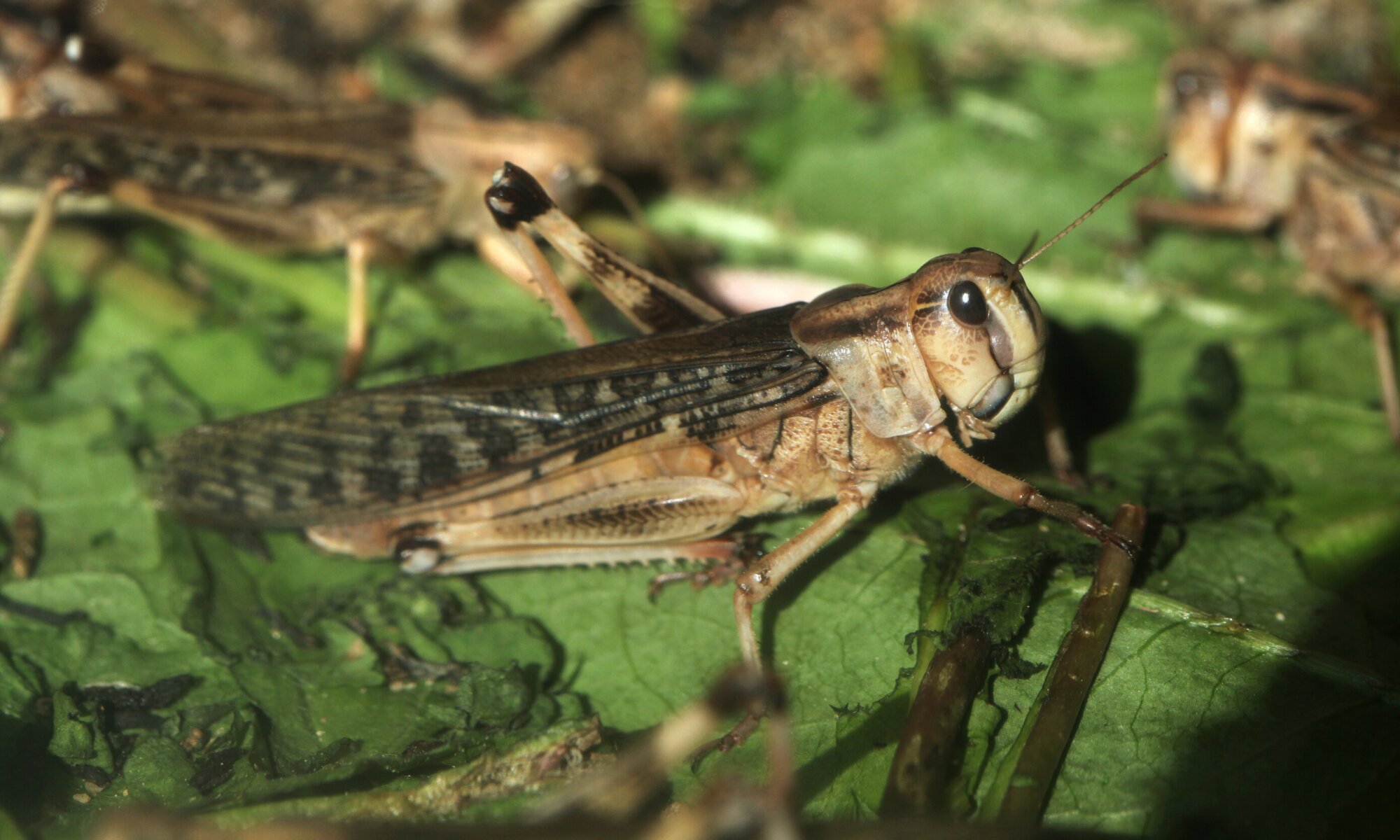
    The locust, a short-horned, desert grasshopper that attacks standing crops and green vegetation, has been making news in India since May-June 2019 when it appeared in Rajasthan and Gujarat. In Kharif season last year, it was also seen in a few areas along Punjab’s border with Rajasthan.

    Context

    • The Locust Warning Organisation (LWO) has been taking measures to control attacks by the pest for the past eight decades in the country.
    • Despite all of LWO’s efforts, the chain of periodic locust attacks in India is yet to be broken.

    Why Locusts attacks are deadly?

    • Adult locust swarms can fly up to 150 km (93 miles) a day with the wind and adult insects can consume roughly their own weight in fresh food per day.
    • A very small swarm eats as much in one day as about 35,000 people.
    • If allowed to breed unchecked in favourable conditions, locusts can form huge swarms that can strip trees and crops over vast areas.

    About LWO

    • In India, the scheme Locust Control and Research (LC&R) is responsible for control of Desert Locust.
    • It is being implemented through Organisation known as “Locust Warning Organisation (LWO)” established in 1939 and later amalgamated with the Directorate of Plant Protection Quarantine and Storage in 1946.
    • Locust Warning organization (LWO) is responsible to monitor and control the locust situation in Scheduled Desert Area (SDA) mainly in the States of Rajasthan and Gujarat while partly in the States of Punjab and Haryana.
    • It keeps itself abreast with the prevailing locust situation at National and International level through monthly Desert Locust Bulletins of FAO.

    What measures are being taken by the LWO to control locust breeding/attacks in India?

    • Experts at the LWO said around three dozen offices including 10 circle offices are working on this issue.
    • They have been doing regular field surveys to keeping a close and regular watch on an over two lakh sq. km area (nearly 11,500 villages) of three states including 1.79 lakh sq. km in Rajasthan (52 per cent of the state’s total area), and the remaining in Gujarat and Haryana.
    • To observe the locust, intensive surveys are conducted by walking along the wind direction and driving at low speed to count flying locusts.

    How often have there been locust attacks in India?

    • The pests have been appearing periodically after a gap of 2-3 or 5-7 years. Around 26 locust attacks have taken place in India in two major cycles.
    • After independence (1947), 25 attacks were observed. Among these, the attacks of 1949-55, 1962 and 1993 were most devastating when 167 and 172 swarms were noticed in 1962 and 1993 respectively.
    • Since 1993, locust attacks have occurred less frequently. The latest attack of 2019-20, has had quite a severe effect on crops in Rajasthan.

    Financial losses incurred

    • According to LWO, to date, the financial loss due to locusts is said to be Rs 50 lakh, Rs 2 lakh and Rs 7.18 lakh in 1962, 1978 and 1993 respectively.
    • A loss of Rs 2 crore was incurred in 1940-46 and 1949-55. Before the LWO was formed, a loss of Rs 10 crore is estimated in the 1926-31 cycle.

    Why has the chain not been broken even after 80 years?

    • LWO experts said it is because there are 30 countries in four regions of different continents that have an arid climate with large deserts that provide an ideal breeding ground for the locust.
    • Most of the time, locusts are coming to India from Pakistan, or from the Middle East via Pakistan.
    • There are four commissions for these 30 countries which include Iran, Pakistan, Afghanistan and India.
    • Laxity by any country would lead to its spread in all these countries which they invade one after another by following almost the same path.
    • The swarms which are coming to India (Rajasthan) have been following the same path, starting from central or western region and then Pakistan mostly in summers.
    • Apart from breaking the chain of summer attacks, the winter swarm has now posed another challenge.

    Where did the current locust attack originate?

    • The locust breeds in high temperatures and high humidity, which is prevalent in areas around the Red Sea.
    • The current attack in India, which started in 2019, has its origin in Yemen, where there was internal conflict and civil war.
    • When the locust was breeding in heavy numbers there in 2018-19, the country could not take care due to its attention towards the civil war and lack of resources to control it.
    • The insect went out of control, took the route of Saudi Arabia, Iran, Pakistan, Somalia, Ethiopia and other countries located on both sides of the Red Sea where they multiplied rapidly.

    Control measures

    • The chain can be broken only when the pest is killed at the time of breeding or before migration to another country.
    • Farmers used to try to drive away the locusts by lighting fires. They also dug up the eggs.
    • Now crops can be sprayed with insecticides from vehicles or airplanes.
    • Scientists are trying to improve the control of locusts, by preventing or dispersing swarms.

    Also read:

    https://www.civilsdaily.com/news/desert-locusts-incursion-in-india/

  • Global Risks Report 2020

    The top five risks to humanity are recently published in the Global Risks Report of the World Economic Forum (WEF).

    Top five risks

    • An important finding of the report is that today’s younger generation, consisting of “Millenials” born after 1980 have ranked environmental risks higher than other older respondents in the short- and long-terms.
    • According to the report, the top five risks by likelihood over the next decade are:
    1. Extreme weather events like floods and storms
    2. Failure of climate change mitigation and adaptation
    3. Major natural disasters like earthquakes, tsunamis, volcanic eruptions and geomagnetic storms
    4. Major biodiversity losses and ecosystem collapse
    5. Human-made environmental damage and disasters

    Top 5 risks by severity of impact over the next 10 years

    • Failure of climate change mitigation and adaptation
    • Weapons of mass destruction
    • Major biodiversity loss and ecosystem collapse
    • Extreme weather events (e.g. floods, storms, etc.)
    • Water crises

    Top most strongly connected global risks

    • Extreme weather events + failure of climate change mitigation and adaptation
    • Large-scale cyber-attacks + breakdown of critical information infrastructure and networks
    • High structural unemployment or underemployment + adverse consequences of technological advances
    • Major biodiversity loss and ecosystem collapse + failure of climate change mitigation and adaptation
    • Food crises + extreme weather events

    Other risks

    • The report also warned about the increasing economic and societal costs due to non-communicable diseases and the lack of research on vaccines and drug resistance to address the threat of pandemics in the recent future.
    • Economic confrontations” and “domestic political polarization” are significant short-term risks in 2020, the report said.
    • This is a warning for the global South including India and Africa where social unrest has seen a rise. For example, unrest has grown among India’s youth.
  • [op-ed of the day] Weathering the storm

    Context

    State of Climate of India report by IMD should occasion interventions to make people resilient to extreme weather events.

    What does the report confirm?

    • Frequent extreme weather events: The report states that extreme weather events have become par for the course in the country.
    • The report notes that excessive heat, cold and rainfall killed 1,562 people during the year.
    • Intense dry spells, even droughts, were interspersed with floods in several parts of the country
    • Above normal temperature:  The mean temperature last year was 0.36 above normal.
    • The excess rainfall: The country also recorded excess rainfall during both the southwest and northeast monsoons.

    Long-term meteorological trends:

    • The IMD report should be seen in conjunction with long-term meteorological trends.
    • The warmest decade: The World Meteorological Organisation reckons that the decade starting 2011 remains on track to be the warmest on record.
    • Increase in the relative humidity: At the same time, data from the European Centre for Medium-Range Forecast shows that the relative humidity in the mid-troposphere in the Subcontinent has increased by about 2 percent in the past four decades.
    • Such warming has increased the capacity of oceans to form intense cyclonic disturbances.

    Implications for disaster-preparedness:

    • Cyclones: Last year, as the IMD report notes, the Indian Ocean witnessed eight cyclones.
    • Cyclones don’t kill but buildings can turn hazardous during such extreme weather events.
    • The vulnerability of the poor: In Odisha winds blowing at more than 140 kilometers per hour ripped off roofs and window frames in modern houses and also exposed the vulnerability of the mud and bamboo houses of the poor.
    • Guidelines: The Ministry of Housing and Urban Affairs does have guidelines for climate-friendly construction.
    • But planners in coastal cities and towns rarely pay heed to its provisions.
    • Cooperation between the states: The changing dynamics of weather also demands cooperation between states that share a river basin.
    • Maharashtra and Karnataka bickered over opening the gates of the Almatti dam on the Krishna.

    Implications for the farmers:

    • For farmers, vagaries in nature mean disruptions in the entire cropping cycle.
    • This year, Kerala, southern Karnataka, and Gujarat were heavily deficient till July.
    • But within a few days in the last week of July, these states recorded surplus rainfall.
    • Rainwater storage and use: Increasing their resilience calls for efficient rainwater storage and use.

    Conclusion:

    It’s clear that dealing with exceptional weather will require interventions at the national, state and local levels. The Statement on Climate of India 2019 drives home the urgency of such interventions.