💥Join UPSC 2027,2028 Mentorship (August Batch) + XFactor Notes & Microthemes PDF

GS Paper: Executive & Judiciary

  • An intervention that will help strengthen legal education

    The present scenario of legal education in India - iPleaders

    Central Idea:

    The article discusses the recent recommendations made by the Parliamentary Standing Committee on Personnel, Public Grievances, Law, and Justice to enhance the quality of legal education in India. It highlights the need for a new regulatory body, the National Council for Legal Education and Research (NCLER), to oversee post-graduation level education, prioritize research in law schools, and address the challenges hindering the excellence of legal education in the country.

    Key Highlights:

    • Recommendations for Regulatory Reform: The committee proposes limiting the Bar Council of India’s (BCI) role in legal education regulation and establishing the NCLER to set qualitative benchmarks for post-graduation level education.
    • Emphasis on Research: Recognizing the deficiency in research focus among Indian law schools, the committee stresses the importance of promoting research to improve teaching outcomes and cultivate critical thinking skills among students.
    • Global Perspective: Acknowledging the impact of globalization on legal education, the committee suggests incorporating global curriculum, international exchange programs, and more international law courses to prepare students for a globalizing world.
    • Call for Strong Leadership and Academic Freedom: The article emphasizes the necessity for passionate and visionary academic leaders in law faculties and universities to foster a supportive environment for faculty and promote academic freedom.

    Key Challenges:

    • Lack of Leadership: The absence of effective leadership in law faculties and universities impedes efforts to achieve excellence in legal education.
    • Insufficient Research Focus: Many law schools in India prioritize teaching over research, resulting in a scarcity of indigenous legal knowledge and reliance on Western legal literature.
    • Resistance to Change: Implementing reforms in legal education requires a shift in mindset among stakeholders and a commitment to prioritize higher education.

    Main Terms or key quotes:

    • National Council for Legal Education and Research (NCLER)
    • Bar Council of India (BCI)
    • Globalization
    • Academic Freedom

    Important Phrases for mains answer enrichment:

    • “Sea of institutionalized mediocrity”
    • “Consumer of legal knowledge generated in the West”
    • “Augmenting the research ecosystem”
    • “Complete academic freedom and autonomy”

    Quotes for quality essay:

    • Albert Einstein: “The value of a college education is not the learning of many facts but the training of the mind to think.”
    • Jawaharlal Nehru: “A university stands for humanism, for tolerance, for reason, for the adventure of ideas and for the search of truth.”

    Useful Statements:

    • “Legal education in India needs regulatory reform to address its current shortcomings and enhance its quality.”
    • “Promoting research is crucial to improving teaching outcomes and fostering critical thinking skills among students.”
    • “Effective leadership and academic freedom are essential for driving meaningful change in legal education.”

    Examples and References:

    • National Law School of India University and Jindal Global Law School are among the few Indian law schools ranked in the top 250 globally.
    • Out of over 800 law journals indexed in Scopus, only a handful are from India, indicating the low level of research output from Indian law schools.

    Facts and Data:

    • India has over 1,700 law schools, but only a few have achieved excellence in legal education.
    • Legal education in India has historically lagged behind fields like medicine and engineering in terms of priority and investment.

    Critical Analysis:

    The article aptly highlights the systemic challenges plaguing legal education in India and the urgent need for reform. It identifies regulatory deficiencies, research gaps, and leadership issues as key barriers to achieving excellence. However, it fails to delve deeply into the specific strategies or mechanisms required to address these challenges.

    Way Forward:

    • Implement the recommendations of the Parliamentary Standing Committee to establish the NCLER and redefine the role of the BCI.
    • Invest in promoting research culture in law schools through funding, infrastructure, and academic support.
    • Encourage academic leadership that fosters a culture of innovation, excellence, and academic freedom.
    • Foster collaboration between law schools, industry, and international institutions to enhance curriculum relevance and global exposure for students.

    In conclusion, while the recommendations put forth by the committee represent a step in the right direction, concerted efforts from all stakeholders are necessary to bring about meaningful change and elevate the quality of legal education in India.
  • Places of worship and an unsettling judicial silence

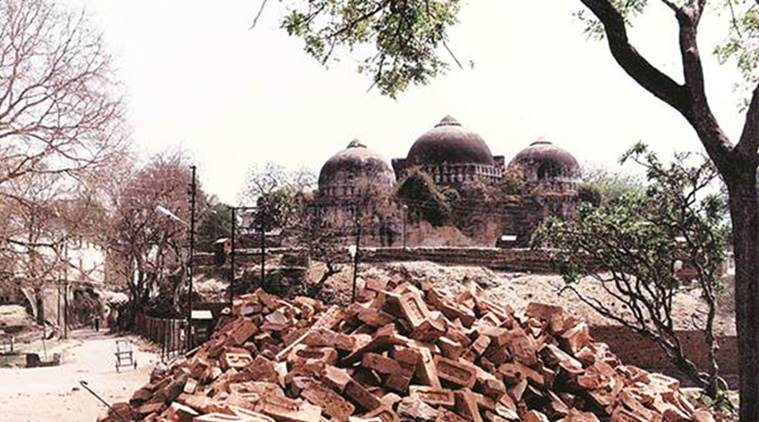
    Supreme Court to hear Ram Janmabhoomi-Babri Masjid title dispute on January 4 | India News - The Indian Express

    Central Idea:

    The article discusses the aftermath of the Supreme Court verdict on the Babri Masjid case in November 2019 and its implications on the Places of Worship (Special Provisions) Act, 1991. It highlights the challenges posed by the resurgence of petitions targeting mosques like the Gyanvapi Masjid in Varanasi and the Shahi Idgah in Mathura, and the subsequent debates on the Act’s validity and applicability. It emphasizes the need for the Supreme Court to intervene to protect the integrity of the Act and prevent its politicization.

    Key Highlights:

    • Supreme Court’s verdict on the Babri Masjid case in November 2019 praised the Places of Worship Act, 1991 for preserving the religious character of places of worship as of August 15, 1947.
    • Hindutva forces initiated petitions targeting mosques in Mathura, Varanasi, and other places, challenging their status and calling for their liberation.
    • Despite lack of concrete evidence, petitions against mosques were admitted in various district courts, signaling a deliberate challenge to the Places of Worship Act.
    • The Supreme Court’s silence on the increasing challenges to the Act raised concerns about its integrity and enforcement.
    • The court’s decision to hear petitions against the Act itself and the Union government’s delays in specifying its stance raised doubts about the Act’s future.

    Key Challenges:

    • Increasing petitions challenging the status of mosques threaten communal harmony and challenge the secular principles enshrined in the Indian Constitution.
    • The politicization of the issue, with petitions being used as a tool to further certain political narratives, adds complexity to the debate.
    • Delays in the Supreme Court’s intervention and the government’s ambiguity on the Act’s status create uncertainty and erode public trust in the legal system.
    • Historical grievances and communal tensions fuel the resurgence of demands for the reclamation of religious sites.

    Main Terms or key words:

    • Places of Worship (Special Provisions) Act, 1991: Legislation preserving the religious character of places of worship as of August 15, 1947, and prohibiting their conversion.
    • Hindutva: Ideology promoting Hindu nationalism.
    • Communal Harmony: Peaceful coexistence and cooperation among different religious communities.
    • Secularism: Principle of separating religion from state affairs and ensuring equal treatment of all religions.
    • Petitions: Formal requests submitted to a court seeking legal action or remedy.

    Important Phrases for mains value addition:

    • “Non-retrogression as an essential feature of our secular values.”
    • “Challenges to the Act amount to a breach of public trust.”
    • “The politicization of petitions serves certain political narratives.”
    • “The silence of the top court is unsettling.”

    Quotes for quality enrichment of mains answers:

    • “The Places of Worship Act imposes a non-derogable obligation towards enforcing our commitment to secularism under the Indian Constitution.”
    • “Similarly minded people are as little likely to be deterred by the provisions of the Places of Worship (Special Provisions) Act 1991.”
    • “The ascertainment of the religious character of a place as a procedural instrument may not necessarily fall foul of the provisions of sections 3 and 4 of the Act of 1991.”

    Anecdotes:

    • The order of a district court in Uttar Pradesh in 1986 kick-started events leading to the destruction of the Babri Masjid, illustrating the significance of legal decisions regarding places of worship.

    Useful Statements:

    • The resurgence of demands for the reclamation of religious sites threatens communal harmony and challenges secular principles.
    • The Supreme Court’s intervention is crucial to uphold the integrity of the Places of Worship Act and prevent its politicization.

    Examples and References:

    • Petitions targeting mosques in Mathura, Varanasi, and other places highlight the growing challenges to the Places of Worship Act.
    • The Babri Masjid-Ramjanambhoomi agitation and slogans like “Ayodhya to jhanki hai, Kashi, Mathura baqi hai” demonstrate historical grievances and communal tensions.

    Facts and Data:

    • The Places of Worship Act, 1991, preserves the religious character of places of worship as of August 15, 1947.
    • The Supreme Court admitted petitions challenging the Act’s validity and the government’s delays in specifying its stance.

    Critical Analysis:

    The article provides a comprehensive overview of the challenges posed by petitions targeting mosques and questioning the Places of Worship Act, 1991. It emphasizes the importance of preserving communal harmony and secular principles while addressing historical grievances. However, it also highlights the politicization of the issue and the need for timely intervention by the Supreme Court to prevent further escalation.

    Way Forward:

    • The Supreme Court should actively intervene to uphold the integrity of the Places of Worship Act and prevent its politicization.
    • Political leaders and stakeholders should prioritize communal harmony and refrain from using religious sentiments for political gain.
    • Civil society should promote dialogue and understanding among different religious communities to prevent communal tensions.
    • The government should clarify its stance on the Act and ensure its effective implementation to maintain secularism and protect religious freedoms.
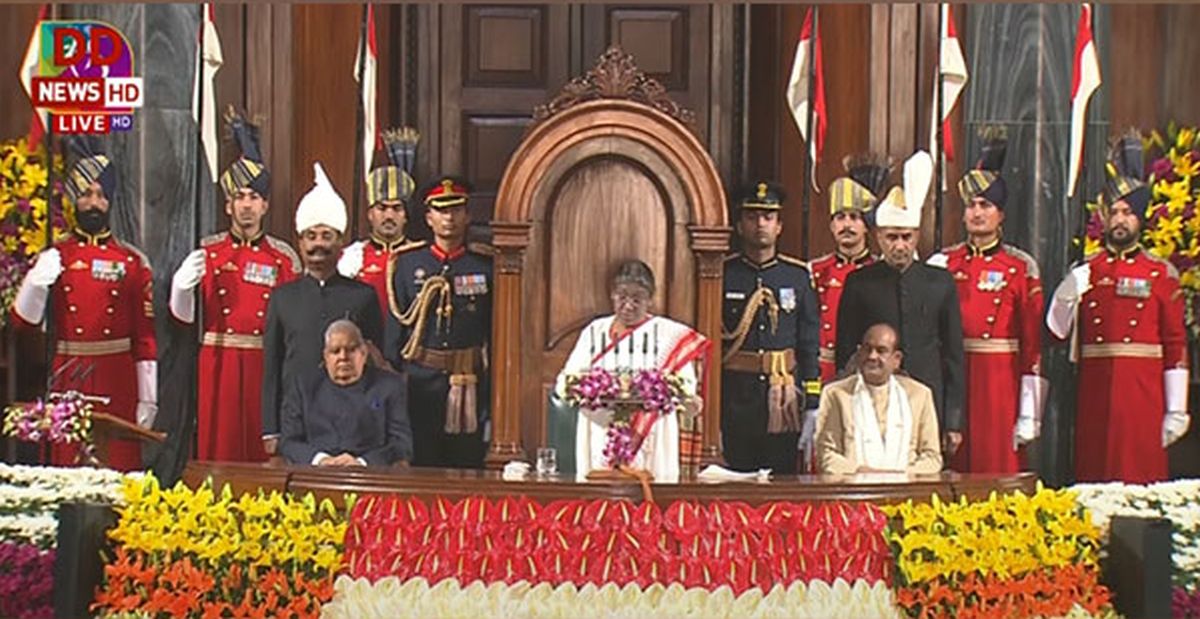
  • Rescuing grace from disgrace

    Full text: President Murmu's address to Parliament's Budget Session - Rediff.com

    Central Idea:

    The article discusses the tradition of presidential and gubernatorial addresses to Parliament and Legislative Assemblies in India, highlighting the ceremonial and ritualistic nature of these events. It emphasizes the need for reform to streamline these addresses, suggesting a shift towards shorter, more concise speeches akin to the British practice, to save time and enhance efficiency in legislative proceedings.

    Key Highlights:

    • Presidential and gubernatorial addresses in India are steeped in tradition, characterized by elaborate ceremonies and rituals.
    • The speeches are drafted by the government of the day, with little involvement from the heads of state, leading to lengthy and sometimes tiresome readings.
    • Past presidents like R. Venkataraman and K.R. Narayanan exhibited meticulousness in reviewing draft speeches, suggesting improvements that were generally accepted.
    • Similar experiences were observed at the state level, with governors making suggestions for changes to their addresses, sometimes leading to unexpected challenges.
    • The article reflects on instances of political civility, where suggested changes were acknowledged and accommodated, despite time constraints.
    • Despite the ceremonial nature of these addresses, controversy and turbulence in legislative assemblies have been on the rise, fueled by accusations and counter-accusations.
    • The root cause of the problem lies in the disconnect between the writers and readers of these speeches, raising questions about ownership and relevance.
    • The author proposes adopting a more concise format for these addresses, similar to the British model, to refocus attention on legislative business and mitigate political polarization.

    Key Challenges:

    • Resistance from governments accustomed to using these addresses as platforms to showcase their achievements and plans.
    • Convincing stakeholders about the efficacy of shifting towards shorter, more focused speeches.
    • Overcoming entrenched traditions and resistance to change within the political system.
    • Balancing the ceremonial aspects of these addresses with the need for efficiency and relevance in legislative proceedings.
    • Addressing political polarization between central and state governments, which may hinder collaborative efforts towards reform.

    Main terms for answer quality enhancement:

    • Presidential address
    • Gubernatorial address
    • Ceremonial
    • Ritualistic
    • Legislative proceedings
    • Political polarization
    • Tradition
    • Efficiency
    • Reform

    Important Phrases:

    • “Land of largely unquestioned custom, ceremonials, and rituals”
    • “Suggesting changes by them difficult”
    • “Saving of time and the avoiding of tedium”
    • “Political civility”
    • “Root of the problem”
    • “Ornament of convention”
    • “Collective body of legislators”
    • “Innovative and self-denying Chief Minister”

    Quotes:

    • “When I am asked to read these Addresses, I feel like saying ‘Rashtrapati Bhavan’ and sitting down!” – R. Venkataraman
    • “The speech was not mine, it was yours.” – Unnamed speaker to Nitish Kumar
    • “Who Owns that Speech?” – Professor A.R. Venkatachalapathy

    Anecdotes:

    • R. Venkataraman’s meticulous review of draft speeches, despite tight timeframes.
    • Chief Minister Buddhadeb Bhattacharjee’s prompt action to rectify an oversight in a gubernatorial address.
    • The Governor of Bihar officiating a seamless legislative ceremony, earning appreciation from the Chief Minister.

    Useful Statements for critical approach in answer writing:

    • “The root of the problem lies in the foundational dichotomy of one agency writing the speech and another reading it.”
    • “Presidents and Governors will, I think, be relieved with such a rearrangement.”
    • “It will take an innovative and self-denying Chief Minister to start the reform to rescue a custom, ceremony, and ritual of grace from disgrace.”

    Examples and References:

    • Instances of past presidents and governors suggesting changes to draft speeches, with varying degrees of acceptance and acknowledgment.
    • Comparison with the British practice of brief, outline-focused speeches by the head of state.

    Facts and Data:

    • Terms of past presidents and governors mentioned in the article (e.g., R. Venkataraman, K.R. Narayanan).
    • References to specific events, such as the oversight in printing a gubernatorial address.

    Critical Analysis:

    • The article presents a nuanced critique of the ceremonial nature of presidential and gubernatorial addresses, highlighting inefficiencies and challenges.
    • It underscores the importance of streamlining these addresses to enhance legislative efficiency and mitigate political polarization.
    • The proposed reform aligns with the need for modernization and adaptation within the Indian political system.

    Way Forward:

    • Advocate for collaborative efforts among stakeholders to initiate reform and streamline the process of presidential and gubernatorial addresses.
    • Emphasize the benefits of shorter, more focused speeches in enhancing legislative efficiency and relevance.
    • Encourage political leaders to prioritize the collective interests of legislators and citizens over traditional ceremonies and rituals.
  • Four issues that CJI highlighted within Legal Profession

    cji

    Introduction

    • During the Supreme Court’s 75th-year Foundation Day address, the Chief Justice of India (CJI) highlighted four crucial issues within the judiciary that require “difficult conversations.”
    • This article delves into these issues and their historical context.

    Major Issues with Legal Profession

    [1] Problem of “Adjournment Culture”

    • Definition: Adjournment culture refers to the practice of lawyers repeatedly seeking adjournments, delaying scheduled hearings.
    • Effect on Justice: Prolonged adjournments lead to case delays and contribute to the growing backlog of pending cases.
    • Legal Framework: Order XVII of the Civil Procedure Code, 1908 sets rules for granting adjournments, limiting them to three times, with sufficient cause shown.
    • Vicious Cycle: Advocates exploit heavy workloads to seek adjournments, perpetuating delays.

    [2] Managing Lengthy Oral Arguments

    • Constitutional Bench Matters: The court directs parties to schedule oral arguments to avoid repetition in important cases.
    • Mixed Success: Past cases, like the Ayodhya title dispute, had lengthy hearings despite scheduling.
    • Recent Improvements: Under CJI UU Lalit, a Constitution Bench case involving EWS reservations achieved efficiency through time scheduling.
    • US Model: The US Supreme Court restricts oral arguments to 30 minutes per side, considered but not adopted in India.

    [3] Alternatives to Extended Court Vacations

    • Flexi-Time: Introducing flexi-time for lawyers and judges is suggested, allowing them to choose working hours within a specified total.
    • Philippines Example: The Philippines implemented flexi-time for court employees based on valid reasons.
    • Historical Suggestions: Past reports and government recommendations aimed to reduce court vacations to tackle case backlog.
    • Supreme Court Rules: In 2014, the court limited summer vacations to seven weeks instead of ten.

    [4] Ensuring Equal Opportunities for First-Generation Lawyers

    • Leveling the Field: The CJI emphasizes providing a level playing field for first-generation lawyers and marginalized segments with the potential to succeed.
    • Progress: Over 50% of junior civil judge exam candidates are women, and 41% of Supreme Court law clerk candidates are women.
    • Inclusivity Efforts: Initiatives by the Supreme Court Advocates-on-Record Association (SCAORA) aim to support diversity, including giving weightage to first-generation lawyers for Senior Advocate designations.
    • Judicial Recognition: The judiciary acknowledges the growth and contributions of first-generation lawyers, dismissing claims that recognition is solely based on wealth and proximity.

    Conclusion

    • The judiciary faces multifaceted challenges, including adjournment culture, oral argument lengths, court vacations, and ensuring a fair platform for first-generation lawyers.
    • Addressing these issues requires frank discussions, reforms, and continued efforts to uphold the principles of justice and inclusivity within the legal profession.
  • Diamond Jubilee celebrations of the Supreme Court

    Introduction

    • The Prime Minister inaugurated the diamond jubilee year celebrations of the Supreme Court, marking an important milestone in India’s judicial history.

    About Supreme Court of India

    • Apex Judicial Body: The Supreme Court of India is the highest judicial authority as per the Constitution of India.
    • Constitutional Mandate: Article 124 of the Constitution stipulates the establishment of the Supreme Court.
    • Birth of the Supreme Court: The Supreme Court came into being on January 26, 1950, coinciding with the commencement of the Indian Constitution.
    • Inauguration: Two days after India became a Sovereign Democratic Republic, the Supreme Court was officially inaugurated on January 28, 1950.
    • Initial Location: Initially, the Supreme Court operated from the old Parliament House until it relocated to its present site on Tilak Marg, New Delhi, in 1958.
    • Inaugural Event: The inaugural ceremony of the current Supreme Court building was presided over by Dr. Rajendra Prasad, the first President of India, on August 4, 1958.

    Evolution of Judicial Bench Strength

    • Changing Dynamics: The original 1950 Constitution envisioned a Supreme Court comprising a Chief Justice and 7 puisne Judges, allowing Parliament to alter this number.
    • Progressive Growth: Over the years, the number of Judges increased to accommodate the growing workload: 8 in 1950, 11 in 1956, 14 in 1960, 18 in 1978, 26 in 1986, 31 in 2009, and the current strength of 34 Judges.
    • Judicial Structure: Judges sit in panels of two or three and convene in larger benches of 5 or more, known as Constitution Benches, to resolve conflicting decisions between different Supreme Court benches or address significant constitutional interpretations.
    • Official Language: Proceedings in the Supreme Court are conducted exclusively in English.

    Powers and Jurisdiction

    • Multifaceted Jurisdiction: The Supreme Court possesses original, appellate, and advisory jurisdiction.
    • Final Arbiter: It serves as the ultimate court of appeal and the ultimate interpreter of the Constitution.
    • Original Jurisdiction: The Supreme Court’s original jurisdiction extends to disputes involving the Government of India and one or more States, inter-State disputes, and issues related to Fundamental Rights.
    • Writ Jurisdiction: Article 32 of the Constitution empowers the Supreme Court with extensive original jurisdiction to enforce Fundamental Rights by issuing writs like habeas corpus, mandamus, prohibition, quo warranto, and certiorari.
    • Inter-High Court Cases: The Supreme Court can direct the transfer of civil or criminal cases between High Courts.
    • International Commercial Arbitration: Under the Arbitration and Conciliation Act, 1996, the Supreme Court can initiate International Commercial Arbitration.
    • Appellate Authority: High Courts can grant certificates for appeals to the Supreme Court under Article 132(1), 133(1), or 134 in cases with substantial questions of constitutional interpretation.
    • Certified Appeals: In civil cases, High Courts may certify that a case involves a significant question of general importance, warranting Supreme Court adjudication.
    • Criminal Appeals: In criminal cases, appeals lie to the Supreme Court if the High Court has reversed an acquittal, sentenced an accused to death, imprisonment for life, or imprisonment for over 10 years, or if the High Court certifies the case’s suitability for Supreme Court appeal.
    • Parliamentary Empowerment: Parliament can confer additional powers on the Supreme Court to hear appeals from High Courts in criminal proceedings.
    • Special Leave to Appeal: Under Article 136, the Supreme Court may, at its discretion, grant special leave to appeal from any judgment, decree, or order passed by any Court or Tribunal in India.
    • Advisory Role: The Supreme Court exercises advisory jurisdiction under Article 143, wherein the President of India can refer specific matters to the Court.
    • Election Petitions: Part III of the Presidential and Vice-Presidential Elections Act, 1952, allows direct filing of election petitions in the Supreme Court.
    • Contempt Powers: Articles 129 and 142 empower the Supreme Court to punish for contempt of Court, including self-contempt.
    • Curative Petitions: After dismissing a review petition, the Supreme Court can reconsider its final judgment through a curative petition on limited grounds.
    • Binding Authority: As India’s highest court, its judgments are binding on all other courts in the country.

    Location of the Supreme Court

    • Article 130: Article 130 of the Constitution grants the Chief Justice of India the authority to choose the location of the Supreme Court, which can be in Delhi or any other place.
    • CJI’s Discretion: The Article vests exclusive discretionary powers with the Chief Justice of India regarding the Supreme Court’s location.
    • No External Compulsion: No external authority can compel the Chief Justice to act in a particular manner under this Article.

    Advocating for Circuit Benches

    • Law Commission Recommendation: The Law Commission’s 229th Report suggested establishing a Constitution Bench in New Delhi and four other benches in different regions of India.
    • Diverging Views: However, this proposal did not garner favor among Supreme Court Judges.
  • Judicial contradiction in Delhi Chief Secretary’s extension

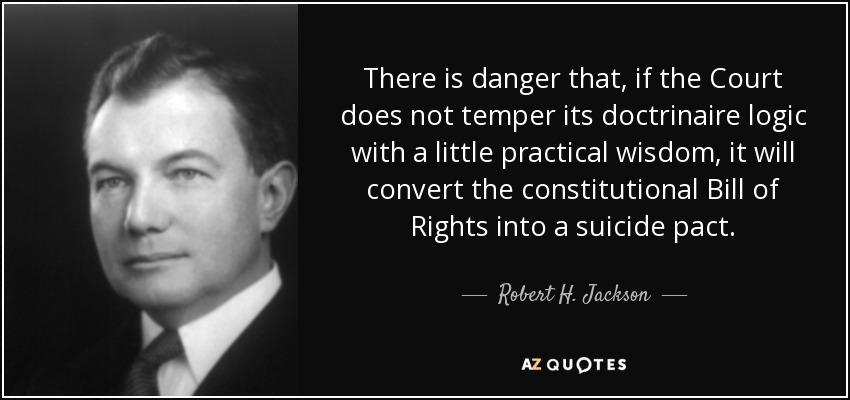
    Robert H. Jackson quote: There is danger that, if the Court does not  temper...

    Central Idea:

    The article criticizes the Supreme Court of India’s November 2023 judgment allowing a six-month extension to Delhi’s Chief Secretary despite serious corruption allegations. It highlights the Court’s perceived inconsistency in upholding constitutional principles, particularly concerning the Government of National Capital Territory of Delhi (Amendment) Act 2023, and expresses concerns about the erosion of constitutional logic and past judicial wisdom.

    Key Highlights:

    • The Supreme Court’s decision to permit the extension of Delhi’s Chief Secretary’s tenure is viewed as an instance of judicial self-abnegation.
    • The article questions the Court’s reversal of its own earlier Services judgment, which emphasized the elected government’s control over services in Delhi.
    • Serious corruption charges against the Chief Secretary and the Delhi Chief Minister’s recommendation for his removal create a conflict of interest.
    • The Court’s reliance on the 2023 amendment and the interpretation of the Chief Secretary’s role is criticized for being inconsistent with past rulings, including Royappa.
    • The article points out the Court’s failure to acknowledge that the 2023 amendment did not exclude the application of the Royappa case.

    Key Challenges:

    • The Supreme Court’s perceived inconsistency in interpreting constitutional principles, especially regarding the Chief Secretary’s extension and the 2023 amendment.
    • Addressing the conflict of interest posed by serious allegations against the Chief Secretary and the breakdown of trust between the elected government and bureaucracy.
    • The Court’s deviation from its past rulings, particularly the Services judgment and Royappa case, creates a challenge in maintaining a coherent judicial stance.

    Key Terms/Phrases:

    • Judicial self-abnegation
    • Government of National Capital Territory of Delhi (Amendment) Act 2023
    • Constitutional logic
    • Chief Secretary’s extension
    • Services judgment
    • Royappa case
    • Conflict of interest
    • Constitutional interpretation
    • Erosion of trust
    • Unilateral extension

    Key Quotes:

    • “The Court’s judgments become ‘writ in water’ when it reverses its own reasoning for the government’s convenience.”
    • “The Court has lost sight of constitutional logic and past wisdom that attributed great value to constitutional interpretation.”

    Key Statements:

    • “The article questions the Court’s deviation from its earlier stance, leading to a perceived erosion of constitutional principles and inconsistency.”
    • “The conflict of interest arising from serious charges against the Chief Secretary and the breakdown of trust between the elected government and bureaucracy is a significant concern.”

    Key Examples/References:

    • The Supreme Court’s November 2023 judgment permitting the Chief Secretary’s extension and its reliance on the 2023 amendment.
    • The Services judgment emphasizing the elected government’s control over services and the Royappa case defining the role of the Chief Secretary.

    Key Facts/Data:

    • The Government of National Capital Territory of Delhi (Amendment) Act 2023 had been challenged by the Delhi government but was not stayed by the courts.
    • Serious allegations of corruption against the Chief Secretary and the Chief Minister’s recommendation for immediate removal.

    Critical Analysis:

    The article critically examines the Supreme Court’s handling of the Chief Secretary’s extension, highlighting perceived inconsistencies, conflicts with past judgments, and a departure from established constitutional principles. It raises concerns about the erosion of trust between the elected government and bureaucracy.

    Way Forward:

    • The Supreme Court needs to revisit and reconcile its past judgments, especially the Services and Royappa cases, to ensure a coherent judicial stance.
    • Addressing conflicts of interest and corruption allegations in bureaucratic appointments is crucial for maintaining public trust.
    • The Court should uphold constitutional principles consistently, considering the broader impact on governance and accountability.
    • Future decisions related to the Government of National Capital Territory of Delhi (Amendment) Act 2023 should be made with a clear understanding of constitutional logic and democratic principles.
  • Justice for Bilkis Bano, questions on remission

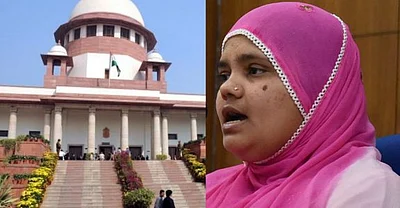
    A New Beginning : Bilkis Bano on the SC Ruling Nullifying Guj Govt's Remission Order - Read What

    Central Idea:

    The article discusses a recent Supreme Court decision regarding the remission of 11 convicts in the Bilkis Bano case. It highlights the court’s condemnation of illegalities and collusion between the petitioners and the Gujarat government. While celebrating the decision as a triumph for justice, the author also raises concerns about the lack of transparency and unchecked discretion in the remission process.

    Key Highlights:

    • The Supreme Court cancels remission orders for 11 convicts due to fraud and collusion with the Gujarat government.
    • The decision is praised for upholding the rule of law and addressing the exceptional injustice faced by Bilkis Bano.
    • The article acknowledges the inspiring resilience of Bilkis Bano and applauds women’s rights lawyers for their commitment.

    Key Challenges:

    • Lack of transparency in the formation and decision-making process of remission committees.
    • Unchecked discretion and potential for arbitrary exercise of power in remission decisions.
    • Concerns about non-application of mind and identical orders in the remission process, as seen in the Bilkis Bano case.

    Key Terms:

    • Remission: Reduction of sentence through earned days based on rehabilitation activities.
    • Per incuriam: Declared as illegal due to a mistake or oversight.
    • Retributive punishment: Focused on punishment rather than rehabilitation.
    • Judicial review: Examination of a decision for legality and fairness.
    • Usurpation of power: Unauthorized assumption of authority.

    Key Phrases:

    • “Injustice of exceptionalism”: Describes the grant of remission in the Bilkis Bano case as a unique and unjust situation.
    • “Resilience that prevailed”: Commends Bilkis Bano’s enduring strength in the face of injustice.
    • “Soothing balm”: Refers to the comfort provided by the Supreme Court’s firm decision.
    • “Unchecked discretion”: Highlights the potential for arbitrary decision-making in remission cases.

    Key Quotes:

    • “Rule of law and equality before the law would be empty words if their violation is not a matter of judicial scrutiny.”
    • “Remission is rooted in the logic that prisons are meant to be rehabilitative spaces.”
    • “Justice Nagarathna’s words come as solace in light of the disturbing memory of the celebrations that followed the release of the 11 convicts.”

    Key Examples and References:

    • Bilkis Bano case: Illustrates the background of the Supreme Court decision and the injustices faced by the victim.
    • Union of India vs V. Sriharan (2015): Reference to a Constitution Bench decision on the appropriate government for remission.
    • Epuru Sudhakar vs State of Andhra Pradesh (2006): Supreme Court ruling on the judicial review of remission orders.

    Key Facts and Data:

    • Life convicts must serve a minimum of 14 years before applying for remission.
    • Remission policies in some states deny opportunities based on crime categories.
    • The Gujarat government’s remission orders for the 11 convicts were identical.

    Critical Analysis:

    The article raises concerns about the arbitrary exercise of power in remission decisions, citing the lack of transparency and identical orders in the Bilkis Bano case. It prompts a reflection on whether certain offenders should be ineligible for remission or if a focus on fair compliance with conditions is more appropriate.

    Way Forward:

    • Advocate for increased transparency in the formation and functioning of remission committees.
    • Emphasize the importance of considering individual circumstances and compliance with remission conditions.
    • Encourage a reevaluation of remission policies to avoid blanket denials based on crime categories.
    • Address the issue of unchecked discretion to ensure a fair and rehabilitative approach in the remission process.
  • Supreme Court Overturns Remission in Bilkis Bano Case

    bilkis bano

    Introduction

    • Supreme Court’s Ruling: The Supreme Court struck down the remission granted to 11 men convicted in the 2002 Bilkis Bano Gangrape Case.
    • Gujarat Government’s Action Deemed Illegal: The court declared the Gujarat government’s decision to release the convicts as illegal, citing jurisdictional issues.

    Remission of Sentences: Constitutional Analysis

    Details
    What is Remission? Complete ending of a sentence at a reduced point;

    Nature of the sentence remains unchanged, but the duration is reduced;

    Conditional release; breach of conditions leads to cancellation.

    Constitutional Provisions Article 72: President’s pardoning powers

    Article 161: Governor’s pardoning powers

    President’s pardoning power >>> Governor’s

    Statutory Power of Remission Provided under the Code of Criminal Procedure (CrPC)

    Sections 432 and 433 allow suspension, remission, or commutation of sentences

    Background of Remission System Defined under the Prison Act, 1894;

    Observed in Kehar Singh vs. Union of India (1989) and

    State of Haryana vs. Mahender Singh (2007) cases

    Latest MHA Guidelines Special Remission Guidelines to commemorate 75th year of Independence as part of the Azadi Ka Amrit Mahotsav celebrations.
    Eligibility for Special Remission Women and transgender convicts aged 50+

    Male convicts aged 60+, having completed 50% of their sentence

    Physically challenged convicts with 70% + disability, having completed 50% of their sentence

    Terminally ill convicts who have completed 66% of their sentence

    Poor prisoners detained due to non-payment of fines

    Young offenders aged 18-21 with no other criminal involvement, having completed 50% of their sentence

    Exclusions from the Scheme Convicts with death sentences or life imprisonment;

    Convicts involved in terrorist activities or convicted under specific acts like TADA, POTA, UAPA, etc.

    Convicts of offences like dowry death, counterfeiting, rape, human trafficking, POCSO Act violations, etc.

    Core Issue before the Court

    • Question of Authority: The central issue was whether the Gujarat government had the authority to issue remission orders for the convicts.
    • Jurisdictional Clarification: The crime occurred in Gujarat, but the trial was held in Mumbai. The Supreme Court clarified that the appropriate government for remission decisions is where the sentencing occurred, not where the crime was committed.

    Understanding Remission of Sentences

    • Constitutional and Legal Provisions: Articles 72 and 161 of the Constitution and Section 432 of the CrPC empower the President, Governors, and state governments to remit sentences.
    • Restrictions Under Section 433A of the CrPC: This section imposes limitations on remission for life imprisonment cases, requiring a minimum of 14 years of imprisonment.

    Grounds for Remission

    • Sentence Review Board’s Role: States have a Sentence Review Board to exercise powers under Section 432 of the CrPC.
    • Supreme Court Guidelines: The court mandates due process in remission decisions, considering factors like the crime’s seriousness, co-accused status, and jail conduct.
    • Criteria Established in ‘Laxman Naskar v. Union of India’ (2000): The Supreme Court outlined five specific grounds for considering remission:

    (a) Whether the offence is an individual act of crime that does not affect society.

    (b) The likelihood of the crime being repeated in the future.

    (c) Whether the convict has lost the potentiality to commit a crime.

    (d) The purpose served by keeping the convict in prison.

    (e) Socio-economic conditions of the convict’s family.

    The Bilkis Bano Case Specifics

    • Convict’s Appeal for Remission: A convict appealed to the Supreme Court for premature release under Gujarat’s 1992 remission policy.
    • Supreme Court’s Initial Directive: The court initially directed the Gujarat government to consider Shah’s application as per the 1992 policy.

    Gujarat’s Remission Policy and Its Implications

    • 1992 Policy vs. 2014 Policy: The 1992 policy, under which remission was sought, was invalidated by the Supreme Court in 2012.
    • Gujarat Government’s Argument: The state argued that the 1992 policy was applicable as the conviction occurred in 2008, before the 2014 policy with stricter guidelines was formulated.

    Aftermath of the Remission Grant

    • Public Outrage: The release of the convicts sparked widespread outrage and was perceived as a miscarriage of justice.
    • Bilkis Bano’s Appeal: Bilkis Bano challenged the remission in the Supreme Court, highlighting the heinous nature of the crime and its impact on society.

    Conclusion

    • Restoration of Legal Integrity: The Supreme Court’s decision to overturn the remission restores faith in the legal system’s commitment to justice.
    • Reaffirmation of Jurisdictional Authority: The ruling clarifies the jurisdictional authority in remission cases, reinforcing the importance of due process and legal consistency.
    • Broader Implications: This judgment sets a precedent for future remission cases, emphasizing the need for careful consideration of the crime’s nature and societal impact in such decisions.
  • Curb the disillusionment with the traditional rule of law

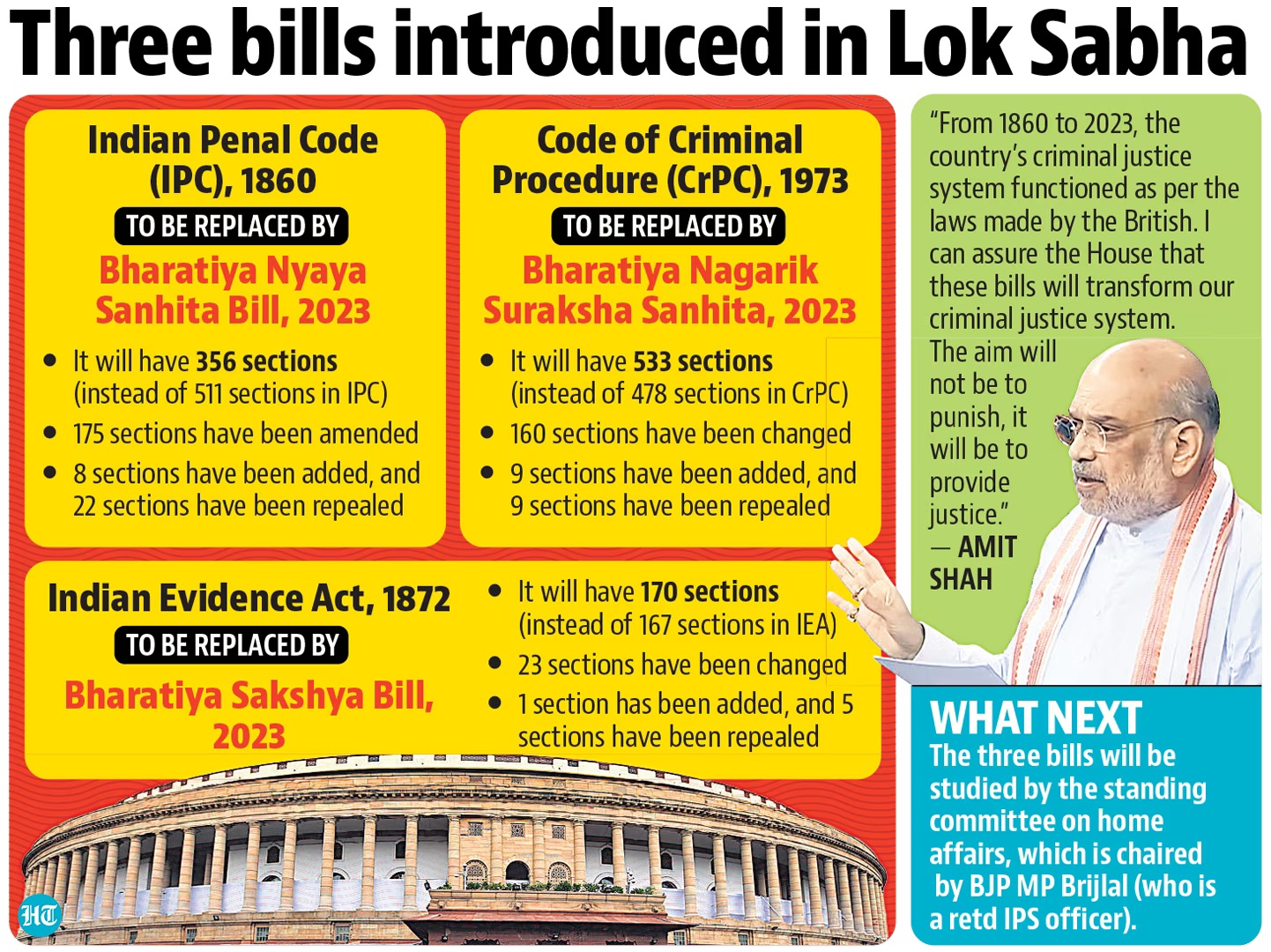
    Bharatiya Nyaya Sanhita, 2023 (BNS) upsc | What is the need for Bharatiya  Nyaya Samhita and related reforms?

    Central Idea:

    • The article explores challenges to the credibility of the rule of law, emphasizing the delicate balance between traditional norms and modern adaptations.
    • Recent legal reforms in India, particularly the Jan Vishwas Act, are discussed, along with concerns about potential abuses of power through shortcuts in law enforcement.

    Key Highlights:

    • The article underscores the significance of faith in the inherent goodness of legal norms for trust in the rule of law.
    • Discussion on the Jan Vishwas Act addressing outdated laws to facilitate business activities and reduce compliance burdens.
    • Replacement of colonial-era laws with the Bharatiya Nyaya (Second) Sanhita to modernize legal thinking and rebuild credibility.
    • The credibility crisis is attributed to shifts in perceptions of law as a power resource and the adoption of shortcut methods in law enforcement.

    Key Challenges:

    • Potential misuse of power through encounters and ‘bulldozer’ methods without democratic checks and balances.
    • Concerns about the crude nature of an abridged rule of law, leading to arbitrary justice and unpredictability.

    Key Terms:

    • Jan Vishwas Act
    • Bharatiya Nyaya (Second) Sanhita
    • Credibility crisis
    • Shortcut or abridged rule of law model

    Key Phrases:

    • “Normative raison d’etre” – referring to the fundamental basis or justification of norms.
    • “Smart governance” – addressing infirmities and outdatedness in laws through effective governance.
    • “Encounter killings” and “bulldozer action” – methods of law enforcement discussed in the article.

    Key Quotes:

    • “Fear of imprisonment for minor offences is a major factor hampering the growth of the business ecosystem.”
    • “The real credibility crisis of the rule of law is located not so much at the normative level but at the level of the rule of law reality.”

    Key Statements:

    • Acknowledgment of the government’s faith in the traditional rule of law as a positive aspect.
    • Highlighting the dangers of growing reliance on shortcut or abridged rule of law models.

    Key Examples and References:

    • The Dandi March as an example of civil disobedience against an unjust law.
    • Instances of police encounters and ‘bulldozer’ actions leading to potential abuses of power.

    Key Facts:

    • The Jan Vishwas Act addressed changes in numerous central Acts, including the Indian Post Office Act, and the Cinematograph Act.
    • Replacement of colonial-era Indian Penal Code, Code of Criminal Procedure, and Indian Evidence Act in the second phase.

    Critical Analysis:

    • The article critically examines the evolving landscape of the rule of law, highlighting potential challenges and consequences of shortcut methods in law enforcement. It questions the credibility crisis and emphasizes the importance of maintaining faith in traditional norms.

    Way Forward:

    • The article suggests staying alert to the dangers of shortcut or abridged rule of law models.
    • Encouragement to continue faith in the traditional rule of law while acknowledging the need for necessary reforms.
  • Justice BR Gavai appointed as Chairman of Supreme Court Legal Services Committee

    Supreme Court Legal Services Committee

    Introduction

    • Justice BR Gavai has been appointed as the Chairman of the Supreme Court Legal Services Committee (SCLSC), succeeding Justice Sanjiv Khanna.

    Understanding the Supreme Court Legal Services Committee

    • Constitution and Purpose: The SCLSC, established under Section 3A of the Legal Services Authorities Act, 1987, aims to provide free legal services to weaker sections of society in cases under the Supreme Court’s jurisdiction.
    • Composition: Chaired by a sitting Supreme Court judge, the committee includes members with prescribed experience and qualifications, all nominated by the Chief Justice of India (CJI).

    Composition and Functioning of the SCLSC

    • Current Members: As of now, the SCLSC comprises Chairperson BR Gavai and nine other members appointed by the CJI.
    • Staffing and Administration: The Committee can appoint officers and employees as per the Centre’s guidelines, in consultation with the CJI.

    Need for Legal Services in India

    • Constitutional Basis: The Indian Constitution, particularly Article 39A, emphasizes the state’s role in ensuring legal justice is accessible to all citizens, regardless of economic or other disabilities.
    • Historical Development: The concept of legal aid in India evolved over decades, with significant progress marked by the establishment of a national committee under Justice PN Bhagwati in 1980.

    Legal Services Authorities Act and Its Provisions

    • Statutory Framework: The 1987 Act provides a legal basis for offering free and competent legal services to eligible groups, including women, children, SC/ST, EWS categories, and others.
    • Establishment of NALSA: Formed in 1995, the National Legal Services Authority (NALSA) oversees legal aid programs and formulates policies for legal services.
    • Nationwide Network: The Act envisions a network across India for legal aid, with State Legal Services Authorities (SLSAs) and District Legal Services Authorities (DLSAs) implementing these services at state and district levels, respectively.

    Role of State and District Legal Services Authorities

    • State-Level Implementation: Each SLSA, led by the Chief Justice of the respective High Court, executes NALSA’s policies and provides free legal services.
    • District and Taluk Committees: DLSAs and Taluk Legal Services Committees, chaired by district and senior civil judges respectively, conduct legal awareness programs and provide various legal services.