💥Join UPSC 2027,2028 Mentorship (August Batch) + XFactor Notes & Microthemes PDF

GS Paper: Executive & Judiciary

  • [5 April 2024] The Hindu Op-ed: Revisit these sections of the Bharatiya Nyaya Sanhita

    [5 April 2024] The Hindu Op-ed: Revisit these sections of the Bharatiya Nyaya Sanhita

    PYQ Relevance:
    Mains
    Q) What is meant by the term ‘constitutional morality’? How does one uphold constitutional morality? (UPSC IAS/2019) 
    Q) What was held in the Coelho case? In this context, can you say that judicial review is of key importance amongst the basic features of the Constitution? (UPSC IAS/2016)

    Note4Students: 

    Prelims:  Governance; Bharatiya Nyaya Sanhita (BNS), 2023;

    MainsGovernance;  Issues related to the section in Bharatiya Nyaya Sanhita (BNS); 

    Mentor comments: In December 2023, the Indian Parliament enacted three new criminal codes. The Indian Penal Code (IPC), 1860 is the principal law on criminal offenses in India. The stated aim of the new three legislations is to ‘decolonize’ criminal laws of the British era. Currently, ‘Organised crime’ and ‘acts of terrorism’ are not covered under IPC.  Acts of terrorism are covered under the Unlawful Activities (Prevention) Act, 1967 (UAPA).  Organized crime is covered by state laws such as the Maharashtra Control of Organised Crime Act, 1999 (MCOCA), and similar laws are enacted by various states. Hence, there was a demand for a single platform for this code. However, the designed law too has its challenges which need to be revisited considering the diversity of society and its demands.

    Let’s learn. 

    Why in the news? 

    The three new criminal laws that were passed by Parliament in 2023 will come into effect from July 1, 2024, according to a notification by the Ministry of Home Affairs (MHA).

    About the Bharatiya Nyaya Sanhita (BNS), 2023:
    The Bharatiya Nyaya Sanhita, Bharatiya Nagrik Suraksha Sanhita and the Bharatiya Sakshya Adhiniyam that will replace the Indian Penal Code, 1860; Code of Criminal Procedure, 1898; and the Indian Evidence Act, 1872, respectively, received President Droupadi Murmu’s assent on December 25, 2023.

    The Laws that need to be revisited:

    1. The issue with Section 106 (Hit-and-Run):
    • The Section 106 provision is part of the BNS, which is set to replace the colonial-era Indian Penal Code, 1860.
      • Section 106(1) provides for a punishment of up to 5 years for causing death by any rash or negligent act not amounting to culpable homicide.
      • Section 106 (2) stipulates a penalty of up to 10 years in jail and a fine for fleeing an accident spot and failing to report the incident to a police officer or a magistrate.
    • This section has become a focal point of discontent, especially among the driving community. Even though the driver reports immediately after the accident, they will be charged under Section 106(1) instead of Section 106(2). 
    1. The issue with Section 112 (petty organized crime):
    • It talks about a group or gang, either singly or jointly, commits any act of theft, snatching, cheating, unauthorized selling of tickets, unauthorized betting or gambling, selling of public examination question papers, or any other similar criminal acts is said to commit a petty organized crime”.
    • The “unauthorized selling of tickets” and “selling of public examination question papers” are not linked with any special Act. However, the phrase ‘any other similar criminal acts’ of the section is more indefinite and open-ended.
    1. Section 104 (No discretion):
    • Section 303 of the Indian Penal Code (IPC) mandated the death sentence for a person who murders while undergoing imprisonment for life. This provision was struck down by the Supreme Court in Mithu vs State of Punjab (1983) as it violated Articles 14 and 21 of the Constitution of India. 
    • Section 303 of the IPC has been reinstated as Section 104 of the BNS without rectifying the unconstitutional defect. 
    1. Section 303 of the BNS (Reassessment of Theft Offenses):
    • No reason behind it is considered Non-cognizable: The provision stipulates that for theft cases where the value of the stolen property is less than ₹5,000 and it’s the first conviction, community service is mandated upon the return or restoration of the property. This offense is categorized as non-cognizable.
    • Three Legal issues may arise: 
      • Firstly, if property offenses, of whatever value, are not registered, property offenders will be out of the police radar for surveillance. 
      • Secondly, legal issues may also arise about the return of such property if recovered with some other stolen or looted property.
      • Thirdly, if the stolen property of a value less than ₹5,000 is not returned or restored by the convict as provided for, the only option available to the court will be to award imprisonment which may extend up to 3 years. 

    Way Forward:

    • Need for Comprehensive Coverage: We can initiate consultations with all stakeholders to address concerns and gather diverse perspectives.
    • Need for clear Protocols: Establish a clear and standardized protocol for emergency response, emphasizing the importance of prompt reporting without exposing drivers to potential violence. The law should also clarify the reporting procedure and the evidence required for the drivers to prove their innocence or mitigating factors.
    • Need to maintain Balance: The law should be categorized in different scales based on liabilities and eventually, the punishment should be commensurate with the offense.
    • Need for more research: The study and incorporation of successful models and globally best practices with effective legislation is necessary in the Indian context.

    https://www.thehindu.com/opinion/lead/revisit-these-sections-of-the-bharatiya-nyaya-sanhita/article68029299.ece#:~:text=Section%20106(2)%20of%20the,has%20been%20put%20on%20hol

  • Living wills implementation lags in India

    Why in the news? 

    In early March this year, 30 people in Thrissur in Kerala executed living wills.

    Context:

    • The Supreme Court’s 2018 order on Passive Euthanasia, wherein it recognized the ‘Right to die with dignity’ as a fundamental right and an aspect of Article 21 (right to life) of the Constitution.
    • However, the people wanting to get a “living will” registered were facing problems due to cumbersome guidelines, prompting a reconsideration by the apex court.
    • A Constitution Bench, led by Chief Justice of India Dipak Misra, in three concurring opinions, upheld that the fundamental right to life and dignity includes the ‘Right to Refuse Treatment and Die with dignity’.

    What is a Living Will? 

    A Living Will is a healthcare directive, in which people can state their wishes for their end-of-life care, in case they are not in a position to make that decision.

    The Court’s procedure:

    • Pre-2023: Initially, the process of creating living wills was deemed overly complex by the Court, with elaborate bureaucratic procedures in place to prevent abuse by unscrupulous individuals seeking to exploit the patient’s assets.
    • Post-2023: Recognizing the impracticality of requiring judicial magistrate countersignatures on living wills, the Court streamlined the process in January 2023. Now, living will require signatures in the presence of witnesses, attestation by a notary or gazetted officer, and submission to a designated government officer acting as a custodian.

    Challenges in Implementation :

    • Decision-Making Process: Even if a living will is created, its implementation is not automatic. Decisions on withholding or withdrawing treatment require certification by primary and secondary medical boards, posing logistical challenges, especially in hospitals without designated boards.
    • Ambiguities and Discomfort: Ambiguities in guidelines, discomfort with end-of-life care topics, and unclear legal definitions contribute to the hesitancy among officials to implement the Court’s directives without clear instructions from higher authorities.
    • Legal Ambiguity: Indian law lacks a clear definition of ‘next of kin’, leading to potential disputes among family members about medical decisions for terminally ill patients.
    • Barriers to End-of-Life Decisions: A survey of intensive care doctors reveals a general belief that end-of-life decisions are fraught with legal implications, serving as a significant barrier to making such decisions in the ICU.
    • Regional Disparities in India:
    • Haryana: While some states like Haryana have issued directions to follow the judgment, they have not provided essential guidance or protocols for implementation.
    • Odisha: In contrast, Odisha has taken a more thorough approach by forming a committee of experts to develop detailed draft orders for implementing the judgment, setting a potential example for other states.

    Conclusion: The central government could help bridge the gap in expertise by developing and publishing model orders and protocols to provide states with confidence and guidance in effectively implementing the judgment.


    Mains question for practice 

    Q Discuss the challenges surrounding the implementation of living wills in India, as established by the Supreme Court’s landmark judgment in 2018.


  • Why Supreme Court bar unregulated soil extraction for linear projects?

    Why in the News?

    Recently, the SC revoked the notification given by the Environment Ministry to exempt the extraction of ordinary earth for linear projects, such as road and railway construction.

    • It was challenged before the National Green Tribunal (NGT), which asked the Ministry to review it within three months. However, the Ministry did not take any action, leading the matter to reach the SC.

    What are the linear projects? 

    Linear projects refer to Construction or Development Projects. It includes the construction of linear structures like utility lines, pipelines, railroad tracks, highways, stormwater channels, and stream restoration activities.

    What was the 2020 exemption?

    • September 2006: The Environment Ministry issued a notification under the Environment (Protection) Act, 1986, on activities that would require prior Environmental Clearance.
    • January 2016: A second notification was issued, exempting certain categories of projects from this requirement.
    • March 2020: It added “Extraction or sourcing or borrowing of ordinary earth for the linear projects such as roads, pipelines, etc” to the list of exempted activities.
      • The general purpose of the 2020 notification was to conform to the amendments made to the Mines and Minerals (Development and Regulation) Act, 1957, in March 2020, allowing new lessees to continue mining for two years with the statutory clearances and licenses issued to their predecessors.

    Nexus between the Judiciary and the Union Government (Ground for Challenges)

      • Judicial stand: The SC invalidated the broad and random exception, highlighting that the announcement was rushed during the COVID-19 lockdown without seeking feedback or objections through prior notification.
    • The exemption granted without incorporating safeguards was deemed arbitrary and violative of Article 14 of the Constitution.
    • The court emphasized that the absence of safeguards defeats the purpose of the Environment Protection Act (EP Act).
    • An argument by the center: The Center contended that the exemption was essential “to benefit the general public” and would support “the kumhars (potters), farmers, gram panchayats, banjaras, roads of Gujarat,” and all non-mining activities recognized by the states.
      • However, the Apex court stated that the Centre had failed to provide reasons for concluding that the notification was issued in the public interest.

    Similar Judicial Scrutiny in the Past:

    • January 2018: The NGT quashed an exemption offered by the Ministry’s 2016 notification from the requirement of prior EC for building and construction activities having built-up areas of more than 20,000 sq m. According to the Tribunal, there was nothing to suggest an improvement in the quality of the environment to justify the exemption.
    • July 2015: Underlining that the EP Act mandates prior approval, the NGT struck down two Office Memorandums issued by the Ministry in December 2012 and June 2013 for granting ex-post facto EC to projects under the 2006 notification.
    • July 2021: Another notification of the Ministry that sought to perpetuate an amnesty window opened for just six months in March 2017 to clear projects under the “violation category” and issued ex-post facto approval to more than 100 projects, until the SC stayed it in January this year.
    • March 2024: The Kerala HC quashed a 2014 notification that exempted educational institutions and industrial sheds with built-up areas of more than 20,000 sq m from obtaining EC.


    Conclusion: The Supreme Court invalidated the Environment Ministry’s exemption for earth extraction in linear projects due to a lack of justification and safeguards, emphasizing compliance with Environmental Clearance to minimize environmental harm, safeguarding the Environment Protection Act’s purpose.

    Mains PYQ

    Q How does the draft EnvironmentImpact Assessment(EIA)Notification, 2020 differ from the existing EIA Notification, 2006? (UPSC IAS/2020)

  • Advisory boards under preventive detention laws are not rubber stamps for the government: Supreme Court

    Why in the news? 

    Recently  SCt said that advisory boards should act like a safety net, protecting people’s freedom from the government’s arbitrary use of power. 

    • They need to make sure there’s a balance between the government’s actions and people’s right to be free.

    About Advisory Board:

    • Article 22 of the Constitution makes it mandatory for preventive detention laws to form advisory boards consisting of persons qualified to be High Court judges.
    • Objective: It must consider whether the detention is necessary not just in the eyes of the detaining authority but also in the eyes of the law.
    • Case Background: The judgment came in an appeal filed by a man ordered by the Telangana police to be detained as a ‘goonda’ under the Telangana Prevention of Dangerous Activities Act, 1986.
    • The claim by Telangana police: The man was a threat to “public order”. He was a cause of panic and fear among women. The appellant was accused of making a habit of snatching the ‘mangalsutras’ of his victims in broad daylight.

    SC on the Appeal filed under the Telangana Prevention of Dangerous Activities Act, 1986:

    • Qualifications of Advisory Board Members: Justice Pardiwala emphasized that having qualified individuals, potentially fit to become High Court judges, on advisory boards was crucial. This ensures robust scrutiny of government detention orders.
    • Responsibilities of Advisory Boards: These boards, mandated by various laws, are required to review detention orders every three months. 
    • Substantial Evidence to justify detention: Justice Pardiwala highlighted the unfairness of depriving someone of their Personal Liberty based merely on the assumption that they might commit a crime in the future. He stressed the importance of substantial evidence to justify detention.
    • Absence of Evidence of Threat to Public Order: The Supreme Court observed that the state failed to provide sufficient material indicating that the detained individual posed a genuine threat to public order. Specifically, there was no substantial evidence linking him to activities that could disrupt public order.

    The distinction between ‘Public order’ and ‘Law and Order’, and the Preventive Detention 

    • Differentiating ‘Public Order’ and ‘Law and Order’: Justice Pardiwala highlighted the distinction between ‘law and order’ issues, which affect only a few individuals, and ‘public order’ concerns, which have a broader impact on the community or even the entire country.
    • Limitations on Preventive Detention: The SC emphasized that preventive detention should only be utilized in exceptional circumstances.  
    • Quashing of Detention Order: Justice Pardiwala ordered the quashing of the detention order against the appellant based on the absence of his direct involvement in any of the First Information Reports (FIRs).  

    Conclusion: The Supreme Court emphasizes advisory boards in preventive detention laws aren’t mere rubber stamps for the government but safeguards for personal liberty. They must ensure the necessity of detention, backed by substantial evidence, and limit preventive detention to exceptional circumstances.


    Mains question for practice

    Q Discuss the recent Supreme Court ruling emphasizing the role of advisory boards in preventive detention laws ( 150 words ) 

  • [13 March 2024] The Hindu Op-ed: Intra-group caste variances, equality and the Court’s gaze

    [13 March 2024] The Hindu Op-ed: Intra-group caste variances, equality and the Court’s gaze

    PYQ Relevance:

    Mains:
    1. Whether the National Commission for Scheduled Castes (NCSC) can enforce the implementation of constitutional reservation for the Scheduled Castes in the religious minority institutions? Examine (2018)

    2. What are the two major legal initiatives by state since Independence, addressing discrimination against Scheduled Tribes (ST)? (2017)

    3. Why are the tribals in India referred to as ‘the Scheduled Tribes’? Indicate the major provisions enshrined in the Constitution of India for their upliftment. (2016)

    Prelims:
    Under the Indian Constitution, the Concentration of Wealth violates​ (2021)
    a) the Right to Equality​
    b) the Directive Principles of State Policy​
    c) the Right to Freedom​
    d) the Concept of Welfare
    From The Hindu

    Note4Students: 

    Mains: Minority sections of the society and their Empowerment; Judiciary; State government;

    Prelims: Fundamental rights; Important judgements by SC; State government;

    Mentor comments: Recently, the case of ‘State of Punjab vs Davinder Singh’ revolves around the question of whether State governments can make sub-classifications within Scheduled Castes and Scheduled Tribes for public employment. The Supreme Court is set to deliver a judgment on this matter, addressing the issue of intra-group variances and the power of States to recognize them. We need to analyze this issue as it is sub-classified SC reservations which are leading to legal challenges and subsequent legislative actions.

    Let’s learn. 

    Why in the News?

    The SC is set to deliver a judgment on whether State governments can make sub-classifications within SCs and STs, addressing the varying levels of development and discrimination within these groups. 

    Context:

    • The ongoing case of State of Punjab v Davinder Singh has brought to light the complexities surrounding sub-classification within reserved categories.
    • The central question revolves around whether a group within a reserved category can be further sub-classified and granted reservations.
    • Proponents argue that sub-classification is necessary to ensure adequate representation of the most disadvantaged groups, addressing the issue of backwardness within backwardness.
    • On the other hand, opponents contend that the existing reservation scheme already ensures adequate representation for historically disadvantaged groups, making sub-classification unnecessary.
    JUDICIARY ON SUB-CATEGORIZATION WITHIN RESERVED CATEGORIES:

    1) State of Punjab vs Davinder Singh case (1975):

    – In 1975, the Government of Punjab issued a circular that reserved 50% of SC seats for Balmikis and Mazhabi Sikhs, leading to legal challenges culminating in the Supreme Court’s involvement.

    – The case questions whether sub-classifications are constitutionally permissible within SCs and STs, challenging the notion that these groups are homogenous.

    – The debate involves revisiting past judgments like E.V. Chinnaiah vs State of Andhra Pradesh, which prohibited sub-classifications within SCs but recognized such distinctions within Other Backward Classes (OBCs).

    2) Indra Sawhney vs Union of India Case (1992):

    – The SC cited its judgment which arose out of the Mandal Commission’s report. There, a nine-judge Bench had held that sub-classifications within socially and educationally backward classes (OBCs) for services under the government was permissible.

    – The case introduced the concept of the “creamy layer,” excluding affluent sections within backward classes (limited it to not exceed 50%) from reservation benefits.

    – The genesis of this debate dates back to 1980 when the Second Backward Classes Committee, chaired by BP Mandal, recommended 27% reservation for OBCs and 22.5% for Scheduled Castes.

    3) About E.V. Chinnaiah vs State of Andhra Pradesh Case (2004):

    – A five-judge Bench quashed the Andhra Pradesh Scheduled Castes (Rationalization of Reservations) Act, 2000. The Act was challenged before the High Court and later the Supreme Court, which declared it ‘ultra vires the Constitution’ as it offended Article 341 of the Constitution.

    – This provision allows the President of India to notify a list of SCs for each State, and stipulates that the list can only be modified by Parliament.

    – The case prohibited sub-classifications within SCs as it was found to violate constitutional provisions but recognized such distinctions within Other Backward Classes (OBCs). It emphasized that SCs and STs are homogeneous groups incapable of further regrouping or classification.

    – The Court found that the State government had no power to tinker with the list because it was clear on a bare reading of Article 341 that such authority vested only with Parliament.

    What is the difference between a homogenous class and a sub-classification within reserved categories?

    • A homogenous class refers to a group that is considered uniform or undifferentiated, where all individuals within the group are treated equally.
    • The Sub-classification within reserved categories involves categorizing a larger group into smaller sub-groups based on specific criteria, allowing for differential treatment or preferences within the overall category.
    • The distinction lies in how individuals within a larger reserved category are treated – either uniformly as a single homogenous group or with differentiated preferences based on sub-classifications.

    What are the arguments for and against sub-classification within reserved categories?

    Arguments for Sub-classification:

    • Ensuring Adequate Representation: Proponents argue that sub-classification is necessary to ensure adequate representation of the most disadvantaged groups within reserved categories.
    • Tailoring Criteria for Sub-classification: The court needs to tailor criteria for sub-classification to prevent leaving out certain groups while granting benefits to the most backward.
    • State’s Ability to Identify Backwardness: The states needs to be best positioned to judge the backwardness of communities and should have the authority to create sub-classifications within reserved categories without violating constitutional provisions.

    Arguments against Sub-classification:

    • Presumption of Backwardness: Opponents argue that while there is a presumption of backwardness with Scheduled Castes (SCs), individual castes within SCs cannot be considered separate classes under Article 16(4), suggesting that making laws for specific castes within SC lists could violate Article 16(2).
    • Violation of Equality Principle: Critics assert that sub-classification would violate the right to equality by treating communities within the category differently, potentially leading to discrimination based on caste, which is prohibited under Article 16(2).
    • Stigma and Exclusion: Those against sub-classification argue that if certain Scheduled Castes do not receive reservation benefits, they may be left with the stigma of being a Scheduled Caste without access to affirmative action measures, highlighting concerns about exclusion and inequality.

    What are the challenges faced by Sub-Classifications within Reserved Categories in India?

    • Lack of Equal Opportunities: Articles 14 to 16 of the Constitution promises of substantive equality. The absence of sub-classification perpetuates inequality within reserved categories, hinders the framing of appropriate government policies.
    • Legal and Constitutional Complexities: The states face challenges as they lack legislative competence to create sub-classifications within reserved categories, raising questions about the constitutionality of such measures.
    • Addressing Backwardness: The issue of “backwardness within backwardness” has been acknowledged, emphasizing the need to address the most disadvantaged communities effectively.

    Way Forward

    Considering the above challenges, they highlight the complexities and nuances involved in addressing sub-classifications within reserved categories in India. Hence it is necessary to emphasize on careful consideration and legal clarity in policy-making and implementation. The SC’s decision in cases like ‘State of Punjab vs Davinder Singh’ will play a crucial role in shaping affirmative action discourse and addressing issues of social justice within reserved categories

  • India’s Bail System: Challenges and Prospects

    bail

    In the news

    • India’s bail system faces significant challenges, resulting in a large number of undertrials remaining in prison despite being granted bail.
    • The complexities of complying with bail conditions, especially for marginalized individuals, exacerbate the situation.

    Bail Provisions in India

    Description
    What is Bail? The conditional release of a defendant with the promise to appear in court when required. It also refers to the security deposit to secure the release of the accused.
    Types of Bail in India
    • Regular bail: Granted to a person in police custody, applied for under section 437 and 439 of CrPC.
    • Interim bail: Short-term bail granted before the hearing for regular or anticipatory bail.
    • Anticipatory bail: Granted under section 438 of CrPC by session court or High Court, to avoid potential arrest for a non-bailable offense.
    Case in Bailable Offences Section 436 states that accused of a bailable offence under IPC can be granted bail if:

    1. There’s reason to believe the accused didn’t commit the offence.
    2. There’s need for further inquiry.
    3. Accused isn’t charged with an offence punishable by death, life imprisonment, or up to 10 years’ imprisonment.
    Bail for Non-Bailable Offences Section 437 states that accused doesn’t have the right to apply for bail. Bail may be granted if:

    1. Accused is a woman or child.
    2. Lack of evidence.
    3. Delay in lodging FIR.
    4. Accused is gravely sick.

    Understanding the Crisis in Bail System

    • Overrepresentation of Undertrials: Over 75% of India’s prison population comprises undertrials, reflecting systemic inefficiencies in the bail system.
    • Judicial Reluctance: Chief Justice of India D.Y. Chandrachud highlighted a growing reluctance among trial judges to grant bail, leading to a situation where incarceration becomes the norm.
    • Bail Backlog: The backlog of bail applications further exacerbates the problem, prolonging the detention of undertrials awaiting trial.

    Judicial Acknowledgment and Guidelines

    • Supreme Court’s Observations: The Supreme Court acknowledged the ineffectiveness of India’s bail system in the case of Satender Kumar Antil vs CBI, emphasizing the principle of ‘bail not jail’.
    • Need for Legislative Action: The Court urged the enactment of separate legislation and laid down comprehensive guidelines to streamline bail procedures.
    • Delayed Disposal of Applications: Despite court directives, delays in the disposal of bail applications contribute to prolonged detention of undertrials.

    Empirical Assessment and Policy Reforms

    • Lack of Empirical Evidence: The absence of empirical data hampers efforts to understand the bail system’s challenges comprehensively.
    • Socio-economic Barriers: Bail laws disproportionately burden marginalized individuals, necessitating reforms based on a realistic assessment of the problem.
    • No Data-driven Reform: Policymakers should prioritize empirical research to inform evidence-based policy reforms aimed at addressing systemic inequalities.

    Safeguards and Adjudication Practices

    • Arrest Safeguards: Existing safeguards against arbitrary arrest often exclude vulnerable populations, contributing to the high proportion of undertrials.
    • Discretionary Adjudication: Courts exercise discretion in granting bail, but guidelines lack clarity on how socioeconomic factors influence bail decisions.
    • Recording Reasons for Bail Denial: Courts should be mandated to record detailed reasons for denying bail, promoting transparency and accountability in the adjudication process.

    Bail Compliance Challenges

    • Financial Hurdles: Many undertrials struggle to comply with bail conditions due to financial constraints and lack of local sureties.
    • Structural Disadvantages: Factors like lack of residence proof and family support further hinder undertrials’ ability to comply with bail conditions.
    • Support Mechanisms: Establishing support mechanisms to assist undertrials in navigating the bail process and fulfilling conditions can alleviate compliance challenges.

    Why bail needs reform?

    • Indiscriminate arrests: Of this category of prisoners, majority may not even be required to be arrested despite registration of a cognizable offense, being charged with offenses punishable for seven years or less.
    • Disadvantageous for some sections: They are not only poor and illiterate but also would include women. Thus, there is a culture of offense being inherited by many of them.
    • Colonial legacy: Theoretically, the court also linked the idea of indiscriminate arrests to magistrates ignoring the rule of “bail, not jail” to a colonial mindset.

    Way forward

    • No Flawed Assumptions: The current bail system operates on flawed assumptions about the accused’s socio-economic status, rendering ‘bail not jail’ meaningless for many.
    • Call for Bail Reform: Meaningful bail reform necessitates a reevaluation of these assumptions and a data-driven approach to diagnose systemic issues.
    • Holistic Approach: Reform efforts should adopt a holistic approach, addressing both procedural inadequacies and socio-economic barriers to ensure equitable access to bail.

    Conclusion

    • India’s bail system stands at a critical juncture, with an urgent need for reform to address systemic inefficiencies and ensure justice for all.
    • Empirical research, legislative action, and judicial scrutiny are essential components of a comprehensive reform agenda.

    Try this PYQ from CSE Prelims 2021:

    With reference to India, consider the following statements:

    1. Judicial custody means and accused is in the custody of the concerned magistrate and such accused is locked up in a police station, not in jail.
    2. During judicial custody, the police officer in charge of the case is not allowed to interrogate the suspect without the approval of the court.

    Which of the statements given above is/are correct?

    (a) 1 only

    (b) 2 only

    (c) Both 1 and 2

    (d) Neither 1 nor 2

    [wpdiscuz-feedback id=”wwodi0ynqz” question=”Please leave a feedback on this” opened=”1″]Post your responses here.[/wpdiscuz-feedback]

  • Appointment of Lokpal chairperson

    Why in the News?
    Recently, the former SC judge A.M. Khanwilkar has been appointed as Lokpal chairperson.

    More details on the news:

    • The Lokpal has been working without its regular Chief after Justice Pinaki Chandra Ghose completed his term on May 27, 2022. Justice Pradip Kumar Mohanty, a judicial member of the Lokpal, is currently the acting chairperson.
    • Former High Court judges Lingappa Narayana Swamy, Sanjay Yadav and Ritu Raj Awasthi have been appointed as judicial members of the Lokpal.

    About Lokpal:

    • The Lokpal is established up under the Lokpal and Lokayuktas Act 2013 to investigate corruption allegations against public functionaries.
    • Former Supreme Court Justice Pinaki Chandra Ghose assumed office as the first Lokpal chairperson in March 2019.
    • India is a signatory to the United Nations Convention against Corruption. The establishment of Lokpal reflects the government’s commitment to clean and responsive governance by combating corruption.

    Composition of Lokpal:

    • The Lokpal consists of a chairperson and eight members – four judicial and four non-judicial.
    • Appointed by the President of India for a 5-year term or until they reach 70 years of age, whichever comes first.
    • Appointment Process: The President appoints the Chairperson and Members based on recommendations from a Selection Committee comprising the Prime Minister, Speaker of the House of the People, Leader of Opposition in the House of the People, Chief Justice of India or a nominated Supreme Court Judge, and an eminent jurist nominated by the President.

     Lokpal’s Jurisdiction:

    • The Lokpal investigates corruption allegations against current or former Prime Ministers, Union Ministers, Members of Parliament, and officials in Groups A, B, C, and D of the Union Government.
    • It extends to chairpersons, members, officers, and directors of entities established by an Act of Parliament or funded by the Union or State government.
    • The jurisdiction includes societies, trusts, or bodies receiving foreign contributions exceeding ₹10 lakh (approximately US$14,300 as of 2019)
  • Should India have regional benches of the Supreme Court?

    Why in the News?

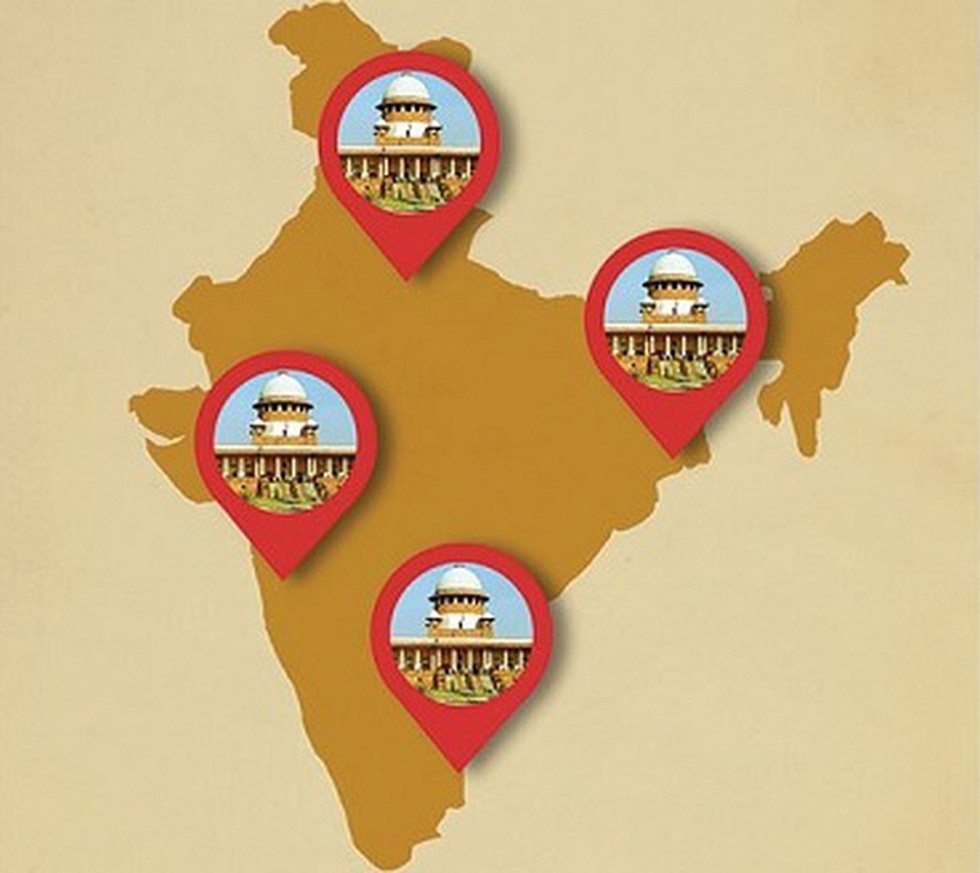
    Recently, the Parliamentary Standing Committee on Personnel, Public Grievances, Law and Justice informed the Lok Sabha that the Law Ministry has accepted its recommendation to establish regional benches of the Supreme Court across India.

    About the Supreme Court:

    • The Supreme Court of India has three jurisdictions under the Constitution: original, appellate, and advisory.
    • The Supreme Court serves as a Constitutional Court as well as a Court of Appeal. The Court sits in benches of varying sizes, as determined by the Registry on the directions of the Chief Justice of India (CJI).

    About SC Constitution Benches:

    • Constitution Bench typically comprises of five, seven, or nine judges who deliberate on a specific issue related to constitutional law.
    • Article 130 says that “the Supreme Court shall sit in Delhi or in such other place or places, as the Chief Justice of India may, with the approval of the President, from time to time, appoint.” It shows that the Supreme Court Rules give the Chief Justice of India the power to constitute Benches.
    • Article 145(3) of the Constitution provides for the setting up of a Constitution Bench.
      • Under Article 143, a minimum of five judges need to sit for deciding a case involving a “substantial question of law as to the interpretation of the Constitution”, or for hearing any reference, which deals with the power of the President to consult the Court.

     View of Supreme Court on setting of regional benches

    • Recently, CJI D.Y. Chandrachud announced his intent to create Constitution Benches of varied strengths as a permanent feature of the Court.
    • The Parliamentary Standing Committee on Personnel, Public Grievances, Law and Justice had earlier noted that the demand for having regional benches of the Supreme Court is about ‘access to justice,’ which is a Fundamental Right under the Constitution. However, the Supreme Court previously has been continuously rejecting the idea.
    • During 2019, former Chief Justice Ranjan Gogoi supported the view, but minimal progress was made during his tenure. In contrast, during the 74-day tenure of former Chief Justice U.U. Lalit, 25 Constitution Bench matters were listed before five-judge benches.

    Recommendations by the Law Commissions on the setting of regional benches:

    • 10th Law Commission (95th Report), 1984: The Supreme Court of India should consist of two Divisions, namely (a) Constitutional Division, and (b) Legal Division”, and that “only matters of Constitutional law may be assigned to the proposed Constitutional Division”.
    • 11th Law Commission (125th Report), 1988: Recommended for splitting the (Supreme) Court into two halves deserves to be implemented.
    • 18th Law Commission (229th Report), 2009: Recommended that “a Constitution Bench be set up at Delhi to deal with constitutional and other allied issues”, and “four Cassation Benches be set up in the Northern region/zone at Delhi, the Southern region/zone at Chennai/Hyderabad, the Eastern region/zone at Kolkata and the Western region/zone at Mumbai to deal with all appellate work arising out of the orders/judgments of the High Courts of the particular region”.

    The Union Government today said the setting up of the Regional Benches of the Supreme Court in different parts of the country is under examination of the Constitutional Bench of the Supreme

    Significance of Regional Benches in India:

    • High Pendency of Cases: In the Supreme Court, a little more than 80,000 cases are currently pending adjudication out of which 60,000 cases are civil. This cannot be alleviated only through usual methods and is highly dependent upon the efforts and efficiency of the Chief Justice.
    • Insufficient Case Disposal Rates: In 2023, the Supreme Court witnessed a 31% increase in the disposal of cases compared to 2022.
      • However, such a disposal rate is negligible when compared to the total pendency of cases.
    • Democratization of Justice: The setting up of regional benches would also lead to greater opportunities and the democratization of the Bar.
      • For example, there was lots of opposition when the jurisdiction of the Tis Hazari Court was divided into different district courts. However, 10-15 years down the line, a vibrant District Bar in Saket, Rohini, and Karkardooma can be seen.
    • Access to Justice for All: People are reluctant to accept arbitrary actions of the state and its agencies and are increasingly approaching courts of law. The outcome of such cases demands further adjudication by the Supreme Court. Also, it becomes difficult for people living in States far away from Delhi to agitate their cause.
    • Importance of Litigant Presence: It is easy to say that the presence of a litigant is not required in appellate forums but the reality is that every litigant wishes to visit his lawyer and witness court proceedings involving his case.
    • Boosting Judicial System with More Judges: The establishment of regional benches will increase the number of judges as well as lawyers resulting in a much-needed boost to our judicial system.

    Challenges associated with regional benches:

    • Status issues:
      • Dilution of sacrosanct nature: Critics argue that the idea of setting up regional benches will lead to Balkanization of the Supreme Court and lessen the binding force of the decisions of the Supreme Court.
      • Territorial Interference: India being diverse country, have emerging diverse views in judiciary too. Hence, the newly formed regional benches can create conflict of interest by interfering in the territorial jurisdiction of the HCs which may adversely affect our justice system.
    • Implementation issues:
      • Rectifying the imbalances: Major of the cases filed in Apex court, arise from nearby High Courts in north India, this imbalance cannot be rectified by using this solution.
      • Frivolous Petitions: If Justice is that easily accessible considering geographical aspect, there is a possibility of numerous frivolous petitions being filed.

    Way Forward:

    • Need for Enhancing Judicial Infrastructure: Some broader judicial reforms are needed to address the systemic issues such as judicial backlog, delay in justice delivery, and judicial vacancies, which are crucial for improving the overall functioning of the legal system.
      • Explore the use of technology, such as video conferencing and virtual courtrooms, to enhance access to justice and facilitate remote adjudication of cases, especially in remote or underserved areas.
    • Need a balanced approach: The debate on regional benches for the Supreme Court involves considerations of accessibility, case management, and judicial efficiency. While proponents see it as vital for access, opponents emphasize potential drawbacks. Striking a balance necessitates thorough evaluation and careful implementation of reforms.
  • Notable Jurist Fali S Nariman Passes Away at 95

    nariman

    Introduction

    • Fali S. Nariman, an eminent jurist and Senior Advocate, left an indelible mark on India’s legal landscape over his illustrious 75-year career.
    • Representing clients in a multitude of landmark cases, his contributions reshaped constitutional jurisprudence and safeguarded democratic principles.

    Legacy in Indian Jurisprudence

    [1] Upholding Judicial Independence: The Second Judges Case

    • Legal Battle: Advocating before the Supreme Court Advocates-on-Record Association v. Union of India (1981), Nariman challenged the interpretation of “consultation” in judicial appointments, emphasizing its binding nature to preserve judicial autonomy.
    • Judicial Triumph: Nariman’s advocacy led to the establishment of the Supreme Court Collegium, ensuring transparent and independent judicial appointments, a landmark decision that endures to this day.

    [2] Clarifying Judicial Procedures: The Third Judges Case

    • Presidential Reference: Nariman contributed to the Supreme Court’s deliberations in Special Reference 1 (1998), facilitating a structured consultative process for judicial appointments, reinforcing the judiciary’s collective responsibility.
    • Expanded Collegium: His efforts expanded the scope of judicial consultation, enhancing transparency and accountability in the appointment process.

    [3] Protecting Judicial Independence: National Judicial Appointments Commission Case

    • Challenging Executive Interference: In Supreme Court Advocates-on-Record Association v. Union of India, Nariman vehemently opposed the National Judicial Appointment Commission Act, 2014, safeguarding judicial autonomy against executive overreach.
    • Triumph for Collegium System: His advocacy contributed to the reinstatement of the collegium system, preserving the judiciary’s prerogative in judicial appointments.

    [4] Championing Fundamental Rights: Golak Nath v. State of Punjab Case

    • Constitutional Challenge: Nariman’s intervention in Golak Nath v. State of Punjab (1967) underscored Parliament’s limitations in amending fundamental rights, reinforcing the sanctity of constitutional provisions.
    • Protecting Liberties: His advocacy upheld the inviolability of fundamental rights, ensuring the primacy of constitutional principles.

    [5] Bhopal Gas Tragedy: Union Carbide Corporation v. Union of India (1989)

    • Navigating Tragedy: Nariman’s representation of Union Carbide in the aftermath of the Bhopal gas tragedy facilitated a landmark settlement, ensuring timely compensation for victims and environmental remediation.

    [6] Safeguarding Minority Rights: TMA Pai Foundation v. State of Karnataka

    • Advocating Pluralism: Nariman’s involvement in TMA Pai Foundation v. State of Karnataka underscored the constitutional protection of minority rights in education, fostering inclusivity and diversity in the educational landscape.

    [7] Upholding Constitutional Norms: Nabam Rebia v. Deputy Speaker

    • Restoring Constitutional Order: Nariman’s intervention in Nabam Rebia v. Deputy Speaker (2016) reaffirmed the constitutional mandate for gubernatorial action, preserving democratic governance and institutional integrity.

    [8] Ensuring Legal Fairness: J. Jayalalithaa v. State of Tamil Nadu

    • Securing Justice: Nariman’s successful bail plea for Jayalalithaa exemplified his commitment to due process, ensuring equitable legal treatment for all individuals before the law.

    [9] Resolving Inter-State Disputes: State of Karnataka v. State of Tamil Nadu

    • Navigating Complexities: Nariman’s representation in the Cauvery water dispute showcased his dedication to resolving interstate conflicts through legal avenues, contributing to the equitable allocation of vital natural resources.

    Conclusion

    • Fali S. Nariman’s illustrious legal career stands as a testament to his unwavering commitment to justice, constitutionalism, and the rule of law.
    • His profound influence on Indian jurisprudence reverberates through landmark decisions and enduring legal principles, leaving an indelible mark on the nation’s legal landscape.

    Try this PYQ from CSP 2012:

    What is the provision to safeguard the autonomy of the Supreme Court of India?

    1. While appointing the Supreme Court Judges, the President of India has to consult the Chief Justice of India.
    2. The Supreme Court Judges can be removed by the Chief Justice of India only.
    3. The salaries of the Judges are charged on the Consolidated Fund of India to which the legislative does not have to vote.
    4. All appointments of officers and staffs of the Supreme Court of India are made by the Government only after consulting the Chief Justice of India.

    Which of the statements given above is/are correct?

    1. 1 and 3 only
    2. 3 and 4 only
    3. 4 only
    4. 1, 2, 3 and 4

    [wpdiscuz-feedback id=”0xtz0ve9ke” question=”Please leave a feedback on this” opened=”1″]Post your answers here.[/wpdiscuz-feedback]

  • Judicial clarity on free speech

    Kunal Kamra held Arnab Goswami to account. What's with the outrage?

    Central Idea:

    Justice Gautam Patel’s landmark decision on the Kunal Kamra’s case underscores the critical importance of upholding the constitutional right to free speech, particularly in the realm of social media. The decision highlights the inherent dangers of arbitrary censorship and the need for clear, reasonable restrictions in line with constitutional principles.

    Key Highlights:

    • Upholding Free Speech: The decision reaffirms the sacrosanct nature of the constitutional guarantee of free speech, emphasizing its protection against undue state encroachment.
    • Rejection of Arbitrary Censorship: Justice Patel condemns the amended Rule 3(1)(b)(v) of the IT Rules 2021 as vague and overbroad, posing a threat to critical discourse and debate.
    • Constitutional Principles: The judgment invokes Article 19 and Article 14 of the Constitution, arguing that the amended rule infringes upon fundamental rights and lacks reasonable standards.
    • Importance of Judicial Review: The decision underscores the role of judicial review in curbing potential abuses of power by government entities, particularly in safeguarding democratic principles.
    • Recognition of Digital Regulation: While acknowledging the need to combat misinformation, the judgment insists on the importance of balanced regulation that respects free speech rights.

    Key Challenges:

    • Interpretation of Constitutional Rights: Balancing free speech with the need for regulation presents a challenge in defining clear and reasonable restrictions.
    • Enforcement and Compliance: Ensuring compliance with constitutional principles and judicial decisions poses challenges in a dynamic digital landscape.
    • Government Response: The government’s response to judicial decisions and its commitment to upholding constitutional principles may vary, influencing the effectiveness of legal interventions.

    Main Terms or key terms for answer writing:

    • Free Speech
    • Constitutional Guarantee
    • Social Media Regulation
    • Arbitrary Censorship
    • Judicial Review
    • Fundamental Rights
    • Digital Platforms
    • Misinformation
    • Democratic Principles

    Important Phrases for good marks in mains:

    • “The sacrosanctity of the inviolate constitutional guarantee of free speech”
    • “Vague and overbroad”
    • “The imperative of combatting fakery and misinformation”
    • “A bulwark against the excesses of majoritarian assemblies”
    • “Agents of injustice”
    • “Inter-institutional comity”

    Quotes that you can use in essay for value addition:

    • “The cacophony of dissent and disagreement is the symphony of a democracy at work.”
    • “Falsehood flies, and truth comes limping after it.”
    • “The will of the State is subject to scrutiny by those affected by the exercise of State power.”
    • “Democratic power is a trust held upon conditions.”

    Useful Statements for value addition:

    • “The decision reaffirms the constitutional conscience and rejects the potential for wanton abuse of power.”
    • “Fear-instilled stillness ill serves the case of a vibrant democracy.”
    • “A law that permits its enforcers to become agents of injustice cannot be countenanced in a constitutional democracy.”

    Examples and References:

    Facts and Data for value addition and credibility to your arguments:

    • Mention of the amended Rule 3(1)(b)(v) of the IT Rules 2021.
    • Reference to Justice Patel’s decision on the Kunal Kamra’s case, dated 31st January.

    Critical Analysis:

    Justice Patel’s decision serves as a significant safeguard against potential abuses of power and underscores the importance of upholding free speech in the digital age. By rejecting arbitrary censorship and emphasizing the need for clear, reasonable restrictions, the judgment sets a crucial precedent for protecting democratic principles.

    Way Forward:

    • Ensure compliance with constitutional principles in regulating digital platforms.
    • Encourage balanced regulation that combats misinformation while respecting free speech rights.
    • Foster inter-institutional comity by heeding judicial decisions and promoting democratic accountability.

    By adhering to these principles, policymakers can navigate the complexities of digital regulation while upholding fundamental rights and democratic values.


    Improve your answer writing with us and crack the mains 

    Try to attempt following question and write the answer in comment box below

    1. How does Justice Patel’s decision in the Kunal Kamra’s case uphold the constitutional right to free speech?
    2. What are the key challenges in balancing free speech with the need for regulation, as highlighted in the judgment?
    3. How does the judgment emphasize the importance of judicial review in safeguarding democratic principles in the digital age?