💥Join UPSC 2027,2028 Mentorship (July Batch) + XFactor Notes & Microthemes PDF

GS Paper: GS1-07. Role of women and women’s organization, population and associated issues, poverty and developmental issues.

  • Women’s movement in India has not addressed the issues of women of lower social strata. Substantiate your view.

    “I measure the progress of a community by the degree of progress which women have achieved.” – Dr. B.R. Ambedkar

    Major women movements in India

    Anti-Sati Movement led by Raja Ram Mohan Roy.

    Satyashodhak Samaj led by Savitribai and Jyotirao Phule pioneered female education

    Anti-Dowry Campaigns (1980s)- Led by groups like Mahila Dakshata Samiti

    Women’s Indian Association first to demand women’s suffrage

    SEWA – Founded by Ela Bhatt, organized women in SHG and trade unions

    Mathura Rape Case Protest (1979-80)- led to first major amendment in Rape Laws

    Triple Talaq Movement led by the Bharatiya Muslim Mahila Andolan (BMMA)

    Chipko Movement- Led by women like Gaura Devi

    Navdanya Movement (Vandana Shiva) – empowers women to preserve biodiversity and seeds

    #MeToo Movement – against sexual harassment at workplace

    However, they failed to address the issues of women of lower strata

    It failed to recognise the triple burden of discrimination (intersection of Caste, Class, and Gender) as it treated “Woman” as a monolithic category. Eg- Hatras rape case

    Intersection of gender and religious marginalization was weakly addressed. Eg- Muslim women’s socio-economic exclusion received less attention beyond advocacy of UCC and Triple Talaq

    Leadership and agenda dominated by elite women – Early focus on legal reforms like dowry and workplace equality over survival issues like hunger and wage security.

    Limited focus on informal and unpaid work – Eg- more focuses on “glass ceilings” in corporate offices, neglecting agricultural laborers. (Over 90% of Dalit women work in the unorganized sector.)

    Urban bias in issues and mobilization – Eg- Rural women’s access to drinking water, fuelwood, and sanitation remained peripheral.

    Inadequate engagement with tribal women’s concerns – Development-induced displacement received limited feminist mobilization.

    Neglect of women issues in conflict zones – Eg- Women in Kashmir and the Northeast did not become sustained focal points of mainstream movements.

    Dependence on NGO-ization and donor agendas – Project-driven advocacy replaced mass mobilization among poor women.

    Educational Exclusion- Elite feminism focuses on “STEM representation,” while lower-strata women struggle with basic literacy and school dropouts.

    Health Disparities- feminist debates revolve around “reproductive choice” (abortion rights), while marginalized women face lack of basic maternal healthcare.

    Language Barrier- Feminist discourse is largely in English, creating a “vocabulary of exclusion” for rural, non-English speaking women.

    Digital Divide- “Hashtag Activism” (#MeToo) failed to reach rural women due to digital illiteracy.

    Counter-Argument- Positive Impacts on the Lower Strata

    Grassroots Political Entry- Eg- women representation in PRIs stands at 46%

    SHGs- NABARD-led SHG movement has empowered millions of rural women through micro-credit and financial literacy. Eg- Kudumbshree in Kerala

    Legal empowerment-

    SC/ST Prevention of Atrocities Act.

    Right to temple entry after Sabrimala Verdict

    Triple Talaq ban

    Anti-Liquor Movements led by poor women to save household income and reduce domestic abuse. Eg- Arrack Movement in Nellore, Andhra Pradesh

    Eco-Feminism- Chipko Movement was essentially a struggle by rural women for their daily fuel and fodder resources.

    Labor Reforms- SEWA model has successfully unionized thousands of street vendors and ragpickers.

    Dalit Feminism- rise of autonomous groups like the National Federation of Dalit Women (NFDW).

    Way Forward

    Adopting an “Intersectionality Lens” that acknowledges caste and class alongside gender in every policy.

    Caste-Gender Sensitivity Training for police and judiciary

    Mainstreaming Gender Budgeting

    De-NGO-ization – Revive grassroots feminist politics.

    Only by embracing a “Bahujan Feminism” can the movement fulfill Ambedkar’s vision of a truly progressive and equal society.
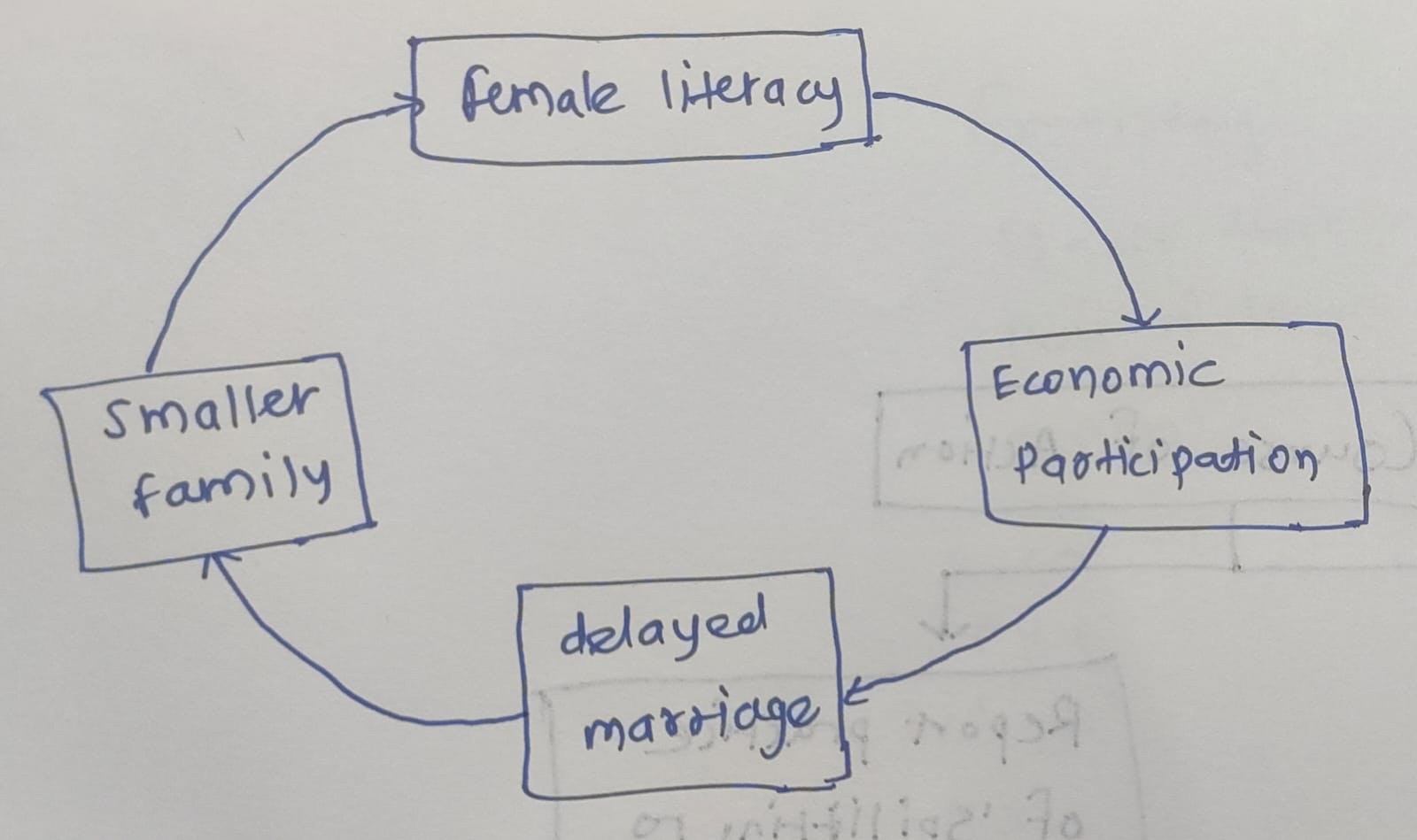
  • “Empowering women is the key to control population growth”. Discuss (10m,150 words)

    “There is no tool for development more effective than the empowerment of women.” – Kofi Annan

    The 1994 Cairo International Conference on Population and Development (ICPD), moved the focus of population policy away from “target-driven” approach to “rights-based” empowerment.

    Inverse Correlation of Education and TFR – According to NFHS-5 (2021-23), women with no schooling have a TFR of 2.8, while those with 12+ years of schooling have a TFR of 1.8.

    The “Kerala Model” shows that high female literacy leads to low Infant Mortality Rates (IMR), reducing the need for “extra” children as insurance.

    Economic Independence – Working women prioritise quality of life over large families.

    As women enter the formal workforce, the “Opportunity Cost” of child-rearing in terms of lost wages and career progression rises, leading to preference for smaller families.

    Delay in Age of Marriage shortens the biological fertility window. Eg- average age of marriage for women with professional degrees is 27 years.

    Greater Birth Spacing awareness among educated and employed women

    Digital literacy allows women to access family planning information and tele-health services privately, bypassing social taboos.

    Enhanced Reproductive Agency – Amartya Sen argues that “Women’s Agency” is more effective than any state-mandated policy, as it transforms women into active decision-makers.

    Breakdown of Traditional Gender Roles – Empowerment challenges the notion that a woman’s primary value is reproductive and also reduces Son Preference

    Global Precedence – Bangladesh’s success in dropping TFR from 6.7 in 1960 to 2.1 in 2017 was driven by micro-finance and female education.

    Increase in Political Participation of Women – Women leaders prioritise health, education, and family welfare.

    Challenges to this Approach

    Persistent “Son Meta-Preference”

    Prevalence of child marriage – 23.3% of women were married before age 18 years. (NFHS-5)

    Stigmatization of male sterilization. Eg- 37.9% of women undergoing sterilization compared to only 0.3% of men. (NFHS-5)

    Religious and Cultural Dogma – In certain conservative pockets, empowerment is viewed as an “attack on tradition,” leading to resistance against family planning.

    Lack of Old-Age Social Security for informal sector workers – children are seen as “economic assets” for old age

    Structural Barriers in Healthcare – Rural Health Statistics report shows a 75%% shortage of female gynecologists in Community Health Centers (CHCs).

    Dual Burden – women spend 300% more time on unpaid care work than men (Time Use Survey).

    Sustainable population control will emerge not from coercion, but from choice, dignity, and equality for women. This can be achieved through

    Promoting Male Engagement

    Universal old-age pension

    Entrepreneurship under Stand-up India

    Empowering ASHA workers

  • What are the continued challenges for women in India against time and space? (15m,250 words)

    Despite constitutional guarantees, legal reforms, and social movements, women in India continue to face persistent challenges that transcend historical periods and vary across geographies and social locations.

    Challenges across time

    Patriarchal social norms – Enduring preference for male authority and control over women. Eg- son meta preference

    Control over female sexuality – Moral policing, honour-based violence, restrictions on marriage choices.

    Child Marriages – 23% (NFHS-5)

    Khap panchayats restricting wearing jeans etc

    Unequal care burden – women spend an average of 305 minutes daily on unpaid domestic work, compared to only 98 minutes for men.

    Educational discontinuity due to marriage and caregiving. Eg- Higher dropout rates among adolescent girls.

    Economic marginalization

    Women constitute 63% of agriculture workforce but own only 13% of land

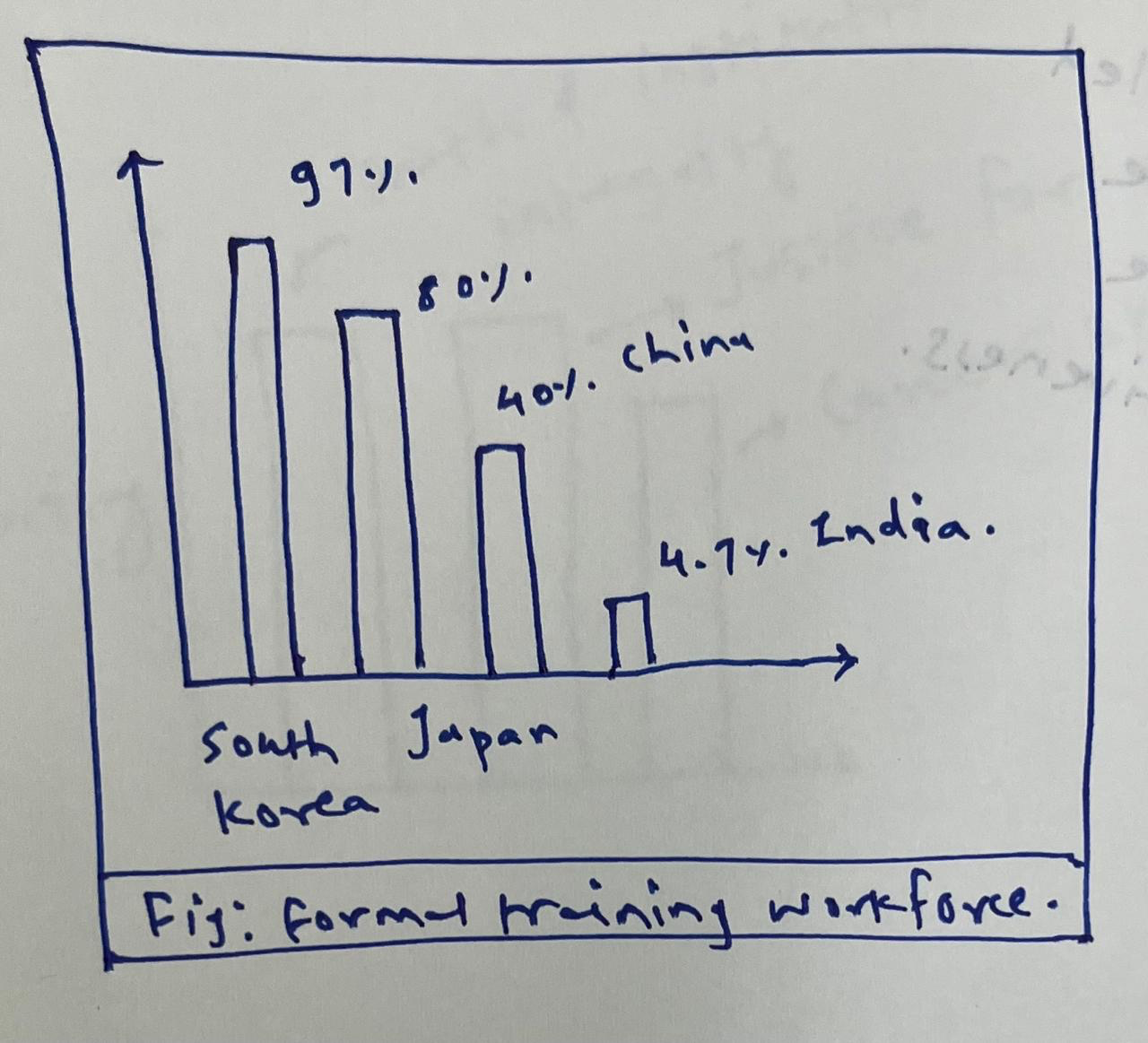
    Low FLFPR – 41% in India vs 71% in China

    Violence against women – domestic violence, workplace harassment etc. Eg- Nirbhaya Case

    Legal-social gap – Eg- proxy representation in PRIs (Sarpanch Pati syndrome)

    Challenges across life-cycle stages

    Before Birth – female foeticide

    Childhood and adolescent stage – Nutrition neglect (57% anemia), high dropouts

    Adulthood – Maternal health and autonomy issues. Eg- early pregnancies.

    Elderly women’s vulnerability – Loneliness, poverty, and lack of social security

    Challenges across space

    Rural-urban divide

    Limited mobility in rural areas due to safety and norms.

    Safety concerns and informal employment in cities.

    Caste and community-based challenges

    Caste-based violence – Gender violence used as social control. Eg- Hatras rape case

    Mining and infrastructure-induced displacement of Tribal women

    Minority women’s double marginalization – Eg- Muslim women’s low labour force participation.

    Challenges in Economic space

    Concentration in low paying care and domestic work

    Glass ceiling effect – discrimination and low representation at higher positions

    Digital Divide51.6% of women aged 15 years and above in rural areas do not own a mobile phone (NSO)

    Regional and cultural disparities

    Regional inequality – Eg- Higher TFR in Bihar (3.0 vs national average of 1.9)

    Violence in conflict zones – Eg- gang-rape and naked parade of two Kuki-Zo women in Manipur

    Improvements made

    Political

    Nari Shakti Vandan Adhiniyam

    46% representation in PRIs

    Legal-

    stringent and gender-sensitive provisions in Bhartiya Nyaya Sanhita

    PCPNDT and POSH Acts

    Health – Institutional Deliveries increased from 78.9% (NFHS-4) to 88.6% (NFHS-5).

    Education- women constitute 43% of STEM graduates.

    Economic- Over 28 crore women now have personal Jan Dhan accounts.

    Asset Ownership- Under PM Awas Yojana, 70% of houses are registered in the name of women.

    Way Forward

    Mainstreaming gender budgeting

    Expand One Stop Centres (OSCs) under Mission Shakti for integrated support services

    Introduce gender sensitisation modules in school curricula nationwide.

    Comprehensive Healthcare

    Expand coverage and financial incentives under Janani Suraksha Yojana and PM Matru Vandana Yojana

    Leverage digital health tools like MP’s SUMAN SAKHI chatbot to provide real-time support to expecting mothers.

    Women-Centric Urban Infrastructure- Eg- “Sakhi Niwas” hostels for working women

    Thus, sustainable gender justice requires simultaneous expansion of resources, agency, and participation.

  • COVID-19 pandemic accelerated class inequalities and poverty in India. Comment.

    The COVID-19 pandemic inflicted dual shock on India – a public health crisis compounded by economic devastation, thereby reversing a decade of hard-won poverty-reduction gains.

    COVID-19 Pandemic Accelerating Class Inequalities in India

    K-Shaped Recovery – While 84% of households suffered income decline in 2020-21, India’s billionaires grew from 102 to 142, with collective wealth of the top 100 hitting INR 57.3 lakh crore.

    Billionaire vs. Working-Class – Between 2020 to 2022, Indian billionaires saw wealth increase by 121%, while the bottom 50% saw their income share fall to just 13% of national income.

    Informal Sector impact- CMIE data shows 122 million people lost jobs in April 2020 alone; three-quarters were small traders and wage labourers in the informal sector.

    Digital Divide – Fewer than 15% of rural Indian households have internet access (42% urban), making technology-driven remote work and education inaccessible during lockdowns. (UNICEF)

    Gender-Class Compounding – 37.1% of women lost jobs in April 2020 versus 27.7% of men; by April 2021, women accounted for 73% of job losses, with recovery far slower for urban women.

    The top 1% own nearly 40.6% of India’s total wealth; in contrast, the bottom 50% (700 million people) own around 3% of total wealth. (Oxfam)

    Capital vs. Labour – Corporate Tax cut from 30% to 22% (2019) combined with pandemic-era surge in equity markets rewarded capital owners, while wages of casual workers stagnated or collapsed.

    Access to Quality Healthcare – high out-of-pocket expenditure in private hospitals

    Education Inequality – School dropout rates nearly doubled in 2021-22. Rates for SC (22.5%), ST (26.9%) and OBC (20%) children at the secondary level far exceeded the general category (15.6%).

    Unpaid Care Burden (Hidden Class-Gender Tax)- During the pandemic, women’s unpaid care work grew by nearly 30%; on average (UN Women.)

    COVID-19 Pandemic Accelerating Poverty in India

    Extreme Poverty – More than 4.6 crore Indians fell into extreme poverty in 2020 – nearly half of the global new poor that year, according to the United Nations.

    Mass Job Losses – CMIE data shows the highest single-month job loss of 123.8 million persons in April 2020, affecting over 30% of the total workforce

    Migrant Worker Crisis – Over one crore migrant workers returned home during the lockdown without any livelihood or social security.

    Informal Economy Collapse – ILO estimated approximately 400 million workers in India’s informal economy were at risk of falling deeper into poverty during the pandemic

    Food Insecurity due to loss of livelihood. World Food Programme estimated 130 million additional food-insecure persons globally.

    Wage Collapse – A CEP survey of urban workers (May-July 2020) found earnings fell 48% on average compared to pre-COVID months of January-February 2020.

    Rural poverty – SC/ST communities, casual labourers and self-employed were the most impacted

    Risk of child labour increased in India as job losses in the informal sector, inadequate social protection, and financial pressure led employers to use children as cheap labour, compounded by school dropouts and orphanhood from COVID deaths.

    Reverse Migration of labourers created excess pressure on the rural economy and agriculture, creating a poverty trap as overcrowded agriculture could not absorb them with dignified livelihood

    The pandemic revealed India’s structural inequalities, highlighting the urgent need for inclusive welfare, universal healthcare, social security, and resilient livelihoods.

    Tribals

  • How have digital initiatives in India contributed to the functioning of the educational system in the country? Elaborate your answer.

    India’s education system has witnessed a major transformation through digital initiatives, especially under the digital India mission and after the COVID-19 period.

    Contributions of digital initiatives to the education system

    Expanding Access and Inclusion – Digital platforms have taken education to remote and underserved areas.

    Democratization of Quality Content – High-quality lectures from premier institutions are freely accessible. Eg- SWAYAM offers courses from IITs, central universities, and NITs.

    Continuity of Learning – Eg- Online classes and TV-based learning during COVID-19 lockdowns.

    Teacher Capacity Building– Eg- Online teacher training modules on DIKSHA and NISHTHA programmes.

    Multi-Modal Learning- Eg- PM e-Vidya integrating DTH channels, radio, and online learning.

    Bridging Regional and Language Barriers – Content available in regional languages improves inclusivity.

    Enhancing Governance and Transparency – Eg- UDISE+ (Unified District Information System for Education) provides real-time data on school infrastructure, teacher availability, and student enrollment

    Self-Paced and Lifelong Learning -Eg- Online certification and skill courses for working professionals

    Cost Effectiveness and Scalability – One-time digital content creation serves millions.

    Virtual Labs allow STEM students to perform complex science experiments digitally.

    Digital initiatives have also catered to Children with Special Needs (CWSN) through “Digitally Accessible Information System” (DAISY) and sign-language videos on the e-Pathshala portal.

    Automated Permanent Academic Account Registry (APAAR) or “One Nation, One Student ID”, provides a 12-digit digital ID for every student to store all their academic achievements

    Challenges

    Rural-Urban divide- only 18.47% of rural schools have internet access compared to 47.29% of urban schools.

    Infrastructure gaps – Only about 24% of rural children had access to digital devices for learning (ASER report).

    Digital Illiteracy among Parents leads to a “guidance gap” at home.

    Language Barriers- the “advanced technical content” is still predominantly available in English

    Excessive screen time leads to

    Eye strain

    Exposure to “adult” content online

    Reduced physical activity – rising obesity and social isolation

    Gender Digital Gap – Girls have less access to devices and connectivity.

    Retention challenges – Eg- less than 4% of SWAYAM students have completed their courses since its launch in 2017

    Way Forward

    Replicating Kerala’s Hi-Tech School Project – every classroom equipped with a projector and high-speed LAN.

    Leveraging CSR funds to provide solar-powered tablets to students in “Aspirational Districts” .

    Using AI-based real-time translation tools to make high-end STEM content available in regional languages. Eg- “Bhashini” approach.

    Gamified Learning- Integrating Gamification to increase student engagement.

    Introducing “Digital Citizenship” as a core subject to teach students about internet safety, misinformation, and ethical AI usage.

    Public-Private Partnerships for leveraging EdTech innovation. Eg- Collaboration with start-ups for interactive content.

    These measures can ensure that digital education becomes a powerful enabler of inclusive, future-ready, and outcome-oriented learning in India.

  • Discuss the main objectives of Population Education and point out the measures to achieve them in India in detail. (250 words)

    Population Education refers to a systematic educational process aimed at developing awareness, attitudes, values, and skills that enable individuals and society to understand population dynamics and their impact on development, environment, health, and quality of life.

    Main Objectives of Population Education

    Awareness generation – To help people understand size, growth, distribution, and composition of population. Eg- explain concepts like Birth Rate, Death Rate, and Migration

    Understanding Population-Development Linkage – Eg- Pressure of population on employment, housing, and environment.

    Linking Population to Quality of Life – To demonstrate that a smaller family size is directly correlated with better health, nutrition, and educational opportunities.

    Promoting Small Family Norm and encouraging responsible parenthood. Eg- two-child norm.

    Improving Reproductive Health Knowledge – Eg- Awareness about spacing methods and family planning.

    Gender Equality and Women’s Empowerment – To promote equal status of women in decision-making.

    Changing Attitudes and Behaviour

    Acceptance of contraception and delayed childbearing.

    To eradicate the “Son Meta-preference”

    To stress the importance of maternal and child health. Eg- Focus on nutrition, immunisation, and institutional deliveries.

    Developing Responsible Citizenship – Population stabilisation as a national goal.

    Measures Taken in India to Achieve These Objectives

    National Population Education Project (1980)- Launched with support from UNFPA, it integrates population education into the school and teacher-training curricula across India.

    National Population Policy, 2000 – Comprehensive policy framework linking population stabilisation with education, health, and women’s empowerment.

    National family planning program to reduce TFR to 2.1

    Curricular Integration by NCERT- population-related themes are included in Social Studies, Science, and Languages.

    National Health Mission (NHM) – Universal access to family planning and maternal health services. Eg- Free contraceptives, institutional deliveries

    ASHA and Anganwadi Network for grassroots dissemination of population education. Eg- Counselling on contraception, birth spacing, nutrition, and immunisation.

    Information, Education and Communication (IEC) Campaigns – Eg- Hum Do, Hamare Do

    Mission Parivar Vikas – Targeted intervention in high fertility districts using community-based educators to provide information on family planning

    Women-Centric Schemes for empowerment and autonomy. Eg- Beti Bachao Beti Padhao

    Legal Measures – Enforcement of Prohibition of Child Marriage Act, 2006, PCPNDT Act

    Use of AI and Technology – Eg- SnehAI chatbot provides a safe space for adolescents to learn about sexual health.

    Way Forward

    Teacher Training and Capacity Building through DIETs (District Institute of Education and Training), and digital modules via DIKSHA portal

    Reaching the out-of-school youth and illiterate adults under “New India Literacy Programme” (NILP)

    Universal access to contraception and maternal healthcare

    Involvement of Community and Religious Leaders for attitudinal change

    Promoting women entrepreneurship under Stand-up India

    Effective Population Education can transform the “demographic burden” into a “demographic dividend”

  • Examine the role of ‘Gig Economy’ in the process of empowerment of women in India. (150 words)

    Gig Economy refers to a labor market characterized by the prevalence of short-term contracts or freelance work as opposed to permanent jobs.

    Role of Gig Economy in Women Empowerment

    Work-Life Integration- Gig work offers flexible hours, allowing women to balance the “Double Burden” (41% of Indian women are primary caregivers).

    Economic Autonomy- It provides a direct source of income for women in Tier-II and Tier-III cities where formal job opportunities are scarce.

    Formalizing Informal Skills- Platforms like Urban Company have professionalized domestic skills. Eg- beauticians, cleaning.

    Bypassing Social Gatekeepers- Digital platforms allow women to access work directly, reducing dependence on male family members.

    Financial Inclusion- Gig platforms mandate digital payments into personal bank accounts, enabling women to build a “credit history” for small business loans.

    Safety through Technology- Features like real-time GPS tracking, SOS buttons provide a sense of security for women working in transit-heavy roles. Eg- zomato delivery

    Upskilling Opportunities- Many platforms provide vocational training.

    Re-entry into Workforce- Gig work provides a low-barrier entry point for women returning from “maternity breaks”.

    Global Market Access- High-skill gig workers serve international clients via platforms like Upwork or Fiverr.

    Collective Bargaining- rise of unions like the Gig and Platform Services Workers Union (GIPSWU). Eg- Diwali ‘digital strike’ by female gig workers in 2024

    Challenges for Women in the Gig Economy

    Digital Divide- 51.6% of women aged 15 years and above in rural areas do not own a mobile phone (NSO)

    Lack of Social Security- Eg- excluded from the Maternity Benefit Act and paid sick leaves.

    Wage Disparity- 40% of gig workers earn below ₹15,000/month, and women often earn less due to an inability to work “high-incentive” late-night hours.

    Occupational Segregation- women confined to beauty and care while men dominate higher-paying delivery and ride-hailing sectors.

    Safety Risks- Women in home-service gigs face risks of harassment and customer misconduct

    Gig platforms classify women as ‘independent contractors’ – excluded from protections under POSH Act

    Way Forward

    Adopting global best practices – Eg- Platform Work Directive (EU)

    Skill Diversification- Government-led missions to train women in sectors like EV-cab driving and tech-maintenance to break occupational silos.

    Algorithmic Accountability– Transparency and fairness in digital management systems that control job assignments, worker ratings, and payouts.

    A multi-stakeholder approach is necessary to turn the gig economy from a place of exploitation to one of opportunity for women.

  • What is Cryptocurrency? How does it affect global society? Has it been affecting Indian society also? (250 words)

    Cryptocurrency is a digital or virtual currency designed to function as a medium of exchange. Unlike traditional money , it does not exist in physical form and is not issued by the central bank.

    Key Features of Cryptocurrency

    Decentralization- Operates on a peer-to-peer network, no need for intermediaries like banks.

    Blockchain Technology- A distributed ledger that records all transactions

    Cryptography- Uses advanced mathematical protocols to secure transactions.

    Immutability- Once a transaction is recorded on the blockchain, it cannot be altered or deleted.

    Limited Supply- Most cryptos (like Bitcoin) have a mathematical cap on their total supply.

    Pseudonymity- Transactions are tied to digital “wallet addresses” rather than personal identities.

    Global Accessibility- Can be accessed by anyone with an internet connection

    Eg- Bitcoin, Ethereum, stablecoins, and central-bank-linked digital assets (CBDCs as a response).

    Positive Impacts

    Financial Inclusion- Provides banking services to the “unbanked” in developing nations.

    Lower Remittance Costs- Enables migrants to send money home with negligible fees compared to traditional services like Western Union.

    Hedge Against Inflation- Citizens in economies with hyperinflation (e.g., Venezuela, Argentina) use stablecoins to preserve their wealth.

    Innovation in Digital Economy – Growth of DeFi, NFTs, and Web3.

    Portfolio diversification for investors. Eg- crypto trading apps like Binance

    Transparency and Traceability – Public blockchains enable transaction audits.

    Tech Innovation and Employment – Eg- Bengaluru has solidified its position as a global Web3 Hub

    Boost to Digital Literacy – Awareness of encryption, wallets, and cyber hygiene.

    Catalyst for Regulatory Innovation – Eg- Introduction of Reserve Bank of India’s Digital Rupee (CBDC).

    Institutional Efficiency- Major global banks (e.g., JP Morgan) now use blockchain for near-instant cross-border settlements.

    Negative Impacts

    Extreme Volatility- Sudden price crashes can lead to catastrophic financial losses for uninformed retail investors. Eg- 2022 Terra-Luna collapse

    Environmental Concerns- “Proof of Work” mining consumes massive electricity. Eg- Bitcoin mining consumes more energy than mid-sized countries like Norway.

    Illicit Activities- Used by cybercriminals for money laundering, terror funding, and ransomware payments.

    Lack of uniform global laws leads to “regulatory arbitrage.” Eg- FTX exchange collapse revealing massive gaps in jurisdictional oversight.

    Security Risks- Sophisticated hacking of exchanges has resulted in the theft of millions in user funds. Eg- 2024 WazirX breach

    Psychological Stress- The 24/7 nature of the market has led to “crypto-addiction” and increased anxiety among younger Gen-Z investors.

    Speculative Bubble Behaviour – Prices driven by hype rather than fundamentals. Eg- Sharp rises and falls in meme-based tokens.

    Digital Divide – Benefits skewed towards urban, tech-savvy populations.

    Widespread use of private crypto can weaken a central bank’s control over inflation.

    The way forward lies in balanced regulation, public awareness, and responsible integration, ensuring that innovation serves economic development and social welfare, not unchecked speculation.

  • Why did human development fail to keep pace with economic development in India?

    While India has emerged as “fastest growing economy” and 4th largest economy, its ranking in HDI, 2025 was 130th out of 193 countries.

    Reasons behind low human development in india

    Jobless growth due to shift from agriculture to service led growth instead of manufacturing led growth. Eg- service sector contributes 55% of GDP but employs only 30% of workforce

    Economic Inequality – richest 1% control more than 40% of total wealth, while the bottom 50% own merely 3% (Oxfam Report)

    Over 90% of the Indian workforce is in the informal sector – lacking social security and stable wages, leading to “working poverty.”

    Social Stratification- Caste-based discrimination prevents upward mobility for the marginalized. Eg- 96% manual scavengers are Dalits

    Population Pressure (1.35 billion) strains public infrastructure, housing, and the job market.

    Poor Social Infrastructure

    Education – low public investment (2.9% of GDP) lead to “quality crisis” and high dropout rates at secondary and higher levels

    Skill Gap – only about 51.25% of youth are employable.

    Gender Disparities

    Low FLFPR – 41% in India vs 71% in China

    Women own only 13% of land while forming 63% of agriculture workforce

    Glass ceiling effect – discrimination and low representation at higher positions

    India ranked 131st out of 148 countries in WEF’s Gender Gap Report

    Regional disparity – Eg- BIMARU states lag behind southern states in human development indicators

    “Climate Inequality” – women and poor are most vulnerable to climatic shocks like heatwaves or disasters. Eg- “climate induced migration” after floods in Assam

    Measures taken for human development in India

    Healthcare and Nutrition

    Ayushman Bharat (PM-JAY)- over 40 crore Ayushman Cards have been issued.

    Over 1.82 lakh primary health centers have been upgraded to “Arogya Mandirs”.

    POSHAN Abhiyaan- targets stunting, wasting, and anemia.

    Education and Skill Development

    NEP 2020- 5+3+3+4 structure and the Academic Bank of Credits (ABC)

    Skill India Mission- trained over 1.63 crore candidates.

    Poverty and Living Standards

    Over 40 crore people were lifted out of multidimensional poverty between 2005 and 2021

    Kerala has been declared officially free from “extreme poverty” in 2025

    Jal Jeevan Mission- Provided tap water to over 14.5 crore rural households

    PM Awas Yojana (PMAY)- Over 4 crore pucca houses have been built

    PM Ujjwala Yojana- Over 10.3 crore LPG connections have been provided

    Financial Inclusion – Over 52 crore bank accounts have been opened

    Way Forward

    Capability Approach- increase expenditure on Health (2.5% of GDP) and Education (6% of GDP)

    Bottom-up Planning – Porto Alegre Brazil Model

    Expand MGNREGA and link with climate-resilient livelihoods (water conservation, afforestation).

    Women Empowerment by adopting best practices like Kerala’s Kudumbshree Model

    Focus on labour intensive sectors like textiles for job creation (Economic survey)

    This can ensure whole of government and life-cycle approach to realise the vision of Viksit Bharat@2047

  • Explain why suicide among young women is increasing in Indian Society.

    India accounts for approximately 37% of global female suicide deaths. It is now the leading cause of death for Indian women aged 15-39.

    Causes Behind Increasing Suicide Among Young Women

    Housewives – over 50% of suicides

    Marriage-related pressures and domestic violence

    social isolation, lack of economic agency, and the “unseen” nature of domestic labor

    Students

    Academic and career stress – Rising aspirations without sufficient support. Eg- Student suicides in Kota.

    Inadequate counselling facilities in schools, colleges, and hostels.

    Working women

    Cyberbullying and Online harassment culture affect self-worth. Eg- Trolling, non-consensual sharing of images.

    Workplace discrimination and sexual harassment

    Social causes

    Intersectional vulnerabilities – Caste, class, and rural disadvantage intensify distress. Eg- Dalit and rural women

    Patriarchal control – Restrictions on mobility, education, and choice generate helplessness. Eg- Family opposition to inter-caste or inter-faith relationships.

    Child Marriages – 23% women are married before 18 (NFHS-5) – exposes them to abusive relationship

    Weak institutional support systems –

    Mental health neglect and stigma – Depression and anxiety often go undiagnosed and untreated.

    India has 0.75 psychiatrist per 1 lakh people (global avg – 13)

    Way Forward

    Implementation of National Suicide Prevention Strategy to reduce suicide mortality by 10% by 2030.

    WHO’s “LIVE LIFE” Approach- limiting access to means , responsible media reporting to prevent “copycat” suicides, and fostering life skills in adolescents.

    Training “frontline” community members like ASHA workers to identify early warning signs and providing counselling.

    Implementing Saha Guidelines for preventing student suicide

    Integrating “Cyber-Safety” and mental health resilience into the school curriculum.

    Workplace Wellness Mandates- Eg- POSH workshops and mental health support

    As highlighted by World Health Organization, suicide is preventable through timely intervention and supportive environments.