💥Join UPSC 2027,2028 Mentorship (July Batch) + XFactor Notes & Microthemes PDF

GS Paper: GS1-07. Role of women and women’s organization, population and associated issues, poverty and developmental issues.

  • In dealing with socio-economic issues of development, what kind of collaboration between government, NGO’s and private sector would be most productive?

    Multi-dimensional nature of developmental issues, require a collaborative governance, where the government, NGO, and the private sector work in synergy.

    Socio-economic issues of development

    Nearly 11% of the population is still living in multidimensional poverty.

    Economic Inequality – richest 1% control more than 40% of total wealth, while the bottom 50% own merely 3% (Oxfam Report)

    Social Stratification- Caste-based discrimination prevents upward mobility for the marginalized. Eg- 96% manual scavengers are Dalits

    Population Pressure (1.35 billion) strains public infrastructure, housing, and the job market.

    Poor Social Infrastructure

    Healthcare – low public spending (2.1% of GDP) and high out of pocket expenditure (40%)

    Education – low public investment (2.9% of GDP) lead to “quality crisis” and high dropout rates at secondary and higher levels

    Skill Gap – only about 51.25% of youth are employable.

    Gender Disparities

    Low FLFPR – 41% in India vs 71% in China

    Glass ceiling effect – discrimination and low representation at higher positions

    Regional disparity – Eg- BIMARU states lag behind southern states in human development indicators

    “Climate Inequality” – women and poor are most vulnerable to climatic shocks like heatwaves or disasters. Eg- “climate induced migration” after floods in Assam

    Urbanization issues – Eg- 17% population living in slums

    Collaboration between government, NGO and private sector

    Public-Private-Community Partnerships (PPCP) – Eg- collaboration between GoI, Akshay patra foundation and infosys foundation in implementing Mid-day meal scheme

    Complementary role

    Policy Leadership by Government

    NGOs as Last-Mile Implementers

    Private Sector for Scale and Innovation

    CSR-Driven Development Partnerships – Eg- tata trust funding support for PRATHAM NGO for education

    Data and Technology Collaboration – Tech firms building dashboards, NGOs collecting field-level data, government monitoring outcomes. Eg- in aspirational districts program

    Capacity Building – NGOs and private sector training frontline workers in healthcare.

    Technology Transfer for Agriculture- Agri-tech firms develop precision tools, the government subsidizes them, while NGOs train farmers in “Climate-Smart Agriculture”.

    Saturation-Based urban Infrastructure- The government provides land, the private sector builds , while NGOs handle the “soft infrastructure” like health and education.

    NGO’s helping the government in ensuring last mile service delivery. Eg- acting as “Arogya Mitras” under Ayushman Bharat scheme

    Strengthening this triangular alliance can ensure inclusive, resilient, and sustainable growth.
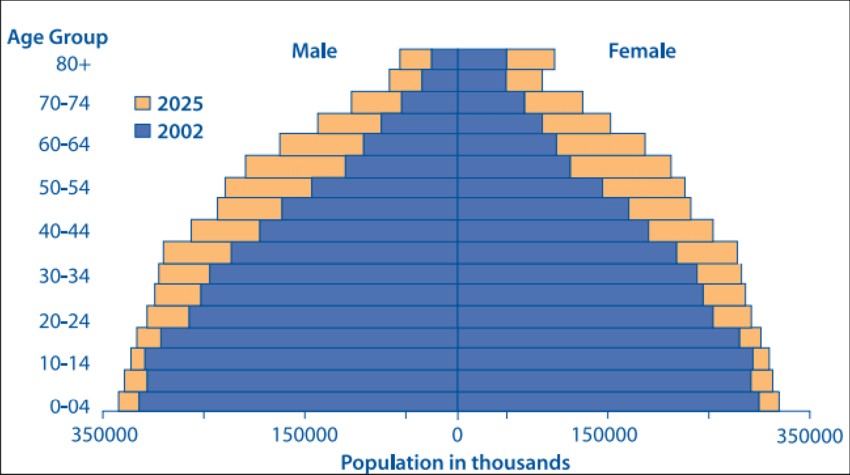
  • What is the concept of a ‘demographic winter’? Is the world moving towards such a situation? Elaborate.

    The term demographic winter refers to a situation of persistently low fertility rates, leading to population ageing, workforce shrinkage and long-term economic and social challenges.

    Features of ‘Demographic Winter’

    Below Replacement Fertility (<2.1) for a prolonged period. Eg- Italy

    Decline in the working-age population.

    Negative Population Growth in extreme cases. Eg- Japan, Ukraine, Russia, China

    High Old-Age Dependency Ratio

    Economic Slowdown Risks – Reduced consumption, innovation, and productivity.

    Fiscal Stress on State – Pressure on pensions, healthcare, and social security systems.

    World moving towards demographic winter

    Arguments in favour

    Falling Global Fertility Rates – declined from about 5 in 1950 to near 2.4 in 2025

    Regions Already in Demographic Winter

    East Asia

    South Korea has the world’s lowest TFR (projected 0.65-0.68 for 2026).

    Japan has seen its population shrink for over a decade

    China recorded its fourth consecutive year of population decline in 2025.

    Europe

    Countries like Italy, Spain, and Greece have TFRs around 1.2-1.4.

    Eastern European nations (Bulgaria, Latvia) are facing “double winters” due to low births combined with massive youth emigration.

    Among developing countries

    Brazil, Thailand, and Vietnam are seeing faster-than-expected fertility declines as they urbanize.

    India’s TFR is 1.9 as per UNFPA

    Changing Social Values – Eg- movements like “Tang Ping” (lying flat) in China and the “DINK” (Double Income, No Kids) lifestyle

    Arguments against

    Some regions still have high fertility. Eg- TFR for Africa is around 4%

    Countries like India are still in a favourable age structure phase. Eg- median age of 28.

    Nations like Canada, Australia, and the UAE use aggressive immigration policies to offset low domestic birth rates

    Even with low fertility, the global population will not peak until the 2080s (at ~10.3 billion)

    Thus, the way forward lies in managing demographic diversity through adaptive policies and balancing population stabilisation, economic sustainability, and social welfare

    Poverty and developmental issues

  • Distinguish between gender equality, gender equity and women’s empowerment. Why is it important to take gender concerns into account in programme design and implementation?

    “I measure the progress of a community by the degree of progress which women have achieved.” – Dr. B.R. Ambedkar

    Need to take Gender Concerns into account

    Better targeting in welfare schemes – Eg- women constitute 63% of agriculture workforce but own only 13% land – incorporating gender concerns can address this gap

    Correcting historical disadvantage – Eg- houses registered in the name of women under PM Awas Yojana

    Maximizing Economic Returns- The IMF notes that closing the gender gap could boost India’s GDP by 27%.

    Improving Efficiency- Eg- involving women in water committees under Jal Jeevan Mission ensures better maintenance as they are the primary water managers.

    Upholding Constitutional Mandates- Article 15(3) allows for special provisions for women. Gender-sensitive design fulfills this obligation.

    Long term Social Change happens when women are “agents” rather than “beneficiaries.” Eg- Kudumbashree in Kerala

    Achieving SDG’s like 1(ending poverty), 3 (health and wellbeing) and 5 (gender equality)

    Enhancing development outcomes – Gender inclusion multiplies benefits. Eg- Educating girls improves health, nutrition, and intergenerational outcomes.

    Global best practices and commitments – Eg- Gender budgeting advocated by UN Women.

    To awaken the people, it is the women who must be awakened. Once she is on the move, the family moves, the village moves, the nation moves.

    Communalism, Regionalism & Secularism.

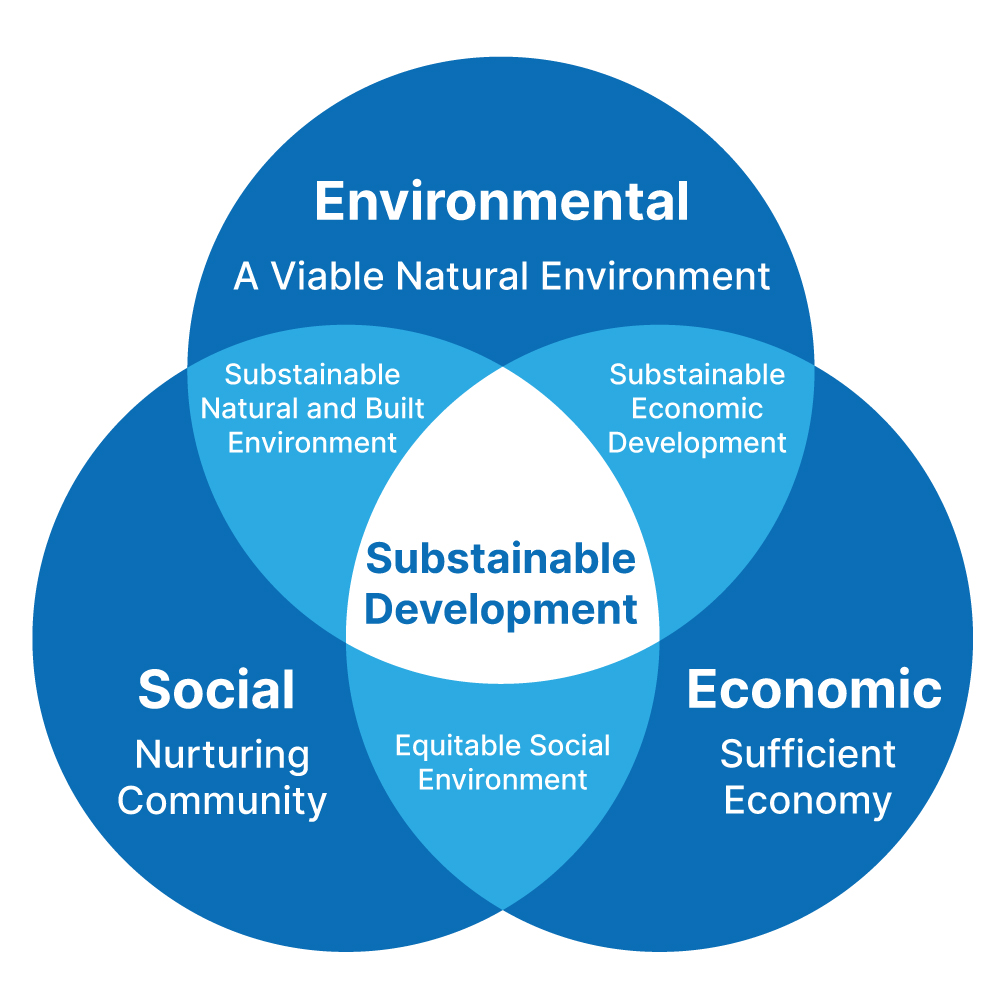
  • ‘Achieving sustainable growth with emphasis on environmental protection could come into conflict with poor people’s needs in a country like India – Comment.

    Sustainable development refers to a development path that meets the needs of the present without compromising the ability of future generations to meet their own needs (Brundtland Commission).

    Emphasis on environmental protection coming into conflict with poor people needs

    The poor depend directly on forests, rivers, and commons. They lose their livelihood due to strict conservation rules. Eg- protest by Jenu Kuruba tribe against expansion of “Core Areas” in Nagarhole tiger reserve

    Environmental bans affect subsistence livelihoods. Eg- ban on single-use plastics has disproportionately impacted street vendors

    Higher Cost of Green Alternatives – Eg- high initial cost of Solar pumps makes it unaffordable for small farmers

    Energy Transition Costs- closure of mines in the “coal belt” (Jharkhand/Odisha) threatens the informal livelihoods of nearly 15-20 million people linked to the coal economy.

    Urban Environmental Regulations – Closure of polluting units affects migrant workers.

    Fishing communities impacted by coastal regulation norms. Eg- Limitations under Coastal Regulation Zone (CRZ) rules.

    Unequal Burden of Environmental Compliance – Eg- Sand mining restrictions affecting daily-wage workers.

    Agricultural Restrictions- Policies discouraging water-intensive crops impact marginal farmers more as they lack capital to shift to high-value horticulture.

    Eco-restoration projects, such as clearing the Yamuna floodplains in Delhi, result in the demolition of informal settlements without adequate “Just Transition” housing.

    Shift from biomass to LPG under the ujjwala scheme reduced indoor pollution, but high refill costs force rural households back to firewood.

    Counter argument – benefits sustainable growth with emphasis on environmental protection for poor

    Disaster Risk Reduction – Environmental safeguards prevent loss of lives and assets. Eg- Protecting mangroves and wetlands saved thousands of lives during Odisha Cyclones.

    Public Health Gains – Cleaner air and water reduce disease burden and Out-of-Pocket Expenditure (OOPE) for the poor.

    Sustainable management secures long-term livelihoods. Eg- Watershed development improving water security.

    Green Livelihood Creation – Jobs in renewable energy, afforestation, waste management. Eg- “Suryamitra” schemes

    Sustainable agriculture improves resilience. Eg- solar pumps under PM-KUSUM scheme

    Water Security- Jal Jeevan Mission and watershed management under MGNREGA have improved groundwater levels, directly benefiting rain-fed marginal farmers.

    Energy Access with Sustainability – Eg- Solar lighting in off-grid rural areas.

    Intergenerational Equity – Unsustainable growth harms future poor the most.

    Legal Empowerment of Communities – Rights-based conservation models. Eg- Community forest management under forest rights Act

    Eco-Tourism- In places like Kaziranga, community-led tourism has provided a “conservation dividend” to local tribes.

    Global Finance- Eg- Green Bonds to fund low-cost housing and clean transport for the urban poor

    Way Forward

    Strengthening grassroot governance – Eg- ensuring fair, prior and informed consent of Gram Sabha in tribal areas

    Implementing RECLAIM framework to ensure sustainable, community-centric mine closures and “just transition” for communities

    Community-Led Conservation (The Nagaland Model) – Replicate Nagaland’s 407+ Community Biodiversity Conservation Areas (CCAs)

    Scaling “Green Subsidies” through DBT. Eg- “Refill Subsidy” for Ujjwala users

    Universalizing Climate-Resilient Agriculture – Expand PM-PRANAM (Natural Farming)

    Institutionalizing “Social Impact Credits” in Carbon Markets

    Ensure that the Blue Economy Policy protects the “First Right of Access” for traditional fisherfolk.

    As Indira Gandhi stated at the 1972 Stockholm Conference, “Poverty is the greatest polluter.” Thus, there is need to shifted toward a “Just Transition,” where environmental protection is pro-poor and poverty alleviation is ecologically sustainable.