💥Join UPSC 2027,2028 Mentorship (July Batch) + XFactor Notes & Microthemes PDF

GS Paper: Major Crops & Cropping Patterns

  • Why are edible oils getting costlier?

    Edible oil prices have risen sharply in recent months.

    How much have edible oil prices rising?

    • The prices of six edible oils — groundnut oil, mustard oil, vanaspati, soya oil, sunflower oil, and palm oil — have risen between 20% and 56% at all-India levels in the last year.
    • The prices of soya oil and sunflower oil, too, have increased more than 50% since last year.
    • In fact, the monthly average retail prices of all six edible oils soared to an 11-year high in May 2021.
    • The sharp increase in cooking oil prices has come at a time when household incomes have been hit due to Covid-19.

    Trends of oil consumption in India

    • With rising incomes and changing food habits, consumption of edible oils has been rising over the years.
    • While mustard oil is consumed mostly in rural areas, the share of refined oils —sunflower oil and soyabean oil — is higher in urban areas.

    How much is produced domestically and how much is imported?

    • In 2019-20, domestic availability of edible oils from both primary sources (oilseeds like mustard, groundnut etc.) and secondary sources (such as coconut, oil palm, rice bran oil, cottonseed) was only 10.65 million tonnes against the total domestic demand of 24 million tonnes.
    • Thus, India depends on imports to meet its demand.
    • In 2019-20, the country imported about 13.35 million tonnes of edible oils or about 56% of the demand.
    • This mainly comprised palm (7 million tonnes), soyabean (3.5 millon tonnes) and sunflower (2.5 million tonnes).
    • The major sources of these imports are Argentina and Brazil for soyabeen oil; Indonesia and Malaysia palm oil; and Ukraine and Argentina again for sunflower oil.

    Answer this PYQ from CSP 2019:

    Q.Among the agricultural commodities imported by India, which one of the following accounts for the highest imports in terms of value in the last five years?

    (a) Spices

    (b) Fresh fruits

    (c) Pulses

    (d) Vegetable oils

    Global prices rising

    • The increase in domestic prices is basically a reflection of international prices because India meets 56% of its domestic demand through imports.
    • In the international market, prices of edible oils have jumped sharply in recent months due to various factors.
    • Even the FAO price index (2014-2016=100) for vegetable oils, an indicator of the movement of edible oil prices in the international market, has soared to 162 in April this year, compared to 81 in April last year.

    But why are international prices rising?

    • One of the reasons is the thrust on making biofuel from vegetable oil. There is a shifting of edible oils from food basket to fuel basket.
    • There has been a thrust on making renewable fuel from soyabean oil in the US, Brazil and other countries.
    • Other factors include buying by China, labour issues in Malaysia, the impact of La Niña on palm and soya producing areas, and export duties on crude palm oil in Indonesia and Malaysia.

    What are the options before the government?

    • One of the short-term options for reducing edible oil prices is to lower import duties.
    • However, the edible oil industry is not in favor of reducing duties.
    • If import duties are reduced, international prices will go up, and neither will the government get revenue nor will the consumer benefit.
    • The government can rather subsidize edible oils and make them available to the poor under the Public Distribution System.
  • Mini-Seed Kits to boost pulses output in kharif 2021

    Central government to distribute mini-kits of seed

    • The government on said it will distribute over 20 lakh mini-kits of seeds worth Rs 82.01 crore as part of a strategy to boost pulses production in the kharif season of the 2021-22 crop year.
    • The total cost for these mini-kits will be borne by the central government to boost the production and productivity of tur, moong and urad.
    • In addition to this, the usual programme of inter-cropping and area expansion by the states will continue on a sharing basis between the Centre and state, it said.

    Increasing production and productivity

    • From a meagre production of 14.76 million tonnes in the 2007-08 crop year, pulses production has now reached 24.42 million tonnes in the 2020-2021 crop year, which is a phenomenal increase of 65 per cent.
    • India is still importing around 4 lakh tonnes of tur, 0.6 lakh tonnes of moong and around 3 lakh tonnes of urad for meeting its demand.
    • The special programme will increase the production and productivity of the three pulses of tur, moong and urad to a great extent and will play an important role in reducing the import burden.
  • Production of Poppy Straw

    The Central government has decided to rope in the private sector to commence production of concentrated poppy straw from India’s opium crop.

    What is the move?

    • The move aims to boost the yield of alkaloids, used for medical purposes and exported to several countries.
    • Among the few countries permitted to cultivate the opium poppy crop for export and extraction of alkaloids, India currently only extracts alkaloids from opium gum at facilities controlled by the Revenue Department.
    • This entails farmers extracting gum by manually lancing the opium pods and selling the gum to government factories.
    • The Ministry has now decided to switch to new technologies after trial cultivation reports submitted last year by two private firms showed higher extraction of alkaloids using the concentrated poppy straw (CPS).

    Opium Poppy

    • The milky fluid that seeps from cuts in the unripe poppy seed pod has, since ancient times, been scraped off and air-dried to produce what is known as opium.
    • The seedpod is first incised with a multi-bladed tool.
    • This lets the opium “gum” ooze out.
    • The semi-dried “gum” is harvested with a curved spatula and then dried in open wooden boxes.
    • The dried opium resin is placed in bags or rolled into balls for sale.

    Why such a move?

    • India’s opium crop acreage has been steadily declining over the years.
    • The CPS extraction method is expected to help cut the occasional dependence on imports of products like codeine (extracted from opium) for medical uses.

    Amendments to NDPS Act

    • Uttar Pradesh, Rajasthan and Madhya Pradesh are the three traditionally opium-growing States, where poppy crop cultivation is allowed based on licences issued annually by the Central Bureau of Narcotics.
    • While roping in private players in producing CPS and extracting alkaloids from it is likely to require amendments to the Narcotic Drugs and Psychotropic Substances (NDPS) Act, 1985.
    • The Revenue Department has decided to appoint a consultant to help frame the bidding parameters and concession agreements for the same.
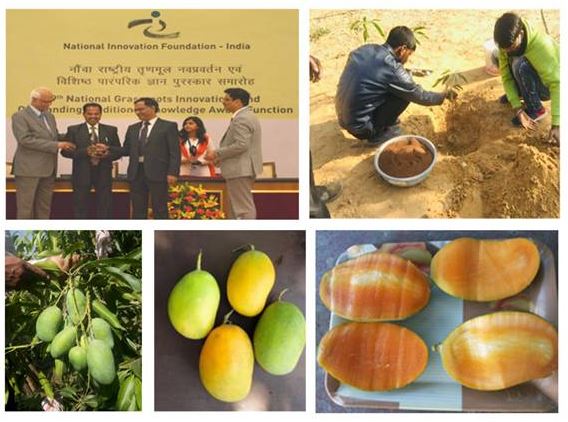
  • [pib] Sadabahar: A mango variety that bears fruits round the year

    A farmer from Kota, Rajasthan, has developed a round-the-year dwarf variety of mango called Sadabahar, which is resistant to most major diseases and common mango disorders.

    Try this PYQ:

    Q.With reference to the Genetically Modified mustard (GM mustard) developed in India, consider the following statements:

    1. GM mustard has the genes of a soil bacterium that give the plant the property of pest-resistance to a wide variety of pests.
    2. GM mustard has the genes that allow the plant cross-pollination and hybridization.
    3. GM mustard has been developed jointly by the IARI and Punjab Agricultural University.

    Which of the statements given above is/are correct? (CSP 2018)

    (a) 1 and 3 only

    (b) 2 only

    (c) 2 and 3 only

    (d) 1, 2 and 3

    Sadabahar

    • The fruit is sweeter in taste, comparable to langra and being a dwarf variety, is suitable for kitchen gardening, high-density plantation, and can be grown in pots for some years too.
    • Besides, the flesh of the fruits, which is bourn round the year, is deep orange with a sweet taste, and the pulp has very little fiber content which differentiates it from other varieties.
    • The bountiful nutrients packed in mango are immensely good for health.
    • This variety has been verified by the National Innovation Foundation (NIF), India, an autonomous institution of the Department of Science & Technology.
  • Need for technological solutions to use water for agriculture more sustainably

    The article examine the use of water for sugarcane and rice cultivation in India and its impact. 

    Water availability and usage in India

    • As per the Central Water Commission’s reassessment of water availability, India receives a mean annual precipitation of about 3,880 billion cubic meters (BCM) but utilises only 699 BCM (18 percent) of this; the rest is lost to evaporation and other factors.
    • The demand for water is likely to be 843 BCM in 2025 and 1,180 BCM by 2050.
    • As per the UN’s report on Sustainable Development Goal-6 (SDG-6) on “Clean water and sanitation for all by 2030”, India achieved only 56.6 per cent of the target by 2019.
    • Further, as per the Niti Aayog’s Composite Water Management Index (2019), 75 per cent households in India do not have access to drinking water on their premises.
    • India ranks 120th amongst 122 countries in the water quality index.
    • India is identified as a water-stressed country with its per capita water availability declining from 5,178 cubic metre (m3)/year in 1951 to 1,544 m3 in 2011 — this is likely to go down further to 1,140 cubic metre by 2050.

    How free or highly subsidised electricity skews water use pattern

    • Despite decades of large public and private investments in irrigation, only about half of India’s gross cropped area:198 million hectares is irrigated.
    • Groundwater contributes about 64 per cent, canals 23 per cent, tanks 2 per cent and other sources 11 per cent to irrigation.
    • This results primarily from incentive policy of free or highly subsidised power, particularly in the country’s north-west, the site of the erstwhile Green Revolution.
    • Overexploitation of groundwater has made this region amongst the three highest water risk hotspots.
    • Overall, about 1,592 blocks in 256 districts in India are either critical or overexploited.

    Need to focus on rice and sugarcane

    • Agriculture uses about 78 per cent of fresh water resources.
    • As per a NABARD-ICRIER study on Water Productivity Mapping, these crops alone consume almost 60 per cent of India’s irrigation water.
    • We need a paradigm shift to increase land productivity measured as tonnes per hectare (t/ha), and to maximise applied irrigation productivity measured as kilogrammes, or Rs, per cubic metre of water (kg/m3).
    • Figure 1 shows applied irrigation water productivity against land productivity for rice and sugarcane in important growing states.
    • Note that while Punjab scores high on land productivity of rice, it is at the bottom with respect to applied irrigation water productivity.
    • In the case of sugarcane, irrigation water productivity in Andhra Pradesh, Karnataka, Maharashtra and Tamil Nadu is only 1/3rd of that in Bihar and UP (Figure 2).
    • There is, thus, a need to realign cropping patterns based on per unit of applied irrigation water productivity.

    Use of technology

    • There are technologies to produce the same output of rice and sugarcane with almost half the irrigation water.
    • Jain Irrigation, for instance, has set up drip irrigation pilots for paddy and sugarcane.
    • The results of these pilots indicate while it takes 3,065 litres of water to produce 1 kg of paddy grain (yield level 7.75 t/ha) under traditional flood irrigation, under drip, it can be reduced to just 842 litres.
    • The benefit cost ratio of drip with fertigation in case of sugarcane in Karnataka is observed to be 2.64.
    • An extension to this is the “Family Drip System” innovated by Israel-based — Netafim.
    • The company has also launched its largest demonstration project in Asia at Ramthal, Karnataka.
    • Technologies like Direct Seeded Rice (DSR) and System of Rice Intensification (SRI) can also save 25-30 per cent of water compared to traditional flood irrigation.

    Need for right pricing policies

    • Technological solutions cannot make much headway unless pricing policies of agri-inputs are put on the right track and farmers are incentivised for saving water.
    • The Punjab government, along with the World Bank and J-PAL, has started some pilots with an innovative policy of “Paani Bachao Paise Kamao” to encourage rational use of water among farmers.

    Consider the question “Examine the impact of rice and sugarcane cultivation on the groundwater table in India. How technological solutions can help use water more sustainably for agriculture?”

    Conclusion

    Overall, it seems it is time to switch from the highly subsidised price policy of water/power (and even fertilisers) to direct income support on a per hectare basis, and investment policies that help with newer technologies and innovations.

  • [pib] Multi-Layer Farming

    ICAR is undertaking location-specific multi-layer farming involving crops of different heights.

    Multi-Layer Farming

    • Multi-layer farming means growing and cultivating compatible plants of different heights on the same field and at the same time.
    • It is generally practised in orchards and plantation crops for the utmost use of solar energy even under high planting density.
    • It is mostly cash crop-based and it includes a combination of vegetables and fruits that can be grown together.

    How it is done?

    • In Multi-layer farming, the crops are grown at different heights on the same land.
    • This farming cannot be done in open fields as shade is required. It is one type of intercropping.
    • Growing plants of different height in the same field at the same time is termed Multi-layer cropping. It is generally practised in orchards and plantation crops for maximum use of solar energy even under high planting density. It is the practice of several crops of varying heights, rooting pattern and duration to cultivate together.
    • The objective is to utilize vertical space more effectively.
    • In this, the tallest components have foliage of strong light and high evaporative demand and shorter components with foliage requiring shade and high humidity.

    Try this PYQ:

    Q.What are the advantages of fertigation in agriculture?

    1.Controlling the alkalinity of irrigation water is possible.
    2. Efficient application of Rock Phosphate and all other phosphatic fertilizers is possible.
    3. Increased availability of nutrients to plants is possible.
    4. Reduction in the leaching of chemical nutrients is possible.

    Select the correct answer using the code given below:

    (a) 1, 2 and 3 only

    (b) 1,2 and 4 only

    (c) 1,3 and 4 only

    (d) 2, 3 and 4 only

    Benefits offered

    • Prevent water evaporation from the soil; as an effect, 70% of water is saved.
    • The income per unit area increases substantially
    • Minimize risks of crop yield loss and this system enables a steady supply of farm products the whole round the year.
    • Reduces the impacts of hazards such as high-intensity rainfall, soil erosion, and landslides.
    • Improve the soil characteristics and adds organic matter to the soil.
    • Effective utilization of leaching materials and helps in effective weed control.
    • Provide micro-climate conditions that advantage crops underneath.

    What else?

    : Agricultural Technology Management Agency (ATMA)

    • In addition to this, a Centrally Sponsored Scheme ‘Support to State Extension Programs for Extension Reforms” popularly known as ATMA Scheme is already under implementation since 2005.
    • Presently, the Scheme is being implemented in 691 districts of 28 states & 5 UTs in the country.
    • The scheme promotes a decentralized farmer-friendly extension system in the country.
    • Under the scheme, grants-in-aid are released to the State with an objective to make available the latest agricultural technologies and good agricultural practices in different thematic areas of agriculture and allied areas to farmers including training for multi-layer farming.
    • Training of farmers is one of the eligible activities of the ATMA Scheme.
  • A high growth plan for Indian agriculture

    The article deals with the issue discussed in the recently published book ‘Revitalising Indian Agriculture and Boosting Farmer Incomes’. It suggests strategies for six Indian states and underlies the importance of the diversified approach to different states.

    Why agriculture is central to Indian economy

    • Agriculture engages close to 42 per cent of the country’s workforce.
    • With its close interlinkage with poverty, it is best positioned to alleviate problems of malnutrition and hunger.
    • In addition, agriculture supplies inputs for other industries.
    • It is critical for triggering a multiplier effect in the economy, where a financially empowered farming community triggers a demand-led growth, particularly for manufactured products and services.
    • There is no doubt that the sector needs to grow not just for those employed in it but also for the economy as a whole.

    Growth strategy needs to take into account diversity across the states

    • The growth process of agriculture should not just more efficient, and inclusive of India’s small and marginal but is also sustainable — both financially and environmentally.
    • But then comes the question of the diversity in Indian states, where they differ as much on factors of production like land and water as they do on access to market opportunities.
    • They even differ in their vulnerabilities to climate and weather changes.
    • This begs the question, should the roadmap not be customised to the needs, vulnerabilities, and resource-base of each state?

    Strategies for six states

    • The recently published book “Revitalising Indian Agriculture and Boosting Farmer Incomes” proposes strategies for six Indian states: Punjab, Madhya Pradesh, Gujarat, Uttar Pradesh, Bihar and Odisha.
    • In the six states, three factors explained most of the agrarian growth.
    • One, access to infrastructure — mainly irrigation and roads.
    • Two, diversification to high value agricultural products like fruits, vegetables, and allied activities like dairy and poultry.
    • Three, price incentives or favourable terms of trade.
    • Bringing markets closer to farmers and increasing the efficiency of the value-chains emerged as an important factor that explained agricultural growth in Gujarat, Madhya Pradesh, Odisha, and Bihar.
    • By ensuring timely access to sufficient irrigation, states like Gujarat and Punjab could explain their high performances.
    • Role of uninterrupted quality power too emerged important in this.
    • Diversification of the agricultural basket of a state was found to strengthen a state’s agri-performance.

    Relation between growth rate and policy reforms

    • The requirement to undertake policy reforms, mainly related to marketing, emerged as a key driver and predictor of growth.
    • The NITI Aayog’s Agricultural Markets and Farmer Friendly Reforms Index — AMFFRI evaluates Indian states on the extent to which each of them undertook required agri-reforms.
    • A low AMFFRI rank implies the state is undertaking desired reforms.
    • It was found that states that undertook reforms, and were thus ranked low on AMFFRI, witnessed a relatively faster agri-GDP growth rate.
    • States which did not undertake required reforms, and thus were ranked high on the AMFFRI witnessed relatively lower agri-GDP growth rates.
    • There were some exceptions: Karnataka, Haryana and Maharashtra.
    • These states undertook reforms, and thus had low AMFFRI ranks, but they witnessed a low agri-GDP growth rate.
    • This is likely to be attributed to the delayed effect of reforms on the agri-performance.

    Way forward

    • As a part of the roadmap, the book makes a case for states to move beyond production-centric approach to a value-chain approach with FPOs at its centre.
    • It highlights importance and requirement of growing public investments in basic infrastructure.
    • And finally, in the longer run, rationalising subsidies via direct income transfer is suggested.

    Consider the question “Despite its comparatively lower contribution to the GDP, agriculture plays a central role in the Indian economy. What are the factors that make agriculture central to the economy? Suggest the pathway to fuel the growth of the sector.”

    Conclusion

    If the government follows this path of investing in infrastructure, ensuring a more diversified agriculture and linking small-holder FPOs with markets, it will pay rich dividends not only to the farming community but also the entire economy.

  • Seabuckthorn plantations in Himachal Pradesh

    The Himachal Pradesh government has decided to start planting Seabuckthorn in the cold desert areas.

    What is Seabuckthorn?

    • It’s a shrub that produces an orange-yellow coloured edible berry.
    • In India, it is found above the tree line in the Himalayan region, generally in dry areas such as the cold deserts of Ladakh and Spiti.
    • In Himachal Pradesh, it is locally called Himalayan chharma and grows in the wild in Lahaul and Spiti and parts of Kinnaur.
    • According to the Seabuckthorn Association of India, around 15,000 hectares in Himachal, Ladakh, Uttarakhand, Sikkim and Arunachal Pradesh are covered by this plant.

    Try this PYQ from CSP 2019:

    Q.Recently, there was a growing awareness in our country about the importance of Himalayan nettle (Girardinia diversifolia) because it is found to be a sustainable source of

    (a) anti-malarial drug

    (b) biodiesel

    (c) pulp for paper industry

    (d) textile fibre

    Benefits of the Seabuckthorn plant

    (1) Medicinal benefits

    • As a folk medicine, Seabuckthorn has been widely used for treating stomach, heart and skin problems.
    • In the last few decades, scientific research worldwide has backed many of its traditional uses.
    • Its fruit and leaves are rich in vitamins, carotenoids and omega fatty acids, among other substances, and it can help troops in acclimatizing to high-altitude.

    (2) Ecological benefits

    • Besides being an important source of fuelwood and fodder, Seabuckthorn is a soil-binding plant that prevents soil-erosion, checks siltation in rivers and helps preserve floral biodiversity.
    • In the Lahaul valley, where willow trees are dying in large numbers due to pest attack, this hardy shrub is a good alternative for protecting the local ecology.

    (3) Commercial benefits

    • Seabuckthorn also has commercial value, as it is used in making juices, jams, nutritional capsules etc.
    • But wild Seabuckthorn cannot sustainably supply raw material to the industry, and the plant needs to be cultivated on a large scale as is being done in China.

    What is the latest project?

    • The Seabuckthorn association wants the forest departments of various Himalayan states/UTs to plant Seabuckthorn on arid and marginal lands using compensatory afforestation or CAMPA funds.
    • Recently, the union ministry of environment, forest and climate change asked these states to submit proposals for taking up such plantations.
    • This is in the light of reduced water flow from Himalayan glaciers and their impact on ecology.
  • [pib] Glycemic Index in Rice

    The Union Minister of Agriculture and Farmers Welfare has provided some useful information about some indigenous varieties of rice.

    Try this PYQ from CSP 2018:

    Q.With reference to the Genetically Modified mustard (GM mustard) developed in India, consider the following statements:

    1. GM mustard has the genes of a soil bacterium that give the plant the property of pest-resistance to a wide variety of pests.
    2. GM mustard has the genes that allow the plant cross-pollination and hybridization.
    3. GM mustard has been developed jointly by the IARI and Punjab Agricultural University.

    Which of the statements given above is/are correct?

    (a) 1 and 3 only

    (b) 2 only

    (c) 2 and 3 only

    (d) 1, 2 and 3

    Indigenous varieties of rice

    • Indigenous varieties of rice are being promoted through varieties of programmes.
    • 574 indigenous varieties of rice have been propagated and tested at more than 10,000 farmers’ fields.
    • Nutritional profiling of 300 selected rice varieties has been done for market linkage and better price to the farmers.
    • Farmers are also being trained on conservation, improvement and use of traditional/ indigenous varieties through participatory variety selection.
    • Further, for access to seeds of these indigenous varieties, community seed banks have been established.

    Key varieties

    • Lalat and Improved Lalat (GI value: 54) as Low GI
    • Swarna, Sambha Mahsuri and Shaktiman (GI value <60) as intermediate GI have been identified

    There is no certification for GI (Glycemic Index) in rice in India.

    What is Glycemic Index (GI)?

    • GI is a number from 0 to 100 assigned to food, with pure glucose arbitrarily given the value of 100, which represents the relative rise in the blood glucose level two hours after consuming that food.
    • The GI of a specific food depends primarily on the quantity and type of carbohydrate it contains.
    • But it is also affected by the amount of entrapment of the carbohydrate molecules within the food, the fat and protein content of the food, the number of organic acids (or their salts) in the food, and whether it is cooked and, if so, how it is cooked.
    • A food is considered to have a low GI if it is 55 or less; high GI if 70 or more, and mid-range GI if 56 to 69.
  • PM Fasal Bima Yojana (PMFBY) completes 5 Years of operations

    The Pradhan Mantri Fasal Bima Yojana (PMFBY) has completed 5 Years of successful operations.

    It has become vital these days to remember and recognize every detail of government schemes.

    What is PMFBY?

    • 5 years ago, on 13th January 2016, the GoI took a historic step towards strengthening risk coverage of crops for farmers of India and approved the flagship crop insurance scheme – the PMFBY.
    • The scheme was conceived as a milestone initiative to provide a comprehensive risk solution at the lowest uniform premium across the country for farmers.
    • Premium cost over and above the farmer share is equally subsidized by States and GoI.
    • However, GoI shares 90% of the premium subsidy for the North Eastern States to promote the uptake in the region.
    • The average sum insured per hectare has increased from ₹15,100 during the pre-PMFBY Schemes to ₹40,700 under PMFBY.

    Coverage of Risks and Exclusions:

    Following stages of the crop and risks leading to crop loss are covered under the scheme.

    • Prevented Sowing/ Planting Risk: The insured area is prevented from sowing/ planting due to deficit rainfall or adverse seasonal conditions
    • Standing Crop (Sowing to Harvesting): Comprehensive risk insurance is provided to cover yield losses due to non-preventable risks, viz. Drought, Dry spells, Flood, Inundation, Pests and Diseases, Landslides, Natural Fire and Lightening, Storm, Hailstorm, Cyclone, Typhoon, Tempest, Hurricane and Tornado.
    • Post-Harvest Losses: Coverage is available only up to a maximum period of two weeks from harvesting for those crops which are allowed to dry in cut and spread condition in the field after harvesting against specific perils of a cyclone and cyclonic rains and unseasonal rains.
    • Localized Calamities: Loss/ damage resulting from the occurrence of identified localized risks of hailstorm, landslide, and Inundation affecting isolated farms in the notified area.

    Try this question from CSP 2020:

    Q.Under the Kisan Credit Card Scheme, short-term credit support is given to farmers for which of the following purposes? (CSP 2020)

    1. Working capital for maintenance of farm assets
    2. Purchase of combine harvesters, tractors and mini trucks
    3. Consumption requirements of farm households
    4. Construction of family house and setting up of village cold storage facility
    5. Construction of family house and setting up of village cold storage facility

    Select the correct answer using the code given below:

    (a) 1,2 and 5 only

    (b) 1,3 and 4 only

    (c) 2,3,4 and 5 only

    (d) 1, 2, 3 and 4

    Progress till date

    • The Scheme covers over 5.5 crore farmer applications year on year.
    • Till date, claims worth Rs 90,000 crores have already been paid out under the Scheme.
    • Aadhar seeding has helped in speedy claim settlement directly into the farmer accounts.
    • Even during COVID lockdown period, nearly 70 lakh farmers benefitted and claims worth Rs. 8741.30 crores were transferred to the beneficiaries.