💥Join UPSC 2027,2028 Mentorship (July Batch) + XFactor Notes & Microthemes PDF

GS Paper: GS1

  • Places in news: Edakkal Caves

    Edakkal Caves

    Central Idea

    • Kerala Tourism has launched a project to improve civic amenities around the Edakkal Caves in Wayanad, known for its rock art from prehistoric times.

    About Edakkal Caves

    • The Edakkal Caves are situated in the Wayanad district of Kerala on Ambukutty Mala, a prominent hill in the region
    • It is not a typical cave but rather a natural cleft, rift, or rock shelter created by a piece of rock splitting away from the main body.
    • It was discovered in 1890 by Fred Fawcett, a British police official.
    • The caves are also known as “Ampukuthy Mala,” with a local belief that they were created by Rama’s sons, Lava and Kusha, who struck arrows on the mountain.

    Significance of the caves

    • Historical Significance: The caves are historically significant as they are situated near an ancient trade route connecting the high mountains of Mysore to the ports of the Malabar Coast.
    • Pictorial Writings: Inside the Edakkal Caves, there are pictorial writings believed to date back to at least 6,000 BCE during the Neolithic period.
    • Unique Stone Age Carvings: The Stone Age carvings are rare and represent the only known examples from South India, which belong to the Mesolithic era.
    • Cultural Significance: The petroglyphs found include depictions of human and animal figures, tools used by humans, and enigmatic symbols yet to be deciphered, indicating a rich cultural and historical heritage.
    • Indus Valley Connect: Some of the paintings found in the Edakkal Caves, particularly those of a “man with jar cup,” have led to speculation about a possible connection to the Indus Valley civilization.
  • Rare Alupa Dynasty Inscription discovered

    Alupa

    Central Idea

    • An eminent archaeologist made a remarkable discovery during an archaeological expedition near Mangaluru.
    • They uncovered a rare inscription linked to the Alupa dynasty, shedding new light on the region’s historical tapestry.

    About Alupa Dynasty

    • Alupa Dynasty: The inscription marks the first recorded mention of the Alupa dynasty, a historically significant ruling lineage of the region of Tulu Nadu.
    • Regal Demise: Notably, the inscription commemorates the death of an Alupa king, providing a unique glimpse into this ancient dynasty’s history.
    • Siri Cult References: The inscription also contains terms related to the Siri cult, including Siri, Dalya, and Chattara (Chatra), hinting at cultural and religious practices of the era.

    Archaeological Findings

    • Keerthi Sthamba: The inscription highlights the role of Kesava in erecting a monument dedicated to Kulashekara Alupendra. A Keerthi sthamba, a pillar, found within the inscription mirrors an original pillar located in Kulashekara, a suburb of Mangaluru.
    • Intricate Details: The inscription features two panels at the top, with a Kannada script below, showcasing 12th-century characters and announcing the death of Alupendra I.
    • Royal Depictions: Human figures within the inscription represent Kulashekara Alupendra. One panel portrays him in a Tribhanga posture, wielding a sword and holding a gurani (shield). Adjacent to it, the king is depicted seated in a meditative pose, resting his palms on his legs.

    Significance in Tuluva History

    • Tuluva Culture: This discovery provides valuable insights into the customs, beliefs, and societal structure of the Alupa dynasty’s time.
    • Soma Cult: The Soma cult, established by Soma Sharma in the 11th century AD in Gujarat, finds a connection to this region. The Someshwara temple, built in honor of Soma during Kulashekara Alupendra’s reign, stands as a testament to this cultural fusion.

    Who was Kulashekara Alupendra?

    • The Alupa Legacy: Kulashekara Alupendra I, a prominent ruler of the Alupas in South Canara, played a pivotal role in shaping the region’s history.
    • City Establishment: He founded the city of Kulashekara in Mangaluru and enacted stringent regulations for temple administration, which continue to influence temple governance in the region.
    • Language and Culture: Alupendra I was a patron of the Tulu language and culture, contributing to their preservation and promotion. His reign spanned from 1156 to 1215 A.D., with this inscription datable to the 12th century based on palaeography.
  • Colonial and Anti-Colonial Roots of Durga Puja

    durga puja

    Central Idea

    • India is joyously celebrating the festival of Navratri and Durga Puja.
    • While this festival holds deep religious significance, its roots in modern times are intertwined with the colonial era.

    Robert Clive and the Mythical Beginning

    • Multiple Origin Stories: Durga Puja has various origin stories, with one popular tale linked to the aftermath of the Battle of Plassey in 1757.
    • Robert Clive’s Role: Following his victory over Nawab Siraj ud Daula, Robert Clive wished to express gratitude to God. In the absence of a church, Nabakishan Deb, Clive’s Persian translator, suggested offering prayers to Goddess Durga. This marked the initiation of Calcutta’s first Durga Puja.
    • Historical Scrutiny: While this narrative is widely known, historical records raise doubts about its accuracy. Nevertheless, it symbolizes the social beginnings of Durga Puja in Calcutta, driven by the connections between Bengali zamindars, merchants, and the East India Company.

    Sociological Changes under Colonial Rule

    • Rise of Zamindars: With the decline of the Mughal Empire, Bengal’s zamindars, hereditary landowners, gained authority, effectively governing their territories. The Permanent Settlement Act of 1793 formalized their role as intermediaries.
    • Emergence of Prosperous Merchants: Calcutta, as a growing urban center, witnessed the swift rise of affluent Bengali merchants during Company rule. Economic opportunities led to rapid wealth accumulation by families like the Tagores and the Mullicks.
    • Conspicuous Consumption: Durga Puja became a platform for the nouveau riche to flaunt their affluence. Lavish celebrations, gold-adorned idols, and entertainment from nautch girls characterized these grand events, fostering competition among rival families.

    Durga Puja Takes a Nationalistic Turn

    • Late 19th-Century Nationalism: In the late 19th century, feelings of nationalism began to surge among the Bengali intelligentsia. Bankim Chandra Chattopadhyay’sAnanda Math,” published in 1882, popularized the phrase “Bande Mataram” and introduced the concept of the “mother” nation.
    • Durga as a Symbol: Goddess Durga, revered as “Ma” (mother) Durga, came to symbolize the nation and its potential saviour from foreign rule. Durga Puja became an integral part of the burgeoning nationalist movement.
    • Response to Partition: Lord Curzon’s decision to Partition Bengal in 1905 fueled the Swadeshi Movement, with “Bande Mataram” as its rallying cry. Communal festivities, including Durga Puja, played a pivotal role in forging collective consciousness and action.
    • Swadeshi Symbolism: Durga Puja underwent a transformation during this period, with advertisements promoting indigenous products and festivities emphasizing indigenous values. British elites became less welcome at the pujas, reflecting a growing sense of nationalism.

    Shift towards Public Celebrations

    • 1920s Transformation: In the 1920s, public Durga Pujas emerged, marking a shift from exclusive festivals for the wealthy elite to inclusive celebrations for all. The first “sarbojanin” or “universal” Puja was organized in 1926 in Calcutta’s Maniktala area.
    • Inclusive Tradition: These public Pujas, organized by locality, welcomed people regardless of their caste or residence. Temporary temples, known as pandals, sprung up in public spaces, making the festivities accessible to a broader audience.

    Conclusion

    • The evolution of Durga Puja, from its colonial-era origins to a celebration of nationalism and inclusivity, reflects the dynamic nature of culture and society.
    • It has transformed from an occasion for the elite to showcase wealth to a festival that unites people across backgrounds, embracing unity in diversity.
    • Durga Puja continues to be a cherished tradition that weaves together history, culture, and the essence of Bengal.
  • Why are Earthquakes so frequent in Afghanistan?

    Afghanistan

    Central Idea

    • On October 15, Afghanistan was struck by a formidable earthquake with a magnitude of 6.3, adding to the woes of a nation still reeling from a series of devastating quakes just days earlier.
    • This recent seismic activity reflects Afghanistan’s turbulent history of earthquakes, often with catastrophic consequences.

    Understanding Earthquakes

    • Tectonic Plate Movement: The Earth’s lithosphere consists of tectonic plates that move due to internal heat energy. Fault lines are formed along the discontinuities where these plates interact.
    • Earthquake Mechanism: Earthquakes occur when these lithospheric plates suddenly slip past one another, releasing energy that propagates as seismic waves. The point where the slip starts is known as the focus or hypocenter, with the epicenter being its surface projection.

    earthquake

    What exactly causes Earthquakes?

    • As we know, the earth’s outermost surface, crust, is fragmented into tectonic plates.
    • The edges of the plates are called plate boundaries, which are made up of faults.
    • The tectonic plates constantly move at a slow pace, sliding past one another and bumping into each other.
    • As the edges of the plates are quite rough, they get stuck with one another while the rest of the plate keeps moving.
    • Earthquake occurs when the plate has moved far enough and the edges unstick on one of the faults.
    • The location below the earth’s surface where the earthquake starts are called the hypocenter, and the location directly above it on the surface of the earth is called the epicentre.

    Afghanistan’s Seismic Vulnerability

    • Tectonic Plate Intersection: Afghanistan’s location atop the convergence of the Indian and Eurasian tectonic plates results in frequent seismic activity.
    • Eurasian Plate: Afghanistan sits on the Eurasian Plate, with the Arabian Plate subducting northward in the west and the Indian Plate doing the same in the east.
    • Complex Geology: The Hindu Kush mountain range and the Pamir Knot add complexity to this geological region, leading to folding, faulting, and earthquakes.
    • Continual Compression: The northward movement of the Indian Plate toward Eurasia causes compression, uplifting the Himalayas, and transmitting tectonic stress. This leads to crustal deformation, faulting, and seismic activity.
    • Active Fault Systems: Afghanistan is intersected by active fault systems like the Chaman Fault and the Main Pamir Thrust, which are prolific sources of earthquakes.

    History of Earthquake Afghanistan

    • October 11 Quakes: In October 2023, a series of powerful earthquakes, including a magnitude 6.3 tremor, wreaked havoc in Herat province, claiming the lives of at least a thousand people.
    • June 2022 Tragedy: A magnitude 6.1 earthquake in Khost and Paktika provinces in June 2022 left over 1,000 casualties.
    • 2015 Catastrophe: A major earthquake in northeastern Afghanistan in 2015 claimed over 200 lives in Afghanistan and northern Pakistan.
    • 2002 Devastation: A 6.1-magnitude earthquake in 2002 resulted in approximately 1,000 casualties in northern Afghanistan.
    • 1998 Disaster: In 1998, northeast Afghanistan experienced a catastrophic earthquake and subsequent tremors, causing the loss of at least 4,500 lives.
  • CJI lists measures against LGBTQI Discrimination

    Central Idea

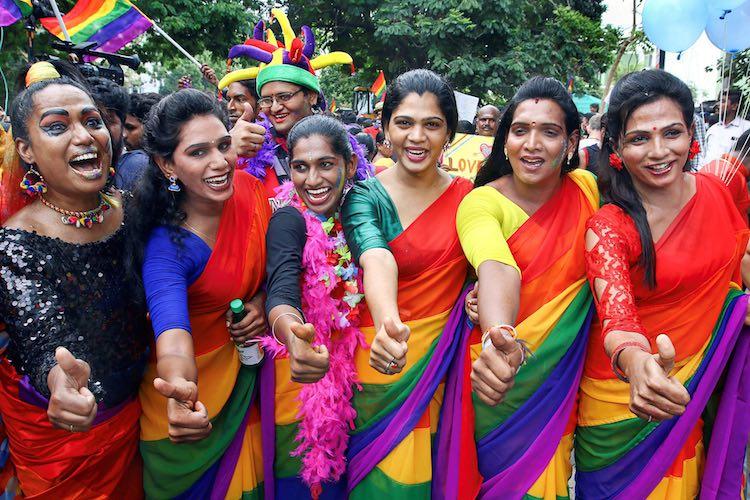
    • In a significant ruling, CJI D Y Chandrachud made a series of directions to address discrimination against the LGBTQ+ community and underscored the need for legislative action to recognize same-sex marriages.
    • This decision reflects a pivotal moment in India’s LGBTQ+ rights movement, emphasizing the intersection of legal and societal norms.

    Preventing LGBTQI Discrimination: Key Directions by CJI

    • Creation of Safe Houses: The ruling called for the establishment of “Garima Grehs” or safe houses in all districts to provide shelter to LGBTQ+ individuals facing violence or discrimination. These safe houses aim to offer refuge and support to those in need.
    • Anti-Discrimination Measures: The Centre, States, and Union Territories were urged to ensure that LGBTQ+ community members are not subjected to discrimination based on gender identity or sexual orientation. This includes equal access to goods and services available to the public.
    • Public Awareness: The ruling emphasized the need to sensitize the public about queer identity, affirming that it is natural and not a mental disorder. It encourages educational efforts to promote understanding and acceptance.
    • Hotline Numbers: The authorities were directed to establish hotline numbers that LGBTQ+ individuals can contact when facing harassment or violence. This initiative aims to provide immediate assistance and support.
    • End of Harmful “Treatments”: The ruling called for an immediate cessation of any “treatments” offered by doctors or others that attempt to change gender identity or sexual orientation. It prioritizes the well-being and autonomy of LGBTQ+ individuals.
    • Protection from Family Pressure: Police were advised not to force LGBTQ+ persons to return to their natal families if they choose not to do so. Furthermore, the ruling emphasized the importance of verifying the claims of LGBTQ+ individuals when they file complaints against their families, ensuring their freedom is not curtailed.
    • Fair Preliminary Investigation: Before registering an FIR against a queer couple or one of the parties involved, a preliminary investigation should be conducted. This step ensures that the complaint discloses a cognizable offence, preventing unnecessary legal action against LGBTQ+ individuals.

    Historical Context

    • The ruling underscored that India has a rich history of LGBTQ+ lives, encompassing various identities and communities.
    • It emphasized that queerness is not limited to urban settings or privileged classes but exists across different regions, castes, and economic backgrounds.

    Future Steps

    • The ruling has set a precedent for addressing discrimination and ensuring the protection of LGBTQ+ rights.
    • Justice S K Kaul expressed the need for a comprehensive anti-discrimination law prohibiting discrimination based on sexual orientation.
    • State governments have also been prompted to create guidelines and committees to address LGBTQ+ issues, demonstrating the broader impact of this ruling beyond the courtroom.

    Conclusion

    • The Supreme Court’s ruling on LGBTQ+ rights signifies a significant milestone in the ongoing struggle for equal rights and acceptance.
    • While legislative recognition of same-sex marriages remains pending, the directions provided by the CJI emphasize the importance of dismantling discriminatory practices and promoting inclusivity in Indian society.
    • The ruling paves the way for a more equitable future for LGBTQ+ individuals in the country.
  • Sir Syed Ahmed Khan’s 125th birth anniversary

    Sir Syed Ahmed Khan

    What’s the news?

    • Commemorating the 125th birth anniversary of Sir Syed Ahmed Khan, a prominent figure in India’s history

    Central idea

    • Sir Syed Ahmed Khan, a name synonymous with educational reforms among Muslims, stands out for his groundbreaking efforts. Yet, his views on women’s education remain controversial and the topic demands a revisit, especially in the context of the recent passing of the Women’s Reservation Bill.

    The Complex Legacy of Sir Syed Ahmed Khan

    • Sir Syed’s Contradictory Views:
    • While Sir Syed displayed a clear inclination towards liberal values and rationality, exemplified by his establishment of the Mohammedan Anglo-Oriental College in Aligarh in 1875, his views on women’s education were more conservative.
    • He advocated for a form of education that revolved around home tutoring for women, emphasizing their role in family life. He believed that formal education could hinder their primary purpose – marriage.
    • Support for Gender Segregation:
    • It’s noteworthy that Sir Syed supported gender segregation in education, opposing the British government’s initiatives to open co-educational schools and girls’ exclusive institutions.
    • He even considered coeducation a major cause of public unrest during colonial rule, reflecting the prevalent societal disapproval of women’s education.

    Sir Syed’s Advocacy for Women’s Empowerment

    • Campaigning Against Regressive Practices:
    • Sir Syed actively campaigned against various regressive practices that affected women’s lives in India.
    • He used platforms like the Aligarh Institute Gazette to address issues such as female infanticide, polygamy, child marriage, sati (the practice of widow self-immolation), the segregation of widows, and poverty-induced marriages of young girls to older men.
    • Support for Mary Carpenter’s Initiatives:
    • Sir Syed welcomed and appreciated the efforts of Mary Carpenter, a British philanthropist dedicated to female education.
    • Carpenter’s commitment to providing modern education to Indian women impressed him.
    • This support showcased Sir Syed’s recognition of the importance of education in empowering women and allowing them to participate more fully in public life.

    Reevaluation Through European Lens

    • Sir Syed’s visit to England in 1869-70 had a transformative effect on his views about women’s education.
    • His interactions with European women and observations about their roles in society led him to partially revise his stance.
    • He began to appreciate gender equality and the essential role of women in human progress.
    • He admired the freedom enjoyed by women in Europe and believed that the rejection of women’s education by Muslims played a part in the community’s decline

    Conclusion

    • While Sir Syed Ahmed Khan never fully relinquished his initial preference for home-based education for women, his exposure to Western ideals brought about a marked shift in his perspective. As we reflect on his contributions, it’s essential to view him in the nuanced light of a reformer caught between tradition and modernity.
  • Disruption in Earth’s Water Cycle

    water cycle

    Central Idea

    • The World Meteorological Organization (WMO) issued a report highlighting the significant impact of climate change and human activities on Earth’s water circulation systems.
    • This has direct consequences leading to droughts, extreme rainfall events, and disruptions in water cycles.

    What is the Water Cycle?

    • The water cycle, also known as the hydrologic cycle, is the continuous movement of water on, above, and below the Earth’s surface.
    • It involves various processes that allow water to circulate between the atmosphere, land, oceans, and other bodies of water:
    Evaporation Sun’s heat turns surface water into vapor.
    Condensation Vapor forms clouds as it cools in the atmosphere.
    Precipitation Clouds release moisture as rain, snow, or hail.
    Runoff & Infiltration Water flows over land or seeps into the ground.
    Transpiration Plants absorb and release water vapor.
    Sublimation Ice transforms directly into vapor in specific conditions.
    Transport Winds move moisture globally.
    Collection Water gathers in oceans, lakes, and underground sources.

     Why is it under stress?

    • Diverse Impact: Climate change and human activities have led to an erratic hydrological cycle, resulting in both droughts and extreme rainfall events, causing widespread disruptions affecting livelihoods and economies.
    • Melting Snow and Glaciers: Ongoing melting of snow, ice, and glaciers further exacerbates the risk of extreme weather events, such as floods, posing long-term threats to water security, particularly for millions already facing severe water scarcity.

    Global Impact

    • Global Deviations: Over 50% of global catchment areas experienced deviations from normal river discharge conditions in 2022, primarily due to climate anomalies, such as heatwaves, droughts, La Nina, and El Nino events.
    • Horn of Africa Drought: Severe drought in the Horn of Africa led to reduced river discharge, affecting food security for 21 million people, while other regions, like the Niger Basin, saw above-average discharge and major floods.
    • Water Reservoirs Affected: More than 60% of major water reservoirs experienced below-normal inflow, posing challenges to water availability in a changing climate.

    Impact on Asian Water Tower

    • The term “Asian Water Tower (AWT)” typically refers to the vast network of high mountain regions across Asia, particularly in countries like India, China, Nepal, Bhutan, and parts of Central Asia.
    • These high mountain regions are the source of many major rivers in Asia, such as the Ganges, Brahmaputra, Yangtze, Mekong, Indus, and Amu Darya.
    • The melting snow and glaciers in these mountains provide a continuous supply of freshwater to downstream areas.
    • This AWT witnessed substantial glacial melting in 2022.
    • Rising temperatures accelerate water cycle disruptions, leading to heavier precipitation, flooding, and intensified droughts, significantly impacting the water balance.
  • Sustainable water management in Agriculture

    What’s the news?

    • The theme for World Food Day (October 16) this year—’Water is Life, Water is Food’ —calls for urgent action in managing water wisely.

    Central idea

    • Water is the essence of life, a resource that nourishes not just humanity but every ecosystem on this planet. However, as this year’s World Food Day theme rightly points out, water is also food. In the light of increasing climate extremes, managing this precious resource wisely has never been more urgent.

    Impact of Climate Change on Crop Yields

    • Rainfed rice yields in India are projected to decrease by 20% in 2050 and 47% in 2080 if no adaptation measures are taken.
    • Irrigated rice yields are also expected to decline, with a projected decrease of 3.5% in 2050 and 5% in 2080 scenarios.
    • Wheat yields could face substantial reductions, with a projected decrease of 19.3% in 2050 and 40% in 2080.
    • Kharif maize yields are also at risk, with projected declines of 18% in 2050 and 23% in 2080.
    • Climate change, without adequate adaptation measures, not only reduces crop yields but also lowers the nutritional quality of the produce.

    Challenges associated with poor water management

    • Degraded Freshwater Supplies and Ecosystems: Decades of mismanagement, misuse, and pollution have resulted in the degradation of freshwater supplies and ecosystems. This has had a detrimental impact on the availability of clean water for agriculture and other essential needs.
    • Vulnerability of Small-Scale Producers: Small-scale farmers, who represent over 80% of farmers globally, are especially vulnerable to the effects of climate shocks, land degradation, and water scarcity.
    • Land Degradation: Approximately 40% of the world’s land area is degraded, which means that it is less productive for agriculture. This further reduces the available land for farming, exacerbating the challenges faced by small-scale producers.
    • Climate Impacts: Extreme weather events and variability in water availability are disrupting agricultural production. These changes are altering agro-ecological conditions and shifting growing seasons, making it challenging for farmers to predict and adapt to changing conditions.
    • Effects on Crop Productivity: Changes in rainfall patterns and rising temperatures have adverse effects on crop productivity. Reduced yields and food availability can result from these climate-related factors, which can contribute to food insecurity and hunger.

    Do not scroll past this

    FAO Crop Forecasting Framework:

    • The FAO is working on a pilot project in several Indian states, including Andhra Pradesh, Karnataka, Himachal Pradesh, and Maharashtra.
    • The project aims to develop a crop forecasting framework and model that incorporates climate data, soil characteristics, and market information.
    • This information can help rainfed farmers make informed decisions about their crops, potentially contributing to food security by improving agricultural planning and management.

     Climate change adaptation

    • FAO Initiatives:
      • Supports sustainable agrifood systems and climate-smart agriculture.
      • Initiated the farmer water school programme in Uttar Pradesh.
      • Supported the Andhra Pradesh Farmer Managed Groundwater Systems project which benefits 638 habitations with hydrological monitoring.
    • IFAD’s Focus:
      • Prioritizes climate change adaptation in its core strategies.
      • Invests in preserving soil health, water resources, and integrating modern technologies with indigenous systems.
      • Implements projects in Maharashtra, Odisha, Uttarakhand, Nagaland, and Mizoram emphasizing climate-resilient practices.
    • WFP Collaboration:
      • Partners with the Government of Odisha focusing on women farmers.
      • Employs solar technologies and promotes millet-value chains for climate resilience.

    Steps needed

    • Overall Strategy: Prioritize political commitment and concrete investment for global food and nutrition security. Promote innovative technologies to enhance farmer productivity.
    • Climate Change Adaptation: Formulate strategies to adapt to climate change. Foster resilience against environmental and economic shocks.
    • Agricultural Practices: Implement sustainable and economically feasible irrigation and water management techniques. Minimize the climate footprint in agricultural production. Address bio-hazards and environmental pollution.
    • Infrastructure and Supply Chain: Prioritize sanitation and potable water supply for rural areas. Advocate for efficient food and water recycling methods.
    • Regulation and Management: Strengthen sustainable and fair water regulations. Improve management, access, and ownership systems for resources.
    • UN’s Collaborative Projects: Collaborate with the Indian Government on projects such as Solar 4 Resilience, Secure Fishing, and the revival of millets for renewable energy and food security.

    Conclusion

    • Climate change is making water more scarce and unpredictable. Droughts, floods, and other extreme weather events are becoming more common. World Food Day is a reminder that we all have a role to play in achieving food and nutrition security for all. By working together, we can create a world where everyone has enough to eat and drink.
  • Large Ozone Hole detected over Antarctica

    ozone

    Central Idea

    • Satellite measurements conducted over Antarctica have unveiled a gigantic hole in the ozone layer.
    • Termed an “ozone-depleted area,” this region spans 26 million square kilometers (10 million square miles), approximately three times the size of Brazil.

    Ozone Layer and Ozone Hole

    Location Stratosphere, approximately 10-30 km above Earth’s surface.
    Composition Composed of ozone (O3) molecules.

    Unit of measurement: Dobsob Unit (DU)

    Function Acts as a protective shield, absorbing and blocking a significant portion of harmful ultraviolet (UV) radiation from the sun.
    Importance Essential for protecting life on Earth by preventing excessive UV radiation, which can harm living organisms and the environment.
    Ozone-depleting Substances Threatened by ODS like chlorofluorocarbons (CFCs), halons, and other synthetic compounds commonly used in refrigeration, air conditioning, and aerosol propellants.
    Montreal Protocol An international treaty adopted in 1987 to phase out the production and consumption of ODS, resulting in significant recovery of the ozone layer.
    Current Status The ozone layer is in the process of recovery due to the success of the Montreal Protocol.
    Environmental Impact Protects ecosystems, prevents skin cancer, cataracts, and other health issues in humans.
    Additional Facts • The size of the ozone hole over Antarctica varies annually, opening in August and closing in November or December.

    • Special winds caused by the Earth’s rotation create a unique climate over Antarctica, preventing mixing with surrounding air.

    • When these winds subside, the hole closes.

    Potential Causes of the Giant Ozone Hole

    • Volcanic Eruption in Tonga: Scientists speculate that the extensive ozone hole this year may be linked to volcanic eruptions in Hunga Tonga, Tonga, between December 2022 and January 2023. These eruptions released water vapor and other elements into the stratosphere, impacting the ozone layer through chemical reactions.
    • Human-Induced Ozone Holes: In the 1970s, scientists discovered that human activities, primarily the use of chlorofluorocarbons (CFCs), led to significant ozone depletion. These chemicals released chlorine in the stratosphere, depleting the ozone layer.
    • Effective Mitigation: The Montreal Protocol, established in 1987, aimed to combat ozone depletion by phasing out ozone-depleting substances. This international agreement successfully reduced the size of ozone holes over the years.

    Ozone Depletion and Climate Change

    • Not a Primary Climate Change Cause: Ozone depletion is not a leading contributor to global climate change.
    • Impact of Rising Temperatures: However, rising global temperatures may influence ozone holes. Extreme fires, such as those in southeastern Australia in 2020 and 2021, injected smoke into the stratosphere, potentially contributing to ozone depletion.
    • Changing Seasons: Ozone holes can alter the progression of seasons, as they extend the duration of polar vortexes, thereby extending winter periods.
  • Hottest September ever and climate change

    What’s the news?

    • September 2023 stands out as it recorded a remarkable 1.75-degree Celsius increase compared to the pre-industrial baseline of 1850–1900, making it a month with an unprecedented temperature deviation.

    Central idea

    • In the relentless march of climate change, 2023 has emerged as a year of unprecedented heatwaves. Each passing month seems to shatter temperature records, leaving us with grim prospects for the remainder of the year. As September, the hottest on record, draws to a close, we must confront the sobering reality that 2023 may become the warmest year ever recorded.

    2023: On Track to Be the Warmest Year

    • 2023 is poised to claim the dubious distinction of being the warmest year on record. The average temperature for the first nine months of the year already surpasses the corresponding period of 2016, the previous record holder.
    • In 2016, the average temperature was 1.28 degrees Celsius higher than pre-industrial times, and 2023 may breach the 1.5-degree Celsius mark for the first time.

    Rising Temperatures Predicted

    • The remarkable string of record-breaking temperature events in 2023 was not entirely unexpected. Scientists had foreseen this year’s warmth, primarily due to the development of El Niño in the Pacific Ocean.
    • While specific events couldn’t be predicted, the overall trend was ominous. Forecasts indicate that the last three months of the year will continue to be warmer than usual.

    Record-Breaking Months

    • The record-breaking temperatures in September follow a pattern of extraordinary warmth throughout the year. July, in particular, stood out as the warmest month ever recorded, setting a new global monthly temperature high.
    • Multiple days in July broke daily temperature records. Preceding this, June claimed the title of the warmest June ever, and February, March, April, and May all ranked among the top five hottest for their respective months.

    Lack of immediate solutions

    • Despite the alarming rise in temperatures and the string of record-breaking events in 2023, there has been a noticeable lack of immediate policy responses from countries to combat climate change.
    • Addressing climate change in the short term is challenging, and there are limitations to what can be done to lower temperatures or prevent future warming events on an immediate timescale.
    • Only a global disruption on the scale of the COVID-19 pandemic could bring about significant deviations from the current trend of increasing temperatures.

    Way forward: Urgent action is needed

    • There is an urgent need for decisive action in response to the unprecedented heatwaves and their associated impacts.
    • The world is rapidly approaching critical climate thresholds, including the 1.5-degree Celsius target set by the Paris Agreement.
    • The lack of immediate solutions and policy responses to mitigate climate change is a pressing concern.
    • Nations need to acknowledge the stark reality of climate change’s relentless advance and take immediate, robust, and meaningful measures to address the crisis.
    • Decisive action is required now to prevent irreversible consequences associated with global warming.

    Conclusion

    • As nations prepare for the annual climate change meeting in Dubai, it is imperative that they acknowledge the stark reality of climate change’s relentless advance. The stock-take exercise must reveal the gaps in global climate action and serve as a wake-up call for more robust and immediate measures.