đŸ’„Join UPSC 2027,2028 Mentorship (July Batch) + XFactor Notes & Microthemes PDF

GS Paper: GS1

  • [pib] National List of Intangible Cultural Heritage

    Sangeet Natak Akademi (SNA) is preparing the National List of Intangible Cultural Heritage.

    National List of Intangible Cultural Heritage

    • SNA is an autonomous organization under the Ministry of Culture is the nodal agency for the Scheme for ‘Safeguarding the Intangible Cultural Heritage and Diverse Cultural Traditions of India’.
    • As of now, SNA is collaborating with Zonal Cultural Centers of Ministry, collating and preparing a list of ICH elements for National List of Intangible Cultural Heritage.
    • List of ICH elements is being compiled and at least 100 elements will be documented by March, 2020 and the aim is to document at least 20 new elements in ICH list every year.
    • Along with this establishment of an ‘Indian Institute for Culture’ is at conceptual stage and a mission called National Culture Mapping portal is being conceptualized for aggregating art forms and artists. It is in pilot phase.
  • Why emergency response units are needed to ensure safety of sanitation workers

    • The Maharashtra government has directed all civic bodies in the state to set up Emergency Response Sanitation Units (ERSUs) to ensure safeguards for sanitation workers who clean manholes and sewers.
    • This move is in response to the multiple cases which were reported of workers dying from suffocation or inhalation of hazardous gases.

    PEMSR ACT, 2013

    • The Prohibition of Employment as Manual Scavengers and their Rehabilitation (PEMSR) Act came into force in 2013.
    • The law prohibits employing manual scavengers, manual cleaning of sewers and septic tanks without protective equipment and construction of insanitary latrines.
    • Those violating the law and getting sewers and septic tanks cleaned without protective equipment can face imprisonment of up to two years or a fine of up to Rs 2 lakh, or both.
    • Repeat offenders will face imprisonment of up to five years or a fine of up to Rs 5 lakh, or both.

    The Supreme Court judgment

    • While hearing a case on manual scavenging in 2014, the Supreme Court had stated, “If the practice of manual scavenging has to be brought to an end, and also to prevent future generations from the inhuman practice
 rehabilitation of manual scavengers will need to include steps to avoid sewer deaths.”
    • The court had said that making a sanitation worker enter sewer lines without safety gear should be a crime even in emergency situations.
    • In such instances, if a sanitation worker died due to the unsafe conditions, a compensation of Rs 10 lakh has to be given to the family of the deceased, stated the court.
    • The court had also directed authorities to identify the family members of sanitation workers who died while cleaning manholes and septic tanks since 1993, and give a compensation of Rs 10 lakh to them.

    Directives by National Commission for Scheduled Castes

    • To ensure effective implementation of the law banning manual scavenging, the commission issued various directives.
    • It said workers have to be fully equipped with safety apparatus and oxygen masks in case they have to clean sewers manually.
    • A first information report has to be lodged against officials or contractors responsible for sending a worker to clean sewers manually, without proper gear.
    • The commission also made it mandatory for all municipal corporations to get an insurance policy of Rs 10 lakh per worker, as per the Supreme Court’s directions.
    • The employers, in this case the civic bodies, will have to pay the policy premium.

    Emergency Response Sanitation Unit (ERSU)

    • In its directive on the setting up of ERSUs, the state government said the municipal commissioner of the civic body concerned will be the Responsible Sanitation Authority (RSA).
    • The ERSU should be headed by a senior civic officer and other civic officers should be on the ERSU advisory board to decide the standard operating procedure (SoP) for workers who enter manholes for cleaning purposes.
    • The civic body will also have to set up a dedicated toll-free number for the ERSU. The unit will impart training to sanitation workers.
    • Only workers trained and certified by an ERSU will be able to clean sewers, but the priority will be on using machines to get such work done.
    • In case a worker dies while cleaning a sewer, the civic body will have to hold an inquiry and register a police complaint.

    Workshop on creating awareness on the issue

    • All civic bodies have been asked to hold workshops to raise awareness on this issue in their respective jurisdictions.
    • The workshops are going to focus on latest technology for cleaning sewers and septic tanks, and the final objective is to find a way to clean septic tanks or manholes with machines.
    • The workshops will have sessions on laws pertaining to sanitation workers, the establishment of ERSUs and their roles, presentations on the latest equipment, machines and protective gear.
    • Sanitation workers, NGOs, social organisations, housing society members and government officials have to participate in the workshops.
  • Thwaites Glacier


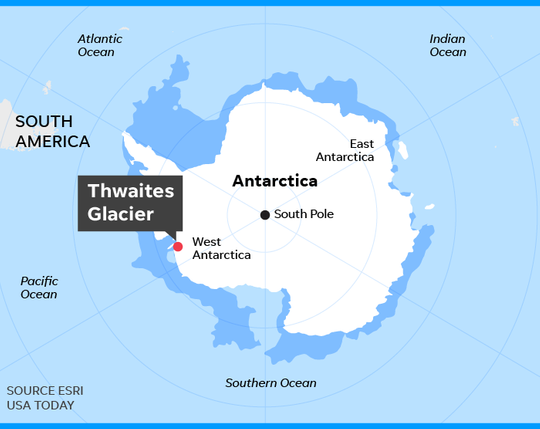
    In the Antarctic floats a massive glacier, roughly the size of Britain, whose melting has been a cause of alarm for scientists over the years. Now, a new study has pinned the cause of the melting to the presence of warm water at a vital point beneath the glacier.

    Thwaites Glacier

    • The Thwaites Glacier is 120 km wide at its broadest, fast-moving and melting fast over the years.
    • Because of its size (1.9 lakh square km), it contains enough water to raise the world sea level by more than half a metre.
    • Studies have found the amount of ice flowing out of it has nearly doubled over the past 30 years. Today, Thwaites’s melting already contributes 4% to global sea level rise each year.
    • It is estimated that it would collapse into the sea in 200-900 years. Thwaites is important for Antarctica as it slows the ice behind it from freely flowing into the ocean.
    • Because of the risk it faces — and poses — Thwaites is often called the Doomsday Glacier.

    What has the new study found?

    • A 2019 study had discovered a fast-growing cavity in the glacier.
    • More recently researchers detected warm water at a vital point below the glacier.
    • Scientists dug a 600-m-deep and 35-cm-wide access hole, and deployed an ocean-sensing device called Icefin to measure the waters moving below the glacier’s surface.
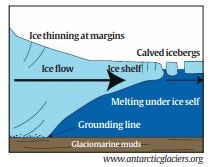
    • The study reported water at just two degrees above freezing point at Thwaites’s “grounding zone” or “grounding line”.

    What is the grounding line?

    • The grounding line is the place below a glacier at which the ice transitions between resting fully on bedrock and floating on the ocean as an ice shelf.
    • The location of the line is a pointer to the rate of retreat of a glacier.
    • When glaciers melt and lose weight, they float off the land where they used to be situated. When this happens, the grounding line retreats.
    • That exposes more of a glacier’s underside to seawater, increasing the likelihood it will melt faster.
    • This resulted in the glacier speeding up, stretching out, and thinning, causing the grounding line to retreat ever further.
  • [pib] Ease of Living Index and Municipal Performance Index 2019

    The surveys to determine the Ease of Living Index (EoLI) and Municipal Performance Index (MPI) 2019 has been initiated by the Ministry of Housing & Urban Affairs. Both these indices are designed to assess the quality of life of citizens in 100 Smart Cities and 14 other Million Plus Cities.

    Municipal Performance Index

    • With the MPI 2019, the Ministry has sought to assess the performance of municipalities based on five enablers namely Service, Finance, Planning, Technology and Governance.
    • These have been further divided into 20 sectors which will be evaluated across 100 indicators.
    • This will help Municipalities in better planning and management, filling the gaps in city administration, and improving the liveability of cities for its citizens.

    Ease of Living Index

    • EOLI is aimed at providing a holistic view of Indian cities – beginning from the services provided by local bodies, the effectiveness of the administration, the outcomes generated through these services in terms of the liveability within cities and, finally, the citizen perception of these outcomes.
    • The key objectives of the EOL Index are four-folds, viz.
    1. Generate information to guide evidence-based policy making;
    2. Catalyse action to achieve broader developmental outcomes including the SDG;
    3. Assess and compare the outcomes achieved from various urban policies and schemes; and
    4. Obtain the perception of citizens about their view of the services provided by the city administration.
    • For the first time, as part of the EOLI Assessment, a Citizen Perception Survey is being conducted on behalf of the Ministry (which carries 30% of the marks of the Ease of Living Index).
    • This is a very important component of the assessment exercise as it will help in directly capturing perception of citizens with respect to quality of life in their cities.
    • This survey, which is being administered both online and offline, has commenced from 1st February 2020 and will continue till 29th February 2020.
    • The offline version involving face-to-face interviews will commence on the 1st of February and will run parallel to the on-line versions.
  • Explained: Practice of Female Genital Mutilation (FGM)


    Every year, February 6 is observed as the International Day of Zero Tolerance for Female Genital Mutilation (FGM).  As per the WHO, globally, over 200 million girls alive today have suffered FGM in over 30 countries.

    Female Genital Mutilation

    • FGM is the name given to procedures that involve altering or injuring the female genitalia for non-medical or cultural reasons.
    • It is recognised internationally as a violation of human rights and the health and integrity of girls and women.
    • Most girls and women who have undergone FGM live in sub-Saharan Africa and the Arab States, but it is also practiced in some countries in Asia, Eastern Europe and Latin America.
    • According to the United Nations Population Fund (UNFPA), while the exact origins of the practice remain unclear, it seems to have predated Christianity and Islam.
    • It says that some Egyptian mummies display characteristics of FGM.
    • Significantly, the ancient Greek historian Herodotus has claimed that in the fifth century BC, the Phoenicians, the Hittites and the Ethiopians practised circumcision.

    Why is Female Genital Mutilation practiced?

    • Depending on the region, there can be various reasons why FGM is performed. The UNFPA has categorised the reasons into five categories —
    1. psycho-sexual reasons (when FGM is carried out as a way to control women’s sexuality, “which is sometimes said to be insatiable if parts of the genitalia, especially the clitoris, are not removed);
    2. sociological or cultural reasons (when FGM is seen as part of a girl’s initiation into womanhood and an intrinsic part of a community’s cultural heritage);
    3. hygiene and aesthetic reasons (this may be the reason for those communities that consider the external female genitalia as ugly and dirty);
    4. religious reasons (the UNFPA maintains that while FGM is not endorsed by Christianity or Islam, “supposed” religious doctrines may be used to justify the practice);
    5. socio-economic factors (in some communities FGM is a pre-requisite for marriage, especially in those communities where women are dependent on men economically).
    • Other reasons cited by the WHO include- an attempt to ensure women’s premarital virginity since FGM is believed to reduce libido,  and therefore believed to help her resist extramarital sexual acts.
    • FGM may also be associated with cultural ideals of feminity and modesty.

    Economic cost of FGM

    • Beyond the immense psychological trauma it entails, FGM imposes large financial costs and loss of life.
    • In 2018, a study on FGM in India said that the practice was up to 75 per cent across the Bohra Muslim community.
    • The economic costs of treating health complications arising out of FGM amount to roughly $1.4 billion for 2018 for 27 countries where FGM is performed.
    • If the prevalence remains the same, the amount is expected to rise up to $2.3 billion by 2047.

    FGM in India

    • According to the aforementioned study, the reasons for FGM referred to as “Khafd” in India include continuing an old traditional practice, adhering to religious edicts, controlling women’s sexuality and abiding by the rules stated by the religious clergy.
    • It also states that the issue first rose to prominence in India because of two international legal cases on FGM against practising Bohras in Australia and the US.
    • In 2018, a bench of then CJI Dipak Misra referred a petition seeking a ban on FGM among Dawoodi Bohra girls to a five-judge Constitution Bench.
    • The Dawoodi Bohra community, on the other hand, maintained that the practice should be allowed since the Constitution grants religious freedom under Article 25.

    For detailed health risks associated with FGM, navigate to the page:

    Health hazards of FGM
  • Kumbhabishegam at Brahadeeswarar Temple, Thanjavur


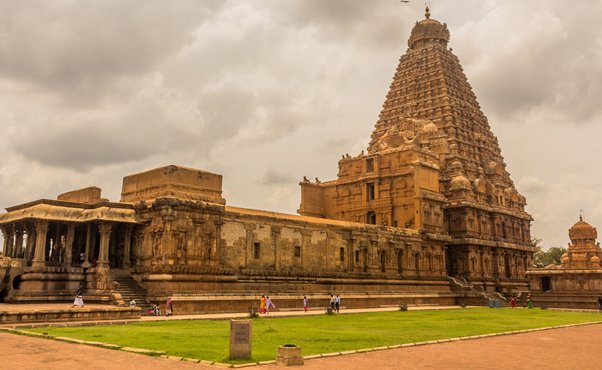
    • Tens of thousands of pilgrims thronged Thanjavur in Tamil Nadu’s Cauvery delta to witness the Kumbhabishegam (consecration) ceremony at the Sri Brahadeeswarar Temple.
    • This enormously significant event was held after 23 years — and after the Madras High Court had settled an old argument over the ritual purification process only five days previously.
    • The judgment delivered by the Madurai Bench of the court addressed the struggle for supremacy between the Sanskrit and Tamil traditions.

    Sri Brahadeeswarar Temple and Kumbhabishegam ceremony

    • The Sri Brahadeeswarar Temple (also spelt Brihadisvara, and called Peruvudaiyar Koyil, which translates simply to ‘Big Temple’) is the most famous of the many temples in Thanjavur.
    • The temple, one of the world’s largest and grandest, was built between 1003 AD and 1010 AD by the great Chola emperor Raja Raja I (c. 985-1014 AD).

    Before the High Court

    • The court, in a dispute over which language should be used in the slokas at the kumbhabishegam, agreed with the state government’s affidavit that the ceremony should be in both Sanskrit and Tamil.
    • The Temple committee had demanded that the Kumbhabishegam should be held only in Tamil.
    • The court ruled the choice to be vested with the devotees to seek for their archanas to be performed at their wishes by chanting the manthras either in Tamil or in Sanskrit.
  • Velutheeyam Alloy

    A tri-metal sculpture of Jesus Christ( Healing Christ) in Thiruvalla, Kerala has entered the Universal Records Forum’s (URF) book of world records.

    Velutheeyam

    • The statue was sculpted with an alloy of zinc, copper, and velutheeyam (an alloy of tin and aluminium).
    • A URF team adjudged that the 368-cm tall statue, weighing 2,400 kg, is the largest one of its kind in the world.
    • It took 18 months for sculpting the statue.
  • Indian Institute of Heritage and Conservation

    The Union Govt. has proposed to set up an Indian Institute of Heritage and Conservation under the Ministry of Culture, and develop five archaeological sites as “iconic sites” with onsite museums in Rakhigarhi (Haryana), Hastinapur (Uttar Pradesh), Sivsagar (Assam), Dholavira (Gujarat) and Adichanallur (Tamil Nadu).

    Rakhigarhi

    • Rakhigarhi in Haryana’s Hissar district is one of the most prominent and largest sites of the Harappan civilization.
    • It is one among the five known townships of the Harappan civilization in the Indian subcontinent.
    • In one of the excavations, the skeletal remains of a couple were discovered.
    • Interestingly, of the 62 graves discovered in Rakhigarhi, only this particular grave consisted of more than one skeletal remains and of individuals of the opposite sex together.

    Hastinapur

    • Excavations at Hastinapur, in Meerut district of Uttar Pradesh, were led by Dr B B Lal, who was at the time Superintendent of the Excavations Branch of the ASI.
    • Hastinapur finds mention in the Mahabharata and the Puranas.
    • One of the most significant discoveries made at this site was of the “new ceramic industry”, which was named the Painted Grey Ware, which as per the report represented the relics of the early Indo-Aryans.
    • The sites of Hastinapur, Mathura, Kurukshetra, Barnawa, etc., are identifiable with those of the same name mentioned in the Mahabharata.
    • If that be so, the Painted Grey Ware would be associated with the early settlers on these sites, viz. The Pauravas, Panchalas, etc., who formed a part of the early Aryan stock in India.
    • Such an association may also explain the synchronism between the appearance of the Painted Grey Ware in the Ghaggar-Sutlej valleys and the probable date of the arrival of the Aryans in that area.”

    Sivasagar

    • In Sivasagar, excavations at the Karenghar (Talatalghar) complex between 2000 and 2003 led to the discovery of buried structures in the north-western and north-eastern side of the complex.
    • Among the structural remains found at the site were ceramic assemblages including vases, vessels, dishes, and bowls, etc. Terracotta smoking pipes were also found.
    • Another excavation site in Sivasagar district is the Garhgaon Raja’s palace. Excavation at this site was conducted during 2007-2008.
    • A burnt-brick wall running in north-south orientation was found, along with the remains of two huge circular wooden posts.

    Dholavira

    • Dholavira in Gujarat is located in the Khadir island of the Rann of Kutch, and like Rakhigarhi is one of the sites where the remains of the Harappan civilization have been found.
    • Dholavira is unique because remains of a complete water system have been found here.
    • The people who lived there for an estimated 1,200 years during the Harappan civilization are noted for their water conservation system using rainwater harvesting techniques in an otherwise parched landscape.

    Adichnallur

    • Adichnallur lies in the Thoothukudi district of Tamil Nadu.
    • The urn-burial site was first brought to light during a “haphazard excavation” by a German archaeologist in 1876. Following this, an Englishman Alexander Rae excavated the site between 1889 and 1905.
    • Over the years, the site has gained attention because of three important findings: the discovery of an ancient Tamil-Brahmi script on the inside of an urn containing a full human skeleton, a fragment of a broken earthenware, and the remains of living quarters.
  • Poets quoted in Budget Speech

    Finance Minister has quoted four poets in her Budget speech: Pt. Dinanath Nadim, Avvaiyar, Thiruvalluvar and Kalidas, a sweep from Tamil Nadu to Kashmir, from ancient to contenporary India.

    Dinanath Nadim

    • The Kashmiri nationalist poet Dinanath Nadim was at the centre of Kashmir’s progressive movement, especially in the 1930s, 40s and 50s.
    • Nadim was born in 1916, and passed away in 1988. Nadim wrote in Kashmiri, Hindi and Urdu, and inspired a powerful tradition of Kashmiri poetry.
    • Nadim received the Sahitya Akademi award in 1986 for his opera Shuhul Kull (The Shady Tree).
    • Among his other well known works are Vitasta (Jhelum River), Safar Taa Shehjaar (The Journey And The Shade), Heemaal Taa Naaegrai (Heemaal and Naagraaj), and Bombur Taa Yamberzal (The Bumble Bee And The Narcissus Flower).

    Avvaiyar

    • Avvaiyar translates to “Respected Woman”, and the title was used by several woman poets who contributed to Tamil literature during different periods of time.
    • In the Budget’s section on “Aspirational India”, Sitharaman said, “Our government shall encourage balanced use of all kinds of fertilizers including the traditional organic and other innovative fertilizers.
    • This is a necessary step to change the prevailing incentive regime, which encourages excessive use of chemical fertilisers.”
    • She quoted from Aaathichoodi’s verse 81 which translate to “first tend to till one’s land and then eat. One must eat only after work.”

    Thiruvalluvar

    • Thiruvalluvar is fondly referred to as Valluvar by Tamils. His ‘Tirukkural’, a collection of 1,330 couplets (‘kurals’ in Tamil), are an essential part of every Tamil household.
    • It holds importance in the same way the Bhagavad Gita or the Ramayana are in traditional North Indian Hindu households.
    • He is an essential anchor for Tamils in tracing their cultural roots; Tamils are taught to learn his couplets word-for-word, and to follow his teachings in their day-to-day living.
    • FM quoted Thiruvalluvar: “Pini Inmai Selvam Vilaivu Inbam Emam Ani Enba”, which loosely translates to having the “five jewels” required for a country that is without illness, with wealth, with good crops, with happiness, as well as safety and security.

    Kalidas

    • Kalidas, the legendary Sanskrit scholar, is believed to have lived during the middle of the fourth and early fifth centuries AD, during the reigns of Chandragupta II Vikramaditya and Kumaragupta.
    • Raghuvamsa, from which FM quoted, is one of two long epic poems written by Kalidas.
    • She mentioned the 18th verse: “Surya, the Sun, collects vapour from little drops of water. So does the King. They give back copiously. They collect only for people’s wellbeing.”
  • Karnataka Anti-superstition Law

    A controversial anti-superstition law in Karnataka was formally notified by the current government.

    Provisions of the earlier drafts

    • The law, which was initially drafted as the Karnataka Anti Superstition Bill, 2013, was a pet project of former CM Siddaramaiah.
    • The model Bill held human dignity as its central tenet and sought eradication of irrational practices found in different communities.
    • The first draft made practices like inflicting self-wounds and conversion through bribery illegal.
    • Some of the proposals opposed by religious leaders and political parties in the early draft were the ban on practices such as the carrying of priests in palanquins, worshipping the feet of religious leaders.
    • It sought to ban Made Snana practised in the Dakshina Kannada region where Dalits roll over the remains of food consumed by upper castes.

    The current version

    • A Bill with sizable consensus across the political spectrum finally evolved in 2017. A total of 16 practices have been banned under the law.
    • The practice of Vaastu, astrology, pradakshina or circumabulation of holy places, yatras, parikramas performed at religious places were kept out of the purview of the law.
    • Made Snana was banned under the law with respect to having Dalits roll over leftover food.
    • The practice has now been modified to be voluntary and not involving leftover food.
    • Practices such as barring menstruating women from entering houses of worship and their homes, coercing people to take part in fire-walks, and beating up people by declaring them evil, are among the irrational practices that have been banned under the 2017 law.

    Penalties

    • The law stipulates “imprisonment for a term which shall not be less than one year but which may extend to seven years and with fine which shall not be less than five thousand rupees but which may extend to fifty thousand rupees”, as punishment for violations.
    • The law is to implemented by the state police with the appointment of vigilance officers under the law at police stations.