💥Join UPSC 2027,2028 Mentorship (July Batch) + XFactor Notes & Microthemes PDF

GS Paper: GS1

  • Specie in news: ‘World’s largest’ subterranean fish


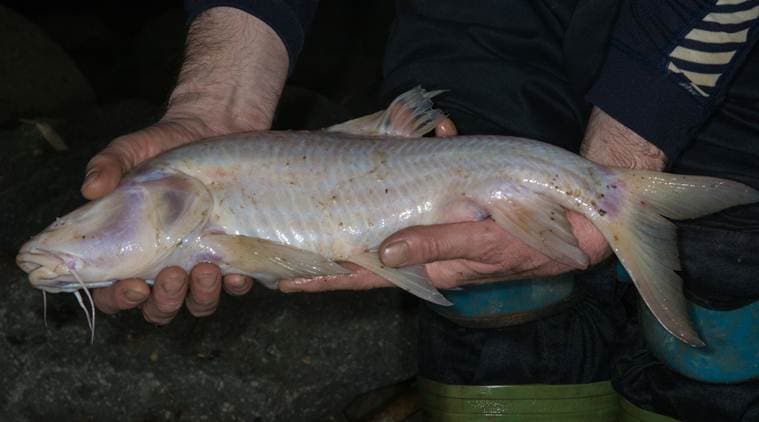
    Systematic exploration of the Meghalayan caves has been underway for almost 30 years and hundreds of kilometres of cave passages have been explored and mapped. In a cave in a remote forested area of Meghalaya’s Jaintia Hills a research expedition found large specie of a subterranean fish (occurring under the earth’s surface).

    About the fish

    • The blind fish was over 40 cm. It has not been named so far.
    • It is nearly five times the mean length (85mm/8.5 cm) for all known subterranean fish to date.
    • The only other species exceeding 300mm (30 cm) in length are eel-like Synbranchidae with nothing like the bulk of the new fish.
    • The 250-known subterranean (occurring under the earth’s surface) fish species around the world measure only around 8.5 cm on average.
    • The specialists say that possibly one (or more) populations of these fish became isolated deeper in the caves and over generations became adapted to the dark, losing their eyes in the process.

    Closest resemblance

    • The experts feel that the fish species is very similar to the Golden Mahseer or the Tor Putitora, one of the most famous game fish of the Himalayan rivers.
    • Unique characters that distinguishes it from the Golden Mahseer is the lack of pigmentation, a lack of eyes and of course, its subterranean habitat – being locked in caves.
    • There are ‘normal’ Golden Mahseer in the area too but there is not much surface water (at least in the dry winter months) so fish end up in the cave pools and underground rivers.

    Features of Subterranean ecosystems

    • Subterranean ecosystems are considered extreme, high-stress environments characterised by darkness, truncated food webs and food scarcity.
    • Despite this, they harbour exceptional vertebrate and invertebrate taxa (21,000+ species), many of which are evolutionarily unique, and relics of ancient fauna given their long-term isolation.
    • Many cave fish show different adaptations – some don’t have eyes, some have reduced eyes, some don’t have fins, some have weird body shapes.
  • Permanent Commission to Women in Indian Army


    • The Supreme Court brought women officers in 10 streams of the Army on a par with their male counterparts in all respects, setting aside longstanding objections of the government.
    • The case was first filed in the Delhi High Court by women officers in 2003 and had received a favourable order in 2010. But the order was never implemented and was challenged by the government.

    Women in Army: Background of the case

    • The induction of women officers in the Army started in 1992.
    • They were commissioned for a period of five years in certain chosen streams such as Army Education Corps, Corps of Signals, Intelligence Corps, and Corps of Engineers.
    • Recruits under the Women Special Entry Scheme (WSES) had a shorter pre-commission training period than their male counterparts who were commissioned under the Short Service Commission (SSC) scheme.
    • In 2006, the WSES scheme was replaced with the SSC scheme, which was extended to women officers. They were commissioned for a period of 10 years, extendable up to 14 years.
    • Serving WSES officers were given the option to move to the new SSC scheme or to continue under the erstwhile WSES.
    • They were to be, however, restricted to roles in streams specified earlier — which excluded combat arms such as infantry and armoured corps.

    2 key arguments shot down

    • The Supreme Court rejected arguments against a greater role for women officers, saying this violated equality under the law.
    • They were being kept out of command posts on the reasoning that the largely rural rank and a file will have problems with women as commanding officers. The biological argument was also rejected as disturbing.
    • While male SSC officers could opt for permanent commission at the end of 10 years of service, this option was not available to women officers.
    • They were, thus, kept out of any command appointment, and could not qualify for government pension, which starts only after 20 years of service as an officer.
    • The first batch of women officers under the new scheme entered the Army in 2008.

    Arguments by the govt.

    • The government put forth other arguments before the Supreme Court to justify the proposal on the grounds of permanent commission, grants of pensionary benefits, limitations of judicial review on policy issues, occupational hazards, reasons for discrimination against women and rationalization on physiological limitations for employment in staff appointments.
    • The apex court has rejected these arguments, saying they are “based on sex stereotypes premised on assumptions about socially ascribed roles of gender which discriminate against women”.
    • It has also said that it only shows the need “to emphasise the need for change in mindsets to bring about true equality in the Army”.

    Implications of the judgement

    • The SC has done away with all discrimination on the basis of years of service for grant of PC in 10 streams of combat support arms and services, bringing them on a par with male officers.
    • It has also removed the restriction of women officers only being allowed to serve in staff appointments, which is the most significant and far-reaching aspect of the judgment.
    • It means that women officers will be eligible to tenant all the command appointments, at par with male officers, which would open avenues for further promotions to higher ranks for them.
    • It also means that in junior ranks and career courses, women officers would be attending the same training courses and tenanting critical appointments, which are necessary for higher promotions.

    Way Forward

    • The implications of the judgment will have to be borne by the human resources management department of the Army, which will need to change policy in order to comply.
    • But the bigger shift will have to take place in the culture, norms, and values of the rank and file of the Army, which will be the responsibility of the senior military and political leadership.
    • After the Supreme Court’s progressive decision, they have no choice but to bite the proverbial bullet.
  • Battle of Çanakkale/Gallipoli

    India issued a strong demarche to Turkey over its outspoken President Erdogan’s comments in Pakistan. Erdogan has criticised India’s policy in Jammu and Kashmir and compared it with that of Turkey during World War I.

    Gallipoli campaign

    • The Battle of Çanakkale, also known as the Gallipoli campaign or the Dardanelles campaign, is considered to be one of the bloodiest of World War I, during which the Ottoman army faced off against the Allied forces, leading to the slaughter of tens of thousands of soldiers on both sides.
    • In March 1915, with the war in Europe stalemated in the trenches, Winston Churchill, then Britain’s First Lord of the Admiralty, devised a plan to take control of the Dardanelles.
    • The plan was to capture strategic strait connecting the Sea of Marmara to the Aegean Sea and the Mediterranean Sea, and thus reach Constantinople (today’s Istanbul) at the mouth of the Bosporus.
    • By taking Constantinople, the Allies hoped to break the Turks, who had recently entered the war on the side of Germany.

    The massacre

    • The Allies carried out a heavy naval bombardment of Turkish forts along the shores of the Dardanelles, and when that failed, followed up with what was the biggest amphibious landing in military history at the time.
    • However, what the British and their allies had hoped would be the turning point in the war ended up as a catastrophe.
    • In the nine months upto January 1916, when the Allies called off the campaign and evacuated, more than 40,000 British soldiers had been killed, along with 8,000 Australians. On the Turkish side, some 60,000 had perished.

    Legacy of the battle

    • The battle resulted in a demotion for Churchill and the emergence on the Turkish side of the young military hero, Mustafa Kemal Ataturk.
    • But the legacy of Gallipoli goes far beyond its military aspects — the event is today one of the central pillars of the modern Turkish identity.
    • The campaign is also seen to have seeded Australian and New Zealand national consciousness — April 25, the anniversary of the Gallipoli landings, is observed as ANZAC Day, the day of national remembrance for the war dead.
  • Erstwhile State of Rampur

    Erstwhile royals of the state of Rampur in Uttar Pradesh are fighting over the assets and legacy of Nawab Raza Ali Khan, who acceded to the Indian Union at the time of Independence.  The Supreme Court ended India’s longest-running civil dispute last year, and the process of evaluating the inheritance is currently ongoing.

    The state of Rampur

    • The state of Rampur was founded by Nawab Ali Muhammad Khan, the adopted son of Sardar Daud Khan, the chief of the Rohillas in Northern India.
    • The Rohillas were Afghans who entered India in the 18th century as the Mughal Empire was in decline, and took control of Rohilkhand, at the time known as Katehr.
    • In 1737, Nawab Muhammad Khan received the territory of Katehr from Emperor Muhammad Shah, only to lose everything to Nawab Wazir of Oudh in 1746.
    • Two years later, he assisted Ahmad Shah Durrani in his conquest of India, recovering all his former possessions.
    • Over the next two centuries the Rampur royals, earlier a warring clan, struck deep roots, and with the blessings of the British, began to build one of the richest principalities in the country.

    Patrons of the arts, culture

    • The Rampur royals have played an important role in the socio-cultural history of the Ganga-Yamuna belt.
    • They run the Amir Raza library in Rampur, once known as the official darbar of the Nawab, which is home to some 15,000 manuscripts in Arabic, Urdu, Persian and Turkish, as well as a seventh-century Quran.
    • The library also houses 2,500 specimens of Islamic calligraphy, 5,000 miniature paintings, and 60,000 printed books, besides the extremely rare Persian translation of Valmiki’s Ramayana, which is believed to have been Emperor Aurangzeb’s personal copy.
    • In the 19th century, the royals established courts of law and a standing army, and built irrigation works. In the 20th century, they set up sugar and textile mills.
    • Many Hindus were employed in senior administrative positions in the state. Nawab Raza Ali Khan was known to have written poetry in Bhojpuri for Holi.
    • The Rampur court was also a great patron of the arts, and is known to have patronised Ghalib and Begum Akhtar, as well as the tabla player Ahmad Jan Thirakwa, sarangi player Bundu Khan, sarod player Fida Hussein Khan, been player Wazir Khan, and the kathak dancers Acchan Maharaj and Kalka Prasad.

    After Independence

    • Rampur, under Nawab Raza Ali, was the first kingdom to accede to India in 1949, becoming the only Muslim-majority district in Uttar Pradesh.
    • Soon after accession, the Nawab handed over the official royal residence, the Rampur Qila or Fort, built in 1775, to the Indian government, along with several other properties.
    • In return, the Indian government bestowed two key rights to the Nawab — he was granted full ownership of the properties, and guaranteed succession to the gaddi or rulership of the state based on customary law, which gave exclusive property rights to the eldest son.
    • When Raza Ali Khan died in 1966, he had three wives, three sons, and six daughters.
    • His eldest son Murtaza Ali Khan succeeded him as head of the state, as per custom.
    • The government recognised him as the sole inheritor of all his father’s private properties and issued a certificate to this effect. But his brother challenged this in the civil court.
  • Person in news: Dara Shikoh


    The Ministry of Culture recently set up a panel of the Archaeological Survey of India (ASI) to locate the grave of the Mughal prince Dara Shikoh (1615-59) nearby Humayun’s Tomb complex in Delhi.

    Dara Shikoh’s legacy

    • The eldest son of Shah Jahan, Dara Shikoh was killed after losing the war of succession against his brother Aurangzeb.
    • Dara Shikoh is described as a “liberal Muslim” who tried to find commonalities between Hindu and Islamic traditions.
    • He translated into Persian the Bhagavad Gita as well as 52 Upanishads.

    Antithesis to Aurangzeb

    • Some historians argue that if Dara Shikoh had ascended the Mughal throne instead of Aurangzeb, it could have saved thousands of lives lost in religious clashes.
    • Dara Shukoh was the total antithesis of Aurangzeb, in that he was deeply syncretic, warm-hearted and generous — but at the same time, he was also an indifferent administrator and ineffectual in the field of battle.

    The remains of Dara Shikoh

    • According to the Shahjahannama, after Aurangzeb defeated Dara Shikoh, he brought the latter to Delhi in chains.
    • His head was cut off and sent to Agra Fort, while his torso was buried in the Humayun’s Tomb complex.
    • Italian traveller Niccolao Manucci gave a graphic description of the day in Travels of Manucci, as he was there as a witness to the whole thing. That is the basis of the thesis.
  • Urban Heat Islands in India


    A recent study from IIT Kharagpur called “Anthropogenic forcing exacerbating the urban heat islands in India” noted that the relatively warmer temperature in urban areas, compared to suburbs, may contain potential health hazards due to heat waves apart from pollution.

    About the study

    • The research did study the difference between urban and surrounding rural land surface temperatures, across all seasons in 44 major cities from 2001 to 2017.
    • It found evidence of mean daytime temperature of surface urban heat island (UHI Intensity) going up to 2 degrees C for most cities, as analysed from satellite temperature measurements in monsoon and post monsoon periods.
    • Other researchers from elsewhere have also noticed similar rise in daytime temperatures in Delhi, Mumbai, Bengaluru, Hyderabad and Chennai.

    What is an Urban Heat Island?

    • An urban heat island (abbreviated as UHI) is where the temperature in a densely populated city is as much as 2 degrees higher than suburban or rural areas.
    • This happens because of the materials used for pavements, roads and roofs, such as concrete, asphalt (tar) and bricks, which are opaque, do not transmit light, but have higher heat capacity and thermal conductivity than rural areas, which have more open space, trees and grass.
    • Trees and plants are characterised by their ‘evapotranspiration’— a combination of words wherein evaporation involves the movement of water to the surrounding air, and transpiration refers to the movement of water within a plant and a subsequent lot of water through the stomata (pores found on the leaf surface) in its leaves.
    • Grass, plants and trees in the suburbs and rural areas do this. The lack of such evapotranspiration in the city leads to the city experiencing higher temperature than its surroundings.

    Latent impacts

    • UHI s also decrease air quality in the cities, thanks to pollution generated by industrial and automobile exhaust, higher extent of particulate matter and greater amounts of dust than in rural areas.
    • Due to this higher temperature in urban areas, the UHI increases the colonization of species that like warm temperatures, such as lizards and geckos.
    • Insects such as ants are more abundant here than in rural areas; these are referred to as ectotherms.
    • In addition, cities tend to experience heat waves which affect human and animal health, leading to heat cramps, sleep deprivation and increased mortality rates.
    • UHIs also impact nearby water bodies, as warmer water (thanks to the pavements, rooftops and so on) is transferred from the city to drains in sewers, and released into nearby lakes and creeks, thus impairing their water quality.

    Control of UHIs and mitigation

    • Industrialization and economic development are vital to the country, but the control of UHIs and their fallouts are equally vital. Towards this, several methods are being, and can be, tried.
    • One of them is to use greener rooftops, using light-coloured concrete (using limestone aggregates along with asphalt (or tar) making the road surface greyish or even pinkish (as some places in the US have done); these are 50% better than black, since they absorb less heat and reflect more sunlight.
    • Likewise, we should paint rooftops green, and install solar panels there amidst a green background.
    • The other is to plant as many trees and plants as possible

    Why plant more trees?

    Relevant to the present context are:

    • they combat climate change; clean the surrounding air by absorbing pollutant gases (NXOy, O3, NH3, SO2, and others) and trapping particulates on their leaves and bark;
    • they cool the city and the streets; conserve energy (cutting air-conditioning costs by 50%); save water and help prevent water pollution; help prevent soil erosion; protect people and children from UV light;
    • they offer economic opportunities; bring diverse group of people together; encourage civic pride by giving neighborhoods a new identity; mask concrete walls, thus muffling sounds from streets and highways, and eye-soothing canopy of green; and the more a business district has trees, more business follows.
  • Conservation plan for Konark Sun Temple

    A plan to restore and preserve the nearly 800-year-old Konark Sun Temple in Odisha would be drawn up soon. Among the potential choices before the government would be to fill in more sand or to remove all the sand andput in place alternate support.

    Konark Sun Temple

    • Konark Sun Temple is a 13th-century CE Sun temple at Konark about 36 kilometres northeast from Puri on the coastline of Odisha, India.
    • The temple is attributed to king Narasinga Deva I of the Eastern Ganga Dynasty about 1250 CE.
    • Dedicated to the Hindu Sun God Surya, what remains of the temple complex has the appearance of a 100-foot (30 m) high chariot with immense wheels and horses, all carved from stone.
    • Once over 200 feet (61 m) high, much of the temple is now in ruins, in particular the large shikara tower over the sanctuary; at one time this rose much higher than the mandapa that remains.
    • The structures and elements that have survived are famed for their intricate artwork, iconography, and themes, including erotic kama and mithuna scenes.
    • Also called the Surya Devalaya, it is a classic illustration of the Odisha style of Architecture or Kalinga Architecture.
    • Declared a UNESCO world heritage site in 1984 it remains a major pilgrimage site for Hindus, who gather here every year for the Chandrabhaga Mela around the month of February.

    Earlier restoration efforts

    • It had been filled with sand and sealed by the British authorities in 1903 in order to stabilize the structure, a/c to ASI.
    • A scientific study was carried out by the Roorkee-based Central Building Research Institute from 2013 till 2018 to ascertain the temple’s structural stability as well as the status of the filled-in sand.
    • The sand filled in over 100 years ago had settled, leading to a gap of about 17 feet.  However the structure was found to be stable.
  • ‘Future of Earth, 2020’ Report


    The “The Future of Earth, 2020” Report was recently released.

    About the report

    • The report is released by the South Asia Future Earth Regional Office, Divecha Centre for Climate Change, Indian Institute of Science.
    • The report was prepared with the aim of reducing carbon footprint and halting global warming below 2 degree Celsius by 2050.

    Highlights of the report

    • Five global risks that have the potential to impact and amplify one another in ways that may cascade to create global systemic crisis have been listed by report.
    • It listed the following as five global risks:
    1. failure of climate change mitigation and adaptation
    2. extreme weather events
    3. major biodiversity loss and ecosystem collapse
    4. food crises; and
    5. water crises
    • Offering examples of how the interrelation of risk factors play a role, scientists say extreme heatwaves can accelerate global warming by releasing large amounts of stored carbon from affected ecosystems, and at the same time intensify water crises and/ or food scarcity.
    • The loss of biodiversity also weakens the capacity of natural and agricultural systems to cope with climate extremes, increasing our vulnerability to food crises, they point out.
  • In news: Two-child Norm

    A Rajya Sabha MP has introduced a Private Member’s Bill on two-child norms.

    Key propositions of the Bill

    • Essentially, the Bill aims to amend the Constitution in order to incentivise limiting families to two children by offering tax concessions, priority in social benefit schemes and school admissions, among other things.
    • It proposes incentives in taxation, education and employment for people who limit their family size to two children.

    Article 47A

    • The Bill has sought the incorporation of a new provision, Article 47A in Part IV of the Constitution, to withdraw all concessions from people who fail to adhere to the “small-family” norm.
    • Article 47A says the following:

     “47A. The State shall promote small family norms by offering incentives in taxes, employment, education etc. to its people who keep their family limited to two children and shall withdraw every concession from and deprive such incentives to those not adhering to small family norm, to keep the growing population under control.”

    Note: Article 47 of the Indian Constitution is one of the DPSP  which directs the State to raise the level of nutrition and the standard of living and to improve public health as among its primary duties and, in particular, the State shall endeavour to bring about prohibition of intoxicating drinks and drugs which are injurious to health.

    Why such Bill?

    • The Bill’s Statement of Object and Reasons states that the fact that India’s population has already crossed 125 crore is “really frightening”.
    • It goes on to say that India’s population has doubled in the last 40 years and that it is expected to unseat China as the world’s most populous nation in the next couple of decades.
    • Despite the fact that we have framed a National Population Control Policy, we are the second most populous country in the world.
    • Further, the population explosion will cause “many problems” for our future generations.
    • The Bill also makes a reference to “overburdened” natural resources that are overexploited because of overpopulation.

    Statewide policies relating to two-child norms

    Assam Cabinet has recently decided that those with more than two children will be ineligible for government jobs from 2021. Other states with similar norms:

    Rajasthan: For government jobs, candidates who have more than two children are not eligible for appointment.

    Madhya Pradesh: The state follows the two-child norm since 2001. Under Madhya Pradesh Civil Services (General Condition of Services) Rules, if the third child was born on or after January 26, 2001, one becomes ineligible for government service. The rule also applies to higher judicial services.

    Telangana: Under Section 19 (3) read with Sections 156 (2) and 184 (2) of Telangana Panchayat Raj Act, 1994, a person with more than two children shall be disqualified from contesting election. However, if a person had more than two children before May 30, 1994, he or she will not be disqualified.  The same sections in the Andhra Pradesh: AP Panchayat Raj Act, 1994, apply to Andhra Pradesh, where a person having more than two children shall be disqualified from contesting election.

    Gujarat: In 2005, the government amended the Gujarat Local Authorities Act. The amendment disqualifies anyone with more than two children from contesting elections for bodies of local self-governance — panchayats, municipalities and municipal corporations.

    Maharashtra: The Maharashtra Zilla Parishads And Panchayat Samitis Act disqualifies people who have more than two children from contesting local body elections (gram panchayats to municipal corporations). The Maharashtra Civil Services Rules, 2005 states that a person having more than two children is disqualified from holding a post in the state government. Women with more than two children are also not allowed to benefit from the Public Distribution System.

    Karnataka: The Karnataka (Gram Swaraj and Panchayat Raj) Act, 1993 does not bar individuals with more than two children from contesting elections to local bodies like the gram panchayat. The law, however, says that a person is ineligible to contest “if he does not have a sanitary latrine for the use of the members of his family”.

    Odisha: The Odisha Zilla Parishad Act bars those individuals with more than two children from contesting.
  • Species in news: Thanatotheristes


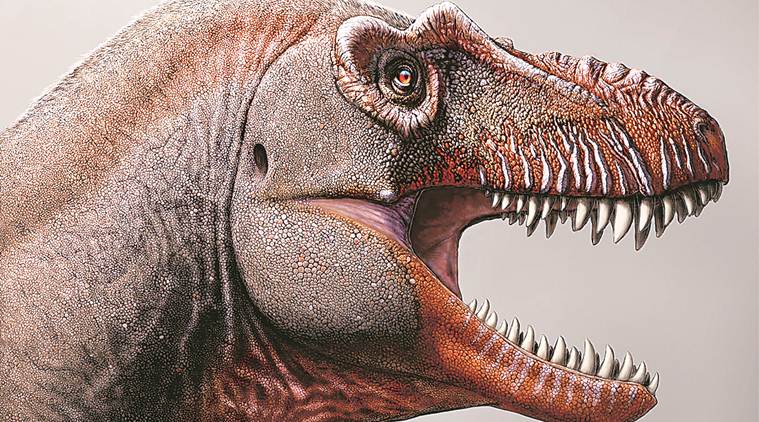
    Scientists have found that a dinosaur fossil, found in Alberta in Canada in 2010, belongs to a new species of tyrannosaur. They have named it Thanatotheristes, which means “reaper of death”.

    Thanatotheristes

    • Tyrannosaurs were one of the largest meat-eating dinosaurs to have ever lived, with very large and high skulls, and the best known among them is the Tyrannosaurus rex, celebrated in the Jurassic Park series.
    • The 79-million-year-old fossil that the researchers have found is the oldest tyrannosaur known from northern North America.
    • Thanatotheristes preyed on large plant-eating dinosaurs such as the horned xenoceratops and the dome-headed colepiochephale.
    • The research suggests that tyrannosaurs did not have one general body type; rather different tyrannosaur species evolved distinct body sizes, skull forms and other such physical features.
    • The fossil specimen is important to understand the Late Cretaceous period, which is the period when tyrannosaurs roamed the Earth.