💥Join UPSC 2027,2028 Mentorship (July Batch) + XFactor Notes & Microthemes PDF

GS Paper: GS1

  • Gopal Patha and Direct Action Day

    Why in the News?

    A recent movie depicted the 1946 “Great Calcutta Killing” — four days of communal riots on Direct Action Day (August 16, 1946), spotlighting Gopal Patha’s role in mobilising Hindu youth.

    About Direct Action Day:

    • Declaration: Called by the All-India Muslim League to press for Partition and creation of Pakistan.
    • Bengal Role: Muslim League’s H. S. Suhrawardy (then Bengal Premier) declared 16 August a public holiday.
    • Mass Rally: Nearly 1,00,000 gathered at the Maidan, Calcutta; addressed by Suhrawardy and Khwaja Nazimuddin.
    • Violence: Immediate communal clashes broke out, remembered as the Great Calcutta Killing.
    • Casualties: 5,000–10,000 killed; ~15,000 injured.
    • Spread: Violence lasted four days (16–19 August), army intervention required; later spread to Bombay, Noakhali, Bihar, Punjab.

    Who was Gopal Patha (Gopal Mukherjee)?

    • Background: Born 1916 in Bowbazar, Calcutta; nicknamed Patha (goat) since family ran a College Street mutton shop.
    • Gang Leader: Headed a street group of ~800 men; mobilized masses for defense during riots.
    • Approach: Declared aim was to retaliate against rioters but forbade harm to women, children, or ordinary people.
    • Links: Associated with revolutionary groups like Atma Unnati Samiti; influenced by Subhas Chandra Bose.
    [UPSC 2002] The last opportunity to avoid the partition of India was lost with the rejection of:

    Options: (a) Cripps Mission (b) Rajagopalachari Formula (c) Cabinet Mission* (d) Wavell Plan


  • African Union (AU) and the Mercator Map Debate

    Why in the News?

    The African Union (AU) has endorsed the Correct the Map campaign to replace the 16th-century Mercator projection with more accurate maps.

    African Union (AU) and the Mercator Map Debate

    About the African Union (AU):

    • Establishment: Formed in 2002, replacing the Organisation of African Unity (1963).
    • Membership: 55 African countries.
    • Headquarters: Addis Ababa, Ethiopia.
    • Vision: “An Integrated, Prosperous, and Peaceful Africa, driven by its own citizens.”
    • Agenda 2063: Blueprint for socio-economic growth and continental unity.
    • Main Organs: Assembly, Executive Council, AU Commission, Peace and Security Council.

    What is a Mercator Map?

    • Creation: Designed in 1569 by Gerardus Mercator.
    • Projection: Cylindrical map with straight longitude and latitude lines intersecting at 90°.
    • Purpose: Enabled sailors to plot straight-line courses for compass navigation.
    • Adoption: Became the standard map in schools, atlases, and wall charts by the 19th century.

    Issues with the Mercator Map:

    • Distortion: Enlarges high-latitude regions (Europe, Russia, North America) while shrinking Africa and South America.
    • Example: Greenland appears equal to Africa, though Africa is ~14 times larger.
    • Colonial Bias: Reinforced Western dominance narratives and downplayed Africa’s size and importance.
    • Impact: Supported marginalisation and exploitation during colonialism.
    • Alternatives: Gall-Peters (1970s) and Equal Earth (2018) projections show continents in correct proportion.
    • AU Stand: Advocates replacing Mercator maps to restore Africa’s rightful global image.
    [UPSC 2024] The longest border between any two countries in the world is between:

    Options: (a) Canada and the USA * (b) Chile and Argentina (c) China and India (d) Kazakhstan and Russian Federation


  • Young Bengal Movement and Henry Derozio 

    Why in the News?

    This newscard is an excerpt from the article originally published in The Hindu.

    Young Bengal Movement and Henry Derozio 

    Who was Henry Vivian Louis Derozio?

    • Birth–Death: Born 1809, died- 22 in 1831; Indo-Portuguese origin.
    • Identity: Radical thinker, poet, and educator in British India.
    • Recognition: Called the first national poet of modern India; pioneer of Anglo-Indian poetry.
    • Influences: Inspired by Enlightenment ideals and the French Revolution.
    • Career: Became lecturer at Hindu College, Calcutta in 1826 at just 17.
    • Role: Inspired students with rationalism, liberty, and free thought.
    • Writings: Poems (1827), The Fakeer of Jungheera (1828), and To India – My Native Land (first modern patriotic poem in English).
    • Themes: Expressed India’s decline with images of a caged eagle and a broken instrument; advocated freedom and abolition of slavery.
    • Dismissal: Removed from Hindu College in 1831 on charges of spreading atheism.

    The Young Bengal Movement: 

    • Formation: Radical group of his students, also called Derozians.
    • Association: Founded the Academic Association, debating social and political reform.
    • Ideals: Advocated rationalism, women’s rights, freedom of thought; opposed caste, superstition, idolatry.
    • Political Role: In 1843, with George Thompson, formed India’s first political partyBengal British India Society.
    • Notable Member: Radhanath Sikdar, mathematician who first calculated Mount Everest’s height and openly resisted colonial injustices.
    • Perception: Described by missionary Alexander Duff as a “new race of men”; historian Rosinka Chaudhuri called them India’s “first radicals.”
    • Legacy and Intellectual Impact:
      • Awakening: Though short-lived, the movement sparked Bengal’s intellectual revolution.
      • Seeds of Reform: Laid foundation for later reformist and nationalist currents.
      • Independence of Mind: Marked a sharp break from Macaulay’s vision of Anglicised Indians — Derozians were assertive and original.
    [UPSC 2021] Who among the following was associated as Secretary with Hindu Female School which later came to be known as Bethune Female School?

    Options: (a) Annie Besant (b) Debendranath Tagore (c) Ishwar Chandra Vidyasagar * (d) Sarojini Naidu


  • The path to ending global hunger runs through India

    UPSC Mains Relevance

    [UPSC 2017] Hunger and Poverty are the biggest challenges for good governance in India still today. Evaluate how far successive governments have progressed in dealing with these humongous problems. Suggest measures for improvement.

    Linkage: India’s recent success in reducing undernourishment by 30 million people and transforming its PDS shows definite progress in tackling hunger and poverty, aligning with welfare-driven governance. Yet, challenges of affordability, malnutrition, and nutrition security highlight that while gains are visible, deeper reforms in agrifood systems and social protection are still required.

    Mentor’s Comment

    The world is finally seeing a decline in hunger after years of setbacks. At the centre of this shift is India, whose food security programmes have reduced undernourishment at an unprecedented scale. For UPSC aspirants, this story reflects governance, technology, and welfare delivery working together.

    Introduction

    The State of Food Security and Nutrition in the World 2025 report shows undernourishment fell to 673 million people globally in 2024, down from 688 million in 2023. India has been decisive in this progress, reducing hunger for nearly 30 million people in just two years. The Public Distribution System (PDS) alone supports over 800 million beneficiaries with digital efficiency unmatched in scale. This progress stands in sharp contrast with the bleak COVID-era surge in hunger and makes India a global anchor in the journey towards SDG 2 – Zero Hunger.

    India’s Pathway to Ending Hunger:

    Transformation of the Public Distribution System (PDS)

    1. Digital shift: Aadhaar-based targeting, real-time tracking, and biometric authentication improved delivery.
    2. Portability: One Nation One Ration Card enabled migrants and vulnerable households to access entitlements anywhere.
    3. Rapid Scale of support: Over 800 million people received subsidised food grains during the pandemic.

    Shifting of Focus from Calories to Nutrition

    1. High Cost of Healthy Diets: Over 60% of Indians cannot afford nutrient-rich foods due to inflation, poor cold chains, and weak market linkages.
    2. Nutrition-Centric Schemes: PM POSHAN (2021) and ICDS are addressing dietary diversity and nutrition sensitivity.
    3. Dual Challenge: Even as hunger declines, malnutrition, obesity and micronutrient deficiencies are rising.

    Need for Agrifood System Structural Reforms

    1. Boosting Production of Nutrient-Rich Foods: Pulses, fruits, vegetables, and animal products must be scaled for affordability.
    2. Reducing Post-Harvest Losses: About 13% of food is lost between farm and market due to weak cold storage and logistics.
    3. Supporting Women-Led Enterprises and Farmer Producer Organization: Promoting climate-resilient crops enhances both nutrition and livelihoods.

    Digital governance drives agrifood transformation

    1. AgriStack & e-NAM: Enhance planning, digital logistics, and market access for farmers.
    2. Geospatial Tools: Enable better agricultural mapping and nutrition-sensitive targeting.
    3. Data-Driven Agriculture: Improves service delivery and strengthens supply-demand alignment.

    Why is India’s success globally significant?

    1. Leadership in Global South: India’s digital and governance innovations can be replicated in developing nations.
    2. Global SDGs: With only five years left for 2030 SDGs, India’s example shows that hunger reduction is possible with political will and smart investments.
    3. Symbol of Hope: FAO calls India’s progress not just a national achievement but a contribution to global food security.

    Conclusion

    India’s recent performance marks a historic pivot in the fight against hunger. The country has shown that scale, digital governance, and targeted welfare can turn crisis into opportunity. Yet, the journey forward must emphasise nutrition, resilience, and inclusivity not just calories. If sustained, India will not only feed itself but also light the path for global hunger eradication.

    Value Addition

    Reports & Indices

    • State of Food Security and Nutrition in the World 2025 (SOFI Report) – Global undernourishment fell from 688 million (2023) to 673 million (2024); India reduced undernourishment from 14.3% to 12% (30 million fewer hungry people).
    • FAO Food Loss Report – Around 13% of food is lost between farm and market in India, affecting affordability.

    SDG Linkage

    • SDG 2 (Zero Hunger) – Ending hunger by 2030.
    • SDG 3 (Good Health & Wellbeing) – Tackling malnutrition, obesity, micronutrient deficiencies.
    • SDG 12 (Responsible Consumption & Production) – Reducing food loss and wastage.

    Keywords with UPSC Relevance

    • Calorie-to-Nutrition Shift – Moving beyond staple food security to nutrient-rich diets.
    • Hunger Paradox – Coexistence of undernourishment and obesity/micronutrient deficiency.

    Examples for Enrichment in Answers

    • COVID-19 Response – India’s rapid PDS scale-up fed 800+ million people, one of the largest welfare interventions globally.
    • Digital Governance – ONORC portability cited as a global best practice by the World Bank and FAO.
    • Women-led FPOs – Strengthening climate-resilient crops while improving local nutrition outcomes.

    Microtheme Mapping:

    • GS Paper I – Hunger and poverty, demographic vulnerabilities.
    • GS Paper II – Governance, digital welfare, social justice, schemes.
    • GS Paper III – Agrifood systems, logistics, cold chains, technology in agriculture.
  • In news: Gugga Naumi Festival

    Why in the News?

    The Gugga Naumi festival was widely celebrated across northern states of India on 17th August.

    About Gugga Naumi Festival:

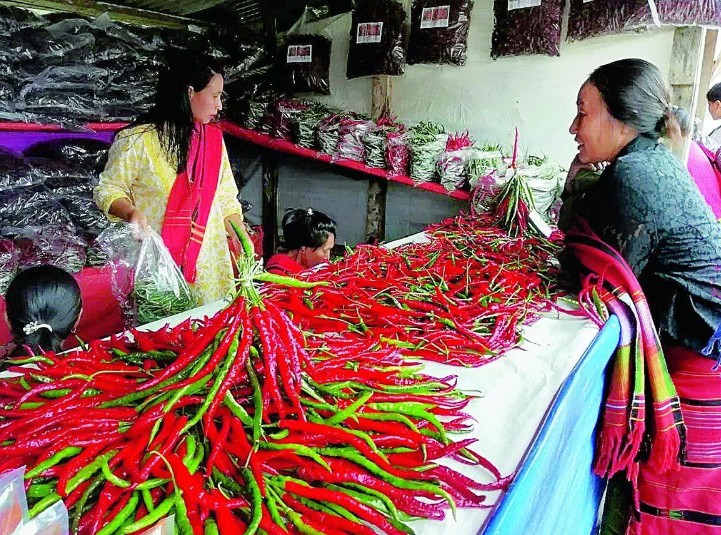
    • Festival: Folk religious celebration in Rajasthan, Haryana, Punjab, Jammu & Kashmir, Uttar Pradesh, and northern states.
    • Timing: Observed on the ninth day of Krishna Paksha in Bhadrapad month, usually after Janmashtami.
    • Deity: Dedicated to Gugga (Gugga Pir / Gugga Zahir Pir / Guaaji), a Chauhan Rajput prince believed to control snakes.
    • Tradition: Reflects syncretic worship by Hindus and Muslims, showcasing folk religiosity beyond formal religion.

    Key Features:

    • Duration: Begins on Rakhi and lasts nine days, with pilgrimages to Gugga Medi village in Hanumangarh, Rajasthan.
    • Rituals: Garudas (snake charmers and healers) carry Gugga Pir’s Chahad (standard).
    • Devotion: Pir ke Sole (songs) sung, fairs organised at shrines (Marhis).
    • Depiction: Gugga shown riding a blue horse, with blue and yellow flags.
    • Belief: Worshipped by mothers for children’s health, and by barren women for fertility blessings.
    [UPSC 2018] Consider the following pairs: Tradition State

    1. Chapchar Kut festival — Mizoram

    2. Khongjom Parba ballad — Manipur

    3. Thong-To dance — Sikkim

    Which of the pairs given above is/are correct?

    (a) 1 only (b) 1 and 2* (c) 3 only (d) 2 and 3


  • In news: British Conquest of Sindh

    Why in the News?

    The British conquest of Sindh in the 1840s was a key step in colonial expansion, reminding us that regions like Sindh, Punjab, and Bengal came under British rule long before the 1947 partition of India and Pakistan.

    British Conquest of Sindh:

    • Sindh was annexed by the British in 1843 after the battles of Miani and Dubbo.
    • The resistance was led by Hosh Muhammad Sheedi, a general of the Talpur army and member of the African-origin Siddi community.
    • His defiance symbolised the first major armed resistance to British expansion in northwest India.

    Political Background in Sindh:

    • Kalhora Dynasty (1701–1779): Founded by Mian Yar Muhammad Kalhoro, recognised by Mughals; ruled northern and central Sindh. Prosperous period but weakened by internal disputes.
    • Talpur Dynasty (1779–1843): Baloch Talpurs overthrew Kalhoras; consolidated Sindh under clan rule at Hyderabad and Khairpur.
    • Geopolitical Context: Sindh lay at the crossroads of British–French–Russian rivalry (The Great Game). Britain feared Russian advances through Iran and Afghanistan.
    • British Entry: East India Company forced treaties on Talpurs; captured Karachi (1839) after bombarding Manora fort.

    British Advance and the Fall of Sindh:

    • Battle of Miani (17 Feb 1843): British under Sir Charles Napier defeated Mir Nasir Khan Talpur near Hyderabad.
    • Battle of Dubbo (24 Mar 1843): Hosh Muhammad Sheedi allied with Mir Sher Muhammad Talpur of Mirpur Khas. Sheedi raised the war cry “Marvesoon par Sindh na desoon” (I may die but will not give up Sindh). He was killed in action.
    • British Annexation: After Dubbo, Sindh was annexed into the Bombay Presidency. Talpur rule ended.
    • Aftermath: Within a decade, Punjab too was annexed (1849), bringing all of northwest India under British rule.

    Legacy of Hosh Muhammad Sheedi:

    • Born into the household of Talpur rulers; of African-Siddi descent.
    • Valour acknowledged by both Indian and British chroniclers.
    • Became a folk hero of Sindh, remembered by Hindus and Muslims alike.
    • His legacy is central to the cultural memory of Sindh and highlights the role of the Siddi community in resisting colonialism.
    [UPSC 2007] The ruler of which one of the following States was removed from power by the British on the pretext of misgovernance?

    Options: (a) Awadh* (b) Jhansi (c) French (d) Satara


  • Red Fort as the Venue for Independence Day

    Why in the News?

    On August 15, 2025, Prime Minister delivered the longest Independence Day speech (103 minutes) from the Red Fort, continuing a tradition started by Jawaharlal Nehru in 1947.

    The fort’s choice as the venue reflects its historic role as Delhi’s seat of power and symbol of sovereignty.

    About the Red Fort:

    • Construction: Built in 1648 by Mughal Emperor Shah Jahan as the palace fort of Shahjahanabad, his new capital.
    • Material: Enclosed by massive red sandstone walls with royal pavilions and apartments.
    • Water Feature: Contained the Nahr-i-Behisht (“Stream of Paradise”), a continuous water channel.
    • Architectural Value: Prime example of Mughal architecture, blending Islamic traditions with Indian craftsmanship.
    • Recognition: Declared a UNESCO World Heritage Site in 2007.

    Historical Significance of Delhi and Red Fort:

    • Delhi’s Role: Seat of power for nearly a thousand years, regarded as “capital of all Hindustan” by Babur.
    • Shahjahanabad: Inaugurated in 1648 with the Red Fort at its centre.
    • Symbol of Sovereignty: Even after Mughal decline, Delhi remained central; East India Company minted coins in the emperor’s name.

    1857 Revolt and British Authority:

    • Revolt Centre: Bahadur Shah Zafar was declared leader by sepoys in Delhi.
    • Aftermath: Fall of Delhi ended Mughal rule; Zafar was exiled.
    • Fort Damage: British converted Red Fort into a military garrison, destroying ~80% of interiors.
    • Imperial Authority: Delhi Durbars (1877, 1903, 1911) asserted British control before capital shifted from Calcutta to Delhi in 1911.

    Significance of Red Fort for Independence Day:

    • INA Trials: Held in Red Fort in 1946, igniting nationalist fervour.
    • 1947 Ceremony: Jawaharlal Nehru hoisted the national flag on 15 August 1947 and gave the first Independence Day address.
    • Tradition: Since then, every Prime Minister hoists the flag and addresses the nation from its ramparts.
    • Symbolism: Site once stamped with colonial dominance, now reclaimed as a symbol of India’s sovereignty.
    [UPSC 2021] What was the exact constitutional status of India on 26th January, 1950?

    Options: (a) A democratic Republic (b) A Sovereign Democratic Republic* (c) A Sovereign Secular Democratic Republic (d) A Sovereign Socialist Secular Democratic Republic


  • 1950 Assam Earthquake and Future Seismic Risks in the Himalayas

    Why in the News?

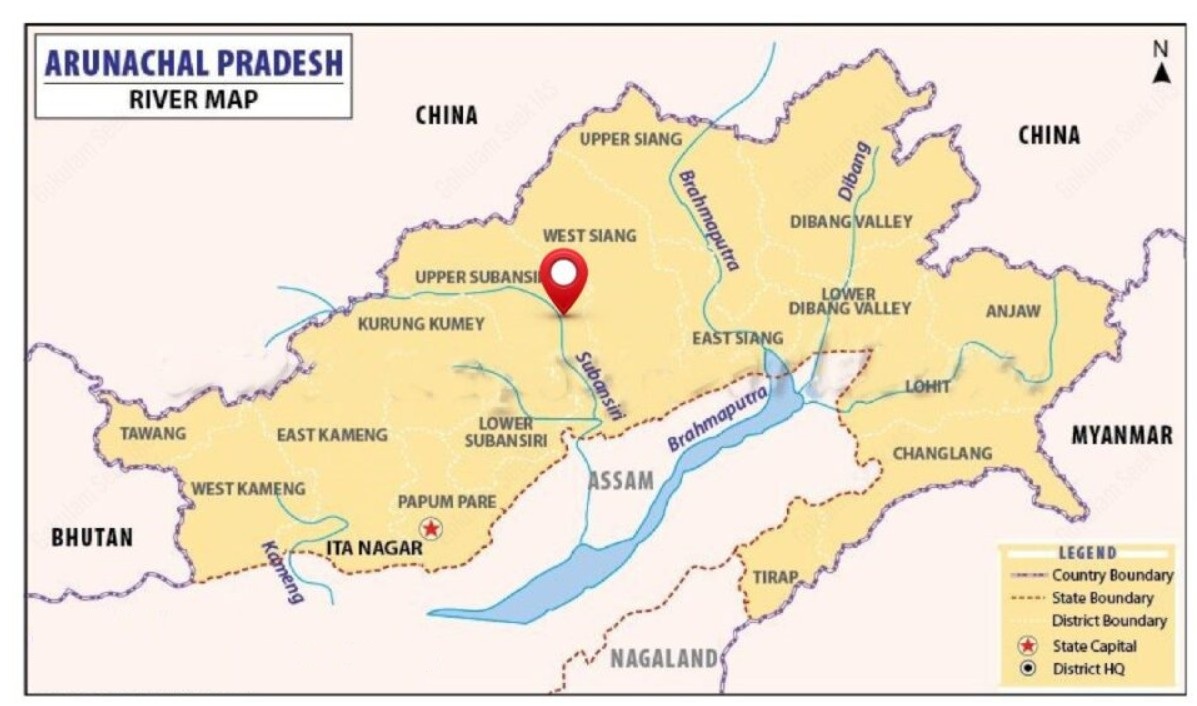
    75 years ago on August 15, 1950, a magnitude 8.6 earthquake — the strongest recorded on land — struck Northeast India and surrounding regions.

    1950 Assam Earthquake and Future Seismic Risks in the Himalayas

    About the Earthquake:

    • Magnitude: 8.6, the strongest recorded earthquake on land.
    • Impact Area: Tremors lasted 4–8 minutes, felt over 3 million sq. km in India, Myanmar, Bangladesh, Tibet, and South China.
    • Casualties: Over 1,500 deaths in India and 4,000+ in Tibet; heavy livestock losses and infrastructure destruction.
    • Secondary Disasters: Triggered landslides blocking rivers, followed by devastating flash floods.

    Geological and Tectonic Setting:

    • Epicentre: 40 km west of Rima (Zayu), near India–Tibet border in the Mishmi Hills.
    • Tectonic Context: Located on Indian–Eurasian Plate boundary within Eastern Himalayan Syntaxis (EHS), influenced by the Sunda Plate.
    • Fault Type: Strike-slip motion with thrust faulting — atypical for Himalayan quakes.
    • Plate Convergence: Eastern Himalayas converge at 10–38 mm/year vs. ~20 mm/year elsewhere.
    • Aftershocks: Indicated activation of multiple faults from the Syntaxial bend to Himalayan thrust faults in Arunachal Pradesh.

    Lessons and Future Risks:

    • Magnitude Potential: Confirms Himalayan segments can produce ≥8.6 magnitude events.
    • Central Himalayan Risk: Identified as likely site for similar future quake.
    • Vulnerability Today: Increased due to urbanisation and large infrastructure in seismic zones.
    • Infrastructure Safety: Necessitates strict norms for dams and high-risk projects in Eastern Himalayas.
    • Preparedness: Highlights need for seismic hazard mapping and disaster readiness.
    [UPSC 2024] Consider the following statements:

    1. In a seismograph, P waves are recorded earlier than S waves.

    2. In P waves, the individual particles vibrate to and fro in the direction of waves propogation whereas in S waves, the particles vibrate up and down at right angles to the direction of wave propagation. Which of the statements given above is/are correct?

    Options: (a) 1 only (b) 2 only (c) Both 1 and 2* (d) Neither 1 nor 2


  • Dhiri Bull Fighting Festival of Goa

    Why in the News?

    Many legislators of the Goa Assembly across party lines demanded the legalisation of Dhiri Bull Fighting in Goa.

    About Dhiri Bull Fighting:

    • Overview: Goan sport where two bulls lock horns in paddy fields or grounds.
    • Cultural Link: Associated with post-harvest feasts and church celebrations.
    • Nature of Contest: Bulls push until one retreats; no matadors or killing involved.
    • Event: Bulls given unique names, treated like local icons.
    • Betting: High-stakes wagers involve locals and Goan diaspora.

    Recent Controversy:

    • Legal Ban: Banned in 1997 under Prevention of Cruelty to Animals Act after a fatality.
    • Judicial Position: Supreme Court upheld the ban; events continue secretly.
    • Political Push: Lawmakers (2024–25) seek legalisation for cultural/tourism value.
    • Proposed Model: Advocates want regulated events, citing Jallikattu’s example.
  • In news: Dardanelles Strait

    Why in the News?

    The Dardanelles Strait in northwestern Turkey has been temporarily closed to maritime traffic due to forest fires near Canakkale, prompting evacuations and firefighting operations.

    About Dardanelles Strait:

    • Location: Northwestern Turkey; separates Gallipoli Peninsula (Europe) from Troad/Biga Peninsula (Asia).
    • Connection: Links Aegean Sea → Sea of Marmara → Bosporus → Black Sea.
    • Dimensions: Length 61 km, width 1.2–6.5 km, average depth 55 m, max depth 103 m.
    • Historical Name: Hellespont, named after mythical princess Helle; current name from ancient city of Dardanus.
    • Currents: Surface current flows from Sea of Marmara to Aegean; saline undercurrent in reverse.
    • Ports: Gallipoli, Eceabat, Çanakkale.

    Strategic & Economic Importance:

    • Part of Turkish Straits system with Bosporus; only maritime link between Black Sea and Mediterranean.
    • Critical for Black Sea nations’ trade (Russia, Ukraine, Bulgaria, etc.).
    • Major route for grain, oil, energy shipments from Black Sea region to global markets.
    • Governed by Montreux Convention (1936) for warship passage.
    • Vital for NATO naval strategy and maritime security.
    [UPSC 2008] Through which one of the following Straits does a tunnel connect the United Kingdom and France?

    Options: (a) Davis Strait (b) Denmark Strait (c) Strait of Dover* (d) Strait of Gibraltar