đŸ’„Join UPSC 2027,2028 Mentorship (July Batch) + XFactor Notes & Microthemes PDF

GS Paper: GS1

  • Piprahwa Relics of Buddha

    Why in the News?

    The Union Culture Ministry has successfully retrieved the sacred ‘Piprahwa’ Buddhist relics, which were set to be auctioned in Hong Kong.

    Piprahwa Relics of Buddha

    About the Piprahwa Relics:

    • Discovery: Unearthed in 1898 by William Claxton Peppe, a British engineer, at Piprahwa (Siddharthnagar, Uttar Pradesh), near the Nepal border.

    • Historical Significance: Identified as ancient Kapilavastu, capital of the Shakya republic, where Prince Siddhartha (Buddha) lived before renunciation.

    • Findings at the Site: A buried stupa yielded a large stone coffer containing:

      • Bone fragments believed to be Buddha’s relics
      • Caskets made of soapstone and crystal
      • A sandstone coffer
      • Over 1,800 ornaments: pearls, rubies, sapphires, gold sheets
    • Legal Custody:

      • The British Crown claimed the relics under the Indian Treasure Trove Act, 1878.
      • Most artifacts were transferred to the Indian Museum, Kolkata.

    Stupas with Buddha’s Relics:

    • After the Buddha’s death (Mahaparinirvana), his cremated relics were divided among 8 kingdoms and a Brahmin named Drona, who coordinated their distribution.
    • Each recipient built a Stupa to enshrine their share of the relics, creating important pilgrimage sites and early centers of Buddhist worship.
    • The 9 stupas were located in Rajagriha, Vaishali, Kapilavastu, Allakappa, Ramagrama, Vethadipa, Pava, Kushinagar, and Pippalivana.
    • Emperor Ashoka (3rd century BCE) redistributed the relics from these stupas into thousands of new stupas across his empire.
    • The stupa at Ramagrama is unique because it is believed to remain untouched and still holds the original relics.
    • A typical early Buddhist stupa included a hemispherical mound (anda), a square railing (harmika), a central pillar (yashti) with umbrellas (chatra), and a path for circumambulation (pradakshinapatha).
    [UPSC 2023] With reference to ancient India, consider the following statements:

    1. The concept of Stupa is Buddhist in origin.

    2. Stupa was generally a repository of relics.

    3. Stupa was a votive and commemorative structure in Buddhist tradition. How many of the statements given above are correct?

    Options: (a) Only one (b) Only two* (c) All three (d) None


  • Arrest and unrest: Communal agenda is behind the arrest of nuns for human trafficking

    Why in the News?

    Recently the arrest of two Catholic nuns in Chhattisgarh on charges of human trafficking and forced religious conversion has sparked widespread political and religious backlash.

    Why are anti-conversion laws controversial in tribal regions?

    • Misuse Against Voluntary Conversions: These laws, intended to curb conversions through force or fraud, are often misused to harass tribal Christians and missionaries involved in voluntary and lawful religious activities. Eg: In Chhattisgarh, two Catholic nuns were arrested for alleged forced conversion, despite the tribal girls and their families confirming it was voluntary.
    • Targeting of Minority Rights: Anti-conversion laws disproportionately affect Christian and Muslim minorities, leading to surveillance, fear, and restricted religious freedom, especially among tribal converts. Eg: Several tribal states like Madhya Pradesh, Jharkhand, and Odisha have used these laws to criminalise conversions, even when done without coercion.
    • Threat of Delisting ST Converts: There is a growing debate on removing Scheduled Tribe status from tribals who convert to Christianity, threatening their constitutional safeguards and entitlements. Eg: In Chhattisgarh, such debates have intensified, questioning the identity and rights of Christian Adivasis.

    What is the Sarna Religious Code?

    The Sarna religious code is a demand by tribal (Adivasi) communities in India to recognize Sarnaism as a distinct religion in official government records, especially in the Census.

    Key Features:

    • Nature Worship Tradition: Sarna followers worship nature — like sacred groves (called Sarnas), hills, rivers, and the Earth. They follow traditional Adivasi customs, not Hindu, Christian, or Muslim practices.
    • Cultural Assertion and Legal Recognition: Recognizing the Sarna code would safeguard tribal culture, language, and identity, and protect their constitutional and land rights from religious assimilation.

    What constitutional rights to religious freedom are being undermined?

    • Right to Freedom of Religion (Article 25): Citizens have the right to freely profess, practice, and propagate any religion. This is undermined when voluntary conversions are falsely labelled as forced or illegal, especially among tribals and minorities.
    • Right to Personal Liberty (Article 21): The right to make autonomous choices—including choosing one’s religion—is a part of personal liberty. Anti-conversion laws infringe on this by criminalizing voluntary decisions, often without evidence of coercion.
    • Equality Before Law (Article 14): These laws are selectively enforced against Christians and Muslims, leading to discriminatory treatment. This violates the principle of equality and non-discrimination, a core part of India’s secular constitutional framework.

    What are the actual conversions happened in India?

    • Mass Dalit Conversions to Buddhism (1956 and after): Led by Dr. B.R. Ambedkar, over 5 lakh Dalits converted to Buddhism in 1956 to escape caste-based oppression and reclaim dignity. Eg: Ambedkar’s historic mass conversion in Nagpur triggered a broader movement of religious shift rooted in social reform.
    • Christian Conversions in Tribal Regions: In states like Jharkhand, Chhattisgarh, and Odisha, many tribal communities have converted to Christianity, often due to access to education, healthcare, and social support from missionaries. Eg: The Kandhamal district in Odisha has seen a significant rise in Christian population over decades, leading to communal tensions.
    • ‘Ghar Wapsi’ or Reconversion to Hinduism: Organised by Hindu groups like the Vishwa Hindu Parishad (VHP), ‘Ghar Wapsi’ aims to reconvert people who earlier embraced other faiths back to Hinduism. Eg: In Uttar Pradesh (2014), VHP claimed hundreds of Muslims and Christians were brought back to Hinduism through Ghar Wapsi drives, raising ethical and legal concerns.

    Do Conversions Impact Indian Society Negatively?

    • Social Polarisation and Communal Tensions: Conversions whether into or out of a religion often become flashpoints for communal conflict, especially when framed as threats to majority identity. This can disrupt social harmony and lead to violence, as seen in Kandhamal (Odisha, 2008) and other conflict-prone areas.
    • Political Exploitation and Fear-Mongering: Conversion is frequently politicised, used to mobilise vote banks or target minority communities, which undermines democratic values and diverts focus from genuine socio-economic development.
    • Distrust and Fragmentation in Local Communities: Conversions may sometimes lead to social alienation or loss of community ties, especially in tightly-knit rural or tribal areas, where religious identity is deeply linked with cultural belonging.

    Way forward: 

    • Strengthen Constitutional Safeguards: Ensure that anti-conversion laws align with Articles 25-28 of the Constitution by protecting voluntary religious choicewhile penalizing only coercive or fraudulent practices.
    • Promote Interfaith Dialogue and Tribal Autonomy: Encourage community-level engagement and interfaith dialogue, and recognize tribal cultural rights including support for demands like the Sarna religious code to prevent polarization and protect indigenous identities.

    Mains PYQ:

    [UPSC 2024] Intercaste marriages between castes which have socio-economic parity have increased, to some extent, but this is less true of interreligious marriages. Discuss.

    Linkage: The arrest of the nuns and the subsequent clarification by the girls’ kin that there was “no forceful conversion” directly touches upon the sensitive issue of interreligious interactions and alleged conversions, which anti-conversion laws are often used to criminalize, especially in the context of interfaith marriages.

  • Tsunami Waves triggered by quakes in Kamchatka Peninsula

    Why in the News?

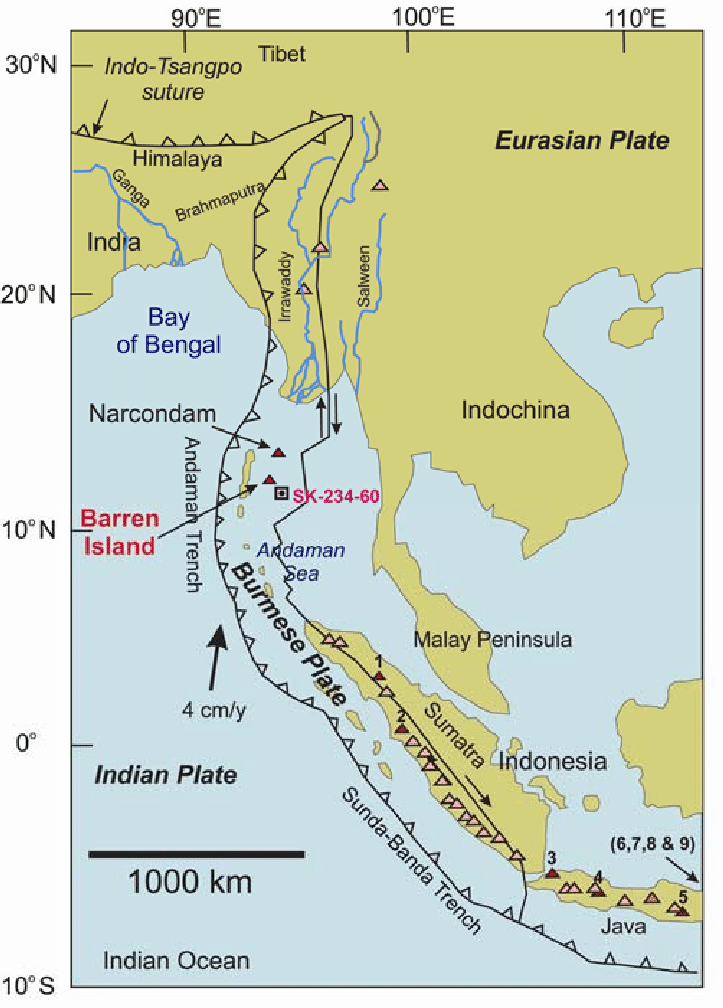
    An 8.8 magnitude earthquake hit off Russia’s Kamchatka Peninsula, triggering 16-foot tsunamis that reached Hawaii and northern California in the US.

    About Earthquakes:

    • Overview: Sudden ground shaking caused by release of stored energy in Earth’s crust due to tectonic stress.
    • Cause: Occurs when tectonic plates slip at fault lines where stress had built up due to friction.
    • Seismic Waves: Energy travels as:
      • Primary Waves (P-waves): Fastest, compressional.
      • Secondary Waves (S-waves): Slower, shear motion.
    • Key Terms:
      • Focus (Hypocenter): Underground origin point.
      • Epicenter: Surface point directly above the focus.
    • Measurement:
      • Magnitude: Energy released (Richter Scale, logarithmic).
      • Intensity: Observed ground shaking (varies by location).
      • Seismograph: Records seismic wave activity.

    How Earthquakes Trigger Tsunamis?

    • Underwater Epicenter: Must occur beneath oceans to displace water.
    • Shallow Depth: Quakes at <70 km transfer energy more efficiently to water surface.
    • Reverse Faulting: One tectonic plate pushes over another, vertically shifting the seafloor.
    • Rapid Displacement: Sudden seafloor uplift/downthrust generates massive water waves.
    • High Magnitude: Quakes >7.0 (especially >8.0) likely to trigger tsunamis.

    About the Kamchatka Region:

    • Overview: Russian Far East; borders the North Pacific Ocean.
    • Tectonic Zone: Sits on the Kuril-Kamchatka Trench—Pacific Plate subducting under Okhotsk Plate at ~86 mm/year.
    • Seismic Hotspot: Historical major quakes in 1841, 1923, 1952, 2006, and 2020.
    • Ring of Fire: Part of the 40,000 km Pacific Ring of Fire , known for quakes and volcanoes.
    • 2025 Earthquake:
      • Depth:3 km (shallow)
      • Impact: Triggered tsunami waves up to 16 ft—one of the strongest earthquakes since 1900.
    [UPSC 2004] Consider the following geological phenomena:

    1. Development of a fault 2. Movement along a fault 3. Impact produced by a volcanic eruption 4. Folding of rocks

    Which of the above cause earthquakes?

    Options: (a) 1, 2 and 3 (b) 2 and 4 (c) 1, 3 and 4 (d) 1, 2, 3 and 4*


  • Cuvette Centrale: World’s Largest Tropical Peatland Complex

    Why in the News?

    The Democratic Republic of the Congo (DRC) has launched oil exploration over 124 million hectares of the Cuvette Centrale peatlands raising global ecological risk.

    About the Cuvette Centrale Peatland Complex:

    • Location: Central Congo Basin, spanning the Democratic Republic of the Congo and the Republic of Congo.
    • Size: Covers approximately 145,000–167,600 sq. km—larger than England and about 10% of the Congo Basin.
    • Peat Coverage: Around 40% of the region is underlain by peat—formed over 10,000 years due to flat terrain, rainforest climate, and slow-moving water.
    • Landscape: Features a mosaic of seasonal lakes, floating prairies, swamp forests, rivers, and grasslands.
    • Global Status: The world’s largest near-contiguous tropical peatland complex.

    Ecological Significance:

    • Carbon Storage: Holds about 30–30.6 gigatonnes of carbon—
      • Equal to 3 years of global fossil fuel emissions.
      • Nearly 15 years of U.S. emissions.
      • About 28% of global tropical peat carbon stock.
    • Climate Impact: Acts as a major carbon sink, critical for regulating global temperatures and mitigating climate change.
    • Biodiversity: Habitat for forest elephants, lowland gorillas, and rare plant species.
    • Local Importance: Sustains indigenous livelihoods and maintains regional water cycles.
    • Conservation Status: Recognized as a transnational Ramsar wetland site, highlighting its international ecological value.
    [UPSC 2024] One of the following regions has the world’s largest tropical peatland, which holds about three years’ worth of global carbon emissions from fossil fuels, and the possible destruction of which can exert a detrimental effect on the global climate. Which one of the following denotes that region?

    Options: (a) Amazon Basin (b) Congo Basin* (c) Kikori basin (d) Rio De La Plata Basin


  • National Population Register (NPR)

    Why in the News?

    The Government of India recently clarified in the Lok Sabha that no final decision has been taken regarding the updation of the National Population Register (NPR) during the upcoming Population Census 2027.

    What is the National Population Register (NPR)?

    • Overview: NPR is a register of “usual residents” in India—individuals who have lived in an area for 6 months or intend to stay for the next 6 months.
    • Conducted by: Office of the Registrar General of India (RGI), Ministry of Home Affairs.
    • Legal Basis: Prepared under the Citizenship Act, 1955 and Citizenship Rules, 2003.
    • Mandatory Nature: Registration in NPR is compulsory for all usual residents.
    • Exclusion: Assam is excluded as it has completed the National Register of Citizens (NRC) process.
    • Historical Background:
      • First Created: In 2010 during the House Listing phase of Census 2011.
      • Updated: Again in 2015–16 via door-to-door survey.
      • Database Size: Contains data of around 119 crore residents.
      • Aadhaar Link: Biometric data collection is linked to Aadhaar; however, ration card data collection was dropped in the 2020 plan.
      • Current Status: NPR update plans (2020) are on hold. NPR’s priority has reduced due to Aadhaar’s expanded utility in benefit delivery.
    • Scope and Data Collected:
      • Coverage Levels: Conducted at local, sub-district, district, state, and national levels.
      • Demographic Data: Includes name, age, gender, relationship, marital status, etc.
      • Biometric Data: Sourced via Aadhaar enrolment—fingerprints, iris scan, and photo.

    NPR vs National Register of Citizens (NRC):

    Feature National Population Register (NPR) National Register of Citizens (NRC)
    Purpose Record of all usual residents Register of Indian citizens
    Coverage Includes citizens and non-citizens Only Indian citizens
    Legal Basis Citizenship Act, 1955 & Rules (2003) Citizenship Rules (2003)
    Primary Use Welfare schemes, demographic data Citizenship verification
    Mandatory? Yes Not uniformly across India


    [UPSC 2009] Consider the following statements:

    1. Between Census 1951 and Census 2001, the density of the population of India has increased more than three times.

    2. Between Census 1951 and Census 2001, the annual growth rate (exponential) of the population of India has doubled.

    Which of the statements given above is/are correct?

    Options: (a) 1 only (b) 2 only (c) Both 1 and 2 (d) Neither 1 nor 2*


  • Lessons from past The Chola legacy includes good governance, not just grand temples

    Why in the News?

    Prime Minister Narendra Modi’s visit to Tamil Nadu during the Aadi Thiruvathirai festival at Gangaikonda Cholapuram drew attention due to its subtle political messaging and focus on the legacy of the Chola dynasty, especially Rajendra Chola I.

    How can the Chola administration guide modern local governance?

    • Land and Revenue Management: They conducted detailed land surveys and classified land for fair taxation. Eg: Modern use of digital land records and GIS mapping can improve urban planning and property tax collection.
    • Sustainable Infrastructure: Built durable public works with advanced engineering. Eg: The Brihadisvara Temple shows disaster-resilient design, relevant for today’s urban infrastructure.
    • Grassroots Democratic Traditions: The Chola Sabhas and Ur assemblies practiced local self-governance, aligning with the 73rd and 74th Constitutional Amendments on decentralisation.
    • Efficient Local Administration: Chola-era institutions handled tax collection, infrastructure upkeep, and dispute resolution, offering a model for accountable and participatory governance today.

    Why is Chola water management relevant today?

    • Sustainable Water Use: The Cholas built tanks, canals, and reservoirs for rainwater harvesting and year-round irrigation. Eg: Tamil Nadu can adopt tank rehabilitation for climate-resilient agriculture.
    • Integrated River Management: They managed the Cauvery delta through coordinated water channel planning. Eg: Programs like Namami Gange can apply holistic watershed development inspired by Chola methods.
    • Community-led Water Governance: Local communities maintained water systems, ensuring efficiency and accountability. Eg: Panchayati Raj Institutions can empower village water user associations for decentralised water management.

    What can temple architecture teach about seismic safety?

    • Broad Base & Tapering Design: Chola temples had a wide foundation and pyramid-like structure to distribute weight and resist earthquakes. Eg: Brihadisvara Temple has survived centuries of seismic activity.
    • Interlocking Stone Technique: Used granite blocks without mortar, allowing flexible movement during tremors. Eg: Airavatesvara Temple stones fit precisely, boosting durability.
    • Seismic-Sensitive Construction: Built with awareness of local geology and fault lines for quake resilience. Eg: Southern temples remain structurally stable despite past earthquakes.

    How does invoking the Chola legacy shape modern politics?

    • Cultural Nationalism & Historical Pride: Celebrating the Chola dynasty boosts national pride and showcases India’s ancient global influence. Eg: Leaders highlight Chola maritime trade and temple architecture to project a strong civilisational legacy.
    • Regional Outreach & Political Messaging: Invoking Chola heritage appeals to Tamil identity, aiding political connect with southern states. Eg: PM’s visit to Gangaikonda Cholapuram during Aadi Thiruvathirai signaled a move to gain regional goodwill.

    Conclusion: The legacy of the Chola dynasty offers enduring lessons for contemporary India across governance, infrastructure, water management, architecture, and politics. Their grassroots democratic institutions, efficient local administration, and innovative land and water management practices provide a valuable blueprint for strengthening decentralised governance, promoting sustainable development, and enhancing climate resilience.

    Mains PYQ:

    [UPSC 2022] Discuss the main contributions of Gupta period and Chola period to Indian heritage and culture.

    Linkage: This question is directly related to your query as it broadly asks about the “main contributions” of the Chola period to “Indian heritage and culture.” This scope allows for a comprehensive discussion that goes beyond just art and architecture (grand temples).  It provides an opportunity to elaborate on the administrative acumen of the Cholas, their water management systems, tax and land revenue collection, and democratic processes, which are highlighted in the sources as significant “mundane facets…of modern relevance” and key aspects of their legacy.

  • Divya Deshmukh becomes new Chess World Champion

    Why in the News?

    Divya Deshmukh made history by becoming India’s first Women’s World Cup Champion and only the fourth Indian woman Grandmaster, defeating Koneru Humpy in the final at Batumi, Georgia.

    Divya Deshmukh becomes new Chess World Champion

    Major Achievements of Divya Deshmukh:

    • 2025: Won the FIDE Women’s World Cup, defeating Koneru Humpy. Became India’s 4th woman Grandmaster.
    • 2024: U-20 Girls’ World Champion
    • 2023: Asian Women’s Champion
    • 2022: Indian Women’s National Champion
    • Olympiad: Key contributor to India’s gold in 2025 Chess Olympiad (Budapest).
    • 2013: Became India’s youngest Woman FIDE Master (WFM) at age 7.

    About the FIDE World Chess Championship System:

    • FIDE (FĂ©dĂ©ration Internationale des Échecs): Global chess body founded in 1924; headquartered in Switzerland.
    • World Championship Format: Played over 14 classical games. A player must score 7.5 points to win.
    • Tiebreaker: If the match ends 7–7, rapid and blitz games are used.
    • Qualification Path:
      • Zonal and Continental Championships
      • FIDE World Cup (knockout)
      • Candidates Tournament (top player faces reigning champion)
    • Special Championships:
      • Women’s World Championship
      • Junior and Youth Championships
      • World Rapid & Blitz Championships

    Key FIDE Events and Titles:

    • FIDE World Cup: Knockout format; major path to the Candidates.
    • FIDE Women’s World Cup: Equivalent format for top female players.
    • Title Hierarchy:
      • Grandmaster (GM) – highest title
      • International Master (IM)
      • FIDE Master (FM)
      • Candidate Master (CM)
      • Women’s Titles: Woman Grandmaster (WGM), Woman International Master (WIM), etc.
    [UPSC 2024] Consider the following statements:

    I. In the finals of the 45th Chess Olympiad held in 2024, Gukesh Dommaraju became the world’s youngest winner after defeating the Russian player Ian Nepomniachtchi.

    II. Abhimanyu Mishra, an American chess player, holds the record of becoming world’s youngest ever Grandmaster.

    Which of the statements given above is/are correct?

    Options: (a) I only (b) II only * (c) Both I and II (d) Neither I nor II


  • State of Food and Nutrition in the World (SOFI) 2025, Report

    Why in the News?

    The 2025 State of Food Security and Nutrition in the World (SOFI) report highlights alarming levels of child malnutrition and anaemia among women in India.

    About the SOFI Report:

    • Full Name: State of Food Security and Nutrition in the World
    • Published by: Food and Agriculture Organization (FAO), the International Fund for Agricultural Development (IFAD), the United Nations Children’s Fund (UNICEF), the World Food Programme (WFP), and the World Health Organization (WHO).
    • Started in: 1999
    • Purpose: Tracks global hunger, food insecurity, and nutrition. Monitors SDG-2 (Zero Hunger).

    Global Highlights (2025):

    • Hunger Rate: Dropped from 8.5% (2023) to 8.2% (2024)
    • Undernourished People: 735 million globally
    • Double Burden: Undernutrition and obesity rising simultaneously
    • Healthy Diets: Cost rising due to inflation and climate impacts

    India-Specific Findings:

    • Wasting (Under-5): 18.7% – highest globally (21+ million affected)
    • Stunting (Under-5): 37.4 million children
    • Overweight Children: 4.2 million (up from 2.7 mn in 2012)
    • Anaemia in Women (15–49): 53.7% (203 million affected)
    • Undernourished Population: 172 million (12% of population)
    • Unaffordable Healthy Diet: 42.9% can’t afford; cost rose from $2.77 (2017) to $4.07 (2024)
    • Adult Obesity: Doubled in a decade – now 71.4 million
    [UPSC 2016] Which of the following is/are the indicator/ indicators used by IFPRI to compute the Global Hunger Index Report?

    1. Undernourishment             2. Child stunting             3. Child mortality

    Select the correct answer using the code given below.

    Options (a) 1 only (b) 2 and 3 only (c) 1, 2 and 3* (d) 1 and 3 only


  • Not the way Criminalising Adolescent Sex will undermine the aim of the POCSO Act

    Why in the News?

    Recently, the Protection of Children from Sexual Offences (POCSO) Act, 2012 is under scrutiny as the Supreme Court examines whether consensual sex between adolescents aged 16–18 should be decriminalised.

    What are the issues related to criminalising adolescent consent as per SC?

    • Misuse of Law Against Teens: Criminalising consensual sex between 16–18-year-olds leads to misuse of the law, treating teens in mutual relationships as offenders. Courts observed this goes against the protective intent of the POCSO Act.

    • Denial of Autonomy: Adolescents lose the right to make consensual choices, as their consent is legally invalid. Under Section 2(d) of POCSO, all under 18 are considered children, ignoring their autonomy.

    What legal provisions support the criminalisation of adolescent consent?

    • Evolving Capacity of Adolescents: The UN Convention on the Rights of the Child (UNCRC), to which India is a signatory, recognises that adolescents have evolving capacities. Eg: International norms suggest that children above 16 may have sufficient maturity to make informed decisions, including about consensual relationships.
    • Madras High Court (Vijayalakshmi vs. State, 2021): The court observed that consensual relationships among adolescents should not be criminalised when the age difference is modest (within 5 years). Eg: A 17-year-old girl and her 19-year-old partner in a consensual relationship were seen as victims of misuse of POCSO.
    • Amicus Curiae Submissions to the Supreme Court (2024): Senior Advocate Indira Jaising suggested reading an exception into the POCSO Act to decriminalise consensual sexbetween adolescents aged 16–18. Eg: She argued that consent between sexually mature adolescents should not be labelled as abuse under law.
    • Law Commission of India Report (2023): While not favouring a change in the age of consent, the Commission recommended “guided judicial discretion” in cases involving 16–18-year-olds in consensual relationships. Eg: Judges may consider the consensual nature while deciding on punishment, avoiding harsh sentences for adolescent partners.

    Note:  Amicus Curiae is a Latin term meaning “friend of the court.” It refers to a person or organization not a party to the case, but who offers relevant information, expertise, or insight to assist the court in making its decision.

    What about the POSCO? 

    ​​POCSO stands for the Protection of Children from Sexual Offences Act, 2012. It is a comprehensive law enacted by the Indian Parliament to protect children under 18 years from sexual abuse, sexual harassment, and pornography.

    Case Study: 

    • United Kingdom – “Gillick Competence” Doctrine: The UK follows the principle of Gillick competence, where children under 16 can legally consent to medical treatment (including sexual health services) if they are mature enough to understand the consequences. The Sexual Offences Act 2003 criminalises sex under 16, but the law is applied with discretion, especially in mutual consensual relationships between teenagers close in age.
    • Canada – Close-in-Age Exemption: Under Canada’s Criminal Code, the age of consent is 16, but there is a “close-in-age exemption”. Eg: A 14–15-year-old can legally consent to sex with a partner less than 5 years older if the relationship is not exploitative. This balances protection from abuse with recognition of adolescent development and autonomy.

    Way forward: 

    • Legislative Clarity with Close-in-Age Exemption: Amend the POCSO Act to introduce a close-in-age exemption (e.g., age difference ≀5 years) for consensual adolescent relationships between 16–18 years, as suggested by courts like the Madras High Court. This ensures protection from exploitation while avoiding unjust criminalisation.
    • Comprehensive Adolescent Legal Awareness Programs: Launch school-based sensitisation campaigns to educate teenagers on consent, law, rights, and consequences of sexual activity. This promotes informed decision-making and reduces misuse or misunderstanding of the law.

    Mains PYQ:

    [UPSC 2023] The Constitution of India is a living instrument with capabilities of enormous dynamism. It is a constitution made for a progressive society”. Illustrate with special reference to the expanding horizons of the right to life and personal liberty.

    Linkage: The debate surrounding the POCSO Act and the age of consent for consensual adolescent relationships directly exemplifies how legal frameworks, and indeed the Constitution, must adapt to the realities of a “progressive society”. The call for exemptions or caveats to the POCSO Act, especially when “normal adolescent behaviour” is criminalized.

  • Artform in News: Soharai Mural Paintings

    Why in the News?

    The second Kala Utsav 2025 at Rashtrapati Bhavan celebrated India’s tribal art, with artists from Jharkhand, Odisha, and West Bengal showcasing Sohrai, Pattachitra, and Patua paintings.

    Artform in News: Soharai Mural Paintings

    About Sohrai Paintings:

    • Origin: Indigenous to Jharkhand, especially the Hazaribagh region.
    • Etymology: Derived from ‘Soro’ meaning “to drive away with a stick.”
    • Historical Roots: Traces back to the Meso-chalcolithic period (9000–5000 BC).
    • Archaeological Evidence: Similar rock paintings found at Isko Rock Shelter in Barkagaon.
    • Key Features of Sohrai Art:
      • Practiced By: Women of Kurmi, Santhal, Munda, Oraon, Agaria, and Ghatwal tribes.
      • Geographical Spread: Found in Jharkhand, Bihar, Odisha, and West Bengal.
      • Materials Used: Natural substances like charcoal, clay, and soil.
      • Themes: Celebrates nature—forests, rivers, animals—along with harvest and fertility.
      • Festival Link: Painted during the Sohrai festival, marking the harvest season and winter.
      • Ritual Role: Rice-gruel mandalas drawn to welcome cattle into homes.
      • GI Tag: Awarded in 2020 for Sohrai Khovar Painting.

    Back2Basics:

    Pattachitra Painting:

    Artform in News: Soharai Mural Paintings

    • Origin: Odisha, associated with the Jagannath Temple, Puri.
    • Material: Painted on cloth (Pata) coated with chalk powder and tamarind seed glue.
    • Colors Used: Made from vegetables, minerals, and earth sources.
    • Artistic Method:
      • No pencil outlines.
      • Borders are painted first.
      • Sketching is done with light red and yellow brushes.
      • Finished with lacquer coating for shine and durability.
    • Themes: Centered on Krishna Leela, Jagannath tales, and other mythological stories.

    Patua Painting:

    • Origin: West Bengal, practiced by the Patua (Chitrakar) community.
    • Spread: Also found in Bihar, Jharkhand, Odisha, and Bangladesh.
    • Format: Painted on scrolls (pati or patta) backed with old sari fabric.
    • Tools & Colors: Uses bamboo-goat hair brushes and vegetable dyes, fixed with gum.
    • Usage:
      • Scrolls used to narrate folk tales.
      • Focuses on Mangal Katha, especially in Kalighat and Kumartuli.
      • Practiced by both Hindu and Muslim Patuas.


    [UPSC 2015] Kalamkari painting refers to:

    Options: (a) a hand-painted cotton textile in South India* (b) a handmade drawing on bamboo handicrafts in North-East India (c) a block-painted woollen cloth in Western Himalayan region of India (d)  a hand-painted decorative silk cloth in North-Western India