💥Join UPSC 2027,2028 Mentorship (July Batch) + XFactor Notes & Microthemes PDF

GS Paper: GS1

  • Shirui Lily Festival in Manipur

    Why in the News?

    The Shirui Lily Festival has commenced in Manipur after a two-year gap caused by the ongoing conflict in the state.

    About Shirui Lily Festival

    • Organiser: The festival is conducted by the Department of Tourism, Government of Manipur.
    • Launch: It was first held in 2017 and is now one of Manipur’s two major tourism festivals (the other being the Sangai Festival).
    • Origin: Named after the Shirui Lily (Lilium mackliniae), the State Flower of Manipur.
    • Location: The event is held in Ukhrul district, home to the Tangkhul Naga community.
    • Purpose: It aims to raise awareness about the Shirui Lily and promote eco-tourism in the hill regions of Ukhrul.
    • Key Activities: The festival includes cultural performances, music concerts, a beauty pageant, a cooking competition, and a trash collection marathon.

    About the Shirui Lily Flower:

    • Habitat: The Shirui Lily grows only in the upper reaches of the Shirui Hill range in Ukhrul district, at an altitude of 2,673 metres.
    • Local Name: It is locally known as ‘Kashong Timrawon’, named after a mythical hill guardian.
    • Discovery: British botanist Frank Kingdon-Ward identified it in 1946 and named it Lilium mackliniae after his wife Jean Macklin.
    • Conservation Status: Classified as Endangered by the IUCN. (It is not listed by CITES or Wildlife Protection Act, 1972. Shirui National Park is named after it.
    • Threats: The flower faces threats from climate change, human encroachment, resource exploitation, and invasion by wild dwarf bamboo.


    [UPSC 2018] Consider the following pairs:

    Tradition– State

    1. Chapchar Kut festival — Mizoram

    2. Khongjom Parba ballad — Manipur

    3. Thong-To dance — Sikkim

    Which of the pairs given above is/are correct?

    Options: (a) 1 only (b) 1 and 2* (c) 3 only (d) 2 and 3


  • Global Report on Food Crises, 2025

    Why in the News?

    The Global Report on Food Crises (GRFC) 2025 has revealed that more than 295 million people in 53 countries and territories faced acute hunger in 2024.

    About the Global Report on Food Crises (GRFC):

    • Publication: The GRFC has been published every year since 2016 by the Global Network Against Food Crises (GNAFC).
    • Supporting Organisations: It is backed by the Food Security Information Network (FSIN) and includes input from UN agencies, the EU, and various NGOs.
    • Purpose: Provides a consensus-based analysis of acute food insecurity and malnutrition worldwide.

    Key Highlights from GRFC 2025:

    • Scope: The 2025 report covers 65 countries, with complete data for 53. India was not included in the analysis.
    • Global Hunger Level: In 2024, 295 million people faced acute food insecurity, up 13.7 million from 2023 — the sixth consecutive year of rising hunger.
    • Severity: 23% of the analysed population experienced food insecurity, remaining above 20% for five years.
    • Catastrophic Hunger: A record 1.9 million people were in Integrated Food Security Phase Classification (IPC) Phase 5—catastrophic levels of hunger.

    [UPSC 2023] Which of the following countries has been suffering from decades of civil strife and food shortages and was in the news in the recent past for its very severe famine?

    Options: (a) Angola (b) Costa Rica (c) Ecuador (d) Somalia *


  • Seasonal Impact of Monsoons on Wind Power

    Why in the News?

    The onset of cool, moisture-laden monsoon winds offers not just relief but also a significant opportunity for wind energy generation.

    About the Indian Monsoon:

    • Origin: The word “monsoon” comes from Arabic ‘mausin’ or Malayan ‘monsin,’ meaning “season”.
    • Seasonal Wind Shift: Monsoons are seasonal winds that reverse direction with changing seasons.
    • Types:
      1. Southwest Monsoon: Blows from sea to land, bringing rainfall across most of India.
      2. Northeast Monsoon: Blows from land to sea, bringing rain mainly to southeast India.
    • Role of Tibet: The Tibetan Plateau heats up in summer, creating low pressure that draws in moist winds.
    • Ocean Influence: A high-pressure system in the southern Indian Ocean helps drive the southwest monsoon.
    • Atmospheric Factors: Influencers include the Subtropical Jet Stream, Tropical Easterly Jet, and ITCZ.
    • Other Drivers: The Somali Jet, Somali Current, Indian Ocean Dipole, and Walker Cell also affect monsoon behaviour.

    How does monsoon impact wind variability?

    • Changing Wind Speeds: Monsoon wind speeds vary in strength and direction over time and place.
    • Energy Planning: Wind behaviour prediction is crucial for renewable power management, especially wind energy.
    • Agricultural Demand: Kharif crops planted in June depend on monsoon, raising seasonal energy demand.
    • Wind Energy Output: In areas like the Western Ghats, 70% of wind energy is generated June–September.
    • Forecasting Tools: Numerical Weather Prediction (NWP) models provide high-resolution wind forecasts.
    • AI Models: Tools like Google’s MetNet3 use satellite and radar data to predict wind in remote areas.

    India’s Wind Energy: Capacity, Growth & Challenges

    • India became the 3rd largest wind and solar producer in 2024, after China and the US.
    • Installed wind capacity: 50 GW as of March 31, 2025.
    • In 2024, wind and solar contributed 10% of electricity—solar 7%, wind 3%; hydro added 8%, totalling 22% from clean sources.
    • Solar capacity grew by 24 GW in 2024, doubling 2023’s figure; wind grew by 3.4 GW.
    • Leading wind additions: Gujarat (1,250 MW), Karnataka (1,135 MW), Tamil Nadu (980 MW).
    • Top wind states: Tamil Nadu, Gujarat, and Maharashtra; targets: 140 GW wind and 500 GW non-fossil capacity by 2030.
    • Land Use & Capacity Utilization Factor (CUF): Wind farms occupy just 2% of land, allowing agriculture on the rest; CUF ranges between 16%–19%, with peak generation during monsoon months.


    [UPSC 2014] The seasonal reversal of winds is the typical characteristic of:

    Options: (a) Equatorial climate (b) Mediterranean climate (c) Monsoon climate * (d) All of the above climates


  • Restoration of Rajon ki Baoli

    Why in the News?

    The Archaeological Survey of India (ASI), in private collaboration, has successfully completed the restoration of Rajon ki Baoli, a 16th-century Lodi-era stepwell located in New Delhi.

    About Rajon ki Baoli:

    • Location: Situated in Mehrauli Archaeological Park, Delhi, around 400 meters south of Adham Khan’s Tomb.
    • Build year: Built in 1506 CE by Daulat Khan Lodi, an official under Sikandar Lodi.
    • Name Meaning: “Rajon ki Baoli” means “Stepwell of the Masons”, referring to raj mistris, not royalty.
    • Structure: The stepwell is rectangular, covering 1,610 sq m, and is 13.4 meters deep.
    • Design: It is a 4-level structure, with only the topmost tier visible from ground level.
    • Architectural Features:
      • Includes verandas, arched corridors, 12-pillared arcades, and stucco medallions.
      • The complex also has a mosque, a tomb, and a chhatri (pavilion).
    • Purpose: Served as a water source and resting place and had social-religious utility.

    About the Lodi Dynasty:

    • The Lodi Dynasty ruled the Delhi Sultanate from 1451 to 1526.
    • Founder: Established by Bahlul Lodi, the first Afghan ruler of Delhi.
    • Territorial Control: Dominated Punjab, Jaunpur, Gwalior, and the Upper Ganga Valley.
    • Key Rulers:
      1. Bahlul Lodi (1451–1489): Annexed Jaunpur and solidified Afghan influence in northern India.
      2. Sikandar Lodi (1489–1517): Founded Agra, introduced agricultural reforms, standardised land with Gaz-i-Sikandari, and patronised literature and music. He imposed jizya and demolished temples in Mathura, reflecting intolerance.
      3. Ibrahim Lodi (1517–1526): Lost the First Battle of Panipat to Babur, ending the dynasty and the Sultanate.
    • Successor: Their fall marked the shift from the Delhi Sultanate to the Mughal Empire in Indian history.

    Tap to read more about Traditional Water Harvesting Systems in India.

    [UPSC 2006] Which one of the following is the correct chronological order of the Afghan rulers to the throne of Delhi?

    (a) Sikandar Shah – Ibrahim Lodi – Bahlol Khan Lodi

    (b) Sikandar Shah – Bahlol Khan Lodi – Ibrahim Lodi

    (c) Bahlol Khan Lodi – Sikandar Shah – Ibrahim Lodi*

    (d) Bahlol Khan Lodi – Ibrahim Lodi – Sikandar Shah

    ASI completes conservation work in Lodhi-era stepwell – The Hindu

  • 50 years of Sikkim’s integration with India

    Why in the News? 

    May 16 is observed annually as Sikkim Day, marking the historic occasion in 1975 when the Kingdom of Sikkim formally became a state of India.

    About the Kingdom of Sikkim

    • Foundation: The Kingdom of Sikkim was established in 1642, when three Tibetan lamas crowned Phuntsong Namgyal as the first Chogyal (monarch).
    • Namgyal dynasty: It ruled Sikkim for 333 years, maintaining a Buddhist monarchy until 1975.
    • Treaty of Tumlong (1861): It made Sikkim a British protectorate, where the Chogyals retained internal authority while the British handled external affairs.
    • Other key treaties shaping Sikkim’s status: These included the Treaty of Titaliya (1817), Calcutta Convention (1890), and Lhasa Convention (1904), which defined borders and reaffirmed British influence.

    How did Sikkim join India?

    • Post-1947 Status: After India’s independence, Sikkim did not join India like other princely states, due to its unique British treaty status.
    • Nehru’s Approach: While Sardar Patel and B.N. Rau wanted Sikkim to accede, Jawaharlal Nehru opted for a Standstill Agreement to preserve the status quo.
    • Indo-Sikkim Treaty of 1950: This treaty made Sikkim an Indian protectorate, with India managing defence, foreign affairs, and communications.
    • Role of Sikkim National Congress: Led by Kazi Dorji, the SNC became the key pro-democracy and pro-merger party.
    • 1973 Agreement: After widespread protests, a tripartite agreement was signed between the Chogyal, the Government of India, and the Sikkimese parties.
    • Democratic Transition: In 1974, elections were held, and a new constitution reduced the monarch’s powers.
    • Referendum of 1975: In April 1975, over 97% of voters supported abolishing the monarchy and merging with India.
    • Merger with India: In May 1975, the 36th Constitutional Amendment was passed, and Sikkim became the 22nd state of India. It added Article 371F to provide special provisions for the state of Sikkim.

    Back2Basics: Article 371F of the Indian Constitution

    • Constitutional Origin: Added by the 36th Amendment Act (1975) when Sikkim became the 22nd state of India.
    • Objective: Protects Sikkim’s unique history, culture, and legal system during integration.
    • Legislative Assembly: Sikkim must have at least 30 MLAs, fewer than other states under Article 170.
    • Parliamentary Representation: Sikkim has 1 Lok Sabha and 1 Rajya Sabha seat, with the Assembly electing the MP.
    • Governor’s Role: Governor holds special responsibility for peace, equity, and development.
    • Pre-Merger Laws: Existing laws and judgments before 1975 remain valid unless changed by Parliament.
    • Presidential Powers: President can modify laws and extend central laws to Sikkim within two years post-merger.
    • Land and Job Rights: Only 1961-registered Sikkimese can own land or hold state government jobs.
    • Tax Exemption: Original Sikkimese were exempt from income tax.
    • Recent Controversy: The Finance Bill, 2023 expanded the term “Sikkimese”, raising concerns over erosion of indigenous rights.


    [UPSC 2007] Which one of the following is the correct chronological order of the formation as full States of the Indian Union?

    Options:

    (a) Sikkim-Arunachal Pradesh-Nagaland-Haryana

    (b) Nagaland-Haryana-Sikkim-Arunachal Pradesh *

    (c) Sikkim-Haryana-Nagaland-Arunachal Pradesh

    (d) Nagaland-Arunachal Pradesh-Sikkim-Haryana


  • Highlights of the Sample Registration System (SRS) 2021 Report

    Why in the News?

    According to the Sample Registration System (SRS) 2021 report, the Total Fertility Rate (TFR) in India remains unchanged at 2.0 children per woman, the same as in 2020.

    Also, the annual crude birth rates for Tamil Nadu, Delhi and Kerala are declining at 2x the rate of the national average.

    About Sample Registration System (SRS) 2021 Report:

    • The SRS survey is released by the Registrar General of India (RGI).
    • It covered 8,842 sample units and a population of 84 lakh across all states.
    • Despite the delay in the national Census (last held in 2011), the SRS remains India’s primary source for annual fertility and mortality statistics.

    Important Highlights of the SRS, 2021:

    [A] Birth Rate Trends :

    • India’s crude birth rate in 2021 was 3, declining at 1.12% annually between 2016 and 2021.
    • Fastest declines were seen in Tamil Nadu (2.35%), Delhi (2.23%), and Kerala (2.05%).
    • Other states with above-average decline: Maharashtra (1.57%), Gujarat (1.24%), Odisha (1.34%), Himachal Pradesh (1.29%), Haryana (1.21%), J&K (1.47%).
    • Slowest declines: Rajasthan (0.48%), Bihar (0.86%), Chhattisgarh & Jharkhand (0.98%), Assam & MP (1.05%), West Bengal (1.08%), UP (1.09%).
    • Rise in registered births noted in 11 regions, including Bihar, Rajasthan, UP, Uttarakhand, West Bengal, J&K, Ladakh, Lakshadweep, Arunachal Pradesh, Mizoram, and Nagaland.

    [B] Total Fertility Rate (TFR) and Demographic Shifts:

    • India’s TFR in 2021 stayed at 0, unchanged from 2020.
    • Highest TFR: Bihar (3.0); Lowest TFR: Delhi and West Bengal (1.4).
    • States below or at replacement level:
      • TFR 1.5: Tamil Nadu, Andhra Pradesh, J&K, Kerala, Maharashtra, Punjab
      • TFR 1.6: Himachal Pradesh, Telangana, Karnataka
      • TFR 1.8: Odisha, Uttarakhand
      • TFR 2.0: Gujarat, Haryana
      • TFR 2.1: Assam
    • Age Structure Shift (1971–2021):
      • Children (0–14): declined from 41.2% to 24.8%
      • Working-age (15–59): rose from 53.4% to 66.2%
      • Elderly (60+): increased from 6.0% to 9.0%
      • Aged 65+: grew from 5.3% to 5.9%
    • Highest elderly population: Kerala (14.4%), Tamil Nadu (12.9%), Himachal Pradesh (12.3%)
    • Lowest elderly population: Bihar (6.9%), Assam (7.0%), Delhi (7.1%)
    • Mean female marriage age rose from 3 years (1990) to 22.5 years (2021).
    [UPSC 2024] The total fertility rate in an economy is defined as:

    (a) the number of children born per 1000 people in the population in a year.

    (b) the number of children born to a couple in their lifetime in a given population.

    (c) the birth rate minus death rate.

    (d) the average number of live births a woman would have by the end of her child-bearing age. *


  • Dirang Geothermal Project

    Why in the News?

    The Centre for Earth Sciences and Himalayan Studies (CESHS) has successfully drilled India’s first geothermal production well in Dirang, located in Arunachal Pradesh’s West Kameng district.

    This could potentially make Dirang the first geothermal-powered town in the country.

    What is Geothermal Energy?

    • Geothermal energy is derived from heat stored in the Earth’s interior, primarily from the decay of radioactive elements.
    • It can be utilised for electricity generation, heating, and industrial applications.
    • It is considered a renewable energy source as the Earth continuously generates heat.

    About Dirang Geothermal Project:

    • This project in West Kameng, Arunachal Pradesh, is the first successful geothermal drilling site in Northeast India.
    • It is led by CESHS under the Arunachal Pradesh Department of Science and Technology, with support from the Ministry of Earth Sciences.
    • It is a medium-to-high enthalpy zone (~115°C), with a fault between quartzite and schist, enabling efficient, low-impact drilling.
    • The site was selected after two years of geochemical and structural surveys, and can support applications like agricultural drying, space heating, and controlled storage.
    • International partners include the Norwegian Geotechnical Institute, Geotropy ehf (Iceland), and Guwahati Boring Service for execution.

    India’s Geothermal Landscape:

    • The Geothermal Atlas of India (2022) identifies 381 thermally anomalous sites across the country.
    • India has an estimated geothermal potential of 10,600 MW, enough to power over 10 million homes.
    • Geothermal energy offers base load power, unlike intermittent solar and wind sources.
    • The first operational plant was a 20 kW binary cycle pilot in Manuguru, Telangana, developed by SCCL.
    • A 25 MW project in Khammam remains stalled due to tariff issues with the Andhra Pradesh Electricity Regulatory Commission.
    • In Puga Valley, Ladakh, ONGC resumed work in 2024 on a 1 MW pilot plant, after a 2022 hot water leak raised safety concerns.
    • In Dholera, Gujarat, geothermal energy is used for cooking and air conditioning at a temple, showing direct-use feasibility.
    • India has signed MoUs with Iceland (2007) and Saudi Arabia (2019), and included geothermal energy in the 2023 RETAP agreement with the United States.
    [UPSC 2013] Consider the following: (1). Electromagnetic radiation (2). Geothermal energy (3). Gravitational force (4). Plate movements (5). Rotation of the earth (6). Revolution of the earth

    Which of the above are responsible for bringing dynamic changes on the surface of the earth?

    Options: (a) 1 only (b) 2 and 3 only (c) 1, 2 and 3 (d) None*


  • IAF spokesperson quotes Ramcharitmanas

    Why in the News?

    India’s briefing on Operation Sindoor was opened with lines from poet Ramdhari Singh Dinkar and concluded with a reference to the Ramcharitmanas (by Tulsidas) by the IAF spokesperson.

    About Tulsidas:

    • Tulsidas, born as Ram Bola Dubey, was a Brahmin poet-saint believed to have been born in Rajapur (present-day Banda district, Uttar Pradesh).
    • He composed the Ramcharitmanas on the banks of the Ganga in Varanasi.
    • Writing began on Ram Navami in 1574, and the composition was completed over the following years.
    • Tulsidas lived during the time of Emperor Akbar, and some sources suggest he had contact with Abdurrahim Khan-e-Khanan, son of Akbar’s general Bairam Khan.

    About the Ramcharitmanas:

    • Ramcharitmanas was written in the 16th century in the Awadhi dialect and is spoken across Lucknow, Prayagraj, and Ayodhya regions.
    • It is a retelling of Valmiki’s Ramayana in a vernacular language accessible to the common people.
    • It is divided into seven chapters (Kand), covering Lord Ram’s life from birth to his coronation.
    • It is referred to simply as “Ramayan” across the Hindi heartland.
    • It is regarded as the holiest text in the Indo-Gangetic region.
    • Geeta Press (Gorakhpur) has reportedly sold nearly 7 crore copies.
    [UPSC 2002] Who among the following was the first Bhakti saint to use Hindi for the propagation of his message?

    Options: (a) Dadu (b) Kabir (c) Ramananda* (d) Tulsidas


  • Delhi Morphological Ridge

    Why in the News?

    The Supreme Court notified civic officials of allegedly violating its 1996 directive in the M.C. Mehta vs Union of India case (1996) by approving a private housing project in Delhi’s ecologically sensitive Morphological Ridge area.

    Delhi Morphological Ridge

    About Delhi Morphological Ridge:

    • The Delhi Ridge is the northern extension of the ancient Aravalli Range, stretching approximately 35 km from Tughlaqabad to Wazirabad, along the Yamuna River.
    • It is composed mainly of quartzite rock, is over 1.5 billion years old, and significantly older than the Himalayas.
    • It functions as Delhi’s green lungs, aiding in carbon sequestration, temperature regulation, and air pollution reduction.
    • It acts as a natural barrier against desert winds from Rajasthan and supports rich biodiversity, making Delhi one of the world’s most bird-rich capitals.
    • It is divided into four zones: Northern Ridge, Central Ridge, South-Central Ridge, and Southern Ridge.
    • Key conservation areas include the Northern Ridge Biodiversity Park and the Asola Bhatti Wildlife Sanctuary.

    Land Use Regulation in the Ridge:

    • Although the area shares ecological features with the Delhi Ridge, it is NOT officially notified as forest land, but it enjoys judicial protection.
    • A 1966 directive prohibits any NON-forest use or encroachment without court approval.
    • Any change in land use must be cleared by the Ridge Management Board (RMB) and the Supreme Court-appointed Central Empowered Committee (CEC).
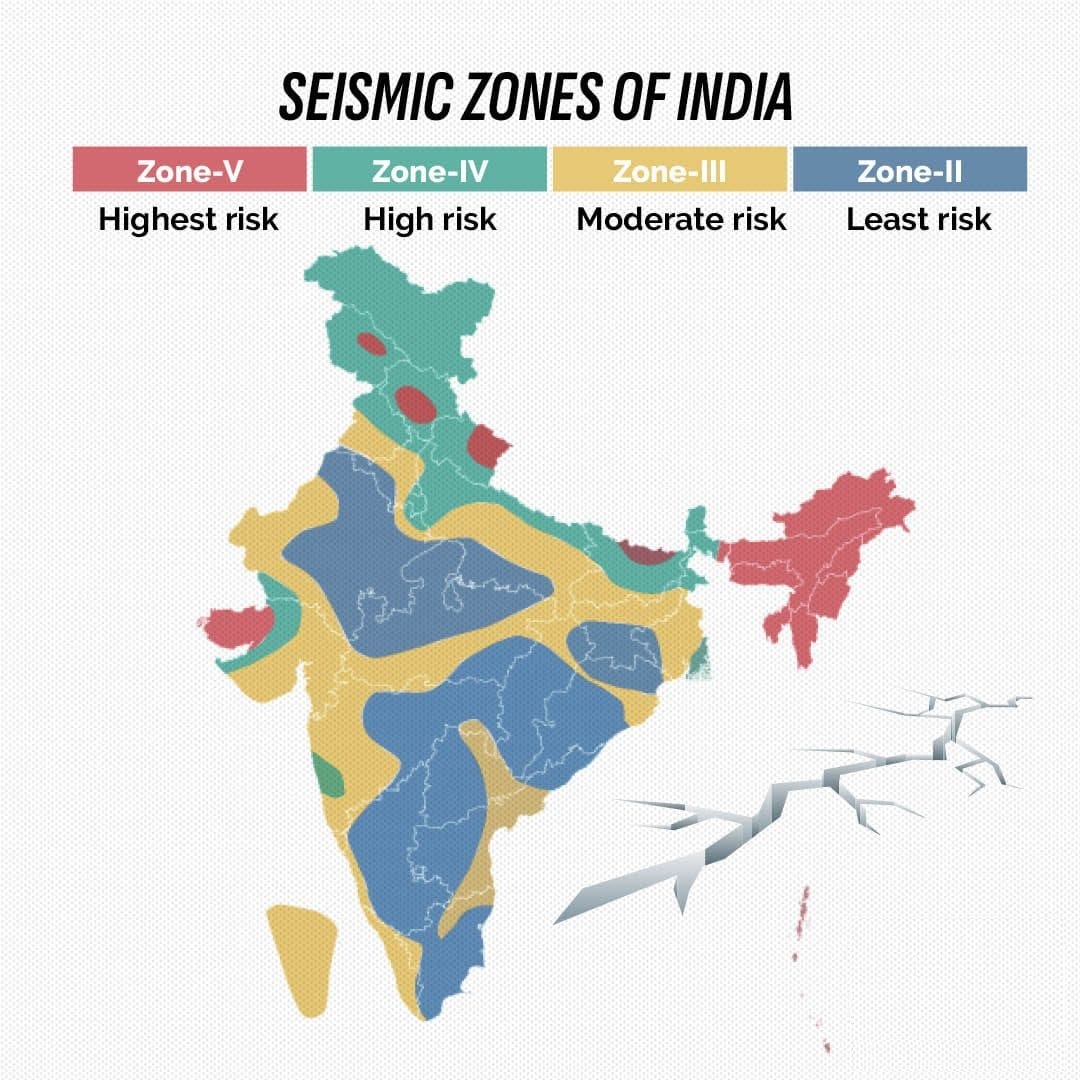
    • The area is mapped using data from the Delhi Forest Department and the 2006 Seismic Zonation Map.
    • Formal notification as a Reserved Forest under the Indian Forest Act, 1927, is pending due to the absence of ground-truthing.
    • In revenue records, it is often marked as “gair mumkin pahad”, meaning uncultivable rocky hill.
    • The terrain is ecologically fragile, with shallow soil and rocky outcrops, making it unsuitable for construction.
    [UPSC 2001] The approximate age of the Aravalli range is-

    Options: (a) 370 million years (b) 470 million years (c) 570 million years (d) 670 million years


  • [10th May 2025] The Hindu Op-ed: Sprouting sustainable, nutrition-sensitive food systems 

    PYQ Relevance:

    [UPSC 2024] Explain the role of millets for ensuring health and nutritional security in India.

    Linkage: Nutrition-sensitive agriculture and promoting the cultivation of climate-resilient, biofortified crops, and enhancing crop diversity. Millets are a prime example of such crops that contribute to health and nutritional security, making this question highly relevant to the article’s proposed solutions for improving dietary quality and nutritional outcomes.


    Mentor’s Comment:  The global food system is under pressure due to limited resources and climate change, while still needing to make food accessible and affordable. Even though India is a top producer of milk, fruits, vegetables, grains, and livestock, it still faces serious nutrition problems. These include both undernutrition and rising obesity, along with a lack of essential vitamins and minerals. Such issues put India’s future workforce and economic strength at risk. With a low rank of 105 out of 127 countries in the Global Hunger Index 2024, India’s food insecurity needs immediate attention.

    Today’s editorial discusses the problem of malnutrition in India. This topic is useful for GS Paper 2 (which covers the role of the welfare state and government schemes to fight malnutrition) and GS Paper 3 (which looks at India’s food system).

    _

    Let’s learn!

    Why in the News?

    India’s fight against nutrition problems should lead to a change where nutrition is included as a key part of farming and economic planning.

    What is the situation of India in malnutrition? 

    • Alarming Dual Burden of Malnutrition: NFHS-5 data highlights India’s pressing nutrition crisis — with high rates of stunting (35.5%), underweight (32.1%), wasting (19.3%) among children, and rising obesity in adults (24% women, 22.9% men), reflecting a dual burden of undernutrition and overnutrition that demands urgent policy attention.
    • Hidden Hunger and Women’s Health: The prevalence of anaemia in 57% of women of reproductive age signals widespread micronutrient deficiencies, indicating that calorie sufficiency alone is not enough — interventions must ensure access to diverse, nutrient-rich foods.

    What are the key causes of malnutrition in India despite being a major food producer?

    • Inequitable Access: Despite high food production, millions cannot afford or access diverse and nutritious diets. Eg: As per FAO (2022), 55.6% of Indians are unable to afford a healthy diet, highlighting widespread economic and geographic disparities.
    • Hidden Hunger (Micronutrient Deficiency): Diets often lack essential vitamins and minerals, affecting physical and cognitive development. Eg: 57% of Indian women of reproductive age are anaemic, despite surplus grain availability.
    • Food System Inefficiencies: Overreliance on staples, poor storage, and inadequate supply chains limit access to nutrient-rich food. Eg: Focus on rice and wheat in PDS sidelines coarse grains and pulses, leading to reduced dietary diversity.
    • Double Burden of Malnutrition: India faces both undernutrition in children and growing rates of overweight/obesity in adults. Eg: 35.5% of children under 5 are stunted, while 24% of women are overweight, showing nutrition imbalance.
    • Climate Vulnerability: Extreme weather events and resource stress reduce crop yield and diversity, harming food security. Eg: Erratic monsoons and heatwaves reduce the productivity of small-scale farmers, limiting supply of fresh produce.

    How can nutrition-sensitive agriculture contribute to addressing India’s food security issues?

    • Crop Diversification: Promotes the cultivation of a variety of nutrient-rich crops to improve dietary diversity. Eg: Encouraging farmers to grow millets, pulses, and vegetables alongside cereals enhances household nutrition and resilience.
    • Biofortification: Increases the nutritional content of staple crops to combat micronutrient deficiencies. Eg: Use of iron-rich pearl millet and zinc-enhanced wheat has shown success in improving child and maternal health.
    • Climate-Resilient Crops: Supports food security under changing climate conditions by using crops that can withstand droughts and floods. Eg: Drought-tolerant varieties of sorghum and finger millet help ensure food supply in arid and semi-arid regions.
    • Improved Post-Harvest Management: Reduces food loss and maintains nutrient quality through better storage and transportation. Eg: Solar dryers and community storage units help preserve perishable crops like fruits and vegetables in rural areas.
    • Farmer-Nutrition Linkages: Connects local farmers with schools and public schemes to supply nutritious food, boosting rural incomes and food access. Eg: The Nutri-Garden model in schools sources biofortified grains and vegetables from nearby farms, improving child nutrition.

    Who should play a key role in transforming India’s food systems for better nutrition and sustainability?

    • Government: Must align agricultural, health, and economic policies with nutrition and sustainability goals. Eg: The government can enhance the Public Distribution System (PDS) by including nutrient-rich millets and local vegetables.
    • Private Sector: Should innovate and invest in nutrition-focused food products, fortification, and sustainable practices. Eg: Food companies using clear nutrition labels and QR codes to promote awareness and adopting plant-based alternatives.
    • Community and Civil Society: Essential in driving grassroots efforts, promoting awareness, and implementing local nutrition initiatives. Eg: Nutrition-Sensitive Community Planning (NSCP) empowers villages to improve diet through local food, water, and health solutions.

    Where can community-led nutrition interventions like the Nutrition-Sensitive Community Planning (NSCP) model be most effective in India?

    • Rural Areas with Poor Nutrition Indicators: Effective where malnutrition, stunting, and anaemia are high among children and women. Eg: In parts of Bihar and Madhya Pradesh, NSCP can address undernutrition by linking local farming to nutritious diets.
    • Tribal and Remote Regions: Helps revive indigenous food systems and addresses deep-rooted nutrition gaps. Eg: In Odisha’s tribal districts, NSCP can promote traditional millets and forest foods as part of daily meals.
    • Climate-Vulnerable Zones: Strengthens resilience through climate-adaptive farming and diversified diets. Eg: In Bundelkhand (UP-MP), NSCP can integrate drought-tolerant crops and water-saving practices.
    • Regions with High Migration Rates: Targets nutritional needs of women and children left behind in migrant families. Eg: In eastern Uttar Pradesh, NSCP can ensure food security through community gardens and village nutrition hubs.
    • Urban Slums and Peri-Urban Settlements: Addresses the dual burden of undernutrition and rising obesity in low-income households. Eg: In Delhi’s informal settlements, NSCP can promote rooftop kitchen gardens and access to local fresh food markets.

    What are the steps taken by the Indian government? 

    • Universal Fortified Rice & Diversified Safety Nets: India has rolled out fortified rice (iron, folic acid + B12) across every food-security scheme—PDS, PM-GKAY, ICDS, Mid-Day Meal/PM POSHAN—to cut anaemia and hidden hunger.  
    • Mission Poshan 2.0 (Saksham Anganwadi + Nutrition Mission): Combines ICDS, Poshan Abhiyaan and allied schemes into one platform that uses real-time growth monitoring, fortified take-home rations and community “Poshan Maah” drives to reduce stunting, wasting and anaemia. Eg: Mission Poshan 2.0 uses a three-pronged strategy—convergence, technology and social behaviour change—through 1.4 million Anganwadis.
    • Millet Promotion & Climate-Resilient Farming: The government declared 2023 the International Year of Millets, rebranded them as “Nutri-Cereals,” and launched programmes to expand climate-smart, nutrient-dense crops.

    Way forward: 

    • Enhance Multi-Stakeholder Collaboration: Strengthen coordination between government, private sector, and civil society to scale up nutrition-sensitive initiatives and ensure equitable access to nutritious food for all segments of society.
    • Promote Sustainable and Climate-Resilient Agricultural Practices: Encourage the adoption of climate-smart farming techniques and crop diversification to ensure food security in the face of climate challenges while improving nutritional outcomes.