💥Join UPSC 2027,2028 Mentorship (July Batch) + XFactor Notes & Microthemes PDF

GS Paper: GS2

  • [pib] PRATIBHA Setu Initiative

    Why in the News?

    The Union Public Service Commission (UPSC) has launched the PRATIBHA Setu initiative to channel the potential of civil service aspirants who reach the interview stage but do not make the final merit list.

    About PRATIBHA Setu:

    • Meaning: Stands for Professional Resource And Talent Integration – Bridge for Hiring Aspirants.
    • Purpose: Connects candidates who cleared the interview stage of Union Public Service Commission exams but didn’t make the final merit list with verified employers.
    • Launch: Rolled out during CSE Examination 2023 results; evolved from the Public Disclosure Scheme (2018).
    • Objective: Utilizes the Union Public Service Commission’s rigorous selection process to support alternate career pathways for high-performing aspirants.
    • Talent Pool:
      • Scale: Over 10,000 high-performing candidates available for recruitment.
      • Merit-Based: Offers employers access to a pre-tested, well-evaluated talent group.

    Key Features:

    • Eligibility:
      • Included: Civil Services, Indian Forest Service, Engineering Services, Central Armed Police Forces, Combined Medical Services, etc.
      • Excluded: National Defence Academy, Naval Academy, and certain Limited Departmental Competitive Examinations.
    • Access for Recruiters: Organizations register using Corporate Identification Number through the Ministry of Corporate Affairs portal.
    • Platform Tools:
      • Functions: Dashboard for shortlisting, wish-listing, and making selections or rejections.
      • Data Access: Employers can view candidates’ educational profiles and contact details in digital format.

    Impact:

    • Candidate Benefit: Opens alternate career paths for deserving UPSC aspirants.
    • Employer Advantage: Enables transparent and efficient hiring from India’s top talent.
    • Wider Utility: Extends the relevance of the UPSC selection process beyond final appointments.
    [UPSC 2020] In the context of India, which one of the following is the characteristic appropriate for bureaucracy?

    Options: (a) An agency for widening the scope of parliamentary democracy (b) An agency for strengthening the structure of federalism (c) An agency for facilitating political stability and economic growth (d) An agency for the implementation of public policy*


  • In news: International Seabed Authority (ISA) 

    Why in the News?

    Despite growing global pressure, the International Seabed Authority (ISA) has yet to finalize regulations for deep sea mining.

    Deadlock Over Deep Sea Mining Rules:

    • ISA’s 36-member executive council concluded a line-by-line reading of the draft “mining code” containing 107 regulations.
    • These regulations govern mining for cobalt, nickel, and manganese in international waters.
    • Key concerns remain unresolved, especially around environmental protection mechanisms.
    • Chile and 36 other countries demand a moratorium until scientific assessments confirm minimal harm to marine ecosystems.
    • Also, the US is not a member of the ISA or party to UNCLOS.

    About International Seabed Authority (ISA):

    • Establishment: Formed under the United Nations Convention on the Law of the Sea (1982) and the 1994 Agreement relating to Part XI of the Convention.
    • Headquarters: Located in Kingston, Jamaica.
    • Membership: Comprises 168 member states including India and the European Union.
    • Jurisdiction: Governs “The Area” — the seabed and ocean floor beyond national boundaries, covering around 54% of global oceans.
    • Guiding Principle: Operates on the principle that deep-sea resources are the common heritage of humankind.

    Key Functions:

    • Regulation of Mineral Activities
      • Licensing: Grants licenses for exploration of seabed mineral resources.
      • Transition Oversight: Manages the shift from exploration to commercial exploitation.
    • Mining Code Development: Maintains the Mining Code—rules for environmental impact, royalties, benefit sharing, and technology transfer.
    • Environmental Protection
      • Standards: Sets and enforces environmental norms for seabed activities.
      • Risk Management: Applies precautionary principles to minimize ecological harm.
    • Oversight and Compliance
      • Monitoring: Oversees contractors and states for legal and environmental adherence.
      • Enforcement: Investigates violations and recommends corrective action.

    India’s Engagement with the International Seabed Authority:

    • Active Participation: India contributes to rule-making and sustainable seabed governance.
    • Existing Contracts:
      • Polymetallic nodules in the Central Indian Ocean Basin.
      • Polymetallic sulphides in the Central Indian Ridge.
    • New Applications (2024):
      • Polymetallic sulphides in the Carlsberg Ridge.
      • Cobalt-rich crusts in the Afanasy-Nikitin Seamount.
    • Mining Code Engagement: Participates in drafting and negotiating legal standards.
    • Equity and Protection: Supports fair benefit-sharing and strong environmental safeguards.
    [UPSC 2021] Consider the following statements:
    1. The Global Ocean Commission grants licences for seabed exploration and mining in international waters.
    2. India has received licences for seabed mineral exploration in international waters
    3. ‘Rare earth minerals’ are present on the seafloor in international waters.
    Which of the statements given above are correct?
    (a) 1 and 2 only (b) 2 and 3 only* (c) 1 and 3 only (d) 1, 2 and 3


  • The threat to India’s ‘great power’ status 

    Why in the News?

    The ongoing tensions in West Asia, particularly between Iran, Israel, and the U.S., have reignited concerns about a potential U.S.-Israel-Iran conflict, which could have serious geopolitical and economic consequences.

    How could a U.S.-Israel-Iran war impact India?

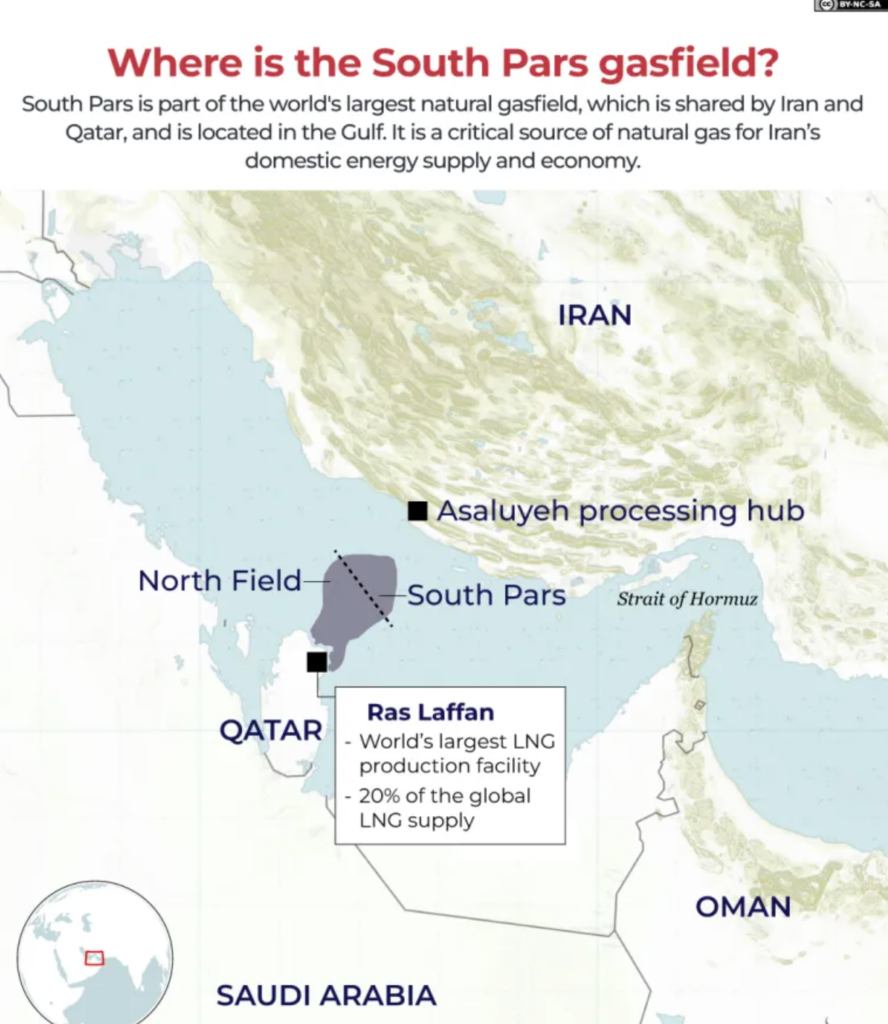
    • Energy Security Risk: A war could disrupt oil exports from Iran and the Strait of Hormuz, through which 60% of India’s crude imports pass. Eg: During the 2019 U.S.-Iran tensions, India faced uncertainty in oil supply and had to cut Iranian imports.
    • Geopolitical Imbalance: Collapse of Iran may increase U.S. dominance in West Asia, weakening India’s strategic depth and bargaining power. Eg: India’s balancing diplomacy between Gulf countries, Israel, and Iran would face strain, as seen when Chabahar Port talks slowed under U.S. pressure.
    • Diaspora and Economic Fallout: War could threaten the safety of 8 million Indians in the Gulf and affect remittances and trade. Eg: During the 1990 Gulf War, India had to evacuate over 1.7 lakh citizens and faced economic shocks.

    What is the difference between great power and super power?

    The terms “great power” and “superpower” both refer to influential countries, but they differ in scale, reach, and dominance.

    • Great Power: A great power is a country with significant regional or global influence, strong economy, capable military, and active diplomacy. Eg: India, France, Germany
    • Superpower: A superpower is a country with unmatched global dominance across military, economic, political, and cultural spheresEg: United States (Cold War era: USA and USSR were two superpowers).

    How does the Iran-Israel conflict impact India’s great power status?

    • Challenges to Strategic Autonomy: The conflict pressures India to balance relations with both Iran and Israel, testing its strategic autonomy — a key trait of great powers. India called for restraint without directly criticising either side.
    • Limited Global Influence in Conflict Resolution: India’s geopolitical clout is still evolving, and its absence in conflict mediation highlights the gap between global aspirations and actual influence. Eg: India was not part of backchannel diplomacy, unlike the U.S. or China.

    How does multipolarity guide India’s foreign policy?

    • Strategic Autonomy: India avoids aligning permanently with any one power bloc, maintaining independent decision-making. Eg: India is a member of both the QUAD and BRICS, balancing ties with the U.S. and China.
    • Diversified Partnerships: Multipolarity enables India to build issue-based coalitions with different countries for mutual benefit. Eg: India partners with France on defence, Russia on energy, and U.S. on technology.
    • Global Rule-Shaping Role: India promotes a rules-based order and voices the concerns of the Global South in global forums. Eg: India’s presidency of the G20 in 2023 emphasized inclusive development and reform of global institutions.

    Why is Iran vital to India’s energy and strategy?

    • Energy Security: Iran has vast reserves of crude oil and natural gas, essential for India’s growing energy needs. Eg: Before U.S. sanctions, Iran was among India’s top three crude oil suppliers.
    • Strategic Connectivity: Iran hosts the Chabahar Port, offering India access to Afghanistan, Central Asia, and bypassing Pakistan. Eg: The International North-South Transport Corridor (INSTC) runs through Iran, linking India to Europe.
    • Regional Balance: Ties with Iran help India maintain a geopolitical balance in West Asia amid U.S., Israel, and Gulf influences. Eg: India engages Iran to counter China’s influence in the region, including at Gwadar Port in Pakistan.

    How does India balance ties between major powers?

    • Strategic Autonomy: India maintains independent foreign policy decisions without aligning fully with any bloc, ensuring flexibility in global affairs.
    • Multi-alignment Approach: India engages simultaneously with the U.S., Russia, China, EU, and others, based on issue-specific interests.
    • Issue-based Partnerships: India chooses partners depending on the context — cooperating with the U.S. on defense, Russia on energy, and China on trade, while managing conflicts diplomatically.

    How can India promote peace in West Asia? (Way forward)

    • Diplomatic Balancing: India can maintain neutral engagement with rival states like Iran, Israel, and the Gulf countries, promoting dialogue over conflict. Eg: India has strong ties with both Iran and Saudi Arabia, enabling it to act as a bridge-builder.
    • Economic Cooperation: Promoting trade, energy ties, and infrastructure projects can foster interdependence and reduce regional tensions. Eg: India’s investment in Chabahar Port connects the region economically and supports stability in Afghanistan.
    • Cultural and Diaspora Links: Leveraging its diaspora presence and civilizational ties, India can promote people-to-people engagement and soft power diplomacy. Eg: The 8-million-strong Indian diaspora in the Gulf enhances goodwill and mutual trust in the region.

    Mains PYQ:

    [UPSC 2014] Though 100 percent FDI is already allowed in non news media like a trade publication and general entertainment channel, the Government is mulling over the proposal for in creased FDI in news media for quite some time. What difference would an increase in FDI make? Critically evaluate the pros and cons.

    Linkage:  Evaluating the “pros and cons” necessitates an understanding of the challenges and opportunities associated with foreign investment inflows, reflecting a part of India’s FDI challenge in attracting and managing capital effectively. This question directly related to the implications of increasing FDI in a specific sector.

  • At FTA’s heart, the promise of Global Capacity Centres

    Why in the News?

    India and the United Kingdom are nearing the finalisation of a Free Trade Agreement (FTA) that is expected to significantly reshape their bilateral economic relationship. A key area of focus is the expansion of Global Capability Centres (GCCs) in India.

    What are GCCs (Global Capability Centres)?

    GCCs are offshore units set up by multinational companies (MNCs) in countries like India to handle critical business functions.

    How can GCCs boost the India-U.K. FTA?

    • Enhance Digital Collaboration: GCCs in India offer services like AI, cybersecurity, and R&D that align with the UK’s digital economy goals. Eg: British companies like Barclays use India’s GCCs for advanced analytics and digital banking solutions.
    • Support Professional Mobility: GCC operations require movement of skilled professionals between India and the UK, pushing for smoother visa and work policies. Eg: Infosys and TCS facilitate cross-border staff exchanges for UK-based projects.
    • Strengthen Global Supply Chains: GCCs act as strategic hubs for managing global operations and reducing dependency on single markets. Eg: Unilever runs global compliance and finance functions from its India GCC, supporting resilience and efficiency.

    Why is India a preferred hub for GCCs?

    • Cost Advantage: Operating a GCC in India is more cost-effective compared to Western countries, enabling firms to maintain quality while optimizing costs. Eg: Target Corporation runs its Indian GCC in Bengaluru to handle IT services and supply chain support at reduced costs.
    • Robust Digital Infrastructure: India’s expanding digital ecosystem and government support through policies like Digital India attract companies to establish innovation hubs here. Eg: Bosch established a smart manufacturing and AI innovation centre in Bengaluru as part of its India-based GCC.

    What policy steps support GCC growth in India?

    • Digital India Mission: Promotes digital infrastructure and connectivity, enabling a strong foundation for tech-driven operations. Eg: A U.S. retail firm’s GCC in Hyderabad leverages India’s broadband push to manage global e-commerce platforms.
    • Startup India & Innovation Support: Encourages collaboration between GCCs and Indian startups for agile solutions and R&D. Eg: A financial GCC in Pune co-develops regtech tools with local fintech startups.
    • Special Economic Zones (SEZs) & IT Parks: Offer tax incentives, simplified compliance, and ready infrastructure for foreign firms. Eg: GCCs in Bengaluru’s SEZs benefit from lower operational costs and faster approvals.
    • Ease of Doing Business Reforms: Simplified registration, relaxed FDI norms, and labor reforms attract foreign investors. Eg: A healthcare MNC establishes a GCC in Chennai due to smoother FDI entry and single-window clearances.
    • Skill Development Schemes: Programs like PMKVY and FutureSkills Prime build a skilled digital workforce for GCCs. Eg: GCCs in Noida hire AI and cybersecurity professionals trained through FutureSkills.

    What are the challenges? 

    • Talent saturation in Tier-1 cities: Intense competition for skilled tech professionals increases costs. Eg: In Bangalore, GCCs like Walmart Global Tech and Goldman Sachs compete for the same AI/ML talent pool, pushing up salary levels and attrition.
    • Infrastructure gaps in Tier-2 cities: Poor connectivity, weak urban infrastructure, and limited office space deter expansion. Eg: Despite interest in Nagpur for cost-effective operations, Deloitte limited its operations due to lack of reliable internet and skilled ecosystem.
    • High attrition rates: Rapid job-switching among mid-career professionals disrupts continuity. Eg: JPMorgan Chase’s GCC in Hyderabad faced over 22% attrition in 2023, especially among cybersecurity analysts.
    • Regulatory & compliance hurdles: Navigating data protection and labor laws adds to legal burden. Eg: Meta’s GCC in Gurugram had to rework its data storage policies post the DPDP Act, 2023, causing operational delays.
    • Limited R&D ownership: Indian GCCs often do not drive core product innovation. Eg: While Apple’s Bengaluru GCC handles app testing, core iOS design decisions remain with teams in California.

    Way forward: 

    • Promote Tier-2 city readiness: Improve digital infrastructure, urban planning, and talent development in emerging tech hubs like Coimbatore, Indore, and Kochi through targeted government-industry partnerships.
    • Encourage innovation and R&D ownership: Provide tax incentives, faster IP approvals, and create collaborative platforms with academia to help GCCs move beyond support roles to core product development.

    Mains PYQ:

    [UPSC 2024] The West is fostering India as an alternative to reduce dependence on China’s supply chain and as a strategic ally to counter China’s political and economic dominance.’ Explain this statement with examples.

    Linkage: The UK wants better access to India’s fast-growing digital economy and aims to strengthen its global services presence. India is becoming more important in global supply chains, especially in digital services and transformation, where Global Capability Centres (GCCs) play a key role.

  • Legal Status of Right to Vote

    Why in the News?

    The ongoing Supreme Court hearings on the Special Intensive Revision (SIR) of electoral rolls in Bihar have reignited discussions on the legal status of the ‘right to vote’ in India.

    About Right to Vote in India:

    • Overview: It is also known as suffrage, allows citizens to elect their representatives in democratic institutions.
    • Constitutional Basis: Guaranteed under Article 326 of the Constitution of India, which provides for universal adult franchise.
    • Eligibility: Every citizen of India aged 18 and above is entitled to vote, unless disqualified by law.
    • Supervision: Organised and overseen by the Election Commission of India.
    • Supporting Laws:
      • Representation of the People Act, 1950: Defines voter eligibility and grounds for disqualification.
      • Representation of the People Act, 1951: Governs the procedures for conducting elections.

    Judicial Interpretation:

    • N.P. Ponnuswami v. Returning Officer (1952): Declared the Right to Vote as a statutory right.
    • Jyoti Basu v. Debi Ghosal (1982): Reiterated that the Right to Vote is neither a fundamental right nor a common law right.
    • People’s Union for Civil Liberties v. Union of India (2003): Recognised the Right to Vote as at least a constitutional right.
    • Kuldip Nayar v. Union of India (2006): Held that the Right to Vote continues to be a statutory right.
    • Raj Bala v. State of Haryana (2015): Recognised the Right to Vote as a constitutional right.
    • Anoop Baranwal v. Union of India (2023):
      • Majority View: Right to Vote is a statutory right.
      • Dissenting Opinion by Justice Ajay Rastogi:
        • Linked the Right to Vote with the freedom of speech and expression under Article 19(1)(a).
        • Considered it essential to free and fair elections and thus part of the basic structure of the Constitution.

    Current Legal Status:

    • Nature: It is legally a statutory right.
    • Constitutional Context: It is shaped by constitutional provisions but does not hold the status of a fundamental right.

    Back2Basics: Other Types of Rights in India

    Description Enforceability
    Natural Rights Inherent and inalienable rights (e.g., life, liberty); not directly enforceable unless linked to fundamental rights. Indirectly through Fundamental Rights
    Fundamental Rights Guaranteed under Part III of the Constitution (e.g., right to equality, speech, life). Enforceable in Supreme Court under Article 32
    Constitutional Rights Rights given in the Constitution but outside Part III (e.g., property, trade). Enforceable under Article 226 via High Courts
    Statutory Rights Granted by ordinary laws (e.g., MGNREGA, Forest Rights Act, Food Security Act). Enforceable as per respective legislations


    [UPSC 2017] Right to vote and to be elected in India is a:

    Options: (a) Fundamental Right (b) Natural Right (c) Constitutional Right* (d) Legal Right


  • Vice-President (VP) of India

    Why in the News?

    The Vice-President of India, Jagdeep Dhankhar resigned citing health reasons, creating a rare mid-term vacancy in India’s second-highest constitutional office.

    What happens if VP resigns?

    • The Deputy Chairman of Rajya Sabha presides in his absence. No provision exists for an “acting” Vice-President.
    • Unlike the President, whose vacancy must be filled within six months, the VP election must be held “as soon as possible.”
    • The Election Commission will notify the schedule.
    • Election governed by the Presidential and Vice-Presidential Elections Act, 1952.
    • The elected candidate will serve a full 5-year term, not the remainder of Dhankhar’s term.

    About Vice-President (VP) of India

    • Position: Second-highest constitutional post; deputy to the President.
    • Parliamentary Role: Serves as ex-officio Chairman of the Rajya Sabha.
    • Succession: Ranks second in order of precedence and first in line to become President.
    • Membership: Is a member of Parliament, not directly elected by the people.
    • Qualifications:
      • Citizenship: Must be a citizen of India.
      • Age: Minimum 35 years.
      • Office of Profit: Should not hold any.
      • Parliamentary Eligibility: Must qualify for election to Rajya Sabha (unlike President, who must qualify for Lok Sabha) due to the VP’s role in the Upper House.
    • Roles and Responsibilities:
      • Rajya Sabha Chairmanship: Presides over sessions and ensures order.
      • Bill Classification: Refers money bills to the Lok Sabha Speaker.
      • No Independent Powers: Has no executive or legislative powers unless acting as President.

    Election Procedure:

    • Constitutional Basis: Governed by Article 66.
    • Electoral College: Comprises 543 Lok Sabha MPs, 233 elected Rajya Sabha MPs, and 12 nominated Rajya Sabha members.
    • Voting Method: Proportional representation by single transferable vote and secret ballot.
    • No Whip Allowed: Parties cannot issue voting whips.
    • Conduct: Managed by the Election Commission; Returning Officer is the Secretary-General of either House (on rotation).
    • Winning Quota: Requires 50% of valid votes + 1; votes are transferred in rounds if no candidate secures majority in the first round.

    Resignation and Removal:

    • Resignation
      • Article 67(a): VP submits his/her resignation to the President. Parliamentary approval is NOT needed, and the resignation takes effect immediately upon receipt.
      • No Acting VP: Constitution doesn’t provide for an acting Vice-President.
      • Presiding in Absence: Deputy Chairman of Rajya Sabha presides in VP’s absence (currently Harivansh Narayan Singh).
      • Example: Dhankhar, who took office in 2022, is only the third VP in Indian history to resign before completing his term, after V.V. Giri and R. Venkataraman.
    • Removal
      • Article 67(b): Removal process begins in Rajya Sabha with 14 days’ notice.
      • Voting Requirement: Needs effective majority in Rajya Sabha and simple majority in Lok Sabha.
      • No Grounds Specified: Constitution doesn’t list specific removal grounds.
      • Judicial Immunity: Article 122 bars courts from questioning parliamentary proceedings related to removal.
      • No Precedent: No VP has been removed so far.
    [UPSC 2013] With reference to Parliament, consider the following statements:

    1.The Chairman and the Deputy Chairman of the Rajya Sabha are not the members of that House.

    2.While the nominated members of the two Houses of the Parliament have no voting right in the presidential election, they have the right to vote in the election of the Vice President.

    Which of the statements given above is/are correct?

    Options: (a) 1 only (b) 2 only (c) Both 1 and 2* (d) Neither 1 nor 2


  • Comptroller and Auditor General (CAG) of India 

    Why in the News?

    The Comptroller and Auditor General of India’s (CAG) audit has flagged ₹573 Crore irregularities in Indian Railways.

    About Comptroller and Auditor General (CAG) of India:

    • Foundation: Established under Article 148 of the Constitution of India.
    • Independence: A constitutional authority, not subject to executive control.
    • Appointment: Appointed by the President of India.
    • Tenure: Holds office for 6 years or until the age of 65 years, whichever is earlier.
    • Removal: Can be removed by the President in the same manner and on the same grounds as a judge of the Supreme Court of India.
    • Post-Retirement Bar: Ineligible for further office under the Government of India or any State after demitting office.
    • Funding: Administrative expenses are charged upon the Consolidated Fund of India, ensuring financial autonomy.
    • Parliamentary Independence: No minister can represent the CAG in Parliament.
    • Role: Known as the guardian of the public purse and a key pillar of Indian democracy.

    Powers and Functions:

    • Audits:
      • Fund Audits: Audits expenditures from the Consolidated Fund of India, State Consolidated Funds, and Union Territory funds.
      • Other Fund Audits: Audits Contingency Fund and Public Account at both Central and State levels.
      • Departmental Audits: Reviews profit and loss accounts, balance sheets, and subsidiary accounts of government departments.
      • Authority Audits: Audits bodies and authorities substantially financed by the government.
      • Company Audits: Examines accounts of government-owned companies and corporations.
      • Special Audits: Audits other authorities when requested by the President or Governor.
    • Parliamentary Role: Acts as a guide, friend, and philosopher to the Public Accounts Committee of Parliament.
    • Public Accountability: Exposed major scams such as the 2G spectrum and coal block allocation cases.
    • Sectoral Reviews: Highlighted inefficiencies in defence, railways, and other public enterprises.

    Limitations of the office of CAG:

    • Lack of Real-Time Control: Cannot stop or approve withdrawals from the Consolidated Fund; cheques can be issued without CAG’s prior clearance.
    • Opaque Appointment: No prescribed qualifications or transparent procedure for selection; appointment is entirely executive-controlled.
    • Limited Audit Scope:
      • Excludes certain public entities like Life Insurance Corporation and public sector banks.
      • Cannot audit public-private partnerships and funds like Prime Minister’s Citizen Assistance and Relief in Emergency Situations Fund and Prime Minister’s National Relief Fund.
      • Off-budget borrowings (e.g., through National Investment and Infrastructure Fund) remain outside audit scope.
    • Post-Facto Nature: Audits occur after expenditure, limiting preventive or real-time oversight.


    [UPSC 2012] In India, other than ensuring that public funds are used efficiently and for intended purpose, what is the importance of the office of the Comptroller and Auditor General (CAG)?

    1. CAG exercises exchequer control on behalf of the Parliament when the President of India declares national emergency/financial emergency.

    2. CAG reports on the execution of projects or programmes by the ministries are discussed by the Public Accounts Committee.

    3. Information from CAG reports can be used by investigating agencies to press charges against those who have violated the law while managing public finances.

    4. While dealing with the audit and accounting of government companies, CAG has certain judicial powers for prosecuting those who violate the law.

    Which of the statements given above is/are correct?

    Options: (a) 1, 3 and 4 only (b) 2 only (c) 2 and 3 only* (d) 1, 2, 3 and 4


  • [21st July 2025] The Hindu Op-ed: Temples of social justice 

    PYQ Relevance:

    [UPSC 2024] Despite comprehensive policies for equity and social justice, underprivileged sections are not yet getting the full benefits of affirmative action envisaged by the Constitution. Comment.

    Linkage:  The article explicitly states that “any argument against government control of temple affairs would be striking at the root of social justice”. This question directly addresses “social justice” and the upliftment of “underprivileged sections,” which is the core argument of the article “social justice model” enabled by the regulation of temple funds.


    Mentor’s Comment:  A political controversy in Tamil Nadu emerged over using temple funds to build colleges. The debate highlights a unique social justice model rooted in colonial-era laws, notably the Tamil Nadu Hindu Religious and Charitable Endowments Act, 1959, which legally permits such use of surplus funds. The issue reflects ongoing tensions between secular governance, social reform, and religious traditions.

    Today’s editorial analyses the Issues related to temple funds like to build colleges. This topic is important for GS Paper I (Indian Society) and  GS Paper II (Social Justice) in the UPSC mains exam.

    _

    Let’s learn!

    Why in the News?

    A political controversy recently erupted in Tamil Nadu over the use of temple funds for building colleges.

    What is the origin and evolution of state control over temples in Tamil Nadu?

    • Colonial Intervention and Legal Frameworks: The British colonial government began regulating temples through laws such as the Madras Regulation VII of 1817 and the Religious Endowments Act, 1863. These aimed at curbing mismanagement and ensuring proper use of temple revenues, though actual control was minimal.
    • Madras Hindu Religious and Charitable Endowments (HRCE) Act, 1927 & 1951: Post-independence, the Madras HRCE Act, 1951 granted the state direct control over temple administration. It replaced hereditary trustees with government-appointed officers, shifting from oversight to active state involvement in managing temple affairs.
    • Dravidian Politics and Reformist Push: The Self-Respect Movement and the rise of Dravidian parties (e.g., DMK) advocated for rationalism and secular administration of temples. This reinforced the idea of temples as public institutions, furthering state oversight in their functioning.

    Why is using temple funds for education legally and socially justified?

    • Legal Provision under State Law: The Tamil Nadu Hindu Religious and Charitable Endowments (HR&CE) Act, 1959 allows the use of temple surplus funds for public purposes like education, healthcare, and social welfare, provided the core religious functions are not affected. Eg: The government used temple funds to construct colleges in Tiruvannamalai and Krishnagiri, serving backward districts.
    • Social Justice and Inclusive Development: Tamil Nadu follows a Dravidian model that sees temples as public institutions capable of promoting equality, education, and empowerment, especially for marginalized communities. Eg: Building a college with temple funds in a remote area helps first-generation learners, aligning with constitutional goals of equity and social upliftment.
    • Historical and Cultural Precedent: In the pre-colonial and colonial era, temples often served as centres of learning and charity. Using their resources for education today revives that tradition in a modern, secular context. Eg: In the 19th century, temple lands supported gurukuls and feeding centres, a legacy extended now through modern institutions.

    How did the Self-Respect Movement shape temple governance?

    • Challenged Brahminical Control: The movement, led by Periyar E.V. Ramasamy, questioned hereditary priesthood and the dominance of Brahmins in temple administration, pushing for non-Brahmin inclusion in both ritual and managerial roles.
    • State Intervention in Temple Administration: It laid the ideological foundation for government regulation of temples through legislations like the HR&CE Act, bringing temples under state control to ensure transparency, social equity, and public accountability.
    • Promotion of Secular and Social Justice Values: The movement emphasized that temple wealth should serve the public good, such as education, healthcare, and social welfare, especially for the oppressed castes, transforming temples into instruments of social reform.

    What are the constitutional and legal bases for state intervention in religious institutions in India?

    • Article 25(2)(a) – Social Welfare and Reform: The Constitution permits the state to regulate or restrict any economic, financial, political, or secular activity associated with religion to promote social welfare and reform.
    • Article 26 – Regulates While Protecting Rights: While religious denominations have rights to manage their own affairs, the state can impose reasonable restrictions in the interest of public order, morality, and health.
    • Judicial Precedents and Statutory Laws: Courts have upheld state control over temples (e.g., in Shirur Mutt case) distinguishing between religious practices and secular administration. Laws like the Hindu Religious and Charitable Endowments (HR&CE) Act legally enable such oversight.

    Should religious institutions be allowed to function autonomously without state control? 

    • Argument in favour: 
      • Protection of Religious Freedom: Article 26 of the Indian Constitution grants religious denominations the right to manage their own affairs. Autonomy respects the pluralistic ethos of India and avoids state overreach in spiritual matters.
      • Cultural and Traditional Integrity: Many religious institutions have centuries-old customs and management systems. Autonom y helps preserve these indigenous practices without interference from changing political or administrative interests.
    • Argument against: 
      • Accountability and Transparency: Without state oversight, there is a higher risk of financial mismanagement, corruption, or exploitation of devotees. State regulation ensures proper audit and governance of temple funds and assets.
      • Public Interest and Welfare: Religious institutions often hold significant wealth and influence. State control can direct surplus resources towards social welfare, education, and infrastructure, promoting inclusive development beyond the religious community.

    Way forward: 

    • Balanced Autonomy with Regulation: Implement a co-governance model where religious institutions retain spiritual autonomy, while the state ensures financial transparency, protection of heritage, and equitable use of public funds.
    • Strengthen Legal Frameworks: Update existing laws to clearly define the limits of state intervention, ensure community representation in temple boards, and establish robust grievance redressal mechanisms.
  • A long list: on the U.S., designation of The Resistance Front group

    Why in the News?

    The U.S. has designated The Resistance Front (TRF), which claimed responsibility for the Pahalgam terror attack (April 2025), as a Foreign Terrorist Organization (FTO) and Specially Designated Global Terrorist.

    What is the impact of the U.S. designating TRF as an FTO on global counterterrorism?

    • Legitimizes India’s concerns: The U.S. acknowledgment of TRF’s role in the Pahalgam terror attackstrengthens the global consensus on cross-border terror threats.
    • Links to Lashkar-e-Taiba (LeT): The U.S. designation of TRF as a front/proxy of LeT exposes the continued existence of banned groups under new names.
    • Strengthens international action: The move could help India push for sanctions against TRF at the UN’s 1267 Sanctions Committee, boosting transnational legal cooperation.

    Why is Pakistan’s claim about LeT being defunct questionable?

    • TRF’s Linkage with LeT: The U.S. designation of The Resistance Front (TRF) as a “front and proxy” for Lashkar-e-Taiba (LeT) proves that LeT continues to operate under new aliases, despite Pakistan’s claims of dismantling the group. Eg: TRF claimed responsibility for the 2025 Pahalgam attack, showing LeT’s continued operational role.
    • Continued Terror Activities: Despite LeT’s inclusion in the U.S. Foreign Terrorist Organization (FTO) list since 2001, it has repeatedly executed attacks in India, reflecting its persistent capabilities. Eg: The 2008 Mumbai attacks and later cross-border infiltrations have been linked to LeT-trained cadres.
    • International Endorsement Missing: Pakistan’s claim lacks credible global validation. Instead, it has been seen shielding TRF at the UN Security Council (UNSC), undermining its own narrative. Eg: TRF’s name was excluded from the UNSC resolution on the Pahalgam attack, reportedly due to Pakistani lobbying.

    How does the U.S. response post-Pahalgam reveal contradictions in its policy?

    • Mixed messaging: While designating TRF is a positive step, claims by the Trump administration about mediating a ceasefire and nuclear de-escalation dilute India’s counter-terror narrative.
    • Diplomatic inconsistency: Praise for Pakistan’s military chief shortly after India clarified its stance reflects a lack of consistent pressure on Pakistan to curb terrorism.
    • Missed opportunity at UNSC: The U.S. initially allowed TRF to be left out of the UNSC resolution, showing conflicting priorities between diplomacy and counterterrorism.

    What blocks India’s effort to sanction the TRF at the UNSC?

    • Veto Power Politics: The UN Security Council’s 1267 Committee requires unanimous consent among P-5 members for sanctions. Some permanent members, especially China and the U.S., have previously withheld support or yielded to Pakistan’s pressure, blocking India’s proposals. Eg: TRF’s name was omitted from the UNSC resolution on the 2025 Pahalgam attack.
    • Pakistan’s Diplomatic Shielding: Pakistan continues to lobby against designations of terror outfits like TRF, masking them as defunct or rebranded groups, and frames them as indigenous resistance, making it harder for India to gain international consensus.

    How should India strengthen its anti-terror diplomacy? (Way forward)

    • Build Strategic Alliances and International Pressure: India should deepen counter-terrorism cooperation with key countries like the U.S., France, and the UK, while mobilizing regional blocs (e.g., QUAD, BRICS) to collectively push for sanctioning terror groups at global forums like the UNSC 1267 Committee.
    • Pursue Legal and Diplomatic Action Proactively: India must file strong dossiers with evidence linking terror fronts like TRF to banned outfits like LeT and pursue timely extraditions of wanted terrorists through bilateral treaties and Interpol. Eg: The extradition request for Tahawwur Hussain Rana reflects India’s resolve to hold perpetrators accountable.

    Mains PYQ:

    [UPSC 2024] Terrorism has become a significant threat to global peace and security’. Evaluate the effectiveness of the United Nations Security Council’s Counter-Terrorism Committee (CTC) and its associated bodies in addressing and mitigating this threat at the international level.

    Linkage: The article explicitly mentions India’s hope that the U.S. designation of TRF will facilitate its designation at the UNSC under the 1267 Committee for sanctions, directly aligning with the question’s focus on international counter-terrorism mechanisms. This question directly pertains to the global challenge of terrorism and the role of international bodies like the UN Security Council.

  • [pib] India praised at Codex Executive Committee (CCEXEC88) for Millet Standards

    Why in the News?

    India recently participated in the 88th Codex Executive Committee (CCEXEC88) in Rome (14–18 July 2025), earning praise for leading global millet standards.

    About the Codex Alimentarius Commission (CAC):

    • Established: In 1963 by the Food and Agriculture Organization (FAO) and the World Health Organization (WHO).
    • Headquarters: Located in Rome, Italy.
    • Membership:
      • 189 members: 188 countries + the European Union.
      • Open to all FAO and WHO members state and associate members.
    • Objectives:
      • Protect consumer health by ensuring food safety.
      • Promote fair practices in international food trade.
      • Harmonize food standards to reduce trade disputes.
    • Key Functions:
      • Develops global standards on:
        • Food safety and hygiene
        • Food additives, contaminants
        • Residues of veterinary drugs and pesticides
        • Labelling and import/export rules
      • Sets Maximum Residue Limits (MRLs) and general/horizontal standards.
      • Supports developing countries in enhancing food safety systems.
    • Structure:
      • Executive Committee: Streamlines the Commission’s work.
      • Subsidiary Bodies:
        • General Subject Committees: Address additives, contaminants, hygiene, etc.
        • Commodity Committees: Develop product-specific standards.
        • Regional Coordinating Committees: Harmonize regional standards.
        • Task Forces: Address short-term, emerging issues.
    • Codex Alimentarius (Food Code):
      • A collection of international food standards, guidelines, and codes of practice.
      • Though voluntary, they are widely adopted, especially in international trade.
    • Relevance to WTO:
      • Codex standards are reference points under the WTO SPS Agreement for resolving trade-related food safety disputes.

    India and Codex Alimentarius Commission:

    • Member Since: 1964.
    • Active Participation:
      • India is an elected member of the Executive Committee (CCEXEC).
      • Participates in standard-setting across various food sectors.
    • Recent Contributions:
      • Chaired the development of whole millet grain standards, co-chaired with Mali, Nigeria, and Senegal.
      • Led new work on fresh dates (approved for CAC48).
      • Will co-chair future standards for fresh turmeric and broccoli.
    • Strategic Role at CCEXEC88 (Rome, July 2025):
      • Proposed SMART Key Performance Indicators for the Codex Strategic Plan 2026–2031.
      • Shared its capacity-building programs for neighbouring countries (Bhutan, Nepal, Bangladesh, Sri Lanka, Timor Leste), praised by FAO.
    • Capacity Building & Mentorship:
      • Promoted use of the Codex Trust Fund (CTF) by less active member countries.
      • Shared success stories of mentorship programmes with Bhutan and Nepal.
    • Special Role:
      • Chairs the Codex Committee on Spices and Culinary Herbs (CCSCH) since 2014.
      • Aligns domestic FSSAI standards with Codex to support export competitiveness.

    Millets and India’s Leadership in Millets Promotion:

    • Millets = Shree Anna: Renamed in the Union Budget 2023-24, emphasizing their nutritional, economic, and environmental value.
    • Types of Millets:
      • Major: Jowar (Sorghum), Bajra (Pearl Millet), Ragi (Finger Millet)
      • Minor: Foxtail, Little, Kodo, Barnyard, Proso millets
    • Key Traits:
      • Drought-resistant, short duration crops
      • Nutrient-rich: High in fiber, iron, calcium, gluten-free
      • Climate-smart and low-input, suitable for dryland farming
    • India’s Global Push:
    • Government Initiatives:
      • National Millet Mission (2007) to boost production and processing.
      • Shree Anna Abhiyan: Focus on millet-based product innovation and marketing.
      • Integration into Public Distribution System (PDS), midday meals, and armed forces’ diets.
    [UPSC 2010] As regards the use of international food safety standards as reference point for the dispute settlements, which one of the following does WTO collaborate with?

    Options: (a) Codex Alimentarius Commission * (b) International Federation of Standards Users (c) International Organization for Standardization (d) World Standards Cooperation

    https://www.pib.gov.in/PressReleasePage.aspx?PRID=2146080