The Union Cabinet has approved the extension of the National Health Mission (NHM) for an additional five years(2025 to 2030).
What are the new Components of the NHM and initiatives launched?
Digital Health Initiatives: The U-WIN platform was launched in January 2023 to improve vaccination tracking for pregnant women, infants, and children, expanding to 65 districts across 36 states/UTs by the end of FY 2023-24.
Expanded Healthcare Programs: NHM has overseen the launch of initiatives such as the National Sickle Cell Anaemia Elimination Mission and the Measles-Rubella Elimination Campaign, enhancing disease control efforts.
Strengthening Human Resources: The NHM has focused on increasing healthcare personnel, engaging over 1.2 million additional healthcare workers across various roles since its last extension.
What are the key achievements of the National Health Mission during its previous tenure?
Reduction in Maternal and Child Mortality:
Maternal Mortality Ratio (MMR): Declined from 130 per lakh live births in 2014-16 to 97 per lakh in 2018-20 (25% reduction).
Under-5 Mortality Rate: Decreased from 45 per 1,000 live births in 2014 to 32 in 2020 (75% decline).
Infant Mortality Rate (IMR): Reduced from 39 per 1,000 live births in 2014 to 28 in 2020. India is on track to achieve the SDG targets for maternal, child, and infant mortality before 2030.
Healthcare Workforce Expansion: The NHM facilitated the engagement of approximately 2.69 lakh additional healthcare workers in 2021-22 alone, contributing to improved healthcare delivery.
Disease Control Improvements: Enhanced surveillance and control measures for diseases like tuberculosis have led to a decrease in incidence rates, contributing to overall public health improvements.
What are the financial implications and commitments associated with the NHM’s extension?
Budgetary Allocation and Funding Structure: The National Health Mission (NHM) continues based on recommendations from the Expenditure Finance Committee (EFC) and fixed spending limits. While the mission has been extended, its budget is reviewed regularly to ensure efficient use of resources.
For funding, most states share costs with the central government in a 60:40 ratio, while northeastern and hilly states follow a 90:10 pattern. This setup ensures states have enough funds to implement health programs effectively.
Performance-Based Funding: The NHM rewards states with additional funds for improving key health outcomes like maternal and child health. This encourages states to enhance their healthcare systems.
Local committees, such as Rogi Kalyan Samitis (RKS), also receive untied funds, giving them the flexibility to directly address patient needs and improve services.
Commitment to Health Targets: By 2025, the NHM aimed to achieve specific health goals, including reducing the Maternal Mortality Ratio (MMR) to 90, the Infant Mortality Rate (IMR) to 23, and the Under-5 Mortality Rate (U5MR) to 23. Achieving these targets will require consistent investment in health infrastructure, workforce training, and community programs.
The government is also focused on tackling broader factors affecting health, such as nutrition and disease prevention while improving access to healthcare for disadvantaged groups.
What are the challenges?
Infrastructure Deficiencies: Many Primary Health Centres (PHCs) lack essential diagnostic tools, medical equipment, and sanitation facilities. PHCs in remote areas of Bihar and Uttar Pradesh often face electricity and water supply shortages, limiting their ability to deliver quality care.
Shortage and Distribution of Healthcare Workforce: Despite adding 1.2 million healthcare workers, there remains a shortage of specialists such as gynaecologists, anaesthetists, and paediatricians in rural areas. Rajasthan and Madhya Pradesh struggle to staff CHCs with specialized doctors.
Financial Constraints and Inefficient Fund Utilization: Delays in fund disbursement and underutilization of allocated budgets hinder the implementation of key initiatives. Northeastern states like Nagaland and Manipur faced challenges in utilizing NHM funds due to inadequate financial planning and monitoring mechanisms.
Way forward:
Infrastructure and Workforce Enhancement: Strengthen PHC and CHC infrastructure with essential facilities and ensure equitable distribution of healthcare specialists through targeted incentives, training, and deployment programs in underserved areas.
Efficient Fund Utilization: Streamline fund disbursement processes, enhance financial planning, and implement robust monitoring mechanisms to ensure optimal use of allocated budgets, particularly in resource-constrained regions.
Mains PYQ:
Q “Besides being a moral imperative of a Welfare State, primary health structure is a necessary precondition for sustainable development.” Analyse. (UPSC IAS/2021)
Sukanya Samriddhi Yojana (SSY) has completed 10 years on January 22, 2025. As of November 2024, over 4.1 crore SSY accounts have been opened, highlighting the scheme’s success and its role in fostering inclusivity and progress.
A neutral expert appointed by the World Bank has supported India’s stance on how to resolve disputes with Pakistan over the Kishanganga and Ratle hydroelectric projects.
What are the key features of the Indus Water Treaty?
The IWT was signed on September 19, 1960, by Indian Prime Minister Jawaharlal Nehru and Pakistani President Ayub Khan, with the aim of regulating the use of water from the Indus River and its tributaries between India and Pakistan after extensive negotiations facilitated by the World Bank.
Permanent Sharing of Water: The IWT ensures a clear division of water resources, allowing peaceful coexistence of water usage.
Run-of-the-River Projects: India is allowed to build hydroelectric power projects on the Western Rivers, provided they do not obstruct natural river flows.
Role of the World Bank: As a mediator, the World Bank facilitates the appointment of experts or arbitral bodies in case of disputes.
Modification Provisions: Article XII (3) allows amendments to the Treaty through mutual consent.
What are the Disputes around the Indus Water Treaty?
Run-of-the-River Projects: India’s construction of run-of-the-river hydroelectric projects, such as Kishanganga (a tributary of Jhelum) and Ratle (on the Chenab) has faced objections from Pakistan. Pakistan claims these projects could disrupt downstream water flow and utilisation, while India asserts they comply with the provisions of the Indus Waters Treaty (IWT).
Dispute Resolution Mechanism: Pakistan sought arbitration at the Permanent Court of Arbitration (PCA), but India contested its jurisdiction and emphasised using the Neutral Expert process as outlined in the treaty. India views this process as a treaty-compliant method for resolving technical differences:
Whether the pondage capacity of the two dams follows the limits set by the Indus Waters Treaty (IWT).
Whether the turbine intakes in the design comply with the rules of the IWT.
Whether the outlets below the dead storage level meet the IWT guidelines.
Whether the gated spillway designs of each plant align with the IWT provisions.
Trust Deficit: The lack of trust and strained relations between India and Pakistan undermines effective cooperation under the IWT. This atmosphere of distrust restricts constructive dialogue and hinders the timely resolution of disputes, affecting the treaty’s overall effectiveness.
Climate Change Impacts: Changing precipitation patterns and altered runoff due to climate change challenge the treaty’s assumption of fixed water availability. The IWT does not account for these uncertainties, increasing the risk to water-sharing agreements.
Evolving Needs: The treaty’s framework does not address the rising industrial and agricultural demands of both countries. Growing population and economic activities highlight the need for flexible mechanisms to ensure equitable and sustainable resource sharing in the future.
How does the present decision highlight favourable implications on the Indian part?
Vindication of India’s Position: The Neutral Expert, Michel Lino, upheld India’s stand that the disputes over the Kishenganga and Ratle HEPs fall under his jurisdiction, as per Annexure F, Part I of the IWT. This challenges Pakistan’s attempt to bypass the Neutral Expert process and proceed directly to the PCA.
Preservation of Treaty Provisions: India’s participation in the Neutral Expert proceedings demonstrates its adherence to “Treaty-consistent mechanisms” while boycotting PCA proceedings that it considers beyond the IWT framework.
Recognition of India’s Hydroelectric Rights: The ruling supports India’s right to construct run-of-the-river projects within the provisions of the Treaty, boosting its ability to harness renewable energy from the Western Rivers.
Strengthening India’s Diplomatic Stance: The decision highlights Pakistan’s lack of adherence to the Treaty’s dispute resolution process, strengthening India’s argument for Treaty modification.
Potential for Treaty Revision: India’s formal notices in 2023 and 2024 to review and modify the Treaty gain momentum, emphasising the need to address demographic changes, clean energy goals, environmental concerns, and the impact of cross-border terrorism.
Way forward:
Revise the Indus Waters Treaty Framework: Advocate for Treaty modifications to address evolving needs like climate change impacts, rising industrial and agricultural demands, and demographic shifts, ensuring equitable and sustainable water-sharing mechanisms.
Strengthen Dispute Resolution Mechanisms: Promote adherence to Treaty-sanctioned processes like the Neutral Expert mechanism, fostering trust, cooperation, and timely resolution of technical disagreements while upholding India’s hydroelectric and clean energy rights.
Mains PYQ:
Q Present an account of the Indus Water Treaty and examine its ecological, economic and political implications in the context of changing bilateral relations. (UPSC IAS/2016)
Q) The broader aims and objectives of WTO are to manage and promote international trade in the era of globalization. But the Doha round of negotiations seem doomed due to differences between the developed and the developing countries.” Discuss in the Indian perspective. (UPSC CSE 2016)
Mentor’s Comment: UPSC mains have always focused on various international fora in the context of geopolitics (2022), and Stability in the Indo-Pacific region(2020).
While Trump’s bombastic style may be aimed at negotiating better deals, his administration’s approach could undermine established global alliances and institutions, raising concerns about the future of international cooperation. This approach may also embolden countries like China and Russia to pursue more aggressive territorial ambitions.
Today’s editorial discusses the potential consequences of Donald Trump’s second term on international relations and global governance. This content can be used to present tussle between developed and developing countries in your mains answers based on the issues related to the global governance and multilateral stage.
_
Let’s learn!
Why in the News?
US President Donald Trump has warned that BRICS countries will face 100% tariffs if they attempt to reduce their reliance on the US dollar for trade. He stated that any such efforts would not be tolerated and emphasized that this is a firm position, not just a threat.
What are the main points of Trump’s warning to BRICS nations?
100% Tariffs: Trump threatened to impose 100% tariffs on BRICS countries(including India), if they attempt to reduce the use of the US dollar in international trade. He emphasized that even contemplating such actions would trigger these tariffs.
Economic Leverage: Trump asserted that the United States holds significant leverage over BRICS nations and dismissed claims that they have the upper hand. He stated, “We have them over a barrel,” indicating that the US would not tolerate any moves towards de-dollarization”.
Commitment Against New Currency: Trump has previously demanded a commitment from BRICS countries not to create or support a new currency that could replace the US dollar. He has warned that failure to comply would result in severe economic consequences, including exclusion from the US market.
The warning is a direct response to ongoing discussions among BRICS nations about reducing dollar dependence, particularly led by countries like Russia and China.
What is de-dollarization and why is it significant?
De-dollarization is the process of reducing reliance on the US dollar for international trade and finance. Countries aim to use other currencies instead of the dollar for transactions and reserves.
Why is it Significant?
Economic Independence: Countries want to avoid risks from US economic policies and sanctions.
New Trade Opportunities: It allows nations to trade more freely with each other without using the dollar.
Response to Geopolitical Tensions: Many countries are looking for alternatives due to conflicts with the US.
Emerging Financial Systems: This shift could lead to new global financial systems that lessen the dollar’s dominance.
USA Scenario under the Trump 1.0 Period:
• Although the U.S. has influenced areas like climate change, human rights, and trade law, it faces criticism for violating the very norms it helped create. This duality has led to a decline in U.S. influence and credibility in international affairs. • During his first term, Donald Trump adopted a “sovereigntist” approach to international law, prioritizing American sovereignty over multilateral agreements. This led to significant withdrawals from key treaties and organizations, such as the Paris Agreement on climate change and the Trans-Pacific Partnership, as well as blocking appointments to the WTO’s dispute resolution body. • The U.S. has also withdrawn from several international institutions such as UNESCO, and attempted to withdraw from the WHO. • Critics argue that this undermines both U.S. global standing and the effectiveness of international law itself, calling for greater engagement with these legal frameworks to restore U.S. leadership on the world stage.
Present Onslaught:
• Potential Withdrawal from Multilateral Institutions: Trump’s return to the White House may lead to renewed disengagement from multilateral organizations, similar to his first term, with immediate plans to withdraw from the WHO and the Paris Agreement. • Unilateral Trade Policies: Trump has proposed a 25% tariff on imports from Canada and Mexico, indicating a continuation of protectionist measures that could violate WTO rules and escalate trade wars. • Revival of Conquest Mentality: Donald Trump has expressed intentions to annex Greenland, reclaim the Panama Canal, and potentially include Canada as the 51st state, suggesting he may use coercive methods to achieve these goals. These ambitions reflect a historical approach to territorial acquisition reminiscent of earlier eras of conquest, which could encourage other nations like China and Russia to pursue similar territorial claims.
How will Trump’s 2.0 approach redefine U.S. foreign policy and its impact on BRICS?
Shift to Expansionism: Trump’s “America First” philosophy is evolving from isolationism to expansionism, which may lead to more aggressive U.S. actions on the global stage, including potential territorial ambitions and unilateral policies that challenge existing international norms.
Increased Trade Tensions: His administration plans to impose substantial tariffs on key trading partners which could escalate trade wars and disrupt global trade dynamics, affecting BRICS countries that engage with the U.S.
Diminished Multilateral Engagement: Trump is expected to withdraw from or disengage from various multilateral institutions and agreements, undermining the normative authority of these bodies and potentially leading to a less cooperative international environment.
Impact on Global Alliances: The shift in U.S. foreign policy may embolden countries like China and Russia within the BRICS framework, as they could exploit the perceived vacuum left by U.S. disengagement from traditional alliances.
What are the implications of Trump’s domestic policies on civil liberties and social issues?
Increased Executive Power: Trump may limit First Amendment Rights(these rights are fundamental to American democracy and are designed to ensure individual liberties), using executive power to surveil citizens and suppress protests.
Targeting Immigrants: His administration could aggressively target immigrant communities, leading to racial profiling and violations of constitutional protections.
Justice Department Focus: Appointments may shift the Justice Department’s focus away from civil rights, potentially reversing progress in voting rights and police accountability.
Crackdown on Advocacy: There could be increased government scrutiny of advocacy groups and individuals opposing his policies, threatening free speech.
What should India watch out for?
Strengthen Multilateral Cooperation: Countries like India should enhance collaboration through existing international institutions and treaties to collectively uphold the international legal order and counter unilateral actions.
Promote Norm Setting: India with other nations can work together to establish and promote norms that reinforce a rules-based international system, ensuring that their interests are represented and protected.
Engage in Strategic Partnerships: Forming alliances with like-minded states can amplify their influence in global governance and provide a united front against any erosion of international law.
The Pushkar Dhami Cabinet in Uttarakhand approved the UCC with plans to roll it out after the local body elections. Uttarakhand will be the first state in India to implement the UCC.
What is the Uniform Civil Code?
The UCC refers to a single law that governs personal matters such as marriage, divorce, inheritance, adoption, and succession for all citizens of India, irrespective of their religion.
Constitutional Basis: Article 44 of the Directive Principles of State Policy (DPSP) in the Indian Constitution envisions a UCC to promote national integration by eliminating discrepancies in personal laws.
What are the significance of UCC?
Equality and Justice: UCC ensures equal treatment of all citizens, irrespective of religion, caste, or gender, by replacing diverse personal laws with a unified legal framework. This promotes fairness and eliminates discriminatory practices in personal matters like marriage, divorce, and inheritance.
Gender Parity and Women’s Empowerment: Personal laws often favor patriarchal norms, disadvantaging women in areas like inheritance and divorce. UCC addresses these disparities, granting women equal rights and fostering gender justice.
National Integration: By unifying personal laws across communities, UCC strengthens national unity and reduces divisions based on religion or community-specific laws. It promotes secularism and reinforces the idea of “one nation, one law”.
Simplification of Legal Systems: A common civil code simplifies the legal process by eliminating inconsistencies among various personal laws, making it easier for citizens to understand their rights and obligations.
Closing Loopholes in Personal Laws: UCC addresses biases and loopholes in existing personal laws that perpetuate inequality or favouritism, ensuring a more just legal system for all citizens.
What is the Judicial stand on it?
Mohd. Ahmed Khan vs. Shah Bano Begum (1985): This case marked a pivotal moment when the Supreme Court urged the government to enact a UCC.
The Court highlighted that a common civil code would promote national integration by eliminating conflicting loyalties to different personal laws.
Jordan Diengdeh vs. S.S. Chopra (1985): The Court reiterated the “immediate and compulsive need for a uniform civil code”.
Sarla Mudgal vs. Union of India (1995): In this case, the Supreme Court criticised the government’s inaction regarding the UCC, asserting that over 80% of citizens were already governed by codified personal laws and that there was no justification for delaying its introduction any further.
John Vallamattom vs. Union of India (2003): The Supreme Court again stressed the need for a UCC, lamenting that Article 44 had not been implemented and reiterating its role in fostering national unity by resolving contradictions arising from diverse personal laws.
Shayara Bano vs. Union of India (2017): In addressing the issue of triple talaq, the Supreme Court underscored that the Constitution mandates the state to provide for a UCC to address various social injustices and legal inconsistencies stemming from personal laws.
Jose Paulo Coutinho vs. Maria Luiza Valentina Pereira (2019): The Court expressed disappointment over the lack of progress towards a UCC, noting that while personal laws reflect religious beliefs, they should not be exempt from reform in a secular state.
What are the challenges?
Cultural Resistance: There is significant opposition from various religious groups who view the UCC as an infringement on their cultural and religious practices. This resistance can lead to social unrest and political backlash.
Political Controversy: The UCC is often a contentious political issue, with parties divided along ideological lines. This can complicate legislative processes and delay implementation.
Legal Complexity: The integration of diverse personal laws into a single code poses substantial legal challenges. Ensuring that the new code respects individual rights while being comprehensive enough to address various community needs requires careful drafting.
Awareness and Training: Effective implementation requires extensive training for officials and awareness campaigns for citizens to understand their rights under the new code. This necessitates significant resources and time.
Way forward:
Phased Implementation and Pilot Projects: Begin with optional UCC adoption in specific regions or for limited personal law aspects (e.g., marriage or inheritance) to test feasibility and address concerns gradually.
Inclusive Stakeholder Engagement: Conduct extensive consultations with religious leaders, community representatives, and legal experts to build consensus and ensure the code respects India’s diversity while upholding constitutional values.
Mains PYQ:
Q Discuss the possible factors that inhibit India from enacting for its citizen a uniform civil code as provided for in the Directive Principles of State Policy. (UPSC IAS/2015)
On his first day in office, U.S. President Donald Trump signed an order to pull the country out of the World Health Organization (WHO).
What will be the Impact of USA’s withdrawal from WHO?
Funding Shortfall for WHO: The USA accounted for 22.5% of WHO’s assessed contributions and approximately 13% of voluntary contributions in 2023.
The funding gap may affect WHO’s ability to implement health programs globally.
Disruption of Global Health Programs: WHO’s work in areas such as pandemics, neglected tropical diseases, antimicrobial resistance, and vaccination programs could face setbacks.
Loss of technical collaboration between the US CDC and WHO may weaken disease surveillance and pandemic preparedness.
Increased Influence of China: The vacuum left by the US could amplify China’s role within WHO, leading to concerns over political influence and transparency.
Undermining Global Health Equity: Withdrawal may hinder equitable access to healthcare resources, including vaccines and medicines, in developing nations.
Undermining Pandemic Treaty: The US will cease negotiations on the WHO pandemic treaty, affecting the framework for global cooperation on future pandemics.
What are the Major Global Institutions and Challenges Faced by them?
United Nations (UN): Political divisions among member states, limited enforcement power, and funding constraints. The UN’s peacekeeping missions and humanitarian efforts often face resource shortages and geopolitical interference.
World Health Organization (WHO): Criticism for its pandemic response, reliance on voluntary funding, and political influence from member states. The WHO struggles to maintain independence and effectiveness in global health governance.
World Trade Organization (WTO): Increasing protectionism, trade disputes among major economies, and calls for reform to address inequities in global trade rules. The WTO faces difficulties in resolving conflicts like U.S.-China trade tensions.
International Monetary Fund (IMF) and World Bank: Criticism of conditional lending practices, perceived bias favoring wealthier nations, and inefficiencies in addressing poverty and economic disparities. Both institutions face calls for governance reforms to better represent developing countries.
Regional Organizations (e.g., EU, African Union): Economic disparities among members, political instability, and resource limitations. For example, the EU faces challenges like migration issues and the aftermath of Brexit, while the African Union struggles with conflict resolution and development goals.
What would be the Impact on India?
Funding Shortfalls for WHO Programs: The U.S. contributes approximately 15-20% of WHO’s budget, amounting to around $600 million annually.
This withdrawal could lead to significant funding gaps for various health programs like India’s immunisation programs that India benefits from, such as those addressing neglected tropical diseases, HIV, malaria, and tuberculosis.
Loss of Technical Expertise: The departure of U.S. experts from WHO committees could limit the organization’s ability to provide comprehensive guidelines and support for health policies in India.
What are the reforms needed in Global Institutions?
Enhanced Representation and Inclusivity: Need to expand the UN Security Council and restructure voting power in organizations like the IMF and World Bank to ensure equitable decision-making.
Increased Transparency and Accountability: There is a pressing need for improved transparency in decision-making processes within global institutions. This includes establishing clear accountability mechanisms to address concerns about corruption, inefficiency, and lack of responsiveness to member states’ needs.
Mains PYQ:
Q Critically examine the role of WHO in providing global health security during the Covid-19 pandemic. (UPSC IAS/2020)
Recently, Commerce and Industry Minister Piyush Goyal highlighted six key principles to strengthen the partnership between India and the European Union during a meeting with Maros Sefcovic, the EU Commissioner for Trade and Economic Security.
What are the Six Broad Principles between the EU and India?
Common Values: Establish a partnership based on shared values of democracy, rule of law, and an independent judiciary.
Fair Trade Agenda: Develop a commercially meaningful trade agenda that addresses tariff and non-tariff barriers, ensuring benefits for small and medium enterprises, farmers, and fishermen.
High-Quality Production: Engage in the exchange of best practices and harmonization of standards to achieve “zero defect” and “zero effect” production capabilities.
Technological Collaboration: Work together to develop cutting-edge technologies and secure critical raw material supply chains, enhancing resilience against non-market economies.
Sustainable Development: Cooperate on trade and sustainable development while respecting differing levels of development among nations, adhering to the principle of common but differentiated responsibility.
Mutual Growth: Leverage India’s young talent pool to act as a bridge for mutual growth and development with the EU.
What is the Significance of the EU for India?
Largest Trading Partner: The EU is India’s largest regional trading partner, accounting for approximately 12.2% of India’s total trade in goods as of 2023. This relationship facilitates substantial trade flows, with trade in goods reaching around €124 billion and trade in services amounting to €50.8 billion in 2023.
Major Source of Investment: The EU is a leading source of foreign direct investment (FDI) in India, with an investment stock of approximately €108.3 billion in 2022. This investment supports job creation and economic development across various sectors in India.
Technology Transfer and Innovation: The EU serves as a primary source of technology transfer to India, aiding in the development of critical sectors such as infrastructure, green technology, and digital solutions. This collaboration is vital for India’s aspirations to modernize its economy and enhance its global competitiveness.
Strategic Partnership: The EU-India relationship is built on shared values such as democracy and human rights. It has evolved into a strategic partnership that addresses global challenges, including climate change, security threats, and sustainable development. This partnership is crucial for both entities to enhance their roles in global governance.
Geopolitical Considerations: With the rise of assertive powers like China and shifting U.S. policies, the EU recognizes the importance of a robust partnership with India as a counterbalance in the region. Strengthening ties with India aligns with the EU’s goals of promoting multilateralism and addressing common security interests.
Evolution of India-EU Relations:
Foundational Agreements and Strategic Partnership: India-EU relations date back to the early 1960s, with India being one of the first countries to establish diplomatic ties with the European Economic Community.
The relationship was formalized through the Joint Political Statement in 1993 and the Cooperation Agreement in 1994, which expanded cooperation beyond trade.
In 2004, at the 5th India-EU Summit, the relationship was upgraded to a Strategic Partnership, marking a significant milestone in bilateral ties.
Joint Action Plan and Enhanced Cooperation: Following the strategic partnership, a Joint Action Plan was adopted in 2005 and reviewed in 2008, focusing on strengthening dialogue and cooperation across various sectors including trade, investment, and cultural exchanges.
Recent Developments and Future Prospects: In 2022, India and the EU celebrated 60 years of bilateral relations by relaunching negotiations for a Broad-based Trade and Investment Agreement (BTIA), which had stalled since 2013.
What are the challenges between India and the EU?
Trade Barriers and Market Access: Indian companies face increasing non-tariff barriers when trying to access EU markets, including stringent technical regulations, phytosanitary measures, and compliance standards. These barriers hinder the export of Indian goods and services, complicating efforts to establish a comprehensive Free Trade Agreement (FTA) between India and the EU.
Also, India is cautious about reducing high tariffs on sensitive sectors like automobiles and agricultural products, which the EU seeks to liberalize.
Mobility of Professionals and Services Liberalization: The lack of a common working visa system in the EU restricts the free movement of Indian professionals across member states. India seeks greater access for its skilled workers in the EU, while the EU demands liberalization of India’s professional services sector, particularly in accountancy and legal services.
Way forward:
Balanced Trade Agreement: Prioritize resolving key differences in tariff reductions and non-tariff barriers, especially in sensitive sectors like automobiles, agriculture, and professional services, while ensuring fair market access for both sides to boost mutual economic growth.
Enhanced Mobility and Collaboration: Establish frameworks for the free movement of professionals and expand cooperation in technology transfer, sustainable development, and resilient supply chains, leveraging India’s skilled workforce and the EU’s technological advancements.
Mains PYQ:
Q ‘Indian diaspora has a decisive role to play in the politics and economy of America and European Countries’. Comment with examples. (UPSC IAS/2020)
The Smart Cities Mission (SCM), a flagship initiative launched during the NDA-1 government, has lost prominence in this year’s list of electoral promises and accomplishments.
What are smart cities?
The Government of India defines smart cities as urban areas that provide core infrastructure, ensure a decent quality of life, promote a clean and sustainable environment, and utilize smart solutions for inclusive development.
What are the two major aspects of the Smart Cities Mission?
Area-Based Development (ABD): This includes three components:
Redevelopment: Transforming existing urban areas.
Retrofitting: Improving infrastructure in underdeveloped areas.
Greenfield Development: Creating new urban spaces with modern infrastructure.
Pan-City Solutions: These involve applying smart solutions across the entire city, enhancing services through technology and improving overall urban management and governance.
Why did the implementation of smart cities bypass local government?
Special Purpose Vehicle (SPV) Model: The SCM employed a governance structure that relied heavily on Special Purpose Vehicles (SPVs), which were set up as limited companies under the Companies Act.
This model often sidelined local elected councils, as SPVs were typically led by bureaucrats or representatives from multinational corporations, limiting local government involvement in decision-making processes.
Top-Down Approach: Critics argue that the SPV model was too top-down, lacking alignment with the 74th Constitutional Amendment, which emphasizes decentralized governance. This disconnect resulted in many cities objecting to the governance structure, as it did not adequately reflect the needs and demands of local populations.
Competitive Selection Process: The selection of cities was based on a competitive process that did not account for the diverse urban realities across India. This approach led to an exclusionary scheme where only small portions of cities were targeted for development, often ignoring broader community needs and existing urban dynamics.
Limited Local Engagement: The mission’s design did not prioritize citizen participation or local stakeholder engagement effectively, which is crucial for understanding and addressing unique urban challenges. This lack of engagement contributed to projects that did not resonate with the actual needs of residents.
What has happened to the mission in Shimla?
Project Value and Status: The ongoing projects in Shimla are valued at approximately ₹150 crore and are still in the early stages of construction. Key initiatives include the assembly flyover and various parking facilities, with tenders currently being processed.
Funding: The Union Government has allocated a total of ₹500 crore to Shimla under the SCM, with two installments of ₹98 crore still pending. The overall budget for the mission in Shimla is ₹750 crore, which includes a contribution of ₹250 crore from the state government.
Unfinished Projects: Despite the extension, several projects remain incomplete, including those at IGMC, Auckland, and Vikas Nagar. Additionally, construction for the bus stand parking area has not yet commenced.
What are the achievements of Smart City Mission?
Project Completion: As of December 2024, 91% of the total projects under the SCM have been completed, with 7,380 out of 8,075 projects finalized. This reflects significant progress in urban development initiatives across 100 selected cities.
Investment and Infrastructure: The mission has seen an investment of approximately ₹1,47,704 crore. Key areas of focus include infrastructure development, governance improvements, and social services such as housing, transport, education, and healthcare.
Technological Integration: All 100 smart cities have established Integrated Command and Control Centres (ICCCs), which utilize data analytics and emerging technologies like AI and IoT to manage urban services more effectively. These centres played crucial roles during the COVID-19 pandemic by functioning as operational hubs.
Public Safety Enhancements: Over 84,000 CCTV cameras have been installed for enhanced surveillance, along with emergency call boxes and public address systems to improve public safety.
Solid Waste Management: The mission has improved solid waste management practices in over 66 cities through technology integration, enhancing efficiency in waste collection and management.
Mobility Improvements: The development of smart roads and cycle tracks has been a significant focus, with over 1,740 kilometres of roads constructed or improved under the mission.
What are the challenges related to Smart City Mission?
Disparity in Performance: While some cities have exceeded their project targets significantly, others have struggled to meet even basic completion goals. Reports indicate that 66 out of the 100 cities have not met their physical targets as of January 2023, highlighting a stark disparity in performance across regions.
Limited Impact on Quality of Life: Critics argue that despite substantial investments, there has been little improvement in fundamental quality-of-life issues for citizens, such as access to clean water and affordable housing. The mission’s focus on high-tech solutions has sometimes overshadowed pressing social needs.
Financial Constraints: Many local governing bodies face challenges in raising funds for projects due to financial limitations and resistance from citizens regarding user charges for services provided under the mission. This has hindered project execution in several cities.
Implementation Delays: A significant number of projects remain incomplete or are stuck at various stages due to bureaucratic hurdles and lack of coordination among stakeholders involved in the SCM.
Way forward:
Strengthen Decentralized Governance: Empower local governments by aligning the SCM governance model with the 74th Constitutional Amendment. Involve elected councils and local stakeholders in planning, implementation, and decision-making to ensure projects reflect community needs and realities.
Enhance Financial and Technical Capacities: Provide cities with access to sustainable funding mechanisms, including better public-private partnership models, while building technical expertise for efficient project execution and addressing socio-environmental challenges comprehensively.
Mains PYQ:
Q What are ‘Smart Cities’? examine their relevance for urban development in India. Will it increase rural-urban differences? Give arguments for ‘Smart Villages’ in the light of PURA and RURBAN Mission. (UPSC IAS/2016)
The Supreme Court clarified the “doctrine of merger,” stating that only one final decree or order can govern the same matter. When a higher court rules on a case, its decision overrides the lower court’s decree, becoming the binding and operative order.
What is ‘Doctrine of Merger’?
The Doctrine of Merger is a legal principle that governs the relationship between decisions or decrees passed by different judicial forums in the hierarchy.
It holds that once a superior court disposes of a case, the decision or decree of the lower court merges with that of the superior court.
This doctrine ensures that there is only one operative and binding decree governing a subject matter at a given point in time.
The doctrine applies when the order or decree of a lower court is subjected to an appeal, revision, or review before a higher court.
It ensures that there is no ambiguity regarding which order is binding and enforceable.
Key Features of the Doctrine of Merger
Single Operative Decree: The doctrine ensures that once a higher court has passed its judgment, there cannot be multiple operative decrees for the same subject matter.
Scope: Applicable when a lower court’s order is challenged before a superior court. The higher court’s decision, whether confirming, modifying, or overturning the lower court’s decree, becomes the final and binding authority.
Effect of Merger: The lower court’s decree is no longer independently enforceable; it is subsumed within the superior court’s order.
Legal Basis and Precedents:
Kunhayammed v. State of Kerala (2000): The superior court’s decree, whether it confirms, modifies, or sets aside the lower court’s decree, replaces the lower court’s decision.
Logic of the Doctrine: “There cannot be more than one decree or operative order governing the same subject matter at a given point of time.”
Jurisdictional Hierarchy: This principle is applied in cases of appeals and revisions where the decision of the higher forum takes precedence over that of the lower forum.
PYQ:
[2021] With reference to the Indian judiciary, consider the following statements:
1. Any retired judge of the Supreme Court of India can be called back to sit and act as a Supreme Court judge by the Chief Justice of India with the prior permission of the President of India.
2. A High Court in India has the power to review its own judgement as the Supreme Court does.
Which of the statements given above is/are correct?
Q) The China Pakistan Economic Corridor (CPEC) is viewed as a cardinal subset of China’s larger ‘One Belt One Road’ initiative. Give a brief description of CPEC and enumerate the reasons why India has distanced itself from the same. (UPSC CSE 2018)
Mentor’s Comment: UPSC mains have always focused on China Pakistan Economic Corridor (CPEC) (2018), and Central Asia, European Region – as a zone of interest for India (2018 & 2022).
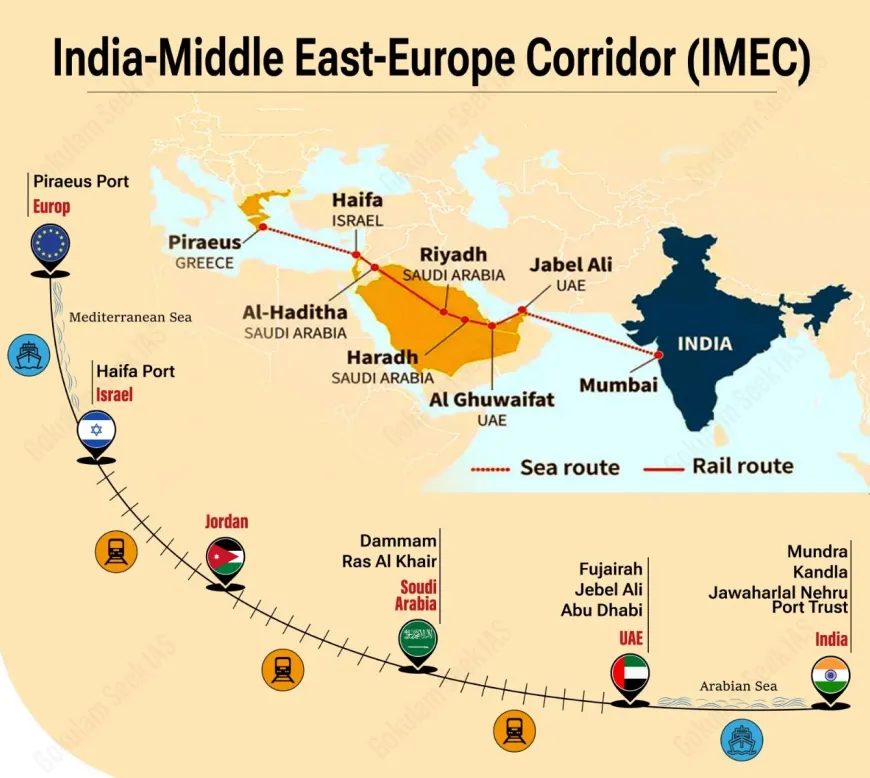
Did you know that a 5% improvement in multimodal transport performance can lead to an increase in exports by nearly $500 billion annually across participating economies. India-Middle East-Europe Economic Corridor (IMEC), a multi-modal trade network focuses on not only physical infrastructure but also digital connectivity and energy security.
Today’s editorial emphasizes the strategic importance of the IMEC for the United States. This content can be used to address multifaceted approaches to enhance economic growth in Asian and European regions while promoting democratic values.
_
Let’s learn!
Why in the News?
The recent signing of a MoU on cybercrime investigations underscores this commitment, as both India and USA aim to bolster their security cooperation in response to common threats like terrorism and organized crime.
The IMEC agreement is viewed as a strategic opportunity for Prez. Donald Trump to deepen U.S.-India ties while also promoting multilateral collaboration among participating countries.
As Trump 2.0 begins, the present administration is anticipated to continue building on the defense and economic frameworks established during his first term.
Key highlights of the Recent MoU:
• Cyber Threat Intelligence Sharing: The agreement facilitates enhanced exchange of information regarding emerging cyber threats, allowing both nations to stay ahead of potential cybercriminal activities.It focuses on improving tools and processes for investigating cybercrimes, thereby strengthening the capabilities of law enforcement agencies in both countries. • Capacity Building: The MoU includes provisions for training programs aimed at enhancing investigative skills related to cybercriminal activities, ensuring that personnel are well-equipped to tackle these challenges. The Indian Cyber Crime Coordination Centre (I4C) under the Ministry of Home Affairs will be responsible for executing the MoU from India’s side, while the U.S. Department of Homeland Security (DHS), along with its sub-agencies like Immigration and Customs Enforcement (ICE) and the Homeland Security Investigations Cyber Crimes Center (C3), will lead implementation efforts from the U.S. side. • Addressing Common Security Challenges: The MoU recognizes the intricate linkages between cybercrime and broader security issues such as terrorism, violent extremism, drug trafficking, organized crime, human trafficking, illegal migration, and money laundering. • Strengthening Security Cooperation: This agreement is part of a broader effort to enhance India-U.S. security cooperation as part of their comprehensive strategic partnership, emphasizing the importance of international collaboration in addressing cyber threats.
What is the strategic significance of IMEC with respect to India and USA’s common interests?
Economic Integration: The IMEC (network of ports, railways, and roads) aims to create a seamless flow of goods and services among the participating countries, which include India, the UAE, Saudi Arabia, Israel, and several European nations.
For instance, the corridor could significantly reduce transit times for shipping goods to Europe by up to 40% compared to traditional routes like the Suez Canal. Such improvements lead to increased trade volumes and economic growth.
The potential for establishing Free Trade zones along the corridor further enhances this economic integration by reducing tariffs and regulatory barriers.
Geopolitical Influence: Supporting IMEC allows the U.S. to counterbalance China’s growing influence in the Middle East through its Belt and Road Initiative (BRI).
By investing in IMEC, the U.S. can strengthen its alliances with key partners in Asia and Europe while promoting democratic values and stability. The alignment of interests among the U.S., India, and European nations within this corridor serves as a counterweight to China.
For example, the collaboration between India and Gulf monarchies under the IMEC framework is seen as a strategic move to build economic interdependence that can mitigate geopolitical tensions.
Holistic and Sustainable Connectivity: The initiative aims to establish secure High-speed data pipelines that would facilitate the export of India’s IT services to Europe and West Asia, which is crucial for modern economies that rely heavily on digital services.
Moreover, there are plans for Renewable Energy Grids that will enable countries along the corridor to share clean energy resources efficiently.
For example, hydrogen pipelines are proposed to transport green hydrogen produced in the Gulf states to Europe, aligning with global energy transition goals.
What are the limitations in enhancing strategic ties over IMEC?
Logistical and Connectivity Issues: Implementing IMEC requires extensive coordination among multiple countries, involving various modes of transportation.
For Example, If one country has outdated ports or railways, it can slow down the movement of goods, making trade less efficient. For instance, delays at a port in India could hold up shipments to Europe.
Regulatory Harmonization: The diverse regulatory frameworks and systems and regulations of the participating nations pose significant challenges.
For Example, if India has strict import regulations while a Middle Eastern country has more relaxed rules, it could lead to conflicts about how goods are traded.
Finding common ground on regulations is essential for smooth operations.
Security Concerns: The region traversed by IMEC is susceptible to security threats, including terrorism and political instability.
For Example, ongoing conflicts, such as those in Syria and Yemen, along with historical rivalries (e.g., Saudi-Iranian tensions), complicate efforts to ensure a secure environment necessary for attracting investments and fostering economic growth.
China Factor: If China offers better financing or faster infrastructure development for its routes, countries(esp European) might prefer to partner with China rather than engage with IMEC.
As of 2023, BRI engagement has surpassed USD 1 trillion, with approximately USD 419 billion allocated to non-financial investments and USD 634 billion to construction contracts (which is much higher than IMEC).
Financial Commitments: The ambitious nature of IMEC demands substantial financial investments from participating nations.
But, if a country like Iraq struggles with its economy, it may not be able to contribute financially to the project, which could slow down progress for everyone involved.
Way Forward: The IMEC represents a strategic opportunity for the USA to enhance its geopolitical influence while promoting economic growth and stability among participating nations.
As the U.S. navigates complex international dynamics, prioritizing IMEC will be crucial in establishing a resilient and interconnected economic framework that benefits all stakeholders involved, ultimately contributing to a more stable and prosperous global order.